

Σε αυτή τη σελίδα
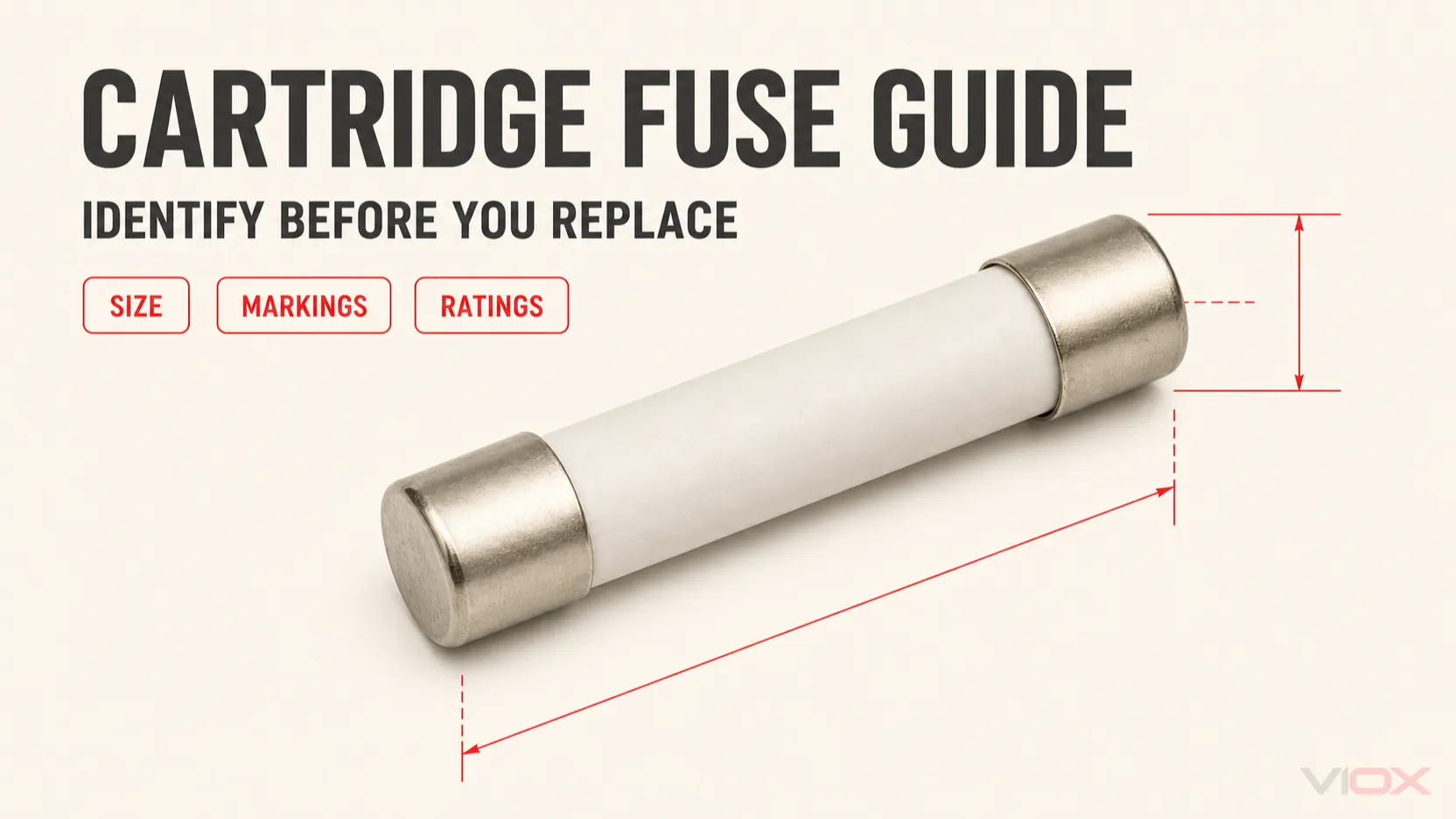
Μια ασφάλεια τύπου φυσιγγίου είναι ένας αντικαταστάσιμος σύνδεσμος ασφάλειας με κλειστό σώμα και αγώγιμες ακραίες επαφές. Ωστόσο, ο όρος ασφάλεια τύπου φυσιγγίου περιγράφει μια οικογένεια κατασκευής, όχι ένα ενιαίο σύστημα ονομαστικών τιμών. Μια ασφαλής αντικατάσταση πρέπει να αντιστοιχεί στο σύστημα ή τη σειρά της ασφάλειας, τις φυσικές διαστάσεις, την ονομαστική τιμή ρεύματος, την τάση και τη λειτουργία AC/DC, το χαρακτηριστικό λειτουργίας, την ικανότητα διακοπής, τη συμβατή βάση και τα απαιτούμενα αποδεικτικά έγκρισης. Η αντιστοίχιση μόνο του μεγέθους και της ένδειξης αμπέρ δεν αρκεί.
Χρησιμοποιήστε την τεκμηρίωση του αρχικού εξοπλισμού και το ακριβές φύλλο δεδομένων της ασφάλειας όποτε είναι διαθέσιμα. Εάν η ασφάλεια δεν φέρει σήμανση, έχει υποστεί θερμική βλάβη, έχει τροποποιηθεί ή είναι εγκατεστημένη σε εξοπλισμό με άγνωστο επίπεδο σφάλματος, σταματήστε και προσδιορίστε τις απαιτήσεις του κυκλώματος πριν θέσετε σε λειτουργία μια αντικατάσταση.
| Πεδίο αντικατάστασης | Τι πρέπει να αντιστοιχεί ή να επαληθεύεται | Γιατί η φυσική εφαρμογή δεν επαρκεί |
|---|---|---|
| Σύστημα ασφάλειας ή σειρά κατασκευαστή | IEC μικρογραφικού τύπου, IEC βιομηχανικού κυλινδρικού τύπου, midget/συμπληρωματικού τύπου, Class CC, ή άλλο καθορισμένο σύστημα | Παρόμοια κυλινδρικά σώματα μπορεί να έχουν διαφορετικά χαρακτηριστικά απόρριψης και κανόνες εφαρμογής |
| Διαστάσεις και επαφές | Διάμετρος σώματος, μήκος σώματος, διαστάσεις πώματος, ακροδέκτες ή γλωττίδες | Οι ονομαστικές διαστάσεις δεν εμφανίζουν όλες τις ανοχές ή τη γεωμετρία των επαφών |
| Ονομαστικό ρεύμα | Αρχικές προδιαγραφές και απαιτήσεις προστατευόμενου κυκλώματος | Ένα υψηλότερο ρεύμα μπορεί να ακυρώσει την προστασία· ένα χαμηλότερο ρεύμα μπορεί να προκαλέσει ανεπιθύμητη απόζευξη |
| Ονομαστική τάση και λειτουργία AC/DC | Ίση ή ανώτερη από τη μέγιστη εφαρμόσιμη τάση κυκλώματος, για τον αναφερόμενο τύπο ρεύματος | Η ασφαλής διακοπή εξαρτάται από την τάση και την ικανότητα απόσβεσης του τόξου |
| Χαρακτηριστικό λειτουργίας | Ακριβής καμπύλη, σύμβολο ταχύτητας IEC, τύπος καθυστέρησης/μη καθυστέρησης UL ή κατηγορία χρήσης IEC | Δύο ασφάλειες με το ίδιο ρεύμα μπορούν να λειτουργήσουν σε πολύ διαφορετικούς χρόνους |
| Σπάζοντας ικανότητα | Τουλάχιστον το αναμενόμενο ρεύμα σφάλματος υπό τις ισχύουσες συνθήκες | Μια υποδιαστασιολογημένη ασφάλεια μπορεί να εκραγεί αντί να διακόψει με ασφάλεια |
| Συμβατότητα βάσης | Αποδεκτή ονομασία ασφάλειας, απώλεια ισχύος, επαφές και συνθήκες ακροδεκτών | Η βάση αποτελεί μέρος της θερμικής και μηχανικής διαδρομής ρεύματος |
| Έγκριση και αποδεικτικά στοιχεία εξοπλισμού | Απαιτούμενα IEC, UL/CSA, καταχώριση εξοπλισμού ή οδηγίες κατασκευαστή | Παρόμοια προϊόντα ενδέχεται να μην διατηρούν την αρχική αξιολόγηση του εξοπλισμού |
Τι είναι η ασφάλεια τύπου φυσιγγίου;
Στο στενότερο πλαίσιο του εξοπλισμού, μια ασφάλεια τύπου φυσιγγίου είναι ένας σωληνοειδής σύνδεσμος ασφάλειας με μεταλλικά ακραία καλύμματα. Το σώμα μπορεί να είναι από γυαλί, κεραμικό ή άλλο μονωτικό υλικό και μπορεί να είναι κενό, να περιέχει υλικό απόσβεσης τόξου ή να ενσωματώνει εσωτερικές δομές για συγκεκριμένο χαρακτηριστικό λειτουργίας. Εγκαθίσταται σε κλιπ, βάση ασφάλειας, μπλοκ ασφαλειών, συρτάρι ασφάλειας ή εγκεκριμένη διάταξη διακόπτη-ασφάλειας.
Ο όρος γίνεται ευρύτερος στη βιομηχανική και βορειοαμερικανική χρήση. Ορισμένες οικογένειες προτύπων περιγράφουν ασφάλειες με ακροχίτωνια, τύπου απόρριψης (rejection-style) ή μεγαλύτερες ασφάλειες κυκλωμάτων διακλάδωσης ως ασφάλειες τύπου φυσιγγίου, ακόμη και όταν η κατασκευή τους και η επιτρεπόμενη εφαρμογή τους διαφέρουν σημαντικά. Επομένως, η λέξη φυσίγγιο δεν πρέπει ποτέ να αντιμετωπίζεται ως πλήρης προδιαγραφή.
Το στοιχείο τήξης είναι το τμήμα που λιώνει και διακόπτει το υπερρέμα. Η βάση το συγκρατεί και το συνδέει. Δείτε Ασφάλεια έναντι Στοιχείου ασφάλειας (Fuse Link) για τα όρια της ορολογίας.
Τύποι ασφαλειών φυσιγγίου ανά σύστημα και εφαρμογή
Οι ασφάλειες φυσιγγίου ομαδοποιούνται συχνά λανθασμένα επειδή αναμιγνύονται διάφοροι άξονες ταξινόμησης. Το γυαλί έναντι του κεραμικού περιγράφει την κατασκευή του σώματος. Το ταχείας τήξης έναντι του βραδυφλεγούς περιγράφει τη συμπεριφορά λειτουργίας. Οι μικρογραφικές, οι κυλινδρικές IEC και οι Class CC προσδιορίζουν διαφορετικά πρότυπα ή συστήματα εφαρμογής. Μία ασφάλεια μπορεί να ανήκει σε πολλές από αυτές τις ομάδες ταυτόχρονα.
| Οικογένεια ασφαλειών φυσιγγίου | Τυπική φυσική μορφή | Κοινό πλαίσιο | Κύριος έλεγχος ταυτοποίησης |
|---|---|---|---|
| Ασφάλεια μικρογραφικού φυσιγγίου | Μικρός γυάλινος ή κεραμικός σωλήνας με ακραία καλύμματα, συνήθως 5 x 20 mm ή 6.3 x 32 mm | Συσκευές, όργανα, ηλεκτρονικός εξοπλισμός, τροφοδοτικά και κυκλώματα ελέγχου | Ακριβής σειρά, διαστάσεις, σύμβολο ταχύτητας, τάση, ικανότητα διακοπής και βάση |
| Κυλινδρική ασφάλεια βιομηχανικού τύπου IEC | Κεραμικό σώμα με κυλινδρικά καπάκια επαφής, συμπεριλαμβανομένων οικογενειών όπως 8 x 32, 10 x 38, 14 x 51 και 22 x 58 mm | Βιομηχανικοί πίνακες, κυκλώματα ελέγχου, διανομή, κινητήρες, φωτοβολταϊκά κυκλώματα και άλλες εφαρμογές IEC | Κατηγορία χρήσης IEC, ονομαστική τιμή AC/DC, διαστάσεις, ικανότητα διακοπής και συμβατή βάση ή υποδοχή |
| Βορειοαμερικανική ασφάλεια τύπου midget ή συμπληρωματική ασφάλεια | Φυσίγγιο με ακροδέκτες τύπου δακτυλίου, συνήθως περίπου 13/32 x 1-1/2 in | Κυκλώματα ελέγχου και συμπληρωματική προστασία όπου επιτρέπεται | Ακριβής κατηγορία προϊόντος, τάση, ονομαστική ικανότητα διακοπής και αναγραφόμενη βάση |
| Ασφάλεια Class CC | Ασφάλεια φυσιγγίου κυκλώματος διακλάδωσης με χαρακτηριστικό απόρριψης για συμβατή βάση Class CC | Βορειοαμερικανικές εφαρμογές βιομηχανικού ελέγχου και κυκλωμάτων διακλάδωσης | Σήμανση Class CC, βάση τύπου απόρριψης, τάση, ρεύμα, κατάσταση χρονικής καθυστέρησης και ονομαστική ικανότητα διακοπής |
| Ασφάλεια φυσιγγίου με αξονικούς ακροδέκτες | Σώμα φυσιγγίου με έναν ακροδέκτη προσαρμοσμένο σε κάθε άκρο | Πλακέτες τυπωμένων κυκλωμάτων και ενσύρματες ηλεκτρονικές διατάξεις | Σειρά ασφαλειών, μορφή ακροδεκτών, διαδικασία συγκόλλησης, αποστάσεις και ηλεκτρικά ονομαστικά χαρακτηριστικά |
| Ασφάλεια υψηλής ικανότητας διακοπής ή ασφάλεια με πλήρωση | Συνήθως κεραμική με υλικό πλήρωσης και εσωτερικό στοιχείο σχεδιασμένο για διακοπή υψηλότερων σφαλμάτων | Εξοπλισμός και βιομηχανικά κυκλώματα με μεγαλύτερο αναμενόμενο ρεύμα σφάλματος | Ικανότητα διακοπής ανά μοντέλο στην αναγραφόμενη τάση, καμπύλη και πλαίσιο δοκιμών |
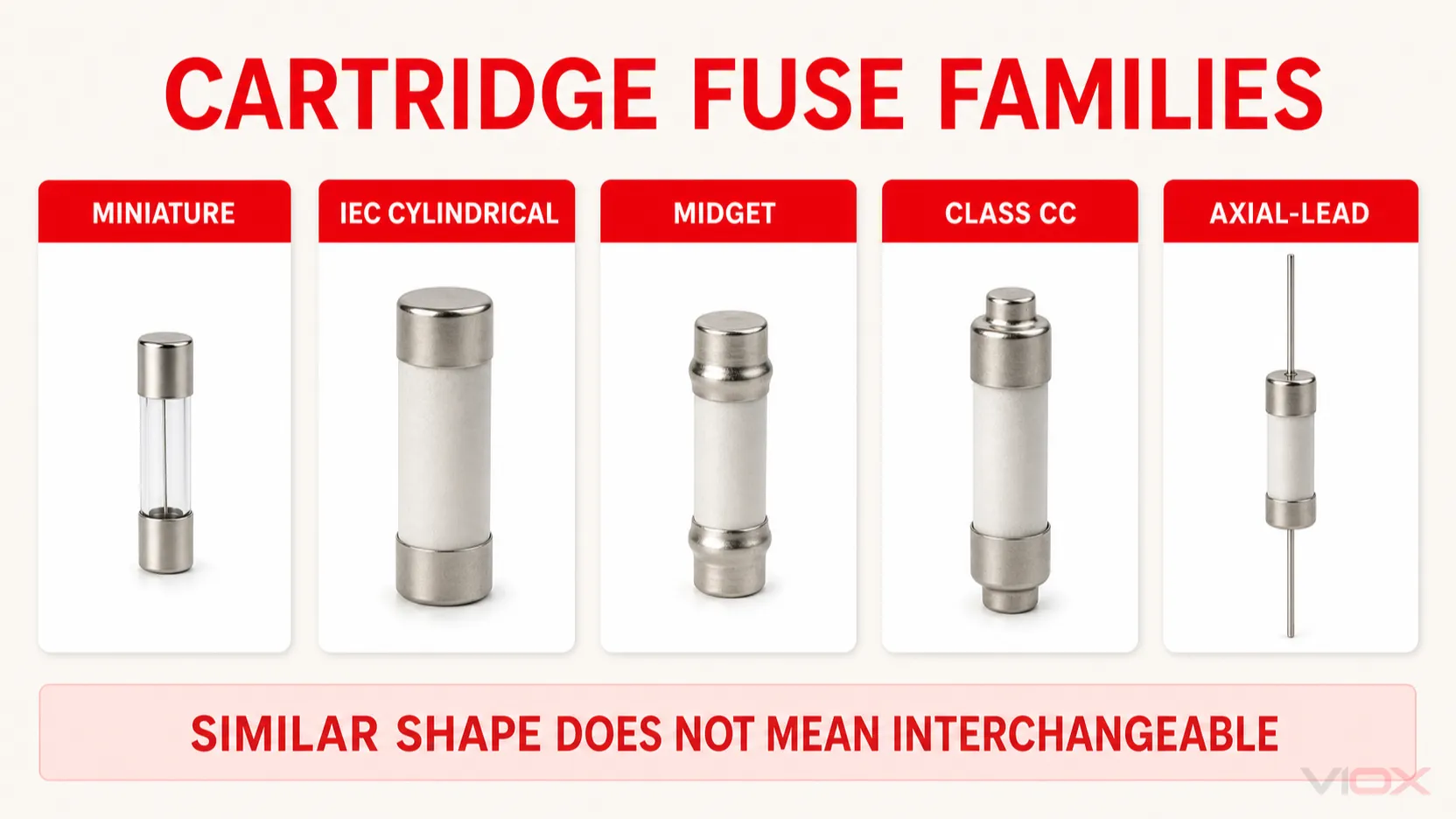
Το πρότυπο IEC 60127-1:2023 εφαρμόζεται σε μικροασφάλειες για συσκευές, ηλεκτρονικό εξοπλισμό και εξαρτήματα εντός του καθορισμένου πεδίου εφαρμογής του. Διαχωρίζει ρητά αυτά τα προϊόντα από τις ασφάλειες για ηλεκτρικές εγκαταστάσεις χαμηλής τάσης που καλύπτονται από το πρότυπο IEC 60269. Το IEC 60269-2 περιλαμβάνει βιομηχανικά συστήματα με κυλινδρικά καλύμματα επαφής, καθώς και συστήματα NH, βιδωτά και άλλα τυποποιημένα συστήματα.
Η πρακτική συνέπεια είναι απλή: προσδιορίστε το σύστημα προτύπων πριν χρησιμοποιήσετε τον πίνακα μεγεθών. Μην μετατρέπετε μια μικροασφάλεια, μια βιομηχανική ασφάλεια IEC ή μια ασφάλεια κυκλώματος διακλάδωσης UL σε άλλη οικογένεια μόνο και μόνο επειδή τα σώματά τους μοιάζουν.
Πίνακας μεγεθών ασφαλειών φυσιγγίου
Οι παρακάτω διαστάσεις αποτελούν κοινές ονομαστικές οικογένειες και όχι καθολικά ισοδύναμα. Οι ανοχές του κατασκευαστή, το σχήμα του καλύμματος, τα χαρακτηριστικά απόρριψης, οι μορφές των ακροδεκτών και ο σχεδιασμός της βάσης πρέπει να ελέγχονται στο ακριβές σχέδιο περιγράμματος.
| Ονομαστικό μέγεθος | Κοινή οικογένεια ή πλαίσιο | Τυπική μορφή εγκατάστασης | Προειδοποίηση αντικατάστασης |
|---|---|---|---|
| 5 x 20 mm | Οικογένεια μικροσκοπικών φυσιγγίων προσανατολισμένη στο πρότυπο IEC | Κλιπ PCB, βάση εξοπλισμού, βάση οπίσθιου ή εμπρόσθιου πίνακα | Ελέγξτε το χαρακτηριστικό FF/F/M/T/TT, την τάση και τον κωδικό ικανότητας διακοπής· ο γυάλινος και ο κεραμικός τύπος δεν είναι αυτόματα εναλλάξιμοι |
| 6.3 x 32 mm | Φυσίγγιο εξοπλισμού μικρογραφίας· περίπου 1/4 x 1-1/4 in στις σχετικές οικογένειες | Βάση εξοπλισμού, ασφαλειοθήκη ή κλιπ | Επαληθεύστε την ακριβή σειρά 3AG/3AB ή τη σειρά του κατασκευαστή αντί να βασίζεστε μόνο στις διαστάσεις |
| 8 x 32 mm | Βιομηχανική κυλινδρική οικογένεια IEC που χρησιμοποιείται από συγκεκριμένους κατασκευαστές και συστήματα | Αρθρωτή ή συμπαγής βιομηχανική βάση | Επιβεβαιώστε την αποδεκτή ονομασία της ασφάλειας-συνδέσμου και την τεκμηρίωση της βάσης της |
| 10 x 38 mm | Βιομηχανικές κυλινδρικές ασφάλειες IEC, PV, midget ή άλλα προϊόντα ειδικά για το σύστημα | Βάση ράγας DIN, βάση ασφάλειας ή μονάδα ασφάλειας | Το ίδιο ονομαστικό περίβλημα μπορεί να περιέχει διαφορετικές κατηγορίες, τάσεις και ικανότητες διακοπής |
| 14 x 51 mm | Μεγαλύτερη οικογένεια βιομηχανικών κυλινδρικών ασφαλειών IEC | Βιομηχανική αρθρωτή βάση ή εξοπλισμός διακόπτη-ασφάλειας | Ελέγξτε την αποδεκτή ισχύ της βάσης, την κατηγορία χρήσης και την εγκεκριμένη μέθοδο συντήρησης |
| 22 x 58 mm | Μεγαλύτερη οικογένεια βιομηχανικών κυλινδρικών ασφαλειών IEC | Βιομηχανική βάση διανομής ή ασφαλειοαποζεύκτης | Μην υποθέτετε ότι η βάση είναι ικανή για διακοπή υπό φορτίο, εκτός εάν αυτή η λειτουργία είναι ονομαστική |
| 13/32 x 1-1/2 in | Βορειοαμερικανική θήκη τύπου midget/συμπληρωματική και Class CC | Μπλοκ ασφαλειών συγκεκριμένης κλάσης ή συμπληρωματικό | Η κλάση Class CC χρησιμοποιεί χαρακτηριστικά απόρριψης και δεν αποτελεί απλώς μια γενική αντικατάσταση 10 x 38 |
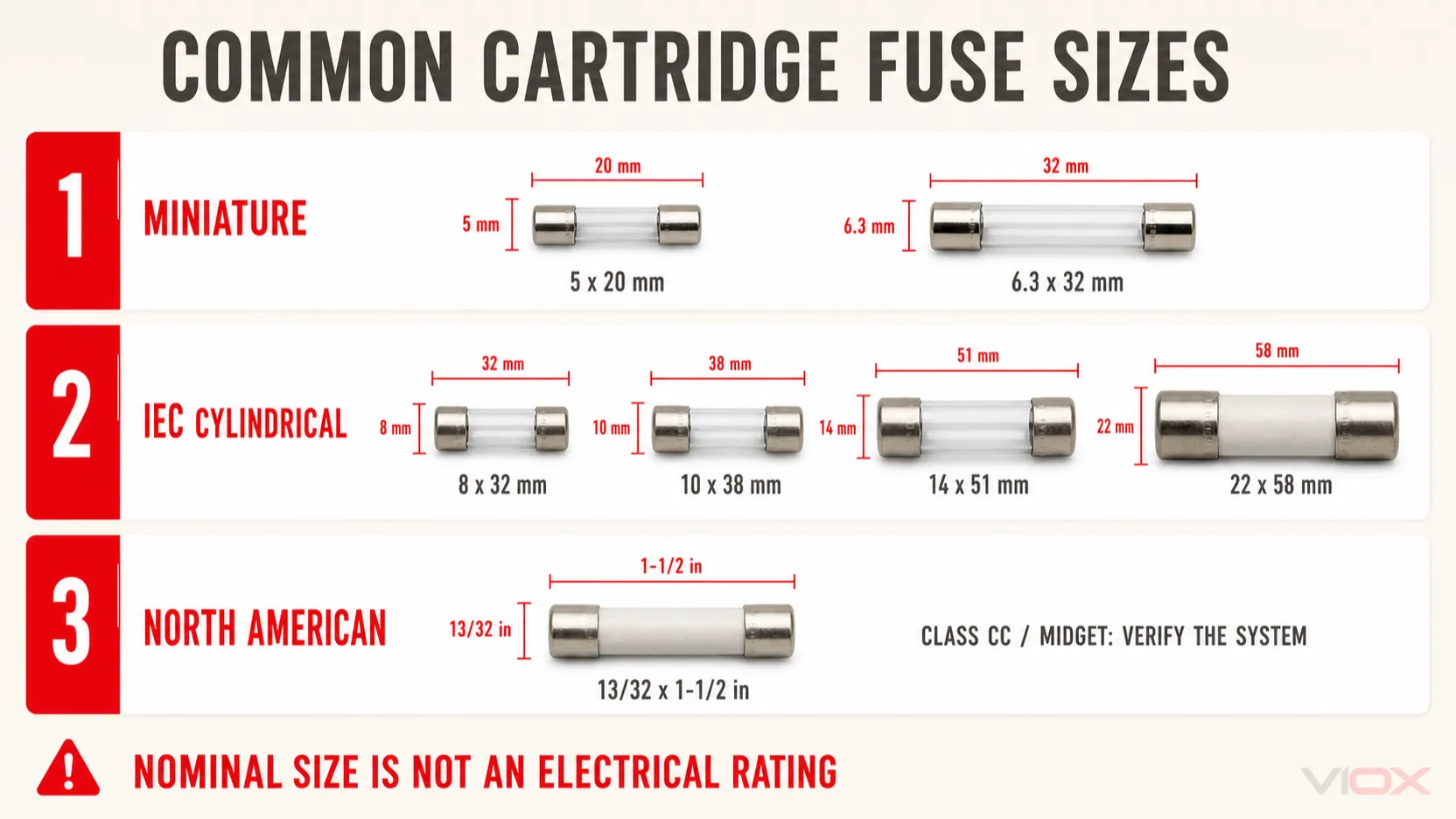
Η διάκριση της κατηγορίας Class CC είναι ιδιαίτερα σημαντική. Η τεκμηρίωση της Eaton περιγράφει τα προϊόντα Class CC και τα συμπληρωματικά προϊόντα 10 x 38 ή midget ξεχωριστά, παρόλο που και τα δύο σχετίζονται με περίβλημα 13/32 x 1-1/2 in. Ένα χαρακτηριστικό απόρριψης Class CC και μια συμβατή βάση Class CC προορίζονται για την αποτροπή της εισαγωγής μιας συμπληρωματικής ασφάλειας χαμηλότερης ονομαστικής τιμής. Η παράκαμψη αυτού του χαρακτηριστικού ή η επιλογή με βάση τη μέτρηση με χάρακα μπορεί να αλλάξει το σύστημα προστασίας.
Οι ασφάλειες τύπου NH χρησιμοποιούν επαφές τύπου μαχαιριού και ονομασίες μεγέθους NH αντί για τη μορφή διαμέτρου-μήκους σε αυτόν τον πίνακα. Η επιλογή τους ανήκει Ασφάλεια NH έναντι Κυλινδρικής Ασφάλειας, όχι σε έναν πίνακα αντικατάστασης μεγέθους φυσιγγίου.
Γυάλινες έναντι κεραμικών ασφαλειών φυσιγγίου
Το γυαλί και το κεραμικό είναι υλικά σώματος, όχι πλήρεις ονομαστικές αποδόσεις.
Γυάλινη ασφάλεια φυσιγγίου
Ένα διαφανές γυάλινο σώμα επιτρέπει τον οπτικό έλεγχο του στοιχείου, αν και η οπτική εμφάνιση από μόνη της δεν μπορεί πάντα να επιβεβαιώσει τη συνέχεια. Οι γυάλινες ασφάλειες μικρογραφίας είναι κοινές στον ηλεκτρονικό εξοπλισμό και σε εφαρμογές χαμηλής ενέργειας. Η ικανότητα διακοπής τους ποικίλλει ανάλογα με τη σειρά της ασφάλειας και πρέπει να διαβάζεται από τη σήμανση ή το φύλλο δεδομένων.
Κεραμική ασφάλεια φυσιγγίου
Ένα κεραμικό σώμα είναι αδιαφανές και χρησιμοποιείται συνήθως όπου απαιτείται μεγαλύτερη θερμική συγκράτηση ή ένας σχεδιασμός με πλήρωση και υψηλότερη ικανότητα διακοπής. Ωστόσο, το κεραμικό δεν σημαίνει αυτόματα υψηλή ικανότητα διακοπής, και το γυαλί δεν σημαίνει αυτόματα χαμηλή ικανότητα διακοπής. Η ονομαστική τιμή ανά μοντέλο παραμένει καθοριστική.
Η αντικατάσταση γυαλιού με κεραμικό, ή κεραμικού με γυαλί, είναι αποδεκτή μόνο όταν ο κατασκευαστής του εξοπλισμού ή μια πλήρης σύγκριση προδιαγραφών επιβεβαιώνει τις ίδιες διαστάσεις, ρεύμα, τάση, χαρακτηριστικά λειτουργίας, ικανότητα διακοπής, συμβατότητα βάσης και απαιτούμενες εγκρίσεις. Η διαφορά στην κατασκευή εξηγείται περαιτέρω στο Γυάλινη ασφάλεια έναντι κεραμικής ασφάλειας.
Πώς να διαβάζετε τις σημάνσεις των ασφαλειών φυσιγγίου
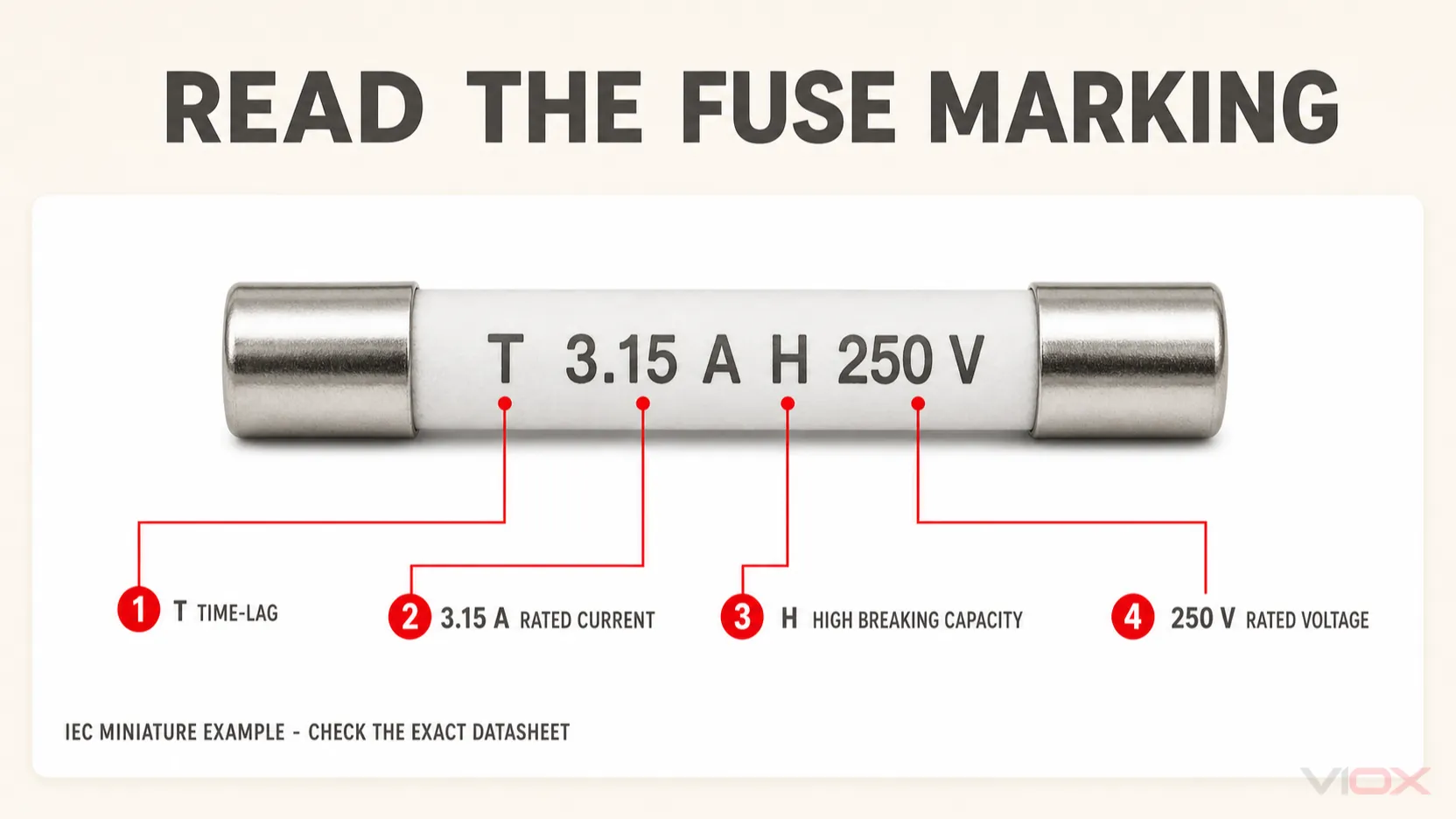
Τα συστήματα σήμανσης εξαρτώνται από το πρότυπο και τον κατασκευαστή. Μια κοινή σήμανση μικροασφάλειας IEC μπορεί να μοιάζει με:
T 3.15 A H 250 V
Σε αυτό το παράδειγμα:
Tπροσδιορίζει ένα χαρακτηριστικό χρονικής καθυστέρησης·;3.15 Aείναι το ονομαστικό ρεύμα·;Hπροσδιορίζει μια κατηγορία υψηλής ικανότητας διακοπής εντός του ισχύοντος συστήματος σήμανσης μικροασφαλειών·;250 Vείναι η ονομαστική τάση.
Αυτό το παράδειγμα δεν αποτελεί πρότυπο αποκωδικοποίησης για κάθε βιομηχανική ασφάλεια ή ασφάλεια UL. Να επιβεβαιώνετε πάντα τη σειρά του προϊόντος και το φύλλο δεδομένων.
Σύμβολα ταχύτητας μικροασφαλειών
Τα κοινά σύμβολα προ-τόξου που προσανατολίζονται στα πρότυπα IEC περιλαμβάνουν:
| Σύμβολο | Γενική σημασία | Επιπτώσεις στην επιλογή |
|---|---|---|
| FF | Πολύ ταχείας απόκρισης | Πολύ περιορισμένη ανοχή σε προσωρινή υπερένταση· χρησιμοποιήστε την ακριβή καμπύλη |
| F | Ταχείας απόκρισης | Χρησιμοποιείται όπου δεν αναμένεται σημαντικό ρεύμα εκκίνησης |
| M | Μέση χρονική καθυστέρηση | Παρέχει καθορισμένη ανοχή για μέτριο μεταβατικό ρεύμα |
| T | Χρονική καθυστέρηση | Συνηθισμένη όπου πρέπει να γίνεται ανεκτό το ρεύμα εισόδου μετασχηματιστή, κινητήρα ή τροφοδοτικού |
| TT | Μεγάλη ή πολύ μεγάλη χρονική καθυστέρηση | Προορίζεται για μεγαλύτερα προφίλ ρεύματος εισόδου σύμφωνα με τα ακριβή δεδομένα της σειράς |
Αυτά τα σύμβολα περιγράφουν τη σχετική συμπεριφορά εντός του ισχύοντος πλαισίου ασφαλειών. Δεν παρέχουν έναν σταθερό χρόνο απόζευξης. Χρησιμοποιήστε την καμπύλη χρόνου-ρεύματος στο σχετικό πολλαπλάσιο του ονομαστικού ρεύματος.
Γράμματα ικανότητας διακοπής σε μικροασφάλειες
Για καθορισμένα συστήματα σήμανσης μικροαυτομάτων IEC, L, H και E ενδέχεται να προσδιορίζουν κατηγορίες χαμηλής, υψηλής και ενισχυμένης ικανότητας διακοπής. Μην επεκτείνετε αυτά τα γράμματα σε άσχετα βιομηχανικά συστήματα ασφαλειών. Μια βιομηχανική κυλινδρική ασφάλεια μπορεί αντ' αυτού να εμφανίζει μια κατηγορία χρήσης IEC, όπως gG, aM, aR ή gPV, συν τις ονομαστικές τιμές ρεύματος και τάσης της.
Σήματα έγκρισης και κωδικοί σειράς
Τα σήματα έγκρισης δείχνουν ότι ένα συγκεκριμένο προϊόν αξιολογήθηκε εντός ενός συγκεκριμένου πλαισίου πιστοποίησης. Δεν καθιστούν δύο διαφορετικά αξιολογημένες ασφάλειες εναλλάξιμες. Καταγράψτε τον κατασκευαστή, την πλήρη σειρά ή τον αριθμό εξαρτήματος και την αναφορά έγκρισης όπου απαιτείται από την τεκμηρίωση του εξοπλισμού.
Επεξήγηση ονομαστικών τιμών ασφαλειών φυσιγγίου
Ονομαστικό ρεύμα
Το ονομαστικό ρεύμα καθορίζεται υπό συγκεκριμένες συνθήκες. Δεν αποτελεί υπόσχεση ότι η ασφάλεια θα μεταφέρει αυτό το ρεύμα επ' αόριστον σε κάθε περίβλημα, βάση και θερμοκρασία περιβάλλοντος. Η αντίσταση επαφής, η αποδοχή ισχύος της βάσης, οι γειτονικές πηγές θερμότητας και η ίδια η διάχυση ισχύος της ασφάλειας επηρεάζουν τη θερμοκρασία λειτουργίας.
Μην αυξάνετε την ονομαστική τιμή σε Ampere για να σταματήσετε την επαναλαμβανόμενη λειτουργία της ασφάλειας. Διαγνώστε πρώτα την υπερφόρτιση, το ρεύμα εισόδου, τη θερμοκρασία περιβάλλοντος, τις χαλαρές επαφές και τα σφάλματα του εξοπλισμού. Η ευρεία διαδικασία επιλογής φορτίου προς ασφάλεια παραμένει στο Τύποι ηλεκτρικών ασφαλειών και οδηγός επιλογής.
Ονομαστική τάση και λειτουργία AC/DC
Η ονομαστική τάση είναι η μέγιστη δηλωμένη τάση κυκλώματος στην οποία η ασφάλεια προορίζεται να διακόψει υπό τις καθορισμένες συνθήκες της. Πρέπει να είναι ίση ή μεγαλύτερη από την εφαρμοστέα τάση του κυκλώματος. Επιβεβαιώστε εάν η σήμανση ισχύει για AC, DC ή και για τα δύο.
Μια ασφάλεια μπορεί να λιώσει αλλά να αποτύχει να εκτονώσει με ασφάλεια το σφάλμα εάν η τάση της ή η ικανότητα διακοπής DC είναι ανεπαρκής. Τα κυκλώματα μπαταριών, φωτοβολταϊκών και τροφοδοτικών DC μπορούν να αποδώσουν σημαντικό ρεύμα σφάλματος ακόμη και όταν η ονομαστική τους τάση φαίνεται μέτρια.
Ικανότητα διακοπής ή ονομαστική τιμή διακοπής
Η ικανότητα διακοπής είναι το αναμενόμενο ρεύμα που η ασφάλεια μπορεί να διακόψει με ασφάλεια σε μια καθορισμένη τάση και υπό συγκεκριμένες συνθήκες δοκιμής. Δεν πρέπει να συνάγεται από το υλικό του σώματος, τις διαστάσεις ή την ονομαστική ένταση σε Ampere.
Ο τεχνικός έλεγχος είναι:
Η ικανότητα διακοπής της ασφάλειας πρέπει να είναι >= του αναμενόμενου ρεύματος βραχυκύκλωσης στο σημείο εγκατάστασης.
Εάν το διαθέσιμο ρεύμα σφάλματος είναι άγνωστο, λάβετε το από τη μελέτη του ηλεκτρικού συστήματος, τα δεδομένα πηγής ή έναν εξειδικευμένο υπολογισμό πριν επιλέξετε αντικατάσταση σε κύκλωμα υψηλής ενέργειας.
Καμπύλη χρόνου-ρεύματος και I^2t
Η καμπύλη χρόνου-ρεύματος δείχνει πώς μεταβάλλεται ο χρόνος λειτουργίας καθώς αυξάνεται το ρεύμα. Για φορτία εισόδου (inrush) ή παλμικά φορτία, συγκρίνετε την πραγματική κυματομορφή με την καμπύλη του κατασκευαστή και τις οδηγίες για τους παλμούς. I^2t τα δεδομένα ενδέχεται να απαιτούνται κατά τον συντονισμό με ημιαγωγούς ή την αξιολόγηση της διερχόμενης ενέργειας, αλλά οι τιμές πρέπει να συγκρίνονται υπό συμβατές συνθήκες.
Κατηγορία χρήσης
οι βιομηχανικές κυλινδρικές ασφάλειες IEC ενδέχεται να χρησιμοποιούν κατηγορίες όπως gG, aM, aR ή gPV. Αυτές προσδιορίζουν την προβλεπόμενη λειτουργία προστασίας και το εύρος ρεύματος, όχι απλώς την ταχύτητα. Για παράδειγμα, μια aM ασφάλεια δεν παρέχει από μόνη της πλήρη προστασία υπερφόρτισης κινητήρα. Χρησιμοποιήστε το Οδηγό Ασφαλειών IEC 60269 για αυτή την απόφαση που βασίζεται στα πρότυπα.
Πώς να αντικαταστήσετε μια ασφάλεια φυσιγγίου με ασφάλεια
Η αντικατάσταση της ασφάλειας φυσιγγίου πρέπει να αντιμετωπίζεται ως αποκατάσταση μιας μελετημένης λειτουργίας προστασίας και όχι ως τοποθέτηση οποιουδήποτε αγώγιμου εξαρτήματος που ταιριάζει.
1. Προσδιορίστε γιατί λειτούργησε η ασφάλεια
Μην αντικαθιστάτε επανειλημμένα χωρίς να διαγνώσετε την αιτία. Ελέγξτε για υπερφόρτιση, βραχυκύκλωμα, αστοχία εξοπλισμού, κατεστραμμένη καλωδίωση, υπερβολικό ρεύμα εισόδου, υψηλή θερμοκρασία περιβλήματος και υπερθέρμανση των επαφών της βάσης. Μια ασφάλεια που συνεχίζει να καίγεται είναι σύμπτωμα και όχι η ριζική αιτία.
2. Απομονώστε από την τροφοδοσία και επαληθεύστε την κατάσταση του εξοπλισμού
Ακολουθήστε τη διαδικασία του κατασκευαστή του εξοπλισμού και τους ισχύοντες κανόνες ασφαλούς εργασίας. Απομονώστε κάθε σχετική πηγή ενέργειας, επαληθεύστε την απουσία τάσης με κατάλληλο εξοπλισμό και λάβετε υπόψη την αποθηκευμένη ενέργεια. Οι βάσεις φυσιγγίων και οι φορείς τύπου pull-out δεν είναι αυτόματα διατάξεις διακοπής φορτίου.
3. Καταγράψτε την πλήρη αρχική προδιαγραφή
Φωτογραφίστε και αντιγράψτε τις σημάνσεις πριν από την απόρριψη. Καταγράψτε τον κατασκευαστή, τη σειρά, τις διαστάσεις, το ρεύμα, την τάση, τη λειτουργία AC/DC, το χαρακτηριστικό ή την κατηγορία χρήσης, την ικανότητα διακοπής, τις εγκρίσεις και οποιαδήποτε διάταξη ακροδεκτών ή επικρουστήρα.
4. Επιθεωρήστε τη βάση και το περιβάλλον κύκλωμα
Αναζητήστε αποχρωματισμό, λιωμένη μόνωση, χαλαρά ελάσματα, μειωμένη πίεση ελατηρίου, διάβρωση, ραγισμένους φορείς και κατεστραμμένους ακροδέκτες. Μια νέα ασφάλεια δεν μπορεί να επισκευάσει μια βάση υψηλής αντίστασης. Αντικαταστήστε τα εξαρτήματα που έχουν υποστεί θερμική βλάβη με εγκεκριμένα εξαρτήματα και διερευνήστε την αιτία της υπερθέρμανσης.
5. Επαληθεύστε το φύλλο δεδομένων της αντικατάστασης πεδίο προς πεδίο
Χρησιμοποιήστε τον πίνακα αντικατάστασης στην αρχή αυτού του οδηγού. Μην βασίζεστε σε φωτογραφίες από ηλεκτρονικές αγορές ή στον ισχυρισμό ενός πωλητή ότι ένα προϊόν είναι ισοδύναμο. Εάν η αρχική σειρά έχει καταργηθεί, προμηθευτείτε μια τεκμηριωμένη διασταύρωση από τον κατασκευαστή του εξοπλισμού ή της ασφάλειας.
6. Εγκαταστήστε χωρίς να τροποποιήσετε την ασφάλεια ή τη βάση της
Μην λιμάρετε τα καλύμματα, μην λυγίζετε τους συνδετήρες, μην προσθέτετε αποστάτες, μην παρακάμπτετε τα χαρακτηριστικά απόρριψης, μην τυλίγετε την ασφάλεια με αλουμινόχαρτο και μην εγκαθιστάτε ασφάλεια με υψηλότερη ονομαστική ένταση ρεύματος. Ακολουθήστε τις οδηγίες της βάσης σχετικά με τον προσανατολισμό, την εμπλοκή του φορέα, τον τερματισμό του αγωγού και το κλείσιμο του περιβλήματος.
7. Επαναφέρετε την τροφοδοσία μόνο αφού επαληθευτεί το σφάλμα και η διαδρομή προστασίας
Χρησιμοποιήστε την εγκεκριμένη διαδικασία θέσης σε λειτουργία του εξοπλισμού. Εάν η ασφάλεια αντικατάστασης ανοίξει ξανά, απομονώστε τον εξοπλισμό και συνεχίστε τη διάγνωση. Μην αυξάνετε ποτέ την ονομαστική τιμή της ασφάλειας.
Αντιστοίχιση της ασφάλειας φυσιγγίου με τη βάση της
Η βάση συμβάλλει στην αντίσταση επαφής, τη θέρμανση του ακροδέκτη, τη μόνωση, τις αποστάσεις και την προστασία από επαφή. Αντιστοιχίστε ακριβώς τον αποδεκτό τύπο ασφάλειας, τις ονομαστικές τιμές τάσης και ρεύματος της βάσης, την επιτρεπόμενη απώλεια ισχύος της ασφάλειας, το εύρος διατομής αγωγών, τις περιβαλλοντικές συνθήκες και την τεκμηρίωση αντοχής σε σφάλματα.
Μια βάση 10 x 38 δεν είναι αυτόματα εγκεκριμένη για κάθε ασφάλεια 10 x 38. Τα προϊόντα PV, συμπληρωματικής προστασίας, βιομηχανικά IEC και Class CC ενδέχεται να απαιτούν διαφορετικές βάσεις και πιστοποιήσεις. Χρησιμοποιήστε το Τύποι ασφαλειοθηκών και οδηγός επιλογής για την απόφαση του κατόχου.
Εάν η συσκευή πρέπει να λειτουργεί υπό φορτίο ή να παρέχει καθορισμένη λειτουργία απομόνωσης, καθορίστε έναν ασφαλειοαποζεύκτη κατάλληλης ονομαστικής τιμής. Μια βάση ασφαλειών που μπορεί να ανοίξει δεν αποδεικνύει ικανότητα διακοπής φορτίου. Δείτε Βάση ασφάλειας έναντι αποζεύκτη ασφάλειας.
Λίστα ελέγχου αντικατάστασης ασφαλειών τύπου φυσιγγίου
Πριν από την έγκριση ενός υποκατάστατου, η προδιαγραφή θα πρέπει να απαντά σε όλα τα παρακάτω:
- Ποιο είναι το ακριβές πρότυπο, η κλάση, η κατηγορία ή η σειρά κατασκευαστή της ασφάλειας;
- Ποιες είναι οι διαστάσεις του σώματος και των επαφών, συμπεριλαμβανομένων των χαρακτηριστικών απόρριψης;
- Ποιο είναι το ονομαστικό ρεύμα In;
- Ποια είναι η μέγιστη τάση του κυκλώματος και αν η λειτουργία είναι AC, DC ή και τα δύο;
- Ποιο χαρακτηριστικό λειτουργίας ή κατηγορία χρήσης απαιτείται;
- Ποια ικανότητα διακοπής απαιτείται σε αυτή την τάση;
- Είναι τα δεδομένα χρόνου-ρεύματος και I^2t συμβατά με τον προστατευόμενο εξοπλισμό;
- Είναι η ασφάλεια αποδεκτή από την εγκατεστημένη βάση ασφαλείας;
- Είναι η θερμοκρασία περιβάλλοντος, η θέρμανση του περιβλήματος και η απώλεια ισχύος της ασφάλειας αποδεκτές;
- Ποια έγκριση ή πιστοποιητικό εξοπλισμού πρέπει να διατηρηθεί;
Η VIOX προμηθεύει κυλινδρικές ασφάλειες και σχετικά ασφάλειες χαμηλής τάσης και βάσεις ασφαλειών για βιομηχανικούς πίνακες, εξοπλισμό OEM και φωτοβολταϊκές εφαρμογές. Για την επιλογή σε επίπεδο μοντέλου, παρέχετε την πλήρη λίστα ελέγχου αντί μόνο την απαιτούμενη ονομαστική ένταση σε A.
Συχνές Ερωτήσεις
Μπορώ να αντικαταστήσω μια ασφάλεια φυσιγγίου με μια άλλη ασφάλεια ίδιου μεγέθους και έντασης ρεύματος;
Όχι χωρίς πρόσθετους ελέγχους. Αντιστοιχίστε την τάση και τη λειτουργία AC/DC, το χαρακτηριστικό λειτουργίας, την ικανότητα διακοπής, το σύστημα ή την κλάση της ασφάλειας, τη συμβατότητα της βάσης και τις απαιτούμενες εγκρίσεις. Το ίδιο μέγεθος και η ίδια ένδειξη σε A μπορεί να κρύβουν ουσιαστικά διαφορετική απόδοση διακοπής.
Μπορεί μια κεραμική ασφάλεια φυσιγγίου να αντικαταστήσει μια γυάλινη ασφάλεια;
Μόνο όταν ο κατασκευαστής του εξοπλισμού ή μια πλήρης σύγκριση στο φύλλο δεδομένων επιβεβαιώνει τη συμβατότητα. Η κεραμική κατασκευή από μόνη της δεν διασφαλίζει την ίδια ταχύτητα, ικανότητα διακοπής, τάση, διαστάσεις ή εγκρίσεις.
Είναι οι ασφάλειες 10 x 38 mm και οι ασφάλειες Class CC εναλλάξιμες;
Δεν πρέπει να θεωρείται ότι υπάρχει γενική εναλλαξιμότητα. Η Class CC είναι ένα καθορισμένο σύστημα ασφαλειών κυκλώματος διακλάδωσης με χαρακτηριστικό απόρριψης και συμβατή βάση. Τα προϊόντα IEC 10 x 38, midget και συμπληρωματικά προϊόντα μπορεί να μοιράζονται παρόμοιο ονομαστικό περίβλημα, ενώ έχουν διαφορετικούς κανόνες εφαρμογής και ονομαστικά χαρακτηριστικά.
Μπορώ να ελέγξω μια ασφάλεια φυσιγγίου με ένα πολύμετρο;
Μετά την ασφαλή απομόνωση και αφαίρεση σύμφωνα με τη διαδικασία του εξοπλισμού, ένας έλεγχος συνέχειας ή αντίστασης μπορεί να επιβεβαιώσει εάν το στοιχείο της ασφάλειας είναι ανοικτό. Δεν μπορεί να αποδείξει ότι η ασφάλεια διαθέτει τη σωστή τάση, ικανότητα διακοπής, καμπύλη λειτουργίας, βαθμονόμηση ή εναπομένουσα λειτουργική ακεραιότητα. Αντικαταστήστε τις αμφίβολης κατάστασης ή κατεστραμμένες ασφάλειες με τον ακριβή εγκεκριμένο τύπο.
Είναι η βάση ασφάλειας το ίδιο με έναν διακόπτη απομόνωσης;
Όχι. Μια βασική βάση ασφάλειας παρέχει στήριξη και ηλεκτρικές επαφές. Δεν είναι αυτόματα ονομαστικά χαρακτηρισμένη για τη σύζευξη ή τη διακοπή ρεύματος φορτίου, ούτε για να χρησιμεύει ως συσκευή απομόνωσης.
Τεχνικές Πηγές
- IEC 60127-1:2023, Μικροασφάλειες, ορισμοί και γενικές απαιτήσεις
- IEC 60269-1:2024, Ασφάλειες χαμηλής τάσης, γενικές απαιτήσεις
- IEC 60269-2:2013 με AMD1:2016 και AMD2:2024, τυποποιημένα βιομηχανικά συστήματα ασφαλειών
- UL Solutions, Υπηρεσίες ασφαλειών και βάσεων ασφαλειών, πεδία εφαρμογής UL 248 και UL 4248
- Littelfuse, οδηγός σήμανσης πωμάτων ασφαλειών IEC 5 x 20 mm
- SCHURTER, Χαρακτηριστικά και σήμανση ασφαλειοθήκης
- Eaton, Διάκριση μεταξύ βάσεων ασφαλειών Class CC και συμπληρωματικών 10 x 38
Τα πρότυπα ορίζουν οικογένειες προϊόντων και πλαίσια δοκιμών, αλλά η ασφαλής εφαρμογή εξακολουθεί να εξαρτάται από το ακριβές φύλλο δεδομένων της ασφάλειας, την τεκμηρίωση της βάσης, τον προστατευόμενο εξοπλισμό και τους κανόνες εγκατάστασης.