Για τους ηλεκτρολόγους, τους κατασκευαστές πινάκων και τους διαχειριστές εγκαταστάσεων που εργάζονται με εμπορικές και βιομηχανικές εγκαταστάσεις, η κατανόηση της διαφοράς μεταξύ των ασφαλειοδιακοπτών με ονομαστική τιμή 80% και 100% είναι κρίσιμη για την ασφάλεια, τη συμμόρφωση με τους κανονισμούς και τη βελτιστοποίηση του κόστους. Παρά την ευρεία χρήση τους, αυτές οι ονομαστικές τιμές παραμένουν μια από τις πιο παρεξηγημένες πτυχές του σχεδιασμού ηλεκτρικών πινάκων. Αυτός ο περιεκτικός οδηγός διευκρινίζει τις τεχνικές διαφορές, τις κανονιστικές απαιτήσεις και τις πρακτικές εφαρμογές και των δύο τύπων διακοπτών.
Τι είναι οι ασφαλειοδιακόπτες με ονομαστική τιμή 80% και 100%;
Το θεμέλιο: Πρότυπα δοκιμών UL 489
Όλα διακόπτες κυκλώματος με πλαστικό περίβλημα (MCCB) κατασκευάζονται στη Βόρεια Αμερική πρέπει να συμμορφώνονται με το UL 489, το Πρότυπο Ασφάλειας για Χυτούς Ασφαλειοδιακόπτες και Περιβλήματα Ασφαλειοδιακοπτών. Σύμφωνα με αυτό το πρότυπο, κάθε ασφαλειοδιακόπτης—ανεξάρτητα από το αν φέρει την ένδειξη 80% ή 100%—έχει σχεδιαστεί και δοκιμαστεί για να μεταφέρει 100% του ονομαστικού ρεύματός του επ' αόριστον υπό ελεγχόμενες εργαστηριακές συνθήκες: ελεύθερος αέρας σε θερμοκρασία περιβάλλοντος 40°C (104°F).
Ωστόσο, οι πραγματικές εγκαταστάσεις διαφέρουν δραματικά από τις εργαστηριακές συνθήκες. Οι ασφαλειοδιακόπτες συνήθως εγκαθίστανται σε κλειστούς πίνακες με περιορισμένο αερισμό, συχνά μαζί με άλλα εξαρτήματα που παράγουν θερμότητα, και σε περιβάλλοντα όπου οι θερμοκρασίες περιβάλλοντος μπορεί να υπερβαίνουν τις συνθήκες δοκιμής. Αυτή η συσσώρευση θερμότητας επηρεάζει τον θερμικό μηχανισμό απενεργοποίησης του διακόπτη, γι' αυτό ο Εθνικός Ηλεκτρολογικός Κώδικας (NEC) επιβάλλει πρόσθετες απαιτήσεις διαστασιολόγησης.
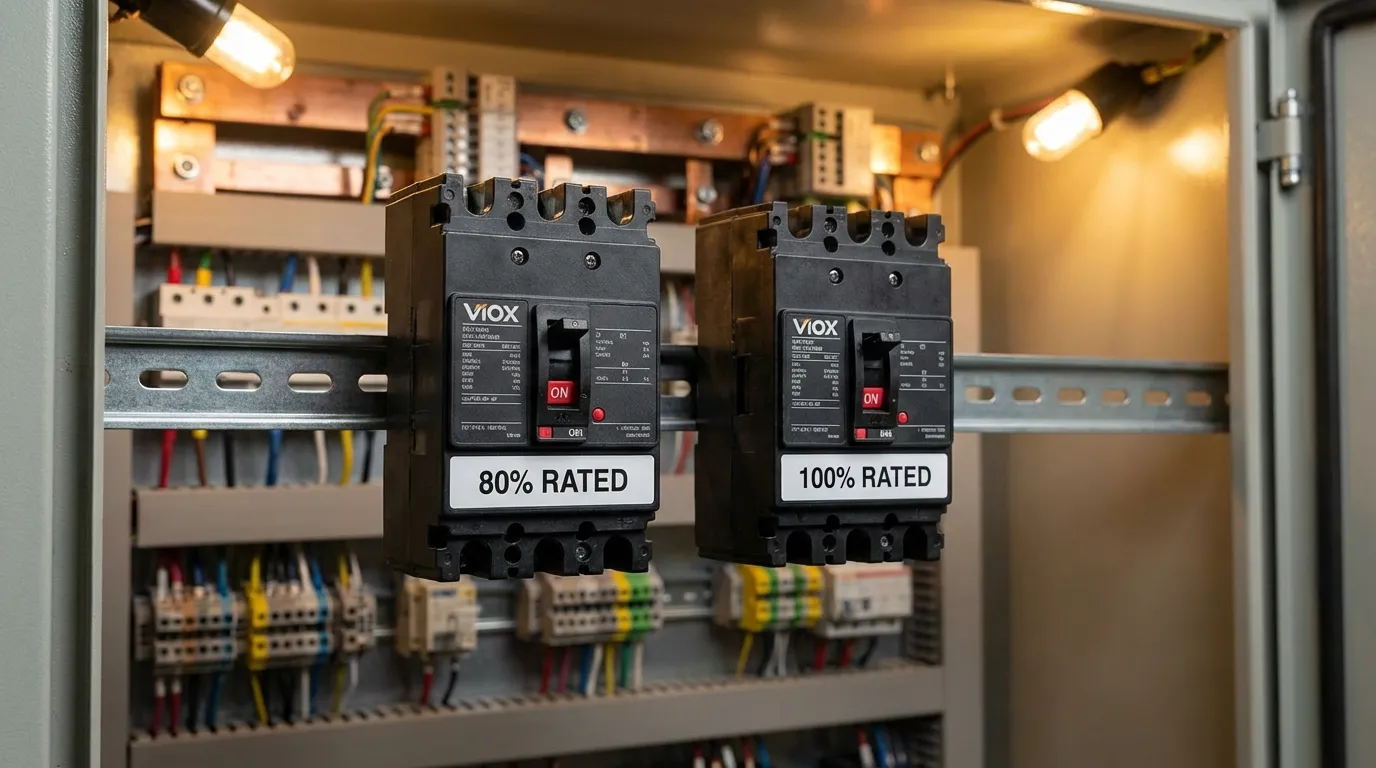
Ασφαλειοδιακόπτες με ονομαστική τιμή 80%: Το πρότυπο
Ένας ασφαλειοδιακόπτης με ονομαστική τιμή 80% είναι το βιομηχανικό πρότυπο και αντιπροσωπεύει την πλειονότητα των διακοπτών σε οικιακές και εμπορικές εφαρμογές. Η ονομασία “80%” δεν σημαίνει ότι ο διακόπτης μπορεί να μεταφέρει μόνο 80% της ονομαστικής του τιμής—μάλλον, υποδεικνύει ότι όταν εγκαθίσταται σε έναν τυπικό κλειστό πίνακα, ο διακόπτης μπορεί να χειριστεί με ασφάλεια συνεχή φορτία στο 80% της ονομαστικής του τιμής.
Αυτός ο περιορισμός προέρχεται από το Άρθρο 210.20(A) του NEC, το οποίο απαιτεί οι συσκευές προστασίας από υπερένταση να έχουν μέγεθος τουλάχιστον 125% του συνεχούς φορτίου συν 100% του μη συνεχούς φορτίου. Δεδομένου ότι το 80% είναι το μαθηματικό αντίστροφο του 125%, αυτοί οι διακόπτες αναφέρονται συνήθως ως “ονομαστικής τιμής 80%”.”
Παράδειγμα: Για να προστατεύσετε ένα συνεχές φορτίο 100A με έναν τυπικό διακόπτη, πρέπει να διαστασιολογήσετε τον διακόπτη στα 125A (100A × 1,25 = 125A). Ο διακόπτης 125A θα λειτουργεί τότε στο 80% της χωρητικότητάς του (100A ÷ 125A = 80%).
Ασφαλειοδιακόπτες με ονομαστική τιμή 100%: Η εξαίρεση
Ένας ασφαλειοδιακόπτης με ονομαστική τιμή 100% έχει υποβληθεί σε πρόσθετες δοκιμές σύμφωνα με το UL 489 Ενότητα 7.1.4 για να επαληθευτεί ότι μπορεί να μεταφέρει την πλήρη ονομαστική του τιμή συνεχώς όταν εγκαθίσταται σε μια συγκεκριμένη διαμόρφωση περιβλήματος. Αυτοί οι διακόπτες κατασκευάζονται με βελτιωμένα χαρακτηριστικά θερμικής διαχείρισης και πρέπει να εγκαθίστανται σύμφωνα με τις αυστηρές προδιαγραφές του κατασκευαστή σχετικά με:
- Ελάχιστο μέγεθος και διαστάσεις περιβλήματος
- Απαιτούμενα ανοίγματα εξαερισμού (συνήθως 7 τετραγωνικές ίντσες πάνω και κάτω)
- Προδιαγραφές αγωγού (μόνωση 90°C με ονομαστική τιμή 75°C)
- Προδιαγραφές ροπής ακροδεκτών
- Σωστή απόσταση από τα παρακείμενα εξαρτήματα
Όταν πληρούνται αυτές οι συνθήκες και το συγκρότημα είναι καταχωρημένο για λειτουργία 100%, η εξαίρεση του Άρθρου 210.20(A) του NEC επιτρέπει τη διαστασιολόγηση του διακόπτη ακριβώς στο 100% του συνεχούς φορτίου συν 100% του μη συνεχούς φορτίου—εξαλείφοντας τον πολλαπλασιαστή 125%.
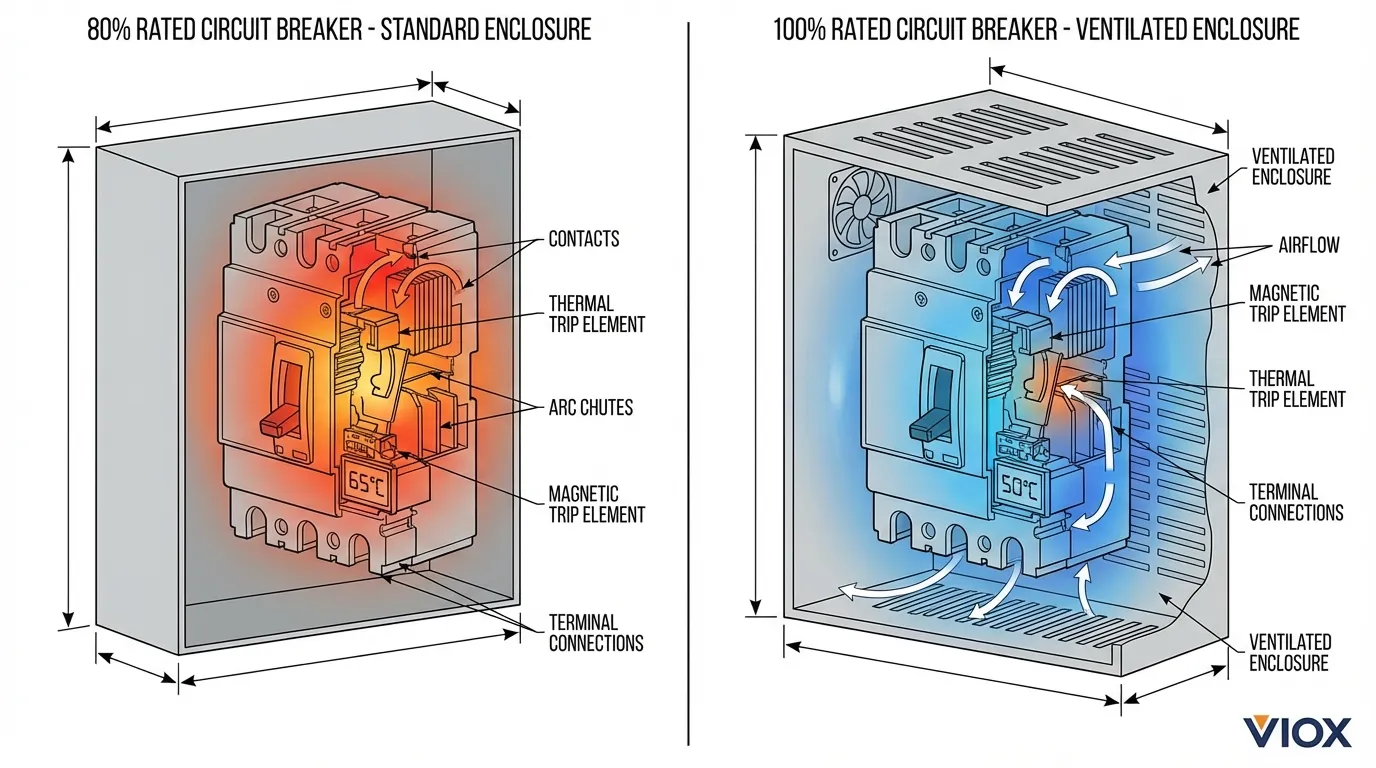
Βασικές διαφορές μεταξύ των διακοπτών με ονομαστική τιμή 80% και 100%
| Χαρακτηριστικό γνώρισμα | Διακόπτης με ονομαστική τιμή 80% | Διακόπτης Ονομαστικής Τιμής 100% |
|---|---|---|
| Χωρητικότητα συνεχούς φορτίου | 80% της ονομαστικής τιμής | 100% της ονομαστικής τιμής |
| Απαίτηση διαστασιολόγησης NEC | 125% του συνεχούς φορτίου + 100% μη συνεχούς | 100% του συνεχούς φορτίου + 100% μη συνεχούς |
| Παράδειγμα για συνεχές φορτίο 100A | Απαιτεί διακόπτη 125A | Απαιτεί διακόπτη 100A |
| Απαιτήσεις περιβλήματος | Τυπική εγκατάσταση πίνακα | Καταχωρημένο συγκρότημα με συγκεκριμένο αερισμό |
| Απαιτήσεις αγωγού | Τυπική ονομαστική τιμή 75°C | Μόνωση 90°C σε ονομαστική τιμή 75°C |
| Πρότυπο δοκιμής | Βασικές δοκιμές UL 489 | UL 489 + πρόσθετες δοκιμές ονομαστικής τιμής 100% |
| Τυπικές εφαρμογές | Κατοικίες, ελαφριές επαγγελματικές | Βιομηχανικές, κέντρα δεδομένων, λειτουργίες 24/7 |
| Κόστος | Χαμηλότερο αρχικό κόστος | 10-30% υψηλότερο κόστος |
| Διαθεσιμότητα | Ευρέως διαθέσιμες όλες οι ονομαστικές τιμές | Συνήθως πλαίσιο 400A και άνω |
| Εξοικονόμηση χώρου πίνακα | Μπορεί να απαιτεί μεγαλύτερο πλαίσιο | Επιτρέπει μικρότερο μέγεθος πλαισίου |
Κατανόηση των συνεχών έναντι των μη συνεχών φορτίων
Η διάκριση μεταξύ συνεχών και μη συνεχών φορτίων είναι θεμελιώδης για τη σωστή επιλογή διακόπτη. Σύμφωνα με το Άρθρο 100 του NEC, ένα συνεχές φορτίο ορίζεται ως ένα φορτίο όπου το μέγιστο ρεύμα αναμένεται να συνεχιστεί για τρεις ώρες ή περισσότερο. Αυτό περιλαμβάνει:
- Συστήματα HVAC που λειτουργούν κατά τη διάρκεια των περιόδων αιχμής
- Βιομηχανικά μηχανήματα σε εγκαταστάσεις παραγωγής 24/7
- Ράφια διακομιστών κέντρου δεδομένων και συστήματα ψύξης
- Εμπορικός φωτισμός σε καταστήματα λιανικής ή γραφεία
- Εξοπλισμός ψύξης σε μονάδες επεξεργασίας τροφίμων
- Σταθμοί φόρτισης EV κατά τη διάρκεια εκτεταμένων συνεδριών φόρτισης
Μη συνεχόμενα φορτία λειτουργούν για λιγότερο από τρεις ώρες στο μέγιστο ρεύμα, όπως:
- Οικιακές συσκευές με κύκλους λειτουργίας
- Διαλείπουσες λειτουργίες κινητήρα
- Προσωρινός κατασκευαστικός εξοπλισμός
- Συστήματα δημιουργίας αντιγράφων ασφαλείας που σπάνια ενεργοποιούνται
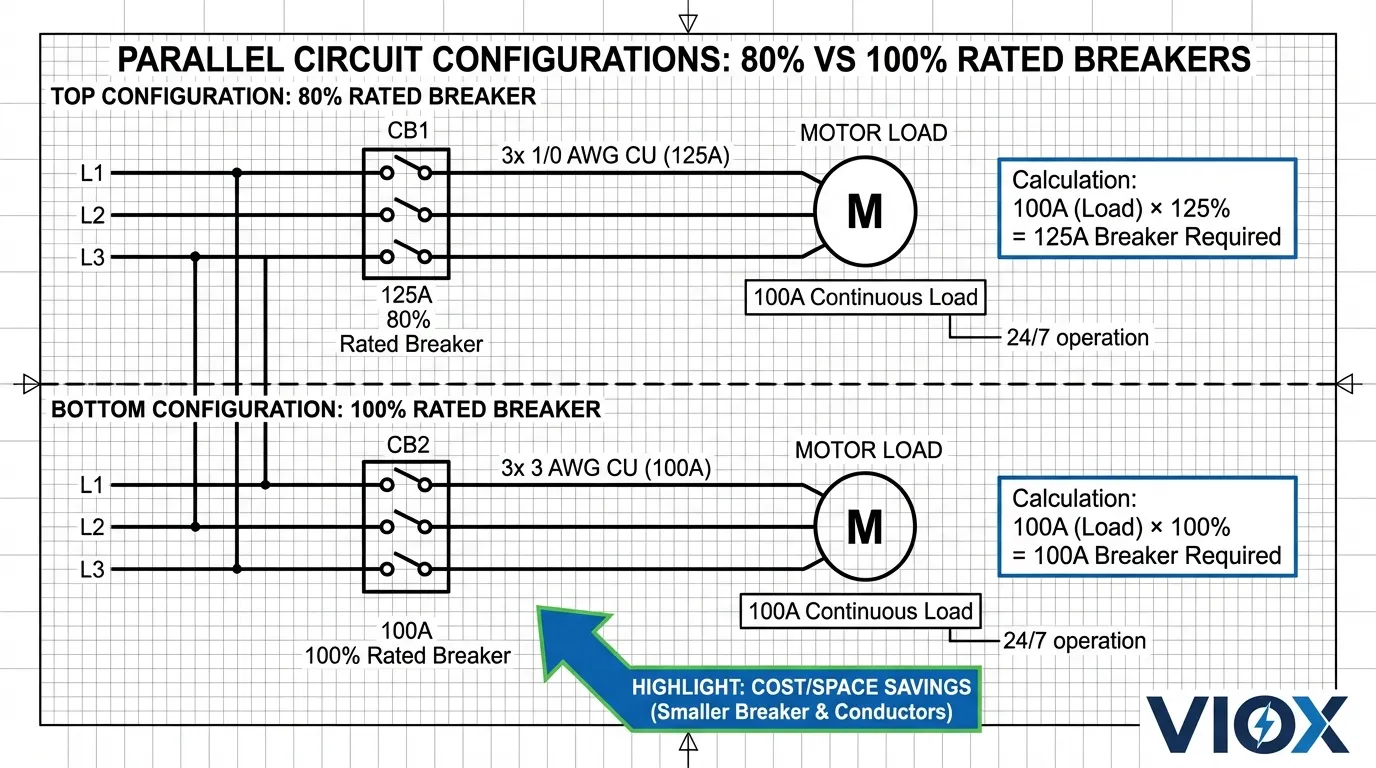
Πότε να χρησιμοποιήσετε ασφαλειοδιακόπτες με ονομαστική τιμή 80%
Οι τυπικοί διακόπτες με ονομαστική τιμή 80% παραμένουν η πιο οικονομική επιλογή για πολλές εφαρμογές:
Ιδανικές εφαρμογές:
- Κατά κύριο λόγο μη συνεχόμενα φορτία: Όταν τα φορτία λειτουργούν για λιγότερο από τρεις ώρες, η απαίτηση διαστασιολόγησης 125% δεν ισχύει, καθιστώντας τους διακόπτες 80% οικονομικά αποδοτικούς.
- Εγκαταστάσεις σε κατοικίες: Τα περισσότερα οικιακά κυκλώματα εξυπηρετούν διαλείποντα φορτία (συσκευές, φωτισμός με διακύμανση πληρότητας), όπου το επιπλέον κόστος των διακοπτών ονομαστικής τιμής 100% δεν παρέχει κανένα όφελος.
- Κυκλώματα Μικτών Φορτίων: Όταν μπορείτε να διαχωρίσετε τα συνεχή και μη συνεχή φορτία σε ξεχωριστά κυκλώματα, οι διακόπτες ονομαστικής τιμής 80% σε μη συνεχή κυκλώματα προσφέρουν εξοικονόμηση.
- Μικρότερες Απαιτήσεις Αμπέρ: Κάτω από 400A, οι διακόπτες ονομαστικής τιμής 100% είναι λιγότερο συχνά διαθέσιμοι και πιο ακριβοί σε σχέση με τις πιθανές εξοικονομήσεις.
- Τυπικές Διαμορφώσεις Πινάκων: Όταν χρησιμοποιείτε προκατασκευασμένους πίνακες διανομής ή κέντρα φορτίων που δεν είναι καταχωρημένα για συγκροτήματα ονομαστικής τιμής 100%.
Εκτιμήσεις Κόστους:
Για μια παροχή 200A με 160A μη συνεχούς φορτίου, ένας διακόπτης ονομαστικής τιμής 200A 80% κοστίζει σημαντικά λιγότερο από έναν διακόπτη ονομαστικής τιμής 200A 100%, ενώ παρέχει πανομοιότυπη προστασία.
Πότε να Χρησιμοποιείτε Διακόπτες Κυκλώματος Ονομαστικής Τιμής 100%
Το επιπλέον κόστος των διακοπτών ονομαστικής τιμής 100% μπορεί να δικαιολογηθεί σε συγκεκριμένα σενάρια όπου παρέχουν απτά οφέλη:
Ιδανικές εφαρμογές:
- Υψηλά Συνεχή Φορτία: Οι βιομηχανικές εγκαταστάσεις με κινητήρες, HVAC ή εξοπλισμό διεργασιών που λειτουργούν 24/7 επωφελούνται από την εξάλειψη της ποινής διαστασιολόγησης 125%.
- Πίνακες με Περιορισμένο Χώρο: Όταν ο χώρος του πίνακα είναι περιορισμένος, η χρήση ενός διακόπτη ονομαστικής τιμής 100% αποφεύγει το άλμα στο επόμενο μεγαλύτερο μέγεθος πλαισίου. Για παράδειγμα, ένας διακόπτης ονομαστικής τιμής 250A 100% μπορεί να αντικαταστήσει έναν διακόπτη ονομαστικής τιμής 300A 80% (ο οποίος απαιτεί πλαίσιο 400A), εξοικονομώντας σημαντικό χώρο στον πίνακα.
- Κέντρα Δεδομένων και Αίθουσες Διακομιστών: Όπου η συνεχής ψύξη και τα φορτία διακομιστών απαιτούν αξιόπιστη χωρητικότητα 100% χωρίς υπερδιαστασιολόγηση.
- Βελτιστοποίηση Κόστους σε Υψηλότερα Αμπέρ: Στα 400A και άνω, η διαφορά κόστους μεταξύ των μεγεθών πλαισίου μπορεί να καταστήσει τους διακόπτες ονομαστικής τιμής 100% πιο οικονομικούς από την υπερδιαστασιολόγηση στο επόμενο πλαίσιο.
- Εγκαταστάσεις σε Θερμό Περιβάλλον: Τα εξωτερικά περιβλήματα, ο εξοπλισμός οροφής ή οι τοποθεσίες υψηλής θερμοκρασίας περιβάλλοντος επωφελούνται από την ενισχυμένη θερμική απόδοση των συγκροτημάτων ονομαστικής τιμής 100%.
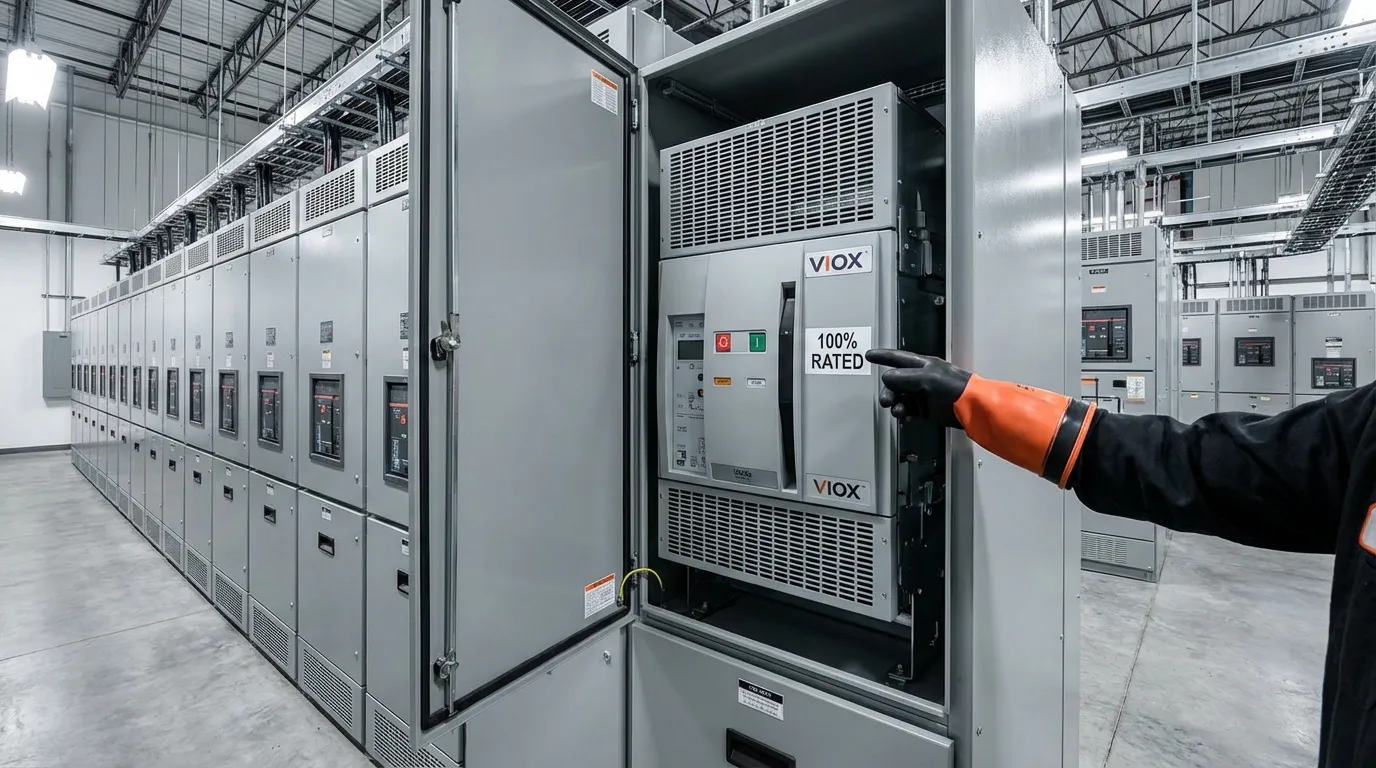
Παράδειγμα Ανάλυσης Κόστους στον Πραγματικό Κόσμο:
Σενάριο: Συνεχές φορτίο 250A για μια μεταποιητική μονάδα
Επιλογή 1 – Διακόπτης Ονομαστικής Τιμής 80%:
- Απαιτούμενο μέγεθος διακόπτη: 250A × 125% = 312,5A → Διακόπτης 350A
- Απαιτούμενο μέγεθος πλαισίου: Πλαίσιο 400A
- Μέγεθος αγωγού: 350 kcmil χαλκός
- Εκτιμώμενο κόστος: $1.200 (διακόπτης) + $2.800 (αγωγοί) = $4.000
Επιλογή 2 – Διακόπτης Ονομαστικής Τιμής 100%:
- Απαιτούμενο μέγεθος διακόπτη: 250A × 100% = Διακόπτης 250A
- Απαιτούμενο μέγεθος πλαισίου: Πλαίσιο 250A
- Μέγεθος αγωγού: 250 kcmil χαλκός
- Εκτιμώμενο κόστος: $1.400 (διακόπτης) + $2.200 (αγωγοί) = $3.600
Εξοικονόμηση: $400 (μείωση 10%) συν μικρότερο αποτύπωμα πίνακα
Απαιτήσεις Εγκατάστασης για Διακόπτες Ονομαστικής Τιμής 100%
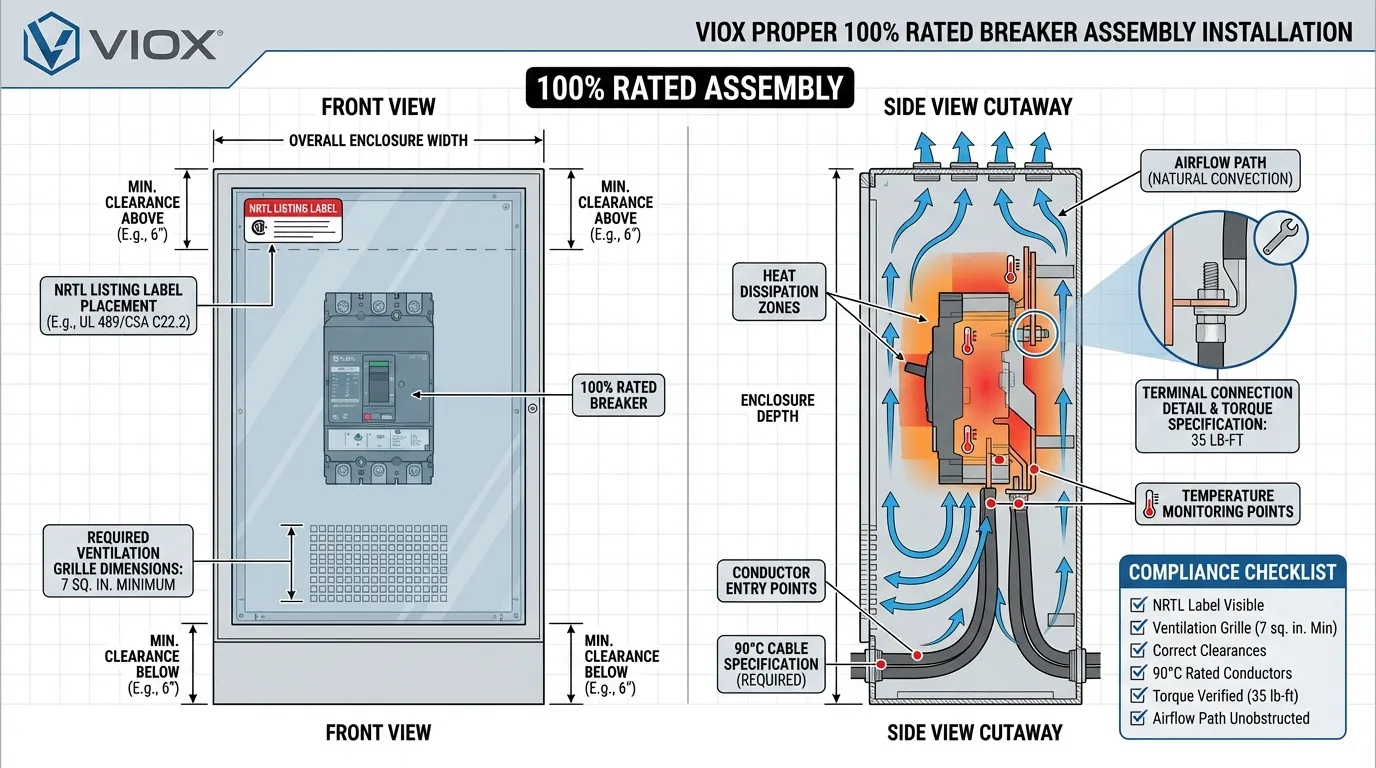
Η επίτευξη της ονομαστικής τιμής 100% απαιτεί αυστηρή τήρηση των προδιαγραφών του κατασκευαστή. Η απλή εγκατάσταση ενός διακόπτη ονομαστικής τιμής 100% σε έναν τυπικό πίνακα δεν εγγυάται την απόδοση 100% — ολόκληρο το συγκρότημα πρέπει να είναι καταχωρημένο.
Κρίσιμες Απαιτήσεις:
- Καταχωρημένο Συγκρότημα: Η πλήρης εγκατάσταση (διακόπτης + περίβλημα + αγωγοί) πρέπει να είναι καταχωρημένη από ένα Εθνικά Αναγνωρισμένο Εργαστήριο Δοκιμών (NRTL) για λειτουργία 100%.
- Προδιαγραφές Περιβλήματος:
- Ελάχιστες διαστάσεις περιβλήματος ανά κατασκευαστή
- Απαιτούμενα ανοίγματα εξαερισμού (συνήθως τουλάχιστον 7 τετραγωνικές ίντσες στο πάνω και κάτω μέρος)
- Σωστή απόσταση μεταξύ των διακοπτών και των τοιχωμάτων του περιβλήματος
- Όρια θερμοκρασίας σαφώς σημειωμένα
- Απαιτήσεις αγωγού:
- Υποχρεωτική βαθμολογία μόνωσης 90°C
- Υπολογισμός της φέρουσας ικανότητας σε στήλη 75°C του NEC Πίνακα 310.16
- Σωστή ροπή τερματισμού σύμφωνα με τις προδιαγραφές του κατασκευαστή
- Επαληθευμένες ονομαστικές τιμές θερμοκρασίας ακροδεκτών
- Τεκμηρίωση:
- Πρέπει να ακολουθούνται ακριβώς οι οδηγίες εγκατάστασης του κατασκευαστή
- Η ετικέτα καταχώρησης πρέπει να είναι επικολλημένη στο περίβλημα
- Η αρχή επιθεώρησης πρέπει να επαληθεύσει τη συμμόρφωση
Συνήθεις Παρανοήσεις και Λάθη
Παρανόηση 1: “Οι Διακόπτες Ονομαστικής Τιμής 100% Είναι Ισχυρότεροι”
Πραγματικότητα: Τόσο οι διακόπτες ονομαστικής τιμής 80% όσο και οι διακόπτες ονομαστικής τιμής 100% της ίδιας έντασης έχουν πανομοιότυπες ονομαστικές τιμές βραχυκυκλώματος και ικανότητα διακοπής. Η διαφορά έγκειται αποκλειστικά στη συνεχή ικανότητα μεταφοράς ρεύματος υπό κλειστές συνθήκες.
Παρανόηση 2: “Μπορώ να Αντικαταστήσω έναν Διακόπτη 80% με έναν Διακόπτη 100%”
Πραγματικότητα: Η ονομαστική τιμή 100% ισχύει για ολόκληρο το συγκρότημα, όχι μόνο για τον διακόπτη. Η εγκατάσταση ενός διακόπτη ονομαστικής τιμής 100% σε ένα μη καταχωρημένο περίβλημα το επαναφέρει σε λειτουργία 80%.
Παρανόηση 3: “Οι Διακόπτες Ονομαστικής Τιμής 80% Δεν Μπορούν να Φέρουν Πλήρες Φορτίο”
Πραγματικότητα: Οι διακόπτες ονομαστικής τιμής 80% μπορούν να φέρουν 100% της ονομαστικής τους τιμής για μη συνεχή φορτία (κάτω των 3 ωρών). Ο περιορισμός 80% ισχύει μόνο για συνεχή λειτουργία.
Παρανόηση 4: “Όλα τα Φορτία Είναι Συνεχή”
Πραγματικότητα: Πολλά φορτία έχουν κύκλους λειτουργίας ή διαλείπουσα λειτουργία. Η σωστή κατηγοριοποίηση των φορτίων μπορεί να αποφύγει την περιττή υπερδιαστασιολόγηση.
Παρανόηση 5: “Οι Διακόπτες Ονομαστικής Τιμής 100% Δεν Χρειάζονται Διαστασιολόγηση Αγωγών”
Πραγματικότητα: Οι αγωγοί πρέπει να εξακολουθούν να διαστασιολογούνται σύμφωνα με το Άρθρο 310 του NEC, χρησιμοποιώντας μόνωση 90°C σε φέρουσα ικανότητα 75°C. Η ονομαστική τιμή του διακόπτη δεν παρακάμπτει τις απαιτήσεις φέρουσας ικανότητας των αγωγών.
Συμμόρφωση με τον Κώδικα και Ρυθμιστικό Πλαίσιο
Περίληψη Απαιτήσεων NEC:
Άρθρο 210.20(A) – Υπερ current προστασία κυκλώματος διακλάδωσης:
“Όταν ένα κύκλωμα διακλάδωσης τροφοδοτεί συνεχή φορτία ή οποιονδήποτε συνδυασμό συνεχών και μη συνεχών φορτίων, η ονομαστική τιμή της συσκευής υπερ current προστασίας δεν πρέπει να είναι μικρότερη από το μη συνεχές φορτίο συν το 125 τοις εκατό του συνεχούς φορτίου.”
Exception:
“Όταν το συγκρότημα, συμπεριλαμβανομένων των συσκευών υπερ current προστασίας που προστατεύουν τα κυκλώματα διακλάδωσης, είναι καταχωρημένο για λειτουργία στο 100 τοις εκατό της ονομαστικής του τιμής, η ονομαστική τιμή αμπέρ της συσκευής υπερ current προστασίας επιτρέπεται να μην είναι μικρότερη από το άθροισμα του συνεχούς φορτίου συν το μη συνεχές φορτίο.”
Αυτή η εξαίρεση εμφανίζεται σε όλο το NEC στα:
- Άρθρο 215.2(A) – Τροφοδότες
- Άρθρο 230.42(A) – Αγωγοί Παροχής
- Άρθρο 430.62 – Αγωγοί Τροφοδοσίας Κινητήρα
Απαιτήσεις Δοκιμών UL 489:
Τυπικές Δοκιμές (Όλοι οι Διακόπτες):
- Ονομαστικό ρεύμα 100%TP3T σε ελεύθερο αέρα στους 40°C
- Επαλήθευση βαθμονόμησης θερμικής απόζευξης
- Δοκιμές ικανότητας διακοπής βραχυκυκλώματος
- Δοκιμές αντοχής (6.000 λειτουργίες)
Πρόσθετες Δοκιμές Ονομαστικής Τιμής 100%TP3T:
- Λειτουργία σε περίβλημα με ρεύμα 100%TP3T
- Επαλήθευση συγκεκριμένου μεγέθους περιβλήματος και εξαερισμού
- Μετρήσεις αύξησης θερμοκρασίας ακροδεκτών
- Δοκιμές συμβατότητας μόνωσης αγωγών
- Δοκιμές διακύμανσης θερμοκρασίας περιβάλλοντος
Επιλογή του Σωστού Διακόπτη για την Εφαρμογή σας
Πλαίσιο λήψης αποφάσεων:
Βήμα 1: Ανάλυση Φορτίου
- Υπολογισμός συνολικού συνδεδεμένου φορτίου
- Προσδιορίστε συνεχή έναντι μη συνεχών φορτίων
- Καθορίστε τη διάρκεια φορτίου (>3 ώρες = συνεχές)
- Λάβετε υπόψη τη μελλοντική αύξηση του φορτίου
Βήμα 2: Υπολογισμός Συμμόρφωσης με τον Κώδικα
Για το Διακόπτης ονομαστικής τιμής 80%TP3T:
Μέγεθος Διακόπτη = (Συνεχές Φορτίο × 1,25) + Μη Συνεχές Φορτίο
Για το Διακόπτης ονομαστικής τιμής 100%TP3T:
Μέγεθος Διακόπτη = Συνεχές Φορτίο + Μη Συνεχές Φορτίο
Βήμα 3: Οικονομική Ανάλυση
- Συγκρίνετε το κόστος των διακοπτών (80%TP3T έναντι 100%TP3T)
- Υπολογίστε τις διαφορές στο κόστος των αγωγών
- Αξιολογήστε τις απαιτήσεις χώρου στον πίνακα
- Λάβετε υπόψη την εργασία εγκατάστασης
Βήμα 4: Τεχνική Επαλήθευση
- Επιβεβαιώστε τη διαθεσιμότητα διακόπτη ονομαστικής τιμής 100%TP3T στο απαιτούμενο μέγεθος
- Επαληθεύστε τη συμβατότητα του περιβλήματος με την ονομαστική τιμή 100%TP3T
- Ελέγξτε τις ονομαστικές τιμές θερμοκρασίας των αγωγών
- Ελέγξτε τις απαιτήσεις εγκατάστασης του κατασκευαστή
Βήμα 5: Μακροπρόθεσμες Εκτιμήσεις
- Προσβασιμότητα συντήρησης
- Μελλοντική χωρητικότητα επέκτασης
- Διαθεσιμότητα ανταλλακτικών
- Συνθήκες περιβάλλοντος λειτουργίας
Παραδείγματα Πρακτικής Εφαρμογής
Παράδειγμα 1: Αίθουσα Διακομιστών Κέντρου Δεδομένων
Φορτίο: 180A συνεχές (διακομιστές + ψύξη)
Ώρες Λειτουργίας: 24/7/365
Λύση 80%TP3T:
- Διακόπτης: 225A (180A × 1,25)
- Πλαίσιο: 250A
- Αγωγοί: 4/0 AWG χαλκός
- Χώρος στον πίνακα: 3 πόλοι
- Κόστος: ~$1.800
Λύση 100%TP3T:
- Διακόπτης: 200A (180A × 1,0)
- Πλαίσιο: 225A
- Αγωγοί: 3/0 AWG χαλκός
- Χώρος στον πίνακα: 3 πόλοι
- Κόστος: ~$1.650
- Εξοικονόμηση: $150 + μικρότερο αποτύπωμα
Παράδειγμα 2: Εμπορικό Σύστημα HVAC
Φορτίο: 120A συνεχές (λειτουργία ψύκτη κατά τη διάρκεια του καλοκαιριού)
Ώρες Λειτουργίας: 12 ώρες/ημέρα, 4 μήνες/έτος
Ανάλυση: Ενώ ο ψύκτης λειτουργεί >3 ώρες την ημέρα, η εποχιακή φύση και η ημερήσια κυκλική λειτουργία το καθιστούν οριακή περίπτωση. Ένας διακόπτης ονομαστικής τιμής 80%TP3T στα 150A παρέχει επαρκή προστασία με χαμηλότερο κόστος και απλούστερη εγκατάσταση από ένα συγκρότημα ονομαστικής τιμής 100%TP3T.
Σύσταση: Διακόπτης ονομαστικής τιμής 150A 80%TP3T
Παράδειγμα 3: Γραμμή Παραγωγής Κατασκευής
Φορτίο: 400A συνεχόμενο (κινητήρες, μεταφορικές ταινίες, εξοπλισμός διεργασιών)
Ώρες Λειτουργίας: 24/7 εκτός Σαββατοκύριακου
Λύση 80%TP3T:
- Διακόπτης: 500A (400A × 1.25)
- Πλαίσιο: 600A
- Αγωγοί: (2) 500 kcmil ανά φάση
- Κόστος: ~4.500 €
Λύση 100%TP3T:
- Διακόπτης: 400A (400A × 1.0)
- Πλαίσιο: 400A
- Αγωγοί: (2) 350 kcmil ανά φάση
- Κόστος: ~3.800 €
- Εξοικονόμηση: 700 € + σημαντική μείωση χώρου στον πίνακα
Πίνακας Σύγκρισης: Διακόπτες Ονομαστικής Τιμής 80% έναντι 100%
| Σενάριο Φορτίου | Λύση Ονομαστικής Τιμής 80% | Λύση Ονομαστικής Τιμής 100% | Προτεινόμενη επιλογή |
|---|---|---|---|
| 100A Συνεχόμενο | Διακόπτης 125A, αγωγοί 125A | Διακόπτης 100A, αγωγοί 100A | 100% (εάν είναι διαθέσιμο) |
| 100A Μη Συνεχόμενο | Διακόπτης 100A, αγωγοί 100A | Δεν ισχύει | 80% (τυπικό) |
| 50A Συνεχόμενο + 50A Μη Συνεχόμενο | Διακόπτης 125A [(50×1.25)+50] | Διακόπτης 100A [50+50] | 80% (απλούστερο) |
| 400A Συνεχόμενο | Διακόπτης 500A (πλαίσιο 600A) | Διακόπτης 400A (πλαίσιο 400A) | 100% (εξοικονόμηση κόστους) |
| Οικιακή Παροχή | Τυπική διαστασιολόγηση σύμφωνα με τον υπολογισμό φορτίου | Σπάνια εφαρμόσιμο | 80% (τυπικό) |
| Βιομηχανικός Τροφοδότης | 125% του συνεχόμενου τμήματος | 100% εάν η συναρμολόγηση είναι καταχωρημένη | Ανάλυση κατά περίπτωση |
Ζητήματα Συντήρησης και Λειτουργίας
Για Εγκαταστάσεις Ονομαστικής Τιμής 80%:
- Εφαρμόζονται τυπικές διαδικασίες συντήρησης
- Συνιστάται θερμική απεικόνιση κατά τη διάρκεια των μέγιστων φορτίων
- Παρακολούθηση για σημάδια υπερθέρμανσης στους ακροδέκτες
- Επαληθεύστε ότι τα φορτία δεν έχουν αυξηθεί πέρα από την χωρητικότητα του 80%
Για Εγκαταστάσεις Ονομαστικής Τιμής 100%:
- Επαληθεύστε ότι τα ανοίγματα εξαερισμού παραμένουν χωρίς εμπόδια
- Επιβεβαιώστε ότι οι τροποποιήσεις του περιβλήματος δεν έχουν θέσει σε κίνδυνο την καταχώριση
- Ελέγξτε τις τερματίσεις των αγωγών σε διαστήματα που καθορίζονται από τον κατασκευαστή
- Διατηρήστε την τεκμηρίωση της καταχώρισης της συναρμολόγησης ονομαστικής τιμής 100%
- Παρακολουθήστε τις συνθήκες θερμοκρασίας περιβάλλοντος
- Επιθεωρήστε για σωστή ροή αέρα κατά τη λειτουργία
Βιομηχανικά Πρότυπα και Αναφορές
Τα ακόλουθα πρότυπα και κώδικες διέπουν τις ονομαστικές τιμές και τις εφαρμογές των αυτόματων διακοπτών:
- UL 489: Πρότυπο Ασφάλειας για Αυτόματους Διακόπτες Χυτού Περιβλήματος και Περιβλήματα Αυτόματων Διακοπτών
- NFPA 70 (NEC): Εθνικός Ηλεκτρολογικός Κώδικας, Άρθρα 210, 215, 230, 430
- CSA C22.2 No. 5: Καναδική Ένωση Προτύπων – Αυτόματοι Διακόπτες Χυτού Περιβλήματος
- IEC 60947-2: Χαμηλής τάσης πίνακες διανομής και ελέγχου – Αυτόματοι διακόπτες (διεθνής αναφορά)
- NEMA AB 1: Αυτόματοι Διακόπτες Χυτού Περιβλήματος και Διακόπτες Χυτού Περιβλήματος
- IEEE 1584: Οδηγός για την Εκτέλεση Υπολογισμών Κινδύνου Ηλεκτρικού Τόξου
Μελλοντικές τάσεις και εξελίξεις
Η ηλεκτρική βιομηχανία συνεχίζει να εξελίσσεται, με αρκετές τάσεις να επηρεάζουν τις ονομαστικές τιμές των αυτόματων διακοπτών:
- Έξυπνοι διακόπτες: Οι δυνατότητες ψηφιακής παρακολούθησης ενδέχεται να παρέχουν θερμική διαχείριση σε πραγματικό χρόνο, επεκτείνοντας ενδεχομένως τις εφαρμογές ονομαστικής τιμής 100%.
- Εξοπλισμός Υψηλότερης Απόδοσης: Τα σύγχρονα ηλεκτρονικά φορτία παράγουν λιγότερη θερμότητα, μειώνοντας ενδεχομένως την ανάγκη για διακόπτες ονομαστικής τιμής 100% σε ορισμένες εφαρμογές.
- Ενσωμάτωση Ανανεώσιμων Πηγών Ενέργειας: Τα ηλιακά και τα συστήματα αποθήκευσης μπαταριών με συνεχή φόρτιση/εκφόρτιση ενδέχεται να αυξήσουν τη ζήτηση για λύσεις ονομαστικής τιμής 100%.
- Ανάπτυξη Κέντρων Δεδομένων: Η συνεχής επέκταση των εγκαταστάσεων υπολογιστών υψηλής πυκνότητας οδηγεί τη ζήτηση για συγκροτήματα ονομαστικής τιμής 100% με αποδοτικότητα χώρου.
- Εναρμονισμένα Πρότυπα: Οι συνεχιζόμενες προσπάθειες εναρμόνισης των προτύπων NEC, IEC και άλλων διεθνών προτύπων ενδέχεται να επηρεάσουν τις μελλοντικές μεθοδολογίες αξιολόγησης.
Βασικά συμπεράσματα
- Όλοι οι αυτόματοι διακόπτες κυκλώματος έχουν σχεδιαστεί για να μεταφέρουν το 100% της ονομαστικής τους τιμής υπό ιδανικές συνθήκες (ελεύθερος αέρας, θερμοκρασία περιβάλλοντος 40°C), αλλά οι πραγματικές εγκαταστάσεις σε κλειστούς χώρους απαιτούν μείωση της ονομαστικής τιμής για συνεχή φορτία.
- Οι διακόπτες ονομαστικής τιμής 80% απαιτούν μέγεθος 125% για συνεχή φορτία σύμφωνα με το NEC, καθιστώντας τους κατάλληλους για μη συνεχείς ή μικτές εφαρμογές φορτίου όπου το κόστος είναι πρωταρχικής σημασίας.
- Οι διακόπτες ονομαστικής τιμής 100% εξαλείφουν την ποινή μεγέθους 125% αλλά απαιτούν συγκεκριμένες διαμορφώσεις περιβλήματος, σωστό αερισμό και αγωγούς 90°C για να διατηρήσουν την ονομαστική τους τιμή.
- Η “ονομαστική τιμή 100%” ισχύει για ολόκληρο το συγκρότημα, όχι μόνο για τον ίδιο τον διακόπτη—δεν μπορείτε απλώς να αντικαταστήσετε έναν διακόπτη 80% με έναν διακόπτη 100% και να περιμένετε απόδοση 100%.
- Τα οικονομικά οφέλη των διακοπτών ονομαστικής τιμής 100% αυξάνονται με την ένταση του ρεύματος—στα 400A και άνω, η εξοικονόμηση κόστους από την αποφυγή του επόμενου μεγαλύτερου μεγέθους πλαισίου συχνά δικαιολογεί το υψηλότερο κόστος του διακόπτη.
- Τα συνεχή φορτία ορίζονται ως λειτουργία για 3 ώρες ή περισσότερο—η σωστή κατηγοριοποίηση των φορτίων σας είναι απαραίτητη για τη σωστή επιλογή διακόπτη και τη συμμόρφωση με τους κώδικες.
- Οι απαιτήσεις εγκατάστασης για συγκροτήματα ονομαστικής τιμής 100% είναι αυστηρές—ο αερισμός, οι προδιαγραφές των αγωγών και το μέγεθος του περιβλήματος πρέπει να ακολουθούν ακριβώς τις οδηγίες του κατασκευαστή.
- Η εξοικονόμηση χώρου μπορεί να είναι σημαντική—οι διακόπτες ονομαστικής τιμής 100% επιτρέπουν μικρότερα μεγέθη πλαισίου, μειώνοντας το αποτύπωμα του πίνακα σε εγκαταστάσεις με περιορισμένο χώρο.
- Και οι δύο τύποι διακοπτών έχουν πανομοιότυπη προστασία από βραχυκύκλωμα—η διαφορά στην ονομαστική τιμή επηρεάζει μόνο τη συνεχή χωρητικότητα ρεύματος, όχι την απόδοση διακοπής.
- Η τεκμηρίωση και η καταχώριση είναι κρίσιμες—τα συγκροτήματα ονομαστικής τιμής 100% πρέπει να είναι σωστά καταχωρισμένα από ένα NRTL, με ετικέτες καταχώρισης επικολλημένες στο περίβλημα για έγκριση επιθεώρησης.
Συχνές Ερωτήσεις
Ε: Μπορώ να χρησιμοποιήσω έναν διακόπτη ονομαστικής τιμής 100% σε έναν τυπικό πίνακα;
Α: Όχι. Η ονομαστική τιμή 100% ισχύει μόνο όταν ο διακόπτης είναι εγκατεστημένος σε ένα περίβλημα που έχει δοκιμαστεί και καταχωριστεί ως συγκρότημα ονομαστικής τιμής 100%. Η εγκατάσταση ενός διακόπτη ονομαστικής τιμής 100% σε ένα μη καταχωρισμένο περίβλημα σημαίνει ότι πρέπει να εφαρμόζεται στο 80% για συνεχή φορτία.
Ε: Είναι οι διακόπτες ονομαστικής τιμής 100% πιο αξιόπιστοι από τους διακόπτες ονομαστικής τιμής 80%;
Α: Όχι απαραίτητα. Και οι δύο τύποι υποβάλλονται σε αυστηρές δοκιμές UL 489 και έχουν την ίδια αξιοπιστία όταν εφαρμόζονται σωστά εντός των ονομαστικών τους τιμών. Η διαφορά έγκειται στη συνεχή χωρητικότητα ρεύματος υπό κλειστές συνθήκες, όχι στη συνολική αξιοπιστία ή ποιότητα.
Ε: Χρειάζομαι ειδικούς αγωγούς για διακόπτες ονομαστικής τιμής 100%;
Α: Ναι. Το NEC απαιτεί αγωγούς με μόνωση 90°C, αν και η αγωγιμότητα υπολογίζεται χρησιμοποιώντας τη στήλη 75°C του Πίνακα 310.16 του NEC. Αυτό διασφαλίζει ότι οι αγωγοί μπορούν να χειριστούν τη θερμότητα που παράγεται από τη συνεχή φόρτιση 100%.
Ε: Πώς μπορώ να ξέρω εάν ο πίνακάς μου είναι καταχωρισμένος για λειτουργία ονομαστικής τιμής 100%;
Α: Ελέγξτε για μια ετικέτα καταχώρισης NRTL στο περίβλημα που αναφέρει συγκεκριμένα “Καταχωρισμένο για λειτουργία ονομαστικής τιμής 100%” ή παρόμοια διατύπωση. Οι οδηγίες εγκατάστασης του κατασκευαστή θα καθορίζουν επίσης τις απαιτήσεις ονομαστικής τιμής 100%. Εάν υπάρχει οποιαδήποτε αμφιβολία, επικοινωνήστε με τον κατασκευαστή του πίνακα.
Ε: Μπορώ να αναμίξω διακόπτες ονομαστικής τιμής 80% και 100% στον ίδιο πίνακα;
Α: Ναι, αλλά κάθε διακόπτης πρέπει να εφαρμόζεται σύμφωνα με την ονομαστική του τιμή. Οι διακόπτες ονομαστικής τιμής 100% πρέπει να πληρούν όλες τις απαιτήσεις συναρμολόγησης (αερισμός, διάστημα κ.λπ.), ενώ οι διακόπτες ονομαστικής τιμής 80% ακολουθούν τις τυπικές πρακτικές εγκατάστασης. Κάθε κύκλωμα πρέπει να έχει το κατάλληλο μέγεθος για τον τύπο του διακόπτη του.
Ε: Είναι οι διακόπτες ονομαστικής τιμής 100% διαθέσιμοι σε οικιακά μεγέθη (15A-50A);
Α: Σπάνια. Η ονομαστική τιμή 100% είναι πιο συνηθισμένη σε βιομηχανικούς και εμπορικούς διακόπτες 400A και άνω. Κάτω από 400A, το κόστος και η πολυπλοκότητα των συγκροτημάτων ονομαστικής τιμής 100% συνήθως υπερτερούν των πλεονεκτημάτων για τυπικές εφαρμογές. Οι περισσότερες οικιακές και ελαφριές εμπορικές εγκαταστάσεις χρησιμοποιούν τυπικούς διακόπτες ονομαστικής τιμής 80%.
Ε: Τι συμβαίνει εάν υπερφορτώσω έναν διακόπτη ονομαστικής τιμής 80% πέρα από το 80% συνεχώς;
Α: Το θερμικό στοιχείο ενεργοποίησης θα ενεργοποιηθεί τελικά, προκαλώντας την ενεργοποίηση του διακόπτη. Ο χρονισμός εξαρτάται από τον βαθμό υπερφόρτωσης—σε συνεχή φόρτιση 100%, ένας διακόπτης ονομαστικής τιμής 80% μπορεί να χρειαστεί 30-60 λεπτά για να ενεργοποιηθεί, ανάλογα με τη θερμοκρασία περιβάλλοντος και τις συνθήκες του περιβλήματος. Αυτός είναι ο λόγος για τον οποίο η σωστή διαστασιολόγηση είναι κρίσιμη τόσο για την ασφάλεια όσο και για την επιχειρησιακή αξιοπιστία.
Ε: Οι διακόπτες ονομαστικής τιμής 100% κοστίζουν περισσότερο για συντήρηση;
Α: Το κόστος συντήρησης είναι γενικά παρόμοιο, αλλά οι εγκαταστάσεις ονομαστικής τιμής 100% απαιτούν πρόσθετη επαλήθευση ότι ο αερισμός παραμένει ανεμπόδιστος και ότι το συγκρότημα εξακολουθεί να πληροί τις απαιτήσεις καταχώρισης. Οποιεσδήποτε τροποποιήσεις στο περίβλημα θα μπορούσαν να ακυρώσουν την ονομαστική τιμή 100%.
Related Resources
Για περισσότερες πληροφορίες σχετικά με την προστασία κυκλωμάτων και την ηλεκτρική διανομή, εξερευνήστε αυτούς τους πόρους VIOX:
- Τύποι διακοπτών κυκλώματος
- Τι είναι ένας διακόπτης κυκλώματος με χυτευμένο περίβλημα (MCCB)
- Πώς να επιλέξετε ένα MCCB για έναν πίνακα
- MCB έναντι MCCB: Κατανόηση των βασικών διαφορών
- Ονομαστικές Τιμές Διακόπτη Κυκλώματος: ICU, ICS, ICW, ICM
- Κατανόηση της ονομαστικής τιμής kA στους αυτόματους διακόπτες κυκλώματος
- Πώς να Διαβάσετε τις Πινακίδες MCCB για Ηλεκτρική Ασφάλεια
Σχετικά με την VIOX Electric
Η VIOX Electric είναι ένας κορυφαίος κατασκευαστής ηλεκτρικού εξοπλισμού B2B, που ειδικεύεται σε συσκευές προστασίας κυκλωμάτων υψηλής ποιότητας, εξοπλισμό διανομής και ηλεκτρικά εξαρτήματα για βιομηχανικές, εμπορικές και οικιακές εφαρμογές. Με δεκαετίες μηχανικής εμπειρίας και δέσμευση στα πρότυπα ασφαλείας, η VIOX παρέχει αξιόπιστες λύσεις για ηλεκτρολόγους επαγγελματίες σε όλο τον κόσμο.
Για τεχνική υποστήριξη ή ερωτήσεις σχετικά με προϊόντα, επικοινωνήστε με την ομάδα μηχανικών μας ή επισκεφθείτε viox.com.