2025

So installieren Sie die Leistungsschalterwannenbaugruppe

Installing a circuit breaker pan assembly requires precise attention to safety protocols, electrical codes, and proper connection techniques. This comprehensive guide covers everything you need to know about safely and correctly installing integrated busbar pan assemblies that comply with IEC/EN 60947-7-1 standards. What is a Circuit Breaker Pan Assembly? VIOX Pan Assembly A circuit breaker

So installieren Sie die Leistungsschalterwannenbaugruppe Weiterlesen »

Can I Change a 20 Amp Breaker to a 30 Amp

Kann ich einen 20-Ampere-Leistungsschalter in einen 30-Ampere-Leistungsschalter umwandeln?

⚠️ SAFETY WARNING: Changing a 20 amp breaker to a 30 amp is usually NOT SAFE and violates electrical codes unless the entire circuit is designed for 30 amps. This includes 10 AWG wire, compatible outlets, and proper load calculations. Always consult a licensed electrician. Direct Answer: You cannot simply replace a 20 amp breaker

Kann ich einen 20-Ampere-Leistungsschalter in einen 30-Ampere-Leistungsschalter umwandeln? Weiterlesen »

How to Determine Your Home's Current Electrical Load

So ermitteln Sie die aktuelle elektrische Last Ihres Hauses

Quick Answer: You determine your home’s current electrical load by calculating the total amperage of all connected devices and circuits, then measuring actual usage with a whole-house energy monitor or by reading your electrical panel’s main breaker rating and comparing it to your usage patterns.Understanding your home’s electrical load is essential for safety, planning renovations,

So ermitteln Sie die aktuelle elektrische Last Ihres Hauses Weiterlesen »

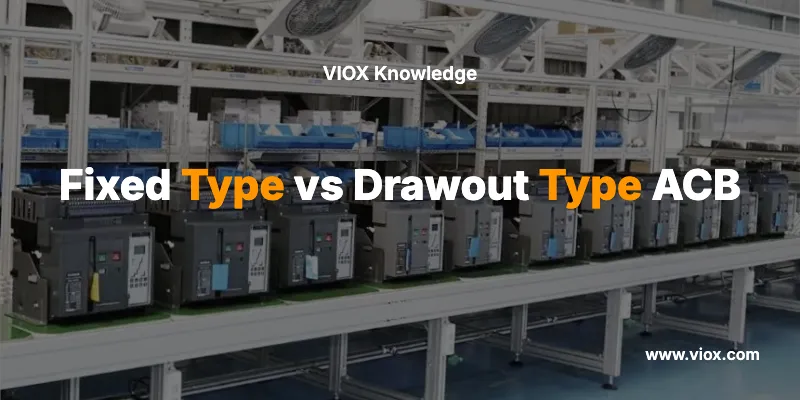
Fixed Type vs Drawout Type ACB

Fester Typ vs. Ausfahrtyp ACB

The main difference between fixed type and drawout type air circuit breakers (ACBs) is that fixed type ACBs are permanently mounted within the electrical panel and require panel opening for maintenance, while drawout type ACBs can be easily removed from their housing using a racking mechanism without disturbing the electrical connections. Understanding this fundamental difference

Fester Typ vs. Ausfahrtyp ACB Weiterlesen »

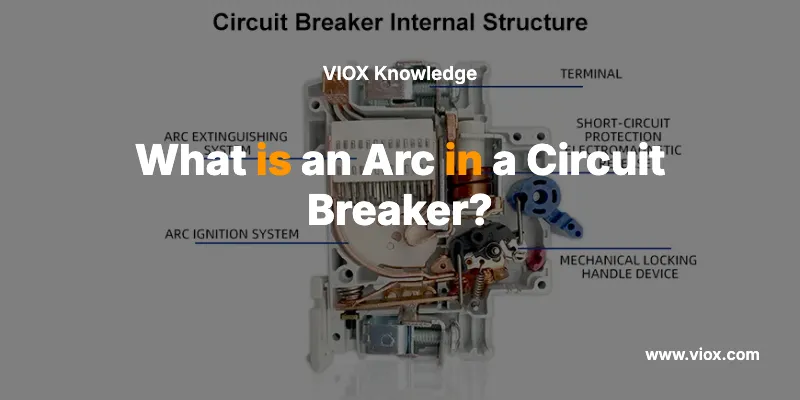
What is an Arc in a Circuit Breaker?

Was ist ein Lichtbogen in einem Leistungsschalter?

An arc in a circuit breaker is a luminous electrical discharge—a plasma channel reaching temperatures of 20,000°C (36,000°F)—that forms between separating contacts when the breaker interrupts current under load. This arc represents one of the most violent and energy-intensive phenomena in electrical engineering, capable of destroying contacts, igniting fires, and causing catastrophic equipment failure if

Was ist ein Lichtbogen in einem Leistungsschalter? Weiterlesen »
Why USA Uses 120 Volts Instead of 220 Volts: Which Voltage System Is Actually Better?

Warum die USA 120 Volt statt 220 Volt verwenden: Welches Spannungssystem ist tatsächlich besser?

The United States uses 120 volts primarily due to historical decisions made by Thomas Edison in the 1880s and subsequent infrastructure investments, while most of the world adopted 220-240 volt systems later for improved efficiency. Neither system is definitively “better” – each has distinct advantages depending on your specific needs, safety priorities, and existing infrastructure.

Warum die USA 120 Volt statt 220 Volt verwenden: Welches Spannungssystem ist tatsächlich besser? Weiterlesen »

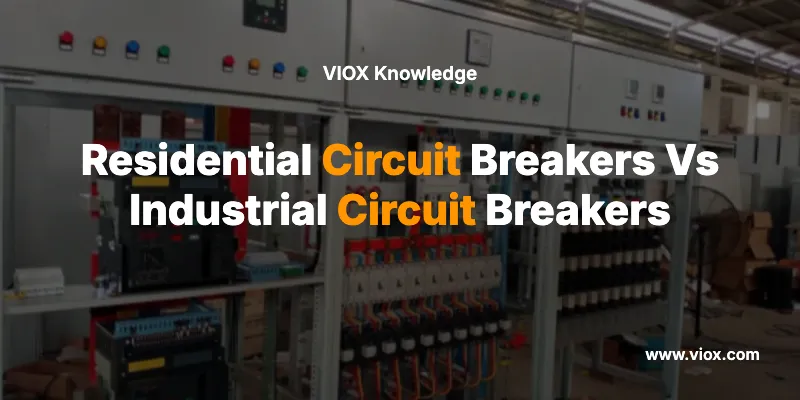
Residential Circuit Breakers Vs Industrial Circuit Breakers

Leistungsschalter für Wohngebäude vs. Leistungsschalter für Industriegebäude

The main difference between residential and industrial circuit breakers is their capacity and application: Residential circuit breakers protect household electrical systems with ratings typically between 15-200 amps and voltages up to 240V, while industrial circuit breakers handle heavy-duty commercial applications with ratings from 100-6,000+ amps and voltages up to 15,000V or higher. Understanding these differences

Leistungsschalter für Wohngebäude vs. Leistungsschalter für Industriegebäude Weiterlesen »

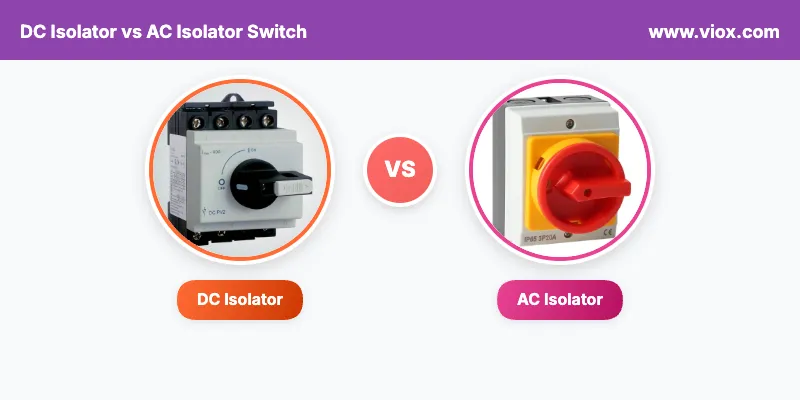
DC Isolator vs AC Isolator Switch

DC-Trennschalter vs. AC-Trennschalter: Vollständiger Vergleichsleitfaden für sichere elektrische Installationen

Key Takeaways Zero-Crossing Factor: AC current naturally extinguishes arcs at zero-crossings (100-120 times/sec), while DC current sustains arcs continuously. Design Differences: DC isolators require magnetic blow-out coils and deep arc chutes, making them physically larger and more expensive than AC versions. Voltage Derating: Using an AC isolator for DC applications results in a significant drop

DC-Trennschalter vs. AC-Trennschalter: Vollständiger Vergleichsleitfaden für sichere elektrische Installationen Weiterlesen »

Connection of DC Isolators: Complete Guide to Safe Installation and Wiring

Anschluss von DC-Isolatoren: Vollständige Anleitung zur sicheren Installation und Verdrahtung

Bottom Line Up Front: DC isolator connection requires proper terminal identification, correct polarity wiring, and compliance with AS/NZS 5033 safety standards. DC cables use Class 5 flexible conductors that must be terminated correctly to prevent failures, and consideration should be given to the termination of the DC conductor in the isolator’s terminals (526.9.1). What Are

Anschluss von DC-Isolatoren: Vollständige Anleitung zur sicheren Installation und Verdrahtung Weiterlesen »

Jetzt um ein Angebot bitten