Rychlá odpověď: Testování vašeho AFDD během 30 sekund
Testování zařízení pro detekci obloukového zkratu (AFDD) je jednoduché: stiskněte testovací tlačítko na čelní straně zařízení a to by mělo okamžitě vypnout, čímž se odpojí napájení chráněného obvodu. Pokud AFDD nevypne po stisknutí testovacího tlačítka, zařízení selhalo a musí být okamžitě vyměněno. Tento jednoduchý měsíční test ověřuje, zda elektronika pro detekci oblouku funguje správně – kritická bezpečnostní kontrola, která zabere méně než minutu, ale mohla by zabránit ničivému požáru způsobenému elektřinou.
Klíčové poznatky
- Ověření testovacím tlačítkem: Stiskněte testovací tlačítko AFDD měsíčně; zařízení by mělo okamžitě vypnout, aby se potvrdila správná funkčnost detekce oblouku
- Vizuální kontrola je důležitá: Před a po testování zkontrolujte LED indikátory, hledejte fyzické poškození, známky přehřátí nebo uvolněné spoje
- Shoda s IEC 62606: AFDD musí detekovat nebezpečné obloukové zkraty a vypnout do 120 milisekund u oblouků s vysokým proudem podle mezinárodních norem
- Rozdíl oproti testování RCD: Testovací tlačítka AFDD ověřují obvody detekce oblouku, zatímco testovací tlačítka RCD kontrolují ochranu proti zemnímu úniku – obojí je nezbytné
- Vyžaduje se odborné testování: Roční kontrola kvalifikovanými elektrikáři pomocí specializovaného vybavení zajišťuje komplexní ochranu nad rámec základního uživatelského testování
- Indikátory výměny: Selhání odezvy testovacího tlačítka, časté nežádoucí vypínání, viditelné poškození nebo zařízení starší než 10–15 let vyžadují okamžitou výměnu
Pochopení AFDD: Proč je testování kritické
Zařízení pro detekci obloukového zkratu představují kvantový skok v technologii prevence požárů způsobených elektřinou. Zatímco tradiční jističe chrání proti přetížení a zkratům a RCD (proudové chrániče) chrání proti úrazu elektrickým proudem, ani jedno nedokáže detekovat nejzákeřnější příčinu požárů způsobených elektřinou: obloukové zkraty.
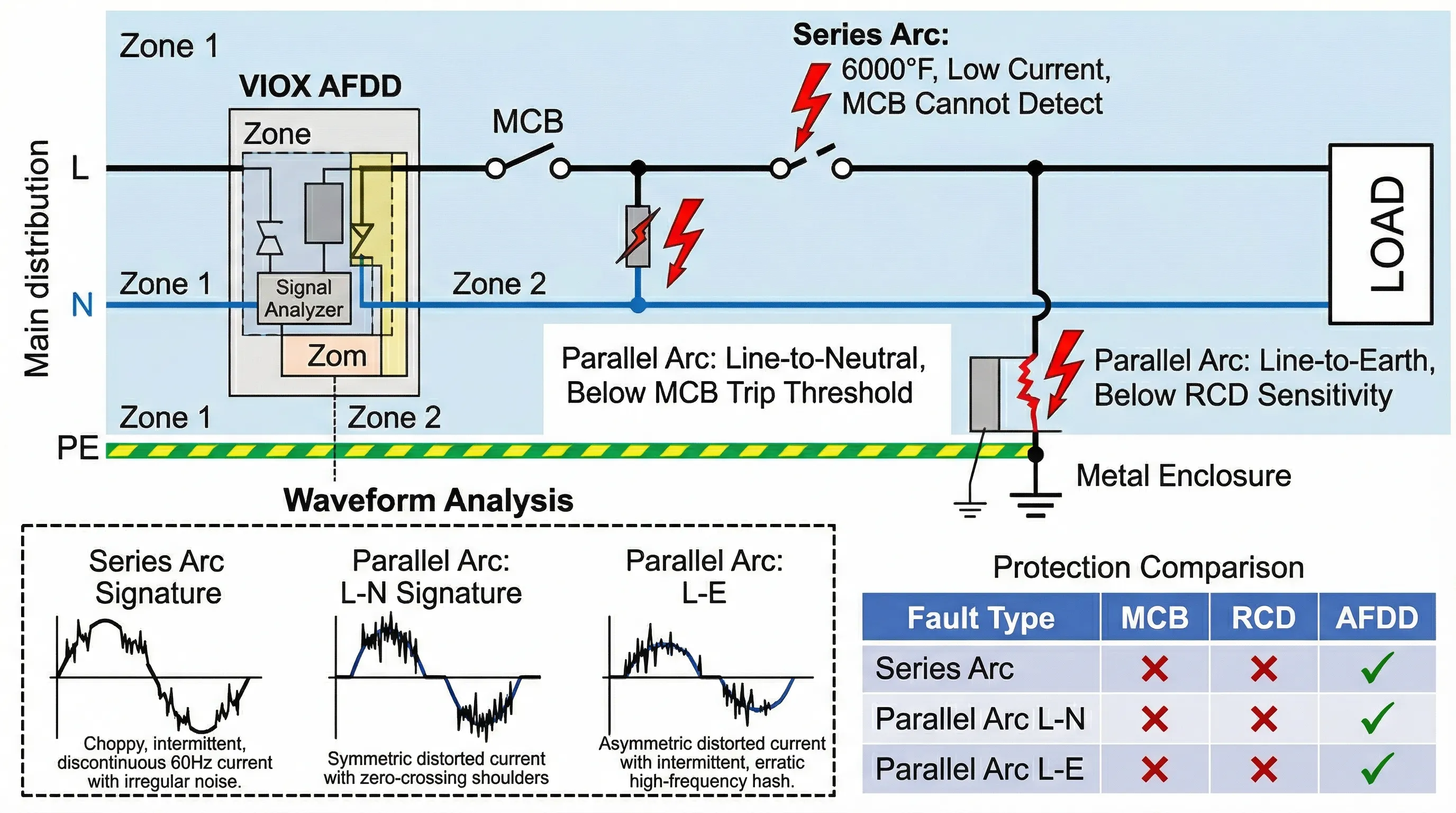
K obloukovému zkratu dochází, když elektrický proud přeskočí mezeru v poškozené kabeláži a vytvoří teploty přesahující 3 315 °C – dostatečně vysoké na to, aby okamžitě zapálily okolní materiály. Tyto nebezpečné oblouky mohou být způsobeny poškozenou izolací kabelů, uvolněnými svorkami, rozdrcenými vodiči za stěnami nebo zhoršenými vodiči. Proud může být příliš nízký na to, aby vypnul standardní jistič , ale dostatečně vysoký na to, aby způsobil požár. citace
AFDD používají sofistikovanou mikroprocesorovou technologii k nepřetržité analýze proudových a napěťových křivek, detekci jedinečných elektrických signatur sériových obloukových zkratů (přerušené vodiče) i paralelních obloukových zkratů (oblouk mezi fázemi, fází a nulou nebo fází a zemí). Když je identifikován nebezpečný vzor oblouku, AFDD odpojí obvod během milisekund – dlouho předtím, než může dojít k zapálení.
Pravidelné testování zajišťuje, že tato život zachraňující technologie zůstane funkční. Na rozdíl od pasivních ochranných zařízení obsahují AFDD aktivní elektronické součástky, které se mohou časem zhoršit nebo selhat v důsledku přepětí, vlivů prostředí nebo výrobních vad.
AFDD vs. tradiční ochrana: Pochopení rozdílů
| Ochranné zařízení | Primární funkce | Co detekuje | Co mu uniká | Metoda testování |
|---|---|---|---|---|
| MCB/MCCB | Nadproudová ochrana | Přetížení, zkraty | Obloukové zkraty, zemní únik | Ruční vypnutí nebo zkouška zátěží |
| Proudový chránič/proudový chránič | Prevence úrazu elektrickým proudem | Zemní unikající proud (≥30mA) | Obloukové zkraty, přetížení | Testovací tlačítko (simuluje únik) |
| AFDD | Požární prevence | Sériové a paralelní obloukové zkraty | Standardní přetížení (vyžaduje MCB) | Testovací tlačítko (simuluje signaturu oblouku) |
| RCBO | Kombinovaná ochrana | Přetížení, zkraty, zemní únik | Obloukové poruchy | Testovací tlačítko (pouze funkce RCD) |
| AFDD+RCBO | Komplexní ochrana | Všechna elektrická nebezpečí | Žádné (kompletní ochrana) | Dvě testovací tlačítka nebo kombinované |
Toto srovnání zdůrazňuje, proč jsou AFDD stále více vyžadovány v rizikových aplikacích. Tradiční MCB a RCCB nedokážou detekovat nízko proudové oblouky s vysokou teplotou, které způsobují většinu požárů způsobených elektřinou. Pochopení rozdílu mezi RCBO vs AFDD je zásadní pro správný návrh elektrického systému.
Kdy a jak často byste měli testovat AFDD?
Doporučený plán testování
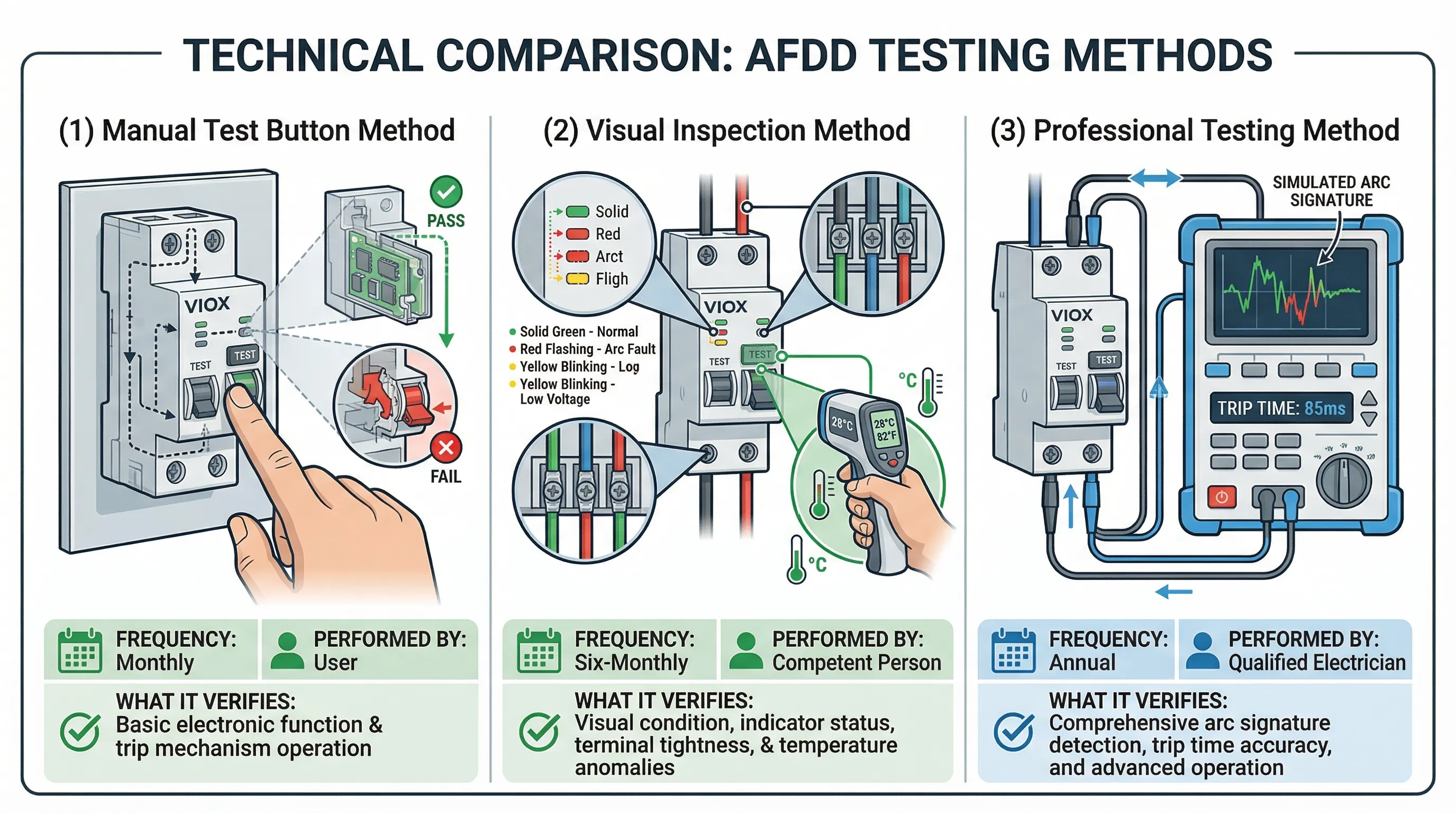
Měsíční uživatelské testování (testovací tlačítko)
- Frekvence: Minimálně každých 30 dní
- Trvání: 10–15 sekund na zařízení
- Provádí: Obyvatelé budovy nebo správci zařízení
- Účel: Ověřit základní funkčnost detekce oblouku
Podrobná šestiměsíční kontrola
- Frekvence: Každých 6 měsíců podle BS 7671:2018+A2:2022
- Trvání: 2–5 minut na zařízení
- Provádí: Kompetentní elektrotechnický personál
- Účel: Vizuální kontrola, ověření připojení, diagnostika LED
Roční odborné testování
- Frekvence: Ročně nebo podle specifikací výrobce
- Trvání: 15–30 minut na instalaci
- Provádí: Kvalifikovaní elektrikáři s kalibrovaným vybavením
- Účel: Komplexní funkční ověření, testování izolačního odporu, termovizní snímání
Po elektrických událostech
- Spouštěč: Zásahy bleskem, přepětí, blízké elektrické poruchy
- Časování: Do 24-48 hodin od události
- Účel: Zajistit, aby elektronika AFDD nebyla poškozena přechodnými přepětími
Kritické testovací situace
AFDD testujte okamžitě, pokud zaznamenáte:
- Nevysvětlitelné odpojení obvodu
- Zápach spáleniny v blízkosti elektrického panelu
- Blikající světla na obvodech chráněných AFDD
- Viditelné poškození krytu AFDD
- LED indikátory signalizující poruchové stavy
- Po jakékoli práci na chráněném obvodu
Pravidelné testování není volitelné – je to bezpečnostní imperativ. Mnoho pojistných smluv nyní vyžaduje doložené testování AFDD pro komerční objekty a selhání údržby těchto zařízení by mohlo zrušit krytí v případě požáru způsobeného elektrickou energií.
Průvodce krok za krokem: Jak testovat AFDD
Bezpečnostní opatření před testováním
Před dotykem jakéhokoli elektrického zařízení:
- Informujte osoby v budově: Testování dočasně odpojí napájení chráněných obvodů
- Identifikujte kritické zátěže: Zajistěte, aby na obvodu nebylo žádné zařízení pro záchranu života (lékařské přístroje, bezpečnostní systémy, chlazení)
- Připravte se na výpadek napájení: Uložte práci na počítači, poznamenejte si, které spotřebiče ztratí napájení
- Zajistěte dostatečné osvětlení: Mějte připravenou svítilnu, pokud testujete osvětlovací obvody
- Používejte vhodné OOP: Pro profesionální testování se doporučují ochranné brýle a izolované rukavice
- Ověřte přístup: Zajistěte, aby byl elektrický panel přístupný a nebyl zablokovaný
Varování: Nikdy se nepokoušejte testovat AFDD během bouřky nebo pokud zaznamenáte zápach spáleniny, jiskry nebo neobvyklé teplo z elektrického panelu. Okamžitě zavolejte kvalifikovaného elektrikáře.
Metoda 1: Základní ověření testovacím tlačítkem (měsíčně)
Toto je primární testovací metoda pro koncové uživatele a měla by se provádět měsíčně.
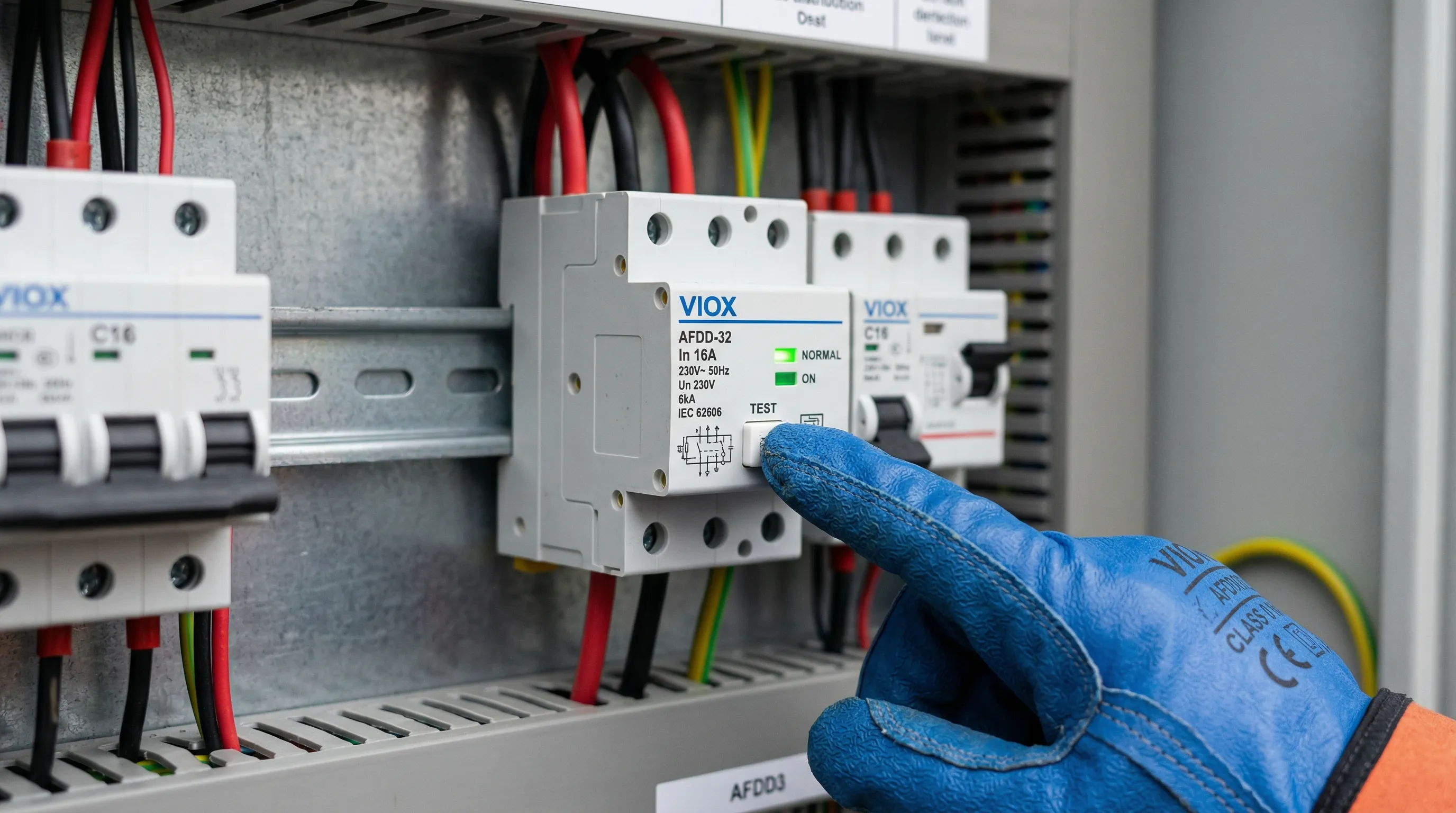
Krok 1: Vyhledejte AFDD
Otevřete elektrický panel a identifikujte AFDD. Bude typicky:
- Širší než standardní jističe (často 2-4 moduly šířky)
- Označený “AFDD” nebo “Zařízení pro detekci obloukového zkratu”
- Vybavený testovacím tlačítkem (obvykle označeným “T” nebo “TEST”)
- Může mít LED indikátory zobrazující provozní stav
Krok 2: Poznamenejte si počáteční stav
Před testováním si všimněte:
- Stav LED indikátoru (zelená obvykle znamená normální provoz)
- Poloha jističe (měla by být v poloze “ON”)
- Jakékoli výstražné indikátory nebo kontrolky poruchy
Krok 3: Stiskněte testovací tlačítko
- Pevně stiskněte a podržte testovací tlačítko po dobu 1-2 sekund
- AFDD by měl okamžitě vypnout (do 0,5 sekundy)
- Uslyšíte zřetelné “cvaknutí”, jak mechanismus funguje
- Rukojeť jističe se přesune do polohy “OFF” nebo střední polohy “TRIPPED”
- LED indikátory se mohou změnit (některé modely blikají, aby indikovaly testovací režim)
Krok 4: Ověřte úplné odpojení
- Potvrďte, že je odpojeno napájení chráněného obvodu
- Zkontrolujte, zda jsou spotřebiče nebo světla na tomto obvodu vypnuté
- Tím se ověří, že mechanický vypínací mechanismus funguje
Krok 5: Resetujte AFDD
- Nejprve přesuňte rukojeť jističe úplně do polohy “OFF”
- Poté ji přepněte zpět do polohy “ON”
- LED by se měla vrátit do normálního provozního stavu (obvykle svítí zeleně)
- Ověřte, že je obnoveno napájení obvodu
Krok 6: Zdokumentujte test
- Zaznamenejte datum testu, umístění AFDD a výsledek
- Poznamenejte si jakékoli abnormality (pomalá odezva, selhání vypnutí, neobvyklé zvuky)
- Veďte si protokol testování pro účely dodržování předpisů a pojištění
Interpretace výsledků:
- ✅ VYHOVUJE: AFDD vypne do 1 sekundy, normálně se resetuje, LED ukazuje normální stav
- ❌ NEÚSPĚCH: Nevybaví, zpožděné vybavení (>2 sekundy), nelze resetovat nebo LED indikuje poruchový stav
- ⚠️ Prošetřit: Neobvyklé zvuky, nadměrné teplo nebo přerušovaný provoz
Metoda 2: Vizuální a fyzická kontrola (šestiměsíční)
Krok 1: Externí vizuální kontrola
Zkontrolujte AFDD, zda nevykazuje:
- Praskliny, změnu barvy nebo roztavený plast (indikuje přehřátí)
- Stopy po spálení kolem svorek nebo na čelní straně zařízení
- Uvolněné upevnění na DIN liště
- Poškozené testovací tlačítko nebo rukojeť
- Vybledlé nebo nečitelné označení
Krok 2: Kontrola připojení svorek
Při vypnutém napájení a dodržování postupů uzamčení/označení:
- Ověřte, zda jsou všechny svorkové šrouby utažené (použijte utahovací moment specifikovaný výrobcem)
- Zkontrolujte, zda na spojích nejsou známky obloukového výboje (zčernání, důlky)
- Ujistěte se, že vodiče jsou správně odizolované a plně zasunuté
- Ověřte správný průřez vodiče pro jmenovitý proud AFDD
Krok 3: Interpretace diagnostiky LED
Moderní AFDD používají LED vzory ke komunikaci stavu:
| Vzor LED | Význam | Požadovaná akce |
|---|---|---|
| Svítí zeleně | Normal operation | Žádný |
| Bliká zeleně | Probíhá autotest | Žádný (automatický) |
| Svítí červeně | Zjištěn obloukový zkrat | Prošetřete obvod, identifikujte zdroj poruchy |
| Bliká červeně | Porucha zařízení | Okamžitě vyměňte AFDD |
| Nesvítí žádná LED | Výpadek napájení nebo porucha zařízení | Zkontrolujte napájení, otestujte zařízení |
| Střídavě červená/zelená | Dosažena prahová hodnota pro falešné vybavení | Zkontrolujte zatížení obvodu, zkontrolujte rušení |
Pro přesné interpretace LED se podívejte do dokumentace konkrétního výrobce AFDD, protože vzory se mezi značkami liší.
Krok 4: Termální kontrola
Pomocí bezkontaktního infračerveného teploměru nebo termokamery:
- Změřte povrchovou teplotu AFDD během normálního provozu
- Teplota by neměla překročit 40 °C nad okolní teplotu
- Horká místa indikují špatné spoje nebo vnitřní poruchu součástky
- Pro srovnání porovnejte teplotu se sousedními jističi
Krok 5: Ověření přípojnic a nulového vodiče
- Ujistěte se, že AFDD je správně usazen na přípojnice
- Ověřte, zda jsou nulové spoje bezpečné (AFDD vyžadují nulový vodič pro elektroniku)
- Zkontrolujte korozi na kontaktech přípojnic
- Potvrďte správné Montáž na lištu DIN
Metoda 3: Profesionální testování se specializovaným vybavením (roční)
Toto testování by měli provádět pouze kvalifikovaní elektrikáři s příslušným testovacím vybavením.
Krok 1: Testování izolačního odporu
- Důležité: Před provedením zkoušek izolačního odporu 500 V DC odpojte AFDD
- AFDD obsahují citlivou elektroniku, kterou mohou vysoká testovací napětí poškodit
- Otestujte zapojení obvodu odděleně od AFDD
- Po testování znovu připojte AFDD a ověřte provoz
Krok 2: Testování simulace obloukového zkratu
Specializované testery AFDD mohou simulovat skutečné podmínky obloukového zkratu:
- Generujte řízené charakteristiky sériového oblouku
- Generujte průběhy paralelního obloukového zkratu
- Ověřte, zda je doba vybavení v souladu se specifikacemi IEC 62606 (≤120 ms pro oblouky s vysokým proudem)
- Testujte při různých úrovních proudu a charakteristikách oblouku
- Potvrďte, že AFDD rozlišuje mezi normálními spínacími přechodovými jevy a nebezpečnými oblouky
Krok 3: Testování funkce RCD (pro kombinace AFDD+RCBO)
Pokud je váš AFDD kombinován s RCD:
- Použijte kalibrovaný Tester RCD
- Testujte při 1× jmenovitého reziduálního proudu (neměl by vypnout)
- Testujte při 5× jmenovitého reziduálního proudu (měl by vypnout do 40 ms)
- Ověřte funkci testovacího tlačítka, které nezávisle testuje funkci RCD
- Potvrďte správnou diskriminaci zemního spojení
Krok 4: Ověření zatěžovacího proudu
- Změřte skutečný proud obvodu za normálních provozních podmínek
- Ověřte, zda je proud v rámci jmenovité hodnoty AFDD (typicky 6A, 10A, 16A, 20A, 32A, 40A)
- Zkontrolujte přetížení, které by mohlo způsobit rušivé vypínání
- Zajistěte správné dimenzováním jističů koordinace
Krok 5: Analýza průběhu
Pomocí analyzátoru kvality napájení:
- Zaznamenejte průběhy napětí a proudu během provozu
- Hledejte harmonické zkreslení, které by mohlo ovlivnit provoz AFDD
- Identifikujte zdroje elektrického šumu, které by mohly způsobit falešné vypínání
- Ověřte správné napětí mezi nulovým vodičem a zemí (mělo by být <0,2 V při zatížení)
Odstraňování běžných problémů s testováním AFDD
Problém 1: AFDD nevypne po stisknutí testovacího tlačítka
Možné Příčiny:
- Vnitřní elektronická porucha
- Mechanismus testovacího tlačítka je rozbitý
- Přerušeno napájení elektroniky AFDD
- Zařízení dosáhlo konce životnosti
Řešení:
- Ověřte, zda je AFDD napájeno (zkontrolujte LED indikátory)
- Zkuste testovací tlačítko několikrát
- Zkontrolujte nulové připojení (vyžadováno pro elektroniku AFDD)
- Okamžitě vyměňte AFDD—jedná se o kritické bezpečnostní selhání
Problém 2: AFDD vypne ihned po resetu
Možné Příčiny:
- Skutečný obloukový zkrat v obvodu
- Poškozený spotřebič nebo zařízení
- Poškozená izolace vodičů
- Porucha AFDD způsobující falešně pozitivní výsledky
Řešení:
- Odpojte všechny zátěže od obvodu
- Resetujte AFDD bez připojeného zatížení
- Pokud drží, znovu připojujte zátěže jednu po druhé, abyste identifikovali vadné zařízení
- Zkontrolujte kabeláž obvodu, zda není poškozena, zejména v rozvodných krabicích a zásuvkách
- Pokud AFDD vypne bez zátěže, vyměňte zařízení
Problém 3: Časté rušivé vypínání
Možné Příčiny:
- Normální spouštěcí proudy motoru (elektrické nářadí, kompresory)
- Vysokofrekvenční spínací zařízení (stmívače LED, pohony s proměnnými otáčkami)
- Elektrický šum z okolních zařízení
- Nesprávný typ AFDD pro danou aplikaci
- Uvolněné spoje způsobující občasné obloukové výboje
Řešení:
- Zkontrolujte zatížení obvodu a připojená zařízení
- Ujistěte se, že AFDD je dimenzováno pro danou aplikaci (některé jsou optimalizovány pro osvětlení, jiné pro zásuvkové obvody)
- Zkontrolujte dotažení všech spojů
- Zvažte instalaci filtrů pro hlučná zařízení
- Poraďte se s pokyny výrobce ohledně kompatibilních zátěží
- Může být nutné přemístit citlivá zařízení do obvodu bez AFDD
Problém 4: LED indikuje poruchu
Možné Příčiny:
- Zjištěno selhání autotestu
- Degradace vnitřních komponent
- Paměť předchozí události obloukového zkratu
- Problémy s napájením
Řešení:
- Poraďte se s návodem výrobce pro specifickou interpretaci kódu LED
- Některé AFDD vyžadují ruční reset po indikaci poruchy
- Pokud porucha přetrvává i po resetu, vyměňte zařízení
- Dokumentujte kódy poruch pro uplatnění záruky
Problém 5: AFDD se během provozu zahřívá
Možné Příčiny:
- Uvolněné svorky (nejčastější)
- Přetížení nad jmenovitý proud
- Špatný kontakt s přípojnicí
- Porucha vnitřní součásti
- Nedostatečné větrání v elektrickém panelu
Řešení:
- Okamžitě vypněte napájení pokud teplota překročí 60 °C (140 °F)
- Zkontrolujte a dotáhněte všechna připojení svorek podle specifikací utahovacího momentu výrobce
- Ověřte, zda je proud obvodu v rámci jmenovité hodnoty AFDD
- Zajistěte správné ventilace elektrického panelu
- Pokud přetrvává přehřívání AFDD i po opravě připojení, vyměňte AFDD
Pochopení výsledků testů AFDD a LED indikátorů
Moderní AFDD obsahují sofistikované autodiagnostické funkce, které komunikují stav zařízení prostřednictvím LED indikátorů a testovacích odezev. Pochopení těchto signálů je zásadní pro správnou údržbu.
Funkce autotestu
Mnoho AFDD je vybaveno automatickým autotestováním, které probíhá:
- Při zapnutí (při zapnutí jističe)
- V pravidelných intervalech (obvykle jednou za 24 hodin)
- Před a po událostech detekce oblouku
Během autotestu AFDD:
- Ověřuje, zda algoritmus detekce oblouku funguje
- Kontroluje vnitřní paměť a provoz procesoru
- Testuje připravenost spouštěcího mechanismu
- Potvrzuje, že napájení elektroniky je dostatečné
Pokud autotest selže, AFDD to obvykle indikuje prostřednictvím LED vzorů a může buď okamžitě vypnout (režim fail-safe), nebo zobrazit varování, přičemž zůstane funkční (v závislosti na filozofii návrhu výrobce).
Tlačítko ručního testu vs. automatické testování
| Funkce | Tlačítko ručního testu | Automatický autotest |
|---|---|---|
| Frekvence | Iniciováno uživatelem (doporučeno měsíčně) | Automatické (denně nebo při zapnutí) |
| Co testuje | Kompletní detekce oblouku a spouštěcí mechanismus | Pouze vnitřní elektronika a algoritmus |
| Zásah uživatele | Vyžaduje stisknutí tlačítka a ruční reset | Není vyžadována žádná akce uživatele |
| Přerušení obvodu | Ano – napájení odpojeno | Ne – obvod zůstává pod napětím |
| Dodržování předpisů | Vyžadováno normou BS 7671 pro zařízení s ručním testem | Splňuje požadavek na testování, pokud není k dispozici ruční tlačítko |
| Ověření spolehlivosti | Potvrzuje funkčnost end-to-end | Detekuje pouze elektronické poruchy |
Důležité: AFDD s automatickým testováním stále těží z pravidelného používání tlačítka ručního testu k ověření kompletního spouštěcího mechanismu, nejen elektroniky. citace
Testování AFDD v různých aplikacích
Rezidenční instalace
V domácnostech jsou AFDD stále častěji vyžadovány pro:
- Obvody ložnic (nejvyšší riziko požáru kvůli pobytu během spánku)
- Obvody napájející zásuvky
- Světelné obvody v budovách s dřevěnou konstrukcí
- Domácí kanceláře s rozsáhlým elektronickým vybavením
- Obvody v oblastech s omezenou detekcí požáru
Úvahy o testování:
- Naplánujte testování během denních hodin, abyste nenarušili spánek
- Koordinujte se s členy domácnosti, abyste uložili práci na počítači
- Nejprve otestujte obvody ložnic (nejvyšší priorita)
- Dokumentujte testování pro účely dodržování předpisů pojišťovny
Komerční a průmyslové prostředí
Komerční instalace vyžadují přísnější testovací protokoly:
- Dokumentované plány testování s podpisem
- Integrace s programy preventivní údržby
- Koordinace s provozem zařízení, aby se minimalizovalo narušení
- Soulad s předpisy o bezpečnosti práce
- Integrace se systémy správy budov pro vzdálené monitorování
Zvláštní aspekty:
- Testujte během plánovaných oken údržby
- Koordinujte se s IT odděleními pro obvody serverovny
- Před testováním upozorněte bezpečnostní systémy (může spustit alarmy)
- Zvážit nebezpečí obloukového výboje během profesionálního testování
- Veďte podrobné záznamy pro účely dodržování předpisů
Solární fotovoltaické systémy
AFDD v fotovoltaické systémy čelí jedinečným výzvám:
- DC obloukové poruchy jsou trvalejší než AC oblouky
- Vysoké napětí (až 1500 V) zvyšuje intenzitu oblouku
- Venkovní instalace vystavují zařízení drsným podmínkám
- Požadavky na rychlé vypnutí přidávají složitost
Testovací protokol:
- Testujte za denního světla, když je systém pod napětím
- Používejte AFDD s DC jmenovitým napětím, speciálně navržené pro fotovoltaické aplikace
- Ověřte koordinaci s DC jističe a odpojovači
- Zkontrolujte UV degradaci a vniknutí vlhkosti
- Zkontrolujte slučovací box připojení ročně
Instalace nabíjení EV
Obvody nabíjení elektrických vozidel těží z ochrany AFDD:
- Vysoké proudové zatížení (až 80 A trvale)
- Časté cykly připojení/odpojení
- Venkovní nebo garážové instalace s vystavením vlhkosti
- Dlouhé kabelové trasy zvyšují riziko obloukové poruchy
Doporučení pro testování:
- Testujte před a po nabíjení EV
- Ověřte, zda je AFDD dimenzováno pro trvalý vysoký proud
- Zkontrolujte, zda správná koordinace ochrany obvodu
- Zkontrolujte opotřebení připojení nabíjecího kabelu
- Zvažte požadavky RCD typu B pro ochranu proti DC poruchám
Osvědčené postupy údržby AFDD
Kromě testování prodlužuje správná údržba životnost AFDD a zajišťuje spolehlivou ochranu.
Úvahy o životním prostředí
Řízení teploty:
- Udržujte okolní teplotu elektrického panelu pod 40 °C (104 °F)
- Zajistěte dostatečné větrání – vyhněte se přeplněným panelům
- Zvažte ventilátory chlazení panelu v horkém prostředí
- Snižte proudovou kapacitu AFDD v instalacích s vysokou teplotou
Regulace vlhkosti:
- Udržujte elektrické panely suché – vlhkost způsobuje korozi a falešné vybavení
- Použijte vodotěsné kryty pro venkovní instalace
- Instalace prodyšné kabelové průchodky aby se zabránilo kondenzaci
- Zvažte odvlhčovače ve vlhkých místech
Prach a kontaminace:
- Čistěte elektrické panely ročně pomocí stlačeného vzduchu
- Vyhněte se vystavení oleji, chemikáliím nebo vodivému prachu
- Udržujte správné Krytí IP pro dané prostředí
- Utěsněte kabelové vstupy, abyste zabránili vniknutí kontaminace
Integrita připojení
Uvolněné spoje jsou hlavní příčinou problémů AFDD:
Specifikace točivého momentu:
- Vždy používejte hodnoty momentu specifikované výrobcem
- Typický rozsah: 1,0-2,5 Nm pro svorkové šrouby
- Používejte kalibrovaný momentový šroubovák pro kritické spoje
- Dotáhněte spoje ročně nebo po jakékoli práci na obvodu
Příprava drátů:
- Odizolujte vodiče na přesnou specifikovanou délku (obvykle 10-12 mm)
- Používejte dutinky na lankové vodiče
- Zajistěte, aby nedošlo k žádným zatoulaným pramenům, které by mohly způsobit zkrat
- Ověřte správný průřez vodiče pro jmenovitý proud AFDD
Aktualizace firmwaru a technologií
Některé moderní AFDD mají aktualizovatelný firmware:
- Zkontrolujte webové stránky výrobce, zda nejsou k dispozici aktualizace firmwaru
- Aktualizace mohou zlepšit algoritmy detekce oblouku
- Může přidat kompatibilitu s novými typy zátěže
- Pro aktualizace firmwaru je nutná odborná instalace
Vedení záznamů
Udržujte komplexní dokumentaci:
- Datum instalace a podrobnosti o instalačním technikovi
- Protokol testování s daty, výsledky a identifikací testeru
- Jakékoli poruchové stavy a nápravná opatření
- Informace o záruce výrobce
- Historie výměn
Kdy vyměnit AFDD
AFDD nevydrží věčně. Vyměňte zařízení, když:
Nutná okamžitá výměna:
- Selhala funkce testovacího tlačítka
- Viditelné poškození, praskliny nebo tavení
- Trvalé přehřívání (>60 °C)
- LED indikuje vnitřní poruchu
- Časté nevysvětlitelné zakopnutí
- Po vystavení úderu blesku nebo velkému přepětí
Plánovaná výměna:
- Stáří přesahuje 10-15 let (i když funguje)
- Výrobce ukončí podporu
- Aktualizované normy vyžadují nové funkce
- Změna využití budovy (např. z obytné na komerční)
- Úpravy obvodu překračují jmenovitý proud AFDD
Úvahy o modernizaci:
- Novější modely nabízejí vylepšené algoritmy detekce oblouku
- Snížené falešné vybavování u moderních konstrukcí
- Menší rozměry (nyní jsou k dispozici jednodušší AFDD)
- Vylepšená diagnostika a možnosti vzdáleného monitorování
- Lepší koordinace s inteligentní jističe
Často kladené otázky (FAQ)
Otázka: Jak se testování AFDD liší od testování RCD?
Odpověď: I když oba používají testovací tlačítka, ověřují různé ochranné funkce. Testovací tlačítko RCD vstřikuje malý proud do země, aby simulovalo zemní poruchu, a testuje ochranu před úrazem elektrickým proudem. Testovací tlačítko AFDD simuluje charakteristiku obloukového zkratu, aby ověřilo elektroniku detekce oblouku a mechanismus vybavení. Pokud máte kombinované zařízení AFDD+RCBO, může mít dvě testovací tlačítka – jedno pro každou funkci – nebo jedno tlačítko, které testuje obě současně.
Otázka: Mohu testovat AFDD pomocí standardního testeru jističů?
Odpověď: Ne. Standardní testery jističů nemohou simulovat podmínky obloukového zkratu. Testování AFDD vyžaduje buď vestavěné testovací tlačítko (pro základní ověření), nebo specializované zařízení pro simulaci obloukového zkratu (pro komplexní profesionální testování). Použití nevhodného testovacího zařízení může poškodit AFDD nebo poskytnout falešné výsledky.
Otázka: Co mám dělat, když AFDD neustále vybavuje, ale projde kontrolou testovacím tlačítkem?
Odpověď: To indikuje skutečný stav obloukového zkratu ve vašem obvodu, nikoli poruchu AFDD. Systematicky odpojujte zátěže, abyste identifikovali vadný spotřebič nebo segment obvodu. Mezi běžné příčiny patří poškozené prodlužovací kabely, selhávající spotřebiče s opotřebovanými kartáči (elektrické nářadí, vysavače) nebo zhoršená kabeláž. Pokud k vybavení dochází bez připojené zátěže, je samotná kabeláž obvodu narušena a vyžaduje odbornou kontrolu.
Otázka: Musí se AFDD testovat, pokud mají funkce automatického autotestu?
Odpověď: Ano. Zatímco automatické autotestování ověřuje vnitřní elektroniku, ruční ovládání testovacího tlačítka potvrzuje, že kompletní mechanismus vybavení funguje správně. BS 7671:2018+A2:2022 doporučuje šestiměsíční ruční testování i pro AFDD s automatickými funkcemi autotestu. Ruční test poskytuje komplexní ověření, které automatické testování nemůže plně replikovat.
Otázka: Lze AFDD testovat, když je obvod pod zátěží?
Odpověď: Ano, ale pro běžné testování se to nedoporučuje. Když stisknete testovací tlačítko, AFDD vybaví a okamžitě odpojí napájení, což by mohlo poškodit citlivé elektronické zařízení nebo způsobit ztrátu dat. Vždy informujte osoby v budově, uložte práci na počítači a ujistěte se, že nefungují žádné kritické zátěže, než začnete testovat.
Otázka: Jak dlouho by mělo trvat, než AFDD vybaví po stisknutí testovacího tlačítka?
Odpověď: AFDD by měl vybavit do 0,5-1,0 sekundy po stisknutí testovacího tlačítka. Pokud je odezva pomalejší (2+ sekundy) nebo zařízení vůbec nevybaví, selhalo a musí být okamžitě vyměněno. Testovací tlačítko simuluje závažný stav obloukového zkratu, který by měl spustit okamžité odpojení.
Otázka: Jsou AFDD vyžadovány elektrickými předpisy?
Odpověď: Požadavky se liší podle jurisdikce. Ve Velké Británii BS 7671:2018 Amendment 2 (účinný od září 2022) vyžaduje AFDD pro koncové obvody střídavého proudu v rizikovějších prostorách a důrazně je doporučuje pro všechny obytné instalace. V USA vyžaduje National Electrical Code (NEC) AFCIs (podobná zařízení) v ložnicích obytných jednotek a dalších určených místech. Vždy se poraďte s místními elektrickými předpisy a nařízeními pro konkrétní požadavky ve vaší oblasti.
Závěr: Testování AFDD je pro elektrickou bezpečnost nezbytné
Zařízení pro detekci obloukového zkratu představují špičku technologie prevence požárů způsobených elektřinou, ale jsou účinná pouze tehdy, pokud fungují správně. Pravidelné testování – měsíční ovládání testovacího tlačítka, šestiměsíční vizuální kontroly a roční profesionální ověření – zajišťuje, že tato kritická bezpečnostní zařízení zůstanou připravena chránit životy a majetek.
Těch několik minut investovaných do testování AFDD může zabránit katastrofálním následkům. Požáry způsobené elektřinou způsobují ročně škody na majetku v miliardách a vyžádají si stovky životů – mnohým z nich by se dalo předejít řádně udržovanou ochranou proti obloukovému zkratu. Jako výrobce B2B, který se zavázal k elektrické bezpečnosti, VIOX Electric zdůrazňuje, že testování AFDD není jen regulační zaškrtávací políčko – je to základní odpovědnost vlastnictví elektrického systému.
Zaveďte zdokumentovaný plán testování, proškolte personál o správných postupech, veďte podrobné záznamy a nikdy neignorujte varovné signály poruchy AFDD. Testovací tlačítko na vašem AFDD je tam z nějakého důvodu – používejte jej pravidelně a zajistěte, aby zařízení, které vás chrání, bylo samo chráněno řádnou údržbou a včasnou výměnou.
Další informace o zařízeních pro elektrickou ochranu a bezpečnostních normách naleznete v našich komplexních průvodcích na výběrem ochrany obvodů, bezpečnost elektrického panelua programy průmyslové údržby.
O společnosti VIOX Electric: Jako přední výrobce zařízení pro elektrickou ochranu B2B vyrábí společnost VIOX Electric zařízení pro detekci obloukového zkratu vyhovující normě IEC 62606, která jsou navržena pro spolehlivost, bezpečnost a snadnou instalaci. Naše AFDD jsou vybavena pokročilými algoritmy detekce oblouku, robustní konstrukcí a komplexními diagnostickými schopnostmi, které chrání životy a majetek před požáry způsobenými elektřinou. Kontaktujte náš technický tým pro pomoc se specifikací, hromadným nákupem nebo řešeními panelů na míru.