

Trên trang này
Một Thiết bị phát hiện hồ quang (AFDD) giám sát mạch cuối dòng điện xoay chiều (AC) để tìm các kiểu điện liên quan đến hiện tượng phóng điện hồ quang nguy hiểm và ngắt mạch được bảo vệ khi logic quyết định của nó xác định có hồ quang nguy hiểm. Phát hiện hồ quang là một chức năng bảo vệ riêng biệt: AFDD không tự động cung cấp chức năng bảo vệ quá tải, ngắn mạch hoặc dòng điện dư trừ khi các chức năng đó được tích hợp trong cùng một sản phẩm.
Sự khác biệt đó là chìa khóa để hiểu về AFDD. AFDD giải quyết các tình trạng phóng điện hồ quang mà các thiết bị bảo vệ quá dòng hoặc dòng điện dư thông thường có thể không phát hiện được, nhưng nó không làm cho các chức năng bảo vệ khác trở nên không cần thiết.
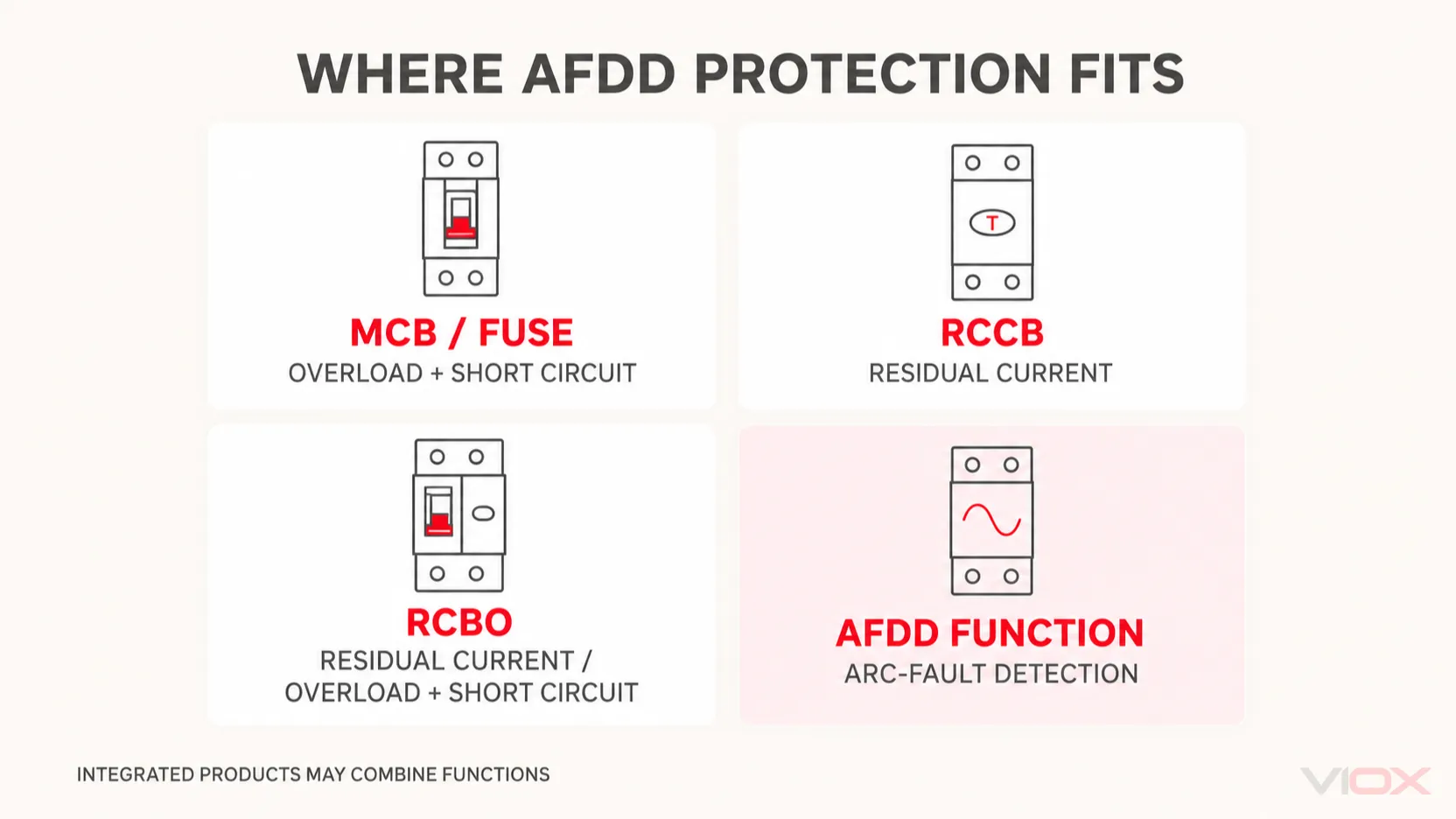
Vị trí ứng dụng bảo vệ của AFDD
Các thiết bị bảo vệ hạ thế phản ứng với các tình trạng điện khác nhau. Câu hỏi đúng không phải là “Thiết bị nào tốt nhất?” mà là “Mạch điện này cần phải bao phủ những chức năng lỗi nào?”
| Thiết bị hoặc chức năng | Tình trạng chính được phát hiện | Bảo vệ mà bản thân thiết bị không nhất thiết phải cung cấp |
|---|---|---|
| Máy cắt điện thu nhỏ (MCB) hoặc cầu chì | Dòng điện quá tải và ngắn mạch | Phát hiện dòng điện dư và đặc tính hồ quang |
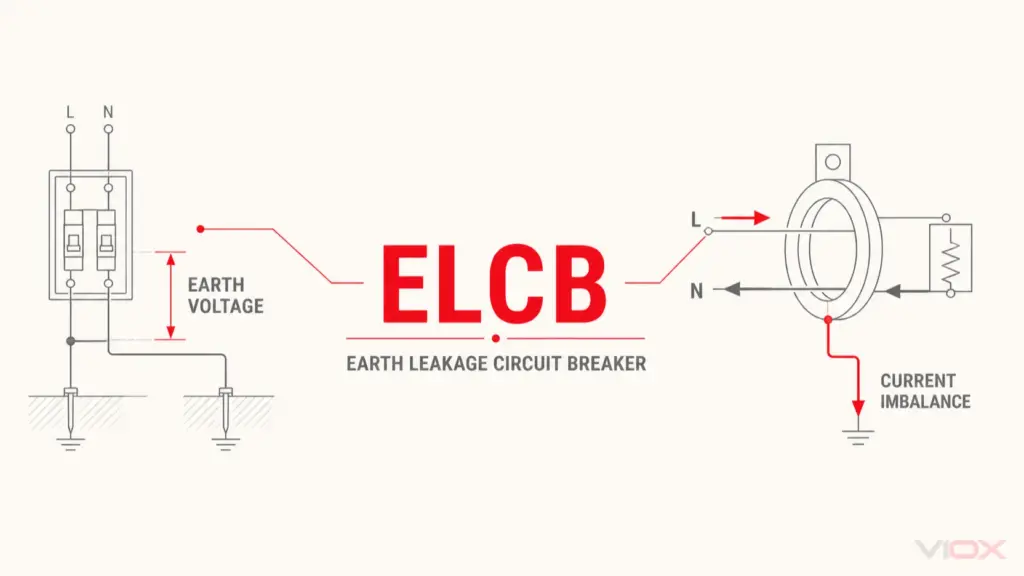
| Thiết bị dòng điện dư (RCD), bao gồm máy cắt điện dòng điện dư không có bảo vệ quá dòng (RCCB) | Mất cân bằng liên quan đến dòng điện chạy ra ngoài đường dẫn dây dẫn mang điện dự kiến | Quá dòng đối với RCCB, và phát hiện đặc tính hồ quang |
| Máy cắt điện dòng điện dư có bảo vệ quá dòng (RCBO) | Dòng điện dư cộng với quá tải và ngắn mạch | Phát hiện đặc tính hồ quang trừ khi AFDD được tích hợp |
| AFDD | Các đặc tính điện liên quan đến hồ quang nguy hiểm | Bảo vệ quá dòng hoặc dòng điện dư trừ khi được tích hợp |
| Thiết bị ngắt mạch lỗi hồ quang (AFCI) | Danh mục bảo vệ lỗi hồ quang tại Bắc Mỹ | Terminology, product standards, ratings, and application rules are not automatically interchangeable with the IEC AFDD framework |
Nếu bạn chỉ cần thuật ngữ, hãy xem hướng dẫn chuyên sâu về Dạng đầy đủ và ý nghĩa của AFDD. Nếu quyết định của bạn cụ thể nằm giữa các chức năng bảo vệ, hãy sử dụng chi tiết so sánh RCBO và AFDD.
Hồ quang điện là gì?
Hồ quang là dòng điện chạy qua một đường dẫn bị ion hóa không mong muốn thay vì chạy qua một kết nối kim loại nguyên vẹn. Lớp cách điện bị hỏng, kết nối lỏng lẻo, dây dẫn bị đứt hoặc sự xuống cấp tại một phụ kiện có thể tạo ra các điều kiện dẫn đến hiện tượng phóng hồ quang gián đoạn.
Hai dạng sự cố phổ biến giúp giải thích thách thức về bảo vệ:
- Hồ quang nối tiếp: hồ quang nằm nối tiếp với tải, chẳng hạn như trên một dây dẫn bị hỏng hoặc kết nối kém. Trở kháng tải có thể giới hạn dòng điện, vì vậy sự cố có thể vẫn ở dưới mức tác động của thiết bị bảo vệ quá dòng thông thường.
- Hồ quang song song: hồ quang xảy ra giữa các dây dẫn, chẳng hạn như giữa dây pha và dây trung tính hoặc giữa dây pha và dây dẫn bảo vệ. Một số lỗi song song có thể tạo ra đủ dòng điện để thiết bị bảo vệ quá dòng hoặc RCD phản ứng, nhưng kết quả phụ thuộc vào đường dẫn lỗi và cường độ dòng điện.
AFDD được thiết kế để đánh giá hành vi hồ quang thay vì chỉ chờ đợi ngưỡng quá dòng hoặc dòng điện dư thông thường.
AFDD hoạt động như thế nào?
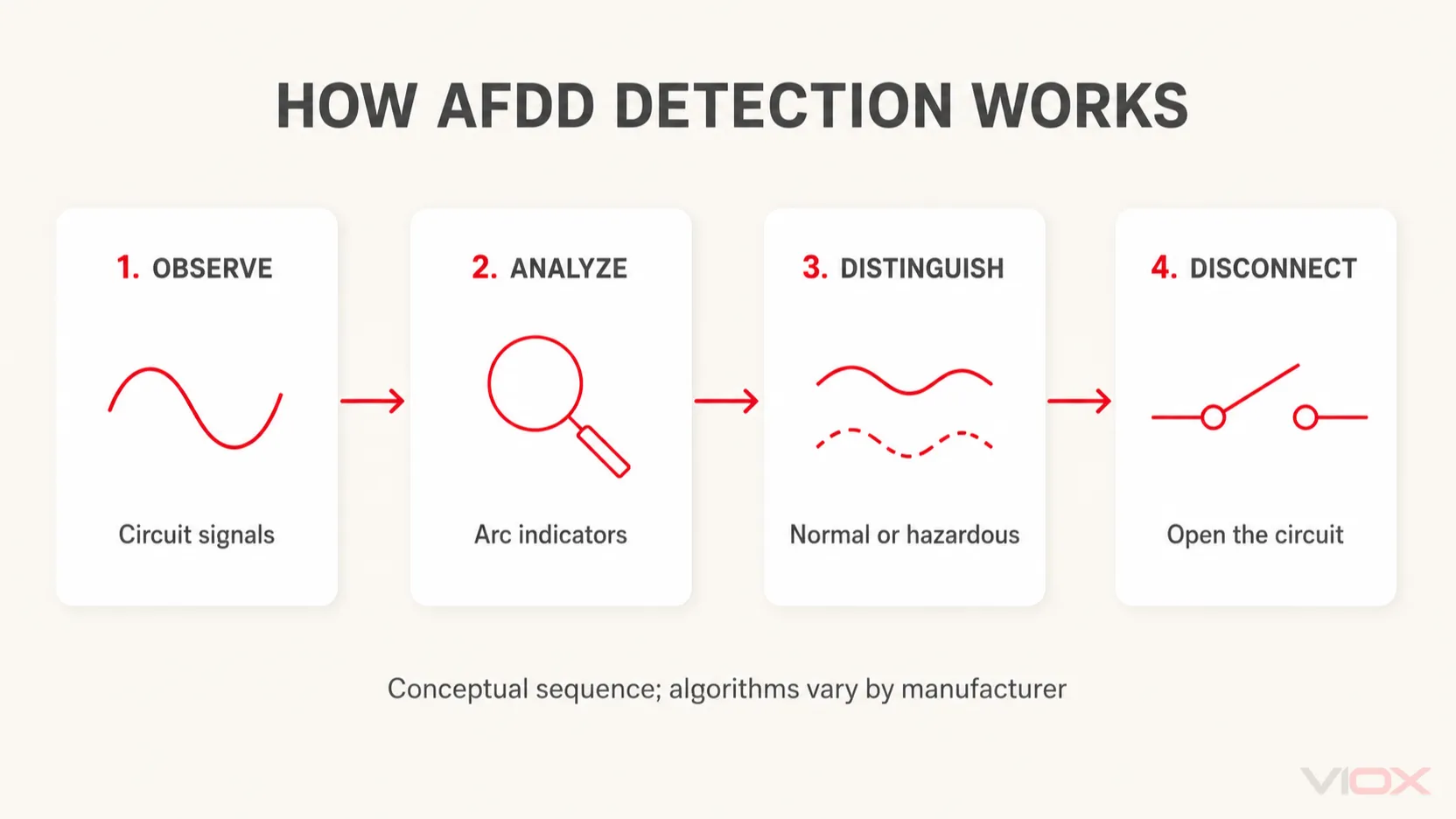
AFDD sử dụng cảm biến điện tử và logic quyết định. Schneider Electric mô tả việc giám sát các tín hiệu điện để phân biệt hồ quang nguy hiểm với hành vi bình thường của mạch điện. Ở dạng đơn giản hóa, thiết bị tuân theo bốn giai đoạn:
- Quan sát mạch điện: các cảm biến giám sát dòng điện và các đặc tính điện khác liên quan đến thiết kế sản phẩm.
- Trích xuất các chỉ báo hồ quang: các thiết bị điện tử kiểm tra các đặc tính như méo dạng sóng, hành vi dòng điện bất thường, thời gian và thành phần tần số cao.
- Phân biệt các sự kiện bình thường và nguy hiểm: thuật toán phải phân biệt được lỗi nguy hiểm với hiện tượng phóng điện hồ quang dự kiến do các tiếp điểm đóng cắt hoặc một số loại tải nhất định gây ra.
- Ngắt mạch điện: khi các tiêu chí quyết định được đáp ứng, cơ cấu mở sẽ ngắt mạch điện được bảo vệ.
Phương pháp cảm biến và thuật toán chính xác là tùy thuộc vào nhà sản xuất. Một bài viết chung không thể xác định hành vi phát hiện, chỉ báo chẩn đoán hoặc khả năng tương thích của một kiểu máy cụ thể; hãy sử dụng bảng dữ liệu và hướng dẫn hiện hành của thiết bị đó cho các quyết định này.
Ba lộ trình chế tạo theo tiêu chuẩn IEC 62606
Phạm vi chính thức của IEC 62606 mô tả ba cách thức mà chức năng AFDD có thể được cung cấp cho các ứng dụng AC trong gia đình và tương tự.
- Với phương tiện ngắt riêng: phát hiện hồ quang cộng với phương tiện để ngắt mạch điện.
- Tích hợp với một thiết bị bảo vệ: phát hiện hồ quang kết hợp với các chức năng được công bố cho sản phẩm đó.
- Dưới dạng một thiết bị phát hiện lỗi hồ quang (AFD) riêng biệt: được lắp ráp cùng với một thiết bị bảo vệ theo tổ hợp do nhà sản xuất công bố.
Đây là lý do tại sao các chữ cái AFDD trên mô tả sản phẩm là không đủ để xác định gói bảo vệ hoàn chỉnh. Hãy kiểm tra tài liệu chính xác của model để xác định các chức năng nào được bao gồm; một vỏ bọc nhỏ gọn hoặc ảnh chụp mặt trước không chứng minh được các chức năng đó.
Các tiêu chuẩn sản phẩm và quy tắc lắp đặt AFDD là khác nhau
IEC 62606 là một tiêu chuẩn sản phẩm. Nó giải quyết vấn đề cấu tạo và hiệu suất của AFDD trong phạm vi đã nêu. Nó không quyết định liệu một mạch điện cụ thể ở mỗi quốc gia có bắt buộc phải sử dụng AFDD hay không.
Các yêu cầu lắp đặt đến từ các quy tắc đi dây quốc gia hoặc khu vực hiện hành, thông số kỹ thuật của dự án, yêu cầu của cơ quan chức năng và đánh giá rủi ro. Khung lắp đặt IEC rộng hơn bao gồm IEC 60364-4-42:2024, giải quyết vấn đề bảo vệ chống lại các tác động nhiệt trong các hệ thống điện hạ thế.
Đối với một ví dụ về khu vực, Vương quốc Anh sử dụng BS 7671. Phiên bản áp dụng và các điều kiện mạch điện là rất quan trọng; hãy tham khảo Công cụ kiểm tra phiên bản hiện hành của IET thay vì biến một quy định quốc gia thành một tuyên bố toàn cầu.
Để hiểu sâu hơn về các tiêu chuẩn và danh mục kiểm tra bằng chứng, hãy đọc Tiêu chuẩn AFDD IEC 62606: Phạm vi, Phân loại và Bằng chứng tuân thủ.
Cách chọn lộ trình AFDD chính xác
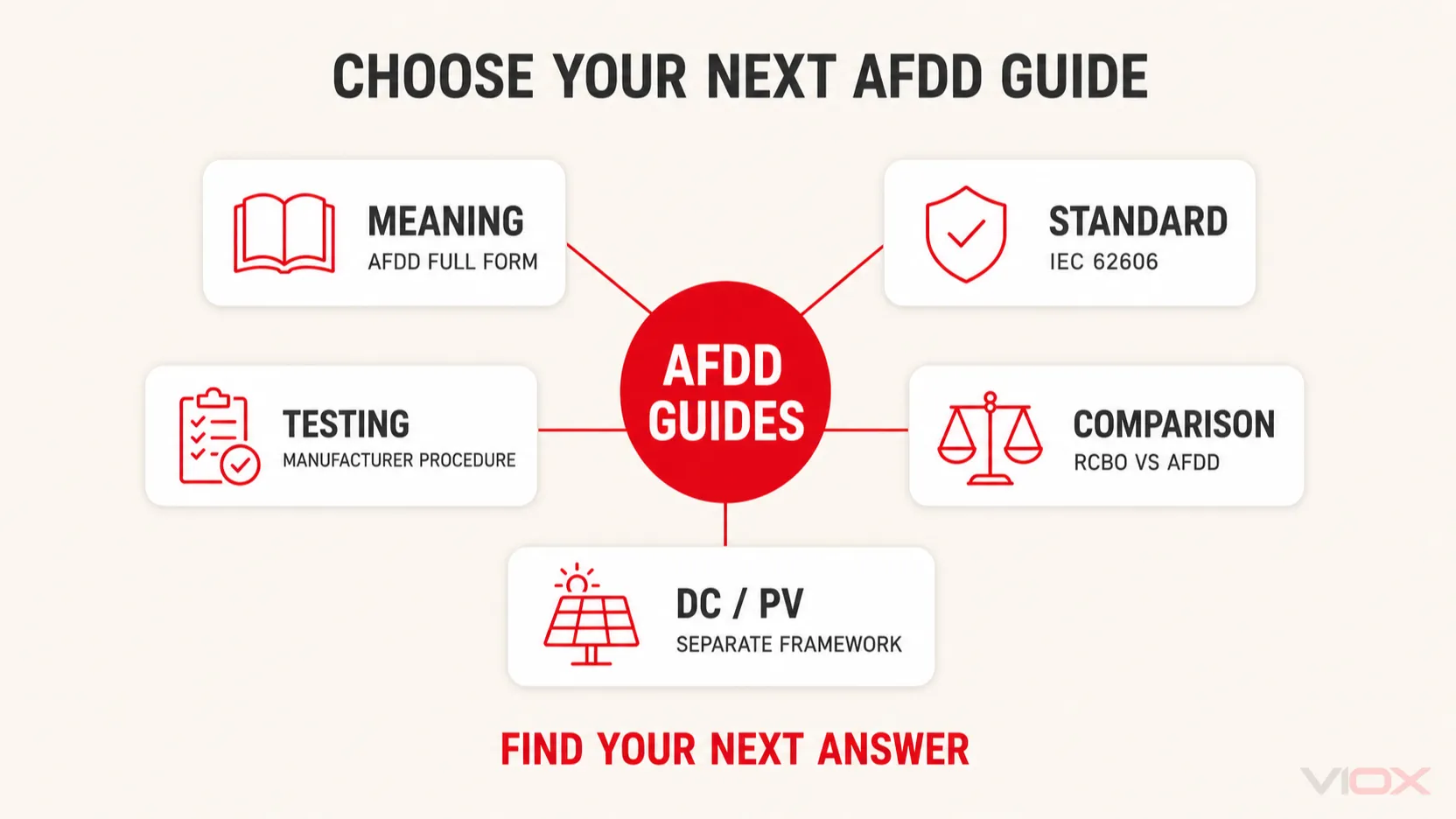
Sử dụng công cụ điều hướng này trước khi mở bảng dữ liệu hoặc gửi yêu cầu báo giá.
| Câu hỏi tiếp theo của bạn | Tài nguyên hoặc hành động chính xác |
|---|---|
| AFDD là viết tắt của từ gì? | Đọc Định nghĩa đầy đủ của AFDD |
| Tiêu chuẩn IEC 62606 bao gồm những nội dung gì? | Đọc Hướng dẫn tiêu chuẩn IEC 62606 |
| Nút kiểm tra được sử dụng như thế nào và kết quả có ý nghĩa gì? | Bắt đầu với quy trình và khoảng thời gian kiểm tra chính xác của nhà sản xuất; Tổng quan về kiểm tra AFDD là tài liệu đọc bổ sung |
| Tôi có cần dùng RCBO, AFDD hay một sản phẩm tích hợp không? | Sử dụng Hướng dẫn lựa chọn RCBO và AFDD |
| Ứng dụng này là điện mặt trời (PV) hay một mạch điện một chiều (DC) khác? | Sử dụng riêng biệt Hướng dẫn bảo vệ hồ quang điện DC cho hệ thống PV |
| Sản phẩm này có phù hợp với bảng điện và mạch điện của tôi không? | Xác minh dòng điện, số cực, điện áp, các chức năng bảo vệ, khả năng cắt, bằng chứng tiêu chuẩn và khả năng tương thích hệ thống đã công bố trong tài liệu của model |
Sáu câu hỏi cần đặt ra trước khi chọn sản phẩm
- Mạch điện được bảo vệ là AC, hay nó yêu cầu một giải pháp bảo vệ hồ quang điện DC riêng biệt?
- Quy tắc lắp đặt và phiên bản nào được áp dụng tại địa điểm dự án?
- Sản phẩm là thiết bị AFDD độc lập, máy cắt tích hợp AFDD, thiết bị AFDD/RCBO, hay là một tổ hợp bổ sung được công bố?
- Những chức năng bảo vệ quá dòng và dòng điện dư nào đã có sẵn?
- Điện áp định mức, dòng điện, số cực, khả năng cắt, đặc tính dòng điện dư, và hướng cấp nguồn/tải có phù hợp không?
- Nhà sản xuất có công bố sự tương thích với tủ phân phối, thanh cái và các thiết bị liên quan dự kiến hay không?
Đừng suy diễn chứng nhận hoặc sự tương thích hệ thống chỉ từ hình ảnh mặt trước. Hãy yêu cầu bảng dữ liệu chính xác của model, bản công bố, chứng chỉ khi cần thiết và hướng dẫn lắp đặt.
AFDD không giống với thiết bị bảo vệ hồ quang DC năng lượng mặt trời
IEC 62606 áp dụng cho mục đích sử dụng trong gia đình và tương tự tại Mạch AC. Hồ quang DC không có cùng đặc tính triệt tiêu dòng điện về không như hồ quang AC, và các hệ thống PV sử dụng các khung tiêu chuẩn, phương pháp phát hiện và ngắt mạch khác nhau. Không nên chọn AFDD loại AC cho mạch DC trừ khi tài liệu của nhà sản xuất quy định rõ ràng ứng dụng đó trong khuôn khổ tiêu chuẩn liên quan.
Những Câu Hỏi Thường
AFDD và AFCI có giống nhau không?
Chúng giải quyết các vấn đề rủi ro hỏa hoạn tương tự nhau, nhưng AFDD gắn liền với khuôn khổ IEC trong khi AFCI phổ biến trong bối cảnh NEC/UL tại Bắc Mỹ. Không được coi các thuật ngữ, định mức, yêu cầu kiểm tra hoặc quy tắc lắp đặt là có thể thay thế cho nhau một cách tự động.
AFDD có thể ngăn chặn mọi vụ hỏa hoạn do điện không?
Không có thiết bị bảo vệ nào loại bỏ được mọi nguyên nhân gây cháy. AFDD giải quyết các hiện tượng hồ quang nguy hiểm trong phạm vi thiết kế và ứng dụng của chúng; việc thiết kế đúng, bảo vệ dây dẫn, các kết nối, lắp đặt, kiểm tra và các chức năng bảo vệ khác vẫn là cần thiết.
Nguồn tham khảo
- IEC 62606 — Yêu cầu chung đối với thiết bị phát hiện lỗi hồ quang
- IEC 60364-4-42:2024 — Bảo vệ chống lại các tác động nhiệt
- IET — Phiên bản BS 7671 hiện hành và trạng thái chuyển đổi
- Schneider Electric — Bảo vệ chống hồ quang điện là gì và cách thức hoạt động
- ABB — Hướng dẫn kỹ thuật về AFDD
Khám phá Thiết bị phát hiện hồ quang điện VIOX, hoặc liên hệ [email protected] để có tài liệu về kiểu máy và được hỗ trợ khớp các chức năng bảo vệ với dự án sản xuất thiết bị hoặc tủ phân phối.