

Σε αυτή τη σελίδα
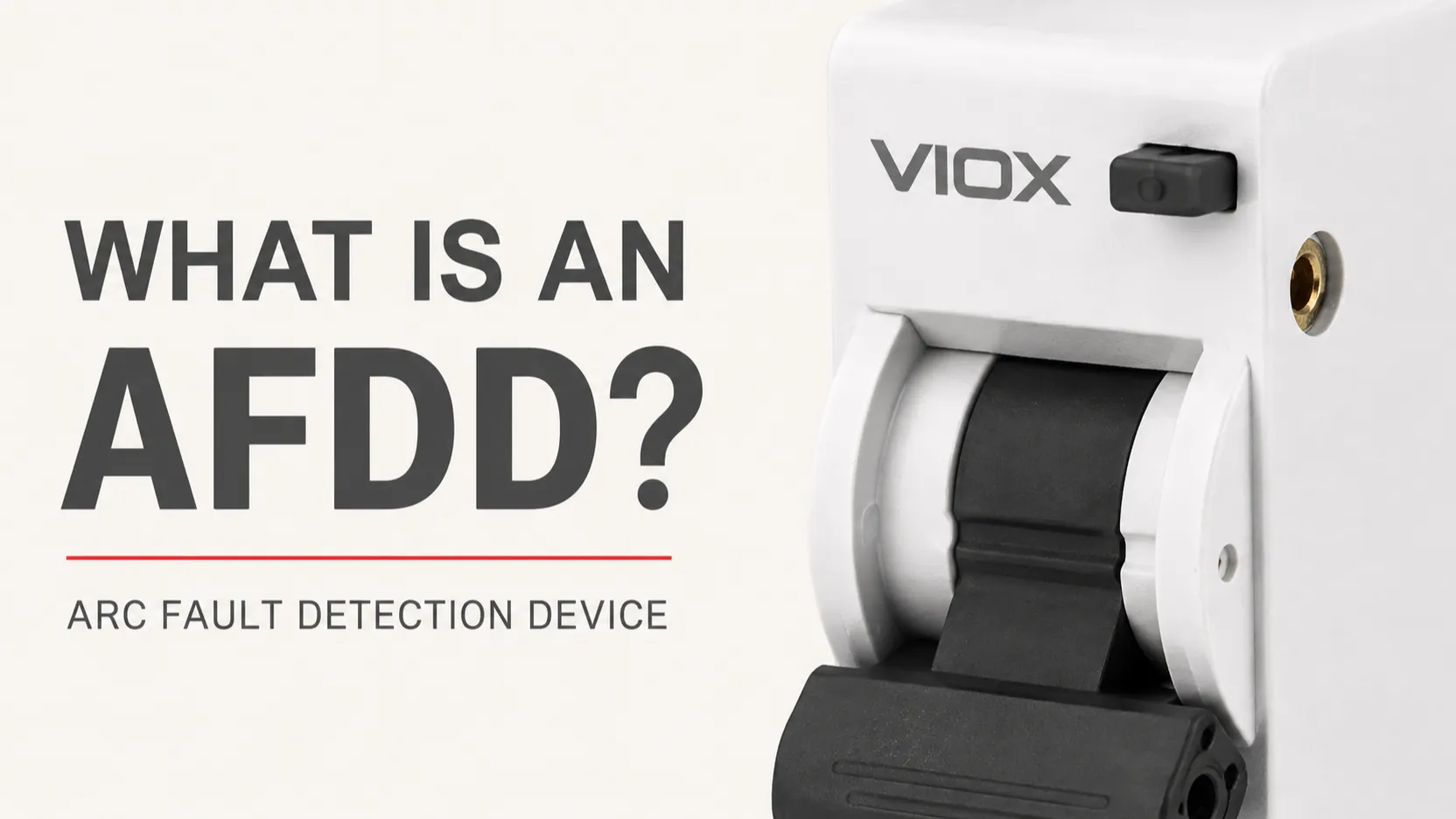
Ένα Συσκευή Ανίχνευσης Σφάλματος Τόξου (AFDD) παρακολουθεί ένα τελικό κύκλωμα εναλλασσόμενου ρεύματος (AC) για ηλεκτρικά πρότυπα που σχετίζονται με επικίνδυνα τόξα και αποσυνδέει το προστατευόμενο κύκλωμα όταν η λογική απόφασής του εντοπίζει ένα επικίνδυνο τόξο. Η ανίχνευση τόξου είναι μια ξεχωριστή λειτουργία προστασίας: ένας AFDD δεν παρέχει αυτόματα προστασία από υπερφόρτιση, βραχυκύκλωμα ή υπολειπόμενο ρεύμα, εκτός εάν αυτές οι λειτουργίες είναι ενσωματωμένες στο ίδιο προϊόν.
Αυτή η διάκριση είναι το κλειδί για την κατανόηση των AFDD. Ένας AFDD αντιμετωπίζει συνθήκες τόξου που οι συμβατικές διατάξεις προστασίας από υπερένταση ή υπολειπόμενο ρεύμα ενδέχεται να μην ανιχνεύουν, αλλά δεν καθιστά αυτές τις άλλες λειτουργίες περιττές.
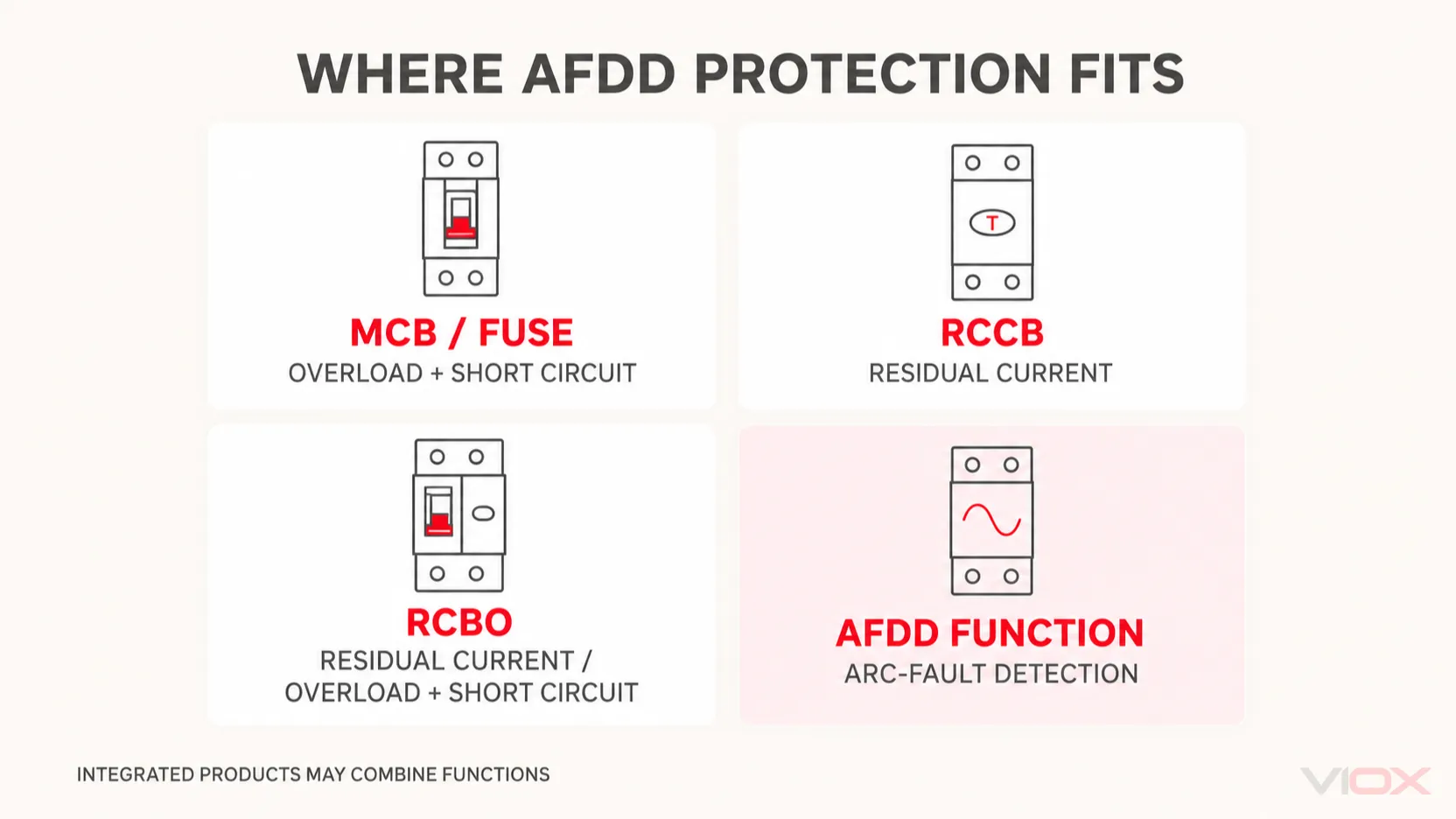
Πού ταιριάζει η προστασία AFDD
Οι διατάξεις προστασίας χαμηλής τάσης ανταποκρίνονται σε διαφορετικές ηλεκτρικές συνθήκες. Το σωστό ερώτημα δεν είναι “Ποια διάταξη είναι η καλύτερη;” αλλά “Ποιες λειτουργίες σφαλμάτων πρέπει να καλύπτει αυτό το κύκλωμα;”
| Διάταξη ή λειτουργία | Κύρια συνθήκη που ανιχνεύεται | Προστασία που δεν παρέχεται απαραίτητα από το ίδιο το μέσο |
|---|---|---|
| Μικροαυτόματος διακόπτης (MCB) ή ασφάλεια | Υπερφόρτωση και υπερένταση βραχυκυκλώματος | Ανίχνευση υπολειπόμενου ρεύματος και υπογραφής τόξου |
| Διάταξη υπολειπόμενου ρεύματος (RCD), συμπεριλαμβανομένου του διακόπτη υπολειπόμενου ρεύματος χωρίς προστασία από υπερένταση (RCCB) | Ανισορροπία που σχετίζεται με ρεύμα που διαρρέει εκτός της προβλεπόμενης διαδρομής των ενεργών αγωγών | Υπερένταση για έναν RCCB, και ανίχνευση υπογραφής τόξου |
| Διακόπτης υπολειπόμενου ρεύματος με προστασία από υπερένταση (RCBO) | Υπολειπόμενο ρεύμα συν υπερφόρτιση και βραχυκύκλωμα | Ανίχνευση υπογραφής τόξου εκτός εάν είναι ενσωματωμένο το AFDD |
| AFDD | Ηλεκτρικές υπογραφές που σχετίζονται με επικίνδυνα τόξα | Προστασία από υπερένταση ή υπολειπόμενο ρεύμα εκτός εάν είναι ενσωματωμένη |
| Διακόπτης κυκλώματος σφάλματος τόξου (AFCI) | Κατηγορία προστασίας από σφάλμα τόξου στη Βόρεια Αμερική | Terminology, product standards, ratings, and application rules are not automatically interchangeable with the IEC AFDD framework |
Εάν χρειάζεστε μόνο την ορολογία, δείτε τον εξειδικευμένο οδηγό για το Πλήρης ονομασία και σημασία του AFDD. Εάν η απόφασή σας αφορά συγκεκριμένα τις προστατευτικές λειτουργίες, χρησιμοποιήστε το αναλυτικό σύγκριση RCBO έναντι AFDD.
Τι είναι το σφάλμα τόξου;
Ένα τόξο είναι ρεύμα που ρέει μέσω μιας ακούσιας ιονισμένης διαδρομής αντί μέσω μιας υγιούς μεταλλικής σύνδεσης. Η κατεστραμμένη μόνωση, μια χαλαρή σύνδεση, ένας σπασμένος αγωγός ή η φθορά σε ένα εξάρτημα μπορούν να δημιουργήσουν συνθήκες υπό τις οποίες αναπτύσσεται διακοπτόμενο τόξο.
Δύο ευρείες διατάξεις σφαλμάτων βοηθούν στην εξήγηση της πρόκλησης προστασίας:
- Τόξο σειράς: το τόξο βρίσκεται σε σειρά με το φορτίο, όπως κατά μήκος ενός κατεστραμμένου αγωγού ή μιας κακής σύνδεσης. Η σύνθετη αντίσταση του φορτίου μπορεί να περιορίσει το ρεύμα, επομένως το σφάλμα μπορεί να παραμείνει κάτω από το επίπεδο που ενεργοποιεί τη συνήθη προστασία υπερέντασης.
- Παράλληλο τόξο: το τόξο δημιουργείται μεταξύ αγωγών, όπως φάσης προς ουδέτερο ή φάσης προς γείωση. Ορισμένα παράλληλα σφάλματα ενδέχεται να παράγουν επαρκές ρεύμα ώστε να ανταποκριθεί μια διάταξη υπερέντασης ή ένα RCD, αλλά το αποτέλεσμα εξαρτάται από τη διαδρομή του σφάλματος και το μέγεθος του ρεύματος.
Τα AFDD έχουν σχεδιαστεί για να αξιολογούν τη συμπεριφορά του τόξου αντί να αναμένουν μόνο ένα συμβατικό κατώφλι υπερέντασης ή υπολειπόμενου ρεύματος.
Πώς λειτουργεί ένα AFDD;
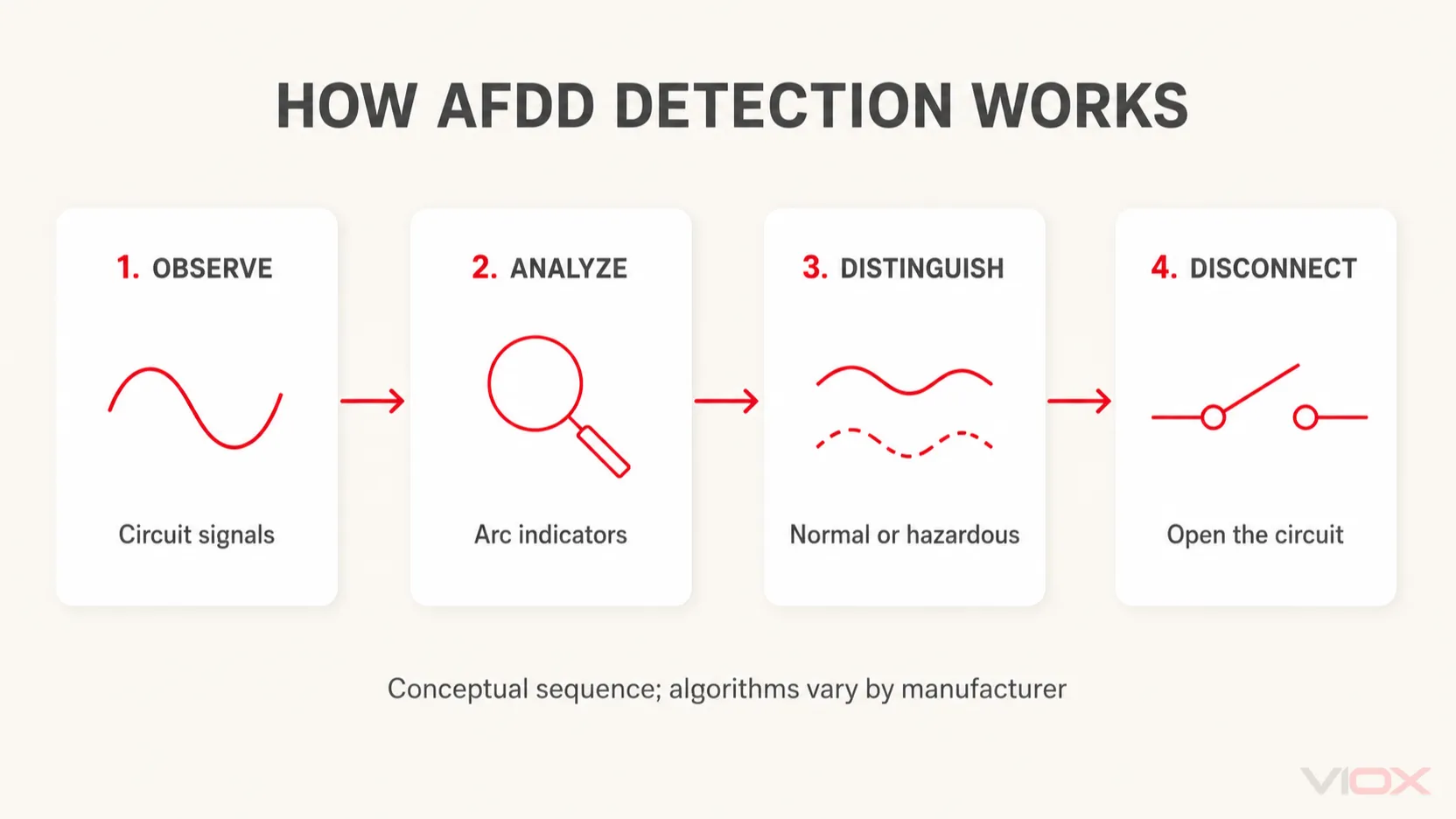
Ένα AFDD χρησιμοποιεί ηλεκτρονική ανίχνευση και λογική λήψης αποφάσεων. Η Schneider Electric περιγράφει την παρακολούθηση ηλεκτρικών σημάτων για τη διάκριση επικίνδυνων τόξων από την κανονική συμπεριφορά του κυκλώματος. Σε απλοποιημένη μορφή, η συσκευή ακολουθεί τέσσερα στάδια:
- Παρατήρηση του κυκλώματος: οι αισθητήρες παρακολουθούν το ρεύμα και άλλα ηλεκτρικά χαρακτηριστικά σχετικά με τον σχεδιασμό του προϊόντος.
- Εξαγωγή ενδείξεων τόξου: τα ηλεκτρονικά εξετάζουν χαρακτηριστικά όπως η παραμόρφωση κυματομορφής, η ακανόνιστη συμπεριφορά ρεύματος, η διάρκεια και το περιεχόμενο υψηλής συχνότητας.
- Διαχωρίστε τα κανονικά από τα επικίνδυνα συμβάντα: ο αλγόριθμος πρέπει να διακρίνει ένα επικίνδυνο σφάλμα από το αναμενόμενο τόξο που παράγεται από την εναλλαγή επαφών ή ορισμένα φορτία.
- Αποσυνδέστε το κύκλωμα: όταν πληρούνται τα κριτήρια απόφασης, ο μηχανισμός ανοίγματος διακόπτει το προστατευόμενο κύκλωμα.
Η ακριβής μέθοδος ανίχνευσης και ο αλγόριθμος είναι συγκεκριμένα για κάθε κατασκευαστή. Ένα γενικό άρθρο δεν μπορεί να καθορίσει τη συμπεριφορά ανίχνευσης, τις διαγνωστικές ενδείξεις ή τη συμβατότητα ενός συγκεκριμένου μοντέλου· χρησιμοποιήστε το τρέχον φύλλο δεδομένων και τις οδηγίες του για αυτές τις αποφάσεις.
Οι τρεις διαδρομές κατασκευής κατά IEC 62606
Το επίσημο πεδίο εφαρμογής του IEC 62606 περιγράφει τρεις τρόπους με τους οποίους μπορεί να παρέχεται μια λειτουργία AFDD για οικιακές και παρόμοιες εφαρμογές AC.
- Με δικά του μέσα ανοίγματος: ανίχνευση τόξου συν ένα μέσο για την αποσύνδεση του κυκλώματος.
- Ενσωματωμένο με μια προστατευτική διάταξη: ανίχνευση τόξου σε συνδυασμό με τις λειτουργίες που δηλώνονται για το συγκεκριμένο προϊόν.
- Ως ξεχωριστή μονάδα ανίχνευσης σφάλματος τόξου (AFD): συναρμολογημένη με μια προστατευτική διάταξη σε συνδυασμό που δηλώνεται από τον κατασκευαστή.
Αυτός είναι ο λόγος για τον οποίο τα γράμματα AFDD σε μια περιγραφή προϊόντος δεν αρκούν για να καθορίσουν το πλήρες πακέτο προστασίας. Ελέγξτε την τεκμηρίωση του συγκεκριμένου μοντέλου για να διαπιστώσετε ποιες λειτουργίες περιλαμβάνονται· ένα συμπαγές περίβλημα ή μια φωτογραφία της πρόσοψης δεν τις αποδεικνύουν.
Τα πρότυπα προϊόντων AFDD και οι κανόνες εγκατάστασης είναι διαφορετικά
Το IEC 62606 είναι ένα πρότυπο προϊόντος. Αφορά την κατασκευή και την απόδοση του AFDD εντός του δηλωμένου πεδίου εφαρμογής του. Δεν αποφασίζει εάν ένα συγκεκριμένο κύκλωμα σε κάθε χώρα πρέπει να χρησιμοποιεί AFDD.
Οι απαιτήσεις εγκατάστασης προέρχονται από τους ισχύοντες εθνικούς ή περιφερειακούς κανόνες καλωδίωσης, τις προδιαγραφές του έργου, τις απαιτήσεις των αρχών και την εκτίμηση κινδύνου. Το ευρύτερο πλαίσιο εγκατάστασης IEC περιλαμβάνει το IEC 60364-4-42:2024, το οποίο αφορά την προστασία από θερμικά αποτελέσματα σε εγκαταστάσεις χαμηλής τάσης.
Για ένα περιφερειακό παράδειγμα, το Ηνωμένο Βασίλειο χρησιμοποιεί το BS 7671. Η ισχύουσα έκδοση και οι συνθήκες του κυκλώματος έχουν σημασία· συμβουλευτείτε το Ο ελεγκτής τρέχουσας έκδοσης του IET αντί να μετατρέπει έναν εθνικό κανόνα σε παγκόσμια αξίωση.
Για μια βαθύτερη ερμηνεία των προτύπων και μια λίστα ελέγχου τεκμηρίωσης, διαβάστε Πρότυπο IEC 62606 AFDD: Πεδίο εφαρμογής, τύποι και τεκμηρίωση συμμόρφωσης.
Πώς να επιλέξετε τη σωστή διαδρομή AFDD
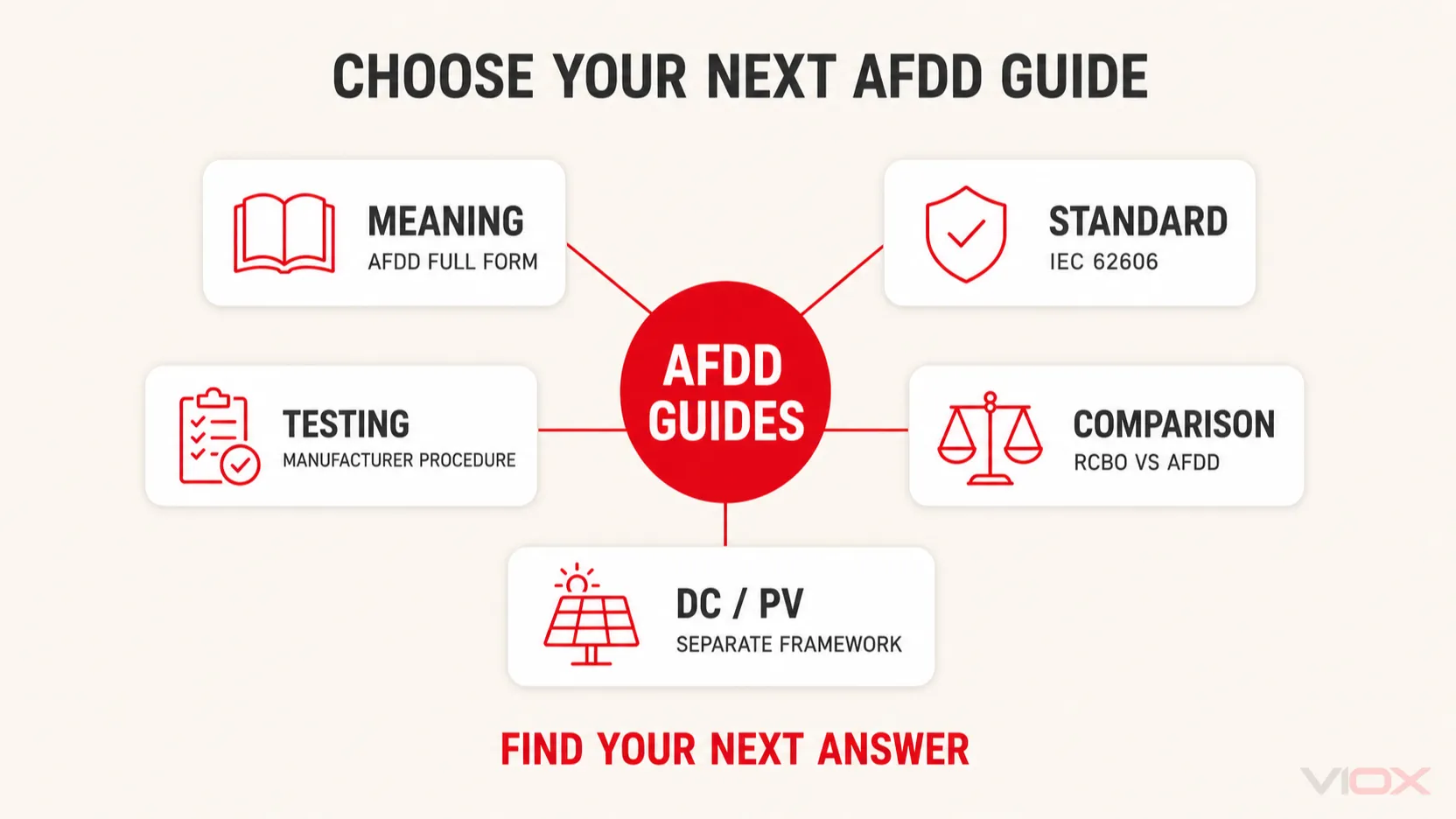
Χρησιμοποιήστε αυτόν τον οδηγό πλοήγησης πριν ανοίξετε ένα φύλλο δεδομένων ή υποβάλετε αίτημα για προσφορά.
| Η επόμενη ερώτησή σας | Σωστός πόρος ή ενέργεια |
|---|---|
| Τι σημαίνει το AFDD; | Διαβάστε τον Πλήρης ορισμός του AFDD |
| Τι καλύπτει το πρότυπο IEC 62606; | Διαβάστε τον Οδηγός προτύπων IEC 62606 |
| Πώς χρησιμοποιείται το κουμπί δοκιμής και τι σημαίνει το αποτέλεσμα; | Ξεκινήστε με την ακριβή διαδικασία και το διάστημα δοκιμής του κατασκευαστή· το Επισκόπηση δοκιμών AFDD είναι συμπληρωματικό ανάγνωσμα |
| Χρειάζομαι ένα RCBO, ένα AFDD ή ένα ενσωματωμένο προϊόν; | Χρησιμοποιήστε την Οδηγός επιλογής RCBO έναντι AFDD |
| Είναι η εφαρμογή φωτοβολταϊκή (PV) ή άλλο κύκλωμα συνεχούς ρεύματος (DC); | Χρησιμοποιήστε τον ξεχωριστό οδηγό προστασίας από τόξο σφάλματος για PV DC |
| Είναι αυτό το προϊόν κατάλληλο για τον πίνακα και το κύκλωμά μου; | Επαληθεύστε την ένταση ρεύματος, τους πόλους, την τάση, τις προστατευτικές λειτουργίες, την ικανότητα διακοπής, τα αποδεικτικά στοιχεία προτύπων και τη δηλωμένη συμβατότητα συστήματος στην τεκμηρίωση του μοντέλου |
Έξι ερωτήσεις που πρέπει να κάνετε πριν επιλέξετε ένα προϊόν
- Είναι το προστατευόμενο κύκλωμα AC ή απαιτεί ξεχωριστή λύση για τόξο σφάλματος DC;
- Ποιος κανόνας εγκατάστασης και ποια έκδοση ισχύουν στην τοποθεσία του έργου;
- Είναι το προϊόν αυτόνομο AFDD, ενσωματωμένος αυτόματος διακόπτης/AFDD, AFDD/RCBO ή δηλωμένος συνδυασμός πρόσθετου εξοπλισμού;
- Ποιες λειτουργίες υπερέντασης και υπολειπόμενου ρεύματος είναι ήδη παρούσες;
- Είναι η ονομαστική τάση, το ρεύμα, οι πόλοι, η ικανότητα διακοπής, τα χαρακτηριστικά υπολειπόμενου ρεύματος και ο προσανατολισμός τροφοδοσίας/φορτίου κατάλληλα;
- Δηλώνει ο κατασκευαστής συμβατότητα με τον προβλεπόμενο πίνακα διανομής, τη ζυγοστάθμη και τις σχετικές συσκευές;
Μην υποθέτετε πιστοποίηση ή συμβατότητα συστήματος μόνο από μια φωτογραφία της πρόσοψης. Ζητήστε το ακριβές φύλλο δεδομένων του μοντέλου, τη δήλωση, το πιστοποιητικό όπου απαιτείται και τις οδηγίες εγκατάστασης.
Το AFDD δεν είναι το ίδιο με την προστασία από τόξο σφάλματος DC σε ηλιακά συστήματα
Το πρότυπο IEC 62606 ισχύει για οικιακές και παρόμοιες χρήσεις σε AC circuits. Τα τόξα DC δεν παρουσιάζουν την ίδια συμπεριφορά μηδενισμού ρεύματος με τα τόξα AC, και τα φωτοβολταϊκά συστήματα χρησιμοποιούν διαφορετικά πλαίσια ανίχνευσης, διακοπής και πρότυπα. Ένα AFDD AC δεν πρέπει να επιλέγεται για κύκλωμα DC, εκτός εάν η τεκμηρίωση του κατασκευαστή καλύπτει ρητά αυτή την εφαρμογή υπό το σχετικό πλαίσιο.
Συχνές Ερωτήσεις
Είναι το AFDD και το AFCI το ίδιο πράγμα;
Αντιμετωπίζουν παρόμοια προβλήματα κινδύνου πυρκαγιάς, αλλά το AFDD σχετίζεται με το πλαίσιο IEC, ενώ το AFCI είναι σύνηθες στα πλαίσια NEC/UL της Βόρειας Αμερικής. Μην θεωρείτε τους όρους, τις ονομαστικές τιμές, τις απαιτήσεις δοκιμών ή τους κανόνες εγκατάστασης ως αυτόματα εναλλάξιμους.
Μπορεί ένα AFDD να αποτρέψει κάθε ηλεκτρική πυρκαγιά;
Καμία προστατευτική διάταξη δεν εξαλείφει κάθε αιτία πυρκαγιάς. Τα AFDD αντιμετωπίζουν τα επικίνδυνα τόξα εντός του πεδίου σχεδιασμού και εφαρμογής τους· ο σωστός σχεδιασμός, η προστασία των αγωγών, οι συνδέσεις, η εγκατάσταση, ο έλεγχος και άλλες προστατευτικές λειτουργίες παραμένουν απαραίτητα.
Πηγές
- IEC 62606 — Γενικές απαιτήσεις για διατάξεις ανίχνευσης σφαλμάτων τόξου
- IEC 60364-4-42:2024 — Προστασία έναντι θερμικών επιδράσεων
- IET — Τρέχουσα έκδοση BS 7671 και κατάσταση μετάβασης
- Schneider Electric — Τι είναι η προστασία από σφάλμα τόξου και πώς λειτουργεί
- ABB — Τεχνικός οδηγός για AFDD
Εξερεύνηση Διατάξεις ανίχνευσης σφαλμάτων τόξου VIOX, ή επαφή [email protected] για την τεκμηρίωση μοντέλων και τη βοήθεια αντιστοίχισης λειτουργιών προστασίας σε ένα έργο κατασκευής εξοπλισμού ή πίνακα διανομής.