

ในหน้านี้
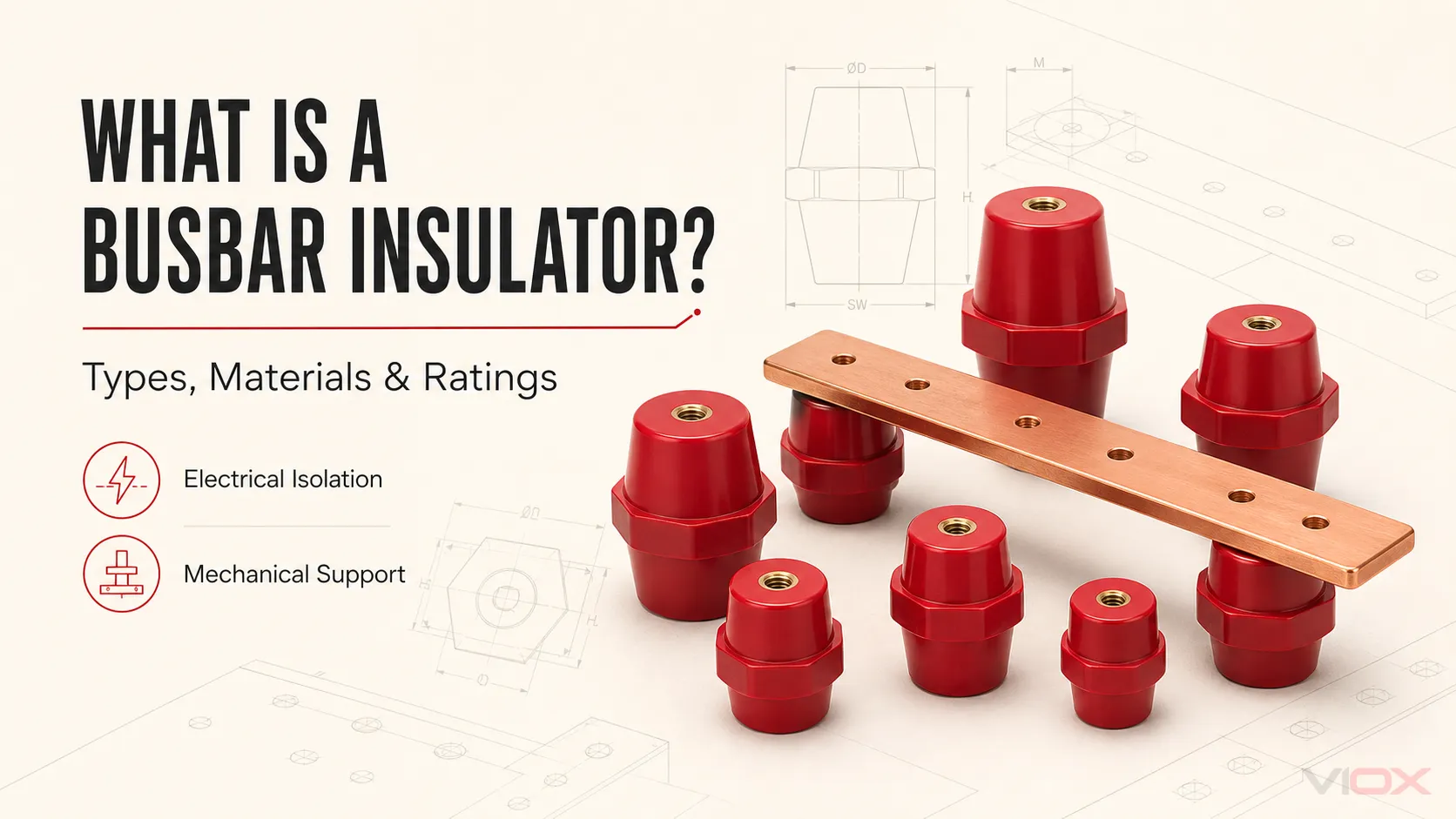
เป็ ฉนวนบัสบาร์ คืออุปกรณ์รองรับที่ไม่นำไฟฟ้า ซึ่งทำหน้าที่ยึดบัสบาร์ทองแดงหรืออะลูมิเนียมที่มีกระแสไฟฟ้าให้คงตำแหน่งอยู่ได้ พร้อมทั้งแยกส่วนประกอบดังกล่าวออกจากโครงโลหะที่ต่อลงดิน ตู้ควบคุม และตัวนำไฟฟ้าข้างเคียงทางไฟฟ้า โดยทำหน้าที่ทั้ง ฉนวนทางไฟฟ้า แล้ว การรองรับทางกล ภายในสวิตช์เกียร์ แผงจ่ายไฟ ตู้ควบคุม ตู้คอนโทรลอินเวอร์เตอร์ และชุดประกอบระบบไฟฟ้าอื่นๆ.
ฉนวนรองบัสบาร์ต้องทำหน้าที่ได้มากกว่าแค่การแยกส่วนประกอบทางกายภาพ แต่ยังช่วยรักษาค่าระยะห่างทางไฟฟ้า (Clearance) และระยะห่างตามผิวฉนวน (Creepage) รองรับน้ำหนักทางกลของบัสบาร์ รักษาตำแหน่งระหว่างเฟส และทนต่อแรงที่เกิดจากการขนส่ง การสั่นสะเทือน การเปลี่ยนแปลงอุณหภูมิ และเหตุการณ์ไฟฟ้าลัดวงจร.
| คำถามสั้นๆ | คำตอบเชิงวิศวกรรม |
|---|---|
| มันทำหน้าที่อะไร? | รองรับบัสบาร์และแยกส่วนประกอบดังกล่าวออกจากส่วนที่มีกระแสไฟฟ้าหรือส่วนที่ต่อลงดิน |
| ประเภทที่พบบ่อยมีอะไรบ้าง? | สแตนด์ออฟ, เสารอง, บล็อกรองรับ, ตัวยึด, แคลมป์ และชิ้นส่วนรองรับแบบขึ้นรูปพิเศษ |
| ใช้วัสดุอะไรบ้าง? | BMC/DMC, SMC, อีพ็อกซี่เรซิน, พอร์ซเลน และวัสดุคอมโพสิตทางวิศวกรรม |
| อะไรเป็นตัวกำหนดการเลือกใช้งาน? | แรงดันไฟฟ้า, ระยะกระแสรั่วไหล (Creepage), ระยะห่างทางอากาศ (Clearance), รูปทรงของบัสบาร์, ช่วงห่างของจุดรองรับ, แรงจากกระแสลัดวงจร, อุปกรณ์ติดตั้ง และสภาพแวดล้อม |
| แรงดันไฟฟ้าเพียงอย่างเดียวเพียงพอหรือไม่? | ไม่เพียงพอ ฉนวนจะต้องได้รับการประเมินโดยเป็นส่วนหนึ่งของชุดประกอบบัสบาร์ทั้งหมด |
สำหรับขนาดและตัวเลือกโครงสร้างที่มีจำหน่าย โปรดดูที่ กลุ่มผลิตภัณฑ์บัสบาร์อินซูเลเตอร์ของ VIOX. บทความนี้อธิบายถึงส่วนประกอบและขอบเขตทางวิศวกรรมของอุปกรณ์ ส่วนที่แยกออกมา คู่มือการเลือกฉนวนบัสบาร์ ครอบคลุมกระบวนการกำหนดคุณลักษณะเฉพาะทั้งหมด.
สิ่งสำคัญที่ต้องจดจำ
- ฉนวนบัสบาร์ทำหน้าที่สองอย่างที่เชื่อมโยงกัน: การแยกทางไฟฟ้า แล้ว โครงสร้างรองรับ.
- ฉนวนบัสบาร์ทั่วไปประกอบด้วย สแตนด์ออฟแบบเกลียว, ฉนวนแบบเสา, บล็อกรองรับ และตัวรองรับแบบแคลมป์.
- ความสูงหรือสีของผลิตภัณฑ์ไม่ได้เป็นตัวกำหนดความสามารถในการทนแรงดันไฟฟ้า ประสิทธิภาพของวัสดุ หรือความแข็งแรงทางกล.
- ระยะห่างทางไฟฟ้า (Clearance) และระยะตามผิวฉนวน (Creepage) เป็นคุณสมบัติของรูปทรงที่ติดตั้ง ไม่ใช่เพียงค่าที่เกิดจากตัวฉนวนเท่านั้น.
- การทนต่อกระแสลัดวงจรเป็นคุณสมบัติของการออกแบบบัสบาร์และชุดประกอบโดยรวม ค่าพิกัดของตัวรองรับเพียงชิ้นเดียวไม่สามารถพิสูจน์ค่าพิกัดของชุดประกอบทั้งหมดได้ด้วยตัวมันเอง.
- ตรวจสอบให้แน่ใจเสมอว่ารุ่นที่ซื้อตรงกับแบบวาด เอกสารข้อมูลวัสดุ รูปแบบเกลียว รวมถึงข้อมูลทางไฟฟ้าและทางกลเฉพาะของรุ่นนั้นๆ.
ฉนวนบัสบาร์ทำหน้าที่อะไร?
บัสบาร์ทำหน้าที่กระจายกระแสไฟฟ้าภายในตู้ควบคุมโดยใช้ตัวนำทองแดงหรืออลูมิเนียมแบบแข็ง ตัวนำเหล่านี้จะต้องถูกติดตั้งอย่างมั่นคงโดยไม่ให้เกิดเส้นทางกระแสไฟฟ้าลัดวงจรลงกราวด์หรือข้ามเฟสโดยไม่ตั้งใจ ฉนวนรองรับบัสบาร์จึงทำหน้าที่เป็นจุดเชื่อมต่อทางกลระหว่างตัวนำที่มีกระแสไฟฟ้ากับโครงสร้างที่รองรับ.
1. ให้ความเป็นฉนวนทางไฟฟ้า
ตัวฉนวนทำหน้าที่แยกบัสบาร์ที่มีกระแสไฟฟ้าออกจากส่วนประกอบที่เป็นสื่อนำไฟฟ้า เช่น:
- ตู้ควบคุมและแผ่นเพลทสำหรับติดตั้งอุปกรณ์
- โครงสร้างตู้และรางติดตั้ง
- บัสบาร์ของเฟสข้างเคียง
- หางปลาและจุดต่อสายไฟ
- แผงกั้นสายดิน
- อุปกรณ์ควบคุมหรืออุปกรณ์ป้องกันที่อยู่ใกล้เคียง
การแยกทางไฟฟ้าขึ้นอยู่กับตัวแปรหลายประการ ไม่ใช่เพียงแค่ความทนทานต่อแรงดันไฟฟ้าของวัสดุฉีดขึ้นรูปเท่านั้น:
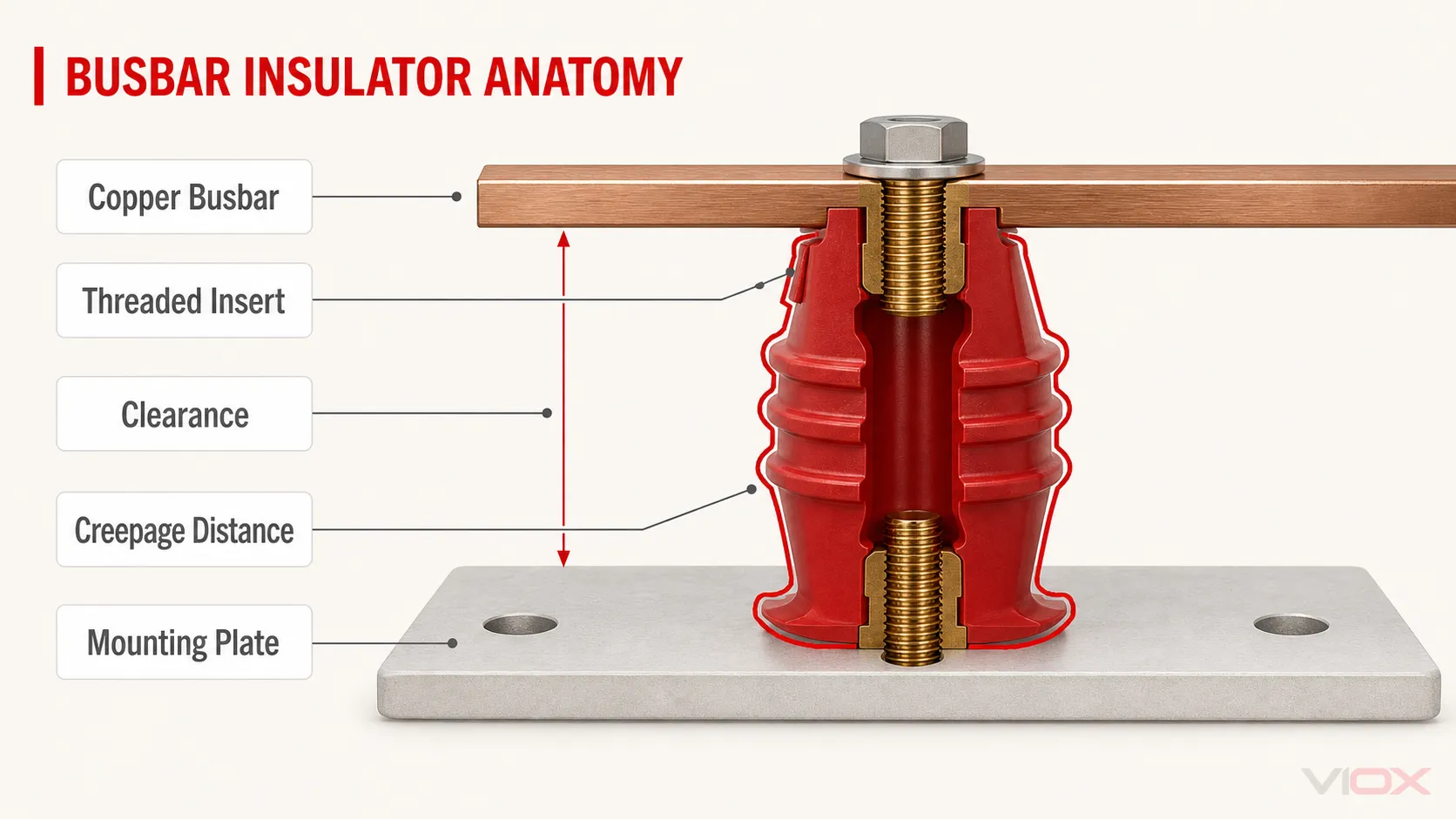
- ระยะห่าง คือระยะห่างที่สั้นที่สุดผ่านอากาศระหว่างส่วนประกอบที่เป็นตัวนำไฟฟ้าสองส่วน.
- ระยะครีป คือระยะห่างที่สั้นที่สุดตามพื้นผิวของวัสดุฉนวน.
- ระดับมลพิษ อธิบายถึงระดับมลภาวะที่คาดว่าจะเกิดขึ้นและโอกาสที่มลภาวะนั้นจะกลายเป็นตัวนำไฟฟ้า.
- กลุ่มวัสดุ สะท้อนถึงพฤติกรรมการเกิดรอยทางไฟฟ้า ซึ่งมักเชื่อมโยงกับค่าดัชนีการเกิดรอยทางไฟฟ้าเปรียบเทียบ (CTI).
- หมวดหมู่แรงดันไฟฟ้าเกินและแรงดันไฟฟ้าของระบบ กำหนดความเค้นทางไฟฟ้าที่คาดว่าจะเกิดขึ้น.
- ระดับความสูง อาจส่งผลต่อข้อกำหนดระยะห่างในอากาศ (air-clearance).
เวอร์ชันรวบรวมฉบับปัจจุบัน, IEC 60664-1:2020+AMD1:2025 CSV, ให้หลักการประสานฉนวนสำหรับอุปกรณ์ที่เชื่อมต่อกับระบบจ่ายไฟฟ้าแรงดันต่ำสูงสุด AC 1,000 V หรือ DC 1,500 V ภายในขอบเขตที่ระบุไว้ การออกแบบฉนวนบัสบาร์ไม่สามารถลดทอนลงเหลือเพียงกฎทั่วไปอย่าง “1 มม. ต่อ 1 kV” ได้ จำเป็นต้องกำหนดรูปทรงที่เหมาะสมสำหรับระบบและสภาพแวดล้อมจริง.
2. ให้การรองรับทางกล
ชิ้นส่วนเดียวกันนี้จะต้องรองรับบัสบาร์และรักษาตำแหน่งไว้ หน้าที่ทางกลของชิ้นส่วนนี้อาจรวมถึง:
- น้ำหนักของตัวนำและอุปกรณ์ประกอบที่ติดตั้งอยู่
- แรงที่เกิดจากการเชื่อมต่อและการดัดโค้งของสายเคเบิล
- แรงสั่นสะเทือนระหว่างการทำงาน
- แรงกระแทกระหว่างการขนส่งหรือการติดตั้ง
- การขยายตัวและหดตัวจากความร้อนซ้ำๆ
- แรงทางไฟฟ้าพลศาสตร์ระหว่างการเกิดไฟฟ้าลัดวงจร
สำหรับรูปทรงตัวนำที่คล้ายคลึงกัน แรงทางกลสูงสุดจะเพิ่มขึ้นอย่างรวดเร็วตามกระแสไฟฟ้าลัดวงจรสูงสุด:
แรงทางไฟฟ้าพลศาสตร์สูงสุด ∝ iₚ²แรงทางกลสูงสุดขึ้นอยู่กับกระแสไฟฟ้าลัดวงจรสูงสุด รูปทรงของตัวนำ ระยะห่างระหว่างตัวนำ ช่วงห่างของจุดรองรับ และวิธีการถ่ายโอนโหลดไปยังโครงสร้างรองรับเป็นหลัก ระยะเวลาที่เกิดความผิดปกติจะมีผลต่อความเค้นจากความร้อนที่เกี่ยวข้อง และระยะเวลาที่แรงกระแทกทางกลและแรงสั่นสะเทือนส่งผลต่อชุดอุปกรณ์.
ดังนั้น จึงไม่ควรใช้ฉนวนรองรับบัสบาร์เพียงชิ้นเดียวเป็นหลักฐานยืนยันเพียงอย่างเดียวสำหรับพิกัดการทนต่อกระแสไฟฟ้าลัดวงจรของตู้สวิตช์บอร์ด.
3. ช่วยรักษาโครงสร้างทางเรขาคณิตของบัสบาร์ที่ออกแบบไว้
ระบบรองรับที่สม่ำเสมอจะช่วยให้เฟสต่างๆ เรียงตัวตรงกันและรักษาไว้ซึ่งระยะห่างที่กำหนดไว้ตลอดกระบวนการผลิตและการใช้งานจริง สิ่งนี้มีความสำคัญอย่างยิ่งในตู้สวิตช์บอร์ดขนาดกะทัดรัด ซึ่งการเคลื่อนตัวเพียงเล็กน้อยของตัวนำอาจทำให้ระยะห่างลดลง เกิดภาระที่ไม่สมดุลที่จุดเชื่อมต่อ หรือทำให้ส่วนที่มีกระแสไฟฟ้าเข้าใกล้โครงโลหะที่ต่อลงดินมากเกินไป.
สำหรับผู้ผลิตอุปกรณ์ดั้งเดิม (OEM) โครงสร้างทางเรขาคณิตที่ทำซ้ำได้ยังช่วยปรับปรุงความสม่ำเสมอในการประกอบอีกด้วย รูปแบบการรองรับควรใช้งานได้จริงในทุกหน่วยการผลิต ไม่ใช่แค่ในต้นแบบที่ปรับแต่งด้วยมือเท่านั้น.
ฉนวนบัสบาร์ (Busbar Insulator), ฉนวนรองรับ (Support Insulator) และฉนวนค้ำยัน (Standoff): มีความแตกต่างกันอย่างไร?
ในท้องตลาดมีการใช้ชื่อเรียกที่ทับซ้อนกันหลายชื่อ คำที่ถูกต้องจะขึ้นอยู่กับรูปทรงและหน้าที่การทำงานของอุปกรณ์นั้นๆ.
| ระยะ | ความหมายในทางปฏิบัติ | การใช้งานทั่วไป |
|---|---|---|
| ฉนวนรองบัสบาร์ (Busbar insulator) | เป็นคำกว้างๆ ที่ใช้เรียกชิ้นส่วนฉนวนที่ทำหน้าที่รองรับและแยกบัสบาร์ออกจากกัน | สวิตช์เกียร์, ตู้จ่ายไฟ, แผงควบคุมไฟฟ้า (Panelboards), ตู้ควบคุม |
| ฉนวนรองรับบัสบาร์ (Busbar support insulator) | เน้นย้ำถึงหน้าที่ในการรองรับเชิงโครงสร้าง | แนวบัสบาร์หลักและบัสบาร์จ่ายไฟ |
| ฉนวนรองรับบัสบาร์ (Standoff insulator) | อุปกรณ์รองรับแบบเกลียวที่ช่วยยกตัวนำให้สูงขึ้นจากพื้นผิวติดตั้ง | ตู้ไฟฟ้าแรงดันต่ำ ตู้คอนโทรลอินเวอร์เตอร์ และชุดประกอบไฟฟ้ากระแสตรง |
| ฉนวนแบบเสา (Post insulator) | อุปกรณ์รองรับที่มีความสูงมากขึ้น มักมีลักษณะเป็นร่องหรือเป็นชั้น | การใช้งานที่ต้องการความสูง ระยะห่างตามผิว หรือการรองรับทางกลที่ชัดเจน |
| อุปกรณ์ยึดบัสบาร์หรือบล็อกรองรับบัสบาร์ | ชิ้นส่วนขึ้นรูปที่ใช้กำหนดตำแหน่งบัสบาร์ตั้งแต่หนึ่งเส้นขึ้นไปให้มีระยะห่างคงที่ | ชุดประกอบบัสบาร์แบบโมดูลาร์และแบบผลิตซ้ำ |
| บุชชิ่ง (Bushing) | ฉนวนแบบกลวงที่ตัวนำร้อยผ่านเพื่อข้ามสิ่งกีดขวางที่เป็นตัวนำไฟฟ้า | การทะลุผ่านของตู้ควบคุม หม้อแปลง หรือสวิตช์เกียร์ |
ดังนั้นฉนวนรองรับ (standoff insulator) จึงเป็นฉนวนบัสบาร์ประเภทหนึ่ง ในขณะที่บุชชิ่ง (bushing) ไม่ใช่ เพราะบุชชิ่งทำหน้าที่แก้ปัญหาการทะลุผ่านของตัวนำไฟฟ้ามากกว่าการรองรับจากด้านล่าง.
วลี อุปกรณ์ตัดตอนบัสบาร์ (busbar isolator) ปรากฏในการสืบค้นบางรายการ แต่อาจทำให้เกิดความสับสนได้เนื่องจากคำว่า isolator โดยปกติหมายถึงอุปกรณ์ตัดตอน (disconnector) หรือสวิตช์ตัดตอน (isolation switch) สำหรับชิ้นส่วนรองรับนั้น, ฉนวนบัสบาร์ หรือ ฉนวนรองรับบัสบาร์ (busbar support insulator) เป็นภาษาทางวิศวกรรมที่ชัดเจนกว่า.
ประเภทและการประยุกต์ใช้งานของฉนวนบัสบาร์หลัก
ประเภทของฉนวนบัสบาร์ควรจำแนกตามรูปแบบการติดตั้งและฟังก์ชันการรองรับ มากกว่าการจำแนกตามสีหรือระดับแรงดันไฟฟ้าเพียงอย่างเดียว.
| ประเภท | การก่อสร้าง | เหมาะสมที่สุดสำหรับ | การตรวจสอบหลัก |
|---|---|---|---|
| สแตนด์ออฟแบบเกลียว | ตัวถังขึ้นรูปทรงกระบอก ทรงหกเหลี่ยม ทรงกรวย หรือทรงขั้นบันได พร้อมเม็ดเกลียวหรือสตัด | ตู้ควบคุมไฟฟ้าแรงดันต่ำขนาดกะทัดรัดและตู้ไฟฟ้ากระแสตรง | ความสูง เส้นผ่านศูนย์กลางตัวถัง เกลียว ความลึกของเม็ดเกลียว และภาระทางกล |
| ฉนวนแบบเสา (Post insulator) | ตัวถังทรงสูงพร้อมอุปกรณ์ประกอบปลายและมักมีลักษณะเป็นครีบ | การใช้งานที่ต้องการระยะห่างหรือความเป็นฉนวนที่สูงขึ้น | ระยะกระแสรั่วไหลตามผิว (Creepage) ระยะห่างทางอากาศ (Clearance) ความต้านทานแรงดัด และระดับความเป็นฉนวน |
| บล็อกรองรับ | บล็อกขึ้นรูปสำหรับรองรับบัสบาร์หนึ่งแท่งหรือหลายแท่ง | การจัดวางเฟสแบบซ้ำและระบบโมดูลาร์ | ขนาดของบัสบาร์ ระยะห่างระหว่างเฟส และวิธีการยึด |
| ตัวยึดหรือขายึดแบบแคลมป์ | ฉนวนรองรับที่รวมเข้ากับแคลมป์หรือขายึด | การเดินตัวนำแบบกำหนดเองและการจัดวางในพื้นที่จำกัด | ทิศทางการรับน้ำหนัก รูปทรงของขายึด และรูสำหรับติดตั้ง |
| อุปกรณ์รองรับแบบขึ้นรูปเฉพาะงาน | ตัวเรือน ส่วนประกอบ และจุดเชื่อมต่อตัวนำไฟฟ้าที่ออกแบบเฉพาะสำหรับการใช้งาน | อุปกรณ์ OEM ที่มีรูปทรงไม่ได้มาตรฐาน | การควบคุมแบบร่าง เครื่องมือ วัสดุ ค่าความคลาดเคลื่อน และการตรวจสอบความถูกต้อง |
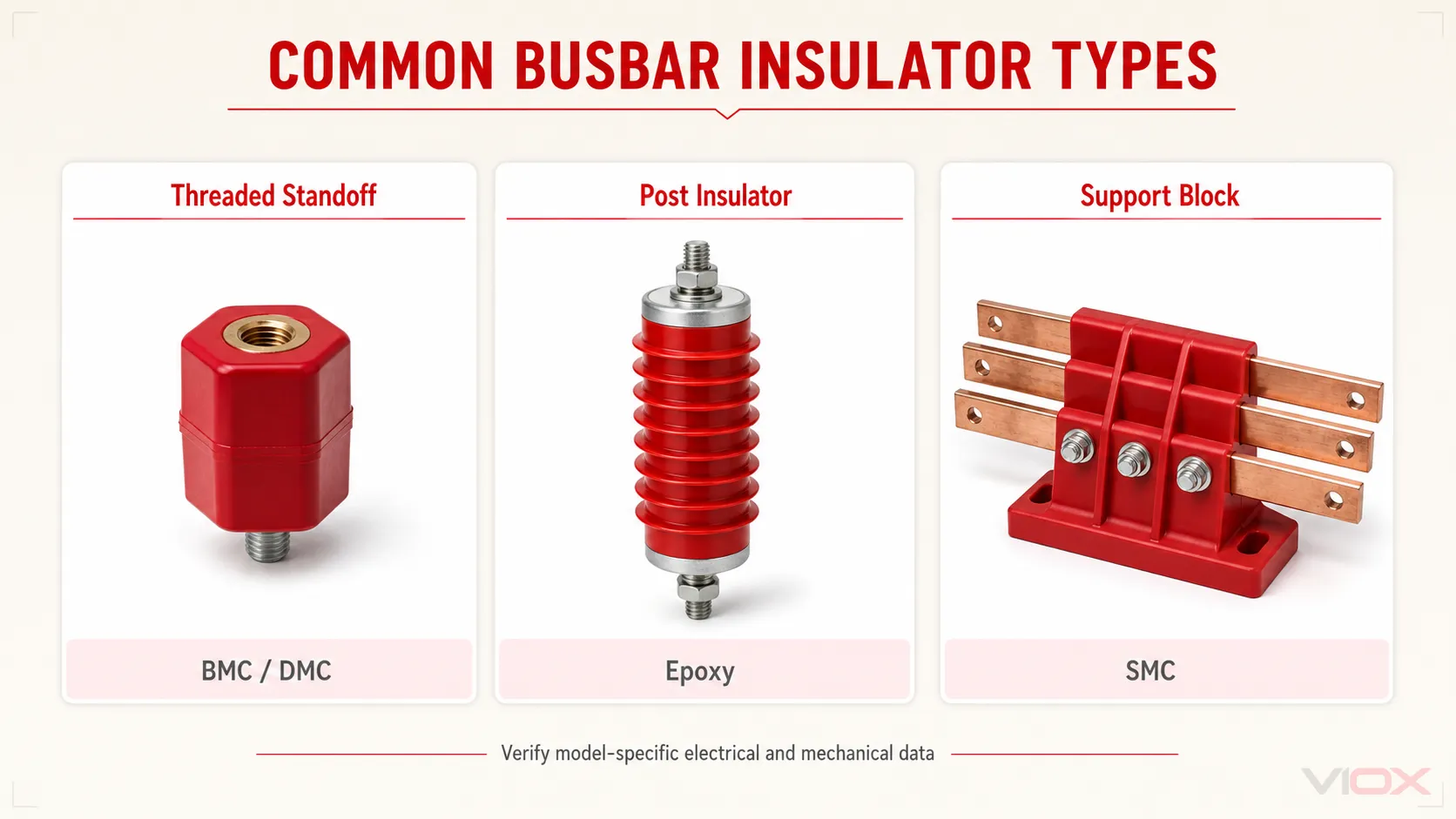
สแตนด์ออฟแบบเกลียว (Threaded standoffs) เป็นรูปแบบที่พบได้บ่อยที่สุดในตู้ไฟฟ้าแรงดันต่ำขนาดกะทัดรัด ตู้คอนเวอร์เตอร์ อุปกรณ์จ่ายไฟกระแสตรง ตู้ BESS และอุปกรณ์ชาร์จรถยนต์ไฟฟ้า โดยจุดเชื่อมต่ออาจเป็นแบบตัวเมีย-ตัวเมีย, ตัวผู้-ตัวเมีย หรือตัวผู้-ตัวผู้.
ฉนวนแบบเสา (Post insulators) โดยทั่วไปจะมีความสูงมากกว่าและอาจใช้ครีบหรือขั้นบันไดเพื่อเพิ่มระยะห่างตามผิวฉนวน ในขณะที่บล็อกรองรับ (Support blocks) จะทำหน้าที่ยึดบัสบาร์หนึ่งแท่งหรือมากกว่าไว้ที่ระยะห่างคงที่ ซึ่งช่วยปรับปรุงความสามารถในการผลิตซ้ำได้ รูปแบบเหล่านี้ไม่สามารถเปลี่ยนแทนกันได้โดยอัตโนมัติ เนื่องจากอุปกรณ์ยึด ทิศทางการรับน้ำหนัก จุดเชื่อมต่อตัวนำไฟฟ้า และการทดสอบที่เกี่ยวข้องอาจแตกต่างกัน.
การเปรียบเทียบวัสดุฉนวนบัสบาร์
ไม่มีวัสดุฉนวนบัสบาร์ชนิดใดชนิดหนึ่งที่ดีที่สุดสำหรับการใช้งานทุกประเภท การเลือกวัสดุต้องคำนึงถึงความเป็นฉนวน การเกิดรอยทางไฟฟ้า (Tracking) ความร้อน ความชื้น แรงทางกล รูปทรงในการผลิต และสภาพแวดล้อมในการทำงาน.
| กลุ่มวัสดุ | จุดแข็งทางวิศวกรรม | ข้อจำกัดที่สำคัญ | แนวทางการประยุกต์ใช้งานทั่วไป |
|---|---|---|---|
| วัสดุคอมโพสิตเทอร์โมเซตชนิด BMC/DMC | ขึ้นรูปได้ มีความแข็งแรง และนิยมใช้กันอย่างแพร่หลายสำหรับฉนวนรองรับขนาดกะทัดรัด | ประสิทธิภาพขึ้นอยู่กับสูตรผสม การเสริมแรง และการควบคุมกระบวนการผลิต | ลูกถ้วยรองรับแรงดันต่ำและอุปกรณ์รองรับตู้ไฟมาตรฐาน |
| วัสดุคอมโพสิตเทอร์โมเซตชนิด SMC | เหมาะสำหรับชิ้นงานขึ้นรูปขนาดใหญ่และโครงสร้างรองรับที่มีรูปทรงซับซ้อน | ข้อมูลทางกลและทางไฟฟ้าในระดับรุ่นผลิตภัณฑ์ยังคงต้องได้รับการตรวจสอบ | อุปกรณ์รองรับแบบหลายขั้วและชิ้นส่วนขึ้นรูปที่มีขนาดใหญ่ขึ้น |
| อีพอกซีเรซิน | โครงสร้างที่แข็งแรงและรูปทรงฉนวนที่ปรับเปลี่ยนได้ | อาจมีน้ำหนักมากกว่าหรือเปราะกว่าพอลิเมอร์ทางวิศวกรรมบางชนิด ขึ้นอยู่กับสูตรการผลิต | อุปกรณ์รองรับเสาและงานประยุกต์ที่ต้องการฉนวนสูงทางวิศวกรรม |
| พอร์ซเลนหรือเซรามิก | มีความเป็นฉนวนสูงและมีความเสถียรต่อสภาพแวดล้อม | มีน้ำหนักมากและเปราะเมื่อได้รับแรงกระแทกหรือความเค้นระหว่างการติดตั้ง | งานติดตั้งภายนอกอาคาร งานระบบเดิม และงานแรงดันไฟฟ้าสูงบางประเภท |
| วัสดุคอมโพสิตโพลิเมอร์ทางวิศวกรรม | น้ำหนักเบาและสามารถปรับเปลี่ยนให้เข้ากับรูปทรงเฉพาะทางได้ | คุณสมบัติด้านอุณหภูมิ การเกิดรอยทางไฟฟ้า (Tracking) ความชื้น รังสี UV และการลามไฟ จะแตกต่างกันไปตามเกรดของวัสดุ | อุปกรณ์รองรับที่ออกแบบเฉพาะและเหมาะสมกับสภาพแวดล้อม |
ชื่อวัสดุเพียงอย่างเดียวไม่สามารถระบุระดับมาตรฐานได้ ผลิตภัณฑ์สองรายการที่ระบุว่าเป็น BMC เหมือนกัน อาจมีส่วนผสมของสารเติมแต่ง ปริมาณใยแก้ว ความต้านทานต่อการเกิดรอยทางไฟฟ้า พฤติกรรมการลามไฟ การดูดซึมน้ำ และความแข็งแรงทางกลที่แตกต่างกัน.
เอกสารประกอบที่เป็นประโยชน์ ได้แก่ เกรดของวัสดุ ค่า CTI หรือกลุ่มวัสดุ (ถ้ามี) ระดับการลามไฟที่ความหนาที่ผ่านการทดสอบ เงื่อนไขการทดสอบความเป็นฉนวนและความต้านทานของฉนวน ข้อมูลความร้อนและการดูดซึมน้ำ ผลการทดสอบทางกลที่เกี่ยวข้อง และค่าความคลาดเคลื่อนของมิติ.
การจำแนกประเภทตามมาตรฐาน UL 94 อธิบายถึงการลามไฟของวัสดุภายใต้เงื่อนไขการทดสอบขนาดเล็กที่กำหนดไว้ ไม่ใช่การรับรองด้านไฟฟ้า ทางกล หรือความปลอดภัยของผลิตภัณฑ์โดยสมบูรณ์ UL Solutions อธิบายว่าการจำแนกประเภท V-0, V-1, V-2, HB และอื่นๆ จะถูกกำหนดตามเงื่อนไขเฉพาะของชิ้นงานทดสอบและการทดสอบการเผาไหม้.
วิธีการอ่านเอกสารข้อมูลฉนวนบัสบาร์
เหตุผลหนึ่งที่ทำให้การระบุสเปกฉนวนบัสบาร์ผิดพลาดคือผู้ซื้อเปรียบเทียบเพียงความสูงและขนาดเกลียวเท่านั้น การตรวจสอบเอกสารข้อมูลที่มีประสิทธิภาพควรแยกส่วนข้อมูลด้านมิติ ไฟฟ้า กลไก วัสดุ และเอกสารประกอบออกจากกัน.
| หัวข้อในเอกสารข้อมูล | สิ่งที่บอกคุณ | สิ่งที่ไม่สามารถพิสูจน์ได้ด้วยตัวเอง |
|---|---|---|
| ความสูงของตัวฉนวน | ระยะห่างที่เกิดขึ้นระหว่างจุดติดตั้ง | ระยะห่างทางไฟฟ้า (Clearance) หรือระยะตามผิวฉนวน (Creepage) ที่เกิดขึ้นจริงหลังการติดตั้งในทุกรูปแบบการจัดวาง |
| เส้นผ่านศูนย์กลางหรือความกว้างของตัวฉนวน | ขนาดพื้นที่ติดตั้งและรูปทรงโครงสร้างโดยประมาณ | ความแข็งแรงทางกลโดยไม่มีข้อมูลการทดสอบ |
| ความลึกของเกลียวและจุดยึด | ความเข้ากันได้และการยึดเกาะของตัวยึด | แรงบิดที่ถูกต้องหรือความต้านทานแรงดึงออก |
| ทนแรงดันไฟฟ้า | ประสิทธิภาพภายใต้วิธีการทดสอบและระยะเวลาที่ระบุ | แรงดันไฟฟ้าขณะใช้งานต่อเนื่องหรือระดับความเป็นฉนวนของชุดประกอบทั้งหมด |
| ความต้านทานแรงดึงหรือความแข็งแรงแบบคานยื่น | ความสามารถในการรับน้ำหนักภายใต้ทิศทางการโหลดที่กำหนด | ความแข็งแรงภายใต้สภาวะการติดตั้งและสภาวะความผิดปกติทุกรูปแบบ |
| ความแข็งแรงต่อแรงบิด | ความต้านทานของชิ้นส่วนแทรก/ตัวเรือนภายใต้การทดสอบที่กำหนด | การอนุญาตให้ใช้แรงบิดดังกล่าวในระหว่างการติดตั้ง |
| ค่า CTI หรือกลุ่มวัสดุ | พฤติกรรมการเกิดรอยทางบนพื้นผิวสัมพัทธ์ | ระยะห่างตามผิวฉนวนที่กำหนดโดยไม่คำนึงถึงมลภาวะและระดับแรงดันไฟฟ้า |
| การจำแนกประเภทตามมาตรฐาน UL 94 | พฤติกรรมการเผาไหม้สำหรับวัสดุ/ชิ้นงานทดสอบ | ความสอดคล้องของผลิตภัณฑ์โดยสมบูรณ์หรือความต้านทานต่อการเกิดอาร์ค |
| อุณหภูมิในการทำงาน | ช่วงสภาพแวดล้อมที่ระบุสำหรับรุ่น/วัสดุ | อุณหภูมิตัวนำที่ยอมรับได้หรือการตรวจสอบการเพิ่มขึ้นของอุณหภูมิแผงควบคุม |
ตัวอย่าง: ข้อมูลที่เผยแพร่ของ VIOX SM Series
ค่าที่เลือกต่อไปนี้แสดงให้เห็นว่ารุ่นต่างๆ ภายในตระกูลเดียวกันอาจมีความแตกต่างกันอย่างไร โดยดึงมาจากข้อมูลที่เผยแพร่ หน้าข้อมูลฉนวนบัสบาร์ VIOX SM Series และควรได้รับการยืนยันกับแบบวาดและเอกสารข้อมูลฉบับปัจจุบันก่อนการระบุรายละเอียดหรือการสั่งซื้อ.
| แบบอย่าง | ความสูง | ด้าย | แรงดันไฟฟ้าทนทานที่ระบุ | ความต้านทานแรงดึงที่ระบุ | ความต้านทานแรงบิดที่ระบุ |
|---|---|---|---|---|---|
| เอสเอ็ม-25 | 25 มม. | เอ็ม6 | 6 kV | 500 lbf / 2.22 kN | 6 ft·lbf / 8.1 N·m |
| เอสเอ็ม-40 | 40 มม. | เอ็มเอแปด | 12 kV | 650 lbf / 2.89 kN | 12 ฟุต-ปอนด์ / 16.3 นิวตันเมตร |
| เอสเอ็ม-60 | 60 มม. | เอ็ม10 | 20 กิโลโวลต์ | 1,200 ปอนด์แรง / 5.34 กิโลนิวตัน | 35 ฟุต-ปอนด์ / 47.5 นิวตันเมตร |
| เอสเอ็ม-76 | 76 มม. | เอ็ม10 | 25 กิโลโวลต์ | 1,500 ปอนด์แรง / 6.67 กิโลนิวตัน | 40 ft·lbf / 54.2 N·m |
ค่าตามแคตตาล็อกเท่านั้น: หน้าผลิตภัณฑ์สาธารณะที่อ้างถึงไม่ได้ระบุรูปคลื่นการทดสอบ ความถี่ ระยะเวลา การปรับสภาพ หรือเกณฑ์การยอมรับไว้อย่างครบถ้วน โปรดขอวิธีการทดสอบและรายงานเฉพาะรุ่นก่อนทำการระบุสเปก.
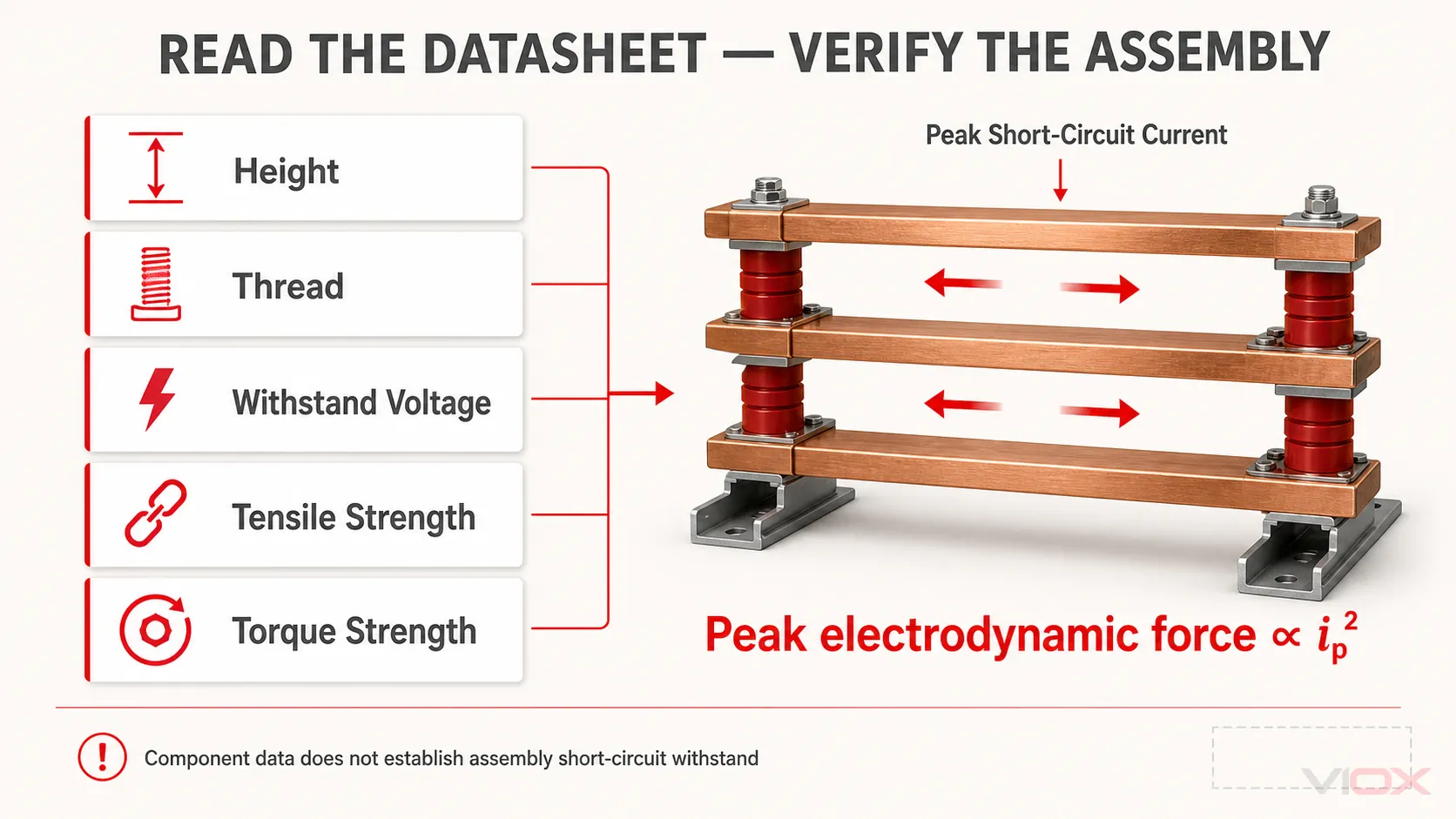
ยังคงต้องตรวจสอบวิธีการทดสอบ โปรไฟล์ระยะห่างตามผิวฉนวน (creepage) รูปทรงโดยรอบ ภาระทางกล และข้อกำหนดในการประกอบ ตารางนี้ยังแสดงให้เห็นว่าเหตุใดการสั่งซื้อโดยดูเพียงสีและความสูงโดยประมาณจึงไม่เพียงพอ.
สำหรับเสารองรับ (standoffs) ที่มีขนาดเล็กกว่า ค่าที่เผยแพร่ VIOX JYZ Series ใช้ตัวเรือนขนาดเส้นผ่านศูนย์กลาง 14 มม. โดยมีความสูงตั้งแต่ 14 มม. ถึง 75 มม. และมีตัวเลือกเกลียวแบบ M4, M5 หรือ M6 ต้องยืนยันการจัดวางเกลียวตัวผู้/ตัวเมียที่แน่นอนเมื่อทำการสั่งซื้อ.
วิธีการเลือกฉนวนรองรับบัสบาร์ (Busbar Support Insulator)
การเลือกเริ่มต้นด้วยระบบบัสบาร์ที่สมบูรณ์ ใช้สรุปนี้เพื่อระบุข้อมูลนำเข้าที่จำเป็น จากนั้นจึงดำเนินการคำนวณและตรวจสอบเอกสารให้เสร็จสิ้นใน คู่มือการเลือกฉนวนบัสบาร์.
| ข้อมูลนำเข้าสำหรับการเลือก | สิ่งที่ต้องตรวจสอบ |
|---|---|
| ระบบไฟฟ้า | แรงดันไฟฟ้าที่กำหนด, การทำงานแบบ AC หรือ DC, ความเค้นชั่วขณะ, รูปแบบการต่อลงดิน และมาตรฐานการประกอบที่เกี่ยวข้อง |
| ระยะฉนวนที่ติดตั้ง | ระยะห่างที่สั้นที่สุดและระยะตามผิวฉนวนหลังจากติดตั้งบัสบาร์, ตัวยึด, แผงกั้น, ชิ้นส่วนตู้ และเฟสที่อยู่ติดกันแล้ว |
| รูปทรงของบัสบาร์ | วัสดุ ความกว้าง ความหนา จำนวนบัสบาร์ ทิศทางการติดตั้ง การดัดโค้ง รอยต่อ และพื้นที่ติดตั้งที่ใช้งานได้ |
| ภาระทางกล | มวลของบัสบาร์ การสั่นสะเทือน กระแสไฟฟ้าลัดวงจรสูงสุด ระยะห่างระหว่างตัวนำ ช่วงห่างของจุดรองรับ และความแข็งเกร็งของโครงสร้าง |
| อินเทอร์เฟซสำหรับการติดตั้ง | รูปแบบตัวผู้/ตัวเมีย เกลียว ความลึกของจุดฝัง อุปกรณ์ยึด การเข้าถึง และวิธีการขันแน่นที่ผู้ผลิตกำหนด |
| สภาพแวดล้อม | อุณหภูมิ ความชื้น ฝุ่นละออง เกลือ สารเคมี การควบแน่น การสัมผัสรังสีอัลตราไวโอเลต ระดับความสูง และการสั่นสะเทือน |
| หลักฐาน | แบบสั่งงานทางไฟฟ้า การประกาศวัสดุ ข้อมูลทางไฟฟ้าและเครื่องกลเฉพาะรุ่น และการตรวจสอบการประกอบที่เกี่ยวข้อง |
ไม่มีระยะห่างที่เป็นมาตรฐานสากลสำหรับฉนวนบัสบาร์ ในกรณีที่ความสามารถในการทนต่อกระแสไฟฟ้าลัดวงจรมีความสำคัญ ให้ใช้การออกแบบชุดประกอบที่ผ่านการรับรอง การคำนวณทางวิศวกรรมตามวิธีการที่เหมาะสม หรือหลักฐานจากการทดสอบ ค่าความต้านทานแรงดึงของส่วนประกอบเพียงอย่างเดียวไม่สามารถกำหนดพิกัดของชุดประกอบทั้งหมดได้.
การขันแน่นเกินไปอาจทำให้ตัวถังที่เป็นเทอร์โมเซตแตกหรือทำให้จุดฝังเสียหายได้ ส่วนการขันแน่นไม่เพียงพออาจทำให้เกิดการเคลื่อนตัวและการสึกหรอจากการเสียดสี ค่าความแข็งแรงของแรงบิดที่ระบุไว้ของจุดฝังไม่จำเป็นต้องเป็นค่าแรงบิดที่แนะนำสำหรับการติดตั้งเสมอไป.
มาตรฐานและพิกัด: ขอบเขตของส่วนประกอบเทียบกับชุดประกอบ
ไม่มีมาตรฐานฉบับใดฉบับหนึ่งที่รับรองฉนวนบัสบาร์ทุกประเภทสำหรับการใช้งานทุกรูปแบบ เอกสารที่เกี่ยวข้องจะขึ้นอยู่กับว่าผู้ออกแบบกำลังประเมินการประสานฉนวน วัสดุขึ้นรูป ฉนวนรองรับแบบแท่งเดี่ยว หรือตู้สวิตช์บอร์ดทั้งชุด.
| มาตรฐานหรือเอกสารอ้างอิง | ขอบเขตที่เกี่ยวข้องกับหัวข้อนี้ | การตีความที่ถูกต้อง |
|---|---|---|
| IEC 60664-1:2020+AMD1:2025 CSV | การประสานฉนวนสำหรับอุปกรณ์ภายในขอบเขตแรงดันไฟฟ้าต่ำ | สนับสนุนการตัดสินใจเกี่ยวกับระยะห่างทางไฟฟ้า (Clearance) ระยะตามผิวฉนวน (Creepage) ระดับมลภาวะ และฉนวนที่เป็นของแข็ง ไม่ใช่พิกัดตามแคตตาล็อกผลิตภัณฑ์ |
| มาตรฐาน IEC ซีรีส์ 61439 | ตู้สวิตช์เกียร์และตู้ควบคุมแรงดันต่ำ | ใช้กับชุดประกอบที่สมบูรณ์และการตรวจสอบความถูกต้อง รวมถึงระบบรองรับบัสบาร์ที่ติดตั้งอยู่ |
| IEC 60273:1990 | คุณลักษณะของลูกถ้วยชนิดก้าน (Post Insulators) ที่ทำจากเซรามิกหรือแก้ว สำหรับการใช้งานไฟฟ้ากระแสสลับทั้งภายในและภายนอกอาคารที่มีแรงดันไฟฟ้าสูงกว่า 1,000 โวลต์ และลูกถ้วยชนิดก้านที่ทำจากวัสดุอินทรีย์สำหรับการใช้งานไฟฟ้ากระแสสลับภายในอาคารที่มีแรงดันไฟฟ้าสูงกว่า 1,000 โวลต์เป็นหลัก | เกี่ยวข้องกับการใช้งานลูกถ้วยชนิดก้านตามที่กำหนดไว้ ไม่ใช่ลูกถ้วยรองรับแรงดันต่ำ (Molded Standoff) ทุกประเภท โดยมาตรฐานนี้ระบุถึงการใช้งานไฟฟ้ากระแสตรงไว้เพียงเพื่อการอ้างอิงชั่วคราวเท่านั้น |
| UL 891 | ตู้สวิตช์บอร์ดแบบปิดมิดชิด (Dead-front switchboards) ในอเมริกาเหนือ | เกี่ยวข้องเมื่อมีการใช้ตัวรองรับภายในตู้สวิตช์บอร์ดที่ได้รับการประเมินตามมาตรฐาน UL 891 |
| UL 508A | ตู้ควบคุมไฟฟ้าสำหรับงานอุตสาหกรรมในอเมริกาเหนือ | เกี่ยวข้องกับแผงควบคุมและการใช้งานส่วนประกอบภายในแผงดังกล่าวอย่างเหมาะสม |
| ยูแอล 94 | การทดสอบการลามไฟของวัสดุพลาสติก | อธิบายถึงพฤติกรรมการเผาไหม้ของชิ้นงานทดสอบ ไม่ใช่ประสิทธิภาพโดยรวมของลูกถ้วย |
IEC 61439-1:2020 กำหนดกฎทั่วไปสำหรับชุดประกอบสวิตช์เกียร์และชุดควบคุมแรงดันต่ำ โดยการปฏิบัติตามมาตรฐานต้องเป็นไปตามส่วนประกอบของชุดประกอบที่เกี่ยวข้อง ไม่ควรนำมาอ้างอิงเป็นการรับรองเฉพาะตัวลูกถ้วยรองรับบัสบาร์เพียงอย่างเดียว.
ในทำนองเดียวกัน ตัวรองรับที่ใช้ใน ตู้สวิตช์บอร์ดมาตรฐาน UL 891 หรือ ตู้ควบคุมไฟฟ้าอุตสาหกรรมมาตรฐาน UL 508A ต้องเป็นไปตามข้อกำหนดและการประเมินของอุปกรณ์นั้นๆ การอ้างถึงวัสดุเพียงอย่างเดียวไม่ถือว่าตู้ควบคุมมีความสอดคล้องตามมาตรฐาน.
ฉนวนรองบัสบาร์ (Busbar Insulator) กับ ฉนวนหุ้มบัสบาร์ (Busbar Insulation)
เป็ ฉนวนบัสบาร์ คือส่วนประกอบโครงสร้างแยกต่างหากที่ทำหน้าที่ยึดตัวนำและแยกตัวนำออกจากส่วนประกอบที่เป็นสื่อกระแสไฟฟ้าอื่นๆ.
ฉนวนหุ้มบัสบาร์ คือวัสดุที่หุ้มตัวนำโดยตรง เช่น:
- ท่อหดความร้อน
- ปลอกฉนวน
- สารเคลือบฉนวนประเภทอีพ็อกซี่หรือผงที่ผ่านการรับรองทางไฟฟ้า
- ฉนวนแบบขึ้นรูป
ปลอกฉนวนอาจใช้ครอบจุดต่อหรือจุดสิ้นสุดที่เปลือยอยู่ ส่วนแผ่นกั้นเฟสเป็นแผ่นกั้นเสริมที่แยกต่างหากซึ่งติดตั้งไว้ระหว่างตัวนำ โดยไม่ใช่ฉนวนที่เคลือบลงบนบัสบาร์โดยตรง.
มาตรการเหล่านี้มีหน้าที่แตกต่างกัน บัสบาร์ที่เคลือบฉนวนยังคงต้องการการรองรับทางกลที่เพียงพอและระยะห่างที่ผ่านการตรวจสอบแล้ว ส่วนลูกถ้วยรองรับไม่สามารถป้องกันการสัมผัสตลอดความยาวของตัวนำเปลือยได้.
ข้อผิดพลาดทั่วไปในการเลือกฉนวนบัสบาร์
การเลือกตามสี
สีไม่ใช่เครื่องพิสูจน์สูตรเรซิน ค่า CTI ความทนทานต่อแรงดันไฟฟ้า การจำแนกประเภทการลามไฟ พฤติกรรมทางอุณหภูมิ หรือความสามารถทางกล ลูกถ้วยสีแดงสองชิ้นอาจมีคุณสมบัติที่แตกต่างกันได้.
การเลือกตามความสูงเพียงอย่างเดียว
ผลิตภัณฑ์ที่มีความสูงเท่ากันอาจมีความแตกต่างกันในด้านเส้นผ่านศูนย์กลางตัวถัง เกลียว ความลึกของเกลียวใน รูปทรงของระยะกระแสไฟรั่ว (creepage) วัสดุ และความแข็งแรงทางกล ความสูงเป็นเพียงข้อมูลมิติเดียว ไม่ใช่ข้อกำหนดทางเทคนิคที่สมบูรณ์.
การเข้าใจผิดว่าแรงดันไฟฟ้าทนทานคือแรงดันไฟฟ้าใช้งาน
ค่าแรงดันไฟฟ้าทนทาน (Dielectric withstand) ใช้สำหรับสภาวะการทดสอบที่กำหนดเท่านั้น ไม่ควรนำไปใช้เป็นค่าแรงดันไฟฟ้าของระบบโดยตรง หรือใช้เป็นหลักฐานเพียงอย่างเดียวในการประสานงานด้านฉนวน.
การละเลยแรงทางกลที่เกิดจากไฟฟ้าลัดวงจร
เสถียรภาพในการทำงานปกติไม่ได้เป็นเครื่องพิสูจน์ถึงเสถียรภาพเมื่อเกิดความผิดปกติ กระแสไฟฟ้าลัดวงจรที่คาดการณ์ไว้สูงอาจทำให้ตัวนำไฟฟ้าโค้งงอ ส่งแรงกดด้านข้างไปยังจุดรองรับ และถ่ายโอนแรงไปยังโครงยึดและอุปกรณ์ยึดต่างๆ ได้.
การใช้แผ่นรองพลาสติกทั่วไป
แผ่นรองอเนกประสงค์ทั่วไปอาจขาดคุณสมบัติในการควบคุมการเกิดรอยทางไฟฟ้า (Tracking) ความทนทานต่อความร้อน การลามไฟ หรือประสิทธิภาพทางกล ควรใช้จุดรองรับที่มีข้อมูลผลิตภัณฑ์และวัสดุที่เหมาะสมกับการใช้งานนั้นๆ.
การอนุมานว่าพิกัดของอุปกรณ์เท่ากับพิกัดของชุดประกอบ
ตู้ควบคุมไฟฟ้าที่สมบูรณ์ประกอบด้วยบัสบาร์ จุดรองรับ อุปกรณ์ฮาร์ดแวร์ โครงตู้ ตู้ภายนอก ระยะห่าง รอยต่อ และอุปกรณ์ป้องกัน พิกัดของตู้ไม่สามารถกำหนดได้จากค่าของอุปกรณ์เพียงชิ้นเดียว.
การติดตั้ง การตรวจสอบ และการเปลี่ยนทดแทน
ปฏิบัติตามแบบผลิตภัณฑ์และคำแนะนำของผู้ผลิตระหว่างการติดตั้ง ตรวจสอบให้แน่ใจว่าพื้นผิวติดตั้งเรียบเสมอกัน บัสบาร์ไม่ถูกฝืนให้เข้าตำแหน่ง สลักเกลียวเข้าเกลียวอย่างถูกต้อง และการขันแน่นไม่ทำให้ตัวฉนวนบิดเบี้ยวหรือแตกร้าว.
ตรวจสอบฉนวนรองรับบัสบาร์หลังจากการขนส่ง หลังจากเกิดความร้อนสูงเกินไป หลังจากเหตุการณ์ไฟฟ้าลัดวงจรครั้งสำคัญ หรือระหว่างการบำรุงรักษาตามแผน ตรวจสอบรอยร้าว การเสียรูป ชิ้นส่วนฝังหลวม รอยคาร์บอน รอยอาร์คหรือรอยไหม้ การปนเปื้อนที่นำไฟฟ้า การกัดกร่อน การวางแนวบัสบาร์ที่ไม่ตรง และหลักฐานของการรับภาระทางกลเกินพิกัด.
ฉนวนที่มีรอยร้าว รอยคาร์บอน ชิ้นส่วนฝังหลวม ความเสียหายจากอาร์ค หรือการเสียรูปจากความร้อนอย่างมีนัยสำคัญ ควรได้รับการเปลี่ยนทดแทนแทนการนำกลับมาใช้งานโดยไม่มีการประเมินทางวิศวกรรม ตัดกระแสไฟฟ้าและแยกอุปกรณ์ออกจากระบบก่อนการตรวจสอบตามขั้นตอนความปลอดภัยทางไฟฟ้าและการล็อกเอาต์/แท็กเอาต์ (LOTO) ของสถานที่ปฏิบัติงาน.
สำหรับการวินิจฉัยตามอาการ โปรดดู ความล้มเหลวทั่วไปของฉนวนรองรับบัสบาร์และวิธีการป้องกัน.
คำถามที่พบบ่อย
บัสบาร์อินซูเลเตอร์ (Busbar Insulator) คืออะไร?
ฉนวนรองรับบัสบาร์เป็นส่วนประกอบที่ไม่นำไฟฟ้าซึ่งทำหน้าที่รองรับบัสบาร์ทองแดงหรืออะลูมิเนียม โดยแยกบัสบาร์ออกจากโครงโลหะที่ต่อลงดินและตัวนำข้างเคียงทางไฟฟ้า ทำหน้าที่ทั้งเป็นฉนวนและเป็นตัวรองรับทางกลภายในชุดประกอบอุปกรณ์ไฟฟ้า.
ฉนวนรองรับบัสบาร์มีไว้เพื่ออะไร?
ทำหน้าที่ยึดบัสบาร์ให้อยู่ในตำแหน่งที่ออกแบบไว้ รักษาการแยกตัวจากโครงสร้างที่เป็นสื่อนำไฟฟ้า และถ่ายโอนแรงทางกลทั้งในสภาวะปกติและสภาวะลัดวงจรไปยังโครงสร้างรองรับของตู้สวิตช์บอร์ด.
ประเภทหลักของฉนวนรองรับบัสบาร์มีอะไรบ้าง
ประเภททั่วไปประกอบด้วยฉนวนแบบมีเกลียว (threaded standoff insulators), ฉนวนแบบเสา (post insulators), บล็อกรองรับแบบขึ้นรูป (molded support blocks), ตัวยึดแบบแคลมป์หรือขายึด (clamp or bracket supports) และตัวรองรับแบบขึ้นรูปเฉพาะงาน รูปแบบที่ถูกต้องขึ้นอยู่กับรูปทรงของตัวนำ ระยะห่างที่ต้องการ ทิศทางของแรง และลักษณะการติดตั้ง.
ฉนวนแบบสแตนด์ออฟ (standoff insulator) เหมือนกับฉนวนรองรับบัสบาร์หรือไม่
ฉนวนแบบสแตนด์ออฟเป็นประเภทหนึ่งที่พบบ่อยของฉนวนรองรับบัสบาร์ โดยคำที่กว้างกว่ายังรวมถึงฉนวนแบบเสา บล็อกรองรับ ตัวยึด และรูปทรงของฉนวนรองรับแบบอื่นๆ ด้วย.
วัสดุสำหรับฉนวนรองรับบัสบาร์ชนิดใดดีที่สุด
ไม่มีวัสดุใดที่ดีที่สุดเพียงชนิดเดียว โดย BMC/DMC และ SMC เป็นวัสดุที่นิยมใช้สำหรับตัวรองรับแรงดันต่ำแบบขึ้นรูป ในขณะที่อีพ็อกซี่ พอร์ซเลน และวัสดุคอมโพสิตทางวิศวกรรมจะเหมาะกับรูปทรงหรือสภาพแวดล้อมอื่นๆ ควรเปรียบเทียบข้อมูลทางไฟฟ้า ทางกล ความร้อน ความชื้น การเกิดรอยทางไฟฟ้า (tracking) และการลามไฟของแต่ละรุ่น.
ระยะห่างระหว่างฉนวนรองรับบัสบาร์ถูกกำหนดอย่างไร
ระยะห่างของจุดรองรับขึ้นอยู่กับวัสดุและหน้าตัดของบัสบาร์ ทิศทางการติดตั้ง ระยะห่างระหว่างตัวนำ โหลดปกติ แรงสั่นสะเทือน แรงจากกระแสลัดวงจรสูงสุด รูปทรงของการติดตั้ง และการออกแบบชุดประกอบที่ผ่านการตรวจสอบแล้ว ไม่มีค่าระยะห่างที่เป็นมาตรฐานสากล.
แรงดันไฟฟ้าทนทาน (Withstand voltage) ที่สูงกว่า หมายความว่าฉนวนนั้นเหมาะสำหรับแรงดันไฟฟ้าใช้งานที่สูงกว่าหรือไม่?
ไม่เสมอไป แรงดันไฟฟ้าทนทานจะผูกติดอยู่กับเงื่อนไขการทดสอบที่ระบุไว้ ความเหมาะสมของระบบยังขึ้นอยู่กับแรงดันไฟฟ้าต่อเนื่อง แรงดันกระชาก ระยะตามผิว (Creepage) ระยะห่างในอากาศ (Clearance) ระดับมลภาวะ รูปทรงโดยรอบ และมาตรฐานอุปกรณ์ที่เกี่ยวข้อง.
UL 94 V-0 หมายความว่าฉนวนบัสบาร์ได้รับการรับรองจาก UL หรือไม่?
ไม่ใช่ UL 94 V-0 เป็นการจำแนกประเภทการลามไฟสำหรับชิ้นงานทดสอบภายใต้เงื่อนไขที่กำหนดเท่านั้น ไม่ได้เป็นการยืนยันถึงการรับรองทางไฟฟ้า ทางกล หรือการรับรองในระดับอุปกรณ์ของฉนวนหรือตู้สวิตช์บอร์ดด้วยตัวมันเอง.
ควรเปลี่ยนฉนวนรองรับบัสบาร์เมื่อใด
ให้เปลี่ยนหรือประเมินอย่างเป็นทางการสำหรับฉนวนที่แสดงรอยร้าว รอยคาร์บอน รอยไหม้ ร่องรอยการเกิดแฟลชโอเวอร์ การเสียรูป ชิ้นส่วนฝังตัวหลวม หรือความเสียหายทางกล และควรตรวจสอบระบบรองรับทั้งหมดหลังจากเกิดเหตุการณ์กระแสลัดวงจรครั้งใหญ่.
สรุป
ฉนวนบัสบาร์เป็นทั้งส่วนประกอบที่เป็นฉนวนไฟฟ้าและเป็นส่วนประกอบเชิงโครงสร้างของระบบบัสบาร์ ให้ใช้คำจำกัดความและขอบเขตพิกัดในบทความนี้เพื่อระบุประเภทของส่วนประกอบ จากนั้นจึงดำเนินการออกแบบให้สมบูรณ์ด้วย คู่มือการเลือกฉนวนบัสบาร์โดยละเอียด และข้อมูลผลิตภัณฑ์เฉพาะรุ่น.
แหล่งอ้างอิงและมาตรฐาน
- IEC 60664-1:2020+AMD1:2025 CSV, การประสานฉนวนสำหรับอุปกรณ์ภายในระบบจ่ายไฟฟ้าแรงดันต่ำ
- IEC 61439-1:2020, ตู้สวิตช์เกียร์และชุดควบคุมแรงดันต่ำ
- IEC 60273:1990, คุณลักษณะของลูกถ้วยชนิดเสาสำหรับใช้ภายในและภายนอกอาคารสำหรับระบบที่มีแรงดันไฟฟ้าสูงกว่า 1,000 โวลต์
- UL Solutions: การทดสอบการเผาไหม้และการติดไฟของพลาสติกตามมาตรฐาน UL 94
- UL Solutions: โปรแกรมการครอบคลุมทั่วไปตามมาตรฐาน UL 891
- UL Solutions: ข้อกำหนดสำหรับส่วนประกอบตามมาตรฐาน UL 508A
- ข้อมูลจำเพาะที่เผยแพร่ของฉนวนบัสบาร์ VIOX รุ่น SM
- ขนาดที่เผยแพร่ของฉนวนบัสบาร์ VIOX รุ่น JYZ