

ในหน้านี้
คำตอบสั้นๆ: คุณจะเลือกไวร์นัท (Wire Nut) ให้เหมาะสมได้อย่างไร?
เลือกไวร์นัทโดยพิจารณาจาก ดักเกจ, จำนวนของตัวนำไฟฟ้า, วัสดุของตัวนำไฟฟ้า, แรงดันไฟฟ้าที่กำหนด, พิกัดอุณหภูมิ, สภาพแวดล้อมการใช้งาน, และ ตารางการรวมสายไฟที่ได้รับการรับรองจากผู้ผลิต. สีเป็นเพียงทางลัดที่ช่วยให้เลือกได้ง่ายขึ้น แต่ไม่ใช่มาตรฐานสากล ไวร์นัทสีเหลืองจากผู้ผลิตรายหนึ่งอาจมีขนาดความจุไม่เท่ากับขั้วต่อสีเหลืองจากผู้ผลิตอีกรายหนึ่งเสมอไป.
กฎที่ปลอดภัยที่สุดนั้นเรียบง่าย: ใช้ขนาดของคอนเนคเตอร์และการรวมสายไฟตามที่ระบุไว้บนบรรจุภัณฑ์หรือเอกสารข้อมูลทางเทคนิค ไม่ควรพิจารณาจากสีเพียงอย่างเดียว. ไวร์นัท (Wire nut) ต้องยึดตัวนำไฟฟ้าทั้งหมดไว้อย่างแน่นหนา ครอบคลุมส่วนที่เป็นทองแดงทั้งหมด และต้องมีพิกัดแรงดันไฟฟ้า อุณหภูมิการใช้งาน และระดับการป้องกันที่เหมาะสมกับสภาพแวดล้อมที่ติดตั้ง.
ตารางรหัสสีและขนาดของไวร์นัท
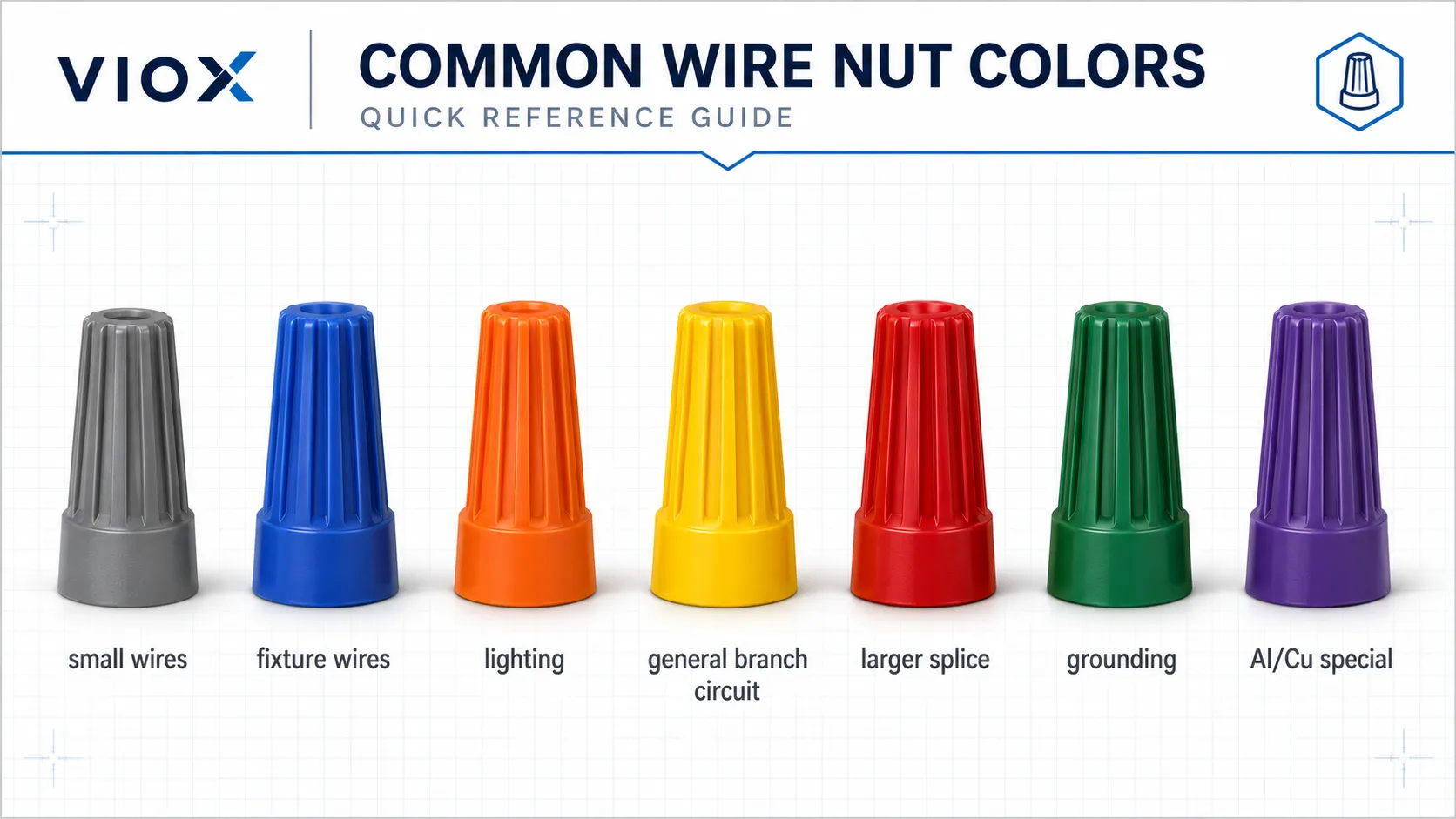
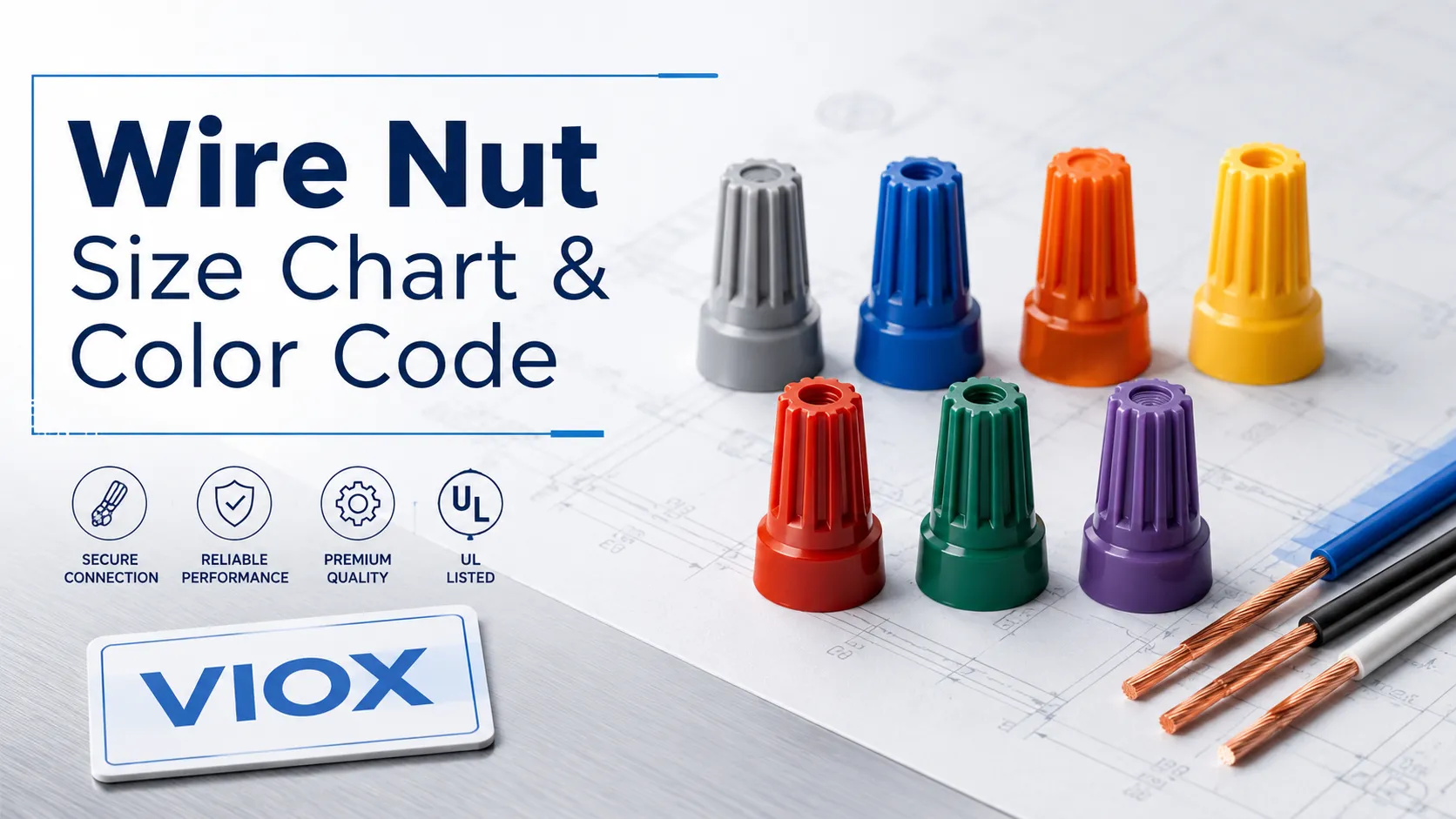
สีของไวร์นัทมักบ่งบอกถึงขนาดของคอนเนคเตอร์และช่วงขนาดสายไฟโดยประมาณ ตารางด้านล่างนี้เป็นเพียงแนวทางปฏิบัติ ไม่สามารถใช้ทดแทนตารางของผู้ผลิตได้.
| สีของไวร์นัท | เรื่องทั่วไปใช้ | ช่วงขนาดสายไฟทั่วไป | หมายเหตุสำคัญ |
|---|---|---|---|
| สีเทา | การต่อสายไฟขนาดเล็กสำหรับกระแสไฟฟ้าต่ำ | ตัวนำขนาดเล็ก เช่น สายไฟสำหรับโคมไฟหรือสายควบคุม | มักใช้สำหรับสายไฟขนาดเล็กหลายเส้นรวมกัน โปรดตรวจสอบความสามารถในการรองรับที่แน่นอน |
| สีฟ้า | โคมไฟขนาดเล็ก แรงดันไฟฟ้าต่ำ หรือสายควบคุม | ตัวนำขนาดเล็กและการใช้งานร่วมกันแบบงานเบา | มักถูกค้นหาในชื่อ “ขนาดสายไฟสำหรับไวร์นัทสีน้ำเงิน” โปรดตรวจสอบตารางก่อนใช้งาน |
| ส้ม | โคมไฟและจุดต่อสายวงจรย่อยขนาดเล็ก | การรวมตัวนำขนาดเล็กถึงขนาดกลางที่พบได้ทั่วไป | พบได้ทั่วไปในงานระบบแสงสว่าง ห้ามใส่สายไฟจนแน่นเกินไป |
| สีเหลือง | การต่อสายไฟทั่วไปสำหรับที่อยู่อาศัยและอาคารพาณิชย์ | การรวมสายไฟขนาด 18 AWG ถึง 12 AWG ทั่วไป ขึ้นอยู่กับยี่ห้อ | มักใช้สำหรับงานวงจรย่อยขนาด 14 AWG และ 12 AWG |
| สีแดง | การต่อสายไฟสำหรับวงจรย่อยขนาดใหญ่ | รองรับตัวนำไฟฟ้าที่มีขนาดใหญ่ขึ้นหรือจำนวนมากขึ้น ขึ้นอยู่กับรุ่นของคอนเนคเตอร์ | สีแดงไม่ได้หมายถึงความสามารถในการรองรับไม่จำกัด โปรดตรวจสอบรายการการรวมสายที่ระบุไว้ |
| สีเขียว | คอนเนคเตอร์สำหรับสายดิน (Grounding pigtail connectors) | ตัวนำไฟฟ้าสำหรับสายดิน (Grounding conductors) | โดยปกติใช้สำหรับการเชื่อมต่อสายดินของอุปกรณ์ |
| สีม่วงหรือสำหรับอลูมิเนียม/ทองแดงโดยเฉพาะ | ขั้วต่อสำหรับซ่อมแซมการเชื่อมต่อระหว่างทองแดงกับอลูมิเนียมในกรณีที่ระบุไว้ | การใช้งานระหว่างอลูมิเนียมกับทองแดงเฉพาะเมื่อได้รับการจัดอันดับมาโดยเฉพาะเท่านั้น | ห้ามใช้ไวร์นัทมาตรฐานกับสายไฟอลูมิเนียม |
สีช่วยให้คุณเริ่มต้นการเลือกได้ แต่คำตอบสุดท้ายมาจากตารางความสามารถที่ระบุบนบรรจุภัณฑ์ของขั้วต่อจริง.
ไวร์นัท (Wire Nut) คืออะไร?
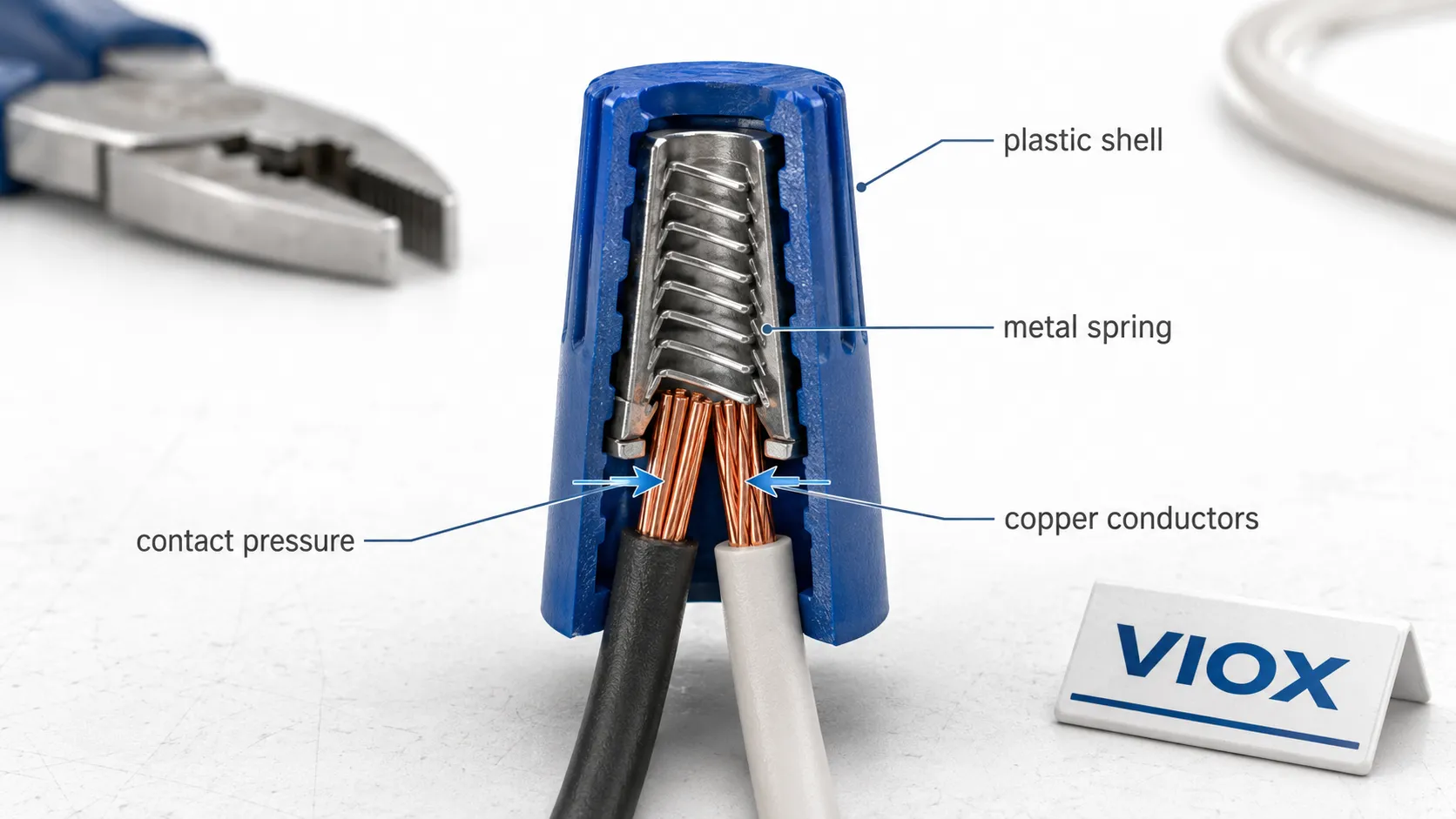
ไวร์นัทคือขั้วต่อสายไฟแบบหมุนเกลียวที่ใช้สำหรับเชื่อมต่อตัวนำตั้งแต่สองตัวขึ้นไปภายในกล่องพักสาย อุปกรณ์ไฟฟ้า กล่องรวมสาย หรือตู้ควบคุมที่ได้รับมาตรฐาน โดยปกติจะมีเปลือกหุ้มเป็นพลาสติกหรือเทอร์โมพลาสติกและมีสปริงโลหะอยู่ภายใน เมื่อหมุนเข้ากับตัวนำที่เตรียมไว้ สปริงภายในจะยึดสายไฟไว้และช่วยสร้างจุดต่อทางไฟฟ้าที่มั่นคง.
ไวร์นัท (Wire nuts) ยังมีชื่อเรียกอื่น ๆ ดังนี้:
- หัวต่อสายไฟแบบหมุนเกลียว (twist-on wire connectors)
- หัวต่อสายไฟแบบขันเกลียว (screw-on wire connectors)
- ฝาครอบสายไฟ (wire caps)
- หัวต่อรูปทรงกรวย (cone connectors)
- หัวต่อสายไฟฟ้า (electrical wire connectors)
อุปกรณ์เหล่านี้เป็นที่นิยมใช้ในงานเดินสายไฟสำหรับที่อยู่อาศัยและอาคารพาณิชย์ในอเมริกาเหนือ โดยเฉพาะในเต้ารับ สวิตช์ โคมไฟ กล่องพักสายไฟ และการเดินสายไฟสำหรับอุปกรณ์ขนาดเล็ก สำหรับตู้ควบคุมในงานอุตสาหกรรม การใช้เทอร์มินอลบล็อก (terminal blocks), หัวต่อแบบราง DIN (DIN rail connectors), หางปลาแบบย้ำ (crimp terminals) หรือหัวต่อแบบกลไก (mechanical connectors) อาจเป็นทางเลือกที่เหมาะสมกว่า ขึ้นอยู่กับการใช้งาน.
มาตรฐานและพิกัดที่ต้องตรวจสอบ
ไวร์นัท (Wire nut) เป็นอุปกรณ์ชิ้นเล็ก แต่ยังคงถือเป็นขั้วต่อสายไฟฟ้า สำหรับงานระดับมืออาชีพ การเลือกใช้งานควรพิจารณาจากรายการรับรอง เครื่องหมาย และเอกสารข้อมูลทางเทคนิค (Datasheet) ของอุปกรณ์ มากกว่าการพิจารณาจากรูปลักษณ์ภายนอก.
| พิกัดหรือมาตรฐาน | ทำไมมันจึงสำคัญ |
|---|---|
| UL 486C | มาตรฐานความปลอดภัยทั่วไปในอเมริกาเหนือสำหรับขั้วต่อสายไฟแบบต่อร่วม รวมถึงขั้วต่อสายไฟแบบหมุนเกลียว (Twist-on wire connectors) |
| IEC 60998 | กลุ่มมาตรฐานสากลสำหรับอุปกรณ์เชื่อมต่อในวงจรไฟฟ้าแรงดันต่ำสำหรับงานติดตั้งในที่อยู่อาศัยและงานที่คล้ายคลึงกัน |
| พิกัดแรงดันไฟฟ้า | ขั้วต่อแบบหมุนเกลียวทั่วไปหลายรุ่นระบุพิกัดแรงดันไฟฟ้าไว้สูงสุดที่ 600 โวลต์ สำหรับการเดินสายไฟในอาคาร ส่วนงานติดตั้งโคมไฟหรือป้ายไฟบางประเภทอาจใช้ขั้วต่อที่ระบุพิกัดแรงดันไฟฟ้าสูงกว่า เช่น 1000 โวลต์ ขึ้นอยู่กับผลิตภัณฑ์นั้นๆ |
| พิกัดอุณหภูมิ | ขั้วต่อสายไฟพลาสติกมาตรฐานส่วนใหญ่ระบุอุณหภูมิใช้งานไว้ที่ 105 องศาเซลเซียส ในขณะที่ขั้วต่อแบบเซรามิกหรือแบบทนความร้อนสูงจะถูกนำมาใช้ในจุดที่คาดว่าจะมีความร้อนสูงกว่านั้น |
| วัสดุตัวนำ | ขั้วต่อสำหรับสายทองแดงเท่านั้น สายอลูมิเนียมเท่านั้น และสายอลูมิเนียม/ทองแดง (Al/Cu) ไม่สามารถใช้แทนกันได้ |
| ตารางการรวมสายไฟ | ยืนยันจำนวน ขนาด และประเภทของตัวนำที่อนุญาตให้ใช้ในขั้วต่อหนึ่งตัวได้อย่างแม่นยำ |
สำหรับเนื้อหาทางเทคนิคของ VIOX ELECTRIC คำแนะนำในทางปฏิบัติคือให้ใช้ความระมัดระวัง: ควรระบุเลือกใช้ขั้วต่อสายไฟแบบหมุนเกลียว (twist-on) ที่ผ่านการรับรองตามมาตรฐานตลาดที่เกี่ยวข้อง และใช้ช่วงขนาดสายไฟตามที่ผู้ผลิตระบุไว้บนบรรจุภัณฑ์อย่างเคร่งครัด หากจุดต่อสายไฟจำเป็นต้องสามารถซ่อมบำรุงได้ มีการติดป้ายระบุ ทนต่อแรงสั่นสะเทือน หรือติดตั้งอยู่ภายในตู้ควบคุมไฟฟ้าอุตสาหกรรม การเลือกใช้เทอร์มินอลบล็อก (terminal block) หรือขั้วต่อแบบกลไก (mechanical connector) อาจเป็นทางเลือกทางวิศวกรรมที่เหมาะสมกว่า.
คำอธิบายสีของไวร์นัท (Wire Nut)
ไวร์นัทสีเทา
ไวร์นัทสีเทามักเป็นหนึ่งในขั้วต่อแบบหมุนเกลียวที่มีขนาดเล็กที่สุด โดยทั่วไปจะใช้สำหรับตัวนำขนาดเล็ก สายไฟโคมไฟ สายกริ่ง สายควบคุม หรือจุดต่อสายไฟที่มีกระแสไฟฟ้าต่ำ.
ใช้ไวร์นัทสีเทาเมื่อ:
- การรวมตัวนำไฟฟ้ามีขนาดเล็ก
- ตารางในบรรจุภัณฑ์ระบุจำนวนสายและขนาดเกจที่อนุญาตไว้อย่างชัดเจน
- การเชื่อมต่ออยู่ภายในกล่องพักสายที่เหมาะสม
- กระแสและแรงดันไฟฟ้าของวงจรอยู่ในพิกัดที่ตัวเชื่อมต่อรองรับ
ห้ามใช้ตัวเชื่อมต่อสีเทาเพียงเพราะว่าสายไฟ “ใส่ได้พอดี” หากสปริงยึดจับไม่ถูกต้อง จุดต่อสายอาจหลวมได้.
ไวร์นัทสีฟ้า
ไวร์นัทสีฟ้ามักใช้สำหรับการรวมสายไฟขนาดเล็ก การเดินสายโคมไฟ หรือการเดินสายแรงดันต่ำ/สายควบคุม ขึ้นอยู่กับยี่ห้อ ผู้ใช้งานมักค้นหาข้อมูลนี้เนื่องจากต้องการทราบว่าไวร์นัทสีฟ้าสามารถใช้กับตัวนำขนาด 18 AWG, 16 AWG หรือ 14 AWG ได้หรือไม่.
คำตอบที่ถูกต้องขึ้นอยู่กับรุ่นของคอนเนคเตอร์ที่แน่ชัด คอนเนคเตอร์สีน้ำเงินบางรุ่นเป็นคอนเนคเตอร์แรงดันต่ำขนาดเล็ก ในขณะที่บางรุ่นอาจมีขนาดความจุที่แตกต่างกัน โปรดตรวจสอบตารางการรวมสายไฟเสมอ.
ไวร์นัทสีส้ม
ไวร์นัทสีส้มมักใช้สำหรับโคมไฟ สวิตช์ การต่อสายวงจรย่อยขนาดเล็ก และการรวมสายไฟขนาดเล็กในระดับปานกลาง เป็นหนึ่งในขนาดที่คุ้นเคยที่สุดในงานระบบไฟฟ้าแสงสว่างสำหรับที่อยู่อาศัย.
สีส้มเป็นตัวเลือกทั่วไปเมื่อ:
- การต่อสายประกอบด้วยตัวนำทองแดงขนาดเล็กถึงขนาดกลาง
- จำนวนเส้นของสายไฟไม่มากจนเกินไป
- ตารางของคอนเนคเตอร์อนุญาตให้ทำการรวมสายดังกล่าวได้
- การเชื่อมต่ออยู่ในกล่องพักสายไฟฟ้าที่ระบุว่าใช้ในที่แห้ง เว้นแต่จะใช้คอนเนคเตอร์ชนิดพิเศษสำหรับพื้นที่เปียกชื้น
ไวร์นัทสีเหลือง
ไวร์นัทสีเหลืองมักใช้สำหรับงานเดินสายวงจรย่อยทั่วไป ช่างไฟฟ้าหลายคนมักเชื่อมโยงคอนเนคเตอร์สีเหลืองเข้ากับการต่อสายทองแดงขนาด 14 AWG และ 12 AWG ทั่วไป แต่ความสามารถในการรองรับที่แท้จริงยังคงแตกต่างกันไปตามผู้ผลิตแต่ละราย.
คอนเนคเตอร์สีเหลืองมักใช้ในงาน:
- สวิตช์
- เต้ารับ
- โคมไฟ
- กล่องรวมสาย (junction boxes)
- การต่อสายตัวนำทองแดงทั่วไป
หากไม่แน่ใจระหว่างสีส้มและสีเหลือง ให้ตรวจสอบจำนวนเส้นและขนาดเกจของสายไฟ คอนเนคเตอร์ที่เล็กเกินไปอาจไม่สามารถครอบคลุมตัวนำทั้งหมดได้อย่างสมบูรณ์ ส่วนคอนเนคเตอร์ที่ใหญ่เกินไปอาจไม่สามารถยึดตัวนำขนาดเล็กได้อย่างแน่นหนา.
ไวร์นัทสีแดง
ไวร์นัทสีแดงมักเป็นหัวต่อขนาดใหญ่ที่ใช้สำหรับตัวนำขนาดใหญ่หรือจำนวนสายไฟที่มากขึ้น โดยทั่วไปจะเลือกใช้เมื่อไวร์นัทสีเหลืองมีขนาดไม่เพียงพอสำหรับการเชื่อมต่อ.
ไวร์นัทสีแดงอาจใช้สำหรับ:
- การเชื่อมต่อวงจรย่อยขนาดใหญ่
- การเชื่อมต่อตัวนำหลายเส้นในกล่องพักสายไฟ
- การรวมตัวนำทองแดงขนาดใหญ่
- การเชื่อมต่อแบบพิกเทล (Pigtail) ที่มีสายไฟหลายเส้น
อย่าทึกทักเอาเองว่าไวร์นัทสีแดงสามารถรองรับสายไฟได้ทุกจำนวน การใส่สายไฟเกินขนาดในหัวต่ออาจทำให้ตัวนำหลวม มีส่วนของทองแดงโผล่ออกมา หรือขัดขวางไม่ให้สปริงภายในยึดจับได้อย่างถูกต้อง.
ขนาดของไวร์นัทตามขนาดเกจของสายไฟ
ตารางด้านล่างแสดงตรรกะการเลือกใช้งานทั่วไป ซึ่งเป็นการกำหนดแบบอนุรักษ์นิยมเนื่องจากความสามารถในการรองรับจริงจะแตกต่างกันไปตามซีรีส์ของคอนเนคเตอร์.
| ขนาดสายไฟหรือกรณีการใช้งาน | จุดเริ่มต้นของคอนเนคเตอร์ทั่วไป | สิ่งที่ต้องตรวจสอบ |
|---|---|---|
| สายไฟสำหรับโคมไฟขนาดเล็ก | สีเทา สีฟ้า หรือสีส้ม | ขนาดตัวนำไฟฟ้าขั้นต่ำและจำนวนเส้นสายไฟ |
| สายไฟควบคุมหรือสายไฟโคมไฟขนาด 18 AWG | สีฟ้า สีส้ม หรือสีเหลือง | ขั้วต่อรองรับการใช้งานร่วมกับตัวนำขนาดเล็กหรือไม่ |
| สายไฟสำหรับโคมไฟหรืออุปกรณ์ขนาด 16 AWG | สีฟ้า สีส้ม หรือสีเหลือง | ความสามารถในการใช้งานร่วมกับตัวนำแบบแกนเดี่ยว/แบบตีเกลียว |
| สายไฟวงจรย่อยทองแดงขนาด 14 AWG | สีส้ม สีเหลือง หรือสีแดง | จำนวนตัวนำขนาด 14 AWG ที่อนุญาตให้ใช้งานได้ |
| สายไฟวงจรย่อยทองแดงขนาด 12 AWG | สีเหลืองหรือสีแดง | จำนวนตัวนำขนาด 12 AWG ที่อนุญาต |
| ตัวนำทองแดงขนาด 10 AWG | ขั้วต่อขนาดใหญ่สีแดงหรือขั้วต่อขนาดใหญ่ที่ผ่านการรับรอง | อนุญาตให้ใช้ขั้วต่อแบบหมุนเกลียวสำหรับขนาดนั้นหรือไม่ |
| การผสมขนาดสายไฟ | ตารางขั้วต่อเท่านั้น | ห้ามคาดเดา ให้ตรวจสอบการรวมกันที่ถูกต้องเสมอ |
| อะลูมิเนียมหรือทองแดงต่อกับอะลูมิเนียม | สำหรับขั้วต่ออลูมิเนียม/ทองแดงที่ระบุไว้เป็นพิเศษเท่านั้น | ห้ามใช้ไวร์นัทมาตรฐานสำหรับสายทองแดงเท่านั้น |
ข้อผิดพลาดที่พบบ่อยที่สุดคือการเลือกโดยดูจากสีเพียงอย่างเดียว สีเดียวกันอาจแสดงถึงความสามารถในการรองรับที่แตกต่างกันในแต่ละกลุ่มผลิตภัณฑ์.
ไวร์นัทสามารถรองรับสายไฟได้กี่เส้น?
ไวร์นัทสามารถรองรับได้เฉพาะการรวมสายตามที่ผู้ผลิตระบุไว้เท่านั้น ความสามารถในการรองรับขึ้นอยู่กับ:
- ขนาดของตัวนำไฟฟ้า (Gauge)
- จำนวนของตัวนำไฟฟ้า
- โครงสร้างสายแบบแกนเดี่ยวหรือสายฝอย
- วัสดุที่เป็นทองแดงหรืออลูมิเนียม
- รุ่นของคอนเนคเตอร์
- การออกแบบสปริง
- แรงดันไฟฟ้าที่กำหนด
- สภาพแวดล้อมในการติดตั้ง (Installation environment)
ตัวอย่างเช่น คอนเนคเตอร์บางรุ่นอาจรองรับตัวนำขนาดเล็กได้หลายเส้น แต่รองรับตัวนำขนาดใหญ่ได้เพียงสองเส้นเท่านั้น คอนเนคเตอร์สีเดียวกันจากต่างยี่ห้ออาจมีตารางการใช้งานที่แตกต่างกัน.
หากตัวนำบิดตัวไม่สม่ำเสมอ หลุดออกได้ง่าย หรือมีทองแดงโผล่ออกมาที่โคน แสดงว่าใช้คอนเนคเตอร์ไม่เหมาะสมหรือติดตั้งไม่ถูกต้อง.
วิธีการใช้งานไวร์นัท (Wire Nuts) อย่างถูกต้อง
ปฏิบัติตามคำแนะนำบนบรรจุภัณฑ์ของคอนเนคเตอร์เสมอ โดยขั้นตอนทั่วไปมีดังนี้:
- ตัดกระแสไฟฟ้าและตรวจสอบให้แน่ใจว่าไม่มีกระแสไฟฟ้าในวงจรแล้ว.
- ปอกฉนวนตัวนำตามความยาวที่ผู้ผลิตคอนเนคเตอร์กำหนด.
- จัดปลายตัวนำไฟฟ้าให้ตรงตามคำแนะนำของขั้วต่อ.
- หมุนน็อตต่อสายไฟตามเข็มนาฬิกาจนแน่นและตัวนำไฟฟ้าถูกยึดไว้อย่างมั่นคง.
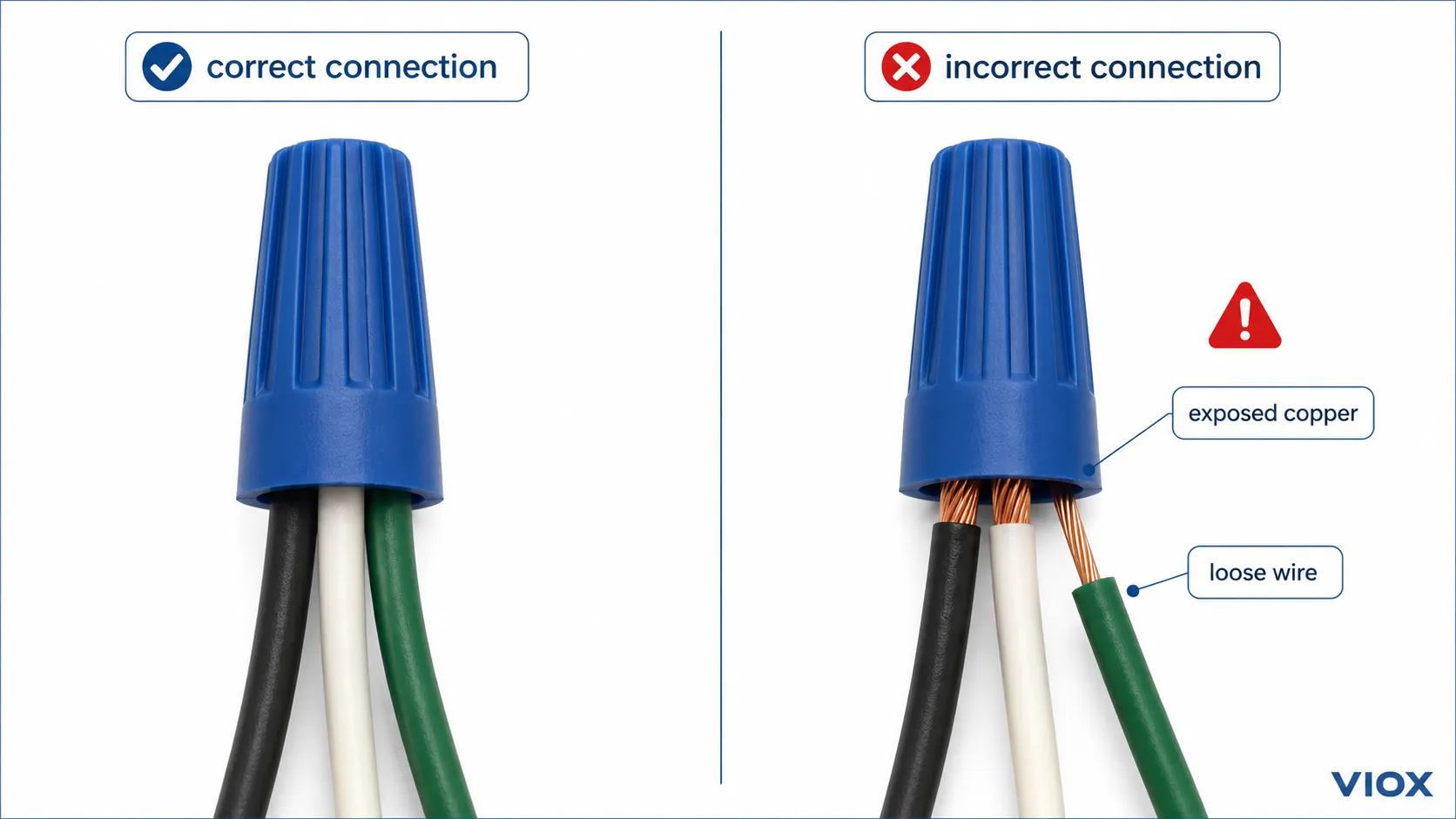
- ตรวจสอบว่าไม่มีส่วนของทองแดงเปลือยโผล่ออกมาใต้ขอบของน็อตต่อสายไฟ.
- ดึงตัวนำไฟฟ้าแต่ละเส้นเบาๆ เพื่อยืนยันว่าถูกยึดไว้อย่างแน่นหนา.
- พับจุดต่อสายกลับเข้าไปในกล่องโดยไม่ให้เกิดแรงเค้นที่จุดเชื่อมต่อ.
ผู้ผลิตบางรายกำหนดให้บิดตัวนำไฟฟ้าเข้าด้วยกันก่อน ในขณะที่บางรายอนุญาตให้ขั้วต่อช่วยบิดตัวนำไฟฟ้าในระหว่างการติดตั้ง โปรดปฏิบัติตามคำแนะนำของผลิตภัณฑ์แทนการใช้ความเคยชินแบบเหมารวม.
การเชื่อมต่อด้วยน็อตต่อสายไฟแบบดีเทียบกับแบบไม่ดี
| สภาวะการเชื่อมต่อ | ความหมาย |
|---|---|
| ทองแดงทั้งหมดถูกหุ้มไว้ | เป็นสัญญาณที่ดี โดยสมมติว่าขั้วต่อยึดแน่นอย่างถูกต้อง |
| สายไฟไม่หลุดออกมาเมื่อดึงเบาๆ | เป็นสัญญาณที่ดี |
| ขั้วต่อได้รับการรับรองสำหรับชุดสายไฟที่ระบุไว้อย่างถูกต้อง | จำเป็น |
| มองเห็นทองแดงเปลือยใต้ขั้วต่อ | การติดตั้งไม่ปลอดภัยหรือไม่ถูกต้อง |
| ไวร์นัทหมุนฟรีไม่แน่น | ขนาดไม่ถูกต้องหรือการเตรียมสายไฟไม่เหมาะสม |
| ตัวนำไฟฟ้าหลุดออกมาหนึ่งเส้น | การเชื่อมต่อไม่ดี |
| พลาสติกละลายหรือมีการเปลี่ยนสี | อาจเกิดความร้อนสูงเกินไป ให้เปลี่ยนอุปกรณ์และตรวจสอบวงจร |
| มีการใช้สายทองแดงและสายอลูมิเนียมร่วมกันในขั้วต่อมาตรฐาน | ไม่ปลอดภัยเว้นแต่ขั้วต่อนั้นจะได้รับการรับรองให้ใช้กับกรณีดังกล่าวโดยเฉพาะ |
ไวร์นัท (Wire Nuts) เทียบกับ ขั้วต่อแบบเสียบ (Push-In Connectors) และ เทอร์มินอลบล็อก (Terminal Blocks)
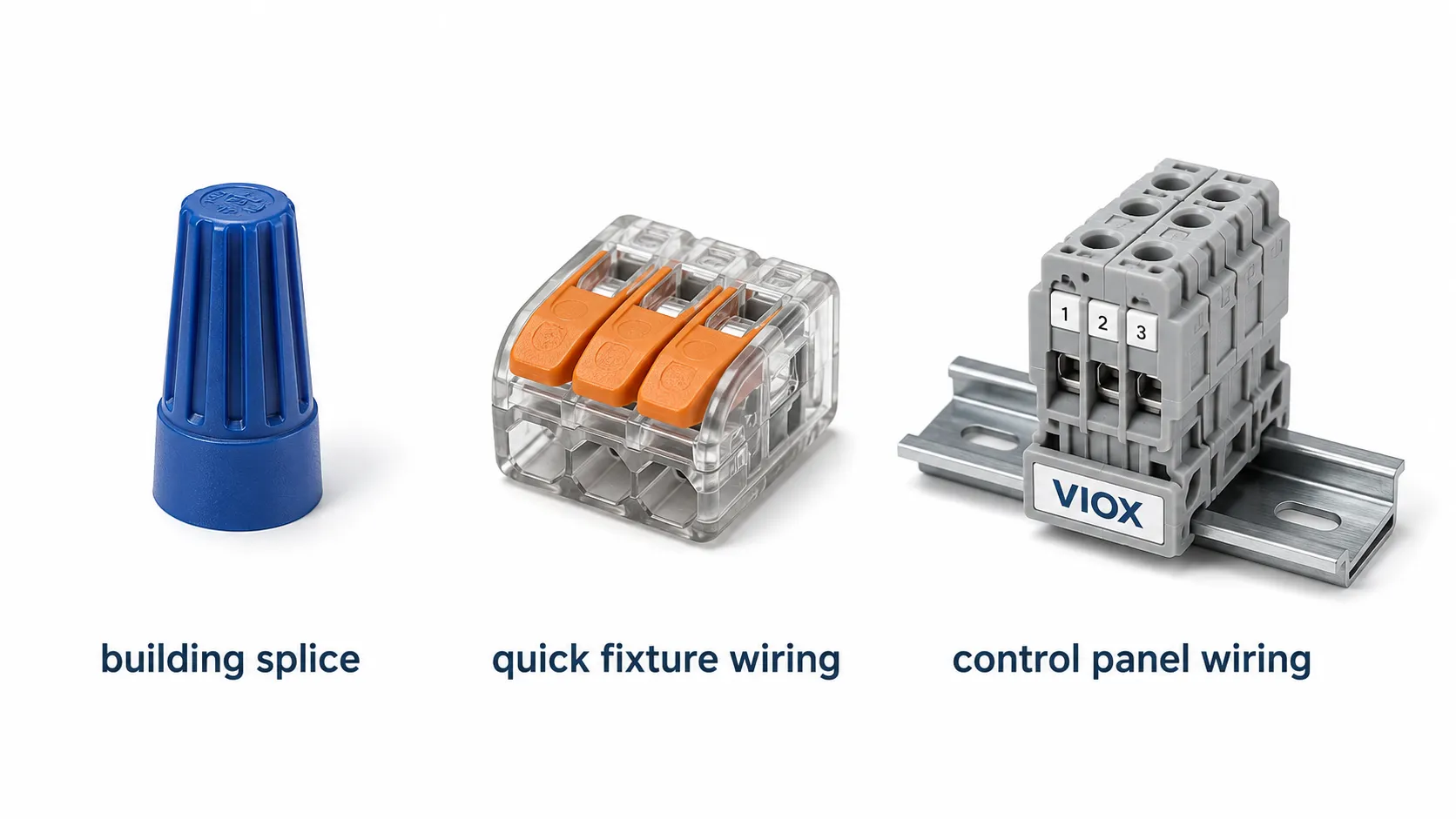
ไวร์นัทไม่ใช่เพียงวิธีเดียวในการเชื่อมต่อสายไฟ.
| ประเภทของขั้วต่อ | ดีที่สุดสำหรับ | ข้อจำกัดหลัก |
|---|---|---|
| ไวร์นัท / ขั้วต่อแบบหมุนเกลียว | การต่อสายไฟทั่วไปภายในกล่องพักสาย | ต้องใช้กับขนาดสายไฟที่ระบุไว้เท่านั้น ไม่เหมาะสำหรับการเดินสายไฟในตู้ควบคุมที่ต้องมีการปรับเปลี่ยนบ่อยครั้ง |
| ขั้วต่อสายไฟแบบเสียบ | การยึดติดที่รวดเร็วหรือการต่อสายวงจรย่อยในกรณีที่ระบุไว้ | ช่วงขนาดสายไฟจำกัด ต้องปฏิบัติตามพิกัดของผลิตภัณฑ์ |
| แผงขั้วต่อ | การจัดระเบียบสายไฟในตู้ควบคุมหรืออุปกรณ์ | ต้องการพื้นที่ในตู้เพิ่มขึ้นและการติดตั้งที่เหมาะสม |
| หัวต่อแบบย้ำ (Crimp connector) | การต่อสายแบบถาวรหรืองานชุดสายไฟ | ต้องใช้เครื่องมือและแม่พิมพ์ที่ถูกต้อง |
| ขั้วต่อเชิงกล | ตัวนำขนาดใหญ่หรือการต่อสายเมน (Feeder) | ต้องเลือกใช้ให้ตรงกับวัสดุตัวนำและพิกัดกระแสไฟฟ้า |
สำหรับตู้ควบคุมและงานเดินสายไฟในโรงงานอุตสาหกรรม ผลิตภัณฑ์ของ เทอร์มินัลบล็อค VIOX อาจมีความเหมาะสมมากกว่าการใช้ไวร์นัท (Wire nuts) สำหรับกระบวนการคัดเลือกเชิงลึก โปรดดูที่ คู่มือการเลือกใช้เทอร์มินอลบล็อก.
การใช้งานไวร์นัทแบบพิเศษ
ไวร์นัทกันน้ำ
ไวร์นัทมาตรฐานโดยทั่วไปออกแบบมาสำหรับใช้ในพื้นที่แห้งภายในกล่องพักสาย การต่อสายไฟภายนอกอาคาร ระบบชลประทาน ไฟส่องสว่างภูมิทัศน์ และพื้นที่เปียกชื้น จำเป็นต้องใช้คอนเนคเตอร์ที่ได้รับการรับรองสำหรับการใช้งานในที่เปียกหรือการฝังดินโดยตรง ซึ่งมักจะเป็นแบบเติมเจลหรือซิลิโคน.
ห้ามใช้ไวร์นัทสำหรับงานภายในอาคารทั่วไปกับงานภายนอกอาคารโดยอาศัยเพียงเทปพันสายไฟเพื่อให้กันน้ำ.
ไวร์นัทเซรามิกหรือไวร์นัททนความร้อนสูง
ขั้วต่อสายไฟแบบหมุนเกลียวพลาสติกมาตรฐานส่วนใหญ่ระบุอุณหภูมิใช้งานสูงสุดไว้ที่ประมาณ 105 องศาเซลเซียส แต่ค่าที่แน่นอนจะขึ้นอยู่กับผลิตภัณฑ์แต่ละชนิด การใช้งานในสภาพแวดล้อมที่มีอุณหภูมิสูง เช่น เครื่องทำความร้อน เตาอบ โคมไฟดาวน์ไลท์ ป้ายไฟ และอุปกรณ์อุตสาหกรรมบางประเภท อาจจำเป็นต้องใช้ขั้วต่อแบบเซรามิกหรือขั้วต่อที่ออกแบบมาสำหรับทนอุณหภูมิสูงโดยเฉพาะ ขั้วต่อพลาสติกทั่วไปอาจอ่อนตัว เปลี่ยนสี หรือสูญเสียแรงยึดเกาะหากติดตั้งในพื้นที่ที่มีอุณหภูมิสูงกว่าค่าที่ระบุไว้.
การเชื่อมต่อระหว่างสายอลูมิเนียมกับสายทองแดง
โดยปกติแล้วไวร์นัท (Wire nut) มาตรฐานจะใช้สำหรับตัวนำทองแดงเท่านั้น เว้นแต่จะระบุไว้เป็นอย่างอื่น การเดินสายอลูมิเนียมและการต่อสายทองแดงเข้ากับอลูมิเนียมจำเป็นต้องใช้ขั้วต่อพิเศษที่ได้รับการรับรองสำหรับการใช้งานดังกล่าว ซึ่งอาจรวมถึงการใช้สารป้องกันการเกิดออกซิเดชันและกลไกสปริงหรือกลไกแรงกดแบบพิเศษ.
หากอาคารมีการเดินสายวงจรย่อยด้วยอลูมิเนียม ห้ามดัดแปลงโดยใช้ขั้วต่อมาตรฐานทั่วไป ให้ใช้วิธีการที่ได้รับการรับรองตามมาตรฐานท้องถิ่นและดำเนินการโดยช่างไฟฟ้าที่มีคุณสมบัติเหมาะสม.
อุปกรณ์แรงดันสูงหรืออุปกรณ์อุตสาหกรรม
ขั้วต่อสายไฟแบบหมุนเกลียวทั่วไปที่ใช้ในงานเดินสายอาคารส่วนใหญ่มีพิกัดแรงดันไฟฟ้าสูงสุด 600 โวลต์ ในขณะที่ขั้วต่อบางตระกูลอาจระบุพิกัดสำหรับงานโคมไฟหรือป้ายไฟที่มีแรงดันไฟฟ้าสูงกว่า เช่น 1000 โวลต์ หากผลิตภัณฑ์นั้นได้รับการรับรองสำหรับการใช้งานดังกล่าวโดยเฉพาะ อย่าทึกทักเอาเองว่าไวร์นัททั่วไปจะเหมาะสำหรับงาน “แรงดันสูง” เพียงเพราะขนาดสายไฟใส่กันได้.
สำหรับวงจรที่มีแรงดันไฟฟ้าเกินกว่าพิกัดที่ระบุไว้ของขั้วต่อแบบหมุนเกลียวทั่วไป ให้ใช้ขั้วต่อสายแบบสไปลซ์ (Splice connector), เทอร์มินอลบล็อก (Terminal block), ขั้วต่อแบบกลไก (Mechanical connector), ระบบการย้ำหัวสาย (Crimp system) หรือชุดต่อสายแรงดันสูงที่ได้รับการรับรองอย่างถูกต้อง การใช้ “ไวร์นัทขนาดใหญ่ขึ้น” ไม่ใช่วิธีแก้ปัญหาสำหรับงานแรงดันสูงหรือการใช้งานที่มีพลังงานความผิดพร่องสูง.
ข้อผิดพลาดทั่วไปในการใช้ไวร์นัท (Wire Nut)
การเลือกโดยดูจากสีเพียงอย่างเดียว
สีเป็นเพียงจุดเริ่มต้น ไม่ใช่ข้อกำหนดขั้นสุดท้าย ควรตรวจสอบตารางความสามารถในการรองรับกระแสไฟฟ้าของผู้ผลิตเสมอ.
การใช้ขนาดที่ไม่ถูกต้อง
ขั้วต่อที่มีขนาดเล็กเกินไปอาจไม่สามารถครอบหรือยึดตัวนำได้ ส่วนขั้วต่อที่มีขนาดใหญ่เกินไปอาจไม่สามารถยึดตัวนำขนาดเล็กได้อย่างแน่นหนา.
การปล่อยให้มีทองแดงเปลือยโผล่ออกมา
ต้องไม่มีส่วนของทองแดงเปลือยโผล่ให้เห็นใต้ขอบของขั้วต่อ ทองแดงที่เปิดโล่งอาจก่อให้เกิดความเสี่ยงต่อไฟฟ้าช็อต ไฟฟ้าลัดวงจร หรือการเกิดอาร์คได้.
การใช้ตัวนำอลูมิเนียมและทองแดงร่วมกันโดยไม่มีขั้วต่อที่ถูกต้อง
ทองแดงและอลูมิเนียมมีคุณสมบัติที่แตกต่างกัน น็อตต่อสายไฟทองแดงมาตรฐานไม่ใช่ทางออกที่เหมาะสมสำหรับการเดินสายไฟด้วยอลูมิเนียม.
การใช้ไวร์นัทสำหรับงานภายในอาคารกับงานภายนอกอาคาร
การต่อสายไฟภายนอกอาคารและใต้ดินจำเป็นต้องใช้คอนเนคเตอร์ที่ได้รับการรับรองสำหรับพื้นที่เปียกชื้นหรือการฝังดินโดยตรง.
การนำไวร์นัทที่ชำรุดกลับมาใช้ใหม่
ห้ามนำคอนเนคเตอร์ที่แตกร้าว ละลาย ผิดรูป ปนเปื้อน หรือไม่สามารถยึดสายไฟได้อย่างแน่นหนากลับมาใช้ใหม่.
การใส่สายไฟในไวร์นัทมากเกินไป
การใส่ตัวนำไฟฟ้าจำนวนมากเกินไปในคอนเนคเตอร์ตัวเดียวอาจทำให้สปริงภายในไม่สามารถยึดสายไฟได้อย่างถูกต้อง หากจุดต่อสายมีขนาดใหญ่เกินไป ให้ใช้คอนเนคเตอร์ขนาดใหญ่ที่ได้รับมาตรฐานหรือใช้วิธีการเดินสายแบบอื่น.
เมื่อใดที่ควรเปลี่ยนไวร์นัท
ให้เปลี่ยนไวร์นัทและตรวจสอบตัวนำไฟฟ้าหากคุณพบสิ่งต่อไปนี้:
- พลาสติกละลาย
- สีเปลี่ยน
- มีกลิ่นไหม้
- ตัวนำไฟฟ้าหลวม
- ทองแดงเปลือย
- เปลือกหุ้มแตก
- มีการกัดกร่อนหรือความชื้นภายในจุดเชื่อมต่อ
- ไฟกะพริบหรือกระแสไฟฟ้าติดๆ ดับๆ ที่เกี่ยวข้องกับจุดต่อสายนั้น
หากมีความเสียหายจากความร้อน อย่าเพียงแค่ติดตั้งตัวเชื่อมต่อใหม่แล้วปล่อยทิ้งไว้ ให้ระบุสาเหตุที่ทำให้จุดเชื่อมต่อเกิดความร้อนสูงเกินไป เช่น ขนาดไม่ถูกต้อง, การต่อสายหลวม, การใช้งานเกินกำลัง, ตัวนำไฟฟ้าเสียหาย หรือสภาพแวดล้อมไม่เหมาะสม.
คำถามที่พบบ่อย
ไวร์นัท (Wire nuts) มีการกำหนดรหัสสีหรือไม่?
ใช่ หัวต่อสายไฟแบบหมุนส่วนใหญ่จะมีการกำหนดรหัสสีตามขนาดโดยประมาณและความสามารถในการรองรับสายไฟ อย่างไรก็ตาม สีไม่ใช่มาตรฐานสากล โปรดตรวจสอบตารางของผู้ผลิตเสมอเพื่อดูขนาดเกจสายไฟและจำนวนสายไฟที่แน่นอน.
ฉันควรใช้หัวต่อสายไฟ (Wire Nut) สีอะไรสำหรับสายไฟขนาด 12 AWG?
การรวมตัวนำทองแดงขนาด 12 AWG หลายเส้นมักใช้หัวต่อสายไฟสีเหลืองหรือสีแดง ขึ้นอยู่กับจำนวนสายไฟและยี่ห้อของหัวต่อ โปรดตรวจสอบตารางบนบรรจุภัณฑ์เสมอสำหรับการรวมสายขนาด 12 AWG ที่ถูกต้อง.
หัวต่อสายไฟสีแดงมีความสามารถในการรองรับเท่าใด?
หัวต่อสายไฟสีแดงโดยทั่วไปจะเป็นหัวต่อขนาดใหญ่สำหรับตัวนำขนาดใหญ่หรือตัวนำหลายเส้น ความสามารถในการรองรับที่แน่นอนของหัวต่อสีแดงขึ้นอยู่กับผู้ผลิตและรุ่น อย่าทึกทักเอาเองว่าหัวต่อสีแดงทุกยี่ห้อจะมีความสามารถในการรองรับเท่ากัน.
หัวต่อสายไฟสีเทามีความสามารถในการรองรับเท่าใด?
หัวต่อสายไฟสีเทามักเป็นหัวต่อขนาดเล็กสำหรับการรวมสายไฟขนาดเล็ก ความสามารถในการรองรับที่แน่นอนของหัวต่อสีเทาจะแตกต่างกันไปตามผู้ผลิต ดังนั้นจึงต้องตรวจสอบตารางบนบรรจุภัณฑ์.
หัวต่อสายไฟสีน้ำเงินใช้สำหรับงานอะไร?
ไวร์นัทสีน้ำเงินมักใช้สำหรับสายไฟขนาดเล็ก สายไฟโคมไฟ สายไฟแรงดันต่ำ หรือสายไฟควบคุม ขึ้นอยู่กับรุ่นของผลิตภัณฑ์ โปรดตรวจสอบช่วงขนาดสายไฟที่ระบุไว้ก่อนใช้งาน.
ฉันสามารถใช้ไวร์นัทกับสายไฟแบบฝอยได้หรือไม่?
ไวร์นัทบางรุ่นได้รับการรับรองให้ใช้กับตัวนำแบบฝอยได้ แต่บางรุ่นก็ไม่สามารถใช้ได้ สายไฟแบบฝอยมีคุณสมบัติแตกต่างจากสายไฟแบบแกนเดี่ยว ดังนั้นควรปฏิบัติตามคำแนะนำของผู้ผลิตและตรวจสอบการรวมกลุ่มสายไฟที่ระบุไว้.
ไวร์นัทสามารถใช้ภายนอกอาคารได้หรือไม่?
ใช้ได้เฉพาะในกรณีที่ขั้วต่อได้รับการรับรองให้ใช้ในพื้นที่เปียกชื้น ภายนอกอาคาร หรือสำหรับการฝังดินโดยตรงตามข้อกำหนดของการติดตั้งเท่านั้น ไม่ควรนำไวร์นัทมาตรฐานสำหรับใช้ภายในอาคารมาใช้ภายนอกอาคาร.
ไวร์นัทมีความปลอดภัยหรือไม่?
ไวร์นัทมีความปลอดภัยเมื่อเลือกขนาดที่ถูกต้อง ได้รับการรับรองสำหรับการรวมกลุ่มตัวนำนั้นๆ ติดตั้งภายในกล่องพักสายที่เหมาะสม และใช้งานภายในพิกัดที่กำหนด การเลือกขนาดไม่ถูกต้องหรือการติดตั้งที่ไม่ดีอาจทำให้เกิดความร้อนสูงเกินไปหรือการเชื่อมต่อหลวมได้.
ไวร์นัทดีกว่าเทอร์มินอลบล็อกหรือไม่?
Wire nut สะดวกสำหรับการต่อสายไฟภายในกล่องพักสาย แต่ Terminal block เหมาะสมกว่าสำหรับการจัดระเบียบตู้ควบคุม การเดินสายอุปกรณ์ การบำรุงรักษาที่ต้องทำซ้ำ การติดป้ายระบุ และการเดินสายในงานอุตสาหกรรมที่มีโครงสร้างชัดเจน.
สรุป
การเลือก Wire nut ที่ถูกต้องไม่ได้ดูเพียงแค่สีเท่านั้น แม้สีจะช่วยระบุขนาดโดยประมาณของคอนเนคเตอร์ได้ แต่การเลือกขั้นสุดท้ายต้องพิจารณาให้ตรงกับขนาดของสายไฟ (Wire gauge) จำนวนเส้นของสายไฟ วัสดุตัวนำ พิกัดแรงดันไฟฟ้า สภาพแวดล้อม และตารางความสามารถในการรองรับตามที่ผู้ผลิตกำหนด.
สำหรับการเดินสายไฟอาคารทั่วไปที่เป็นทองแดง Wire nut สีเทา สีฟ้า สีส้ม สีเหลือง และสีแดง สามารถครอบคลุมขนาดการต่อสายทั่วไปได้หลายรูปแบบ แต่สำหรับงานภายนอกอาคาร สายอลูมิเนียม งานอุณหภูมิสูง งานแรงดันสูง หรือตู้ควบคุมในงานอุตสาหกรรม Wire nut ทั่วไปอาจไม่ใช่คอนเนคเตอร์ที่เหมาะสม ในกรณีที่การเชื่อมต่อจำเป็นต้องสามารถซ่อมบำรุงได้ มีการติดป้ายระบุ และมีความเป็นระเบียบภายในตู้ควบคุม การใช้ Terminal block มักเป็นทางเลือกทางวิศวกรรมที่ดีกว่า.