

Selecting the right Molded Case Circuit Breaker (MCCB) is a critical engineering decision that directly impacts the safety, reliability, and compliance of your electrical distribution system. Unlike standard residential breakers, MCCBs are designed for high-power industrial and commercial applications, offering adjustable protection settings and high breaking capacities in accordance with IEC ၆၀၉၄၇-၂.
An incorrectly selected MCCB can lead to nuisance tripping, equipment damage, or catastrophic failure during a short circuit. This ultimate guide will walk you through the technical selection process, from calculating fault currents to verifying selectivity, ensuring you choose the perfect MCCB for your panel.
What is an MCCB and Why Use It?
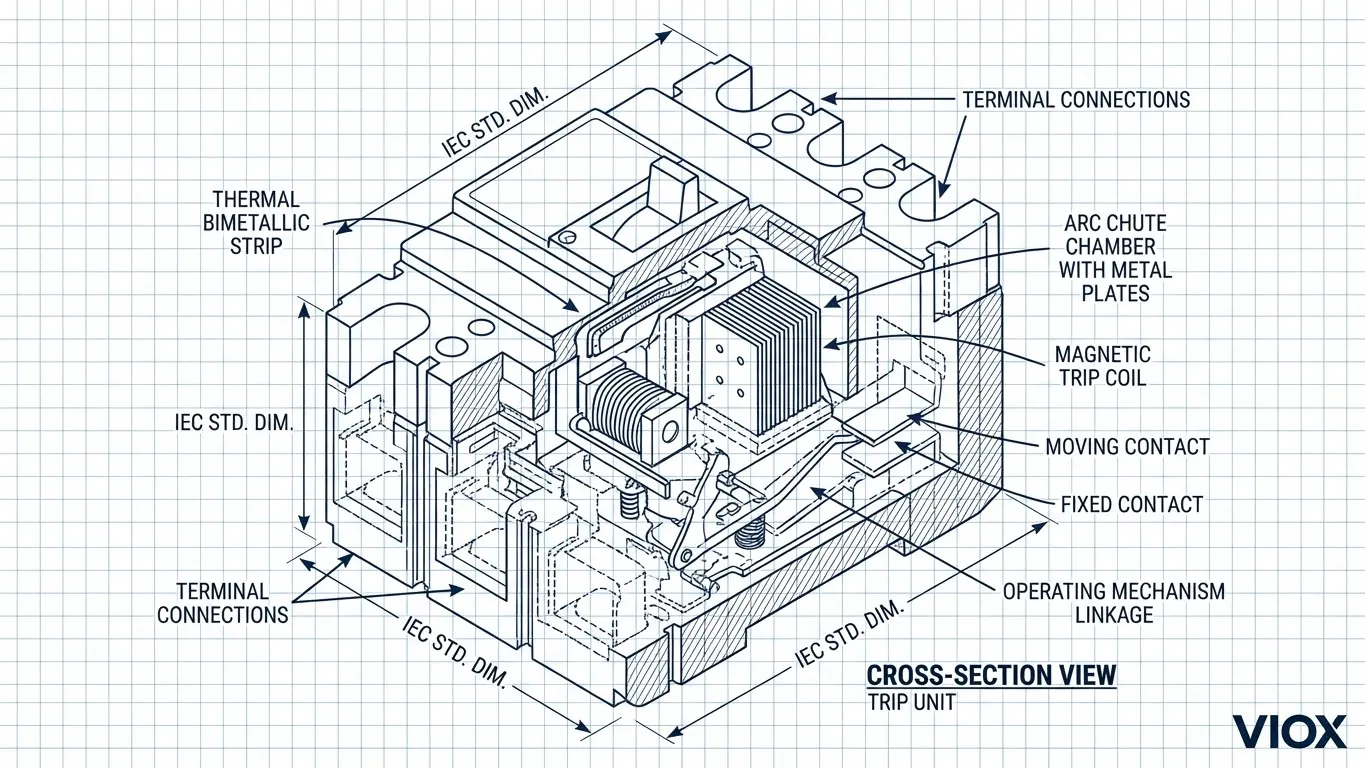
တဲ့ Molded Case Circuit Breaker (MCCB) is an industrial-grade electrical protection device that protects circuits from overloads and short circuits. It is defined by its molded insulating housing, which contains the switching mechanism, arc extinguishing chamber, and trip unit.
နေစဉ် Miniature Circuit Breakers (MCBs) are suitable for final distribution circuits, MCCBs are the standard for power distribution feeders due to their higher current ratings and adjustable characteristics.
Comparison: MCCB vs. MCB
| အင်္ဂါ | Miniature Circuit Breaker (MCB) | Molded Case Circuit Breaker (MCCB) |
|---|---|---|
| အဆင့်သတ်မှတ်ထားသော လက်ရှိ (In) | Typically 0.5A – 125A | Typically 16A – 2500A |
| Breaking Capacity (Icu) | Low (4.5kA – 15kA) | High (16kA – 200kA) |
| ခရီးစဉ်လက္ခဏာများ | Fixed (B, C, D curves) | Adjustable (L, S, I, G settings) |
| စံ | IEC 60898-1 (Household) | IEC 60947-2 (Industrial) |
| စစ်ဆင်ရေး | Thermal-Magnetic only | Thermal-Magnetic or Electronic (Microprocessor) |
| အဝေးထိန်း | Limited accessories | Full range (Shunt trip, UVR, Motor operator) |
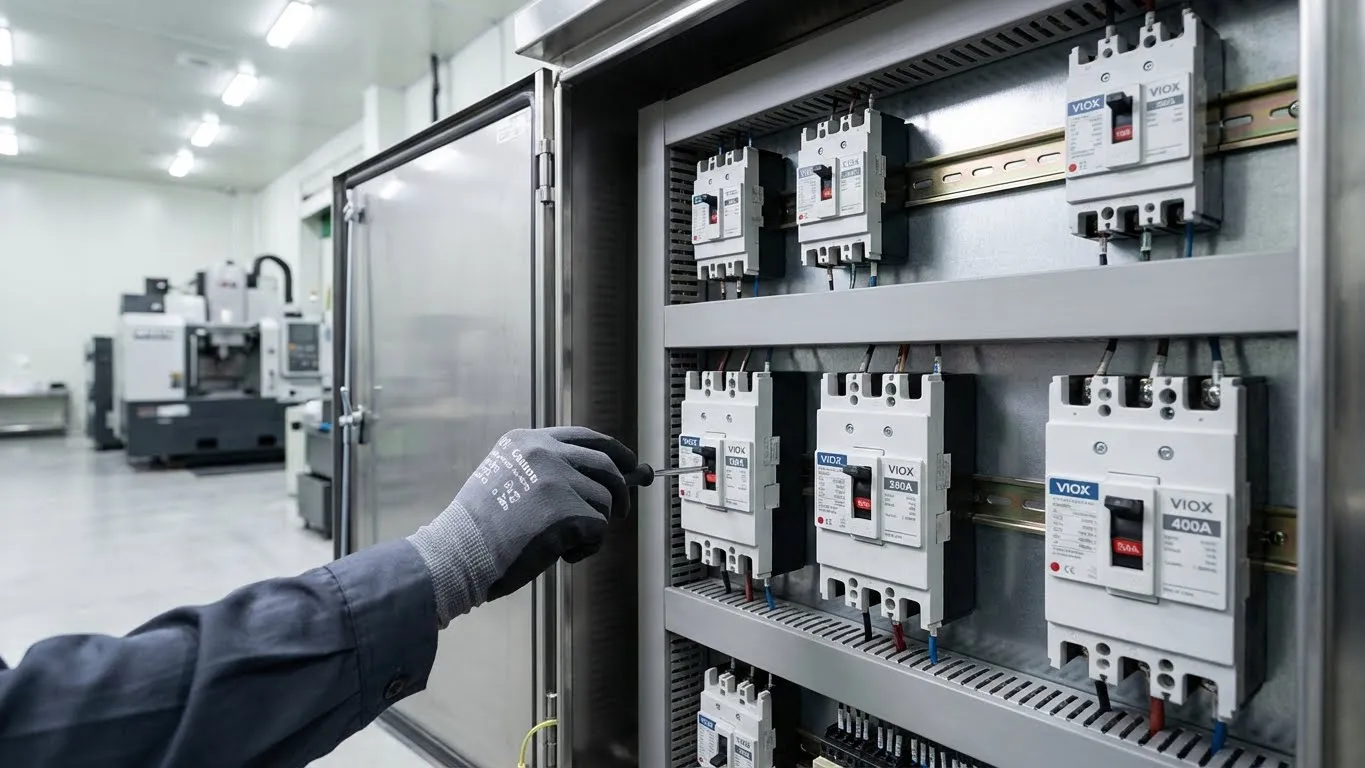
Key Factors in MCCB Selection
1. Current Rating (In) and Frame Size (Inm)
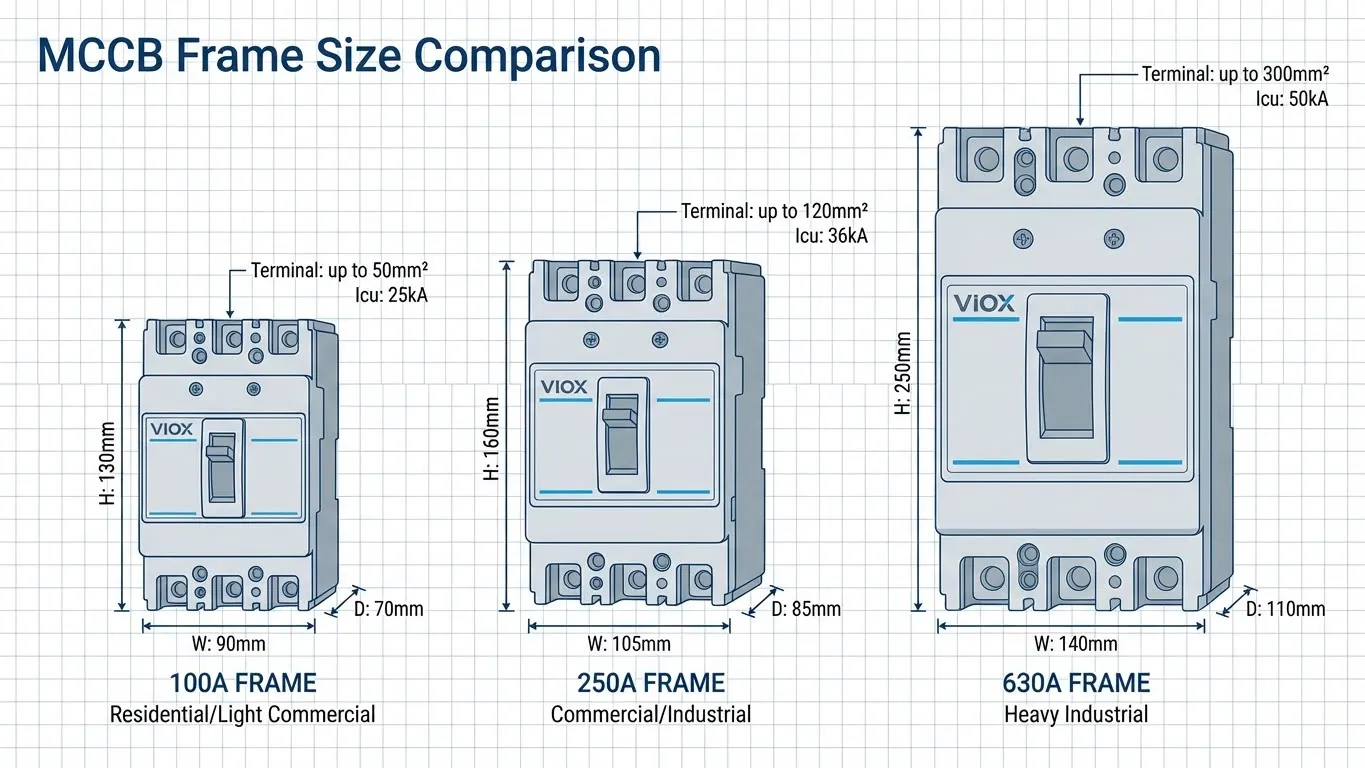
ဟိ Frame Size (Inm) determines the physical dimensions and the maximum current the breaker housing can handle (e.g., 250A frame). The အဆင့်သတ်မှတ်ထားသော လက်ရှိ (In) is the actual current value the breaker is set to carry (e.g., a 160A trip unit in a 250A frame).
- ရွေးချယ်မှုစည်းမျဉ်း- $I_b \le I_n \le I_z$
- $I_b$: Design current of the circuit.
- $I_n$: Rated current of the MCCB.
- $I_z$: Current carrying capacity of the cable.
2. Breaking Capacity (Icu vs. Ics)
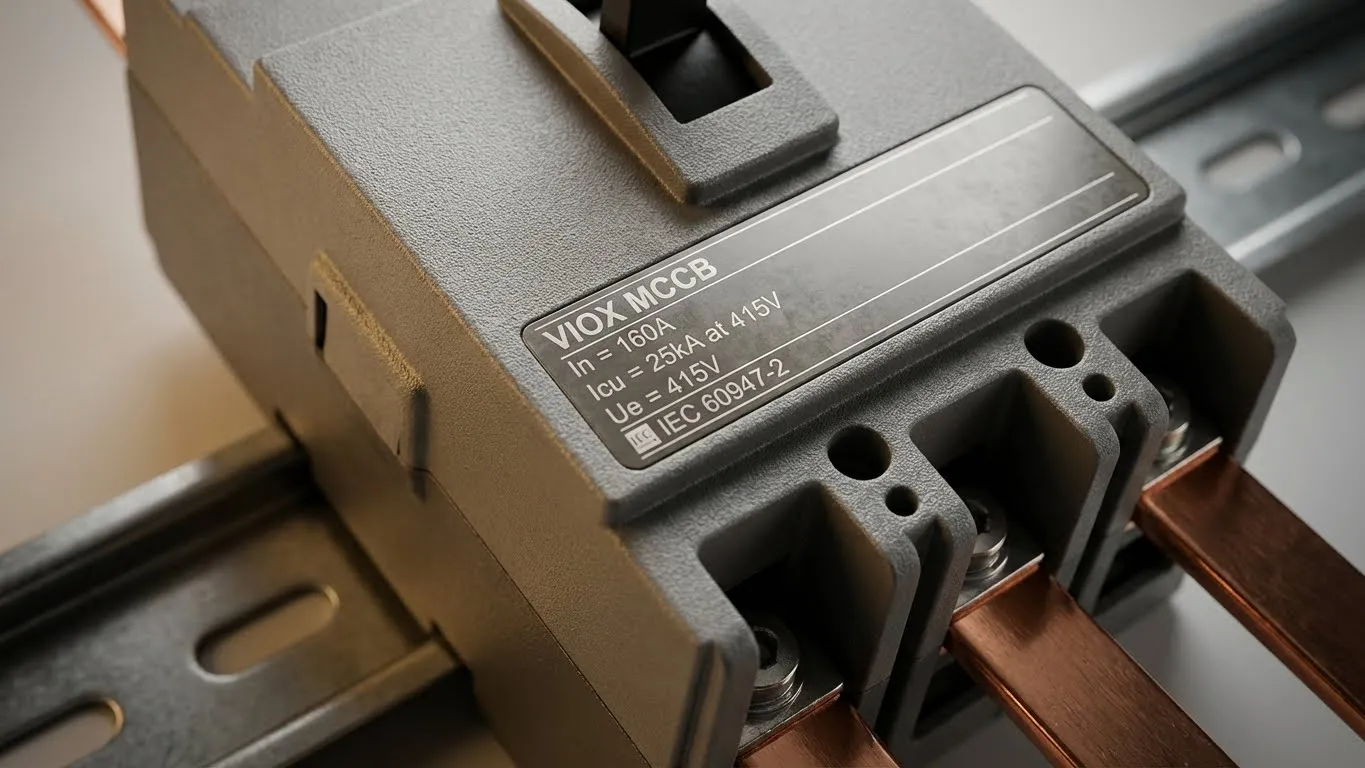
Breaking capacity is the maximum fault current the MCCB can interrupt safely. Under IEC ၆၀၉၄၇-၂, there are two critical ratings:
- Icu (Ultimate Breaking Capacity): The maximum current the breaker can interrupt once. It may not be usable afterwards.
- Ics (ဝန်ဆောင်မှု ဖြတ်တောက်နိုင်စွမ်း)- The current the breaker can interrupt repeatedly and still remain operational.
For critical applications (hospitals, data centers), ensure Ics = 100% Icu. For standard applications, Ics = 50% or 75% Icu is often acceptable. Learn more about Icu vs Ics ratings.
Breaking Capacity Selection Matrix:
| လျှောက်လွှာအခြေအနေ | Prospective Short Circuit Current (PSCC) | Recommended MCCB Breaking Capacity |
|---|---|---|
| Residential / Light Commercial | < 10 kA | 16 kA or 25 kA |
| Commercial Building Main Panel | 15 kA – 35 kA | 36 kA or 50 kA |
| Industrial Main Switchboard | 35 kA – 65 kA | 70 kA or 85 kA |
| Heavy Industry / Transformer Output | > 70 kA | 100 kA or 150 kA |
3. Voltage Ratings
Ensure the MCCB meets your system voltage requirements. Refer to our Ue vs Ui vs Uimp guide for deep technical definitions.
- Ue (Rated Operational Voltage): Typically 400V/415V or 690V.
- Ui (Rated Insulation Voltage): Must be $\ge$ Ue (typically 800V or 1000V).
- Uimp (Impulse Withstand Voltage): Resistance to voltage spikes (typically 8kV).
4. Trip Unit Technology
The trip unit is the “brain” of the MCCB.
| အင်္ဂါ | အပူ-သံလိုက် (TM) | အီလက်ထရောနစ် (မိုက်ခရိုပရိုဆက်ဆာ) |
|---|---|---|
| ကာကွယ်မှု ယန္တရား | ဘိုင်မက်တယ် (ဝန်ပို) + ကွိုင် (လျှပ်စစ်ဆားကစ်ပြတ်တောက်ခြင်း) | လျှပ်စီးကြောင်း ထရန်စဖော်မာ + CPU |
| တိကျမှု | အလယ်အလတ် (ပတ်ဝန်းကျင် အပူချိန်ကြောင့် ထိခိုက်နိုင်သည်) | မြင့်မား (အပူချိန်နှင့် သက်ဆိုင်မှုမရှိ) |
| ချိန်ညှိမှု | အကန့်အသတ်ရှိ (0.7 – 1.0 x In) | ကျယ်ပြန့်သော အပိုင်းအခြား (0.4 – 1.0 x In) + အချိန်နှောင့်နှေးမှုများ |
| လုပ်ဆောင်ချက်များ | LI (ကြာမြင့်ချိန်၊ ချက်ချင်း) | LSI သို့မဟုတ် LSIG (မြေပြင် ချို့ယွင်းချက်) |
| ကုန်ကျစရိတ် | အောက်ပိုင်း | ပိုမြင့်တယ်။ |
| အကောင်းဆုံး | စံနှုန်းမီသော ဖီဒါများ၊ ရိုးရှင်းသော ဝန်များ | ဂျင်နရေတာများ၊ ရှုပ်ထွေးသော ညှိနှိုင်းမှု၊ မော်တာများ |
အဆင့်ဆင့်ရွေးချယ်ရေးလမ်းညွှန်
မှန်ကန်သော MCCB ကို သတ်မှတ်ရန် ဤအင်ဂျင်နီယာ လုပ်ငန်းစဉ်အတိုင်း လုပ်ဆောင်ပါ။.
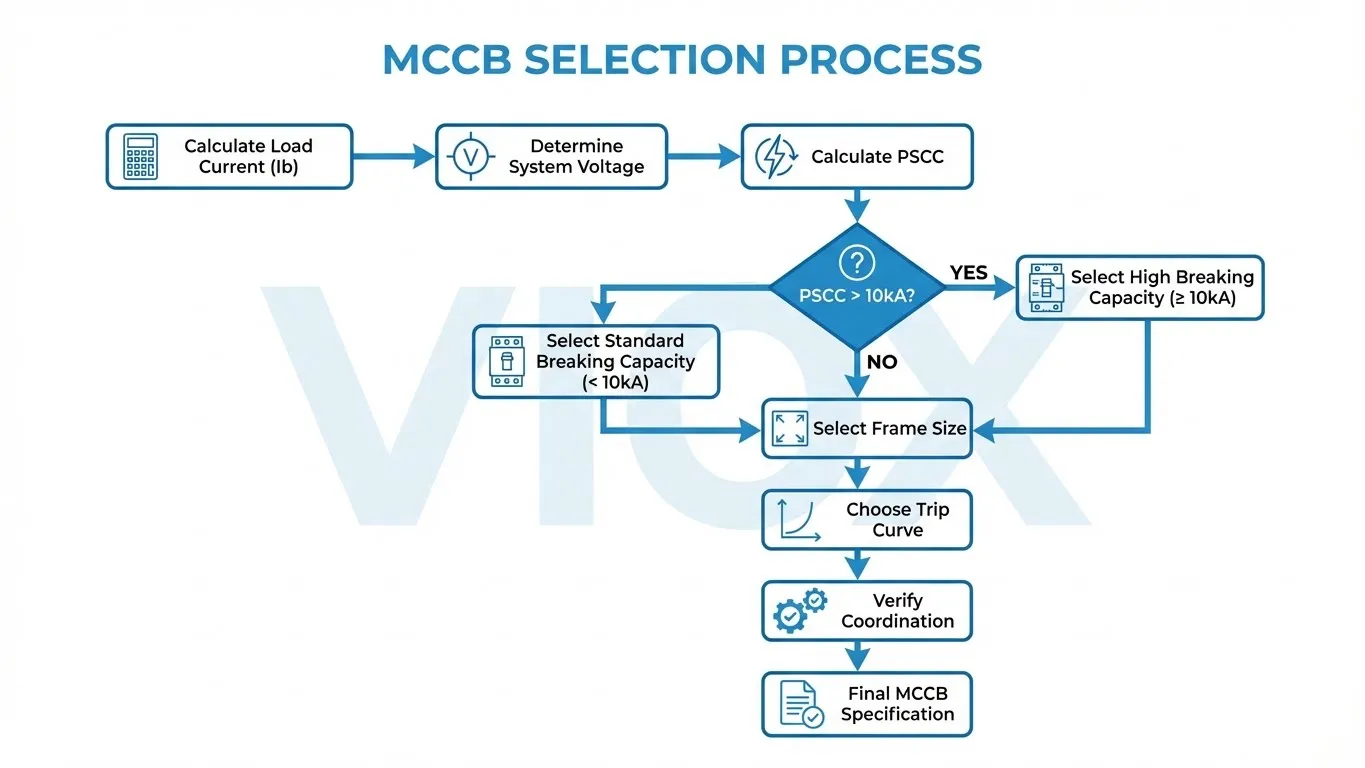
အဆင့် ၁- ဝန်လျှပ်စီးကြောင်း (Ib) ကို တွက်ချက်ပါ။
ဆားကစ်၏ အပြည့်အဝ ဝန်လျှပ်စီးကြောင်းကို ဆုံးဖြတ်ပါ။.
- ဖော်မြူလာ (3-Phase): $I = P / (\sqrt{3} \times V \times PF)$
- ဘေးကင်းရေး အနားသတ်ကို အသုံးပြုပါ (ပုံမှန်အားဖြင့် NEC/IEC အကြံပြုချက်များအရ စဉ်ဆက်မပြတ် ဝန်များအတွက် 125%)။.
အဆင့် ၂- ဖြစ်နိုင်ချေရှိသော လျှပ်စစ်ဆားကစ်ပြတ်တောက်မှု လျှပ်စီးကြောင်း (PSCC) ကို ဆုံးဖြတ်ပါ။
တပ်ဆင်မည့်နေရာတွင် ချို့ယွင်းချက် လျှပ်စီးကြောင်းကို တွက်ချက်ပါ။ MCCB ၏ Icu သည် ဤတန်ဖိုးထက် ကြီးရပါမည်။.
- မှတ်ချက်- PSCC သည် 45kA ဖြစ်ပါက 36kA ဘရိတ်ကာကို မရွေးချယ်ပါနှင့်။ 50kA သို့မဟုတ် 70kA မော်ဒယ်ကို ရွေးချယ်ပါ။.
အဆင့် ၃- ဖရိန်အရွယ်အစားနှင့် ထရစ်အဆင့်သတ်မှတ်ချက်ကို ရွေးချယ်ပါ။
သင်လိုအပ်သော လျှပ်စီးကြောင်းကို ချိန်ညှိပေးနိုင်ပြီး လိုအပ်သော ဖြတ်တောက်နိုင်စွမ်းကို ပေးစွမ်းနိုင်သော ဖရိန်အရွယ်အစားကို ရွေးချယ်ပါ။.
အဆင့် ၄- လျှော့ချသည့်အချက်များကို အသုံးပြုပါ။
MCCB များကို ပုံမှန်အားဖြင့် 40°C တွင် ချိန်ညှိထားသည်။ ပိုပူသောဘောင်များတွင် သို့မဟုတ် မြင့်မားသောနေရာများတွင် တပ်ဆင်ထားပါက စွမ်းရည်ကို လျှော့ချရပါမည်။ ကျွန်ုပ်တို့၏ လျှပ်စစ်ပစ္စည်း လျှော့ချခြင်း လမ်းညွှန်ကို ကြည့်ပါ။.
အပူချိန် လျှော့ချခြင်း ဇယား (အပူ-သံလိုက် MCCB အတွက် ဥပမာ):
| ပတ်ဝန်းကျင် အပူချိန် (°C) | 30°C | 40°C (Ref) | 50°C | 60°C | 70°C |
|---|---|---|---|---|---|
| ပြုပြင်ရေး အချက် | 1.10 | 1.00 | 0.90 | 0.80 | 0.70 |
အဆင့် ၅- ညှိနှိုင်းမှုကို စစ်ဆေးပါ (ရွေးချယ်နိုင်မှု)
အောက်ပိုင်းရှိ ချို့ယွင်းချက်တစ်ခုသည် သာ အောက်ပိုင်း ဘရိတ်ကာကို ထရစ်ဖြစ်စေပြီး ပင်မ MCCB ကို မဖြစ်စေရန် သေချာပါစေ။.
- လျှပ်စီးကြောင်း ရွေးချယ်နိုင်မှု- အထက်ပိုင်း MCCB ထရစ်အစ > အောက်ပိုင်း ဘရိတ်ကာ ထရစ်အစ။.
- အချိန် ရွေးချယ်နိုင်မှု- အထက်ပိုင်း MCCB သို့ အချိန်နှောင့်နှေးမှု (အမျိုးအစား B ဘရိတ်ကာများ) ကို ထည့်ရန် အီလက်ထရောနစ် ထရစ်ယူနစ်များကို အသုံးပြုပါ။.
- ကျွန်ုပ်တို့၏ ဘရိတ်ကာ ရွေးချယ်နိုင်မှုနှင့် ညှိနှိုင်းမှု လမ်းညွှန်တွင် ပိုမိုဖတ်ရှုပါ။.
အရွယ်အစား ဥပမာ တွက်ချက်မှု
ဇာတ်လမ်း- 180A တွက်ချက်ထားသော ဝန်ပါရှိသော ဆပ်-ဘောင်အတွက် 3-အဆင့် ဖီဒါကို ကာကွယ်ရန် လိုအပ်သည်။ စနစ်ဗို့အားသည် 415V AC ဖြစ်သည်။ ဘတ်စ်ဘားရှိ တွက်ချက်ထားသော လျှပ်စစ်ဆားကစ်ပြတ်တောက်မှု လျှပ်စီးကြောင်းသည် 32kA ဖြစ်သည်။ ဘောင်အတွင်းပိုင်း အပူချိန်သည် 50°C ဖြစ်ရန် မျှော်လင့်ထားသည်။.
- ဝန်လိုအပ်ချက်- $I_b = 180A$.
- လျှော့ချခြင်း စစ်ဆေးမှု- 50°C တွင် လျှော့ချသည့်အချက်သည် 0.9 ဖြစ်သည်။.
- လိုအပ်သော ပုံမှန်အဆင့်သတ်မှတ်ချက် = $180A / 0.9 = 200A$.
- ဖရိန် ရွေးချယ်မှု- တစ်ခုကို ရွေးချယ်ပါ 250A ဖရိန် MCCB (200A မှ နောက်ထပ် စံအရွယ်အစား)။.
- ထရစ်ယူနစ် ဆက်တင်- 250A ထရစ်ယူနစ် သို့မဟုတ် 0.8 x In ($250 \times 0.8 = 200A$) သို့ သတ်မှတ်ထားသော ချိန်ညှိနိုင်သော 250A အီလက်ထရောနစ် ထရစ်ယူနစ်ကို ရွေးချယ်ပါ။.
- ချိုးဖျက်နိုင်မှု- $PSCC = 32kA$.
- ပါရှိသော MCCB ကို ရွေးချယ်ပါ Icu = 36kA သို့မဟုတ် 50kA (စံ 25kA သည် မလုံလောက်ပါ)။.
- နောက်ဆုံး ရွေးချယ်မှု- VIOX VMM3-250H (မြင့်မားသော ဖြတ်တောက်နိုင်စွမ်း)၊ 3-Pole, 250A, အီလက်ထရောနစ် ထရစ်ယူနစ်။.
အဖြစ်များသော ပြဿနာဖြေရှင်းခြင်းနှင့် အမှားများ
- နှောင့်ယှက်ခြင်း- မော်တာ စတင်လျှပ်စီးကြောင်းများအတွက် သံလိုက်ထရစ် (Im) ကို အလွန်နိမ့်စွာ သတ်မှတ်ခြင်းကြောင့် ဖြစ်လေ့ရှိသည်။ ယေဘုယျ မော်တာကာကွယ်ရေးမျဉ်းသို့ ပြောင်းပါ သို့မဟုတ် ချက်ချင်းဆက်တင်ကို ချိန်ညှိပါ။.
- အပူလွန်ကဲခြင်း- Check terminal torque. Loose connections are the #1 cause of MCCB failure.
- Breaker Won’t Reset: The mechanism might be in the “Trip” position (center). You must force the handle firmly to “OFF” (reset) before switching to “ON”.
- Buzzing Sound: A slight hum is normal for large currents, but loud buzzing may indicate loose laminations or contacts. See our Diagnostic Guide for Buzzing Breakers.
အမြဲမေးလေ့ရှိသောမေးခွန်းများ
Q: Can I use an AC MCCB for DC applications?
A: Generally, no. DC arcs are harder to extinguish. You must use an MCCB specifically rated for DC or verify the manufacturer’s DC rating for that model. See DC vs AC Circuit Breakers.
Q: What is the difference between 3P and 4P MCCBs?
A: 3P protects the three phases (L1, L2, L3). 4P includes protection for the Neutral conductor, which is essential if the neutral is distributed and high harmonic currents are expected.
Q: How do I test an MCCB?
A: The “Test” button only checks the mechanical trip mechanism. To verify the electronic/thermal accuracy, you need secondary injection testing. Read How to Really Test an MCCB.
Q: Should I use an MCCB or an ICCB?
A: ICCBs (Insulated Case Circuit Breakers) are typically used for higher currents (up to 4000A) and offer higher short-time withstand ratings (Icw) than standard MCCBs. See our MCCB vs ICCB Guide.
မေး- MCCB တွေကို ဘယ်နှစ်ကြိမ် ထိန်းသိမ်းသင့်လဲ။
A: While MCCBs are “maintenance-free” compared to ACBs, they should be visually inspected annually, and thermographic scans should be performed to detect loose connections.
သော့ထုတ်ယူမှုများ
- ဘေးကင်းရေး ပထမ၊ Always select an MCCB with an Icu rating higher than the potential fault current (PSCC) at the installation point.
- Future Proofing: Choose adjustable electronic trip units for critical panels to allow for future load changes and better coordination.
- Environment Matters: Don’t ignore temperature and altitude derating factors, or your breaker may trip prematurely.
- ညှိနှိုင်းမှု- Ensure your main MCCB delays tripping long enough for downstream MCBs to clear minor faults (Selectivity).
Selecting the right MCCB is a balance of safety, functionality, and cost. By following this guide and adhering to IEC ၆၀၉၄၇-၂ standards, you ensure a robust electrical infrastructure that protects both personnel and equipment.

