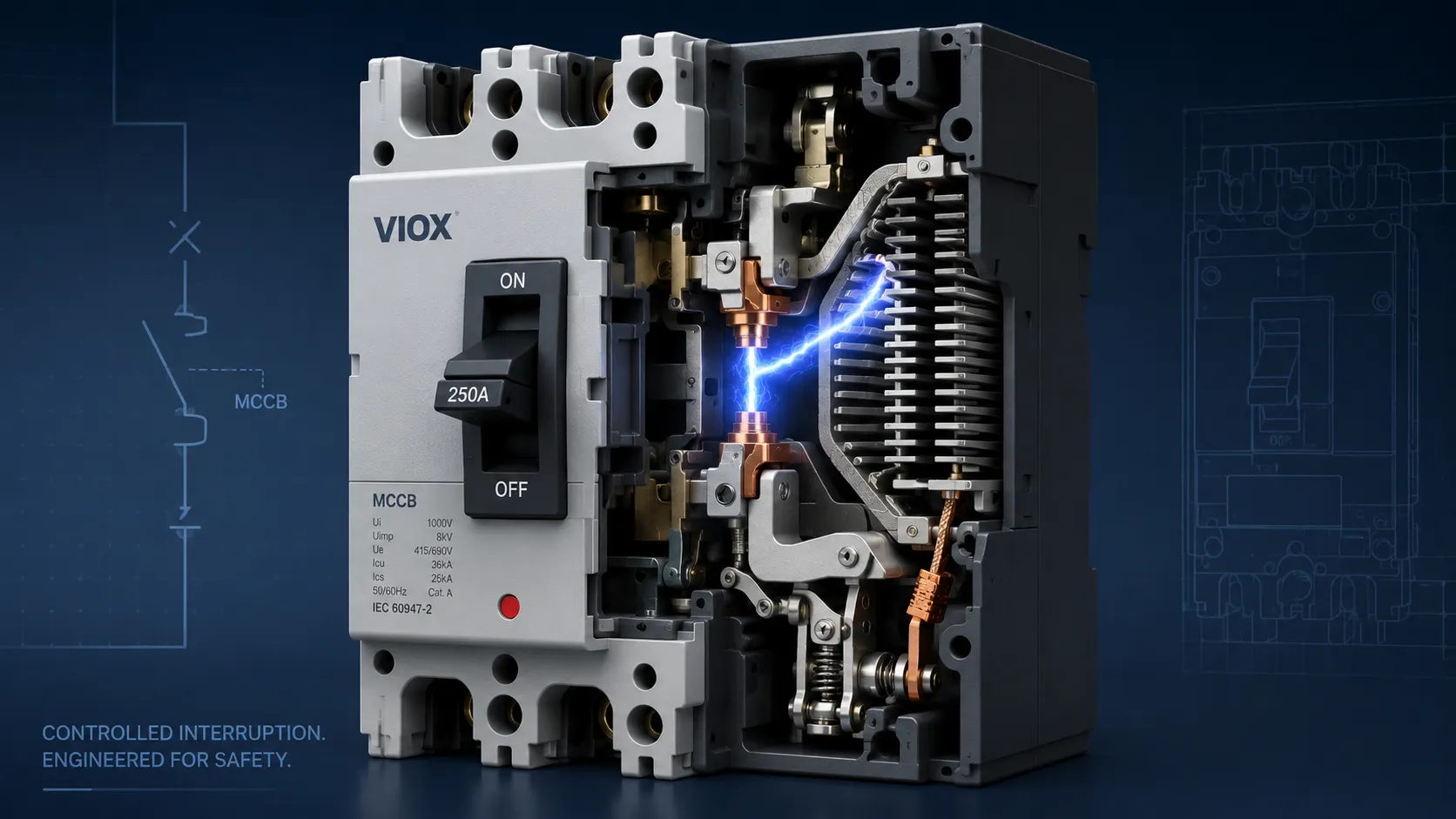
An arka dalam pemutus litar ialah nyahcas elektrik bercahaya yang terbentuk di antara sesentuh yang terpisah apabila pemutus membuka litar yang membawa arus. Arka membolehkan arus terus mengalir seketika melalui udara atau gas terion sehingga pemutus memaksa arka tersebut untuk menyejuk, memanjang, terpisah, dan terpadam.
Pemutus litar tidak menghentikan arus serta-merta sebaik sahaja sesentuhnya terpisah. Ia perlu mengawal arka yang terhasil semasa gangguan terlebih dahulu, kemudian memadamkan arka tersebut supaya litar dapat dibuka dengan selamat.
Inilah sebabnya kawalan arka merupakan salah satu bahagian paling penting dalam reka bentuk pemutus litar. Pemutus dengan keupayaan pemadaman arka yang lemah boleh mengalami hakisan sesentuh, pemanasan melampau, kerosakan penebat, atau kegagalan untuk memutuskan kerosakan dengan selamat.
Sekilas Pandang Istilah Utama Arka
| Istilah | Maknanya | Peranan dalam Pemutus Litar |
|---|---|---|
| Arka | Nyahcas bercahaya konduktif merentasi ruang sesentuh yang terbuka | Membenarkan arus terus mengalir seketika selepas sesentuh terpisah |
| Pembentukan arka | Proses di mana gas terion terbentuk di antara sesentuh | Berlaku semasa pensuisan atau gangguan kerosakan |
| Voltan arka | Voltan merentasi arka semasa gangguan | Membantu menentang arus litar dan menyokong pemadaman |
| Pelari arka | Laluan konduktif yang memandu arka menjauhi sesentuh | Menggerakkan arka ke dalam pelongsor arka |
| Pelongsor arka | Pemasangan yang memisahkan dan menyejukkan arka | Membantu memadamkan arka dengan selamat |
| Plat pemisah arka | Plat logam di dalam pelongsor arka | Membahagikan arka kepada segmen arka yang lebih kecil |
| Ruang pemadaman arka | Ruang atau struktur di mana pemadaman arka berlaku | Mengandungi dan mengawal tenaga arka |
| Pemadaman arka | Proses memadamkan arka | Diperlukan untuk gangguan litar yang selamat |
Bagaimana Pembentukan Arka Berlaku dalam Pemutus Litar
Pembentukan arka bermula apabila sesentuh pemutus terbuka semasa arus masih mengalir.
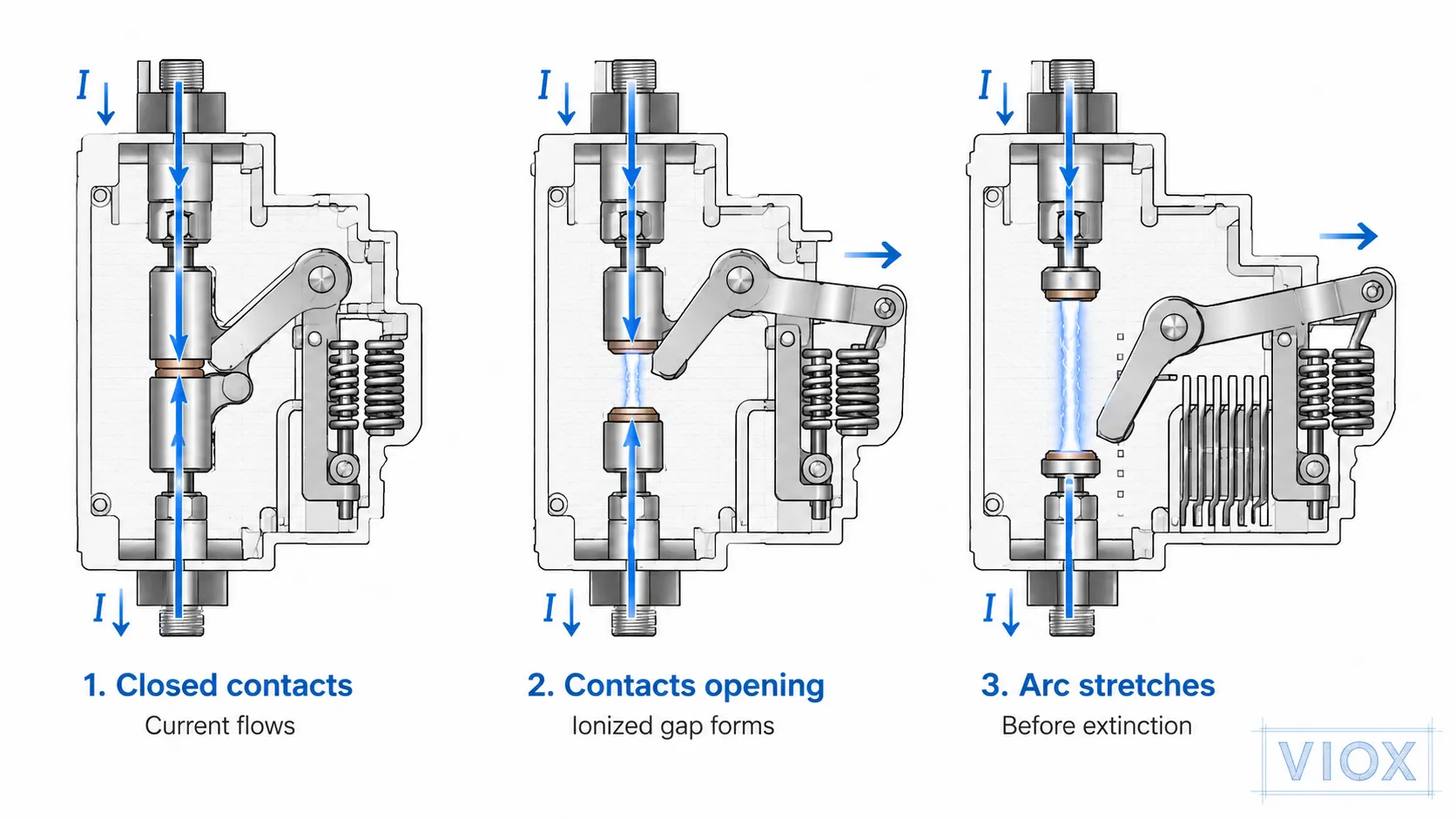
Urutan gangguan biasanya berfungsi seperti berikut:
- Pemutus litar mengesan beban lampau, litar pintas, atau operasi pensuisan manual.
- Mekanisme pengendalian memisahkan sesentuh.
- Arus cuba untuk terus mengalir merentasi jurang sesentuh yang kecil.
- Udara atau gas di antara sesentuh menjadi terion.
- Arka pengalir terbentuk.
- Pemutus litar menolak arka ke dalam sistem kawalan arka.
- Arka dipanjangkan, dipecahkan, disejukkan, dan dipadamkan.
Arka itu sendiri bukanlah satu kecacatan. Ia adalah fenomena fizikal biasa semasa gangguan arus. Cabaran kejuruteraannya adalah untuk mengawalnya dengan cepat dan selamat.
Mengapa Arka Terbentuk Apabila Sesentuh Terbuka
Apabila sesentuh tertutup, arus mengalir melalui laluan logam. Apabila ia mula terpisah, kawasan sesentuh menjadi lebih kecil, rintangan meningkat, dan haba naik. Pada masa yang sama, medan elektrik merentasi celah bukaan boleh mengionkan medium di sekelilingnya.
Sebaik sahaja medium menjadi konduktif, arus boleh terus mengalir melalui plasma arka walaupun sesentuh logam tidak lagi bersentuhan.
Itulah sebabnya pemutus litar memerlukan lebih daripada sekadar suis mekanikal biasa. Ia memerlukan struktur kawalan arka yang mampu mengendalikan tenaga yang dibebaskan semasa gangguan litar.
Sesentuh Utama lwn Sesentuh Arka
Dalam pemutus litar voltan rendah yang lebih besar, terutamanya banyak MCCB dan ACB, laluan arus mungkin merangkumi utama dan sesentuh arka.
| Jenis Sesentuh | Peranan Utama | Mengapa Ia Penting |
|---|---|---|
| Sentuhan utama | Membawa arus dengan rintangan rendah semasa operasi biasa | Direka untuk kekonduksian dan pemanasan yang rendah |
| Sesentuh arka | Mengambil arka semasa pembukaan dan penutupan | Melindungi sesentuh utama daripada hakisan arka yang teruk |
Urutan tipikal adalah putus-dahulu / sambung-kemudian bagi sesentuh arka berbanding sistem sesentuh utama, bergantung kepada reka bentuk pemutus litar. Semasa pembukaan, sesentuh utama terpisah dahulu supaya arka berpindah ke sesentuh arka. Semasa penutupan, sesentuh arka bersambung dahulu supaya sesentuh utama tidak rosak akibat tekanan elektrik awal.
Pemasaan sesentuh ini adalah salah satu sebab pemutus litar lebih kompleks daripada suis biasa. Ia perlu membawa arus dengan cekap semasa perkhidmatan biasa dan bertahan daripada peristiwa gangguan berulang semasa kerosakan.
Peluncur Arka (Arc Runner) dalam Pemutus Litar
An peluncur arka ialah bahagian konduktif yang membantu mengalihkan arka jauh daripada sesentuh utama dan menuju ke arah pelongsor arka (arc chute).
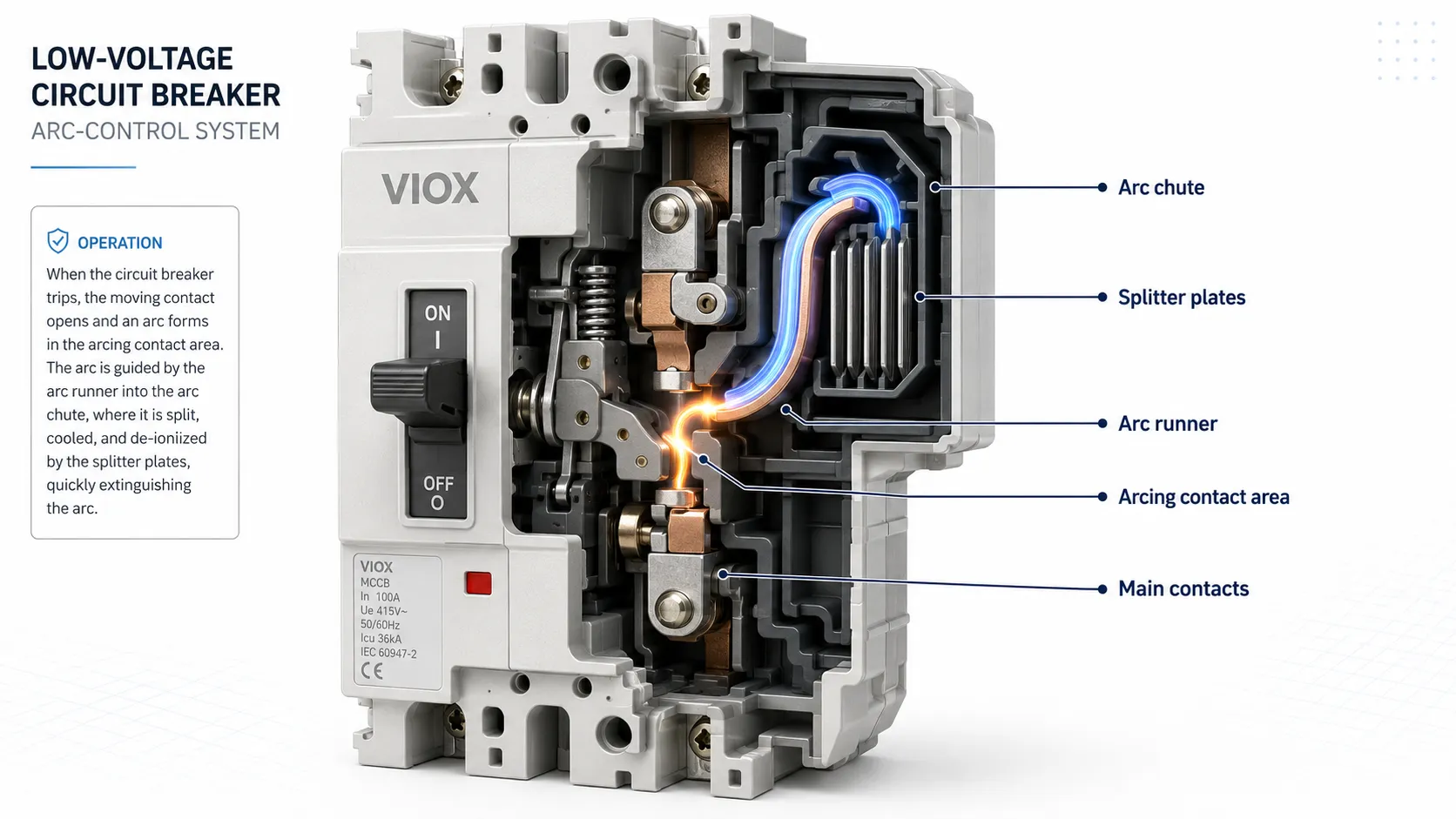
Fungsinya adalah praktikal:
- mengurangkan kerosakan sesentuh;
- membimbing arka ke laluan yang betul;
- membantu memindahkan arka dari kawasan sesentuh ke kebuk arka;
- menyokong pemadaman arka yang lebih pantas dan terkawal.
Dalam banyak reka bentuk pemutus litar, pelari arka berfungsi bersama daya magnet yang dijana oleh arus kerosakan. Cara mudah untuk menyatakan daya penggerak tersebut adalah F = I × L × B, di mana F ialah daya yang bertindak ke atas arka, saya ialah arus arka, L ialah panjang arka berkesan dalam medan magnet, dan B ialah ketumpatan fluks magnet. Dalam reka bentuk pemutus litar praktikal, arus litar pintas yang lebih besar boleh menghasilkan daya dorongan magnet yang lebih kuat, membantu menolak arka sepanjang pelari ke dalam kebuk arka di mana ia boleh dibahagikan dan disejukkan.
F = I × L × BBagaimana Daya Magnet Menggerakkan Arka ke dalam Kebuk Arka
Apabila arus tinggi mengalir melalui pemutus litar, laluan arus tersebut menghasilkan medan magnet. Arka itu sendiri juga membawa arus. Interaksi antara arka yang membawa arus dan medan magnet menghasilkan daya yang boleh menolak arka menjauhi sesentuh.
Pergerakan magnet ini berguna kerana ia:
- menarik arka menjauhi permukaan sesentuh;
- memindahkan arka ke arah pelari arka (arc runner);
- memacu arka ke dalam plat pemisah (splitter plates);
- mengurangkan masa arka kekal pada kawasan sesentuh utama.
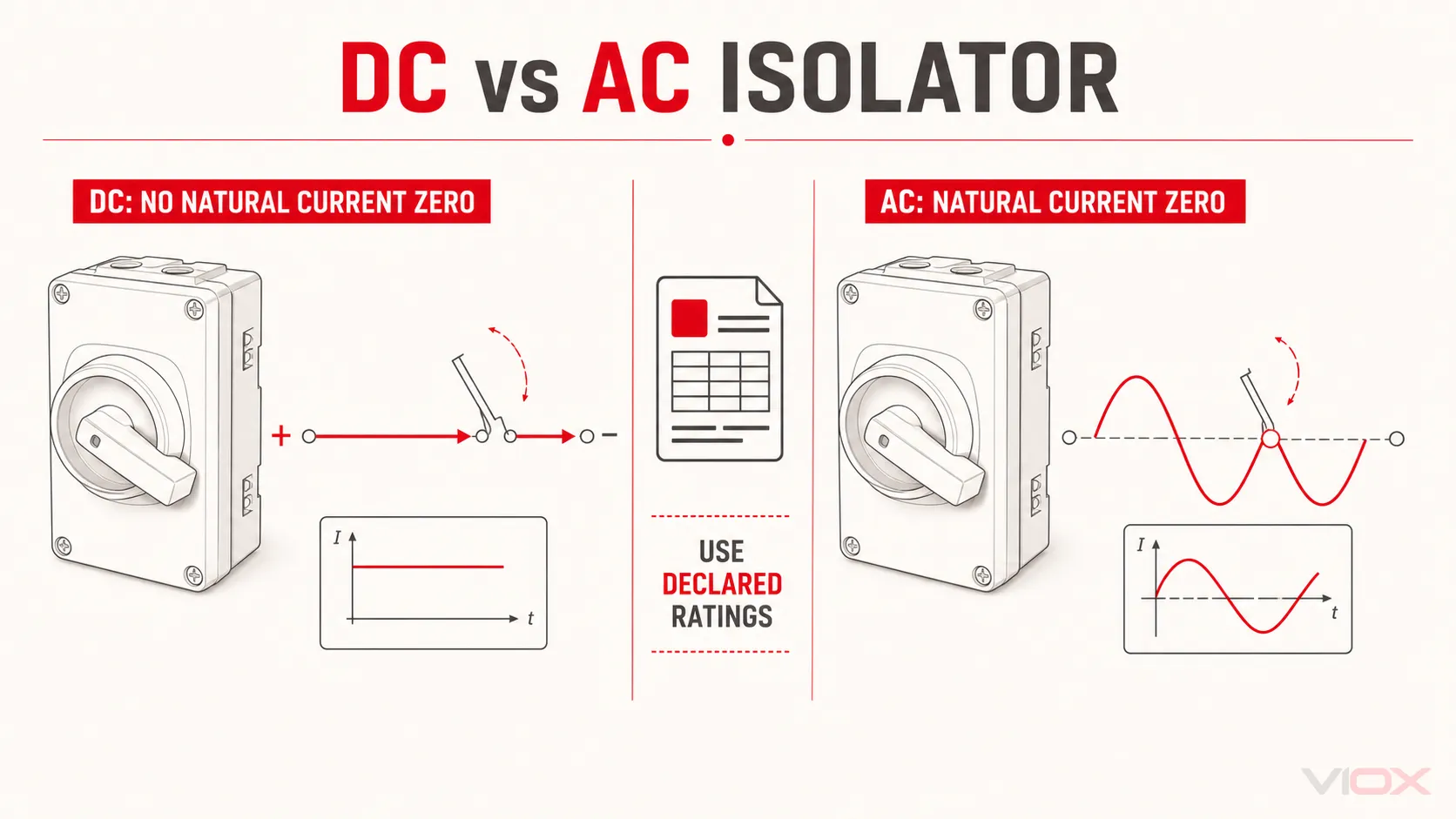
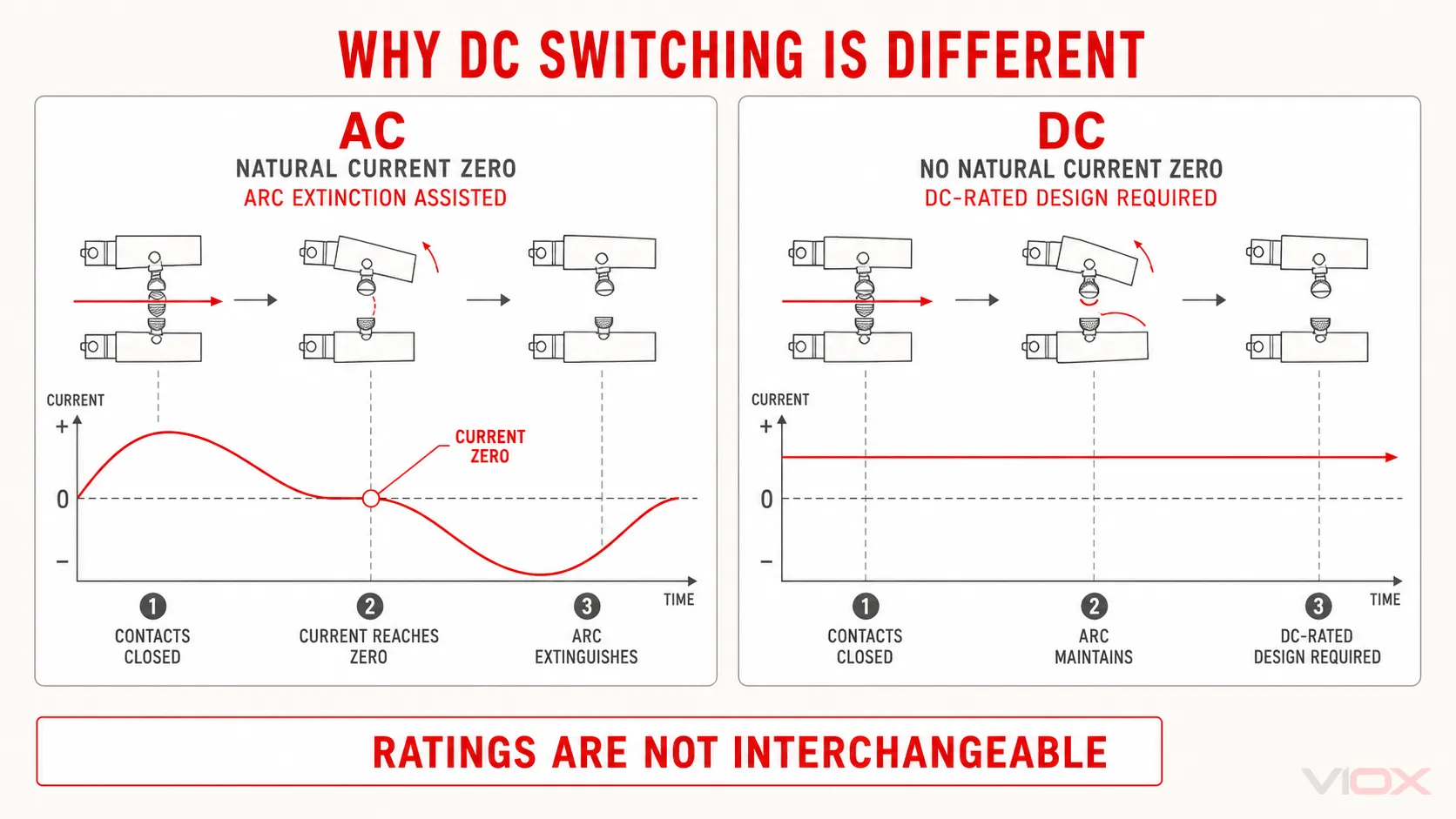
Dalam pemutus litar arus terus (DC), kawalan arka magnetik menjadi lebih penting kerana tiada titik sifar arus semula jadi. Inilah sebabnya mengapa kekutuban boleh menjadi penting dalam sesetengah reka bentuk pemutus litar DC.
Dari perspektif reka bentuk produk, kehadiran pelongsor arka (arc chute) sahaja tidak mencukupi. Bentuk pelari arka, kelajuan pembukaan sesentuh, penjajaran plat pemisah, laluan bolong, dan bahan penebat di sekeliling kebuk semuanya mempengaruhi sama ada arka bergerak dengan lancar ke zon pemadaman dan bukannya berlarutan berhampiran sesentuh.
Pelongsor Arka dan Kebuk Pemadaman Arka
An saluran arka ialah struktur yang membantu memadamkan arka selepas ia meninggalkan kawasan sesentuh. Ia sering diperbuat daripada berbilang plat pemisah atau plat arka yang disusun di dalam kebuk penebat.
Kebuk arka berfungsi dengan cara:
- memanjangkan laluan arka;
- memecahkan satu arka besar kepada segmen arka yang lebih kecil;
- menyejukkan gas terion yang panas;
- meningkatkan voltan arka;
- membantu menyahion laluan arka;
- mengurung gas panas dan zarah di dalam reka bentuk pemutus litar.
Frasa kebuk pemadam arka biasanya merujuk kepada ruang atau pemasangan di mana kawalan arka ini berlaku.
Bahan Sesentuh: Mengapa Aloi Tungsten-Kuprum dan Perak Digunakan
Sesentuh pemutus litar mesti mengalirkan arus semasa operasi biasa dan bertahan daripada pemanasan arka semasa gangguan. Ini mewujudkan pertukaran (tradeoff) bahan.
Strategi bahan sesentuh yang biasa termasuk aloi berasaskan perak untuk kekonduksian dan rintangan arka, serta bahan jenis tungsten-kuprum di mana rintangan hakisan arka yang lebih kuat diperlukan. Bahan yang tepat bergantung pada jenis pemutus, kadaran arus, aplikasi, dan reka bentuk pengilang.
Idea kejuruteraan utama adalah seperti berikut: tungsten memberikan rintangan hakisan arka takat lebur yang tinggi, manakala kuprum meningkatkan kekonduksian dan pemindahan haba. Matlamatnya adalah untuk memastikan struktur sesentuh stabil di bawah pemanasan arka yang berulang sambil mengekalkan rintangan sesentuh yang boleh diterima.
Ini lebih tepat daripada mengatakan tungsten-kuprum digunakan hanya untuk mengurangkan pelepasan elektron. Dalam sesentuh pemutus, takat lebur, rintangan hakisan, kelakuan terma, kekonduksian, dan integriti mekanikal semuanya penting.
Apakah itu Pemadaman Arka?
Pemadaman arka ialah proses memadamkan arka supaya arus berhenti mengalir.
Pemutus litar mungkin menggunakan kaedah pemadaman arka yang berbeza bergantung pada jenis dan kelas voltan:
| Jenis Pemutus | Kaedah Pemadaman Arka Biasa |
|---|---|
| CMB | Saluran arka dengan plat pembahagi |
| MCCB | Ruang arka, pelari arka, plat pembahagi, penebat teracu |
| ACB | Gangguan arka udara dengan ruang arka yang lebih besar |
| Pemutus DC | Saluran arka ditambah tiupan magnet atau reka bentuk siri berbilang kutub |
| Pemutus litar voltan tinggi | Vakum, SF6, tiupan udara, atau kaedah pemutusan khusus yang lain |
Bagi MCB dan MCCB voltan rendah, pelongsor arka (arc chutes) dan plat pembahagi adalah komponen yang paling biasa.
Apakah Voltan Arka?
Voltan arka ialah voltan merentasi arka semasa proses pemutusan. Apabila pemutus litar meregang, membahagi, dan menyejukkan arka, voltan arka akan meningkat. Apabila voltan arka menjadi cukup tinggi berbanding dengan keadaan litar, arus boleh dipaksa turun dan arka boleh terpadam.
Dari segi praktikal, sistem kawalan arka yang baik meningkatkan rintangan dan penyejukan arka supaya arus tidak dapat terus mengalir melalui laluan terion.
Voltan arka bukanlah satu nilai katalog yang tetap. Ia merangkumi kejatuhan voltan berhampiran kawasan katod dan anod, serta kecerunan voltan di sepanjang turus arka. Dalam reka bentuk pemutus litar voltan rendah, persoalan penting ialah sama ada geometri sesentuh, pelari arka (arc runner), susunan plat pembahagi, aliran gas, dan penebat kebuk dapat meningkatkan voltan arka dengan cukup pantas di bawah keadaan litar pintas yang diuji.
Inilah salah satu sebab mengapa geometri sesentuh, pelari, plat, bentuk kebuk, dan aliran gas penting dalam reka bentuk pemutus litar.
Arka AC berbanding Arka DC dalam Pemutus Litar
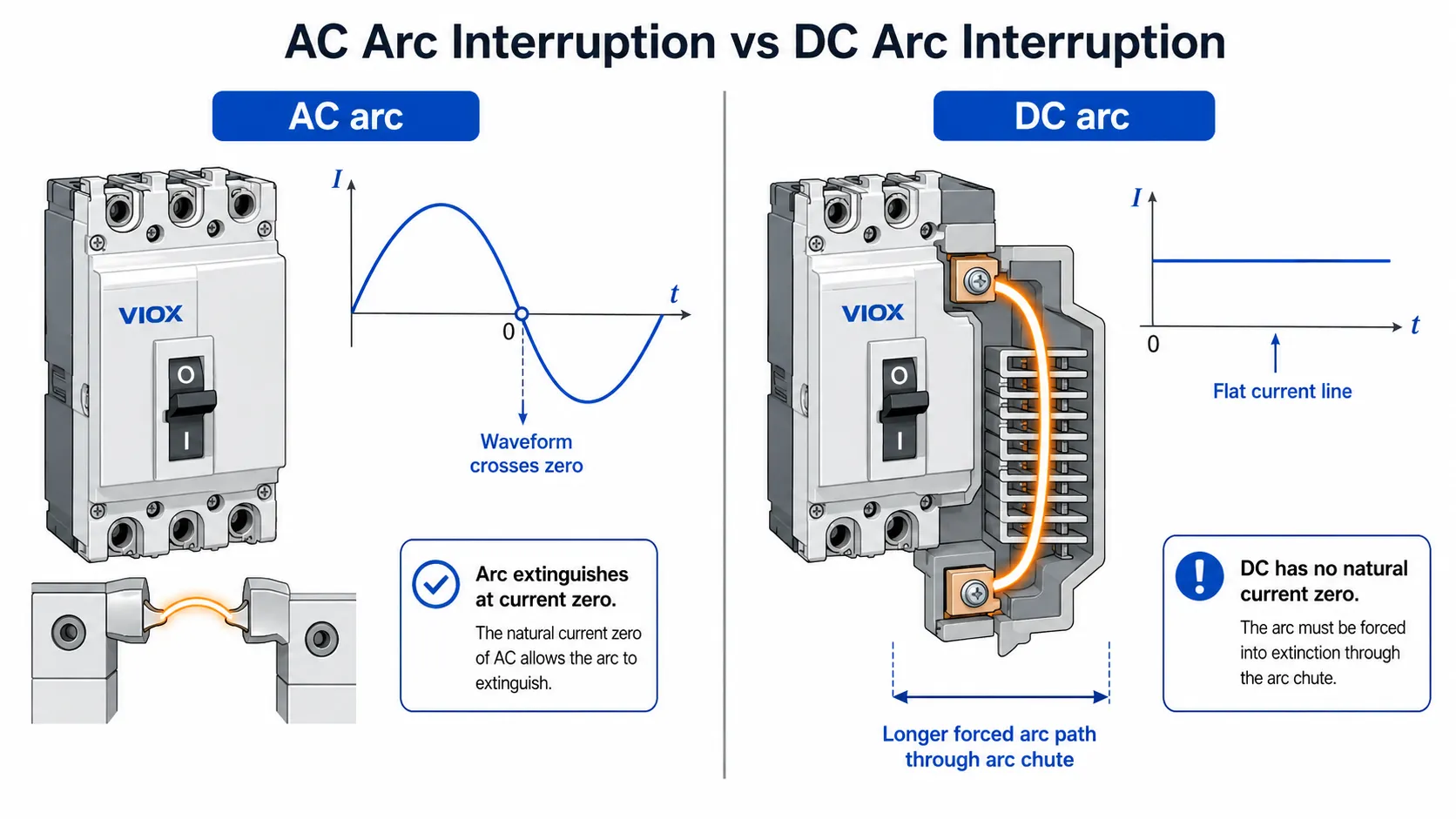
Arka AC dan DC berkelakuan secara berbeza.
| Ciri | Arka AC | Arka DC |
|---|---|---|
| Lintasan sifar arus | Lintasan sifar semula jadi setiap separuh kitaran | Tiada lintasan sifar semula jadi |
| Kepupusan arka | Dibantu oleh sifar arus | Mesti dipaksa oleh reka bentuk pemutus litar |
| Reka bentuk pemutus litar | Pelongsor arka berkadar AC mungkin mencukupi untuk kadarnya | Memerlukan reka bentuk pemadaman arka berkadar DC |
| Kebimbangan kekutuban | Biasanya kurang kritikal dalam pemutus litar AC voltan rendah | Penting dalam banyak pemutus litar DC berkutub |
Inilah sebabnya pemutus litar AC tidak boleh digunakan secara automatik dalam litar DC. Arka DC boleh berterusan melainkan pemutus litar direka dan dikadar khusus untuk gangguan DC.
Untuk butiran pemutus litar DC, sila lihat Apakah Pemutus Litar DC?.
Arka dalam MCB lwn MCCB lwn ACB
| Jenis Pemutus | Di mana Kawalan Arka Berlaku | Perbezaan Praktikal |
|---|---|---|
| CMB | Pelongsor arka padat berhampiran sistem sesentuh | Ruang kecil, pemisahan arka pantas, saiz kerangka terhad |
| MCCB | Kebuk arka acuan yang lebih besar dan pelari arka | Saiz kerangka yang lebih tinggi dan struktur pemutusan yang lebih kuat |
| ACB | Kebuk arka udara yang lebih besar | Digunakan dalam suis voltan rendah arus tinggi |
Prinsip asasnya adalah sama: pemutus membuka sesentuh, membentuk arka, memacu arka ke dalam kebuk, membahagi dan menyejukkannya, serta memutuskan arus. Saiz fizikal dan keupayaan pemutusan berubah mengikut jenis pemutus.
Untuk bahagian dalaman MCCB, sila lihat Struktur dalaman dan komponen MCCB.
IEC 60947-2, UL 489, dan Penarafan Pemutusan Arka
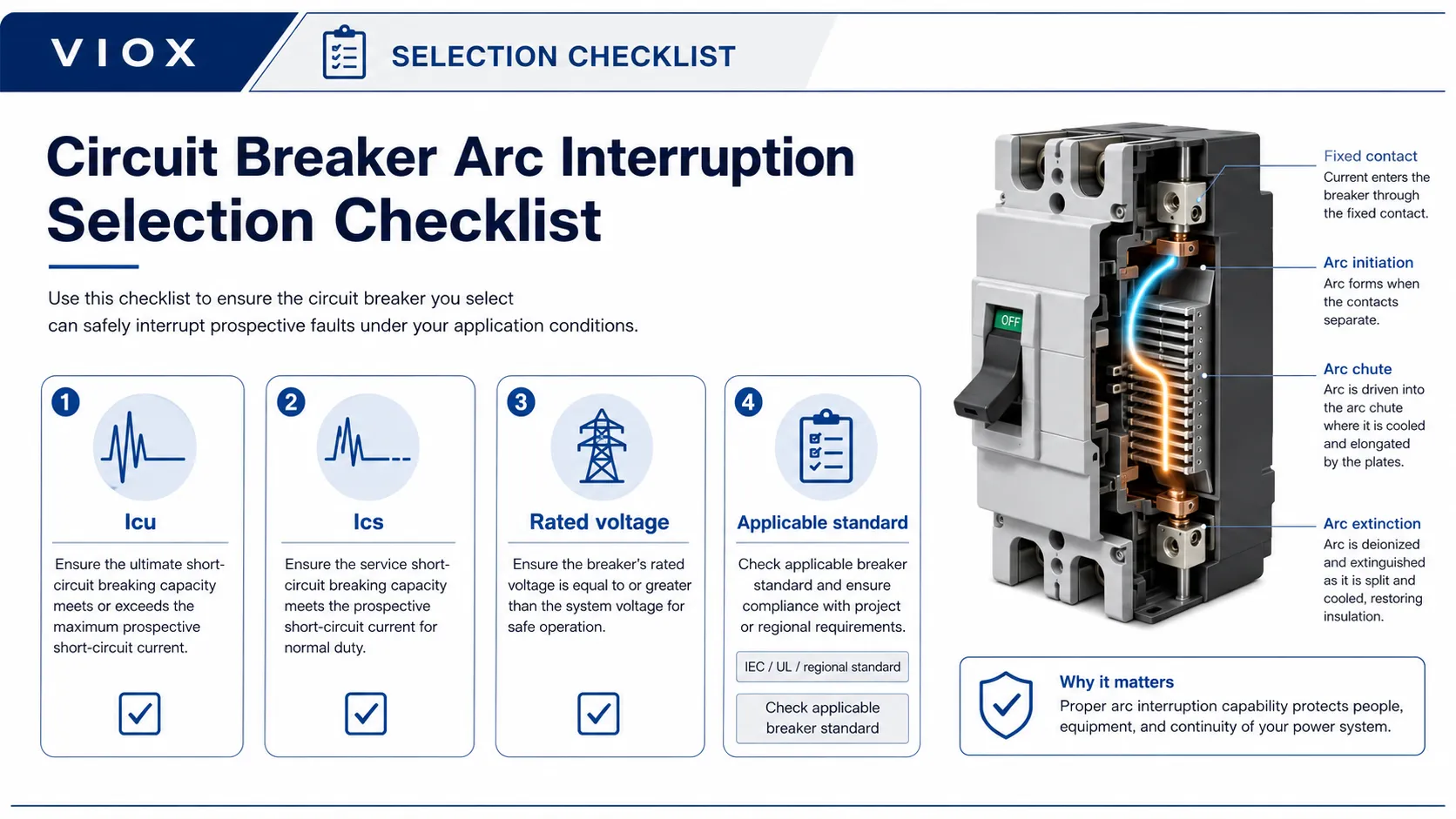
Pemutusan arka tidak dinilai hanya melalui reka bentuk visual. Pemutus litar diuji di bawah rangka kerja piawai yang menentukan bagaimana prestasi pemutusan disahkan.
Bagi pemutus litar industri voltan rendah, IEC 60947-2 merupakan konteks piawaian utama. Dalam pasaran pemutus litar cawangan dan kes teracu Amerika Utara, UL 489 merupakan rujukan utama. Piawaian yang terpakai bergantung pada jenis produk, pasaran, dan pemasangan.
Penarafan penting yang berkaitan dengan pemutusan arka termasuk:
| Penilaian | Maknanya | Mengapa Ia Berkaitan dengan Kawalan Arka |
|---|---|---|
| Icu | Keupayaan pemutusan litar pintas muktamad | Mengesahkan pemutus litar mampu memutuskan kerosakan teruk di bawah keadaan ujian yang ditetapkan |
| Ics | Keupayaan pemutusan litar pintas perkhidmatan | Menunjukkan prestasi selepas gangguan di bawah keadaan ujian berkaitan perkhidmatan |
| Icw | Arus tahan masa singkat | Penting untuk pemilihan dan kelakuan tahan lasak dalam sesetengah jenis pemutus litar |
| Voltan terkadar | Voltan di mana gangguan diuji | Voltan yang lebih tinggi biasanya menjadikan pemadaman arka lebih mencabar |
Penarafan ini harus dibaca daripada helaian data dan konteks piawaian. Pemutus litar dengan kebuk arka yang kelihatan kukuh masih memerlukan kapasiti pemutusan yang diuji dan sesuai untuk litar sebenar.
Bagi panduan pemilihan produk VIOX, persoalan praktikalnya bukanlah sama ada pemutus litar mempunyai kebuk arka yang boleh dilihat. Hampir setiap pemutus litar voltan rendah mempunyai sejenis struktur kawalan arka. Persoalan yang lebih berguna ialah sama ada sistem sesentuh, pelari arka, tindanan pemisah, penebat acuan, laluan bolong, dan struktur terminal disahkan bersama di bawah keadaan ujian kapasiti pemutusan yang diperlukan. Di sinilah Icu, Ics, voltan terkadar, dan piawaian yang berkenaan lebih penting daripada penampilan visual.
Arka dalam Pemutus Litar lwn Pemutus Litar Arka
Perkataan “arka” yang sama muncul dalam dua topik pemutus litar yang berbeza, tetapi maksudnya adalah berlainan.
| Istilah | Maknanya |
|---|---|
| Arka dalam pemutus litar | Arka dalaman yang terbentuk apabila sesentuh pemutus litar terbuka semasa gangguan litar |
| Arka kerosakan | Arka yang tidak diingini dalam pendawaian, kord, terminal, atau peralatan |
| Pemutus litar kerosakan arka / AFCI | Pemutus litar yang direka untuk mengesan tanda-tanda kerosakan arka yang berbahaya dalam sesuatu litar |
Arka pemutus litar biasa berlaku di dalam pemutus litar semasa pensuisan atau gangguan kerosakan. Kerosakan arka berlaku di luar sistem sesentuh yang sepatutnya dan mungkin menunjukkan pendawaian yang rosak, sambungan longgar, atau kegagalan penebat.
Tanda-tanda kemungkinan masalah arka pemutus litar
Arka pemutus litar di dalam peranti adalah normal semasa gangguan, tetapi gejala luaran yang tidak normal tidak boleh diabaikan.
Hubungi juruelektrik atau juruteknik bertauliah jika anda perasan:
- bau terbakar berhampiran panel;
- bunyi berdengung, berdesir, atau berdetap daripada pemutus litar;
- kerosakan haba atau perubahan warna;
- penebat cair berhampiran terminal;
- pemutus litar kerap terpelantik;
- kilatan cahaya yang kelihatan di luar pemutus litar;
- terminal yang longgar atau rosak.
Jangan buka atau periksa bahagian dalam pemutus litar yang sedang hidup. Pemutus litar adalah peranti keselamatan yang dimeterai atau dipasang, bukan kebuk arka yang boleh dibaiki di lapangan.
Hakisan Arka, Lubang Sentuhan (Pitting), dan Bila Arka Pemutus Litar Menjadi Masalah
Setiap peristiwa gangguan boleh memberi tekanan kepada sesentuh pemutus litar. Dalam perkhidmatan biasa, ini adalah perkara yang dijangkakan, tetapi kerosakan teruk yang berulang atau keadaan terminal yang lemah boleh mempercepatkan kehausan.
Tanda-tanda kemungkinan tekanan berlebihan yang berkaitan dengan arka termasuk:
- sesentuh yang berlubang atau terhakis dalam peralatan industri yang boleh diservis;
- perubahan warna di sekitar terminal atau liang udara;
- bau luar biasa selepas operasi;
- kerosakan pada bekas pemutus litar;
- pelantikan berulang di bawah keadaan beban yang serupa;
- peningkatan rintangan sentuhan dalam peralatan di mana pengukuran adalah sebahagian daripada amalan penyelenggaraan.
Bagi pemutus litar kecil yang dimeterai, pemeriksaan sentuhan dalaman biasanya tidak praktikal. Bagi suis yang lebih besar dan boleh diservis, pemeriksaan dan penyelenggaraan harus mengikut arahan pengeluar dan prosedur keselamatan tapak.
Salah faham Umum Mengenai Arka Pemutus Litar
Kesilapan 1: Beranggapan bahawa sebarang arka bermakna pemutus litar rosak
Arka dalaman semasa gangguan adalah normal. Pemutus litar direka untuk mengawalnya.
Kesilapan 2: Beranggapan bahawa pelindap arc (arc chute) menghalang semua kerosakan pemutus litar
Pelindap arc mengurangkan dan mengawal tenaga arc, namun gangguan kerosakan tinggi yang berulang masih boleh memberi tekanan kepada sesentuh dan komponen dalaman.
Kesilapan 3: Mengelirukan arc pemutus litar dengan perlindungan kerosakan arc (arc fault)
Kawalan arc dalaman pemutus litar dan pengesanan kerosakan arc AFCI adalah topik yang berbeza.
Kesilapan 4: Menggunakan andaian arc AC untuk pemutus litar DC
Arc DC lebih sukar dipadamkan kerana tiada lintasan sifar semula jadi. Gunakan pemutus litar berkadar DC untuk litar DC.
Kesilapan 5: Mengabaikan keadaan terminal
Terminal yang longgar boleh menyebabkan pemanasan luaran dan arc. Ini berbeza daripada arc dalaman biasa yang terbentuk semasa gangguan pemutus litar.
Soalan Lazim
Bolehkah kebuk arka AC memadamkan arka DC?
Tidak secara automatik. Gangguan AC mendapat manfaat daripada lintasan sifar arus semula jadi, manakala gangguan DC perlu memaksa arka untuk memanjang, menyejuk, dan padam tanpa bantuan tersebut. Pemutus litar yang digunakan pada litar DC harus dinilai secara khusus untuk voltan DC, arus, keadaan kekutuban, dan aplikasi tersebut.
Apakah perbezaan antara sesentuh arka dan sesentuh utama?
Sesentuh utama dioptimumkan untuk membawa arus dengan rintangan rendah semasa operasi biasa. Sesentuh arka direka untuk menanggung tekanan elektrik semasa pembukaan dan penutupan, supaya sesentuh utama tidak terdedah kepada hakisan arka yang teruk.
Berapa kerap sesentuh arka perlu diperiksa dalam pemutus litar industri?
Ikuti arahan penyelenggaraan pengeluar pemutus litar dan prosedur keselamatan elektrik tapak. Kekerapan pemeriksaan bergantung pada jenis pemutus litar, sejarah kerosakan, tugas pensuisan, persekitaran, dan sama ada peranti tersebut boleh diservis. MCB yang dimeterai dan banyak MCCB biasanya diganti dan bukannya dibuka untuk pemeriksaan sesentuh.
Mengapa pemutus litar berbau hangus selepas terpelantik?
Bau ringan selepas gangguan yang teruk boleh berpunca daripada gas panas dan hasil sampingan arka di dalam pemutus litar. Bau hangus yang berterusan, perubahan warna, penebat cair, pemanasan terminal, atau pelantikan berulang adalah tidak normal dan harus diperiksa sebelum litar dihidupkan semula.
Adakah penarafan Icu yang lebih tinggi bermakna kebuk arka (arc chute) yang lebih baik?
Tidak semestinya. Icu ialah kapasiti pemutusan litar pintas muktamad yang diuji di bawah keadaan yang ditetapkan. Reka bentuk kebuk arka adalah penting, tetapi begitu juga kelajuan sesentuh, geometri pelari, penebat acuan, reka bentuk terminal, voltan terkadar, dan urutan ujian yang lengkap. Ics juga penting kerana ia menunjukkan prestasi litar pintas perkhidmatan di bawah piawaian yang berkenaan.
Bolehkah arka pemutus litar dibaiki?
Bagi MCB yang dimeterai dan kebanyakan MCCB, kerosakan arka dalaman tidak boleh dibaiki di lapangan. Gantikan peranti jika pemeriksaan atau panduan pengilang menunjukkan kerosakan. Pemutus litar yang lebih besar dan boleh diservis mungkin mempunyai prosedur penyelenggaraan yang diluluskan oleh pengilang, tetapi pembaikan hanya boleh dilakukan oleh kakitangan yang berkelayakan menggunakan alat ganti dan kaedah ujian yang diluluskan.
Sumber VIOX Berkaitan
Kesimpulan
Arka dalam pemutus litar adalah peristiwa elektrik yang normal tetapi kuat yang terhasil apabila sesentuh terbuka di bawah arus. Pemutus litar mesti menggerakkan arka tersebut ke dalam sistem kawalan arka, memecahkannya, menyejukkannya, meningkatkan voltan arka, dan memadamkannya.
Bahagian paling penting untuk difahami ialah peluncur arka, saluran arka, plat pemisah arka, dan kebuk pemadam arka. Komponen inilah yang membolehkan pemutus litar memutuskan arus dengan selamat dan bukannya bertindak seperti suis biasa.