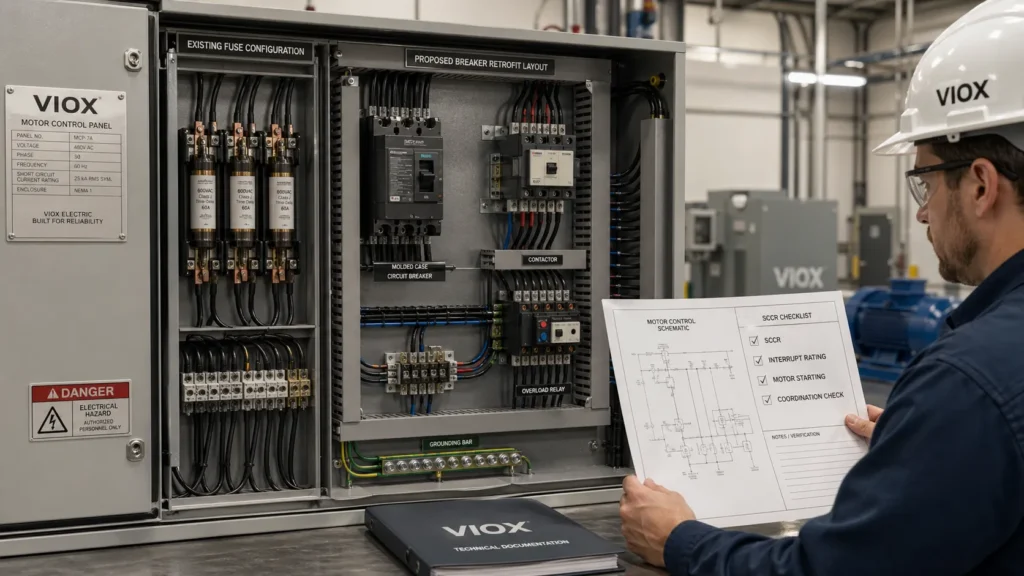
នៅពេលដែលបន្ទះបញ្ជាម៉ូទ័រជួបប្រទះការឈប់ដំណើរការម្តងហើយម្តងទៀតដោយសារតែហ្វុយស៊ីបខូច ក្រុមថែទាំតែងតែសួរថា៖ “តើយើងអាចជំនួសហ្វុយស៊ីបទាំងនេះដោយឧបករណ៍បំលែងសៀគ្វីបានទេ?” ចម្លើយគឺមានភាពខុសប្លែកគ្នា—ការកែប្រែពីហ្វុយស៊ីបទៅឧបករណ៍បំលែងសៀគ្វីអាចធ្វើឱ្យប្រសើរឡើងនូវប្រសិទ្ធភាពប្រតិបត្តិការយ៉ាងខ្លាំង ប៉ុន្តែលុះត្រាតែអនុវត្តជាមួយនឹងការវិភាគផ្នែកវិស្វកម្មត្រឹមត្រូវ។.
មគ្គុទ្ទេសក៍ដ៏ទូលំទូលាយនេះដើរតាមតម្រូវការបច្ចេកទេស ការពិចារណាអំពីសុវត្ថិភាព និងលក្ខណៈវិនិច្ឆ័យនៃការជ្រើសរើសសម្រាប់ការកែប្រែដោយជោគជ័យនូវបន្ទះបញ្ជាម៉ូទ័រពីការការពារដោយផ្អែកលើហ្វុយស៊ីបទៅជាការការពារដោយផ្អែកលើឧបករណ៍បំលែងសៀគ្វី។ មិនថាអ្នកជាវិស្វករអគ្គិសនីដែលកំពុងវាយតម្លៃគម្រោងកែប្រែ ឬជាអ្នកគ្រប់គ្រងផ្នែកថែទាំដែលកំពុងស្វែងរកការកាត់បន្ថយការឈប់ដំណើរការនោះទេ អត្ថបទនេះផ្តល់នូវក្របខ័ណ្ឌដែលអ្នកត្រូវការដើម្បីធ្វើការសម្រេចចិត្តប្រកបដោយព័ត៌មាន។.
តើការកែប្រែពីហ្វុយស៊ីបទៅឧបករណ៍បំលែងសៀគ្វីគឺជាអ្វី?
ការកែប្រែពីហ្វុយស៊ីបទៅឧបករណ៍បំលែងសៀគ្វីពាក់ព័ន្ធនឹងការជំនួសប្រអប់ដាក់ហ្វុយស៊ីបបែបបុរាណ និងហ្វុយស៊ីបនៅក្នុងបន្ទះបញ្ជាម៉ូទ័រជាមួយនឹងឧបករណ៍បំលែងសៀគ្វី—ជាធម្មតាឧបករណ៍បំលែងសៀគ្វីប្រភេទប្រអប់ (MCCBs) ឬឧបករណ៍បំលែងសៀគ្វីការពារម៉ូទ័រ។ គោលដៅជាធម្មតាគឺដើម្បីកែលម្អភាពងាយស្រួលនៃការកំណត់ឡើងវិញ បង្កើនភាពមើលឃើញនៃការដោះស្រាយបញ្ហា និងកាត់បន្ថយសារពើភ័ណ្ឌគ្រឿងបន្លាស់ ខណៈពេលដែលរក្សា ឬកែលម្អដំណើរការការពារនៃសៀគ្វីសាខាម៉ូទ័រ។.
ទោះយ៉ាងណាក៏ដោយ នេះគឺ មិន ការផ្លាស់ប្តូរអត្រាអំពែរមួយទល់មួយដ៏សាមញ្ញ។ លក្ខណៈការពារ, អាកប្បកិរិយារំខានកំហុស និងតម្រូវការសម្របសម្រួលខុសគ្នាគួរឱ្យកត់សម្គាល់រវាងហ្វុយស៊ីប និងឧបករណ៍បំលែងសៀគ្វី ដែលធ្វើឱ្យការវិភាគវិស្វកម្មត្រឹមត្រូវមានសារៈសំខាន់សម្រាប់ការកែប្រែសុវត្ថិភាព និងអនុលោមតាមកូដ។.
ហេតុអ្វីបានជាបន្ទះបញ្ជាម៉ូទ័រប្រើហ្វុយស៊ីប ឬឧបករណ៍បំលែងសៀគ្វី
មុននឹងចូលទៅក្នុងការពិចារណាលើការកែប្រែ វាជាការសំខាន់ក្នុងការយល់ដឹងអំពីស្ថាបត្យកម្មការពារនៅក្នុងបន្ទះបញ្ជាម៉ូទ័រ។.
យុទ្ធសាស្ត្រការពារពីរស្រទាប់
សៀគ្វីម៉ូទ័រជាធម្មតាប្រើវិធីសាស្រ្តការពារពីរស្រទាប់៖
ស្រទាប់ទី 1: ការការពារសៀគ្វីខ្លី និងកំហុសដី
- ផ្តល់ដោយហ្វុយស៊ីប ឬឧបករណ៍បំលែងសៀគ្វីនៅផ្នែកខាងលើ
- សម្អាតកំហុសកម្រិតខ្ពស់យ៉ាងឆាប់រហ័ស
- Protects branch circuit conductors, control equipment, and motor starters
- Must have adequate interrupting rating for available fault current
Layer 2: Overload Protection
- Provided by thermal overload relays or electronic motor protection devices
- Responds to sustained overcurrent conditions
- Protects the motor from overheating during locked-rotor, phase loss, or overload conditions
- Typically adjustable to match motor full-load current
This distinction is critical: the upstream fuse or breaker is primarily for short-circuit protection, not motor overload protection. That’s why a fuse-to-breaker retrofit must be evaluated as part of the complete motor branch circuit protection scheme, not as an isolated device swap.
For a deeper understanding of how these protective devices differ in motor applications, see MCB vs Fuse: Why Your Motor Circuits Keep Failing.
Key Differences: Fuses vs Circuit Breakers in Motor Panels
Understanding the fundamental differences between fuses and circuit breakers helps explain why retrofits require careful analysis:
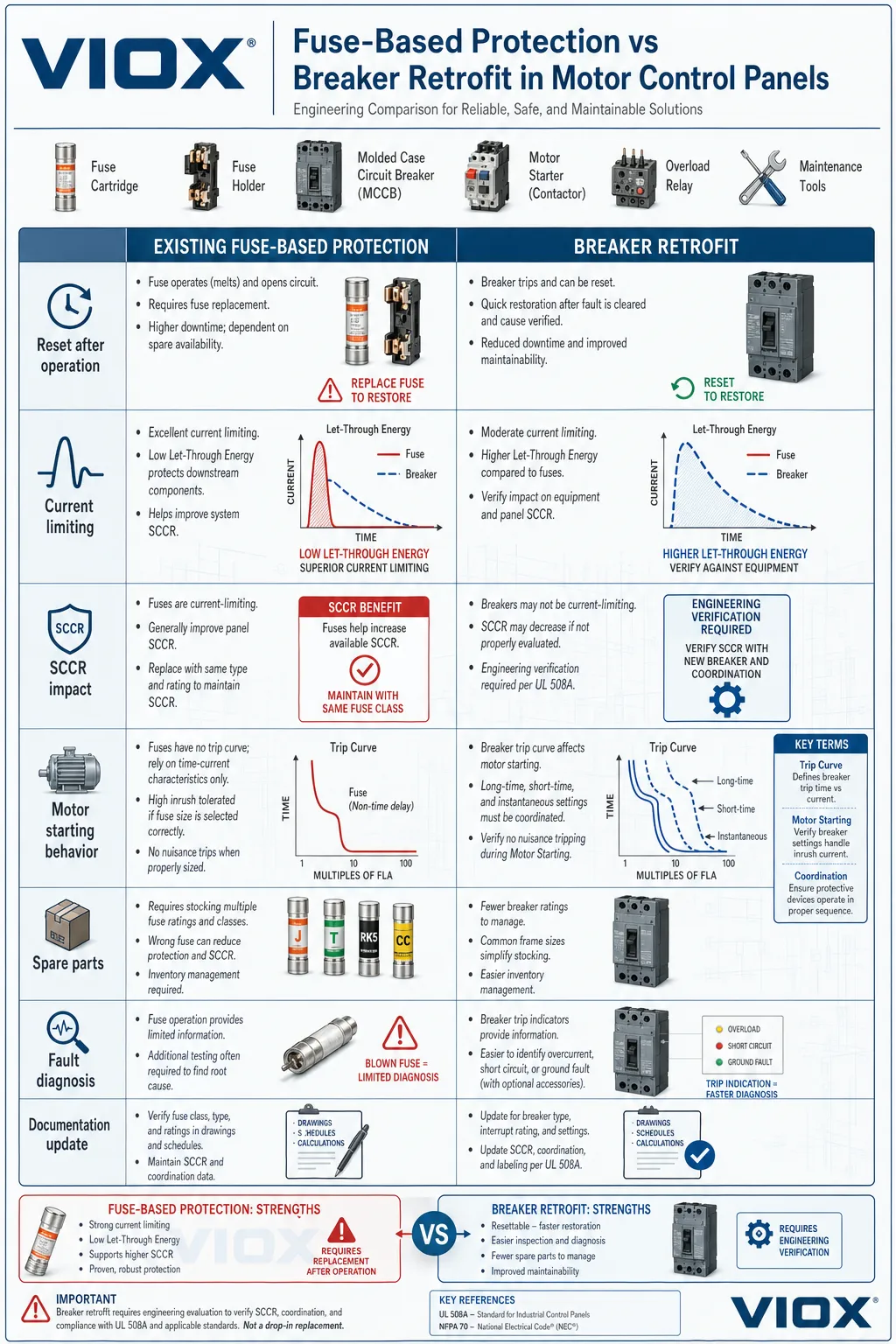
| លក្ខណៈ | ហ្វុយស៊ីប | ឧបករណ៍បំបែកសៀគ្វី |
|---|---|---|
| Reset method | ត្រូវតែជំនួសដោយរូបវ័ន្តបន្ទាប់ពីប្រតិបត្តិការ | អាចកំណត់ឡើងវិញបានបន្ទាប់ពីការដោះស្រាយបញ្ហា (ប្រសិនបើមិនខូច) |
| សញ្ញាសម្គាល់ការដាច់ចរន្ត | ហ្វុយស៊ីបដែលខូចអាចមើលឃើញ ប៉ុន្តែត្រូវការត្រួតពិនិត្យ | ទីតាំងដៃទាញបង្ហាញយ៉ាងច្បាស់ពីប្រតិបត្តិការ |
| ដែនកំណត់បច្ចុប្បន្ន | ហ្វុយស៊ីប Class RK1, RK5, J, និង CC ផ្តល់នូវការកំណត់ចរន្តដ៏ល្អ | សមត្ថភាពកំណត់ចរន្តប្រែប្រួលទៅតាមការរចនា និងម៉ូដែលឧបករណ៍ breaker |
| អនុញ្ញាតឱ្យឆ្លងកាត់ថាមពល | តម្លៃ I²t ទាបកាត់បន្ថយភាពតានតឹងលើឧបករណ៍នៅផ្នែកខាងក្រោម | ថាមពលឆ្លងកាត់ខ្ពស់ជាង លើកលែងតែត្រូវបានរចនាឡើងជាពិសេសដើម្បីកំណត់ចរន្ត |
| ការសម្របសម្រួល | ខ្សែកោងពេលវេលា-ចរន្តដែលអាចព្យាករណ៍បាន ល្អសម្រាប់ការសម្របសម្រួលជ្រើសរើស | ការសម្របសម្រួលស្មុគស្មាញជាង តម្រូវឱ្យមានការវិភាគខ្សែកោងដោយប្រុងប្រយ័ត្ន |
| ថែទាំ | តម្រូវឱ្យមានសារពើភ័ណ្ឌហ្វុយស៊ីបជំនួសត្រឹមត្រូវ | សក្តានុពលសម្រាប់ការរំលោភបំពានការកំណត់ឡើងវិញ ប្រសិនបើកំហុសមិនត្រូវបានស៊ើបអង្កេត |
| ភាពអត់ធ្មត់នៃការចាប់ផ្តើមម៉ូទ័រ | ហ្វុយស៊ីបពន្យាពេលដែលត្រូវបានរចនាឡើងជាពិសេសសម្រាប់ការបញ្ចូលចរន្តម៉ូទ័រ | តម្រូវឱ្យមានការកំណត់ដំណើរកំសាន្តបន្ទាន់ត្រឹមត្រូវ ឬការកែតម្រូវដំណើរកំសាន្តម៉ាញ៉េទិក |
| Diagnostic capability | Limited to visual inspection | Can include auxiliary contacts, trip indication, and remote monitoring |
| Space requirements | Typically compact fuse holders | Breakers often require more panel space and wire bending room |
For a foundational comparison of these protective devices, refer to Fuse vs Circuit Breaker: What’s the Difference?
ហេតុអ្វីបានជា заклади ពិចារណាលើការបំពាក់ឧបករណ៍បំលែងពីហ្វុយស៊ីបទៅឧបករណ៍កាត់សៀគ្វី?
1. កាត់បន្ថយពេលវេលារងចាំបន្ទាប់ពីការដោះស្រាយបញ្ហា
អត្ថប្រយោជន៍ប្រតិបត្តិការដ៏គួរឱ្យទាក់ទាញបំផុតគឺការលុបបំបាត់ពេលវេលានៃការជំនួសហ្វុយស៊ីប។ នៅពេលដែលកំហុសបណ្តោះអាសន្នធ្វើឱ្យឧបករណ៍កាត់សៀគ្វីដំណើរការ បុគ្គលិកថែទាំអាចត្រួតពិនិត្យសៀគ្វី ផ្ទៀងផ្ទាត់ថាកំហុសត្រូវបានដោះស្រាយ ហើយស្តារថាមពលឡើងវិញដោយគ្រាន់តែកំណត់ឡើងវិញយ៉ាងសាមញ្ញ ដែលជាញឹកញាប់ក្នុងរយៈពេលប៉ុន្មាននាទី ជាជាងម៉ោងដែលត្រូវការដើម្បីកំណត់ទីតាំង ស្វែងរក និងដំឡើងហ្វុយស៊ីបជំនួស។.
នៅក្នុងឧស្សាហកម្មដំណើរការជាបន្តបន្ទាប់ ដូចជា រោងចក្រគីមី មជ្ឈមណ្ឌលព្យាបាលទឹក កែច្នៃអាហារ ការសន្សំសំចៃពេលវេលានេះអាចការពារការខាតបង់ផលិតកម្មដែលមានតម្លៃថ្លៃ។.
2. សមត្ថភាពធ្វើរោគវិនិច្ឆ័យកាន់តែប្រសើរឡើង
ឧបករណ៍កាត់សៀគ្វីស្រោមកេសទំនើបផ្តល់នូវលក្ខណៈពិសេសដែលប្រដាប់ដាក់ហ្វុយស៊ីបបែបបុរាណមិនអាចផ្តល់បាន៖
- បញ្ជាក់ការធ្វើដំណើរច្បាស់លាស់៖ ទីតាំងចំណុចទាញឧបករណ៍កាត់សៀគ្វីបង្ហាញភ្លាមៗនូវឧបករណ៍ណាដែលបានដំណើរការ
- ទំនាក់ទំនងជំនួយ៖ បើកដំណើរការសញ្ញាបញ្ជូនពីចម្ងាយ និងការរួមបញ្ចូលជាមួយ SCADA ឬប្រព័ន្ធគ្រប់គ្រងអគារ
- ឯកតាធ្វើដំណើរអេឡិចត្រូនិច: Provide ground-fault protection, adjustable time-current curves, and fault logging
- Shunt trip capability: Allows remote or emergency shutdown integration
These features improve troubleshooting efficiency and support predictive maintenance strategies.
3. Simplified Spare Parts Management
Fuse-based motor control panels often require multiple fuse classes (Class RK5, Class J, Class CC), various ampere ratings, and different voltage ratings. A well-planned breaker retrofit can consolidate this inventory into a smaller number of breaker frame sizes and trip units, reducing carrying costs and minimizing the risk of incorrect fuse installation.
4. Improved Safety and Lockout-Tagout Compliance
Circuit breakers with integrated disconnect functions and lockable handles can simplify lockout-tagout procedures. Many breakers accept standard lockout devices more readily than fuse holders, improving compliance with OSHA 1910.147 and NFPA 70E requirements.
សម្រាប់កម្មវិធីដែលត្រូវការឧបករណ៍បំលែងសៀគ្វីប្រភេទ (molded case circuit breakers), សូមស្វែងយល់ពី ផលិតផល VIOX MCCB សម្រាប់ជម្រើសកម្រិតឧស្សាហកម្ម។.
ហានិភ័យសំខាន់ៗក្នុងការកែប្រែពីហ្វុយស៊ីបទៅឧបករណ៍បំលែងសៀគ្វី
ខណៈពេលដែលអត្ថប្រយោជន៍ប្រតិបត្តិការមានភាពទាក់ទាញ ហានិភ័យបច្ចេកទេសមួយចំនួនអាចប្រែក្លាយការកែប្រែដែលមានចេតនាល្អទៅជាគ្រោះថ្នាក់សុវត្ថិភាព ឬការរំលោភលើកូដ។.
ហានិភ័យទី 1: ការកាត់បន្ថយអត្រាកំណត់ចរន្តសៀគ្វីខ្លីរបស់បន្ទះ (SCCR)
នេះគឺជាហានិភ័យបច្ចេកទេសដ៏សំខាន់បំផុតនៅក្នុងការកែប្រែពីហ្វុយស៊ីបទៅឧបករណ៍បំលែងសៀគ្វី។.
បន្ទះគ្រប់គ្រងម៉ូទ័រជាច្រើនសម្រេចបាននូវអត្រាកំណត់ចរន្តសៀគ្វីខ្លី (SCCR) ដែលបានដាក់ស្លាករបស់ពួកគេ តាមរយៈសកម្មភាពកំណត់ចរន្តនៃហ្វុយស៊ីប Class J, Class RK1 ឬ Class CC ។ ហ្វុយស៊ីបទាំងនេះកាត់បន្ថយយ៉ាងខ្លាំងនូវចរន្តឆ្លងកាត់កំពូល និងថាមពល I²t កំឡុងពេលមានកំហុសកម្រិតខ្ពស់ ដែលអនុញ្ញាតឱ្យសមាសធាតុនៅខាងក្រោម - ឧបករណ៍ទំនាក់ទំនង, រីឡេផ្ទុកលើសទម្ងន់, ប្លុកស្ថានីយ, បារស្ពាន់ - រស់រានមានជីវិតពីលក្ខខណ្ឌកំហុសដែលពួកគេមិនអាចទ្រាំទ្របាន។.
When you replace current-limiting fuses with a circuit breaker that has higher let-through energy, the panel’s SCCR may drop below the available fault current at the installation site. This creates a dangerous condition where the panel is no longer adequately rated for its location.
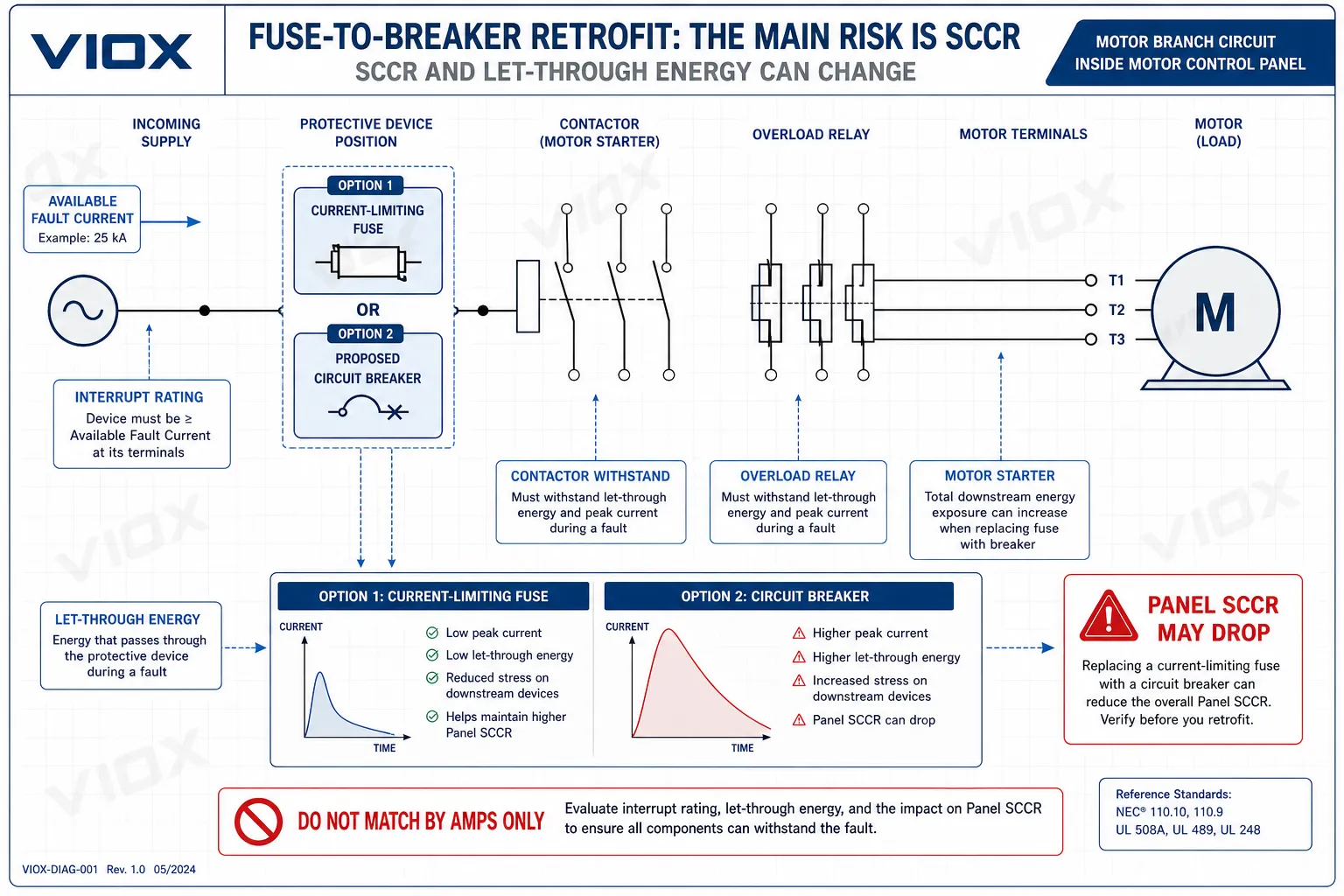
Engineering requirement: Before any retrofit, you must:
- Determine the available fault current at the panel line terminals
- Verify the interrupting rating of the proposed breaker
- Recalculate the panel SCCR using the breaker’s let-through characteristics
- Confirm the recalculated SCCR exceeds the available fault current
- កែប្រែស្លាកបន្ទះដើម្បីឆ្លុះបញ្ចាំងពី SCCR ថ្មី
សម្រាប់ការពន្យល់លម្អិតអំពីកម្រិតរំខានរបស់ឧបករណ៍បំលែងសៀគ្វី សូមមើល ការវាយតម្លៃឧបករណ៍បំលែងសៀគ្វី៖ Icu, Ics, Icw និង Icm.
ហានិភ័យទី 2: ការដាច់ចរន្តដោយរំខានអំឡុងពេលចាប់ផ្តើមម៉ូទ័រ
ចរន្តចាប់ផ្តើមម៉ូទ័រជាធម្មតាមានចាប់ពី 6 ទៅ 8 ដងនៃចរន្តផ្ទុកពេញលេញសម្រាប់ការចាប់ផ្តើមឆ្លងកាត់បន្ទាត់ ហើយអាចបន្តក្នុងរយៈពេលជាច្រើនវិនាទី អាស្រ័យលើទំហំម៉ូទ័រ និងនិចលភាពផ្ទុក។ ហ្វុយស៊ីបពន្យាពេលត្រូវបានរចនាឡើងជាពិសេសជាមួយនឹងលក្ខណៈរលាយដែលអត់ធ្មត់នឹងការហូរចូលនេះ។.
ឧបករណ៍បំលែងសៀគ្វីប្រើប្រាស់យន្តការធ្វើដំណើរផ្សេងៗគ្នា៖
- ឧបករណ៍បំលែងកម្ដៅ-ម៉ាញ៉េទិច៖ ធាតុធ្វើដំណើរម៉ាញ៉េទិចត្រូវតែកំណត់ឱ្យខ្ពស់ល្មមដើម្បីជៀសវាងការដាច់ចរន្តដោយរំខាន
- ឧបករណ៍បំលែងសៀគ្វីធ្វើដំណើរអេឡិចត្រូនិច៖ ការកំណត់រើសភ្លាមៗត្រូវតែសម្របទៅនឹងចរន្តចាប់ផ្តើម
If the breaker’s instantaneous trip setting is too sensitive, the motor will trip every time it starts—making the retrofit operationally unacceptable despite being electrically “correct” on paper.
Engineering requirement: Compare the motor’s locked-rotor current and acceleration time against the breaker’s time-current curve, particularly the instantaneous trip region. For motors with high inertia loads or frequent starts, this analysis is critical.
For guidance on matching protective devices to motor characteristics, refer to របៀបជ្រើសរើស Contactors និង Circuit Breakers ដោយផ្អែកលើថាមពលម៉ូទ័រ.
Risk 3: Loss of Selective Coordination
Selective coordination means that only the protective device immediately upstream of a fault operates, leaving all other circuits energized. This is especially important in motor control centers serving multiple critical loads.
Fuses have predictable, non-overlapping time-current characteristics that make selective coordination relatively straightforward. Circuit breakers—particularly those with adjustable trip settings—can have overlapping trip curves that cause upstream devices to operate unnecessarily.
The practical consequence: a fault in one motor branch trips the main feeder breaker, shutting down an entire section of the plant instead of just the faulted circuit.
Engineering requirement: Perform a coordination study using actual time-current curves for the proposed breaker, upstream protective devices, and downstream motor protection. Don’t rely on ampere ratings alone.
សម្រាប់គោលការណ៍នៃការសម្របសម្រួល សូមមើល តើអ្វីជាការជ្រើសរើសឧបករណ៍បំលែងសៀគ្វី?
ហានិភ័យទី 4: កង្វះការការពារសម្រាប់សមាសធាតុនៅផ្នែកខាងក្រោម
ហ្វុយស៊ីបកម្រិតចរន្តកាត់បន្ថយចរន្តកំពូល និងថាមពលកម្ដៅដែលសមាសធាតុនៅផ្នែកខាងក្រោមជួបប្រទះអំឡុងពេលមានកំហុស។ ឧបករណ៍ទំនាក់ទំនង, រីឡេលើសទម្ងន់ និងឧបករណ៍បំលែងបញ្ជា នៅក្នុងឧបករណ៍ចាប់ផ្ដើមម៉ូទ័រ ជារឿយៗត្រូវបានវាយតម្លៃដោយផ្អែកលើការសន្មតថាហ្វុយស៊ីបកម្រិតចរន្តស្ថិតនៅផ្នែកខាងលើ។.
នៅពេលអ្នកជំនួសហ្វុយស៊ីបនោះដោយឧបករណ៍បំលែងសៀគ្វីដែលមានថាមពលបញ្ជូនខ្ពស់ សមាសធាតុនៅផ្នែកខាងក្រោមអាចនឹងត្រូវប៉ះពាល់នឹងចរន្តកំហុសលើសពីកម្រិតធន់នឹងសៀគ្វីខ្លីរបស់វា ទោះបីជាឧបករណ៍បំលែងសៀគ្វីខ្លួនឯងមានសមត្ថភាពរំខានគ្រប់គ្រាន់ក៏ដោយ។.
Engineering requirement: ផ្ទៀងផ្ទាត់ថាសមាសធាតុនៅផ្នែកខាងក្រោមទាំងអស់ ជាពិសេសឧបករណ៍ទំនាក់ទំនងចាប់ផ្ដើមម៉ូទ័រ និងរីឡេលើសទម្ងន់ មានកម្រិតធន់នឹងសៀគ្វីខ្លីគ្រប់គ្រាន់សម្រាប់ថាមពលបញ្ជូននៃឧបករណ៍បំលែងសៀគ្វីដែលបានស្នើ។ នេះអាចតម្រូវឱ្យមានការពិគ្រោះយោបល់ជាមួយការវាយតម្លៃរួមបញ្ចូលគ្នារបស់ក្រុមហ៊ុនផលិត ឬការដំឡើងឧបករណ៍ចាប់ផ្ដើមដែលបានសាកល្បង។.
ហានិភ័យទី 5: ផលប៉ះពាល់នៃការចុះបញ្ជីបន្ទះ និងការដាក់ស្លាកវាល
នៅអាមេរិកខាងជើង បន្ទះគ្រប់គ្រងម៉ូទ័រភាគច្រើនត្រូវបានសាងសង់ និងចុះបញ្ជីក្រោម UL 508A (បន្ទះគ្រប់គ្រងឧស្សាហកម្ម)។ SCCR របស់បន្ទះ ប្រភេទឧបករណ៍ការពារ និងព័ត៌មានលម្អិតនៃការសាងសង់ គឺជាផ្នែកមួយនៃឯកសារចុះបញ្ជី។.
Changing from fuses to breakers can affect:
- The panel’s SCCR (as discussed above)
- The basis of the original listing or field evaluation
- Required panel labeling per NEC 409.110
- Compliance with the authority having jurisdiction (AHJ)
Engineering requirement: Determine whether the retrofit requires updated panel documentation, revised SCCR labeling, or field evaluation. In some jurisdictions, significant modifications to listed panels require AHJ review and approval.
Risk 6: Physical Installation Challenges
Even when a breaker is electrically suitable, physical installation can present obstacles:
- ឧបសគ្គអវកាស: Breakers are often wider and deeper than fuse holders
- Wire bending space: NEC 312.6 and UL 508A require adequate wire bending space; breaker terminals may require more room
- ការរំសាយកំដៅ: Breakers generate more heat than fuses; adequate ventilation is essential
- ការចាក់សោទ្វារ: If the panel uses door-mounted fuse holders with interlock mechanisms, breaker mounting may require mechanical modifications
- Lockout provisions: Breaker lockout devices may not fit in the available space
Engineering requirement: Verify physical fit, wire bending space compliance, thermal management, and mechanical interlock functionality before ordering equipment.
បញ្ជីត្រួតពិនិត្យផ្នែកវិស្វកម្មមុនពេលកែប្រែ
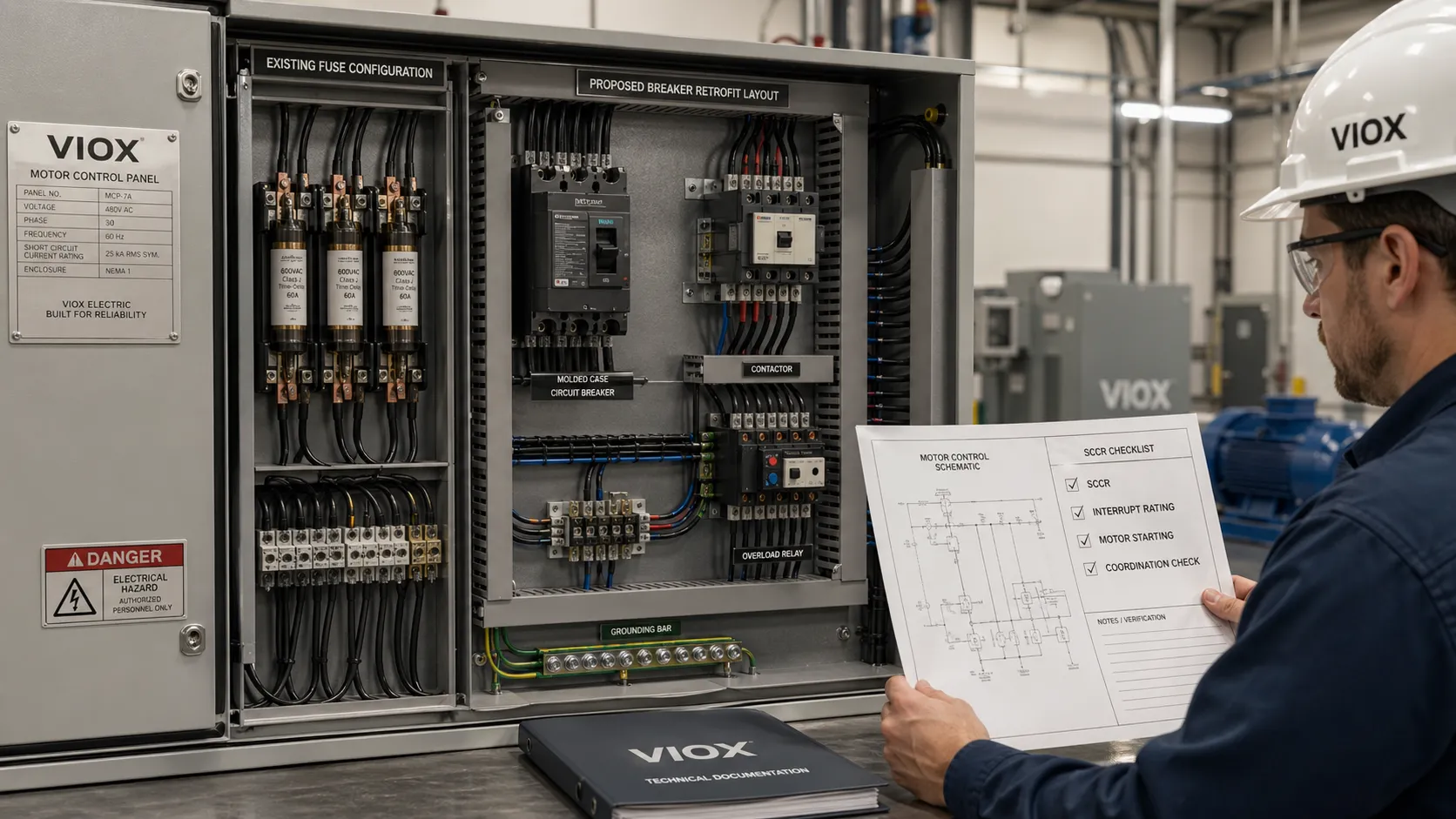
ប្រើបញ្ជីត្រួតពិនិត្យជាប្រព័ន្ធនេះ មុនពេលអនុម័តគម្រោងកែប្រែពីហ្វុយស៊ីបទៅឧបករណ៍បំលែងសៀគ្វីណាមួយ:
ការវិភាគអគ្គិសនី
- [ ] កំណត់ចរន្តកំហុសដែលអាចប្រើបាន នៅស្ថានីយបន្ទាត់បន្ទះ (ពីឧបករណ៍ប្រើប្រាស់ ឬការសិក្សាសម្របសម្រួលកន្លែង)
- [ ] លក្ខណៈបច្ចេកទេសហ្វុយស៊ីបដែលមានស្រាប់ត្រូវបានកត់ត្រា: ប្រភេទ, កម្រិតអំពែរ, កម្រិតវ៉ុល, កម្រិតរំខាន, លក្ខណៈនៃការពន្យាពេល
- [ ] Proposed breaker specifications confirmed: frame size, trip rating, interrupting rating (AIC or kA), trip curve type, standard (UL 489, IEC 60947-2)
- [ ] Panel SCCR recalculated using proposed breaker let-through characteristics
- [ ] Recalculated SCCR exceeds available fault current with appropriate safety margin
- [ ] Motor starting current analyzed against breaker instantaneous trip setting for each motor branch
- [ ] Coordination study completed showing selective operation with upstream and downstream devices
- [ ] Downstream component ratings verified: contactor, overload relay, terminals, conductors, control transformer
- [ ] Ground-fault protection requirements evaluated per NEC 430.51 and 430.52
Mechanical and Installation Review
- [ ] Physical dimensions verifiedឧបករណ៍កាត់ចរន្តសមនឹងទំហំបន្ទះដែលមាន
- [ ] ទីកន្លែងពត់ខ្សែបានត្រួតពិនិត្យ យោងតាម NEC 312.6 និងស្តង់ដារការសាងសង់បន្ទះ
- [ ] ការកំណត់រចនាសម្ព័ន្ធស្ថានីយត្រូវបានបញ្ជាក់ប្រភេទដោត, ជួរខ្សែ, លក្ខណៈបច្ចេកទេសកម្លាំងរមួល
- [ ] វិធីសាស្រ្តម៉ោនបានផ្ទៀងផ្ទាត់ផ្លូវដែក DIN, ការម៉ោនបន្ទះ, ឬផ្សេងទៀត
- [ ] ភាពឆបគ្នានៃការចាក់សោទ្វារ confirmed if applicable
- [ ] Lockout-tagout provisions verified for maintenance safety
- [ ] Thermal management assessed: adequate ventilation and spacing per manufacturer requirements
- [ ] Enclosure rating maintained: NEMA 1, 3R, 4, 4X, or 12 as required
Code Compliance and Documentation
- [ ] តម្រូវការមាត្រា 430 នៃ NEC ពិនិត្យឡើងវិញសម្រាប់ការការពារសៀគ្វីរ nhánh động cơ
- [ ] ផលប៉ះពាល់នៃ UL 508A វាយតម្លៃសម្រាប់ការចុះបញ្ជីបន្ទះត្រួតពិនិត្យឧស្សាហកម្ម
- [ ] តម្រូវការស្លាកសញ្ញាបន្ទះ បានកំណត់អត្តសញ្ញាណ: សញ្ញាសម្គាល់ SCCR, ការវាយតម្លៃឧបករណ៍, ប្រភេទការពារសៀគ្វីខ្លី
- [ ] ឯកសារបន្ទះដើម ពិនិត្យឡើងវិញ: គំនូរ, បញ្ជីសារពើភ័ណ្ឌ, របាយការណ៍តេស្ត
- [ ] តម្រូវការវាយតម្លៃលើទីលាន កំណត់ថាតើបញ្ជីបន្ទះត្រូវបានប៉ះពាល់ដែរឬទេ
- [ ] អាជ្ញាធរមានយុត្តាធិការ (AHJ) ការជូនដំណឹង និងដំណើរការអនុម័តត្រូវបានបញ្ជាក់
- [ ] ផែនការឯកសារដូចដែលបានសាងសង់ បានបង្កើតឡើង៖ បច្ចុប្បន្នភាពគំនូរ ស្លាកសញ្ញា នីតិវិធីថែទាំ
ការពិចារណាអំពីប្រតិបត្តិការ និងការថែទាំ
- [ ] នីតិវិធីថែទាំត្រូវបានធ្វើបច្ចុប្បន្នភាព សម្រាប់ប្រតិបត្តិការឧបករណ៍បំលែងចរន្ត ការធ្វើតេស្ត និងពិធីសារកំណត់ឡើងវិញ
- [ ] ផែនការបណ្តុះបណ្តាលត្រូវបានបង្កើតឡើង សម្រាប់បុគ្គលិកប្រតិបត្តិការ និងថែទាំ
- [ ] យុទ្ធសាស្ត្រគ្រឿងបន្លាស់ បានកែប្រែ៖ សារពើភ័ណ្ឌឧបករណ៍បំលែងចរន្ត ការជំនួសអង្គភាពធ្វើដំណើរ គ្រឿងបន្ថែម
- [ ] នីតិវិធីចាក់សោរ-ដាក់ស្លាក បានធ្វើបច្ចុប្បន្នភាពដើម្បីឆ្លុះបញ្ចាំងពីទីតាំងឧបករណ៍បំលែងចរន្តថ្មី និងប្រភេទចំណុចទាញ
- [ ] ការវិភាគផ្កាភ្លើងអគ្គិសនី reviewed and labels updated if necessary
- [ ] Preventive maintenance schedule established for breaker inspection and testing
Selecting the Right Circuit Breaker Type
Not all circuit breakers are suitable replacements for motor panel fuses. Understanding breaker types and standards is essential.
ឧបករណ៍បំលែងសៀគ្វីផ្សិត (MCCBs)
For most industrial motor control panel retrofits, MCCBs are the appropriate choice. They offer:
- Current ratings from 15 A to 2500 A
- Interrupting ratings up to 200 kA (depending on frame and manufacturer)
- Thermal-magnetic or electronic trip options
- Adjustable instantaneous trip settings (on many models)
- Auxiliary contact and accessory compatibility
MCCBs are governed by UL 489 in North America and IEC 60947-2 internationally. When selecting an MCCB for a motor panel retrofit, verify that it is listed as a branch-circuit protective device, not a supplementary protector.
Explore industrial-grade options at VIOX MCCB.
ឧបករណ៍បំបែកសៀគ្វីខ្នាតតូច (MCBs)
MCBs are common in control circuits and smaller motor applications, but they have limitations for motor panel retrofits:
- Lower current ratings (typically up to 125 A)
- Lower interrupting ratings (often 10 kA or less)
- Fixed trip curves (B, C, D, or K curves)
- Limited adjustability
MCBs may be suitable for small motor branches in control panels with low available fault current, but they should not be assumed appropriate without verification.
For smaller breaker applications, see VIOX MCB.
ឧបករណ៍បំបែកសៀគ្វីការពារម៉ូទ័រ (MPCBs)
Motor protection circuit breakers combine short-circuit protection, overload protection, and manual disconnect in a single device. They can simplify motor starter design but require careful evaluation:
- They may replace both the upstream fuse and the overload relay
- Proper sizing requires matching to specific motor full-load current and starting characteristics
- They must be evaluated as part of a tested combination starter assembly
- Not all motor protection breakers are suitable for all starter types
For more on motor protection strategies, refer to ឧបករណ៍បំបែកសៀគ្វីការពារម៉ូទ័រ: មគ្គុទ្ទេសក៍ចុងក្រោយ.
Combination Starters vs Non-Combination Starters
The retrofit may also affect whether the motor starter is classified as a combination starter (with disconnect and short-circuit protection) or non-combination starter (short-circuit protection provided separately).
Understanding this distinction is important for code compliance and proper application. See Combination Starter vs Non-Combination Starter សម្រាប់ការណែនាំលម្អិត។.
When a Fuse-to-Breaker Retrofit Makes Sense
A retrofit is typically justified when ទាំងអស់ លក្ខខណ្ឌដូចខាងក្រោមត្រូវបានបំពេញ៖
- អត្ថប្រយោជន៍ប្រតិបត្តិការគឺច្បាស់លាស់៖ ពេលវេលារងចាំដោយសារការជំនួសហ្វុយស៊ីបគឺជាបញ្ហាដែលបានកត់ត្រា ឬសមត្ថភាពធ្វើរោគវិនិច្ឆ័យកម្រិតខ្ពស់ផ្តល់នូវតម្លៃដែលអាចវាស់វែងបាន
- តម្រូវការអគ្គិសនីត្រូវបានបំពេញ៖ ចរន្តកំហុសដែលអាចប្រើបាន, SCCR, ភាពអត់ធ្មត់នៃការចាប់ផ្តើមម៉ូទ័រ និងការសម្របសម្រួលត្រូវបានផ្ទៀងផ្ទាត់
- ការដំឡើងរាងកាយគឺអាចធ្វើទៅបាន៖ ទីកន្លែងគ្រប់គ្រាន់ បន្ទប់ពត់ខ្សែ និងការគ្រប់គ្រងកម្ដៅត្រូវបានបញ្ជាក់
- ការអនុលោមតាមកូដត្រូវបានរក្សា: Panel listing, labeling, and AHJ requirements are addressed
- Cost-benefit analysis is favorable: Retrofit cost is justified by reduced downtime, improved safety, or simplified maintenance
This is the scenario where a breaker retrofit delivers real operational improvement without compromising safety or compliance.
When You Should Keep Fuses
In some situations, keeping the existing fuse-based protection is the better engineering decision:
- Current-limiting fuses are essential for panel SCCR: The panel cannot achieve adequate SCCR with available breakers
- សមាសភាគផ្នែកខាងក្រោមតម្រូវឱ្យមានការកំណត់ចរន្តឧបករណ៍ទំនាក់ទំនង, រីឡេលើសទម្ងន់ ឬសមាសភាគផ្សេងទៀតមិនត្រូវបានវាយតម្លៃសម្រាប់ថាមពលឆ្លងកាត់ឧបករណ៍បំលែងសៀគ្វីទេ។
- ចរន្តកំហុសដែលអាចប្រើបានខ្ពស់ការដំឡើងមានចរន្តកំហុសខ្ពស់ខ្លាំងដែលលើសពីការវាយតម្លៃនៃការរំខានឧបករណ៍បំលែងសៀគ្វីជាក់ស្តែង
- ឧបសគ្គអវកាសបន្ទះមិនអាចផ្ទុកឧបករណ៍បំលែងសៀគ្វីដោយសារទំហំខ្សែដែលត្រូវការបានទេ។
- ការដាច់ចរន្តរំខានមិនអាចដោះស្រាយបានទេ។លក្ខណៈនៃការចាប់ផ្តើមម៉ូទ័រធ្វើឱ្យការប្រើប្រាស់ឧបករណ៍បំលែងសៀគ្វីមិនជាក់ស្តែង
- បញ្ជី ឬបញ្ហាការវាយតម្លៃលើទីលាន: The retrofit would invalidate panel listing without a clear path to re-certification
- Strong existing fuse management: The facility already has effective fuse inventory control and replacement procedures
Fuses are not “old-fashioned” or inferior by default. In many motor control panels—especially those with high fault current or current-limiting requirements—fuses remain the most appropriate protective device.
Real-World Retrofit Example: Why Ampere Rating Alone Fails
A food processing plant operates a motor control center with 60 A time-delay, current-limiting Class J fuses protecting several 30 HP motor starters. Maintenance requests a retrofit to 60 A molded case circuit breakers to eliminate fuse replacement downtime.
ការវាយតម្លៃបឋម
The maintenance team assumes this is a straightforward swap: same ampere rating, same voltage, modern breaker technology.
Engineering Review Findings
The electrical engineer conducts a retrofit analysis and identifies three critical issues:
Issue 1: SCCR Reduction
- Available fault current at the MCC: 42 kA
- Original panel SCCR with Class J fuses: 65 kA
- Proposed breaker interrupting rating: 35 kA
- លទ្ធផល: Proposed breaker is inadequate; panel SCCR would drop below available fault current
Issue 2: Motor Starting Compatibility
- One 30 HP motor drives a high-inertia conveyor with 8-second acceleration time
- ចរន្តជាប់គាំងរ៉ូទ័រ: 480 A
- ទ្រីបភ្លាមៗដែលបានស្នើឡើងសម្រាប់ឧបករណ៍បំលែងសៀគ្វី: 600 A (10× ការវាយតម្លៃ)
- លទ្ធផល៖ ឧបករណ៍បំលែងសៀគ្វីទំនងជានឹងដាច់ចរន្តកំឡុងពេលចាប់ផ្តើមធម្មតា
បញ្ហាទី 3: ការបាត់បង់ការសម្របសម្រួល
- ហ្វុយស៊ីប Class J ដើមបានផ្តល់នូវការសម្របសម្រួលជ្រើសរើសជាមួយនឹងហ្វុយស៊ីប 200 A នៅផ្នែកខាងលើ
- ខ្សែកោងពេលវេលា-ចរន្តដែលបានស្នើឡើងសម្រាប់ឧបករណ៍បំលែងសៀគ្វីត្រួតលើគ្នាជាមួយនឹងការការពារនៅផ្នែកខាងលើក្នុងជួរ 5-10 kA
- លទ្ធផល៖ ភាពខុសប្រក្រតីនៃម៉ូទ័រតែមួយអាចធ្វើឱ្យទ្រីបខ្សែ MCC ទាំងមូល
ដំណោះស្រាយផ្នែកវិស្វកម្ម
The engineer proposes three alternatives:
ជម្រើស A: Upgrade to current-limiting MCCBs with 65 kA interrupting rating and adjustable instantaneous trip, maintaining panel SCCR and motor starting compatibility. Cost: moderate; requires larger panel space.
ជម្រើស B: Keep existing Class J fuses for high-inertia motor; retrofit other branches with properly rated breakers. Cost: low; achieves partial benefit.
ជម្រើស C: Keep all fuses; implement improved fuse inventory management with color-coded labels and dedicated storage. Cost: minimal; addresses root cause of maintenance concern.
The facility chooses Option C after determining that the real problem was fuse inventory confusion, not the fuse technology itself. A simple labeling and storage improvement solved the operational issue without the cost and risk of a retrofit.
Key lesson: The best retrofit is sometimes no retrofit—when the existing protection scheme is technically sound and the operational problem can be solved through better maintenance practices.
Common Retrofit Mistakes to Avoid
កំហុសទី 1: ការផ្គូផ្គងតែអត្រា Ampere
ហ្វុយស៊ីប 60 A និងឧបករណ៍បំបែកសៀគ្វី 60 A មានអត្រាកំណត់ចរន្តដូចគ្នា ប៉ុន្តែអាចមានភាពខុសគ្នាទាំងស្រុង៖
- អត្រាកាត់ផ្តាច់
- លក្ខណៈនៃចរន្ត-ពេលវេលា
- Current-limiting performance
- អនុញ្ញាតឱ្យឆ្លងកាត់ថាមពល
- ភាពអត់ធ្មត់នៃការចាប់ផ្តើមម៉ូទ័រ
អត្រា Ampere គ្រាន់តែជាលក្ខណៈបច្ចេកទេសសំខាន់ៗមួយប៉ុណ្ណោះ។.
កំហុសទី 2: ការមិនអើពើថ្នាក់ហ្វុយស៊ីប
ថ្នាក់ហ្វុយស៊ីបដើម (RK1, RK5, J, CC, T) ផ្តល់ព័ត៌មានសំខាន់ៗអំពីដំណើរការកំណត់ចរន្ត លក្ខណៈនៃការពន្យាពេល និងអត្រាកាត់ផ្តាច់។ ការជំនួសហ្វុយស៊ីបកំណត់ចរន្ត Class J ជាមួយនឹងឧបករណ៍បំបែកសៀគ្វីស្តង់ដារ ផ្លាស់ប្តូរគ្រោងការណ៍ការពារជាមូលដ្ឋាន។.
កំហុសទី 3: ការសន្មតថាឧបករណ៍បំបែកសៀគ្វីតែងតែល្អជាង
Circuit breakers offer operational advantages, but fuses provide superior current limitation and can be more cost-effective in high-fault-current applications. The “better” device depends entirely on the application requirements.
Mistake 4: Confusing Short-Circuit Protection with Overload Protection
In motor circuits, the upstream breaker or fuse provides short-circuit and ground-fault protection, while the overload relay provides motor overload protection. A breaker retrofit does not eliminate the need for properly sized overload protection.
Mistake 5: Using Supplementary Protectors as Branch-Circuit Protection
In North America, UL 1077 supplementary protectors are not substitutes for UL 489 branch-circuit breakers in motor control panels. This distinction is critical for code compliance and safety.
Mistake 6: Neglecting Documentation Updates
After a retrofit, the panel drawings, bill of materials, SCCR label, device schedules, and maintenance procedures must all be updated. Incomplete documentation creates safety risks and inspection problems.
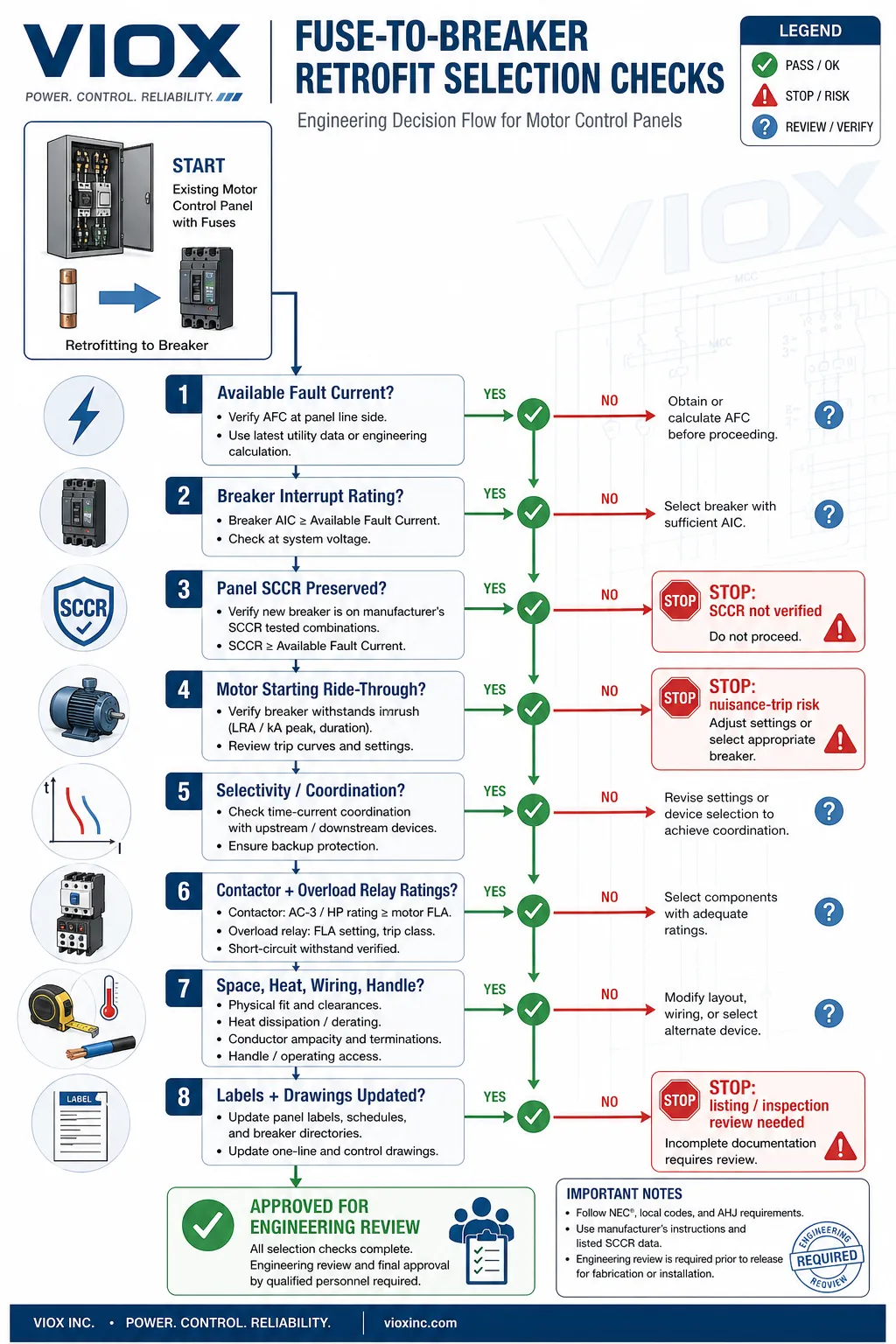
Step-by-Step Retrofit Process
When a fuse-to-breaker retrofit is technically justified, follow this systematic process:
Phase 1: Engineering Analysis (Before Equipment Purchase)
- Document existing panel configuration and fuse specifications
- Determine available fault current at panel location
- Calculate required panel SCCR
- Analyze motor starting current for each branch
- Perform coordination study with proposed breakers
- ផ្ទៀងផ្ទាត់កម្រិតវាយតម្លៃសមាសភាគខាងក្រោម
- ជ្រើសរើសឧបករណ៍បំលែងសៀគ្វីដែលបំពេញតាមតម្រូវការអគ្គិសនីទាំងអស់
- បញ្ជាក់ភាពសមស្របខាងរូបភាព និងលទ្ធភាពនៃការដំឡើង
- កំណត់អត្តសញ្ញាណការអនុលោមតាមកូដ និងតម្រូវការដាក់ស្លាកសញ្ញា
- ទទួលបានការយល់ព្រមពី AHJ ប្រសិនបើចាំបាច់
ដំណាក់កាលទី 2: ការរៀបចំផែនការ និងការលទ្ធកម្ម
- រៀបចំគំនូរកែប្រែលម្អិត
- រៀបចំបញ្ជីសារពើភ័ណ្ឌដែលបានធ្វើបច្ចុប្បន្នភាព
- Order breakers, mounting hardware, and accessories
- Prepare new panel labels (SCCR, device ratings, warnings)
- Schedule installation during planned outage
- Develop installation and testing procedures
- Prepare updated maintenance documentation
- Plan training for operations and maintenance staff
Phase 3: Installation and Testing
- De-energize panel and verify zero energy state
- ដោះហ្វុយស៊ីបចាស់ និងប្រដាប់ដាក់ហ្វុយស៊ីបចេញ
- ដំឡើងឧបករណ៍ទប់លំហូរ (breakers) និងគ្រឿងរឹងសម្រាប់ដាក់
- ផ្ទៀងផ្ទាត់ការតខ្សែ និងលក្ខណៈបច្ចេកទេសរឹតបន្តឹង
- ត្រួតពិនិត្យចន្លោះពត់ខ្សែ និងផ្លូវខ្សែ
- ដំឡើងស្លាកសញ្ញាផ្ទាំងថ្មី
- អនុវត្តការធ្វើតេស្តភាពធន់នឹងអ៊ីសូឡង់
- បញ្ចូលថាមពលទៅផ្ទាំង និងផ្ទៀងផ្ទាត់ប្រតិបត្តិការឧបករណ៍ទប់លំហូរ
- ធ្វើតេស្តឧបករណ៍ចាប់ផ្តើមម៉ូទ័រនីមួយៗសម្រាប់ការចាប់ផ្តើម និងប្រតិបត្តិការត្រឹមត្រូវ
- ផ្ទៀងផ្ទាត់ការសម្របសម្រួលឧបករណ៍ការពារ តាមរយៈការធ្វើតេស្តមុខងារ ប្រសិនបើអាចធ្វើទៅបាន
Phase 4: Documentation and Training
- Update as-built drawings and panel schedules
- Revise maintenance procedures for breaker testing and reset
- Update lockout-tagout procedures
- Revise spare parts inventory
- Train operations personnel on breaker operation and trip indication
- Train maintenance personnel on breaker testing and troubleshooting
- Archive retrofit documentation for future reference
ជាញឹកញាប់បានសួរសំណួរ
Can I replace fuses with circuit breakers in a motor control panel?
Yes, but only after comprehensive engineering analysis. The replacement breaker must match or exceed the original protection scheme in terms of interrupting rating, panel SCCR, motor starting tolerance, coordination, and downstream component protection. It is not a simple same-ampere-rating swap.
What is the biggest risk in a fuse-to-breaker retrofit?
The most critical risk is reducing the panel’s short-circuit current rating (SCCR) below the available fault current at the installation. This occurs when current-limiting fuses are replaced with breakers that have higher let-through energy, potentially exposing downstream components to fault currents beyond their ratings.
Will a circuit breaker eliminate the need for motor overload protection?
Usually no. In typical motor starter circuits, the upstream breaker or fuse provides short-circuit and ground-fault protection, while a separate overload relay provides motor overload protection. Some specialized motor protection circuit breakers integrate both functions, but this must be verified by device type, listing, and application standard.
How do I prevent nuisance tripping during motor starting?
Select a breaker with a time-current curve and instantaneous trip setting that accommodates the motor’s locked-rotor current and acceleration time. Time-delay or motor-rated breakers are specifically designed for this application. Compare the motor’s starting profile against the breaker’s trip curve in the high-current region.
Do I need to update panel labeling after a retrofit?
Yes. If the retrofit changes the panel SCCR, protective device types, or interrupting ratings, the panel labeling must be updated per NEC 409.110. This includes the SCCR marking, device ratings, and any warnings or instructions. Failure to update labels creates inspection and liability issues.
What breaker standard should I specify?
For North American motor control panels, specify UL 489 (Molded-Case Circuit Breakers) for branch-circuit protection. For international applications, IEC 60947-2 is the relevant standard for industrial circuit breakers. Avoid using UL 1077 supplementary protectors as substitutes for branch-circuit breakers in motor panels.
Can I retrofit some branches and keep fuses on others?
Yes. A hybrid approach—retrofitting breakers where beneficial while keeping fuses where technically superior—is often the most practical solution. This allows you to gain operational benefits on suitable branches while preserving current-limiting protection where needed.
How do I calculate the new panel SCCR after retrofit?
Panel SCCR calculation depends on the let-through characteristics of the proposed breaker and the short-circuit withstand ratings of all downstream components. For UL 508A panels, use the methods in UL 508A Supplement SB to calculate SCCR based on the breaker’s peak let-through current and I²t values. For complex panels, consult with the panel manufacturer or a qualified electrical engineer.
What if the available fault current exceeds the breaker’s interrupting rating?
Do not install the breaker. Either select a breaker with adequate interrupting rating, consider current-limiting breakers that reduce let-through current, investigate series-rated combinations if applicable, or keep the existing fuse-based protection. Installing a breaker with inadequate interrupting rating creates a serious safety hazard.
Will a retrofit affect my panel’s UL listing?
Potentially yes. Changing protective device types in a UL 508A industrial control panel can affect the basis of the original listing, particularly if the SCCR changes or if the fuses were part of a tested combination. Consult the original panel documentation and, if necessary, work with the panel manufacturer or a field evaluation service to maintain compliance.
Conclusion: Engineering First, Convenience Second
A fuse-to-breaker retrofit in a motor control panel can deliver significant operational benefits—faster fault recovery, better diagnostics, simplified spare parts management, and improved maintenance workflow. But these benefits are only realized when the retrofit is based on sound engineering analysis, not just the appeal of resettable protection.
គោលការណ៍សំខាន់៖ a circuit breaker must match or exceed the protective performance of the fuse it replaces, considering interrupting rating, panel SCCR, motor starting tolerance, selective coordination, and downstream component protection.
នៅពេលដែលតម្រូវការទាំងនេះត្រូវបានបំពេញ ការប្តូរឧបករណ៍បំលែងសៀគ្វីអាចជាការវិនិយោគដ៏ល្អ។ នៅពេលដែលពួកគេមិនបានបំពេញ ការរក្សាការការពារដែលមានមូលដ្ឋានលើហ្វុយស៊ីបដែលមានស្រាប់—ឬការកែលម្អការអនុវត្តការគ្រប់គ្រងហ្វុយស៊ីប—អាចជាការសម្រេចចិត្តដ៏ល្អប្រសើរជាង។.
មុនពេលអនុម័តគម្រោងប្តូរណាមួយ សូមធ្វើការត្រួតពិនិត្យបញ្ជីវិស្វកម្មជាប្រព័ន្ធ ផ្ទៀងផ្ទាត់តម្រូវការអគ្គិសនី និងមេកានិចទាំងអស់ ហើយធានាថាការអនុលោមតាមកូដ និងឯកសារត្រូវបានដោះស្រាយ។ គោលដៅមិនមែនដើម្បីជំនួសហ្វុយស៊ីបជាមួយឧបករណ៍បំលែងសៀគ្វីជាបញ្ហានៃចំណូលចិត្តនោះទេ ប៉ុន្តែដើម្បីជ្រើសរើសឧបករណ៍ការពារដែលបម្រើកម្មវិធីបានល្អបំផុត ខណៈពេលដែលរក្សាបាននូវសុវត្ថិភាព និងភាពជឿជាក់។.
សម្រាប់ធនធានបច្ចេកទេសបន្ថែមស្តីពីការការពារម៉ូទ័រ និងការជ្រើសរើសឧបករណ៍បំលែងសៀគ្វី សូមស្វែងយល់៖
- ផលិតផល VIOX MCCB – ឧបករណ៍បំលែងសៀគ្វីករណីឧស្សាហកម្ម
- មគ្គុទ្ទេសក៍ឧបករណ៍បំលែងសៀគ្វីការពារម៉ូទ័រ – យុទ្ធសាស្ត្រការពារម៉ូទ័រដ៏ទូលំទូលាយ
- ការពន្យល់អំពីការវាយតម្លៃឧបករណ៍បំលែងសៀគ្វី – Understanding Icu, Ics, Icw, and Icm
- Breaker Selectivity and Coordination – Achieving selective coordination
អំពី VIOX: VIOX specializes in industrial electrical protection and control solutions, offering comprehensive product lines including molded case circuit breakers, miniature circuit breakers, contactors, and motor protection devices. Our technical resources help electrical engineers, panel builders, and maintenance professionals make informed decisions for safe, reliable electrical systems.