


In questa pagina
Risposta diretta
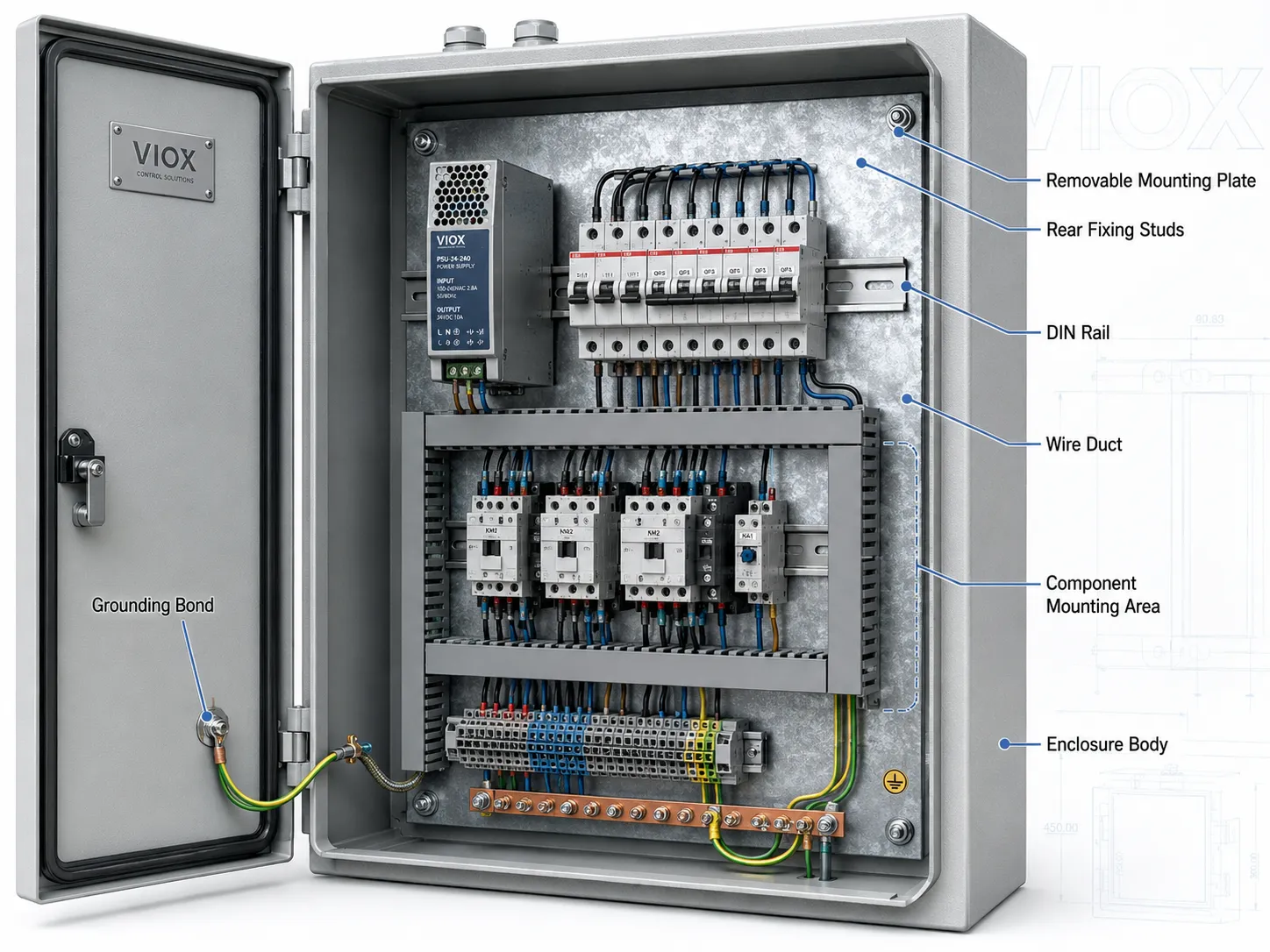
Un piastra di montaggio per quadro elettrico è il pannello interno, rimovibile o fisso, utilizzato per supportare i componenti elettrici all'interno di un quadro. È anche chiamato pannello di fondo, sottoquadro, piastra di supporto, o piastra di montaggio posteriore a seconda del mercato e del tipo di custodia.
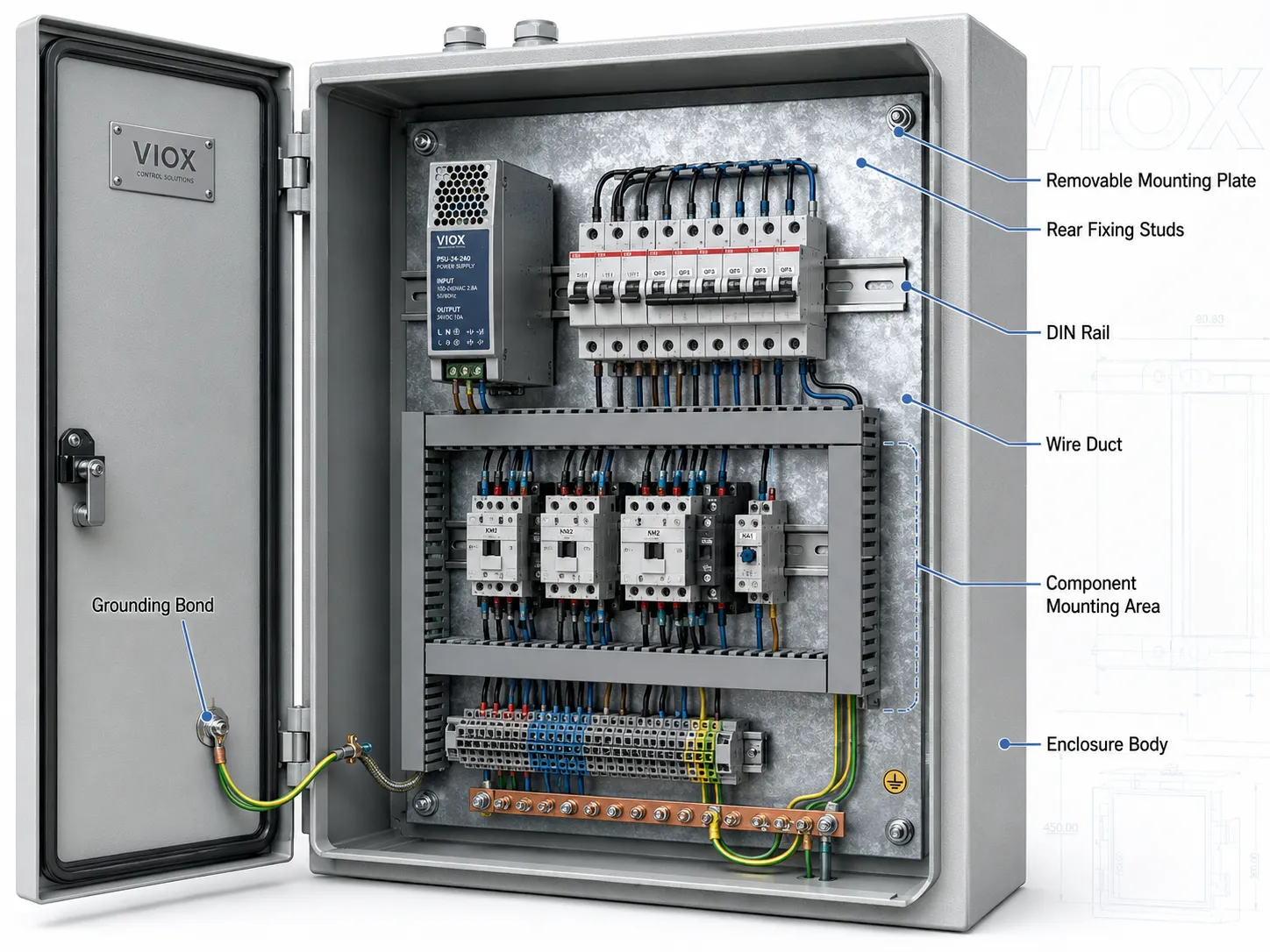
Il suo compito è semplice ma importante: fornisce a interruttori automatici, contattori, morsettiere, alimentatori, controllori logici programmabili (PLC), relè, barre collettrici e accessori di cablaggio una base meccanica stabile, evitando di dover fissare ogni dispositivo direttamente sulla parete della custodia.
Per la maggior parte dei quadri di comando e delle cassette di distribuzione, scegliere la piastra di montaggio verificando sei punti in questo ordine:
- Dimensioni della custodia e schema dei fori – la piastra deve corrispondere al corpo della custodia e ai punti di fissaggio.
- Materiale – acciaio, acciaio zincato, acciaio inossidabile, alluminio o materiale non metallico a seconda del carico, della corrosione, della messa a terra e delle esigenze di lavorazione.
- Carico meccanico – la piastra deve sostenere il peso dei dispositivi, delle guide DIN, delle canaline portacavi, dei trasformatori e del cablaggio senza flettersi.
- Collegamento equipotenziale elettrico – le piastre metalliche potrebbero richiedere un collegamento di protezione affidabile; le superfici verniciate o anodizzate non devono essere considerate in grado di garantire la continuità elettrica.
- Ambiente – umidità, nebbia salina, agenti chimici, polvere, esposizione ai raggi UV e temperatura influenzano la scelta dei materiali.
- Flusso di lavoro di assemblaggio – le piastre rimovibili sono preferibili per la costruzione dei quadri, poiché i componenti possono essere assemblati all'esterno dell'involucro.
Il punto chiave: la piastra di montaggio non è solo una semplice lastra di metallo. Essa influenza la disposizione del quadro, la manutenibilità, le pratiche di messa a terra, la distribuzione del calore, la resistenza alle vibrazioni e l'affidabilità a lungo termine.
Punti di forza
- Una piastra di montaggio fornisce la base meccanica interna per i componenti all'interno di un quadro elettrico.
- Il grado di protezione dell'involucro, come IP o NEMA Type, si riferisce all'intero assemblaggio dell'involucro e non alla sola piastra.
- L'acciaio zincato o verniciato è comune per i quadri di comando generici; l'acciaio inossidabile è adatto ad ambienti corrosivi; l'alluminio riduce il peso e migliora la lavorabilità.
- Le piastre rimovibili sono preferite per la costruzione di quadri OEM poiché velocizzano le operazioni di foratura, cablaggio, collaudo e rilavorazione.
- Non fare affidamento sul metallo verniciato come percorso di protezione equipotenziale. Utilizzare punti di collegamento verificati, trecce di massa, capicorda di messa a terra o componenti approvati dal produttore.
- La selezione deve includere carico, spessore, rischio di corrosione, requisiti EMC, componenti che generano calore, passaggio dei cavi, spaziatura delle guide DIN ed espansioni future.
Cos'è una piastra di montaggio per quadri elettrici?
Una piastra di montaggio per quadri elettrici è la piastra interna fissata alla parete posteriore o al telaio di un involucro. Crea una superficie pulita e manutenibile per il montaggio di dispositivi elettrici, mantenendo intatto l'involucro esterno.
In un tipico quadro di comando industriale, la piastra di montaggio può ospitare:
- interruttori magnetotermici (MCB), interruttori scatolati (MCCB) o portafusibili
- contattori e relè di sovraccarico
- avviatori motore, soft starter o azionamenti a frequenza variabile (VFD)
- morsettiere e morsetti di terra
- alimentatori e trasformatori
- relè, timer, PLC e moduli di ingresso/uscita
- guide DIN e canaline portacavi
- dispositivi di protezione da sovratensioni (SPD)
- sbarre collettrici, barre di neutro e barre di terra
Se hai bisogno prima di una panoramica più ampia sui quadri elettrici, VIOX guida agli involucri elettrici spiega le funzioni dell'involucro, mentre il guida alla selezione dei materiali per involucri elettrici approfondisce i materiali del corpo dell'involucro.
Piastra di montaggio vs Corpo dell'involucro vs Guida DIN vs Piastra passacavi
Questi componenti vengono spesso discussi insieme, ma svolgono funzioni diverse.
| Parte | Ruolo principale | Errore comune |
|---|---|---|
| Corpo dell'involucro | Protegge l'apparecchiatura da contatto, polvere, acqua, urti e agenti ambientali | Presumere che la piastra interna determini il grado di protezione IP o NEMA |
| Piastra di montaggio / pannello posteriore | Supporta i componenti interni e la disposizione del cablaggio | Trattarla come una lamiera generica senza requisiti di carico o collegamento a terra |
| Guida DIN | Fornisce un montaggio a scatto standardizzato per dispositivi modulari | Sovraccaricare la guida o utilizzarla come unico supporto meccanico per componenti pesanti |
| Piastra passacavi | Fornisce un'interfaccia per l'ingresso e la sigillatura dei cavi | Praticare fori casuali nell'involucro indebolendo la protezione ambientale |
| Canale portacavi / canalina passacavi | Organizza i conduttori interni | Senza lasciare asole di servizio, percorsi per il flusso d'aria o spazi di accesso |
Per i dispositivi modulari, la piastra di montaggio solitamente supporta sezioni di guida DIN. Se la scelta della guida DIN fa parte del tuo progetto, la guida VIOX su Guida DIN rispetto al montaggio tradizionale e la guida su cos'è la guida DIN forniscono il livello di dettaglio successivo.
Per la progettazione dell'ingresso cavi, non confondere la piastra di montaggio con la piastra passacavi. La guida completa alle piastre passacavi spiega la funzione distinta delle piastre di ingresso cavi nella sigillatura e nell'installazione dei quadri elettrici.
Principali tipologie di piastre di montaggio per quadri elettrici
1. Piastra di montaggio fissa
Una piastra di montaggio fissa è fissata permanentemente al quadro o risulta difficile da rimuovere dopo l'installazione. Può essere saldata, rivettata o strutturalmente integrata nel quadro.
Adatto per:
- cassette di derivazione di piccole dimensioni
- quadri di distribuzione semplici
- involucri per apparecchiature a basso costo
- design con limitata variazione di componenti
Vantaggi:
- struttura semplice
- minor numero di componenti separati
- buona rigidità se integrato correttamente
- minore complessità di produzione
Limitazioni:
- più difficile da forare, filettare, cablare e modificare
- meno pratico per l'assemblaggio in serie di quadri elettrici
- la manutenzione in campo può richiedere interventi all'interno del corpo dell'involucro
- rischio maggiore di danneggiare l'involucro in caso di rilavorazioni
Le piastre fisse sono indicate quando la disposizione interna è semplice e non soggetta a modifiche. Sono meno vantaggiose per i quadri di comando OEM, dove il cablaggio, il controllo qualità e le future varianti sono aspetti rilevanti.
Piastra di montaggio rimovibile
Una piastra di montaggio rimovibile viene fissata all'involucro tramite viti, perni, staffe o guide di supporto. Può essere estratta, equipaggiata con i componenti, cablata, testata e successivamente reinstallata all'interno dell'involucro.
Adatto per:
- quadri di controllo industriali
- Quadri per macchine OEM
- Quadri di comando motori
- Quadri PLC
- Quadri di distribuzione con molteplici dispositivi interni
- Quadri personalizzati realizzati in serie
Vantaggi:
- assemblaggio in officina più rapido
- foratura e lavorazione meccanica più agevoli
- migliore accesso per il cablaggio
- ispezione più semplice prima dell'installazione finale nell'involucro
- sostituzione o rilavorazione più semplice
Limitazioni:
- deve corrispondere ai punti di fissaggio dell'involucro
- richiede una profondità dell'involucro sufficiente per i componenti e il cablaggio
- il collegamento equipotenziale deve essere verificato dopo l'installazione
- Le piastre di grandi dimensioni possono flettersi se non adeguatamente supportate.
Per i costruttori di quadri, la piastra di montaggio rimovibile rappresenta solitamente l'opzione più pulita. Trasforma l'armadio in un assemblaggio a fasi: prima la piastra, poi il cablaggio, infine l'installazione dell'armadio.
Piastra di montaggio forata
Una piastra di montaggio forata include una griglia di fori o asole. Consente un posizionamento flessibile dei componenti senza dover eseguire ogni foro da zero.
Adatto per:
- quadri prototipo
- banchi di prova
- layout misti di relè e morsetti
- quadri di automazione soggetti a frequenti modifiche
- quadri per formazione o laboratorio
Vantaggi:
- layout flessibile
- tempi di foratura ridotti
- facile riposizionamento
- utile durante lo sviluppo
Limitazioni:
- rigidità inferiore rispetto a una piastra piena di pari spessore
- aspetto meno pulito nei quadri di produzione
- i fori possono accumulare polvere o trucioli metallici
- Il comportamento di adesione dipende dal rivestimento, dagli elementi di fissaggio e dai punti di contatto.
Le piastre forate sono eccellenti per lo sviluppo, ma non sempre rappresentano la scelta migliore per la produzione quando il layout è definito e la ripetibilità è fondamentale.
4. Piastra di montaggio piana piena
Una piastra di montaggio piana piena è la soluzione più comune nei quadri elettrici industriali. Offre una superficie di lavoro libera per eseguire forature, filettature, saldatura di perni, installazione di guide DIN e montaggio di componenti personalizzati.
Adatto per:
- quadri elettrici di produzione finiti
- quadri di distribuzione
- armadi di automazione
- quadri con componenti più pesanti
- progetti che richiedono un cablaggio ordinato
Vantaggi:
- elevata rigidità
- layout pulito
- buon supporto per guide e canaline
- controllo più semplice dei punti di messa a terra
- adatto a modelli di produzione ripetibili
Limitazioni:
- richiede foratura, maschiatura o l'uso di inserti autoaggancianti
- le modifiche al progetto richiedono più tempo in officina
- Una pianificazione inadeguata può portare a ripetuti interventi di rifacimento.
Le piastre piene rappresentano la scelta predefinita quando il layout è noto e il quadro deve apparire professionale, manutenibile e robusto.
5. Piastra di montaggio basculante o incernierata
Una piastra di montaggio basculante è montata su cerniere o bracci di supporto, consentendo alla sezione del quadro di ruotare verso l'esterno per l'accesso.
Adatto per:
- quadri elettrici ad alta densità
- apparecchiature ad alta intensità di manutenzione
- quadri con vincoli di accesso per la manutenzione anteriore e posteriore
- sistemi in cui il cablaggio o le regolazioni devono essere raggiungibili senza rimuovere l'intera piastra
Vantaggi:
- migliore accesso per la manutenzione
- possibilità di creare un secondo livello di montaggio
- utile in quadri elettrici compatti
Limitazioni:
- maggiore complessità meccanica
- il raggio di curvatura dei cavi e lo scarico della trazione diventano critici
- le strutture incernierate devono sostenere il carico in sicurezza
- la continuità di messa a terra attraverso la cerniera deve essere verificata
Le piastre incernierate risolvono i problemi di accesso, ma introducono nuovi rischi meccanici e di cablaggio. Dovrebbero essere utilizzate con criterio, non come soluzione per compensare un quadro sovraffollato.
6. Piastra di montaggio isolata o non metallica
Le piastre di montaggio non metalliche possono essere realizzate in plastica rinforzata con fibra di vetro, materiale fenolico o altri materiali isolanti ingegnerizzati.
Adatto per:
- circuiti di controllo a bassa tensione
- ambienti sensibili alla corrosione
- applicazioni in cui è richiesto l'isolamento elettrico
- custodie leggere per strumenti
Vantaggi:
- isolamento elettrico
- resistenza alla corrosione
- peso inferiore
- nessun problema di continuità elettrica dovuto a verniciatura sul quadro stesso
Limitazioni:
- rigidità meccanica spesso inferiore rispetto all'acciaio
- possibile minore resistenza al calore a seconda del materiale
- richiede una messa a terra di protezione separata per i dispositivi metallici
- potrebbe non essere idoneo per trasformatori pesanti o dispositivi di grande potenza
Le piastre non metalliche sono utili, ma non eliminano la necessità di una corretta messa a terra di protezione delle parti conduttive esposte e delle apparecchiature collegate a terra.
Confronto tra materiali: acciaio, acciaio inossidabile, alluminio e piastre non metalliche
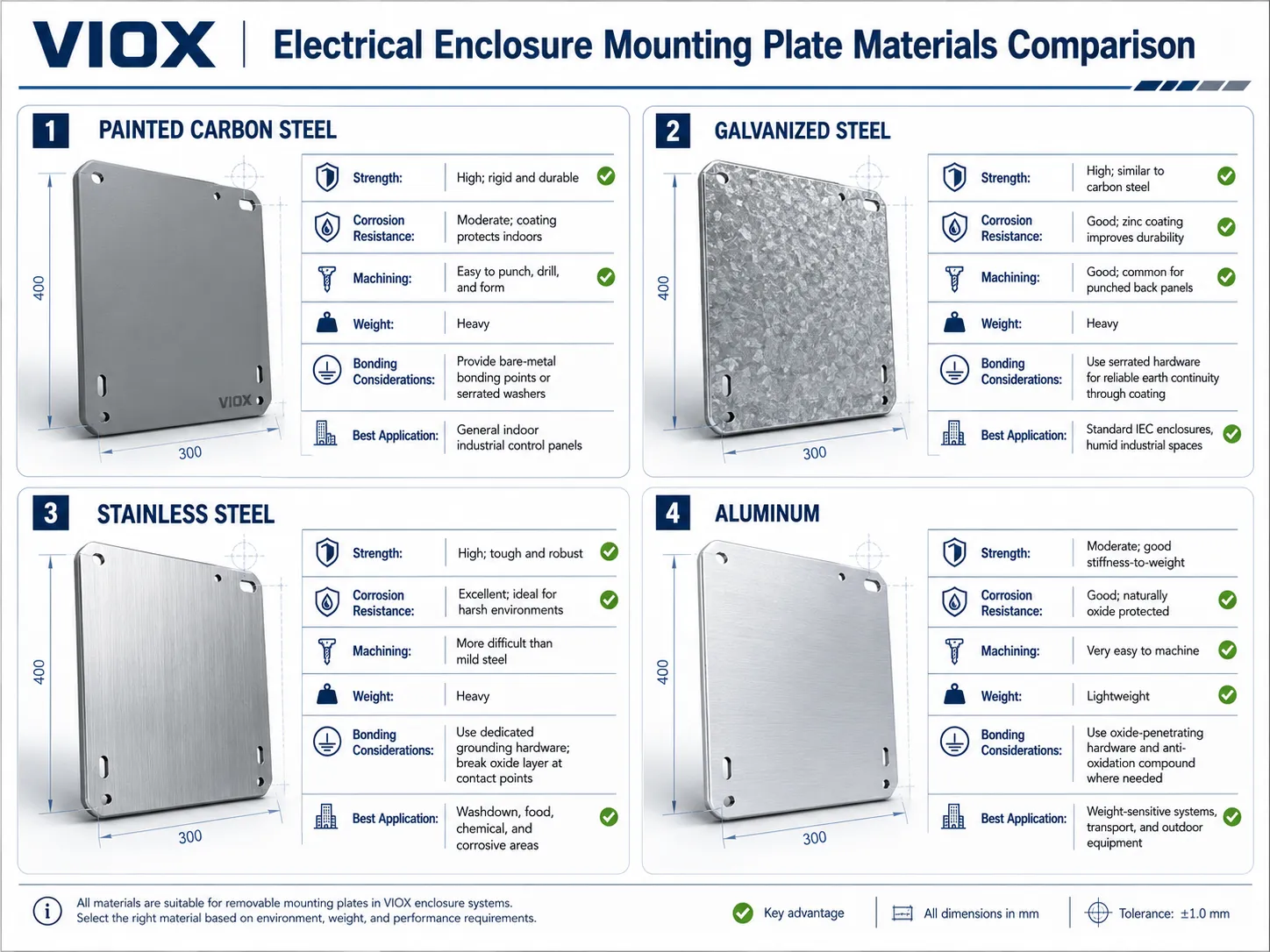
Il materiale della piastra di montaggio deve essere conforme sia al progetto elettrico che all'ambiente di lavoro.
| Materiale | Punti di forza | Limitazioni | Soluzione migliore |
|---|---|---|---|
| Acciaio al carbonio verniciato | Resistente, economico, ampiamente disponibile, buona rigidità | La vernice può bloccare la continuità elettrica; corrosione se il rivestimento viene danneggiato | Quadri di controllo generici per interni |
| Acciaio zincato | Buona resistenza alla corrosione per molti ambienti interni/industriali; facile da lavorare | Il rivestimento in zinco può essere danneggiato da forature o molature; i bordi tagliati richiedono attenzione | Quadri di distribuzione, quadri OEM, armadi industriali generici |
| Acciaio inox | Elevata resistenza alla corrosione; adatto per ambienti soggetti a lavaggi, chimici, costieri o alimentari | Costo più elevato; più difficile da lavorare; è necessario considerare la compatibilità galvanica | Ambienti difficili e quadri in acciaio inossidabile |
| Alluminio | Leggero, facile da lavorare, buona conducibilità termica | Più tenero dell'acciaio; rischio di corrosione galvanica con metalli dissimili; l'ossido superficiale influisce sulla messa a terra | Pannelli leggeri, apparecchiature portatili, layout per la dissipazione del calore |
| Fibra di vetro / materiale non metallico | Resistente alla corrosione, isolante, leggero | Minore rigidità per componenti pesanti; le prestazioni al calore e alla fiamma devono essere verificate | Cassette per strumentazione, atmosfere corrosive, layout focalizzati sull'isolamento |
Per applicazioni corrosive o in ambienti esterni, non selezionare la piastra isolatamente. Il corpo del quadro, il sistema di guarnizioni, i pressacavi, la piastra passacavi, gli elementi di fissaggio e la piastra di montaggio devono essere considerati come un unico sistema ambientale. NEMA definisce i quadri elettrici come prodotti classificati per condizioni pericolose, non pericolose e ambientali, mentre la norma UL 50E copre i requisiti di costruzione e prestazione ambientale per le tipologie di quadri. Tali classificazioni si applicano al quadro o all'assieme, non alla singola piastra di fondo.
Quale dovrebbe essere lo spessore di una piastra di montaggio per quadri elettrici?
Non esiste uno spessore universale adatto a ogni quadro. Lo spessore corretto della piastra dipende da:
- peso dei componenti
- numero di guide DIN e canaline portacavi
- massa del trasformatore o dell'alimentatore
- livello di vibrazione
- dimensioni dell'involucro
- interasse degli elementi di fissaggio
- se la piastra è rimovibile o fissa
- se i componenti sono montati direttamente o tramite guide
Come prassi industriale consolidata, i quadri di comando di piccole dimensioni possono utilizzare piastre più sottili, mentre gli armadi industriali di grandi dimensioni e i quadri di potenza pesanti utilizzano piastre più spesse o rinforzate. Lo spessore esatto deve essere ricavato dalla scheda tecnica del produttore dell'involucro o dalle specifiche di progetto.
Non determinare lo spessore basandosi solo sull'abitudine. Una piastra che appare accettabile quando è vuota può flettersi dopo l'aggiunta di componenti, cablaggi e tensione dei cavi. La flessione può allentare i morsetti, deformare le guide DIN, sollecitare gli involucri dei dispositivi e rendere difficoltosa la manutenzione.
Messa a terra ed equipotenzialità: il dettaglio di selezione che sfugge a molti
Questo è il confine di sicurezza più importante nella scelta della piastra di montaggio.
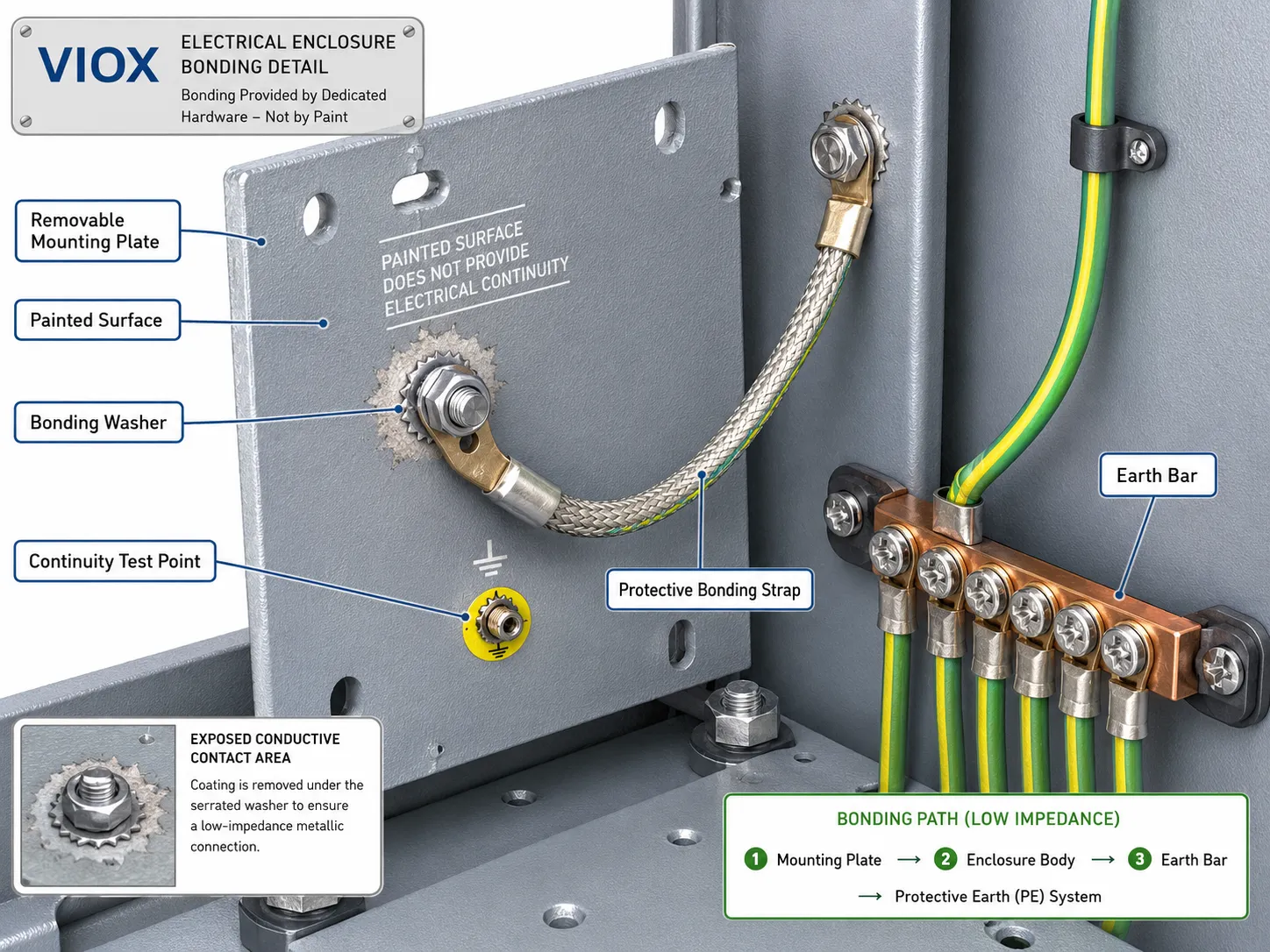
Una piastra di montaggio metallica può far parte del sistema di collegamento equipotenziale di protezione del quadro, ma solo se il progetto garantisce intenzionalmente una continuità elettrica affidabile. Vernice, verniciatura a polvere, anodizzazione, corrosione, sigillanti per filettature e rondelle isolanti possono interrompere la continuità.
Le buone pratiche includono:
- l'utilizzo di punti di collegamento equipotenziale di protezione (PE) dedicati
- l'installazione di trecce di massa tra la porta dell'involucro, il corpo dell'involucro e la piastra rimovibile, ove richiesto
- rimuovere la vernice solo dove consentito dal produttore
- utilizzare rondelle dentellate o componenti di collegamento solo se approvati per l'assemblaggio
- verificare la continuità durante l'ispezione
- separare le esigenze di messa a terra funzionale da quelle di protezione
Non dare per scontato che avvitare una piastra verniciata su un quadro verniciato crei automaticamente un percorso di messa a terra sicuro. Ciò è particolarmente rilevante quando morsettiere, SPD, filtri, schermature di cavi o dispositivi con corpo metallico dipendono da una messa a terra a bassa impedenza.
Se il quadro include punti di terminazione per neutro e terra, la guida di VIOX su barra del neutro vs barra di messa a terra è un utile riferimento di accompagnamento.
Pianificazione del layout: cosa dovrebbe essere installato sulla piastra di montaggio?
Un buon layout della piastra di montaggio dovrebbe rendere il quadro più sicuro da costruire, più facile da ispezionare e più rapido da sottoporre a manutenzione.
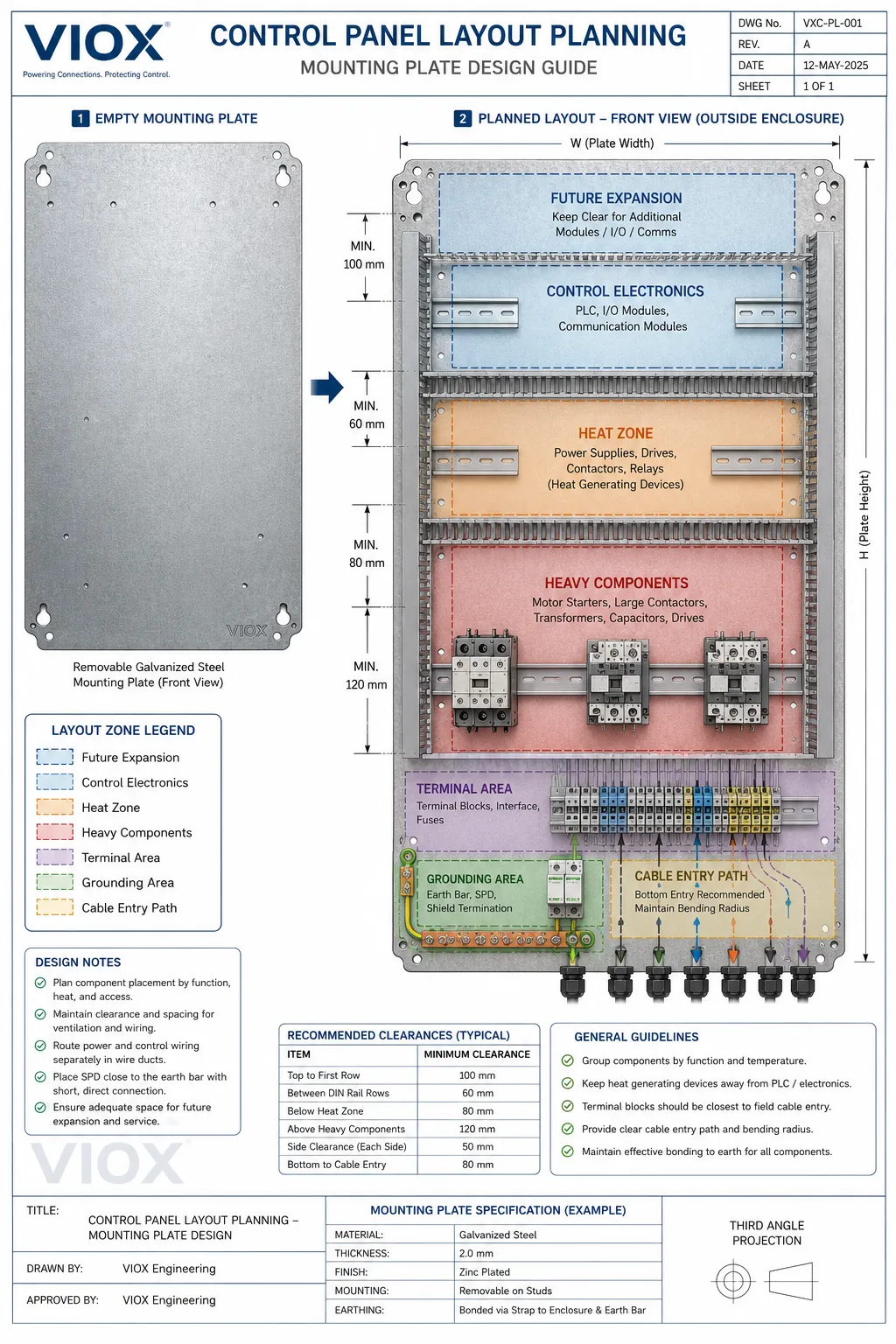
Posizionare i dispositivi pesanti in basso o vicino ai punti di supporto.
Trasformatori, alimentatori di grandi dimensioni, gruppi di contattori, VFD e avviatori motore non devono essere posizionati in punti che causano una flessione non necessaria della piastra. Posizionare i dispositivi pesanti vicino al supporto strutturale e verificare che il sollevamento, il trasporto e le vibrazioni non allentino l'assemblaggio.
Tenere i dispositivi che generano calore lontano dall'elettronica sensibile.
Alimentatori, azionamenti, contattori, relè a stato solido e trasformatori generano calore. PLC, moduli di comunicazione, convertitori di segnale ed elettronica di misura possono essere più sensibili alla temperatura. La disposizione della piastra deve favorire il flusso d'aria ed evitare la creazione di zone calde attorno all'elettronica di controllo.
Per il rischio termico nei punti di connessione, l'articolo VIOX su il surriscaldamento dei morsetti nei quadri elettrici spiega perché una disposizione inadeguata, la resistenza di contatto e l'accumulo di calore si manifestano spesso come guasti sul campo.
Lasciare spazio per il cablaggio, non solo per i componenti
Un layout non è completo quando i dispositivi entrano nello spazio disponibile. È completo quando trovano posto anche canaline, raggio di curvatura dei cavi, puntalini, marcatori per morsetti, asole di servizio ed eventuali espansioni future.
Gli errori comuni di layout includono:
- posizionare le guide DIN troppo vicine tra loro
- ostruire le viti dei morsetti con le canaline portacavi
- non lasciare un percorso per i cavi in ingresso
- installare gli SPD troppo lontano dalla barra di terra
- montare i contattori in posizioni che rendono inaccessibile il cablaggio ausiliario
- posizionamento dei pressacavi dove i conduttori non possono curvarsi correttamente all'interno del quadro
Se la selezione dei morsetti fa parte della stessa fase di progettazione, la guida alla selezione dei morsetti aiuta a collegare la scelta dei componenti con il layout del quadro.
Riservare spazio per l'ispezione e la sostituzione
Ogni componente soggetto a guasti deve essere raggiungibile. Ciò include fusibili, interruttori magnetotermici (MCB), relè, alimentatori, scaricatori di sovratensione (SPD), morsetti, filtri e ventole. Una piastra densamente popolata può sembrare efficiente in fase di preventivo, ma diventare costosa durante la manutenzione.
Lista di controllo per la selezione delle piastre di montaggio per quadri elettrici
Utilizzare questa lista di controllo prima di approvare una piastra di montaggio per la produzione.
| Elemento di controllo | Cosa verificare | Perché è importante |
|---|---|---|
| Compatibilità dell'involucro | Dimensioni della piastra, fori di fissaggio, profondità utile, spazio libero della porta | Previene problemi di montaggio e rilavorazioni |
| Materiale | Acciaio, acciaio zincato, acciaio inossidabile, alluminio o materiale non metallico | Corrisponde alle esigenze di carico, corrosione, peso e messa a terra |
| Spessore e rigidità | Peso dei componenti, interasse delle guide, vibrazioni, supporto della piastra | Previene flessioni e connessioni allentate |
| Percorso di equipotenzialità | Connessione PE, treccia di massa, punto di test di continuità | Evita ipotesi non sicure su metalli verniciati o rivestiti |
| Resistenza alla corrosione | Umidità, salsedine, agenti chimici, lavaggi, esposizione esterna | Previene il degrado meccanico ed elettrico a lungo termine |
| Metodo di lavorazione meccanica | Foratura, maschiatura, prigionieri, inserti filettati, asole | Influisce sui tempi di realizzazione e sulla ripetibilità |
| Layout termico | Posizionamento della fonte di calore e percorso del flusso d'aria | Riduce i punti caldi e i guasti accidentali |
| Comportamento EMC | Terminazione della schermatura, messa a terra del filtro, contatto conduttivo | Importante per VFD, azionamenti e apparecchiature di comunicazione |
| Il percorso dei cavi | Canaline portacavi, raggio di curvatura, posizioni dei pressacavi, accesso ai morsetti | Migliora la manutenibilità e la sicurezza |
| Espansione futura | Spazio libero su guida DIN, morsetti di riserva, area della piastra disponibile | Evita la riprogettazione in caso di varianti |
Selezione della piastra di montaggio in base all'applicazione
| Applicazione | Approccio consigliato per la piastra di montaggio | Motivo |
|---|---|---|
| Cassetta di derivazione per interni di piccole dimensioni | Piastra fissa o facilmente rimovibile | Numero ridotto di dispositivi e cablaggio semplice |
| Quadro di comando generale | Piastra rimovibile in acciaio verniciato o zincato | Elevata rigidità, basso costo, facilità di assemblaggio |
| Quadro PLC | Piastra rimovibile con disposizione predefinita per guida DIN e canaline portacavi | Supporta un cablaggio ordinato e una manutenzione futura |
| Quadro di comando motore | Piastra in acciaio rinforzato o piastra rimovibile di spessore maggiore | I contattori, i relè di sovraccarico e i trasformatori aggiungono peso e vibrazioni |
| Quadro di distribuzione per esterni | Piastra metallica resistente alla corrosione adatta all'ambiente del quadro | L'umidità e la condensa possono degradare i rivestimenti e le connessioni |
| Settore alimentare, aree soggette a lavaggio o siti costieri | Acciaio inossidabile o piastra idonea resistente alla corrosione | Riduce il rischio di corrosione in atmosfere aggressive |
| Custodia per apparecchiature portatili | Piastra in alluminio o materiale non metallico rinforzato dove idoneo | Riduce il peso mantenendo il supporto |
| Quadro di comando sensibile alla compatibilità elettromagnetica (EMC) | Piastra metallica conduttiva con collegamento equipotenziale e terminazione di schermatura verificati | Supporta la strategia di messa a terra, filtraggio e controllo del rumore |
Per il contesto delle apparecchiature di distribuzione, consultare VIOX scatola di distribuzione e guida alla selezione e la guida comparativa Quadro elettrico vs scatola di distribuzione vs centralino di distribuzione.
Errori comuni nella scelta di una piastra di montaggio
Errore 1: Considerare la piastra solo come un accessorio meccanico
La piastra influisce anche su equipotenzialità, compatibilità elettromagnetica (EMC), passaggio dei cavi, disposizione termica e accessibilità per la manutenzione. Una piastra meccanicamente robusta può rivelarsi una scelta progettuale elettrica scadente se si trascurano la messa a terra e il layout.
Errore 2: Forare la parete del quadro invece di utilizzare la piastra
Fori praticati casualmente sulla parete del quadro possono compromettere il grado di protezione ambientale e creare punti di infiltrazione. Le normative UL specificano che gli accessori montati a pannello e la bulloneria del quadro devono mantenere il grado di protezione (Type o IP) una volta installati. Se il quadro necessita di ingressi per i cavi, utilizzare l'apposita flangia passacavi, pressacavi, tappi di chiusura o accessori approvati dal produttore.
Errore 3: Dare per scontato che l'acciaio inossidabile sia sempre il materiale migliore
L'acciaio inossidabile è eccellente in ambienti corrosivi, ma è più costoso e difficile da lavorare. Per molti quadri industriali da interno, l'acciaio zincato o verniciato può risultare più pratico. Scegliere l'acciaio inossidabile solo se l'ambiente lo richiede, non perché è percepito come un materiale di qualità superiore.
Errore 4: Ignorare la corrosione galvanica
Piastre in alluminio, elementi di fissaggio in acciaio inossidabile, guide zincate, componenti di messa a terra in rame e condizioni di umidità possono creare problemi di corrosione se le combinazioni di materiali sono gestite in modo inadeguato. Ciò è particolarmente importante in ambienti costieri, esterni o chimici.
Errore 5: Sovraccaricare la guida DIN invece di supportare i componenti pesanti
La guida DIN è pratica, ma non tutti i componenti dovrebbero essere sospesi su una guida senza un supporto aggiuntivo. Trasformatori pesanti, azionamenti di grandi dimensioni, filtri ingombranti e gruppi di contattori di grandi dimensioni potrebbero richiedere il montaggio diretto su piastra o un rinforzo.
Errore 6: Dimenticarsi del tecnico di manutenzione
Se un portafusibili, un SPD, una morsettiera o un alimentatore non possono essere raggiunti senza rimuovere metà del pannello, il layout è errato. Una buona progettazione della piastra di montaggio lascia spazio per utensili, etichette, dita e parti di ricambio.
Standard e classificazioni: cosa si applica alla piastra?
Le piastre di montaggio sono solitamente valutate come parte di un involucro o di un assemblaggio di pannelli, non come dispositivi di protezione autonomi.
Gli standard e i sistemi di classificazione importanti relativi a questo argomento includono:
- Norma IEC 60529 – definisce i concetti del codice IP per la protezione degli involucri contro l'ingresso di corpi estranei.
- NEMA 250 – definisce le tipologie di involucri per apparecchiature elettriche nella pratica nordamericana.
- UL 50 e UL 50E – riguardano la costruzione degli involucri e le considerazioni ambientali nei contesti UL/CSA/NMX.
- IEC 61439-1 e IEC 61439-2 – si applicano agli assemblaggi di quadri elettrici di bassa tensione e apparecchiature di comando, inclusi i requisiti di costruzione, le condizioni di servizio, la verifica e i requisiti per gli assemblaggi di potenza.
- IEC 60715 – rilevante quando viene utilizzato il montaggio su guida DIN all'interno dell'involucro.
L'interpretazione pratica è la seguente: una piastra di montaggio può supportare la conformità, ma non rende di per sé il quadro conforme ai gradi IP66, NEMA 4X, UL Listed o IEC 61439. La classificazione finale dipende dall'intero quadro o assemblaggio, inclusi corpo del quadro, porta, guarnizioni, cerniere, chiusure, piastra passacavi, ingressi cavi, disposizione interna, collegamento equipotenziale, sovratemperatura e costruzione verificata.
Come specificare una piastra di montaggio in una richiesta d'acquisto
Una richiesta vaga come “piastra di montaggio per quadro” causa spesso errori nei componenti, ritardi o rilavorazioni. Una richiesta migliore include:
- serie e dimensioni del quadro
- dimensioni della piastra di montaggio o modello del quadro corrispondente
- materiale e finitura
- spessore o codice articolo del produttore
- design rimovibile o fisso
- schema dei fori richiesto o piastra cieca
- disposizioni per la messa a terra o il collegamento equipotenziale
- ambiente corrosivo
- carico previsto dei componenti
- se sono richieste guide DIN, canaline portacavi, perni o inserti filettati
- requisiti di mercato come quadri conformi a IEC, quadri UL 508A o contesto normativo locale
Esempio di specifica:
Piastra di montaggio rimovibile in acciaio zincato per quadro di comando industriale 600 x 800 mm, compatibile con i perni di fissaggio del quadro, adatta al montaggio di guide DIN e canaline portacavi, con punto di messa a terra verificato e rigidità sufficiente per la disposizione di gruppi di contattori, alimentatori, PLC e morsettiere. Materiale finale, spessore e metodo di collegamento da confermare in base alla scheda tecnica del produttore del quadro e agli standard di progetto.
Questo tipo di specifica fornisce al fornitore informazioni sufficienti per selezionare il componente corretto, invece di procedere per tentativi basandosi solo sulle dimensioni dell'involucro.
Quadro di selezione rapida
Utilizzare questa sequenza per scegliere una piastra di montaggio per quadri elettrici:
- Iniziare dal modello dell'involucro. Verificare che la piastra sia compatibile con le dimensioni, i punti di fissaggio e la profondità dell'involucro.
- Mappare la disposizione dei componenti. Posizionare i dispositivi pesanti, caldi, soggetti a manutenzione e sensibili ai disturbi in modo deliberato.
- Scegliere il materiale. Verificare la compatibilità con l'ambiente corrosivo, il carico, la lavorazione, il peso e le esigenze di collegamento equipotenziale.
- Verificare la rigidità. Confermare che lo spessore e la spaziatura dei supporti siano adeguati al carico effettivo dei componenti.
- Pianificare il collegamento equipotenziale. Definire i punti di messa a terra (PE), le trecce di massa, le aree di contatto conduttive e il metodo di prova.
- Pianificare il cablaggio. Aggiungere guide DIN, canaline, morsetti, pressacavi, etichette e accessi per la manutenzione.
- Proteggere il grado di protezione dell'involucro. Evitare fori non necessari sulle pareti del quadro; utilizzare gli accessori corretti.
- Verificare la conformità agli standard di progetto. Controllare i requisiti IEC, UL, NEMA, le normative locali o le specifiche del cliente prima della produzione.
FAQ
Cos'è una piastra di montaggio per quadri elettrici?
È il pannello interno utilizzato per installare i componenti all'interno di un quadro elettrico. Può essere chiamato anche pannello di fondo, sotto-pannello, piastra di fissaggio o piastra di fondo.
Una piastra di montaggio è la stessa cosa di una guida DIN?
No. La piastra di montaggio è il pannello di base interno più grande. La guida DIN è un profilo standardizzato montato sulla piastra per consentire l'aggancio rapido dei componenti modulari.
Qual è il materiale migliore per una piastra di montaggio per quadri elettrici?
Non esiste un materiale migliore in assoluto. L'acciaio verniciato o zincato è comune per i quadri di comando generici, l'acciaio inossidabile è preferibile per ambienti corrosivi, l'alluminio è utile per design leggeri o lavorabili, mentre i pannelli non metallici possono essere d'aiuto laddove siano richiesti isolamento o resistenza alla corrosione.
La piastra di montaggio determina il grado di protezione IP dell'involucro?
No. Il grado di protezione IP si applica all'involucro o all'assieme completo. La piastra di montaggio è un componente interno. Tuttavia, un'installazione non corretta della piastra, forature, passaggi dei cavi o l'installazione di accessori possono compromettere indirettamente l'assieme finale dell'involucro.
Posso utilizzare la piastra di montaggio come percorso di messa a terra?
Solo se il progetto prevede un percorso di collegamento equipotenziale verificato. Non si deve dare per scontato che superfici verniciate, verniciate a polvere, anodizzate o corrose garantiscano una continuità affidabile. Utilizzare apposita bulloneria di collegamento e testare la continuità in conformità ai requisiti del progetto.
La piastra di montaggio deve essere rimovibile?
Per la maggior parte dei quadri di comando industriali e delle realizzazioni OEM, sì. Una piastra rimovibile migliora la velocità di assemblaggio, l'accesso al cablaggio, l'ispezione, il collaudo e le eventuali rilavorazioni. Le piastre fisse sono accettabili per scatole più semplici in cui il layout interno è ridotto e stabile.
Come posso evitare la flessione della piastra?
Verificare il peso dei componenti, lo spessore della piastra, la distanza tra i supporti, il carico sulla guida DIN e le vibrazioni. I componenti pesanti devono essere montati vicino ai punti di supporto o direttamente sulle aree rinforzate. Utilizzare le specifiche della piastra fornite dal produttore dell'involucro invece di procedere per tentativi.
È possibile praticare fori aggiuntivi sulla piastra di montaggio?
Di solito sì, se la piastra è destinata alla lavorazione meccanica e i fori non indeboliscono la struttura né interferiscono con il collegamento equipotenziale, il cablaggio o il montaggio dei componenti. Praticare fori sulla parete dell'involucro è una questione diversa, poiché può compromettere il grado di protezione ambientale.
Fonti consultate
- NEMA – Involucri
- ANSI Webstore – UL 50E, Involucri per apparecchiature elettriche, considerazioni ambientali
- UL Solutions – Accessori con classificazione ambientale per involucri
- IEC 61439-1:2020 – Apparecchiature assiemate di protezione e di manovra per bassa tensione (quadri BT), regole generali
- IEC 61439-2:2020 – Apparecchiature assiemate di protezione e di manovra per bassa tensione (quadri di potenza)
- VIOX – Involucri elettrici: una guida completa
- VIOX – Guida alla scelta del materiale per quadri elettrici