در این صفحه
پاسخ سریع: اندازههای استاندارد MCB کدامند؟
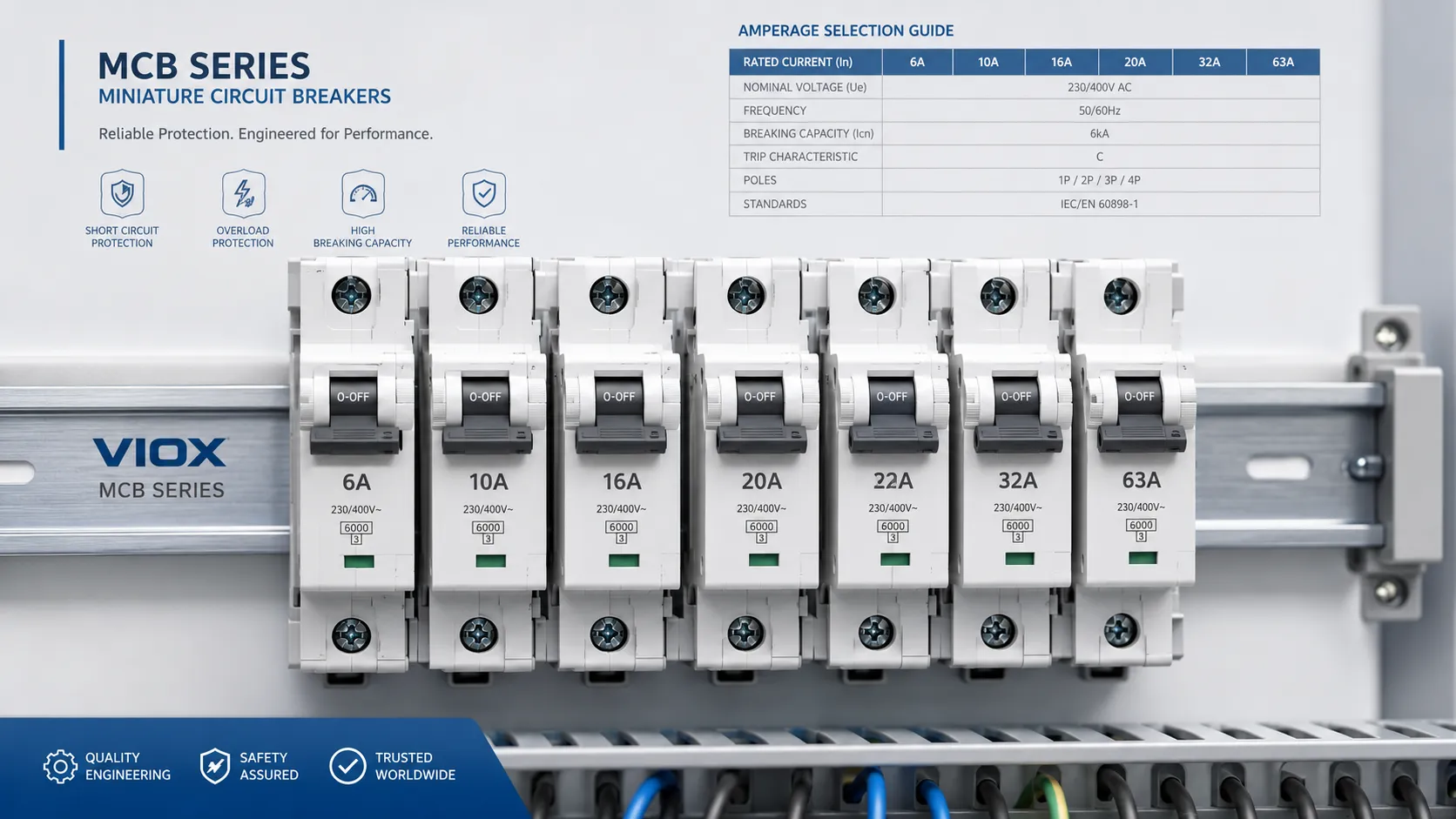
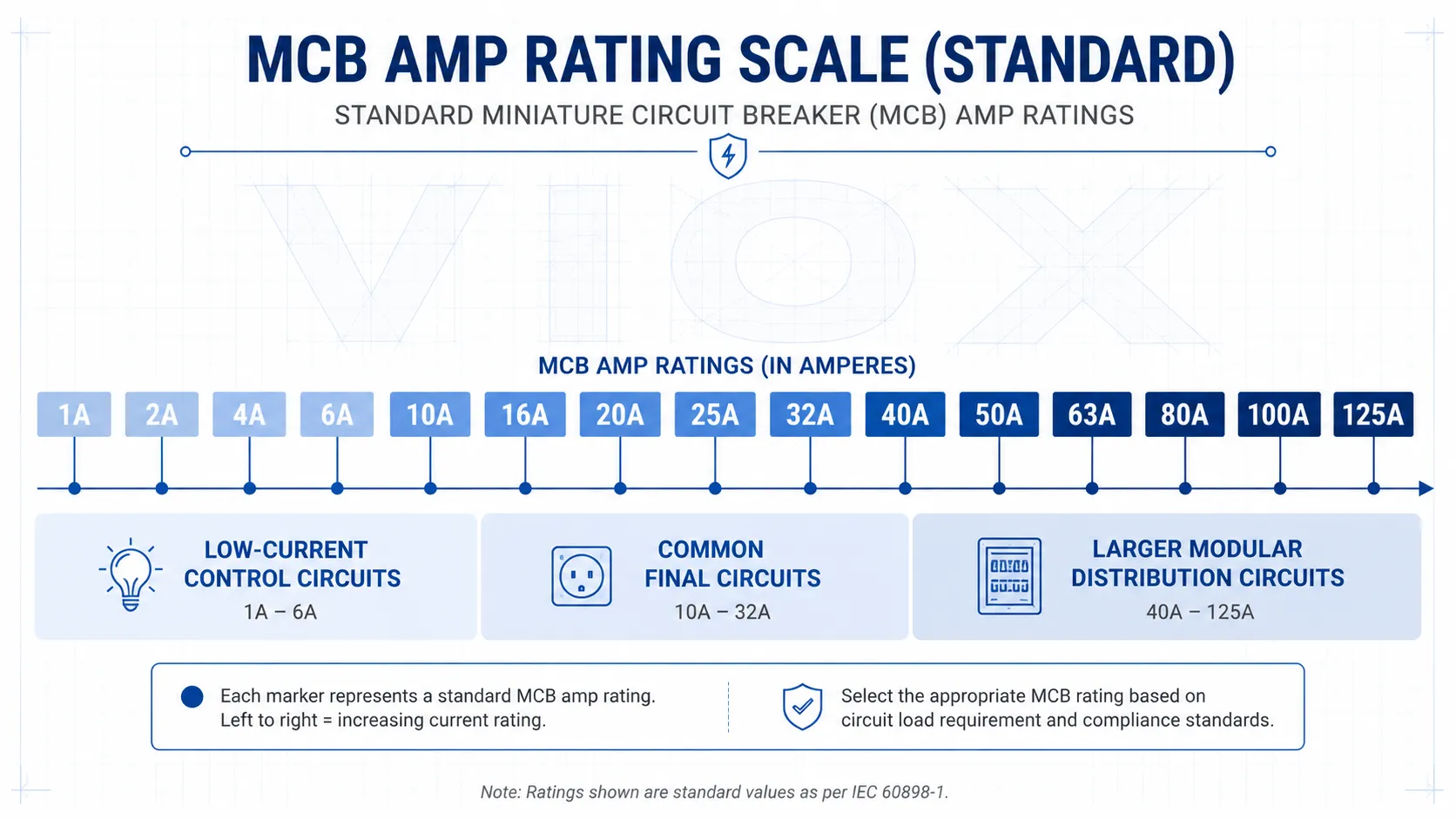
اندازههای استاندارد MCB مقادیر جریان نامی هستند که برای کلیدهای مدار مینیاتوری استفاده میشوند و معمولاً بر حسب آمپر (A) بیان میگردند. رتبهبندیهای رایج MCB به سبک IEC شامل موارد زیر است: 1A, 2A, 3A, 4A, 6A, 10A, 16A, 20A, 25A, 32A, 40A, 50A, 63A, 80A, 100A, and 125A, ، که بسته به سازنده و سری محصول متفاوت است.
در تابلوهای مسکونی آمریکای شمالی، اندازههای رایج کلید مدار اغلب به صورت زیر مورد بحث قرار میگیرند: 15A, 20A, 30A, 40A, and 50A. اینها همیشه کلیدهای مدار مینیاتوری به معنای IEC نیستند، اما کاربران اغلب هنگام مقایسه اندازههای کلید مدار، آنها را با هم جستجو میکنند.
مهمترین قاعده: سایز MCB تنها بر اساس بار دستگاه انتخاب نمیشود. این کلید باید از کابل محافظت کند. سایز هادی، روش نصب، دمای محیط، دستهبندی، نوع بار، منحنی قطع و قدرت قطع، همگی اهمیت دارند.
برای خریداران B2B، یک تمایز دیگر نیز اهمیت دارد: MCB مورد استفاده در تابلوهای توزیع خانگی یا مشابه، اغلب تحت استاندارد متفاوتی نسبت به کلید مدار صنعتی مورد استفاده در ماشینآلات یا تابلوهای کنترل ارزیابی میشود. در عمل، به همین دلیل است که برگه اطلاعات ممکن است بسته به محدوده محصول و بازار، به IEC 60898-1، IEC 60947-2 یا هر دو ارجاع دهد.
جدول جریانهای نامی استاندارد MCB
| جریان نامی MCB | کاربرد رایج IEC | یادداشت |
|---|---|---|
| 1A-4A | مدارهای کنترل، بارهای کمکی کوچک | اغلب برای سیمکشی کنترل یا مدارهای تجهیزات کوچک استفاده میشود |
| 6A | مدارهای روشنایی کوچک یا مدارهای کنترل | رتبهبندی رایج برای مدار نهایی با جریان کم |
| 10A | مدارهای روشنایی و بارهای کوچک | رایج در بسیاری از تأسیسات با استاندارد IEC |
| 16A | مدارهای پریز، بارهای تجهیزات کوچک | رتبهبندی بسیار رایج برای مدار نهایی |
| 20A | مدارهای پریز یا تجهیزات سنگینتر | سایز کابل و روش نصب باید بررسی شود |
| 25A | مدارهای تجهیزات کوچک | کمتر از 16A یا 32A در بسیاری از تابلوها رایج است |
| 32A | مدارهای اجاقگاز، ماشینآلات کوچک، خودروهای برقی/صنعتی سبک | سایزبندی کابل و افزایش دما حیاتی هستند |
| 40A | زیرمدارها یا تجهیزات بزرگتر | ردهبندی سری MCB و دمای محفظه را بررسی کنید |
| 50A | مدارهای نهایی بزرگتر یا تغذیههای فرعی | اغلب نیازمند هماهنگی دقیق کابل و کلید مدار است |
| ۶۳الف | مدارهای توزیع و تغذیههای فرعی | محدوده رایج بالا برای بسیاری از MCBهای ماژولار |
| 80A-125A | ورودی، فیدر، یا توزیع ماژولار بزرگتر | ظرفیت قطع، افزایش دما، و اینکه آیا MCCB مناسبتر است را بررسی کنید |
هر سری MCB شامل تمام ردهبندیها نمیشود. برخی خانوادههای محصول در 63A متوقف میشوند، در حالی که برخی دیگر تا 80A، 100A یا 125A ادامه مییابند. همیشه برگه اطلاعات سری کلید مدار مینیاتوری مربوطه را بررسی کنید.
برای بررسی کلی در سطح محصول، به MCB صفحه مراجعه کنید. برای منطق انتخاب کامل فراتر از جریان نامی، از VIOX استفاده کنید راهنمای انتخاب MCB.
Common IEC MCB Sizes: 1A to 125A
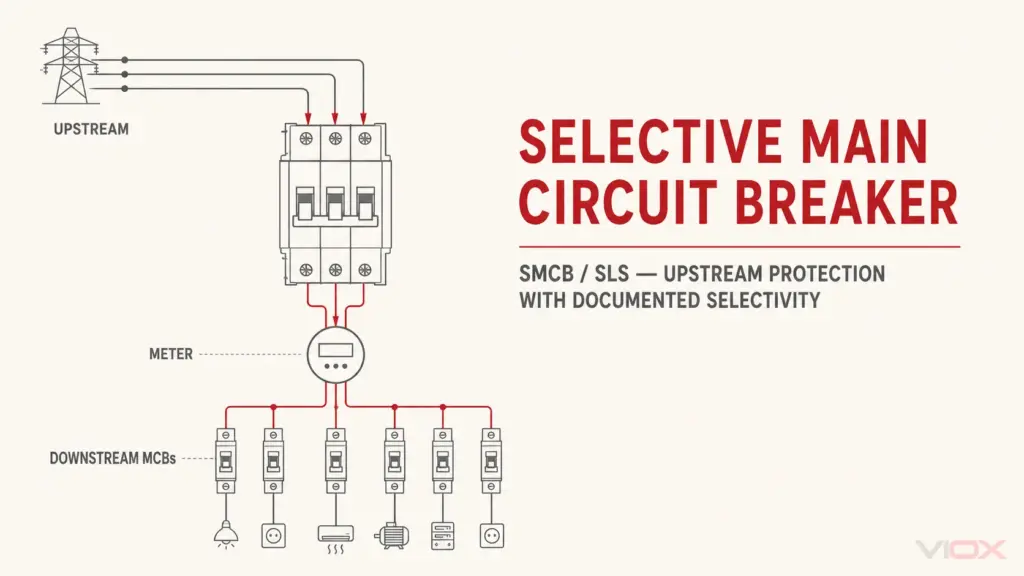
در تابلوهای توزیع فشار ضعیف با سبک IEC، از MCBها معمولاً برای مدارهای نهایی، مدارهای روشنایی، مدارهای پریز، تابلوهای کنترل، ماشینآلات کوچک و زیرتوزیعهای ماژولار استفاده میشود.
محدوده رایج معمولاً از جریانهای بسیار کوچک مانند 1A یا 2A تا 63A است. جریانهای نامی ماژولار بالاتر مانند 80A، 100A و 125A ممکن است در برخی سریها موجود باشند، اما نیازمند توجه دقیقتر به افزایش دما، طراحی محفظه، سازگاری با شینهها و قدرت قطع هستند.
جریانهای نامی پایین: 1A تا 6A
جریانهای نامی کوچک MCB اغلب برای موارد زیر استفاده میشوند:
- control circuits
- مدارهای رله و تایمر
- منابع تغذیه کوچک
- حفاظت کمکی
- تجهیزات جریان ضعیف
- مدارهای سیگنال یا تابلو کنترل در مواردی که طراحی اجازه میدهد
این مقادیر نامی به این دلیل انتخاب نمیشوند که بار در معنای عامیانه “کوچک” است. آنها به این دلیل انتخاب میشوند که هادی، دستگاه و الزامات حفاظتی پاییندست، آن مقدار را پشتیبانی میکنند.
مقادیر نامی رایج مدار نهایی: 10A، 16A، 20A، 25A، 32A
این مقادیر نامی اغلب در مدارهای روشنایی، پریز، لوازم خانگی و تجهیزات کوچک دیده میشوند. کاربرد دقیق بسته به کشور، روش سیمکشی و قوانین نصب متفاوت است.
برای مثال، 16A و 32A در مدارهای نهایی به سبک IEC بسیار رایج هستند، اما انتخاب صحیح همچنان به سطح مقطع هادی، روش نصب، دستهبندی، دمای محیط و نوع بار بستگی دارد.
رتبهبندیهای ماژولار بالاتر: 40A تا 125A
رتبهبندیهای بزرگتر MCB برای زیرمدارها، فیدرها، تابلوهای توزیع کوچک یا مدارهای تجهیزات بزرگتر استفاده میشوند. در این سطح، مرز بین انتخاب MCB و MCCB اهمیت پیدا میکند.
اگر مدار به ظرفیت قطع بالاتر، تنظیمات تریپ قابل تنظیم، انتخابگری بهتر یا حفاظت فیدر بزرگتر نیاز داشته باشد، ممکن است MCCB مناسبتر باشد. VIOX به این موضوع جداگانه در اندازههای استاندارد کلید برای رتبهبندیهای جریان MCCB از 16A تا 1600A.
IEC 60898-1 در مقابل IEC 60947-2: چرا استاندارد اهمیت دارد
رتبهبندیهای آمپر MCB ساده به نظر میرسند، اما استاندارد پشت دستگاه بر نحوه تست، علامتگذاری و کاربرد کلید تأثیر میگذارد. برای خریداران بینالمللی، این تفاوت هنگام مقایسه تابلوهای توزیع مسکونی، تابلوهای کنترل OEM و تجهیزات صنعتی اهمیت دارد.
| زمینه استاندارد | زمینه معمول دستگاه | چرا این موضوع برای اندازه MCB اهمیت دارد |
|---|---|---|
| IEC 60898-1 | قطع کنندههای مدار برای مصارف خانگی و مشابه | مشترک برای مدارهای نهایی و تابلوهای توزیع که توسط افراد عادی بهرهبرداری میشوند |
| IEC 60947-2 | کلیدهای مدار فشار ضعیف برای کاربردهای صنعتی | مشترک برای تابلوهای صنعتی، ماشینآلات و کاربردهایی که در آنها مقادیر نامی Icu/Ics اهمیت دارند |
| بافت بازار NEC / UL | سیستمهای کلید مدار مسکونی و تجاری آمریکای شمالی | از استانداردهای محصول، قوانین سایزبندی سیم و الزامات سازگاری تابلوی متفاوتی استفاده میکند |
مقدار جریان نامی، مانند 16A یا 32A، ممکن است در استانداردهای مختلف یکسان به نظر برسد. بافت کاربردی آنها یکسان نیست. خریداران صنعتی باید بررسی کنند که آیا کلید مدار برای مصارف خانگی/مشابه، مصارف صنعتی یا یک سیستم تابلوی توزیع خاص در نظر گرفته شده است یا خیر.
Icn، Icu و Ics یکسان نیستند
برای MCBها و کلیدهای مدار به سبک IEC، علائم اتصال کوتاه ممکن است به اشتباه درک شوند. بسته به استاندارد و نوع محصول، ممکن است اصطلاحاتی مانند موارد زیر را مشاهده کنید:
- Icn: ظرفیت نامی اتصال کوتاه که اغلب با تجهیزات IEC 60898-1 مرتبط است
- Icu: ظرفیت نهایی نامی قطع اتصال کوتاه تحت استاندارد IEC 60947-2
- Ics: ظرفیت سرویس نامی قطع اتصال کوتاه تحت استاندارد IEC 60947-2
برای یک مدار نهایی ساده، کاربران اغلب فقط بر روی 6kA یا 10kA تمرکز میکنند. برای تابلوهای توزیع B2B و تابلوهای کنترل، خریدار باید استاندارد مربوطه را نیز تأیید کند و بررسی نماید که آیا درجه اتصال کوتاه دستگاه با جریان خطای احتمالی در نقطه نصب مطابقت دارد یا خیر.
اندازههای رایج کلید مدار مسکونی: 15A، 20A، 30A، 40A، 50A
In U.S. and Canadian residential searches, users often ask about standard breaker sizes such as 15A, 20A, 30A, 40A, and 50A. This search intent is different from IEC MCB sizing, but it overlaps because users use “breaker size” and “MCB size” interchangeably.
| اندازه کلید مدار مسکونی | کاربرد رایج در بافتهای آمریکای شمالی | نکته مهم |
|---|---|---|
| 15A | مدارهای روشنایی عمومی و پریزها | اغلب در بافتهای NEC با سیم مسی 14 AWG مرتبط است |
| 20A | مدارهای آشپزخانه، حمام، رختشویخانه و پریزهای عمومی | اغلب در بافتهای NEC با سیم مسی 12 AWG مرتبط است |
| 30A | خشککنها، سیستمهای تهویه مطبوع کوچک، آبگرمکنها، مدارهای RV | باید با الزامات هادی و دستگاه مطابقت داشته باشد |
| ۴۰ آمپر تا ۵۰ آمپر | اجاقهای برقی، شارژرهای خودروهای برقی، لوازم خانگی بزرگ | نیازمند بررسی دقیق بار و هادی است |
این جدول یک مرجع سادهسازیشده برای مصارف مسکونی است و یک قانون کلی برای سایزبندی محسوب نمیشود. کدهای الکتریکی محلی، جنس هادی، درجه عایقی، شرایط نصب و نوع بار باید بررسی شوند.
برای محاسبه بار با تمرکز بر نیاز صاحبخانه، آن مبحث را از این جدول مرجع MCB جدا نگه دارید. به VIOX مراجعه کنید راهنمای صاحب خانه برای سایزینگ بریکر و محاسبه بار.
سایز MCB در مقابل سایز سیم: اولویت با کابل است
یک اشتباه رایج، انتخاب MCB تنها بر اساس جریان دستگاه یا تجهیزات است. در طراحی واقعی مدار، MCB از کابل و مدار محافظت میکند، نه فقط از دستگاه.
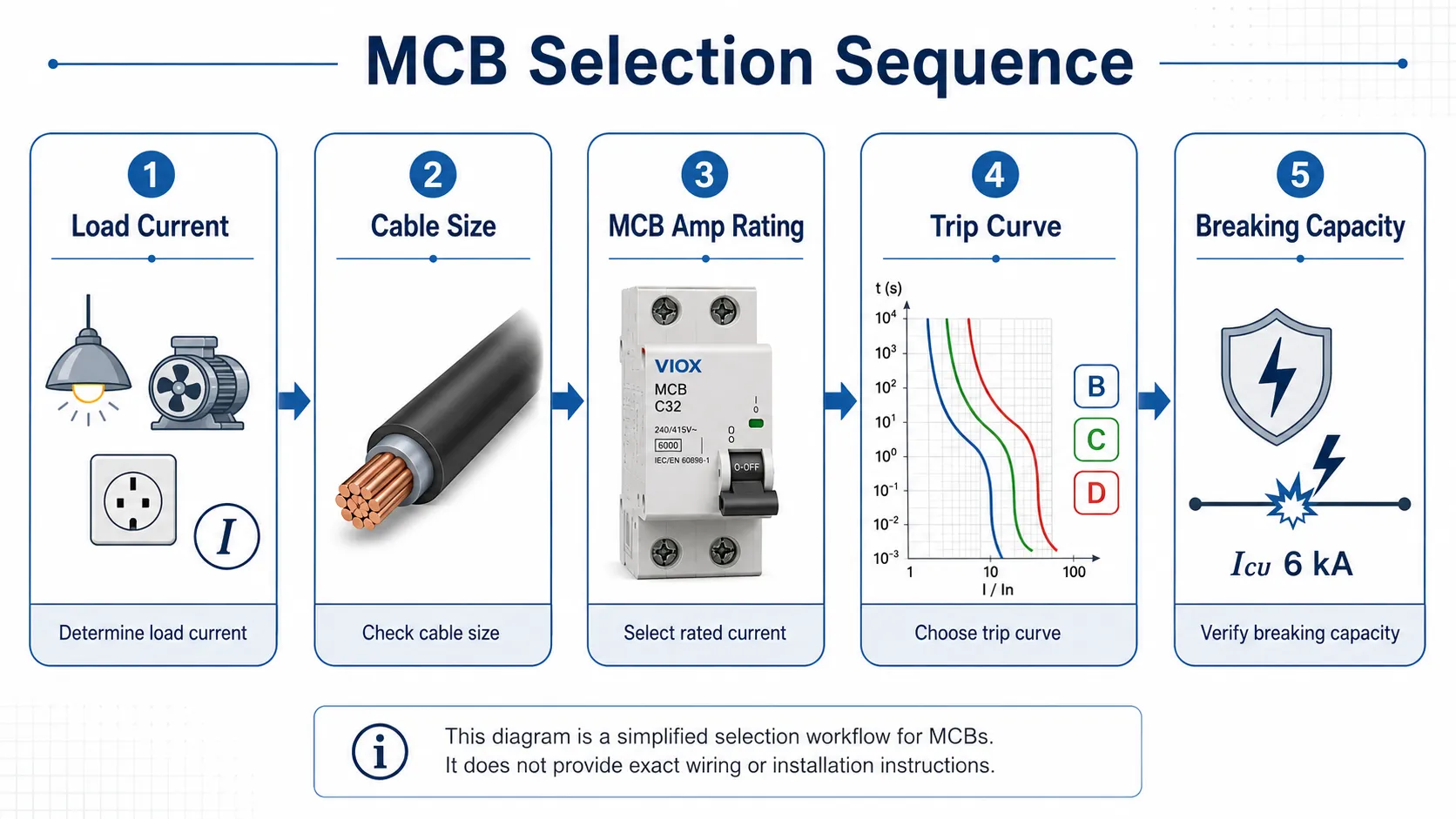
توالی صحیح به شرح زیر است:
- جریان بار را تعیین کنید.
- هادی را بر اساس جریان، افت ولتاژ، روش نصب، دمای محیط، دستهبندی و کد محلی انتخاب کنید.
- یک ریتینگ MCB انتخاب کنید که از آن هادی محافظت کند.
- اطمینان حاصل کنید که منحنی قطع با جریان هجومی بار مطابقت دارد.
- اطمینان حاصل کنید که قدرت قطع برای جریان اتصال کوتاه احتمالی کافی است.
اگر کابل بیش از حد کوچک باشد، افزایش سایز MCB ناایمن است. کلیدی که با اجازه دادن به جریان بیش از حد، از قطع ناخواسته جلوگیری میکند، میتواند کابل را به نقطه ضعف تبدیل کند.
برای مراجع سیمکشی مبتنی بر NEC/AWG، از VIOX استفاده کنید جدول سایز سیم در مقابل ظرفیت فیوز. برای تابلوهای IEC، به جای کپی کردن جدول AWG، از استاندارد نصب مربوطه، برگه اطلاعات کابل و قوانین پروژه استفاده کنید.
کاهش توان بر اساس دما و گروهبندی: چرا یک MCB با جریان 32A ممکن است در یک تابلوی داغ مانند 32A عمل نکند
جریان نامی MCB تحت شرایط تعریفشده تست میشود. یک تابلوی توزیع واقعی میتواند داغتر از آن شرایط مرجع باشد، بهویژه زمانی که کلیدهای زیادی در کنار هم نصب شده باشند و چندین مدار بهطور مداوم بار داشته باشند.
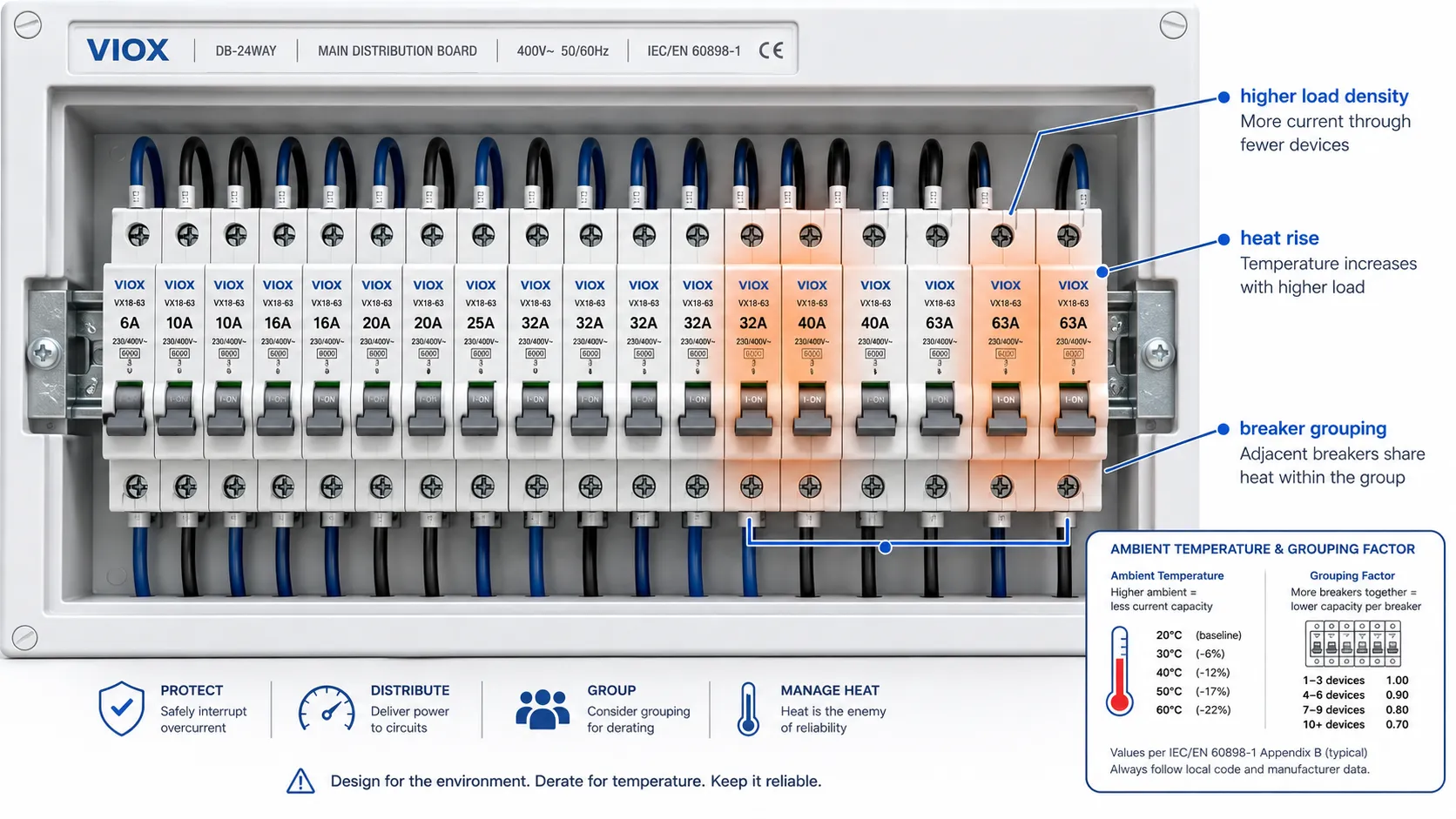
این موضوع اهمیت دارد زیرا MCBهای حرارتی-مغناطیسی به گرما واکنش نشان میدهند. اگر دمای محیط تابلو بالا باشد، یا اگر چندین کلید مدار تحت بار در کنار هم به صورت فشرده قرار گرفته باشند، ممکن است کلید زودتر از حد انتظار عمل کند (تریپ دهد). تولیدکنندگان اغلب جداول کاهش توان (derating) یا اصلاحی را برای دمای محیط، گروهبندی و شرایط محفظه ارائه میدهند.
در عمل، مهندسان گاهی اوقات در هنگام طراحی از ضریب گروهبندی یا کاهش توان استفاده میکنند، اما مقدار صحیح باید از برگه اطلاعات تولیدکننده کلید مدار یا استاندارد مربوط به تابلو استخراج شود. از اعمال کورکورانه ضریب ۰.۸ خودداری کنید. این ضریب ممکن است به عنوان یک هشدار اولیه در طراحی برخی تابلوهای شلوغ منطقی باشد، اما انتخاب نهایی باید با دادههای محصول، افزایش دمای محفظه و مقررات محلی مطابقت داده شود.
| وضعیت | چه اتفاقی ممکن است رخ دهد | چه چیزی را بررسی کنید |
|---|---|---|
| تعداد زیادی MCB در کنار یکدیگر | تجمع گرما در طول ردیف | ضریب گروهبندی تولیدکننده یا تست دمای تابلو |
| دمای بالای محفظه | ممکن است تریپ حرارتی زودتر عمل کند | جدول کاهش توان در دمای محیط |
| بار زیاد مداوم | حاشیه حرارتی کمتر | سایز کابل، چرخه کاری بار، تهویه |
| تهویه نامناسب | نقاط داغ در نزدیکی ردیف کلیدهای مدار | طراحی محفظه و فاصلهگذاری |
| مدارهای ترکیبی با بار زیاد | گرمایش ناهمگون | آرایش مدار و متعادلسازی بار |
از دیدگاه تولید، این یکی از دلایلی است که کلیدهای مدار ماژولار 32A، 40A و 63A بیش از آنچه اندازه کوچکشان نشان میدهد، شایسته توجه هستند. آنها ممکن است بهخوبی روی ریل DIN قرار بگیرند، اما در یک تابلو بسته یا شلوغ، گرمای تولیدی آنها میتواند بر کل ردیف تأثیر غالب داشته باشد. رتبهبندی MCB، رتبهبندی شین، دمای محفظه و ترمینال کابل را به عنوان یک سیستم واحد در نظر بگیرید.
اندازه MCB در مقابل منحنی قطع: B، C و D رتبهبندی آمپر نیستند
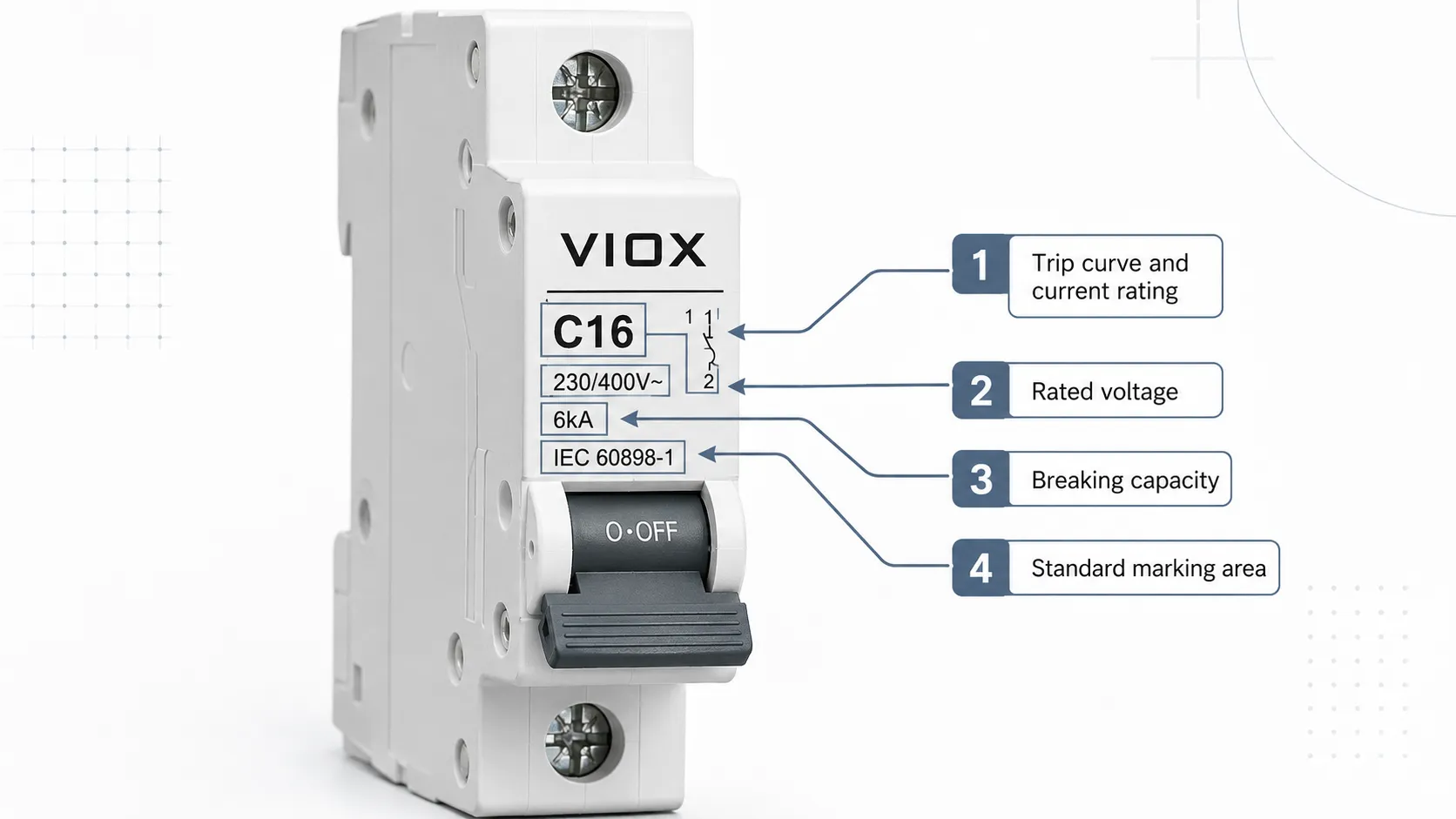
علامتگذاری روی یک MCB مانند C16 به این معنی نیست که 16A یک “اندازه C” است. بلکه به این معنی است که:
- سی = منحنی قطع
- 16 = جریان نامی بر حسب آمپر
رتبهبندی آمپر، جریان نامی پیوسته را به شما میگوید. منحنی قطع به شما میگوید که کلید مدار چگونه به جریانهای هجومی کوتاه و جریان خطا واکنش نشان میدهد.
| علامتگذاری نمونه | جریان نامی | منحنی سفر | معنی |
|---|---|---|---|
| B10 | 10A | منحنی B | آستانه تریپ مغناطیسی پایینتر، که اغلب برای مدارهای با جریان هجومی کم استفاده میشود |
| C16 | 16A | منحنی C | منحنی عمومی برای بارهای با جریان هجومی متوسط |
| C32 | 32A | منحنی C | جریان نامی 32A با رفتار منحنی C |
| D20 | 20A | منحنی D | تحمل جریان هجومی بالاتر، که تنها زمانی استفاده میشود که شرایط حلقه اتصال کوتاه از آن پشتیبانی کند |
بدون بررسی جریان اتصال کوتاه و الزامات زمان قطع، تریپهای مزاحم را با تغییر از B به C یا C به D برطرف نکنید. آستانه تریپ مغناطیسی کندتر یا بالاتر میتواند رفع خطا را دشوارتر کند.
برای توضیح عمیقتر منحنی قطع، به بخش زیر در VIOX مراجعه کنید درک منحنیهای تریپ راهنما مراجعه کنید.
اندازه MCB در مقابل ظرفیت قطع: 6kA، 10kA و فراتر از آن
آمپر نامی MCB و ظرفیت قطع، مشخصات متفاوتی هستند.
The آمپر نامی جریان نامی عادی کلید را به شما نشان میدهد. در حالی که ظرفیت شکستن حداکثر جریان خطایی را که کلید میتواند در شرایط مشخص با ایمنی قطع کند، به شما نشان میدهد.
ظرفیتهای قطع رایج MCB بسته به سری محصول و بازار متفاوت است. بسته به استاندارد، سازنده و کاربرد، ممکن است مقادیری مانند 4.5kA، 6kA، 10kA یا بالاتر را مشاهده کنید. یک کلید 32A با ظرفیت قطع ناکافی، حتی اگر جریان بار صحیح باشد، همچنان میتواند نامناسب باشد.
| مشخصات | مفهوم آن چیست | اشتباه رایج |
|---|---|---|
| جریان نامی، In | جریان نامی عادی مانند 16A یا 32A | در نظر گرفتن آن به عنوان تنها عامل انتخاب |
| منحنی قطع | B، C، D، K، Z بسته به سری | اشتباه گرفتن منحنی با جریان نامی |
| ظرفیت شکستن | قدرت قطع اتصال کوتاه بر حسب kA | نادیده گرفتن سطح اتصال کوتاه در تابلو |
| ولتاژ نامی | مناسب بودن ولتاژ AC یا DC | استفاده از MCBهای AC در مدارهای DC بدون تأییدیه |
برای تدارکات، مشخصات کامل یا برگه اطلاعات را درخواست کنید، نه فقط “32A MCB”. یک درخواست مفید شامل جریان نامی، منحنی، ولتاژ نامی، قدرت قطع، استاندارد، تعداد پل و سری محصول است. برای مثال، “C32, 2P, 230/400V AC, 6kA, IEC 60898-1” بسیار واضحتر از “کلید مدار 32A” است.”
جریانهای نامی AC MCB در مقابل DC MCB
کلیدهای مدار MCB از نوع AC و DC ممکن است دارای جریان نامی مشابهی باشند، اما لزوماً قابل جایگزینی با یکدیگر نیستند. قطع خطاهای DC دشوارتر است، زیرا جریان مستقیم برخلاف جریان AC به طور طبیعی از صفر عبور نمیکند. کلیدهای مدار MCB مخصوص DC نیازمند طراحی مناسب محفظه جرقه، ولتاژ نامی، رعایت قواعد قطبیت در صورت لزوم و دستورالعملهای نصب هستند.
اگر یک MCB از نوع AC با جریان 16A و یک MCB از نوع DC با جریان 16A دارای جریان نامی یکسانی باشند، به این معنی نیست که برای یک مدار مشابه مناسب هستند. ولتاژ نامی، تعداد قطبهای سری، قطبیت، قدرت قطع و نقشه سیمکشی سازنده را بررسی کنید.
برای حفاظت اختصاصی DC، به راهنمای VIOX در مورد قطع کنندههای مدار DC.
MCB در مقابل MCCB: چه زمانی نوع کلید مدار تغییر میکند؟
کلیدهای MCB معمولاً برای مدارهای نهایی و توزیع ماژولار استفاده میشوند. کلیدهای MCCB زمانی استفاده میشوند که مدار نیازمند جریان نامی بالاتر، قدرت قطع بیشتر، تنظیمات تریپ قابل تغییر یا حفاظت در سطح فیدر باشد.
| ویژگی | MCB | MCCB |
|---|---|---|
| نقش معمول | مدارهای نهایی، توزیع ماژولار | فیدرها، زیرشاخهها، بارهای بزرگتر |
| محدوده جریان متداول | رنجهای کوچک تا 63A، بسته به سری محصول گاهی تا 125A | اغلب از 16A به بالا تا صدها یا هزاران آمپر |
| تنظیم تریپ | معمولاً ثابت | بسته به مدل، ثابت یا قابل تنظیم |
| ظرفیت شکستن | وابسته به سری محصول | اغلب گزینههای بالاتر نیز موجود است |
| نصب | تابلوهای ماژولار قابل نصب روی ریل DIN | نصب روی پنل، تابلوهای توزیع بزرگتر |
فقط به دلیل در دسترس بودن رنج جریان، یک MCB را در کاربرد فیدر به کار نبرید. اگر پروژه به انتخابگری (Selectivity)، ظرفیت خطای بالا یا حفاظت قابل تنظیم نیاز دارد، گزینههای MCCB را ارزیابی کنید.
اشتباهات رایج هنگام خواندن سایزهای MCB
اشتباه ۱: جایگزینی یک MCB که تریپ میدهد با یک سایز بزرگتر
اگر یک کلید مدار 16A قطع شود، جایگزینی آن با یک کلید مدار 20A بدون بررسی کابل و بار، ناایمن است. ممکن است کلید مدار با محافظت از مدار، وظیفه خود را به درستی انجام میدهد.
اشتباه 2: در نظر گرفتن قوانین 80% به عنوان قوانین جهانی
قوانین بار مداوم آمریکای شمالی و شیوههای نصب IEC یکسان نیستند. از اعمال قوانین سادهسازی شده یک منطقه به هر پروژه خودداری کنید.
اشتباه 3: اشتباه گرفتن منحنی قطع با جریان نامی
C16 و B16 هر دو کلید مدار 16A هستند، اما در شرایط قطع مغناطیسی واکنش متفاوتی نشان میدهند. منحنی، رفتار خطا و جریان هجومی را تغییر میدهد؛ اما ظرفیت کابل را افزایش نمیدهد.
اشتباه 4: نادیده گرفتن دمای محیط و گروهبندی
یک تابلوی توزیع پر از MCBهای تحت بار میتواند داغتر از یک کلید مدار تکی باشد که در هوای آزاد تست شده است. دمای محفظه و گروهبندی میتوانند بر عملکرد واقعی تأثیر بگذارند.
اشتباه 5: نادیده گرفتن ظرفیت قطع
یک کلید مدار نباید فقط جریان بار را عبور دهد، بلکه باید قادر به قطع جریان اتصال کوتاه احتمالی در نقطه نصب نیز باشد.
سوالات متداول
اندازههای استاندارد MCB کدامند؟
اندازههای رایج MCB با استاندارد IEC شامل 1A، 2A، 3A، 4A، 6A، 10A، 16A، 20A، 25A، 32A، 40A، 50A، 63A، 80A، 100A و 125A است که بسته به سری محصول و سازنده متفاوت میباشد.
رایجترین سایز MCB کدام است؟
هیچ اندازه واحد و جهانی وجود ندارد. در بسیاری از مدارهای نهایی به سبک IEC، مقادیر 10A، 16A، 20A و 32A رایج هستند. در تابلوهای مسکونی آمریکای شمالی، کلیدهای مدار 15A و 20A بسیار متداول هستند.
آیا یک MCB با جریان 16A برای پریزها کافی است؟
این موضوع به روش سیمکشی کشور، سطح مقطع هادی، روش نصب، بار و آییننامههای محلی بستگی دارد. یک MCB با جریان 16A در بسیاری از مدارات پریز با استاندارد IEC رایج است، اما این یک قانون کلی نیست.
عبارت C16 روی یک کلید مینیاتوری (MCB) به چه معناست؟
C16 به این معنی است که MCB دارای جریان نامی 16A و منحنی قطع C است. حرف، رفتار قطع را توصیف میکند؛ عدد، جریان نامی را توصیف میکند.
آیا میتوانم یک MCB با جریان 16A را با یک MCB با جریان 20A جایگزین کنم؟
تنها در صورتی که کابل، طراحی مدار، بار، روش نصب و مقررات محلی از حفاظت 20A پشتیبانی کنند. هرگز اندازه کلید مدار را صرفاً برای جلوگیری از قطع شدن آن افزایش ندهید.
تفاوت بین سایز MCB و قدرت قطع آن چیست؟
اندازه MCB معمولاً به معنای جریان نامی است، مانند 16A یا 32A. ظرفیت قطع، حداکثر جریان خطایی است که کلید مدار میتواند با ایمنی قطع کند، که بسته به محصول، مانند 6kA یا 10kA میباشد.
تفاوت بین IEC 60898-1 و IEC 60947-2 برای MCBها چیست؟
استاندارد IEC 60898-1 معمولاً با کلیدهای مدار برای مصارف خانگی و تأسیسات مشابه مرتبط است. استاندارد IEC 60947-2 برای کلیدهای مدار فشار ضعیف در کاربردهای صنعتی استفاده میشود. ممکن است جریان نامی یکسانی در هر دو زمینه ظاهر شود، اما مبنای آزمون، نشانهگذاری و مفروضات کاربردی آنها ممکن است متفاوت باشد.
عبارت Icn روی یک MCB به چه معناست؟
Icn یک اصطلاح ظرفیت اتصال کوتاه نامی است که معمولاً با کلید مدارهای IEC 60898-1 مرتبط است. نباید آن را با علائم Icu و Ics که تحت استاندارد IEC 60947-2 استفاده میشوند، اشتباه گرفت. هنگام مقایسه MCBها، همیشه بررسی کنید که مقدار اتصال کوتاه به کدام استاندارد تعلق دارد.
آیا یک ردیف از MCBها نیاز به کاهش توان نامی (derating) دارند؟
ممکن است تأثیر بگذارد. اگر تعداد زیادی کلید مدار در کنار هم در یک محفظه گرم یا بسته نصب شوند، افزایش دما و اثر گروهبندی میتواند حاشیه حرارتی موجود را کاهش دهد. به جای اعمال یک ضریب کلی، از جدول کاهش توان (derating) سازنده یا بررسی افزایش دمای تابلو استفاده کنید.
آیا ابعاد MCBهای AC و DC یکسان هستند؟
ممکن است مقدار جریان نامی یکسان به نظر برسد، اما MCBهای AC و DC بهطور خودکار قابل جایگزینی با یکدیگر نیستند. مدارهای DC به کلیدهای مدار با درجهبندی DC، ولتاژ مناسب، قطبیت، قابلیت قطع قوس الکتریکی و دستورالعملهای سیمکشی نیاز دارند.
چه زمانی باید به جای MCB از یک MCCB استفاده کنم؟
هنگامی که مدار به جریان نامی بالاتر، قدرت قطع بیشتر، تنظیمات تریپ قابل تنظیم، انتخابگری بهتر یا حفاظت در سطح فیدر نیاز دارد، از MCCB استفاده کنید.
نتيجه گيری
اندازههای استاندارد MCB به عنوان یک مرجع مفید هستند، اما تنها نقطه شروع محسوب میشوند. علامتگذاری 16A، 20A یا 32A به تنهایی ثابت نمیکند که کلید مدار برای آن مدار مناسب است.
یک MCB صحیح باید با کابل، جریان بار، منحنی قطع، قدرت قطع، نوع ولتاژ، روش نصب و آییننامههای محلی مطابقت داشته باشد. از جدول رتبهبندی آمپر برای محدود کردن انتخاب استفاده کنید و سپس قبل از بهکارگیری کلید مدار در یک تابلوی واقعی، برگه اطلاعات کامل آن را بررسی نمایید.