Εισαγωγή: Η Αλλαγή Ορολογίας από TVSS σε SPD
Εάν έχετε εργαστεί με ηλεκτρικά συστήματα για περισσότερο από μια δεκαετία, πιθανότατα έχετε συναντήσει και τους δύο όρους: TVSS (Transient Voltage Surge Suppressor) και Ειδικό Πιστοποιητικό Πρόσβασης (SPD) (Surge Protective Device). Αυτό που ξεκίνησε ως μια απλή αλλαγή ονόματος το 2009 αντιπροσωπεύει μια θεμελιώδη εξέλιξη στα πρότυπα ασφαλείας, την αυστηρότητα των δοκιμών και τη φιλοσοφία προστασίας. Αυτό το άρθρο εξετάζει την πορεία από τις παλαιότερες συσκευές TVSS που διέπονταν από τις πρώτες εκδόσεις του UL 1449 έως τα σύγχρονα SPD που πληρούν τις τρέχουσες απαιτήσεις της 5ης Έκδοσης.
Για μηχανικούς, εργολάβους και διαχειριστές εγκαταστάσεων, η κατανόηση αυτής της μετάβασης δεν είναι απλώς ακαδημαϊκή—επηρεάζει άμεσα την ασφάλεια του συστήματος, τη συμμόρφωση και τη μακροζωία του εξοπλισμού. Θα εξερευνήσουμε το ιστορικό πλαίσιο, τις τεχνικές διαφορές και τις πρακτικές επιπτώσεις της αναβάθμισης από την προστασία TVSS στην προστασία SPD. Είτε συντηρείτε παλαιότερες υποδομές είτε καθορίζετε νέες εγκαταστάσεις, αυτός ο οδηγός παρέχει τη σαφήνεια που απαιτείται για τη λήψη τεκμηριωμένων αποφάσεων σε ένα εξελισσόμενο τοπίο προτύπων.
Ιστορικό Πλαίσιο: UL 1449 1η & 2η Έκδοση (Εποχή TVSS)
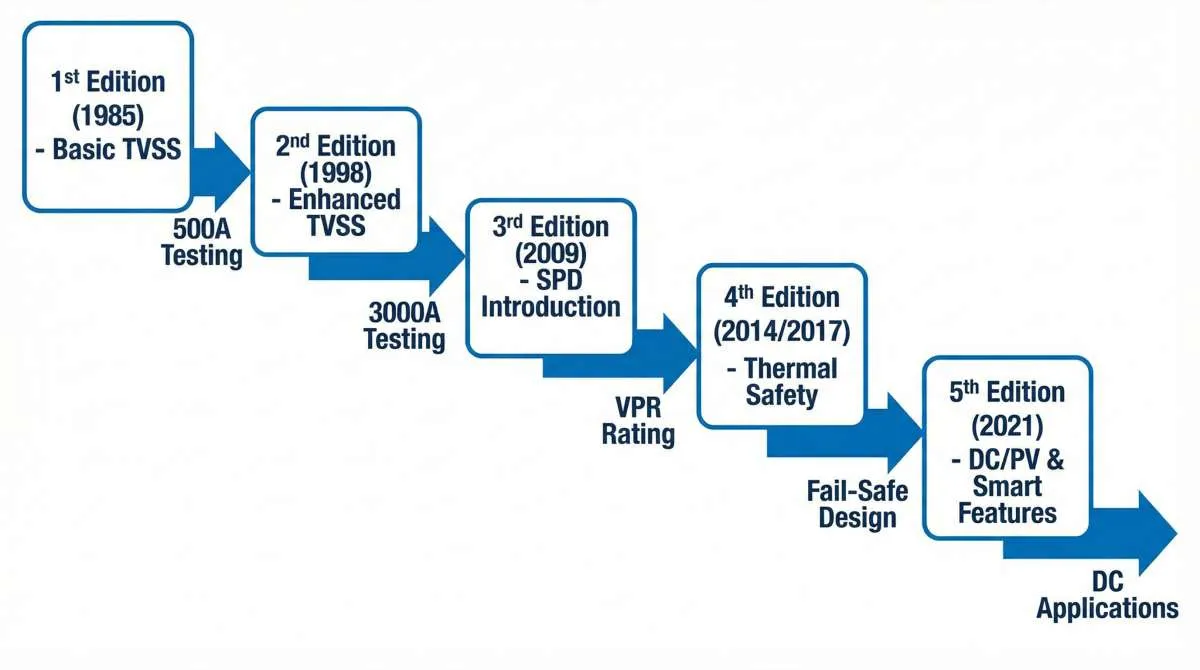
Πριν από το 2009, οι συσκευές προστασίας από υπερτάσεις στη Βόρεια Αμερική χαρακτηρίζονταν καθολικά ως TVSS (Transient Voltage Surge Suppressors) σύμφωνα με την 1η (1985) και τη 2η (1998) Έκδοση του UL 1449. Αυτά τα πρώτα πρότυπα καθιέρωσαν βασικές απαιτήσεις ασφαλείας, αλλά δεν διέθεταν τις αυστηρές δοκιμές απόδοσης των σύγχρονων SPD.
Οι συσκευές TVSS αξιολογούνταν κυρίως για βασική ασφάλεια—πρόληψη κινδύνων πυρκαγιάς και ηλεκτροπληξίας—χρησιμοποιώντας την Suppressed Voltage Rating (SVR) δοκιμή με ένα μέτριο ρεύμα υπερτάσεων 500 αμπέρ. Αυτό παρείχε μια συγκριτική μετρική, αλλά δεν προσομοίωνε έντονα πραγματικά γεγονότα υπερτάσεων.
Η εγκατάσταση ήταν εγγενώς περιοριστική: Οι μονάδες TVSS αναγνωρίζονταν μόνο για την πλευρά του φορτίου (κατάντη) του κύριου διακόπτη αποσύνδεσης, αποκλείοντάς τις από την προστασία εισόδου υπηρεσίας όπου οι υπερτάσεις που προκαλούνται από κεραυνούς εισέρχονται συνήθως σε ένα κτίριο.
Πολλές εγκαταστάσεις εξακολουθούν να λειτουργούν συσκευές TVSS που εγκαταστάθηκαν πριν από το 2009. Αν και λειτουργικές, στερούνται σύγχρονης θερμικής προστασίας, αντοχής σε υπερτάσεις υψηλότερου ρεύματος (δοκιμή 3.000A), τρέχουσας συμμόρφωσης με το NEC και λειτουργιών ασφαλούς αστοχίας που αποτρέπουν καταστροφικές καταστάσεις αστοχίας. Αυτό το ιστορικό πλαίσιο εξηγεί γιατί η μετάβαση στην ορολογία SPD αντιπροσώπευε μια θεμελιώδη αναβάθμιση στη φιλοσοφία ασφάλειας και τις προσδοκίες απόδοσης.
Η Σύγχρονη Μετάβαση: UL 1449 3η Έκδοση και Μετά
Η κυκλοφορία της UL 1449 3ης Έκδοσης το 2009 σηματοδότησε μια αλλαγή παραδείγματος στην προστασία από υπερτάσεις. Το πρότυπο ενοποίησε προηγουμένως ξεχωριστές κατηγορίες (TVSS και δευτερεύοντα απαγωγούς υπερτάσεων) υπό τον ενοποιημένο όρο Συσκευή προστασίας από υπερτάσεις (SPD). Αυτό δεν ήταν απλώς rebranding—αντικατόπτριζε μια διεθνή προσπάθεια εναρμόνισης που ευθυγράμμιζε τα πρότυπα UL με την ορολογία IEC και τον Εθνικό Ηλεκτρολογικό Κώδικα (NEC).
Βασικές Αλλαγές που Εισήχθησαν στην 3η Έκδοση
| Αλλαγή | Legacy (TVSS / 2η Έκδ.) | Σύγχρονο (SPD / 3η Έκδ.) | Σύγκρουση |
|---|---|---|---|
| Ορολογία | TVSS | Ειδικό Πιστοποιητικό Πρόσβασης (SPD) | Ευθυγραμμίζεται με τα παγκόσμια πρότυπα (IEC 61643-11) |
| Ρεύμα δοκιμής | 500Α | 3.000Α (6× υψηλότερο) | Προσομοιώνει πιο ρεαλιστικές συνθήκες υπερτάσεων |
| Εκτίμηση Τάσης | SVR (Suppressed Voltage Rating) | VPR (Voltage Protection Rating) | Οι υψηλότερες αριθμητικές τιμές δεν σημαίνουν χειρότερη απόδοση |
| Μετρική Αντοχής | Δεν καθορίζεται καμία | Ονομαστικό Ρεύμα Εκφόρτισης (Iₙ) | Οι συσκευές πρέπει να επιβιώσουν 15 διαδοχικές υπερτάσεις στο ονομαστικό ρεύμα |
| Πεδίο Εφαρμογής Εγκατάστασης | Μόνο στην πλευρά του φορτίου | Τύποι 1-5 με βάση την τοποθεσία | Επιτρέπει την προστασία εισόδου υπηρεσίας (πλευρά γραμμής) |
Εξέλιξη Μέσω της 4ης και 5ης Έκδοσης
Οι επόμενες εκδόσεις βελτίωσαν τις απαιτήσεις ασφαλείας για τις αναδυόμενες τεχνολογίες:
Η 4η Έκδοση (2014/2017) ενίσχυσε τις δοκιμές για θερμική προστασία και καταστάσεις αστοχίας, διασφαλίζοντας ότι τα SPD αποτυγχάνουν με ασφάλεια χωρίς να δημιουργούν κινδύνους πυρκαγιάς. Η 5η Έκδοση (2021, ενημερωμένη έως το 2025) πρόσθεσε συγκεκριμένες απαιτήσεις για συστήματα DC και φωτοβολταϊκά (PV) έως 1500V DC, κυκλώματα φόρτισης USB ενσωματωμένα σε SPD Τύπου 3, μόνωση μεταξύ ιχνών σε πολυστρωματικές πλακέτες τυπωμένων κυκλωμάτων και συμμόρφωση με υγρές τοποθεσίες για εξαρτήματα Τύπου 5.
Το Σύστημα Ταξινόμησης SPD
Το σύγχρονο UL 1449 κατηγοριοποιεί τις συσκευές προστασίας από υπερτάσεις σε πέντε “Τύπους” με βάση την τοποθεσία εγκατάστασης και την κατασκευή:
- Τύπος 1: Μόνιμα SPD για εγκατάσταση στην πλευρά της γραμμής (είσοδος υπηρεσίας)
- Τύπος 2: Μόνιμα SPD για εγκατάσταση στην πλευρά του φορτίου (πίνακας διανομής)—ο άμεσος διάδοχος των συσκευών TVSS
- Τύπος 3: SPD σημείου χρήσης (πολύπριζα, τύποι πριζών)
- Τύπος 4: Συγκροτήματα εξαρτημάτων για ενσωμάτωση σε άλλο εξοπλισμό
- Τύπος 5: Διακριτά εξαρτήματα (MOVs, GDTs) για τοποθέτηση σε πλακέτα κυκλώματος
Αυτό το πλαίσιο παρέχει σαφήνεια για τους υπεύθυνους προδιαγραφών και τους εγκαταστάτες, αντικαθιστώντας την ασαφή ετικέτα TVSS με ακριβείς οδηγίες εφαρμογής.
Βασικές Τεχνικές Διαφορές: SVR έναντι VPR, Πρότυπα Δοκιμών, Χαρακτηριστικά Ασφαλείας
Η μετάβαση από το TVSS στο SPD περιελάμβανε ουσιαστικές τεχνικές αναβαθμίσεις που επηρεάζουν την απόδοση, την ασφάλεια και τις προδιαγραφές. Η κατανόηση αυτών των διαφορών είναι απαραίτητη για την σωστή επιλογή συσκευής και τον σχεδιασμό του συστήματος.
Εξέλιξη της Ονομαστικής Τάσης: SVR σε VPR
Η πιο αξιοσημείωτη αλλαγή για τους μηχανικούς είναι η ορολογία της ονομαστικής τάσης και η μεθοδολογία δοκιμών.
| Παράμετρος | SVR (Suppressed Voltage Rating) | VPR (Voltage Protection Rating) | Πρακτική Επίπτωση |
|---|---|---|---|
| Ρεύμα δοκιμής | 500Α | 3.000Α (6× υψηλότερο) | Οι τιμές VPR φαίνονται υψηλότερες, αλλά αντιπροσωπεύουν πιο ρεαλιστικές συνθήκες υπερτάσεων |
| Μέτρηση | Μέγιστη τάση διέλευσης κατά τη διάρκεια μιας μεμονωμένης υπέρτασης | Μέγιστη τάση υπό επαναλαμβανόμενες υπερτάσεις 3.000A | Το VPR υποδεικνύει την απόδοση υπό σοβαρά, επαναλαμβανόμενα συμβάντα |
| Τυπικές τιμές | 330V, 400V, 500V για συστήματα 120V | 330V, 400V, 500V, 600V για τα ίδια συστήματα | Μια συσκευή VPR 600V μπορεί να προσφέρει καλύτερη προστασία από μια συσκευή SVR 500V λόγω της αυστηρότητας των δοκιμών |
| Επισήμανση | “SVR: 500V” | “VPR: 600V” | Η άμεση αριθμητική σύγκριση μεταξύ SVR και VPR είναι παραπλανητική |
Κρίσιμη Επισήμανση: Ένα σύγχρονο SPD με VPR 600V μπορεί να παρέχει ανώτερη προστασία από ένα παλαιότερο TVSS με βαθμολογία SVR 500V. Το υψηλότερο ρεύμα δοκιμής (3.000A έναντι 500A) σημαίνει ότι ο αριθμός VPR αντικατοπτρίζει την απόδοση υπό πιο απαιτητικές συνθήκες.
Ενισχυμένη Δοκιμή Αντοχής: Ονομαστικό Ρεύμα Εκφόρτισης (Iₙ)
Τα παλαιότερα πρότυπα TVSS δεν διέθεταν επίσημες μετρήσεις αντοχής. Το σύγχρονο UL 1449 απαιτεί από τα SPD να αποδεικνύουν την επιβίωσή τους μέσω 15 διαδοχικών υπερτάσεων στο ονομαστικό ρεύμα εκφόρτισης.
| Τρέχουσα βαθμολογία | Typical Application | Παλαιότερη Προσέγγιση TVSS | Σύγχρονη Απαίτηση SPD |
|---|---|---|---|
| 10kA Iₙ | Εμπορικά κτίρια | Καμία συγκεκριμένη δοκιμή κύκλου ζωής | Πρέπει να επιβιώσει 15 × 10kA υπερτάσεις |
| 20kA Iₙ | Βιομηχανικές εγκαταστάσεις | Μεταβλητή απόδοση | Συνεπής προστασία μέσω πολλαπλών συμβάντων |
| 40kA Iₙ | Είσοδος υπηρεσίας | Μη διαθέσιμο για TVSS | SPD Τύπου 1 για προστασία από κεραυνούς |
Αυτή η δοκιμή διασφαλίζει ότι τα SPD δεν υποβαθμίζονται σημαντικά μετά τα πρώτα λίγα συμβάντα υπέρτασης - μια κοινή λειτουργία αστοχίας σε παλαιότερες μονάδες TVSS.
Προόδους στα Χαρακτηριστικά Ασφαλείας
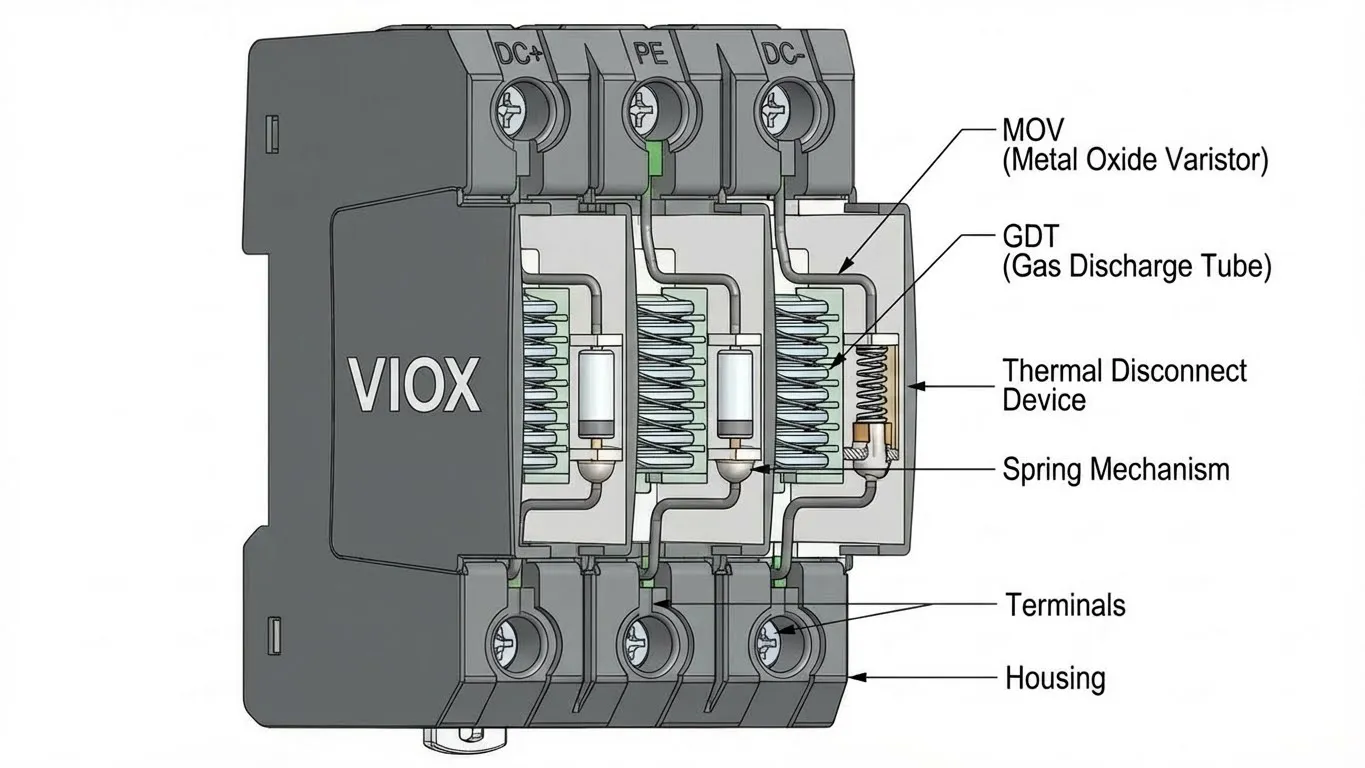
Τα σύγχρονα SPD ενσωματώνουν πολλαπλά στρώματα προστασίας που απουσίαζαν ή ήταν ανεπαρκή στις συσκευές TVSS:
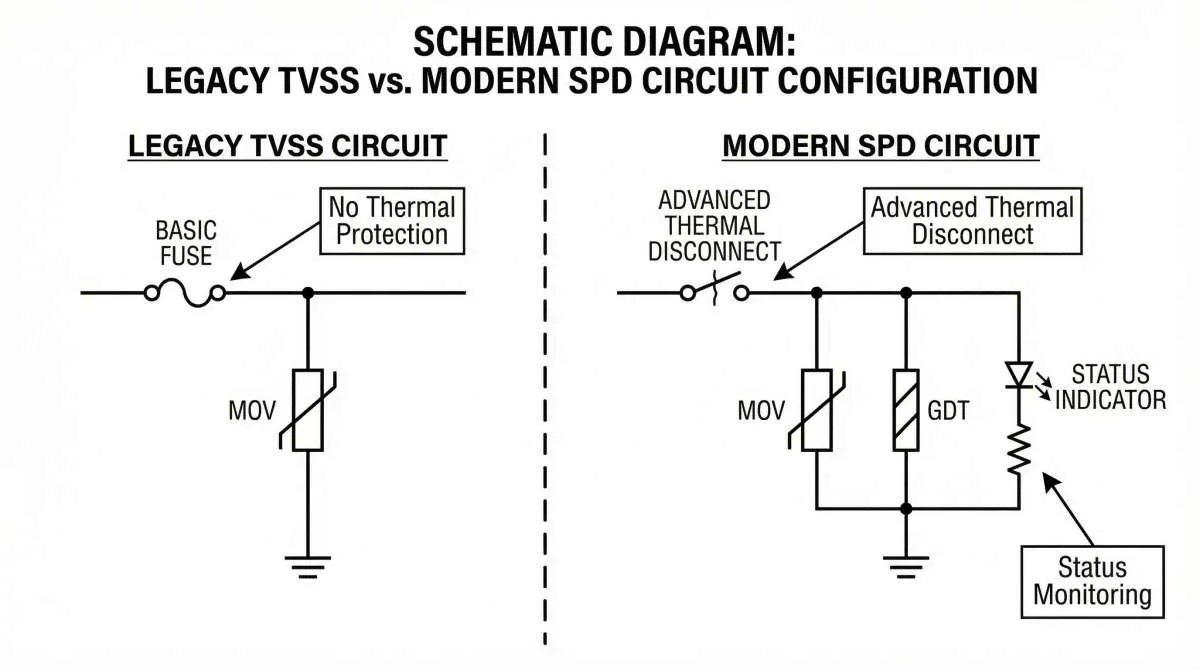
- Θερμική Αποσύνδεση: Αποτρέπει την υπερθέρμανση και τη θερμική διαφυγή αποσυνδέοντας τα αποτυχημένα εξαρτήματα πριν φτάσουν σε επικίνδυνες θερμοκρασίες.
- Ονομαστική τιμή ρεύματος βραχυκύκλωσης (SCCR): Σαφώς καθορισμένες ονομαστικές τιμές αντοχής για ρεύματα σφάλματος, διασφαλίζοντας τον συντονισμό με τις ανάντη συσκευές προστασίας.
- Σχεδιασμός Ασφαλούς Αποτυχίας: Τα SPD είναι σχεδιασμένα να αποτυγχάνουν σε μια “ασφαλή” κατάσταση - συνήθως ανοιχτό κύκλωμα - αντί να δημιουργούν κινδύνους πυρκαγιάς ή ηλεκτροπληξίας.
- Απαιτήσεις Μόνωσης: Η 5η Έκδοση επιβάλλει συγκεκριμένες αποστάσεις μεταξύ αγώγιμων ιχνών σε πολυστρωματικές πλακέτες για την αποφυγή εσωτερικού τόξου.
Σύγκριση Καθεστώτος Δοκιμών
Ο παρακάτω πίνακας συνοψίζει πώς εξελίχθηκαν οι απαιτήσεις δοκιμών μεταξύ των προτύπων TVSS και SPD:
| Κατηγορία Δοκιμής | UL 1449 2η Έκδοση (TVSS) | UL 1449 5η Έκδοση (SPD) | Βελτίωση |
|---|---|---|---|
| Ρεύμα Υπέρτασης | 500A μονή υπέρταση | 3.000A επαναλαμβανόμενες υπερτάσεις | 6× πιο ρεαλιστικό |
| Ανθεκτικότητα | Μόνο κύκλος λειτουργίας | 15 υπερτάσεις στην ονομαστική τιμή Iₙ | Ποσοτικοποιημένη διάρκεια ζωής |
| Θερμικός | Βασική αύξηση θερμοκρασίας | Επαλήθευση θερμικής αποσύνδεσης | Αποτρέπει τους κινδύνους πυρκαγιάς |
| Βραχυκύκλωμα | Περιορισμένη δοκιμή | Πλήρης επαλήθευση SCCR | Διασφαλίζει τον συντονισμό |
| DC/PV | Δεν αντιμετωπίζεται | Συγκεκριμένη δοκιμή 1500V DC | Υποστηρίζει ανανεώσιμες πηγές ενέργειας |
Αυτές οι τεχνικές αναβαθμίσεις μεταφράζονται σε απτά οφέλη: μεγαλύτερη διάρκεια ζωής του εξοπλισμού, μειωμένο κίνδυνο πυρκαγιάς και αξιόπιστη προστασία σε σύγχρονα ηλεκτρικά περιβάλλοντα.
Ταξινόμηση Τύπου SPD: Επεξήγηση Τύπων 1-5
Το σύγχρονο UL 1449 αντικατέστησε την ασαφή ετικέτα “TVSS” με ένα ακριβές σύστημα ταξινόμησης πέντε τύπων με βάση τη θέση εγκατάστασης, την κατασκευή και την εφαρμογή. Αυτό το πλαίσιο επιτρέπει την ακριβή αντιστοίχιση προδιαγραφών προστασίας σε συγκεκριμένες απαιτήσεις.
| Τύπος | Τοποθεσία εγκατάστασης | Κύρια λειτουργία | Βασικά χαρακτηριστικά | Τυπικές εφαρμογές |
|---|---|---|---|---|
| Τύπος 1 | Πλευρά γραμμής (είσοδος υπηρεσίας) | Άμεση προστασία από κεραυνούς & υπερτάσεις μεταγωγής βοηθητικών προγραμμάτων | Υψηλή ονομαστική τιμή ρεύματος υπέρτασης (100‑200kA), αυτοπροστατευόμενο, δεν απαιτείται εξωτερικό OCPD | Βιομηχανικές εγκαταστάσεις, εμπορικά κτίρια, νοσοκομεία, κέντρα δεδομένων |
| Τύπος 2 | Πλευρά φορτίου (πίνακας διανομής) | Υπολειπόμενη προστασία από κεραυνούς & παροδικά φαινόμενα που παράγονται εσωτερικά | Άμεσος διάδοχος του TVSS, μπορεί να απαιτεί εξωτερικό OCPD, τυπικές ονομαστικές τιμές 10‑40kA | Εμπορικά κτίρια, κύριοι πίνακες κατοικιών, βιομηχανικοί πίνακες ελέγχου |
| Τύπος 3 | Σημείο χρήσης (≥10m από τον πίνακα) | Τοπική προστασία για ευαίσθητο ηλεκτρονικό εξοπλισμό | Περιλαμβάνει πολύπριζα & SPDs τύπου πρίζας, ενδείκτες κατάστασης, θύρες φόρτισης USB | Εξοπλισμός γραφείου, ιατρικές συσκευές, συστήματα οικιακής ψυχαγωγίας, ράφια IT |
| Τύπος 4 | Αναγνωρισμένα υποσύνολα | Προστασία από υπερτάσεις ενσωματωμένη σε μεγαλύτερα συστήματα | Όχι για αυτόνομη εγκατάσταση πεδίου, χρησιμοποιείται από OEMs σε πίνακες διανομής & πίνακες μεταγωγής | Εγκατεστημένη στο εργοστάσιο προστασία σε ηλεκτρικό εξοπλισμό, συστήματα ελέγχου |
| Τύπος 5 | Διακριτά εξαρτήματα | Προστασία σε επίπεδο κυκλώματος σε πλακέτες τυπωμένων κυκλωμάτων | Ακατέργαστα εξαρτήματα (MOVs, GDTs, δίοδοι TVS) που χρησιμοποιούνται για την κατασκευή των Τύπων 1‑4, απαιτήσεις για υγρές τοποθεσίες | Προστασία τοποθετημένη σε PCB, εσωτερικά κυκλώματα ηλεκτρονικών συσκευών |
Αυτό το σύστημα ταξινόμησης παρέχει σαφείς οδηγίες για τους υπεύθυνους προδιαγραφών και τους εγκαταστάτες, αντιπροσωπεύοντας μια σημαντική πρόοδο σε σχέση με την προσέγγιση TVSS "ένα μέγεθος για όλους".
Πρακτικές Επιπτώσεις: Αναβάθμιση Παλαιών Συστημάτων, Ζητήματα Συμμόρφωσης
Η κατανόηση της εξέλιξης TVSS-σε-SPD είναι ακαδημαϊκά ενδιαφέρουσα, αλλά η πραγματική αξία προέρχεται από την εφαρμογή αυτής της γνώσης σε πραγματικά ηλεκτρικά συστήματα. Είτε συντηρείτε παλιές εγκαταστάσεις είτε σχεδιάζετε νέες εγκαταστάσεις, προκύπτουν αρκετά πρακτικά ζητήματα.
Πότε να Αναβαθμίσετε τις Παλαιές Εγκαταστάσεις TVSS
Δεν απαιτείται άμεση αντικατάσταση κάθε παλαιότερης συσκευής TVSS. Εξετάστε την αναβάθμιση όταν:
- Ο Εξοπλισμός Εμφανίζει Σημάδια Υποβάθμισης: Οι ενδείκτες κατάστασης δείχνουν “προστατευμένο” όταν είναι γνωστό ότι η συσκευή έχει υποστεί πολλαπλές υπερτάσεις.
- Πραγματοποιούνται Τροποποιήσεις Συστήματος: Προσθήκη ευαίσθητου ηλεκτρονικού εξοπλισμού που απαιτεί υψηλότερα επίπεδα προστασίας.
- Αλλαγή των Απαιτήσεων Συμμόρφωσης: Τα πρότυπα ασφάλισης, κανονιστικά ή πιστοποίησης επιβάλλουν την τρέχουσα συμμόρφωση με το UL 1449.
- Πρόγραμμα Προληπτικής Συντήρησης: Προληπτική αντικατάσταση μετά από 10-15 χρόνια υπηρεσίας (τυπική διάρκεια ζωής SPD).
- Θέματα απαξίωσης: Δυσκολία εύρεσης ανταλλακτικών μονάδων ή εξαρτημάτων για παλιές μονάδες TVSS.
Τοπίο Συμμόρφωσης: NEC, UL και IEC
Η σύγχρονη προστασία από υπερτάσεις περιλαμβάνει αλληλοκαλυπτόμενα πρότυπα: το NEC (Άρθρο 285) απαιτεί τα SPD να είναι καταχωρημένα στο UL 1449, εξαλείφοντας τις μη καταχωρημένες συσκευές TVSS. Η 5η Έκδοση του UL 1449 ορίζει τις τρέχουσες απαιτήσεις ασφάλειας και απόδοσης. Το IEC 61643‑11 παρέχει το παγκόσμιο πρότυπο που ευθυγραμμίζεται με τις εκδόσεις 3+ του UL 1449.
Βέλτιστες Πρακτικές Προδιαγραφών
Κατά τον καθορισμό των SPD για νέες εγκαταστάσεις ή αναβαθμίσεις:
- Χρησιμοποιήστε Τρέχουσα Ορολογία: Καθορίστε “SPD” και όχι “TVSS” σε όλη την τεκμηρίωση και τα υλικά προμηθειών.
- Απαιτήστε Καταχώριση UL 1449 5ης Έκδοσης: Βεβαιωθείτε ότι οι συσκευές πληρούν τα πιο πρόσφατα πρότυπα ασφάλειας.
- Αντιστοιχίστε τον Τύπο στην Εφαρμογή: Ακολουθήστε την ταξινόμηση Τύπου 1-5 για σωστή αντιστοίχιση εφαρμογών.
- Εξετάστε την Στρωματοποιημένη Προστασία: Για κρίσιμες εγκαταστάσεις, καθορίστε Τύπο 1 (είσοδος υπηρεσίας) + Τύπο 2 (διανομή) + Τύπο 3 (σημείο χρήσης) για ολοκληρωμένη προστασία.
- Επαληθεύστε τον Συντονισμό: Βεβαιωθείτε ότι οι ονομαστικές τιμές βραχυκυκλώματος SPD συντονίζονται με τις ανάντη συσκευές προστασίας από υπερένταση.
Πλαίσιο Ανάλυσης Κόστους-Οφέλους
Η αναβάθμιση από TVSS σε σύγχρονα SPD συνεπάγεται άμεσα κόστη (εξοπλισμός, εγκατάσταση, σχεδιασμός, συντήρηση) που συνήθως αντισταθμίζονται από μακροπρόθεσμα οφέλη: αποτροπή δαπανηρής αντικατάστασης εξοπλισμού, μείωση του χρόνου διακοπής λειτουργίας, πιθανή μείωση των ασφαλίστρων και διασφάλιση της συμμόρφωσης.
Συνήθη Σενάρια Αναβάθμισης
- Εμπορικό Κτίριο Γραφείων (1995): Αντικαταστήστε το TVSS στην πλευρά φορτίου με SPD Τύπου 2. εξετάστε την προσθήκη Τύπου 1 στην είσοδο υπηρεσίας για προστασία από κεραυνούς.
- Βιομηχανική Εγκατάσταση: Εφαρμόστε στρωματοποιημένη προστασία: Τύπος 1 (υπηρεσία), Τύπος 2 (διανομή), Τύπος 3 (ντουλάπια PLC).
- Επέκταση Κέντρου Δεδομένων: Αντικαταστήστε το παλιό TVSS στις εισόδους UPS με SPD Τύπου 2 υψηλού ρεύματος. προσθέστε Τύπο 3 στα ράφια διακομιστών.
Ε1: Ποια είναι η κύρια διαφορά μεταξύ TVSS και SPD;
A: Η διαφορά είναι κυρίως ορολογική και κανονιστική. TVSS (Transient Voltage Surge Suppressor) ήταν ο παλιός όρος που χρησιμοποιήθηκε στις 1η και 2η Εκδόσεις του UL 1449 (πριν από το 2009). Ειδικό Πιστοποιητικό Πρόσβασης (SPD) (Surge Protective Device) είναι ο σύγχρονος, τυποποιημένος όρος που εισήχθη με την 3η Έκδοση του UL 1449 και συνεχίστηκε έως την τρέχουσα 5η Έκδοση. Πέρα από την αλλαγή ονόματος, τα πρότυπα SPD περιλαμβάνουν πιο αυστηρές δοκιμές (ρεύματα υπερτάσεων 3.000A έναντι 500A), βελτιωμένα χαρακτηριστικά ασφάλειας και ένα ολοκληρωμένο σύστημα ταξινόμησης Τύπου 1-5.
Ε2: Μπορώ να χρησιμοποιήσω ακόμα τις παλιές μου συσκευές TVSS;
A: Ενώ οι παλιές συσκευές TVSS μπορεί να συνεχίσουν να λειτουργούν, δεν διαθέτουν σύγχρονα χαρακτηριστικά ασφάλειας και ενδέχεται να μην συμμορφώνονται με τις τρέχουσες απαιτήσεις NEC. Εξετάστε την αναβάθμιση εάν: (1) ο εξοπλισμός εμφανίζει ενδείξεις υποβάθμισης, (2) προσθέτετε ευαίσθητα ηλεκτρονικά, (3) τα πρότυπα συμμόρφωσης απαιτούν την τρέχουσα καταχώριση UL 1449 ή (4) ως μέρος ενός προγράμματος προληπτικής συντήρησης 10-15 ετών.
Ε3: Πώς συγκρίνονται οι ονομαστικές τιμές VPR με τις παλιές ονομαστικές τιμές SVR;
A: Η άμεση αριθμητική σύγκριση είναι παραπλανητική. VPR (Voltage Protection Rating) χρησιμοποιεί ρεύμα δοκιμής 3.000A, ενώ SVR (Suppressed Voltage Rating) χρησιμοποιούσε μόνο 500A. Ένα σύγχρονο SPD με VPR 600V μπορεί στην πραγματικότητα να παρέχει καλύτερη προστασία από ένα παλιό TVSS με ονομαστική τιμή SVR 500V, επειδή η δοκιμή VPR προσομοιώνει πιο σοβαρές συνθήκες υπερτάσεων.
Ε4: Τι Τύπο SPD θα πρέπει να καθορίσω για ένα νέο εμπορικό κτίριο;
A: Για ολοκληρωμένη προστασία, εξετάστε μια πολυεπίπεδη προσέγγιση:
- Τύπος 1 στην είσοδο παροχής για προστασία από κεραυνούς (εάν υπάρχει υψηλός κίνδυνος κεραυνών)
- Τύπος 2 στους κύριους πίνακες διανομής για υπολειμματική προστασία από υπερτάσεις
- Τύπος 3 σε κρίσιμες θέσεις εξοπλισμού (αίθουσες διακομιστών, ερμάρια ελέγχου)
Να ελέγχετε πάντα τον συντονισμό με την ανάντη προστασία από υπερ current και να βεβαιώνεστε ότι οι συσκευές είναι καταχωρημένες στην UL 1449 5η Έκδοση.
Συμπέρασμα: Μελλοντικές Τάσεις και ο Ρόλος της VIOX
Η εξέλιξη από το TVSS στο SPD αντιπροσωπεύει κάτι περισσότερο από την ορολογία—αντανακλά την πρόοδο της επιστήμης της ασφάλειας, τα μεταβαλλόμενα ηλεκτρικά περιβάλλοντα και την αυξανόμενη αναγνώριση της προστασίας από υπερτάσεις ως ουσιαστική υποδομή. Καθώς τα πρότυπα συνεχίζουν να εξελίσσονται, αρκετές τάσεις διαμορφώνουν το μέλλον της προστασίας από υπερτάσεις:
Αναδυόμενη Κατεύθυνση Προτύπων
- Ενσωμάτωση με Έξυπνα Δίκτυα: SPDs με δυνατότητες επικοινωνίας για απομακρυσμένη παρακολούθηση και προληπτική συντήρηση
- Ενισχυμένη Προστασία DC: Βελτιωμένες απαιτήσεις για φόρτιση ηλεκτρικών οχημάτων, αποθήκευση μπαταριών και ηλιακές συστοιχίες υψηλής τάσης
- Ζητήματα Κυβερνοασφάλειας: Προστασία για συνδεδεμένα SPDs έναντι ψηφιακών απειλών σε βιομηχανικά περιβάλλοντα IoT
- Εστίαση στη βιωσιμότητα: Επιλογή υλικών και απαιτήσεις ανακύκλωσης στο τέλος του κύκλου ζωής για εξαρτήματα προστασίας από υπερτάσεις
Δέσμευση της VIOX στην Ηγεσία των Προτύπων
Ως κορυφαίος κατασκευαστής εξοπλισμού ηλεκτρικής προστασίας, η VIOX Electric διατηρεί ενεργή συμμετοχή σε οργανισμούς ανάπτυξης προτύπων. Η σειρά προϊόντων SPD μας συμμορφώνεται πλήρως με τις απαιτήσεις της UL 1449 5ης Έκδοσης, ενσωματώνοντας:
- Προηγμένους μηχανισμούς θερμικής προστασίας
- Δοκιμές αντοχής σε υπερτάσεις υψηλού ρεύματος
- Σαφή σήμανση ταξινόμησης Τύπου 1-5
- Ολοκληρωμένη τεκμηρίωση για σωστή προδιαγραφή και εγκατάσταση
Προχωρώντας Μπροστά με Εμπιστοσύνη
Είτε συντηρείτε παλαιότερες εγκαταστάσεις TVSS είτε καθορίζετε νέα συστήματα SPD, η κατανόηση αυτής της εξέλιξης των προτύπων επιτρέπει τη λήψη τεκμηριωμένων αποφάσεων. Αγκαλιάζοντας τη σύγχρονη τεχνολογία SPD και τις τρέχουσες απαιτήσεις UL 1449, οι επαγγελματίες ηλεκτρολόγοι μπορούν να διασφαλίσουν την ασφάλεια του συστήματος, τη μακροζωία του εξοπλισμού και τη συμμόρφωση με τους κανονισμούς σε ένα ολοένα και πιο σύνθετο ηλεκτρικό τοπίο.
Για τεχνικές προδιαγραφές, οδηγίες εφαρμογής ή βοήθεια για την επιλογή προϊόντων με τις Συσκευές Προστασίας από Υπερτάσεις VIOX, επικοινωνήστε με την ομάδα υποστήριξης μηχανικών μας ή επισκεφθείτε την ενότητα προϊόντων SPD στο VIOX.com.