
Κατανόηση της Ρύθμισης Τάσης: Η Γρήγορη Απάντηση
Τόσο ο AVR (Αυτόματος Ρυθμιστής Τάσης) όσο και ο AVS (Αυτόματος Σταθεροποιητής Τάσης) εξυπηρετούν τον ίδιο θεμελιώδη σκοπό—την προστασία του ηλεκτρικού εξοπλισμού από τις διακυμάνσεις της τάσης—αλλά διαφέρουν κυρίως στο πλαίσιο εφαρμογής και την ορολογία τους παρά στην βασική λειτουργικότητα. Ο AVR αναφέρεται συνήθως σε συσκευές που χρησιμοποιούνται σε συστήματα γεννητριών για τη ρύθμιση της διέγερσης πεδίου και τη διατήρηση σταθερής τάσης εξόδου, ενώ ο AVS περιγράφει συνήθως συσκευές προστασίας από την πλευρά του φορτίου που εγκαθίστανται μεταξύ της παροχής ρεύματος και του ευαίσθητου εξοπλισμού. Στην βιομηχανική πρακτική, αυτοί οι όροι χρησιμοποιούνται συχνά εναλλακτικά, αν και η κατανόηση των συγκεκριμένων πλαισίων τους βοηθά τους μηχανικούς να επιλέξουν τη σωστή λύση για την εφαρμογή τους.
Βασικά συμπεράσματα
- Οι AVR και AVS είναι λειτουργικά παρόμοιες συσκευές που σταθεροποιούν την τάση, με διαφορές στην ορολογία που βασίζονται στο πλαίσιο εφαρμογής
- Οι AVR χρησιμοποιούνται κυρίως σε γεννήτριες για τον έλεγχο της διέγερσης πεδίου και τη διατήρηση σταθερής τάσης εξόδου ανεξάρτητα από τις αλλαγές φορτίου
- Οι συσκευές AVS προστατεύουν τον εξοπλισμό από την πλευρά του φορτίου από διακυμάνσεις της παροχής ρεύματος, πτώσεις τάσης και υπερτάσεις
- Ο χρόνος απόκρισης ποικίλλει ανάλογα με την τεχνολογία: Οι στατικοί σταθεροποιητές ανταποκρίνονται σε 20-30ms, ενώ τα συστήματα που βασίζονται σε σερβομηχανισμούς χρειάζονται 50ms-5 δευτερόλεπτα
- Οι σταθεροποιητές σερβομηχανισμών χειρίζονται υψηλά ρεύματα εισόδου καλύτερα και ταιριάζουν στο 95% των εφαρμογών, ενώ οι στατικοί τύποι προσφέρουν ταχύτερη απόκριση με ελάχιστη συντήρηση
- Η σωστή επιλογή εξαρτάται από τον τύπο φορτίου, το εύρος διακύμανσης της τάσης, τις απαιτήσεις χρόνου απόκρισης και τις δυνατότητες συντήρησης
Τι είναι ένας Αυτόματος Ρυθμιστής Τάσης (AVR);
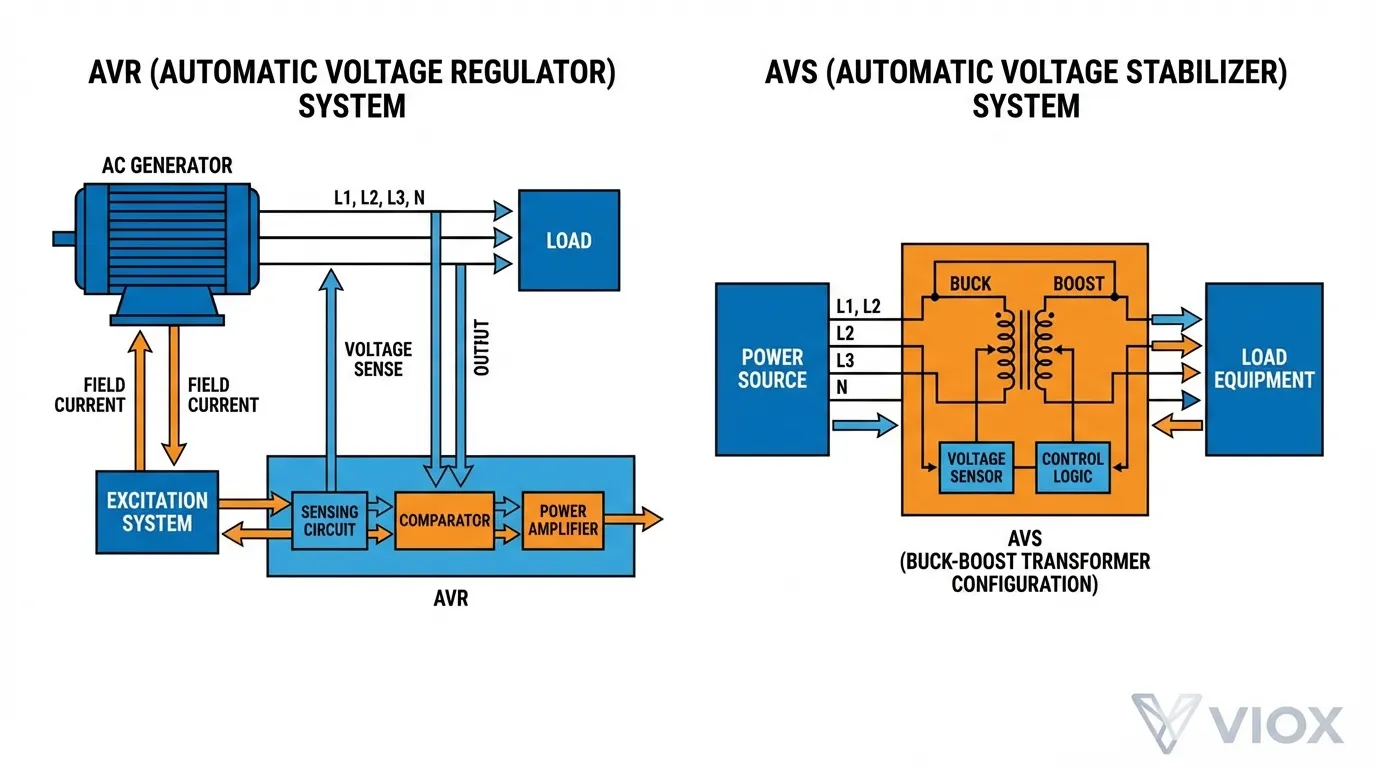
Ένας Αυτόματος Ρυθμιστής Τάσης (AVR) είναι μια ηλεκτρονική συσκευή που έχει σχεδιαστεί για να διατηρεί αυτόματα ένα σταθερό επίπεδο τάσης σε ηλεκτρικά συστήματα, ιδιαίτερα σε εφαρμογές γεννητριών. Οι AVR λειτουργούν παρακολουθώντας συνεχώς την τάση εξόδου της γεννήτριας και ρυθμίζοντας το ρεύμα διέγερσης πεδίου για να αντισταθμίσουν τις διακυμάνσεις του φορτίου, εξασφαλίζοντας σταθερή παροχή ρεύματος ανεξάρτητα από τις διακυμάνσεις της ζήτησης.
Βασικές Λειτουργίες των Συστημάτων AVR
Οι σύγχρονοι AVR εκτελούν πολλές κρίσιμες λειτουργίες πέρα από τη βασική ρύθμιση τάσης:
- Σταθεροποίηση Τάσης: Διατηρεί την τάση εξόδου εντός ±1% ακρίβειας παρά τις αλλαγές φορτίου
- Διαμοιρασμός Άεργου Φορτίου: Διανέμει την άεργο ισχύ μεταξύ παράλληλα συνδεδεμένων γεννητριών
- Προστασία από Υπέρταση: Αποτρέπει τις αιχμές τάσης κατά την απότομη αποσύνδεση φορτίου
- Έλεγχος Συντελεστή Ισχύος: Εξασφαλίζει ότι οι γεννήτριες λειτουργούν με βέλτιστο συντελεστή ισχύος όταν είναι συνδεδεμένες στο δίκτυο
- Προστασία από υπερτάσεις: Προστατεύει από ηλεκτρικές υπερτάσεις και συνθήκες υπερφόρτωσης της γεννήτριας
Τι είναι ένας Αυτόματος Σταθεροποιητής Τάσης (AVS);
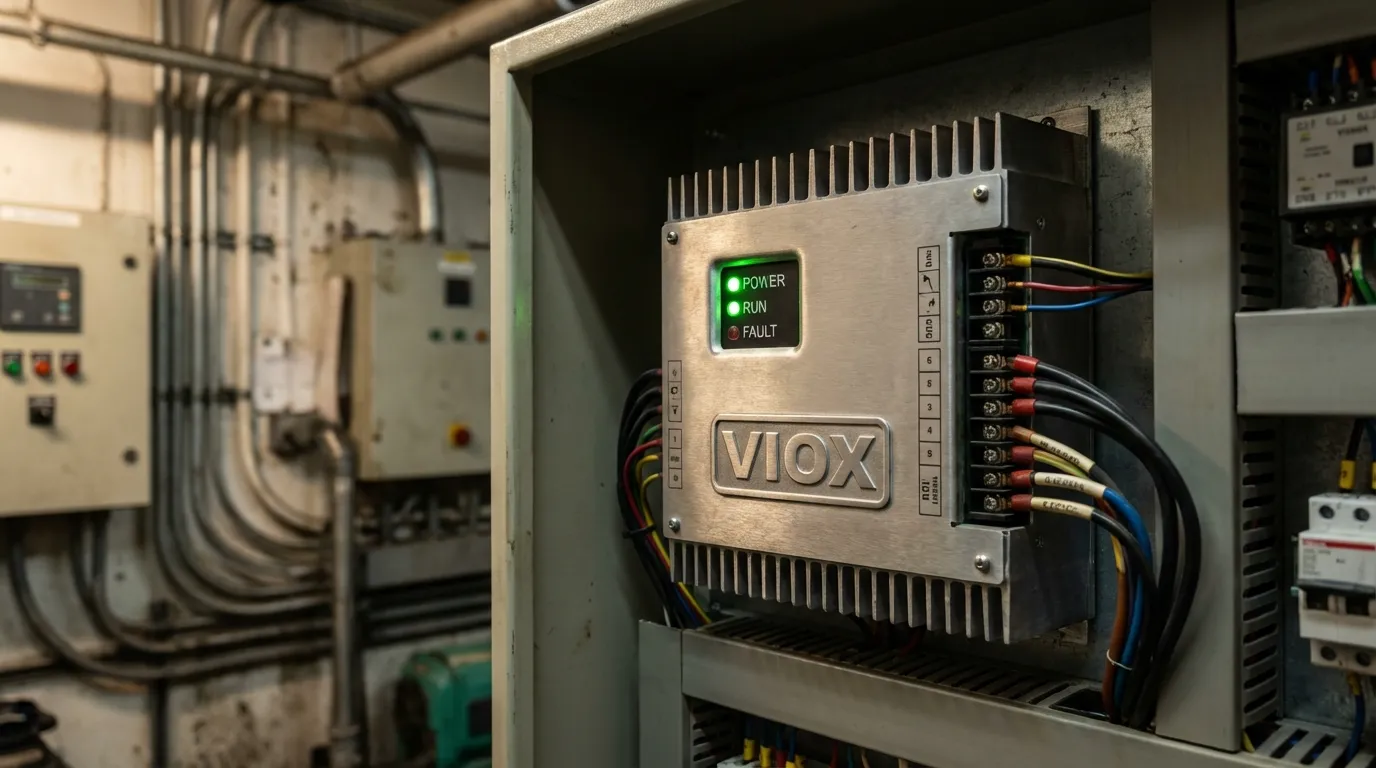
Ένας Αυτόματος Σταθεροποιητής Τάσης (AVS) είναι μια ηλεκτρική συσκευή που εγκαθίσταται στην πλευρά του φορτίου για να προστατεύσει τον εξοπλισμό από τις διακυμάνσεις της τάσης στην παροχή ρεύματος. Σε αντίθεση με τους AVR που ρυθμίζουν την έξοδο της γεννήτριας, οι μονάδες AVS βρίσκονται μεταξύ του δικτύου κοινής ωφέλειας και των ευαίσθητων φορτίων, ρυθμίζοντας αυτόματα την εισερχόμενη τάση για να παρέχουν μια σταθερή έξοδο εντός ασφαλών περιοχών λειτουργίας.
Πώς Λειτουργεί η Τεχνολογία AVS
Οι συσκευές AVS χρησιμοποιούν τεχνολογία μετασχηματιστή buck-boost για να διορθώσουν τις αποκλίσεις τάσης:
- Λειτουργία Ενίσχυσης (Boost): Όταν η τάση εισόδου πέφτει κάτω από τα απαιτούμενα επίπεδα (πτώση τάσης), ο σταθεροποιητής προσθέτει τάση για να επιτύχει την επιθυμητή έξοδο
- Λειτουργία Μείωσης (Buck): Όταν η τάση αυξάνεται πάνω από τα ασφαλή επίπεδα (υπερτάσεις), μειώνει την τάση για να αποτρέψει ζημιές στον εξοπλισμό
- Λειτουργία Παράκαμψης (Bypass): Κατά τη διάρκεια κανονικών συνθηκών τάσης, ορισμένες μονάδες AVS επιτρέπουν την άμεση ροή ρεύματος χωρίς ρύθμιση για μεγιστοποίηση της απόδοσης
AVR έναντι AVS: Συγκριτικός Πίνακας
| Όψη | AVR (Αυτόματος Ρυθμιστής Τάσης) | AVS (Αυτόματος Σταθεροποιητής Τάσης) |
|---|---|---|
| Κύρια εφαρμογή | Συστήματα γεννητριών (πλευρά παροχής) | Προστασία φορτίου (πλευρά ζήτησης) |
| Τοποθεσία εγκατάστασης | Ενσωματωμένο στο σύστημα ελέγχου της γεννήτριας | Μεταξύ της παροχής ρεύματος και του εξοπλισμού |
| Μέθοδος ελέγχου | Ρυθμίζει το ρεύμα διέγερσης πεδίου της γεννήτριας | Εναλλαγή βαθμίδων μετασχηματιστή buck-boost |
| Εύρος τάσης | Διατηρεί την έξοδο της γεννήτριας στην ονομαστική τάση | Χειρίζεται διακυμάνσεις εισόδου ±25% έως ±50% |
| Χρόνος απόκρισης | Ποικίλλει ανάλογα με τον τύπο (50ms-5 δευτερόλεπτα) | 20-30ms (στατικός) έως 50ms-5s (σερβο) |
| Χειρισμός φορτίου | Ελέγχει την άεργο ισχύ της γεννήτριας | Προστατεύει τον εξοπλισμό κατάντη |
| Παράλληλη Λειτουργία | Συντονίζει πολλαπλές γεννήτριες | Ανεξάρτητη προστασία φορτίου |
| Τυπική Χωρητικότητα | Αντιστοιχεί στην ονομαστική ισχύ της γεννήτριας (kVA) | Μεγεθύνεται σύμφωνα με τις απαιτήσεις του συνδεδεμένου φορτίου |
| Ανάγκες συντήρησης | Μέτρια (οι τύποι σέρβο απαιτούν περισσότερο) | Χαμηλή (στατική) έως μέτρια (σέρβο) |
| Κόστος Σειρά | Ενσωματωμένο στο κόστος της γεννήτριας | Ξεχωριστή αγορά με βάση την χωρητικότητα |
Τύποι Τεχνολογιών Ρύθμισης Τάσης
Σταθεροποιητές Ελεγχόμενοι από Σέρβο
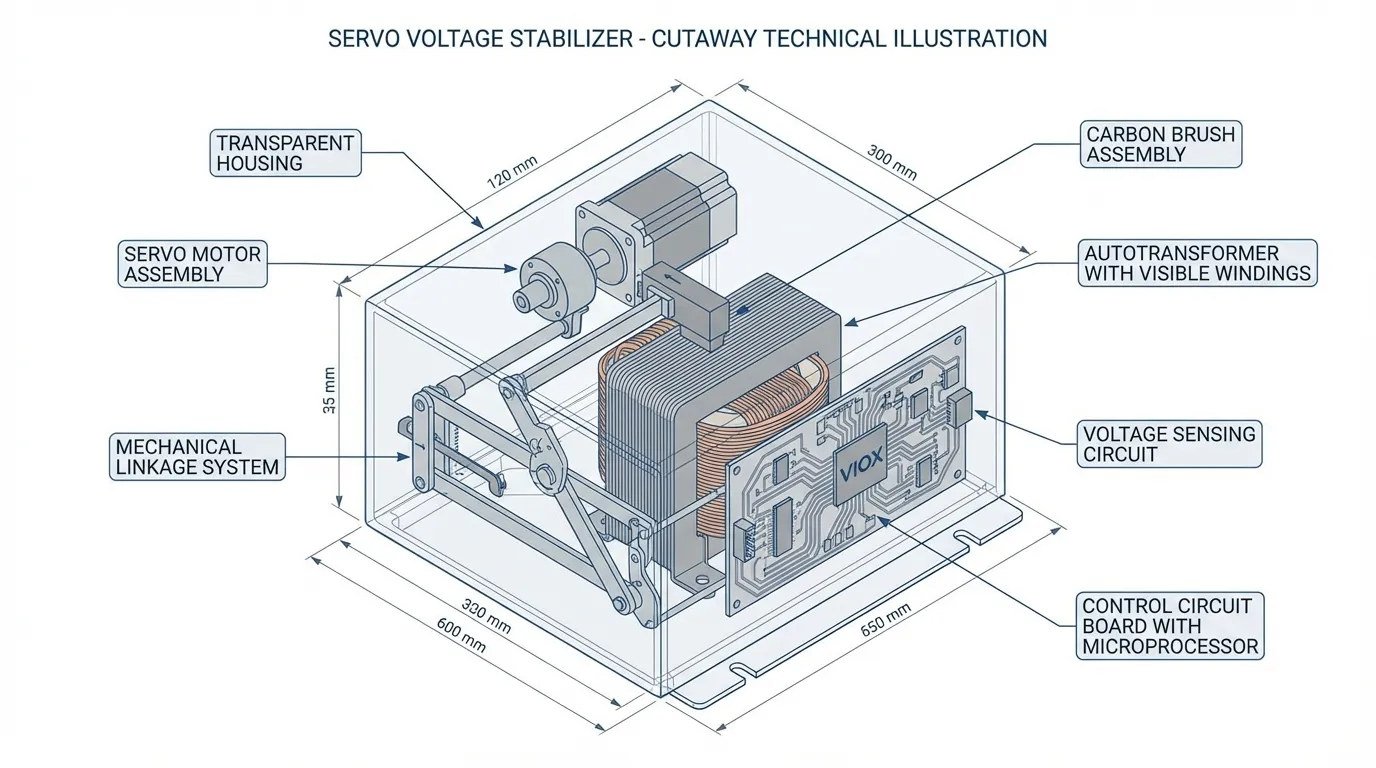
Οι σταθεροποιητές τάσης σέρβο χρησιμοποιούν έναν ηλεκτρομηχανικό σερβοκινητήρα για να οδηγήσουν έναν μεταβλητό αυτόματο μετασχηματιστή, παρέχοντας ακριβή διόρθωση τάσης μέσω της φυσικής κίνησης μιας βούρτσας άνθρακα κατά μήκος των περιελίξεων του μετασχηματιστή. Αυτή η αποδεδειγμένη τεχνολογία χειρίζεται εξαιρετικά τα υψηλά ρεύματα εισόδου και ταιριάζει περίπου στο 95% των βιομηχανικών εφαρμογών, αν και οι χρόνοι απόκρισης είναι πιο αργοί (50ms-5 δευτερόλεπτα) λόγω των μηχανικών εξαρτημάτων.
Πλεονεκτήματα:
- Εξαιρετικό για επαγωγικά φορτία (κινητήρες, μετασχηματιστές)
- Χειρίζεται διακυμάνσεις τάσης έως ±50%
- Υψηλή ακρίβεια (ρύθμιση ±1%)
- Αποδεδειγμένη αξιοπιστία σε σκληρά περιβάλλοντα
Περιορισμοί:
- Πιο αργός χρόνος απόκρισης λόγω μηχανικής κίνησης
- Απαιτείται τακτική συντήρηση για τον σερβοκινητήρα και τις βούρτσες
- Ακουστικός θόρυβος κατά τη λειτουργία
Στατικοί Σταθεροποιητές Τάσης
Οι στατικοί σταθεροποιητές χρησιμοποιούν ηλεκτρονικά εξαρτήματα στερεάς κατάστασης (IGBT, SCR) χωρίς κινούμενα μέρη, επιτρέποντας σχεδόν στιγμιαία διόρθωση τάσης εντός 20-30 χιλιοστών του δευτερολέπτου. Αυτή η τεχνολογία προσφέρει ανώτερη ταχύτητα απόκρισης και ελάχιστες απαιτήσεις συντήρησης, καθιστώντας την ιδανική για ευαίσθητο ηλεκτρονικό εξοπλισμό και εφαρμογές που απαιτούν γρήγορη ρύθμιση τάσης.
Πλεονεκτήματα:
- Εξαιρετικά γρήγορη απόκριση (20-30ms)
- Χωρίς κινούμενα μέρη—ελάχιστη συντήρηση
- Αθόρυβη λειτουργία
- Συμπαγής σχεδιασμός
Περιορισμοί:
- Υψηλότερο αρχικό κόστος
- Μπορεί να δυσκολευτεί με ακραία ρεύματα εισόδου
- Συνήθως χειρίζεται διακύμανση τάσης ±25%
Σύγκριση Εφαρμογών: Πότε να Χρησιμοποιήσετε AVR έναντι AVS
Εφαρμογές AVR (Συστήματα Γεννητριών)
| Εφαρμογή | Γιατί το AVR είναι Απαραίτητο |
|---|---|
| Γεννήτριες Αναμονής | Διατηρεί σταθερή τάση κατά τη διάρκεια διακοπών ρεύματος ανεξάρτητα από τις αλλαγές φορτίου του κτιρίου |
| Βιομηχανική Παραγωγή Ενέργειας | Συντονίζει παράλληλες γεννήτριες και διαχειρίζεται την κατανομή άεργου ισχύος |
| Ναυτιλιακά Ηλεκτρικά Συστήματα | Ρυθμίζει την έξοδο της γεννήτριας του πλοίου παρά τα μεταβαλλόμενα φορτία πρόωσης και βοηθητικών συστημάτων |
| Εφεδρική Ισχύς Κέντρου Δεδομένων | Διασφαλίζει ότι τα συστήματα UPS λαμβάνουν σταθερή τάση κατά τη λειτουργία της γεννήτριας |
| Εργοτάξια | Σταθεροποιεί την έξοδο της φορητής γεννήτριας για ευαίσθητα ηλεκτρικά εργαλεία και εξοπλισμό |
Εφαρμογές AVS (Προστασία Φορτίου)
| Εφαρμογή | Γιατί το AVS είναι Απαραίτητο |
|---|---|
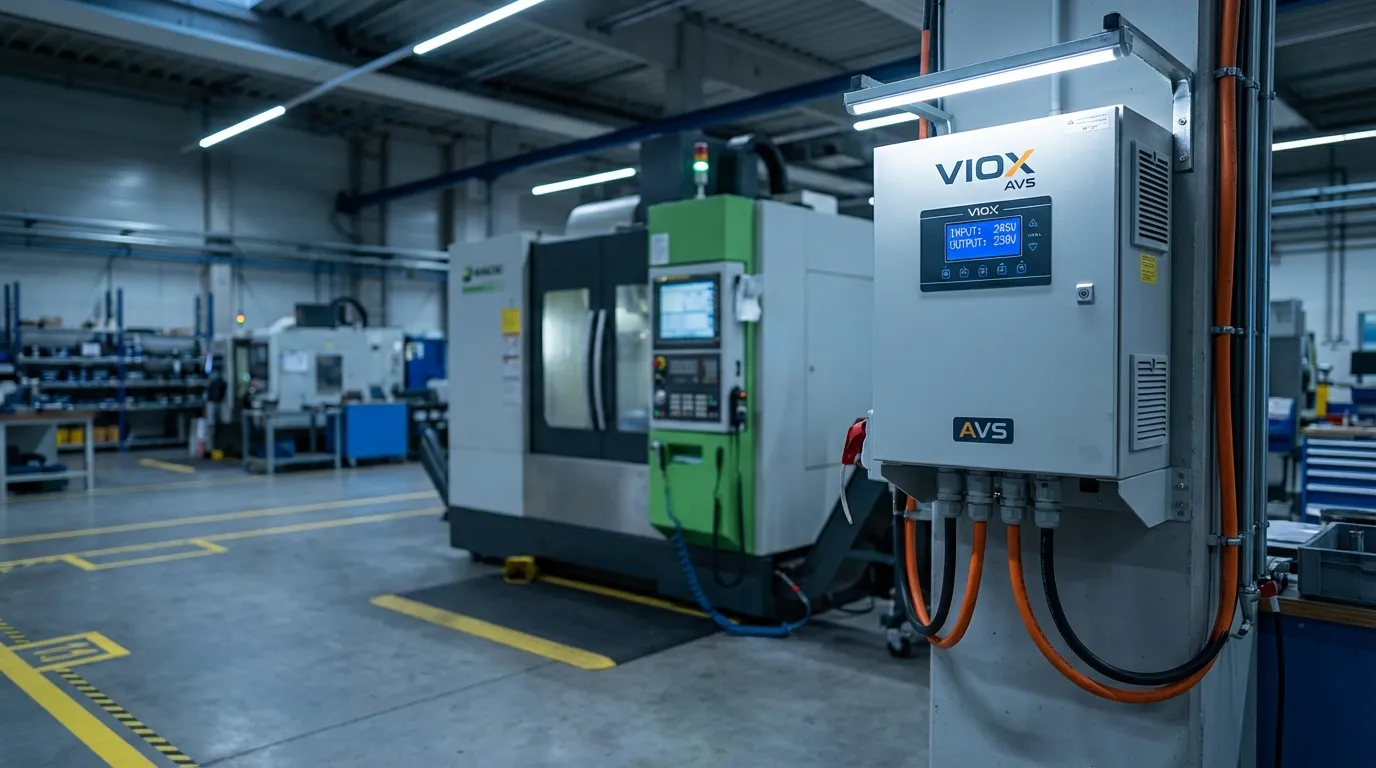
| Εργαλειομηχανές CNC | Προστατεύει τον εξοπλισμό ακριβείας από τις διακυμάνσεις της τάσης του δικτύου που επηρεάζουν την ακρίβεια της μηχανουργικής κατεργασίας |
| Ιατρικός εξοπλισμός | Διασφαλίζει ότι τα διαγνωστικά συστήματα και τα συστήματα υποστήριξης ζωής λαμβάνουν σταθερή παροχή ρεύματος |
| Υποδομή Πληροφορικής | Προστατεύει τους διακομιστές και τον εξοπλισμό δικτύωσης από βυθίσεις τάσης και πτώσεις τάσης |
| Συστήματα HVAC | Αποτρέπει τη ζημιά του συμπιεστή από συνθήκες χαμηλής τάσης κατά τη διάρκεια της μέγιστης ζήτησης |
| Αυτοματοποιημένες γραμμές παραγωγής | Διατηρεί σταθερή τάση σε PLC και συστήματα ελέγχου, αποτρέποντας σφάλματα παραγωγής |
Για ολοκληρωμένη καθοδήγηση σχετικά με την προστασία των βιομηχανικών συστημάτων ελέγχου, δείτε το άρθρο μας σχετικά με εξαρτήματα βιομηχανικού πίνακα ελέγχου.
Σύγκριση τεχνικών προδιαγραφών
Απόδοση Ρύθμισης Τάσης
| Παράμετρος | Σέρβο AVR/AVS | Στατικό AVR/AVS |
|---|---|---|
| Εύρος Τάσης Εισόδου | 150-270V (±50%) | 170-270V (±25%) |
| Ακρίβεια Τάσης Εξόδου | ±1% | ±1% |
| Ταχύτητα Διόρθωσης | 100V/δευτερόλεπτο | Στιγμιαία (20-30ms) |
| Χρόνος απόκρισης | 50ms – 5 δευτερόλεπτα | 20-30 χιλιοστά του δευτερολέπτου |
| Αποδοτικότητα | 95-98% | 96-99% |
| Παραμόρφωση Κυματομορφής | <3% THD | <2% THD |
| Ικανότητα Υπερφόρτωσης | 150% για 60 δευτερόλεπτα | 120% για 30 δευτερόλεπτα |
| Θερμοκρασία λειτουργίας | -10°C έως 50°C | -10°C έως 40°C |
Απαιτήσεις συντήρησης
Συστήματα Βασισμένα σε Σερβοκινητήρες:
- Έλεγχος ψυκτρών άνθρακα: Κάθε 6 μήνες
- Λίπανση σερβοκινητήρα: Ετησίως
- Έλεγχος περιέλιξης μετασχηματιστή: Κάθε 2 χρόνια
- Καθαρισμός επαφών: Κάθε 12 μήνες
Στατικά Συστήματα:
- Θερμική επιθεώρηση IGBT/SCR: Ετησίως
- Έλεγχος πυκνωτών: Κάθε 2 χρόνια
- Αντικατάσταση ανεμιστήρα ψύξης: Κάθε 3-5 χρόνια
- Ενημερώσεις υλικολογισμικού: Όταν είναι διαθέσιμες
Η κατανόηση της σωστής την επιλογή προστασίας κυκλώματος διασφαλίζει ότι το σύστημα ρύθμισης τάσης ενσωματώνεται σωστά με τη συνολική ηλεκτρική ασφάλεια.
Κριτήρια Επιλογής: Επιλογή μεταξύ Τεχνολογιών AVR και AVS
Παράγοντες Τύπου Φορτίου
Επιλέξτε Τεχνολογία Servo Όταν:
- Λειτουργούν επαγωγικά φορτία (κινητήρες, μετασχηματιστές, εξοπλισμός συγκόλλησης)
- Διαχείριση υψηλών ρευμάτων εκκίνησης κατά την εκκίνηση του εξοπλισμού
- Οι δημοσιονομικοί περιορισμοί ευνοούν τη χαμηλότερη αρχική επένδυση
- Η αποδεδειγμένη αξιοπιστία σε σκληρά περιβάλλοντα είναι προτεραιότητα
- Οι διακυμάνσεις τάσης υπερβαίνουν τα ±25% τακτικά
Επιλέξτε Στατική Τεχνολογία Όταν:
- Προστατεύετε ευαίσθητο ηλεκτρονικό εξοπλισμό (υπολογιστές, PLC, ιατρικές συσκευές)
- Ο χρόνος απόκρισης σε χιλιοστά του δευτερολέπτου είναι κρίσιμος
- Η πρόσβαση συντήρησης είναι περιορισμένη ή δαπανηρή
- Απαιτείται αθόρυβη λειτουργία (γραφείο, νοσοκομειακό περιβάλλον)
- Οι χωρικοί περιορισμοί απαιτούν συμπαγείς λύσεις
Για εφαρμογές προστασίας κινητήρα, ανατρέξτε στον οδηγό μας σχετικά με διαφορές θερμικού ρελέ υπερφόρτωσης έναντι MPCB.
Περιβαλλοντικοί παράγοντες
| Περιβάλλον | Προτεινόμενη Τεχνολογία | Αιτιολόγηση |
|---|---|---|
| Βιομηχανικό με σκόνη/βρωμιά | Servo (κλειστού τύπου) | Λιγότερα εκτεθειμένα ευαίσθητα ηλεκτρονικά |
| Καθαρό Δωμάτιο/Εργαστήριο | Στατικό | Δεν παράγονται σωματίδια μηχανικής φθοράς |
| Περιοχές Υψηλών Δονήσεων | Στατικό | Δεν υπάρχουν κινούμενα μέρη που να μπορούν να παραμορφωθούν |
| Ακραίες Θερμοκρασίες | Servo | Καλύτερο εύρος θερμικής ανοχής |
| Θαλάσσιο/Παράκτιο | Στατικό (με βαθμολογία IP65+) | Ανθεκτικός στη διάβρωση σχεδιασμός στερεάς κατάστασης |
Συνήθεις Παρανοήσεις Σχετικά με τα AVR και AVS
Μύθος 1: “Τα AVR και AVS Είναι Εντελώς Διαφορετικές Συσκευές”
Πραγματικότητα: Οι όροι χρησιμοποιούνται συχνά εναλλακτικά στον κλάδο. Και οι δύο συσκευές εκτελούν ρύθμιση τάσης, με την κύρια διάκριση να είναι το πλαίσιο εφαρμογής - AVR για έλεγχο γεννήτριας, AVS για προστασία φορτίου. Πολλοί κατασκευαστές χρησιμοποιούν και τους δύο όρους για να περιγράψουν την ίδια σειρά προϊόντων.
Μύθος 2: “Οι Στατικοί Σταθεροποιητές Είναι Πάντα Καλύτεροι από τους Servo”
Πραγματικότητα: Ενώ οι στατικοί σταθεροποιητές προσφέρουν ταχύτερους χρόνους απόκρισης, οι servo σταθεροποιητές υπερέχουν στον χειρισμό υψηλών ρευμάτων εκκίνησης και ακραίων διακυμάνσεων τάσης. Για φορτία που κινούνται από κινητήρες και βαριές βιομηχανικές εφαρμογές, η τεχνολογία servo παραμένει η ανώτερη επιλογή στο 95% των περιπτώσεων.
Μύθος 3: “Οι Σταθεροποιητές Τάσης Εξαλείφουν την Ανάγκη για Προστασία από Υπέρταση”
Πραγματικότητα: Ενώ οι συσκευές AVS παρέχουν κάποια προστασία έναντι των διακυμάνσεων τάσης, δεν αντικαθιστούν την αποκλειστική συσκευές προστασίας από υπερτάσεις (SPD). Μια ολοκληρωμένη στρατηγική προστασίας απαιτεί τόσο σταθεροποίηση τάσης όσο και καταστολή υπέρτασης, ειδικά σε περιοχές με συχνή κεραυνική δραστηριότητα.
Μύθος 4: “Η Μεγαλύτερη Χωρητικότητα Είναι Πάντα Καλύτερη”
Πραγματικότητα: Η υπερβολική διάσταση των ρυθμιστών τάσης σπαταλά χρήματα και μειώνει την απόδοση. Η σωστή διάσταση απαιτεί τον υπολογισμό των πραγματικών απαιτήσεων φορτίου συν ένα περιθώριο ασφαλείας 20-30%. Η υποδιάσταση προκαλεί διακοπές υπερφόρτωσης, ενώ η υπερδιάσταση αυξάνει τις απώλειες χωρίς φορτίο και το αρχικό κόστος.
Για σωστές μεθόδους υπολογισμού ηλεκτρικού φορτίου, συμβουλευτείτε τον οδηγό μας σχετικά με τον προσδιορισμό του ηλεκτρικού φορτίου του σπιτιού σας.
Ενσωμάτωση με Συστήματα Ηλεκτρικής Προστασίας
Συντονισμός AVR/AVS με Προστασία Κυκλώματος
Οι συσκευές ρύθμισης τάσης πρέπει να ενσωματώνονται σωστά με την ανάντη και κατάντη προστασία:
- Ανάντη Προστασία: Εγκαταστήστε κατάλληλα ονομαστικά MCCBs ή MCBs για να προστατεύσετε τον ίδιο τον σταθεροποιητή
- Κατάντη Προστασία: Διαστασιολογήστε τους διακόπτες κυκλώματος με βάση τη σταθεροποιημένη τάση εξόδου και το συνδεδεμένο φορτίο
- Προστασία από σφάλμα γείωσης: Ενσωματώστε RCCBs για την ασφάλεια του προσωπικού
- Μελέτη Συντονισμού: Διασφάλιση της ορθής επιλεκτικότητα μεταξύ των συσκευών προστασίας
Ενσωμάτωση Αυτόματου Διακόπτη Μεταφοράς (ATS)
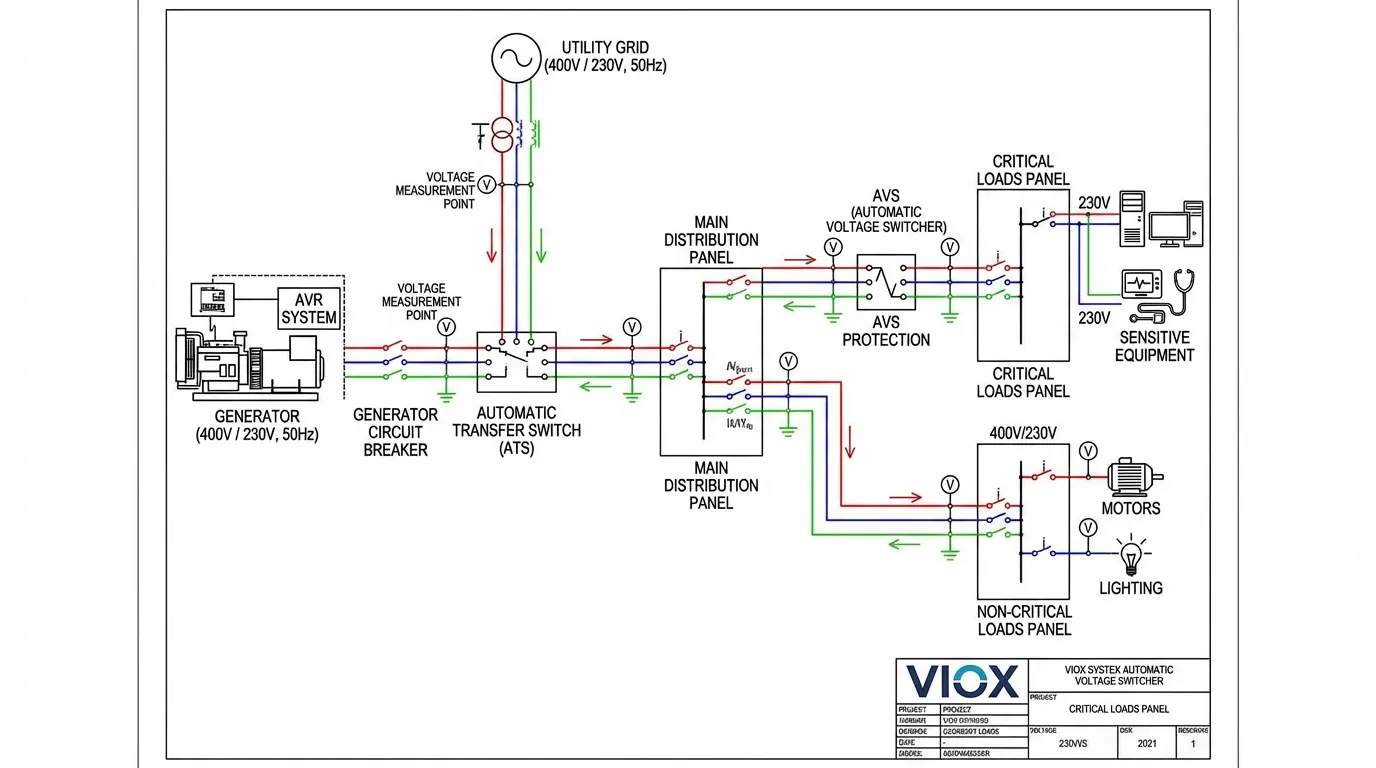
Όταν συνδυάζονται συστήματα AVR γεννήτριας με προστασία AVS δικτύου, η σωστή διαμόρφωση ATS εξασφαλίζει απρόσκοπτες μεταβάσεις:
- Λειτουργία Γεννήτριας: Το AVR διατηρεί σταθερή τάση κατά τη διάρκεια διακοπών ρεύματος
- Λειτουργία Δικτύου: Το AVS προστατεύει τα φορτία από διακυμάνσεις του δικτύου
- Χρονισμός Μεταφοράς: Συντονίστε την εναλλαγή ATS με τους χρόνους απόκρισης του σταθεροποιητή
- Διαχείριση Ουδετέρου: Διασφάλιση της ορθής ουδετεροποίηση και στις δύο λειτουργίες
Βέλτιστες πρακτικές εγκατάστασης
Οδηγίες Διαστασιολόγησης
Βήμα 1: Υπολογίστε το Συνολικό Συνδεδεμένο Φορτίο
Συνολικό Φορτίο (VA) = Άθροισμα όλων των ονομαστικών τιμών εξοπλισμού × Συντελεστής Διαφοροποίησης
Βήμα 2: Λάβετε υπόψη τον Συντελεστή Ισχύος
Φαινόμενη Ισχύς (VA) = Πραγματική Ισχύς (W) ÷ Συντελεστής Ισχύος
Βήμα 3: Προσθέστε Περιθώριο Ασφαλείας
Απαιτούμενη Ονομαστική Τιμή Σταθεροποιητή = Συνολικό Φορτίο × 1,25 (περιθώριο 25%)
Απαιτήσεις Τοποθεσίας Εγκατάστασης
| Απαίτηση | Προδιαγραφές | Λόγος |
|---|---|---|
| Θερμοκρασία περιβάλλοντος | 0°C έως 40°C | Εξασφαλίζει τη βέλτιστη λειτουργία των εξαρτημάτων |
| Απόσταση Αερισμού | 300mm από όλες τις πλευρές | Αποτρέπει τη θερμική υπερφόρτωση |
| Υγρασία | <90% χωρίς συμπύκνωση | Προστατεύει τα ηλεκτρικά εξαρτήματα |
| Ύψος Τοποθέτησης | 1,5-2,0m από το δάπεδο | Διευκολύνει την πρόσβαση για συντήρηση |
| Είσοδος καλωδίου | Κάτω ή πλάι (ανάλογα με την βαθμολογία IP) | Αποτρέπει την εισροή νερού |
Για την σωστή επιλογή περιβλήματος, ανατρέξτε στον οδηγό μας σχετικά με επιλογή υλικού ηλεκτρικού περιβλήματος.
Αντιμετώπιση κοινών προβλημάτων
Μη Κανονική Ρύθμιση AVR/AVS
Συμπτώματα: Η τάση εξόδου κυμαίνεται πέρα από το αποδεκτό εύρος
Πιθανές αιτίες:
- Δυσλειτουργία κυκλώματος ανίχνευσης—επαληθεύστε τις συνδέσεις τάσης εισόδου
- Φθαρμένες ψήκτρες άνθρακα (τύποι σέρβο)—επιθεωρήστε και αντικαταστήστε εάν απομένουν <5mm
- Αποτυχημένο IGBT/SCR (στατικοί τύποι)—δοκιμάστε με θερμική απεικόνιση
- Λανθασμένη ρύθμιση τάσης—επαναβαθμονομήστε την τάση αναφοράς
- Συνθήκη υπερφόρτωσης—επαληθεύστε το πραγματικό φορτίο σε σχέση με την ονομαστική χωρητικότητα
Αργός Χρόνος Απόκρισης
Συμπτώματα: Ο εξοπλισμός υφίσταται πτώσεις τάσης πριν διορθώσει ο σταθεροποιητής
Πιθανές αιτίες:
- Μηχανική εμπλοκή σερβοκινητήρα—λιπάνετε και ελέγξτε για εμπόδια
- Ρυθμίσεις καθυστέρησης κυκλώματος ελέγχου—προσαρμόστε τις παραμέτρους απόκρισης
- Μονάδα υποδιαστασιολογημένη για εισροή φορτίου—αναβαθμίστε σε υψηλότερη χωρητικότητα
- Αδύναμη τάση εισόδου—επαληθεύστε ότι η παροχή δικτύου πληροί τις ελάχιστες απαιτήσεις
Συχνή Ενεργοποίηση Υπερφόρτωσης
Συμπτώματα: Ο σταθεροποιητής τερματίζει τη λειτουργία κατά τη διάρκεια της κανονικής λειτουργίας
Πιθανές αιτίες:
- Υποδιαστασιολογημένος για το πραγματικό φορτίο—υπολογίστε ξανά τις απαιτήσεις φορτίου
- Υψηλό ρεύμα εισροής από εκκινήσεις κινητήρα—προσθέστε απαλούς εκκινητές ή αναβαθμίστε την χωρητικότητα
- Θερμική υπερφόρτωση από κακό αερισμό—βελτιώστε τη ροή αέρα ψύξης
- Ελαττωματικό ρελέ υπερφόρτωσης—δοκιμάστε και αντικαταστήστε εάν είναι απαραίτητο
Για ολοκληρωμένη αντιμετώπιση προβλημάτων διακοπτών κυκλώματος, δείτε το άρθρο μας σχετικά με γιατί ενεργοποιούνται οι διακόπτες κυκλώματος.
Ανάλυση Κόστους-Οφέλους
Αρχική Σύγκριση Επενδύσεων
| Τεχνολογία | Κόστος ανά kVA | Κόστος εγκατάστασης | Συνολικό Σύστημα 10kVA |
|---|---|---|---|
| Σέρβο AVR/AVS | $80-150 | $200-400 | $1,000-1,900 |
| Στατικό AVR/AVS | $150-250 | $150-300 | $1,650-2,800 |
| Ψηφιακό AVR/AVS | $200-350 | $150-300 | $2,150-3,800 |
Κόστος Λειτουργίας Διάρκειας Ζωής (Περίοδος 10 Ετών)
| Συντελεστής κόστους | Servo | Στατικό |
|---|---|---|
| Συντήρηση | $800-1,200 | $200-400 |
| Απώλεια Ενέργειας (Διαφορά απόδοσης 2%) | $1,500 | $1,000 |
| Αντικατάσταση εξαρτήματος | $600-900 | $300-500 |
| Κόστος διακοπής λειτουργίας | $500-1,000 | $200-400 |
| Συνολικό Κόστος Λειτουργίας 10 Ετών | $3,400-4,600 | $1,700-2,300 |
Υπολογισμός ROI
Αξία Προστασίας Εξοπλισμού:
- Μέσο κόστος αστοχίας εξοπλισμού που σχετίζεται με την τάση: €5.000-50.000
- Πιθανότητα αστοχίας χωρίς προστασία: 15-25% σε 10 χρόνια
- Αναμενόμενη εξοικονόμηση: €750-12.500 ανά προστατευμένο εξοπλισμό
Περίοδος Απόσβεσης:
- Τυπική απόσβεση: 6-18 μήνες για κρίσιμο εξοπλισμό
- ROI: 200-500% σε διάρκεια ζωής 10 ετών
Μελλοντικές Τάσεις στην Τεχνολογία Σταθεροποίησης Τάσης
Έξυπνα Συστήματα AVR/AVS
Οι σύγχρονοι σταθεροποιητές τάσης ενσωματώνουν όλο και περισσότερο συνδεσιμότητα IoT και προηγμένη παρακολούθηση:
- Απομακρυσμένη παρακολούθηση: Δεδομένα τάσης, ρεύματος και θερμοκρασίας σε πραγματικό χρόνο προσβάσιμα μέσω πλατφορμών cloud
- Προβλεπτική συντήρηση: Αλγόριθμοι AI αναλύουν τις τάσεις απόδοσης για να προβλέψουν αστοχίες εξαρτημάτων
- Αυτόματη Αναφορά: Ειδοποιήσεις μέσω email/SMS για συμβάντα τάσης και απαιτήσεις συντήρησης
- Ενεργειακή Ανάλυση: Παρακολούθηση μετρήσεων ποιότητας ισχύος και εντοπισμός ευκαιριών βελτίωσης της απόδοσης
Ενσωμάτωση με Ανανεώσιμες Πηγές Ενέργειας
Καθώς τα ηλιακά συστήματα και τα συστήματα αποθήκευσης μπαταριών πολλαπλασιάζονται, η σταθεροποίηση τάσης εξελίσσεται:
- Αμφίδρομη Σταθεροποίηση: Διαχείριση ροών ισχύος τόσο από το δίκτυο προς το φορτίο όσο και από τον ήλιο προς το δίκτυο
- Συντονισμός MPPT: Συνεργασία με την παρακολούθηση σημείου μέγιστης ισχύος του ηλιακού αντιστροφέα
- Διαχείριση Μπαταριών: Ενσωμάτωση με Συστήματα BESS για απρόσκοπτο έλεγχο τάσης
- Υποστήριξη Μικροδικτύου: Ενεργοποίηση σταθερής λειτουργίας σε αυτόνομη λειτουργία
Για συγκεκριμένες παραμέτρους τάσης για ηλιακά συστήματα, ανατρέξτε στον οδηγό μας σχετικά με ονομαστικές τιμές τάσης ηλιακού συνδετικού κουτιού.
Συχνές ερωτήσεις (FAQ)
Ε: Μπορώ να χρησιμοποιήσω την ίδια συσκευή ως AVR και AVS;
Α: Τεχνικά ναι—η βασική τεχνολογία είναι παρόμοια. Ωστόσο, τα AVR που έχουν σχεδιαστεί για γεννήτριες περιλαμβάνουν συγκεκριμένες λειτουργίες για έλεγχο διέγερσης πεδίου και παράλληλη λειτουργία που δεν απαιτούν οι μονάδες AVS στην πλευρά του φορτίου. Να επιλέγετε πάντα συσκευές σχεδιασμένες για τη συγκεκριμένη εφαρμογή σας.
Ε: Πώς μπορώ να ξέρω αν χρειάζομαι AVR ή AVS;
Α: Εάν ρυθμίζετε την τάση εξόδου της γεννήτριας, χρειάζεστε ένα AVR (συνήθως ενσωματωμένο στη γεννήτρια). Εάν προστατεύετε τον εξοπλισμό από διακυμάνσεις του δικτύου κοινής ωφέλειας, χρειάζεστε ένα AVS εγκατεστημένο μεταξύ της παροχής και των φορτίων σας.
Ε: Ποια είναι η διαφορά μεταξύ AVR και UPS;
Α: Τα AVR/AVS ρυθμίζουν την τάση αλλά δεν παρέχουν εφεδρική ισχύ κατά τη διάρκεια διακοπών ρεύματος. Ένα UPS περιλαμβάνει εφεδρική μπαταρία για συνεχή λειτουργία κατά τη διάρκεια διακοπών ρεύματος, καθώς και σταθεροποίηση τάσης. Για κρίσιμα φορτία, χρησιμοποιήστε και τα δύο: AVS για συνεχή ρύθμιση τάσης και UPS για εφεδρική ισχύ.
Ε: Οι σταθεροποιητές τάσης αυξάνουν τους λογαριασμούς ρεύματος;
Α: Οι ποιοτικοί σταθεροποιητές λειτουργούν με απόδοση 95-98%, με αποτέλεσμα ελάχιστη απώλεια ενέργειας (2-5%). Το κόστος αυτής της απώλειας αντισταθμίζεται κατά πολύ από την αποτροπή ζημιών στον εξοπλισμό και την εκτεταμένη διάρκεια ζωής των συσκευών.
Ε: Μπορώ να εγκαταστήσω ένα AVS μόνος μου;
Α: Ενώ είναι τεχνικά δυνατό για μικρές μονάδες plug-in, η σωστή εγκατάσταση βιομηχανικών συστημάτων AVS απαιτεί εξειδικευμένους ηλεκτρολόγους για να διασφαλιστεί η σωστή διαστασιολόγηση, καλωδίωση, γείωση και συντονισμός προστασίας. Η ακατάλληλη εγκατάσταση ακυρώνει τις εγγυήσεις και δημιουργεί κινδύνους για την ασφάλεια.
Ε: Πόσο διαρκούν οι συσκευές AVR/AVS;
Α: Οι τύποι servo διαρκούν συνήθως 10-15 χρόνια με σωστή συντήρηση. Οι στατικοί τύποι μπορούν να υπερβούν τα 15-20 χρόνια λόγω λιγότερων εξαρτημάτων φθοράς. Η διάρκεια ζωής εξαρτάται σε μεγάλο βαθμό από τις συνθήκες λειτουργίας, τα χαρακτηριστικά φορτίου και την ποιότητα συντήρησης.
Συμπέρασμα: Η σωστή επιλογή για την εφαρμογή σας
Η κατανόηση της διαφοράς μεταξύ AVR και AVS έγκειται στην αναγνώριση των πλαισίων εφαρμογής τους: Τα AVR ρυθμίζουν την έξοδο της γεννήτριας στην πλευρά της παροχής, ενώ οι συσκευές AVS προστατεύουν τα φορτία στην πλευρά της ζήτησης. Και οι δύο χρησιμοποιούν παρόμοιες αρχές σταθεροποίησης τάσης, αλλά εξυπηρετούν διακριτούς ρόλους σε ολοκληρωμένες στρατηγικές ηλεκτρικής προστασίας.
Κατά την επιλογή τεχνολογίας σταθεροποίησης τάσης, δώστε προτεραιότητα σε αυτούς τους παράγοντες:
- Τύπος Εφαρμογής: Έλεγχος γεννήτριας (AVR) έναντι προστασίας φορτίου (AVS)
- Χαρακτηριστικά φορτίου: Τα επαγωγικά φορτία ευνοούν το servo. τα ευαίσθητα ηλεκτρονικά ευνοούν το στατικό
- Απαιτήσεις Απόκρισης: Οι κρίσιμες εφαρμογές χρειάζονται στατικό. η γενική χρήση δέχεται servo
- Δυνατότητα Συντήρησης: Η περιορισμένη πρόσβαση υποδηλώνει στατικό. η συνήθης συντήρηση επιτρέπει το servo
- Περιορισμοί του προϋπολογισμού: Εξισορροπήστε το αρχικό κόστος με τα λειτουργικά έξοδα διάρκειας ζωής
Στην VIOX Electric, κατασκευάζουμε λύσεις σταθεροποίησης τάσης servo και στατικές, σχεδιασμένες σύμφωνα με τα πρότυπα IEC και UL, παρέχοντας αξιόπιστη προστασία για βιομηχανικές, εμπορικές και οικιακές εφαρμογές παγκοσμίως. Η τεχνική μας ομάδα μπορεί να σας βοηθήσει να επιλέξετε τη βέλτιστη στρατηγική σταθεροποίησης τάσης για τις συγκεκριμένες απαιτήσεις σας.
Για εξειδικευμένη καθοδήγηση σχετικά με το σχεδιασμό και την επιλογή συστήματος σταθεροποίησης τάσης, επικοινωνήστε με την ομάδα τεχνικής υποστήριξης της VIOX Electric ή εξερευνήστε την ολοκληρωμένη γκάμα μας ηλεκτρικά εξαρτήματα προστασίας.

