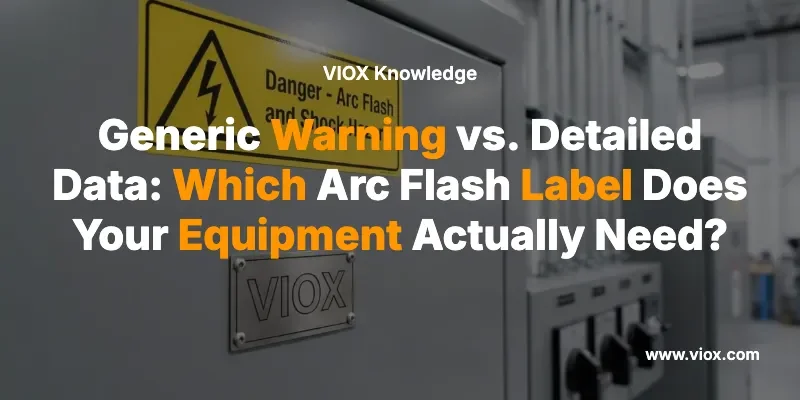
Γιατί ο νέος σας εξοπλισμός VIOX φτάνει με μια γενική προειδοποιητική ετικέτα (και γιατί αυτό είναι στην πραγματικότητα σωστό)
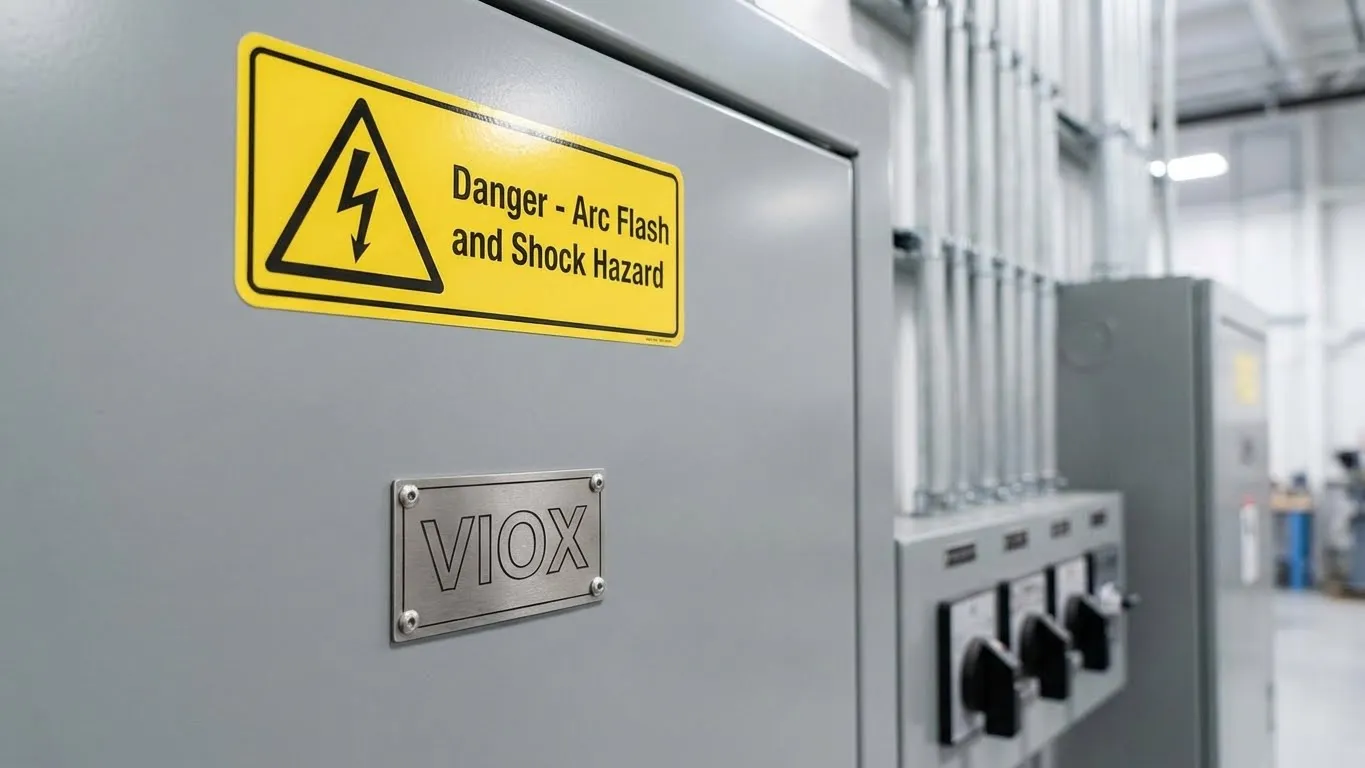
Όταν αποσυσκευάζετε έναν νέο πίνακα διανομής VIOX ή πίνακα, μπορεί να παρατηρήσετε μια έντονη κίτρινη προειδοποιητική ετικέτα που αναγράφει “Κίνδυνος - Κίνδυνος Ηλεκτρικού Τόξου και Ηλεκτροπληξίας”. Ορισμένοι πελάτες ρωτούν: “Πού είναι τα συγκεκριμένα δεδομένα ενέργειας συμβάντος; Σε ποια κατηγορία ΜΑΠ πρέπει να φορούν οι ηλεκτρολόγοι μου; Μήπως η VIOX παρέλειψε κάτι;”
Η σύντομη απάντηση: Απολύτως όχι. Εάν η VIOX συμπεριλάμβανε λεπτομερείς υπολογισμούς ηλεκτρικού τόξου στο εργοστάσιο, θα παραβιάζαμε θεμελιώδεις αρχές ασφάλειας και ενδεχομένως θα εκθέταμε τους εργαζομένους σας σε λανθασμένες πληροφορίες κινδύνου. Αυτό το άρθρο διευκρινίζει την κρίσιμη διάκριση μεταξύ δύο τύπων ετικετών ηλεκτρικού τόξου, εξηγεί τις νομικές ευθύνες πίσω από κάθε μία και σας δείχνει ακριβώς τι παρέχει η VIOX σε αντίθεση με αυτό που πρέπει να καθορίσετε επί τόπου.
Οι Δύο Τύποι Arc Flash (Ηλεκτρικό Τόξο) Ετικετών: Κατανόηση της Θεμελιώδους Διαφοράς
Η σύγχυση προέρχεται από τη σύγχυση δύο εντελώς ξεχωριστών απαιτήσεων επισήμανσης που διέπονται από διαφορετικά πρότυπα. Ας τα αναλύσουμε:
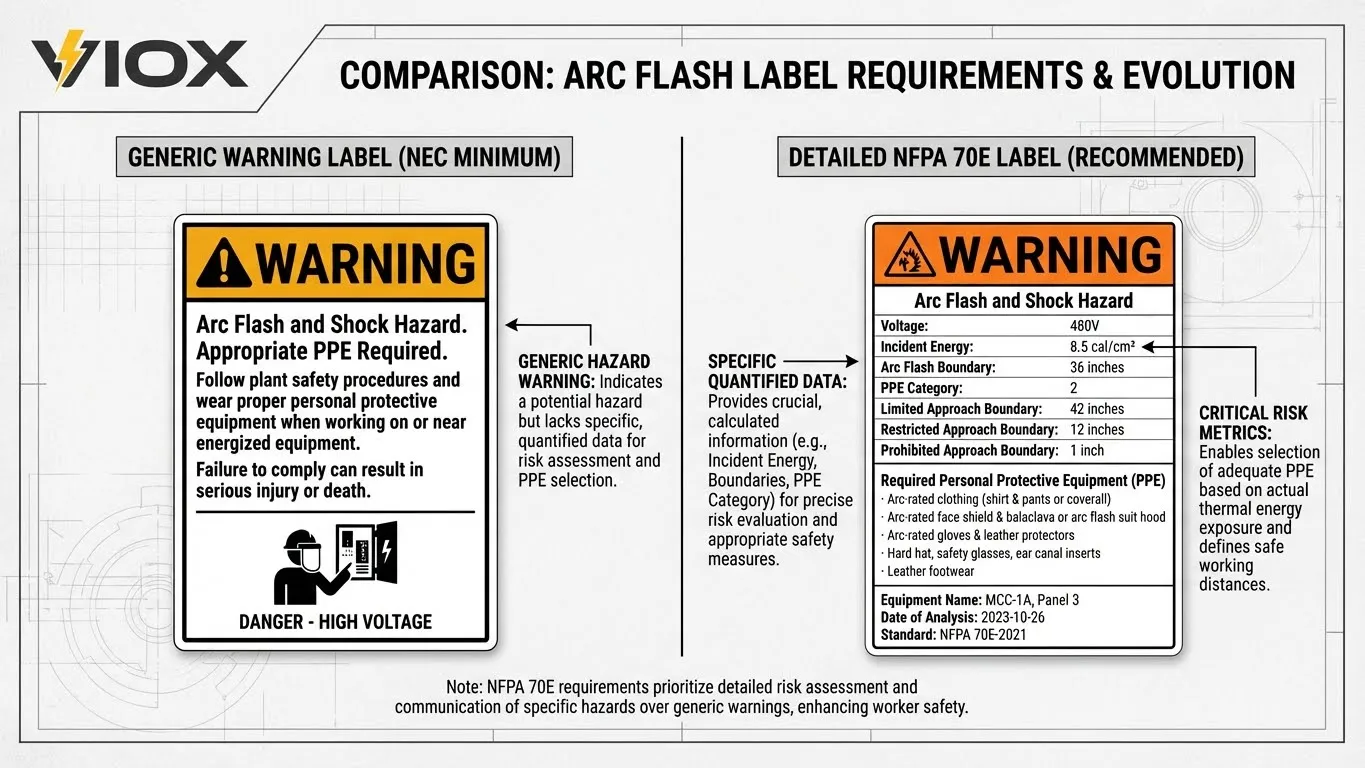
Γενικές Προειδοποιητικές Ετικέτες (NEC 110.16)
Αυτές οι ετικέτες χρησιμεύουν ως καθολικές ειδοποιήσεις κινδύνου που απαιτούνται από τον Εθνικό Ηλεκτρολογικό Κώδικα. Από το 2026 NEC, το τμήμα 110.16 επιβάλλει μόνιμες σημάνσεις κινδύνου ηλεκτρικού τόξου σε ηλεκτρικό εξοπλισμό σε τοποθεσίες εκτός των κατοικιών που ενδέχεται να απαιτούν εξέταση, ρύθμιση, συντήρηση ή επισκευή ενώ είναι υπό τάση.
Βασικά χαρακτηριστικά:
- Σκοπός: Ειδοποιήστε τους εργαζομένους ότι ενδέχεται να υπάρχουν κίνδυνοι ηλεκτρικού τόξου και ηλεκτροπληξίας
- Απαιτούμενες πληροφορίες: Γενική προειδοποίηση (δεν απαιτούνται υπολογισμοί)
- Ευθύνη: Τεχνικά καθήκον του εγκαταστάτη, αλλά αξιόπιστοι κατασκευαστές όπως η VIOX τα περιλαμβάνουν ως στάνταρ
- Πρότυπο συμμόρφωσης: NEC 110.16 (τώρα έχει επεκταθεί σημαντικά στην έκδοση του 2026)
Το 2026 NEC αντιπροσωπεύει μια σημαντική αλλαγή - οι ετικέτες ηλεκτρικού τόξου είναι πλέον υποχρεωτικές από τον κώδικα, όχι απλώς συνιστώμενη πρακτική. Αυτό ισχύει για πίνακες διανομής, πίνακες, πίνακες, κέντρα ελέγχου κινητήρων και βιομηχανικούς πίνακες ελέγχου.
Λεπτομερείς Ετικέτες Ηλεκτρικού Τόξου (NFPA 70E 130.5(H))
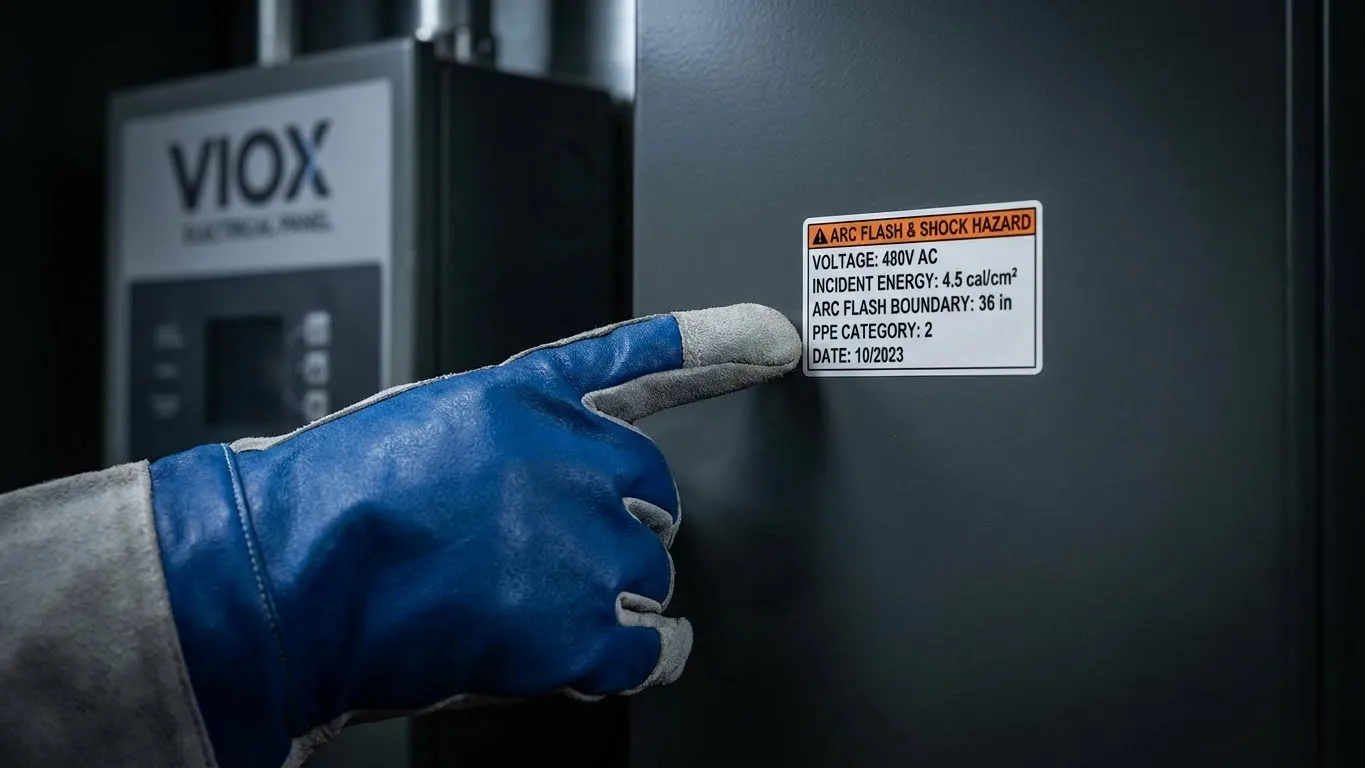
Αυτές οι ετικέτες παρέχουν συγκεκριμένα δεδομένα κινδύνου με βάση την ανάλυση του ηλεκτρικού συστήματος για συγκεκριμένο χώρο. Το τμήμα 130.5(H) του NFPA 70E απαιτεί την επισήμανση του εξοπλισμού που περιλαμβάνει πληροφορίες ασφάλειας με δυνατότητα δράσης.
Βασικά χαρακτηριστικά:
- Σκοπός: Παρέχετε ακριβή επίπεδα κινδύνου και απαιτήσεις ΜΑΠ για συγκεκριμένο εξοπλισμό στην εγκατεστημένη θέση του
- Απαιτούμενες πληροφορίες: Ενέργεια συμβάντος (cal/cm²), απόσταση ορίου ηλεκτρικού τόξου, κατηγορία ΜΑΠ ή απαιτούμενη ονομαστική τιμή τόξου, ονομαστική τάση συστήματος και ημερομηνία αξιολόγησης
- Ευθύνη: Ιδιοκτήτης εξοπλισμού (η εγκατάστασή σας)
- Πρότυπο συμμόρφωσης: NFPA 70E (πρότυπο ασφάλειας στο χώρο εργασίας)
Πίνακας Σύγκρισης: Δύο Ετικέτες, Δύο Σκοποί
| Όψη | Γενική Προειδοποιητική Ετικέτα (NEC 110.16) | Λεπτομερής Ετικέτα Ηλεκτρικού Τόξου (NFPA 70E 130.5(H)) |
|---|---|---|
| Πρωταρχικός Σκοπός | Προειδοποιήστε για την πιθανή ύπαρξη κινδύνου | Παρέχετε συγκεκριμένα προστατευτικά μέτρα |
| Περιεχόμενο Πληροφοριών | “Κίνδυνος/Προειδοποίηση - Κίνδυνος Ηλεκτρικού Τόξου” | Ενέργεια συμβάντος, όριο, κατηγορία ΜΑΠ, τάση, ημερομηνία |
| Ποιος το Εφαρμόζει | Κατασκευαστής ή εγκαταστάτης | Ιδιοκτήτης εξοπλισμού (μετά την θέση σε λειτουργία) |
| Πότε Εφαρμόζεται | Κατά την κατασκευή ή την εγκατάσταση | Μετά την ενεργοποίηση του συστήματος και τη μελέτη ηλεκτρικού τόξου |
| Απαιτείται Υπολογισμός | Όχι | Ναι (ανάλυση IEEE 1584) |
| Συχνότητα Ενημέρωσης | Μόνιμη (εκτός εάν αλλάξει ο εξοπλισμός) | Κάθε 5 χρόνια ή όταν αλλάζει το σύστημα |
| Κώδικας/Πρότυπο | NEC 110.16 (κώδικας εγκατάστασης) | NFPA 70E 130.5(H) (ασφάλεια στο χώρο εργασίας) |
| Νομική Ευθύνη | Κατασκευαστής/εργολάβος | Ιδιοκτήτης εγκατάστασης/εργοδότης |
Γιατί οι Κατασκευαστές OEM όπως η VIOX δεν μπορούν να Παρέχουν Λεπτομερή Δεδομένα Ηλεκτρικού Τόξου
Δεν πρόκειται για περικοπή - πρόκειται για φυσική και ασφάλεια. Οι λεπτομερείς ετικέτες ηλεκτρικού τόξου απαιτούν υπολογισμούς που εξαρτώνται εξ ολοκλήρου από την ηλεκτρική υποδομή της εγκατάστασής σας, η οποία δεν υπάρχει όταν ο εξοπλισμός φεύγει από το εργοστάσιό μας.
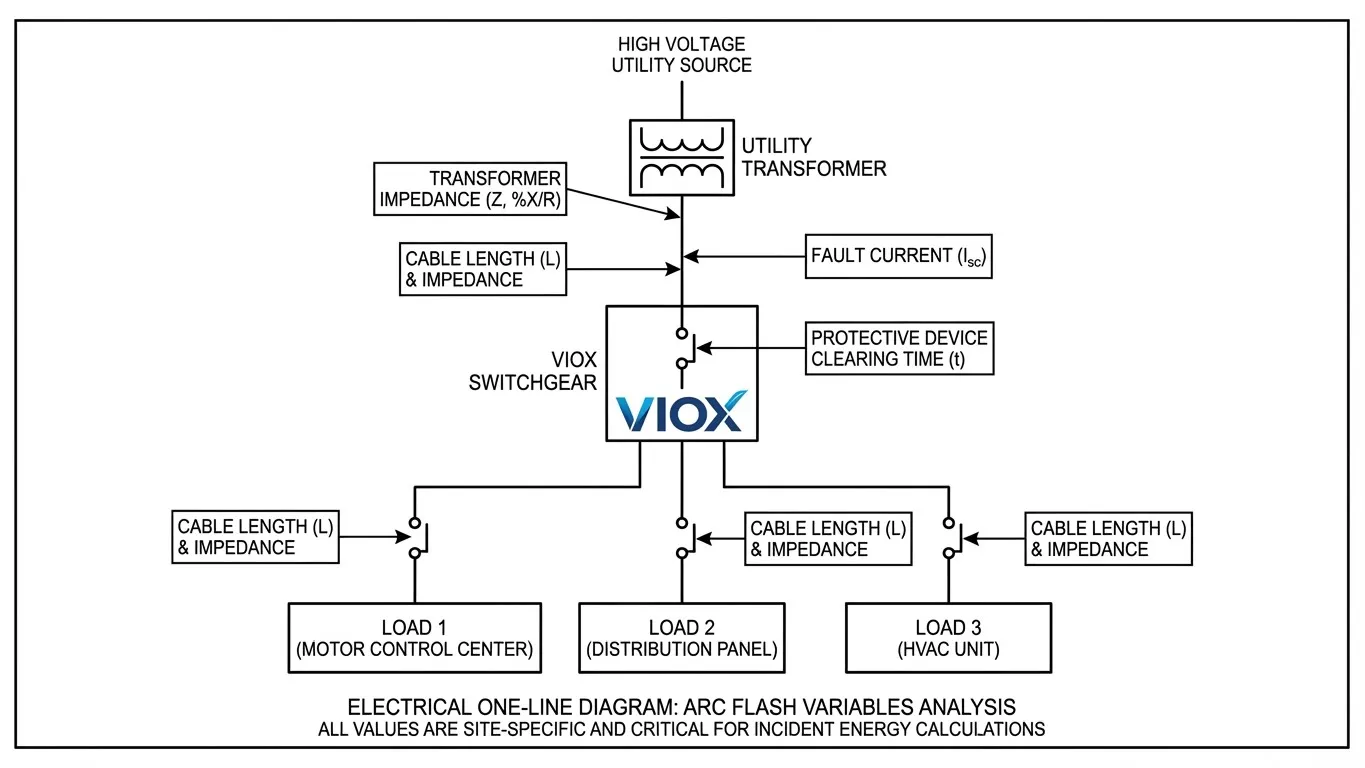
Οι Μεταβλητές που Καθιστούν Αδύνατη την Επισήμανση στο Εργοστάσιο
1. Χαρακτηριστικά μετασχηματιστή ανάντη
Η σύνθετη αντίσταση του μετασχηματιστή κοινής ωφέλειας ή του επιτόπιου μετασχηματιστή σας επηρεάζει δραματικά το διαθέσιμο ρεύμα σφάλματος. Ένας μετασχηματιστής 1500 kVA με σύνθετη αντίσταση 5,75% παράγει διαφορετικά επίπεδα σφάλματος από έναν με σύνθετη αντίσταση 3,5%.
2. Μήκος καλωδίου και μέγεθος αγωγού
Η ηλεκτρική απόσταση έχει σημασία. Η εγκατάσταση εξοπλισμού VIOX 50 πόδια από τον μετασχηματιστή αποδίδει πολύ διαφορετική ενέργεια συμβάντος από 500 πόδια μακριά. Η σύνθετη αντίσταση του καλωδίου μειώνει το διαθέσιμο ρεύμα σφάλματος σε απόσταση.
3. Δεδομένα ρεύματος σφάλματος κοινής ωφέλειας
Το διαθέσιμο ρεύμα σφάλματος της εταιρείας κοινής ωφέλειας στο σημείο εξυπηρέτησης είναι συγκεκριμένο για κάθε τοποθεσία. Αυτά τα δεδομένα δεν υπάρχουν μέχρι να συνδεθεί η εγκατάστασή σας στο δίκτυο.
4. Ρυθμίσεις προστατευτικής συσκευής
Ο χρόνος εκκαθάρισης του ανάντη διακόπτες ή ασφάλειες επηρεάζει άμεσα τους υπολογισμούς ενέργειας συμβάντος. Ο τρόπος συντονισμού της προστασίας του συστήματός σας επηρεάζει τη διάρκεια που παραμένει ένα σφάλμα τόξου.
5. Απόσταση εργασίας
Διαφορετικές διαμορφώσεις εξοπλισμού και διαδικασίες συντήρησης έχουν ως αποτέλεσμα διαφορετικές αποστάσεις εργασίας, οι οποίες επηρεάζουν την έκθεση σε ενέργεια τόξου στη θέση του εργαζομένου.
Τι Απαιτούν Πράγματι οι Υπολογισμοί IEEE 1584
Οι υπολογισμοί ενέργειας τόξου ακολουθούν τη μεθοδολογία IEEE 1584, η οποία απαιτεί:
- Τριφασικό ρεύμα βραχυκυκλώματος (από μελέτη βραχυκυκλώματος)
- Τύπος εξοπλισμού και διαστάσεις περιβλήματος
- Απόσταση μεταξύ αγωγών
- Απόσταση εργασίας
- Χρόνος εκκαθάρισης προστατευτικής διάταξης (από συντονισμό χρόνου-ρεύματος)
Καμία από αυτές τις παραμέτρους δεν υπάρχει σε κενό. Εμφανίζονται μόνο όταν το πλήρες ηλεκτρικό σας σύστημα έχει σχεδιαστεί, εγκατασταθεί και τεθεί σε λειτουργία.
Ο Αλλαγέας Παιχνιδιού NEC 2026: Διευρυμένες Απαιτήσεις Επισήμανσης
Οι προηγούμενες εκδόσεις του NEC απαιτούσαν ετικέτες μόνο σε εξοπλισμό υπηρεσίας με ονομαστική τιμή 1200A ή υψηλότερη. Το τμήμα 110.16 του NEC 2026 επεκτείνει δραματικά αυτό το πεδίο εφαρμογής. Τώρα, οι σημάνσεις κινδύνου τόξου απαιτούνται ουσιαστικά σε όλο τον ηλεκτρικό εξοπλισμό που μπορεί να συντηρηθεί ενώ βρίσκεται υπό τάση σε μη οικιστικές τοποθεσίες.
Τι Άλλαξε στο NEC 2026
Οι νέες απαιτήσεις καθορίζουν ότι οι ετικέτες πρέπει να περιλαμβάνουν:
- Ονομαστική τάση συστήματος
- Όριο τόξου
- Είτε διαθέσιμη ενέργεια τόξου ΕΙΤΕ κατηγορία ΜΑΠ τόξου (όχι και τα δύο)
- Ημερομηνία αξιολόγησης
Κρίσιμα, αυτές οι ετικέτες πρέπει να είναι μόνιμες, πληρώντας τα πρότυπα ανθεκτικότητας στο NEC 110.21(B). Οι χειρόγραφες ετικέτες δεν συμμορφώνονται πλέον.
Ευθυγράμμιση με το NFPA 70E
Οι αλλαγές του NEC 2026 ευθυγραμμίζουν τις απαιτήσεις εγκατάστασης πιο στενά με τα πρότυπα ασφάλειας στο χώρο εργασίας NFPA 70E. Ωστόσο, η κατανομή ευθυνών παραμένει: Το NEC διέπει τις απαιτήσεις εγκατάστασης (γενικές προειδοποιήσεις), ενώ το NFPA 70E διέπει τις απαιτήσεις ασφάλειας στο χώρο εργασίας (λεπτομερή δεδομένα κινδύνου).
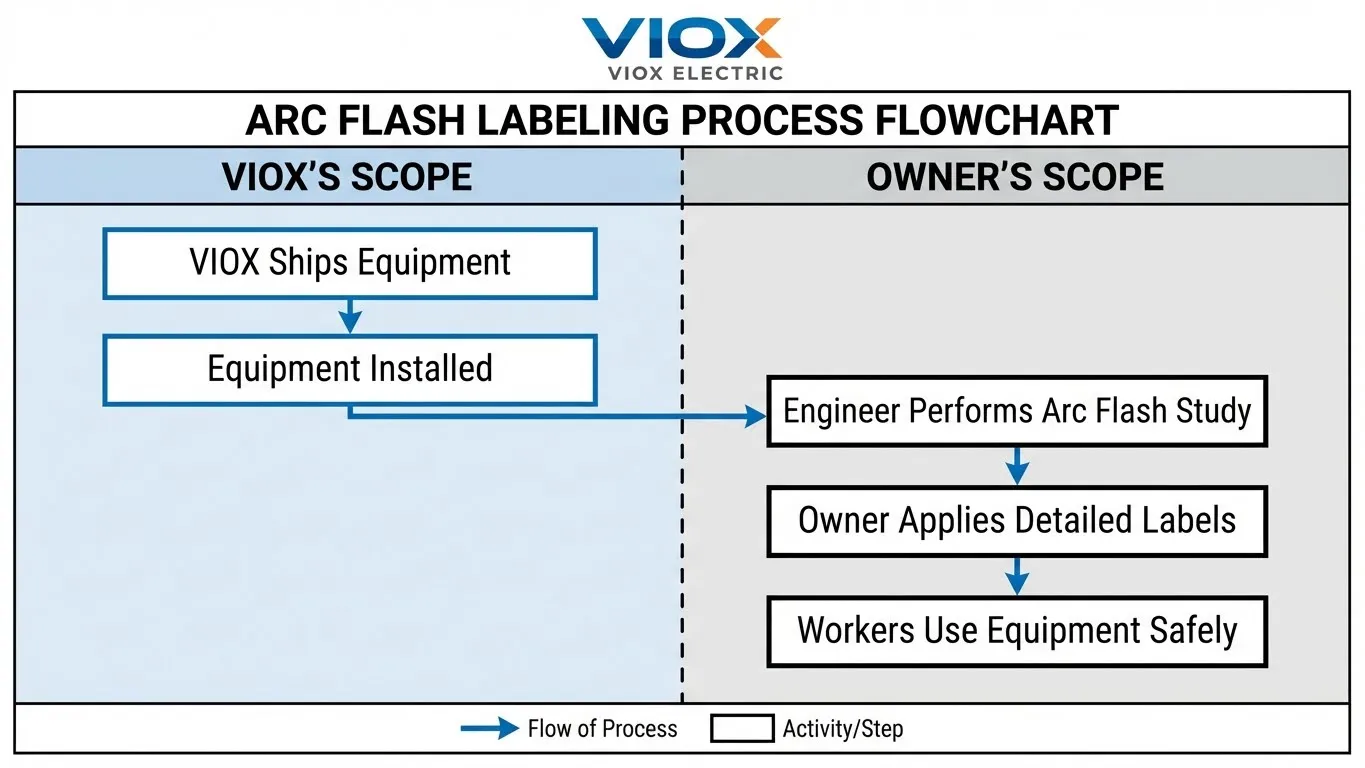
Η Ευθύνη της VIOX έναντι της Δικής σας Ευθύνης: Ο Σαφής Διαχωρισμός
Η κατανόηση του ποιος κάνει τι εξαλείφει τη σύγχυση και διασφαλίζει τη συμμόρφωση.
Τι Παρέχει η VIOX
1. Γενικές προειδοποιητικές ετικέτες συμβατές με το NEC
Κάθε πίνακας διακοπτών, πίνακας διανομής και κέντρο ελέγχου κινητήρα VIOX αποστέλλεται με προειδοποιητικές ετικέτες εγκατεστημένες στο εργοστάσιο που πληρούν τις απαιτήσεις του NEC 110.16. Αυτές οι ανθεκτικές ετικέτες ειδοποιούν τους εργαζομένους για πιθανούς κινδύνους τόξου και ηλεκτροπληξίας.
2. Προδιαγραφές εξοπλισμού
Πλήρης τεχνική τεκμηρίωση που περιλαμβάνει:
- Ονομαστικές τιμές αμπερότητας ράβδου
- Ονομαστικές τιμές βραχυκυκλώματος (SCCR)
- Προδιαγραφές προστατευτικής διάταξης
- Διαστάσεις εξοπλισμού και τύπος περιβλήματος
- Μονογραμμικό διάγραμμα που δείχνει τη διάταξη του εξοπλισμού
3. Θέσεις τοποθέτησης ετικετών
Στρατηγικές περιοχές τοποθέτησης σχεδιασμένες για λεπτομερείς ετικέτες τόξου που εφαρμόζονται από τον πελάτη. Αυτές οι τοποθεσίες παρέχουν ορατότητα, ανθεκτικότητα και συμμόρφωση με τον κώδικα.
4. Τεκμηρίωση εγκατάστασης και συντήρησης
Αναλυτικά εγχειρίδια που καθοδηγούν τη σωστή εγκατάσταση, η οποία επηρεάζει την απόδοση και την ασφάλεια του συστήματος.
Τι Πρέπει να Παρέχουν οι Ιδιοκτήτες Εξοπλισμού
1. Ανάλυση κινδύνου τόξου
Προσλάβετε έναν εξειδικευμένο ηλεκτρολόγο μηχανικό για να εκτελέσει υπολογισμούς IEEE 1584 για το πλήρες ηλεκτρικό σας σύστημα. Αυτή η ανάλυση καθορίζει:
- Διαθέσιμο ρεύμα σφάλματος σε κάθε θέση
- Επίπεδα ενέργειας τόξου
- Όρια τόξου
- Απαιτούμενες κατηγορίες ΜΑΠ
2. Ετικέτες τόξου συγκεκριμένου χώρου
Με βάση τη μηχανική μελέτη, εφαρμόστε ανθεκτικές ετικέτες στον εξοπλισμό που δείχνουν τα υπολογισμένα επίπεδα κινδύνου. Αυτές οι ετικέτες πρέπει να συμμορφώνονται με το NFPA 70E 130.5(H).
3. Εκπαίδευση εργαζομένων
Βεβαιωθείτε ότι οι ηλεκτρολόγοι εργαζόμενοι κατανοούν τους κινδύνους τόξου, μπορούν να ερμηνεύσουν τις ετικέτες και γνωρίζουν πώς να επιλέξουν τα κατάλληλα ΜΑΠ με βάση τις πληροφορίες ενέργειας τόξου ή κατηγορίας ΜΑΠ.
4. Ενημερώσεις ετικετών
Ελέγχετε και ενημερώνετε τις ετικέτες τόξου κάθε πέντε χρόνια ή όποτε συμβαίνουν τροποποιήσεις στο ηλεκτρικό σύστημα που θα μπορούσαν να επηρεάσουν το ρεύμα σφάλματος ή τις ρυθμίσεις της προστατευτικής διάταξης.
Πρακτική Καθοδήγηση για τους Πελάτες της VIOX
Βήμα 1: Αποδεχτείτε τον Εξοπλισμό με Γενικές Ετικέτες
Όταν φτάνει ο εξοπλισμός σας VIOX με γενικές προειδοποιητικές ετικέτες, επαληθεύστε ότι είναι παρόντες και ευανάγνωστοι. Αυτή είναι η βασική συμμόρφωση με το NEC που παρέχει η VIOX.
Βήμα 2: Θέστε σε Λειτουργία το Ηλεκτρικό σας Σύστημα
Ολοκληρώστε όλες τις εργασίες εγκατάστασης, ενεργοποιήστε το σύστημα και επαληθεύστε ότι οι ρυθμίσεις της προστατευτικής διάταξης ταιριάζουν με τις προδιαγραφές σχεδιασμού.
Βήμα 3: Συνάψτε Σύμβαση για μια Μελέτη Τόξου
Προσλάβετε έναν εξειδικευμένο ηλεκτρολόγο μηχανικό (P.E. με εμπειρία σε τόξο) για να:
- Μοντελοποιήσει το πλήρες ηλεκτρικό σας σύστημα
- Υπολογίσει την ενέργεια τόξου σε κάθε θέση εξοπλισμού
- Καθορίσει τα όρια τόξου
- Καθορίσει τις απαιτήσεις ΜΑΠ
Βήμα 4: Εφαρμόστε Ετικέτες Συγκεκριμένου Χώρου
Χρησιμοποιήστε ανθεκτικές, βιομηχανικού τύπου ετικέτες που πληρούν τις απαιτήσεις του NEC 110.21(B). Οι ετικέτες πρέπει να αντέχουν στο περιβάλλον λειτουργίας του εξοπλισμού (θερμοκρασία, υγρασία, έκθεση σε υπεριώδη ακτινοβολία, χημικά καθαρισμού).
Βήμα 5: Εκπαιδεύστε το Εργατικό Δυναμικό σας
Βεβαιωθείτε ότι οι εργαζόμενοι μπορούν να ερμηνεύσουν τις ετικέτες arc flash και να κατανοήσουν πώς να επιλέξουν τον κατάλληλο ΜΑΠ με βάση τις κατηγορίες ΜΑΠ ή τις τιμές ενέργειας συμβάντος.
Βήμα 6: Διατηρήστε την Ακρίβεια των Ετικετών
Ενημερώστε τις ετικέτες όποτε:
- Πραγματοποιούνται τροποποιήσεις στο ηλεκτρικό σύστημα
- Προστίθεται ή αντικαθίσταται εξοπλισμός
- Αλλάζουν οι ρυθμίσεις της συσκευής προστασίας
- Πέντε χρόνια παρέλθουν από την τελευταία ενημέρωση
Πώς η VIOX Υποστηρίζει τη Συμμόρφωσή σας με το Arc Flash
Ενώ η VIOX δεν μπορεί να παρέχει λεπτομερείς υπολογισμούς arc flash, προσφέρουμε υπηρεσίες προστιθέμενης αξίας που διευκολύνουν τη συμμόρφωσή σας:
Προ-Εφαρμοσμένες Ζώνες Τοποθέτησης Ετικετών
Ο εξοπλισμός VIOX περιλαμβάνει ειδικές περιοχές για ετικέτες arc flash που εφαρμόζονται από τον πελάτη. Αυτές οι τοποθεσίες εξασφαλίζουν:
- Ορατότητα στους εργαζόμενους που έχουν πρόσβαση στον εξοπλισμό
- Προστασία από ζημιές κατά τη διάρκεια των κανονικών λειτουργιών
- Συμμόρφωση με τις οδηγίες τοποθέτησης OSHA και NFPA 70E
Πλήρης Τεχνική Τεκμηρίωση
Κάθε προϊόν VIOX αποστέλλεται με προδιαγραφές που απαιτούνται για ακριβείς μελέτες arc flash:
- Ονομαστικές τιμές βραχυκυκλώματος εξοπλισμού
- Διαμορφώσεις ζυγών και αγωγών
- Διαστάσεις περιβλήματος
- Δεδομένα συντονισμού συσκευής προστασίας
Τεχνική Υποστήριξη
Η τεχνική υποστήριξη της VIOX μπορεί να απαντήσει σε ερωτήσεις σχετικά με τις προδιαγραφές του εξοπλισμού που χρειάζονται οι μηχανικοί για τους υπολογισμούς arc flash. Γεφυρώνουμε το χάσμα μεταξύ των δυνατοτήτων του εξοπλισμού και των απαιτήσεων του χώρου.
Προαιρετικά Κιτ Ετικετών
Η VIOX προσφέρει κιτ αξεσουάρ που περιέχουν:
- Κενό, ανθεκτικό απόθεμα ετικετών που πληροί το NEC 110.21(B)
- Πρότυπα ετικετών που δείχνουν τα απαιτούμενα πεδία δεδομένων
- Οδηγίες τοποθέτησης
- Προστατευτικές επικαλύψεις ελασματοποίησης
Αυτά τα επαγγελματικά υλικά διασφαλίζουν ότι οι ετικέτες που αφορούν συγκεκριμένα τον ιστότοπό σας ταιριάζουν με τα πρότυπα ποιότητας του εξοπλισμού VIOX.
Συχνές Ερωτήσεις
Ε: Μπορεί η VIOX να παρέχει “εκτιμώμενα” δεδομένα arc flash με βάση τυπικές εγκαταστάσεις;
Α: Όχι. Η παροχή εκτιμώμενων δεδομένων arc flash χωρίς ανάλυση συγκεκριμένου ιστότοπου παραβιάζει τις θεμελιώδεις αρχές ασφάλειας και θα μπορούσε να εκθέσει τους εργαζόμενους σε ανεπαρκή προστασία. Η ενέργεια συμβάντος arc flash ποικίλλει δραματικά με βάση τη μοναδική διαμόρφωση του ηλεκτρικού σας συστήματος. Οι γενικές εκτιμήσεις είναι επικίνδυνες και δεν συμμορφώνονται με το NFPA 70E, το οποίο απαιτεί υπολογισμούς με βάση τις πραγματικές συνθήκες του συστήματος.
Ε: Πόσο κοστίζει συνήθως μια μελέτη arc flash;
Α: Οι μελέτες arc flash κυμαίνονται συνήθως από 3.000 $ έως 15.000 $+ ανάλογα με το μέγεθος και την πολυπλοκότητα της εγκατάστασης. Οι παράγοντες που επηρεάζουν το κόστος περιλαμβάνουν: τον αριθμό των τοποθεσιών εξοπλισμού που απαιτούν ανάλυση, την πολυπλοκότητα του ηλεκτρικού συστήματος, τη διαθεσιμότητα υπάρχουσας τεκμηρίωσης (μονογραμμικά διαγράμματα, ρυθμίσεις συσκευής προστασίας) και το εάν υπάρχουν ήδη μελέτες βραχυκυκλώματος. Αυτή η επένδυση προστατεύει τους εργαζόμενους και αποδεικνύει τη συμμόρφωση με την OSHA.
Ε: Τι συμβαίνει εάν χειριζόμαστε εξοπλισμό χωρίς λεπτομερείς ετικέτες arc flash;
Α: Η λειτουργία χωρίς τις κατάλληλες ετικέτες arc flash παραβιάζει τις απαιτήσεις του NFPA 70E και εκθέτει τους εργαζόμενους σε άγνωστους κινδύνους. Η OSHA μπορεί να επιβάλει κυρώσεις σε εγκαταστάσεις για μη παροχή επαρκών πληροφοριών κινδύνου στους εργαζομένους. Το πιο σημαντικό, οι εργαζόμενοι δεν μπορούν να επιλέξουν τον κατάλληλο ΜΑΠ χωρίς δεδομένα ενέργειας συμβάντος ή κατηγορίας ΜΑΠ, δημιουργώντας σοβαρό κίνδυνο τραυματισμού. Σε περίπτωση συμβάντος arc flash, η έλλειψη σωστής επισήμανσης θα μπορούσε να οδηγήσει σε κανονιστικές κυρώσεις και νομική ευθύνη.
Ε: Μπορούμε να χρησιμοποιήσουμε τις μεθόδους πίνακα NFPA 70E αντί για λεπτομερείς υπολογισμούς;
Α: Ο πίνακας 130.7(C)(15) του NFPA 70E επιτρέπει την απλοποιημένη επιλογή ΜΑΠ για συγκεκριμένες εργασίες και διαμορφώσεις εξοπλισμού που πληρούν καθορισμένες παραμέτρους. Ωστόσο, αυτή η μέθοδος έχει αυστηρούς περιορισμούς και μπορεί να υπερεκτιμήσει ή να υποτιμήσει τους πραγματικούς κινδύνους. Οι περισσότερες εγκαταστάσεις επωφελούνται από την ανάλυση ενέργειας συμβάντος με μηχανική επεξεργασία χρησιμοποιώντας τη μεθοδολογία IEEE 1584, η οποία παρέχει ακριβή δεδομένα για συγκεκριμένο εξοπλισμό. Η μέθοδος πίνακα θα πρέπει να χρησιμοποιείται μόνο όταν εξειδικευμένο προσωπικό επαληθεύει ότι όλες οι παράμετροι του πίνακα ταιριάζουν με τις πραγματικές συνθήκες.
Ε: Πόσο συχνά πρέπει να ενημερώνονται οι ετικέτες arc flash;
Α: Το NFPA 70E απαιτεί την αναθεώρηση των ετικετών arc flash για ακρίβεια σε διαστήματα που δεν υπερβαίνουν τα πέντε χρόνια. Ωστόσο, οι ενημερώσεις είναι υποχρεωτικές όποτε συμβαίνουν αλλαγές στο ηλεκτρικό σύστημα που θα μπορούσαν να επηρεάσουν τους υπολογισμούς ενέργειας συμβάντος, όπως: προσθήκη ή αφαίρεση εξοπλισμού, αλλαγή ρυθμίσεων συσκευής προστασίας, τροποποίηση της υπηρεσίας κοινής ωφέλειας, αλλαγή μήκους ή μεγέθους αγωγών ή αντικατάσταση μετασχηματιστών. Οι τροποποιήσεις του συστήματος συνήθως ενεργοποιούν άμεσες ενημερώσεις ετικετών, χωρίς να περιμένουν τον πενταετή κύκλο.
Ε: Τι ΜΑΠ απαιτείται εάν δεν υπάρχει ετικέτα arc flash στον εξοπλισμό;
Α: Χωρίς συγκεκριμένα δεδομένα arc flash, οι εργαζόμενοι πρέπει να υποθέσουν τους χειρότερους κινδύνους και να φορούν τη μέγιστη διαθέσιμη προστασία ή να αποφεύγουν εντελώς την εργασία σε εξοπλισμό υπό τάση. Το NFPA 70E απαιτεί από τους εργοδότες να διασφαλίζουν ότι οι εργαζόμενοι έχουν πληροφορίες κινδύνου πριν εκτελέσουν εργασίες σε ή κοντά σε εξοπλισμό υπό τάση. Εάν λείπουν ετικέτες, η εργασία θα πρέπει να σταματήσει έως ότου η κατάλληλη ανάλυση arc flash καθορίσει τα πραγματικά επίπεδα κινδύνου. Αυτό προστατεύει τους εργαζόμενους και διασφαλίζει τη συμμόρφωση με τους κανονισμούς.
Ε: Ο εξοπλισμός VIOX πληροί τα πρότυπα ασφάλειας arc flash;
Α: Ο εξοπλισμός VIOX έχει σχεδιαστεί και δοκιμαστεί για να πληροί τις ισχύουσες ονομαστικές τιμές ρεύματος βραχυκυκλώματος (SCCR) και περιλαμβάνει τις κατάλληλες συσκευές προστασίας. Ωστόσο, η “ασφάλεια arc flash” εξαρτάται από τον τρόπο εφαρμογής του εξοπλισμού στο συγκεκριμένο ηλεκτρικό σας σύστημα. Η VIOX παρέχει εξοπλισμό με τις κατάλληλες ονομαστικές τιμές και γενικές προειδοποιήσεις. Η επίτευξη ασφάλειας arc flash στο χώρο εργασίας απαιτεί από τους ιδιοκτήτες να εκτελέσουν ανάλυση συγκεκριμένου ιστότοπου, να εφαρμόσουν λεπτομερείς ετικέτες, να εκπαιδεύσουν τους εργαζόμενους και να παρέχουν τον κατάλληλο ΜΑΠ - ευθύνες που βαρύνουν τον ιδιοκτήτη του εξοπλισμού σύμφωνα με τα πρότυπα NFPA 70E.
Συμπέρασμα: Συνεργασία στη Συμμόρφωση με την Ασφάλεια
Η επισήμανση arc flash αντιπροσωπεύει μια κοινή ευθύνη μεταξύ των κατασκευαστών εξοπλισμού και των ιδιοκτητών. Η VIOX παρέχει εξοπλισμό συμβατό με τον κώδικα με γενικές προειδοποιητικές ετικέτες που ειδοποιούν τους εργαζόμενους για πιθανούς κινδύνους - εκπληρώνοντας τις κατασκευαστικές μας υποχρεώσεις σύμφωνα με το NEC 110.16.
Η λεπτομερής ανάλυση arc flash και η επισήμανση που απαιτείται από το NFPA 70E βαρύνει τους ιδιοκτήτες του εξοπλισμού, επειδή αυτοί οι υπολογισμοί εξαρτώνται εξ ολοκλήρου από τα χαρακτηριστικά του ηλεκτρικού συστήματος που αφορούν συγκεκριμένο ιστότοπο και δεν υπάρχουν έως ότου εγκατασταθεί και ενεργοποιηθεί ο εξοπλισμός. Αυτός ο καταμερισμός ευθυνών δεν είναι γραφειοκρατική ταλαιπωρία - αντικατοπτρίζει τη θεμελιώδη φυσική των ηλεκτρικών συστημάτων και διασφαλίζει ότι οι εργαζόμενοι λαμβάνουν ακριβείς, αξιοποιήσιμες πληροφορίες ασφάλειας.
Η VIOX συνεργάζεται με τους πελάτες παρέχοντας ολοκληρωμένη τεχνική τεκμηρίωση, εξοπλισμό σχεδιασμένο για ασφαλή πρόσβαση συντήρησης, ειδικές θέσεις τοποθέτησης ετικετών και μηχανική υποστήριξη. Κατανοούμε ότι η συμμόρφωση με το arc flash περιλαμβάνει σύνθετους υπολογισμούς και σημαντικό σχεδιασμό. Η δέσμευσή μας εκτείνεται πέρα από την παροχή ποιοτικού ηλεκτρικού εξοπλισμού στην υποστήριξη του πλήρους προγράμματος ασφάλειας της εγκατάστασής σας.
Όταν επιλέγετε εξοπλισμό VIOX, επιλέγετε έναν κατασκευαστή που κατανοεί τις αποχρώσεις της ασφάλειας arc flash, σέβεται τα όρια της κατάλληλης ευθύνης επισήμανσης και παρέχει το τεχνικό υπόβαθρο για το επιτυχημένο πρόγραμμα συμμόρφωσης με το NFPA 70E.
Είστε έτοιμοι να συζητήσετε το επόμενο έργο ηλεκτρικού εξοπλισμού σας; Επικοινωνήστε με την ομάδα τεχνικών πωλήσεων της VIOX Electric για να μάθετε πώς τα προϊόντα μας υποστηρίζουν τις απαιτήσεις ασφάλειας arc flash της εγκατάστασής σας.