Di halaman ini
Label arc flash sering dianggap sebagai masalah stiker kecil. Dalam praktiknya, label ini berada di persimpangan antara kepatuhan kode kelistrikan, keselamatan kerja, analisis hubung singkat, koordinasi perangkat pelindung, dan prosedur kerja personel yang berkualifikasi.
Perbedaan yang paling penting adalah sederhana:
NEC 110.16 terutama merupakan persyaratan peringatan bahaya dan penandaan peralatan. NFPA 70E 130.5(H) adalah persyaratan pelabelan keselamatan kerja berdasarkan penilaian risiko arc flash.
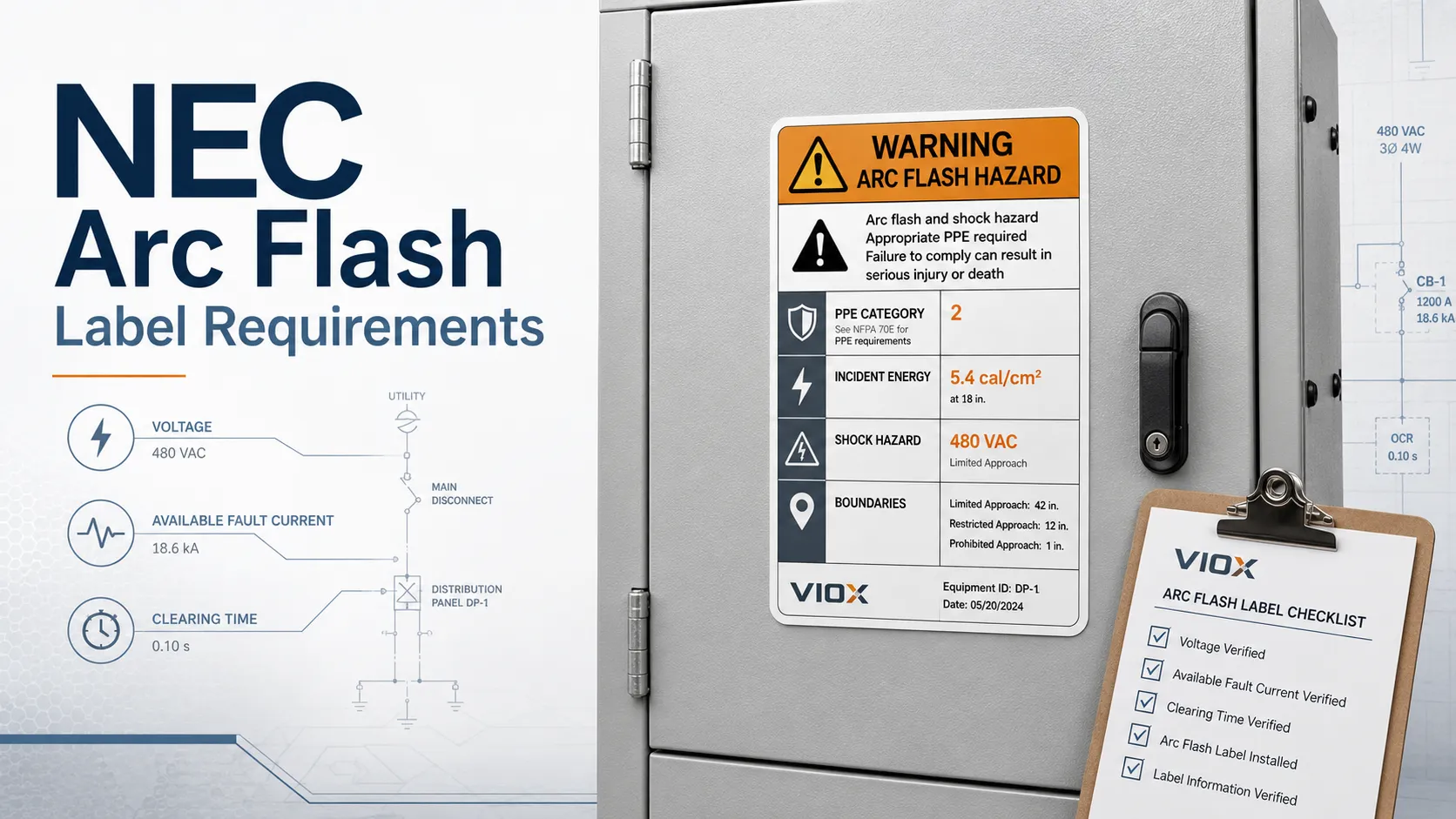
Itulah sebabnya label peringatan oranye umum mungkin memenuhi satu tujuan tetapi tetap tidak memadai untuk perencanaan pekerjaan bertegangan. Label arc flash yang terperinci dapat mencakup jarak kerja, batas arc flash, energi insiden, kategori alat pelindung diri (APD), ID peralatan, dan tanggal studi, tergantung pada metode yang digunakan.
Jawaban Singkat: Label Arc Flash Apa yang Disyaratkan oleh NEC?
Secara umum, National Electrical Code (NEC) mengharuskan peralatan listrik tertentu di instalasi non-hunian untuk ditandai guna memperingatkan personel yang berkualifikasi tentang potensi bahaya arc flash. Peringatan tersebut harus tahan lama dan sesuai dengan lingkungan tempat pemasangannya.
Untuk peralatan layanan yang lebih besar dan peralatan yang disuplai oleh feeder, NEC 110.16(B) menambahkan persyaratan penandaan yang lebih spesifik. Di bawah kerangka kerja NEC 2023, bagian ini umumnya dikaitkan dengan peralatan yang diberi peringkat 1000 A atau lebih di luar unit hunian, dan informasi label berfokus pada item seperti:
- tegangan sistem nominal
- arus gangguan yang tersedia pada peralatan
- waktu pemutusan perangkat pelindung arus lebih di sisi hulu berdasarkan arus gangguan yang tersedia
- tanggal label dipasang
Selalu verifikasi edisi NEC yang tepat yang diadopsi oleh Otoritas yang Berwenang (AHJ) setempat, karena penegakan NEC bergantung pada siklus kode yang diadopsi secara lokal.
Hal-hal Penting yang Dapat Dipetik
- Label arc flash generik adalah label peringatan. Ini memberi tahu orang yang berkualifikasi bahwa bahaya arc flash mungkin ada, tetapi biasanya tidak memberikan informasi yang cukup untuk pemilihan APD.
- Label NFPA 70E yang terperinci terkait dengan penilaian risiko arc flash. Ini mendukung perencanaan pekerjaan bertegangan dengan menampilkan data utama seperti energi insiden atau kategori APD.
- NEC dan NFPA 70E bukanlah dokumen yang sama. NEC adalah kode instalasi; NFPA 70E adalah standar keselamatan listrik di tempat kerja.
- Arus gangguan yang tersedia sangat penting. Pelabelan arc flash sangat berkaitan dengan arus hubung singkat, waktu pemutusan, dan koordinasi perangkat pelindung.
- Jangan menyalin label lama secara membabi buta. Perubahan pada transformator, penyulang (feeder), pemutus arus (breaker), sekering, pusat kendali motor (MCC), panel hubung bagi (switchboard), atau pengaturan proteksi dapat membatalkan data arc flash yang lama.
Persyaratan Label Arc Flash NEC 110.16
NEC 110.16 mencakup label peringatan bahaya arc flash untuk peralatan listrik yang mungkin memerlukan pemeriksaan, penyesuaian, servis, atau pemeliharaan saat dalam kondisi bertegangan.
Peralatan umum yang tercakup dalam konsep ini meliputi:
| Jenis Peralatan | Mengapa Peralatan Tersebut Memerlukan Peringatan Arc Flash |
|---|---|
| Switchboard | Sering diperiksa dan dipelihara oleh personel yang berkualifikasi |
| Switchgear | Memiliki potensi arus gangguan (fault-current) dan energi switching yang tinggi |
| Panelboard | Titik akses umum untuk sirkuit cabang dan penyulang (feeder) |
| Panel kontrol industri | Dapat berisi kontaktor, penggerak (drives), terminal, sekering, dan perangkat arus lebih |
| Selungkup soket meteran | Dapat diakses selama pekerjaan servis atau pemeliharaan |
| Pusat kendali motor | Berisi beberapa starter, penyulang (feeders), dan komponen daya |
Tujuan utamanya bukan untuk menghitung energi arc flash. Tujuan utamanya adalah untuk memperingatkan orang yang berkualifikasi bahwa bahaya arc flash mungkin ada.
NEC 110.16(A): Label Peringatan Umum
NEC 110.16(A) adalah konsep label peringatan umum. Ini berlaku untuk peralatan di instalasi non-hunian di mana orang yang berkualifikasi dapat berinteraksi dengan peralatan bertegangan selama servis atau pemeliharaan.
Label peringatan umum yang tipikal dapat mencakup kata-kata seperti:
PERINGATAN: Bahaya Arc Flash dan Sengatan Listrik. Diperlukan APD yang sesuai.
Jenis label tersebut dapat berguna sebagai peringatan bahaya dasar, namun biasanya tidak menyediakan data kelistrikan terperinci yang diperlukan untuk memilih pakaian tahan busur api atau menentukan batas arc flash.
NEC 110.16(B): Peralatan Layanan dan Peralatan yang Disuplai Feeder
NEC 110.16(B) melangkah lebih jauh untuk peralatan yang lebih besar. Dalam konteks NEC 2023, ambang batas yang umum dikutip adalah 1000 A atau lebih untuk peralatan layanan dan peralatan yang disuplai feeder selain di unit hunian.
Tujuan praktisnya adalah menempatkan informasi arus gangguan listrik yang penting di tempat yang dapat dilihat oleh orang yang berkualifikasi. Informasi ini membantu mendukung keputusan pemeliharaan yang lebih aman dan juga dapat dihubungkan dengan pekerjaan penilaian risiko arc flash di kemudian hari.
| Informasi Label | Mengapa Hal Ini Penting |
|---|---|
| Tegangan sistem nominal | Mengidentifikasi sistem kelistrikan yang sedang dikerjakan |
| Arus gangguan yang tersedia | Menunjukkan arus hubung singkat prospektif pada peralatan |
| Waktu pemutusan | Membantu mengevaluasi berapa lama perangkat di sisi hulu mungkin memerlukan waktu untuk memutus gangguan |
| Tanggal penerapan | Menunjukkan kapan informasi tersebut ditentukan atau didokumentasikan |
Di sinilah banyak label menjadi tidak memadai. Stiker yang hanya bertuliskan “Bahaya Arc Flash” mungkin memperingatkan orang, tetapi tidak mendokumentasikan arus gangguan yang tersedia atau waktu pemutusan.
NFPA 70E 130.5(H): Label Lapangan Arc Flash Terperinci
NFPA 70E berfokus pada praktik kerja kelistrikan yang aman. Bagian 130.5(H) umumnya dirujuk untuk pelabelan peralatan arc flash setelah penilaian risiko arc flash dilakukan.
Label lapangan bergaya NFPA 70E yang mendetail dapat mencakup:
| Item Label | Tujuan |
|---|---|
| Tegangan sistem nominal | Membantu mengidentifikasi konteks sengatan listrik dan prosedur kerja |
| Batas flash busur | Menentukan jarak pendekatan untuk paparan arc flash |
| Energi insiden dan jarak kerja | Mendukung pemilihan APD berperingkat busur (arc-rated) berdasarkan tingkat energi yang dihitung |
| Kategori APD | Digunakan ketika metode kategori APD diterapkan |
| ID Peralatan | Menghubungkan label ke peralatan yang tepat dalam studi |
| Tanggal studi atau tanggal label | Membantu menentukan apakah informasi tersebut masih berlaku |
Label harus sesuai dengan metode yang digunakan dalam penilaian risiko arc flash. Label tidak boleh mencampur metode secara sembarangan. Sebagai contoh, label energi insiden yang dihitung dan label kategori APD tidak boleh dianggap dapat dipertukarkan tanpa tinjauan teknis yang tepat.
NEC vs NFPA 70E: Apa Perbedaannya?
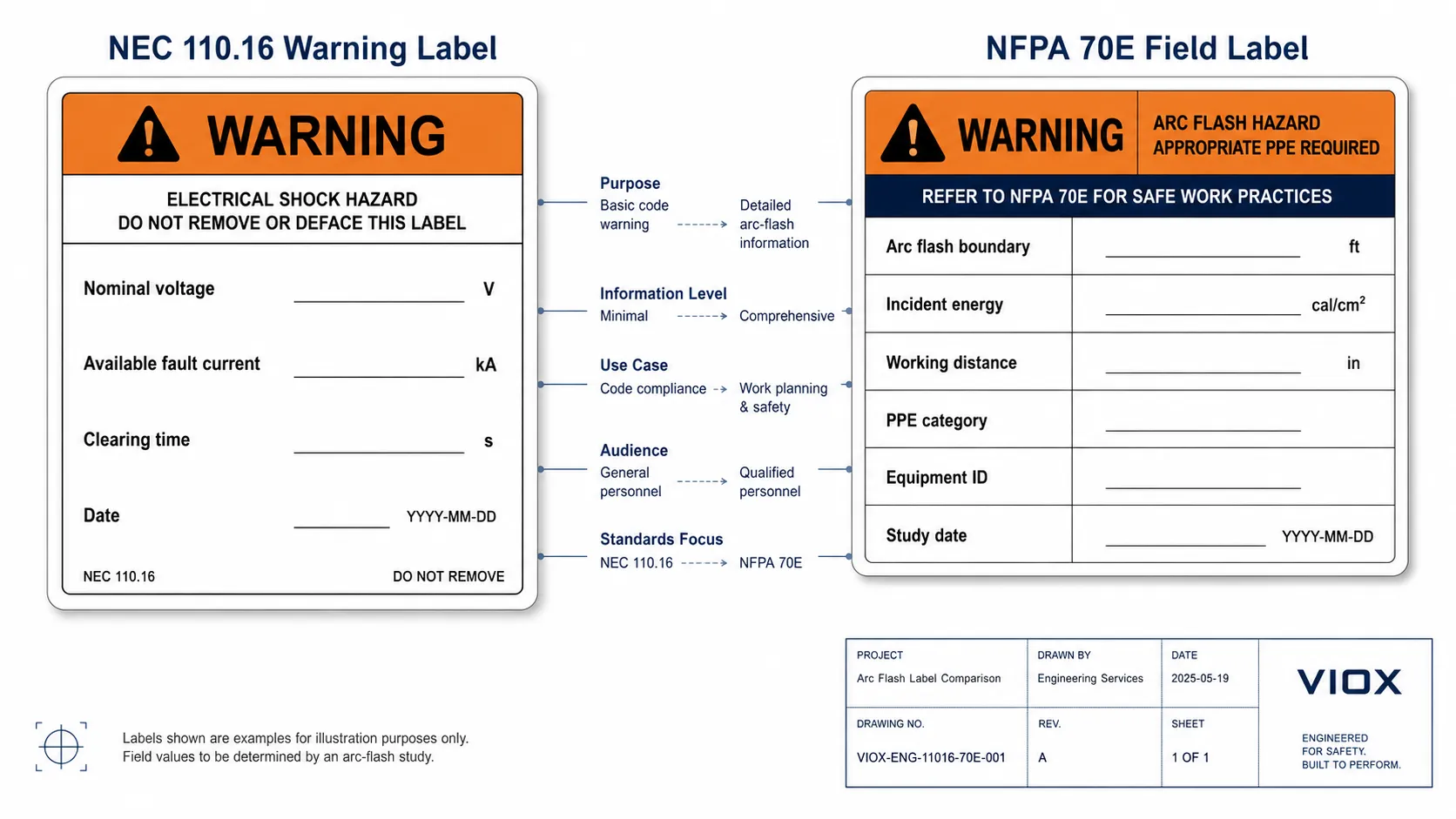
| Topik | NEC 110.16 | NFPA 70E 130.5(H) |
|---|---|---|
| Peran utama | Penandaan instalasi listrik | Pelabelan keselamatan listrik di tempat kerja |
| Audiens utama | Pemasang, inspektur, orang yang berkualifikasi | Pemberi kerja, pekerja berkualifikasi, manajer keselamatan |
| Jenis label | Peringatan bahaya dan penandaan peralatan tertentu | Label lapangan berdasarkan penilaian risiko arc flash |
| Informasi umum | Pesan peringatan, tegangan, arus gangguan yang tersedia, waktu pemutusan, tanggal, tergantung pada peralatan dan edisi NEC | Tegangan, batas arc flash, energi insiden atau kategori APD, jarak kerja, identifikasi peralatan |
| Tujuan utama | Memperingatkan personel yang berkualifikasi mengenai bahaya arc flash | Mendukung perencanaan kerja bertegangan yang aman dan pemilihan APD |
Dalam istilah teknik yang sederhana: NEC menyatakan bahwa peralatan tertentu harus diberi tanda. NFPA 70E membantu menentukan informasi apa yang dibutuhkan pekerja sebelum melakukan pekerjaan bertegangan.
Label Arc Flash Umum vs Label Arc Flash Terperinci
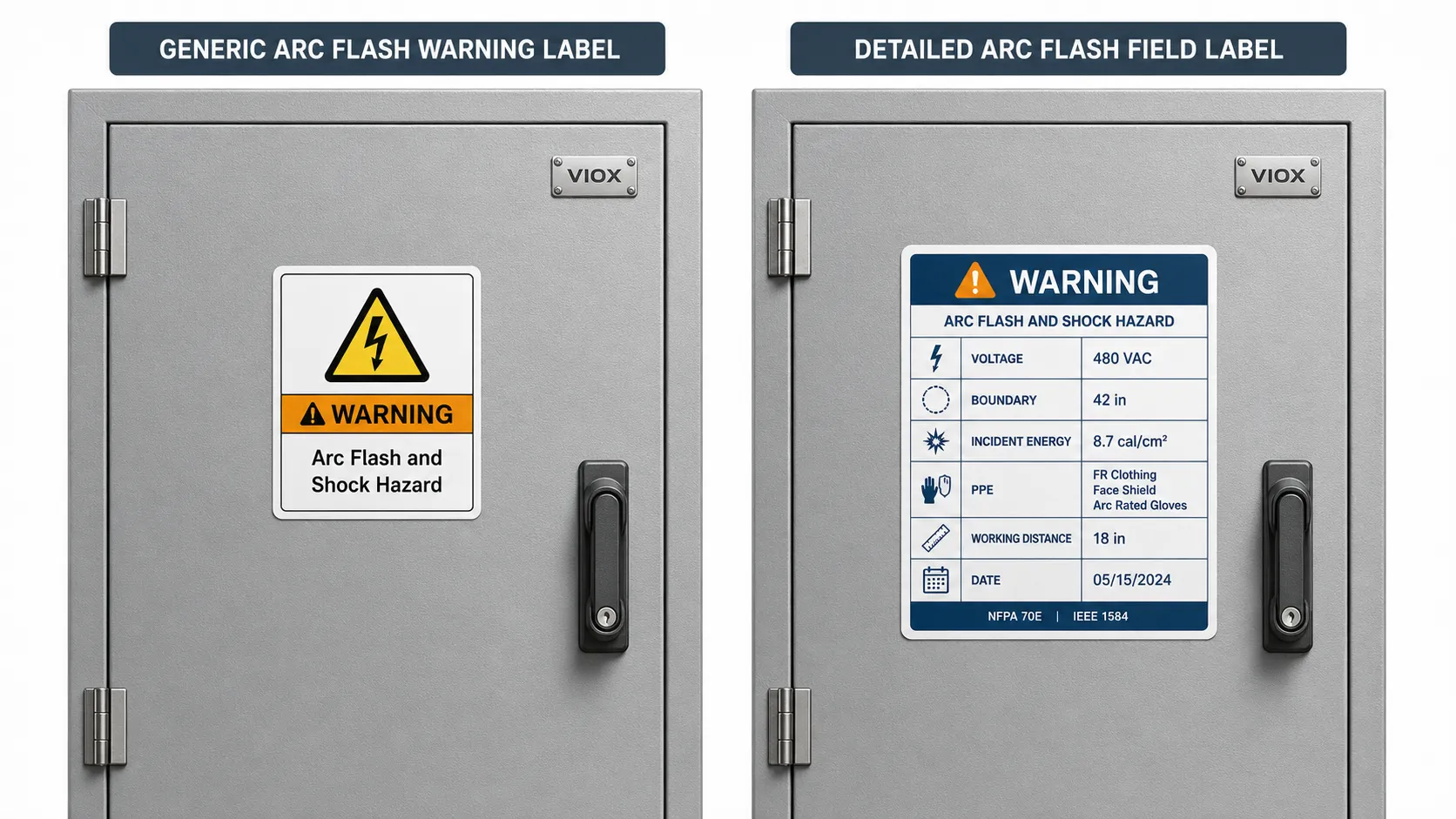
Ini adalah keputusan utama yang sering menyulitkan banyak tim fasilitas. Label umum dan label terperinci bukanlah hal yang sama.
| Jenis Label | Apa yang Biasanya Ditampilkan | Paling Baik Digunakan Untuk | Keterbatasan Utama |
|---|---|---|---|
| Label peringatan arc flash umum | Pesan peringatan dan simbol bahaya | Kesadaran dasar akan bahaya dan peringatan gaya NEC | Tidak menyediakan detail energi insiden, batas, atau APD |
| Label peralatan gaya NEC 110.16(B) | Tegangan, arus gangguan yang tersedia, waktu pemutusan, tanggal, jika berlaku | Penandaan peralatan layanan atau pengumpan yang lebih besar | Tidak sama dengan label lapangan arc flash NFPA 70E lengkap |
| Label arc flash terperinci | Tegangan, batas, energi insiden atau kategori APD, jarak kerja, ID peralatan, tanggal studi | Perencanaan pekerjaan bertegangan dan pemilihan APD | Memerlukan data penilaian risiko busur api (arc flash) yang valid |
Kapan label busur api generik dapat diterima
Label generik dapat diterima jika tujuannya adalah untuk memperingatkan personel berkualifikasi bahwa terdapat bahaya busur api dan bagian kode yang berlaku tidak mewajibkan informasi studi terperinci pada label tersebut.
Contohnya meliputi:
- peringatan umum pada peralatan yang kemungkinan akan diservis saat bertegangan
- peralatan lama yang menunggu penilaian busur api secara menyeluruh
- instalasi dengan kompleksitas rendah di mana label peringatan diperlukan tetapi data APD terperinci ditangani melalui dokumentasi terpisah
Meskipun demikian, label generik tidak boleh menciptakan rasa aman yang semu. Label tersebut berfungsi sebagai peringatan; bukan untuk perhitungan.
Kapan Label Arc Flash Terperinci Diperlukan
Label terperinci diperlukan ketika peralatan merupakan bagian dari program keselamatan listrik di tempat kerja dan pekerja memerlukan informasi lapangan untuk merencanakan tugas bertegangan.
Label terperinci sangat penting untuk:
- switchgear
- switchboard
- pusat kendali motor
- panel kontrol industri
- panelboard besar
- peralatan pintu masuk layanan (service entrance)
- peralatan yang disuplai feeder dengan rating 1000 A atau lebih
- peralatan dengan arus gangguan (fault current) tinggi yang tersedia
- peralatan di mana pengaturan perangkat pelindung memengaruhi waktu pemutusan (clearing time)
Informasi apa saja yang harus dicantumkan pada label Arc Flash?
Untuk label yang mendetail, informasi yang paling berguna bukanlah hiasan. Informasi tersebut harus mendukung keputusan pekerja yang berkualifikasi sebelum membuka atau berinteraksi dengan peralatan yang bertegangan.
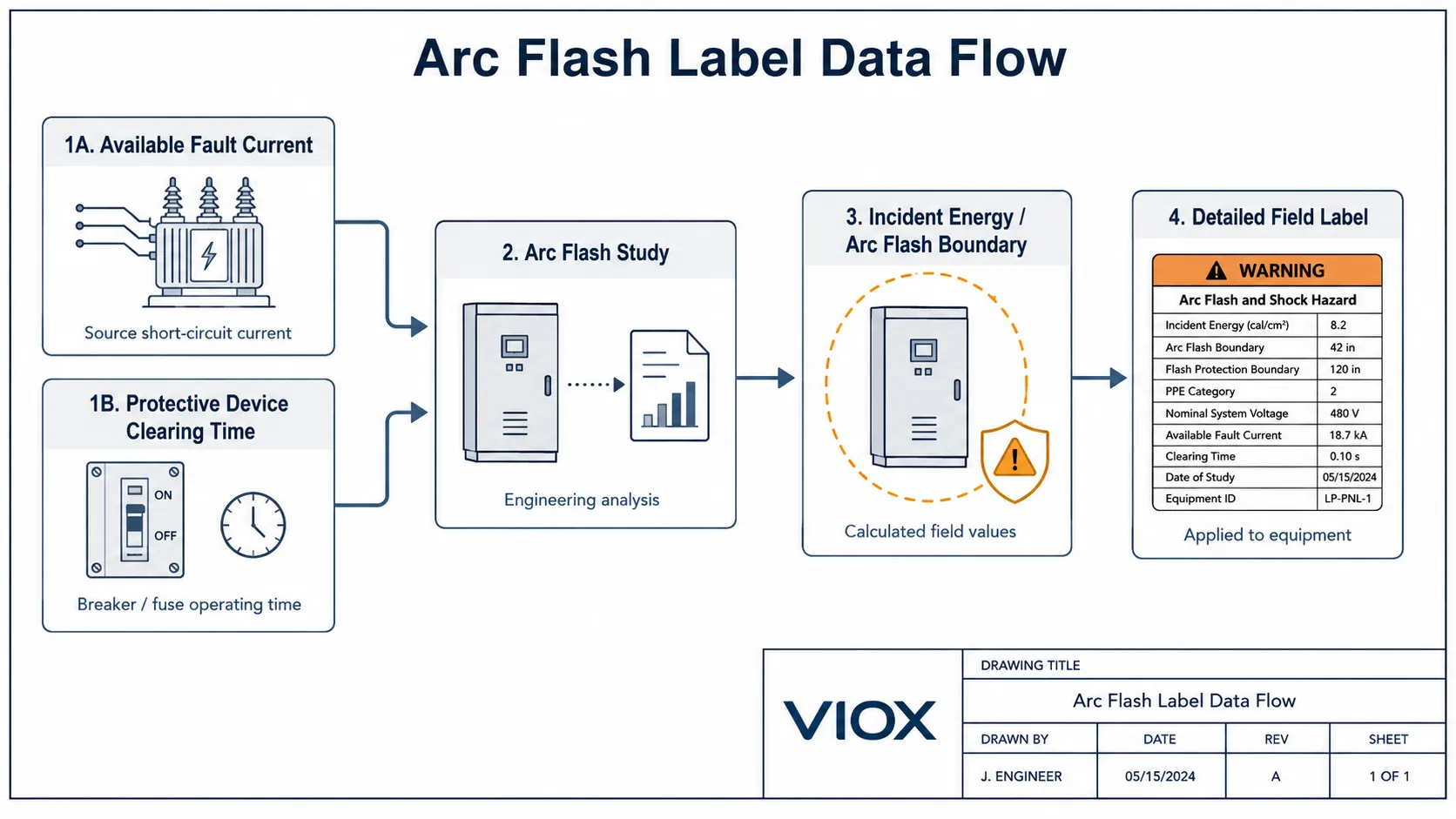
| Informasi | Mengapa informasi tersebut harus ada pada label |
|---|---|
| Nama atau ID peralatan | Mencegah tertukarnya satu panel dengan panel lainnya |
| Tegangan nominal | Mendukung perencanaan kerja terkait bahaya sengatan listrik dan Arc Flash |
| Batas flash busur | Menunjukkan jarak di mana perlindungan terhadap busur api (arc flash) menjadi relevan |
| Energi insiden pada jarak kerja | Mendukung pemilihan APD yang memiliki peringkat busur api (arc-rated) |
| Jarak kerja | Membuat nilai energi insiden menjadi bermakna |
| Kategori APD, jika digunakan | Mendukung metode kategori APD |
| Arus gangguan yang tersedia | Membantu menghubungkan data label dengan kondisi sistem tenaga listrik |
| Waktu pemutusan perangkat pelindung | Menunjukkan dasar waktu di balik tingkat bahaya |
| Tanggal studi atau label | Membantu mengidentifikasi label yang sudah kedaluwarsa |
Jika hanya satu angka pada label yang diperiksa, banyak orang melihat energi insiden. Hal itu dapat dimengerti, namun tidak lengkap. Energi insiden sangat bergantung pada arus gangguan, arus busur, jarak kerja, jenis selungkup, konfigurasi elektroda, dan waktu pemutusan. Perubahan pengaturan pemutus arus (breaker) dapat mengubah hasilnya.
Ukuran, Penempatan, dan Ketahanan Label Arc Flash
NEC tidak bekerja seperti panduan desain grafis dengan satu ukuran stiker universal untuk setiap instalasi. Persyaratan sebenarnya adalah penandaan harus terbaca, tahan lama, dan sesuai dengan lingkungannya.
Praktik yang baik untuk label arc flash:
- Tempatkan label pada permukaan atau pintu peralatan di mana petugas yang berkualifikasi dapat melihatnya sebelum berinteraksi.
- Jauhkan label dari gagang, ventilasi, engsel, dan area yang kemungkinan akan tertutup oleh aksesori.
- Gunakan material tahan lama yang cocok untuk lingkungan dalam ruangan, luar ruangan, berminyak, berdebu, atau area yang sering dicuci.
- Pastikan kata sinyal peringatan dan data tegangan mudah dibaca.
- Hindari label berukuran sangat kecil yang menjadi tidak terbaca setelah pemasangan.
- Ganti label yang pudar, tergores, tertutup cat, atau rusak akibat bahan kimia.
Untuk panel kontrol industri dan switchboard, penempatan label harus mendukung proses kerja yang sebenarnya. Label yang tersembunyi di dalam selungkup mungkin tidak dapat memperingatkan pekerja sebelum terpapar bahaya.
Label Arus Gangguan Tersedia vs Label Arc Flash
Label arus gangguan tersedia dan label arc flash saling berkaitan, namun keduanya tidak identik.
| Jenis Label | Tujuan Utama | Data Tipikal |
|---|---|---|
| Label arus gangguan yang tersedia | Menunjukkan arus hubung singkat prospektif pada peralatan | Nilai arus gangguan, tanggal, terkadang dasar perhitungan |
| Label peralatan NEC 110.16(B) | Mendukung penandaan bahaya busur api (arc flash) untuk peralatan yang lebih besar | Tegangan, arus gangguan yang tersedia, waktu pemutusan, tanggal |
| Label lapangan busur api (arc flash) NFPA 70E | Mendukung pekerjaan bertegangan dan pemilihan APD | Tegangan, batas arc flash, energi insiden atau kategori APD, jarak kerja |
Bagi perakit panel dan insinyur fasilitas, perbedaan ini sangat penting. Arus gangguan yang tersedia (available fault current) yang tinggi dapat memengaruhi peringkat arus hubung singkat (SCCR), peringkat pemutusan, pemilihan peralatan, dan energi insiden arc flash. Itulah sebabnya pelabelan arc flash tidak boleh dipisahkan dari tinjauan hubung singkat dan koordinasi.
Untuk latar belakang lebih mendalam mengenai kesesuaian hubung singkat perakitan, lihat panduan VIOX untuk Perhitungan SCCR dan pelabelan panel. Untuk estimasi arus gangguan, tinjau cara menghitung arus hubung singkat.
Apa yang Berubah Terkait “Label Arc Flash 2018”?
Beberapa pengguna mencari “label arc flash 2018” karena mereka telah mendengar tentang IEEE 1584-2018.
IEEE 1584-2018 bukanlah standar format label. Ini adalah panduan untuk melakukan perhitungan bahaya busur api (arc flash). Pentingnya standar ini adalah karena telah mengubah cara insinyur menghitung energi insiden busur api dalam banyak skenario tegangan rendah dan tegangan menengah.
Itu berarti label lama yang didasarkan pada metode studi lama mungkin perlu ditinjau kembali ketika:
- peralatan telah dimodifikasi
- perangkat pelindung telah diganti
- pengaturan pemutus arus (breaker) telah berubah
- transformator atau penyulang (feeder) telah berubah
- arus gangguan yang tersedia telah berubah
- fasilitas memperbarui metodologi studi busur api mereka
Pertanyaan terkait tahun 2018 biasanya bukan sekadar tentang stiker. Ini tentang apakah studi yang mendasari stiker tersebut masih valid.
Kesalahan Umum pada Label Arc Flash
Kesalahan 1: Menggunakan Label Umum sebagai Pengganti Studi Arc Flash
Label umum hanya memberikan peringatan kepada orang-orang. Label tersebut tidak menentukan energi insiden, batas arc flash, tingkat APD, atau jarak kerja.
Kesalahan 2: Membiarkan Label Lama Tetap Terpasang Setelah Perubahan Peralatan
Jika pemutus arus (breaker), sekering, transformator, penyulang (feeder), pusat kendali motor, atau pengaturan proteksi berubah, label lama mungkin tidak lagi sesuai dengan sistem.
Kesalahan 3: Menampilkan Kategori APD dan Energi Insiden Tanpa Metode yang Jelas
Praktik kerja NFPA 70E membedakan antara berbagai metode. Mencampur pendekatan pelabelan tanpa kontrol teknik dapat membingungkan pekerja.
Kesalahan 4: Mengabaikan Waktu Pemutusan (Clearing Time)
Energi busur api sangat dipengaruhi oleh seberapa lama perangkat proteksi di sisi hulu memutus gangguan. Perubahan pengaturan yang kecil dapat berdampak besar pada label.
Kesalahan 5: Menganggap Ukuran Label sebagai Masalah Kepatuhan Utama
Ukuran label hanya penting agar label dapat dibaca dan tahan lama. Masalah yang lebih besar adalah apakah label tersebut memuat informasi yang benar sesuai dengan persyaratan dan praktik kerja yang berlaku.
Kesalahan 6: Melupakan Peralatan yang Disuplai oleh Feeder
Banyak tim hanya berfokus pada peralatan pintu masuk layanan (service entrance). Berdasarkan ketentuan NEC yang lebih baru, peralatan yang disuplai oleh feeder juga dapat menjadi perhatian jika memenuhi ambang batas dan konteks pemasangan yang berlaku.
Daftar Periksa Label Busur Api (Arc Flash)
Sebelum menyetujui atau mengganti label busur api, periksa hal-hal berikut:
| Item pemeriksaan | Pertanyaan untuk diajukan |
|---|---|
| Edisi kode | Edisi NEC mana yang telah diadopsi oleh AHJ setempat? |
| Jenis peralatan | Apakah ini peralatan layanan, peralatan yang disuplai feeder, switchgear, switchboard, panelboard, MCC, atau panel kontrol industri? |
| Ambang batas ampere | Apakah peralatan memenuhi ambang batas peringkat arus yang berlaku? |
| Tegangan | Apakah tegangan sistem nominal ditampilkan dengan benar? |
| Arus gangguan | Apakah arus gangguan yang tersedia sudah tersedia dan terdokumentasi? |
| Waktu pemutusan | Apakah waktu pemutusan perangkat pelindung didasarkan pada perangkat hulu dan pengaturan yang benar? |
| Data NFPA 70E | Apakah label lapangan mencakup batas arc flash dan energi insiden atau kategori APD jika disyaratkan oleh program keselamatan? |
| Tanggal | Apakah tanggal label atau studi ditampilkan? |
| Daya tahan | Apakah label tersebut sesuai untuk lingkungan tersebut? |
| Visibilitas | Bisakah orang yang berkualifikasi melihatnya sebelum berinteraksi dengan peralatan? |
PERTANYAAN YANG SERING DIAJUKAN
Apa saja persyaratan pada label arc flash menurut NEC?
NEC 110.16 mewajibkan penandaan peringatan bahaya arc flash untuk peralatan tertentu pada instalasi non-hunian. Untuk peralatan yang disuplai oleh layanan dan pengumpan (feeder) yang lebih besar di bawah kerangka kerja NEC 2023, informasi label yang umum dirujuk mencakup tegangan sistem nominal, arus gangguan yang tersedia, waktu pemutusan perangkat arus lebih di sisi hulu, dan tanggal pemasangan. Selalu verifikasi edisi NEC yang diadopsi secara lokal.
Apakah label arc flash generik sudah cukup?
Terkadang label tersebut cukup untuk peringatan bahaya dasar, namun tidak cukup untuk perencanaan pekerjaan bertegangan secara mendetail. Jika pekerja memerlukan informasi energi insiden, kategori APD, batas arc flash, atau jarak kerja, maka diperlukan label mendetail sesuai standar NFPA 70E.
Apa perbedaan antara NEC 110.16 dan NFPA 70E 130.5(H)?
NEC 110.16 adalah aturan penandaan instalasi listrik. NFPA 70E 130.5(H) berkaitan dengan pelabelan lapangan berdasarkan penilaian risiko arc flash untuk keselamatan listrik di tempat kerja.
Apakah NEC mewajibkan pencantuman energi insiden pada label arc flash?
NEC 110.16 tidak berfungsi sebagai aturan pelabelan energi insiden secara lengkap. Energi insiden biasanya dikaitkan dengan penilaian risiko arc flash NFPA 70E dan label lapangan yang mendetail.
Apa saja persyaratan NFPA 70E pada label arc flash?
Label NFPA 70E umumnya mencakup tegangan sistem nominal, batas arc flash, serta energi insiden pada jarak kerja atau kategori APD, tergantung pada metode yang digunakan. Identifikasi peralatan dan tanggal studi juga biasanya disertakan.
Berapa ukuran label arc flash yang seharusnya?
Tidak ada ukuran universal tunggal yang cocok untuk setiap jenis peralatan. Label harus cukup besar agar terbaca, tahan lama sesuai lingkungan, dan terlihat sebelum personel yang berkualifikasi berinteraksi dengan peralatan tersebut.
Apa itu label arus gangguan yang tersedia (available fault current)?
Label arus gangguan yang tersedia mendokumentasikan arus hubung singkat prospektif pada peralatan. Hal ini berkaitan dengan pelabelan arc flash karena arus gangguan dan waktu pemutusan memengaruhi perhitungan arc flash, namun label ini tidak sama dengan label arc flash NFPA 70E yang mendetail.
Kapan label arc flash harus diperbarui?
Perbarui label ketika sistem kelistrikan berubah dengan cara yang memengaruhi arus gangguan, waktu pemutusan perangkat pelindung, konfigurasi peralatan, atau hasil perhitungan arc flash. Pemicu umum meliputi perubahan transformator, perubahan pengaturan pemutus arus (breaker), modifikasi pengumpan (feeder), dan penggantian peralatan.
Kesimpulan
Pelabelan arc flash bukan sekadar memilih stiker. Ini tentang menyesuaikan label dengan persyaratan yang ada.
Menggunakan NEC 110.16 untuk memahami persyaratan penandaan instalasi dan peringatan bahaya. Gunakan NFPA 70E 130.5(H) untuk memahami label keselamatan kerja terperinci yang terkait dengan penilaian risiko arc flash. Gunakan IEEE 1584 atau metode studi lain yang diterima di mana perhitungan teknis diperlukan.
Untuk panel industri, switchboard, switchgear, dan peralatan pengumpan besar, pendekatan paling aman adalah memperlakukan label sebagai titik akhir yang terlihat dari proses teknis: arus gangguan yang tersedia, waktu pemutusan perangkat pelindung, peringkat peralatan, SCCR, koordinasi, dan perlindungan pekerja semuanya harus selaras.
Sumber dan Standar untuk Verifikasi
- NFPA 70 / NEC, Pasal 110.16 dan 110.21(B)
- NFPA 70E, Bagian 130.5(H)
- IEEE 1584-2018, Panduan untuk Melakukan Perhitungan Bahaya Arc-Flash
- Persyaratan keselamatan kelistrikan OSHA dan aturan penegakan hukum oleh AHJ setempat