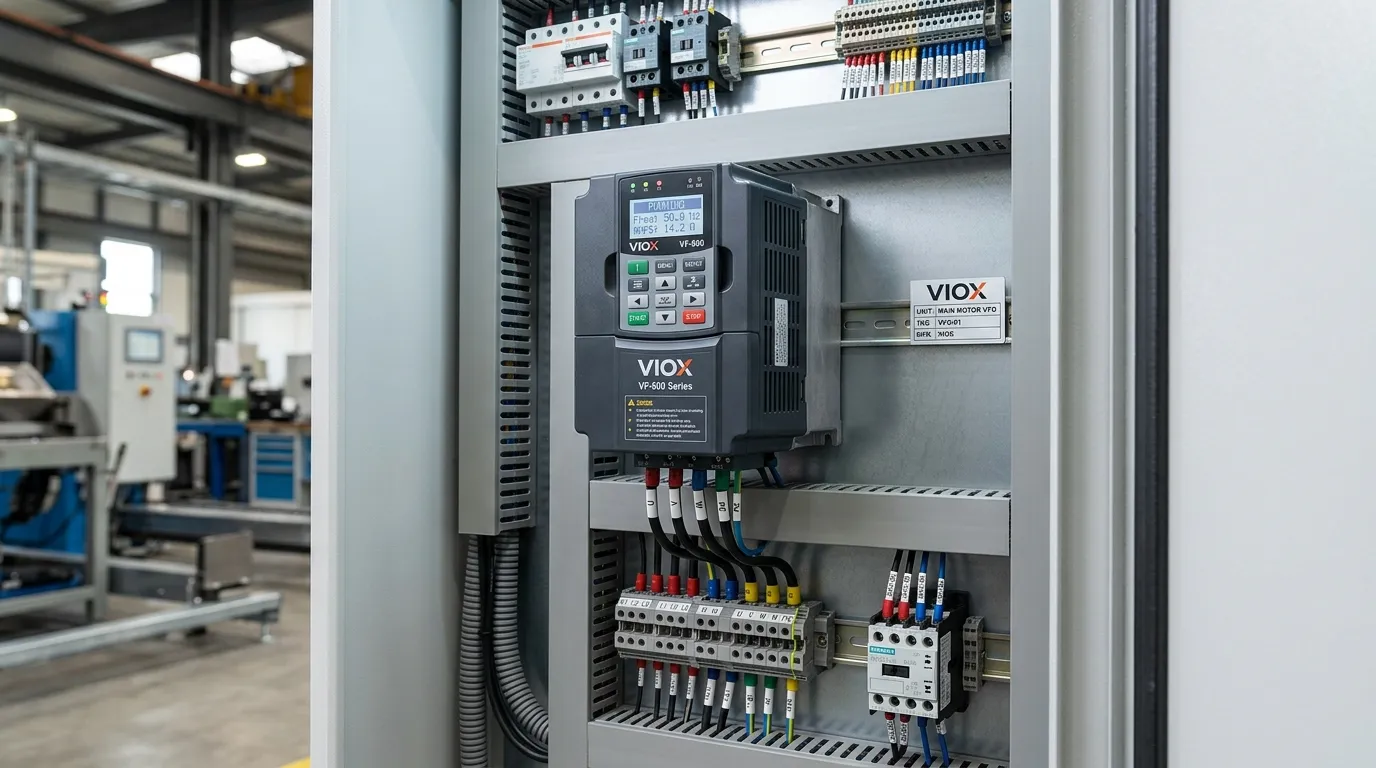
VFD je zkratka pro Variable Frequency Drive (frekvenční měnič). Je to jedno z nejpoužívanějších zařízení pro řízení motorů v dnešních elektrických systémech. VFD upravuje frekvenci a napětí dodávané do střídavého motoru, což přímo řídí otáčky motoru – dává inženýrům, operátorům a správcům zařízení možnost přizpůsobit výkon motoru aktuální poptávce namísto toho, aby vše běželo neustále na plný výkon.
Pokud jste hledali plný tvar VFD v elektrotechnice, pravděpodobně jste se s touto zkratkou setkali na nějakém zařízení, v technické dokumentaci nebo v produktovém listu. Odpověď je jednoduchá, ale to, co činí VFD hodnými porozumění, jde daleko za samotnou zkratku.
Co znamená VFD – a co znamená každé slovo?
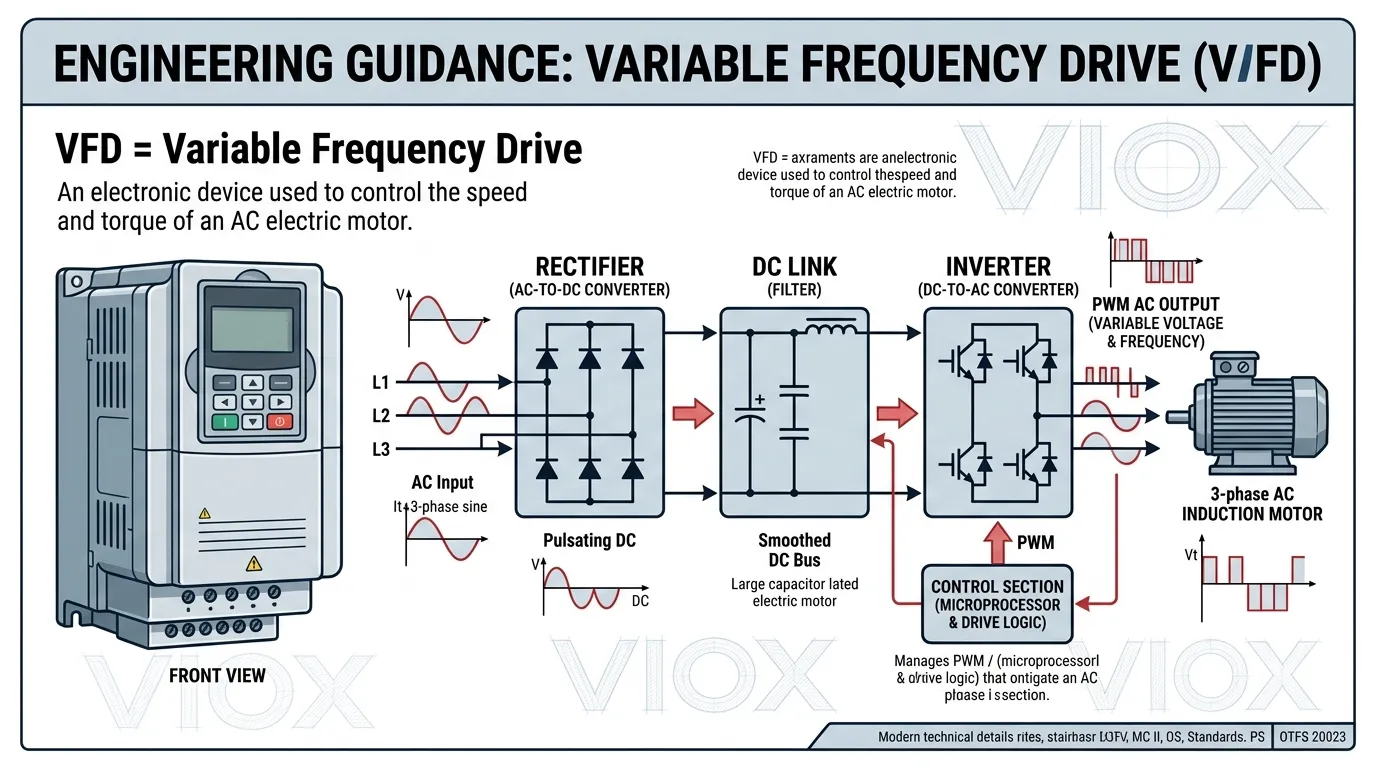
Plný tvar VFD je Měnič frekvence. Každé slovo v názvu popisuje specifický aspekt toho, co zařízení dělá:
- Proměnná — výstup je nastavitelný, není fixní na jedné hodnotě.
- Frekvence — měnič řídí elektrickou frekvenci dodávanou do motoru, což je primární faktor určující otáčky motoru.
- Pohon — je to aktivní řídicí zařízení, nikoli pasivní spínač nebo jednoduchý startér.
Tato konvence pojmenování je důležitá, protože vám okamžitě říká, že VFD motor pouze nezapíná a nevypíná. Aktivně řídí, jak rychle motor běží. Tato odlišnost odděluje VFD od jednodušších elektrických zařízení, jako jsou stykače, motorové spouštěče, nebo jističe, které zajišťují spínání a ochranu, ale neřídí otáčky.
Proč na VFD záleží v reálných elektrických systémech
Abyste pochopili, proč jsou VFD tak běžné, zvažte několik každodenních scénářů, které ilustrují problém, který řeší.
Vodní čerpadlo, které nikdy nezpomalí
Představte si vodní čerpací stanici, která slouží komerční budově. Poptávka kolísá během dne – špičkové využití ráno a večer, velmi málo v noci. Bez VFD běží motor čerpadla na plný výkon bez ohledu na poptávku. Ventily škrtí nadměrný průtok, což plýtvá energií a zbytečně mechanicky namáhá systém. S VFD se otáčky čerpadla snižují, když poptávka klesá. Motor spotřebovává méně energie, potrubní systém je méně namáhán a účet za energii se snižuje – často o 20 až 50 procent.
Ventilátor HVAC běžící o půlnoci
Podobný příběh se odehrává v komerčních systémech HVAC. Vzduchotechnické jednotky pohybují velkým objemem vzduchu budovami a požadavek na průtok vzduchu se mění s obsazeností, venkovní teplotou a denní dobou. VFD na motoru ventilátoru umožňuje systému zpomalit během období nízké poptávky namísto cyklování mezi plnou rychlostí a vypnutím. Výsledkem je tišší provoz, lepší regulace komfortu a výrazně nižší spotřeba energie.
Dopravník, který se musí přizpůsobit rychlosti výroby
Ve výrobě je často nutné, aby dopravní pásy běžely různou rychlostí v závislosti na tom, jaký produkt se zpracovává nebo jak rychle zařízení proti proudu podává materiál. Motor s pevnou rychlostí se nemůže přizpůsobit. Motor řízený VFD se plynule přizpůsobuje a udržuje výrobní linku synchronizovanou bez mechanických zařízení pro změnu rychlosti.
Nejedná se o okrajové případy. Představují většinu instalací VFD po celém světě. Základní hodnota je jednoduchá: VFD umožňuje motoru běžet rychlostí, kterou proces skutečně potřebuje, spíše než jednou rychlostí, pro kterou byl motor navržen.
Jak VFD řídí otáčky motoru
Nemusíte být inženýr v oblasti výkonové elektroniky, abyste pochopili základní princip. VFD funguje tak, že přijímá příchozí střídavý proud a převádí jej na řízený střídavý výstup při frekvenci a napětí, které motor potřebuje.
Zjednodušeně řečeno, k tomu dochází ve třech fázích. Nejprve se příchozí střídavý proud převede na stejnosměrný proud pomocí usměrňovače. Poté se stejnosměrný proud vyhladí a stabilizuje v meziobvodu. Nakonec invertorový stupeň rekonstruuje proud jako střídavý – ale při jakékoli frekvenci a napětí, které VFD dostal příkaz dodávat.
Protože otáčky střídavého motoru jsou přímo vázány na frekvenci jeho napájení, změna frekvence mění otáčky. Motor s frekvencí 50 Hz běžící na výstupu 25 Hz se bude točit zhruba poloviční rychlostí. Toto je základní mechanismus, který umožňuje řízení proměnných otáček.
Důležitý poznatek není topologie obvodu – je to výsledek. VFD vám dává plynulé, hladké a přesné řízení otáček motoru, od téměř nulových až po plné jmenovité otáčky a někdy i více.
Kde se VFD běžně používají
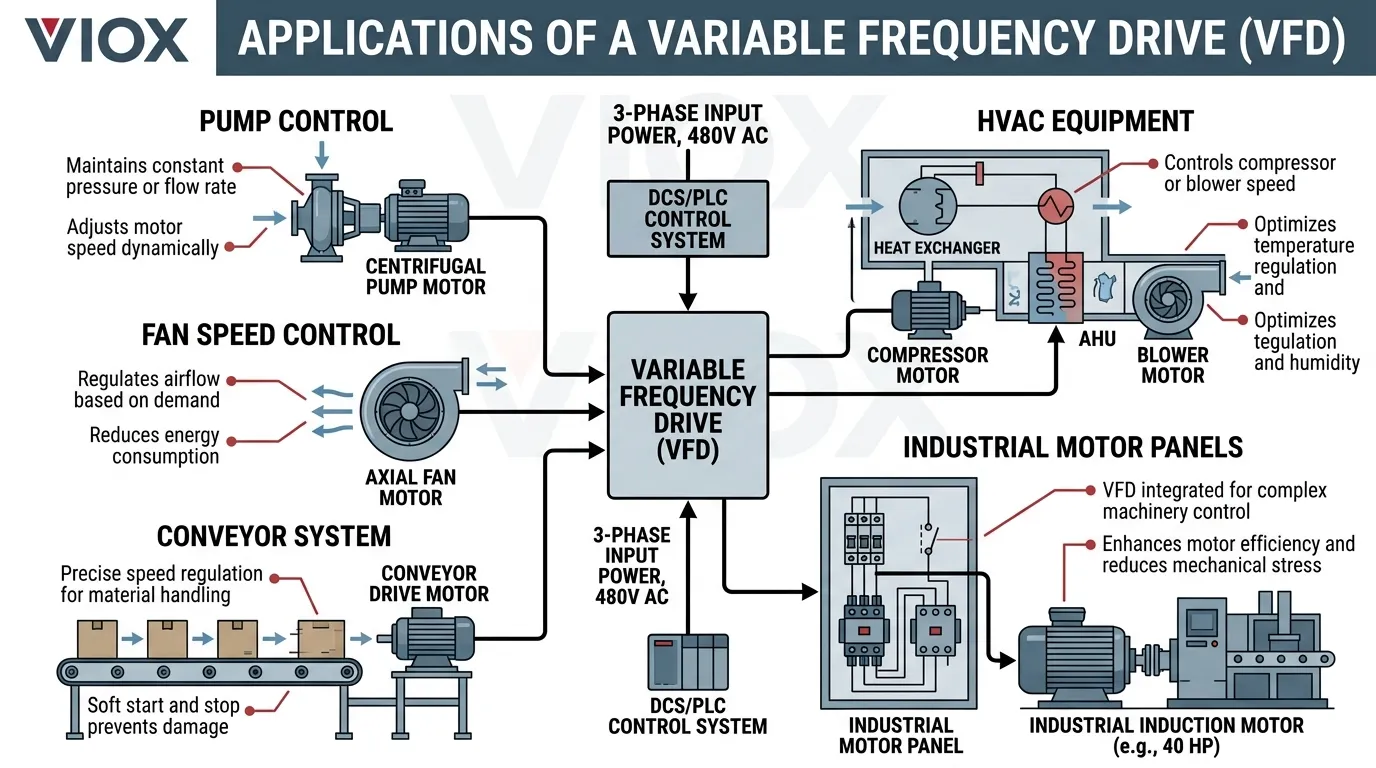
VFD se objevují prakticky v každém odvětví, které používá střídavé motory – což znamená prakticky každé odvětví. Mezi nejběžnější aplikace patří:
Čerpadla a vodní systémy. Úprava městské vody, zavlažování, systémy tlaku vody v budovách a průmyslové procesní čerpání. Aplikace čerpadel jsou jedním z největších trhů s VFD, protože úspory energie z čerpání s proměnnými otáčkami jsou značné a snadno se vypočítají.
Ventilátory a dmychadla. Vzduchotechnické jednotky HVAC, průmyslové větrání, ventilátory chladicích věží a systémy odsávání prachu. Zatížení ventilátorů se řídí afinitními zákony, což znamená, že malé snížení otáček vede k velkému snížení spotřeby energie – díky čemuž jsou VFD v aplikacích ventilátorů mimořádně nákladově efektivní.
Dopravníky a manipulace s materiálem. Výrobní linky, balicí systémy, důlní dopravníky a distribuční centra. VFD poskytují flexibilitu otáček potřebnou k synchronizaci procesů a manipulaci s různými produkty nebo rychlostmi průchodu.
Kompresory. Vzduchové kompresory, chladicí kompresory a systémy komprese plynu. Kompresory s proměnnými otáčkami přizpůsobují výkon poptávce spíše než zatěžování a odlehčování, čímž se zlepšuje účinnost a snižuje mechanické opotřebení.
Průmyslové stroje. Míchačky, extrudery, odstředivky, navíječky a obráběcí stroje. Přesné řízení otáček je často požadavkem procesu, nejen opatřením pro zvýšení účinnosti.
Společným jmenovatelem všech těchto aplikací je, že se zatížení mění a přizpůsobení otáček motoru zatížení šetří energii, snižuje opotřebení a zlepšuje řízení procesu.
VFD vs. Soft Starter vs. Invertor – Vyjasnění zmatků
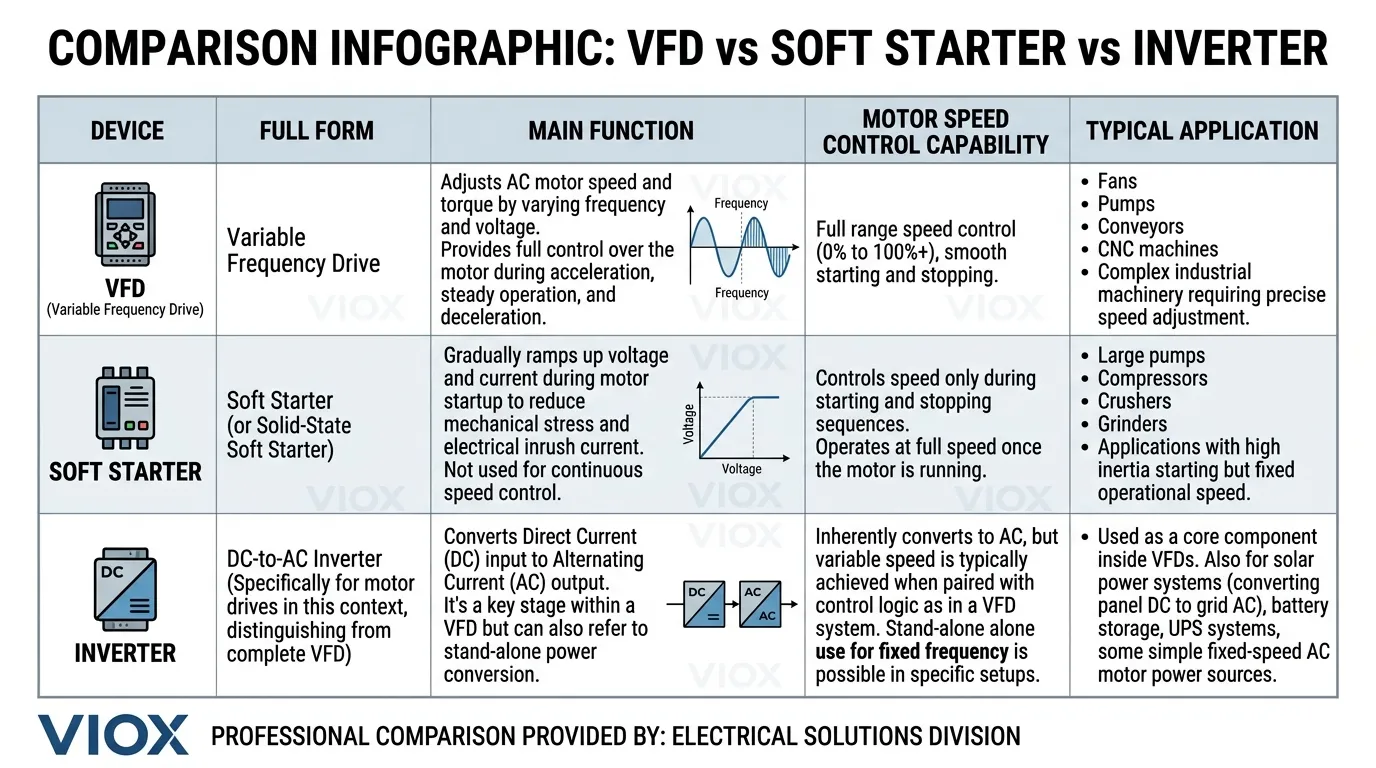
Tyto tři termíny se objevují často společně a rozdíly jsou důležité, když specifikujete nebo nakupujete zařízení.
| Zařízení | Co to dělá | Řízení otáček během provozu? | Nejlepší použití, když |
|---|---|---|---|
| VFD | Řídí otáčky motoru změnou frekvence a napětí | Ano – plynulé | Aplikace vyžaduje proměnné otáčky |
| Soft startér | Snižuje záběrový proud a mechanické rázy během spouštění | Ne – motor běží po spuštění na plné otáčky | Motor běží na jednu rychlost, ale potřebuje jemnější start |
| Měnič (Invertor) | Převádí DC na AC (nebo mění charakteristiky AC) | Záleží na aplikaci | Široký pojem – používá se v solárních systémech, UPS a pohonech motorů |
A soft startér je jednodušší a levnější zařízení, které řídí pouze fázi spouštění a zastavování. Jakmile motor dosáhne plné rychlosti, soft startér se obvykle obejde a motor běží přímo na síť. Pokud vaše aplikace potřebuje pouze snížené startovací napětí a motor vždy běží stejnou rychlostí, může být soft startér tou správnou volbou.
. měnič je širší elektrotechnický termín. Každý frekvenční měnič obsahuje invertorovou část, proto někteří lidé používají tato slova zaměnitelně. Ale “měnič” se také používá pro solární měniče, systémy UPS a další zařízení pro konverzi energie, která nemají nic společného s řízením motoru. Když konkrétně mluvíte o řízení otáček střídavého motoru, VFD je přesný a jednoznačný termín.
Pro podrobné srovnání vedle sebe má VIOX specializovaného průvodce na VFD vs soft startér který podrobněji popisuje kritéria výběru.
Kdy frekvenční měnič není správná odpověď
Aplikace s konstantní rychlostí a konstantním zatížením. Pokud motor běží jednou rychlostí, po celou dobu, bez jakýchkoli změn zatížení – představte si nepřetržitě běžící procesní ventilátor v pevném provozním bodě – frekvenční měnič přidává náklady, složitost a potenciální režim selhání, aniž by přinášel smysluplné výhody. Přímý startér nebo soft startér je správná volba.
Projekty s omezeným rozpočtem bez požadavku na změnu rychlosti. Pokud motor potřebuje pouze řízený náběh na plnou rychlost a řízené zpomalení, soft startér toho dosáhne za zlomek nákladů. Soft startér neposkytuje variabilní rychlost během běhu – řídí pouze fázi zrychlení a zpomalení – ale pro mnoho aplikací to stačí. Pro motory s pevnou rychlostí, spárování stykač nebo motorový spouštěč s tepelná nadproudová ochrana nebo MPCB je často nejefektivnější schéma ochrany. VIOX má důkladné srovnání VFD vs soft startér který prochází kritéria výběru.
Klíčové specifikace, které je třeba znát při hodnocení frekvenčního měniče
Jakmile pochopíte, co je frekvenční měnič, praktickou další otázkou je, jak číst a porovnávat specifikace frekvenčního měniče v projektu nebo v kontextu nákupu. Dva pohony mohou nést název “frekvenční měnič” a přitom být navrženy pro velmi odlišné motory a aplikace. Mezi nejdůležitější specifikace patří:
Jmenovité napětí a výkon. Frekvenční měnič musí odpovídat vašemu napájecímu napětí (např. 230 V jednofázové, 400 V třífázové, 480 V, 690 V) a musí být dimenzován na výkon motoru. Pokud se to pokazí, pohon se buď nemůže připojit k vaší napájecí soustavě, nebo nezvládne zatížení motoru.
Jmenovitý proud. To je často důležitější než jmenovitý výkon v kW nebo HP, protože zatížení motoru se liší. Frekvenční měnič dimenzovaný na určitý proud při specifickém pracovním cyklu se musí shodovat se skutečným proudem motoru a profilem zatížení ve vaší aplikaci.
Metoda řízení. Frekvenční měniče nabízejí různé řídicí algoritmy – V/f (volty na hertz), bezsenzorové vektorové a vektorové řízení s uzavřenou smyčkou. Jednoduché aplikace ventilátorů a čerpadel fungují dobře s řízením V/f. Aplikace vyžadující vysoký točivý moment při nízkých otáčkách nebo přesnou regulaci otáček mohou vyžadovat vektorové řízení.
Typ aplikace. Výrobci často kategorizují pohony jako “lehké” (ventilátory, čerpadla) nebo “těžké” (dopravníky, kladkostroje, obráběcí stroje). Pohon dimenzovaný na 15 kW pro aplikaci ventilátoru může být dimenzován pouze na 11 kW pro zatížení těžkého dopravníku, protože proudové nároky jsou odlišné.
Prostředí instalace. Teplota, nadmořská výška, vlhkost, prach a dostupný prostor v panelu ovlivňují výběr frekvenčního měniče. Pohony se snižují při vysokých teplotách a vysokých nadmořských výškách a drsná prostředí mohou vyžadovat specifické krytí. Porozumění faktorů snížení jmenovitého proudu elektrických zařízení je zásadní, když se místo instalace odchyluje od standardních podmínek.
Plánování ochrany pro systémy frekvenčních měničů
Frekvenční měniče obsahují citlivou výkonovou elektroniku a jejich instalační prostředí je často vystavuje rizikům, která jednodušší zařízení pro řízení motoru dokážou tolerovat. Přepětí indukované bleskem, napěťové přechody z přepínání v síti a harmonické z jiných zařízení na stejné napájecí sběrnici mohou poškodit frekvenční měnič nebo zkrátit jeho životnost.
Promyšlené plánování ochrany – včetně zařízení na ochranu proti přepětí, správného uzemnění, vstupních tlumivek a vhodného stínění kabelů – je nezbytnou součástí každé instalace frekvenčního měniče. Není neobvyklé, že zařízení ztratí drahý pohon v důsledku jediné události blesku, protože ochrana proti přepětí byla přehlédnuta nebo poddimenzována.
Ignorování vstupní tlumivky. Tlumivka 3% stojí malý zlomek ceny pohonu a poskytuje smysluplné snížení harmonických, omezuje zapínací proud během přednabíjení DC sběrnice a chrání usměrňovač před přechodnými jevy na straně napájení. Vynechání, abyste ušetřili $200 na instalaci pohonu $10 000, je falešná ekonomika.
VIOX se tímto tématem podrobně zabývá ve svém článku o proč frekvenční měniče selhávají během bouřek a jak vybrat správnou ochranu proti přepětí.
Praktický význam za zkratkou
Plný tvar frekvenčního měniče – Variable Frequency Drive – je jednoduchá odpověď ze tří slov. V praxi však představuje něco významnějšího: schopnost učinit systémy střídavých motorů inteligentními a citlivými spíše než pevné a nehospodárné.
Ať už jste se s tímto termínem setkali poprvé na typovém štítku, ve specifikaci nebo v e-mailu od kolegy, klíčové je vzít si z toho toto: frekvenční měnič je zařízení pro řízení motoru, které vám umožňuje měnit otáčky, šetřit energii, snižovat mechanické namáhání a zlepšovat flexibilitu procesu. Je to jedno z nejvlivnějších zařízení v moderní elektrotechnice a pochopení toho, co to je – a co to není – je základem pro správná rozhodnutí o systémech poháněných motory.
ČASTO KLADENÉ DOTAZY
Co je zkratka VFD v elektrotechnice?
VFD znamená Měnič frekvence – zařízení, které řídí otáčky střídavého motoru úpravou výstupní frekvence a napětí.
Je frekvenční měnič totéž co invertor?
Ne tak docela. Frekvenční měnič obsahuje invertorovou část, ale “měnič” je širší termín, který se také používá pro solární systémy a systémy UPS. Pro řízení otáček motoru je správný termín frekvenční měnič.
Kdy bych měl zvolit frekvenční měnič (VFD) namísto softstartéru?
Vyberte frekvenční měnič (VFD), pokud motor potřebuje během provozu běžet s proměnnými otáčkami. Vyberte softstartér, pokud motor běží vždy na plné otáčky, ale při spouštění vyžaduje snížený záběrový proud.
Kolik energie může ušetřit frekvenční měnič?
Úspory energie závisí na aplikaci, ale ventilátorové a čerpadlové systémy běžně dosahují snížení spotřeby energie o 20–50 %, protože s nižší rychlostí výrazně klesá spotřeba energie.
Vyžadují instalace frekvenčních měničů speciální ochranu?
Ano. Frekvenční měniče (VFD) obsahují citlivou elektroniku, která je náchylná k napěťovým špičkám, úderům blesku a problémům s kvalitou napájení. Správná ochrana proti přepětí, uzemnění a plánování instalace jsou zásadní pro dlouhodobou spolehlivost.