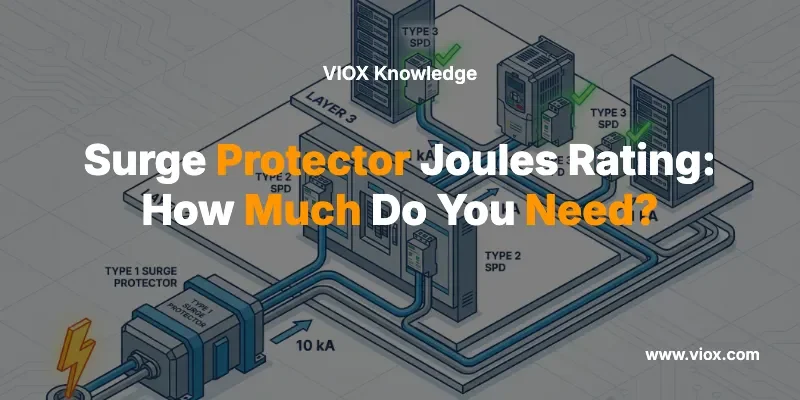
Vejděte do jakéhokoli obchodu s elektroinstalačním materiálem a zeptejte se na přepěťovou ochranu. První otázka, kterou uslyšíte, bude: “Kolik joulů?” Tato jediná specifikace dominuje rozhodování o nákupu, přesto většina kupujících nerozumí tomu, co jouly přepěťové ochrany ve skutečnosti měří – nebo proč vyšší číslo automaticky neznamená lepší ochranu.
Jouly přepěťové ochrany kvantifikují kapacitu absorpce energie přepěťová ochrana (SPD), typicky prostřednictvím Varistor z oxidu kovu (MOV) technologie. Pro komerční a průmyslové aplikace vyžaduje správná specifikace vyhodnocení místa instalace (UL 1449 Typ), jmenovitého napětí ochrany (VPR), jmenovitého výbojového proudu (In) a kompatibility systému. Tato příručka poskytuje technický rámec, který B2B kupující potřebují k specifikaci přepěťové ochrany, která skutečně funguje.


Co jsou jouly přepěťové ochrany?
Jouly měří celkovou energii přepětí, kterou může ochranné zařízení absorbovat, než dojde k selhání jeho komponent. V přepěťových ochranách k tomu dochází prostřednictvím varistorů s oxidem kovu (MOV) – polovodičových součástek, které fungují jako rezistory závislé na napětí.
Při normálním napětí (120 V nebo 240 V) vykazují MOV vysoký odpor. Když napětí stoupne nad prahovou hodnotu sepnutí (330 V až 500 V), odpor MOV okamžitě klesne téměř na nulu a odvede přepěťový proud do země. Odvedená energie se rozptýlí jako teplo, čímž se MOV postupně znehodnocuje. Zařízení s 2 000 jouly zvládne dvacet přepětí o 100 joulech nebo dvě události o 1 000 joulech, než dojde k selhání.
Normy IEEE a ANSI modelují typické vnitřní přepětí přibližně na 6 kV a 3 kA, což odpovídá zhruba 90 joulům na událost. Tato skutečnost zdůrazňuje, proč správné uzemnění a strategie vrstvené ochrany jsou důležitější než samotné maximální hodnoty joulů.
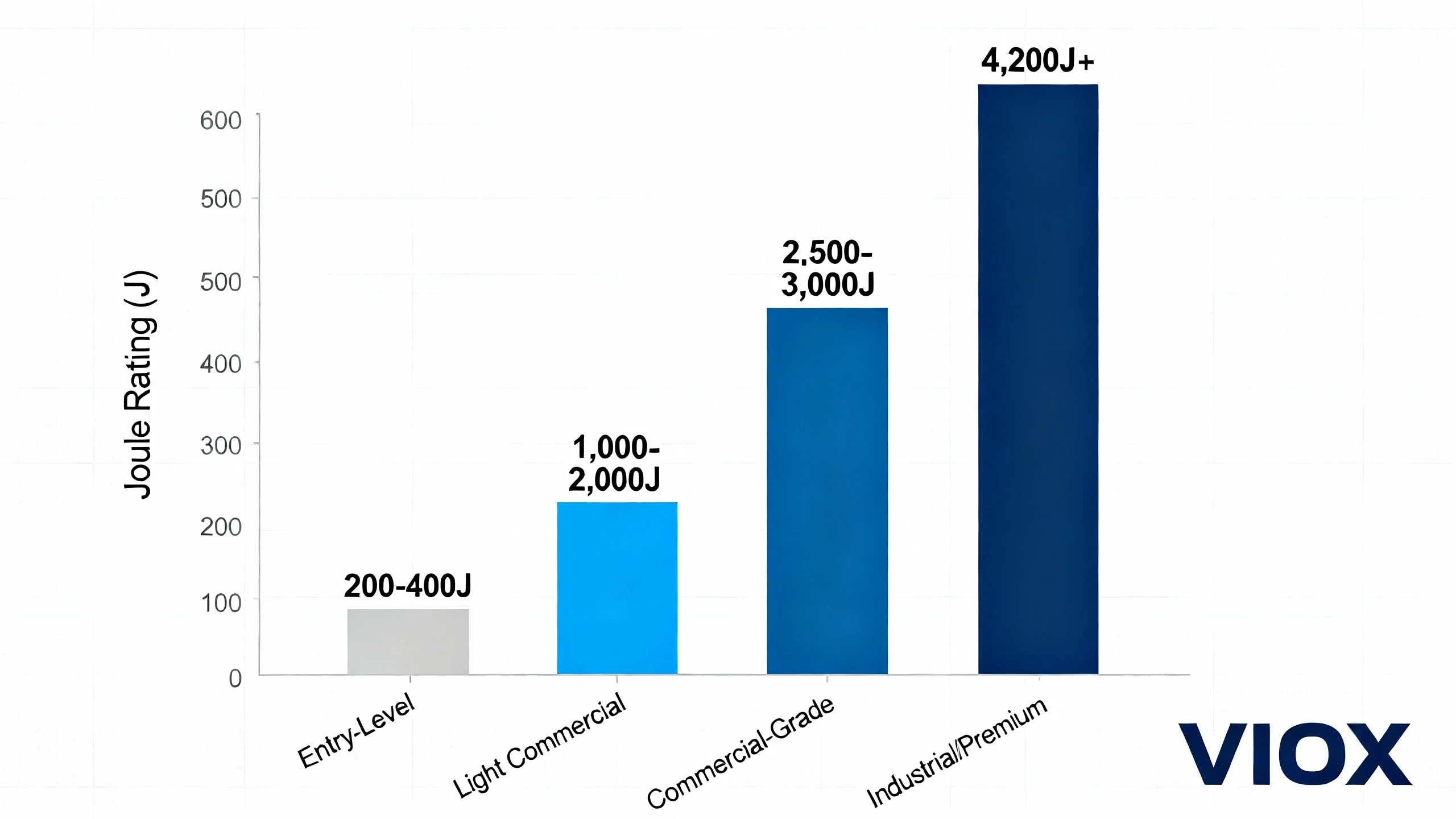
Rozsahy jmenovitých hodnot joulů podle aplikace
| Typ Aplikace | Doporučené jouly | Typické případy použití |
|---|---|---|
| Základní úroveň | 200-400J | Základní domácí elektronika (nedoporučuje se pro komerční použití) |
| Spotřebitelské/lehké komerční | 1 000-2 000J | Kancelářské pracovní stanice, lehké vybavení |
| Komerční třída | 2 500-3 000J | Serverovny, laboratorní vybavení, telekomunikační zařízení |
| Průmyslové/prémiové | 4 200J+ | Kritické systémy, vysoce hodnotné vybavení |
Pochopení jmenovitých hodnot joulů: Problém standardizace
Neexistuje žádná průmyslová norma, která by upravovala, jak výrobci testují a vykazují kapacitu joulů. UL 1449 – primární bezpečnostní norma pro přepěťová ochranná zařízení – nespecifikuje testování absorpce energie ani nevyžaduje zveřejnění jmenovité hodnoty joulů. Vznikají dva problémy:
Hodnota 2 000 joulů od jednoho dodavatele se může výrazně lišit od hodnoty 2 000 joulů od jiného dodavatele. Zveličené údaje o joulech se objevují často, zejména u spotřebitelských produktů.
Zásuvné ochrany v místě použití používají jouly jako hrubý indikátor trvanlivosti. SPDs montované na panel specifikují kapacitu pro manipulaci s přepěťovým proudem (jmenovitý výbojový proud v kA) jako primární metriku.
Spínací napětí je důležitější než celkový počet joulů. Zařízení s 330V spínáním a 1 500 jouly poskytuje těsnější ochranu než 500V zařízení s 3 000 jouly. Nižší spínací napětí zabraňuje tomu, aby se vyšší napětí dostalo k citlivé elektronice.
Kromě joulů: Kritické specifikace, na kterých záleží více
Komerční a průmyslová přepěťová ochrana závisí na těchto specifikacích více než na jmenovitých hodnotách joulů.
Klasifikace typu UL 1449
| Typ | Místo instalace | Prostředí přepětí | Typické aplikace |
|---|---|---|---|
| Typ 1 | Strana vedení hlavního odpojovače | Nejvyšší přepěťový proud | Ochrana vstupu do budovy |
| Typ 2 | Strana zátěže, rozvodné panely | Střední úrovně přepětí | Ochrana odbočkového panelu |
| Typ 3 | Zařízení v místě použití | Zeslabená přepětí | Individuální ochrana zařízení |
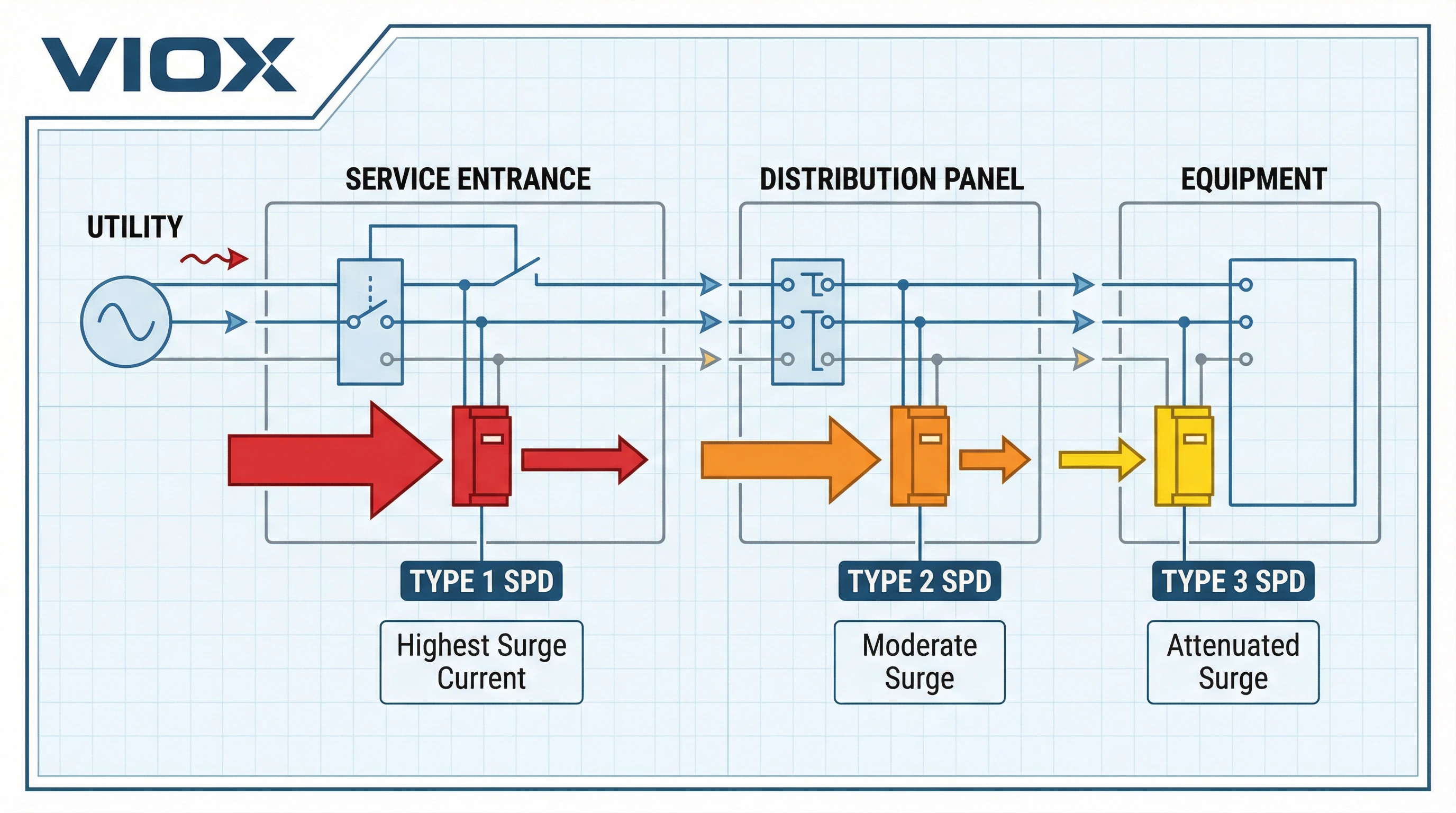
Specifikace nesprávného typu pro místo instalace ohrožuje ochranu a může porušovat elektrické předpisy.
Napěťová ochrana (VPR)
VPR kvantifikuje maximální propustné napětí při standardizovaném testování (kombinovaná vlna 6 kV, 3 kA). Standardní hodnoty VPR pro 120V obvody:
| Hodnota VPR | Úroveň ochrany | Doporučeno pro |
|---|---|---|
| 330V | Nejtěsnější ochrana | Citlivá elektronika, PLC, servery, telekomunikace |
| 400V | Vynikající ochrana | VFD, řídicí systémy, lékařské vybavení |
| 500V | Dobrá ochrana | Obecné průmyslové stroje |
| 600-800V | Základní ochrana | Méně citlivé vybavení |
VPR představuje standardizovanou, testovatelnou specifikaci umožňující přímé srovnání výrobců. Na rozdíl od jmenovitých hodnot joulů nelze s VPR manipulovat. Při specifikaci přepěťové ochrany montované na panel by mělo být VPR vaším primárním kritériem.
Jmenovitý vybíjecí proud (In)
Jmenovitý výbojový proud měří přepěťový proud (průběh 8/20 µs), který zařízení vydrží opakovaně bez degradace. Běžné hodnoty In: 3 kA, 5 kA, 10 kA, 15 kA, 20 kA na režim.
Vstup do budovy v komerčních zařízeních vyžaduje minimálně 10 kA In. Průmyslová zařízení s motorovou zátěží, svařovacím zařízením nebo vysoce výkonnými stroji by měla zvážit hodnoty 15-20 kA In. Ochrana v místě použití obvykle vyžaduje pouze 3-5 kA In, protože zeslabení proti proudu snižuje energii přepětí.
MCOV a SCCR
Maximální trvalé provozní napětí (MCOV) musí být dimenzováno alespoň na 125 % jmenovitého napětí systému. V 120V systémech specifikujte minimálně 150V MCOV; pro 277V systémy minimálně 320V MCOV.
Jmenovitý zkratový proud (SCCR) musí odpovídat nebo překračovat dostupný poruchový proud v místě instalace. Instalace SPD s nedostatečným SCCR vytváří požární nebezpečí.
Jouly přepěťové ochrany: Průvodce výběrem podle aplikace
Zásuvná ochrana v místě použití
| Typ zařízení | Minimální jouly | Upínací napětí | Další požadavky |
|---|---|---|---|
| Kancelářské vybavení | 1 500-2 000J | 400 V nebo méně | Seznam UL 1449, indikátor stavu |
| Server/telekomunikace | 2 500-3 000J | 330-400 V | Záruka na připojené zařízení |
| Laboratorní přístroje | 2 500-3 000J | 330V | Kompatibilita s izolovaným uzemněním |
Vyhněte se spotřebitelským prodlužovacím kabelům s ochranou proti přepětí 200-800 joulů v komerčních zařízeních. Rozdíl v nákladech na $15 se stává irelevantním po jediné preventabilní poruše zařízení.
Specifikace ochrany vstupu a panelu
| Bod instalace | Typ UL | Min. jmenovitý proud In | Doporučené VPR | Úvaha o SCCR |
|---|---|---|---|---|
| Servisní vchod | Typ 1 | 10-15 kA | 330-400 V | Přizpůsobení dostupného poruchového proudu |
| Distribuční panely | Typ 2 | 10 kA | 330-400 V | Koordinace s ochranou proti proudu |
| Panely kritických zařízení | Typ 2 | 10-15 kA | 330V | Nejnižší propustnost pro citlivé zátěže |
SPDs pro montáž na panel by měly specifikovat výkon prostřednictvím jmenovitého proudu In spíše než joulů. Zaměřte se na UL 1449 Typ, VPR, In, MCOV a SCCR.
Strategie vrstvené ochrany proti přepětí
Efektivní ochrana proti přepětí využívá distribuovanou ochranu ve více bodech. Žádný jediný chránič proti přepětí – bez ohledu na jmenovitý výkon v joulech – neposkytuje kompletní ochranu zařízení.
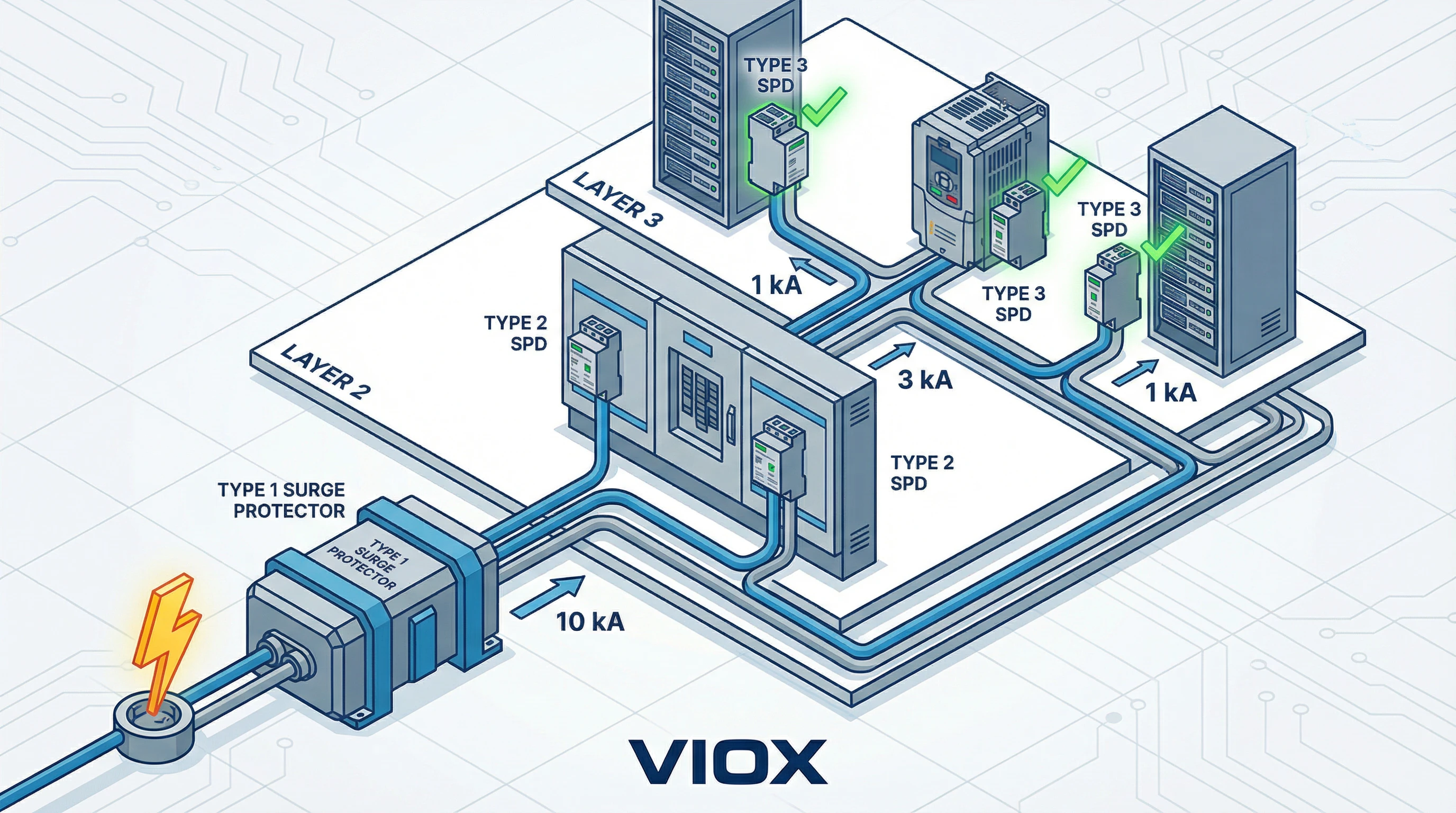
Třívrstvý model ochrany:
- Vstup do budovy (Typ 1): Zastavuje vysokoenergetické přepětí ze sítě před vstupem do kabeláže zařízení
- Rozvodné panely (Typ 2): Zachycuje přepětí obcházející první vrstvu, snižuje energii před dosažením odbočných obvodů
- Místo použití (Typ 3): Poslední obrana na připojeních zařízení, omezující propustnost na tolerovatelné úrovně
Energie přepětí se tlumí kabeláží budovy. Přepětí 10 kA na vstupu do budovy může klesnout na 3 kA na rozvodném panelu vzdáleném 15 metrů, poté na 1 kA u zařízení vzdáleného dalších 9 metrů. Každá vrstva čelí postupně nižšímu namáhání.
Požadavky na koordinaci: Zařízení po proudu by měla mít upínací napětí o 15-20% nižší než zařízení proti proudu, což zajišťuje sekvenční aktivaci spíše než konkurenci.
Odpor uzemnění by měl měřit méně než 5 ohmů (komerční), nejlépe méně než 2 ohmy (kritická zařízení). Špatné uzemnění podkopává i prémiové chrániče proti přepětí.
Komerční řešení ochrany proti přepětí VIOX
VIOX Electric Equipment dodává komerční ochranu proti přepětí navrženou pro aplikace B2B – provozovatele vozových parků, průmyslová zařízení a kritickou infrastrukturu.
Specifikace produktu VIOX SPD
| Produktová řada | Typ UL | Jouleovo hodnocení | VPR | Jmenovitý proud In | Klíčové vlastnosti |
|---|---|---|---|---|---|
| Řada VIOX-1000 | Typ 3 | 2 500 J | 330V | 5 kA | Zásuvný, LCD displej, záruka na připojené zařízení |
| Řada VIOX-3000 | Typ 2/3 | 3 500 J | 330V | 10 kA | Montáž na panel nebo zásuvný, reléový výstup stavu |
| Řada VIOX-5000 | Typ 1/2 | NEUPLATŇUJE SE | 330V | 20 kA | Vstup do budovy, kryt NEMA 4X, vzdálené monitorování |
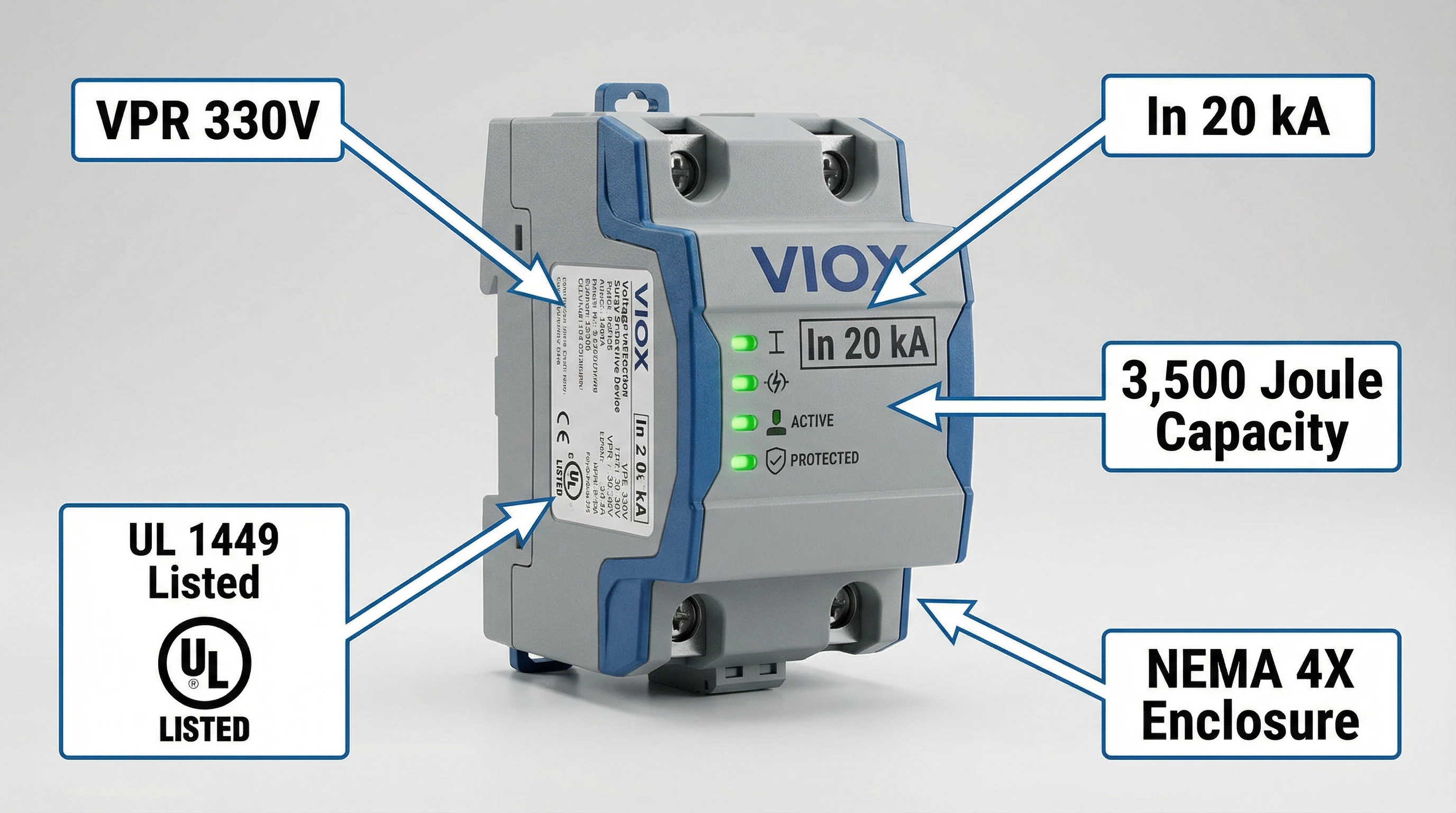
Všechny chrániče proti přepětí VIOX zahrnují:
- Certifikace UL 1449 4. vydání
- Tepelná ochrana proti odpojení
- Vizuální a zvukové indikátory stavu
- 2letá komerční záruka
- Konzultace technických specifikací
VIOX podporuje hromadné nákupy s vlastními specifikacemi, dokumentací z továrního testování a konzultacemi ohledně integrace. Kontaktujte náš prodejní tým B2B pro doporučení specifická pro projekt.
Často Kladené Otázky
Otázka: Co znamenají jouly chrániče proti přepětí?
Odpověď: Jouly měří celkovou energii přepětí, kterou zařízení dokáže absorbovat před selháním. Vyšší jouly obecně indikují delší životnost, ale nejde o standardizovanou metriku. Pro spolehlivé porovnání výkonu porovnejte hodnocení UL 1449 VPR a In.
Otázka: Kolik joulů potřebuji pro komerční zařízení?
Odpověď: Pro zásuvnou ochranu: minimálně 1 500–2 000 J pro kancelářské vybavení, 2 500–3 000 J pro citlivou elektroniku. Pro ochranu pro montáž na panel se zaměřte spíše na jmenovitý proud In (10–20 kA) než na jouly.
Otázka: Je vyšší hodnota joulů vždy lepší?
Odpověď: Ne nutně. Na upínacím napětí (VPR) záleží více. Zařízení s napětím 330 V a 1 500 J chrání lépe než zařízení s napětím 500 V a 3 000 J. Testování joulů navíc není u výrobců standardizováno.
Otázka: Jaký je rozdíl mezi chrániči proti přepětí typu 1, typu 2 a typu 3?
Odpověď: Typ 1 se instaluje na vstupu do budovy (strana vedení hlavního odpojovače), typ 2 na rozvodné panely (strana zátěže) a typ 3 na zařízení v místě použití. Každý z nich zvládá různá prostředí přepětí a požadavky na testování.
Q: Potřebuji přepěťovou ochranu, pokud mám jističe?
A: Ano. Jističe chrání proti nadproudu (nadměrnému proudu), nikoli proti napěťovým špičkám. Přepěťové ochrany řeší napěťové přechodové jevy, které jističe nemohou detekovat ani jim zabránit.
Q: Jak dlouho vydrží přepěťové ochrany?
A: Životnost závisí na vystavení přepětí. Kvalitní zařízení s kapacitou 2 500 J+ obvykle vydrží 3-7 let v komerčním prostředí. Vyměňte je ihned po velkých přepěťových událostech nebo když indikátory stavu ukazují poruchu.
Q: Mohu používat přepěťové ochrany pro domácnosti v komerčních zařízeních?
A: Nedoporučuje se. Spotřebitelské jednotky (200-800 J) rychle selhávají při komerčním vystavení přepětí a nemají příslušné certifikace. Specifikujte zařízení komerční třídy s certifikací UL 1449 a odpovídajícími hodnotami In.
Jouly přepěťové ochrany poskytují užitečný kontext pro zásuvná zařízení, ale představují pouze jeden faktor ve správné specifikaci přepěťové ochrany. Pro aplikace B2B upřednostňujte klasifikaci UL 1449 Type, jmenovité napětí ochrany (VPR) a jmenovitý výbojový proud (In) před marketingově řízenými tvrzeními o joulech.
Implementujte strategie vrstvené ochrany umisťováním vhodných zařízení na vstupní místo, rozvodné panely a místa použití. Tento distribuovaný přístup poskytuje lepší ochranu ve srovnání s jednotlivými zařízeními s vysokým počtem joulů.
Investice do přepěťové ochrany komerční třídy přináší okamžité výnosy prostřednictvím prevence poškození zařízení. Jedna výměna VFD nebo serveru stojí 2 000 až 5 000 USD; kvalitní přepěťová ochrana stojí zlomek jedné opravy.
Pro podrobné technické specifikace, aplikační konzultace a množstevní ceny komerčních systémů přepěťové ochrany VIOX navštivte viox.com nebo kontaktujte náš B2B tým technického prodeje.