Pochopení klasifikací napětí je zásadní pro elektrotechniku, distribuci energie a výběr zařízení. Ať už navrhujete obvod pro domácnost, spravujete průmyslový závod nebo plánujete síť pro přenos energie, znalost rozdílů mezi nízkým, středním a vysokým napětím je nezbytná pro bezpečnost, efektivitu a soulad s mezinárodními standardy.
Tato komplexní příručka zkoumá technické rozdíly, aplikace a bezpečnostní aspekty napříč všemi klasifikacemi napětí a pomáhá elektroprofesionálům činit informovaná rozhodnutí o návrhu systému a výběru zařízení.
Co je napětí a proč záleží na klasifikaci?
Napětí, měřené ve voltech (V), představuje rozdíl elektrického potenciálu mezi dvěma body v obvodu. Je to “tlak”, který tlačí elektrický proud vodiči, podobně jako tlak vody pohybuje vodou potrubím.
Klasifikace napětí slouží třem kritickým účelům:
- Bezpečnostní standardizace: Různé úrovně napětí vyžadují specifickou izolaci, ochranné vybavení a postupy manipulace, aby se předešlo elektrickým rizikům
- Kompatibilita zařízení: Výrobci navrhují zařízení pro specifické rozsahy napětí, čímž zajišťují správný provoz a životnost
- Optimalizace efektivity: Vyšší napětí snižují ztráty při přenosu na dlouhé vzdálenosti, zatímco nižší napětí jsou bezpečnější pro aplikace koncových uživatelů
Klasifikační systém umožňuje inženýrům po celém světě jasně komunikovat o elektrických systémech a vybírat vhodné komponenty pro jejich specifické aplikace.
Mezinárodní standardy pro klasifikaci napětí
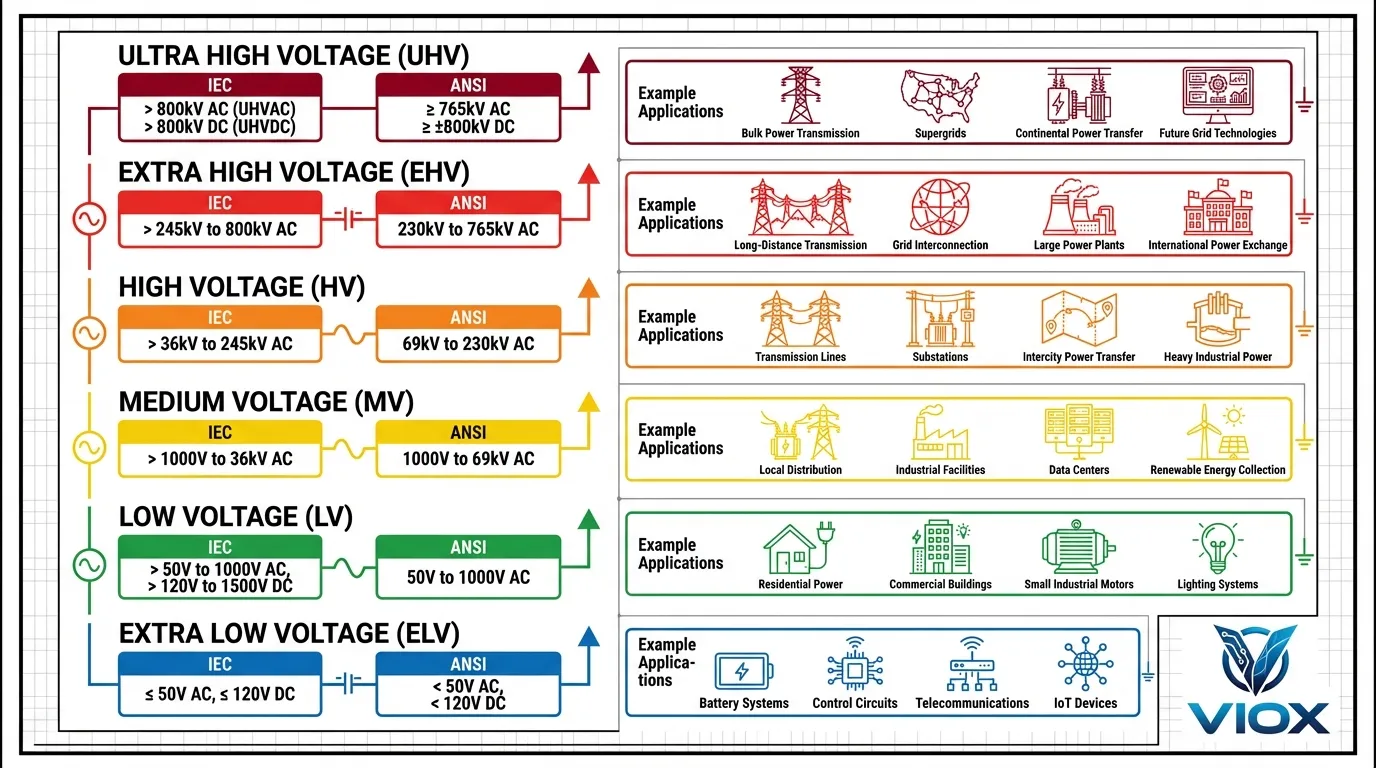
Klasifikace napětí nejsou univerzálně standardizovány – liší se podle regionu a řídícího orgánu. Dvěma primárními standardizačními organizacemi jsou:
Standardy IEC (International Electrotechnical Commission)
Standardy IEC, zejména IEC 60038 a IEC 61140, se používají globálně mimo Severní Ameriku. Tyto standardy definují rozsahy napětí pro elektrické systémy a zařízení:
- Extra nízké napětí (ELV): Pod 50 V AC nebo 120 V DC
- Nízké napětí (LV): 50 V až 1 000 V AC nebo 120 V až 1 500 V DC
- Střední napětí (MV): 1 kV až 35 kV (někdy rozšířeno na 52 kV)
- Vysoké napětí (HV): 35 kV až 230 kV
- Extra vysoké napětí (EHV): 230 kV až 800 kV
- Ultra vysoké napětí (UHV): Nad 800 kV
Standardy ANSI/NEC (Severní Amerika)
American National Standards Institute (ANSI) a National Electrical Code (NEC) používají mírně odlišné klasifikace:
- Nízké napětí: Až 600 V AC
- Střední napětí: 601 V až 69 kV
- Vysoké napětí: 69 kV až 230 kV
- Extra vysoké napětí: 230 kV až 500 kV
- Ultra vysoké napětí: Nad 500 kV
Tato tabulka porovnává dva hlavní standardy:
| Klasifikace napětí | Standard IEC (mezinárodní) | Standard ANSI/NEC (Severní Amerika) |
|---|---|---|
| Extra nízké napětí | < 50 V AC / < 120 V DC | < 30 V AC / < 60 V DC |
| Nízké napětí | 50 V – 1 000 V AC | Až 600 V AC |
| Střední napětí | 1 kV – 35 kV (52 kV) | 601 V – 69 kV |
| Vysoké napětí | 35 kV – 230 kV | 69 kV – 230 kV |
| Extra vysoké napětí | 230 kV – 800 kV | 230 kV – 500 kV |
| Ultra vysoké napětí | > 800 kV | > 500 kV |
Pochopení, který standard se vztahuje na váš region, je zásadní pro výběr zařízení, dodržování bezpečnostních předpisů a plánování projektu.
Nízké napětí (LV): Základ každodenních elektrických systémů
Definice a rozsah
Nízkonapěťové systémy pracují při 50 V až 1 000 V AC (IEC) nebo až do 600V AC (ANSI/NEC). Tato klasifikace zahrnuje velkou většinu elektrických systémů, se kterými lidé denně interagují.
Klíčové charakteristiky
- Bezpečnost: Relativně bezpečné pro vyškolený personál s náležitými opatřeními
- Požadavky na izolaci: Standardní izolační materiály dostačující
- Rozdělení: Distribuce energie na krátké vzdálenosti (typicky pod 1 km)
- Proudové úrovně: Vyšší proud pro ekvivalentní výkon ve srovnání s vyšším napětím
- Náklady na vybavení: Obecně méně nákladné než zařízení pro vyšší napětí
Běžné aplikace
Nízkonapěťové systémy napájejí:
- Obytné budovy: 120V/240V jednofázové systémy (Severní Amerika) nebo 230V/400V třífázové systémy (Evropa/Asie)
- Komerční budovy: Osvětlení, systémy HVAC, kancelářské vybavení, výtahy
- Lehký průmysl: Malé motory, řídicí systémy, stroje
- Řídicí obvody: PLC, automatizační systémy, instrumentace
- Obnovitelná energie: Výstupy měničů, systémy pro ukládání energie z baterií, solární rozvodné skříně
Příklady zařízení
- Miniaturní jističe (MCB)
- Jističe s lisovanou skříní (MCCB)
- Proudové chrániče (RCCB)
- Stykače a spouštěče motorů
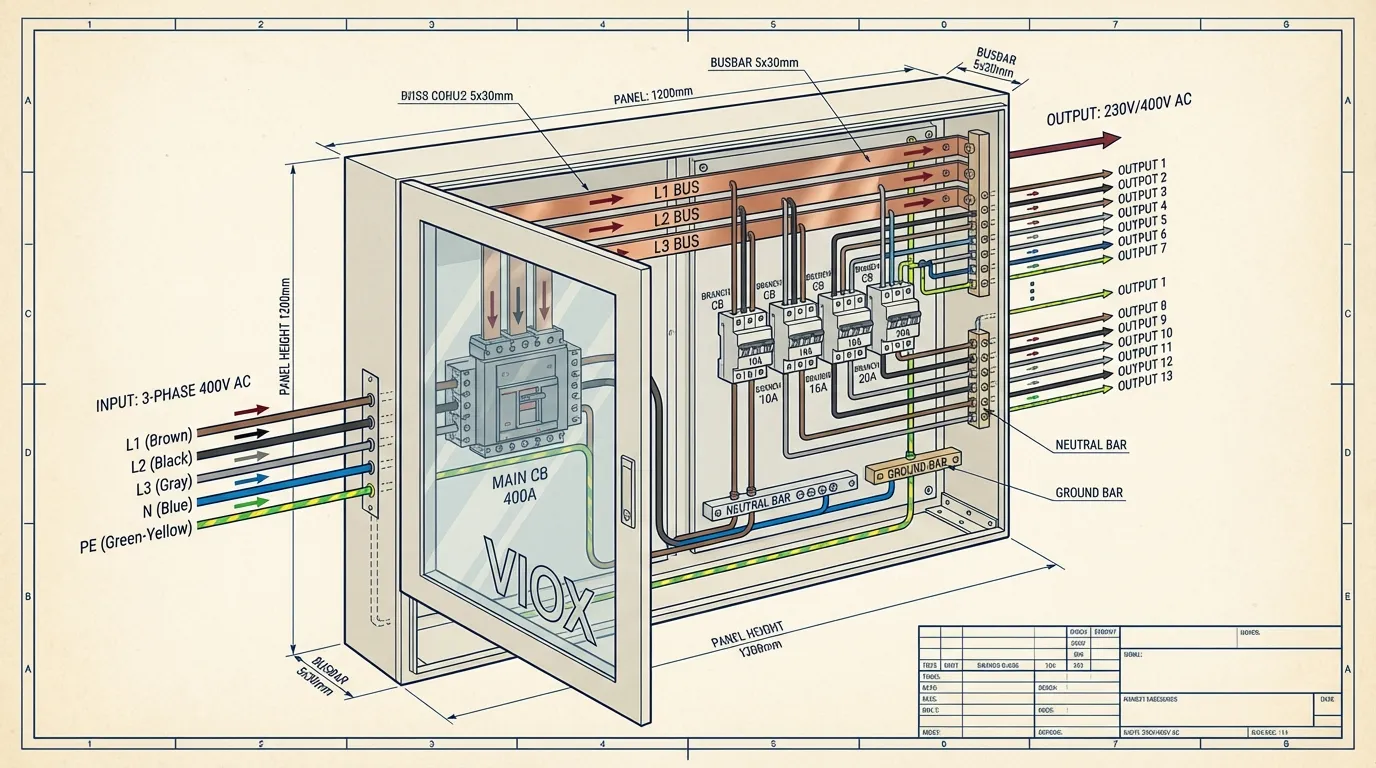
- Rozvodné desky a panely
Bezpečnostní aspekty
I když je nízké napětí bezpečnější než vyšší klasifikace, stále představuje značná rizika:
- Úraz elektrickým proudem: Může být smrtelný, zejména ve vlhkých podmínkách nebo při dlouhodobém kontaktu
- Obloukový výboj: Zkraty mohou způsobit nebezpečné obloukové výboje
- Nebezpečí požáru: Přetížené obvody nebo vadné zařízení mohou způsobit požáry elektrického původu
- Ochranné vybavení: Základní OOP včetně izolovaných rukavic a ochranných brýlí
Podle norem OSHA je jakékoli napětí nad 50 V považováno za nebezpečné a vyžaduje odpovídající bezpečnostní opatření a školení.
Střední napětí (MV): Most mezi výrobou a distribucí
Definice a rozsah
Systémy středního napětí pracují mezi 1 kV a 35 kV (IEC) nebo 601 V až 69 kV (ANSI/NEC). Tato klasifikace slouží jako kritické spojení mezi vysokonapěťovými přenosovými a nízkonapěťovými distribučními sítěmi.
Klíčové charakteristiky
- Účinnost: Výrazně snížené ztráty přenosu ve srovnání s nízkým napětím
- Vzdálenost: Může ekonomicky přenášet energii na vzdálenost 5-50 km
- Aktuální: Nižší proud pro ekvivalentní výkon, což snižuje požadavky na velikost vodiče
- Izolace: Vyžaduje vylepšenou izolaci a specializované vybavení
- Spínání: Potřebuje specializované rozváděče a ochranná zařízení
Běžné aplikace
Systémy středního napětí jsou nezbytné pro:
- Průmyslová zařízení: Velké výrobní závody, rafinerie, těžební provozy
- Komerční komplexy: Nákupní centra, nemocnice, letiště, datová centra
- Distribuce energie: Sousedské rozvodny, venkovské distribuční sítě
- Velké motory: Průmyslové pohony, čerpadla, kompresory (typicky 1-10 MW)
- Obnovitelná energie: Větrné farmy, rozsáhlé solární instalace
- Doprava: Elektrické železniční systémy, sítě metra
Příklady zařízení
- Rozváděče středního napětí (v souladu s IEC 62271)
- Vakuové vypínače (VCB)
- Kruhové rozvodné jednotky (RMU)
- Výkonové transformátory (MV/LV)
- Přepěťové ochrany středního napětí
- Izolační spínače
Bezpečnostní aspekty
Střední napětí vyžaduje výrazně vylepšené bezpečnostní protokoly:
- Specializované školení: Personál musí být speciálně vyškolen a certifikován pro práci s MV
- Požadavky na OOP: Oblečení odolné proti obloukovému výboji, izolované rukavice (třída 2-4), obličejové štíty
- Spínací postupy: Povinné formální postupy uzamčení/označení
- Bezpečné vzdálenosti: Musí být dodrženy minimální bezpečné vzdálenosti
- Riziko obloukového výboje: Potenciál pro závažné incidenty s elektrickým obloukem vyžadující komplexní posouzení rizik
Vyšší energetické úrovně u středního napětí znamenají, že nehody mohou být katastrofální, takže přísné dodržování bezpečnostních norem je naprosto zásadní.
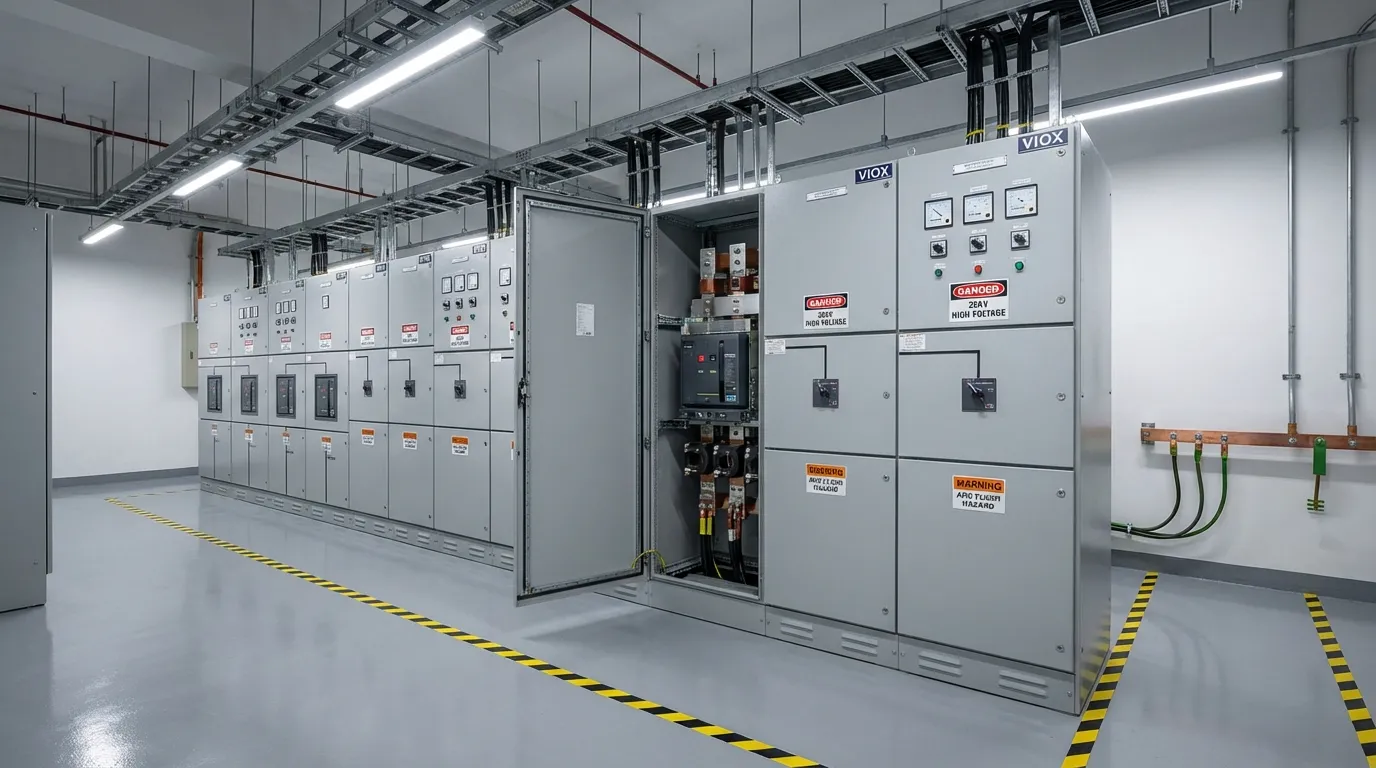
Vysoké napětí (VN): Dálkový přenos energie
Definice a rozsah
Vysokonapěťové systémy pracují mezi 35 kV a 230 kV (IEC) nebo 69 kV až 230 kV (ANSI/NEC). Tyto systémy tvoří páteř regionálních sítí pro přenos energie.
Klíčové charakteristiky
- Účinnost přenosu: Minimální ztráty energie na vzdálenostech 50-300 km
- Výkonová kapacita: Může přenášet stovky megawattů
- Infrastruktura: Vyžaduje přenosové věže, specializované rozvodny
- Izolace: Rozsáhlé požadavky na izolaci a bezpečné vzdálenosti
- Dopad na životní prostředí: Úvahy o elektromagnetických polích (EMP) a vizuálním dopadu
Běžné aplikace
Vysokonapěťové systémy umožňují:
- Regionální přenos: Propojení elektráren s distribučními sítěmi
- Mezíměstská propojení: Přenos energie mezi městskými centry
- Průmyslové komplexy: Velmi rozsáhlá zařízení s vyhrazenými rozvodnami
- Integrace obnovitelných zdrojů: Připojení vzdálených větrných/solárních farem k síti
- Přeshraniční přenos: Mezinárodní výměna energie
Příklady zařízení
- Vzduchové jističe (ACBs) a SF6 jističe
- Výkonové transformátory (sestupné VN/NN)
- Proudové a napěťové transformátory (CT/VT)
- Bleskojistky a přepěťová ochrana
- Hardware a izolátory pro přenosové vedení
Bezpečnostní aspekty
Práce s vysokým napětím vyžaduje nejvyšší úroveň bezpečnostních protokolů:
- Specializovaná certifikace: Povoleni jsou pouze vysoce vyškolení pracovníci
- Dálkové ovládání: Většina operací se provádí dálkově nebo pomocí specializovaných nástrojů
- Bezpečnostní zóny: Vyžadovány rozsáhlé bezpečnostní vzdálenosti (metry, nikoli centimetry)
- Elektromagnetická rizika: Musí být dodrženy limity expozice EMP
- Energie obloukového výboje: Potenciál pro extrémně vysoké úrovně energie incidentu
Vysokonapěťové systémy jsou obvykle umístěny mimo obydlené oblasti a vyžadují omezený přístup s několika vrstvami bezpečnostních kontrol.
Zvláště vysoké napětí (ZVN) a ultra vysoké napětí (UVN)
Zvláště vysoké napětí (230 kV – 800 kV)
Systémy ZVN přenášejí energii přes provincie, státy nebo dokonce země s minimálními ztrátami. Běžná napětí zahrnují 345 kV, 500 kV a 765 kV.
Aplikace:
- Propojení národních sítí
- Hromadný přenos energie na vzdálenost 300-1 000 km
- Propojení hlavních výrobních zařízení s centry spotřeby
Ultra vysoké napětí (nad 800 kV)
UVN představuje špičku technologie přenosu energie, se systémy pracujícími při 1 000 kV (1 MV) a výše. Čína je průkopníkem technologie UVN s provozními linkami 1 100 kV AC a ±1 100 kV DC.
Aplikace:
- Transkontinentální přenos energie
- Propojení vzdálených obnovitelných zdrojů s městskými centry
- Snížení požadavků na přenosové koridory
Srovnávací analýza: NN vs. VN vs. VN
Pochopení praktických rozdílů mezi klasifikacemi napětí pomáhá při návrhu systému a výběru zařízení:
| Parametr | Nízké napětí | Střední napětí | Vysoké napětí |
|---|---|---|---|
| Rozsah napětí (IEC) | 50 V – 1 kV | 1 kV – 35 kV | 35 kV – 230 kV |
| Typická přenosová vzdálenost | < 1 km | 5 – 50 km | 50 – 300 km |
| Výkonová kapacita | Až 1 MW | 1 – 50 MW | 50 – 500+ MW |
| Proudové úrovně | Vysoký (stovky až tisíce ampér) | Střední (desítky až stovky ampér) | Nízký (desítky až stovky ampér) |
| Průřez vodiče | Větší pro ekvivalentní výkon | Střední | Menší pro ekvivalentní výkon |
| Požadavky na izolaci | Standardní | Vylepšené | Rozsáhlý |
| Náklady na vybavení | Spodní | Střední | Vyšší |
| Složitost instalace | Jednoduchý | Mírná | Komplex |
| Požadováno bezpečnostní školení | Základní elektro | Specializované VN | Vysoce specializované VV |
| Frekvence údržby | Běžné | Periodické | Plánované/Preventivní |
| Typické aplikace | Budovy, malý průmysl | Velký průmysl, distribuce | Přenos, velkoobchodní energie |
| Ochranná zařízení | MCB, MCCB, RCCB | VCB, Rozvaděče | ACB, SF6 vypínače |
| Dodržování norem | IEC 60947, UL 489 | IEC 62271, IEEE C37 | IEC 62271-100 |
Porovnání ztrát výkonu
Vztah mezi napětím a ztrátou výkonu se řídí vzorcem: Ztráta výkonu = I²R
Kde:
- I = Proud (ampéry)
- R = Odpor (ohmy)
Pro přenos stejného množství energie:
- Zdvojnásobení napětí sníží proud na polovinu
- Snížení proudu na polovinu sníží ztrátu výkonu o 75 %
Proto je vysoké napětí nezbytné pro přenos na dlouhé vzdálenosti. Například přenos 100 MW:
- Při 10 kV (VN): Proud = 10 000 A, velmi vysoké ztráty
- Při 100 kV (VV): Proud = 1 000 A, ztráty sníženy o 99 %
- Při 500 kV (EVV): Proud = 200 A, ztráty sníženy o 99,96 %
Výběr správné úrovně napětí pro vaši aplikaci
Volba vhodné klasifikace napětí závisí na několika faktorech:
1. Požadavky na výkon
- Pod 100 kW: Nízké napětí obvykle dostačující
- 100 kW až 10 MW: Střední napětí často optimální
- Nad 10 MW: Může být vyžadováno vysoké napětí
2. Vzdálenost přenosu
- Pod 500 metrů: Nízké napětí ekonomické
- 500 metrů až 20 km: Doporučeno střední napětí
- Nad 20 km: Vysoké napětí nezbytné pro efektivitu
3. Typ zátěže
- Rezidenční/Komerční: Nízké napětí standardní
- Průmyslové motory: Střední napětí pro velké motory (>200 HP)
- Velkoobchodní energie: Vysoké napětí pro přenos
4. Úvahy o nákladech
Počáteční investice:
- NN: Nejnižší náklady na zařízení a instalaci
- VN: Mírné náklady, vyžadováno specializované zařízení
- VV: Nejvyšší náklady, komplexní infrastruktura
Provozní náklady:
- NN: Vyšší ztráty na dlouhé vzdálenosti
- VN: Vyvážená účinnost a cena
- VV: Nejnižší ztráty přenosu
5. Bezpečnostní a regulační požadavky
Každá úroveň napětí má specifické bezpečnostní normy:
- Požadavky na ochranu obvodů
- Normy pro uzemnění a pospojování
- Ochrana před obloukovým výbojem
- Školení a certifikace personálu
6. Budoucí rozšíření
Zvažte potenciál růstu:
- Zvládne systém zvýšené zatížení?
- Je v případě potřeby možná modernizace napětí?
- Jaká jsou omezení infrastruktury?
Transformace napětí a distribuční sítě
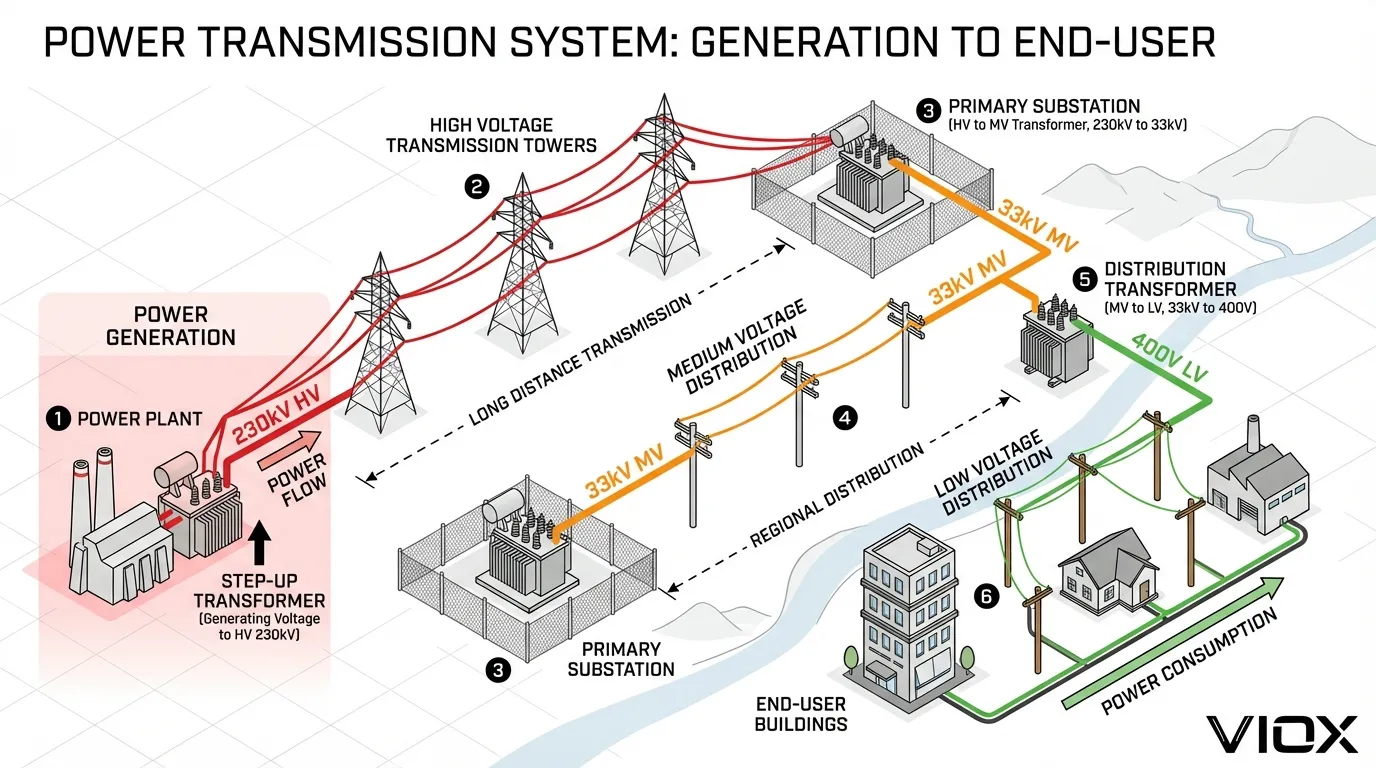
Moderní elektrické systémy používají více úrovní napětí v koordinované hierarchii:
- Výroba: Elektrárny vyrábějí elektřinu na středním napětí (typicky 11-25 kV)
- Zvýšení napětí: Transformátory zvyšují napětí na VN/VVN pro přenos
- Převodovka: Přenos na velké vzdálenosti při vysokém napětí
- Primární rozvodny: Snížení na střední napětí pro regionální distribuci
- Distribuční rozvodny: Další snížení na nízké napětí
- Koncoví uživatelé: Konečná transformace na užitné napětí
Tento vícestupňový přístup optimalizuje účinnost na každé úrovni a zároveň zachovává bezpečnost v místě použití. Transformers hrají klíčovou roli v tomto procesu transformace napětí.
Bezpečnostní normy a shoda
Mezinárodní standardy
- IEC 60364: Elektrické instalace nízkého napětí
- IEC 62271: Spínací a řídicí přístroje vysokého napětí
- IEC 61140: Ochrana před úrazem elektrickým proudem
- IEEE C37: Jističe a normy pro spínací přístroje
- NFPA 70EElektrická bezpečnost na pracovišti
Osobní ochranné prostředky (OOP)
Požadované OOP se liší podle úrovně napětí:
Nízké napětí:
- Izolované rukavice (třída 00 nebo 0)
- Ochranné brýle
- Oblečení odolné proti elektrickému oblouku (pro oblasti s nebezpečím vzniku elektrického oblouku)
Střední napětí:
- Izolované rukavice (třída 2-4)
- Kožené chrániče
- Oblek odolný proti elektrickému oblouku (minimálně 8 cal/cm²)
- Obličejový štít
- Izolované nástroje
Vysoké napětí:
- Maximální OOP včetně rukavic třídy 4
- Kompletní oblek odolný proti elektrickému oblouku (40+ cal/cm²)
- Upřednostňuje se dálkové ovládání
- Tyčové nástroje
- Specializované školení povinné
Analýza nebezpečí vzniku elektrického oblouku
Všechny elektrické systémy nad 50 V vyžadují analýzu nebezpečí vzniku elektrického oblouku podle NFPA 70E. Tato analýza určuje:
- Úrovně incidentní energie
- Vzdálenosti hranic elektrického oblouku
- Požadované kategorie OOP
- Požadavky na bezpečnostní označování
Nové trendy v technologii napětí
HVDC (vysokonapěťový stejnosměrný proud)
Technologie HVDC získává na významu pro:
- Přenos na velmi dlouhé vzdálenosti (>500 km)
- Podmořské kabelové spoje
- Asynchronní propojení sítí
- Integrace obnovitelných zdrojů energie
Integrace inteligentních sítí
Moderní napěťové systémy zahrnují:
- Digitální monitorování a řízení
- Chytré jističe
- Automatická regulace napětí
- Řízení zátěže v reálném čase
Aspekty obnovitelné energie
Solární a větrné instalace vyžadují pečlivé plánování napětí:
- Solární slučovací boxy pro sběr DC
- Výběr výstupního napětí střídače
- Požadavky na propojení sítě
- Přepěťová ochrana napříč úrovněmi napětí
Klíčové poznatky
Pochopení klasifikace napětí je zásadní pro elektroprofesionály. Zde jsou klíčové body, které je třeba si zapamatovat:
- Klasifikace napětí se liší podle regionu: Normy IEC a ANSI/NEC definují různé rozsahy – vždy ověřte, která norma se vztahuje na váš projekt
- Nízké napětí (50V-1kV) napájí každodenní aplikace: Od obytných budov po lehké průmyslové vybavení, LV systémy jsou nejběžnější a vyžadují standardní bezpečnostní opatření
- Střední napětí (1kV-35kV) překlenuje výrobu a distribuci: MV systémy umožňují efektivní distribuci energie do průmyslových zařízení a čtvrtí a zároveň vyžadují specializované vybavení a školení
- Vysoké napětí (35kV-230kV) umožňuje přenos na velké vzdálenosti: HV systémy minimalizují ztráty energie na stovkách kilometrů, ale vyžadují rozsáhlé bezpečnostní protokoly a infrastrukturu
- Vyšší napětí znamená nižší proud a ztráty: Pro ekvivalentní přenos energie zdvojnásobení napětí snižuje proud na polovinu a ztráty energie o 75 %, díky čemuž je HV nezbytné pro efektivitu
- Každá úroveň napětí vyžaduje specifické vybavení: Od MCB v LV po SF6 jističe v HV, správný výběr vybavení je kritický pro bezpečnost a výkon
- Bezpečnostní požadavky se s napětím zvyšují: Školení personálu, OOP a provozní postupy se s rostoucím napětím postupně zpřísňují
- Návrh systému musí zohledňovat více faktorů: Požadavky na výkon, přenosová vzdálenost, typ zátěže, náklady a budoucí rozšíření, to vše ovlivňuje optimální výběr napětí
- Transformátory umožňují sítě s více napětími: Moderní elektrické systémy používají koordinované úrovně napětí od výroby po koncové použití, přičemž transformátory usnadňují efektivní konverzi
- Soulad s normami je povinný: Normy IEC, IEEE, ANSI a NFPA zajišťují bezpečnost, kompatibilitu a spolehlivost ve všech klasifikacích napětí
- Nové technologie přetvářejí aplikace napětí: HVDC přenos, integrace inteligentních sítí a systémy obnovitelné energie pohánějí inovace v technologii napětí
- Správná klasifikace napětí zabraňuje nákladným chybám: Používání nesprávných úrovní napětí vede k selhání zařízení, bezpečnostním rizikům, neefektivitě a nedodržování předpisů
Krátká sekce FAQ
Jaký je hlavní rozdíl mezi nízkým, středním a vysokým napětím?
Hlavní rozdíly jsou v rozsahu napětí, schopnosti přenosu na vzdálenost a bezpečnostních požadavcích. Nízké napětí (50V-1kV) se používá pro distribuci na krátké vzdálenosti v budovách a lehkém průmyslu. Střední napětí (1kV-35kV) umožňuje efektivní regionální distribuci na vzdálenost 5-50 km. Vysoké napětí (35kV-230kV) umožňuje přenos na velké vzdálenosti přes stovky kilometrů s minimálními ztrátami. Každá úroveň vyžaduje postupně sofistikovanější vybavení a bezpečnostní protokoly.
Proč používáme různé úrovně napětí namísto pouze jedné?
Použití více úrovní napětí optimalizuje účinnost a bezpečnost v celé napájecí soustavě. Vysoké napětí minimalizuje ztráty při přenosu na velké vzdálenosti (ztráta výkonu = I²R, takže vyšší napětí = nižší proud = nižší ztráty). Nicméně, vysoké napětí je nebezpečné a nepraktické pro koncové aplikace. Snížení napětí přes střední na nízké napětí poskytuje bezpečné, použitelné napájení při zachování celkové účinnosti systému. Tento vícestupňový přístup vyvažuje efektivitu přenosu, náklady na zařízení a bezpečnost uživatele.
Je napětí 480 V považováno za nízké nebo střední napětí?
480V je klasifikováno jako nízké napětí podle norem IEC (které definují LV jako až 1 000 V) a také podle norem ANSI/NEC (které definují LV jako až 600 V). Nicméně, 480V třífázové systémy přenášejí značný výkon a vyžadují přísnější bezpečnostní opatření než 120V/240V rezidenční systémy. V průmyslovém prostředí se 480V běžně používá pro velké motory, HVAC systémy a těžké stroje.
Jaké napětí se používá v domácnostech?
Rezidenční napětí se liší podle regionu: 120V/240V jednofázové v Severní Americe, 230V/400V v Evropě a většině Asie a 100V v Japonsku. Všechny tyto systémy jsou nízkonapěťové a jsou navrženy pro bezpečnost v obývaných prostorech. Nižší napětí (120V nebo 230V) se používá pro osvětlení a malé spotřebiče, zatímco vyšší napětí (240V nebo 400V) napájí velké spotřebiče, jako jsou elektrické sušičky, sporáky a klimatizace.
Jaké bezpečnostní vybavení je vyžadováno pro práci se středním napětím?
Práce na středním napětí vyžadují specializované bezpečnostní vybavení, včetně: izolačních gumových rukavic třídy 2-4 s koženými chrániči, oděvů odolných proti elektrickému oblouku (minimálně 8-12 cal/cm²), obličejových štítů, izolovaného nářadí a detektorů napětí. Personál musí absolvovat specializované školení pro práci na středním napětí a dodržovat přísné postupy blokování/označování (lockout/tagout). Analýza rizika vzniku elektrického oblouku je povinná pro určení specifických požadavků na OOP pro každou instalaci.
Jak se rozhodujete mezi nízkým a středním napětím pro průmyslový závod?
Rozhodnutí závisí na několika faktorech: celková spotřeba energie (VN se obvykle odůvodňuje nad 500-1000 kW), velikosti motorů (VN se preferuje pro motory nad 200 HP), vzdálenosti distribuce (VN je ekonomičtější nad 500 metrů) a napětí v místě připojení k síti. Zvažte jak počáteční náklady (VN zařízení je dražší), tak provozní náklady (VN má nižší ztráty). Pro vyhodnocení celkových nákladů na vlastnictví pro vaši konkrétní aplikaci se poraďte s elektroinženýry a poskytovateli energie.
Můžete převést nízké napětí na střední napětí?
Ano, prostřednictvím zvyšovacích transformátorů, které zvyšují napětí z LV na MV. To je běžné v aplikacích distribuované výroby, jako jsou solární farmy, kde střídače produkují nízkonapěťové AC, které je poté zvýšeno na střední napětí pro připojení k síti. Konverze však vyžaduje správné dimenzování transformátoru, ochranné zařízení, a soulad s normami pro připojení k síti.
Co způsobuje největší zmatek ohledně klasifikace napětí?
Hlavním zdrojem zmatku je rozdíl mezi normami IEC a ANSI/NEC, které definují rozsahy napětí odlišně. Kromě toho se terminologie liší – některé regiony používají “vysoké napětí” (HT) místo “vysoké napětí” a definice “středního napětí” se výrazně liší. Průmyslové normy (jako jsou normy pro železnice nebo těžbu) mohou také používat různé klasifikace. Vždy si ujasněte, která norma se vztahuje na váš projekt a region.
Závěr
Klasifikace napětí tvoří základ moderního elektrotechnického inženýrství a návrhu energetických systémů. Pochopení rozdílů mezi nízkým, středním a vysokým napětím – a mezinárodních norem, které je upravují – je nezbytné pro bezpečné, efektivní a vyhovující elektrické instalace.
Od jističe pro domácnosti chránící domovy až po masivní přenosové linky překlenující kontinenty, každá úroveň napětí slouží specifickému účelu v naší propojené elektrické infrastruktuře. Výběrem vhodné klasifikace napětí pro každou aplikaci a dodržováním zavedených bezpečnostních norem zajišťují elektroprofesionálové spolehlivé dodávky energie a zároveň chrání personál a zařízení.
Jak se elektrické systémy vyvíjejí s technologií inteligentních sítí, integrací obnovitelné energie a HVDC přenosem, základní principy klasifikace napětí zůstávají konstantní. Ať už navrhujete rozvodná deska, specifikujete rozváděče, nebo plánujete přenosovou síť, správné pochopení úrovní napětí zajišťuje optimální výkon systému, bezpečnost a dlouhou životnost.
Ve společnosti VIOX Electric vyrábíme komplexní řadu elektrických zařízení ve všech klasifikacích napětí, od miniaturní jističe po rozváděče středního napětí, čímž pomáháme elektroprofesionálům po celém světě budovat bezpečnější a efektivnější energetické systémy.