
Výběr mezi elektronickými a termomagnetickými lisovanými jističi není o volbě “lepší” technologie – jde o sladění ochranných schopností s vašimi specifickými požadavky aplikace. Zatímco termomagnetické MCCB zůstávají tahounem průmyslové ochrany díky své osvědčené spolehlivosti a nákladové efektivitě, elektronické spouštěcí jednotky poskytují přesnost, flexibilitu a inteligenci, které určité aplikace absolutně vyžadují. Pochopení toho, kdy je tato hranice překročena, určuje, zda investujete moudře, nebo přeplácíte za zbytečné funkce.
Elektronické MCCB se stávají nezbytnými, když vaše aplikace vyžaduje přesnost vypnutí v rozmezí ±5 %, vyžaduje selektivní koordinaci napříč více úrovněmi ochrany, potřebuje monitorování výkonu v reálném čase a možnosti prediktivní údržby nebo pracuje v prostředích, kde okolní teplota významně ovlivňuje termomagnetický výkon. Pro standardní průmyslové aplikace s přímočarými požadavky na ochranu poskytují termomagnetické MCCB spolehlivý výkon za cenu o 40–60 % nižší.
Globální trh s MCCB dosáhl v roce 2025 hodnoty 9,48 miliardy USD, přičemž elektronické spouštěcí jednotky rostou ročně o 15 %, protože průmyslová odvětví přijímají inteligentní ochranné technologie. Do konce roku 2026 bude 95 % nových nasazení průmyslového internetu věcí (IIoT) obsahovat analýzy poháněné umělou inteligencí integrované s elektronickými MCCB, čímž se jističe transformují z pasivních ochranných zařízení na aktivní zdroje systémové inteligence. Tento posun není řízen marketingem – je řízen měřitelným zlepšením spolehlivosti systému, energetické účinnosti a provozní viditelnosti, které elektronická technologie umožňuje.
Klíčové poznatky
- Elektronické MCCB nabízejí přesnost vypnutí ±5 % oproti ±20 % u termomagnetických, což je kritické pro přesnou koordinaci a zamezení nežádoucím vypnutím
- Programovatelné ochranné křivky L-S-I-G umožňují selektivní koordinaci, která je s pevnými termomagnetickými charakteristikami nemožná
- Možnosti monitorování v reálném čase (proud, napětí, výkon, energie, harmonické) ospravedlňují 100–150% cenový rozdíl pro kritická zařízení
- Nezávislost na okolní teplotě– elektronické jednotky si udržují přesnost od -25 °C do +70 °C bez snížení jmenovitého proudu
- Funkce prediktivní údržby snižují neplánované prostoje o 30–50 % prostřednictvím monitorování odporu kontaktů a predikce poruch
- Zvolte termomagnetické pro aplikace <400 A s jednoduchými požadavky na ochranu a omezenými rozpočtovými omezeními
- Zvolte elektronické pro kritická zařízení (datová centra, nemocnice, výroba), systémy náročné na koordinaci nebo tam, kde monitorování poskytuje provozní hodnotu
Pochopení zásadního rozdílu
Rozdíl mezi termomagnetickými a elektronickými MCCB nespočívá v tom, proti čemu chrání – obojí zvládá přetížení, zkrat a zemní poruchy – ale v tom, jak snímají, měří a reagují na abnormální proudy.
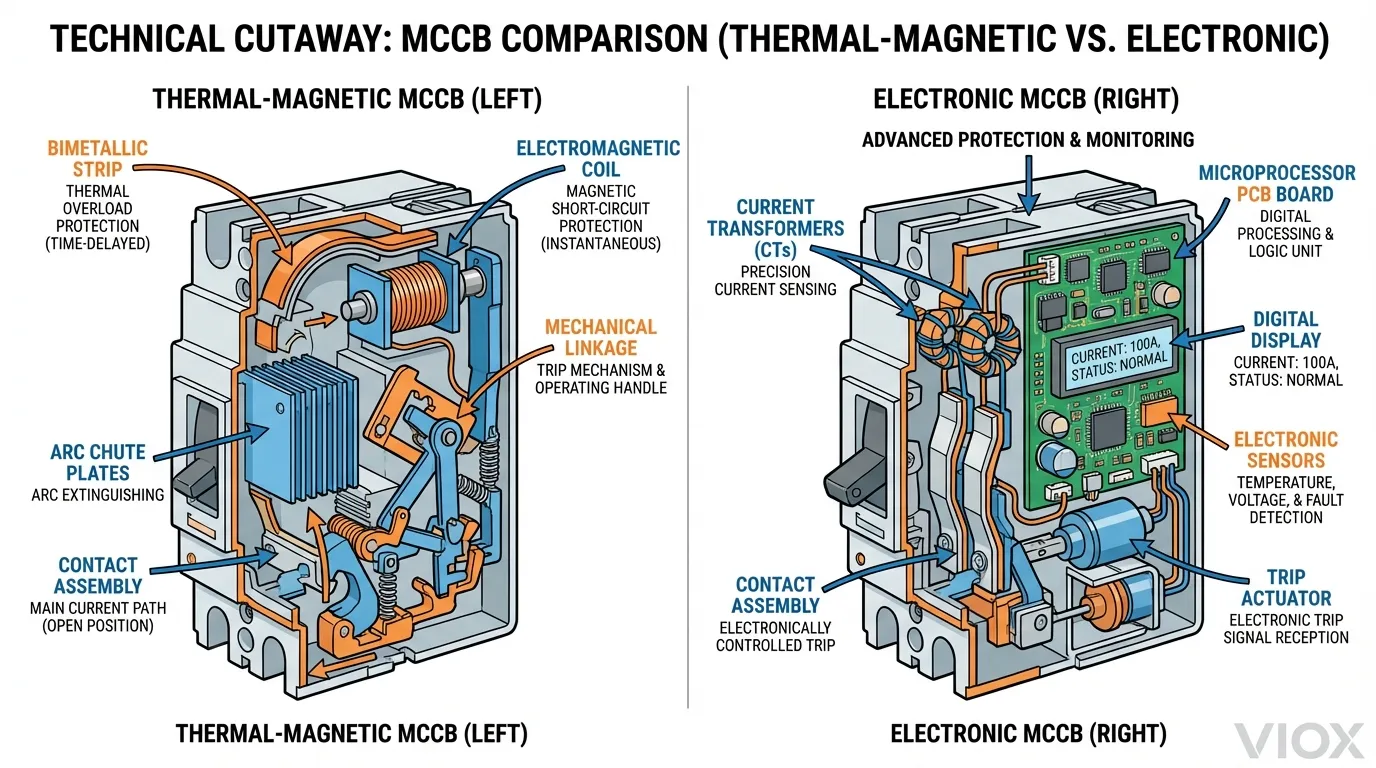
Termomagnetické MCCB používají výhradně elektromechanické komponenty, které zůstaly v zásadě nezměněny po desetiletí. Bimetalový pásek se zahřívá a ohýbá při trvalém nadproudu (tepelná ochrana), zatímco elektromagnetická cívka generuje magnetickou sílu úměrnou velikosti proudu pro okamžitou ochranu proti zkratu (magnetická ochrana). Tyto mechanismy jsou ze své podstaty analogové, závislé na teplotě a nabízejí omezenou nebo žádnou nastavitelnost.
Elektronické MCCB nahrazují tyto mechanické prvky proudovými transformátory (CT), které měří proud v každé fázi a přivádějí digitální signály do spouštěcí jednotky založené na mikroprocesoru. Mikroprocesor nepřetržitě analyzuje průběhy proudu, vypočítává hodnoty RMS, digitálně sleduje tepelnou akumulaci a provádí programovatelné ochranné algoritmy. Tento digitální přístup zásadně mění to, co je v ochraně obvodů možné.
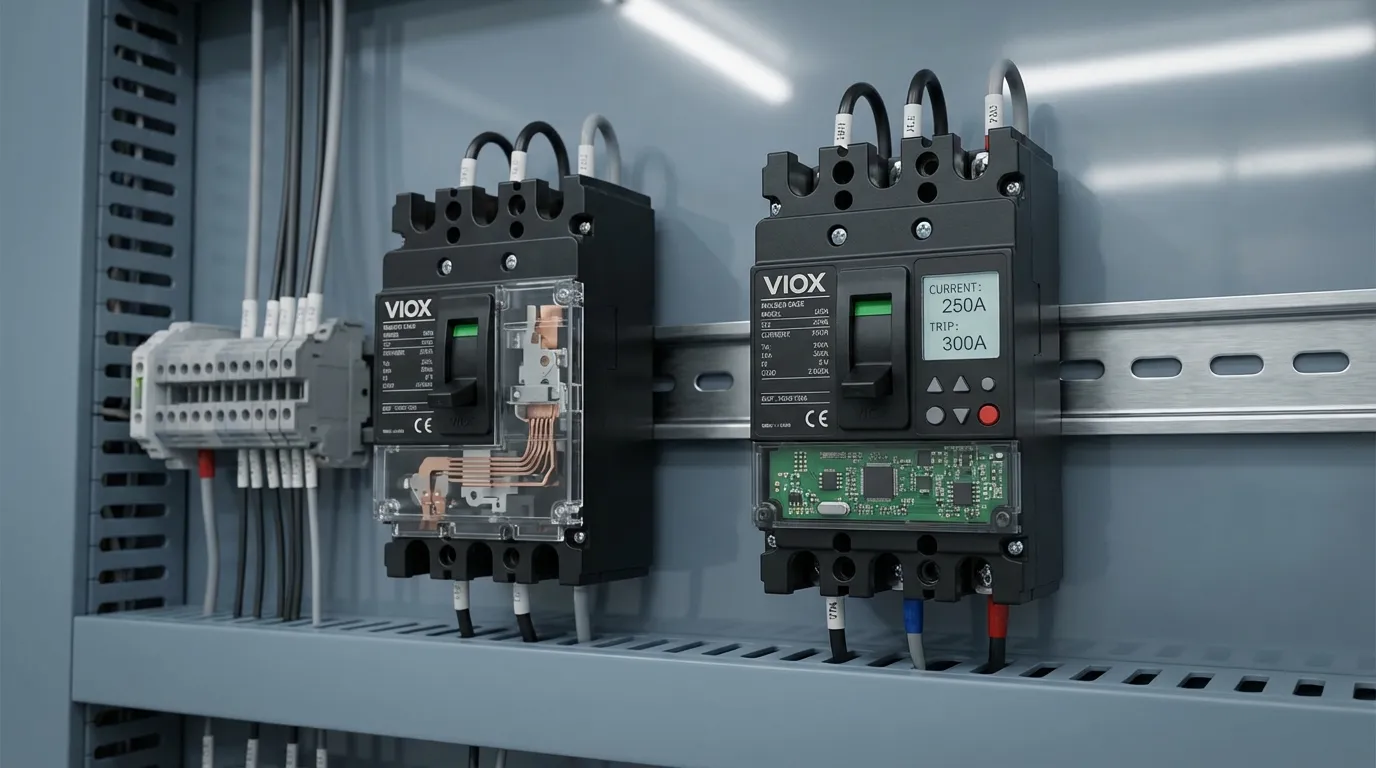
Důsledky sahají daleko za samotný spouštěcí mechanismus. Elektronické spouštěcí jednotky umožňují funkce, které jsou s termomagnetickou technologií nemožné: datové záznamy v subsekundových intervalech, komunikační protokoly pro systémy správy budov, ochrana proti zemnímu spojení s nastavitelnou citlivostí a – co je nejdůležitější – ochranné charakteristiky, které zůstávají stabilní bez ohledu na okolní teplotu nebo předchozí provozní historii.
Přesnost: Realita 5 % vs. 20 %
Přesnost vypnutí představuje odchylku mezi nastavenou hodnotou jističe a jeho skutečným vypínacím proudem. Tato zdánlivě technická specifikace má zásadní praktické důsledky pro návrh systému, ochranu zařízení a provozní spolehlivost.
Termomagnetické MCCB obvykle dosahují přesnosti ±10–20 % na ochranu proti přetížení kvůli inherentní variabilitě charakteristik bimetalového pásku, výrobním tolerancím a teplotní citlivosti. Jistič nastavený na vypnutí při 100 A může ve skutečnosti vypnout kdekoli od 80 A do 120 A v závislosti na okolní teplotě, době, kdy naposledy fungoval, a individuální odchylce jednotky. Okamžitá magnetická přesnost vypnutí je o něco lepší (±15 %), ale stále významná.
Elektronické MCCB poskytují přesnost ±5 % nebo lepší v celém svém provozním rozsahu, protože mikroprocesory nedriftují, mechanicky se neopotřebovávají a nejsou ovlivněny okolní teplotou (CT a elektronika fungují nezávisle na podmínkách prostředí). Nastavení elektronického vypnutí na 100 A znamená skutečný vypínací proud 95 A až 105 A – konzistentně a opakovatelně.
Proč na tom v reálných aplikacích záleží
Ochrana motoru: Motor o výkonu 100 HP s proudem při plném zatížení 124 A vyžaduje ochranu při 156 A podle NEC 430.52 (125 % pro jističe s inverzní charakteristikou). U termomagnetického MCCB znamená tolerance ±20 %, že skutečné vypnutí může nastat kdekoli od 125 A do 187 A. Při 125 A dojde k nežádoucím vypnutím během normálního provozu. Při 187 A jste ohrozili ochranu motoru. Elektronický MCCB udržuje 148 A až 164 A – dostatečně těsně, aby chránil bez nežádoucího vypínání.
Koordinace: Dosažení selektivní koordinace vyžaduje udržování dostatečného časově-proudového oddělení mezi zařízeními na vstupu a výstupu. Nejistota ±20 % termomagnetických jističů vás nutí výrazně předimenzovat zařízení na vstupu, abyste zajistili koordinaci za nejhorších podmínek. Elektronická přesnost umožňuje těsnější koordinační marže, často umožňující o jednu velikost rámu menší ochranu na vstupu – úspory, které mohou vyrovnat elektronický příplatek.
Srovnávací tabulka: Dopad přesnosti vypnutí
| Parametr | Termomagnetický MCCB | Elektronický MCCB | Praktický dopad |
|---|---|---|---|
| Přesnost vypnutí při dlouhém zpoždění | ±10-20 % | ±20 % | ±5 % |
| Přesnost vypnutí při krátkém zpoždění | ±15-25 % | ±20 % | ±15 % |
| Přesnost vypnutí při okamžitém vypnutí | ±15 % | ±20 % | ±5 % |
| Teplotní koeficient | Teplotní drift | 0,5–1,0 % na °C | <0,1 % na °C |
| Opakovatelnost | Variabilita vypnutí | ±10 % vypnutí-vypnutí | ±2 % vypnutí-vypnutí |
Nastavitelnost a programovatelnost: Pevná vs. flexibilní ochrana
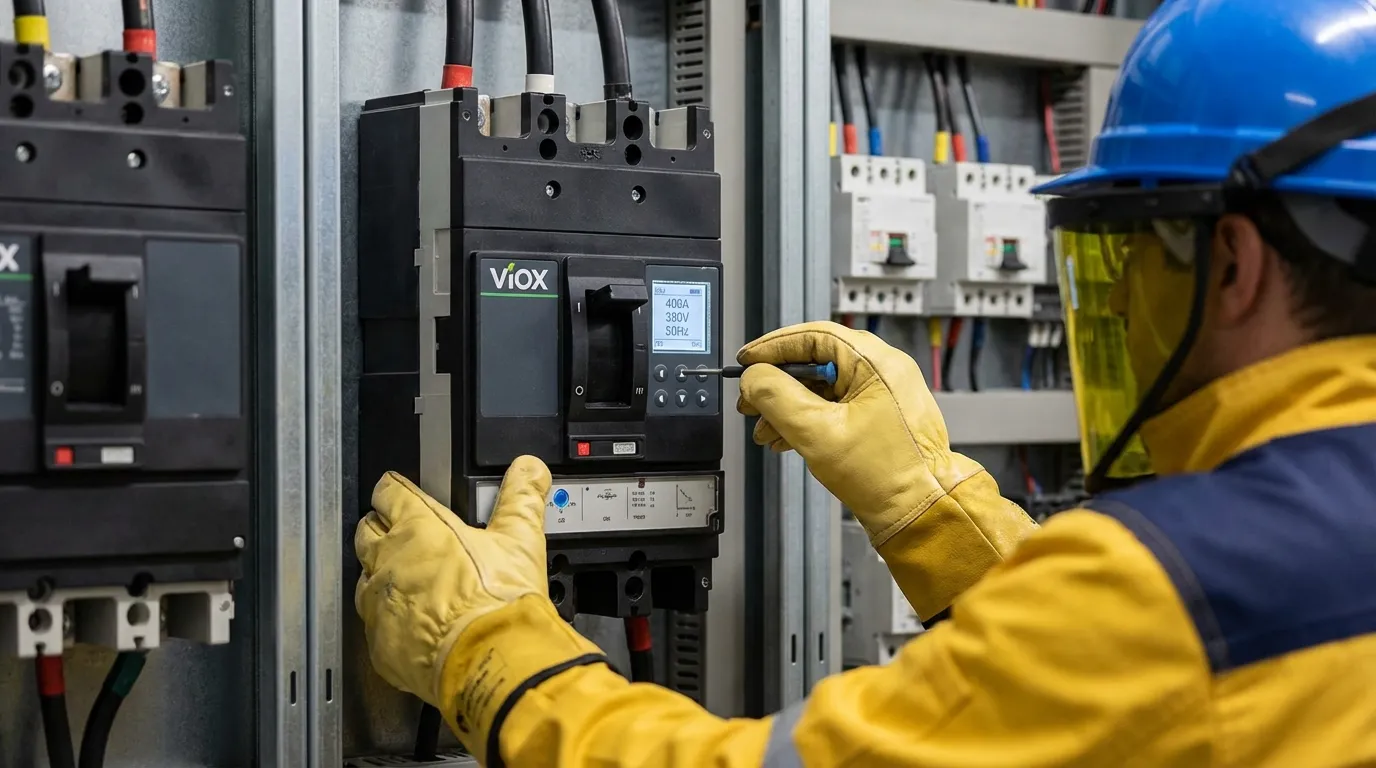
Požadavky na ochranu pro distribuční panel 400 A napájející smíšené zátěže se dramaticky liší od napáječe motoru 400 A. Termomagnetické MCCB to řeší prostřednictvím omezeného mechanického nastavení (typicky 80–100 % jmenovitého proudu u větších rámů) nebo skladováním více jmenovitých proudů jističů. Elektronické MCCB to řeší prostřednictvím komplexní programovatelnosti.
Omezení nastavení termomagnetického jističe
Většina termomagnetických MCCB pod 250 A nenabízí žádnou nastavitelnost – vypínací charakteristika je pevně nastavena ve výrobě. Větší rámy (400 A+) mohou poskytovat:
- Tepelné nastavení: Otočný volič nastavuje vypnutí při přetížení od 0,8× do 1,0× jmenovitého proudu jističe
- Magnetické nastavení: Omezené nastavení okamžitého vypnutí (typicky 5× až 10× jmenovitý proud)
- Žádné nastavení časového zpoždění: Inverzní časová charakteristika je pevně dána konstrukcí bimetalového pásku
Tato omezená flexibilita znamená, že často musíte nadimenzovat jističe, abyste se přizpůsobili změnám zatížení, nebo akceptovat méně než optimální ochranu pro vaše skutečné provozní podmínky.
Možnosti elektronické spouštěcí jednotky
Elektronické MCCB poskytují plnou programovatelnou kontrolu nad všemi ochrannými funkcemi:
Dlouhodobá (L) ochrana:
- Nastavitelný odběr: 0,4× až 1,0× jmenovitý proud jističe (některé modely 0,2× až 1,0×)
- Nastavitelná časová prodleva: Volitelné křivky I²t nebo pevné časové prodlevy
- Tepelná paměť: Zohledňuje historii zatížení, aby se zabránilo tepelné akumulaci
Krátkodobá (S) ochrana:
- Nastavitelný odběr: 1,5× až 10× jmenovitý proud jističe
- Nastavitelná časová prodleva: 0,05 s až 0,5 s (kritické pro koordinaci)
- Charakteristiky I²t nebo definovaného času
Okamžitá (I) ochrana:
- Nastavitelný odběr: 2× až 40× jmenovitý proud jističe (závislé na aplikaci)
- Může být zcela deaktivována pro aplikace vyžadující pouze L-S ochranu
Ochrana proti zemnímu spojení (G):
- Nastavitelná citlivost: 20% až 100% jmenovitého proudu jističe
- Nastavitelná časová prodleva: 0,1 s až 1,0 s
- Volitelný I²t nebo definovaný čas
Tato programovatelnost umožňuje, aby jedna velikost rámu elektronického MCCB sloužila aplikacím, které by vyžadovaly 4-6 různých jmenovitých proudů termomagnetických jističů, což snižuje náklady na zásoby a zlepšuje standardizaci.
Selektivní koordinace: V čem elektronické MCCB vynikají
Selektivní koordinace – zajištění, že funguje pouze jistič bezprostředně před poruchou – je teoreticky jednoduchá, ale v praxi náročná. Cílem je zabránit rozsáhlým výpadkům při poruchách v odbočných obvodech a udržet napájení pro nepostižené zátěže.
Výzva koordinace termomagnetických jističů
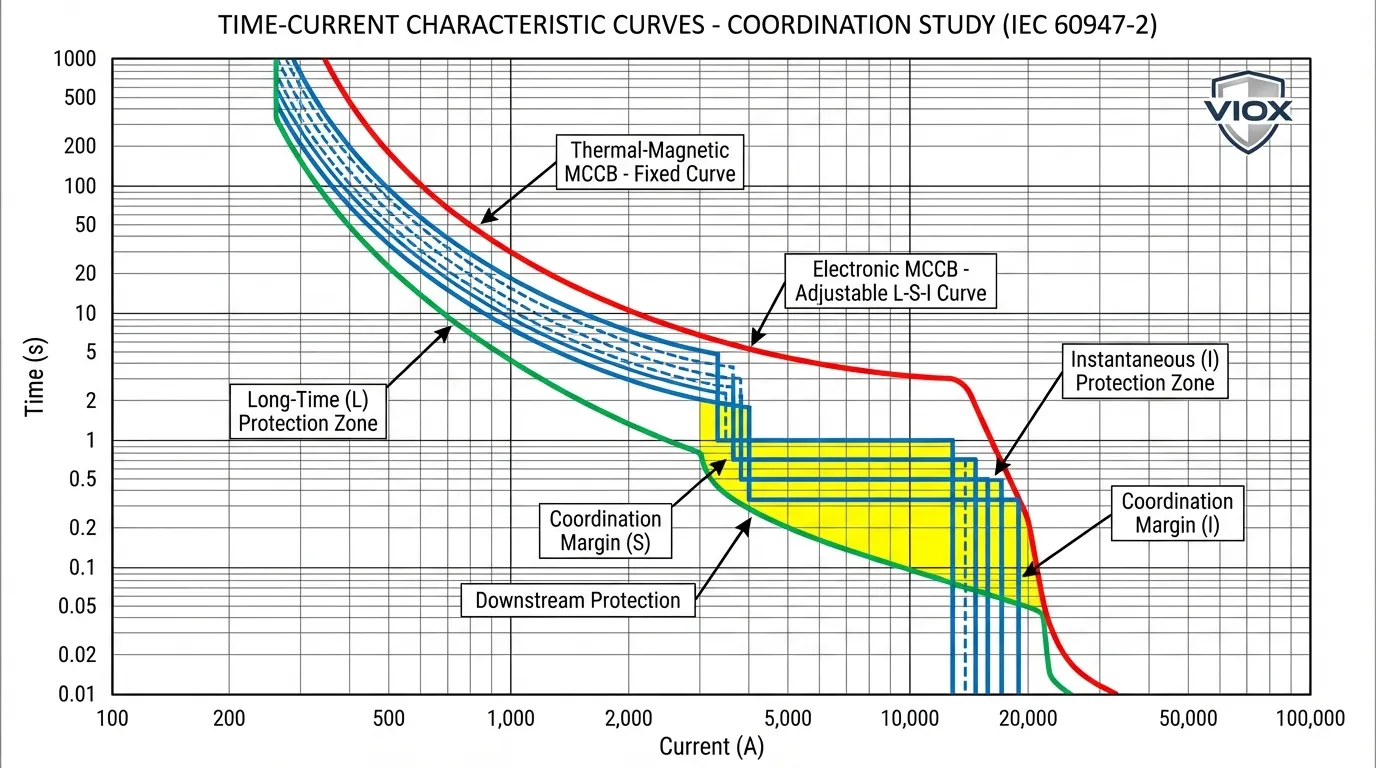
Dosažení koordinace s termomagnetickými MCCB vyžaduje významný proudový poměr mezi zařízeními na vstupu a výstupu (typicky minimálně 2:1, často 3:1 pro spolehlivou koordinaci). To nutí nadimenzování jističů na vstupu, zvyšuje náklady a potenciálně ohrožuje ochranu. I při správném dimenzování může být koordinace dosažitelná pouze do určité úrovně poruchového proudu – nad touto hranicí vypnou oba jističe.
Pevné časově-proudové charakteristiky termomagnetických jističů poskytují omezenou flexibilitu. Nemůžete upravit dobu tepelné odezvy ani přidat záměrné zpoždění pro vytvoření koordinačního oddělení. Vaše jediné nástroje jsou výběr zařízení a proudový poměr.
Výhody koordinace elektronických MCCB
Elektronické spouštěcí jednotky řeší koordinaci pomocí programovatelného krátkodobého zpoždění. Jistič na vstupu může být nastaven tak, aby zpozdil vypnutí o 0,1-0,3 sekundy, čímž dá zařízení na výstupu čas na odstranění poruchy jako první. Tento přístup “záměrného zpoždění” umožňuje koordinaci s mnohem menšími proudovými poměry (často postačuje 1,5:1) a udržuje koordinaci v celém rozsahu poruchového proudu.
Zónové selektivní blokování (ZSI) jde ještě dál – elektronické MCCB komunikují prostřednictvím pevných signálů nebo síťových protokolů. Když dojde k poruše, jistič na výstupu, který detekuje poruchu, odešle jističům na vstupu signál “zdržení”, který jim říká: “Vidím tuto poruchu, zpozděte své vypnutí.” Pokud jistič na výstupu úspěšně odstraní poruchu, jističe na vstupu nikdy nevypnou. Pokud jistič na výstupu selže, jistič na vstupu vypne po uplynutí doby zpoždění.
Srovnávací tabulka koordinace
| Aspekt koordinace | Termomagnetický MCCB | Elektronický MCCB | Výhoda |
|---|---|---|---|
| Minimální proudový poměr | Vyžadováno 2:1 až 3:1 | Postačuje 1,5:1 | Elektronické snižuje požadavky na nadimenzování |
| Rozsah koordinace | Omezeno na specifický rozsah poruchového proudu | Možná koordinace v plném rozsahu | Elektronické udržuje selektivitu na všech úrovních poruchy |
| Časové oddělení | Pevné charakteristikami zařízení | Programovatelné zpoždění 0,05-0,5 s | Elektronické umožňuje přesnou koordinaci |
| Zónové selektivní blokování | Není k dispozici | Standardní funkce u většiny modelů | Elektronické poskytuje koordinaci založenou na komunikaci |
| Složitost studie koordinace | Několik iterací, omezené řešení | Flexibilní programování, více řešení | Elektronické zjednodušuje inženýrství |
| Budoucí úpravy | Může vyžadovat výměnu zařízení | Reprogramování stávajících jističů | Elektronické se přizpůsobuje změnám systému |
Pro zařízení, kde je koordinace nařízena předpisy (zdravotnická zařízení podle NEC 700.28, nouzové systémy, systémy pro ochranu života), se elektronické MCCB často stávají jediným praktickým řešením.
Monitorování a komunikace: Inteligence vs. Pouze ochrana
Tradiční termomagnetické MCCB jsou binární zařízení – jsou buď zavřené (vedou) nebo otevřené (přerušené). Neposkytují žádné informace o proudovém zatížení, spotřebě energie, kvalitě energie nebo o svém vlastním zdravotním stavu. Elektronické MCCB transformují jističe na inteligentní systémové komponenty.
Možnosti monitorování v reálném čase
Elektronické spouštěcí jednotky nepřetržitě měří a zobrazují:
- Proud na fázi: Proud v reálném čase na každém vodiči
- Napětí: Měření mezi fázemi a fází a nulou
- Výkon: Činný výkon (kW), jalový výkon (kVAR), zdánlivý výkon (kVA)
- Účiník: Předbíhající nebo zpožďující, s doporučeními pro korekci
- Energetika: Kumulativní spotřeba kWh pro alokaci nákladů
- Harmonické: Měření a analýza THD (celkové harmonické zkreslení)
- Odběr: Sledování špičkového odběru pro optimalizaci fakturace za energie
Tato data se nezobrazují pouze lokálně – jsou k dispozici prostřednictvím komunikačních protokolů (Modbus RTU/TCP, BACnet, Ethernet/IP, Profibus) pro integraci se systémy řízení budov, systémy SCADA a platformami pro správu energie.
Prediktivní údržba a diagnostika
Elektronické MCCB sledují parametry, které indikují vznikající problémy dříve, než dojde k poruše:
Monitorování opotřebení kontaktů: Měří odpor kontaktů v průběhu času. Postupné zvyšování indikuje erozi kontaktů – jistič lze naplánovat na výměnu během plánované údržby, namísto neočekávaného selhání.
Akumulace tepla: Sleduje historii tepelného zatížení, aby předpověděl zbývající životnost za současných provozních podmínek. Varuje, pokud trvalé přetížení snižuje životnost jističe.
Počítání operací: Zaznamenává počet spínacích operací (mechanická životnost) a přerušení poruch (elektrická životnost). Upozorní, když se blíží jmenovitým limitům životnosti.
Historie vypnutí: Zaznamenává každou událost vypnutí s časovým razítkem, velikostí proudu a důvodem vypnutí. Nezbytné pro odstraňování opakujících se problémů a identifikaci problémů se zátěží.
Prahové hodnoty alarmů a varování: Programovatelné výstrahy pro blížící se přetížení, problémy s kvalitou napájení, detekci zemního spojení nebo požadavky na údržbu. Mohou spustit místní alarmy nebo vzdálená upozornění.
Návratnost investic do monitoringu
Pro kritická zařízení v provozu 24/7 často samotné možnosti monitoringu ospravedlňují náklady na elektronické MCCB:
Energetický management: Identifikace neefektivního zařízení, optimalizace účiníku, účast v programech reakce na poptávku. Typické úspory: 5-15 % nákladů na elektřinu.
Prevence prostojů: Prediktivní údržba snižuje neplánované výpadky o 30-50 %. Pro datové centrum, kde prostoje stojí 5 000–10 000 USD za minutu, prevence jediného 4hodinového výpadku zaplatí prémii za elektronické MCCB 10×.
Soulad a reporting: Automatizované vykazování spotřeby energie pro ISO 50001, certifikaci LEED, programy pobídek pro energie a iniciativy podnikové udržitelnosti.
Teplotní nezávislost: Kritická výhoda
Termomagnetické MCCB jsou ze své definice zařízení citlivá na teplotu – průhyb bimetalového pásku závisí na teplotě. To vytváří dvě významné výzvy:
Snížení jmenovité hodnoty okolní teploty: Standardní termomagnetické MCCB jsou dimenzovány na okolní teplotu 40 °C. Pro každých 5 °C nad tuto hodnotu musíte jistič snížit přibližně o 5 %. MCCB v prostředí s teplotou 60 °C (běžné v blízkosti pecí, na přímém slunečním světle nebo ve špatně větraných skříních) pracuje pouze na 80 % svého jmenovitého výkonu. Jistič 100 A se efektivně stane jističem 80 A.
Vliv historie zatížení: Po vedení vysokého proudu zůstává bimetalový pásek horký, takže jistič je citlivější na následné přetížení. Tento efekt “tepelné paměti” je nepředvídatelný a může způsobit rušivé vypínání v aplikacích s proměnlivým zatížením.
Elektronické MCCB eliminují oba problémy. Proudové transformátory a elektronické obvody pracují nezávisle na okolní teplotě. Elektronické nastavení vypnutí 100 A zůstává 100 A, ať už je jistič instalován v arktické venkovní skříni při -25 °C nebo vedle pece při +70 °C. Mikroprocesor může dokonce implementovat sofistikované tepelné modely, které zohledňují ohřev vodičů a historii zatížení přesněji, než by kdy mohly fyzické bimetalové pásky.
Srovnání teplotní výkonnosti
| Provozní podmínky | Termomagnetický MCCB | Elektronický MCCB | Dopad |
|---|---|---|---|
| Okolní teplota 40 °C (standardní) | 100 % jmenovité kapacity | 100 % jmenovité kapacity | Oba fungují podle jmenovitých hodnot |
| Okolní teplota 60 °C (horké prostředí) | ~80 % jmenovité kapacity (vyžaduje snížení) | 100 % jmenovité kapacity (bez snížení) | Elektronické udržuje plnou kapacitu |
| Okolní teplota -25 °C (chladné prostředí) | Nemusí vypnout při jmenovitém proudu (ztuhlý bimetal) | 100 % jmenovité kapacity | Elektronické poskytuje spolehlivou ochranu |
| Po provozu s vysokým zatížením | Dočasně citlivější (horký bimetal) | Konzistentní výkon | Elektronické eliminuje rušivé vypínání |
| Rychlé cyklování zatížení | Nepředvídatelné kvůli tepelné prodlevě | Konzistentní odezva | Elektronické poskytuje stabilní ochranu |
Pro aplikace v extrémních prostředích – venkovní instalace, v blízkosti zdrojů tepla nebo v prostorách s řízenou teplotou – se elektronické MCCB často stávají nezbytnými jednoduše pro udržení spolehlivé ochrany.
Analýza nákladů: Kdy je prémie oprávněná
Elektronické MCCB stojí o 100-150 % více než ekvivalentní termomagnetické jednotky. Termomagnetické MCCB 400 A může stát 400–600 USD, zatímco elektronická verze stojí 900–1 500 USD. Tato prémie vyžaduje odůvodnění.
Srovnání počátečních nákladů (příklad MCCB 400 A)
| Typ MCCB | Počáteční náklady | Nastavitelnost | Monitorování | Koordinace | Nezávislost na teplotě |
|---|---|---|---|---|---|
| Pevné termomagnetické | $400 | Žádný | Žádný | Omezené | Ne (vyžaduje snížení) |
| Nastavitelné tepelně-magnetické | $550 | Omezené (0,8-1,0× jmenovitý výkon) | Žádný | Mírná | Ne (vyžaduje snížení) |
| Elektronické (standardní) | $1,000 | Plné programování L-S-I-G | Základní (místní displej) | Vynikající | Ano |
| Elektronické (chytré/IoT) | $1,500 | Plné programování L-S-I-G | Komplexní + komunikace | Vynikající + ZSI | Ano |
Celkové náklady na vlastnictví (životnost 20 let)
Počáteční náklady představují pouze 15-25 % celkových nákladů na vlastnictví. Zvažte:
Termomagnetický MCCB (400A):
- Počáteční náklady: 550 Kč
- Náklady na energii (bez monitoringu): 0 Kč úspory
- Náklady na prostoje (reaktivní údržba): 25 000 Kč za 20 let (odhadem 3 neplánované výpadky)
- Omezení koordinace: 5 000 Kč (předimenzovaná ochrana proti proudu)
- Celkové náklady za 20 let: 30 550 Kč
Elektronický MCCB (400A):
- Počáteční náklady: 1 200 Kč
- Úspory energie (5% snížení díky monitoringu): 15 000 Kč za 20 let
- Náklady na prostoje (prediktivní údržba): 7 500 Kč za 20 let (odhadem 1 neplánovaný výpadek)
- Optimalizace koordinace: 0 Kč (umožněno správné dimenzování)
- Celkové náklady za 20 let: -6 300 Kč (čistá úspora)
Bod zvratu: Typicky 18-36 měsíců pro kritické aplikace, 3-5 let pro standardní průmyslové aplikace.
Kdy má termomagnetický smysl
Elektronické MCCB nejsou vždy správnou volbou. Termomagnetické zůstávají vhodné, když:
- Jmenovitý proud <400A s jednoduchými požadavky na ochranu
- Nekritické aplikace kde monitoring neposkytuje žádnou provozní hodnotu
- Jednoduché systémy bez složitosti koordinace
- Rozpočtová omezení kde jsou primárním faktorem počáteční náklady
- Údržbové kapacity nepodporují správu elektronických zařízení
Matice rozhodování o aplikaci
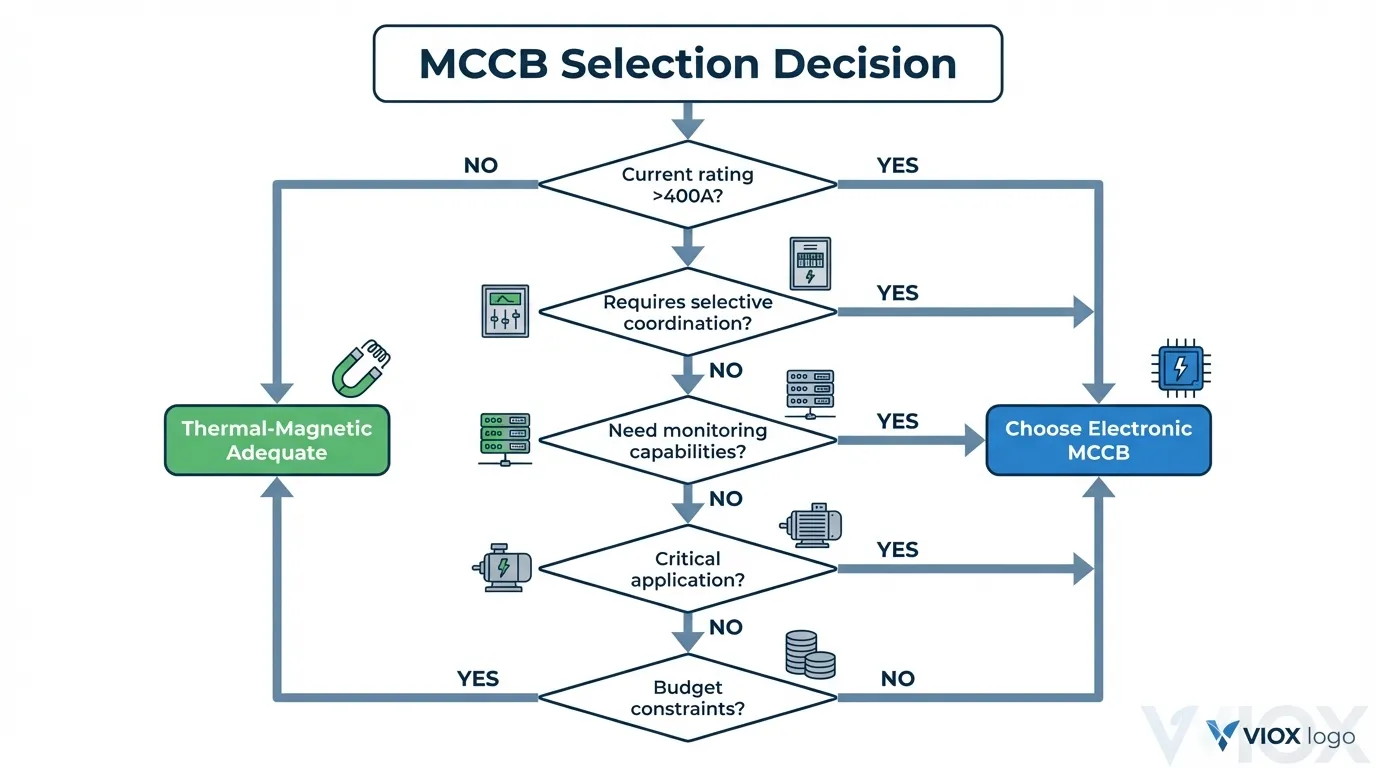
Vyberte elektronický MCCB, když:
- ✓ Jmenovitý proud ≥400A (elektronický příplatek je menší procento z celkových nákladů)
- ✓ Kritické provozní provozy (datová centra, nemocnice, nepřetržitá výroba, nouzové systémy)
- ✓ Požadována selektivní koordinace podle kódu (NEC 700.28) nebo provozní nutnosti
- ✓ Monitorovací schopnosti poskytují hodnotu (řízení energie, reakce na poptávku, prediktivní údržba)
- ✓ Extrémní okolní teploty (-25°C až +70°C), kde termomagnetické vyžaduje významné snížení jmenovitého proudu
- ✓ Složité systémy s více úrovněmi ochrany vyžadujícími přesnou koordinaci
- ✓ Aplikace s proměnlivým zatížením kde programovatelnost zabraňuje rušivému vypínání
- ✓ Integrace s BMS/SCADA pro správu a automatizaci budov
Vyberte termomagnetický MCCB, když:
- ✓ Jmenovitý proud <400A s jednoduchými požadavky na ochranu
- ✓ Nekritické aplikace kde jsou náklady na prostoje minimální
- ✓ Jednoduchá ochrana bez složitosti koordinace
- ✓ Projekty s omezeným rozpočtem kde jsou primárním zájmem počáteční náklady
- ✓ Standardní okolní podmínky (0-40°C) bez požadavků na snížení jmenovitého proudu
- ✓ Žádné požadavky na monitoring nebo stávající systémy řízení energie
- ✓ Zaměstnanci údržby nemají školení/nástroje pro správu elektronických zařízení
Srovnávací tabulka: Elektronické vs. termomagnetické MCCB
| Funkce | Termomagnetický MCCB | Elektronický MCCB | Vítěz |
|---|---|---|---|
| Přesnost vypnutí | ±10-20 % | ±20 % | Elektronická |
| Nezávislost na teplotě | Ne (vyžaduje snížení) | Ano (celý rozsah -25°C až +70°C) | Elektronická |
| Nastavitelnost | Omezené nebo žádné | Plné programování L-S-I-G | Elektronická |
| Selektivní koordinace | Vyžaduje proudový poměr 2-3:1 | Dosažitelné s poměrem 1,5:1 + ZSI | Elektronická |
| Monitorovací možnosti | Žádný | Komplexní (I, V, P, PF, kWh, THD) | Elektronická |
| Prediktivní údržba | Není k dispozici | Kontaktní odpor, tepelné sledování, počítání operací | Elektronická |
| Komunikační protokoly | Žádný | Modbus, BACnet, Ethernet/IP, Profibus | Elektronická |
| Počáteční náklady (400A) | $400-$600 | $900-$1,500 | Termomagnetická |
| Složitost | Jednoduchá, osvědčená technologie | Vyžaduje technické znalosti | Termomagnetická |
| Spolehlivost | Vynikající (mechanická jednoduchost) | Vynikající (žádné pohyblivé části ve vypínací jednotce) | Nerozhodně |
| Požadavky na údržbu | Minimální | Aktualizace firmwaru, ověření kalibrace | Termomagnetická |
| Redukce zásob | Vyžaduje více jmenovitých hodnot | Jeden rám slouží pro více aplikací | Elektronická |
| Celkové náklady na vlastnictví (20 let) | Vyšší pro kritické aplikace | Nižší díky úsporám a zabránění prostojům | Elektronické (kritické aplikace) |
Příklady aplikací v reálném světě
Případová studie 1: Distribuce datového centra
Použití: 1 200A hlavní distribuční panel napájející více 400A panelů serverových racků
Výzva: Dosažení selektivní koordinace při zachování plného využití kapacity, monitorování v reálném čase pro výpočet PUE (Power Usage Effectiveness), prediktivní údržba pro prevenci neplánovaných výpadků
Řešení: Elektronické MCCB s koordinací ZSI a komplexním monitorováním
Výsledky:
- Selektivní koordinace dosažena s proudovým poměrem 1,6:1 (termo-magnetické by vyžadovaly 3:1)
- Monitorování výkonu v reálném čase umožnilo snížení spotřeby energie o 8% prostřednictvím optimalizace zátěže
- Prediktivní údržba zabránila 2 potenciálním poruchám během 3 let
- Návratnost investice: 14 měsíců
Proč zvítězily elektronické: Již samotné možnosti monitorování ospravedlnily náklady, požadavky na koordinaci to učinily nezbytným a prevence prostojů poskytla 10× návratnost prémiové investice.
Případová studie 2: Výrobní motorové řídicí centrum
Použití: 600A MCC napájející 15 motorů v rozsahu od 25 HP do 150 HP
Výzva: Záběrový proud motoru způsobující rušivé vypínání, koordinace s navazujícími spouštěči motorů, různé podmínky zatížení během výrobních směn
Řešení: Elektronické MCCB s programovatelným okamžitým vypínáním a zpožděním nakrátko
Výsledky:
- Eliminovány rušivé vypínání během spouštění motoru nastavením okamžitého vypínání na 12× jmenovitý proud
- Dosaženo koordinace se všemi navazujícími spouštěči pomocí 0,2s zpoždění nakrátko
- Upravena nastavení dlouhodobého zpoždění pro různé výrobní plány bez výměny zařízení
- Návratnost investice: 28 měsíců
Proč zvítězily elektronické: Programovatelnost zabránila rušivému vypínání, které stálo $5 000 za každé zastavení výroby, koordinace umožnila správnou ochranu bez předimenzování a flexibilita vyhověla provozním změnám.
Případová studie 3: Distribuce komerční budovy
Použití: 225A panel osvětlení a zásuvek v kancelářské budově
Výzva: Standardní požadavky na ochranu, projekt s ohledem na rozpočet, žádné požadavky na monitorování
Řešení: Pevný termo-magnetický MCCB
Výsledky:
- Spolehlivá ochrana za cenu o 60% nižší než elektronická alternativa
- Jednoduchá instalace a uvedení do provozu
- Není nutné školení pro pracovníky údržby
- Vhodná technologie pro požadavky aplikace
Proč zvítězily termo-magnetické: Aplikace nevyžadovala elektronické funkce, počáteční náklady byly primárním zájmem a jednoduchá ochrana byla adekvátní pro nekritické zátěže.
Často Kladené Otázky
Otázka: Vyžadují elektronické MCCB externí napájení pro provoz?
Odpověď: Většina elektronických vypínacích jednotek je napájena sama, přičemž provozní napájení získává z proudu protékajícího jističem prostřednictvím proudových transformátorů. Nevyžadují externí řídicí napájení a správně vypnou i během výpadků napájení. Některé pokročilé funkce (komunikace, podsvícení displeje) mohou vyžadovat pomocné napájení, ale základní ochranné funkce zůstávají napájeny samy.
Otázka: Jsou elektronické MCCB náchylnější k poruchám než termo-magnetické?
Odpověď: Ne. Elektronické vypínací jednotky nemají žádné pohyblivé části v obvodech snímání/měření, což eliminuje mechanické opotřebení, které ovlivňuje bimetalové pásky. Údaje o spolehlivosti v terénu ukazují, že elektronické MCCB dosahují stejné nebo lepší spolehlivosti než termo-magnetické jednotky. Mikroprocesor a elektronika jsou polovodičové součástky s MTBF (Mean Time Between Failures) přesahujícím 100 000 hodin. Mechanismus mechanického ovládání (kontakty, zhášecí komory) je u obou typů identický.
Otázka: Mohu dodatečně vybavit termo-magnetické MCCB elektronickými vypínacími jednotkami?
Odpověď: Někteří výrobci MCCB nabízejí zaměnitelné vypínací jednotky, které umožňují výměnu termo-magnetických jednotek za elektronické verze v témže rámu jističe v terénu. To však není univerzální – mnoho MCCB má integrované vypínací jednotky, které nelze změnit. Ověřte si u výrobce pro váš konkrétní model. Pokud je to možné, může být dodatečná montáž nákladově efektivní ve srovnání s kompletní výměnou jističe.
Otázka: Jak často je třeba kalibrovat elektronické vypínací jednotky?
Odpověď: Elektronické MCCB obvykle vyžadují ověření kalibrace každé 3–5 roky ve srovnání s ročním testováním doporučeným pro termo-magnetické jednotky. Digitální povaha elektronických vypínání poskytuje inherentní stabilitu – mikroprocesory se nerozcházejí jako mechanické součástky. Pokud testování ukáže rozcházení kalibrace, je to obvykle způsobeno stárnutím CT spíše než selháním elektroniky a často to indikuje blížící se konec životnosti vyžadující výměnu jističe spíše než úpravu kalibrace.
Otázka: Budou elektronické MCCB fungovat s mým stávajícím systémem správy budovy?
Odpověď: Většina moderních elektronických MCCB podporuje standardní průmyslové komunikační protokoly (Modbus RTU/TCP, BACnet, Ethernet/IP, Profibus). Před specifikací ověřte kompatibilitu protokolu s vaším BMS. Někteří výrobci nabízejí brány pro překlad mezi protokoly. Základní data monitorování (proud, napětí, výkon, stav) se snadno integrují; pokročilé funkce mohou vyžadovat software nebo ovladače specifické pro výrobce.
Otázka: Existují aplikace, kde je termo-magnetické ve skutečnosti lepší než elektronické?
Odpověď: Ano. Pro jednoduché, nekritické aplikace pod 400 A, kde monitorování neposkytuje žádnou hodnotu a koordinace je přímočará, nabízejí termo-magnetické MCCB vhodnou ochranu za nižší cenu s jednoduššími požadavky na údržbu. Mechanická jednoduchost termo-magnetické technologie poskytuje inherentní spolehlivost bez nutnosti technických znalostí pro správu. Ne každá aplikace potřebuje nebo těží z elektronické sofistikovanosti.
Závěr: Správná volba pro vaši aplikaci
Rozhodnutí mezi elektronickými a termo-magnetickými MCCB není o výběru “lepší” technologie – jde o sladění ochranných schopností s požadavky aplikace a provozními prioritami. Elektronické MCCB poskytují měřitelné výhody v přesnosti, programovatelnosti, koordinaci, monitorování a teplotní nezávislosti, které určité aplikace absolutně vyžadují. Pro kritická zařízení, složité systémy nebo aplikace, kde monitorování poskytuje provozní hodnotu, se nákladová prémie 100–150% obvykle zaplatí do 18–36 měsíců prostřednictvím úspor energie, zabránění prostojům a provozních vylepšení.
Termo-magnetické MCCB však zůstávají vhodnou volbou pro přímočaré aplikace, kde jejich osvědčená spolehlivost, nižší náklady a jednodušší požadavky na údržbu odpovídají omezením projektu a provozním potřebám. Klíčem je porozumět vašim specifickým požadavkům – potřebná přesnost ochrany, složitost koordinace, hodnota monitorování, okolní podmínky a rozpočtová omezení – a vybrat technologii, která nejlépe řeší tyto potřeby.
Vzhledem k tomu, že průmyslová zařízení stále více využívají konektivitu IoT, prediktivní údržbu a správu energie, stávají se elektronické MCCB výchozí volbou pro nové instalace nad 400 A. “Revoluce chytré ochrany” není jen o technologickém pokroku – jde o měřitelné zlepšení spolehlivosti systému, provozní viditelnosti a celkových nákladů na vlastnictví, které elektronická ochrana umožňuje.
Ve společnosti VIOX Electric vyrábíme termo-magnetické i elektronické MCCB určené pro průmyslové a komerční aplikace. Náš inženýrský tým poskytuje technickou podporu pro správný výběr, studie koordinace a návrh systému, aby zajistil, že váš systém elektrické distribuce poskytuje optimální ochranu a spolehlivost. Ať už vaše aplikace vyžaduje osvědčenou jednoduchost termo-magnetické ochrany nebo pokročilé schopnosti elektronických vypínacích jednotek, můžeme vám pomoci učinit správnou volbu.