

Trên trang này
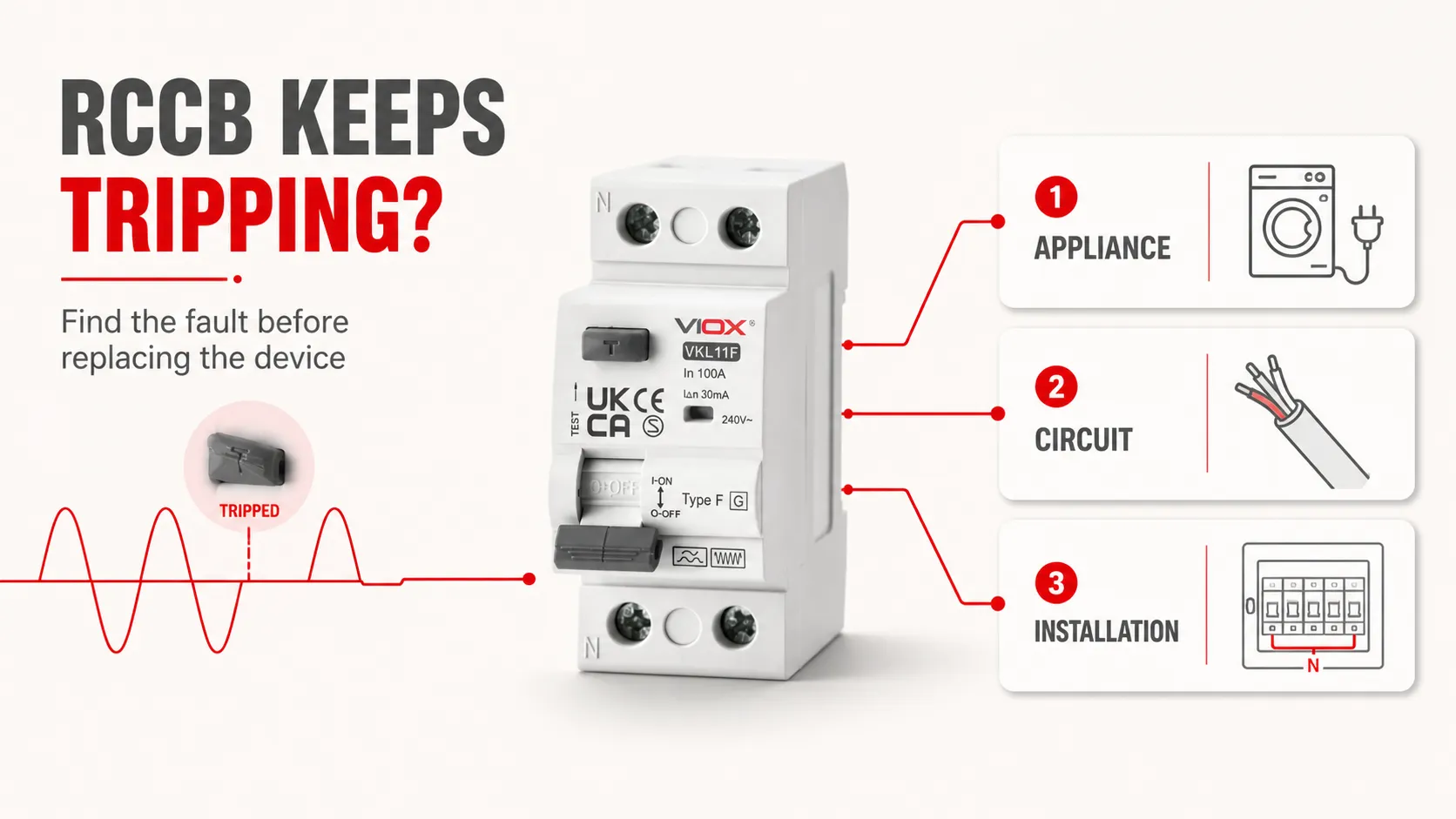
RCCB liên tục nhảy khi dòng điện chạy qua các dây dẫn pha được giám sát không còn cân bằng, hoặc khi điều kiện lắp đặt khiến thiết bị phát hiện dòng điện dư biểu kiến. Cách phân loại chẩn đoán thực tế là: một thiết bị, một mạch điện, hoặc toàn bộ hệ thống điện. Hãy xác định kiểu sự cố nào đang xảy ra trước khi thay thế RCCB.
RCCB có thể nhảy trong khi tất cả các MCB phía sau vẫn đang bật. Điều đó không hề mâu thuẫn. RCCB phát hiện dòng điện dư; nó không tích hợp chức năng bảo vệ quá tải hoặc ngắn mạch. MCB phản ứng với quá dòng. Do đó, một sự cố có thể làm tác động thiết bị này mà không làm tác động thiết bị kia.
Không được liên tục đóng lại RCCB đang nhảy hoặc đấu tắt nó. Hãy dừng lại ngay lập tức nếu có khói, mùi khét, nước gần thiết bị điện, dây dẫn hở, hư hỏng có thể nhìn thấy, hoặc RCCB nhảy ngay khi vừa cấp điện trở lại. Việc kiểm tra bên trong tủ phân phối và các phép đo điện thuộc về trách nhiệm của người có chuyên môn.
Những điểm chính
- RCCB nhảy thường cho thấy dòng điện đang quay trở về qua một đường dẫn không mong muốn, chứ không đơn thuần là do tải kết nối sử dụng quá nhiều ampe.
- Sự cố nhảy liên quan đến một thiết bị cắm phích cắm trước tiên cần hướng vào thiết bị đó; sự cố vẫn còn sau khi đã rút phích cắm các thiết bị có thể tiếp cận được thì cần hướng vào hệ thống dây dẫn cố định, thiết bị đấu nối trực tiếp, độ ẩm hoặc lỗi dây trung tính.
- Việc nhảy ngẫu nhiên dưới nhiều tải điện tử có thể là kết quả của dòng rò tích lũy, nhưng tổng dòng rò phải được đo đạc trước khi gắn nhãn đó là “nhảy do nhiễu”.”
- Việc ngắt một MCB đơn cực có thể không cách ly được dây trung tính của nó, vì vậy một RCCB hoạt động không như mong đợi vẫn có thể gặp sự cố chạm chập trung tính-đất, đấu chéo dây trung tính, dùng chung dây trung tính hoặc mượn dây trung tính.
- Việc tăng dòng điện định mức của RCCB từ 40 A lên 63 A thường không làm thay đổi dòng điện dư hoạt động định mức của nó,
IΔn. - Việc thay đổi loại, độ nhạy hoặc cấu trúc mạch của RCCB là một quyết định kỹ thuật—không phải là cách tắt để tránh việc tìm kiếm lỗi.
Trước tiên hãy xác nhận thiết bị nào đã nhảy
Từ “breaker” (máy cắt) quá chung chung để chẩn đoán. Hãy ghi lại ký hiệu trên thiết bị đã chuyển trạng thái trước khi diễn giải sự kiện.
| Thiết bị đã hoạt động | Các đặc điểm nhận dạng điển hình | Chức năng bảo vệ liên quan đến sự cố nhảy thiết bị | Hướng chẩn đoán |
|---|---|---|---|
| RCCB | Nút nhấn kiểm tra; IΔn ghi nhãn như giá trị tính bằng mA; không có đường cong cắt MCB loại B, C hoặc D |
Dòng dư | Tìm kiếm các đường dẫn dòng điện ngoài ý muốn, rò rỉ, lỗi dây trung tính, độ ẩm hoặc không phù hợp với ứng dụng |
| MCB | Ghi nhãn dòng điện và đường cong cắt như B, C hoặc D; thường không có nút nhấn kiểm tra dòng điện dư | Quá tải và ngắn mạch | Kiểm tra dòng tải, dòng khởi động, ngắn mạch và bảo vệ dây dẫn |
| RCBO | Nút nhấn kiểm tra dòng điện dư cùng với các ghi nhãn quá dòng | Dòng điện dư và quá dòng | Xác định chức năng bảo vệ nào đã hoạt động bằng cách sử dụng chỉ báo hoặc kiểm tra dành riêng cho từng model |
| Công tắc chính hoặc thiết bị cách ly | Chức năng đóng cắt không có các ký hiệu bảo vệ liên quan | Thông thường không có bảo vệ sự cố tự động | Xác nhận danh tính thiết bị và cách bố trí lắp đặt trước khi tiếp tục |
Nếu MCB đã hoạt động, hãy sử dụng hướng dẫn riêng để xác định lý do tại sao máy cắt điện bị ngắt. Nếu thiết bị là RCCB, hãy tiếp tục với quy trình chẩn đoán dòng điện dư bên dưới. Để biết phạm vi thiết bị rộng hơn, hãy xem RCCB là gì và nguyên lý hoạt động của nó.
Cây chẩn đoán sự cố nhảy RCCB
Chỉ sử dụng trình tự này cho các thiết bị điều khiển và tải cắm điện có thể tiếp cận được, đồng thời các quy định tại địa phương và hướng dẫn của nhà sản xuất cho phép bạn vận hành. Không tháo nắp tủ phân phối, ngắt kết nối dây dẫn hoặc thực hiện kiểm tra khi đang có điện.
RCCB nhảy liên tục
        │
        ├─ Có nhiệt, khói, nước, hư hỏng hoặc tình trạng nhảy lại ngay lập tức không?
        │       └─ Có → dừng lại, chỉ cách ly nếu an toàn và gọi thợ điện có chuyên môn
        │
        └─ Không có nguy cơ rõ ràng ngay lập tức
                │
                ├─ Nhảy sau khi cắm một thiết bị
                │       └─ ngừng sử dụng thiết bị đó
                │
                ├─ Nhảy sau khi cấp điện cho một mạch nhánh
                │       ├─ vẫn giữ được điện khi rút các tải có thể tiếp cận → kiểm tra các tải đó
                │       └─ vẫn nhảy → kiểm tra hệ thống dây điện cố định và thiết bị đấu nối trực tiếp
                │
                └─ Nhảy ngẫu nhiên, ảnh hưởng đến nhiều mạch hoặc không rõ tải
                        └─ đo dòng điện dư tích lũy; kiểm tra đường đi của dây trung tính,
                           độ ẩm, quá áp quá độ, loại thiết bị và sự phối hợp bảo vệ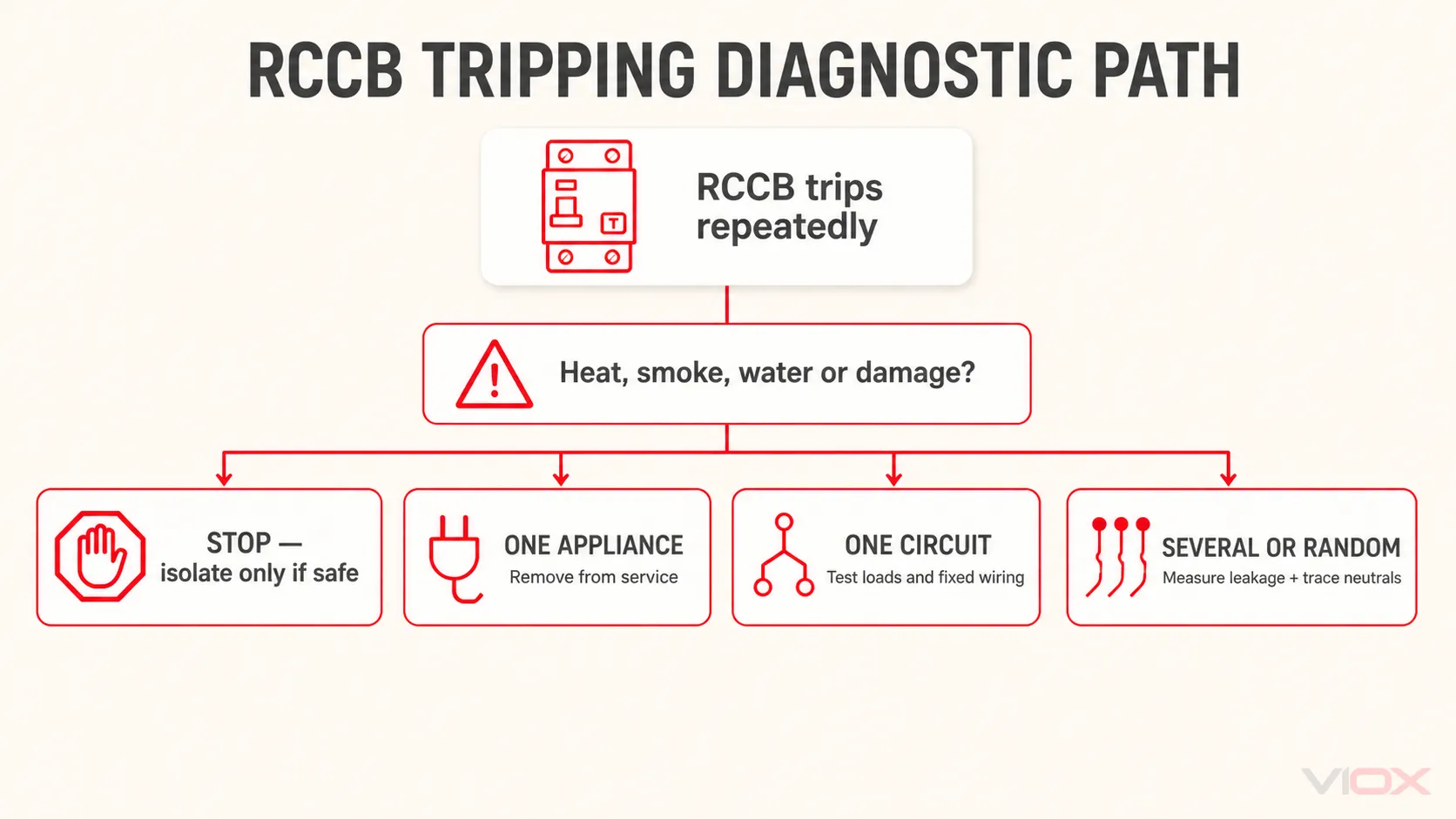
Cây chẩn đoán này giúp khoanh vùng sự cố; nó không chứng minh chính xác lỗi nằm ở đâu. Ví dụ, một RCCB giữ được điện sau khi rút một thiết bị cho thấy mối liên hệ rõ ràng, nhưng thiết bị đó vẫn cần được kiểm tra hoặc thử nghiệm trước khi đưa trở lại sử dụng.
Đối chiếu kiểu nhảy với nguyên nhân có khả năng xảy ra
| Hiện tượng quan sát được | Nhóm nguyên nhân có khả năng xảy ra | Kiểm tra hoặc quan sát an toàn | Ý nghĩa của kết quả | Hành động tiếp theo |
|---|---|---|---|---|
| RCCB nhảy khi một thiết bị được cắm vào hoặc bật lên | Lỗi cách điện của thiết bị, rò rỉ phần tử gia nhiệt, dây dẫn bị hỏng, hơi ẩm bên trong hoặc rò rỉ bộ lọc | Rút phích cắm thiết bị đó và ngừng sử dụng | Nếu RCCB vẫn giữ được trạng thái đóng, thì thiết bị đó rất có khả năng là nguyên nhân gây lỗi | Hãy mang thiết bị đi kiểm tra, thử nghiệm, sửa chữa hoặc thay thế |
| RCCB bị nhảy sau khi thiết bị đã làm nóng hoặc hoạt động được một lúc | Sự suy giảm cách điện phụ thuộc vào nhiệt độ hoặc độ ẩm | Ghi lại thiết bị và giai đoạn vận hành trước khi xảy ra sự cố nhảy aptomat | Việc xảy ra sự cố sau một khoảng thời gian vẫn có thể là lỗi rò điện xuống đất; điều đó không chứng minh là do quá tải | Giữ thiết bị ở trạng thái ngắt kết nối và sắp xếp kiểm tra an toàn điện |
| Một MCB phía hạ nguồn liên tục làm nhảy RCCB | Lỗi trên mạch nhánh đó, tải đấu nối cứng, độ ẩm hoặc lỗi đi dây trung tính | Giữ mạch đó ở trạng thái ngắt; chỉ rút phích cắm các tải có thể tiếp cận nếu được phép | Nếu RCCB vẫn giữ được, lỗi đã được khoanh vùng vào mạch đó nhưng chưa xác định được linh kiện cụ thể | Kiểm tra các thiết bị, hệ thống dây dẫn cố định và cách bố trí dây trung tính trên mạch đó |
| RCCB nhảy trong hoặc sau khi trời mưa, ngưng tụ hơi nước, vệ sinh hoặc ngập lụt | Độ ẩm trong thiết bị ngoài trời, hộp đấu nối, cáp hoặc các thiết bị điện | Lưu ý thời tiết và khu vực bị ảnh hưởng mà không chạm vào thiết bị đang bị ướt | Sự tương quan với thời tiết là bằng chứng hữu ích, không phải là sự cho phép cấp điện trở lại cho thiết bị đang bị ướt | Cách ly khu vực bị ảnh hưởng một cách an toàn và kiểm tra cấp bảo vệ chống xâm nhập cùng khả năng cách điện |
| Hiện tượng nhảy aptomat xảy ra khi có nhiều thiết bị điện tử được kết nối hơn | Dòng điện rò tích lũy hoặc dòng điện dư liên quan đến thao tác đóng cắt | Ghi lại các tải và chế độ vận hành trùng khớp với sự cố | Một vài nguồn rò rỉ riêng lẻ ở mức chấp nhận được có thể cộng hưởng tại một RCCB | Đo tổng dòng rò và dòng rò trên từng mạch; xem xét việc phân chia mạch và sự phù hợp của thiết bị |
| RCCB bị nhảy khi một tải dường như không liên quan bắt đầu hoạt động | Lỗi trung tính chạm đất, đấu chéo dây trung tính, đường dẫn chung hoặc rò rỉ tích lũy gần mức vận hành | Ghi lại cả mạch khởi động và các mạch bị mất nguồn | Tải kích hoạt có thể làm lộ ra lỗi ở nơi khác; đó không nhất thiết là tải bị lỗi | Truy vết các đường dây trung tính và đo dòng điện dư theo từng mạch |
| Nó bị nhảy ngay lập tức ngay cả sau khi đã tháo các tải cắm điện có thể tiếp cận được | Lỗi hệ thống dây điện cố định, thiết bị đấu nối trực tiếp, lỗi N–E, đấu nối sai hoặc RCCB bị hỏng | Ngừng các nỗ lực đặt lại lặp đi lặp lại | Việc rút phích cắm các tải không loại bỏ được nguyên nhân | Yêu cầu phải có người có chuyên môn kiểm tra và thử nghiệm |
| Nó sẽ không duy trì trạng thái bật ngay cả khi các MCB phía sau đã tắt | Lỗi dây trung tính, vấn đề kết nối đường dây/tải, tương tác ngược dòng hoặc tình trạng của RCCB | Không được mở bảng điện hoặc cho rằng RCCB bị lỗi | Nhiều MCB chỉ ngắt dây pha, vì vậy việc “tắt tất cả MCB” không phải là phép thử dây trung tính hoàn chỉnh | Xác minh các kết nối, cách ly các dây dẫn đúng cách và thử nghiệm RCCB bằng các thiết bị phù hợp |
| Hiện tượng nhảy aptomat bắt đầu sau khi thêm bộ biến tần, bộ sạc xe điện, UPS, VFD hoặc các tải điện tử công suất khác | Rò rỉ điện bình thường hoặc bất thường, không khớp dạng sóng, bố trí phát hiện DC, quá độ đóng cắt, hoặc vấn đề về đi dây | Kiểm tra thiết bị và tài liệu của RCCB; không được tự ý đoán loại thay thế | Ứng dụng làm thay đổi phổ dòng điện dư và các yêu cầu phối hợp | Đo dòng điện dư và xác minh loại RCD cần thiết cùng cấu trúc thượng nguồn/hạ nguồn |
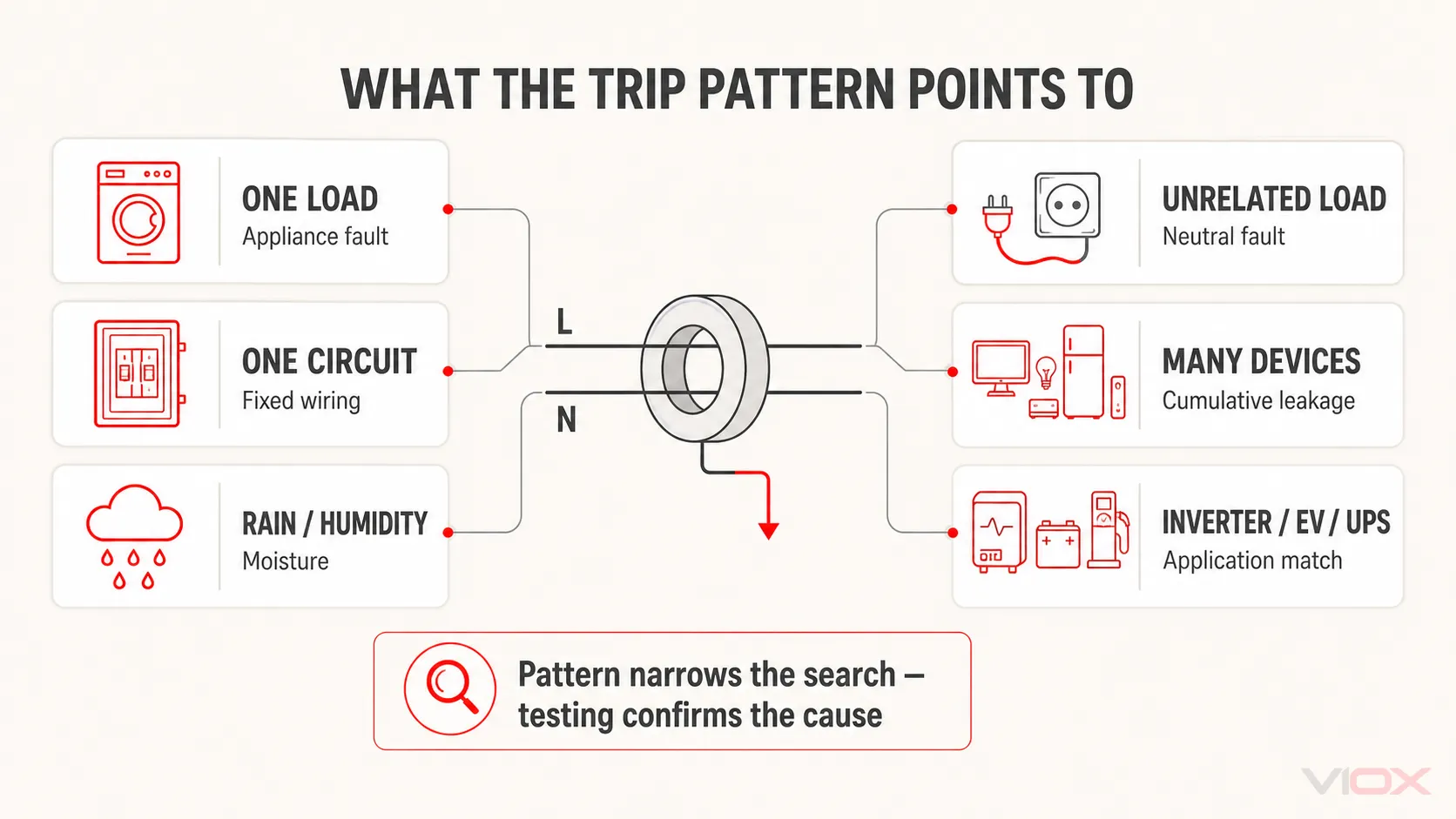
Các nhánh chẩn đoán phổ biến nhất
Một thiết bị gây ra tình trạng nhảy aptomat
Thiết bị di động và thiết bị cắm điện mang lại cách phân tách ban đầu rõ ràng nhất. Nếu RCCB vẫn duy trì trạng thái bật cho đến khi một thiết bị cụ thể được kết nối hoặc đạt đến một giai đoạn vận hành nhất định, hãy ngừng sử dụng thiết bị đó. Các bộ phận gia nhiệt, động cơ, bộ nguồn, dây dẫn mềm bị hỏng và thiết bị tiếp xúc với độ ẩm đều có thể tạo ra các đường dẫn dòng điện xuống đất.
Đừng kết luận rằng thiết bị an toàn chỉ vì sau đó nó vẫn chạy mà không gây nhảy aptomat. Các lỗi cách điện có thể phụ thuộc vào nhiệt độ, độ rung, độ ẩm hoặc thời điểm trong chu kỳ vận hành. Người có chuyên môn có thể chọn phương pháp kiểm tra dây dẫn bảo vệ, cách điện, rò rỉ hoặc kiểm tra thiết bị phù hợp cho thiết bị liên quan.
Một mạch điện cuối cùng gây ra sự cố nhảy aptomat
Khi một mạch điện phía sau liên tục trùng hợp với sự cố nhảy aptomat, nguyên nhân có thể là do thiết bị đang kết nối, thiết bị đấu nối cố định, cáp bị hỏng, phụ kiện bị ẩm hoặc đấu nối dây trung tính không chính xác. Việc rút phích cắm các tải có thể tiếp cận giúp tách biệt thiết bị cắm điện khỏi các lỗi lắp đặt cố định, nhưng nó không ngắt kết nối mọi tải đấu nối cố định hoặc dây trung tính của mạch điện.
Giữ cho mạch điện nghi ngờ ở trạng thái ngắt cho đến khi sự cố được khắc phục. Không thay thế MCB của mạch đó bằng loại có định mức khác: MCB và RCCB thực hiện các nhiệm vụ bảo vệ khác nhau.
Nhiều tải tạo ra dòng rò tích lũy
Thiết bị điện tử thường bao gồm các bộ lọc hoặc đường dẫn điện dung tạo ra một lượng dòng điện rò vận hành. Một thiết bị có thể không gây ra sự cố nhảy aptomat, trong khi tổng dòng rò của nhiều thiết bị và mạch điện làm giảm biên độ vận hành an toàn. Việc bật một tải khác sau đó có thể trùng hợp với thời điểm RCCB ngắt điện.
Tình trạng này phải được đo lường. Một ampe kìm đo dòng rò đặt xung quanh tất cả các dây dẫn mang điện của mạch liên quan sẽ đo thành phần dòng điện dư; việc chỉ kẹp một dây dẫn sẽ đo dòng tải thay vì dòng rò. Tổng dòng rò nên được phân tách theo mạch điện và chế độ vận hành trước khi quyết định xem có nên phân bổ lại tải, chia nhỏ mạch điện, thay đổi cấu trúc bảo vệ hay điều tra tình trạng rò điện bất thường hay không.
Không giải quyết tình trạng này bằng cách lắp đặt thiết bị có độ nhạy thấp hơn trừ khi các yêu cầu bảo vệ, hệ thống tiếp địa, quy định địa phương và nghiên cứu phối hợp cho phép điều đó.
Các lỗi chạm chập giữa dây trung tính với dây tiếp địa, đấu chéo dây trung tính và mượn dây trung tính
Dòng điện quay về qua dây trung tính không đi qua cùng một RCCB sẽ tạo ra sự mất cân bằng ngay cả khi bản thân tải vẫn hoạt động bình thường. Các triệu chứng tương tự xảy ra khi dây trung tính và dây tiếp địa ở phía hạ nguồn bị đấu nối với nhau, các thanh trung tính bị đấu chéo giữa các nhóm RCD, hoặc một mạch điện mượn dây trung tính từ một mạch khác.
Những lỗi này có thể tạo ra các kiểu sự cố gây nhầm lẫn. Tải trên một mạch điện có thể làm nhảy RCCB bảo vệ mạch khác, và việc ngắt MCB có thể không loại bỏ được ảnh hưởng vì dây trung tính vẫn được kết nối. Cách khắc phục là điều chỉnh lại việc đi dây dẫn và bố trí mạch điện, chứ không phải thay đổi độ nhạy của RCCB.
Các lỗi về dây trung tính đòi hỏi phải cách ly an toàn, xác định dây dẫn và kiểm tra bởi người có chuyên môn. Những khác biệt chi tiết giữa dây trung tính dùng chung, mượn, đấu chéo và nối đất thuộc về một quy trình chẩn đoán hệ thống dây trung tính chuyên biệt.
Độ ẩm và lỗi cách điện không liên tục
Mưa, ngưng tụ, vữa ướt, gioăng bị hỏng, đèn chiếu sáng ngoài trời bị ngập nước và nước bên trong thiết bị có thể tạo ra các đường rò điện không liên tục. Dấu hiệu rõ ràng nhất là mối liên hệ có thể lặp lại với thời tiết, việc vệ sinh, nhiệt độ hoặc thời gian vận hành.
Điều kiện khô ráo không chứng minh rằng khiếm khuyết cơ bản đã biến mất. Đường xâm nhập, tình trạng cách điện, độ phù hợp của vỏ bảo vệ và các đầu nối cáp vẫn cần được kiểm tra trước khi thiết bị bị ảnh hưởng được đưa trở lại hoạt động bình thường.
Không phù hợp về loại hoặc ứng dụng của RCCB
Các tải chứa bộ chỉnh lưu, biến tần, bộ nghịch lưu, thiết bị sạc xe điện, hệ thống UPS hoặc các thiết bị điện tử công suất khác có thể tạo ra các dạng sóng dòng điện dư đòi hỏi một loại RCD cụ thể hoặc một cơ cấu phát hiện DC riêng biệt. Tiêu chuẩn IEC 62423 bổ sung các yêu cầu cho RCD loại F và loại B bên cạnh nền tảng của loại A, nhưng điều đó không có nghĩa loại B là giải pháp vạn năng.
Việc lựa chọn cuối cùng phụ thuộc vào hướng dẫn của thiết bị được kết nối, dạng sóng dòng điện dư, các quy định lắp đặt quốc gia, sự phối hợp giữa thiết bị thượng nguồn và hạ nguồn, cũng như bất kỳ hệ thống giám sát DC tích hợp nào. Loại thiết bị không chính xác có thể ảnh hưởng đến khả năng phát hiện tin cậy cũng như gây ra tình trạng nhảy aptomat ngoài ý muốn, vì vậy quyết định phải dựa trên bằng chứng thay vì thay thế theo phương pháp thử và sai.
Các kiểm tra an toàn mà người không chuyên có thể thực hiện
Những quan sát sau đây có thể hỗ trợ thợ điện có chuyên môn mà không cần phải tiếp xúc với hệ thống dây dẫn trong tủ phân phối:
- Ghi lại chính xác thiết bị đã tác động và chụp ảnh các ký hiệu hiển thị trên đó.
- Lưu ý xem việc nhảy aptomat xảy ra tức thời, có độ trễ, liên quan đến thời tiết hay gắn liền với một giai đoạn vận hành cụ thể nào đó.
- Chỉ rút phích cắm các thiết bị dễ tiếp cận có thể ngắt kết nối an toàn theo hướng dẫn của thiết bị đó.
- Ngừng sử dụng bất kỳ thiết bị nào có liên quan mật thiết đến sự cố.
- Nếu quy định tại địa phương và thiết kế tủ điện cho phép vận hành các máy cắt điện hạ nguồn được dán nhãn rõ ràng, hãy ghi lại mạch điện nào liên quan đến sự cố nhảy aptomat. Không được tháo nắp che hoặc chạm vào hệ thống dây dẫn.
- Dừng lại nếu RCCB không duy trì trạng thái bật, hiện tượng nhảy át xảy ra liên tục, hoặc không xác định được đường cách ly an toàn.
Không bao giờ được đấu tắt RCCB, giữ tay gạt ở vị trí đóng, ngắt kết nối dây dẫn bảo vệ hoặc liên tục đặt lại thiết bị để “xem lỗi có tự hết không”. Việc khôi phục nguồn điện không đồng nghĩa với việc xác nhận hệ thống lắp đặt đã an toàn.
Cách một thợ điện có chuyên môn xác định nguyên nhân
Việc chẩn đoán chuyên nghiệp nên bắt đầu từ những bằng chứng ít gây gián đoạn nhất đến việc xác minh cụ thể từng mạch điện.
1. Xác minh bố trí bảo vệ
Xác nhận thiết bị được vận hành là RCCB, xác định dòng điện định mức In của nó TRONG, dòng điện rò định mức IΔn, bố trí cực, loại dòng điện dư, phân loại thời gian trễ nếu có, và thiết bị bảo vệ quá dòng đi kèm. Kiểm tra để đảm bảo các dây dẫn pha và trung tính đi qua đúng thiết bị và các kết nối nguồn/tải tuân thủ hướng dẫn của nhà sản xuất.
2. Đo dòng điện dư trong các điều kiện vận hành tiêu biểu
Đo tổng dòng điện dư và sau đó tách riêng theo mạch đầu ra và tải. Ghi lại các giá trị ở trạng thái ổn định và các quá trình chuyển đổi liên quan thay vì chỉ dựa vào một kết quả đo khi không tải. Việc này giúp phân biệt mạch bị lỗi chính với các dòng điện dư tích tụ từ nhiều mạch khác nhau.
3. Kiểm tra cách điện với thiết bị được quản lý đúng cách
Thực hiện kiểm tra điện trở cách điện bằng quy trình phù hợp với hệ thống lắp đặt. Các thiết bị điện tử nhạy cảm, thiết bị chống sét lan truyền (SPD), bộ điều khiển và các tải được kết nối có thể cần phải được ngắt điện hoặc xử lý theo quy trình kiểm tra áp dụng. Kết quả thu được phải xác định được dây dẫn hoặc mạch bị ảnh hưởng, thay vì chỉ đưa ra một con số chung cho toàn bộ bảng điện.
4. Truy vết mọi đường dẫn dòng điện trung tính trở về
Kiểm tra sự phân tách thanh trung tính, các kết nối N–E ở phía sau, các đường trung tính dùng chung, các đường trung tính bị đấu chéo và bất kỳ cách bố trí nhiều dây hoặc trung tính dùng chung nào. Xác minh rằng mọi dây dẫn mang điện thuộc mạch được bảo vệ đều đi qua cùng một đường dẫn cảm biến dòng điện dư.
5. Kiểm tra hoạt động của RCCB bằng thiết bị đo phù hợp
Sử dụng thiết bị kiểm tra RCD phù hợp và quy trình kiểm tra lắp đặt áp dụng để xác minh hoạt động của thiết bị. Nút Test tích hợp sẵn chỉ kiểm tra mạch thử nghiệm nội bộ và cơ cấu bên trong; nó không đo dòng rò của hệ thống lắp đặt, không kiểm chứng cọc tiếp địa hoặc xác định lỗi trung tính. Hướng dẫn bảo trì và chức năng của RCCB giải thích nhiệm vụ riêng biệt đó.
6. Chỉ xem xét loại dạng sóng và phối hợp sau khi có bằng chứng về sự cố
Nếu hệ thống điện có các tải điện tử công suất, hãy so sánh hướng dẫn của thiết bị với loại RCCB đã lắp đặt và bất kỳ cơ cấu phát hiện DC nào. Xem xét tính phân biệt hoặc tính chọn lọc khi có nhiều thiết bị dòng điện dư mắc nối tiếp. Việc thay đổi loại hoặc cấu trúc phải bảo toàn mọi chức năng bảo vệ bắt buộc và tuân thủ các quy định quốc gia hiện hành.
7. Chỉ thay thế RCCB khi có bằng chứng xác thực
RCCB có thể bị hỏng, đấu nối sai, lỗi cơ khí hoặc nằm ngoài các đặc tính vận hành đã xác nhận. Việc thay thế trở nên hợp lý khi các điều kiện đấu nối và lắp đặt chính xác đã được thiết lập và thử nghiệm bên ngoài cho thấy thiết bị không hoạt động như yêu cầu. Hãy khớp với thông số kỹ thuật hoàn chỉnh; không được thay thế chỉ dựa trên định mức dòng điện.
Tại sao các “cách sửa chữa” thông thường lại thất bại
| Cách sửa chữa đã thử | Tại sao nó không đáng tin cậy hoặc không an toàn | Quy tắc quyết định đúng đắn |
|---|---|---|
| Thay thế RCCB 40 A bằng RCCB 63 A | TRONG liên quan đến dòng điện mà RCCB mang; nó không tự động thay đổi IΔn hoặc loại bỏ dòng điện dư |
Chẩn đoán nguyên nhân gây ra dòng điện dư, sau đó xác minh độc lập cả hai định mức |
Lắp đặt loại cao hơn IΔn |
Nó có thể loại bỏ một cấp độ bảo vệ theo yêu cầu của thiết kế lắp đặt hoặc các quy định tại địa phương | Chỉ thay đổi độ nhạy thông qua đánh giá phối hợp và bảo vệ đã được lập thành văn bản |
| Thay thế loại AC bằng loại A, F, hoặc B dựa trên phỏng đoán | Khả năng dạng sóng khác biệt không thể sửa chữa lớp cách điện bị hỏng, độ ẩm hoặc lỗi dây trung tính | Chọn loại phù hợp với thiết bị được kết nối, các điều kiện đo lường và các yêu cầu áp dụng |
| Thay thế RCCB bằng một MCB | Một MCB không cung cấp chức năng bảo vệ dòng điện dư tương tự | Duy trì bảo vệ dòng điện dư và quá dòng phù hợp với mạch điện |
| Chuyển đổi mọi mạch điện sang RCBO mà không cần chẩn đoán | Việc phân tách mạch điện có thể cải thiện khả năng định vị, nhưng không khắc phục được hệ thống dây điện hoặc thiết bị bị lỗi | Khắc phục lỗi trước; sau đó đánh giá xem các RCBO cấp mạch có cải thiện tính liên tục và tính chọn lọc hay không |
| Tiếp tục đặt lại cho đến khi thiết bị duy trì trạng thái đóng | Một đường dẫn chập chờn có thể tạm thời biến mất trong khi mối nguy hiểm vẫn còn đó | Lưu lại kiểu tác động, cách ly mạch hoặc tải nghi ngờ và tiến hành kiểm tra |
| Ngắt kết nối dây dẫn bảo vệ | Việc này loại bỏ một đường dẫn bảo vệ và có thể khiến các bộ phận kim loại tiếp cận được trở nên nguy hiểm | Không bao giờ được vô hiệu hóa dây dẫn bảo vệ; hãy xác định và sửa chữa nguồn rò rỉ |
Đối với quan niệm sai lầm về định mức, hãy xem tại sao việc thay thế RCD 40 A bằng 63 A thường không khắc phục được tình trạng nhảy aptomat ngoài ý muốn.
Giảm thiểu tình trạng nhảy aptomat ngoài ý muốn trong tương lai
Việc phòng ngừa bắt nguồn từ chẩn đoán thay vì từ một thay đổi sản phẩm phổ quát:
- Phân chia các mạch điện để một RCCB không phải chịu dòng rò nền quá mức hoặc ngắt kết nối một phần không cần thiết của hệ thống lắp đặt.
- Giữ các dây trung tính được phân tách chính xác và kết nối với cùng một thiết bị bảo vệ như các dây pha tương ứng.
- Sử dụng thiết bị và vỏ tủ phù hợp với độ ẩm, điều kiện ngoài trời và môi trường lắp đặt.
- Chọn loại dòng điện dư và bất kỳ cấu hình trễ thời gian nào dựa trên yêu cầu của thiết bị được kết nối và nghiên cứu phối hợp bảo vệ.
- Ghi lại các phép đo dòng rò cơ sở ở những nơi cần duy trì tính liên tục của dịch vụ, sau đó điều tra các thay đổi đáng kể.
- Kiểm tra và bảo trì RCCB đã lắp đặt theo hướng dẫn của nhà sản xuất và các yêu cầu tại địa phương hiện hành.
Sau khi các yêu cầu về lỗi và ứng dụng đã được ghi lại, thì Dòng sản phẩm RCCB VIOX có thể được xem xét theo dòng điện định mức, độ nhạy dòng điện dư, cấu hình cực và loại dòng điện dư. Việc lựa chọn sản phẩm nên tuân theo kết quả chẩn đoán, không được thay thế chẩn đoán.
Những Câu Hỏi Thường
Tại sao RCCB nhảy nhưng MCB thì không?
Các thiết bị này phát hiện các điều kiện khác nhau. RCCB phản ứng với sự mất cân bằng giữa các dây dẫn mang điện được giám sát, trong khi MCB phản ứng với quá dòng. Đường rò điện có thể làm RCCB tác động mà không tạo ra đủ dòng quá tải để làm nhảy MCB. Xem toàn bộ Phạm vi bảo vệ của RCCB so với MCB để so sánh thiết bị.
Tại sao RCCB lại nhảy ngay lập tức sau khi bật?
Việc ngắt tức thời có thể cho thấy đường rò điện mạnh, đi dây trung tính không đúng, lỗi chạm chập giữa dây trung tính và dây PE, thiết bị bị ẩm hoặc hư hỏng, lỗi kết nối, hoặc tương tác với tải được kết nối. Chỉ riêng thời gian ngắt không thể xác định nguyên nhân cụ thể. Hãy cách ly tải hoặc mạch điện liên quan một cách an toàn và xác minh nguyên nhân bằng các phép đo.
Một thiết bị bị lỗi có thể làm nhảy toàn bộ RCCB không?
Có. Nếu một RCCB bảo vệ nhiều mạch điện, dòng điện dư từ một thiết bị có thể làm RCCB ngắt và ngắt kết nối mọi mạch điện phía sau nó. Hãy đưa thiết bị liên quan ra khỏi hệ thống và kiểm tra trước khi kết nối lại.
Tiếp xúc giữa dây trung tính và dây PE có thể làm nhảy RCCB không?
Có. Kết nối giữa dây trung tính và dây PE ở phía sau thiết bị có thể cho phép một phần dòng điện trở về bỏ qua đường dẫn trung tính được giám sát. Việc ngắt có thể chỉ xuất hiện khi có tải hoạt động và thậm chí có vẻ như liên quan đến một mạch điện khác. Cần phải dò tìm và kiểm tra lại dây dẫn.
Việc thay thế RCCB 40 A bằng model 63 A có ngăn được tình trạng nhảy aptomat không?
Thông thường là không nếu nguyên nhân là do dòng điện dư. Thông số 40 A hoặc 63 A là dòng điện định mức TRONG; thông số cài đặt dòng điện dư là IΔn, thường được hiển thị riêng biệt bằng ampe hoặc miliampe. Thiết bị thay thế phải phù hợp với toàn bộ thông số kỹ thuật về ứng dụng và bảo vệ.
Bản thân RCCB có thể bị lỗi không?
Có, nhưng đó không nên là giả định đầu tiên. Trước tiên hãy kiểm tra hệ thống lắp đặt, các tải được kết nối, đường đi của dây trung tính, thông số kỹ thuật của thiết bị và điều kiện vận hành. Nếu thiết bị kiểm tra RCD bên ngoài cho thấy thiết bị được kết nối đúng cách không hoạt động như yêu cầu, thì việc thay thế bằng một RCCB có thông số kỹ thuật chính xác là hợp lý.