

Trên trang này
Trả lời trực tiếp
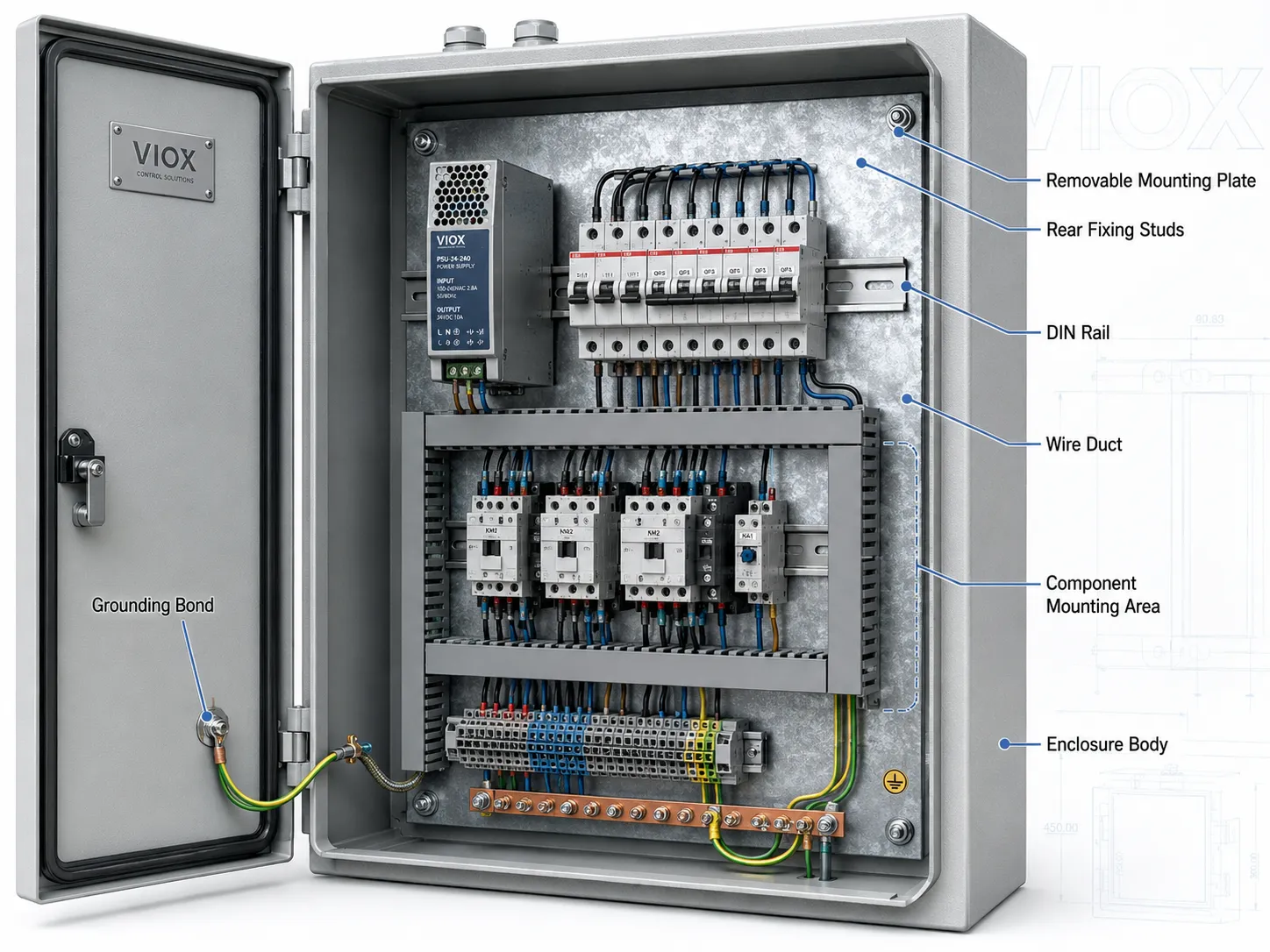
Một tấm đế lắp đặt tủ điện là tấm bảng bên trong có thể tháo rời hoặc cố định được sử dụng để hỗ trợ các linh kiện điện bên trong tủ điện. Nó còn được gọi là tấm lưng, tấm phụ, bảng lắp đặt, hoặc tấm đế lắp đặt phía sau tùy thuộc vào thị trường và kiểu dáng vỏ tủ điện.
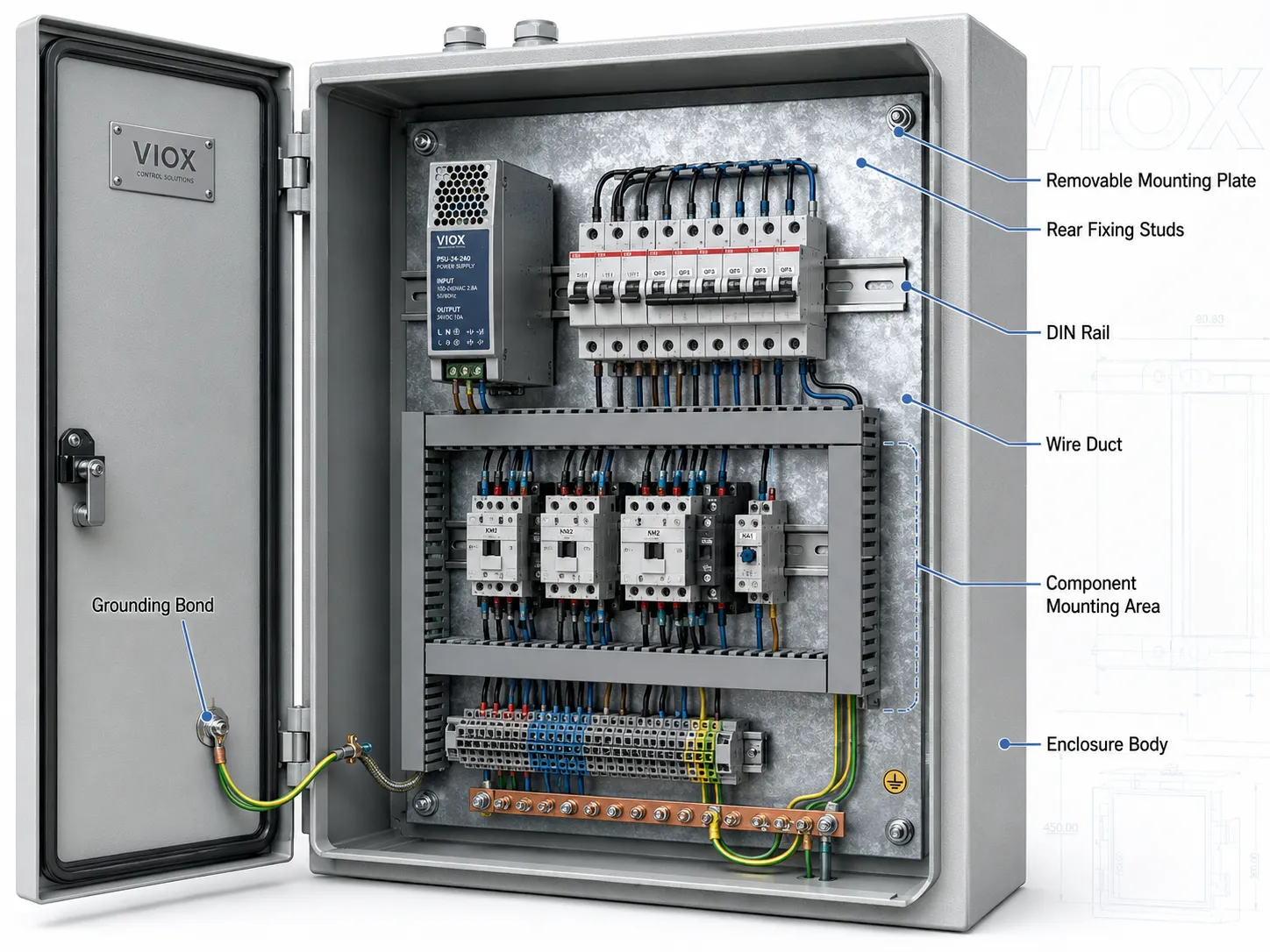
Công việc của nó rất đơn giản nhưng quan trọng: nó cung cấp một nền tảng cơ khí ổn định cho các bộ ngắt mạch (aptomat), khởi động từ, cầu đấu, bộ nguồn, bộ điều khiển logic lập trình được (PLC), rơ-le, thanh cái và các phụ kiện đi dây mà không cần phải khoan trực tiếp từng thiết bị lên thành vỏ tủ.
Đối với hầu hết các tủ điều khiển và hộp phân phối, hãy chọn tấm đế lắp đặt bằng cách kiểm tra sáu mục theo thứ tự sau:
- Kích thước vỏ tủ và sơ đồ lỗ lắp đặt – tấm đế phải khớp với thân vỏ tủ và các điểm cố định.
- Vật liệu – thép, thép mạ kẽm, thép không gỉ, nhôm hoặc vật liệu phi kim loại tùy thuộc vào tải trọng, khả năng chống ăn mòn, tiếp địa và nhu cầu gia công.
- Tải trọng cơ học – tấm đế phải chịu được trọng lượng của các thiết bị, thanh ray DIN, máng đi dây, máy biến áp và hệ thống dây dẫn mà không bị cong vênh.
- Đấu nối đẳng thế điện – các tấm kim loại có thể cần đấu nối bảo vệ tin cậy; không nên mặc định rằng các bề mặt được sơn hoặc anod hóa sẽ đảm bảo tính liên tục về điện.
- Môi trường – độ ẩm, hơi muối, hóa chất, bụi bẩn, tia UV và nhiệt độ ảnh hưởng đến việc lựa chọn vật liệu.
- Quy trình lắp ráp – các tấm đế có thể tháo rời sẽ tối ưu hơn cho việc chế tạo tủ điện vì các linh kiện có thể được lắp ráp bên ngoài vỏ tủ.
Điểm mấu chốt: tấm đế thiết bị không chỉ là một tấm kim loại phẳng. Nó ảnh hưởng đến bố trí tủ điện, khả năng bảo trì, phương pháp tiếp địa, sự phân bổ nhiệt, khả năng chống rung và độ tin cậy lâu dài.
Những điểm chính
- Tấm đế thiết bị cung cấp nền tảng cơ khí bên trong cho các linh kiện đặt trong vỏ tủ điện.
- Cấp bảo vệ của vỏ tủ, chẳng hạn như IP hoặc NEMA, thuộc về toàn bộ cụm vỏ tủ chứ không chỉ riêng tấm đế.
- Thép mạ kẽm hoặc thép sơn thường được sử dụng cho các tủ điều khiển thông dụng; thép không gỉ phù hợp với môi trường ăn mòn; nhôm giúp giảm trọng lượng và cải thiện khả năng gia công.
- Các tấm đế có thể tháo rời được ưu tiên trong việc lắp ráp tủ điện OEM vì chúng giúp đẩy nhanh quá trình khoan, đi dây, kiểm tra và sửa chữa.
- Không dựa vào lớp kim loại sơn để làm đường dẫn tiếp địa bảo vệ. Hãy sử dụng các điểm tiếp địa đã được kiểm định, dây tiếp địa, vấu nối đất hoặc các phụ kiện được nhà sản xuất phê duyệt.
- Việc lựa chọn cần tính đến tải trọng, độ dày, nguy cơ ăn mòn, yêu cầu về tương thích điện từ (EMC), các linh kiện phát nhiệt, đi dây cáp, khoảng cách thanh ray DIN và khả năng mở rộng trong tương lai.
Tấm đế lắp đặt thiết bị trong tủ điện là gì?
Tấm đế lắp đặt thiết bị là tấm kim loại bên trong được cố định vào vách sau hoặc khung của tủ điện. Nó tạo ra một bề mặt sạch sẽ, dễ bảo trì để lắp đặt các thiết bị điện mà vẫn giữ nguyên vẹn vỏ tủ.
Trong một tủ điều khiển công nghiệp điển hình, tấm đế có thể chứa:
- aptomat tép (MCB), aptomat khối (MCCB) hoặc đế cầu chì
- contactor và rơ-le nhiệt
- bộ khởi động động cơ, bộ khởi động mềm hoặc biến tần (VFD)
- cầu đấu dây và đầu nối tiếp địa
- bộ nguồn và máy biến áp
- rơ-le, bộ định thời, PLC và các mô-đun đầu vào/đầu ra
- thanh ray DIN và máng cáp
- 电涌保护装置(SPDs)
- thanh cái, thanh trung tính và thanh tiếp địa
Nếu bạn cần thông tin tổng quan về vỏ tủ điện trước, VIOX’s hướng dẫn về vỏ điện giải thích các chức năng của vỏ tủ điện, trong khi hướng dẫn lựa chọn vật liệu vỏ bọc điện đi sâu hơn vào các vật liệu cấu tạo nên thân vỏ tủ điện.
Tấm lắp thiết bị (Mounting Plate) so với Thân vỏ tủ (Enclosure Body) so với Thanh ray DIN (DIN Rail) so với Tấm bịt cáp (Gland Plate)
Các bộ phận này thường được thảo luận cùng nhau, nhưng chúng đảm nhận các công việc khác nhau.
| Bộ phận | Vai trò chính | Sai lầm phổ biến |
|---|---|---|
| Thân vỏ tủ điện | Bảo vệ thiết bị khỏi sự tiếp xúc, bụi bẩn, nước, va đập và các tác động từ môi trường | Giả định rằng tấm lắp thiết bị bên trong quyết định cấp bảo vệ IP hoặc NEMA |
| Tấm lắp thiết bị / tấm nền phía sau | Hỗ trợ các linh kiện bên trong và bố trí đi dây | Coi đây là một tấm nền thông thường mà không có yêu cầu về tải trọng hoặc liên kết |
| DIN | Cung cấp khả năng lắp đặt dạng kẹp tiêu chuẩn cho các thiết bị dạng mô-đun | Quá tải thanh ray hoặc sử dụng nó làm điểm tựa cơ khí duy nhất cho các bộ phận nặng |
| Tấm đệm cáp (Cable gland plate) | Cung cấp giao diện đi dây và làm kín | Khoan lỗ tùy tiện trên vỏ tủ làm suy giảm khả năng bảo vệ môi trường |
| Máng cáp / ống luồn dây điện | Sắp xếp các dây dẫn bên trong | Không để lại vòng lặp dịch vụ, đường dẫn luồng khí hoặc không gian tiếp cận |
Đối với các thiết bị dạng mô-đun, tấm lắp đặt thường mang các đoạn thanh ray DIN. Nếu việc lựa chọn thanh ray DIN là một phần trong thiết kế của bạn, hướng dẫn VIOX về Thanh ray DIN so với lắp đặt truyền thống và hướng dẫn về DIN rail là gì cung cấp các chi tiết chuyên sâu hơn.
Đối với thiết kế đầu vào cáp, đừng nhầm lẫn giữa tấm lắp đặt và tấm đệm cáp (gland plate). Hướng dẫn đầy đủ về tấm đệm cáp giải thích chức năng riêng biệt của tấm bịt đầu cáp trong việc làm kín và lắp đặt tủ điện.
Các loại tấm lắp đặt thiết bị chính trong tủ điện
1. Tấm lắp đặt cố định
Tấm lắp đặt cố định được gắn vĩnh viễn vào tủ điện hoặc khó tháo rời sau khi lắp đặt. Nó có thể được hàn, tán đinh hoặc tích hợp về mặt kết cấu vào tủ điện.
Phù hợp nhất:
- hộp đấu nối nhỏ
- hộp phân phối đơn giản
- vỏ thiết bị giá rẻ
- các thiết kế có ít sự thay đổi về linh kiện
Thuận lợi:
- cấu trúc đơn giản
- ít bộ phận rời hơn
- độ cứng tốt khi được tích hợp đúng cách
- độ phức tạp trong sản xuất thấp hơn
Hạn chế:
- khó khoan, tạo ren, đi dây và sửa đổi hơn
- ít thuận tiện hơn cho việc lắp ráp tủ điện hàng loạt
- công tác bảo trì tại hiện trường có thể yêu cầu thao tác bên trong thân vỏ tủ
- rủi ro làm hỏng vỏ tủ cao hơn nếu cần làm lại (rework)
Tấm lắp đặt cố định phù hợp khi bố trí nội bộ đơn giản và ít có khả năng thay đổi. Chúng ít hấp dẫn hơn đối với các tủ điều khiển OEM, nơi mà công việc đi dây, kiểm tra chất lượng và các biến thể trong tương lai là yếu tố quan trọng.
Tấm lắp đặt có thể tháo rời
Tấm lắp đặt có thể tháo rời được gắn chặt vào vỏ tủ bằng vít, bu lông, giá đỡ hoặc thanh ray hỗ trợ. Nó có thể được tháo ra, lắp đặt linh kiện, đi dây, kiểm tra và sau đó lắp ngược lại vào vỏ tủ.
Phù hợp nhất:
- tủ điều khiển công nghiệp
- Tủ máy OEM
- Tủ điều khiển động cơ
- Tủ PLC
- Hộp phân phối với nhiều thiết bị bên trong
- Tủ điện tùy chỉnh được sản xuất theo lô
Thuận lợi:
- lắp ráp tại xưởng nhanh hơn
- khoan và gia công dễ dàng hơn
- tiếp cận đấu nối dây điện thuận tiện hơn
- kiểm tra đơn giản hơn trước khi lắp đặt vỏ tủ hoàn thiện
- thay thế hoặc sửa chữa dễ dàng hơn
Hạn chế:
- phải khớp với các điểm cố định của vỏ tủ
- yêu cầu độ sâu vỏ tủ đủ cho các linh kiện và hệ thống dây điện
- phải kiểm tra tính liên kết đẳng thế sau khi lắp đặt
- Các tấm đế lớn có thể bị cong vênh nếu không được đỡ đúng cách.
Đối với các đơn vị lắp ráp tủ điện, tấm đế lắp thiết bị có thể tháo rời thường là lựa chọn tối ưu hơn. Nó giúp chia quá trình lắp đặt tủ điện thành các giai đoạn: lắp tấm đế trước, sau đó đi dây, và cuối cùng là lắp đặt vỏ tủ.
Tấm đế lắp thiết bị dạng đục lỗ
Tấm đế lắp thiết bị dạng đục lỗ bao gồm một lưới các lỗ hoặc rãnh. Nó cho phép bố trí linh kiện linh hoạt mà không cần phải khoan từng lỗ từ đầu.
Phù hợp nhất:
- Tủ điện nguyên mẫu
- Bàn thử nghiệm
- Bố trí kết hợp rơ-le và cầu đấu
- Tủ điện tự động hóa thường xuyên thay đổi
- tủ đào tạo hoặc tủ phòng thí nghiệm
Thuận lợi:
- bố trí linh hoạt
- giảm thời gian khoan
- dễ dàng thay đổi vị trí
- hữu ích trong quá trình phát triển
Hạn chế:
- độ cứng thấp hơn so với tấm đặc có cùng độ dày
- tính thẩm mỹ kém hơn trong các tủ điện sản xuất
- các lỗ có thể tích tụ bụi hoặc phoi kim loại
- Đặc tính liên kết phụ thuộc vào lớp phủ, các chi tiết kẹp chặt và các điểm tiếp xúc.
Tấm đục lỗ rất phù hợp cho công tác phát triển, nhưng không phải lúc nào cũng là lựa chọn sản xuất tối ưu khi bố cục đã cố định và yêu cầu tính lặp lại cao.
4. Tấm lắp đặt phẳng dạng đặc
Tấm lắp đặt phẳng dạng đặc là loại phổ biến nhất trong các tủ điện công nghiệp. Nó cung cấp một bề mặt làm việc trống để khoan, taro, hàn bu lông, lắp đặt thanh ray DIN và gắn các thiết bị phần cứng tùy chỉnh.
Phù hợp nhất:
- tủ điều khiển sản xuất hoàn thiện
- tủ phân phối điện
- tủ tự động hóa
- tủ điện có các linh kiện nặng hơn
- các thiết kế yêu cầu đi dây gọn gàng
Thuận lợi:
- độ cứng cao
- bố trí sạch sẽ
- hỗ trợ tốt cho thanh ray và máng cáp
- dễ dàng kiểm soát các điểm tiếp địa
- phù hợp cho các mẫu sản xuất có tính lặp lại
Hạn chế:
- yêu cầu khoan, taro hoặc sử dụng phụ kiện tự tán (self-clinching)
- thay đổi thiết kế tốn nhiều thời gian tại xưởng hơn
- Lập kế hoạch kém có thể dẫn đến việc phải làm lại nhiều lần
Tấm lắp đặt dạng đặc là lựa chọn mặc định khi đã biết rõ bố cục và tủ điện cần đảm bảo tính chuyên nghiệp, dễ bảo trì và chắc chắn.
5. Tấm lắp đặt dạng xoay hoặc có bản lề
Tấm lắp đặt dạng xoay được gắn trên bản lề hoặc tay đỡ, cho phép phần tủ điện xoay ra ngoài để tiếp cận thiết bị.
Phù hợp nhất:
- tủ điều khiển có mật độ thiết bị cao
- thiết bị đòi hỏi bảo trì thường xuyên
- các tủ điện có hạn chế về không gian tiếp cận ở mặt trước và mặt sau
- các hệ thống yêu cầu phải tiếp cận được dây dẫn hoặc các bộ phận điều chỉnh mà không cần tháo rời toàn bộ tấm lắp đặt
Thuận lợi:
- khả năng tiếp cận dịch vụ tốt hơn
- có thể tạo thêm lớp lắp đặt thứ hai
- hữu ích trong các tủ điện nhỏ gọn
Hạn chế:
- độ phức tạp về cơ khí cao hơn
- bán kính uốn cong cáp và giảm lực căng trở nên rất quan trọng
- các cấu trúc bản lề phải chịu được tải trọng động một cách an toàn
- tính liên tục của việc nối đất qua bản lề phải được kiểm tra
Tấm lắp đặt dạng xoay giải quyết được các vấn đề về tiếp cận, nhưng chúng cũng tạo ra những rủi ro mới về cơ khí và đi dây. Chúng nên được sử dụng một cách có chủ đích, không phải là giải pháp để bù đắp cho một bảng điện quá tải.
6. Bảng lắp đặt cách điện hoặc phi kim loại
Các bảng lắp đặt phi kim loại có thể được làm từ nhựa gia cường sợi thủy tinh, vật liệu phenolic hoặc các vật liệu cách điện kỹ thuật khác.
Phù hợp nhất:
- mạch điều khiển hạ thế
- môi trường nhạy cảm với sự ăn mòn
- các ứng dụng yêu cầu cách điện
- vỏ thiết bị đo đạc trọng lượng nhẹ
Thuận lợi:
- cách điện
- khả năng chống ăn mòn
- trọng lượng nhẹ hơn
- không có vấn đề về liên kết do cạo sơn trên chính tấm bảng
Hạn chế:
- độ cứng cơ học thấp hơn thép trong nhiều trường hợp
- có thể có khả năng chịu nhiệt thấp hơn tùy thuộc vào vật liệu
- yêu cầu nối đất bảo vệ riêng cho các thiết bị kim loại
- có thể không phù hợp với các máy biến áp nặng hoặc thiết bị điện công suất lớn
Các tấm phi kim loại rất hữu ích, nhưng chúng không loại bỏ nhu cầu nối đất bảo vệ đúng cách cho các bộ phận dẫn điện hở và thiết bị được nối đất.
So sánh vật liệu: Thép, Thép không gỉ, Nhôm và Tấm phi kim loại
Vật liệu tấm lắp đặt phải phù hợp với cả thiết kế điện và môi trường làm việc.
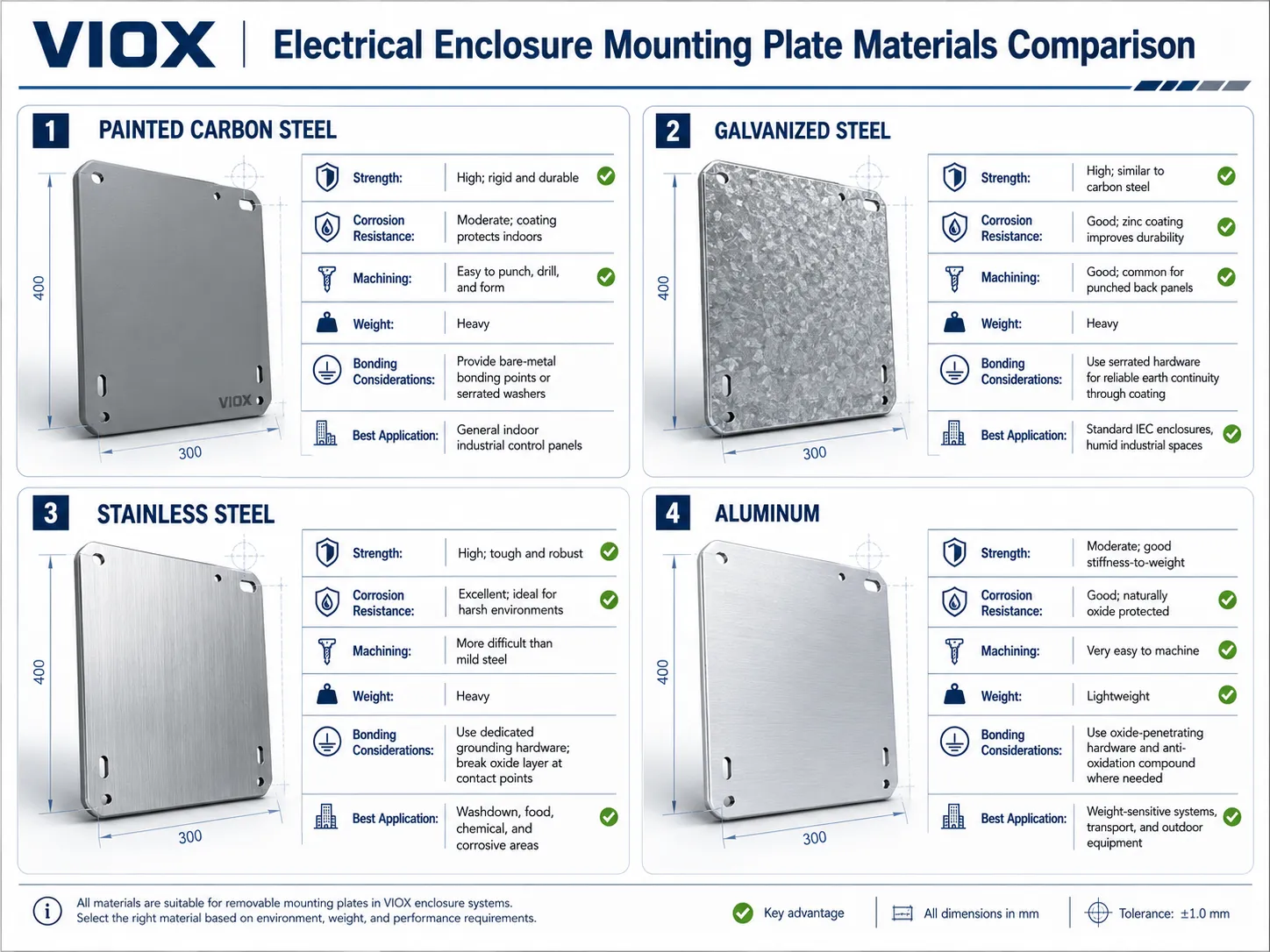
| Vật liệu | Điểm mạnh | Hạn chế | Phù hợp nhất |
|---|---|---|---|
| Thép carbon sơn | Độ bền cao, kinh tế, phổ biến rộng rãi, độ cứng tốt | Lớp sơn có thể ngăn cản tính liên tục về điện; bị ăn mòn nếu lớp phủ bị hư hại | Tủ điều khiển trong nhà thông dụng |
| Thép mạ kẽm | Khả năng chống ăn mòn tốt cho nhiều môi trường trong nhà/công nghiệp; dễ gia công | Lớp mạ kẽm có thể bị hư hại do khoan hoặc mài; các cạnh cắt cần được xử lý cẩn thận | Tủ phân phối, tủ điện OEM, tủ điện công nghiệp thông dụng |
| Thép không gỉ | Khả năng chống ăn mòn mạnh; phù hợp cho môi trường tẩy rửa, hóa chất, ven biển hoặc thực phẩm | Chi phí cao hơn; khó gia công hơn; phải xem xét tính tương thích điện hóa | Môi trường khắc nghiệt và vỏ tủ bằng thép không gỉ |
| Nhôm | Trọng lượng nhẹ, dễ gia công, độ dẫn nhiệt tốt | Mềm hơn thép; nguy cơ ăn mòn điện hóa khi tiếp xúc với các kim loại khác nhau; lớp oxit bề mặt ảnh hưởng đến khả năng liên kết | Tủ điện trọng lượng nhẹ, thiết bị di động, bố trí tản nhiệt |
| Sợi thủy tinh / vật liệu phi kim loại | Chống ăn mòn, cách điện, trọng lượng nhẹ | Độ cứng thấp hơn đối với các bộ phận nặng; hiệu suất chịu nhiệt và chống cháy phải được kiểm chứng | Hộp thiết bị, môi trường ăn mòn, bố trí tập trung vào cách điện |
Đối với các ứng dụng ngoài trời hoặc môi trường ăn mòn, không nên chọn tấm đế một cách riêng lẻ. Thân vỏ tủ điện, hệ thống gioăng, ốc siết cáp, tấm bịt cáp, các chi tiết kẹp và tấm lắp thiết bị nên được xem xét như một hệ thống môi trường thống nhất. NEMA mô tả các vỏ tủ điện là sản phẩm được xếp hạng cho các điều kiện nguy hiểm, không nguy hiểm và điều kiện môi trường, trong khi tiêu chuẩn UL 50E quy định các yêu cầu về cấu tạo và hiệu suất môi trường cho các loại vỏ tủ. Các xếp hạng đó áp dụng cho toàn bộ vỏ tủ hoặc cụm lắp ráp, không áp dụng cho riêng tấm đế rời.
Độ dày của tấm lắp thiết bị trong tủ điện nên là bao nhiêu?
Không có độ dày phổ quát nào phù hợp cho mọi loại tủ điện. Độ dày tấm đế phù hợp phụ thuộc vào:
- trọng lượng của linh kiện
- số lượng thanh ray DIN và máng đi dây
- Khối lượng của máy biến áp hoặc bộ nguồn
- Mức độ rung động
- Kích thước vỏ tủ
- Khoảng cách giữa các chốt cố định
- Tấm lắp đặt là loại tháo rời được hay cố định
- Các linh kiện được lắp trực tiếp hay lắp qua thanh ray
Theo tiêu chuẩn thực tế trong ngành, các hộp điều khiển nhỏ có thể sử dụng tấm lắp đặt mỏng hơn, trong khi các tủ điện công nghiệp lớn và tủ điện công suất nặng sử dụng tấm dày hơn hoặc tấm được gia cường. Độ dày chính xác phải tuân theo bảng dữ liệu của nhà sản xuất vỏ tủ hoặc thông số kỹ thuật của dự án.
Không được xác định độ dày chỉ dựa trên thói quen. Một tấm bảng trông có vẻ ổn khi còn trống có thể bị cong vênh sau khi lắp đặt các linh kiện, đi dây và chịu lực căng của cáp. Sự cong vênh này có thể làm lỏng các đầu nối, biến dạng thanh ray DIN, gây áp lực lên vỏ thiết bị và gây khó khăn cho việc bảo trì.
Tiếp địa và Đẳng thế: Chi tiết lựa chọn mà mọi người thường bỏ qua
Đây là ranh giới an toàn quan trọng nhất trong việc lựa chọn tấm bảng lắp đặt.
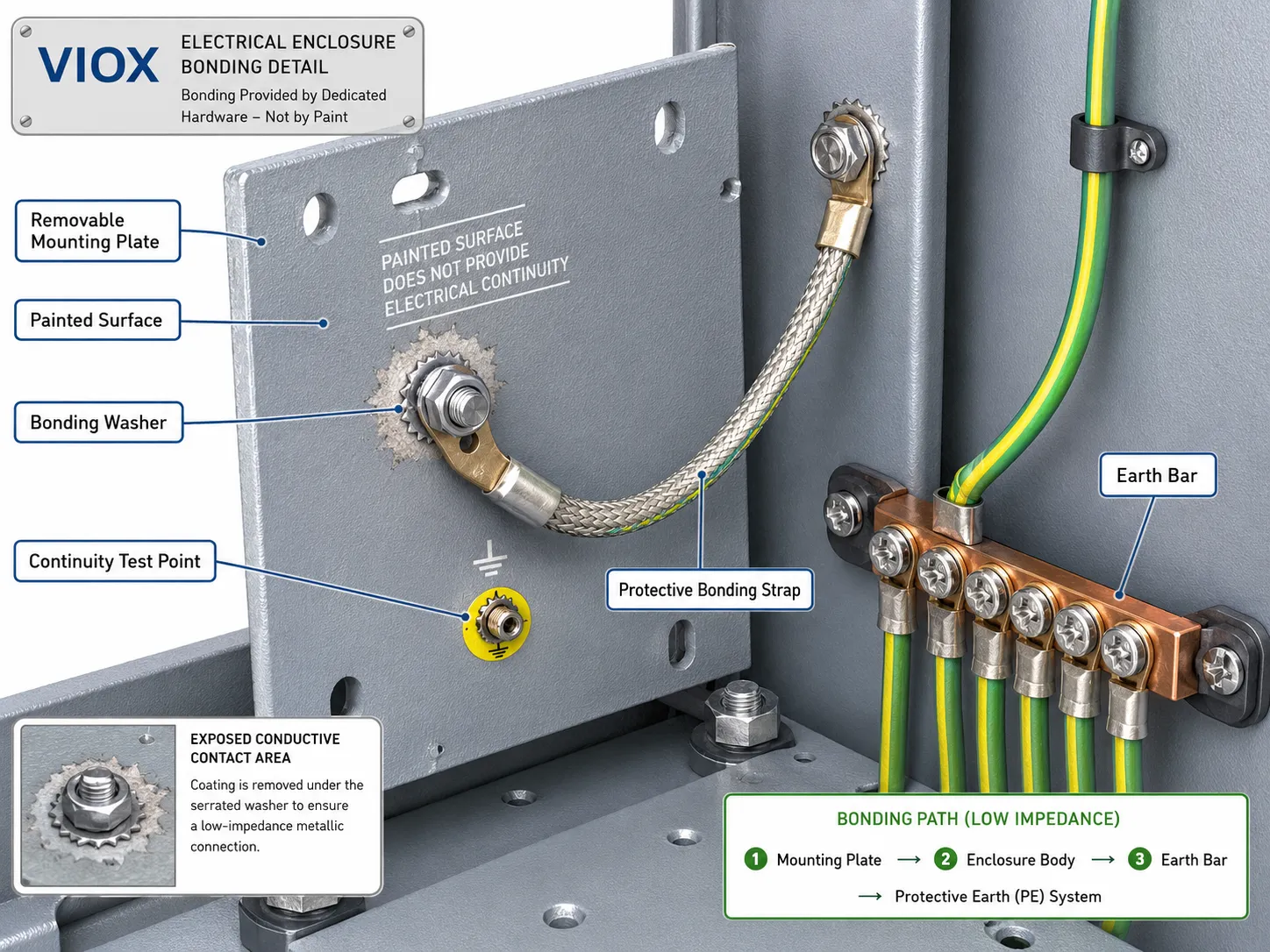
Tấm bảng lắp đặt bằng kim loại có thể là một phần trong hệ thống đẳng thế bảo vệ của tủ điện, nhưng chỉ khi thiết kế cung cấp khả năng dẫn điện liên tục một cách đáng tin cậy. Sơn, sơn tĩnh điện, lớp mạ anod, sự ăn mòn, keo làm kín ren và vòng đệm cách điện đều có thể làm gián đoạn tính liên tục này.
Các thực hành tốt bao gồm:
- sử dụng các điểm nối đẳng thế bảo vệ (PE) chuyên dụng
- lắp đặt dây tiếp địa (bonding straps) giữa cửa tủ, thân vỏ tủ và tấm bảng có thể tháo rời khi cần thiết
- chỉ cạo lớp sơn tại những vị trí nhà sản xuất cho phép
- chỉ sử dụng vòng đệm răng cưa hoặc phần cứng liên kết khi được phê duyệt cho cụm lắp ráp
- xác minh tính liên tục trong quá trình kiểm tra
- tách biệt nhu cầu tiếp địa chức năng khỏi nhu cầu tiếp địa bảo vệ
Đừng cho rằng việc bắt vít một tấm kim loại đã sơn vào một vỏ tủ đã sơn sẽ tự động tạo ra đường tiếp địa an toàn. Điều này đặc biệt quan trọng khi các khối đấu dây, thiết bị chống sét lan truyền (SPD), bộ lọc, lớp bọc cáp hoặc các thiết bị có vỏ kim loại phụ thuộc vào việc tiếp địa trở kháng thấp.
Nếu tủ điện của bạn bao gồm các điểm đấu nối trung tính và tiếp địa, hướng dẫn của VIOX về thanh trung tính so với thanh nối đất là một tài liệu tham khảo hữu ích đi kèm.
Lập kế hoạch bố trí: Những gì nên đặt trên tấm lắp đặt thiết bị?
Một cách bố trí tấm lắp đặt thiết bị tốt sẽ giúp tủ điện an toàn hơn khi lắp ráp, dễ dàng hơn khi kiểm tra và nhanh chóng hơn khi bảo trì.
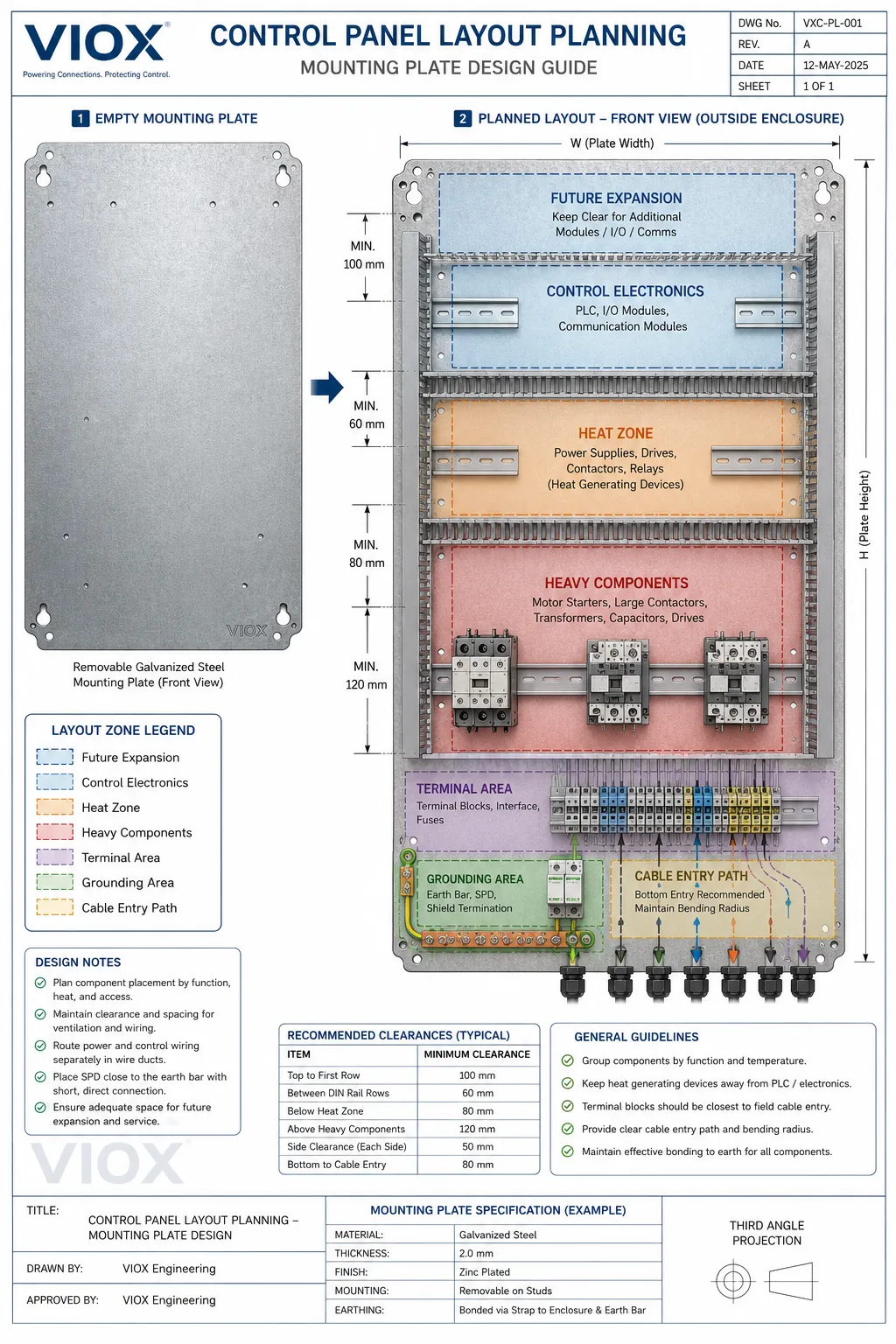
Đặt các thiết bị nặng ở vị trí thấp hoặc gần các điểm đỡ.
Các máy biến áp, bộ nguồn lớn, nhóm khởi động từ, biến tần (VFD) và bộ khởi động động cơ không nên đặt ở những vị trí gây cong vênh tấm bảng không cần thiết. Đặt các thiết bị nặng gần giá đỡ kết cấu và xác minh rằng việc nâng hạ, vận chuyển và rung động sẽ không làm lỏng lẻo cụm lắp ráp.
Giữ các thiết bị phát nhiệt cách xa các thiết bị điện tử nhạy cảm.
Bộ nguồn, bộ truyền động, khởi động từ, rơ-le bán dẫn và máy biến áp tạo ra nhiệt. PLC, mô-đun truyền thông, bộ chuyển đổi tín hiệu và thiết bị điện tử đo lường có thể nhạy cảm hơn với nhiệt độ. Bố trí tấm bảng cần hỗ trợ lưu thông không khí và tránh tạo ra vùng nóng xung quanh các thiết bị điện tử điều khiển.
Đối với rủi ro nhiệt tại các điểm kết nối, bài viết VIOX về hiện tượng quá nhiệt khối đấu nối (terminal block) trong tủ điều khiển giải thích lý do tại sao việc bố trí kém, điện trở tiếp xúc và tích tụ nhiệt thường dẫn đến các lỗi tại hiện trường.
Để lại không gian đi dây, không chỉ là không gian lắp đặt thiết bị
Một bản vẽ bố trí không hoàn thiện chỉ khi các thiết bị vừa vặn. Nó chỉ hoàn thiện khi các thiết bị, máng cáp, bán kính uốn cong, đầu cốt, nhãn đánh dấu đầu nối, vòng lặp dự phòng và các phần mở rộng trong tương lai đều được bố trí phù hợp.
Các lỗi bố trí phổ biến bao gồm:
- Đặt các thanh ray DIN quá gần nhau
- Để máng cáp che khuất các vít đầu nối
- Không để lại đường đi cho cáp nguồn vào
- Đặt các thiết bị chống sét lan truyền (SPD) quá xa thanh tiếp địa
- Lắp đặt các khởi động từ (contactor) tại vị trí khiến việc đi dây phụ trở nên khó tiếp cận
- đặt các ốc siết cáp tại những vị trí mà dây dẫn không thể uốn cong gọn gàng bên trong tủ điện
Nếu việc lựa chọn cầu đấu nằm trong cùng giai đoạn thiết kế, thì hướng dẫn lựa chọn cầu đấu giúp kết nối việc lựa chọn linh kiện với bố trí tủ điện.
Dành không gian cho việc kiểm tra và thay thế
Mọi linh kiện có khả năng hỏng hóc đều phải tiếp cận được. Điều này bao gồm cầu chì, MCB, rơ-le, bộ nguồn, thiết bị chống sét lan truyền (SPD), cầu đấu, bộ lọc và quạt. Một tấm đế lắp đặt dày đặc linh kiện có thể trông hiệu quả ở giai đoạn báo giá nhưng sẽ trở nên tốn kém trong quá trình bảo trì.
Danh mục kiểm tra lựa chọn tấm đế lắp đặt cho tủ điện
Sử dụng danh mục kiểm tra này trước khi phê duyệt tấm đế lắp đặt để đưa vào sản xuất.
| Hạng mục kiểm tra | Cần xác minh điều gì | Tại sao nó quan trọng |
|---|---|---|
| Độ tương thích của vỏ tủ | Kích thước tấm đế, lỗ cố định, khoảng hở chiều sâu, khoảng hở cửa tủ | Ngăn ngừa các vấn đề lắp đặt và sửa chữa lại |
| Vật liệu | Thép, thép mạ kẽm, thép không gỉ, nhôm hoặc vật liệu phi kim loại | Phù hợp với tải trọng, độ ăn mòn, trọng lượng và nhu cầu tiếp địa |
| Độ dày và độ cứng | Trọng lượng linh kiện, khoảng cách thanh ray, độ rung, giá đỡ tấm đế | Ngăn ngừa sự uốn cong và các kết nối lỏng lẻo |
| Đường dẫn đẳng thế | Kết nối PE, dây tiếp địa, điểm kiểm tra tính liên tục | Tránh các giả định không an toàn về kim loại được sơn hoặc phủ |
| Khả năng chống ăn mòn | Độ ẩm, muối, hóa chất, tẩy rửa, tiếp xúc ngoài trời | Ngăn ngừa sự suy giảm cơ học và điện lâu dài |
| Phương pháp gia công | Khoan, taro, bu lông cấy, ren cấy, rãnh | Ảnh hưởng đến thời gian lắp ráp và tính lặp lại |
| Bố trí nhiệt | Vị trí nguồn nhiệt và đường dẫn luồng khí | Giảm các điểm nóng và lỗi phát sinh ngoài ý muốn |
| Đặc tính tương thích điện từ (EMC) | Đầu nối chống nhiễu, tiếp địa bộ lọc, tiếp điểm dẫn điện | Quan trọng đối với biến tần (VFD), bộ truyền động và thiết bị truyền thông |
| Định tuyến cáp | Máng cáp, bán kính uốn cong, vị trí ốc siết cáp, khả năng tiếp cận cầu đấu | Cải thiện khả năng bảo trì và độ an toàn |
| Mở rộng trong tương lai | Không gian thanh ray dự phòng, cầu đấu dự phòng, diện tích tấm lắp đặt khả dụng | Tránh việc phải thiết kế lại khi có các biến thể phát sinh |
Lựa chọn tấm lắp đặt theo ứng dụng
| Ứng dụng | Phương pháp tấm lắp đặt được khuyến nghị | Lý do |
|---|---|---|
| Hộp đấu nối trong nhà loại nhỏ | Tấm lắp đặt cố định hoặc loại tháo rời đơn giản | Số lượng thiết bị ít và đi dây đơn giản |
| Tủ điều khiển tổng | Tấm đế bằng thép sơn hoặc mạ kẽm có thể tháo rời | Độ cứng tốt, chi phí thấp, dễ dàng lắp ráp |
| Tủ PLC | Tấm đế có thể tháo rời với bố trí thanh ray DIN và máng cáp được thiết kế sẵn | Hỗ trợ đi dây gọn gàng và thuận tiện cho việc bảo trì sau này |
| Tủ điều khiển động cơ | Tấm thép gia cường hoặc tấm đế dày hơn có thể tháo rời | Contactor, rơ-le nhiệt và máy biến áp làm tăng trọng lượng và độ rung |
| Tủ phân phối điện ngoài trời | Tấm kim loại chống ăn mòn phù hợp với môi trường lắp đặt tủ điện | Độ ẩm và sự ngưng tụ có thể làm suy giảm lớp phủ và các mối nối |
| Khu vực chế biến thực phẩm, khu vực xịt rửa hoặc khu vực ven biển | Thép không gỉ hoặc tấm vật liệu chống ăn mòn phù hợp | Giảm nguy cơ ăn mòn trong môi trường khắc nghiệt |
| Vỏ tủ thiết bị di động | Tấm nhôm hoặc tấm phi kim loại gia cường tại các vị trí phù hợp | Giảm trọng lượng trong khi vẫn duy trì khả năng chịu lực |
| Tủ điều khiển nhạy cảm với nhiễu điện từ (EMC) | Tấm kim loại dẫn điện với khả năng liên kết và đầu nối chống nhiễu đã được kiểm chứng | Hỗ trợ chiến lược tiếp địa, lọc nhiễu và kiểm soát tiếng ồn |
Đối với ngữ cảnh thiết bị phân phối, xem tài liệu của VIOX Hộp phân phối và hướng dẫn lựa chọn và hướng dẫn so sánh Vỏ tủ điện so với hộp phân phối so với tủ phân phối điện.
Những sai lầm phổ biến khi chọn tấm đế lắp đặt thiết bị (mounting plate)
Sai lầm 1: Chỉ coi tấm đế là một phụ kiện cơ khí đơn thuần
Tấm đế còn ảnh hưởng đến việc liên kết đẳng thế, tương thích điện từ (EMC), đi dây cáp, bố trí nhiệt và khả năng tiếp cận bảo trì. Một tấm đế có độ bền cơ học cao vẫn có thể là lựa chọn thiết kế điện kém nếu bỏ qua vấn đề tiếp địa và bố trí thiết bị.
Sai lầm 2: Khoan xuyên qua thành vỏ tủ thay vì sử dụng tấm đế
Việc khoan lỗ tùy tiện trên thành vỏ tủ có thể làm suy giảm khả năng bảo vệ môi trường và tạo ra các đường rò rỉ. Tiêu chuẩn UL lưu ý rằng các phụ kiện gắn trên bảng điện và phần cứng của vỏ tủ phải duy trì được cấp bảo vệ Type hoặc IP khi lắp đặt. Nếu vỏ tủ cần đi dây cáp, hãy sử dụng đúng tấm bịt cáp (gland plate), ốc siết cáp (cable gland), nút bịt lỗ hoặc các phụ kiện được nhà sản xuất phê duyệt.
Sai lầm 3: Cho rằng thép không gỉ (inox) luôn là vật liệu tốt nhất
Thép không gỉ rất tuyệt vời trong môi trường ăn mòn, nhưng nó đắt tiền hơn và khó gia công hơn. Đối với nhiều tủ điện công nghiệp trong nhà, thép mạ kẽm hoặc thép sơn tĩnh điện có thể thiết thực hơn. Hãy chọn thép không gỉ vì môi trường yêu cầu điều đó, chứ không phải vì nó nghe có vẻ cao cấp.
Sai lầm 4: Bỏ qua ăn mòn điện hóa
Các tấm nhôm, ốc vít thép không gỉ, thanh ray mạ kẽm, bộ phận tiếp địa bằng đồng và điều kiện độ ẩm cao có thể gây ra các vấn đề ăn mòn nếu việc kết hợp vật liệu không được kiểm soát tốt. Điều này đặc biệt quan trọng trong môi trường ven biển, ngoài trời hoặc môi trường hóa chất.
Sai lầm 5: Quá tải thanh ray DIN thay vì hỗ trợ các linh kiện nặng
Thanh ray DIN rất tiện lợi, nhưng không phải linh kiện nào cũng nên treo trên thanh ray mà không có sự hỗ trợ bổ sung. Các máy biến áp nặng, bộ truyền động lớn, bộ lọc cồng kềnh và các cụm khởi động từ lớn có thể cần lắp trực tiếp lên tấm đế hoặc cần gia cố thêm.
Sai lầm 6: Quên mất kỹ thuật viên bảo trì
Nếu không thể tiếp cận cầu chì, thiết bị chống sét lan truyền (SPD), cầu đấu hoặc bộ nguồn mà không phải tháo dỡ một nửa bảng điện, thì cách bố trí đó là sai. Một thiết kế tấm đế lắp đặt tốt phải chừa đủ không gian cho dụng cụ, nhãn dán, thao tác tay và việc thay thế linh kiện.
Tiêu chuẩn và Định mức: Những gì áp dụng cho tấm đế?
Tấm đế lắp đặt thường được đánh giá như một phần của vỏ tủ điện hoặc cụm bảng điện, không phải là thiết bị bảo vệ độc lập.
Các tiêu chuẩn và hệ thống xếp hạng quan trọng liên quan đến chủ đề này bao gồm:
- Tiêu chuẩn IEC 60529 – xác định các khái niệm Mã IP về khả năng bảo vệ chống xâm nhập của vỏ tủ điện.
- NEMA 250 – xác định các loại vỏ tủ điện cho thiết bị điện theo thực tiễn tại Bắc Mỹ.
- UL 50 và UL 50E – bao gồm các yêu cầu về kết cấu vỏ tủ và các yếu tố môi trường trong bối cảnh UL/CSA/NMX.
- IEC 61439-1 và IEC 61439-2 – áp dụng cho các bộ phận đóng cắt và điều khiển hạ thế, bao gồm các yêu cầu về kết cấu, điều kiện vận hành, kiểm chứng và các yêu cầu đối với bộ phận lắp ráp nguồn.
- IEC 60715 – có liên quan khi sử dụng thanh ray DIN bên trong vỏ tủ điện.
Cách hiểu thực tế là: tấm đế lắp đặt có thể hỗ trợ việc tuân thủ tiêu chuẩn, nhưng bản thân nó không làm cho vỏ tủ đạt chuẩn IP66, NEMA 4X, UL Listed hoặc IEC 61439. Xếp hạng cuối cùng phụ thuộc vào toàn bộ vỏ tủ hoặc cụm lắp ráp, bao gồm thân vỏ, cửa, gioăng, bản lề, khóa, tấm bịt cáp, đầu vào cáp, bố trí nội bộ, tiếp địa, độ tăng nhiệt và kết cấu đã được kiểm chứng.
Cách chỉ định tấm đế lắp đặt trong yêu cầu mua hàng
Một yêu cầu mơ hồ như “tấm đế lắp đặt cho vỏ tủ” thường dẫn đến việc chọn sai linh kiện, gây chậm trễ hoặc phải làm lại. Một yêu cầu tốt hơn cần bao gồm:
- Dòng và kích thước vỏ tủ
- Kích thước tấm đế lắp đặt hoặc mã vỏ tủ tương ứng
- Vật liệu và lớp hoàn thiện
- Độ dày hoặc mã sản phẩm của nhà sản xuất
- Thiết kế tháo rời hoặc cố định
- sơ đồ lỗ khoan yêu cầu hoặc tấm bịt
- các quy định về tiếp địa hoặc liên kết đẳng thế
- môi trường ăn mòn
- tải trọng linh kiện dự kiến
- liệu có yêu cầu thanh ray DIN, máng đi dây, bu lông cấy hoặc lỗ ren hay không
- yêu cầu thị trường như tủ điện tiêu chuẩn IEC, tủ điện UL 508A hoặc bối cảnh quy chuẩn địa phương
Ví dụ về thông số kỹ thuật:
Tấm lắp đặt bằng thép mạ kẽm có thể tháo rời cho tủ điều khiển công nghiệp kích thước 600 x 800 mm, tương thích với các bu lông cố định tủ, phù hợp để lắp thanh ray DIN và máng đi dây, có điểm tiếp địa đã được kiểm chứng và độ cứng đủ để bố trí nhóm khởi động từ, bộ nguồn, PLC và cầu đấu. Vật liệu cuối cùng, độ dày và phương pháp liên kết cần được xác nhận dựa trên bảng dữ liệu của nhà sản xuất tủ và tiêu chuẩn dự án.
Loại thông số kỹ thuật đó cung cấp cho nhà cung cấp đủ thông tin để chọn đúng linh kiện thay vì chỉ phỏng đoán dựa trên kích thước vỏ tủ.
Khung lựa chọn nhanh
Sử dụng trình tự này khi chọn tấm lắp đặt cho vỏ tủ điện:
- Bắt đầu với kiểu vỏ tủ. Xác nhận tấm lắp đặt phù hợp với kích thước, điểm cố định và độ sâu của vỏ tủ.
- Lập sơ đồ bố trí linh kiện. Đặt các thiết bị nặng, tỏa nhiệt, cần bảo trì và nhạy cảm với tiếng ồn một cách có tính toán.
- Chọn vật liệu. Phù hợp với môi trường ăn mòn, tải trọng, gia công, trọng lượng và các yêu cầu về liên kết đẳng thế.
- Kiểm tra độ cứng vững. Xác nhận độ dày và khoảng cách giá đỡ phù hợp với tải trọng thực tế của linh kiện.
- Lên kế hoạch liên kết đẳng thế. Xác định các điểm tiếp địa (PE), dây tiếp địa, khu vực tiếp xúc dẫn điện và phương pháp kiểm tra.
- Lên kế hoạch đi dây. Bổ sung thanh ray DIN, máng cáp, cầu đấu, ốc siết cáp, nhãn dán và lối tiếp cận bảo trì.
- Bảo vệ cấp bảo vệ (IP) của vỏ tủ. Tránh tạo các lỗ không cần thiết trên vỏ tủ điện; hãy sử dụng các phụ kiện phù hợp.
- Kiểm tra đối chiếu với tiêu chuẩn của dự án. Kiểm tra các tiêu chuẩn IEC, UL, NEMA, quy chuẩn địa phương hoặc yêu cầu của khách hàng trước khi sản xuất.
Câu hỏi thường gặp
Tấm đế lắp đặt thiết bị trong tủ điện là gì?
Đó là tấm bảng bên trong được sử dụng để lắp đặt các linh kiện bên trong vỏ tủ điện. Nó còn có thể được gọi là tấm lưng, tấm phụ, bảng lắp đặt hoặc tấm đế lắp thiết bị.
Tấm đế lắp đặt có giống với thanh ray DIN không?
Không. Tấm đế lắp đặt là tấm nền bên trong lớn hơn. Thanh ray DIN là một loại thanh ray tiêu chuẩn được gắn lên tấm đế để các linh kiện dạng module có thể được lắp vào vị trí.
Vật liệu nào là tốt nhất cho tấm đế lắp đặt trong tủ điện?
Không có vật liệu nào là tốt nhất cho mọi trường hợp. Thép sơn hoặc thép mạ kẽm thường được dùng cho các tủ điều khiển thông dụng, thép không gỉ (inox) tốt hơn cho môi trường ăn mòn, nhôm hữu ích cho các thiết kế cần trọng lượng nhẹ hoặc dễ gia công, và các tấm bảng phi kim loại có thể hỗ trợ trong những trường hợp cần cách điện hoặc chống ăn mòn.
Tấm đế lắp đặt (mounting plate) có quyết định cấp bảo vệ IP của vỏ tủ không?
Không. Cấp bảo vệ IP áp dụng cho vỏ tủ hoặc toàn bộ cụm thiết bị. Tấm đế lắp đặt nằm ở bên trong. Tuy nhiên, việc lắp đặt tấm đế, khoan lỗ, đi dây cáp hoặc lắp đặt phụ kiện không đúng cách có thể gián tiếp làm ảnh hưởng đến cấp bảo vệ của vỏ tủ hoàn thiện.
Tôi có thể sử dụng tấm đế lắp đặt làm đường tiếp địa không?
Chỉ khi thiết kế cung cấp một đường dẫn tiếp địa đã được kiểm chứng. Không nên mặc định rằng các bề mặt được sơn, sơn tĩnh điện, anod hóa hoặc bị ăn mòn có thể đảm bảo tính liên tục về điện. Hãy sử dụng các phụ kiện nối đất chuyên dụng và kiểm tra tính liên tục theo yêu cầu của dự án.
Tấm đế lắp đặt có nên là loại tháo rời được không?
Đối với hầu hết các tủ điều khiển công nghiệp và thiết kế OEM, câu trả lời là có. Tấm đế tháo rời giúp tăng tốc độ lắp ráp, thuận tiện cho việc đi dây, kiểm tra, thử nghiệm và sửa chữa. Các tấm đế cố định chỉ phù hợp với các loại hộp nhỏ, nơi bố trí thiết bị bên trong đơn giản và ổn định.
Làm thế nào để tránh tình trạng tấm đế bị cong vênh?
Kiểm tra trọng lượng linh kiện, độ dày tấm bảng, khoảng cách giá đỡ, tải trọng thanh ray và độ rung. Các linh kiện nặng nên được lắp đặt gần các điểm đỡ hoặc trực tiếp vào các khu vực được gia cố. Hãy sử dụng thông số kỹ thuật tấm bảng của nhà sản xuất vỏ tủ thay vì tự ước tính.
Tôi có thể khoan thêm lỗ trên tấm bảng lắp đặt không?
Thông thường là có, nếu tấm bảng được thiết kế để gia công và các lỗ khoan không làm yếu cấu trúc hoặc gây cản trở việc tiếp địa, đi dây hoặc lắp đặt linh kiện. Việc khoan lên thành vỏ tủ là một vấn đề khác vì nó có thể ảnh hưởng đến khả năng bảo vệ môi trường của tủ.
Các nguồn tài liệu đã tham khảo
- NEMA – Vỏ tủ điện
- ANSI Webstore – UL 50E, Vỏ tủ cho thiết bị điện, Các cân nhắc về môi trường
- UL Solutions – Phụ kiện đạt chuẩn môi trường cho vỏ tủ điện
- IEC 61439-1:2020 – Tủ điện và thiết bị đóng cắt hạ thế, các quy tắc chung
- IEC 61439-2:2020 – Tủ đóng cắt và điều khiển hạ thế
- VIOX – Vỏ tủ điện: Hướng dẫn toàn diện
- VIOX – Hướng dẫn lựa chọn vật liệu cho tủ điện