

Sa pahinang ito
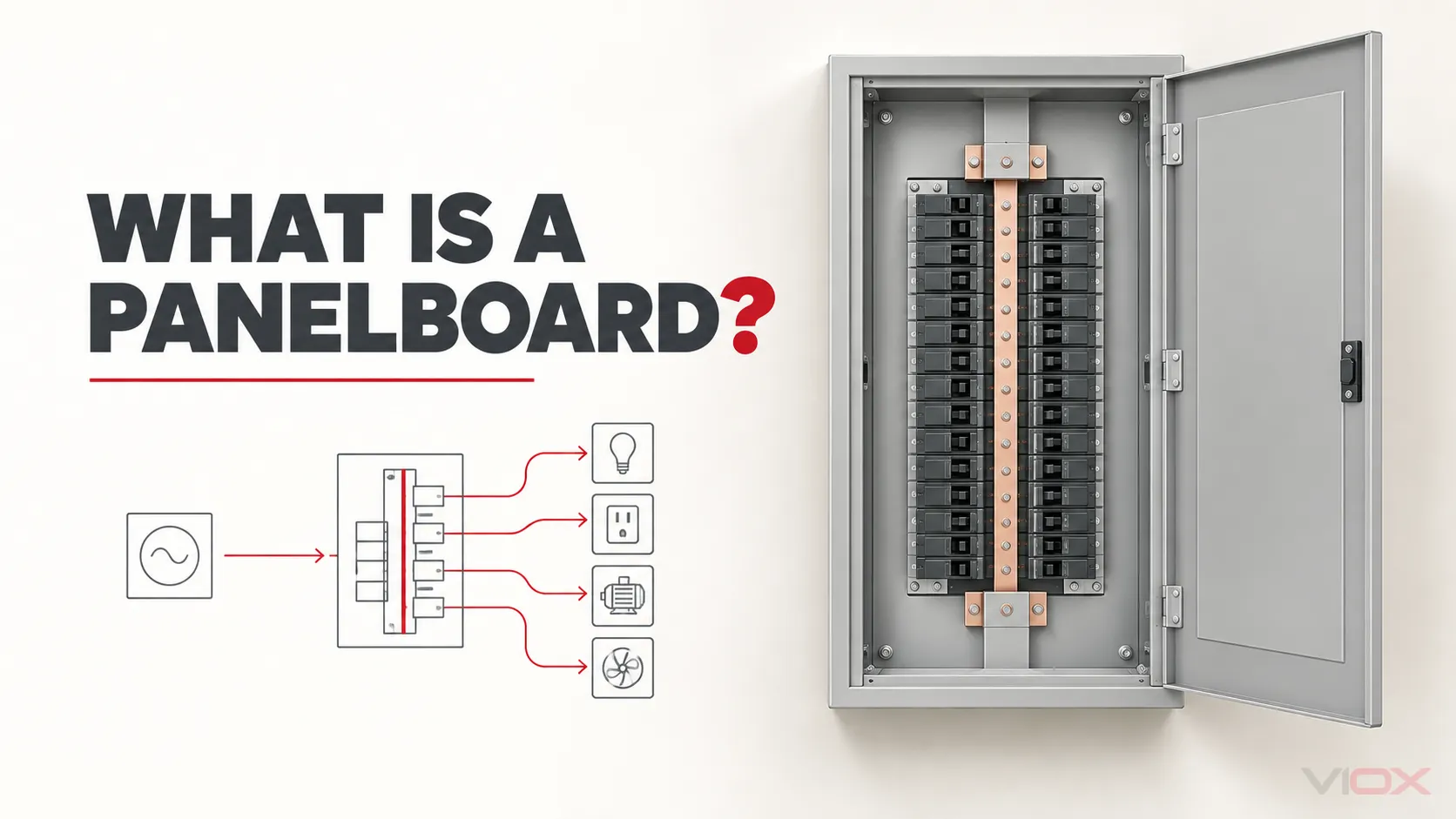
A panelboard ay isang front-access na electrical distribution assembly na naghahati sa papasok na feeder patungo sa mga protektadong outgoing circuit. Karaniwan nitong pinagsasama ang mga busbar, overcurrent protective device, mga connection point, at isang enclosure o cabinet sa isang coordinated na assembly.
Sa mga proyekto sa North America, panelboard ay isang tinukoy na kategorya ng produkto na karaniwang sinusuri ayon sa UL 67 at ginagamit sa ilalim ng National Electrical Code (NEC). Sa mga merkado ng IEC, ang kagamitang nagsisilbi sa katulad na layunin ay maaaring tukuyin bilang isang lupon ng pamamahagi, ngunit ang mga pangalan ay hindi awtomatikong mapagpapalit. Ang naaangkop na assembly standard, mga rating, arrangement ng access, at dokumentasyon ng produkto ay kailangan pa ring suriin.
Ang mahahalagang punto ay ang panelboard ay higit pa sa koleksyon ng mga breaker. Ang pagiging angkop nito ay nakadepende sa kumpletong assembly—kabilang ang bus structure, enclosure, mga nakainstall na device, wiring system, short-circuit current rating, at mga aprubadong kombinasyon.
Saan Matatagpuan ang Panelboard sa Isang Sistemang Elektrikal?
Ang isang panelboard ay karaniwang tumatanggap ng kuryente mula sa upstream na transformer, service equipment, switchboard, o switchgear lineup. Hinahati nito ang supply na iyon sa mga feeder o branch circuit na nagsisilbi sa mga ilaw, receptacle, kagamitang HVAC, makinarya, o mas maliliit na distribution point.
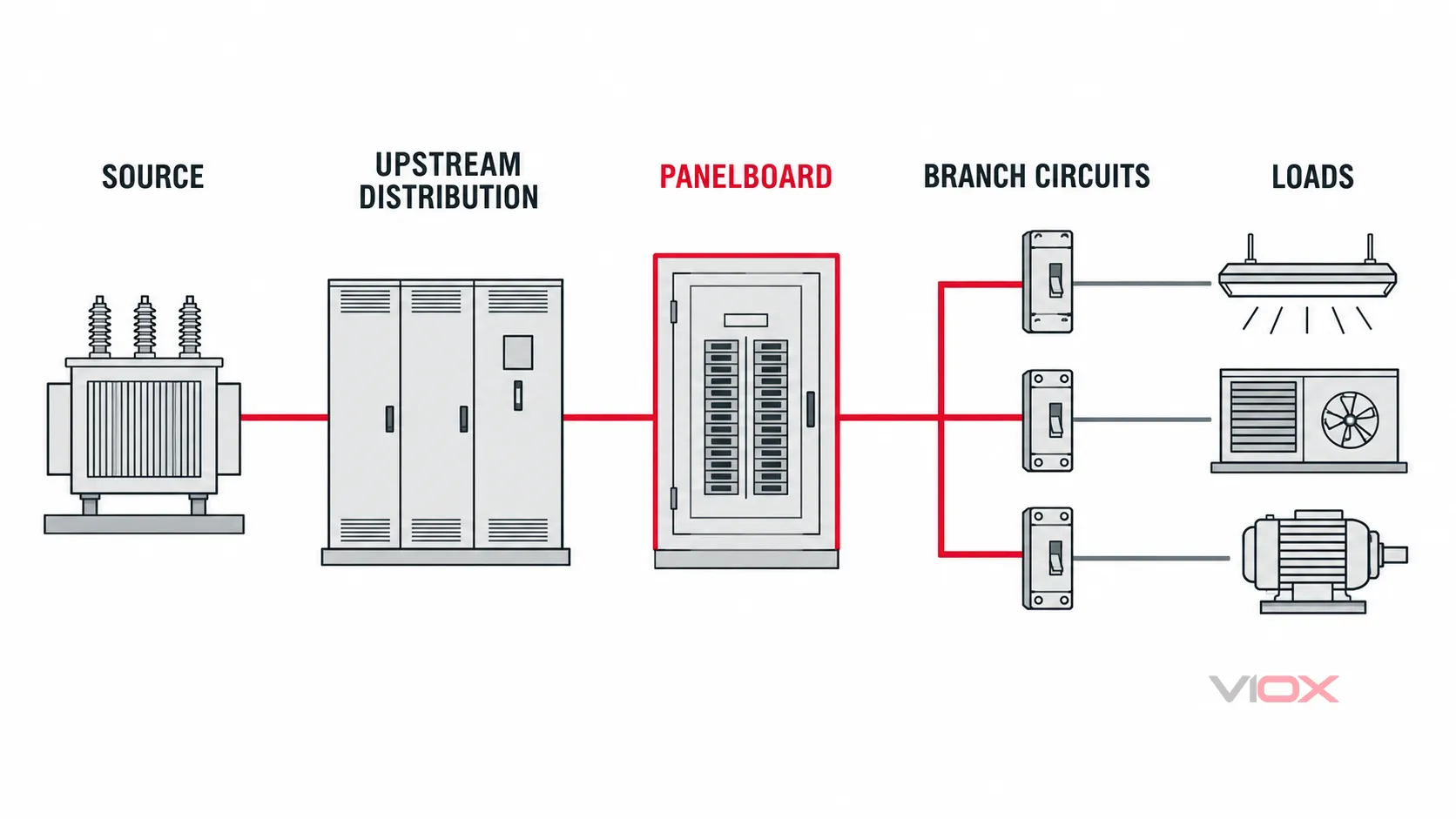
Ang pagkakaayos ay karaniwang nauunawaan bilang:
Source o transformer → service/distribution equipment → panelboard → mga protektadong outgoing circuit → mga load
Ang eksaktong hierarchy ay nag-iiba depende sa proyekto. Ang isang maliit na installation ay maaaring gumamit ng isang panelboard malapit sa service entrance, habang ang isang mas malaking pasilidad ay maaaring may switchgear o switchboard na nagpapakain sa ilang panelboard sa iba't ibang palapag o production zone.
Ang posisyon sa sistemang ito ang nagpapaliwanag sa pangunahing trabaho ng panelboard: nagbibigay ito ng organisadong punto para sa pamamahagi ng kuryente at paglalapat ng overcurrent protection sa maraming outgoing circuit. Hindi nito ginagawa ang bawat function na matatagpuan sa switchgear, automatic transfer switch, o industrial control panel.
Mga Pangunahing Bahagi ng Isang Panelboard
Bagama't nag-iiba ang konstruksiyon, karaniwan ang mga sumusunod na functional element.
| Bahagi | Function | Ano ang dapat i-verify |
|---|---|---|
| Main circuit breaker o main lugs | Ikinokonekta ang papasok na supply sa bus ng panelboard; ang main breaker ay nagbibigay rin ng integral na function para sa pagdiskonekta at proteksiyon laban sa sobrang karga. | Configuration na main-breaker o main-lug-only, current rating, mga aprubadong papasok na conductor, at upstream na proteksiyon |
| Mga busbar | Nagdadala ng kuryente mula sa papasok na seksyon patungo sa mga nakakabit na branch device | Materyales, current rating, pagkakaayos ng phase, rating ng neutral kung naaangkop, at aprubadong sistema ng device |
| Mga branch overcurrent device | Nagpoprotekta sa mga palabas na conductor at circuit laban sa mga tinukoy na kondisyon ng sobrang karga | Pamilya ng device, mga pole, boltahe, interrupting rating, mga katangian ng trip, at compatibility na aprubado ng manufacturer |
| Neutral assembly | Nagbibigay ng termination point para sa grounded-conductor kung saan kinakailangan ito ng configuration ng sistemang elektrikal | Uri ng sistemang elektrikal, neutral rating, kaayusan ng isolation o bonding, at mga pinapayagang conductor termination |
| Equipment grounding bar | Nagbibigay ng mga termination para sa mga equipment grounding conductor | Inaprubahang bar, mga kinakailangan sa bonding ng enclosure, at mga tagubilin sa pag-install |
| Enclosure, cabinet, trim, at dead front | Limitahan ang access sa mga energized na bahagi at magbigay ng tinukoy na proteksiyon sa kapaligiran | Uri ng enclosure, kaayusan ng access, lokasyon ng pag-install, at compatibility sa interior ng panelboard |
| Mga label at direktoryo ng circuit | Tukuyin ang assembly, mga rating, mga aprubadong device, at mga outgoing circuit | Pagiging madaling basahin, data sa nameplate, pagkakakilanlan ng circuit, at mga marka para sa espesyal na gamit |
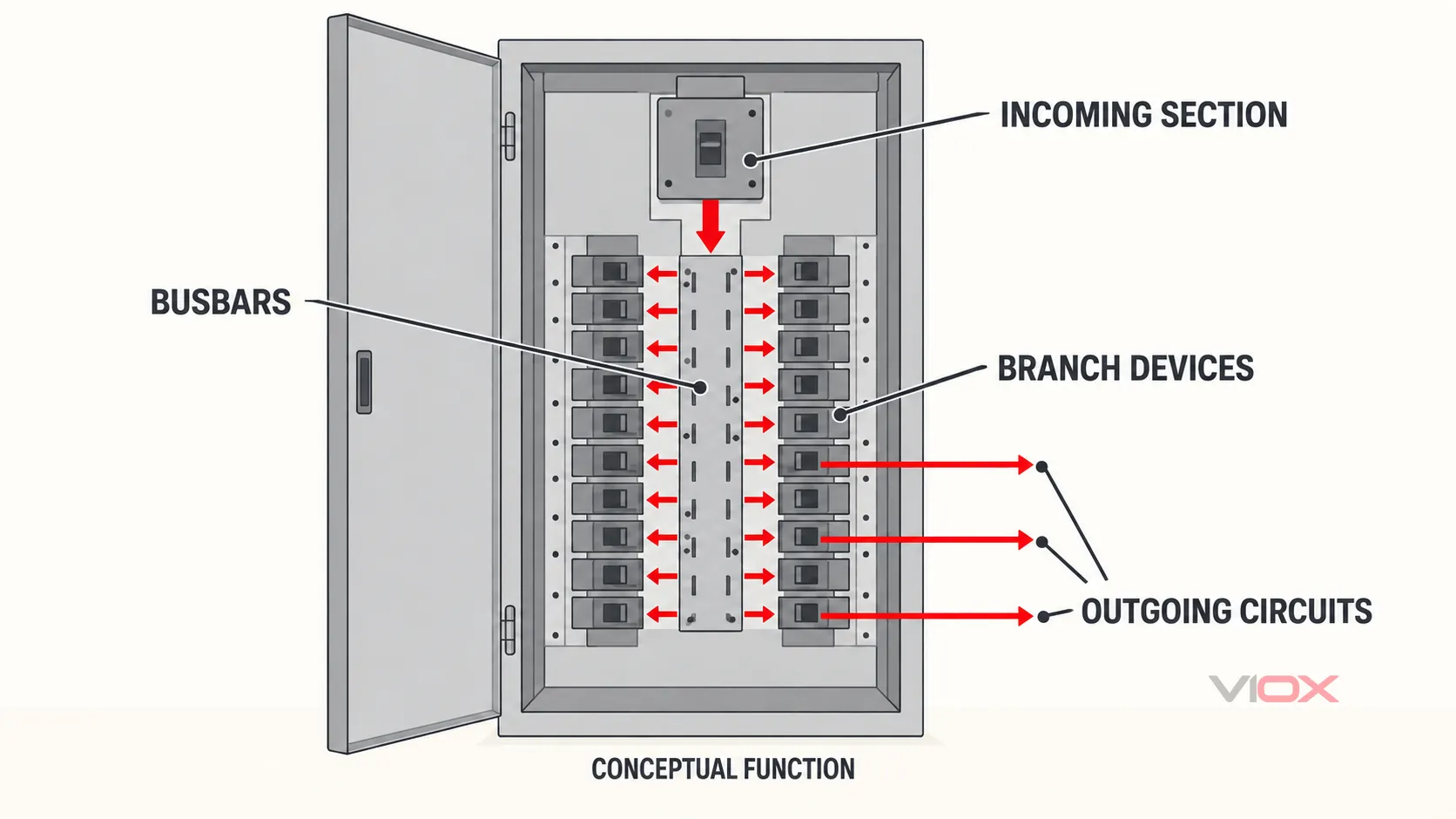
Ang panloob na suporta at pagkakaayos ng busbar ay tinatawag minsan na pan assembly o interior ng panelboard. Para sa mas malalim na pagtingin sa konstruksyong iyon, tingnan ang gabay ng VIOX sa pan assembly sa mga distribution board.
Paano Nagbabahagi at Nagpoprotekta ng Kuryente ang Isang Panelboard
Ang kuryente ay pumapasok sa pamamagitan ng mga main terminal o integral main device at umaabot sa mga phase busbar. Ang bawat nakakabit na branch device ay nagkokonekta ng isang outgoing circuit sa tamang posisyon ng bus. Kapag ang isang outgoing circuit ay nakaranas ng sobrang karga (overcurrent) sa loob ng mga katangian ng paggana ng protective device, bubuksan ng device na iyon ang circuit nito habang ang natitirang bahagi ng panelboard ay maaaring manatiling may kuryente.
Ang selektibong organisasyong ito ay kapaki-pakinabang, ngunit hindi ito dapat ikalito sa garantisadong selective coordination. Kung ang pinakamalapit na protective device lamang ang gagana ay nakadepende sa aktwal na upstream at downstream na mga device, available na fault current, mga setting, time-current characteristics, at mga naaangkop na kinakailangan ng proyekto.
Ang panelboard ay hindi rin awtomatikong nagbibigay ng bawat protective function. Ang mga function para sa ground-fault, arc-fault, residual-current, surge, o control ay umiiral lamang kapag ibinigay ito ng tinukoy na assembly at mga nakakabit na kagamitan.
Mga Rating ng Panelboard: Basahin Muna ang Nameplate ng Assembly
Ang rating na nakalimbag sa isang indibidwal na circuit breaker ay hindi nagtatakda ng rating ng buong panelboard. Panelboard Application Guide ng UL ay itinuturing ang boltahe, kuryente, short-circuit current rating, enclosure, mga conductor, kagamitang ikinabit sa field, at mga arrangement ng main-device bilang mga usapin ng pagiging angkop sa antas ng assembly.
Gamitin ang nameplate at dokumentasyon ng manufacturer upang i-verify ang kahit man lang ang mga sumusunod:
| Nameplate o item ng espesipikasyon | Bakit ito mahalaga |
|---|---|
| Boltahe at configuration ng sistema | Dapat tumugma sa supply voltage, phase arrangement, at paggamit ng line-to-line o line-to-neutral |
| Kasalukuyang rating | Tinutukoy ang nakamarkang kakayahan sa continuous-current ng panelboard sa ilalim ng mga nakasaad na kondisyon nito; ang nakabit na main device ay maaaring magtakda ng mas mababang limitasyon |
| Bilang ng mga phase at wire | Tinutukoy kung ang assembly ay angkop sa aktwal na pagkakaayos ng source at load |
| Short-circuit current rating (SCCR) | Dapat ay angkop para sa available na fault current sa punto ng installation at maaaring depende sa tinukoy na mga kombinasyon ng protective-device |
| Main device o main-lug arrangement | Tinutukoy kung paano sinusuplayan, dinidiskonekta, at pinoprotektahan ang panelboard sa upstream |
| Mga aprubadong pamilya ng branch-device | Pinipigilan ang pagtrato sa mga pisikal na magkakatulad na breaker bilang awtomatikong mapagpapalit |
| Uri ng Enclosure | Dapat ay angkop sa panloob, panlabas, alikabok, moisture, corrosion, at iba pang kondisyon sa kapaligiran ayon sa nakasaad |
| Materyales ng conductor, laki, at mga limitasyon sa temperatura | Kinokontrol kung aling mga papasok at palabas na conductor at terminal ang pinapayagan |
| Pagiging angkop ng kagamitan sa serbisyo | Nalalapat lamang kapag ang kumpletong assembly ay may kinakailangang marka at na-install sa loob ng saklaw na iyon |
| Mga marka para sa espesyal na paggamit | Maaaring sumaklaw sa mga series rating, standby system, pinagmumulan ng produksyon ng kuryente, field-installed kit, o iba pang kondisyonal na paggamit |
Ang isang partikular na mahalagang pagkakaiba ay interrupting rating laban sa SCCR. Ang interrupting rating ng isang branch breaker ay naglalarawan sa kakayahan ng device na iyon na putulin ang fault current sa ilalim ng mga tinukoy na kondisyon. Ang SCCR ng panelboard ay nalalapat sa buong assembly at maaaring malimitahan ng device na may pinakamababang rating na nakakabit o ng isang partikular na sinubukang kombinasyon. Ang isang breaker na may mas mataas na rating ay hindi, sa kanyang sarili, nag-a-upgrade sa assembly.
Panelboard vs Load Center, Distribution Board, Switchboard, at Switchgear
Ang mga terminong ito ay nagkakapatong sa pang-araw-araw na usapan, ngunit hindi nito inilalarawan ang isang produktong unibersal na mapagpapalit-palit.
| Termino | Praktikal na hangganan | Basahin ang susunod |
|---|---|---|
| Panelboard | Front-access distribution assembly na may mga bus at maraming outgoing protective device; isang tinukoy na kategorya ng produkto sa North America | Ang hub na ito at ang mga gabay sa pagsasaayos sa ibaba |
| Load center | Isang compact na produktong pang-distribusyon sa North America na karaniwang iniuugnay sa mga residential at light-commercial branch circuit; ang mga hangganan ng produkto at code ay nakadepende pa rin sa nakalistang kagamitan | Load center vs panelboard |
| Distribution board | Malawak na terminong pang-IEC-market at internasyonal na ang eksaktong saklaw ng assembly ay nakadepende sa naaangkop na pamantayan at dokumentasyon ng produkto | Buong kahulugan ng DB sa sistemang elektrikal at load center kumpara sa distribution board |
| Switchboard | Ang distribution assembly na nakakabit sa sahig o freestanding na madalas gamitin para sa mas malalaking incoming at feeder function; ang konstruksiyon at access nito ay naiiba sa panelboard | Switchboard kumpara sa switchgear |
| Switchgear | Metal-enclosed power switching at interrupting equipment na pinili para sa tinukoy na proteksiyon, kontrol, isolation, at mga kinakailangan sa fault-duty | Switchboard kumpara sa switchgear |
| Industrial control panel | Isang assembly na pangunahing nilayon upang kontrolin ang mga pang-industriyang makinarya o proseso sa halip na magsilbi bilang isang pangkalahatang panelboard | I-verify ang naaangkop na pamantayan ng industrial-control-panel at ang dokumentasyon ng sertipikasyon ng kagamitan |
IEC 61439-3:2024 partikular na tumutukoy sa ilang low-voltage distribution board na nilayon na patakbuhin ng mga ordinaryong tao. Hindi ito isang unibersal na kasingkahulugan para sa bawat North American panelboard. Ang isang pandaigdigang proyekto ay dapat tumukoy sa naaangkop na merkado, installation code, assembly standard, kategorya ng access ng gumagamit, at ebidensya ng sertipikasyon sa halip na isalin lamang ang label.
Mga Karaniwang Desisyon sa Konpigurasyon ng Panelboard
Main Breaker o Main Lug Only
Ang isang main-breaker panelboard ay may kasamang integral na main protective at disconnecting device. Ang isang main-lug-only (MLO) panelboard ay tumatanggap ng kuryente nang direkta sa mga main terminal nito at karaniwang umaasa sa angkop na upstream device para sa overcurrent protection at disconnection.
Ang tamang pagpili ay nakadepende sa arkitektura ng distribusyon, kinakailangang lokasyon ng disconnect, upstream protection, available fault current, plano sa maintenance, at mga lokal na kinakailangan. Tingnan ang detalyadong gabay sa main circuit breaker vs main lug only panelboard.
Single-Phase o Three-Phase
Ang configuration ng phase at wire ay dapat tumugma sa parehong source at mga load. Ang mga single-phase panelboard ay karaniwan kung saan ang karamihan sa mga load ay single-phase. Ang mga three-phase panelboard ay nagbibigay ng three-phase power at maaari ring mag-supply ng line-to-neutral na mga load kung ang aprubadong sistema ay may kasamang neutral.
Ito ay isang desisyon sa disenyo ng sistema, hindi lamang pagpili batay sa bilang ng mga branch circuit. Para sa mga ugnayan ng boltahe at mga salik sa pagpili, gamitin ang gabay sa single-phase vs three-phase panelboard.
Panloob o Pang-kapaligirang Enclosure
Ang interior ng panelboard at ang enclosure nito ay dapat suriin bilang isang compatible na assembly. Ang lokasyong panlabas, basa, maalikabok, o kinakalawang ay nangangailangan ng uri ng enclosure na angkop sa aktwal na kapaligiran at paraan ng pag-install. Huwag ipagpalagay na ang paglipat ng isang standard na interior sa ibang cabinet ay nagpapanatili ng sertipikasyon o SCCR nito.
Isang Checklist para sa Pagtutukoy ng Panelboard Batay sa Nameplate
Bago pumili o mag-apruba ng isang panelboard, idokumento ang mga input na ito:
- Mga kinakailangan sa merkado at pamamahala: tukuyin ang bansa ng pag-install, code, pamantayan ng assembly, at kinakailangang sertipikasyon.
- Sistemang pinagmulan: itala ang nominal na boltahe, frequency, phase, configuration ng wire, arrangement ng grounding, at uri ng pinagmulan.
- Load schedule: ilista ang dami ng outgoing circuit, mga pole, uri ng load, mga konsiderasyon sa continuous-load, at nakaplanong reserbang kapasidad.
- Papasok na arrangement: pumili ng aprubadong main breaker, fused main, o main-lug-only na arkitektura at tukuyin ang upstream protective device.
- Kinakailangang fault-duty: tukuyin ang available na fault current sa panelboard at i-verify ang kumpletong assembly SCCR at anumang conditional o series-rating na kinakailangan.
- Sistemang branch-device: tukuyin lamang ang breaker, fuse, residual-current, surge, metering, o control device na aprubado para sa panelboard at aplikasyong iyon.
- Kapaligiran ng pagkakabit: piliin ang uri ng enclosure, mounting arrangement, mga kondisyon sa pag-access, pasukan ng conductor, at mga kinakailangan sa espasyo.
- Evidence package: kunin ang nameplate schedule, dokumentasyon ng wiring o assembly, listahan ng mga aprubadong device, impormasyon ng sertipikasyon, at anumang kinakailangang rekord ng pagsusulit o deklarasyon.
Para sa mga proyektong gumagamit ng internasyonal na terminolohiya, ang isang kategorya ng produkto ng distribution box ay maaaring maging kapaki-pakinabang na panimulang punto para sa mga diskusyon tungkol sa enclosure at modular-device, ngunit ang huling assembly ay kailangan pa ring tukuyin at i-verify para sa nilalayon nitong merkado at aplikasyon.
Kapag ang Panelboard ay Hindi ang Tamang Assembly
Maaaring mas angkop ang ibang kategorya ng kagamitan kapag ang proyekto ay nangangailangan ng:
- mas mataas na kapasidad ng incoming at feeder distribution na mas mahusay na matutugunan ng isang switchboard o switchgear lineup;
- awtomatiko o manwal na source transfer bilang pangunahing function ng kagamitan;
- industrial machine control bilang pangunahing function;
- medium-voltage switching and protection;
- rear access, drawout construction, compartmentalization, o mga feature sa maintenance na hindi ibinibigay ng iminumungkahing panelboard;
- isang IEC distribution-board assembly na may ibang kategorya ng operator o verification route na partikular sa proyekto.
Ang desisyon ay dapat ibatay sa kinakailangang function at beripikadong saklaw ng kagamitan—hindi sa hitsura ng cabinet.
Piliin ang Susunod na Gabay sa Panelboard
- Para makapili sa pagitan ng dalawang North American distribution format, basahin ang Load Center vs Panelboard.
- Para piliin ang incoming architecture, basahin ang MCB vs MLO Panelboards.
- Para piliin ang source configuration, basahin ang Single-Phase vs Three-Phase na mga Panelboard.
- Para ikumpara ang mga upstream distribution assembly, basahin ang Switchboard vs Switchgear.
- Para sa paksa ng hiwalay na grounding at bonding, basahin ang Paano Mag-ground ng Electrical Panel.