去年夏天您的暖通空调系统损坏。两个月后泳池泵烧毁。随后智能家居中枢无法启动。三次维修,自费支出1万4千200元,电工终于点破您一直忽视的问题:“您需要在配电箱安装浪涌保护器,而不只是依赖那些插线板。”
多数业主误以为电视机下那个30元的浪涌保护插线板能守护全家电器。实则不然。它仅保护六个插座接口。而您的冰箱、暖通空调系统、深井泵、车库门启闭器以及直连式智能设备?完全暴露在风险中。.
实际情况是: 全屋浪涌保护器 (安装在配电箱处)与 电源插排浪涌保护器 (插入电源插座)服务于两个不同的保护区域。全屋浪涌保护器在入户总配电箱处保护整个电气系统。电源插排仅保护插入其中的设备。两者无法相互替代——在许多情况下,您需要两者兼备。.
本指南将解释每种类型保护什么、其工作原理、成本(设备+安装),以及何时需要其中一种、另一种或两者结合的分层保护方案。如果您曾疑惑配电箱安装的浪涌保护器是否值得花费500-1000美元,或者您的电源插排是否足够,阅读完本文后您将获得做出决定的判断框架。.
什么是全屋浪涌保护器?
全屋浪涌保护器(技术上称为 1型或2型 浪涌保护装置, ,简称SPD,符合UL 1449标准)是一种永久性安装的设备,安装在主配电箱处或其附近。其作用是:在电压尖峰通过公用事业线路进入您的住宅并 before 到达分支电路、插座或硬接线设备之前将其拦截。.
当闪电击中两个街区外的变压器,或公用事业公司切换电容器组,或您邻居的暖通空调压缩机启动时,瞬态过电压会在电网中传播。全屋浪涌保护器在入户总配电箱处钳制这些浪涌,限制整个电气系统(每个电路、每个插座、每个硬接线电器)上的电压尖峰。.
全屋浪涌保护器保护的对象:
- 所有分支电路——厨房、卧室、车库、地下室。每个插座都受益于配电箱级别的钳位保护。.
- 硬接线设备——暖通空调系统、井泵、车库门开启器、吊扇、电热水器、泳池设备。这些设备无法插入电源插排,因此配电箱级别的保护是其唯一的防御手段。.
- စမတ်အိမ်သုံးပစ္စည်းများ——硬接线集线器、安防面板、照明控制器、门铃变压器。.
- 240伏电器——电灶、烘干机、电动汽车充电器、热泵。.
နည်းပညာဆိုင်ရာသတ်မှတ်ချက်များ-
- လက်ရှိအဆင့်သတ်မှတ်ချက်ကို မြှင့်တင်ပါ။:40 kA 至 100 kA+(远高于使用点设备)。这是浪涌保护装置在不失效的情况下能够分流的最大浪涌电流。.
- 标称放电电流:通常为10 kA至20 kA。2023年国家电气规范要求住宅供电和某些馈电线上的浪涌保护装置标称放电电流≥10 kA。.
- 类型分类 (UL 1449第5版):
- အမျိုးအစား ၁:安装在公用事业变压器与供电设备过流保护装置(主断路器线路侧)之间,或安装在负载侧。包括电表插座式浪涌保护装置。.
- အမျိုးအစား ၂:安装在供电设备的负载侧(主配电箱或子配电箱)。最常见于住宅改造项目。.
- တပ်ဆင်ခြင်း။:需要持证电工安装。通常安装在配电箱内的DIN导轨上,或接线至专用断路器。.
ကုဒ်လိုက်နာ:2023年国家电气规范 要求 在所有住宅单元供电处安装1型或2型浪涌保护装置,并对某些馈线和场所(宿舍、医院、客房)提出了扩展要求。如果您正在建造或升级配电箱,在大多数司法管辖区,全屋浪涌保护器不再是可选项——而是规范要求。.
全屋浪涌保护器处理通过 公用事业供电线路. 进入的浪涌。它们不能保护通过有线电视同轴电缆、电话线或天线连接进入的浪涌。要实现全面保护,需在有线/卫星入口点使用同轴电缆浪涌保护器,并确保符合国家电气规范第810条的适当接地。.
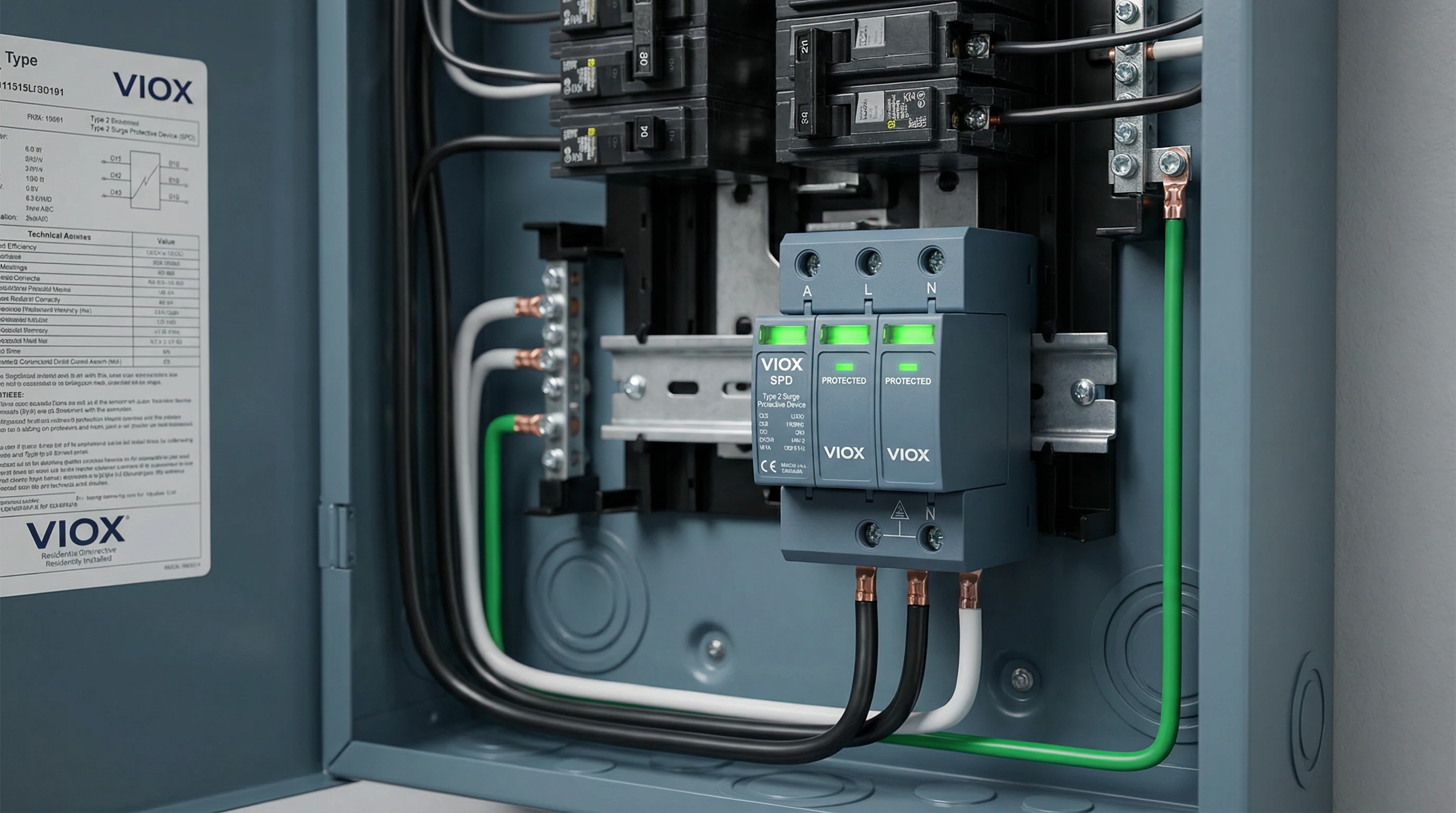
图1:住宅配电箱的专业2型浪涌保护装置安装。该装置安装在DIN导轨上,采用颜色编码的接线(黑色-火线,白色-零线,绿色-地线),并包含显示MOV健康状况的LED状态指示灯。这种配电箱级别的安装保护了家中所有下游电路、硬接线电器和插座。.
什么是电源插排浪涌保护器?
电源插排浪涌保护器(技术上称为 3 SPD ကိုရိုက်ပါ။ 符合UL 1449标准)是一种通过电线连接的即插即用设备,用于保护 单个插座位置. 的设备。您将其插入墙壁插座,然后将您的设备插入其插座。内部组件——通常是金属氧化物压敏电阻——在使用点钳制电压尖峰,限制您所连接设备承受的浪涌电压。.
与在入户总配电箱处提供保护的全屋浪涌保护器不同,3型设备在末端工作。它们是敏感电子设备的最后一道防线:计算机、电视、路由器、游戏机、音频设备。.
电源插排浪涌保护器保护的对象:
- 插入插排的设备——台式电脑、显示器、路由器、打印机、电视、游戏机、音频接收器。.
- 抵御残余浪涌——即使您安装了全屋浪涌保护器,仍可能有残余电压到达插座。使用点浪涌保护器为敏感电子设备提供了第二级钳位保护。.
它们不保护的对象:
- 其他电路或插座——仅保护插入该特定插排的设备。.
- 硬接线设备——您的暖通空调、井泵或车库门开启器无法插入插排。.
- 其他进入路径——它们不能保护通过有线电视同轴电缆、以太网或电话线进入的浪涌,除非插排包含专用的同轴电缆/以太网端口(部分型号具备此功能)。.
နည်းပညာဆိုင်ရာသတ်မှတ်ချက်များ-
- 焦耳额定值: ဂျူးလ် 300 မှ 3,000+ အထိ။ ၎င်းသည် MOVs များ မပျက်စီးမီ စွမ်းအင် စုပ်ယူနိုင်စွမ်းကို တိုင်းတာသည်။ ပိုများလေ ကောင်းလေဖြစ်သော်လည်း ဂျူးလ်တစ်ခုတည်းက ဇာတ်လမ်းတစ်ခုလုံးကို မပြောနိုင်ပါ။ - ကုပ်အားနှင့် တုံ့ပြန်ချိန်သည်လည်း အရေးကြီးပါသည်။.
- ကုပ်အား (ဗို့အားကာကွယ်မှုအဆင့်သတ်မှတ်ချက် သို့မဟုတ် VPR): SPD မှ လျှပ်စီးအားကို ကုပ်သည့် အကန့်အသတ်။ နိမ့်လေ ကောင်းလေဖြစ်သည်-
- 330V: အလွန်ကောင်းမွန်သော ကာကွယ်မှု (စားသုံးသူယူနစ်များတွင် ရှားပါးသည်)။.
- 400V: ကောင်းမွန်သော ကာကွယ်မှု။ အရည်အသွေးမြင့် အမျိုးအစား 3 SPDs များတွင် အသုံးများသည်။.
- 500V: လက်ခံနိုင်ဖွယ်။ ဘတ်ဂျက် SPD များ။.
- 600V+: အနည်းငယ်သာ။ ထိလွယ်ရှလွယ် အီလက်ထရွန်းနစ်ပစ္စည်းများအတွက် ရှောင်ကြဉ်ပါ။.
- တုံ့ပြန်ချိန်: MOVs များသည် ပုံမှန်အားဖြင့် 1 nanosecond ထက်နည်းသောအချိန်အတွင်း တုံ့ပြန်သည်။ အချို့သော ဟိုက်ဘရစ်ဒီဇိုင်းများတွင် စွမ်းအင်မြင့်မားသော ညှိနှိုင်းမှုအတွက် ဓာတ်ငွေ့ထုတ်လွှတ်ပြွန်များ (GDTs) ပါဝင်သော်လည်း GDT များသည် နှေးကွေးသည် (100+ ns)။.
- UL 1449 စာရင်း: ပက်ကေ့ခ်ျတွင် “UL 1449” ဟုဖော်ပြထားခြင်း သို့မဟုတ် “Surge Protective Device” ပါသော UL အမှတ်အသားကို ပြသထားခြင်း ရှိမရှိ စစ်ဆေးပါ။ မပါရှိပါက ၎င်းကို SPD အဖြစ် စမ်းသပ်ထားခြင်းမဟုတ်ပါ။ - ၎င်းသည် ပါဝါကြိုးတစ်ခုသာဖြစ်သည်။ ဆားကစ်အနိုင်အထက်.
သက်တမ်းပြဿနာ: MOVs လျှပ်စီးအားတစ်ခုစီနှင့်အတူ ယိုယွင်းလာသည်။ လျှပ်စီးအားများစွာပြီးနောက် - သို့မဟုတ် ကြီးမားသော လျှပ်စီးအားတစ်ခု - ၎င်းတို့သည် ပျက်ကွက်သည်။ တစ်ခါတစ်ရံတွင် ၎င်းတို့သည် ပွင့်သွားတတ်သည် (ကာကွယ်မှုမရှိသော်လည်း ပလပ်ပေါက်များသည် ဆက်လက်အလုပ်လုပ်ပြီး အစိမ်းရောင် LED သည် ဆက်လက်လင်းနေသည်)။ တစ်ခါတစ်ရံတွင် ၎င်းတို့သည် တိုတောင်းသွားပြီး ကြိုး၏ အပူချိန်ဖျူးကို အစပျိုးကာ ပလပ်ပေါက်များကို ပိတ်ပစ်သည်။. လျှပ်စီးအားကာကွယ်သည့်ကြိုးများကို ၃-၅ နှစ်တစ်ကြိမ် လဲလှယ်ပါ။, သို့မဟုတ် သိသာထင်ရှားသော လျှပ်စီးအားဖြစ်ရပ်တစ်ခု (အနီးအနားရှိ လျှပ်စီးလက်ခြင်း၊ မြင်နိုင်သော တုန်ခါမှု/အသံနှင့်အတူ ပါဝါပြတ်တောက်ခြင်း) ပြီးနောက် ချက်ချင်းလဲလှယ်ပါ။ ကြိုးများစွာတွင် MOVs များ ပျက်ကွက်သောအခါ မှောင်သွားသည့် “ကာကွယ်ထားသည်” သို့မဟုတ် “မြေစိုက်ထားသည်” LED ရှိသည်။ သင့်တွင်တစ်ခုရှိပြီး ပိတ်ထားပါက ကြိုးကို ချက်ချင်းလဲလှယ်ပါ။.
ကျွမ်းကျင်သူအကြံပြုချက်: လျှပ်စီးအားကာကွယ်သည့်ကြိုးများကို ဘယ်တော့မှ ဆက်မထားပါနှင့် သို့မဟုတ် တစ်ခုကိုတစ်ခုထဲသို့ မတပ်ပါနှင့်။ ၎င်းသည် မြေစိုက်ကွင်းပြဿနာများကို ဖန်တီးပေးပြီး ဝန်အားအဆင့်သတ်မှတ်ချက်များကို ကျော်လွန်ကာ UL စာရင်းများကို ချိုးဖောက်သည်။ SPDs များကို နံရံပလပ်ပေါက်များထဲသို့ တိုက်ရိုက်တပ်ဆင်ပါ။.
အဓိက ကွာခြားချက်များ- လွှမ်းခြုံမှု၊ ကာကွယ်မှုအဆင့်နှင့် တပ်ဆင်ခြင်း
အိမ်တစ်ခုလုံးနှင့် ပါဝါကြိုး လျှပ်စီးအားကာကွယ်သည့်ပစ္စည်းများကြား အခြေခံကွာခြားချက်မှာ ၎င်းတို့တပ်ဆင်သည့်နေရာသာ မဟုတ်ပါ။ ၎င်းတို့ကာကွယ်ပေးသောအရာ နှင့် ကာကွယ်ရေးနည်းဗျူဟာတွင် ၎င်းတို့ မည်သို့ အံဝင်ခွင်ကျဖြစ်သနည်း.
ကာကွယ်မှု လွှမ်းခြုံမှု
| အတိုင်းအတာ | အိမ်တစ်ခုလုံး SPD (အမျိုးအစား 1/2) | ပါဝါကြိုး SPD (အမျိုးအစား 3) |
| တပ်ဆင်သည့်နေရာ | ဝန်ဆောင်မှုဝင်ပေါက် သို့မဟုတ် အဓိက/ခွဲဘောင်တွင် | နံရံပလပ်ပေါက်တွင် (အသုံးပြုသည့်နေရာ) |
| ကာကွယ်မှုနယ်ပယ် | လျှပ်စစ်စနစ်တစ်ခုလုံး (ဆားကစ်အားလုံး၊ ပလပ်ပေါက်အားလုံး၊ ကြိုးတပ်ပစ္စည်း) | ထိုကြိုးတွင် တပ်ဆင်ထားသော စက်များသာ |
| 硬接线设备 | ✓ ကာကွယ်ထားသည် (HVAC၊ ရေစုပ်စက်၊ ကားဂိုဒေါင်တံခါး စသည်) | ✗ မကာကွယ်နိုင်ပါ |
| 240伏电器 | ✓ ကာကွယ်ထားသည် (မီးဖို၊ အဝတ်ခြောက်စက်၊ EV အားသွင်းစက်) | ✗ ပုံမှန်အားဖြင့် မဟုတ်ပါ (အချို့ကြိုးများသည် 240V မော်ဒယ်များကို ပေးသော်လည်း ရှားပါးသည်) |
| အခန်း/ဆားကစ်များစွာ | ✓ ဆားကစ်အားလုံးကို ကာကွယ်ထားသည် | ✗ ကြိုးတပ်ထားသည့် ပလပ်ပေါက်ကိုသာ |
| Coax/ဖုန်းလိုင်း ကာကွယ်မှု | ✗ မရှိပါ (သီးခြားကိရိယာများ လိုအပ်သည်) | အချို့မော်ဒယ်များတွင် coax/Ethernet/ဖုန်းပေါက်များ ပါဝင်သည် |
နည်းပညာဆိုင်ရာ စွမ်းဆောင်ရည်
| အင္တာနက္စာမ်က္ႏွာ | အိမ်တစ်ခုလုံး SPD (အမျိုးအစား 1/2) | ပါဝါကြိုး SPD (အမျိုးအစား 3) |
| လက်ရှိအဆင့်သတ်မှတ်ချက်ကို မြှင့်တင်ပါ။ | 40 kA မှ 100 kA+ | ပုံမှန်အားဖြင့် 6 kA မှ 15 kA (နိမ့်သည်) |
| ကုပ်/VPR | ကွဲပြားသည်; ပုံမှန်အားဖြင့် 600V–1,200V (ပိုမြင့်သော ဖြတ်သန်းခွင့်၊ သို့သော် ကြီးမားသော စွမ်းအင်ကို ကိုင်တွယ်သည်) | 330V–600V (ထိလွယ်ရှလွယ် အီလက်ထရွန်းနစ်ပစ္စည်းများအတွက် တင်းကျပ်သော ကုပ်ခြင်း) |
| တုံ့ပြန်ချိန် | < 1 ns (MOVs) သို့မဟုတ် 100+ ns (ဟိုက်ဘရစ်ဒီဇိုင်းများရှိ GDTs) | < 1 ns (MOVs) |
| စွမ်းအင် ညှိနှိုင်းမှု | တိုက်ရိုက်လျှပ်စီးကြောင့်ဖြစ်သော လျှပ်စီးအားများနှင့် အသုံးအဆောင် ယာယီများကို ကိုင်တွယ်ရန် ဒီဇိုင်းထုတ်ထားသည် | အိမ်တစ်ခုလုံး ကုပ်ပြီးနောက် ကျန်ရှိသော လျှပ်စီးအားများအတွက် သို့မဟုတ် အန္တရာယ်နည်းသောနေရာများတွင် သီးခြားအသုံးပြုရန် ဒီဇိုင်းထုတ်ထားသည် |
| သက်တမ်း/အစားထိုးခြင်း | ပုံမှန်အားဖြင့် 10+ နှစ် (အခြေအနေညွှန်ပြချက်များကို နှစ်စဉ်စစ်ဆေးပါ) | 3–5 နှစ် (အသုံးပြုသည့်နေရာတွင် MOVs များသည် ပိုမိုမြန်ဆန်စွာ ယိုယွင်းလာသည်) |
တပ်ဆင်မှုလိုအပ်ချက်များ
အိမ်တစ်ခုလုံး SPD:
- လိုင်စင်ရ လျှပ်စစ်ပညာရှင် လိုအပ်သည်—လျှပ်စစ်ဘောင်အတွင်း သို့မဟုတ် ကပ်လျက် အကာအရံတွင် တပ်ဆင်ထားသည်။.
- ခွင့်ပြုချက်နှင့် စစ်ဆေးခြင်း တရားစီရင်ပိုင်ခွင့်အပေါ် မူတည်၍ လိုအပ်နိုင်ပါသည်။.
- အမြဲတမ်း တပ်ဆင်ခြင်း—ကြိုးတပ် သို့မဟုတ် DIN-ရထားလမ်းတွင် တပ်ဆင်ထားသည်။.
- ပုံမှန် တပ်ဆင်ချိန်: 1–2 hours for an experienced electrician.
Power Strip SPD:
- DIY-friendly—plug into any wall outlet.
- No permit or electrician required.
- Portable—move between rooms or take to a new home.
- Install time: 30 seconds.
When One Protects What the Other Doesn’t
Whole house SPDs protect hardwired equipment and all circuits. If a surge enters via the utility and you have only power strip SPDs at your computer desk and TV, your HVAC control board, well pump, garage door opener, and every other outlet in the house is unprotected. This is why whole house SPDs are now code-required for new construction and service upgrades under the 2023 NEC.
Power strip SPDs provide localized clamping with lower let-through voltage. Even with a whole house SPD, some residual voltage reaches your outlets. For sensitive electronics—computers with SSDs, home theater gear, network equipment—a point-of-use SPD with 400V VPR adds a second stage of protection that whole house SPDs (with higher clamping thresholds) don’t offer.
Whole house SPDs are broad but blunt. They handle high energy across the entire system but let through more voltage than sensitive electronics prefer. Power strip SPDs are narrow but precise. They clamp tightly at the device but protect only what’s plugged in. Neither replaces the other. In most scenarios—especially homes with valuable electronics and hardwired appliances—you need နှစ်ခုလုံး.
In commercial or high-value residential settings, engineers specify coordinated SPD cascades: Type 1 or 2 at service, Type 2 at sub-panels, and Type 3 at sensitive equipment. Each stage reduces surge energy before the next. This is the “layered protection” strategy recommended by IEEE and NFPA.

Figure 2: Direct comparison between whole house SPD (Type 2, left) and power strip SPD (Type 3, right). Key differences include installation location (panel vs. outlet), protection scope (entire system vs. single location), surge current capacity (40-100kA vs. 6-15kA), and cost structure (professional installation required vs. DIY plug-in). Neither replaces the other—most homes benefit from both.
Cost Comparison: Equipment & Installation
Protection has a price. Here’s what whole house and power strip surge protectors actually cost, including equipment, installation, and long-term replacement.
Whole House SPD Costs
Equipment (Type 2 SPD for typical residential retrofit):
- Budget models: $75–150 (20 kA to 40 kA surge rating, basic status indicator)
- Mid-range models: $150–300 (40 kA to 65 kA, LED status, replaceable MOV modules)
- Premium models: $300–600+ (80 kA to 100 kA+, remote monitoring, surge counters, hybrid MOV+GDT designs)
Installation (licensed electrician required):
- Labor: $150–400 depending on panel accessibility, local labor rates, and whether a new breaker is needed.
- Permit/inspection: $50–150 in jurisdictions that require it.
- Total installed cost: $300–1,000 for most residential installations.
Replacement/maintenance:
- Most Type 2 SPDs last 10+ years. Premium models with replaceable MOV modules let you swap components without replacing the entire unit ($50–150 per module).
- Check the status LED annually. If it indicates failure, replace immediately.
Scenario: A homeowner in Florida (high lightning risk) installs a mid-range 50 kA Type 2 SPD. Equipment: $250. Electrician labor: $300. Permit: $75. Total: $625. Over 10 years, that’s $62.50/year for whole-house protection.
Power Strip SPD Costs
Equipment (Type 3 SPD, typical 6-outlet strip):
- Budget models: $10–25 (300–900 joules, 500–600V VPR, basic or no status indicator)
- Mid-range models: $25–60 (1,000–2,000 joules, 400–500V VPR, “protected” LED, USB charging ports)
- Premium models: $60–150+ (2,000–3,000+ joules, 330–400V VPR, coax/Ethernet protection, replaceable fuses, remote outlets)
တပ်ဆင်ခြင်း-
- ကိုယ်တိုင်လုပ်ပါ။: Plug it in. $0 labor.
အစားထိုးခြင်း-
- Every 3–5 years, or after major surge events. If you buy a $40 strip and replace it every 4 years, that’s $10/year per strip.
Scenario: A homeowner protects 3 locations (home office, entertainment center, network closet) with mid-range strips at $40 each. Upfront: $120. Over 4 years before replacement: $30/year total, or $10/year per location.
Combined Protection: Layered Strategy Cost
Most homes benefit from နှစ်ခုလုံး whole house and point-of-use protection. Here’s what that looks like:
ကနဦး ရင်းနှီးမြှုပ်နှံမှု:
- အိမ်တစ်ခုလုံးအတွက် SPD: $625 (ပစ္စည်း + တပ်ဆင်ခ)
- ထိလွယ်ရှလွယ်ပစ္စည်းများအတွက် power strip SPD ၃-၄ ခု: $120–160
- စုစုပေါင်း ကနဦးကုန်ကျစရိတ်: $745–785
ဆက်လက်ကုန်ကျစရိတ်များ (ပျမ်းမျှ တစ်နှစ်လျှင်):
- အိမ်တစ်ခုလုံးအတွက် SPD ကို ၁၀ နှစ်အတွင်း ဖြန့်ဝေခြင်း: $62.50/တစ်နှစ်
- Power strip အစားထိုးခြင်း (၄ နှစ်လျှင် ၄ ခု): $40/တစ်နှစ်
- စုစုပေါင်း တစ်နှစ်ကုန်ကျစရိတ်: ~$100/တစ်နှစ် အိမ်အတွက် ဘက်စုံကာကွယ်မှုအတွက်
ကုန်ကျစရိတ်နှင့် စွန့်စားရမှု: အရှုံးအမြတ် မျှခြေတွက်ချက်ခြင်း
HVAC ထိန်းချုပ်ဘုတ်တစ်ခု အစားထိုးခြင်း: $300–800။ ရေစုပ်စက်မော်တာ: $500–1,200။ အချက်အလက်ဆုံးရှုံးမှုနှင့်အတူ desktop ကွန်ပျူတာ: ဟာ့ဒ်ဝဲနှင့် ပြန်လည်ရယူခြင်းအတွက် $1,000+။ အိမ်သုံးရုပ်ရှင်ရုံလက်ခံစက်: $400–1,500။ လျှပ်စီးအားမြှင့်တင်မှုတစ်ခုသည် ထက်ပို၍ ကုန်ကျနိုင်သည် ၅-၁၀ နှစ်ကြာ လျှပ်စီးအားကာကွယ်မှုအပြည့်အဝ.
သင်သည် စွန့်စားရမှုမြင့်မားသောနေရာတွင် နေထိုင်ပါက (မိုးကြိုးပစ်ခတ်မှု မကြာခဏဖြစ်ပွားခြင်း၊ ကျေးလက်ဒေသရှိ လျှပ်စစ်ဓာတ်အားလိုင်းများ၊ မတည်ငြိမ်သော အသုံးအဆောင်များ) နှင့် သင့်အိမ်တွင် $5,000+ တန်ဖိုးရှိသော အီလက်ထရွန်းနစ်ပစ္စည်းများနှင့် အိမ်သုံးပစ္စည်းများ ပါဝင်ပါက၊ $750 အလွှာလိုက် ကာကွယ်မှုစနစ်အတွက် အကျိုးအမြတ်ရရှိမည့်ကာလမှာ တစ်ကြိမ် ရှောင်ရှားနိုင်သော ချို့ယွင်းမှု.
အချို့သော အိမ်ပိုင်ရှင်အာမခံမူဝါဒများသည် အိမ်တစ်ခုလုံးအတွက် လျှပ်စီးအားကာကွယ်မှုအတွက် လျှော့စျေးများ (၅-၁၀%) ကို ပေးဆောင်ပါသည်။ သင့်အာမခံကုမ္ပဏီနှင့် စစ်ဆေးပါ—နှစ်စဉ်ချွေတာမှုသည် သင်၏ power strip အစားထိုးမှုများကို ကာမိနိုင်ပါသည်။.
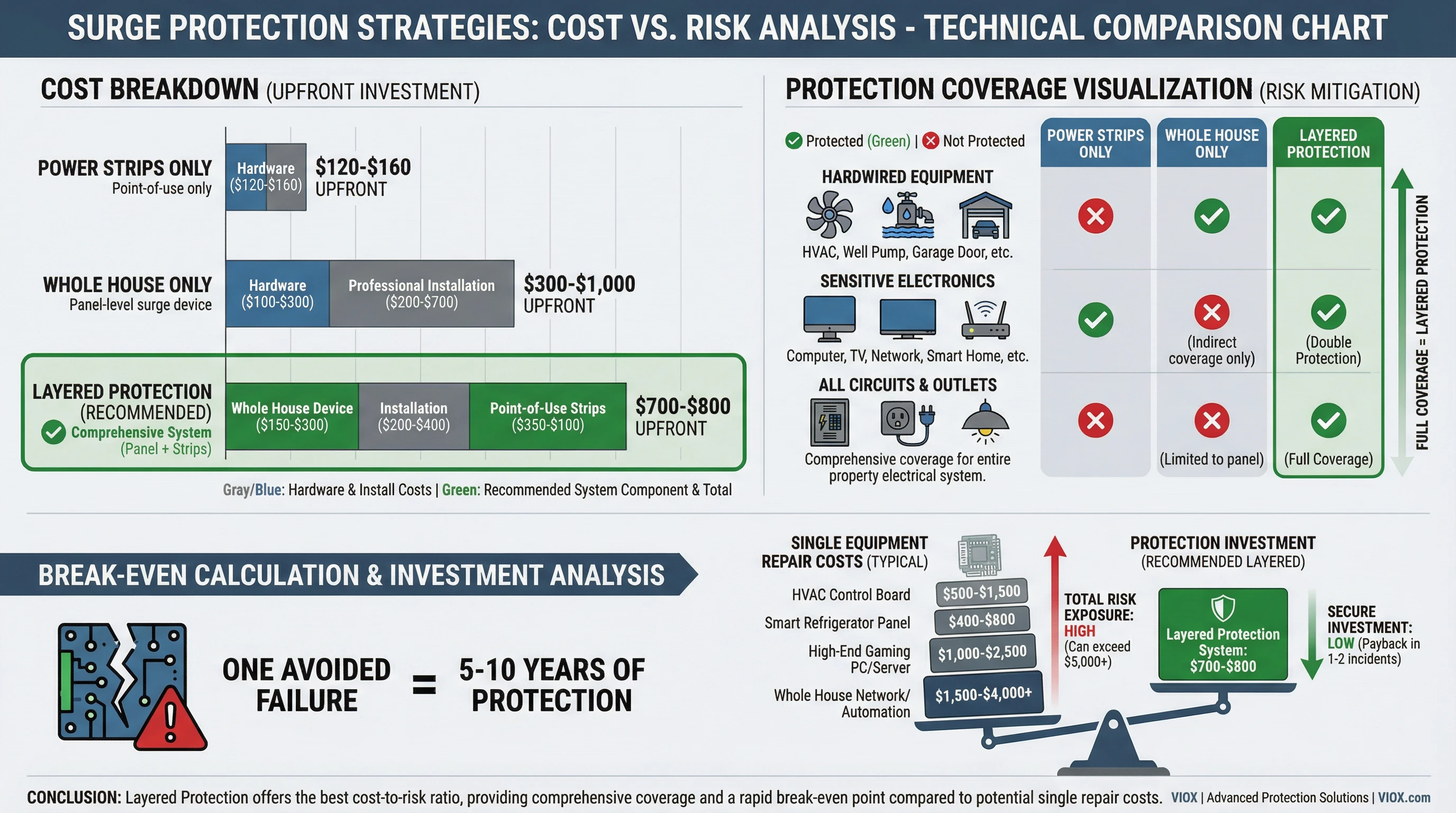
ပုံ ၃: လျှပ်စီးအားကာကွယ်မှုနည်းဗျူဟာ သုံးခုကို နှိုင်းယှဉ်သည့် ကုန်ကျစရိတ်-အကျိုးအမြတ် ခွဲခြမ်းစိတ်ဖြာခြင်း။ အလွှာလိုက်ကာကွယ်မှု (အိမ်တစ်ခုလုံး + power strips, $700-800 ကနဦး) သည် ပစ္စည်းအမျိုးအစားအားလုံးအတွက် ဘက်စုံလွှမ်းခြုံမှုကို ပေးပါသည်။ အရှုံးအမြတ် မျှခြေမှတ်သည် တစ်ကြိမ် ရှောင်ရှားနိုင်သော ပစ္စည်းချို့ယွင်းမှု—HVAC ဘုတ်တစ်ခု အစားထိုးခြင်း သို့မဟုတ် အချက်အလက်ဆုံးရှုံးမှုနှင့်အတူ ကွန်ပျူတာတစ်လုံးသည် ၅-၁၀ နှစ်ကြာ ကာကွယ်မှုအပြည့်အဝ၏ ကုန်ကျစရိတ်ထက် ကျော်လွန်ပါသည်။.
တစ်ခုချင်းစီကို (သို့မဟုတ် နှစ်ခုစလုံးကို) ဘယ်အချိန်မှာ အသုံးပြုမလဲ
အိမ်တိုင်းသည် အိမ်တစ်ခုလုံးအတွက် ကာကွယ်မှုမလိုအပ်ဘဲ စက်ပစ္စည်းတိုင်းသည် power strip SPD မလိုအပ်ပါ။ ဤတွင် စွန့်စားရမှုအပေါ်အခြေခံသည့် ဆုံးဖြတ်ချက်မူဘောင်တစ်ခုဖြစ်သည်။.
အိမ်တစ်ခုလုံးအတွက် SPD ကို အသုံးပြုပါ (လိုအပ်သည် သို့မဟုတ် အထူးအကြံပြုသည်)
ကုဒ်လိုအပ်သော အခြေအနေများ (၂၀၂၃ NEC):
- လူနေအိမ်ယူနစ်များတွင် ဆောက်လုပ်ရေးအသစ် သို့မဟုတ် ဝန်ဆောင်မှုအဆင့်မြှင့်တင်မှုများ
- အချို့သော ဓာတ်အားပေးစက်များနှင့် နေရာထိုင်ခင်းများ (အဆောင်များ၊ ဆေးရုံများ၊ ဧည့်ခန်းများ)
- သင်၏ဒေသဆိုင်ရာစီရင်ပိုင်နက်သည် NEC ၂၀၂၃ လျှပ်စီးအားကာကွယ်မှုလိုအပ်ချက်များကို အတင်းအကျပ်အကောင်အထည်ဖော်သည့် မည်သည့်အခြေအနေမဆို
အထူးအကြံပြုသည် (စွန့်စားရမှုမြင့်မားခြင်း သို့မဟုတ် တန်ဖိုးမြင့်မားခြင်း):
- မိုးကြိုးပစ်ခတ်မှု မကြာခဏဖြစ်ပွားခြင်း: သင်သည် ဖလော်ရီဒါ၊ ဂလားပင်လယ်ကွေ့ကမ်းရိုးတန်း၊ တောင်တန်းဒေသများ သို့မဟုတ် တစ်နှစ်လျှင် မိုးကြိုးမုန်တိုင်း ၂၅ ရက်နှင့်အထက်ရှိသည့် မည်သည့်နေရာတွင်မဆို နေထိုင်ပါသည်။.
- ကျေးလက်ဒေသရှိ လျှပ်စစ်ဓာတ်အားလိုင်းများ: သင်၏အသုံးအဆောင်ဝန်ဆောင်မှုသည် မြေပြင်အထက်လိုင်းများ (မြေအောက်မဟုတ်) မှတစ်ဆင့် ဝင်ရောက်သည်။ မြေပြင်အထက်လိုင်းများသည် မိုးကြိုးကြောင့်ဖြစ်သော လျှပ်စီးအားများအတွက် ပိုမိုထိခိုက်လွယ်သည်။.
- သင် အစားထိုးရန် မတတ်နိုင်သော ကြိုးတပ်ပစ္စည်းများ: HVAC စနစ်များ ($3,000–10,000+), ရေစုပ်စက်များ ($800–2,500), ဆိုလာအင်ဗာတာများ ($1,500–5,000), EV အားသွင်းစက်များ ($500–2,000)။.
- လျှပ်စီးအားကြောင့် ပျက်စီးမှုမှတ်တမ်း: သင်သည် ယခင်က လျှပ်စီးအားများကြောင့် ပစ္စည်းများ ဆုံးရှုံးခဲ့ဖူးသည်။.
- အိမ်တစ်ခုလုံးအတွက် အလိုအလျောက်စနစ် သို့မဟုတ် လုံခြုံရေးစနစ်များ: power strips တွင် တပ်ဆင်၍မရသော ကြိုးတပ် hubs, sensors နှင့် ထိန်းချုပ်ဘောင်များ။.
Power Strip SPD ကို အသုံးပြုပါ (အသုံးပြုသည့်နေရာတွင် ကာကွယ်ခြင်း)
အတွက် မရှိမဖြစ်-
- တန်ဖိုးမြင့် အီလက်ထရွန်းနစ်ပစ္စည်းများ: Desktop ကွန်ပျူတာများ ($800+), workstations, gaming PCs, အိမ်သုံးရုပ်ရှင်ရုံလက်ခံစက်များ ($400+), 4K/8K TVs, အသံပစ္စည်းများ။.
- အချက်အလက်အရေးကြီးသော စက်ပစ္စည်းများ: အစားထိုး၍မရသော ဖိုင်များပါရှိသော ကွန်ပျူတာများ, NAS/RAID arrays, servers, အရောင်းနေရာစနစ်များ။.
- ထိလွယ်ရှလွယ် ကွန်ရက်ပစ္စည်းများ: Routers, switches, modems, Wi-Fi access points။ ခဏတာ လျှပ်စီးအားများပင် firmware ကို ပျက်စီးစေနိုင်သည်။.
- တစ်နေရာတည်းတွင် စက်ပစ္စည်းများစွာ: အိမ်ရုံးခန်း တပ်ဆင်မှုများ (ကွန်ပျူတာ + မော်နီတာ + ပရင်တာ + ရောက်တာ), ဖျော်ဖြေရေးစင်တာများ (TV + လက်ခံစက် + ဂိမ်းစက် + streaming box)။.
power strip SPDs များကို ကျော်သွားပါ:
- တန်ဖိုးနည်းသော၊ အီလက်ထရွန်းနစ်မဟုတ်သော ဝန်များ: မီးအိမ်များ၊ ပန်ကာများ၊ ကော်ဖီဖျော်စက်များ။.
- အတွင်းပိုင်း လျှပ်စီးအားကာကွယ်မှုပါရှိသော စက်ပစ္စည်းများ: ခေတ်မီ ဖုန်း/တက်ဘလက် အားသွင်းစက်အများစုတွင် အခြေခံ MOV စစ်ထုတ်ခြင်း ပါဝင်သည်။.
- ခံနိုင်ရည်ရှိသော အပူပေးစက်ပစ္စည်းများ (သို့သော် ဝန်ကန့်သတ်ချက်များကို စောင့်ကြည့်ပါ): ပေါင်မုန့်မီးကင်စက်များ၊ အပူပေးစက်များ—သို့သော် ပါဝါဆွဲအားမြင့်မားသော စက်ပစ္စည်းများ (1,200W+) ကို strips များတွင် ဘယ်တော့မှ မတပ်ဆင်ပါနှင့်. ။ ၎င်းတို့ကို နံရံပလပ်ပေါက်များမှ တိုက်ရိုက်လည်ပတ်ပါ။.
နှစ်ခုစလုံးကို အသုံးပြုပါ (အလွှာလိုက်ကာကွယ်မှု)
This is the အကောင်းဆုံးအလေ့အကျင့်ကို အကြံပြုထားသည် အထူးသဖြင့် အောက်ပါတို့ပါရှိသော အိမ်အများစုအတွက်:
- ကြိုးတပ်ပစ္စည်းများ ရောနှောခြင်း (HVAC, ရေစုပ်စက်) နှင့် ထိလွယ်ရှလွယ် ပလပ်ထိုး အီလက်ထရွန်းနစ်ပစ္စည်းများ (ကွန်ပျူတာများ၊ အိမ်သုံးရုပ်ရှင်ရုံ)။.
- အိမ်တစ်အိမ်လုံးတွင် တန်ဖိုးမြင့်ပစ္စည်းများ ($5,000+ စုစုပေါင်း အစားထိုးကုန်ကျစရိတ်)။.
- ပထဝီဝင် သို့မဟုတ် အသုံးအဆောင်ဆိုင်ရာ စွန့်စားရမှုအချက်များ (မိုးကြိုးပစ်လွယ်သောနေရာ၊ မြေပြင်အထက်လိုင်းများ၊ မတည်ငြိမ်သော ဓာတ်အားလိုင်း)။.
အလွှာလိုက်ကာကွယ်မှု အလုပ်လုပ်ရသည့်အကြောင်းရင်း:
- အိမ်တစ်ခုလုံးအတွက် SPD သည် ဝန်ဆောင်မှုဝင်ပေါက်တွင် ကြီးမားသော စွမ်းအင်လျှပ်စီးအားကို ညှပ်ပေးသည် (40 kA မှ 100 kA အထိ စွမ်းရည်)။.
- ကျန်ရှိသော ဗို့အား (လျှော့ချသော်လည်း ဖယ်ရှားခြင်းမရှိ) သည် သင့်ပလပ်ပေါက်များသို့ ရောက်ရှိသည်။.
- သင့်စားပွဲ သို့မဟုတ် ဖျော်ဖြေရေးစင်တာရှိ power strip SPD သည် ထိုကျန်ရှိသော လျှပ်စီးအားကို တင်းကျပ်သော ဗို့အားကန့်သတ်ချက်များဖြင့် ညှပ်ပေးသည် (panel တွင် 1,000V+ နှင့် နှိုင်းယှဉ်ပါက 400V VPR)။.
- သင်၏ ထိလွယ်ရှလွယ် အီလက်ထရွန်းနစ်ပစ္စည်းများသည် အနည်းဆုံး ဗို့အားဖိစီးမှုကို မြင်တွေ့ရပြီး သင်၏ ကြိုးတပ်ပစ္စည်းများ (HVAC စသည်) ကိုလည်း panel-level စက်ပစ္စည်းဖြင့် ကာကွယ်ထားသည်။.
Scenario 1: Homeowner in suburban Ohio (moderate lightning risk, underground utility service, $8,000 in electronics and appliances). ထောက်ခံချက်: Whole house SPD (code-required for new construction, recommended for high equipment value) + power strip SPDs at computer desk and entertainment center.
Scenario 2: Apartment renter in urban area (low lightning risk, no control over electrical panel). ထောက်ခံချက်: Power strip SPDs only, at all valuable electronics. No whole-house option available without landlord consent.
Scenario 3: Rural homeowner in Florida (very high lightning risk, overhead power lines, $15,000+ in appliances, solar system, EV charger). ထောက်ခံချက်: Premium whole house SPD (80 kA+, hybrid MOV+GDT) + power strip SPDs at every sensitive device + coax surge protectors at cable/antenna entry.
If you install a whole house SPD, don’t assume power strips are unnecessary. Whole house SPDs have higher clamping voltages (letting through more voltage) because they’re designed to handle enormous energy. Sensitive electronics still benefit from the tighter clamping (330–400V VPR) that point-of-use SPDs provide.
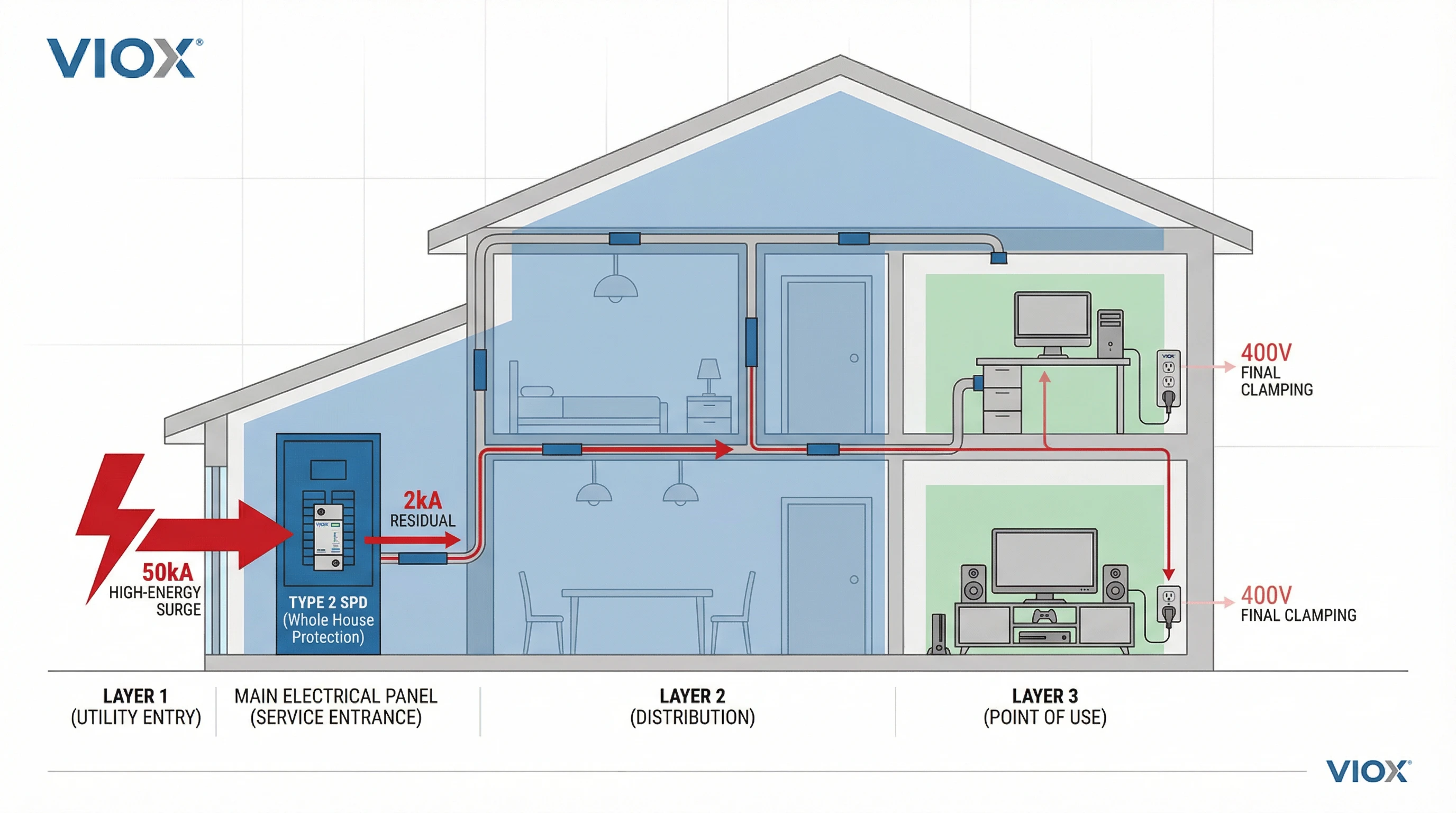
Figure 4: Three-stage layered protection strategy in a residential installation. Stage 1 (blue zone): Type 2 SPD at service entrance clamps 50kA surge to 2kA residual, protecting entire home. Stage 2: Building wiring distributes power to all circuits. Stage 3 (green zones): Type 3 SPDs at sensitive equipment (home office, entertainment center) further clamp residual surge to 400V, ensuring minimal voltage stress on electronics. This coordinated cascade approach is recommended by IEEE, NFPA, and IEC standards.
The Layered Protection Strategy: How Type 1, 2 & 3 SPDs Work Together
In electrical engineering, coordinated surge protection means installing SPDs at multiple points in your electrical system so that each device handles a portion of the surge energy, with later stages facing progressively smaller residual surges. This “cascade” approach is recommended by IEEE, NFPA, and IEC standards for high-value or critical installations.
The Three-Stage Model
Stage 1: Service Entrance (Type 1 or Type 2 SPD at main panel)
- တည်နေရာ: At the utility service entrance, either line-side (Type 1, before main breaker) or load-side (Type 2, after main breaker, most common for residential).
- လုပ်ဆောင်ချက်: Intercepts high-energy surges entering via utility lines. Clamps massive transients (40 kA to 100 kA+) before they propagate into the building’s wiring.
- Let-through voltage: Typically 600V to 1,200V (higher clamping threshold to handle extreme energy).
- ကာကွယ်ပေးတယ်။: All downstream circuits, all hardwired equipment, all outlets.
Stage 2: Sub-Panels or Branch Distribution (Type 2 SPD, optional in residential, common in commercial)
- တည်နေရာ: At sub-panels serving remote areas (detached garage, workshop, barn) or high-value zones (data center, lab).
- လုပ်ဆောင်ချက်: Clamps residual surges that passed through the Stage 1 SPD, or surges induced locally within the building’s wiring.
- Let-through voltage: 400V to 800V (tighter than Stage 1).
- ကာကွယ်ပေးတယ်။: All circuits downstream of that sub-panel.
Stage 3: Point of Use (Type 3 SPD, power strip or receptacle)
- တည်နေရာ: At the outlet where sensitive equipment plugs in.
- လုပ်ဆောင်ချက်: Final clamping stage. Reduces residual voltage to levels sensitive electronics can tolerate.
- Let-through voltage: 330V to 500V (tightest clamping).
- ကာကွယ်ပေးတယ်။: Only the devices plugged into that SPD.
Why Cascading Works: Energy Sharing
Imagine a 50 kA lightning-induced surge entering your service. If only a Type 3 SPD (rated for 6 kA to 15 kA) stood between that surge and your computer, it would fail instantly—vaporized MOVs, melted housing, and your computer likely damaged anyway.
With layered protection:
- ဟိ Type 1/2 SPD at the panel handles the bulk of the energy (let’s say it clamps 48 kA and lets through 2 kA at 800V).
- ဟိ Type 3 SPD at your desk sees that much-reduced 2 kA surge and clamps it to 400V.
- Your computer’s power supply sees 400V (which it can handle briefly) instead of 6,000V+ (instant death).
Each stage operates within its design limits. No single device is overwhelmed.
Coordination Distance: The 10-Meter Rule
UL 1449 specifies that Type 3 SPDs should be installed at least 10 meters (30 feet) of conductor length from the service panel to the point of use. This distance provides impedance (resistance in the wiring) that helps coordinate the surge response between panel-level and point-of-use SPDs. If you plug a Type 3 SPD into an outlet 5 feet from the panel, the two SPDs may not coordinate properly, and one could fail prematurely.
Practical note: Most homes easily meet this rule—your computer desk or entertainment center is typically 30+ feet of wiring away from the panel once you account for routing through walls, up floors, etc.
Real-World Layered Protection Example
Scenario: A homeowner in a rural area (high lightning risk, overhead power lines) installs:
- Type 2 SPD at main panel (80 kA, $300 equipment + $300 install)
- Power strip SPD at home office (2,000 joules, 400V VPR, $40)
- Power strip SPD at entertainment center (1,500 joules, 500V VPR, $35)
- Coax surge protector at cable entry ($25)
Total upfront: $700.
A lightning strike hits a nearby transformer. The 60 kA surge enters via the utility service. The panel SPD clamps it to 1 kA residual. The home office power strip SPD further clamps to 400V. The computer sees a brief 400V spike—well within tolerance. The HVAC, protected only by the panel SPD, sees ~800V—also within its design margin. Nothing fails. The $700 investment just saved $10,000+ in equipment.
ကျွမ်းကျင်သူအကြံပြုချက်: In commercial settings or high-value residential installations, engineers specify SPD coordination studies to ensure devices at each stage are sized and placed correctly. For typical homes, the simple rule is: panel-level Type 2 SPD + point-of-use Type 3 SPDs at sensitive equipment = adequate coordination.
Decision Matrix: Which Protection Do You Need?
Use this matrix to identify your protection strategy based on your situation.
| သင်၏အခြေအနေ | အိမ်တစ်ခုလုံးအတွက် SPD လိုအပ်ပါသလား။ | Power Strip SPD များ လိုအပ်ပါသလား။ | ဦးစားပေး |
| ဆောက်လုပ်ရေးအသစ် သို့မဟုတ် လျှပ်စစ်ပိုင်းဆိုင်ရာ အဆင့်မြှင့်တင်မှုကြီး | လိုအပ်သည်။ (2023 NEC) | ထိလွယ်ရှလွယ်သော စက်ပစ္စည်းများတွင် အသုံးပြုရန် အကြံပြုထားပါသည်။ | Code စည်းမျဉ်းကို ဦးစွာလိုက်နာပါ၊ ထို့နောက် အလွှာလိုက်ကာကွယ်မှုပြုလုပ်ပါ။ |
| မိုးကြိုးအန္တရာယ်မြင့်မားသောနေရာ (FL, Gulf Coast, တောင်များ) + လေကြောင်းလျှပ်စစ်လိုင်းများ | မရှိမဖြစ် | မရှိမဖြစ် တန်ဖိုးကြီး အီလက်ထရွန်းနစ်ပစ္စည်းများအားလုံးတွင် အသုံးပြုပါ။ | နှစ်မျိုးလုံး—အန္တရာယ်အများဆုံးအခြေအနေ |
| ဆင်ခြေဖုံး/အလယ်အလတ်အန္တရာယ် + မြေအောက်အသုံးအဆောင် + ၅,၀၀၀ ကျော်တန်ဖိုးရှိ စက်ပစ္စည်းများ | အထူးအကြံပြုလိုပါသည်။ | မရှိမဖြစ် ကွန်ပျူတာများ၊ အိမ်တွင်းရုပ်ရှင်ရုံ၊ ကွန်ရက်ဆက်တင်များတွင် အသုံးပြုပါ။ | အလွှာလိုက်ကာကွယ်မှု |
| မြို့ပြ/မိုးကြိုးအန္တရာယ်နည်းပါးသောနေရာ + အိမ်ငှား (လျှပ်စစ်ဘောင်သို့ ဝင်ရောက်ခွင့်မရှိ) | မဖြစ်နိုင်ပါ။ | မရှိမဖြစ် တန်ဖိုးကြီး စက်ပစ္စည်းများအားလုံးတွင် အသုံးပြုပါ။ | Power strips များသာ |
| ကြိုးတပ်ထားသော တန်ဖိုးကြီး စက်ပစ္စည်းများ (HVAC, ရေစုပ်စက်, ဆိုလာ, EV အားသွင်းစက်) | မရှိမဖြစ် (ကာကွယ်ရန် တစ်ခုတည်းသောနည်းလမ်း) | ရွေးချယ်နိုင်သည် (ပလပ်ထိုးသုံးပစ္စည်းများအတွက်) | အိမ်တစ်ခုလုံးအတွက် SPD ဦးစားပေး |
| ထိလွယ်ရှလွယ်သော အီလက်ထရွန်းနစ်ပစ္စည်းများသာ (ကွန်ပျူတာများ၊ အိမ်တွင်းရုပ်ရှင်ရုံ) + မိုးကြိုးအန္တရာယ်နည်းပါးသောနေရာ | ရွေးချယ်နိုင်သည် (ထားရှိရန်ကောင်းသည်) | မရှိမဖြစ် | Power strips များကို ဦးစွာထားပါ၊ အိမ်တစ်ခုလုံးအတွက် SPD ကို နောက်မှစဉ်းစားပါ။ |
| ဘတ်ဂျက်အကန့်အသတ်ရှိသော်လည်း အန္တရာယ်မြင့်မားသောနေရာ | မရှိမဖြစ် (စနစ်တစ်ခုလုံးကို ဦးစွာကာကွယ်ပါ) | ဘတ်ဂျက်ခွင့်ပြုသည်နှင့်အမျှ တဖြည်းဖြည်းထည့်ပါ။ | အိမ်တစ်ခုလုံးအတွက် SPD ကို ဦးစွာထားပါ။ |
| စီးပွားဖြစ်/စက်မှုလုပ်ငန်းသုံး အဆောက်အဦ | လိုအပ်သည်။ (Code အရ Type 1 သို့မဟုတ် 2) | လိုအပ်သည်။ ဒေတာစက်ပစ္စည်းများ၊ ထိန်းချုပ်မှုစနစ်များတွင် အသုံးပြုပါ။ | နှစ်မျိုးလုံး—ညှိနှိုင်းမှုလေ့လာရန် အင်ဂျင်နီယာနှင့် တိုင်ပင်ပါ။ |
လျင်မြန်သော ဆုံးဖြတ်ချက်ချမှတ်နည်း
ဤနေရာမှစတင်ပါ: သင်သည် သင်၏အိမ်ကို ပိုင်ဆိုင်ပါသလား သို့မဟုတ် လျှပ်စစ်ဘောင်ကို ထိန်းချုပ်နိုင်ပါသလား။
- အမွတ္ (အိမ်ငှား၊ ဘောင်သို့ ဝင်ရောက်ခွင့်မရှိသော ကွန်ဒို) → Power strip SPD များသာ. ၂၀၀ ကျော်တန်ဖိုးရှိသော စက်ပစ္စည်းတိုင်းကို ကာကွယ်ပါ။ Strips များကို ၃-၅ နှစ်တစ်ကြိမ် လဲလှယ်ပါ။.
- ဟုတ်ကဲ့ → ဆက်လုပ်ပါ။.
သင်၏အိမ်သည် မိုးကြိုးအန္တရာယ်မြင့်မားသောနေရာတွင် ရှိပါသလား သို့မဟုတ် လေကြောင်းလျှပ်စစ်လိုင်းများ ရှိပါသလား။
- ဟုတ်ကဲ့ → အိမ်တစ်ခုလုံးအတွက် SPD သည် မရှိမဖြစ်လိုအပ်သည်။. အလွှာလိုက်ကာကွယ်မှုအတွက် ထိလွယ်ရှလွယ်သော အီလက်ထရွန်းနစ်ပစ္စည်းများတွင် power strip SPD များကို ထည့်ပါ။.
- မရှိပါ သို့မဟုတ် မသေချာပါ → ဆက်လုပ်ပါ။.
၃,၀၀၀ ကျော်တန်ဖိုးရှိသော ကြိုးတပ်စက်ပစ္စည်းများ (HVAC, ရေစုပ်စက်, ဆိုလာ, EV အားသွင်းစက်) ရှိပါသလား။
- ဟုတ်ကဲ့ → အိမ်တစ်ခုလုံးအတွက် SPD သည် မရှိမဖြစ်လိုအပ်သည်။ (ကြိုးတပ်စက်ပစ္စည်းများကို ကာကွယ်ရန် တစ်ခုတည်းသောနည်းလမ်း)။ ပလပ်ထိုးသုံး အီလက်ထရွန်းနစ်ပစ္စည်းများတွင် power strips များကို ထည့်ပါ။.
- အမွတ္ → ဆက်လုပ်ပါ။.
စုစုပေါင်း ၅,၀၀၀ ကျော်တန်ဖိုးရှိသော ပလပ်ထိုးသုံး အီလက်ထရွန်းနစ်ပစ္စည်းများ (ကွန်ပျူတာများ၊ တီဗီများ၊ အိမ်တွင်းရုပ်ရှင်ရုံ၊ ကွန်ရက်ဆက်တင်များ) ရှိပါသလား။
- ဟုတ်ကဲ့ → Power strip SPD များသည် မရှိမဖြစ်လိုအပ်သည်။. အိမ်တစ်ခုလုံးအတွက် SPD ကို ပြီးပြည့်စုံသော ကာကွယ်မှုအတွက် အကြံပြုထားသော်လည်း ဘတ်ဂျက်အကန့်အသတ်ရှိပါက power strips များသည် သင်၏ဦးစားပေးဖြစ်သည်။.
- အမွတ္ → ဦးစားပေးနည်းပါးသော အခြေအနေ. သင်၏တန်ဖိုးအကြီးဆုံး စက်ပစ္စည်းများတွင် အခြေခံ power strip SPD များ (၂၀-၄၀) ကို ထည့်သွင်းစဉ်းစားပါ။ ဆောက်လုပ်ရေးအသစ်အတွက် code အရ မလိုအပ်ပါက အိမ်တစ်ခုလုံးအတွက် SPD သည် ရွေးချယ်နိုင်ပါသည်။.
လာမည့် ၁-၂ နှစ်အတွင်း လျှပ်စစ်ဘောင်ကို အဆင့်မြှင့်တင်ရန် စီစဉ်နေပါက ထိုစီမံကိန်းအတွင်း အိမ်တစ်ခုလုံးအတွက် SPD ကို စောင့်ဆိုင်းပြီး တပ်ဆင်ပါ (သင်၌ လျှပ်စစ်ပညာရှင်နှင့် ခွင့်ပြုချက် ရရှိပြီးဖြစ်လိမ့်မည်)။ ထိုအတောအတွင်း ချက်ချင်းကာကွယ်မှုအတွက် power strip SPD များကို အသုံးပြုပါ။.
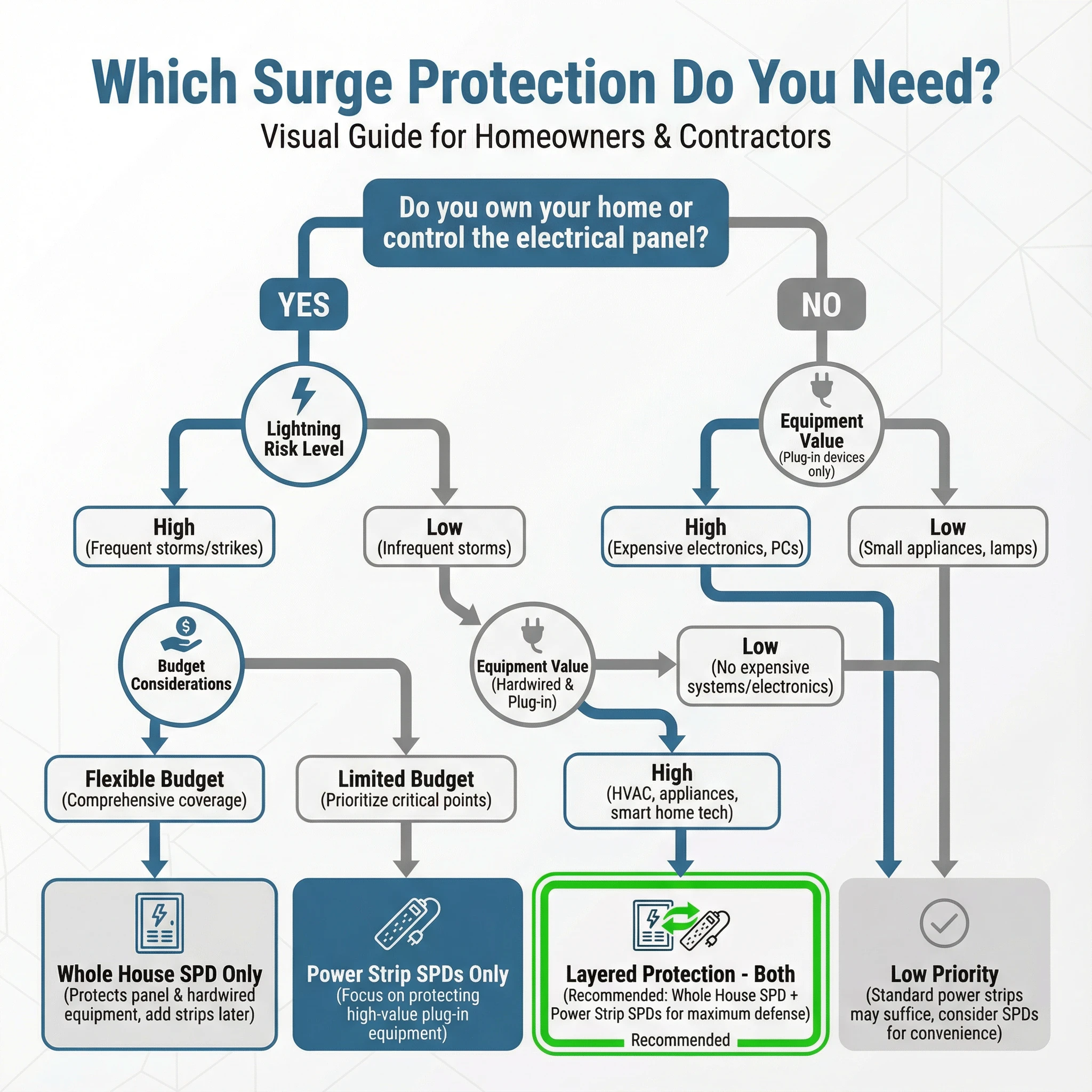
ပုံ ၅- လျှပ်စီးကြောင်းကာကွယ်မှု သတ်မှတ်ချက်အတွက် ဆုံးဖြတ်ချက်ချမှတ်နည်း။ ဘောင်သို့ ဝင်ရောက်ခွင့် (အိမ်ပိုင်ရှင်နှင့် အိမ်ငှား) ကို ဦးစွာဆုံးဖြတ်ပြီးနောက် မိုးကြိုးအန္တရာယ်၊ စက်ပစ္စည်းတန်ဖိုးနှင့် ဘတ်ဂျက်ကို အကဲဖြတ်ပါ။ အခြေအနေအများစုသည် အလွှာလိုက်ကာကွယ်မှု (အိမ်တစ်ခုလုံး + အသုံးပြုသည့်နေရာ SPD များ) သို့ ဦးတည်သွားပြီး ပြီးပြည့်စုံသော ကာကွယ်မှုနှင့် ကုန်ကျစရိတ်သက်သာမှုကို ချိန်ညှိပေးသည်။ ပထဝီဝင်၊ စက်ပစ္စည်းနှင့် ဝင်ရောက်ခွင့်အချက်များအပေါ် အခြေခံ၍ သင်၏ကာကွယ်မှုဦးစားပေးကို ဖော်ထုတ်ရန် ဤဆုံးဖြတ်ချက်ချမှတ်နည်းကို အသုံးပြုပါ။.
VIOX အိမ်တစ်ခုလုံးနှင့် အသုံးပြုသည့်နေရာ လျှပ်စီးကြောင်းကာကွယ်မှု ဖြေရှင်းနည်းများ
VIOX တွင် ကျွန်ုပ်တို့သည် လူနေအိမ်၊ စီးပွားဖြစ်နှင့် စက်မှုလုပ်ငန်းသုံးများအတွက် UL 1449 နှင့် IEC 61643-11 စံနှုန်းများနှင့်အညီ လျှပ်စီးကြောင်းကာကွယ်သည့်ကိရိယာများကို အင်ဂျင်နီယာနည်းဖြင့် တည်ဆောက်ပါသည်။ ကျွန်ုပ်တို့၏ SPD အစုအဖွဲ့ကို ပွင့်လင်းမြင်သာမှု၊ ပြန်လုပ်နိုင်စွမ်းနှင့် စည်းမျဉ်းလိုက်နာမှုကို တောင်းဆိုသော အင်ဂျင်နီယာများ၊ ကန်ထရိုက်တာများနှင့် အဆောက်အဦမန်နေဂျာများအတွက် ဒီဇိုင်းထုတ်ထားပါသည်။.
အိမ်တစ်ခုလုံးအတွက် SPD ဖြေရှင်းနည်းများ (Type 1 & Type 2)
Main Panels နှင့် Sub-Panels များအတွက် VIOX Type 2 SPD များ-
- DIN-rail တပ်ဆင်ခြင်း လူနေအိမ်နှင့် စီးပွားဖြစ်ဘောင်များတွင် မြန်ဆန်ပြီး code နှင့်အညီ တပ်ဆင်နိုင်ရန်
- လျှပ်စီးကြောင်းအဆင့်သတ်မှတ်ချက်များ: 40 kA မှ 100 kA (UL 1449 အရ 8/20 µs waveform)
- 标称放电电流: 10 kA, 15 kA, 20 kA ရွေးချယ်စရာများ (NEC 2023 In ≥ 10 kA လိုအပ်ချက်နှင့် ကိုက်ညီသည်)
- Hybrid MOV+GDT ဒီဇိုင်းများ စွမ်းအင်မြင့်မားသော ညှိနှိုင်းမှုနှင့် သက်တမ်းကြာရှည်စွာ အသုံးပြုနိုင်ရန်
- Clear protection status indication: Separate LED for MOV health (you know when it’s time to replace, not after equipment fails)
- Remote monitoring options: Dry-contact outputs for integration into building management systems (BMS) or home automation platforms
What sets VIOX SPDs apart:
No vague “joule” marketing. Every VIOX datasheet provides complete test data: measured Voltage Protection Rating (VPR), maximum discharge current (Imax), nominal discharge current (In), temporary overvoltage (TOV) withstand, and short-circuit current rating (ISCCR). If you’re specifying protection for a $50,000 HVAC system or a $20,000 solar array, you need numbers you can verify, not claims you have to trust.
Point-of-Use SPD Solutions (Type 3)
VIOX offers Type 3 SPDs for equipment racks, control cabinets, and sensitive electronics installations:
- Rack-mount SPDs with multiple outlet zones for data centers and server rooms
- Compact DIN-rail Type 3 units for control cabinets and industrial automation equipment
- Verified VPR ratings (330V, 400V, 500V options depending on application)
- Replaceable MOV modules in premium units (extend product life, reduce waste)
Coordination and Layered Protection
VIOX SPDs are designed to coordinate across installation levels. Specify a VIOX Type 2 at your main panel and VIOX Type 3 units at sensitive loads, and you’ll have engineered cascade protection with documented let-through voltage at each stage. For commercial projects requiring formal SPD coordination studies, our technical team provides application support and system design review.
Explore VIOX Surge Protection Solutions → [Contact our technical team for datasheets, application notes, and project-specific recommendations]
When specifying SPDs for new construction, panel upgrades, or facility protection, always request complete test data per UL 1449: VPR, In, Imax, TOV rating, and ISCCR. If the manufacturer won’t provide it, specify a different product. Your equipment’s survival depends on verified performance, not marketing claims.
Final Takeaways
Whole house surge protectors (Type 1/Type 2 SPDs) and 电源插排浪涌保护器 (Type 3 SPDs) serve different protection zones. One guards your entire electrical system at the service entrance. The other protects individual devices at the point of use. Neither replaces the other, and in most scenarios—especially homes with valuable electronics and hardwired appliances—you need နှစ်ခုလုံး.
Whole house SPDs protect what power strips can’t: Hardwired HVAC, well pumps, garage door openers, 240V appliances, solar inverters, EV chargers, and every circuit in your home. They’re now code-required under the 2023 NEC for new construction and service upgrades. Installed cost: $300–1,000. Lifespan: 10+ years.
Power strip SPDs protect sensitive electronics with tighter clamping: Even with a whole house SPD, residual voltage reaches your outlets. A point-of-use SPD with 330–400V VPR adds a second stage of protection for computers, TVs, home theater gear, and network equipment—devices that can’t tolerate the higher let-through voltage (600V–1,200V) of panel-level SPDs. Cost: $10–150 per strip. Lifespan: 3–5 years.
The layered protection strategy combines both: Install a Type 2 SPD at your main panel to handle massive surge energy (40 kA to 100 kA+) and protect all circuits. Add Type 3 SPDs at sensitive equipment for tight clamping (330–500V VPR). This coordinated cascade approach is recommended by IEEE, NFPA, and IEC for high-value installations. Total upfront cost for typical residential layered protection: $700–800. Annual cost (amortized): ~$100.
The break-even calculation is simple: A single HVAC control board, well pump, or computer with data loss costs more than 5–10 years of full surge protection. If you live in a high-risk area (frequent lightning, overhead power lines) or have $5,000+ in equipment, the payback period is one avoided failure.
Action steps:
- If you’re building or upgrading your panel: Install a whole house SPD now. It’s code-required in most jurisdictions and costs less when combined with other electrical work.
- If you’re a homeowner with high-value equipment: Install a whole house SPD ($300–1,000 with electrician) + power strip SPDs at sensitive electronics ($40–150 total).
- If you’re a renter or can’t access the panel: Install power strip SPDs at every device worth more than $200. Replace every 3–5 years or after major surge events.
- If you’re in a high-lightning area (Florida, Gulf Coast, mountains) or have overhead power lines: Layered protection is essential, not optional. Budget for both whole house and point-of-use SPDs.
Never assume protection is working: Check status LEDs annually on both whole house and power strip SPDs. Many strips show a green “power” LED even when MOVs have failed. Look for a dedicated “protected” or “grounded” LED. If it’s off, replace immediately.
That $700 investment in a whole house SPD + power strips can save you $10,000+ in equipment and days of lost productivity. Choose wisely, install correctly, and replace proactively. Your electronics—and your budget—will thank you.