မှန်ကန်သော modular contactor ကို ရွေးချယ်ခြင်းသည် လျှပ်စစ်အင်ဂျင်နီယာများ၊ ကန်ထရိုက်တာများနှင့် စက်ရုံမန်နေဂျာများ ရင်ဆိုင်ရသော အရေးအကြီးဆုံး ဆုံးဖြတ်ချက်များထဲမှ တစ်ခုဖြစ်သည်။ မှားယွင်းသော ရွေးချယ်မှုသည် ဆိုးရွားသော ချို့ယွင်းမှုများ၊ ဘေးကင်းရေးဆိုင်ရာ အန္တရာယ်များ၊ စက်ပစ္စည်းများ ပျက်စီးခြင်းနှင့် ကုန်ကျစရိတ်ကြီးမြင့်သော ရပ်ဆိုင်းမှုများ ဖြစ်ပေါ်စေနိုင်သည်။ စက်မှုလုပ်ငန်းဆိုင်ရာ အချက်အလက်များအရ လျှပ်စစ်ထိန်းချုပ်ဘောင် ချို့ယွင်းမှု၏ ၃၅% ကျော်သည် မသင့်လျော်သော contactor ရွေးချယ်မှု သို့မဟုတ် တပ်ဆင်မှုကြောင့် ဖြစ်ပေါ်လာခြင်းဖြစ်သည်။.
ဤပြည့်စုံသော လမ်းညွှန်ချက်သည် AC သို့မဟုတ် DC application အတွက် ပြီးပြည့်စုံသော modular contactor ကို ရွေးချယ်ကြောင်း သေချာစေရန်အတွက် load အမျိုးအစား ခွဲခြားသတ်မှတ်ခြင်းမှတစ်ဆင့် ပတ်ဝန်းကျင်ဆိုင်ရာ ထည့်သွင်းစဉ်းစားမှုများအထိ ဆုံးဖြတ်ရမည့် အချက်တိုင်းကို လမ်းညွှန်ပေးပါသည်။ HVAC စနစ်ကို ဒီဇိုင်းဆွဲခြင်း၊ ဆိုလာတပ်ဆင်မှုများကို စီမံခန့်ခွဲခြင်း၊ စက်မှုမော်တာများကို ထိန်းချုပ်ခြင်း သို့မဟုတ် စမတ်အိမ် အလိုအလျောက်စနစ်ကို တည်ဆောက်ခြင်း စသည်တို့အတွက် ဤလမ်းညွှန်ချက်သည် နားလည်ရခက်သော ဝေါဟာရများမပါဘဲ အင်ဂျင်နီယာအဆင့် တိကျမှုကို ပေးပါသည်။.
Junction Box ဆိုတာဘာလဲ။ င့္ခ်င္း Contactor? အဓိပ္ပါယ်နှင့် အဓိကလုပ်ဆောင်ချက်
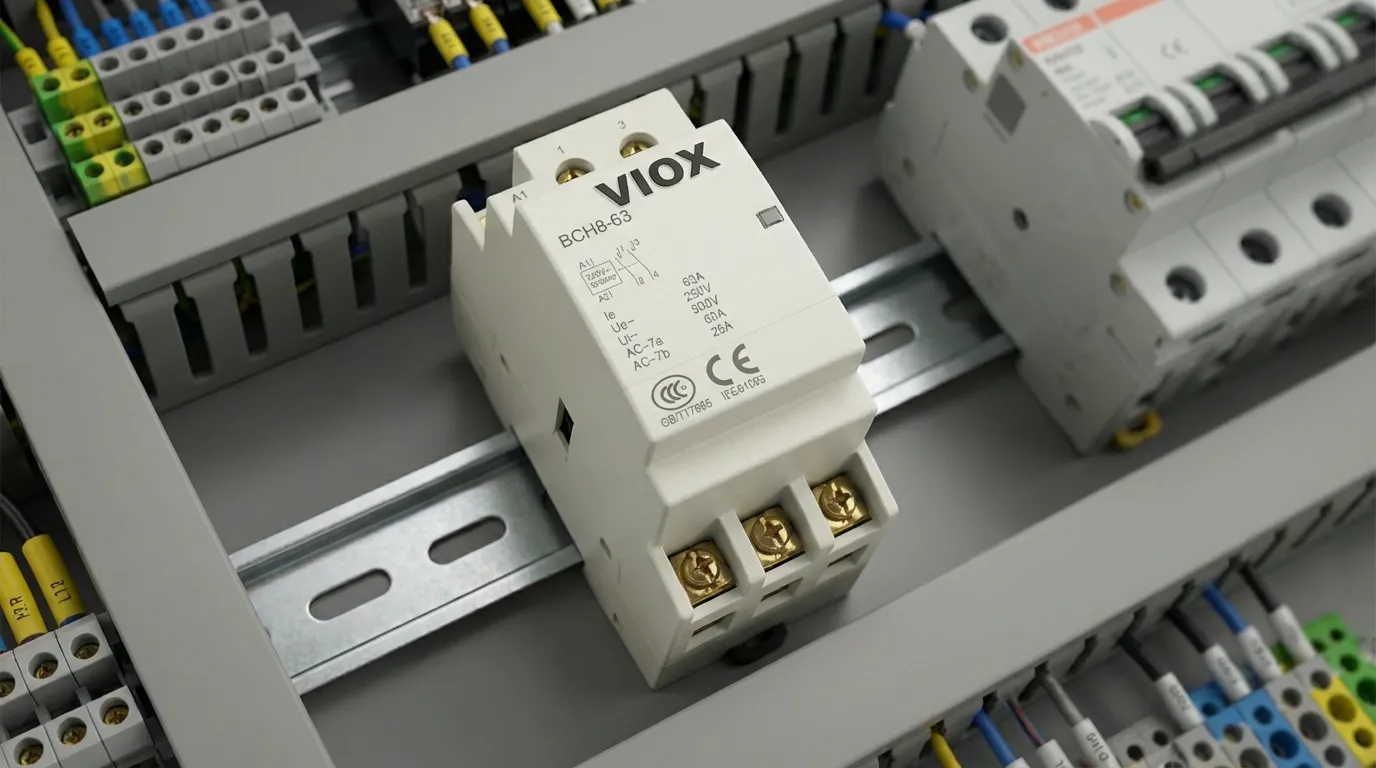
တဲ့ modular contactor သည် load အောက်တွင်ရှိသော high-current လျှပ်စစ်ဆားကစ်များကို ဘေးကင်းစွာ ချိတ်ဆက်ရန်နှင့် ဖြုတ်တောက်ရန် ဒီဇိုင်းထုတ်ထားသော ကျစ်လစ်ပြီး အဝေးမှ ထိန်းချုပ်နိုင်သော လျှပ်စစ်စက်ကိရိယာတစ်ခုဖြစ်သည်။ ရိုးရာနှင့်မတူဘဲ full-size contactor များ, modular contactor များသည် စံ ၃၅ မီလီမီတာတွင် တိုက်ရိုက်တပ်ဆင်သည် DIN သံလမ်း (IEC 60715 စံနှုန်း)၊ ၎င်းတို့ကို နေရာအကန့်အသတ်ရှိသော ဖြန့်ဖြူးရေးဘုတ်များနှင့် ထိန်းချုပ်ဘောင်များအတွက် အကောင်းဆုံးဖြစ်စေသည်။.
သော့ချက်ဝိသေသလက္ခဏာများ:
- Modular ဒီဇိုင်း: တစ်ယူနစ်လျှင် DIN rail နေရာ ၁၈-၃၆ မီလီမီတာ ယူထားသည်။
- အဝေးထိန်း: Low-voltage coil (ပုံမှန်အားဖြင့် 12–240V) သည် high-current switching (16–100A+) ကို အသက်သွင်းသည်။
- စံပြုထားသော: IEC 61095 (အိမ်သုံး) နှင့် IEC 60947-4-1 (စက်မှု) စံနှုန်းများနှင့် ကိုက်ညီသည်။
- ယုံကြည်စိတ်ချရမှု: စက်ပိုင်းဆိုင်ရာ လုပ်ဆောင်ချက် ၁၀၀,၀၀၀-၁,၀၀၀,၀၀၀ အတွက် ဒီဇိုင်းထုတ်ထားသည်။
Modular contactor များသည် ခေတ်မီ လျှပ်စစ်ထိန်းချုပ်မှုစနစ်များ၏ အဓိကအချက်ဖြစ်ပြီး လူနေအိမ် မီးထွန်းညှိစနစ်မှ စက်မှုမော်တာထိန်းချုပ်မှုအထိ ပြန်လည်ပြည့်ဖြိုးမြဲစွမ်းအင် ပြောင်းလဲခြင်းအထိ အရာအားလုံးကို ကိုင်တွယ်ဆောင်ရွက်ပေးပါသည်။ အကြောင်းပိုမိုလေ့လာပါ contactor တစ်ခုကို ဘာတွေနဲ့ ဖွဲ့စည်းထားလဲ နှင့် ၎င်းတို့သည် အခြားလျှပ်စစ်ပြောင်းလဲကိရိယာများနှင့် မည်သို့ကွာခြားသနည်း။.
AC နှင့် DC Modular Contactor များ- အရေးကြီးသော ကွာခြားချက်
ဤသည်မှာ အငြင်းပွားဖွယ်မရှိပါ။ အရေးအကြီးဆုံး ခွဲခြားမှု contactor ရွေးချယ်ရာတွင် သင်ပြုလုပ်ရမည်ဖြစ်သည်။ မှားယွင်းသော အမျိုးအစားကို ရွေးချယ်ခြင်းသည် လျှပ်စစ်မီးပွားခြင်း၊ ထိတွေ့မှုစားခြင်း၊ မီးလောင်ခြင်းနှင့် စက်ပစ္စည်းများ ပျက်စီးခြင်းတို့ကို ဖြစ်စေနိုင်သည်။.
AC Contactor များ- Alternating Current Applications
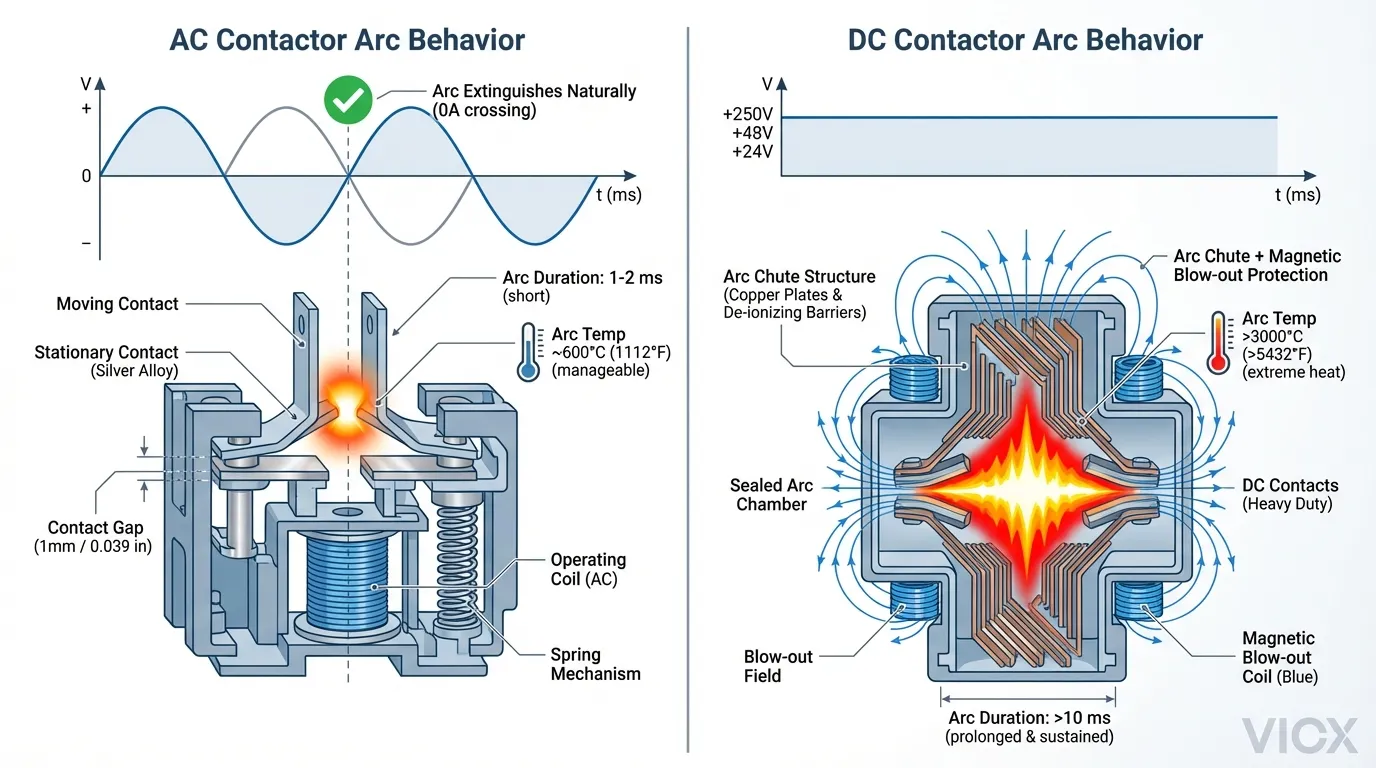
AC contactor များသည် တစ်စက္ကန့်လျှင် ၅၀ သို့မဟုတ် ၆၀ ကြိမ် (50/60 Hz) လျှပ်စီးကြောင်း လမ်းကြောင်းပြောင်းသည့် ဆားကစ်များအတွက် အကောင်းဆုံးဖြစ်သည်။.
၎င်းသည် မည်သို့အလုပ်လုပ်သနည်း။
- AC လျှပ်စီးကြောင်းသည် တစ်စက္ကန့်လျှင် ၁၀၀-၁၂၀ ကြိမ် (တစ်စက်ဝန်းလျှင် နှစ်ကြိမ်) သုညသို့ သဘာဝအတိုင်း ရောက်ရှိသည်။
- ထိတွေ့မှုများ ပွင့်သွားသောအခါ လျှပ်စစ်မီးပွားသည် သုညဖြတ်ကျော်မှုတစ်ခုစီတွင် အလိုအလျောက် ငြိမ်းသွားသည်။
- လျှပ်စစ်မီးပွား ဖယ်ရှားခြင်းသည် မူလအားဖြင့် ရိုးရှင်းသည်—စျေးကြီးသော ယန္တရားများ မလိုအပ်ပါ။
အသုံးများသော AC ဗို့အား အဆင့်သတ်မှတ်ချက်များ-
- 120V AC (မြောက်အမေရိက၊ လူနေအိမ်)
- 230V AC (ဥရောပ၊ လူနေအိမ်)
- 400V AC / 415V AC (စက်မှုသုံး သုံးဆင့်)
- 480V AC (စက်မှုသုံး မြောက်အမေရိက)
ပုံမှန် AC Applications များ-
- HVAC compressor များနှင့် လေကိုင်တွယ်သည့် ယူနစ်များ
- အလင်းရောင်ထိန်းချုပ်မှုစနစ်များ
- လျှပ်စစ်အပူပေးစက်များနှင့် ခံနိုင်ရည်ရှိသော load များ
- Induction motor starter များ
- အထွေထွေ စက်မှု load ပြောင်းလဲခြင်း
DC Contactor များ- Direct Current Applications
DC contactor များသည် လျှပ်စီးကြောင်း တစ်ဖက်သတ် စီးဆင်းသည့် ဆားကစ်များကို ကိုင်တွယ်သည်—အီလက်ထရွန်းနစ်ပစ္စည်းများသည် သဘာဝအတိုင်း “သုညဖြတ်ကျော်” မဖြစ်ပါ။”
ထူးခြားသော စိန်ခေါ်မှု-
- ထိတွေ့မှုများ ပွင့်သွားသောအခါ လျှပ်စစ်မီးပွားများသည် အကန့်အသတ်မရှိ ဆက်လက်တည်ရှိနေသည် (၎င်းတို့ကို ချိုးဖျက်ရန် သုညဖြတ်ကျော်မှု မရှိပါ)။
- လျှပ်စစ်မီးပွားသည် အလွန်အမင်းအပူချိန် (>3000°C) ကို ထုတ်ပေးသော စဉ်ဆက်မပြတ် ပလာစမာလမ်းကြောင်းတစ်ခု ဖြစ်လာသည်။
- အပူသည် ဆိုးရွားသော ထိတွေ့မှုစားခြင်း၊ coil ပျက်စီးခြင်းနှင့် မီးလောင်နိုင်ခြေကို ဖြစ်စေသည်။
အဆင့်မြင့် လျှပ်စစ်မီးပွား ဖယ်ရှားရေး ယန္တရားများ-
- သံလိုက်မှုတ်ထုတ်သည့် coils များ: လျှပ်စစ်မီးပွားများကို ရုပ်ပိုင်းဆိုင်ရာအရ ငြိမ်းသတ်ရန် သံလိုက်စက်ကွင်းများကို အသုံးပြုပါ။
- Arc chutes: လျှပ်စစ်မီးပွားကို အလုံပိတ်အခန်းများအတွင်းရှိ သေးငယ်သော လျှပ်စစ်မီးပွားများအဖြစ် ပိုင်းခြားပါ။
- အီလက်ထရွန်းနစ် လျှပ်စစ်မီးပွား ဖယ်ရှားခြင်း: Diodes သို့မဟုတ် ဆားကစ်များသည် inductive စွမ်းအင်ကို ဖယ်ရှားပေးသည်။
- ခိုင်ခံ့သော ထိတွေ့ပစ္စည်းများ: အပူဒဏ်ကို ခံနိုင်ရန်အတွက် ငွေရောင်အလွိုင်းများ သို့မဟုတ် တန်စတင်ကို အသုံးပြုပါ။
အသုံးများသော DC ဗို့အား အဆင့်သတ်မှတ်ချက်များ-
- 12V DC (မော်တော်ကား၊ သေးငယ်သော ပြန်လည်ပြည့်ဖြိုးမြဲစွမ်းအင်)
- 24V DC (စက်မှုထိန်းချုပ်မှု၊ PLC ဆားကစ်များ)
- 48V DC (ဆိုလာ၊ ဘက်ထရီစနစ်များ)
- 600V DC (ဆိုလာလယ်ယာများ၊ grid-scale သိုလှောင်မှု)
- 800V DC (ခေတ်မီ EV အားသွင်းစနစ်များ)
ပုံမှန် DC Applications များ-
- ဆိုလာ photovoltaic (PV) array ပြောင်းလဲခြင်း
- ဘက်ထရီစွမ်းအင် သိုလှောင်မှုစနစ် (BESS) စီမံခန့်ခွဲခြင်း
- လျှပ်စစ်ကား (EV) အားသွင်းခြင်းနှင့် onboard စနစ်များ
- DC စက်မှုလုပ်ငန်းစဉ်များ (လျှပ်စစ်ဖြင့် သတ္တုချောမွေ့စေခြင်း၊ ဒေတာစင်တာများ)
- ပြန်လည်ပြည့်ဖြိုးမြဲစွမ်းအင် inverter ထိန်းချုပ်ခြင်း
မကိုက်ညီမှု၏ ဆိုးရွားသော အကျိုးဆက်များ
| Scenario | ရလဒ် | အန္တရာယ်အဆင့် |
|---|---|---|
| AC contactor in DC circuit | Arc won’t extinguish; uncontrolled heat; fire | အရေးကြီးသည် |
| DC contactor in AC circuit | Overengineered, unnecessary cost; works but wasteful | အနည်းငယ် |
| Wrong voltage rating | Arcing at contacts; potential insulation breakdown | အရေးကြီးသည် |
For a deeper understanding of arc suppression mechanics, see inside AC contactor components and design logic.
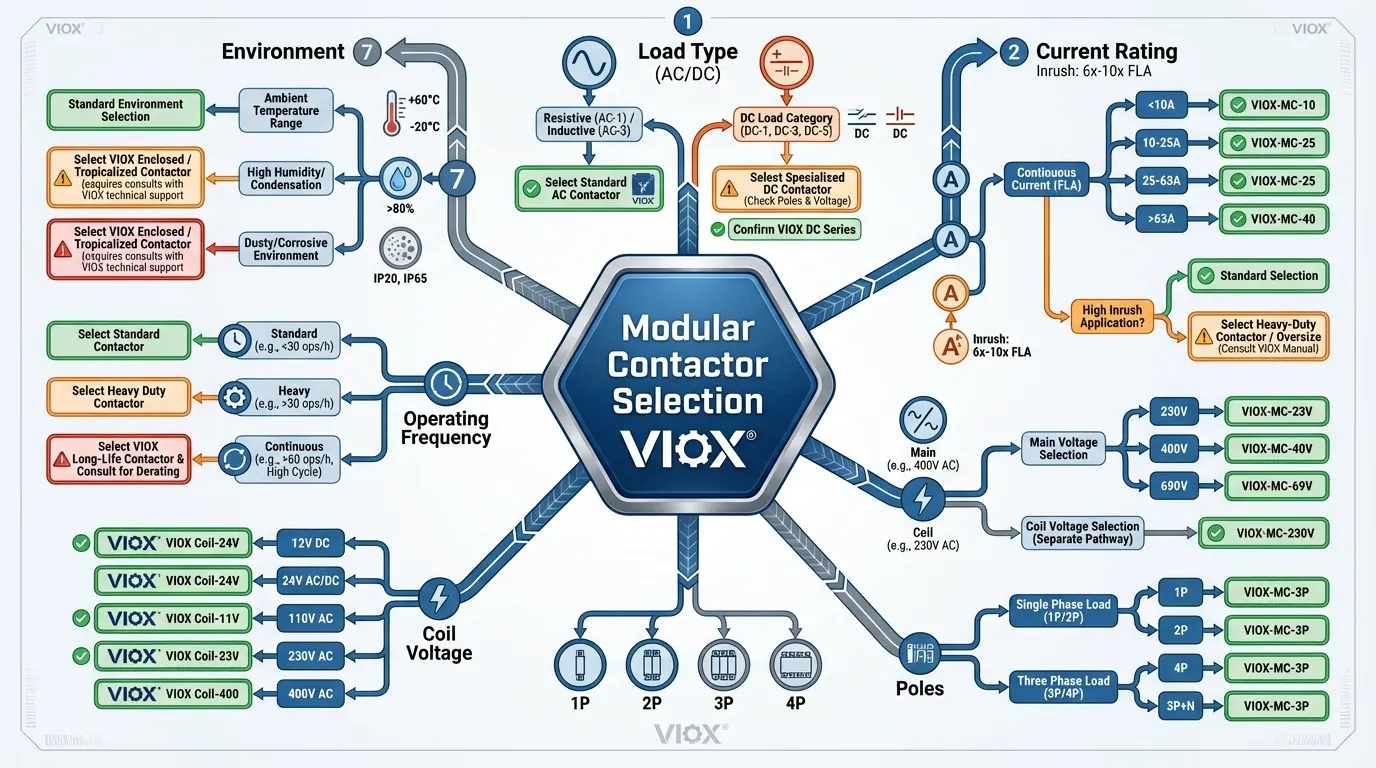
The 7 Essential Selection Criteria for Modular Contactors
1. Load Type and Current Rating (The #1 Mistake: Sizing Errors)
ဟိ rated operational current ($I_e$) indicates the maximum current the contactor can safely carry continuously. This is where most engineers make fatal errors.
The Golden Rule: Never use Normal Operating Current alone.
Why? Inrush Current.
When inductive loads (motors, transformers) start, they draw 5–10× their running current for 100–500 milliseconds. Example:
- Motor rated 10A continuous
- Inrush current on startup: 75A (7.5× multiplier)
- Minimum contactor rating needed: 75A (not 10A)
Failure to account for inrush current leads to contact erosion, welding, and coil overheating.
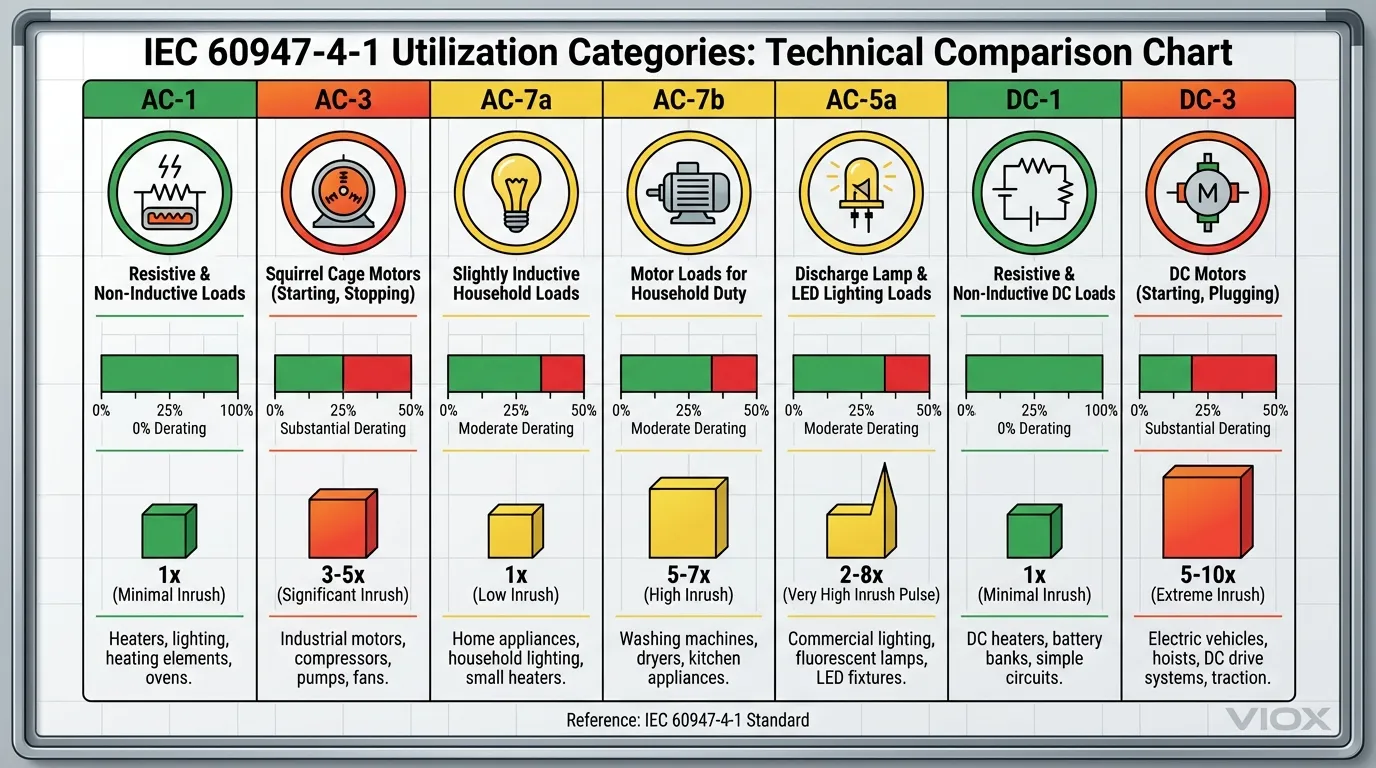
IEC 60947-4-1 Load Categories (Utilization Classes):
The standard defines “utilization categories” that specify switching duty. These categories—AC-1, AC-3, AC-7a, AC-7b, AC-5a, DC-1, DC-3—are fundamental to proper contactor sizing:
| အမျိုးအစား | ဝန်အမျိုးအစား | လက္ခဏာများ | Contactor Derating |
|---|---|---|---|
| သတ္မွတ္အ-၁ | Resistive (Heaters, Incandescent) | No inrush, stable current | No derating needed |
| AC-7a | Household Resistive | Heaters, ovens, incandescent lighting | ~0% derating |
| AC-7b | Household Motor | Small motors, fans, pumps | ~20–30% derating |
| သတ္မွတ္အ-၃ | Industrial Motor (Squirrel-cage) | Motor starting and control | ~30–40% derating |
| AC-5a | LED & Electronic Loads | Capacitive inrush | ~50% derating |
| DC-1 | Resistive DC (Battery heaters) | Stable DC, low inductance ($L/R \leq 1ms$) | No derating |
| DC-3 | DC Shunt Motors | High inductance DC circuits | ~50% derating |
2. Voltage Rating: Both Main Circuit and Coil Voltage
Modular contactors have two independent voltage ratings:
a) Main Circuit Voltage ($U_e$):
- ကူးပြောင်းနေသောဝန်၏ဗို့အား
- Example: 230V AC, 48V DC, 400V AC
- Rule: Contactor rating must ≥ system voltage
- Undersizing causes insulation breakdown and arcing
b) Control Coil Voltage ($U_c$):
- The voltage that energizes the contactor to close contacts
- Independent from main circuit voltage
- Common coil ratings: 12V, 24V, 110V, 230V (AC or DC)
Example Mismatch:
- You have a 230V AC motor (main circuit)
- Your PLC outputs 24V DC (coil requirement)
- Correct contactor: 230V AC rated, 24V DC coil
Modern Universal Coils:
VIOX နှင့် အရည်အသွေးမြင့် contactor အချို့တွင် ပါဝင်သော အချက်များ universal coils ဗို့အားကျယ်ပြန့်သော AC နှင့် DC နှစ်မျိုးလုံးကို လက်ခံနိုင်ခြင်း (ဥပမာ- 12–240V AC/DC)။ Standard single-voltage coil ပါသော contactor များနှင့်မတူဘဲ universal ဒီဇိုင်းများက ပေးစွမ်းနိုင်သည့် အားသာချက်များမှာ-
- စွမ်းအင်သုံးစွဲမှု လျှော့ချနိုင်ခြင်း (0.5–0.9W holding power)
- Coil မှ ထွက်ပေါ်လာသော အသံနှင့် တုန်ခါမှုကို ဖယ်ရှားနိုင်ခြင်း
- ပြန်လည်ပြည့်ဖြိုးမြဲ စွမ်းအင်စနစ်များနှင့် ပိုမိုလိုက်ဖက်ညီခြင်း
အကြောင်းအရာများအကြောင်းပိုမိုလေ့လာရန် contactor များတွင် ဗို့အားနှစ်မျိုး (ထိန်းချုပ်မှုနှင့် load) ရှိရခြင်းအကြောင်း.
3. Pole Configuration: Single သို့မဟုတ် Multiple Circuits များကို ထိန်းချုပ်ခြင်း
ဟိ number of poles contactor တစ်ခုသည် သီးခြား circuit မည်မျှကို ထိန်းချုပ်နိုင်သည်ကို ဆုံးဖြတ်ပေးသည်-
| ထမ်းဘိုး | ဖွဲ့စည်းမှု | ပုံမှန်လျှောက်လွှာ | Common Current |
|---|---|---|---|
| 1P | Single phase conductor | အပူပေးစက်များ၊ အခြေခံ DC | 16–40A |
| 2P | Two conductors; phase + neutral | Single-phase AC, EV chargers | 20–63A |
| 3P | Three conductors (all phases) | Three-phase စက်မှုမော်တာများ | 25–100A |
| ၄P | Three phases + neutral | ဆေးရုံများ၊ အရေးကြီးသော စနစ်များ | 25–63A |
Pole ရွေးချယ်မှုဆိုင်ရာ အကြောင်းပြချက်
- Single-phase AC (230V အိမ်သုံးလျှပ်စစ်): 1P သို့မဟုတ် 2P ကိုသုံးပါ (2P သည် neutral ကိုပါ ပြောင်းပေးခြင်းဖြင့် ပိုမိုကောင်းမွန်သော ကာကွယ်မှုကို ပေးသည်)
- Three-phase AC (စက်မှု 400V): အနည်းဆုံး 3P ကိုသုံးပါ။ neutral ကိုပါ ပြောင်းရန်လိုအပ်ပါက 4P ကိုသုံးပါ (ဆေးရုံများ၊ data centers)။ အကြောင်းကို လေ့လာပါ 1-pole နှင့် 2-pole AC contactor များကို နားလည်ခြင်း.
- DC battery စနစ်များ: အများအားဖြင့် 1P သို့မဟုတ် 2P ဖြစ်ပြီး positive, negative သို့မဟုတ် နှစ်ခုလုံးကို ထိန်းချုပ်ခြင်းအပေါ် မူတည်သည်
- Solar PV: အများအားဖြင့် 2P ဖြစ်သည် (လုံခြုံရေးအတွက် DC conductor နှစ်ခုလုံးကို ပြောင်းပေးသည်)
4. Coil Voltage ကိုက်ညီမှုနှင့် အဆင့်မြင့် ထိန်းချုပ်မှု ပေါင်းစပ်ခြင်း
Coil သည် သင်၏ control circuit voltage နှင့် အတိအကျ ကိုက်ညီရမည်-
Standard Coil Voltage ရွေးချယ်စရာများ
- 24V DC (စက်မှုအလိုအလျောက်စနစ်၊ PLC standard)
- 110V AC (Manual/mechanical ထိန်းချုပ်မှု)
- 230V AC (အဆောက်အဦ အလိုအလျောက်စနစ်)
- 12V DC (မော်တော်ကား၊ သေးငယ်သော စနစ်များ)
အဘယ်ကြောင့်ဤအရေးကြီး:
- Undersized coil → အားနည်းသော သံလိုက်စက်ကွင်း → မပြည့်စုံသော contact ပိတ်ခြင်း → လျှပ်စစ်မီးပွားခြင်း
- Oversized coil → စွမ်းအင်ပိုမိုသုံးစွဲခြင်း၊ အပူချိန်တက်ခြင်း
- Mismatched voltage → coil သည် နာရီပိုင်းအတွင်း ပျက်စီးခြင်း
ခေတ်မီ Smart ပေါင်းစပ်မှု
VIOX နှင့် အရည်အသွေးမြင့် ထုတ်လုပ်သူများသည် ယခုအခါ contactor များကို ထုတ်လုပ်ရာတွင်-
- Auxiliary contact blocks PLC များသို့ status feedback အတွက် (1NO+1NC)
- Mechanical interlocks တစ်ပြိုင်နက်တည်း forward/reverse လည်ပတ်မှုကို တားဆီးခြင်း
- IoT အဆောက်အဦ အလိုအလျောက်စနစ်အတွက် Modbus/BACnet interfaces contact ပျက်စီးမှုကို စောင့်ကြည့်သည့် sensors
- ခန့်မှန်းထိန်းသိမ်းမှု မော်တာထိန်းချုပ်အသုံးပြုမှုများအတွက် contactor များသည် မည်သို့ပေါင်းစပ်ထားသည်ကို ထည့်သွင်းစဉ်းစားပါ
motor protection circuit breakers အလုံးစုံ load ကာကွယ်မှုအတွက် 5. Operating Frequency: Duty Cycle နှင့် Electrical Endurance.
Contactor သည် မည်မျှ မကြာခဏ ပွင့်/ပိတ် လုပ်ဆောင်သနည်း။
ကို “cycles under load” အဖြစ် သတ်မှတ်သည်။ ထုတ်လုပ်သူများသည် အောက်ပါတို့ကို အာမခံသည်-
လျှပ်စစ်သည်းခံခြင်းကိုပွား Duty Class
| Typical Endurance | ကြိမ်နှုန်းပြောင်းခြင်း။ | <50× per day | အသုံးချမှု |
|---|---|---|---|
| စံ | 100,000–300,000 cycles | HVAC, မီးအလင်းရောင်၊ အထွေထွေအသုံးပြုမှု | 50–500× per day |
| လေးလံသည်။ | 50–500× per day | 500,000–1,000,000 cycles | Industrial pump control, frequent cycling |
| အဆက်မပြတ် | >500× per day | 1,000,000+ cycles | LED dimming, power factor correction |
အဘယ်ကြောင့်အရေးကြီးသည်-
Each switching operation causes microscopic contact erosion. After 100,000 cycles:
- Contact resistance increases
- Arcing becomes more pronounced
- Coil heating increases
- Failure is imminent
Cost-Benefit:
- Standard-duty contactor (~$15–30): Fails after ~3 years in heavy-cycle apps
- Heavy-duty contactor (~$25–45): Lasts 7–10 years in the same application
- ROI: <6 months (saved replacement labor + downtime)
6. Environmental Factors: Temperature, Humidity, Dust, Vibration
ပတ်ဝန်းကျင် အပူချိန်
- Most modular contactors rated for – 5°C to +60°C standard
- High-temp variant available: – 5°C to +80°C (12% current derating above +40°C); see detailed electrical derating guidance for temperature and altitude
- Enclosed panels with multiple contactors generate +15–20°C additional heat
- Thermal management: Leave 9mm gaps between contactors using spacer modules
IP Protection Ratings (Ingress Protection):
| IP အဆင့်သတ်မှတ်ချက် | ကာကွယ်မှုအဆင့် | Suitable Environments |
|---|---|---|
| IP၂၀ | Contact-proof | Dry indoor panels |
| IP40 | ဖုန်ဒဏ်ခံနိုင်ရည်ရှိသည်။ | Outdoor enclosures, dusty warehouses |
| IP54 | Dust-sealed, splash resistant | Wet rooms, outdoor areas |
| IP67 | ယာယီနှစ်မြှုပ်ခြင်း | Underground/submersible (rare for contactors) |
Humidity & Moisture:
- Contacts corrode when exposed to moisture
- Coil insulation degrades at >85% relative humidity
- ဖြေရှင်းနည်း: Sealed contactors or DIN rail-mounted contactors inside IP54+ enclosure
တုန်ခါမှုဒဏ်ခံနိုင်ရည်-
- High-vibration environments (industrial machinery, vehicles) can cause:
- Loose connections (primary failure mode)
- Incomplete contact closure
- Increased arcing
- Mitigation: Use anti-vibration mounting feet; check torque annually
7. Safety Features and Compliance Standards
Arc Suppression Technology:
- Modern contactors use internal arc chutes သို့မဟုတ် magnetic blow-out coils
- Premium models feature double-break contacts (arc splits into two smaller arcs)
- VIOX BCH8 series includes silent operation technology reducing noise by 60%
Protective Features:
- Manual override: Allows operation during control system failure
- အဆင့်အတန်းညွှန်းကိန်းများ: Visual confirmation of contactor state (LED, mechanical flag)
- Thermal overload protection: Integrated or compatible with external relays
- အရန်အဆက်အသွယ်များ: Feed contactor status back to PLC for diagnostics
Compliance Standards (Critical for North America & Europe):
| စံ | လျှောက်လွှာ | အဓိကလိုအပ်ချက်များ |
|---|---|---|
| IEC 61095 | အိမ်သုံး/လူနေအိမ် | အခြေခံလုံခြုံရေး၊ လျှပ်ကာပစ္စည်း၊ လည်ပတ်မှုစက်ဝန်းများ |
| IEC 60947-4-1 | စက်မှုလုပ်ငန်းသုံး modular contactors | ဝန် အမျိုးအစားများ၊ arc suppression၊ အပူချိန်ကန့်သတ်ချက်များ |
| UL 508 | မြောက်အမေရိက စက်မှုလုပ်ငန်းသုံး panel များ | ဖြတ်တောက်နိုင်စွမ်း၊ အပူချိန်ကန့်သတ်ချက်များ |
| EN 45545-2 | မီးရထားစနစ်များ | မီးဘေးလုံခြုံရေး၊ မီးခိုးထုတ်လွှတ်မှု |
| ISO 13849-1 | ဘေးကင်းရေး-အရေးပါသောအသုံးချပရိုဂရမ်များ | Forcibly-guided contacts၊ redundancy |
IEC ဝန် အမျိုးအစားခွဲခြားခြင်းကို အသေးစိတ်သိရှိလိုပါက၊ IEC 60947-3 အသုံးပြုမှု အမျိုးအစားများ လမ်းညွှန်ကို ကိုးကားပါ။ နှင့် မည်သို့ contactors နှင့် relays safety-critical systems များတွင် ကွာခြားကြောင်း လေ့လာပါ။.
အဆင့်အလိုက် ဆုံးဖြတ်ချက်မူဘောင်- 6-ဆင့် ရွေးချယ်မှု လုပ်ငန်းစဉ်
အဆင့် 1- သင်၏ Load အမျိုးအစား (AC သို့မဟုတ် DC) ကို ခွဲခြားသတ်မှတ်ပါ။
ဤမေးခွန်းကို ဖြေပါ- သင်၏ဝန်ကို တလှည့်စီ လျှပ်စီးကြောင်း သို့မဟုတ် တိုက်ရိုက်လျှပ်စီးကြောင်းဖြင့် ပါဝါပေးပါသလား။
AC ဝန်များ- အိမ်/စီးပွားဖြစ် ပါဝါဂရစ်များ၊ သုံးဆင့် စက်မှုလုပ်ငန်းသုံးပစ္စည်းများ၊ HVAC စနစ်များ
DC ဝန်များ- ဆိုလာပြားများ၊ ဘက်ထရီစနစ်များ၊ လျှပ်စစ်ကားများ၊ ပြန်လည်ပြည့်ဖြိုးမြဲစွမ်းအင် inverters၊ ဒေတာစင်တာ ပါဝါဖြန့်ဖြူးခြင်း
→ မသေချာပါက, multimeter ဖြင့် ဗို့အားကို တိုင်းတာပါ-
- AC ဗို့အားသည် အဆက်မပြတ် ပြောင်းလဲနေသည် (50/60 Hz)
- DC ဗို့အားသည် တည်ငြိမ်စွာ ဖတ်ရှုနိုင်သည်
အဆင့် 2- လိုအပ်သော လျှပ်စီးကြောင်းကို တွက်ချက်ပါ (Inrush အပါအဝင်)
အဆင့် 2a- ပုံမှန် လည်ပတ်မှု လျှပ်စီးကြောင်း (FLA) ကို ရှာဖွေပါ
nameplate အဆင့်သတ်မှတ်ချက်ပါသော စက်ပစ္စည်းအတွက်-
- FLA ကို စက်ပစ္စည်းတံဆိပ်မှ တိုက်ရိုက်ဖတ်ပါ
- ဥပမာ- မော်တာ nameplate တွင် “10A FLA” ဟု ဖော်ပြထားသည်။”
သုံးဆင့် AC မော်တာများအတွက် (အမည်မဖော်ပြထားပါက)-
Where:
- $P$ = kW ဖြင့် ပါဝါ
- $U$ = ဗို့အား (ဗို့)
- $\cos(\phi)$ = ပါဝါအချက် (မော်တာများအတွက် ပုံမှန်အားဖြင့် 0.85–0.95)
- $\eta$ = ထိရောက်မှု (မော်တာများအတွက် ပုံမှန်အားဖြင့် 0.85–0.92)
အဆင့် 2b- Inrush လျှပ်စီးကြောင်းကို ခန့်မှန်းပါ
| ဝန်အမျိုးအစား | Inrush Multiplier | ဥပမာ |
|---|---|---|
| Resistive (အပူပေးစက်များ) | 1–1.5× | 10A ဝန် = 10A inrush |
| Incandescent မီးများ | 1–2× | 10A ဝန် = 10–20A inrush |
| မော်တာ (soft start) | 3–5× | 10A ဝန် = 30–50A inrush |
| မော်တာ (direct on-line) | 5–10× | 10A ဝန် = 50–100A inrush |
| LED driver/electronics | 2–8× | 10A ဝန် = 20–80A inrush |
| Transformer | 8–12× | 1A ဝန် = 8–12A inrush |
အဆင့် 2c- Load Category Derating ကို အသုံးပြုပါ
အထက်ပါ “Load Type and Current Rating” ကဏ္ဍရှိ ဇယားကို ကိုးကားပါ။.
အဆင့် 3- ဗို့အားလိုအပ်ချက်များကို အတည်ပြုပါ
နှစ်ခုစလုံးကို မှတ်တမ်းတင်ပါ-
- Main circuit ဗို့အား (ပြောင်းနေသောဝန်)- ဥပမာ၊ 230V AC, 48V DC
- Control coil ဗို့အား (PLC သို့မဟုတ် control system output)- ဥပမာ၊ 24V DC, 110V AC
contactor datasheet သည် အဆင့်သတ်မှတ်ချက်နှစ်ခုလုံးကို သတ်မှတ်ထားကြောင်း အတည်ပြုပါ။.
အဆင့် 4- Pole Configuration ကို ရွေးချယ်ပါ
ဆုံးဖြတ်ချက် Tree-
ဝန်သည် single-phase သို့မဟုတ် three-phase ဖြစ်ပါသလား။
အဆင့် ၅: လည်ပတ်မှုပတ်ဝန်းကျင်နှင့် Duty Cycle ကိုအကဲဖြတ်ပါ
စစ်ဆေးရန်စာရင်း:
- ပတ်ဝန်းကျင်အပူချိန်အကွာအဝေး: ___°C မှ ___°C
- စိုထိုင်းဆ: ခြောက်သွေ့သော / စိုစွတ်သော / စိုထိုင်းသောပတ်ဝန်းကျင်?
- ဖုန်မှုန့်/ညစ်ညမ်းမှုအဆင့်: မရှိ / အနည်းငယ် / အလွန်အကျွံ?
- တုန်ခါမှုပတ်ဝန်းကျင်: မရှိ / အလယ်အလတ် / မြင့်မား?
- ပြောင်းလဲမှုကြိမ်နှုန်း: တစ်ရက်လျှင် ___ ကြိမ်
- ဆူညံသံထိန်းချုပ်မှုလိုအပ်ပါသလား။ ဟုတ်ကဲ့ / မဟုတ်ပါ
- Panel တွင်ရရှိနိုင်သောနေရာ: ___ mm
သက်ရောက်မှုများ:
- အပူချိန်မြင့်မားခြင်း → ခံနိုင်ရည်မြင့်မားသောပစ္စည်းကိုရွေးချယ်ပါ၊ Derating လိုအပ်သည်
- စိုထိုင်းဆမြင့်မားခြင်း → Sealed contactor သို့မဟုတ် IP54+ enclosure
- တုန်ခါမှုမြင့်မားခြင်း → Anti-vibration mounting
- မကြာခဏပြောင်းလဲခြင်း → ခံနိုင်ရည်မြင့်မားသော သို့မဟုတ် Solid-state contactor
- ဆူညံသံကိုထိလွယ်သောနေရာ → Solid-state သို့မဟုတ် “silent type” contactor
အဆင့် ၆: အထူးလိုအပ်ချက်များကိုပြန်လည်သုံးသပ်ပါ
ထည့်သွင်းစဉ်းစားရမည့်အပိုဆောင်းအင်္ဂါရပ်များ:
- Auxiliary contact blocks (PLC feedback အတွက်)
- Mechanical interlock (reverse applications အတွက်)
- Integrated thermal overload relay
- Smart/IoT စောင့်ကြည့်နိုင်စွမ်း
- အရေးပေါ်အခြေအနေအတွက် Manual override
- သတ်မှတ်ထားသောလက်မှတ် (UL, CE, CSA)
Contactor ရွေးချယ်မှုနှိုင်းယှဉ်ဇယား: လျင်မြန်စွာကိုးကားရန်
သင်၏ application ကိုလျင်မြန်စွာ cross-reference လုပ်ရန်ဤဇယားကိုသုံးပါ။
| လျှောက်လွှာ | ဝန်အမျိုးအစား | အကြံပြုထားသော ဗို့အား | ထမ်းဘိုး | လက်ရှိ အတိုင်းအတာ | Duty | အထူးမှတ်စုများ |
|---|---|---|---|---|---|---|
| HVAC Compressor | AC-3 Motor | 230V/400V AC | 3P | 15–40A | လေးလံသည်။ | Inrush အတွက် soft-start ထည့်ပါ |
| Home EV Charger | AC-1/AC-7a | 230V AC | 2P | 16–32A | စံ | Coil: 24V DC အကြံပြုသည် |
| Solar PV Array Switch | DC-1 | 600V DC | 2P | 20–63A | စံ | Arc suppression အရေးကြီးသည် |
| စက်မှုအလင်းရောင် | AC-7a | 230V/400V AC | 1P–3P | 16–63A | လေးလံသည်။ | Multiple zones → multiple contactors |
| ရေကူးကန် Pump | AC-3 Motor | 230V AC | 1P | 10–16A | စံ | 1.5× inrush factor; ကြည့်ပါ star-delta starter wiring soft-start options အတွက် |
| Data Center PDU | သတ္မွတ္အ-၁ | 400V AC | 3P | 63–100A | လေးလံသည်။ | Modbus integration အကြံပြုသည် |
| EV Battery Disconnect | DC-3 Motor | 48–800V DC | 2P | 50–200A | စံ | Specialized arc suppression လိုအပ်သည် |
| Smart Home Relay | AC-7a | 230V AC | 1P | 10–20A | စံ | Universal coil ကိုပိုနှစ်သက်သည် (ဆူညံသံလျှော့ချခြင်း) |
လက်တွေ့အသုံးချမှုဥပမာများ: သီအိုရီမှလက်တွေ့သို့
ဥပမာ ၁: Three-Phase Industrial HVAC System
ဇာတ်လမ်း-
၅ ထပ်အဆောက်အအုံအတွက်လေကိုင်တွယ်သည့်ယူနစ်အသစ်တစ်ခုကိုသင်တပ်ဆင်နေသည်။ Motor nameplate ကပြသည်မှာ:
- Power: 7.5 kW
- Voltage: 400V three-phase AC
- FLA: 15A
- Starting method: Direct on-line (DOL)
သင်၏ဆုံးဖြတ်ချက်များ:
- ဝန်အမျိုးအစား: AC-3 (induction motor)
- Inrush လက်ရှိ: 15A × 7 = 105A (DOL starting)
- Contactor အဆင့်သတ်မှတ်ချက်: အနည်းဆုံး 105A → ရွေးချယ်ရန် 125A contactor
- Main Circuit Voltage: 400V AC ✓
- ကွိုင်ဗို့အား: အဆောက်အအုံတွင် 24V DC PLC ရှိသည် → သတ်မှတ်ရန် 24V DC coil
- ထမ်းဘိုး: သုံးဆင့် → 3P configuration
- တာဝန်စက်ဝန်း: HVAC သည် တစ်နေ့လျှင် 3-5 ကြိမ် လည်ပတ်သည် → Standard duty လက်ခံနိုင်သည်
- ပတ်ဝန်းကျင်: မိုးလုံလေလုံ၊ လေအေးပေးထားသောနေရာ၊ ဖုန်မှုန့်/အစိုဓာတ်မရှိ
Recommended Contactor:
- အမျိုးအစား: AC contactor, 125A, 400V AC, 3P, 24V DC coil
- ဥပမာ: VIOX BCH8-63/40 (63A AC-3 rated = ~110A effective capacity)
- Auxiliary contacts: BMS သို့ status feedback အတွက် 1NO+1NC
ဥပမာ ၂: Residential Solar Battery System
ဇာတ်လမ်း-
သင်သည် 10kWh သိုလှောင်မှုရှိသော အိမ်အတွက် 48V DC battery backup system ကို ဒီဇိုင်းဆွဲနေပါသည်။ Battery disconnect contactor သည်-
- battery bank မှ inverter သို့ 48V DC ကို ထိန်းချုပ်ရမည်
- 200A continuous charge/discharge current ကို ကိုင်တွယ်ရမည်
- connection state ကိုပြသရန် status LED ပါဝင်ရမည်
- safety code လိုအပ်ချက်များနှင့် ကိုက်ညီရမည်
သင်၏ဆုံးဖြတ်ချက်များ:
- ဝန်အမျိုးအစား: DC-1 (resistive) / DC-3 (motor if pump loads present)
- Continuous Current: 200A
- Contactor အဆင့်သတ်မှတ်ချက်: 200A × 1.25 safety factor = 250A အနည်းဆုံး
- Main Circuit Voltage: 48V DC ✓
- ကွိုင်ဗို့အား: Inverter သည် 24V DC signal ကို ပေးသည် → သတ်မှတ်ရန် 24V DC coil
- ထမ်းဘိုး: (+) နှင့် (–) conductors နှစ်ခုစလုံး disconnect လုပ်ရမည် → 2P configuration
- တာဝန်စက်ဝန်း: Low-frequency switching (တစ်နေ့တစ်ကြိမ်) → Standard duty လက်ခံနိုင်သည်
- Arc ဖိနှိပ်မှု: အရေးကြီးသည် – DC သည် ခိုင်မာသော arc suppression လိုအပ်သည် (magnetic blowout သို့မဟုတ် arc chutes)
Recommended Contactor:
- အမျိုးအစား: DC contactor, 250A, 48V DC, 2P, 24V DC coil, ခိုင်မာသော arc suppression
- ဥပမာ: magnetic blow-out coil ပါသော VIOX specialized DC contactor
- Auxiliary contacts: home automation system သို့ Status feedback
- motor power ဖြင့် contactor ရွေးချယ်ခြင်းဆိုင်ရာ နောက်ထပ် လမ်းညွှန်ချက်များအတွက်၊ motor power ပေါ်မူတည်၍ contactor နှင့် circuit breaker ကို မည်သို့ရွေးချယ်ရမည်ကို ကြည့်ပါ
ဥပမာ ၃: LED Lighting Control in Modern Office
ဇာတ်လမ်း-
50-desk open office သည် automated lighting control (motion-activated) လိုအပ်သည်။ lighting zone တစ်ခုစီသည် 230V AC မှ 5A ကို ဆွဲယူသည်။ Silence requirement: <20dB (contactors မှ audible hum မရှိပါ)။.
စိန်ခေါ်မှု: LED drivers များတွင် ကြီးမားသော capacitive inrush (5–8× load current) ရှိသည်။.
သင်၏ဆုံးဖြတ်ချက်များ:
- ဝန်အမျိုးအစား: AC-5a (LED electronic load)
- Continuous Current: zone တစ်ခုလျှင် 5A
- Inrush လက်ရှိ: 5A × 7 = 35A (capacitive inrush)
- Contactor အဆင့်သတ်မှတ်ချက်: 35A အနည်းဆုံး → 40–50A ကို ရွေးချယ်ပါ (AC-5a အတွက် derating)
- Main Circuit Voltage: 230V AC ✓
- ကွိုင်ဗို့အား: Motion sensor သည် 12V DC ကို ထုတ်ပေးသည် → သတ်မှတ်ရန် universal 12–240V AC/DC coil (hum ကို ဖယ်ရှားပေးသည်)
- ထမ်းဘိုး: Single phase → 1P သို့မဟုတ် 2P (neutral switching အတွက် 2P)
- Noise Control: Solid-state contactor သို့မဟုတ် “Silent Type” electromagnetic contactor လိုအပ်သည်
- ကြိမ်နှုန်းပြောင်းခြင်း။: High (တစ်နေ့လျှင် 10–20 ကြိမ်) → Heavy-duty rating ကို ပိုနှစ်သက်သည်
Recommended Contactor:
- အမျိုးအစား: AC silent-type contactor, 40A, 230V AC, 1P, universal coil
- Alternative: Solid-state AC contactor (zero-crossing technology, လုံးဝတိတ်ဆိတ်သည်)
- Auxiliary contacts: motion sensor controller သို့ feedback အတွက် 1NC
ရွေးချယ်မှု အမှားများ နှင့် ၎င်းတို့ကို ရှောင်ရှားနည်း
| အမှား | Consequence | ကာကွယ်တားဆီးရေး |
|---|---|---|
| DC အတွက် AC contactor ကို အသုံးပြုခြင်း | Uncontrolled arc, မီးလောင်မှု, equipment ပျက်စီးခြင်း | အော်ဒါမမှာခင် load type ကို အမြဲစစ်ဆေးပါ |
| Undersizing for inrush current | Contact welding, coil burnout, panel fire | Factor in 5–10× multiplier for motors |
| Ignoring environmental temperature | Premature coil failure, reduced contact life | Check ambient temperature; apply derating |
| Mismatched coil voltage | Weak magnetic field, incomplete closure, arcing | Verify PLC/control signal voltage matches coil |
| No auxiliary contacts | No feedback to control system, diagnostics impossible | Specify auxiliary contacts for all critical circuits |
| Insufficient pole count | Neutral unprotected in single-phase AC | Use 2P minimum for residential AC |
| Ignoring duty cycle | Premature failure in high-cycle applications | Choose heavy-duty for >100 cycles/day |
| No thermal spacing on DIN rail | Cumulative heat causes derating, failures | Leave 9mm gaps between high-current contactors |
Installation, Maintenance, and Commissioning Best Practices

Proper installation is critical. For comprehensive guidance on inspection and maintenance, refer to the industrial contactor maintenance and inspection checklist.
ကြိုတင်ထည့်သွင်းမှုစစ်ဆေးခြင်းစာရင်း
- Verify contactor specifications match design (voltage, current, poles, coil)
- Confirm DIN rail has adequate space (18–36mm per unit + thermal spacing)
- Check that all control wiring is pre-routed and labeled
- Ensure circuit breaker upstream of contactor is properly rated
- Verify environmental conditions (temperature, humidity, dust)
- Confirm all personnel are qualified and PPE-equipped
တပ်ဆင်ခြင်း အဆင့်များ
- Mount on DIN Rail: Snap contactor onto 35mm DIN rail (IEC 60715)
- Verify Orientation: Contact terminals face downward; coil terminals accessible
- Leave Thermal Spacing: 9mm gap to adjacent components (use spacer modules for contactors >20A)
- Main Circuit Wiring:
- Use copper conductors per circuit current rating
- Apply recommended torque (see torque table below)
- Double-check polarity for DC circuits
- Control Circuit Wiring:
- Twist low-voltage control wires to minimize EMI
- Keep away from high-current conductors
- Confirm coil voltage matches supply exactly
- အရန်အဆက်အသွယ်များ (တပ်ဆင်ထားလျှင်):
- Wire to PLC/monitoring system for status feedback
- Test with multimeter before energizing
Terminal Torque Specifications
| လက်ရှိအဆင့်သတ်မှတ် | ဝါယာကြိုးအရွယ်အစား (mm²) | Torque (N·m) | Torque (in-lb) |
|---|---|---|---|
| 16A | 1.5–2.5 | 0.5 | 4.4 |
| 20A | 2.5–4 | 0.8 | 7 |
| 25A | 4–6 | 0.8 | 7 |
| 32A | 6–10 | 1.5 | 13 |
| 40A | 10–16 | 2 | 18 |
| 63A | 16–25 | 3.5 | 31 |
| 100A | 35–50 | 6 | 53 |
ဝေဖန်ပိုင်းခြားပါ။: Under-torqued connections are the #1 cause of contactor failures and panel fires. Always use a calibrated torque screwdriver.
Commissioning Tests
- Coil Resistance Test:
- Measure with multimeter across coil terminals
- Expected: 5–20 ohms (typical 230V coil)
- Below 5Ω → Coil shorted, replace immediately
- Contact Continuity Test:
- Main contacts closed (de-energized) → Should read 0.1–0.5Ω
- Indicates good contact pressure and low resistance
- Above 1Ω → Clean contacts or investigate
- Voltage Drop Test:
- With rated load current flowing → Measure voltage drop across closed contacts
- Typical: <100mV at rated current
- Above 200mV → Contact deterioration detected
- ကွိုင်အားသွင်းစမ်းသပ်ခြင်း:
- Energize coil with rated voltage
- Listen for distinctive “click” (contacts closing)
- Measure voltage at coil terminals (should match supply ±10%)
For detailed testing procedures, refer to how to test a contactor with a skill-based guide. For troubleshooting common problems, see the contactor troubleshooting guide for buzzing, coil failure, and no-click issues.
ပြုပြင်ထိန်းသိမ်းမှုအချိန်ဇယား
| ကြားကာလ | အက်ရှင် | ရည်ရွယ်ချက် |
|---|---|---|
| လစဉ် | အမြင်အာရုံစစ်ဆေးခြင်း။ | Detect arcing scars, corrosion, loose wires |
| တစ်ကြိမ် | Thermal imaging (IR camera) | Identify hotspots indicating poor connections |
| နှစ်ပိုင်း | ထိတွေ့ခုခံမှုတိုင်းတာခြင်း။ | Detect contact degradation early |
| နှစ်စဉ် | လိမ်အား အတည်ပြုခြင်း | Ensure connections remain tight |
| Biennially | Full replacement if in heavy-duty service | Preventive maintenance before failure |
FAQ: 10 Questions Engineers Ask When Choosing Modular Contactors
Q1: Can I use a DC contactor in an AC circuit?
A: Technically yes, but it’s wasteful. A 48V DC-rated contactor would work in a 230V AC circuit (AC has zero-crossings helping arc extinction), but you’d pay 2–3× the cost for capabilities you don’t need. Use AC contactors for AC applications.
Q2: What’s the difference between rated current and breaking capacity?
A- လက်ရှိ အဆင့်သတ်မှတ်ထားသည်။ is the maximum continuous current the contactor carries (e.g., 63A). ချိုးဖျက်နိုင်စွမ်း is the maximum current it can safely interrupt (e.g., 6kA). Breaking capacity is critical for protection against short circuits. Always verify both ratings.
Q3: Do I need auxiliary contacts?
A: Yes, for any critical or networked system. Auxiliary contacts provide:
- Status feedback to PLC/BMS (confirmation contactor closed)
- Diagnostic data (helps troubleshoot failures)
- Interlocking (safety for reversing applications)
- Cost: +$5–10 per unit; Value: Prevents catastrophic failures
Q4: What causes contactor coil failure?
A: Top 3 causes:
- Voltage mismatch (e.g., supplying 12V to 24V coil)
- Overheating (inadequate thermal spacing, ambient temp too high)
- Moisture ingress (condensation in humid environments)
Mitigation: Verify voltage, maintain thermal spacing, use sealed contactors in damp environments.
Q5: How long do modular contactors typically last?
A: Under normal conditions:
- Standard-duty electromagnetic: 5–8 years (~100,000 cycles)
- Heavy-duty electromagnetic: 8–12 years (~500,000–1,000,000 cycles)
- Solid-state: 10–15 years (no mechanical wear; limited by capacitors)
Life depends heavily on load type, frequency, and environment.
Q6: What’s “silent type” or “hum-free” contactor?
A: Contactors using AC coils produce a 50/60Hz “hum” from vibrating magnetic circuits. “Silent types” use:
- Electronic coils (powered by internal rectifier) → eliminates hum
- Magnetic damping systems → absorbs vibration noise
- Typically reduces noise by 60% (from ~40dB to <20dB)
Essential for offices, hospitals, residences.
Q7: Can I parallel multiple contactors for higher current capacity?
A- Strongly discouraged. When contactors are in parallel, minor differences in contact resistance can cause unequal current distribution, leading to overheating and failure of the lower-resistance unit. Instead, select a single contactor with adequate rating.
Q8: What’s the difference between modular and traditional (bolt-on) contactors?
A-
- Modular: DIN rail mounted, 18–36mm width, compact, residential/commercial standard. Learn more by comparing modular contactors versus traditional contactors.
- Bolt-on: Larger, panel-mounted with bolts/studs, 100–200A+, industrial/utility grade
Modular is preferred for modern distribution boards; bolt-on is reserved for massive power applications.
Q9: How do I handle thermal derating at high ambient temperatures?
A: Above 40°C ambient:
- Derating factor သည် 40°C အထက်တွင် တစ်ဒီဂရီစင်တီဂရိတ်လျှင် ပုံမှန်အားဖြင့် 2–3% ဖြစ်သည်။
- ဥပမာ- 63A contactor သည် 60°C ပတ်ဝန်းကျင်အပူချိန်တွင် → 63A × (1 – 0.02 × 20) = 63A × 0.6 = 37.8A ထိရောက်သော အဆင့်သတ်မှတ်ချက်
ဖြေရှင်းနည်း- Contactor အရွယ်အစားကို ပိုကြီးအောင်လုပ်ပါ သို့မဟုတ် လေဝင်လေထွက်ကောင်းအောင်လုပ်ပါ (forced cooling fans, ပိုကြီးသော enclosure)။.
Q10: IEC စံနှုန်းနှင့် UL စံနှုန်းအကြား ကွာခြားချက်ကဘာလဲ။
A-
- IEC 61095 (Europe/global): အိမ်သုံး modular contactor များကို သတ်မှတ်သည်; UL ထက် လိုအပ်ချက်နည်းသည်။
- UL 508 (North America): စက်မှုထိန်းချုပ်ရေးကိရိယာများကို သတ်မှတ်သည်; ပိုမိုတင်းကျပ်သော breaking capacity နှင့် thermal လိုအပ်ချက်များ
- IEC 60947-4-1 (Global industrial): Modular နှင့် industrial contactor များ; load အမျိုးအစားများကို သတ်မှတ်သည်
သင်၏ဒေသ၏လိုအပ်ချက်များကို အမြဲစစ်ဆေးပါ။ မြောက်အမေရိကန် panel များသည် UL အသိအမှတ်ပြုလက်မှတ် လိုအပ်သည်။.
အဓိကအချက်များ- အချက် ၁၀ ချက်ပါဝင်သော Master Checklist
- 1. Load အမျိုးအစားကို ဦးစွာကိုက်ညီအောင်လုပ်ပါ: AC သို့မဟုတ် DC—ဤသည်မှာ အရေးကြီးဆုံး ဆုံးဖြတ်ချက်ဖြစ်သည်။ အမှားတစ်ခုသည် မီးလောင်ကျွမ်းမှုဖြစ်စေနိုင်သည်။.
- 2. Factor Inrush Current: running current တစ်ခုတည်းကို အခြေခံ၍ အရွယ်အစားကို ဘယ်တော့မှ မသတ်မှတ်ပါနှင့်။ မော်တာများသည် စတင်ချိန်တွင် ၎င်းတို့၏ FLA ထက် 5–10 ဆ ပိုဆွဲနိုင်သည်။.
- 3. ဗို့အားနှစ်ခုလုံးကို စစ်ဆေးပါ: Main circuit ဗို့အားနှင့် coil ဗို့အား နှစ်ခုစလုံးသည် သတ်မှတ်ချက်များနှင့် ကိုက်ညီရမည်။.
- 4. IEC Load အမျိုးအစားများကို အသုံးပြုပါ: သင့်လျော်သော derating factor များကို အသုံးပြုရန် AC-1, AC-3, AC-7a, DC-1, DC-3 ကို ကိုးကားပါ။.
- 5. မှန်ကန်သော Poles များကို ရွေးချယ်ပါ: ရိုးရှင်းသော circuit များအတွက် 1P; single-phase safety အတွက် 2P; three-phase အတွက် 3P; အရေးကြီးသော neutral switching အတွက် 4P။.
- 6. Auxiliary Contacts များ ထည့်သွင်းပါ: Status feedback သည် မသိရှိရသေးသော ချို့ယွင်းမှုများကို ကာကွယ်ပေးပြီး smart integration ကို လုပ်ဆောင်နိုင်သည်။.
- 7. Thermal Spacing အတွက် စီစဉ်ပါ: စုပြုံအပူလွန်ကဲခြင်းကို ကာကွယ်ရန် high-current contactor များကြားတွင် 9mm အကွာအဝေးထားပါ။.
- 8. Duty ကို Application နှင့် ကိုက်ညီအောင်လုပ်ပါ: တစ်ခါတစ်ရံ switching အတွက် Standard duty; မကြာခဏ cycling အတွက် heavy-duty; တိတ်ဆိတ်/high-frequency လိုအပ်ချက်များအတွက် solid-state။.
- 9. Certification ကို သတ်မှတ်ပါ: ဒေသဆိုင်ရာ စံနှုန်းများနှင့်အညီ လိုက်နာကြောင်း သေချာပါစေ (IEC, UL, CE, CSA)။.
- 10. သင့်လျော်သော တပ်ဆင်ခြင်းနှင့် စမ်းသပ်ခြင်းတွင် ရင်းနှီးမြှုပ်နှံပါ: Under-torqued ချိတ်ဆက်မှုများသည် panel မီးလောင်မှု၏ အဓိကအကြောင်းအရင်းဖြစ်သည်။ Calibrated ကိရိယာများကို အသုံးပြုပြီး load မတင်မီ စတင်လုပ်ဆောင်ပါ။.
နိဂုံး- ရှုပ်ထွေးမှုမှ ယုံကြည်မှုသို့
မှန်ကန်သော modular contactor ကို ရွေးချယ်ခြင်းသည် ခန့်မှန်းခြင်းမဟုတ်တော့ပါ။ ဤစနစ်တကျ ၆ ဆင့် ရွေးချယ်မှုမူဘောင်ကို လုပ်ဆောင်ခြင်းဖြင့်—load အမျိုးအစားကို ခွဲခြားသတ်မှတ်ခြင်း၊ current လိုအပ်ချက်များကို တွက်ချက်ခြင်း၊ ဗို့အားများကို အတည်ပြုခြင်း၊ poles များကို ရွေးချယ်ခြင်း၊ ပတ်ဝန်းကျင်ကို အကဲဖြတ်ခြင်းနှင့် အထူးလိုအပ်ချက်များကို ပြန်လည်သုံးသပ်ခြင်း—သင်သည် နှစ်ပေါင်းများစွာ ဘေးကင်းလုံခြုံစွာနှင့် ယုံကြည်စိတ်ချစွာ လည်ပတ်နိုင်မည့် contactor ကို ယုံကြည်စိတ်ချစွာ ရွေးချယ်နိုင်ပါသည်။.
ညံ့ဖျင်းသော ရွေးချယ်မှု၏ အကျိုးဆက်များသည် ပြင်းထန်သည်- မီးလောင်မှုများ၊ စက်ပစ္စည်းပျက်စီးခြင်း၊ ကုန်ကျစရိတ်ကြီးမြင့်သော ရပ်ဆိုင်းခြင်း၊ ဘေးကင်းလုံခြုံရေးဆိုင်ရာ တာဝန်ယူမှု။ သို့သော် ဤလမ်းညွှန်၏ အခြေခံမူများ၊ စံနှုန်းကိုးကားချက်များ (IEC 60947-4-1, IEC 61095) နှင့် VIOX ၏ အင်ဂျင်နီယာဆိုင်ရာ ကျွမ်းကျင်မှုတို့ဖြင့် သင်သည် အတွေ့အကြုံရှိသော အင်ဂျင်နီယာများကိုပင် ချောက်ထဲသို့ တွန်းပို့နိုင်သော အဖြစ်များသော အမှားများကို ရှောင်ရှားရန် ယခုအခါ တပ်ဆင်ထားပြီးဖြစ်သည်။.