

ဤစာမျက်နှာတွင်
အဓိကပြဿနာ - DC လျှပ်စီးကြောင်းတွင် သဘာဝအလျောက် Zero Crossing မရှိခြင်း
DC contactors များတွင် အထူးမီးပွားငြှိမ်းသတ်သည့် ဒီဇိုင်းလိုအပ်ရခြင်းမှာ DC လျှပ်စီးကြောင်းတွင် သဘာဝအလျောက် Zero Crossing မရှိသောကြောင့်ဖြစ်သည်. AC လျှပ်စီးကြောင်းပတ်လမ်းတွင် လျှပ်စီးကြောင်းသည် တစ်စက်ဝန်းလျှင် နှစ်ကြိမ် သဘာဝအလျောက် သုည (Zero) သို့ ရောက်ရှိသည်။ 50 Hz တွင် တစ်စက္ကန့်လျှင် အကြိမ် ၁၀၀ သို့မဟုတ် 60 Hz တွင် တစ်စက္ကန့်လျှင် အကြိမ် ၁၂၀ ဖြစ်သည်။ ထိုသုညသို့ရောက်ရှိသည့်အချိန်သည် AC မီးပွား (Arc) ပျက်ပြယ်သွားစေရန် ကူညီပေးသည်။.
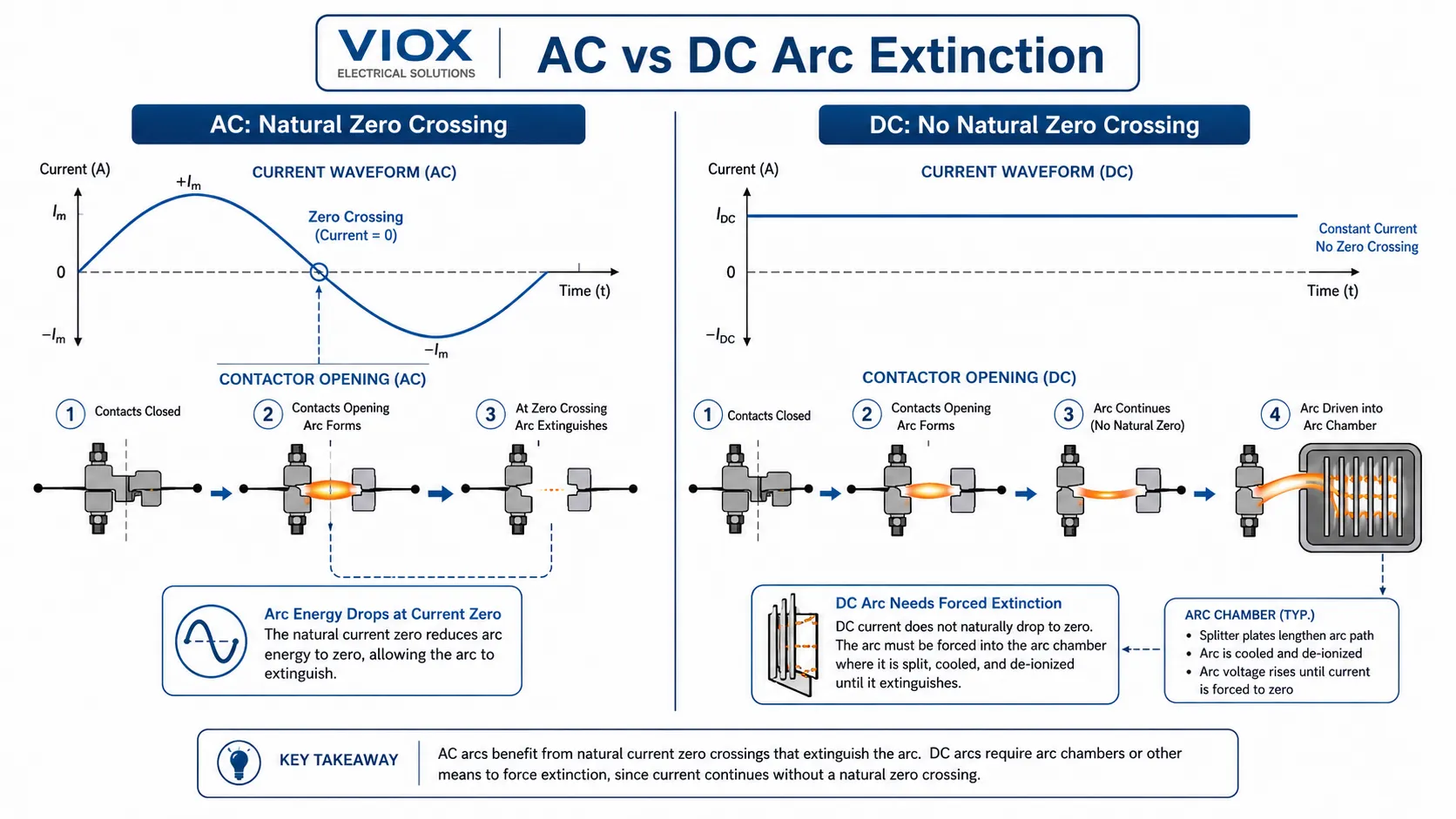
DC လျှပ်စီးကြောင်းပတ်လမ်းတွင် လျှပ်စီးကြောင်းသည် တစ်ဖက်တည်းသို့သာ စဉ်ဆက်မပြတ် စီးဆင်းသည်။ ဝန်အားရှိနေချိန်တွင် Contactor ကို ဖွင့်လိုက်ပါက အဆက်အသွယ်များကြားရှိ မီးပွားသည် သဘာဝအလျောက် သုညသို့ရောက်ရှိမည့် အခွင့်အရေးမရရှိပါ။ အကယ်၍ Contactor သည် မီးပွားကို အတင်းအကျပ် ဆန့်ထုတ်ခြင်း၊ အအေးခံခြင်း၊ ခွဲထုတ်ခြင်း သို့မဟုတ် Arc chamber အတွင်းသို့ ရောက်ရှိအောင် မလုပ်ဆောင်နိုင်ပါက မီးပွားသည် ဆက်လက်လောင်ကျွမ်းနေမည်ဖြစ်ပြီး အဆက်အသွယ်များကို ပျက်စီးစေခြင်း၊ ဂဟေဆော်သကဲ့သို့ ကပ်သွားခြင်း သို့မဟုတ် စက်ပစ္စည်းတစ်ခုလုံး ပျက်စီးသွားခြင်းများ ဖြစ်ပေါ်နိုင်သည်။.
ထို့ကြောင့် စစ်မှန်သော DC contactor တစ်ခုသည် DC coil တပ်ဆင်ထားရုံမျှဖြင့် AC contactor နှင့် မတူညီပါ။ ၎င်းတွင် အောက်ပါတို့ လိုအပ်နိုင်သည် -
- ပိုမိုကျယ်ဝန်းသော အဆက်အသွယ်ကွာဟချက် (larger contact separation)
- ပိုမိုအားကောင်းသော arc chutes သို့မဟုတ် arc chambers များ
- သံလိုက်ဓာတ်ဖြင့် မီးပွားကိုမှုတ်ထုတ်ပေးသော သံလိုက်များ သို့မဟုတ် ကွိုင်များ (magnetic blowout magnets or coils)
- ဓာတ်ငွေ့ဖြည့်ထားသော၊ လေဟာနယ်ဖြင့် အလုံပိတ်ထားသော သို့မဟုတ် လေလုံအောင်ပိတ်ထားသော အဆက်အသွယ်ခန်းများ
- မီးပွားဒဏ်ခံနိုင်သော အဆက်အသွယ်ပစ္စည်းများ
- ဒီဇိုင်းအရ ဝင်ရိုးစွန်းသတ်မှတ်ချက်ရှိပါက မှန်ကန်သော ဝင်ရိုးစွန်းအနေအထား (correct polarity orientation)
- လက်တွေ့ DC ဝန်အားနှင့် ကိုက်ညီသော အသုံးပြုမှုအမျိုးအစား သတ်မှတ်ချက်များ (utilization-category ratings)
လက်တွေ့ကျသော စည်းမျဉ်းမှာ ရိုးရှင်းပါသည် -
DC ဝန်အားများကို ခုတ်/ဆက်ရန်အတွက် DC-rated contactor ကိုသာ အသုံးပြုပါ။ ၎င်းကို ရွေးချယ်ရာတွင် ဗို့အား၊ လျှပ်စီးကြောင်း၊ အသုံးပြုမှုအမျိုးအစား (utilization category)၊ ဝင်ရိုးစွန်း (polarity)၊ ဝန်၏ inductance၊ ချို့ယွင်းမှုဆိုင်ရာ မဟာဗျူဟာနှင့် ခုတ်/ဆက်ရမည့် တာဝန် (switching duty) တို့ကို ထည့်သွင်းစဉ်းစားရမည်ဖြစ်ပြီး Ampere ပမာဏတစ်ခုတည်းကိုသာ ကြည့်၍ မရွေးချယ်ရပါ။.
ကိရိယာများအကြောင်း ပိုမိုကျယ်ပြန့်စွာ သိရှိနိုင်ရန် VIOX ၏ လမ်းညွှန်ချက်ဖြစ်သော contactor ဆိုသည်မှာ အဘယ်နည်း တွင် အခြေခံခုတ်/ဆက်ခြင်းဆိုင်ရာ အခန်းကဏ္ဍကို ရှင်းပြထားပါသည်။ အကယ်၍ သင်သည် contactor အမျိုးအစားများကို နှိုင်းယှဉ်နေပါက တွဲဖက်ဆောင်းပါးဖြစ်သည့် AC နှင့် DC contactor များ တွင် ၎င်းအမျိုးအစားနှစ်ခုကြားရှိ ပိုမိုကျယ်ပြန့်သော ကွာခြားချက်များကို ဖော်ပြထားပါသည်။.
သော့ထုတ်ယူမှုများ
- AC ခုတ်/ဆက်ခြင်းတွင် လျှပ်စီးကြောင်း သုညဖြတ်ကျော်မှု (current zero crossings) သဘာဝအတိုင်း ဖြစ်ပေါ်ခြင်းမှ အကျိုးကျေးဇူးရရှိသော်လည်း DC ခုတ်/ဆက်ခြင်းတွင် ထိုသို့မဖြစ်ပေါ်ပါ။.
- DC လျှပ်စစ်မီးပွား (arc) တစ်ခုသည် ရင်းမြစ်မှ လုံလောက်သော ဗို့အားနှင့် လျှပ်စီးကြောင်းကို ပေးစွမ်းနိုင်သရွေ့ ဆက်လက်တည်ရှိနေနိုင်ပါသည်။.
- Magnetic blowout uses a magnetic field to drive the arc away from the contacts and into an arc chamber.
- Some DC contactors are polarized. Connecting the load current in the wrong direction can reduce the effect of the internal blowout magnets.
- DC utilization categories such as DC-1, DC-3နှင့် DC-5 matter because resistive loads, shunt motors, and series motors do not stress the contactor in the same way.
- A contactor is not a short-circuit protective device by itself. It must be coordinated with fuses, DC circuit breakers, or other protective devices.
- The most dangerous selection mistake is replacing a DC contactor with an AC contactor because the voltage and current numbers look similar.
Why Zero Crossing Makes AC Switching Easier
An electrical arc forms when contacts separate while current is still flowing. As the contact gap opens, voltage stress across the gap can ionize the air or gas between the contacts. Once that gap becomes conductive, current continues through a hot plasma path: the arc.
In AC systems, the current waveform naturally crosses zero every half-cycle. At 50 Hz, that happens 100 times per second. At 60 Hz, it happens 120 times per second. When the current reaches zero, the energy feeding the arc momentarily disappears. If the contact gap, dielectric recovery, and arc chamber are adequate, the arc does not reignite after the zero crossing.
This does not mean AC contactors are simple or risk-free. AC contactors still need proper contact design, arc chutes, utilization-category ratings, and short-circuit coordination. But AC gives the contactor a natural extinguishing opportunity.
DC does not.
Why DC Arcs Are Harder to Extinguish
In a DC circuit, current does not reverse direction and does not naturally pass through zero. Once a DC arc forms, the source continues to push current through the arc path. To extinguish it, the contactor must force the arc voltage to rise above what the circuit can sustain.
In practical terms, the device must make the arc harder to keep alive by:
- increasing arc length
- moving the arc away from the contact surface
- လျှပ်စစ်မီးပွား (arc) ကို အအေးခံခြင်း
- လျှပ်စစ်မီးပွားကို အပိုင်းငယ်များအဖြစ် ခွဲထုတ်ခြင်း
- လျှပ်စစ်မီးပွားကို deionizing ပြားများ သို့မဟုတ် အခန်းများအတွင်းသို့ အတင်းအကျပ် တွန်းပို့ခြင်း
- လျှပ်စစ်ဓာတ်ကာကွယ်မှု ပြန်လည်ကောင်းမွန်လာစေရန်နှင့် မီးပွားဆက်လက်ဖြစ်ပေါ်မှုကို လျှော့ချရန်အတွက် ဓာတ်ငွေ့ဖြည့်ထားသော၊ ဟိုက်ဒရိုဂျင်အရောအနှော သို့မဟုတ် လေဟာနယ်ဖြင့် အလုံပိတ်ထားသော ပတ်ဝန်းကျင်ကို အသုံးပြုခြင်း
- အဆက်အသွယ်များ ပျက်စီးယိုယွင်းမှု ကြာရှည်မဖြစ်စေရန်အတွက် အဆက်အသွယ်များကို လုံလောက်သော အမြန်နှုန်းဖြင့် ဖွင့်ပေးခြင်း
ဤအချက်သည် DC contactor များသည် AC contactor များထက် ပိုမိုကြီးမားပြီး ပိုမိုဈေးကြီးကာ ပိုမိုအထူးပြုရခြင်း၏ အဓိကအကြောင်းရင်းဖြစ်သည်။ ထပ်ဆောင်းတည်ဆောက်ပုံများသည် အလှအပအတွက်မဟုတ်ဘဲ DC ဝန်အားကို ဖြတ်တောက်ရာတွင် ခံနိုင်ရည်ရှိစေရန် လိုအပ်သော စက်ပစ္စည်းများဖြစ်သည်။.
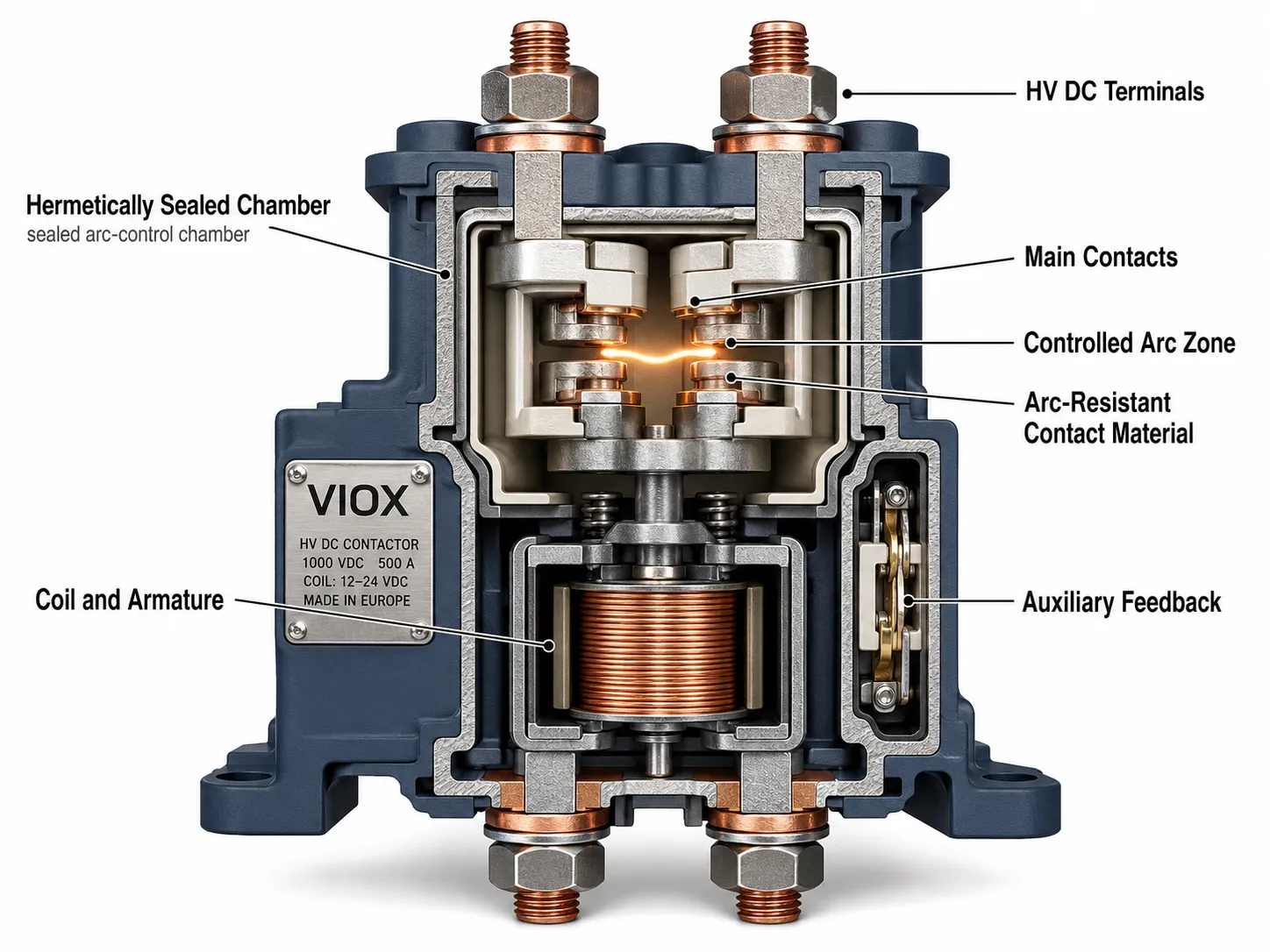
ဗို့အားမြင့် EV နှင့် ဘက်ထရီစွမ်းအင် သိုလှောင်မှုဆိုင်ရာ အသုံးချမှုများတွင် DC contactor အများစုသည် လေဟာပြင် contact စနစ်များထက် အလုံပိတ် arc အခန်းများကို အသုံးပြုရခြင်း၏ အကြောင်းရင်းမှာ ဤအချက်ဖြစ်သည်။ ထုတ်ကုန်အမျိုးအစားပေါ်မူတည်၍ ထုတ်လုပ်သူများသည် arc ထိန်းချုပ်မှုနှင့် လျှပ်စစ်ဓာတ်ကာကွယ်မှု ပြန်လည်ကောင်းမွန်လာစေရန်အတွက် ဓာတ်ငွေ့ဖြည့်ထားသော အခန်းများ၊ ဟိုက်ဒရိုဂျင်အခြေခံ ဓာတ်ငွေ့အရောအနှောများ သို့မဟုတ် လေဟာနယ် interrupter ပုံစံ တည်ဆောက်ပုံများကို အသုံးပြုကြသည်။ အသုံးပြုထားသော ကြားခံပစ္စည်းမှာ ထုတ်ကုန်တစ်ခုချင်းစီအလိုက် ကွဲပြားနိုင်သဖြင့် အပြင်ပန်းပုံစံကို ကြည့်၍ ခန့်မှန်းမည့်အစား contactor ၏ datasheet တွင် စစ်ဆေးအတည်ပြုသင့်သည်။.
DC Contactor တစ်ခု ပွင့်သွားသည့်အချိန်တွင် အတွင်း၌ ဖြစ်ပျက်ပုံ
ဝန်အားရှိနေချိန်တွင် DC Contactor တစ်ခု ပွင့်သွားပါက ထိုဖြစ်စဉ်သည် လျင်မြန်စွာ ဖြစ်ပေါ်သော်လည်း အစီအစဉ်အတိုင်း ဖြစ်ပျက်ရန်မှာ အရေးကြီးပါသည်-
- ကွိုင် (Coil) သို့ လျှပ်စစ်ဓာတ်အား ရပ်တန့်သွားခြင်း။. ကွိုင်၏ ဖိနှိပ်မှု၊ စပရိန်၏ တွန်းကန်အားနှင့် သံလိုက်ဓာတ် လျော့နည်းသွားမှုတို့အပေါ် မူတည်၍ Armature သည် စတင်လွတ်မြောက်လာခြင်း။.
- လျှပ်ကူးပစ္စည်း (Contacts) များ စတင်ကွာခြားသွားခြင်း။. လျှပ်စီးကြောင်းသည် ကျဉ်းမြောင်းလာသော Contact ဧရိယာမှတစ်ဆင့် ဆက်လက်စီးဆင်းရန် ကြိုးပမ်းခြင်း။.
- အဏုကြည့်မှန်ပြောင်းဖြင့်သာ မြင်နိုင်သော Contact အမှတ်များတွင် ဒေသအလိုက် အပူချိန် မြင့်တက်လာခြင်း။. Contact မျက်နှာပြင်များသည် လုံးဝချောမွတ်နေခြင်း မရှိသောကြောင့် လျှပ်စီးကြောင်းသည် အလွန်သေးငယ်သော အမြင့်နေရာများတွင် စုစည်းစီးဆင်းခြင်း။.
- Ionization starts in the gap. Metal vapor and ionized gas create a conductive path.
- A DC arc forms. Without a zero crossing, current continues through the plasma path.
- The arc-control system takes over. Magnetic blowout, arc runners, arc chutes, gas filling, or vacuum design must move and extinguish the arc.
- Dielectric recovery must hold. After extinction, the open gap must withstand system voltage and transients without restriking.
TE Connectivity’s contact arcing application note describes how microscopic high spots on contacts heat intensely and how severe arcing can contribute to material transfer and welding. That is especially important in DC because material transfer tends to occur consistently in one direction rather than alternating as it would in random AC switching.
Magnetic Blowout: The Core Arc-Control Method in Many DC Contactors
Magnetic blowout is one of the most common DC arc-extinction methods.
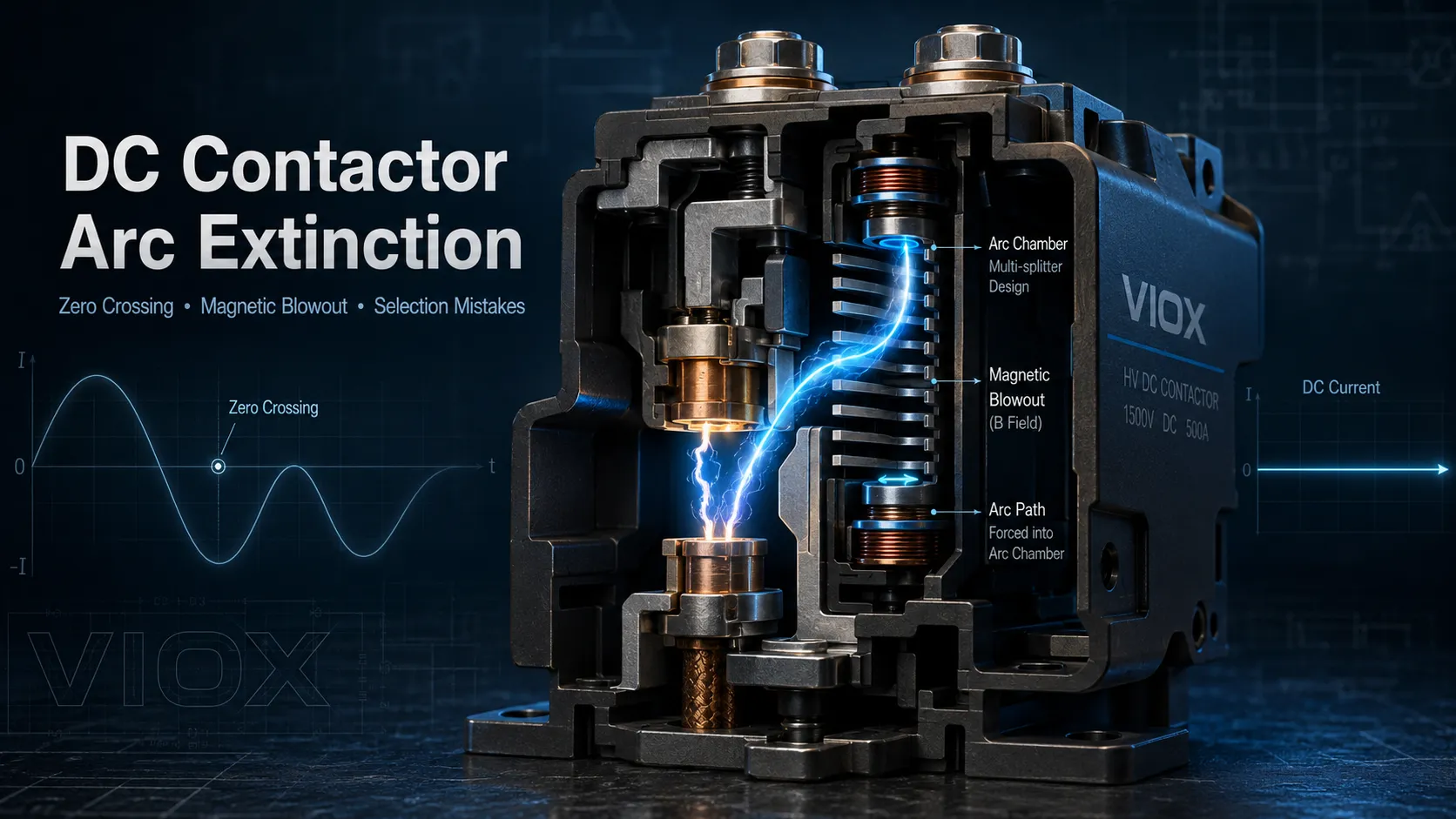
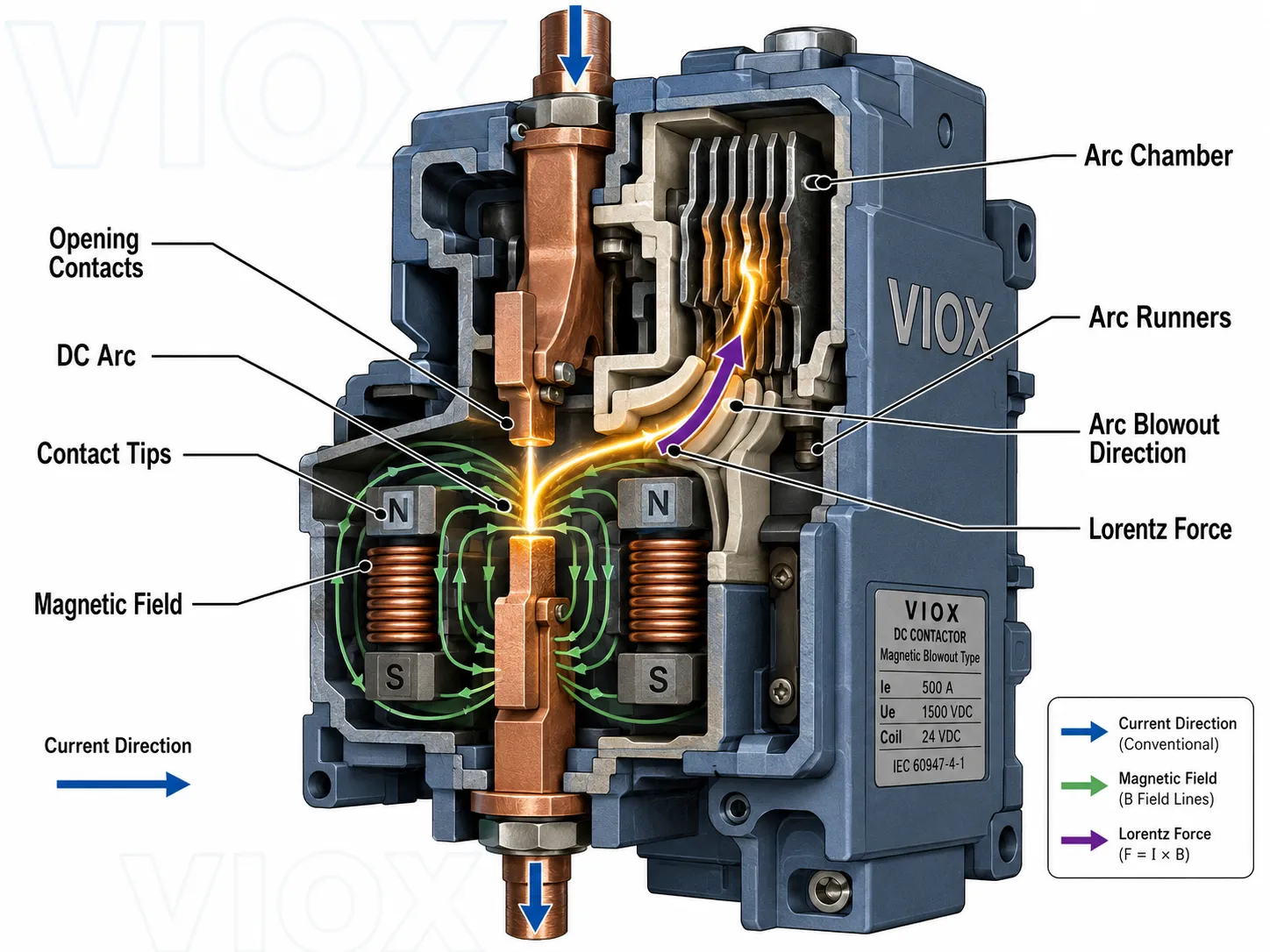
The principle is based on the Lorentz force: a current-carrying arc in a magnetic field experiences a force. In a DC contactor, permanent magnets or blowout coils create a magnetic field near the contacts. When an arc forms, the magnetic field pushes the arc away from the contact surface and toward the arc chute or arc chamber.
The goal is not merely to “move” the arc. The goal is to:
- pull the arc off the contact tips
- stretch the arc path
- increase arc voltage
- လျှပ်စစ်မီးပွား (arc) ကို အအေးခံ/အိုင်းယွန်းဓာတ်ဖယ်ရှားပေးသည့် တည်ဆောက်ပုံများအတွင်းသို့ တွန်းပို့ခြင်း
- လျှပ်ကူးပစ္စည်းထိတွေ့မှု (contact) များ ပျက်စီးယိုယွင်းမှုကို လျှော့ချခြင်း
- ပင်မထိတွေ့မှုများကြားတွင် မီးပွားများ ဆက်လက်လောင်ကျွမ်းနေခြင်းကို တားဆီးခြင်း
ဤအကြောင်းကြောင့်ပင် လျှပ်စစ်မီးပွားခန်း (arc chamber) နှင့် သံလိုက်စနစ်တို့သည် အတူတကွ လုပ်ဆောင်ရန် လိုအပ်ခြင်းဖြစ်သည်။ သင့်လျော်သော မီးပွားလမ်းကြောင်းမရှိသည့် သံလိုက်စနစ်တစ်ခုသည် မပြည့်စုံသကဲ့သို့၊ ထိရောက်စွာ မီးပွားရွေ့လျားမှုမရှိသည့် မီးပွားလမ်းကြောင်း (arc chute) သည်လည်း မီးပွားကို လုံလောက်သော အရှိန်ဖြင့် လက်ခံရရှိမည်မဟုတ်ပါ။.
ဤအပိုင်းအတွက် အသုံးဝင်သော ပုံမှာ DC contactor တစ်ခု၏ အတွင်းပိုင်းကို ဖြတ်ညှပ်ပြသထားသည့် ပုံဖြစ်ပြီး၊ ၎င်းတွင် ပွင့်နေသော ထိတွေ့မှုများကြားရှိ မီးပွား၊ သံလိုက်စက်ကွင်း၏ ဦးတည်ချက်၊ Lorentz-force ၏ ဦးတည်ချက်နှင့် မီးပွားကို မီးပွားခန်းအတွင်းသို့ တွန်းပို့နေပုံတို့ကို ပြသထားသည်။ ထိုပုံတစ်ပုံတည်းကပင် စာပိုဒ်များစွာထက် သံလိုက်ဖြင့် မီးပွားမှုတ်ထုတ်ခြင်း (magnetic blowout) ကို ပိုမိုမြန်ဆန်စွာ ရှင်းပြနိုင်ပါသည်။.
DC Contactor များတွင် ဝင်ရိုးစွန်း (Polarity) အဘယ်ကြောင့် အရေးကြီးသနည်း
အချို့သော DC contactor များသည် ဝင်ရိုးစွန်းသတ်မှတ်ချက်ပါရှိသော (polarized). ၎င်းတို့၏ ပင်မပါဝါ terminals များတွင် အမှတ်အသားပြုထားနိုင်သည် + နှင့် -, ၊ ထို့အပြင် အမြင့်ဆုံးဖြတ်တောက်နိုင်စွမ်း (breaking capability) ရရှိစေရန်အတွက် လျှပ်စီးကြောင်းသည် ရည်ရွယ်ထားသည့် ဦးတည်ရာအတိုင်း စီးဆင်းရမည်။.
Sensata/Gigavac ၏ လမ်းညွှန်ချက်တွင် ဤပြဿနာကို ရှင်းလင်းစွာ ဖော်ပြထားသည်- contactor အများစုသည် ပိတ်ထားသည့်အခါ လျှပ်စီးကြောင်းကို မည်သည့်ဘက်သို့မဆို စီးဆင်းစေနိုင်သော်လည်း လျှပ်စီးကြောင်းကို ဖြတ်တောက်ခြင်း သို့မဟုတ် ပိတ်ခြင်းမှာ ကွဲပြားခြားနားပါသည်။ အတွင်းပိုင်းရှိ blowout magnets များသည် လျှပ်စီးကြောင်းစီးဆင်းမည့် သီးခြားဦးတည်ရာတစ်ခုအတွက် အကောင်းဆုံးဖြစ်အောင် ပြုလုပ်ထားခြင်း ဖြစ်နိုင်သည်။ အကယ်၍ မှားယွင်းစွာ တပ်ဆင်မိပါက လျှပ်စစ်မီးပွား (arc) သည် ရည်ရွယ်ထားသည့် အခန်းအတွင်းသို့ မရောက်ရှိဘဲ အခြားနေရာသို့ ရွေ့လျားသွားနိုင်သည် သို့မဟုတ် blowout အာနိသင် လျော့နည်းသွားနိုင်သည်။.
This distinction is critical:
| Term | အဓိပ္ပာယ် | အဘယ်ကြောင့် အရေးကြီးသနည်း |
|---|---|---|
| နှစ်ဘက်စလုံးသို့ လျှပ်စီးကြောင်း ပို့လွှတ်နိုင်သည် | ပိတ်ထားသော contact များသည် လျှပ်စီးကြောင်းကို မည်သည့်ဘက်သို့မဆို စီးဆင်းစေနိုင်သည် | ဤအချက်သည် စက်ပစ္စည်းအနေဖြင့် လျှပ်စီးကြောင်းကို နှစ်ဘက်စလုံးမှ ဖြတ်တောက်နိုင်သည်ဟု အလိုအလျောက် သက်ရောက်မှုမရှိပါ |
| ဝင်ရိုးစွန်းသတ်မှတ်ချက်ပါရှိသော contactor (Polarized contactor) | Terminals must be connected according to marked polarity | Wrong current direction can reduce arc-extinction performance |
| Bidirectional switching contactor | Designed to interrupt current in both directions | Needed for some battery, regenerative, and bidirectional energy systems |
In battery energy storage systems (BESS), electric vehicles, solar storage, and DC fast-charging systems, current direction may not always be simple. Charging, discharging, regenerative operation, precharge paths, and fault paths must all be considered. If the current can reverse under normal or abnormal conditions, verify whether the contactor is truly rated for bidirectional switching.
For adjacent protection architecture, VIOX’s guide to DC circuit breakers for solar, battery, and EV systems is a useful next read.
DC Contactor vs AC Contactor: What Actually Changes?
| ရွေးချယ်မှုအချက် | AC contactor | DC contactor |
|---|---|---|
| Arc extinction help from waveform | Natural current zero crossing assists arc extinction | No natural zero crossing; arc must be forced out |
| လျှပ်စီးကြောင်းအခန်းဒီဇိုင်း | Usually simpler for the same apparent power class | More demanding; may require magnetic blowout or sealed chamber |
| Contact gap | AC switching duty နှင့် utilization category တို့အပေါ် အခြေခံ၍ ဒီဇိုင်းထုတ်ထားခြင်း | ပိုမိုထိရောက်သော DC လျှပ်ကာ (insulation) နှင့် လျှပ်စစ်မီးပွား (arc) လမ်းကြောင်း ထိန်းချုပ်မှု လိုအပ်လေ့ရှိခြင်း |
| ဝင်ရိုးစွန်း (Polarity) အပေါ် မူတည်၍ အာရုံခံနိုင်စွမ်းရှိခြင်း | AC အတွက် အဓိကထိတွေ့ဆက်သွယ်မှုများ (Main contacts) သည် များသောအားဖြင့် ဝင်ရိုးစွန်းအပေါ် မူတည်၍ အာရုံခံနိုင်စွမ်းမရှိခြင်း | အချို့သော DC contactor များသည် ဝင်ရိုးစွန်းသတ်မှတ်ချက် (polarized) ရှိခြင်း |
| ထိတွေ့ဆက်သွယ်မှုများ၏ ပွန်းစားမှုပုံစံ (Contact wear pattern) | AC လည်ပတ်မှုပုံစံ မမှန်မကန်ဖြစ်သည့်အခါ ပစ္စည်းများ ပြောင်းရွှေ့မှု (Material transfer) သည် ပျမ်းမျှဖြစ်သွားနိုင်ခြင်း | ပစ္စည်းများ ပြောင်းရွှေ့မှုသည် တစ်ဖက်သတ်ဆန်ပြီး ပိုမိုပြင်းထန်နိုင်ခြင်း |
| ဝန်အမျိုးအစား၏ အရေးပါမှု | AC-1, AC-3, AC-4 စသည်တို့. | DC-1, DC-3, DC-5 နှင့် ထုတ်လုပ်သူသတ်မှတ်ထားသော DC အဆင့်သတ်မှတ်ချက်များ |
| အသုံးချမှုတွင် အဖြစ်များသော မှားယွင်းမှုများ | မော်တာလုပ်ငန်းစဉ် သို့မဟုတ် မကြာခဏ အဖွင့်အပိတ်ပြုလုပ်ရသည့် ဝန်အတွက် အရွယ်အစားသေးငယ်လွန်းခြင်း | DC ဝန်တွင် AC contactor ကို အသုံးပြုခြင်း၊ ဝင်ရိုးစွန်း (polarity) မှားယွင်းခြင်း၊ DC အမျိုးအစား မှားယွင်းခြင်း |
အင်ဂျင်နီယာပိုင်းဆိုင်ရာ အရေးကြီးသောအချက်မှာ ဗို့အားနှင့် လျှပ်စီးကြောင်း တူညီရုံမျှဖြင့် အဖွင့်အပိတ်ပြုလုပ်ရသည့် ဝန် (switching duty) တူညီသည်ဟု မဆိုလိုပါ. 250 VAC သတ်မှတ်ချက်ရှိသော Contactor တစ်ခုသည် DC ဗို့အားဖြတ်တောက်နိုင်စွမ်းတွင် အလွန်နည်းပါးခြင်း သို့မဟုတ် လုံးဝကွဲပြားခြားနားခြင်းမျိုး ဖြစ်နိုင်သည်။ Datasheet ရှိ DC လိုင်းကို အမြဲဖတ်ရှုပါ။.
DC အသုံးပြုမှု အမျိုးအစားများ (DC Utilization Categories): DC-1, DC-3 နှင့် DC-5
IEC 60947-4-1 နှင့် UL 60947-4-1 တို့သည် Contactor နှင့် Motor-starter များအတွက် လိုအပ်ချက်များကို သတ်မှတ်ပေးထားသည်။ Schneider Electric ၏ နည်းပညာဆိုင်ရာ စာရွက်စာတမ်းများတွင် DC အသုံးပြုမှု အမျိုးအစားများကို အောက်ပါအတိုင်း အကျဉ်းချုပ်ဖော်ပြထားသည် -
| အမျိုးအစား | ပုံမှန်ဝန်အား (Typical load) | ရွေးချယ်မှုဆိုင်ရာ သက်ရောက်မှု (Selection implication) |
|---|---|---|
| DC-1 | Inductive မဟုတ်သော သို့မဟုတ် အနည်းငယ်သာ Inductive ဖြစ်သော DC Load များ | မော်တာဝန်အားထက် ပိုမိုလွယ်ကူသော်လည်း DC အတွက် သတ်မှတ်ထားသော ဖြတ်တောက်နိုင်စွမ်း လိုအပ်ဆဲဖြစ်သည်။ |
| DC-3 | Shunt မော်တာများ - စတင်ခြင်း (starting)၊ ပလပ်ထိုးခြင်း (plugging)၊ အနည်းငယ်ရွေ့လျားခြင်း (inching)၊ ဒိုင်းနမစ်ဘရိတ်အသုံးပြုခြင်း (dynamic braking) | မော်တာစွမ်းအင်နှင့် Switching အခြေအနေများကြောင့် ပိုမိုပြင်းထန်သည်။ |
| DC-5 | Series motors: starting, plugging, inching, dynamic braking | Severe DC motor duty; do not substitute from DC-1 ratings |
This matters because a DC contactor’s amp rating is not a universal number. A device may carry a certain continuous current, but its ability to break that current depends on:
- DC voltage
- load inductance
- current level
- time constant
- utilization category
- contact arrangement
- အသုံးပြုနိုင်သည့်နေရာများတွင် စီးရီးချိတ်ဆက်ထားသော ပို (poles) အရေအတွက်
- ကြိမ်နှုန်းပြောင်းခြင်း။
- ambient temperature
- ပိုလာရတီ (polarity)
- မျှော်လင့်ထားသော ချို့ယွင်းချက်အခြေအနေများ (expected fault conditions)
အကယ်၍ ဒေတာစာရွက် (datasheet) တွင် DC-1 နှင့် DC-3 အတွက် မတူညီသော အဆင့်သတ်မှတ်ချက်များ (ratings) ပေးထားပါက ဝန် (load) နှင့် ကိုက်ညီသော အမျိုးအစားကိုသာ ရွေးချယ်ပါ။ အကောင်းဆုံးအခြေအနေကို ပြသထားသည့် ကော်လံမှ ရွေးချယ်ခြင်း မပြုပါနှင့်။.
အထူးပြု DC ကွန်တက်တာများ (Special DC Contactors) အသုံးပြုသည့်နေရာများ
ဘက်ထရီစွမ်းအင်သိုလှောင်မှုစနစ်များ
ဘက်ထရီစနစ်များတွင် ဘက်ထရီအထုပ် (pack) ကို ခွဲထုတ်ခြင်း၊ ကြိုတင်အားသွင်းခြင်း (precharge)၊ ပင်မအပေါင်း/အနှုတ် လျှပ်စီးကြောင်းပြောင်းလဲခြင်း၊ အရေးပေါ်ဖြတ်တောက်ခြင်းလမ်းကြောင်းများနှင့် ဝန်ဆောင်မှုဆိုင်ရာ ခွဲထုတ်ခြင်းဆိုင်ရာ ယုတ္တိဗေဒတို့အတွက် DC ကွန်တက်တာများကို အသုံးပြုသည်။ စိန်ခေါ်မှုမှာ ဘက်ထရီအထုပ်များသည် အလွန်မြင့်မားသော ချို့ယွင်းချက်လျှပ်စီးကြောင်း (fault current) ကို ပေးစွမ်းနိုင်ပြီး စနစ်အတွင်း အင်ဗာတာများ သို့မဟုတ် ပါဝါပြောင်းလဲသည့်စနစ်များတွင် ပါဝင်သော ကြီးမားသည့် ကက်ပစီတာများ (capacitors) ရှိနေနိုင်ခြင်းဖြစ်သည်။.
BESS တစ်ခုတွင် ပင်မ DC ကွန်တက်တာတစ်ခုကို ရွေးချယ်ရာတွင် အောက်ပါတို့နှင့် တွဲဖက်၍ ရွေးချယ်သင့်သည် -
- ကြိုတင်အားသွင်းသည့် ဆားကစ်ဒီဇိုင်း (precharge circuit design)
- ဖျူးစ် သို့မဟုတ် ဒီစီ ဘရိတ်ကာ ညှိနှိုင်းဆောင်ရွက်မှု
- ဘက်ထရီ၏ ရှော့ဆားကစ် လျှပ်စီးကြောင်း ခံနိုင်ရည်စွမ်းရည်
- နှစ်လမ်းသွား လျှပ်စီးကြောင်းဆိုင်ရာ လုပ်ဆောင်ချက်
- လျှပ်ကာစောင့်ကြည့်ခြင်းနှင့် ချို့ယွင်းချက် ရှာဖွေခြင်း
- ဘက်ထရီ အကာအိမ်အတွင်း အပူချိန် ထိန်းချုပ်မှု
စနစ်အဆင့် နောက်ခံအချက်အလက်များအတွက် VIOX ၏ ဘက်ထရီ စွမ်းအင်သိုလှောင်မှုစနစ် လမ်းညွှန်ကို ကြည့်ပါ.
လျှပ်စစ်ကားများနှင့် ဒီစီ အမြန်အားသွင်းစနစ်များ
EV နှင့် DC အားသွင်းစနစ်သုံး ကွန်တက်တာ (Contactors) များသည် ဗို့အားမြင့် ဘက်ထရီဆားကစ်များ၊ အားသွင်းစက်၏ အထွက်လမ်းကြောင်းများ၊ ကြိုတင်အားသွင်းသည့်လမ်းကြောင်းများ (precharge paths) သို့မဟုတ် ဘေးကင်းလုံခြုံရေးဆိုင်ရာ အပြန်အလှန်ထိန်းချုပ်မှုလုပ်ဆောင်ချက်များကို ခုတ်/ဆက်ပေးနိုင်သည်။ ဤစနစ်များတွင် ကွန်တက်တာများ ကပ်ငြိသွားခြင်း (welding) သည် ပြုပြင်ထိန်းသိမ်းမှုဆိုင်ရာ ပြဿနာတစ်ခုသာမကဘဲ၊ ထိန်းချုပ်စနစ်က ဆားကစ်ပွင့်သွားပြီဟု ယူဆထားသော်လည်း လျှပ်စစ်ဓာတ်အား ဆက်လက်စီးဆင်းနေသည့် အန္တရာယ်ရှိသော အခြေအနေကို ဖြစ်ပေါ်စေနိုင်သည်။.
ရွေးချယ်ရာတွင် အောက်ပါတို့ကို စစ်ဆေးအတည်ပြုရမည် -
- ဗို့အားအဆင့် (Voltage class)
- စဉ်ဆက်မပြတ် သယ်ဆောင်နိုင်သော လျှပ်စီးကြောင်း (Continuous carry current)
- ဖြတ်တောက်နိုင်သော လျှပ်စီးကြောင်း (Break current)
- ခေတ္တခံနိုင်ရည်ရှိမှု သို့မဟုတ် ချို့ယွင်းချက်ဖြစ်ပေါ်ချိန်တွင် ကိုင်တွယ်ဖြေရှင်းမည့် နည်းဗျူဟာ (Short-time withstand or fault strategy)
- နှစ်လမ်းသွား လျှပ်စီးကြောင်း ခုတ်/ဆက်နိုင်မှု လိုအပ်ချက် (Bidirectional switching requirement)
- ကွိုင်၏ စွမ်းအင်ချွေတာမှု သို့မဟုတ် ကွိုင်၏ လျှပ်စီးကြောင်းထိန်းချုပ်သည့် နည်းလမ်း (Coil economizer or coil suppression method)
- ဂဟေဆက်ခြင်းကို သိရှိနိုင်ရန်အတွက် အရန်အဆက်အသွယ် (auxiliary contact) မှ တုံ့ပြန်ချက်
- ပတ်ဝန်းကျင်ဆိုင်ရာ အလုံပိတ်စနစ်နှင့် တုန်ခါမှုဒဏ်ခံနိုင်ရည်ရှိမှု
ဆိုလာ PV နှင့် DC ဖြန့်ဖြူးရေးစနစ်
ဆိုလာနှင့် DC ဖြန့်ဖြူးရေးစနစ်များတွင် အလင်းရောင်ရှိနေချိန် သို့မဟုတ် စွမ်းအင်သိုလှောင်မှုစနစ် ချိတ်ဆက်ထားချိန်တိုင်းတွင် ရင်းမြစ်မှ လျှပ်စစ်ဓာတ်အား ဆက်လက်စီးဆင်းနေနိုင်သည်။ ဤစနစ်များတွင် အသုံးပြုသည့် DC contactor များသည် လက်ရှိ PV သို့မဟုတ် ဘက်ထရီဘက်ခြမ်းရှိ DC ဗို့အားနှင့် ဝန်အားဖြတ်တောက်ရန် လိုအပ်ချက်များနှင့် ကိုက်ညီရမည်။.
DC contactor ကို DC isolator သို့မဟုတ် DC circuit breaker နှင့် ရောထွေးမနေပါနှင့်။ Contactor သည် ထိန်းချုပ်ထားသော switching လုပ်ဆောင်ချက်ကို ပံ့ပိုးပေးသည်။ DC isolator switch manual isolation (လက်ဖြင့် လျှပ်စစ်ဖြတ်တောက်ခြင်း) ကို ပံ့ပိုးပေးသည်။ DC circuit breaker overcurrent interruption (လျှပ်စီးကြောင်းလွန်ကဲမှုကို ဖြတ်တောက်ခြင်း) ကို ပံ့ပိုးပေးသည်။ လက်တွေ့ DC စနစ်များတွင် ဤကိရိယာများသည် တစ်ခုကိုတစ်ခု အစားထိုးခြင်းထက် အတူတကွ ပူးပေါင်းလုပ်ဆောင်လေ့ရှိသည်။.
DC မော်တာနှင့် စက်မှုလုပ်ငန်းသုံး ထိန်းချုပ်မှုစနစ်
DC မော်တာဝန်များသည် မော်တာနှင့် ဆားကစ်၏ inductance ကြောင့် စွမ်းအင်သိုလှောင်ထားသဖြင့် ထိန်းချုပ်ရန် ခက်ခဲနိုင်သည်။ Plugging, inching, jogging နှင့် dynamic braking ကဲ့သို့သော လုပ်ဆောင်ချက်များသည် ရိုးရှင်းသော resistive switching ထက် ပိုမိုပြင်းထန်သည်။ ထို့ကြောင့် DC-3 နှင့် DC-5 အမျိုးအစားများ ရှိရခြင်းဖြစ်သည်။.
မော်တာထိန်းချုပ်မှု ဗိသုကာအတွက် VIOX ၏ contactor နှင့် motor starter နှိုင်းယှဉ်ချက် နှင့် မော်တာစတားတာ အမျိုးအစားများ ရွေးချယ်မှုလမ်းညွှန် contactor ကို ပိုမိုကျယ်ပြန့်သော စတားတာစနစ်အတွင်း ထည့်သွင်းနေရာချထားရန် ကူညီပေးသည်။.
အရေးအကြီးဆုံး ရွေးချယ်မှုဆိုင်ရာ စစ်ဆေးချက်များ
၁။ သတ်မှတ်ထားသော လုပ်ငန်းလည်ပတ်မှုဗို့အား (Rated operational voltage) သည် DC အတွက် သတ်မှတ်ချက်ဖြစ်ရမည်
စစ်ဆေးရန် DC ဗို့အားသတ်မှတ်ချက်, AC ဗို့အားသတ်မှတ်ချက်တစ်ခုတည်းမဟုတ်ပါ။ AC အတွက် ခိုင်ခံ့ပုံပေါက်သော contactor တစ်ခုသည် DC ဖြတ်တောက်နိုင်စွမ်း အလွန်နည်းပါးနိုင်သည်။.
IEC 60947-4-1 သည် အောက်ပါဗို့အားအထိရှိသော ဆားကစ်များအတွက် ရည်ရွယ်သည့် electromechanical contactors နှင့် starters များအတွက် အကျုံးဝင်သည် - 1000 V AC သို့မဟုတ် 1500 V DC, သို့သော် ၎င်းစံနှုန်းအောက်ရှိ contactor တိုင်းသည် DC ဗို့အားတိုင်းအတွက် သင့်လျော်သည်ဟု မဆိုလိုပါ။ ထုတ်ကုန်၏ datasheet တွင် လက်တွေ့အသုံးပြုနိုင်သည့် ကန့်သတ်ချက်များကို သတ်မှတ်ဖော်ပြထားသည်။.
2. လျှပ်စီးကြောင်းသတ်မှတ်ချက် (Current rating) သည် သယ်ဆောင်နိုင်မှုနှင့် ဖြတ်တောက်နိုင်မှု တာဝန်နှင့် ကိုက်ညီရမည်
စဉ်ဆက်မပြတ် သယ်ဆောင်နိုင်သော လျှပ်စီးကြောင်း (Continuous carry current) သည် ဖြတ်တောက်နိုင်သော လျှပ်စီးကြောင်း (Breaking current) နှင့် မတူပါ။ Contactor တစ်ခုသည် ပိတ်ထားစဉ်တွင် လျှပ်စီးကြောင်းမြင့်မားစွာ သယ်ဆောင်နိုင်သော်လည်း သတ်မှတ်ထားသော ဗို့အားနှင့် ဝန်အခြေအနေများအောက်တွင် လျှပ်စီးကြောင်းနည်းပါးစွာသာ ဖြတ်တောက်နိုင်ရန် သတ်မှတ်ထားခြင်းမျိုး ဖြစ်နိုင်သည်။.
အမြဲတမ်း ခွဲခြားသတ်မှတ်ပါ -
- စဉ်ဆက်မပြတ် သယ်ဆောင်နိုင်သော လျှပ်စီးကြောင်း (Continuous carry current)
- making current (လျှပ်စီးကြောင်းစတင်စီးဆင်းမှု)
- breaking current (လျှပ်စီးကြောင်းဖြတ်တောက်မှု)
- short-time withstand current (အချိန်တိုအတွင်း ခံနိုင်ရည်ရှိသော လျှပ်စီးကြောင်း)
- fault current that must be cleared by an upstream protective device (အထက်ပိုင်းရှိ ကာကွယ်ရေးကိရိယာမှ ဖြတ်တောက်ပေးရမည့် ချို့ယွင်းချက်ဖြစ်ပေါ်စေသော လျှပ်စီးကြောင်း)
3. Utilization category must match the load (အသုံးပြုမှုအမျိုးအစားသည် ဝန်နှင့် ကိုက်ညီရမည်)
Do not use a DC-1 rating for a DC motor application if the real duty is DC-3 or DC-5. Motor loads, inductive loads, and regenerative systems can impose far more severe breaking conditions than resistive DC loads. (အကယ်၍ အမှန်တကယ်အသုံးပြုမှုမှာ DC-3 သို့မဟုတ် DC-5 ဖြစ်ပါက DC မော်တာအတွက် DC-1 အဆင့်သတ်မှတ်ချက်ကို အသုံးမပြုပါနှင့်။ မော်တာဝန်များ၊ အင်ဒပ်တစ်ဝန်များ (inductive loads) နှင့် ပြန်လည်ထုတ်လုပ်သည့်စနစ်များ (regenerative systems) သည် resistive DC ဝန်များထက် ပိုမိုပြင်းထန်သော ဖြတ်တောက်မှုအခြေအနေများကို ဖြစ်ပေါ်စေနိုင်ပါသည်။).
For a deeper standards-oriented discussion, VIOX’s article on (စံနှုန်းများကို အခြေခံ၍ ပိုမိုနက်ရှိုင်းစွာ ဆွေးနွေးရန်အတွက် VIOX ၏ ဆောင်းပါးဖြစ်သော) electrical standards for contactors and utilization categories (ကွန်တက်တာများနှင့် အသုံးပြုမှုအမျိုးအစားများအတွက် လျှပ်စစ်စံနှုန်းများ) is a useful supporting resource.
4. Polarity and current direction must be verified
If the contactor is polarized, wire it according to the manufacturer’s marked terminals. If the system can push current in both directions, do not assume a polarized contactor is acceptable. Select a contactor specifically rated for bidirectional switching when required.
This point is especially important in:
- battery charge/discharge circuits
- regenerative motor drives
- DC fast chargers
- bidirectional DC/DC converter systems
- အင်ဗာတာများနှင့် ချိတ်ဆက်ထားသော သိုလှောင်မှုစနစ်များ
5. ဝန်၏လျှပ် cảm (Inductance) နှင့် အချိန်ကိန်းသေ (Time constant) တို့သည် အရေးကြီးသည်
ဆားကစ်တစ်ခုတွင် လျှပ်စီးကြောင်း ဆက်လက်စီးဆင်းနေစေရန် ကြိုးပမ်းလေ၊ Contactor အနေဖြင့် လျှပ်စစ်မီးပွား (Arc) ကို ငြိမ်းသတ်ရန် ပိုမိုကြိုးပမ်းရလေဖြစ်သည်။ Inductive ဝန်များသည် စွမ်းအင်ကို သံလိုက်စက်ကွင်းအတွင်း သိုလှောင်ထားသည်။ Contact များ ပွင့်သွားသည့်အခါ ထိုသိုလှောင်ထားသော စွမ်းအင်က မီးပွားကို ဆက်လက်ဖြစ်ပေါ်စေသည်။.
အသုံးဝင်သော အင်ဂျင်နီယာဆိုင်ရာ အတိုကောက်မှာ L/R အချိန်ကိန်းသေ (Time constant) ဖြစ်သည်:
\tau = \frac{L}{R}
ဤနေရာတွင် \(L\) သည် ဆားကစ်၏ လျှပ် cảm (Inductance) ဖြစ်ပြီး \(R\) သည် ဆားကစ်၏ လျှပ်ခံ (Resistance) ဖြစ်သည်။ \(L/R\) အချိန်ကိန်းသေ ပိုမိုမြင့်မားလေ၊ ဆားကစ်ပွင့်သွားပြီးနောက် လျှပ်စီးကြောင်း ကျဆင်းနှုန်း ပိုမိုနှေးကွေးလေဖြစ်သည်။ လျှပ်စီးကြောင်း ကျဆင်းနှုန်း နှေးကွေးခြင်းက မီးပွားကို ပိုမိုကြာရှည်စွာ တည်ရှိနေစေသဖြင့် Contactor အနေဖြင့် ပိုမိုခိုင်မာသော မီးပွားကို စုပ်ယူပြီး ငြိမ်းသတ်ပေးရမည်ဖြစ်သည်။.
ထို့ကြောင့်ပင် ဗို့အားနှင့် လျှပ်စီးကြောင်း တူညီသော်လည်း ဆားကစ်တစ်ခုတွင် လွယ်ကူနိုင်သော်လည်း အခြားတစ်ခုတွင် ပျက်စီးစေနိုင်သည်။ Resistive ဝန်၊ မော်တာ၏ Armature၊ Solenoid၊ ရှည်လျားသော ကေဘယ်ကြိုးနှင့် DC bus capacitor တို့သည် တူညီစွာ ပြုမူခြင်းမရှိပါ။ 100 A ရှိသော Resistive heater ဝန်နှင့် 100 A ရှိသော Inductive DC မော်တာ ဆားကစ်တို့သည် Contactor အဆင့်သတ်မှတ်ချက် (Rating) များ အလွန်ကွာခြားရန် လိုအပ်နိုင်သည်။.
6. Coil suppression သည် contactor ပွင့်သည့်အမြန်နှုန်းကို နှေးကွေးစေခြင်းမရှိစေရ။
Coil suppression သည် control electronics များအား ဗို့အားရုတ်တရက်မြင့်တက်ခြင်း (voltage transients) မှ ကာကွယ်ပေးသော်လည်း၊ မှားယွင်းစွာရွေးချယ်မိပါက contactor ပြန်လည်ပွင့်ထွက်ခြင်း (drop-out) ကို နှေးကွေးစေနိုင်သည်။ TE Connectivity ၏ ဖော်ပြချက်အရ သံလိုက်စွမ်းအင်ကို အလွန်နှေးကွေးစွာ လျော့ကျစေသည့် suppression နည်းလမ်းများသည် armature ရွေ့လျားမှုကို နှောင့်နှေးစေပြီး ဝန်အခြေအနေအချို့တွင် contact များ ကပ်သွားခြင်း (tack welding) ကို ဖြစ်ပေါ်စေနိုင်သည်။.
လက်တွေ့ဒီဇိုင်းထုတ်ရာတွင် ထုတ်လုပ်သူမှ အကြံပြုထားသည့် suppression နည်းလမ်းကို စစ်ဆေးခြင်းမရှိဘဲ DC contactor coil တစ်ခုတွင် diode ကို မည်သို့မျှ ထည့်သွင်းမတပ်ဆင်ပါနှင့်။ အဖွင့်နှေးကွေးခြင်းသည် arc ဖြစ်ပေါ်သည့်အချိန်ကို ပိုမိုကြာရှည်စေနိုင်သည်။.
ဆက်စပ်နေသော VIOX ဆောင်းပါးအတွက် အောက်ပါကို ကြည့်ပါ contactor များအတွက် မှန်ကန်သော surge suppressor ကို မည်သို့ရွေးချယ်ရမည်နည်း.
7. Short-circuit protection သည် သီးခြားစီဖြစ်ရမည်
Contactor ဆိုသည်မှာ switching device တစ်ခုသာဖြစ်ပြီး short-circuit ကို အပြည့်အဝကာကွယ်ပေးနိုင်သော ကိရိယာမဟုတ်ပါ။ UL 60947-4-1 အရ contactor နှင့် starter များသည် short-circuit currents များကို ဖြတ်တောက်ရန်အတွက် ဒီဇိုင်းထုတ်ထားခြင်းမဟုတ်ဘဲ သင့်လျော်သော short-circuit protection သည် တပ်ဆင်မှု၏ အစိတ်အပိုင်းတစ်ခုအဖြစ် ပါဝင်ရမည်ဖြစ်သည်။.
ဆိုလိုသည်မှာ contactor သည် အောက်ပါတို့နှင့် ကိုက်ညီမှုရှိရမည် -
- DC-rated fuses (DC လျှပ်စီးကြောင်းအတွက် သတ်မှတ်ထားသော ဖျူးစ်များ)
- DC circuit breakers
- battery protection devices (ဘက်ထရီကာကွယ်ရေးကိရိယာများ)
- upstream protective devices (အထက်ပိုင်းကာကွယ်ရေးကိရိယာများ)
- controller fault logic (ထိန်းချုပ်ကိရိယာ၏ ချို့ယွင်းချက်ဆိုင်ရာ ယုတ္တိဗေဒ)
- weld detection where required (လိုအပ်သည့်နေရာများတွင် ဂဟေဆက်ခြင်းကို စစ်ဆေးခြင်း)
If the system needs automatic overcurrent interruption, compare the contactor role with the protection role using VIOX’s guide on (အကယ်၍ စနစ်တွင် လျှပ်စီးကြောင်းလွန်ကဲမှုကို အလိုအလျောက် ဖြတ်တောက်ရန် လိုအပ်ပါက၊ VIOX ၏ လမ်းညွှန်ချက်ကို အသုံးပြု၍ contactor ၏ အခန်းကဏ္ဍနှင့် ကာကွယ်ရေးဆိုင်ရာ အခန်းကဏ္ဍတို့ကို နှိုင်းယှဉ်ပါ) contactor vs circuit breaker (contactor နှင့် circuit breaker တို့၏ ကွာခြားချက်).
ရွေးချယ်မှုအမှားများ
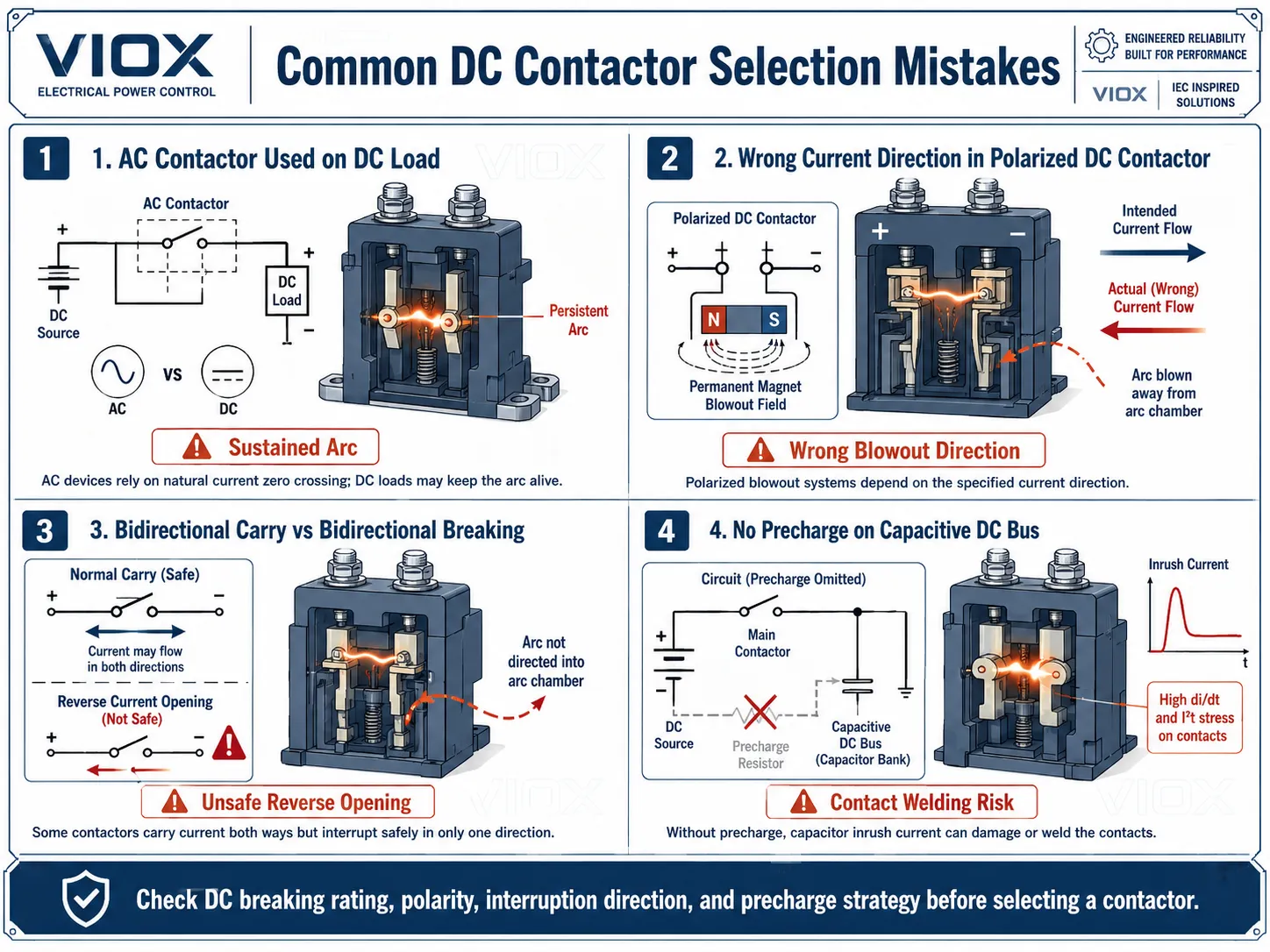
Mistake 1: Using an AC contactor on a DC load
This is the classic failure. The AC contactor may close and carry the load at first, so the mistake is not always obvious during a simple bench test. The problem appears when the device opens under DC load. Without adequate DC arc extinction, the contacts can burn, weld, or fail to interrupt the circuit.
အကျိုးဆက်- sustained arcing, contact welding, enclosure damage, and loss of control.
Mistake 2: Choosing by amp rating only
A buyer sees “200 A” and assumes the contactor is suitable for a 200 A DC system. But the real question is: 200 A at what DC voltage, under what utilization category, in which current direction, at what temperature, and with what breaking duty?
အကျိုးဆက်- a contactor that carries current normally but fails during opening.
Mistake 3: Ignoring polarity on magnetic blowout designs
If a polarized DC contactor is wired backward, it may still conduct when closed. The dangerous part is that the arc may not be driven into the intended chamber during opening.
အကျိုးဆက်- လျှပ်စီးဖြတ်တောက်နိုင်စွမ်း လျော့နည်းသွားခြင်းနှင့် အဆက်အသွယ် (contact) များ၏ သက်တမ်းတိုတောင်းသွားခြင်း။.
လက်တွေ့လုပ်ဆောင်ပုံ ပုံစံ- ဘက်ထရီဗီရို ဒီဇိုင်းစစ်ဆေးမှုများတွင်၊ ပင်မကွန်တက်တာ (main contactor) ကို စဉ်ဆက်မပြတ်စီးဆင်းမည့် လျှပ်စီးကြောင်းအတွက် မှန်ကန်စွာ ရွေးချယ်ထားသော်လည်း တပ်ဆင်မှုပုံစံတွင် ဝင်ရိုးစွန်းပါရှိသော ကွန်တက်တာမှတစ်ဆင့် လျှပ်စီးကြောင်းလမ်းကြောင်းကို ပြောင်းပြန်တပ်ဆင်မိသည့်အခါ ဤအမှားမျိုး ဖြစ်ပေါ်လေ့ရှိသည်။ စက်ပစ္စည်းသည် ရိုးရှင်းသော လျှပ်စီးကြောင်း စမ်းသပ်မှု (continuity test) ကို အောင်မြင်နိုင်သော်လည်း၊ ဝန်နှင့်ပထမဆုံးအကြိမ် ဖြတ်တောက်သည့်အခါ လျှပ်စစ်မီးပွား (arc) သည် ရည်ရွယ်ထားသော လမ်းကြောင်းအတိုင်း မထွက်ဘဲ အခြားလမ်းကြောင်းသို့ ရောက်ရှိသွားနိုင်သည်။.
အမှား (၄) - နှစ်ဘက်သွား လျှပ်စီးကြောင်း သယ်ဆောင်နိုင်ခြင်းကို နှစ်ဘက်သွား လျှပ်စီးကြောင်း ဖြတ်တောက်နိုင်ခြင်းဟု မှားယွင်းယူဆခြင်း။
ကွန်တက်တာအများစုသည် ပိတ်ထားချိန်တွင် လျှပ်စီးကြောင်းကို နှစ်ဘက်စလုံးသို့ သယ်ဆောင်ပေးနိုင်သည်။ သို့သော် ထိုသို့သယ်ဆောင်နိုင်ရုံမျှဖြင့် ဝန်အားရှိနေချိန်တွင် နှစ်ဘက်စလုံးမှ လျှပ်စီးကြောင်းကို ဘေးကင်းစွာ ဖြတ်တောက်နိုင်သည်ဟု မဆိုလိုပါ။.
အကျိုးဆက်- ဘက်ထရီ သို့မဟုတ် စွမ်းအင်ပြန်လည်ရရှိသည့်စနစ် (regenerative applications) များတွင် မှားယွင်းသော ကွန်တက်တာကို အသုံးပြုခြင်း။.
အဖြစ်များသော စီမံကိန်းပုံစံ- ဤအမှားသည် အားသွင်းခြင်းနှင့် အားထုတ်ခြင်းအတွက် DC လမ်းကြောင်းတစ်ခုတည်းကို အသုံးပြုသည့် စွမ်းအင်သိုလှောင်မှုစနစ်များတွင် ဖြစ်ပေါ်လေ့ရှိသည်။ ပုံမှန်လည်ပတ်နေချိန်တွင် ကွန်တက်တာသည် နှစ်ဘက်စလုံးသို့ လျှပ်စီးကြောင်း ပို့လွှတ်ပေးနိုင်သဖြင့် အမှားကို မသိရှိနိုင်ဘဲ၊ လျှပ်စီးကြောင်း ပြောင်းပြန်ဖြစ်ပေါ်ပြီး ဖြတ်တောက်ရသည့်အခါမှသာ ထိုကွန်တက်တာသည် နှစ်ဘက်သွား ဝန်အားကို ဖြတ်တောက်ရန်အတွက် သတ်မှတ်ချက်မပြည့်မီကြောင်း ပေါ်လွင်လာသည်။.
အမှား (၅) - လျှပ်စစ်မီးပွားငြိမ်းသတ်ခန်း (arc chamber) ကို ဖယ်ရှားခြင်း သို့မဟုတ် ပြုပြင်မွမ်းမံခြင်း။
လျှပ်စစ်မီးပွားငြိမ်းသတ်ခန်းသည် အလှဆင်ထားသည့် အဖုံးမဟုတ်ပါ။ ၎င်းသည် ကွန်တက်တာ၏ ဘေးကင်းလုံခြုံရေး လုပ်ဆောင်ချက်၏ အစိတ်အပိုင်းတစ်ခုဖြစ်သည်။ ၎င်းကို ဖယ်ရှားခြင်း၊ အပေါက်ဖောက်ခြင်း၊ ဖြတ်တောက်ခြင်း သို့မဟုတ် ညစ်ညမ်းစေခြင်းတို့သည် လျှပ်စစ်မီးပွားကို လမ်းကြောင်းပေးခြင်းနှင့် ငြိမ်းသတ်ခြင်း လုပ်ငန်းစဉ်ကို ပြောင်းလဲသွားစေသည်။.
အကျိုးဆက်- ဝန်အားဖြတ်တောက်စဉ်အတွင်း အဆက်အသွယ်များ ပွန်းစားခြင်း၊ လျှပ်စစ်မီးပွားခုန်ကူးခြင်း (flashover) နှင့် ချို့ယွင်းမှုဖြစ်ပေါ်ခြင်း။.
အမှား (၆) - Drop-out ဖြစ်စဉ်ကို အလွန်နှေးကွေးစေသည့် Coil suppression ကို အသုံးပြုခြင်း။
ရိုးရှင်းသော Flyback diode တစ်ခုသည် Controller output ကို ကာကွယ်ပေးနိုင်သော်လည်း အဆက်အသွယ်များ ကွာဟမှုကို နှေးကွေးစေသည်။ အချို့သော လုပ်ငန်းစဉ်များတွင် ထိုသို့ နှေးကွေးစွာ ပွင့်ခြင်းသည် Tack welding ဖြစ်ပေါ်နိုင်ခြေကို တိုးမြင့်စေသည်။.
အကျိုးဆက်- နှောင့်နှေးစွာ ပွင့်ခြင်း၊ အဆက်အသွယ်များ တုန်ခါခြင်း (contact bounce) နှင့် အဆက်အသွယ်များ အခါအားလျော်စွာ ကပ်ငြိနေခြင်း။.
အမှား (၇) - Capacitive DC စနစ်များတွင် Precharge ကို မေ့လျော့ခြင်း။
ဘက်ထရီ၊ အင်ဗာတာနှင့် EV စနစ်များတွင် ပင်မ Contactor ပိတ်လိုက်သည့်အခါ DC bus capacitance သည် မြင့်မားသော Inrush current ကို ဖြစ်ပေါ်စေနိုင်သည်။ Precharge လမ်းကြောင်းမရှိပါက Contactor သည် ပြင်းထန်သော Making stress ကို ခံစားရနိုင်သည်။.
အကျိုးဆက်- အဆက်အသွယ်များ ချိုင့်ခွက်ဖြစ်ခြင်း (pitting)၊ ပိတ်နေစဉ်အတွင်း ကပ်ငြိသွားခြင်း၊ မလိုအပ်ဘဲ Fault တက်ခြင်း သို့မဟုတ် Controller ပျက်စီးခြင်း။.
Startup current ဖြစ်ပေါ်ပုံနှင့် ပတ်သက်သည့် နောက်ခံအချက်အလက်များအတွက် VIOX ၏ Inrush current ဆိုသည်မှာ အဘယ်နည်း လမ်းညွှန်ချက်သည် တိုက်ရိုက်သက်ဆိုင်ပါသည်။.
အမြန်ရွေးချယ်မှုဆိုင်ရာ စစ်ဆေးစာရင်း
DC contactor တစ်ခုကို အတည်မပြုမီ ဤစစ်ဆေးစာရင်းကို အသုံးပြုပါ -
| စစ်ဆေးပါ | ဖြေကြားရန် လိုအပ်သော မေးခွန်းများ | အဘယ်ကြောင့် အရေးကြီးသနည်း |
|---|---|---|
| DC ဗို့အားသတ်မှတ်ချက် | Contactor သည် စနစ်၏ DC ဗို့အားအတွက် သီးသန့်သတ်မှတ်ချက် (rated) ရှိပါသလား။ | AC ဗို့အား သတ်မှတ်ချက်များသည် DC အတွက် သင့်လျော်ကြောင်း အထောက်အထား မဟုတ်ပါ |
| လက်ရှိ အဆင့်သတ်မှတ်ချက် | သတ်မှတ်ချက်သည် carry (လျှပ်စီးကြောင်းသယ်ဆောင်ခြင်း)၊ make (ပတ်လမ်းပိတ်ခြင်း)၊ break (ပတ်လမ်းဖွင့်ခြင်း) သို့မဟုတ် short-time withstand (အချိန်တိုအတွင်း ခံနိုင်ရည်ရှိခြင်း) တို့အတွက် ဖြစ်ပါသလား။ | ဤသည်တို့မှာ မတူညီသော ဖိအားများ (stresses) ဖြစ်ကြသည်။ |
| အသုံးပြုမှု အမျိုးအစား | ဝန် (load) သည် DC-1, DC-3, DC-5 သို့မဟုတ် ထုတ်လုပ်သူသတ်မှတ်ချက်အတိုင်း ဖြစ်ပါသလား။ | ဝန်အမျိုးအစားသည် လျှပ်စစ်မီးပွား (arc) ပြင်းထန်မှုကို ပြောင်းလဲစေသည်။ |
| ကွဲပြားမှု | ကွန်แทคတာ (contactor) သည် ဖြတ်တောက်ခြင်းအတွက် ပိုလာ (polarized) ဖြစ်ပါသလား သို့မဟုတ် နှစ်ဖက်သွား (bidirectional) ဖြစ်ပါသလား။ | လျှပ်စစ်မီးပွားကို မှုတ်ထုတ်ပေးသော သံလိုက်များ (blowout magnets) သည် လျှပ်စီးကြောင်း ဦးတည်ချက်အပေါ် မူတည်နိုင်သည်။ |
| ဝန်၏ အင်ဒပ်တန့် (Inductance)။ | ဆားကစ်၏ အချိန်ကိန်းသေ (time constant) သို့မဟုတ် သိုလှောင်ထားသော စွမ်းအင်ပမာဏမှာ မည်မျှရှိသနည်း။ | အင်ဒပ်တစ် (Inductive) ဝန်များသည် လျှပ်စစ်မီးပွားဖြစ်ပေါ်မှုကို ပိုမိုကြာရှည်စေသည်။ |
| Precharge | Is there DC bus capacitance that needs controlled charging? | Prevents closing stress and welding |
| Coil ဖိနှိပ်ခြင်း | Is the suppression method approved by the manufacturer? | Avoids slow drop-out and tack welding |
| ကာကွယ်ရေး ညှိနှိုင်းမှု | What clears short-circuit current? | Contactors are not normally short-circuit interrupters |
| Auxiliary feedback | Weld detection သို့မဟုတ် status feedback လိုအပ်ပါသလား။ | EV၊ ESS နှင့် ဘေးကင်းရေးအတွက် အရေးကြီးသော စနစ်များတွင် အရေးပါပါသည်။ |
| ပတ်ဝန်းကျင် | အလုံပိတ်ခြင်း၊ တုန်ခါမှု၊ အပူချိန်နှင့် အမြင့်ပေတို့သည် အသုံးပြုမည့်နေရာနှင့် ကိုက်ညီပါသလား။ | ဓာတ်ခွဲခန်းအပြင်ဘက်တွင် ဖြစ်ပေါ်နိုင်သော ချို့ယွင်းမှုများကို ကာကွယ်ပေးပါသည်။ |
အမြဲမေးလေ့ရှိသောမေးခွန်းများ
DC arc သည် AC arc ထက် ငြိမ်းသတ်ရန် အဘယ်ကြောင့် ပိုခက်ခဲသနည်း။
အကြောင်းမှာ DC လျှပ်စီးကြောင်းသည် သုည (zero) ကို သဘာဝအတိုင်း ဖြတ်သန်းခြင်းမရှိသောကြောင့် ဖြစ်သည်။ AC သည် လည်ပတ်မှုတစ်ဝက်တိုင်းတွင် arc အတွက် သုည-လျှပ်စီးကြောင်း အခိုက်အတန့်ကို ပေးစွမ်းသော်လည်း DC သည် ကိရိယာတစ်ခုက arc ကို ဆန့်ထုတ်ခြင်း၊ အအေးခံခြင်း၊ ခွဲထုတ်ခြင်း သို့မဟုတ် arc chamber ထဲသို့ ရွှေ့ခြင်းမျိုး မလုပ်ဆောင်သရွေ့ arc ကို ဆက်လက်ကျွေးမွေးနေမည်ဖြစ်သည်။.
AC contactor ကို DC circuit အတွက် အသုံးပြုနိုင်ပါသလား။
ထုတ်လုပ်သူမှ ထို DC ဗို့အား၊ လျှပ်စီးကြောင်းနှင့် load duty အတွက် အတိအလင်း သတ်မှတ်ပေးထားမှသာ အသုံးပြုနိုင်ပါသည်။ AC rating များသည် DC switching အတွက် အကျုံးဝင်သည်ဟု မယူဆပါနှင့်။ ကိစ္စအများစုတွင် သာမန် AC contactor ကို DC load တွင် အသုံးပြုခြင်းသည် ပြင်းထန်သော arc ဖြစ်ပေါ်ခြင်းနှင့် contact-welding ဖြစ်နိုင်ခြေကို ဖြစ်စေပါသည်။.
DC contactor တစ်ခုတွင် magnetic blowout ဆိုသည်မှာ အဘယ်နည်း။
Magnetic blowout သည် သံလိုက်စက်ကွင်းကို အသုံးပြု၍ လျှပ်စစ်မီးပွား (arc) ကို ပင်မထိတွေ့မျက်နှာပြင်မှ arc chute သို့မဟုတ် chamber ထဲသို့ တွန်းပို့ပေးသည်။ ၎င်းသည် လျှပ်စစ်မီးပွားကို ပိုမိုရှည်လျားပြီး အေးမြသွားစေသဖြင့် သဘာဝအတိုင်း လျှပ်စီးကြောင်း သုညသို့ရောက်ရှိခြင်း (natural zero crossing) ကို မမှီခိုဘဲ မီးပွားကို ငြိမ်းသတ်နိုင်စေသည်။.
DC contactor အားလုံးသည် polarized ဖြစ်ပါသလား။
မဟုတ်ပါ။ အချို့သော contactor များသည် polarized ဖြစ်ပြီး အကောင်းဆုံးဖြတ်တောက်နိုင်စွမ်းရရှိရန် သတ်မှတ်ထားသော terminal များမှတစ်ဆင့် လျှပ်စီးကြောင်းကို တိကျသော ဦးတည်ချက်ဖြင့် စီးဆင်းစေရန် လိုအပ်သည်။ အချို့မှာမူ နှစ်လမ်းသွား (bidirectional) switching အတွက် ဒီဇိုင်းထုတ်ထားသည်။ datasheet ကို အမြဲစစ်ဆေးပါ၊ အဆက်အသွယ်ပိတ်ထားစဉ် လျှပ်စီးကြောင်းသယ်ဆောင်နိုင်မှုနှင့် ဝန်အားလျှပ်စီးကြောင်းကို ဖြတ်တောက်နိုင်မှုတို့သည် တူညီသောအရာမဟုတ်ပါ။.
DC-1, DC-3 နှင့် DC-5 တို့၏ ကွာခြားချက်မှာ အဘယ်နည်း။
DC-1 သည် inductive မဟုတ်သော သို့မဟုတ် အနည်းငယ်သာ inductive ဖြစ်သော DC ဝန်များအတွက် အသုံးပြုသည်။ DC-3 သည် shunt-motor များ၏ စတင်ခြင်း၊ plugging၊ inching နှင့် dynamic braking ကဲ့သို့သော လုပ်ဆောင်ချက်များအတွက် အသုံးပြုသည်။ DC-5 သည် အလားတူ ပြင်းထန်သော ထိန်းချုပ်မှုအခြေအနေများအောက်ရှိ series-motor များ၏ လုပ်ဆောင်ချက်များအတွက် အသုံးပြုသည်။ DC-1 rating ကို မော်တာလုပ်ဆောင်ချက်အတွက် အလွယ်တကူ အစားထိုးအသုံးပြု၍ မရပါ။.
DC contactor သည် short circuit မှ ကာကွယ်ပေးပါသလား။
ကိုယ်တိုင်မကာကွယ်နိုင်ပါ။ Contactor သည် ထိန်းချုပ်မှုအမိန့်ပေးချက်အရ ဆားကစ်ကိုသာ ခလုတ်ဖွင့်/ပိတ်ပေးခြင်းဖြစ်သည်။ Short-circuit ကာကွယ်မှုအတွက် ပုံမှန်အားဖြင့် contactor နှင့် စနစ်၏ fault current တို့နှင့် ကိုက်ညီသော သင့်လျော်သည့် fuse၊ DC circuit breaker သို့မဟုတ် အခြားသော ကာကွယ်ရေးကိရိယာတစ်ခုခု လိုအပ်ပါသည်။.
Why do DC contactors sometimes weld closed?
Common causes include excessive making current, opening under a load beyond the contactor’s breaking rating, wrong polarity on a polarized design, inadequate precharge, slow drop-out caused by improper coil suppression, or fault current not cleared by upstream protection.
Why are DC contactors used in battery and EV systems?
They allow remote switching and isolation of high-voltage DC circuits. In battery and EV systems, contactors are commonly used for main positive/negative isolation, precharge circuits, charger connection, emergency shutdown logic, and fault isolation.