Ezen az oldalon
Az ívzárlat-címkéket gyakran csak egy apró matrica-problémaként kezelik. A gyakorlatban azonban ezek az elektromos szabványoknak való megfelelés, a munkahelyi biztonság, a zárlati áram elemzése, a védelmi eszközök koordinációja és a szakképzett személyek munkavégzési eljárásainak metszéspontjában helyezkednek el.
A legfontosabb különbségtétel egyszerű:
A NEC 110.16 elsősorban egy veszélyre figyelmeztető és berendezés-jelölési követelmény. Az NFPA 70E 130.5(H) egy munkahelyi biztonsági címkézési előírás, amely az ívzárlati kockázatértékelésen alapul.
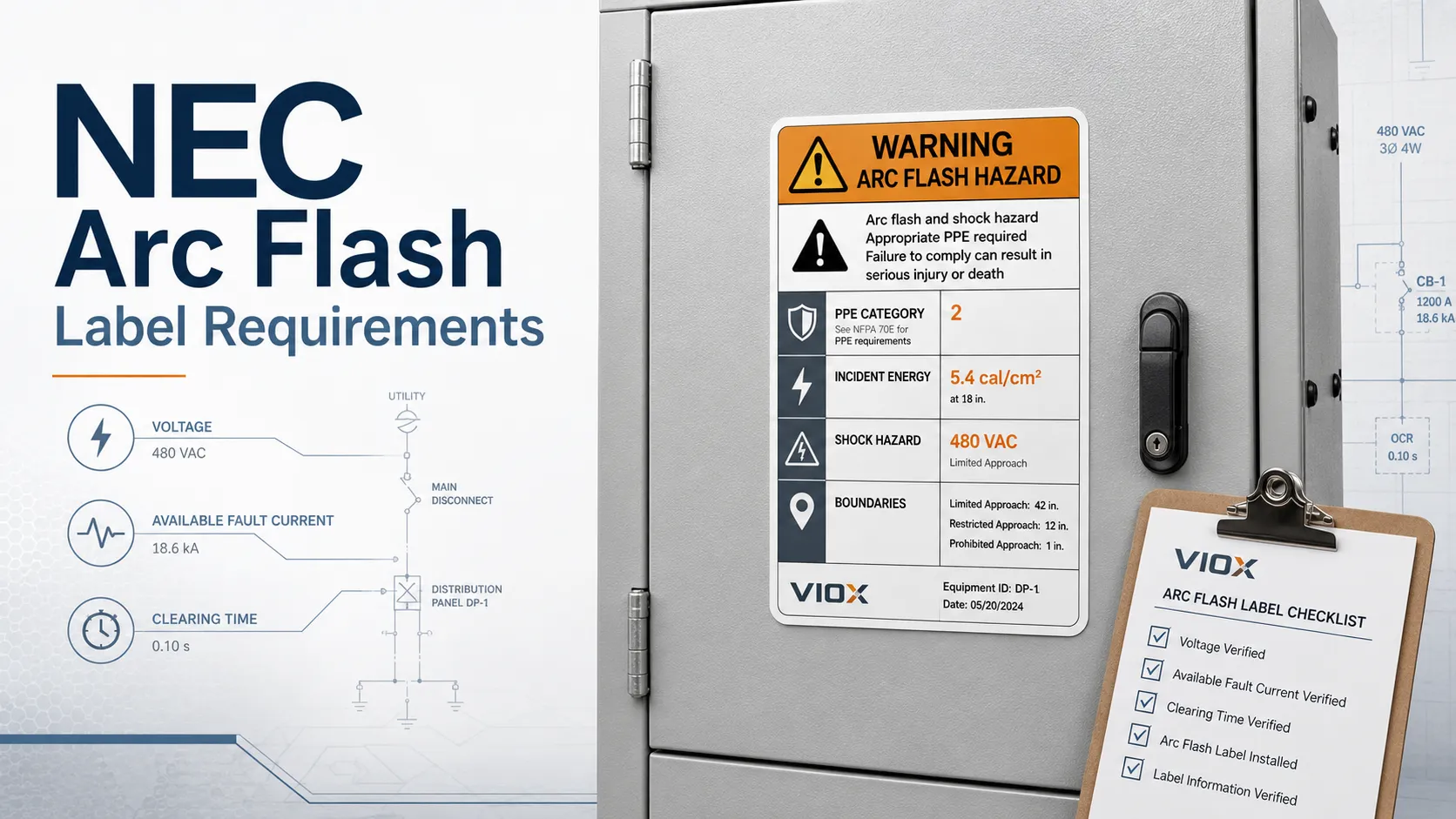
Ezért van az, hogy egy általános narancssárga figyelmeztető címke megfelelhet az egyik célnak, de még mindig elégtelen lehet a feszültség alatti munkavégzés tervezéséhez. Egy részletes ívzárlat-címke tartalmazhatja a munkatávolságot, az ívzárlati határt, a beeső energiát, az egyéni védőeszközök (PPE) kategóriáját, a berendezés azonosítóját és a vizsgálat dátumát, az alkalmazott módszertől függően.
Gyors válasz: Milyen ívzárlat-címkéket ír elő a NEC?
Általánosságban elmondható, hogy a National Electrical Code (NEC) előírja, hogy a nem lakóépületekben található bizonyos elektromos berendezéseket el kell látni olyan jelöléssel, amely figyelmezteti a szakképzett személyeket a potenciális ívzárlati veszélyekre. A figyelmeztetésnek tartósnak és a környezeti feltételeknek megfelelőnek kell lennie.
A nagyobb elosztóberendezések és a betáplált berendezések esetében a NEC 110.16(B) további konkrét jelölési követelményeket ír elő. A 2023-as NEC keretrendszerben ez a szakasz általában a névleges értékkel rendelkező berendezésekre vonatkozik 1000 A vagy több lakóépületektől eltérő egységekben, és a címke információi az alábbiakra összpontosítanak:
- névleges rendszerszintű feszültség
- a berendezésnél rendelkezésre álló zárlati áram
- a felsőbb szintű túláramvédelmi eszköz kioldási ideje a rendelkezésre álló zárlati áram alapján
- a címke felhelyezésének dátuma
Mindig ellenőrizze a helyi illetékes hatóság (AHJ) által elfogadott pontos NEC-kiadást, mivel az NEC betartatása a helyileg elfogadott szabályozási cikluson alapul.
A legfontosabb tudnivalók
- Az általános ívfény-címke egy figyelmeztető címke. Tájékoztatja a szakképzett személyeket az ívzárlat veszélyének fennállásáról, de általában nem nyújt elegendő információt az egyéni védőeszközök (PPE) kiválasztásához.
- A részletes NFPA 70E címke az ívzárlati kockázatértékeléshez kapcsolódik. Támogatja a feszültség alatti munkavégzés tervezését azáltal, hogy olyan kulcsfontosságú adatokat jelenít meg, mint a beeső energia vagy a PPE-kategória.
- A NEC és az NFPA 70E nem ugyanaz a dokumentum. A NEC egy létesítési szabályzat; az NFPA 70E egy munkahelyi villamos biztonsági szabvány.
- A rendelkezésre álló zárlati áram értéke számít. Az ívzárlati címkézés szorosan összefügg a zárlati árammal, a lekapcsolási idővel és a védelmi eszközök koordinációjával.
- Ne másoljon vakon egy régi címkét. A transzformátorokon, betápláló vezetékeken, megszakítókon, biztosítékokon, motorvezérlő központokon, elosztóberendezéseken vagy a védelmi beállításokon végzett módosítások érvényteleníthetik a korábbi ívzárlati adatokat.
NEC 110.16 Ívzárlati címkézési követelmények
A NEC 110.16 az olyan elektromos berendezésekre vonatkozó ívzárlati veszélyre figyelmeztető címkéket szabályozza, amelyek feszültség alatt történő vizsgálatot, beállítást, szervizelést vagy karbantartást igényelhetnek.
Az ezen elv hatálya alá tartozó tipikus berendezések a következők:
| Berendezés típusa | Miért lehet szükség ívzárlati figyelmeztetésre |
|---|---|
| Elosztószekrények (Switchboards) | Szakképzett személyek által gyakran ellenőrzött és karbantartott |
| Kapcsolóberendezések | Nagy zárlati áram és kapcsolási energia potenciál |
| Panel táblák | Ág- és betápláló áramkörök közös hozzáférési pontja |
| Ipari vezérlő panelek | Kontaktorokat, hajtásokat, sorkapcsokat, biztosítékokat és túláramvédelmi eszközöket tartalmazhat |
| Mérőhely-szekrények | Szerviz- vagy karbantartási munkák során hozzáférhető lehet |
| Motorvezérlő központok | Több indítót, betáplálást és teljesítményelektronikai komponenst tartalmaz |
Az elsődleges cél nem az ívenergia kiszámítása. Az elsődleges cél a szakképzett személyek figyelmeztetése arra, hogy ívzárlat veszélye állhat fenn.
NEC 110.16(A): Általános figyelmeztető címke
A NEC 110.16(A) az általános figyelmeztető címke koncepciója. Olyan nem lakóépületi létesítmények berendezéseire vonatkozik, ahol szakképzett személyek feszültség alatt álló berendezésekkel kerülhetnek kapcsolatba szervizelés vagy karbantartás során.
Egy tipikus általános figyelmeztető címke a következő megfogalmazást tartalmazhatja:
FIGYELEM: Ívzárlat és áramütés veszélye. Megfelelő egyéni védőeszköz (PPE) használata kötelező.
Az ilyen típusú címke hasznos lehet alapvető veszélyjelzésként, de általában nem tartalmazza azokat a részletes villamos adatokat, amelyek az ívzárlat-álló ruházat kiválasztásához vagy az ívzárlati határ meghatározásához szükségesek.
NEC 110.16(B): Csatlakozási pont és betáplált berendezések
A NEC 110.16(B) a nagyobb berendezések esetében tovább megy. A 2023-as NEC kontextusában az általánosan hivatkozott küszöbérték 1000 A vagy több a csatlakozási ponton lévő berendezésekre és a lakóépületeken kívüli, betáplált berendezésekre vonatkozik.
A gyakorlati cél az, hogy a fontos villamos zárlati áramra vonatkozó információkat a szakképzett személyek számára látható helyen helyezzék el. Ezek az információk elősegítik a biztonságosabb karbantartási döntéseket, és kapcsolódhatnak a későbbi ívzárlati kockázatértékelési munkákhoz is.
| Címkeinformációk | Miért fontos? |
|---|---|
| Névleges rendszerfeszültség | Azonosítja a munkavégzés tárgyát képező villamos rendszert |
| Elérhető hibaáram | Megmutatja a berendezésnél várható zárlati áramot |
| Megszakítási idő | Segít felmérni, mennyi időbe telhet egy előtte lévő védelmi eszköznek a hiba megszüntetése |
| Alkalmazás dátuma | Megmutatja, mikor határozták meg vagy dokumentálták az információt |
Ez az a pont, ahol sok címke hiányos. Egy matrica, amely csak annyit ír, hogy “Ívzárlat veszélye”, figyelmeztetheti az embereket, de nem dokumentálja a rendelkezésre álló zárlati áramot vagy a megszakítási időt.
NFPA 70E 130.5(H): Részletes ívzárlat-védelmi helyszíni címkék
Az NFPA 70E a biztonságos villamos munkavégzési gyakorlatokra összpontosít. A 130.5(H) szakaszra gyakran hivatkoznak az ívzárlati kockázatértékelést követő berendezés-címkézés kapcsán.
A részletes, NFPA 70E szabvány szerinti helyszíni címke a következőket tartalmazhatja:
| Címkeelem | Cél |
|---|---|
| Névleges rendszerfeszültség | Segít azonosítani az áramütés kockázatát és a munkavégzési eljárás környezetét |
| Ívkisülés határa | Meghatározza az ívfény-expozícióhoz tartozó megközelítési távolságot |
| Incidens energia és munkavégzési távolság | Támogatja az ívfényálló egyéni védőeszközök (PPE) kiválasztását a számított energiaszint alapján |
| PPE kategória | Akkor használatos, ha a PPE kategória módszert alkalmazzák |
| Berendezés azonosító | A címkét a vizsgálatban szereplő megfelelő berendezéshez rendeli |
| Vizsgálat dátuma vagy a címke dátuma | Segít meghatározni, hogy az információ aktuális-e |
A címkének meg kell felelnie az ívfény-kockázatértékelés során alkalmazott módszernek. A címkék nem keverhetik önkényesen a módszereket. Például egy számított beeső energia értékét tartalmazó címke és egy egyéni védőeszköz (PPE) kategóriát jelölő címke nem tekinthető felcserélhetőnek megfelelő mérnöki felülvizsgálat nélkül.
NEC kontra NFPA 70E: Mi a különbség?
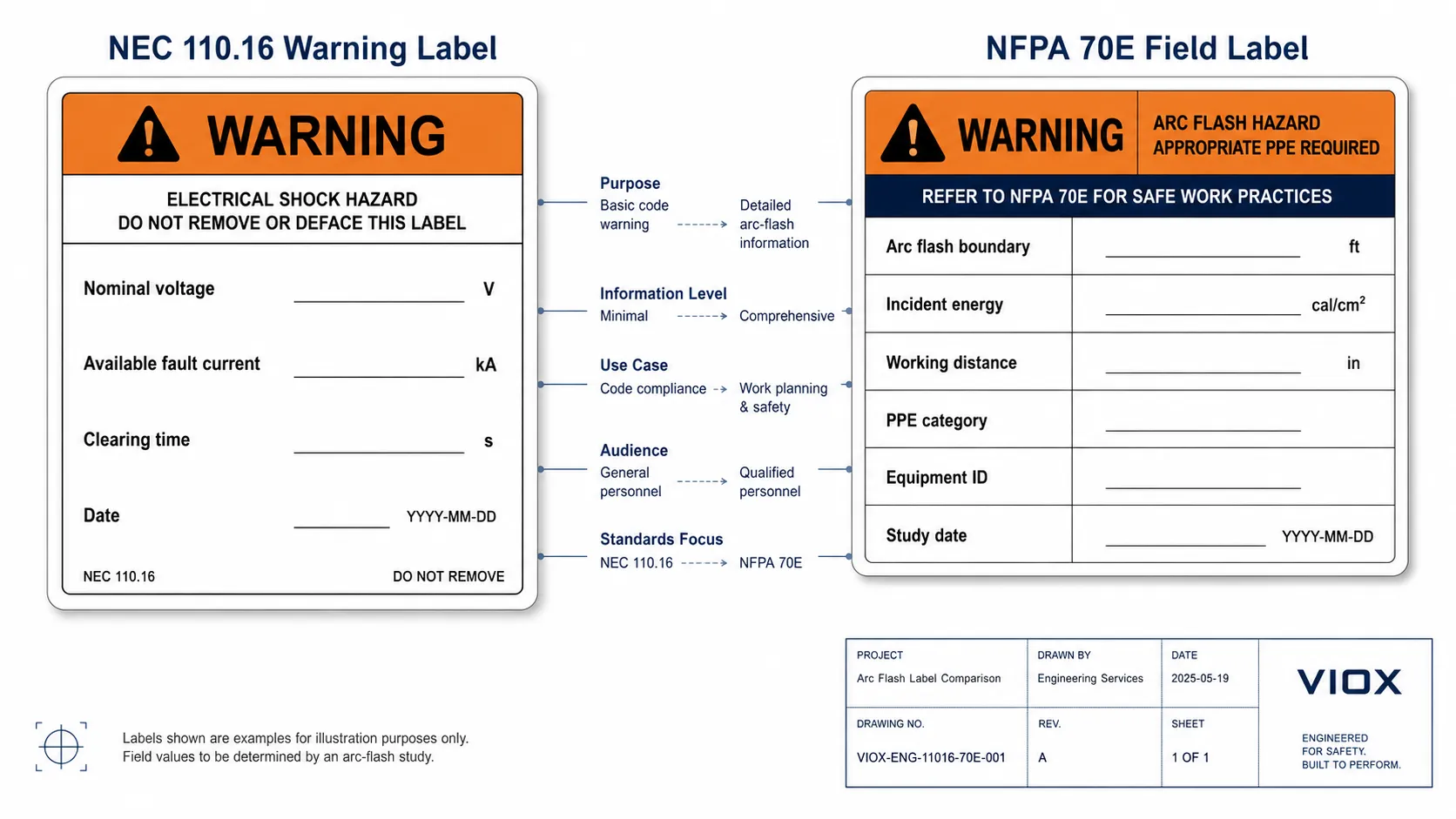
| Téma | NEC 110.16 | NFPA 70E 130.5(H) |
|---|---|---|
| Fő szerep | Elektromos szerelési jelölések | Munkahelyi elektromos biztonsági címkézés |
| Elsődleges célközönség | Telepítők, ellenőrök, szakképzett személyek | Munkáltatók, szakképzett munkavállalók, biztonsági vezetők |
| Címketípus | Veszélyre figyelmeztető és egyéb berendezésjelölések | Ívfény-kockázatértékelésen alapuló mezőcímke |
| Tipikus információk | Figyelmeztető üzenet, feszültség, rendelkezésre álló zárlati áram, megszakítási idő, dátum, a berendezéstől és a NEC kiadásától függően | Feszültség, ívfényhatár, beeső energia vagy egyéni védőeszköz (PPE) kategória, munkatávolság, berendezés azonosítása |
| Elsődleges cél | Figyelmeztesse a szakképzett személyeket az ívfényveszélyre | Támogassa a biztonságos, feszültség alatti munkavégzés tervezését és az egyéni védőeszközök kiválasztását |
Egyszerű mérnöki nyelven: A NEC előírja, hogy bizonyos berendezéseket meg kell jelölni. Az NFPA 70E segít meghatározni, milyen információkra van szükségük a dolgozóknak a feszültség alatti munkavégzés megkezdése előtt.
Általános ívzárlat-figyelmeztető címke kontra részletes ívzárlat-figyelmeztető címke
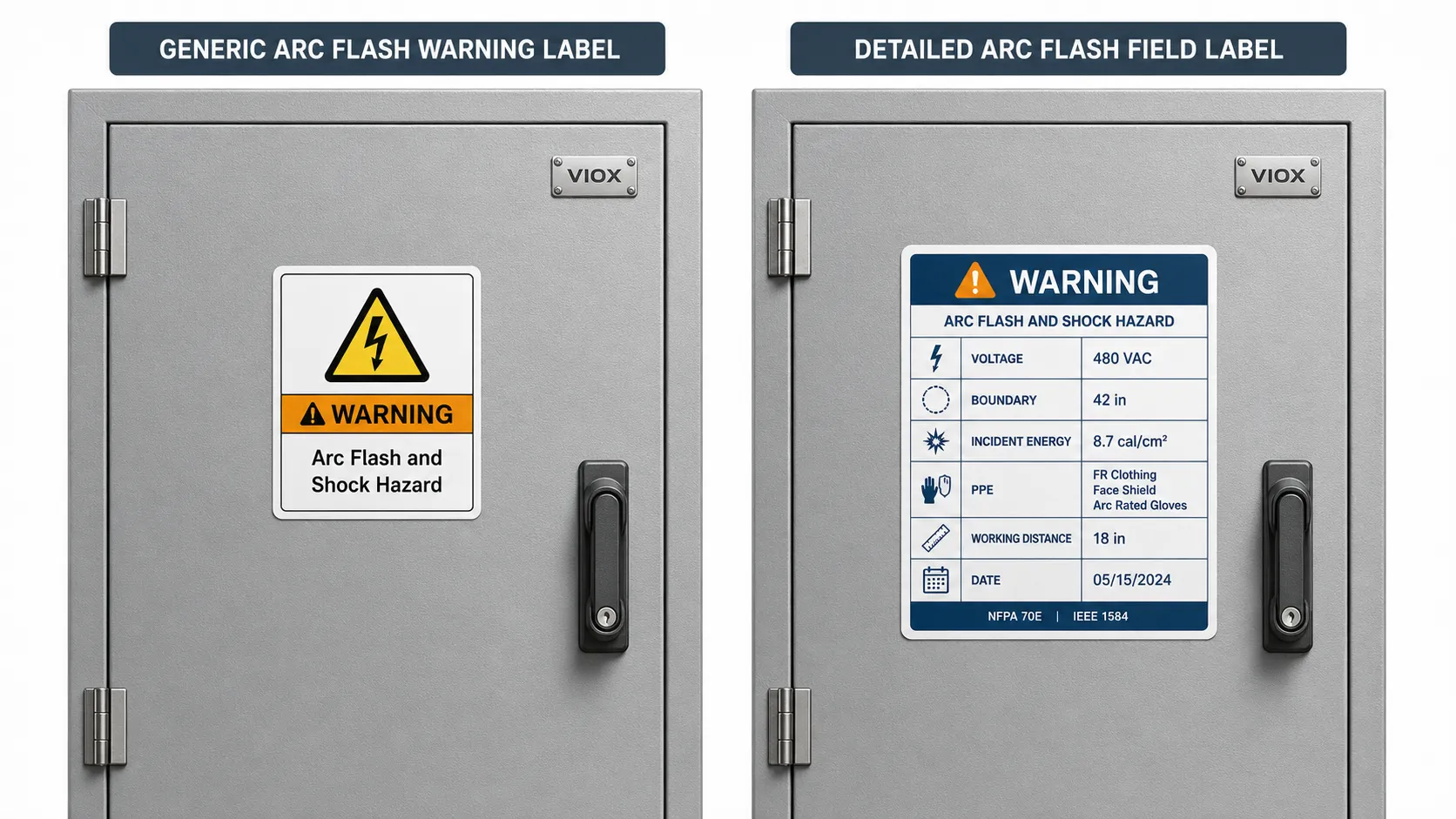
Ez az a fő döntési pont, amellyel sok létesítményüzemeltető csapat küzd. Az általános címke és a részletes címke nem ugyanaz.
| Címketípus | Mit mutat általában | Legjobb felhasználási terület | Fő korlátozás |
|---|---|---|---|
| Általános ívzárlat-figyelmeztető címke | Figyelmeztető üzenet és veszélyt jelző szimbólum | Alapvető veszélytudatosság és NEC-stílusú figyelmeztetés | Nem tartalmazza a beeső energia, a határértékek vagy az egyéni védőeszközök (PPE) részleteit |
| NEC 110.16(B) stílusú berendezés-címke | Feszültség, rendelkezésre álló zárlati áram, megszakítási idő, dátum, ahol alkalmazható | Nagyobb elosztó- vagy betápláló berendezések jelölése | Nem azonos a teljes körű NFPA 70E ívfény-címkével |
| Részletes ívfény-címke | Feszültség, határérték, beeső energia vagy PPE kategória, munkatávolság, berendezés azonosító, vizsgálat dátuma | Feszültség alatti munkavégzés tervezése és egyéni védőeszközök (PPE) kiválasztása | Érvényes ívzárlati kockázatértékelési adatok szükségesek |
Mikor fogadható el általános ívzárlati figyelmeztető címke
Az általános címke akkor fogadható el, ha a cél a szakképzett személyek figyelmeztetése az ívzárlati veszély fennállására, és az alkalmazandó szabvány nem írja elő részletes vizsgálati adatok feltüntetését a címkén.
Példák:
- általános figyelmeztetés olyan berendezéseken, amelyeken várhatóan feszültség alatt végeznek karbantartást
- régebbi berendezések, amelyek teljes körű ívzárlati vizsgálatra várnak
- alacsony komplexitású létesítmények, ahol figyelmeztető címke szükséges, de a részletes PPE-adatokat külön dokumentáció kezeli
Még ilyenkor sem kelthet az általános címke hamis teljességérzetet. Figyelmeztet, de nem végez számítást.
Mikor van szükség részletes ívfény-címkére
Részletes címkére akkor van szükség, ha a berendezés egy munkahelyi elektromos biztonsági program része, és a dolgozóknak helyszíni információkra van szükségük a feszültség alatti munkavégzés megtervezéséhez.
A részletes címkék különösen fontosak az alábbiak esetében:
- kapcsolóberendezésekre
- kapcsolóberendezések
- motorvezérlő központok
- ipari vezérlőpanelekhez
- nagy elosztószekrények
- betápláló berendezések
- 1000 A vagy annál nagyobb névleges áramerősségű, betáplált berendezések
- nagy rendelkezésre álló zárlati árammal rendelkező berendezések
- olyan berendezések, ahol a védelmi eszközök beállításai befolyásolják a lekapcsolási időt
Milyen információkat kell tartalmaznia egy ívzárlati címkének?
Egy részletes címke esetében a leghasznosabb információk nem dekoratív jellegűek. Támogatniuk kell a szakképzett munkavállaló döntéshozatalát a feszültség alatt álló berendezés kinyitása vagy azzal való munkavégzés előtt.
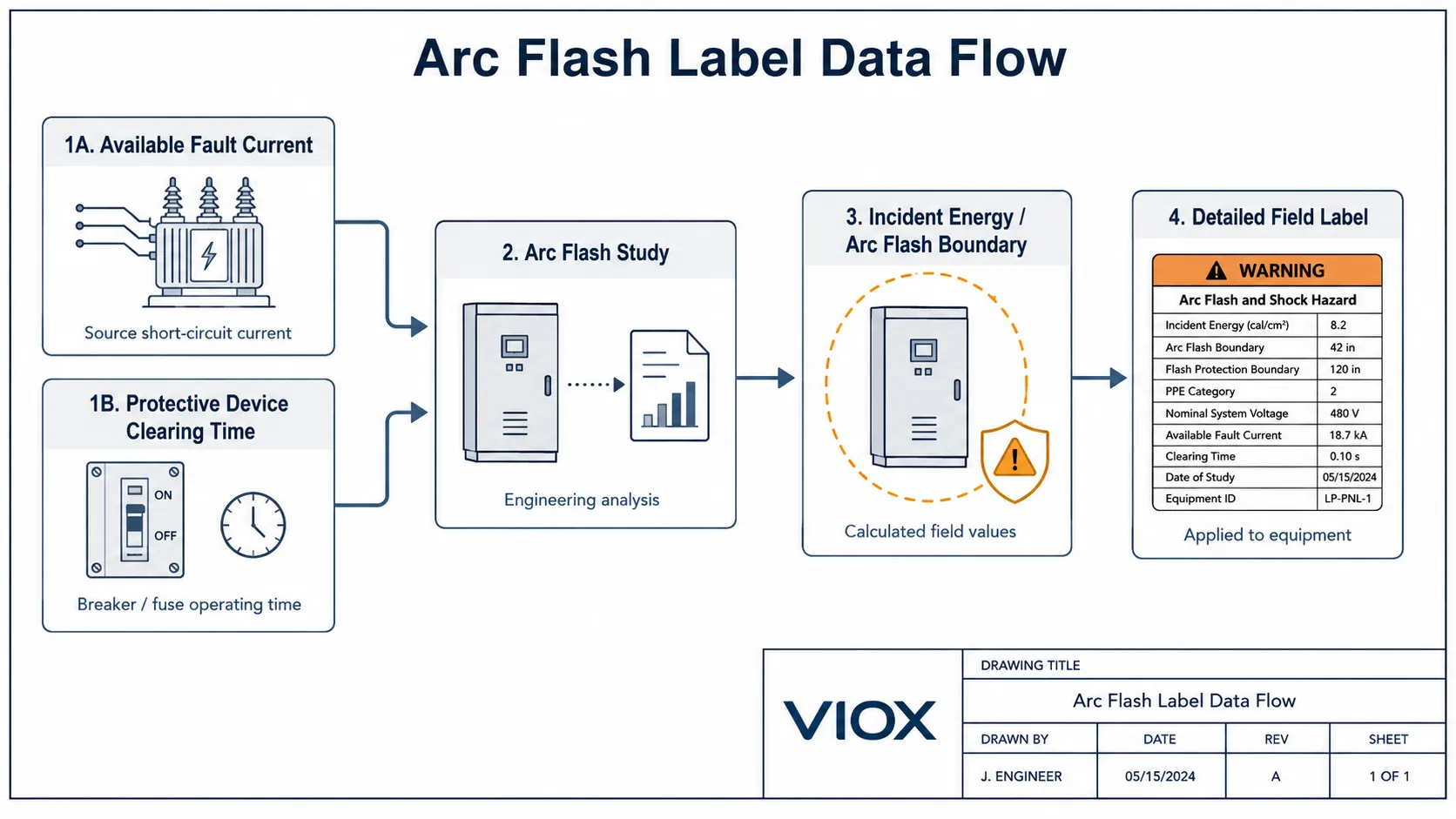
| Információ | Miért szükséges feltüntetni a címkén |
|---|---|
| Berendezés neve vagy azonosítója | Megakadályozza az egyes elosztószekrények összetévesztését |
| Névleges feszültség | Támogatja az áramütés és ívzárlat elleni munkavégzés tervezését |
| Ívkisülés határa | Megmutatja azt a távolságot, ahol az ívzárlat elleni védelem relevánssá válik |
| Beeső energia a munkatávolságban | Támogatja az ívzárlat-álló egyéni védőeszközök (PPE) kiválasztását |
| Munkatávolság | Értelmezhetővé teszi a beeső energia értékét |
| PPE kategória, ahol alkalmazzák | Támogatja a PPE kategória módszert |
| Elérhető hibaáram | Segít összekapcsolni a címkeadatokat az energiaellátó rendszer állapotával |
| A védelmi eszköz kioldási ideje | Megmutatja a veszélyességi szint mögött álló időalapot |
| A vizsgálat vagy a címke dátuma | Segít azonosítani az elavult címkéket |
Ha egy címkén csak egy számot ellenőriznek, sokan a beeső energiát nézik. Ez érthető, de hiányos. A beeső energia nagymértékben függ a zárlati áramtól, az íváramtól, a munkatávolságtól, a tokozás típusától, az elektróda elrendezésétől és a lekapcsolási időtől. A megszakító beállításának módosítása megváltoztathatja az eredményt.
Ívzárlat elleni címke mérete, elhelyezése és tartóssága
A NEC nem úgy működik, mint egy grafikai tervezési kézikönyv, amely minden telepítéshez egyetlen univerzális matricaméretet ír elő. A valós követelmény az, hogy a jelölésnek olvashatónak, tartósnak és a környezetnek megfelelőnek kell lennie.
Jó gyakorlat az ívzárlat elleni címkék esetében:
- Helyezze a címkéket a berendezés előlapjára vagy ajtajára, ahol a szakképzett személyek a beavatkozás előtt láthatják azokat.
- A címkéket tartsa távol a fogantyúktól, szellőzőnyílásoktól, zsanéroktól és azoktól a területektől, amelyeket a tartozékok elfedhetnek.
- Használjon tartós, beltéri, kültéri, olajos, poros vagy mosható környezetnek megfelelő anyagokat.
- A figyelmeztető jelzőszót és a feszültségadatokat tegye könnyen olvashatóvá.
- Kerülje az olyan apró címkéket, amelyek a felszerelés után olvashatatlanná válnak.
- Cserélje ki azokat a címkéket, amelyek kifakultak, karcosak, lefestették őket vagy vegyi sérülést szenvedtek.
Ipari vezérlőszekrények és kapcsolóberendezések esetében a címkék elhelyezésének támogatnia kell a tényleges munkafolyamatot. A szekrény belsejében elrejtett címke nem biztos, hogy figyelmezteti a dolgozót a veszélyhelyzet előtt.
Rendelkezésre álló zárlati áram címke vs. ívfény elleni védelem címke
A rendelkezésre álló zárlati áramra vonatkozó címkék és az ívfény elleni védelemre vonatkozó címkék összefüggenek, de nem azonosak.
| Címketípus | Maradékáram vagy földzárlat érzékelése és az áramkör megszakítása | Tipikus adatok |
|---|---|---|
| Rendelkezésre álló zárlati áram címke | Megmutatja a berendezésnél fellépő várható zárlati áramot | Zárlati áram értéke, dátum, esetenként a számítás alapja |
| NEC 110.16(B) berendezés címke | Támogatja az ívzárlati veszély jelölését nagyobb berendezéseknél | Feszültség, rendelkezésre álló zárlati áram, megszakítási idő, dátum |
| NFPA 70E ívzárlati helyszíni címke | Támogatja a feszültség alatti munkavégzést és az egyéni védőeszközök (PPE) kiválasztását | Feszültség, ívhatár, beeső energia vagy PPE kategória, munkatávolság |
A kapcsolószekrény-gyártók és létesítményüzemeltető mérnökök számára ez a megkülönböztetés lényeges. A nagy rendelkezésre álló zárlati áram befolyásolhatja a zárlati szilárdsági értéket (SCCR), a megszakítóképességet, a berendezések kiválasztását és az ívhatásból eredő beeső energiát. Ezért nem szabad az ívhatás elleni címkézést elválasztani a zárlati és szelektivitási vizsgálattól.
Az összeállítások zárlati megfelelőségével kapcsolatos részletesebb háttérinformációkért lásd a VIOX útmutatóját SCCR számítás és elosztószekrény feliratozás. A zárlati áram becsléséhez tekintse át hogyan kell kiszámítani a zárlati áramot.
Mi változott az “Ívhatás elleni címke 2018” kapcsán?
Egyes felhasználók az “ívhatás elleni címke 2018” kifejezésre keresnek, mivel hallottak az IEEE 1584-2018 szabványról.
Az IEEE 1584-2018 nem egy címkeformátum-szabvány. Ez egy útmutató az ívzárlati veszélyek számításához. Jelentősége abban rejlik, hogy megváltoztatta azt, ahogyan a mérnökök az ívzárlati beeső energiát számítják számos kisfeszültségű és középfeszültségű forgatókönyv esetén.
Ez azt jelenti, hogy a régebbi vizsgálati módszereken alapuló korábbi címkéket felül kell vizsgálni, ha:
- a berendezést módosították
- a védelmi eszközöket kicserélték
- a megszakító beállításai megváltoztak
- a transzformátorok vagy betápláló vezetékek megváltoztak
- a rendelkezésre álló zárlati áram megváltozott
- a létesítmény frissíti az ívzárlati vizsgálati módszertanát
A 2018-as szabvánnyal kapcsolatos kérdés általában nem csak a matricáról szól. Arról van szó, hogy a matrica alapjául szolgáló vizsgálat még érvényes-e.
Gyakori hibák az ívzárlati címkézésnél
1. hiba: Általános címke használata az ívzárlati vizsgálat helyettesítésére
Az általános címke figyelmezteti az embereket. Nem határozza meg a beeső energiát, az ívzárlati határt, az egyéni védőeszköz (PPE) szintjét vagy a munkatávolságot.
2. hiba: A régi címkék meghagyása a berendezések cseréje után
Ha megszakítót, biztosítékot, transzformátort, betáplálást, motorvezérlő központot vagy védelmi beállítást cserélnek, a régi címke már nem biztos, hogy megfelel a rendszernek.
3. hiba: A PPE-kategória és a beeső energia feltüntetése egyértelmű módszertan nélkül
Az NFPA 70E munkavégzési gyakorlata különbséget tesz a módszerek között. A címkézési megközelítések mérnöki ellenőrzés nélküli keverése összezavarhatja a dolgozókat.
4. hiba: A megszakítási idő figyelmen kívül hagyása
Az ívenergia nagymértékben függ attól, hogy a tápláló oldali védelmi eszköz mennyi idő alatt szakítja meg a zárlatot. Egy kis beállítási módosítás is jelentős hatással lehet a címkén feltüntetett értékekre.
5. hiba: A címkeméret kezelése a megfelelőség fő kérdéseként
A címke mérete csak azért számít, mert olvashatónak és tartósnak kell lennie. A nagyobb probléma az, hogy a címke tartalmazza-e a vonatkozó követelményeknek és munkavégzési gyakorlatnak megfelelő helyes információkat.
6. hiba: A betápláló vezetékről ellátott berendezések elfelejtése
Sok csapat csak a főelosztó berendezésekre összpontosít. Az újabb NEC előírások értelmében a betápláló vezetékről ellátott berendezések is számíthatnak, ha megfelelnek az alkalmazandó küszöbértéknek és telepítési környezetnek.
Ívenergia-címke ellenőrzőlista
Az ívenergia-címke jóváhagyása vagy cseréje előtt ellenőrizze a következőket:
| Ellenőrzési szempont | Felteendő kérdés |
|---|---|
| Szabványkiadás | Melyik NEC kiadást fogadta el a helyi hatóság (AHJ)? |
| Berendezés típusa | Ez fogyasztásmérő-hely utáni berendezés, elosztóvezetékkel táplált berendezés, kapcsolóberendezés, kapcsolótábla, elosztószekrény, motorvezérlő központ (MCC) vagy ipari vezérlőpanel? |
| Áramerősség-küszöbérték | A berendezés megfelel-e az alkalmazandó névleges áramerősségi küszöbértéknek? |
| Feszültség | A névleges rendszerszintű feszültség helyesen van feltüntetve? |
| Hibaáram | Rendelkezésre áll és dokumentált a hibaáram értéke? |
| Megszakítási idő | A védelmi eszköz kioldási ideje a megfelelő felmenő eszközön és beállításokon alapul? |
| NFPA 70E adatok | A helyszíni címke tartalmazza az ívfényhatár értékét, valamint az incidens energiát vagy az egyéni védőeszköz (PPE) kategóriáját, amennyiben azt a biztonsági program előírja? |
| Dátum | Fel van tüntetve a címke vagy a vizsgálat dátuma? |
| Tartósság | A címke megfelel a környezeti feltételeknek? |
| Láthatóság | A szakképzett személy láthatja a címkét a berendezés kezelése előtt? |
GYIK
Mi szükséges egy NEC ívfény-figyelmeztető címkén?
A NEC 110.16 előírja az ívfény-veszélyre figyelmeztető jelölést bizonyos berendezéseken a nem lakóépületi létesítményekben. A 2023-as NEC keretrendszer szerinti nagyobb szerviz- és betápláló berendezések esetében az általánosan hivatkozott címkeadatok közé tartozik a névleges rendszerszintű feszültség, a rendelkezésre álló zárlati áram, a felsőbb szintű túláramvédelmi eszköz kioldási ideje és a felhelyezés dátuma. Mindig ellenőrizze a helyileg alkalmazott NEC kiadást.
Elegendő egy általános ívfény-figyelmeztető címke?
Néha elegendő az alapvető veszélyre figyelmeztetéshez, de nem elegendő a részletes feszültség alatti munkavégzés tervezéséhez. Ha a dolgozóknak szükségük van a beeső energiára, az egyéni védőeszköz (PPE) kategóriájára, az ívfényhatárra vagy a munkatávolságra, akkor részletes, NFPA 70E stílusú címkére van szükség.
Mi a különbség a NEC 110.16 és az NFPA 70E 130.5(H) között?
A NEC 110.16 egy villamos szerelési jelölési szabály. Az NFPA 70E 130.5(H) az ívfény-kockázatértékelésen alapuló helyszíni címkézésre vonatkozik a munkahelyi villamos biztonság érdekében.
Előírja-e a NEC a beeső energia feltüntetését az ívfény-figyelmeztető címkén?
A NEC 110.16 nem működik teljes körű, beeső energiát feltüntető címkézési szabályként. A beeső energia jellemzően az NFPA 70E ívfény-kockázatértékeléséhez és a részletes helyszíni címkékhez kapcsolódik.
Mit ír elő az NFPA 70E az ívzárlati címkéken?
Az NFPA 70E címkék általában tartalmazzák a névleges rendszersz Feszültséget, az ívzárlati határt, valamint az alkalmazott módszertől függően a munkatávolságban mért beeső energiát vagy az egyéni védőeszköz (PPE) kategóriát. A berendezés azonosítása és a vizsgálat dátuma szintén gyakran szerepel rajtuk.
Mekkora méretűnek kell lennie egy ívzárlati címkének?
Nincs egyetlen univerzális méret, amely minden berendezéstípushoz megfelelne. A címkének elég nagynak kell lennie ahhoz, hogy olvasható legyen, tartósnak a környezeti hatásokkal szemben, és láthatónak kell lennie, mielőtt a szakképzett személy a berendezéshez nyúlna.
Mi az a rendelkezésre álló zárlati áramot jelölő címke?
A rendelkezésre álló zárlati áramot jelölő címke dokumentálja a berendezésnél fellépő várható zárlati áramot. Ez összefügg az ívzárlati címkézéssel, mivel a zárlati áram és a megszakítási idő befolyásolja az ívzárlati számításokat, de nem azonos a részletes NFPA 70E ívzárlati címkével.
Mikor kell frissíteni az ívzárlati címkéket?
A címkéket akkor kell frissíteni, ha az elektromos rendszer olyan módon változik, amely befolyásolja a zárlati áramot, a védelmi eszközök megszakítási idejét, a berendezés konfigurációját vagy az ívzárlati számítások eredményeit. Gyakori kiváltó okok a transzformátorcserék, a megszakítóbeállítások módosítása, a betápláló vezetékek változtatásai és a berendezések cseréje.
Következtetés
Az ívzárlat elleni címkézés nem csupán egy matrica kiválasztását jelenti. A címkét a követelményekhez kell igazítani.
Használja a címet. NEC 110.16 a telepítési jelölések és a veszélyre figyelmeztető követelmények megértéséhez. Használja NFPA 70E 130.5(H) az ívzárlati kockázatértékeléshez kapcsolódó részletes munkahelyi biztonsági címkék megértéséhez. Használja IEEE 1584 vagy más elfogadott vizsgálati módszert, ahol mérnöki számítások szükségesek.
Ipari kapcsolószekrények, elosztóberendezések, kapcsolóberendezések és nagy betápláló berendezések esetében a legbiztonságosabb megközelítés az, ha a címkét a mérnöki folyamat látható végpontjaként kezeljük: a rendelkezésre álló zárlati áramnak, a védelmi eszköz kioldási idejének, a berendezés névleges értékének, az SCCR-nek, a szelektivitásnak és a munkavédelmi előírásoknak összhangban kell lenniük.
Ellenőrzendő források és szabványok
- NFPA 70 / NEC, 110.16 és 110.21(B) cikkely
- NFPA 70E, 130.5(H) szakasz
- IEEE 1584-2018, Útmutató az ívzárlati veszélyek számításához
- OSHA elektromos biztonsági követelmények és a helyi hatóságok (AHJ) végrehajtási szabályai