Γιατί η επιλογή του υλικού επαφής καθορίζει την απόδοση του επαφέα
Το υλικό επαφής σε έναν ηλεκτρικό επαφέα δεν είναι απλώς μια τεχνική προδιαγραφή—είναι ο κρίσιμος παράγοντας που καθορίζει εάν ο εξοπλισμός σας θα παρέχει 5 ή 15 χρόνια αξιόπιστης λειτουργίας. Μια λανθασμένη επιλογή υλικού μπορεί να οδηγήσει σε πρόωρη συγκόλληση, υπερβολική διάβρωση τόξου ή καταστροφική αστοχία υπό συνθήκες φορτίου που ήταν απολύτως προβλέψιμες.
Για ηλεκτρολόγους, κατασκευαστές αρχικού εξοπλισμού (OEM) και διαχειριστές εγκαταστάσεων που καθορίζουν επαφείς για βιομηχανικές εφαρμογές, η κατανόηση των διαφορών απόδοσης μεταξύ του οξειδίου αργύρου-κασσιτέρου (AgSnO₂), του νικελίου αργύρου (AgNi) και του οξειδίου αργύρου-καδμίου (AgCdO) είναι απαραίτητη—ιδιαίτερα καθώς οι κανονιστικές προθεσμίες καταργούν το AgCdO από τον νέο εξοπλισμό έως το 2025.
Αυτός ο οδηγός παρέχει τα τεχνικά δεδομένα που απαιτούνται για την επιλογή του βέλτιστου υλικού επαφής με βάση την ονομαστική τιμή ρεύματος, τον τύπο φορτίου, τη συχνότητα μεταγωγής και τις απαιτήσεις περιβαλλοντικής συμμόρφωσης, υποστηριζόμενα από δοκιμές απόδοσης και βιομηχανική έρευνα.
Κατανόηση των βασικών αρχών του υλικού επαφής
Γιατί η επιλογή υλικού έχει σημασία
Οι ηλεκτρικές επαφές λειτουργούν υπό ακραίες συνθήκες: μεταγωγή ρευμάτων από 10A έως πάνω από 1000A, αντοχή σε θερμοκρασίες τόξου που υπερβαίνουν τους 6000°C και κύκλους χιλιάδων έως εκατομμυρίων φορές κατά τη διάρκεια της διάρκειας ζωής τους. Το υλικό επαφής πρέπει να παρέχει ταυτόχρονα:
- Υψηλή ηλεκτρική αγωγιμότητα για την ελαχιστοποίηση της πτώσης τάσης και της παραγωγής θερμότητας
- Αντίσταση στη διάβρωση τόξου για την αποφυγή απώλειας υλικού κατά τη μεταγωγή
- Αντίσταση στη συγκόλληση για την αποφυγή σύντηξης των επαφών υπό υψηλά ρεύματα εισόδου
- Χαμηλή αντίσταση επαφής για τη διατήρηση σταθερής ηλεκτρικής σύνδεσης
- Μηχανική αντοχή για να αντέχει σε επαναλαμβανόμενες φυσικές κρούσεις
Η κακή επιλογή υλικού εκδηλώνεται σε προβλέψιμους τρόπους αστοχίας: επαφές που συγκολλώνται κλειστές (ακυρώνοντας συστήματα ασφαλείας), υπερβολική διάβρωση που μειώνει την περιοχή επαφής, θερμική διαφυγή από αυξημένη αντίσταση ή πλήρης διάβρωση που απαιτεί πρόωρη αντικατάσταση.
Βασικές μετρήσεις απόδοσης
Ηλεκτρική αγωγιμότητα: Μετράται σε % IACS (International Annealed Copper Standard), οι υψηλότερες τιμές υποδεικνύουν καλύτερη ικανότητα μεταφοράς ρεύματος και χαμηλότερη παραγωγή θερμότητας.
Αντίσταση Διάβρωσης Τόξου: Απώλεια υλικού ανά λειτουργία μεταγωγής, κρίσιμη για εφαρμογές με συχνή μεταγωγή ή δύσκολα φορτία.
Αντίσταση στη συγκόλληση: Ικανότητα αντίστασης στη σύντηξη επαφών υπό υψηλά ρεύματα εισόδου, μετρούμενη από την ικανότητα αντοχής σε μέγιστο ρεύμα.
Αντίσταση επαφής: Ηλεκτρική αντίσταση στη διεπαφή επαφής, που επηρεάζει την πτώση τάσης και τη θέρμανση. Συνήθως μετράται σε microhms (μΩ).
Μηχανική Σκληρότητα: Επηρεάζει την αντοχή στη φθορά και τη διατήρηση της πίεσης επαφής, μετρούμενη σε σκληρότητα Vickers (HV).
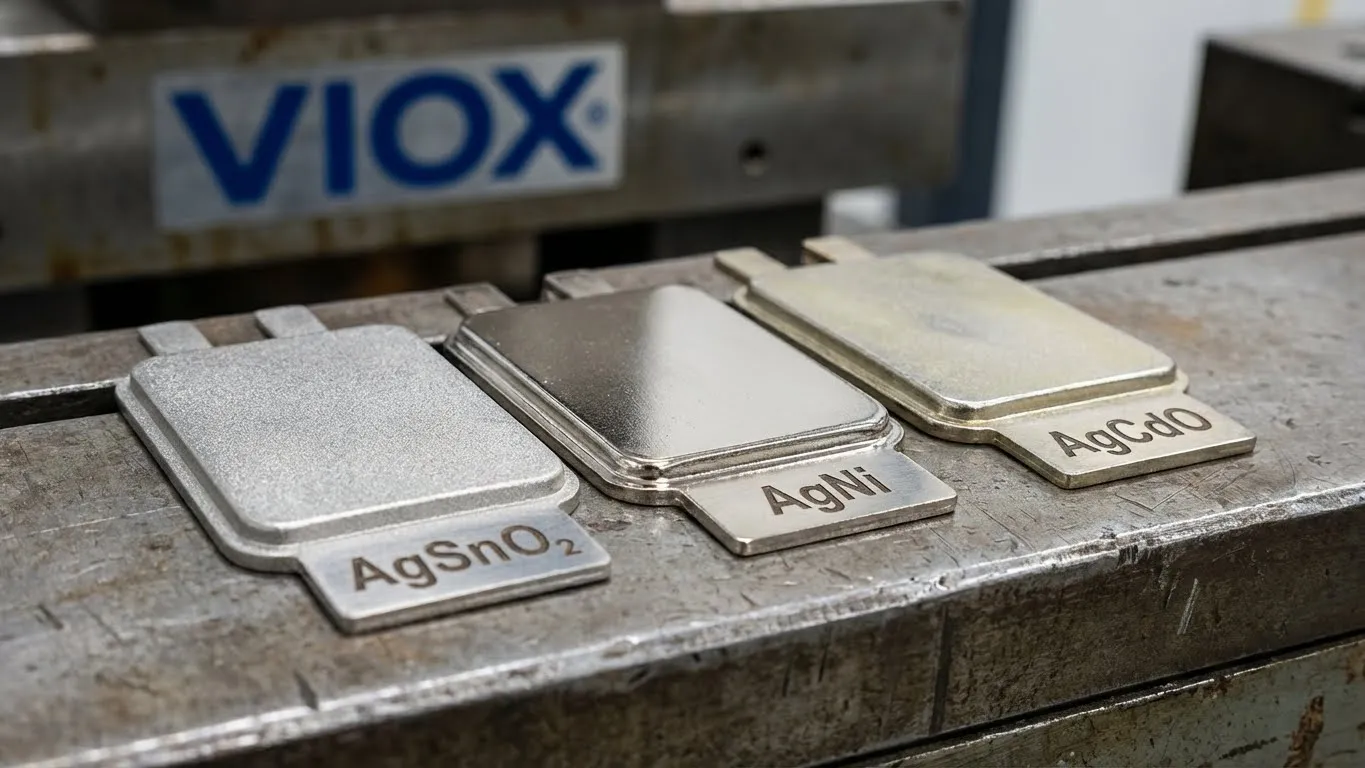
Τα τρία κύρια υλικά επαφής
Οξείδιο αργύρου-καδμίου (AgCdO): Το κληρονομικό πρότυπο
Σύνθεση και ιδιότητες
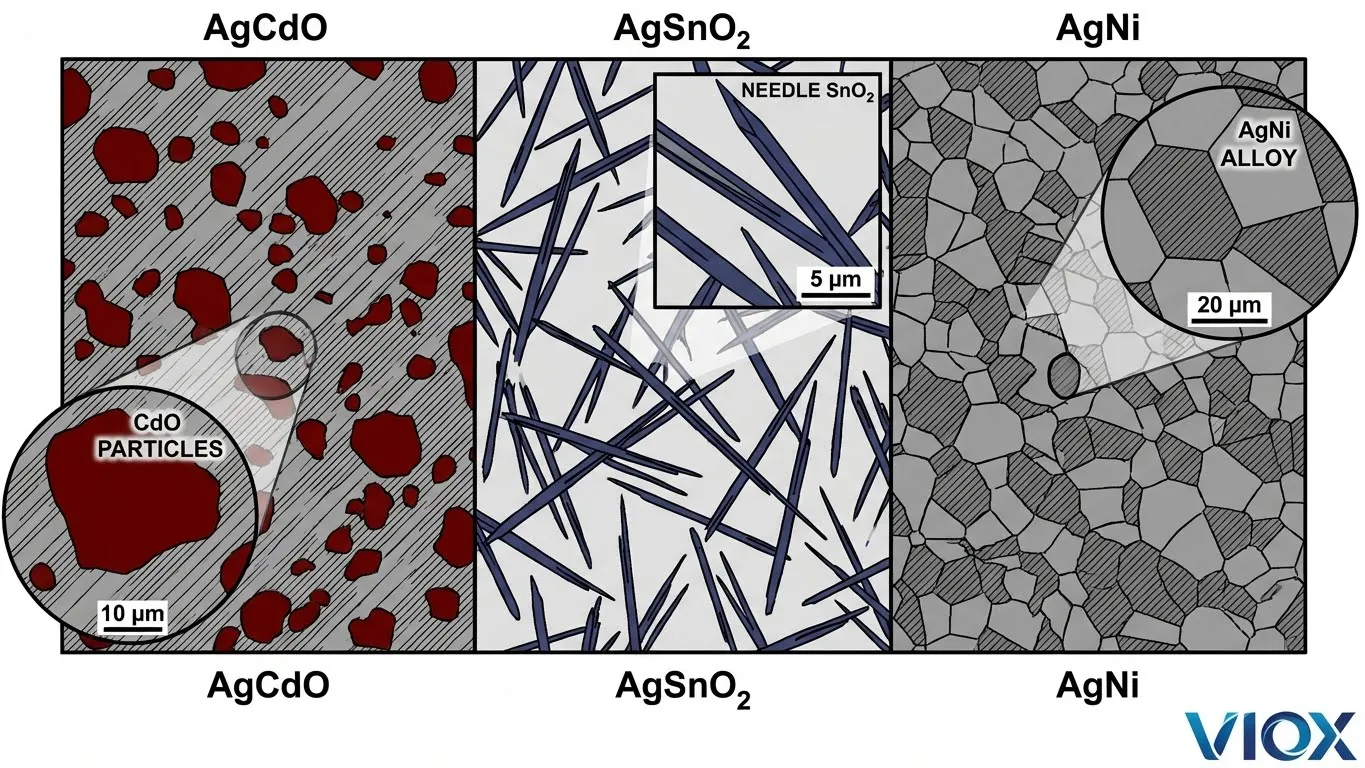
Το οξείδιο αργύρου-καδμίου αποτελείται από 85-90% άργυρο με 10-15% σωματίδια οξειδίου του καδμίου (CdO) διασκορπισμένα σε όλη τη μήτρα αργύρου. Το υλικό παράγεται μέσω της μεταλλουργίας σκόνης, αναμειγνύοντας λεπτά αλεσμένες σκόνες αργύρου και οξειδίου του καδμίου, συμπιέζοντας υπό υψηλή πίεση και πυροσυσσωματώνοντας σε αυξημένες θερμοκρασίες.
Τα σωματίδια οξειδίου του καδμίου παρέχουν εξαιρετικές ιδιότητες απόσβεσης τόξου, ενώ η μήτρα αργύρου διατηρεί εξαιρετική ηλεκτρική αγωγιμότητα—ένας συνδυασμός που έκανε το AgCdO το “καθολικό υλικό επαφής” για σχεδόν 50 χρόνια.
Χαρακτηριστικά απόδοσης
Το AgCdO προσφέρει εξαιρετική απόδοση σε πολλές μετρήσεις:
- Ηλεκτρική αγωγιμότητα: 80-85% IACS
- Αντίσταση επαφής: Χαμηλότερη και πιο σταθερή μεταξύ όλων των υλικών (συνήθως 20-40 μΩ)
- Αντίσταση στη διάβρωση τόξου: Εξαιρετική σε εύρος 50-3000A
- Αντίσταση στη συγκόλληση: Ανώτερη απόδοση υπό υψηλά ρεύματα εισόδου
- Material transfer: Ελάχιστη υπό συνθήκες AC και DC
- Διάρκεια ζωής: Μεγαλύτερη διάρκεια ζωής σε εφαρμογές μεσαίου έως υψηλού ρεύματος
Οι αυτοκαθαριζόμενες ιδιότητες του υλικού κατά τη διάρκεια των λειτουργιών μεταγωγής διατηρούν χαμηλή αντίσταση επαφής καθ' όλη τη διάρκεια ζωής του και η εξαιρετική θερμική του αγωγιμότητα διαχέει αποτελεσματικά τη θερμότητα.
Εφαρμογές και ιστορική κυριαρχία
Το AgCdO έγινε το κυρίαρχο υλικό σε:
- Επαφείς μεσαίας έως υψηλής ισχύος (50A-1000A+)
- Εφαρμογές ελέγχου κινητήρα με σοβαρό καθήκον AC-4 (plugging, jogging)
- Μεταγωγή υψηλού ρεύματος εισόδου (λαμπτήρες, μετασχηματιστές, πυκνωτές)
- Σιδηροδρομικά συστήματα και συστήματα ελέγχου έλξης
- Βιομηχανικοί διακόπτες κυκλώματος
Η αξιοπιστία του υπό διάφορες συνθήκες φορτίου και η μεγάλη διάρκεια ζωής δικαιολόγησαν υψηλότερο κόστος υλικού σε σύγκριση με εναλλακτικές λύσεις.
Κανονιστικοί περιορισμοί και σταδιακή κατάργηση
Η οδηγία 2011/65/ΕΕ της Ευρωπαϊκής Ένωσης για τον περιορισμό της χρήσης ορισμένων επικίνδυνων ουσιών (RoHS) και οι επακόλουθες τροποποιήσεις ταξινομούν το κάδμιο ως τοξικό βαρύ μέταλλο λόγω:
- Βιοσυσσώρευση σε ζωντανούς οργανισμούς
- Καρκινογόνες ιδιότητες
- Περιβαλλοντική εμμονή
- Βλάβη στα νεφρά και τα οστά από έκθεση
Κρίσιμη προθεσμία: Οι εξαιρέσεις RoHS για ηλεκτρικές επαφές λήγουν τον Ιούλιο του 2025, απαγορεύοντας το AgCdO σε νέο εξοπλισμό που πωλείται στην ΕΕ. Παρόμοιοι κανονισμοί υπάρχουν στην Κίνα, την Ιαπωνία και άλλες δικαιοδοσίες. Οι μεγάλοι κατασκευαστές σταμάτησαν την παραγωγή AgCdO το 2023-2024, με τα υπάρχοντα αποθέματα να εξαντλούνται γρήγορα.
Οξείδιο αργύρου-κασσιτέρου (AgSnO₂): Η περιβαλλοντική εναλλακτική λύση
Σύνθεση και κατασκευή
Το οξείδιο αργύρου-κασσιτέρου αποτελείται από 85-90% άργυρο με 10-15% σωματίδια οξειδίου του κασσιτέρου (SnO₂). Σε αντίθεση με το AgCdO, η διαδικασία κατασκευής επηρεάζει σημαντικά την απόδοση:
Μέθοδος μεταλλουργίας σκόνης: Οι σκόνες αργύρου και οξειδίου του κασσιτέρου αναμειγνύονται, συμπιέζονται και πυροσυσσωματώνονται. Η απίστευτα λεπτή άλεση του SnO₂ σε σωματίδια υπο-μικρών και η ομοιόμορφη διασπορά σε όλη τη μήτρα αργύρου απαιτούν σχολαστικό έλεγχο της διαδικασίας. Τα πρώτα υλικά AgSnO₂ υπέφεραν από ασυνεπή ποιότητα, αλλά οι σύγχρονες τεχνικές κατασκευής παρέχουν πλέον αξιόπιστη απόδοση.
Μέθοδος εσωτερικής οξείδωσης: Τα κράματα αργύρου-κασσιτέρου θερμαίνονται σε ατμόσφαιρες πλούσιες σε οξυγόνο, προκαλώντας την εσωτερική οξείδωση του κασσιτέρου ενώ παραμένει διασκορπισμένο στη μήτρα αργύρου. Αυτή η διαδικασία δημιουργεί λεπτές βελονοειδείς δομές SnO₂ που ενισχύουν την αντίσταση στη διάβρωση τόξου.
Διαδικασία εξώθησης: Μετά τη συμπίεση σκόνης ή την εσωτερική οξείδωση, τα υλικά εξωθούνται σε μορφή σύρματος ή φύλλου, αυξάνοντας την πυκνότητα και βελτιώνοντας τις μηχανικές ιδιότητες.
Χαρακτηριστικά απόδοσης
Η απόδοση του AgSnO₂ έχει εξελιχθεί δραματικά:
- Ηλεκτρική αγωγιμότητα: 75-82% IACS (ελαφρώς χαμηλότερο από το AgCdO)
- Αντίσταση επαφής: Υψηλότερη από το AgCdO αρχικά, σταθεροποιείται με τη χρήση (40-80 μΩ τυπικά)
- Αντίσταση στη διάβρωση τόξου: Εξαιρετική, ιδιαίτερα στην περιοχή 500-3000A—συχνά υπερβαίνει το AgCdO
- Αντίσταση στη συγκόλληση: Ανώτερη από το AgCdO υπό χωρητικά και φορτία λαμπτήρων
- Material transfer: Χαμηλότερη από το AgCdO σε εφαρμογές DC
- Σκληρότητα: 15-20% σκληρότερο από το AgCdO (95-105 HV έναντι 80-85 HV)
Βελτιστοποίηση Απόδοσης Μέσω Προσθέτων
Οι σύγχρονες συνθέσεις AgSnO₂ περιλαμβάνουν πρόσθετα ενίσχυσης της απόδοσης:
Οξείδιο του Ινδίου (In₂O₃): Η προσθήκη 2-4% In₂O₃ δημιουργεί υλικά AgSnO₂In₂O₃ με:
- Ενισχυμένη αντίσταση σε υψηλά ρεύματα εισόδου
- Βελτιωμένη διασπορά υλικού (λεπτότερες δομές βελόνας)
- Καλύτερη απόδοση υπό κύκλους λειτουργίας AC-4
- Χαμηλότερους ρυθμούς μεταφοράς υλικού
Σπάνιες Γαίες: Το Cerium, το λανθάνιο και άλλες σπάνιες γαίες βελτιώνουν:
- Το ιξώδες της λιωμένης δεξαμενής αργύρου κατά τη διάρκεια της δημιουργίας τόξου
- Την αναστολή σωματιδίων οξειδίου που εμποδίζει τη συσσώρευση στην επιφάνεια
- Τις μηχανικές ιδιότητες και τη διατήρηση της δύναμης επαφής
Άλλα Πρόσθετα: Το βισμούθιο, το αντιμόνιο και οι ιδιόκτητες ενώσεις βελτιστοποιούν συγκεκριμένα χαρακτηριστικά απόδοσης.
Γιατί το AgSnO₂ Ηγείται της Αντικατάστασης του AgCdO
Το AgSnO₂ έχει ολοκληρώσει την αντικατάσταση του AgCdO στις ευρωπαϊκές και βορειοαμερικανικές αγορές για τις περισσότερες εφαρμογές:
- Μη τοξικό και φιλικό προς το περιβάλλον
- Συμμόρφωση με RoHS και WEEE
- Συγκρίσιμη ή ανώτερη απόδοση στο 80% των εφαρμογών
- Διαθέσιμο από όλους τους μεγάλους κατασκευαστές
- Ανταγωνιστικές τιμές καθώς αυξάνεται η παραγωγή
Το υλικό υπερέχει ιδιαίτερα σε επαφές AC υψηλού ρεύματος, όπου η ανώτερη αντοχή του στη διάβρωση από τόξο στα 500A+ προσφέρει μεγαλύτερη διάρκεια ζωής από το AgCdO.
Περιορισμοί
Το AgSnO₂ αντιμετωπίζει προκλήσεις σε:
- Εφαρμογές χαμηλού ρεύματος (<5A) όπου η αστάθεια της αντίστασης επαφής επηρεάζει την ακεραιότητα του σήματος
- Συγκεκριμένες εφαρμογές DC αεροπορίας που απαιτούν εξαιρετικά σταθερή αντίσταση επαφής
- Εφαρμογές με εξαιρετικά συχνούς κύκλους μεταγωγής όπου η υψηλότερη σκληρότητα αυξάνει τη μηχανική φθορά
Ασήμι Νικέλιο (AgNi): Το Οικονομικό Εργαλείο
Σύνθεση και ιδιότητες
Το Ασήμι Νικέλιο είναι ένα πραγματικό κράμα (όχι σύνθετο) που περιέχει 85-90% ασήμι με 10-15% νικέλιο. Η πιο κοινή σύνθεση είναι AgNi10 (90% Ag, 10% Ni). Σε αντίθεση με τα υλικά οξειδίου μετάλλων, το AgNi παράγεται μέσω παραδοσιακών τεχνικών κράματος—λιώνοντας ασήμι και νικέλιο μαζί για να σχηματίσουν ένα ομοιογενές υλικό.
Η περιεκτικότητα σε νικέλιο σκληραίνει μηχανικά το ασήμι, αυξάνοντας την αντοχή στη διάβρωση διατηρώντας παράλληλα εξαιρετική ηλεκτρική αγωγιμότητα. Το AgNi χρησιμοποιείται σε ηλεκτρικές επαφές για δεκαετίες και παραμένει το πιο οικονομικό υλικό επαφής με βάση το ασήμι.
Χαρακτηριστικά απόδοσης
Το AgNi παρέχει αξιόπιστη απόδοση σε κατάλληλες εφαρμογές:
- Ηλεκτρική αγωγιμότητα: 85-90% IACS (υψηλότερο μεταξύ των τριών υλικών)
- Αντίσταση επαφής: Πολύ χαμηλή και σταθερή (15-30 μΩ τυπικά)
- Αντίσταση στη διάβρωση τόξου: Καλή υπό ελαφριά έως μεσαία φορτία (<100A)
- Αντίσταση στη συγκόλληση: Χαμηλότερη από το AgCdO ή το AgSnO₂ υπό συνθήκες υψηλής εισροής
- Material transfer: Υψηλότερη από άλλα υλικά, ιδιαίτερα υπό επαγωγικά φορτία
- Σκληρότητα: Μέτρια (65-75 HV)
- Κόστος: 30-40% χαμηλότερο κόστος υλικού από το AgSnO₂
Εφαρμογές και Βέλτιστες Περιπτώσεις Χρήσης
Το AgNi υπερέχει σε:
- Ελαφριές έως μεσαίες επαφές (5A-50A)
- Ρελέ γενικής χρήσης
- Οικιακές και ελαφρές εμπορικές εφαρμογές
- Βοηθητικά ρελέ και διακόπτες αυτοκινήτων
- Θερμοστάτες και ελεγκτές θερμοκρασίας
- Εφαρμογές χαμηλού ρεύματος εισόδου
- Εφαρμογές με ευαισθησία κόστους που απαιτούν αξιοπιστία
Το υλικό παρέχει εξαιρετική αξία όπου οι ενέργειες τόξου είναι μέτριες και δεν υπάρχουν εξαιρετικά υψηλά ρεύματα εισόδου.
Περιορισμοί
Το AgNi δεν είναι κατάλληλο για:
- Εφαρμογές υψηλού ρεύματος (>100A συνεχόμενα)
- Εφαρμογές εκκίνησης κινητήρα με σοβαρό καθήκον AC-4
- Φορτία υψηλού ρεύματος εισόδου (συστοιχίες πυκνωτών, μετασχηματιστές, λαμπτήρες πυρακτώσεως)
- Εφαρμογές που απαιτούν μέγιστη αντίσταση συγκόλλησης
- Απαιτήσεις μεγάλης ηλεκτρικής διάρκειας ζωής υπό δύσκολα φορτία
Σε υψηλότερα ρεύματα και με δύσκολα φορτία, το AgNi υφίσταται ταχεία διάβρωση, μεταφορά υλικού και αυξημένη τάση συγκόλλησης. Η εξοικονόμηση κόστους εξαφανίζεται όταν απαιτείται πρόωρη αντικατάσταση.
Πότε να Επιλέξετε AgNi έναντι AgSnO₂
Επιλέγω AgNi όταν:
- Ονομαστική τιμή ρεύματος ≤50A συνεχώς
- Αντιστάσεις ή ελαφρά επαγωγικά φορτία
- Χαμηλή έως μέτρια συχνότητα μεταγωγής (<10 λειτουργίες/ώρα)
- Η βελτιστοποίηση κόστους είναι κρίσιμη
- Αποδεκτή σύντομη έως μέση διάρκεια ζωής (5-8 χρόνια)
Επιλέγω AgSnO₂ όταν:
- Ονομαστική τιμή ρεύματος >50A ή μέγιστα ρεύματα εισόδου >200A
- Επαγωγικοί κινητήρες, μετασχηματιστές ή χωρητικά φορτία
- Υψηλή συχνότητα μεταγωγής ή κύκλοι λειτουργίας AC-4
- Απαιτείται μέγιστη διάρκεια ζωής (10-15+ χρόνια)
- Η περιβαλλοντική συμμόρφωση είναι απαραίτητη
Συνολική Σύγκριση Υλικών
Φυσικές και Ηλεκτρικές Ιδιότητες
| Ακίνητα | AgCdO (10-15%) | AgSnO₂ (10-12%) | AgNi (10%) |
|---|---|---|---|
| Ηλεκτρική αγωγιμότητα | 80-85% IACS | 75-82% IACS | 85-90% IACS |
| Θερμική Αγωγιμότητα | 320-350 W/m·K | 280-320 W/m·K | 340-380 W/m·K |
| Σκληρότητα (HV) | 80-85 | 95-105 | 65-75 |
| Πυκνότητα | 10.2-10.4 g/cm³ | 9.8-10.1 g/cm³ | 10.3-10.5 g/cm³ |
| Σημείο τήξης | 960°C (βάση Ag) | 960°C (βάση Ag) | 960°C (βάση Ag) |
| Αντίσταση επαφής | 20-40 μΩ | 40-80 μΩ | 15-30 μΩ |
| Ρυθμός Διάβρωσης Τόξου (mg/1000 λειτουργίες) | 2-4 | 2-5 | 4-8 |
| Κόστος Υλικού (σχετικό) | Υψηλό (σταδιακή κατάργηση) | Μεσαίο-Υψηλό | Χαμηλή-Μεσαία |
| Περιβαλλοντική Κατάσταση | ❌ Απαγορεύεται το 2025 | ✅ Συμμορφώνεται με RoHS | ✅ Συμμορφώνεται με RoHS |
Απόδοση ανά Τύπο Φορτίου
| Τύπος φορτίου | Αξιολόγηση AgCdO | Αξιολόγηση AgSnO₂ | Αξιολόγηση AgNi | Συνιστώμενο υλικό |
|---|---|---|---|---|
| Αντιστάσεις (θερμαντήρες, πυρακτώσεως) | ⭐⭐⭐⭐⭐ | ⭐⭐⭐⭐⭐ | ⭐⭐⭐⭐ | AgSnO₂ ή AgNi (εξαρτάται από το ρεύμα) |
| Επαγωγικό AC-3 (κανονική εκκίνηση κινητήρων) | ⭐⭐⭐⭐⭐ | ⭐⭐⭐⭐⭐ | ⭐⭐⭐ | AgSnO₂ |
| Επαγωγικό AC-4 (αναχαίτιση/διακοπή κινητήρων) | ⭐⭐⭐⭐⭐ | ⭐⭐⭐⭐ | ⭐⭐ | AgSnO₂ (το AgCdO ήταν ιστορικά το καλύτερο) |
| Χωρητικό (PFC, στραγγαλιστικά πηνία λαμπτήρων) | ⭐⭐⭐⭐ | ⭐⭐⭐⭐⭐ | ⭐⭐ | AgSnO₂ |
| Υψηλό Ρεύμα Εισόδου (μετασχηματιστές, λαμπτήρες) | ⭐⭐⭐⭐⭐ | ⭐⭐⭐⭐⭐ | ⭐⭐ | AgSnO₂ |
| Χαμηλό Ρεύμα (<5A σήμα/έλεγχος) | ⭐⭐⭐⭐ | ⭐⭐⭐ | ⭐⭐⭐⭐⭐ | AgNi |
| Διακοπή DC (μπαταρίες, ηλιακά) | ⭐⭐⭐⭐ | ⭐⭐⭐⭐⭐ | ⭐⭐⭐ | AgSnO₂ |
Πίνακας Καταλληλότητας Εφαρμογών
| Εφαρμογή | Τρέχον εύρος | Καλύτερο Υλικό 2026+ | Εναλλακτική λύση | Σημειώσεις |
|---|---|---|---|---|
| Επαφείς HVAC | 20-100A | AgSnO₂ | AgNi (<40A) | Υψηλό ρεύμα εισόδου από συμπιεστές |
| Έλεγχος Κινητήρα (AC-3) | 50-500A | AgSnO₂ | — | Τυπική εκκίνηση κινητήρα |
| Έλεγχος Κινητήρα (AC-4) | 50-500A | AgSnO₂ + In₂O₃ | — | Σκληρή λειτουργία, αναχαίτιση |
| Ρελέ ισχύος | 10-50A | AgNi | AgSnO₂ (>30A) | Ισορροπία κόστους έναντι απόδοσης |
| Διακόπτες κυκλώματος | 16-1000A | AgSnO₂ | — | Κρίσιμη διακοπή τόξου |
| Αυτοκινητοβιομηχανικά Ρελέ | 10-50A | AgNi | AgSnO₂ (υψηλό ρεύμα) | Ευαίσθητο στο κόστος |
| Ηλιακοί DC Επαφείς | 50-1000A | AgSnO₂ | — | Διακοπή τόξου DC, μεγάλη διάρκεια ζωής |
| Επαφείς φωτισμού | 20-200A | AgSnO₂ | — | Υψηλά ρεύματα εισόδου |
| Μεταφορά Γεννήτριας | 100-1000A | AgSnO₂ + In₂O₃ | — | Κρίσιμη αξιοπιστία |
Ανταλλαγές Κόστους έναντι Απόδοσης
| Παράγοντας | AgCdO | AgSnO₂ | AgSnO₂In₂O₃ | AgNi |
|---|---|---|---|---|
| Κόστος Υλικού ανά Επαφή | $$$ | $$-$$$ | $$$-$$$$ | $ |
| Πολυπλοκότητα Κατασκευής | Μεσαίο | Υψηλή | Υψηλή | Χαμηλή |
| Διάρκεια Ζωής (έτη, AC-3) | 12-15 | 10-15 | 12-15 | 5-8 |
| Διαθεσιμότητα Αντικατάστασης | ❌ Εξαντλείται | ✅ Εξαιρετική | ✅ Καλή | ✅ Εξαιρετική |
| Απαιτούνται Αλλαγές Σχεδιασμού | — | Μικρή-Μέτρια | Μικρή-Μέτρια | Μικρή |
| Συνολικό Κόστος Κτήσης (10 έτη) | Δ/Υ (μη διαθέσιμο) | $$ | $$-$$$ | $ |
| Αξιοπιστία Απόδοσης | ⭐⭐⭐⭐⭐ | ⭐⭐⭐⭐⭐ | ⭐⭐⭐⭐⭐ | ⭐⭐⭐ |
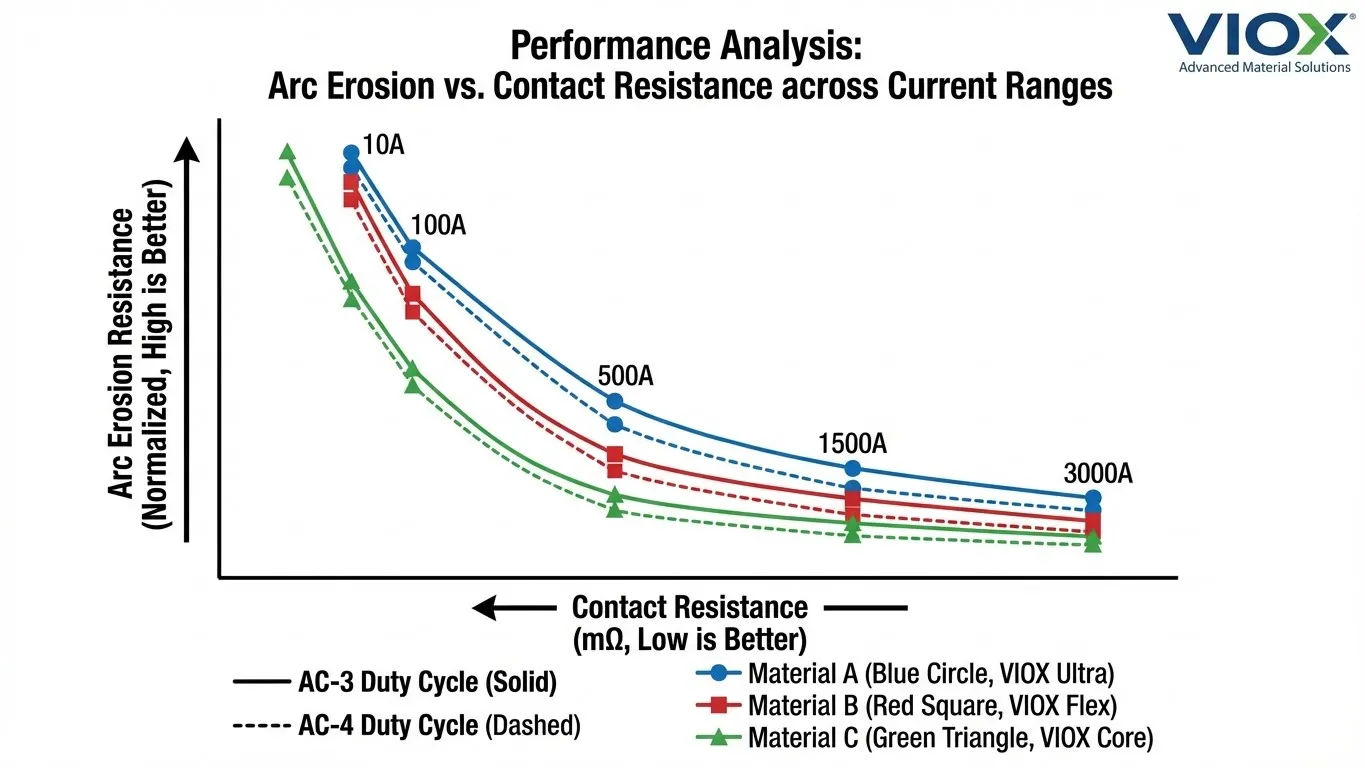
Ανάλυση Απόδοσης Ειδική για το Φορτίο
Χαρακτηριστικά Εναλλαγής AC έναντι DC
Εναλλαγή AC: Και τα τρία υλικά αποδίδουν καλά σε συνθήκες AC όπου το ρεύμα φυσικά μηδενίζεται δύο φορές ανά κύκλο, σβήνοντας τα τόξα. Το AgSnO₂ παρουσιάζει ιδιαίτερο πλεονέκτημα σε υψηλά ρεύματα (>500A) με χαμηλότερη μεταφορά υλικού και ανώτερη διακοπή τόξου.
Εναλλαγή DC: Πιο απαιτητική λόγω απουσίας μηδενισμού. Το AgSnO₂ επιδεικνύει ανώτερη απόδοση με:
- Χαμηλότερους ρυθμούς μεταφοράς υλικού από το AgCdO
- Καλύτερη ικανότητα διακοπής τόξου
- Πιο σταθερή αντίσταση επαφής κατά τη διάρκεια ζωής
- Το AgNi παρουσιάζει υψηλότερη διάβρωση και μεταφορά υλικού σε εφαρμογές DC >50A
Απόδοση Αντίστασης Φορτίου
Τα καθαρά ωμικά φορτία (θερμαντήρες, λαμπτήρες πυρακτώσεως) παρουσιάζουν μέτριες απαιτήσεις εναλλαγής. Όλα τα υλικά αποδίδουν επαρκώς, με την επιλογή να βασίζεται κυρίως στην ονομαστική τιμή ρεύματος:
- <50A: Το AgNi παρέχει οικονομική λύση
- 50-200A: Το AgSnO₂ είναι η τυπική επιλογή
- >200A: AgSnO₂ με πρόσθετα για εκτεταμένη διάρκεια ζωής
Απόδοση Επαγωγικού Φορτίου
Καθήκον AC-3 (Κανονική Εκκίνηση Κινητήρα): Μέτρια ρεύματα εισόδου (5-7× ονομαστική τιμή). Το AgSnO₂ και το AgCdO υπερέχουν, με το AgSnO₂ να είναι πλέον η τυπική επιλογή. Το AgNi είναι κατάλληλο μόνο για ρεύματα <40A.
Καθήκον AC-4 (Φρενάρισμα με Αντίστροφη Ροπή, Χειρισμός, Αντιστροφή): Σοβαρές συνθήκες με συχνή υψηλή εισροή. Το AgCdO ήταν ιστορικά το καλύτερο, αλλά οι σύγχρονες συνθέσεις AgSnO₂In₂O₃ προσφέρουν συγκρίσιμη απόδοση:
- Ρυθμοί διάβρωσης τόξου εντός 10-15% του AgCdO
- Διάρκεια ζωής 90-100% του AgCdO σε σωστά σχεδιασμένους επαφείς
- Το AgNi δεν είναι κατάλληλο—ταχεία διάβρωση και κίνδυνος συγκόλλησης
Απόδοση Χωρητικού Φορτίου
Η εναλλαγή πυκνωτών (διόρθωση συντελεστή ισχύος, οδηγοί LED) δημιουργεί εξαιρετικά υψηλά ρεύματα εισόδου αιχμής (20-40× ονομαστική τιμή) κατά τη διάρκεια σύντομης διάρκειας (<1ms). Αυτό αντιπροσωπεύει την πιο σοβαρή καταπόνηση επαφής.
Κατάταξη Απόδοσης: AgSnO₂ > AgCdO > AgNi
Η ανώτερη αντίσταση συγκόλλησης του AgSnO₂ υπό χωρητικά φορτία το καθιστά το προτιμώμενο υλικό, συχνά ξεπερνώντας το AgCdO σε σύγχρονες εφαρμογές. Τα σκληρά σωματίδια SnO₂ αποτρέπουν την παραμόρφωση της επιφάνειας επαφής κατά τη διάρκεια των ρευμάτων αιχμής.
Εφαρμογές Υψηλού Ρεύματος Εισόδου
Η μαγνητισμός του μετασχηματιστή, οι λαμπτήρες με ψυχρό νήμα και η εκκίνηση κινητήρα με μπλοκαρισμένο ρότορα δημιουργούν ρεύματα εισόδου 8-15× το ονομαστικό ρεύμα. Το AgSnO₂ υπερέχει λόγω:
- Υψηλής μηχανικής σκληρότητας που αποτρέπει την επιφανειακή μετατόπιση
- Ανώτερης απόσβεσης τόξου από τα σωματίδια SnO₂
- Αντίστασης στη συγκόλληση επαφών κατά την αναπήδηση
Το AgNi δεν πρέπει να χρησιμοποιείται όπου τα ρεύματα εισόδου υπερβαίνουν το 10× του ονομαστικού συνεχούς ρεύματος — ο κίνδυνος συγκόλλησης είναι απαράδεκτος.
Εφαρμογές Χαμηλού Ρεύματος
Τα κυκλώματα σήματος, τα κυκλώματα ελέγχου και οι βοηθητικές επαφές (<5A) παρουσιάζουν μοναδικές προκλήσεις. Η σταθερότητα της αντίστασης επαφής και ο ηλεκτρικός θόρυβος γίνονται κρίσιμα:
Κατάταξη υλικών: AgNi > AgCdO > AgSnO₂
Η υψηλότερη και λιγότερο σταθερή αντίσταση επαφής του AgSnO₂ σε εφαρμογές χαμηλού ρεύματος μπορεί να προκαλέσει προβλήματα ακεραιότητας σήματος και υψηλότερες πτώσεις τάσης. Η χαμηλή, σταθερή αντίσταση και οι αυτοκαθαριζόμενες ιδιότητες του AgNi το καθιστούν ιδανικό για αυτές τις εφαρμογές.
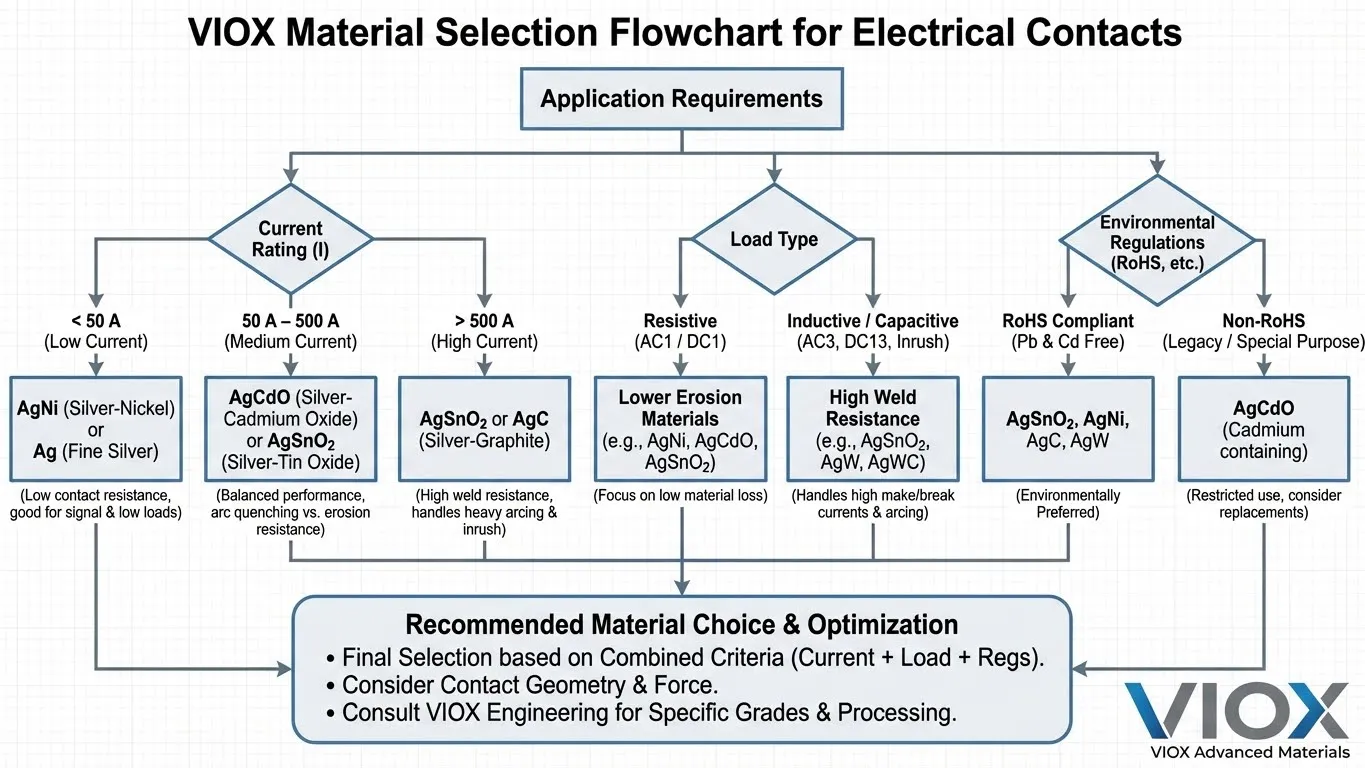
Πίνακας Απόφασης Επιλογής Υλικού
Βήμα 1: Έλεγχος Περιβαλλοντικής Συμμόρφωσης
- Απαιτείται συμμόρφωση με RoHS ή παραγωγή μετά το 2025; → Αποκλείστε το AgCdO
Βήμα 2: Αξιολόγηση Ονομαστικού Ρεύματος
- ≤50A συνεχές, <200A μέγιστο → Το AgNi είναι βιώσιμο, προχωρήστε στο Βήμα 3
- >50A συνεχές ή >200A μέγιστο → Απαιτείται AgSnO₂, προχωρήστε στο Βήμα 4
Βήμα 3: Πιστοποίηση AgNi (εάν ισχύει)
- Τύπος φορτίου: Αντιστατικό ή ελαφρύ επαγωγικό → Το AgNi είναι κατάλληλο ✓
- Τύπος φορτίου: Κινητήρας (AC-3/AC-4), χωρητικό, υψηλό ρεύμα εισόδου → Απαιτείται AgSnO₂
- Συχνότητα μεταγωγής: <10 ops/ώρα → Το AgNi είναι κατάλληλο ✓
- Συχνότητα μεταγωγής: >10 ops/ώρα → Προτιμάται το AgSnO₂
- Απαίτηση διάρκειας ζωής: 5-8 χρόνια → Το AgNi είναι αποδεκτό ✓
- Απαίτηση διάρκειας ζωής: >10 χρόνια → Απαιτείται AgSnO₂
Βήμα 4: Προδιαγραφή AgSnO₂
- Τυπικός έλεγχος κινητήρα AC-3, αντιστατικά φορτία → Τυπική σύνθεση AgSnO₂
- Λειτουργία AC-4, υψηλό ρεύμα εισόδου, χωρητικά φορτία → Σύνθεση AgSnO₂In₂O₃
- DC επαφείς, ηλιακές εφαρμογές → AgSnO₂ με πρόσθετα
- Κρίσιμες εφαρμογές, μέγιστη αξιοπιστία → AgSnO₂In₂O₃ + σπάνια στοιχεία γης
Βήμα 5: Βελτιστοποίηση Κόστους
- Υπολογίστε το συνολικό κόστος ιδιοκτησίας, συμπεριλαμβανομένης της διάρκειας ζωής και της συχνότητας αντικατάστασης
- Για εφαρμογές χαμηλής καταπόνησης με ευαισθησία στο κόστος που πληρούν όλα τα κριτήρια AgNi, το AgNi προσφέρει 30-40% εξοικονόμηση κόστους υλικού
- Για κρίσιμες εφαρμογές, η εκτεταμένη διάρκεια ζωής και η ανώτερη αξιοπιστία του AgSnO₂ δικαιολογούν το υψηλότερο αρχικό κόστος
Διαδικασίες παραγωγής
Διαδικασία Κονιομεταλλουργίας
Η κυρίαρχη μέθοδος κατασκευής για AgSnO₂ και AgCdO:
- Προετοιμασία Κόνεων: Κόνεις αργύρου και οξειδίων μετάλλων αλεσμένες σε ακριβή μεγέθη σωματιδίων (0,5-5 μικρά για οξείδια)
- Ανάμιξη: Κόνεις αναμεμειγμένες σε ελεγχόμενη ατμόσφαιρα για να εξασφαλιστεί ομοιόμορφη κατανομή
- Συμπίεση: Μείγμα συμπιεσμένο υπό υψηλή πίεση (200-800 MPa) για να σχηματιστούν “πράσινα” συμπαγή
- Συντήρηση: Θέρμανση στους 650-850°C σε ελεγχόμενη ατμόσφαιρα, προκαλώντας τη σύνδεση των σωματιδίων αργύρου ενώ τα οξείδια παραμένουν διασκορπισμένα
- Διαστασιολόγηση/Μηχανουργική Επεξεργασία: Τελική διαμόρφωση σε ακριβείς διαστάσεις
Ο ποιοτικός έλεγχος της κατανομής μεγέθους σωματιδίων και της ομοιομορφίας ανάμιξης επηρεάζει κρίσιμα τις ηλεκτρικές ιδιότητες — τα ασυνεπή πρώιμα προβλήματα AgSnO₂ προήλθαν από ανεπαρκή έλεγχο της διαδικασίας.
Μέθοδος εσωτερικής οξείδωσης
Εναλλακτική διαδικασία που παράγει λεπτή διασπορά οξειδίων:
- Δημιουργία Κράματος: Άργυρος και κασσίτερος λιωμένοι μαζί σχηματίζοντας κράμα Ag-Sn
- Διαμόρφωση: Κράμα χυτευμένο ή εξωθημένο σε μορφή σύρματος/φύλλου
- Θερμική Επεξεργασία: Έκθεση σε ατμόσφαιρα πλούσια σε οξυγόνο στους 700-900°C
- Οξείδωση: Ο κασσίτερος διαχέεται στην επιφάνεια και οξειδώνεται, δημιουργώντας εσωτερικά σωματίδια SnO₂
- Ψύξη/Τελειοποίηση: Ελεγχόμενη ψύξη και τελική διαμόρφωση
Η εσωτερική οξείδωση δημιουργεί χαρακτηριστικές βελονοειδείς δομές SnO₂, παρέχοντας εξαιρετική αντοχή στη διάβρωση από τόξο. Η διαδικασία απαιτεί ακριβή έλεγχο της θερμοκρασίας και του οξυγόνου για την επίτευξη ομοιόμορφου βάθους οξείδωσης.
Διέλαση και Δευτερογενής Επεξεργασία
Μετά τη συμπύκνωση της σκόνης ή την εσωτερική οξείδωση, τα υλικά υποβάλλονται σε:
- Θερμή ή ψυχρή διέλαση για την επίτευξη υψηλότερων πυκνοτήτων (>98% θεωρητικής)
- Ελκυσμός σύρματος για την παραγωγή πριτσινιών και άκρων επαφής
- Κύλιση για λωρίδες επαφής και προϊόντα φύλλων
- Εφαρμογή στρώματος συγκόλλησης για διμεταλλικές επαφές (κράμα Ag συνδεδεμένο με χάλκινη βάση)
Μελλοντικές Τάσεις στα Υλικά Επαφής
Οξείδιο Αργύρου-Ψευδαργύρου (AgZnO)
Το AgZnO αναδεικνύεται ως μια οικονομική εναλλακτική λύση AgCdO για συγκεκριμένες εφαρμογές:
- Χαμηλότερο κόστος υλικού από το AgSnO₂ (μείωση 15-20%)
- Καλή αντίσταση στη συγκόλληση και ιδιότητες διάβρωσης από τόξο
- Υψηλότερη αντίσταση επαφής από το AgSnO₂ (περιορίζει τις εφαρμογές)
- Κατάλληλο για μεσαίους ρευματολήπτες όπου η βελτιστοποίηση του κόστους είναι κρίσιμη
Η τρέχουσα υιοθέτηση παραμένει περιορισμένη λόγω του αποδεδειγμένου ιστορικού επιδόσεων του AgSnO₂.
Εφαρμογές Νανοτεχνολογίας
Η έρευνα επικεντρώνεται στη διασπορά σωματιδίων οξειδίου νανοκλίμακας:
- Τα σωματίδια SnO₂ κάτω των 100nm δημιουργούν πιο ομοιόμορφη κατανομή
- Ενισχυμένες μηχανικές ιδιότητες από τα αποτελέσματα των ορίων των κόκκων
- Βελτιωμένη απόσβεση τόξου από μεγαλύτερη επιφάνεια σωματιδίων
- Δυνατότητα μείωσης της περιεκτικότητας σε άργυρο (εξοικονόμηση κόστους) διατηρώντας παράλληλα την απόδοση
Η VIOX συνεργάζεται με ερευνητικά ινστιτούτα υλικών για την ανάπτυξη υλικών επαφής επόμενης γενιάς, ενισχυμένων με νανοτεχνολογία.
Βελτιστοποίηση Σπάνιων Γαιών και Προσθέτων
Συνεχής ανάπτυξη ιδιόκτητων συνθέσεων προσθέτων:
- Προσθήκες δημητρίου, λανθανίου, υττρίου για συγκεκριμένα χαρακτηριστικά απόδοσης
- Πρόσθετα βισμουθίου, αντιμονίου που μειώνουν την αντίσταση επαφής
- Συνθέσεις πολλαπλών στοιχείων βελτιστοποιημένες για συγκεκριμένους κύκλους λειτουργίας
- Προσαρμοσμένα υλικά για ακραία περιβάλλοντα (μεγάλο υψόμετρο, υποθαλάσσια, κρυογονικά)
Λύσεις Υλικών Επαφής VIOX
Η VIOX Electric κατασκευάζει Επαφέα εναλλασσόμενου ρεύματος και αρθρωτοί επαφείς με βελτιστοποιημένα υλικά επαφής για διάφορες εφαρμογές.
Προδιαγραφές προϊόντος
Σειρά Επαφέων AC VIOX: Διατίθεται με τυπικές επαφές AgSnO₂ ή AgSnO₂In₂O₃ για βαριά χρήση. Ονομαστικές τιμές από 9A έως 1000A, ονομαστικές τιμές λειτουργίας AC-3 και AC-4. Όλα τα προϊόντα συμμορφώνονται με το RoHS και είναι πιστοποιημένα κατά IEC 60947-4-1.
Σειρά Αρθρωτών Επαφέων VIOX: Συμπαγής σχεδιασμός με επαφές AgSnO₂, ιδανικός για πίνακες ελέγχου και πίνακες διανομής. Τοποθέτηση σε ράγα DIN, ονομαστικές τιμές 16A έως 125A, διαθέσιμες επιλογές βοηθητικών επαφών.
Προσαρμογή Υλικού Επαφής
Για εφαρμογές OEM και ειδικές απαιτήσεις, η VIOX προσφέρει:
- Προσαρμοσμένες συνθέσεις υλικών επαφής
- Δοκιμές και επικύρωση για συγκεκριμένες εφαρμογές
- Δοκιμές αντοχής υπό πραγματικές συνθήκες φορτίου
- Συστάσεις υλικών βάσει ανάλυσης κύκλου λειτουργίας
Τεχνική υποστήριξη
Οι μηχανικοί εφαρμογών της VIOX παρέχουν καθοδήγηση για την επιλογή υλικών λαμβάνοντας υπόψη:
- Χαρακτηριστικά φορτίου και κύκλος λειτουργίας
- Περιβαλλοντικές συνθήκες
- Απαιτήσεις διάρκειας ζωής
- Βελτιστοποίηση κόστους
- Κανονιστική συμμόρφωση
Για λεπτομερείς επαφέας έναντι εκκινητή κινητήρα βοήθεια επιλογής ή καθοδήγηση συντήρησης, συμβουλευτείτε τους ολοκληρωμένους τεχνικούς πόρους μας.
Συχνές Ερωτήσεις
Ποιο είναι το καλύτερο υλικό αντικατάστασης για επαφές οξειδίου αργύρου-καδμίου (AgCdO);
Το οξείδιο αργύρου-κασσιτέρου (AgSnO₂) είναι η βιομηχανική τυποποιημένη αντικατάσταση του AgCdO για το 80% των εφαρμογών. Για μεσαίους έως υψηλούς ρευματολήπτες (50-1000A), το AgSnO₂ παρέχει συγκρίσιμη ή ανώτερη απόδοση από το AgCdO στην αντίσταση στη διάβρωση τόξου, την αντίσταση στη συγκόλληση και τη διάρκεια ζωής. Για σοβαρές εφαρμογές AC-4 ή εφαρμογές υψηλού ρεύματος εισόδου, οι συνθέσεις AgSnO₂In₂O₃ με πρόσθετα οξειδίου ινδίου παρέχουν απόδοση που ταιριάζει ή υπερβαίνει το AgCdO. Για εφαρμογές χαμηλού ρεύματος (<50A) με ωμικά ή ελαφρά επαγωγικά φορτία, το AgNi προσφέρει οικονομική εναλλακτική λύση με επαρκή απόδοση. Όλες οι σύγχρονες συνθέσεις είναι συμβατές με το RoHS και είναι ασφαλείς για το περιβάλλον, εξαλείφοντας τις ανησυχίες για την τοξικότητα του καδμίου.
Γιατί το AgSnO₂ είναι σκληρότερο από το AgCdO και πώς αυτό επηρεάζει την απόδοση;
Το AgSnO₂ είναι περίπου 15% σκληρότερο από το AgCdO (95-105 HV έναντι 80-85 HV) λόγω της υψηλότερης σκληρότητας του οξειδίου του κασσιτέρου σε σύγκριση με το οξείδιο του καδμίου. Αυτή η αυξημένη σκληρότητα παρέχει πλεονεκτήματα και μειονεκτήματα: ενισχύει την αντίσταση στην παραμόρφωση της επιφάνειας επαφής υπό υψηλά ρεύματα εισόδου, μειώνοντας την τάση συγκόλλησης σε χωρητικά φορτία. βελτιώνει την αντίσταση στη μηχανική φθορά σε εφαρμογές μεταγωγής υψηλής συχνότητας. Ωστόσο, μπορεί να αυξήσει ελαφρώς τη διάρκεια αναπήδησης της επαφής και απαιτεί υψηλότερη δύναμη επαφής για τη διατήρηση χαμηλής αντίστασης επαφής. Η σκληρότητα καθιστά επίσης το AgSnO₂ πιο ανθεκτικό στη μεταφορά υλικού κατά τη διάρκεια της μεταγωγής DC. Οι σύγχρονοι σχεδιασμοί επαφέων λαμβάνουν υπόψη αυτά τα χαρακτηριστικά μέσω βελτιστοποιημένων δυνάμεων ελατηρίου και γεωμετρίας επαφής.
Μπορώ να αντικαταστήσω απευθείας τις επαφές AgCdO με AgSnO₂ σε υπάρχοντες επαφείς;
Σε πολλές περιπτώσεις είναι δυνατή η άμεση αντικατάσταση, αλλά δεν συνιστάται καθολικά. Για ρελέ που σχεδιάστηκαν αρχικά για AgCdO, η αντικατάσταση με AgSnO₂ συνήθως απαιτεί επαλήθευση των εξής: δύναμη επαφής (ενδέχεται να χρειαστεί ρύθμιση λόγω διαφοράς σκληρότητας), σχεδιασμός θαλάμου σβέσης τόξου (τα χαρακτηριστικά τόξου του AgSnO₂ διαφέρουν ελαφρώς), τάση ελατηρίου (για αντιστάθμιση των διαφορών στην αντίσταση επαφής) και θερμική διαχείριση (ελαφρώς διαφορετικά χαρακτηριστικά θέρμανσης). Σε ρελέ με ονομαστική τιμή >100A ή βαριάς χρήσης (AC-4), συνιστάται ιδιαίτερα η μηχανική αξιολόγηση. Για βέλτιστη απόδοση, καθορίστε ρελέ που έχουν σχεδιαστεί από την αρχή για επαφές AgSnO₂. Συμβουλευτείτε τους μηχανικούς εφαρμογών της VIOX για αξιολογήσεις μετασκευής—η ακατάλληλη αντικατάσταση μπορεί να μειώσει τη διάρκεια ζωής κατά 40-60%.
Γιατί το AgNi κοστίζει λιγότερο από το AgSnO₂, αλλά έχει χειρότερες επιδόσεις σε εφαρμογές υψηλού ρεύματος;
Το AgNi είναι ένα αληθινό κράμα αργύρου-νικελίου που παράγεται μέσω παραδοσιακής τήξης και κράματος, μια απλούστερη και λιγότερο δαπανηρή διαδικασία από τη μεταλλουργία σκόνης ή την εσωτερική οξείδωση που απαιτείται για το AgSnO₂. Το νικέλιο απλώς σκληραίνει τον άργυρο μηχανικά, αλλά δεν παρέχει τις ιδιότητες απόσβεσης τόξου των σωματιδίων οξειδίου. Σε ρεύματα >50A ή με υψηλά φορτία εισόδου, η δημιουργία τόξου γίνεται σοβαρή—η έλλειψη εξειδικευμένων σωματιδίων οξειδίου του AgNi έχει ως αποτέλεσμα ταχεία διάβρωση από τόξο (2-3× ταχύτερη από το AgSnO₂), υψηλότερους ρυθμούς μεταφοράς υλικού και αυξημένη τάση συγκόλλησης. Η εξοικονόμηση κόστους υλικού (30-40%) αντισταθμίζεται γρήγορα από την πρόωρη αστοχία που απαιτεί αντικατάσταση κάθε 5-7 χρόνια έναντι 12-15 ετών για το AgSnO₂. Το AgNi παραμένει οικονομικό για εφαρμογές ελαφριάς χρήσης όπου οι ενέργειες τόξου είναι μέτριες.
Ποιες είναι οι βασικές διαφορές στην απόδοση μεταξύ AgSnO₂ και AgSnO₂In₂O₃;
Το AgSnO₂In₂O₃ περιέχει 2-4% οξείδιο του ινδίου επιπλέον του οξειδίου του κασσιτέρου, δημιουργώντας βελτιωμένη απόδοση σε συγκεκριμένες εφαρμογές. Οι προσθήκες οξειδίου του ινδίου παρέχουν: 25-35% καλύτερη αντίσταση στη συγκόλληση επαφών υπό υψηλά ρεύματα εισόδου (>10× ονομαστικό), λεπτότερη και πιο ομοιόμορφη διασπορά σωματιδίων οξειδίου δημιουργώντας βελονοειδείς δομές που ενισχύουν την απόσβεση τόξου, βελτιωμένη απόδοση υπό χωρητικά φορτία (λαμπτήρες φθορισμού, διόρθωση συντελεστή ισχύος), χαμηλότερους ρυθμούς μεταφοράς υλικού σε εφαρμογές DC και 15-20% μεγαλύτερη διάρκεια ζωής σε απαιτητικούς κύκλους λειτουργίας AC-4. Οι βελτιώσεις στην απόδοση συνοδεύονται από 20-30% υψηλότερο κόστος υλικού. Καθορίστε AgSnO₂In₂O₃ για: εφαρμογές φρεναρίσματος/διακοπτόμενης κίνησης κινητήρα, μεταγωγή πυκνωτών, κρίσιμα φορτία υψηλής αξιοπιστίας και απαιτήσεις μέγιστης διάρκειας ζωής. Το τυπικό AgSnO₂ παραμένει βέλτιστο για γενικό έλεγχο κινητήρα AC-3 και τις περισσότερες οικιακές/εμπορικές εφαρμογές.
Πώς οι περιβαλλοντικοί κανονισμοί επηρεάζουν την επιλογή υλικών επαφών το 2026;
Η Οδηγία RoHS 2011/65/ΕΕ και οι τροποποιήσεις της καταργούν το AgCdO από τον νέο εξοπλισμό έως τον Ιούλιο του 2025 στην ΕΕ, με παρόμοιους κανονισμούς στην Κίνα, την Ιαπωνία και άλλες δικαιοδοσίες. Όλοι οι μεγάλοι κατασκευαστές διέκοψαν την παραγωγή AgCdO έως το τέλος του 2023, με τα εναπομείναντα αποθέματα να εξαντλούνται το 2024-2025. Για νέα σχέδια εξοπλισμού και παραγωγή, επιτρέπονται μόνο υλικά συμβατά με RoHS (AgSnO₂, AgNi, AgZnO). Ο υπάρχων εξοπλισμός με AgCdO μπορεί να συνεχίσει τη λειτουργία και τα ανταλλακτικά συντήρησης παραμένουν διαθέσιμα από εξειδικευμένους προμηθευτές, αλλά η διαθεσιμότητα θα μειωθεί το 2026-2030. Οι οργανισμοί θα πρέπει να μεταβούν άμεσα σε προδιαγραφές υλικών με βάση το AgSnO₂ για να διασφαλίσουν τη μακροπρόθεσμη διαθεσιμότητα ανταλλακτικών και τη συμμόρφωση με τους κανονισμούς. Η VIOX κατάργησε το AgCdO από τις σειρές προϊόντων της το 2023, προσφέροντας ολοκληρωμένες εναλλακτικές λύσεις AgSnO₂ σε όλες τις ονομαστικές τιμές των επαφέων.
Ποια είναι η αναμενόμενη διαφορά διάρκειας ζωής μεταξύ των υλικών επαφής;
Η διάρκεια ζωής ποικίλλει δραματικά ανάλογα με τις συνθήκες εφαρμογής, αλλά οι τυπικές προσδοκίες για εφαρμογές ελέγχου κινητήρα AC-3 είναι: Το AgCdO παρείχε 12-15 χρόνια υπό σωστή συντήρηση (ιστορικό σημείο αναφοράς, δεν είναι πλέον διαθέσιμο). Το AgSnO₂ παρέχει 10-15 χρόνια σε σωστά σχεδιασμένους επαφείς, με τις συνθέσεις AgSnO₂In₂O₃ βαριάς χρήσης να ταιριάζουν με τη διάρκεια ζωής 12-15 ετών του AgCdO. Το AgNi προσφέρει 5-8 χρόνια σε κατάλληλες εφαρμογές (20 λειτουργίες/ώρα) μειώνει τη διάρκεια ζωής κατά 30-40%. Η πραγματική διάρκεια ζωής εξαρτάται κρίσιμα από: σωστή επιλογή υλικού για τον τύπο φορτίου, σωστή διαστασιολόγηση επαφέα (λειτουργία σε <80% ονομαστικού ρεύματος), επαρκή συντήρηση, συμπεριλαμβανομένης της επιθεώρησης και του καθαρισμού των επαφών, και περιβαλλοντικές συνθήκες (θερμοκρασία, υγρασία, μόλυνση). Οι υποδιαστασιολογημένοι επαφείς ή η ακατάλληλη επιλογή υλικού μπορούν να μειώσουν τη διάρκεια ζωής κατά 60-80% ανεξάρτητα από την ποιότητα του υλικού.
Επιλογή του Κατάλληλου Υλικού για την Εφαρμογή σας
Η επιλογή του υλικού επαφής καθορίζει άμεσα την αξιοπιστία του επαφέα, τη διάρκεια ζωής και το συνολικό κόστος ιδιοκτησίας. Με την ολοκλήρωση της σταδιακής κατάργησης του AgCdO, η επιλογή μεταξύ AgSnO₂ και AgNi εξαρτάται από την ονομαστική τιμή ρεύματος, τα χαρακτηριστικά φορτίου και τις απαιτήσεις διάρκειας ζωής.
Για βοήθεια προδιαγραφών: Οι μηχανικοί εφαρμογών της VIOX αναλύουν τις συγκεκριμένες απαιτήσεις σας και προτείνουν βέλτιστα υλικά και διαμορφώσεις επαφέων. Επικοινωνήστε με την ομάδα τεχνικής υποστήριξής μας με δεδομένα φορτίου, πληροφορίες κύκλου λειτουργίας και περιβαλλοντικές απαιτήσεις.
Για συνεργασίες OEM: Η VIOX προσφέρει προσαρμοσμένη ανάπτυξη υλικών επαφής και δοκιμές επικύρωσης για εξειδικευμένες εφαρμογές. Το εργαστήριό μας υλικών διεξάγει δοκιμές αντοχής υπό πραγματικές συνθήκες λειτουργίας για να επαληθεύσει την απόδοση πριν από την εφαρμογή στην παραγωγή.
Εξερευνήστε την πλήρη σειρά της VIOX βιομηχανικών επαφέων και αρθρωτός εξοπλισμός ελέγχου με βελτιστοποιημένα υλικά επαφών για ποικίλες βιομηχανικές εφαρμογές.