V moderních systémech elektrické distribuce je zajištění nepřetržitého napájení při zachování bezpečnosti a efektivity prvořadé. Bloková rozvodna (RMU) se stala klíčovou součástí sítí pro distribuci energie se středním napětím, zejména v městském prostředí, kde jsou vysoké nároky na prostor a spolehlivost. Tato komplexní příručka zkoumá základy, komponenty, principy fungování a aplikace RMU v systémech elektrické distribuce.
Klíčové poznatky
- Kruhové rozvodné jednotky (RMU) jsou kompaktní, výrobně sestavené rozvaděče určené pro distribuci energie se středním napětím (7,2 kV-36 kV) v sítích kruhového typu.
- RMU poskytují redundantní cesty napájení prostřednictvím konfigurace s uzavřenou smyčkou, která zajišťuje nepřetržité napájení i během selhání komponent.
- Mezi hlavní komponenty patří odpínače zátěže, jističe, pojistky, přípojnice a ochranná zařízení pracující v koordinaci.
- RMU nabízejí prostorově úsporný design (až o 60 % menší než tradiční rozvaděče), díky čemuž jsou ideální pro městské instalace.
- Soulad s IEC 62271-200 a dalšími mezinárodními normami zajišťuje bezpečnost a spolehlivost.
- Aplikace zahrnují městské sítě, průmyslové provozy, komerční budovy a systémy obnovitelné energie.
- Moderní RMU integrují inteligentní monitorovací schopnosti pro dálkové ovládání a prediktivní údržbu.
Co je to bloková rozvodna (RMU)?
A Bloková rozvodna (RMU) je výrobně sestavené, kovově kryté rozvaděčové zařízení určené speciálně pro sítě elektrické distribuce se středním napětím pracující v kruhové nebo smyčkové konfiguraci. Podle norem IEC 62271-200 slouží RMU jako připojovací body zátěže v distribučních systémech kruhového typu, integrující více spínacích, ochranných a izolačních funkcí v jednom kompaktním krytu.
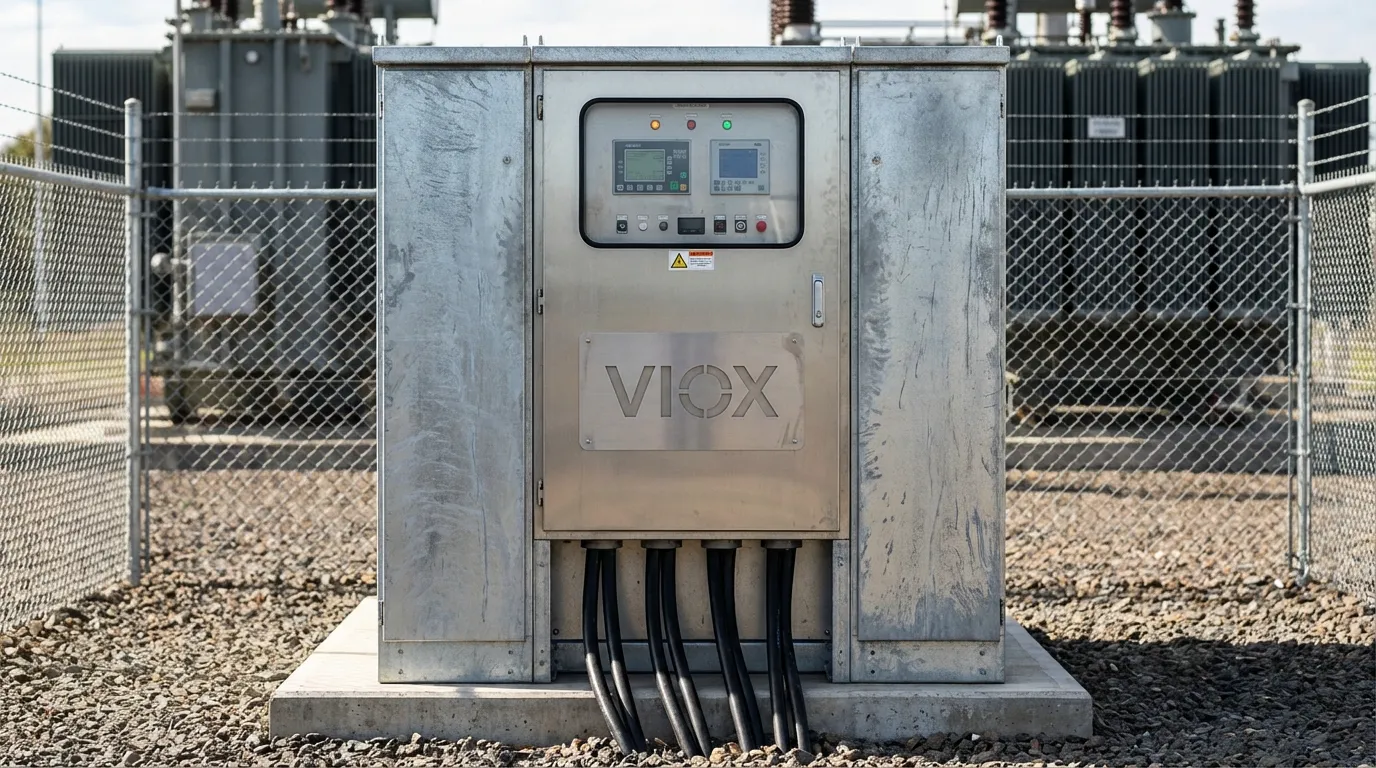
Termín “bloková rozvodna” pochází z jejího primárního použití v distribučních sítích kruhového typu, kde může energie proudit z více směrů. Tato konfigurace vytváří redundanci – pokud jedna část sítě selže, elektřina se automaticky přesměruje alternativními cestami, čímž se zachová nepřetržité napájení připojených zátěží.
RMU obvykle pracují při úrovních napětí v rozmezí od 7,2 kV do 36 kV, přičemž nejběžnější jmenovité hodnoty jsou 12 kV, 17,5 kV a 24 kV. Jsou navrženy tak, aby zvládaly jmenovité proudy mezi 630 A až 1250 A pro napáječe přípojnic, ačkoli některé specializované jednotky mohou pojmout až 3150 A.
Na rozdíl od tradičních rozvaděčů, které vyžadují značný instalační prostor a složitou montáž, jsou RMU předem sestaveny a otestovány v továrně a dodávány jako jednotky připravené k instalaci. Tato filozofie návrhu výrazně zkracuje dobu instalace, minimalizuje chyby na místě a zajišťuje konzistentní kvalitu napříč nasazeními.
Hlavní komponenty blokové rozvodny
Pochopení vnitřní architektury RMU je zásadní pro ocenění její funkčnosti. Každá komponenta hraje specifickou roli při zajišťování bezpečné a spolehlivé distribuce energie.
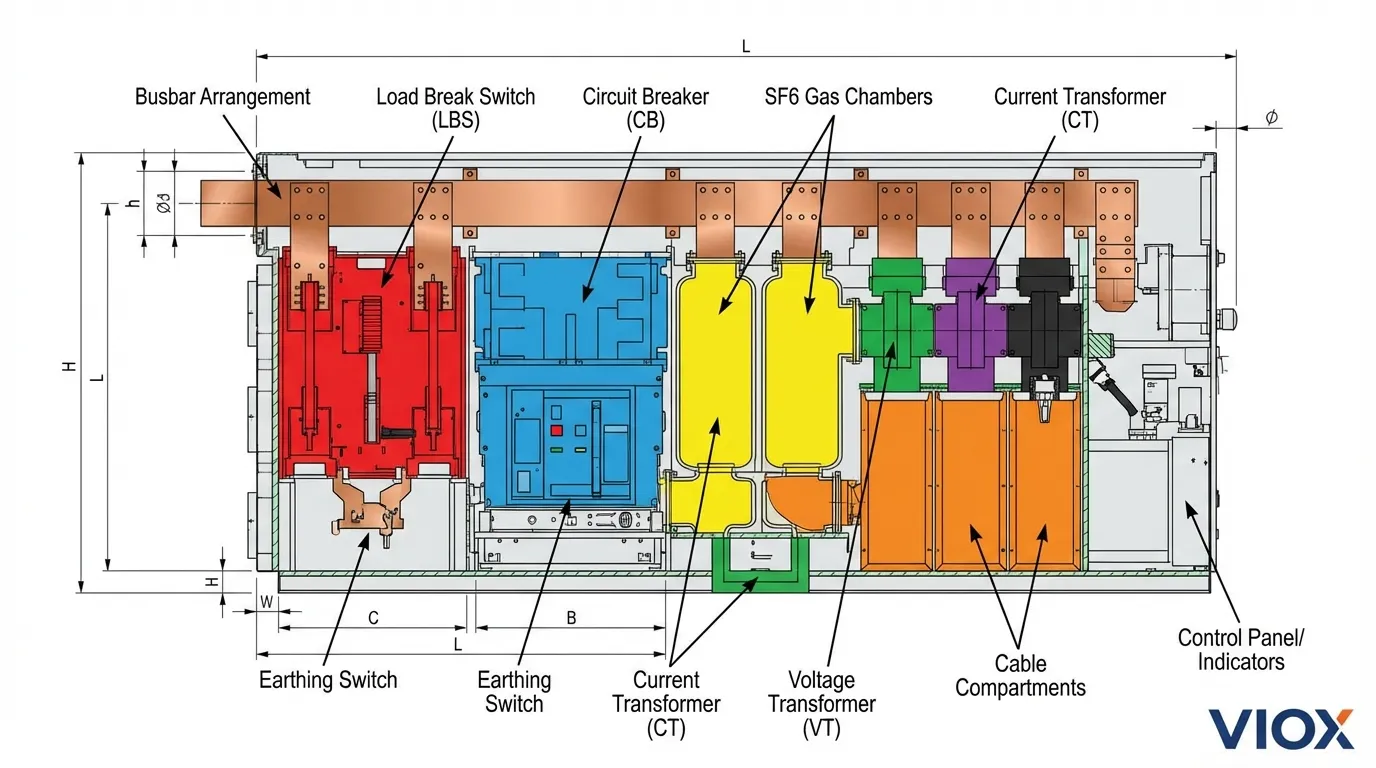
1. Odpínač zátěže (LBS)
Na stránkách odpínač zátěže je primární spínací zařízení ve většině RMU, schopné zapínat a vypínat obvody za normálních podmínek zatížení. Na rozdíl od jednoduchých odpojovačů mohou odpínače zátěže přerušit zátěžové proudy (obvykle až 630 A), ale nejsou navrženy tak, aby přerušovaly poruchové proudy.
Klíčové vlastnosti:
- Zapínací schopnost: Schopnost sepnout do poruchového obvodu
- Vypínací schopnost: Přerušuje normální zátěžový proud
- Mechanická a elektrická životnost: Obvykle 10 000 operací
- Izolační médium: Plyn SF6 nebo vakuová technologie
Odpínače zátěže pracují v součinnosti s pojistkami, aby poskytovaly kompletní ochranu. Když dojde k poruše, pojistka nejprve zareaguje a přeruší poruchový proud a odpínač zátěže poté obvod izoluje.
2. Jistič
V pokročilejších konfiguracích RMU, vakuové jističe (VCB) nahrazují kombinaci odpínače zátěže a pojistky. Jističe nabízejí vynikající výkon:
- Schopnost přerušení poruchy: Může přerušit zkratové proudy (obvykle 16 kA až 25 kA)
- Schopnost opětovného zapnutí: Lze je resetovat a znovu použít po odstranění poruchy
- Delší životnost: Až 30 000 mechanických operací
- Výhody údržby: Není nutná výměna pojistek
Jističe jsou zvláště cenné v aplikacích vyžadujících časté spínací operace nebo tam, kde je požadováno automatické opětovné zapnutí, například v systémech automatického přepínání.
3. Pojistkový odpínač
Na stránkách pojistkový odpínač kombinuje izolační a ochranné funkce v jednom zařízení. Vysokonapěťové pojistky poskytují:
- Nadproudová ochrana: Rychlá reakce na přetížení
- Ochrana proti zkratu: Přerušuje poruchové proudy až do své jmenovité vypínací schopnosti
- Ochrana transformátoru: Speciálně dimenzováno pro ochranu distribučních transformátorů
- Nákladová efektivita: Nižší počáteční investice ve srovnání s jističi
Pojistky používané v RMU musí splňovat normy IEC 60282-1 pro vysokonapěťové pojistky, což zajišťuje koordinovanou ochranu s upstream a downstream zařízeními.
4. Přípojnice
Přípojnice tvoří elektrickou páteř RMU a poskytují nízko odporové cesty pro tok proudu mezi různými sekcemi. Moderní RMU obvykle obsahují:
- Materiál: Elektrolytická měď nebo hliníková slitina
- Konfigurace: Systémy s jednou nebo dvěma přípojnicemi
- Aktuální hodnocení: 630A až 3150A v závislosti na aplikaci
- Povrchová úprava: Pocínované nebo postříbřené pro zvýšení vodivosti
Konfigurace s dvojitými přípojnicemi nabízejí zvýšenou spolehlivost – pokud jedna přípojnice selže, systém pokračuje v provozu na sekundární přípojnici. Tento princip návrhu odráží filozofii redundance topologie kruhové sítě. Více informací o technologii přípojnic naleznete v naší příručce o výběru přípojnic.
5. Uzemňovací spínač
Na stránkách uzemňovací spínač (nebo spínač uzemnění) poskytuje kritickou bezpečnostní funkci vytvořením záměrného spojení se zemí. Toto zařízení:
- Zajišťuje bezpečné pracovní podmínky během údržby
- Vybíjí zbytkové napětí z kabelů a zařízení
- Poskytuje viditelné potvrzení izolace
- Zabraňuje náhodnému zapnutí
Uzemňovací spínače musí být mechanicky blokovány s vypínači zátěže nebo jističi, aby se zabránilo současnému sepnutí, které by vytvořilo přímý zkrat.
6. Proudové transformátory (CT) a napěťové transformátory (VT)
Měřicí transformátory umožňují měření a ochranné funkce:
Proudové transformátory:
- Snižují vysoké proudy na měřitelné úrovně (typicky 5A nebo 1A sekundární)
- Poskytují vstup pro ochranná relé a měření
- Více jader pro různé ochranné a měřicí funkce
- Třídy přesnosti podle norem IEC 61869
Napěťové transformátory:
- Snižují vysoké napětí na bezpečné úrovně (typicky 110V nebo 100V sekundární)
- Umožňují měření napětí a detekci zemních poruch
- Poskytují synchronizační signály pro paralelní provoz
7. Ochranná relé a řídicí systémy
Moderní RMU obsahují inteligentní elektronická zařízení (IED) které poskytují:
- Nadproudová ochrana: Časově zpožděné a okamžité prvky
- Ochrana proti zemnímu spojení: Citlivá detekce zemních poruch
- Směrová ochrana: Určuje směr poruchy v kruhových sítích
- Komunikační rozhraní: Protokoly IEC 61850, Modbus, DNP3 pro integraci SCADA
Pokročilá ochranná relé mohou implementovat adaptivní ochranné schémata, která upravují nastavení na základě konfigurace sítě, podobně jako principy používané v koordinaci jističů.
8. Izolační médium
RMU využívají různé izolační technologie:
SF6 Plynem izolované:
- Vynikající dielektrická pevnost
- Kompaktní design
- Konstrukce s doživotní těsností
- Environmentální aspekty (vysoký GWP)
Pevnou izolací (vzduch nebo pryskyřice):
- Šetrné k životnímu prostředí
- Žádné požadavky na manipulaci s plynem
- Mírně větší půdorys
- Rostoucí preference trhu
Vakuově izolované:
- Používá se především v komorách jističů
- Vynikající vlastnosti zhášení oblouku
- Dlouhá životnost
Princip fungování kruhových rozvoden
Provozní filozofie RMU se zaměřuje na udržování nepřetržitého napájení prostřednictvím inteligentní topologie sítě a koordinované ochrany.
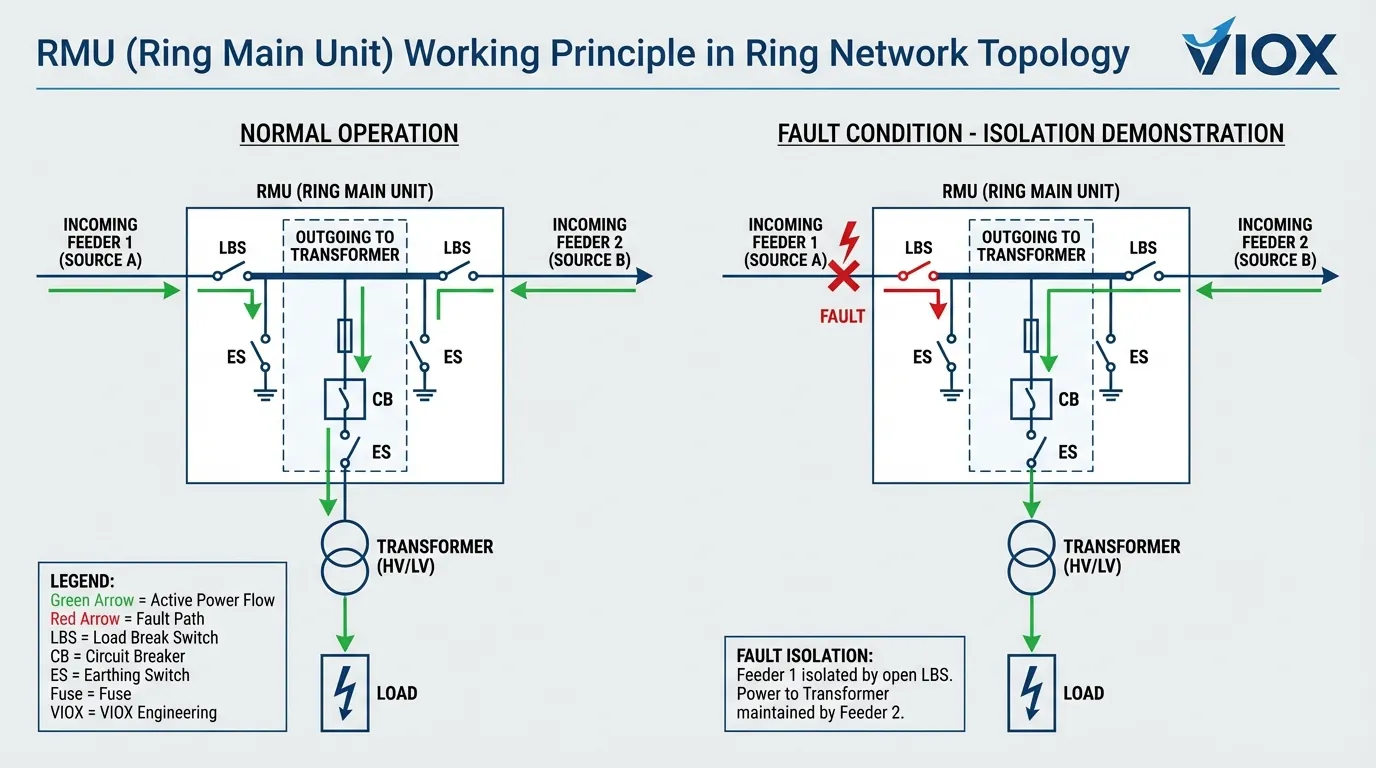
Konfigurace kruhové sítě
V typické kruhové síti:
- Schopnost dvojího napájení: Každá RMU se připojuje ke dvěma příchozím napáječům z různých zdrojů
- Topologie smyčky: Více rozváděčů RMU se propojuje a vytváří uzavřený kruh
- Obousměrný tok energie: Elektřina se může dostat do jakéhokoli bodu z obou směrů
- Schopnost sekcionování: Každý RMU může izolovat specifické části sítě
Tato konfigurace zajišťuje, že i když jeden napáječ selže, všechny zátěže budou nadále napájeny alternativní cestou – princip známý jako Redundance N-1.
Normální provozní sekvence
Během standardního provozu:
- Oba přívodní napáječe jsou pod napětím: Energie proudí kruhem z více zdrojů
- Odpojovače zátěže zůstávají zavřené: Udržování kontinuity obvodu
- Vývodní napáječe napájejí distribuční transformátory: Snižování napětí pro koncové uživatele
- Ochranné relé neustále monitorují: Detekce abnormálních podmínek
- Uzemňovací spínače zůstávají otevřené: Zajištění žádného zemního spojení během provozu
Reakce na poruchový stav
Když dojde k poruše, RMU reaguje prostřednictvím koordinované ochrany:
- Detekce poruchy: Ochranné relé identifikují nadproud nebo zemní spojení
- Provoz pojistky nebo vypnutí jističe: Přerušuje poruchový proud během milisekund
- Izolace poruchy: Postižená sekce se odpojí od zdravé sítě
- Aktivace alternativní cesty: Energie se přesměruje prostřednictvím kruhové konfigurace
- Generování alarmu: Upozorní operátory na umístění poruchy
Tato rychlá reakce minimalizuje postiženou oblast a dobu výpadků, což je kritická výhoda v městských distribučních sítích.
Blokovací mechanismy
RMU obsahují sofistikované mechanické a elektrické blokování k zabránění nebezpečným operacím:
- Odpojovač zátěže a zemnící spínač: Nelze zavřít současně
- Příchozí a odchozí spínače: Koordinované provozní sekvence
- Jistič a odpojovač: Správná izolace před údržbou
- Dveřní blokování: Zabraňují přístupu k živým částem
Tyto bezpečnostní prvky jsou v souladu s principy diskutovanými v našich Postupy blokování a označování MCB.
Typy kruhových rozváděčů
RMU se klasifikují podle několika kritérií:
Podle izolačního média
| Typ | Izolace | Výhody | Nevýhody | Typické aplikace |
|---|---|---|---|---|
| SF6 plynem izolované | Plyn hexafluorid síry | Kompaktní velikost, vynikající dielektrické vlastnosti, utěsněné pro celou životnost | Environmentální obavy (GWP 24 300), vyžadováno monitorování plynu | Městské rozvodny, instalace s omezeným prostorem |
| Pevnou izolací | Epoxidová pryskyřice nebo vzduch | Ekologické, žádná manipulace s plynem, bezúdržbové | Mírně větší půdorys, vyšší počáteční náklady | Zelené projekty, environmentálně citlivé oblasti |
| Vzduchem izolované | Atmosférický vzduch | Jednoduchý design, snadná údržba, nejnižší náklady | Velká velikost, omezené venkovní použití | Vnitřní instalace, průmyslová zařízení |
| Vakuově izolované | Vakuové komory | Vynikající přerušení oblouku, dlouhá životnost, kompaktní | Vyšší technologická složitost | Prémiové aplikace, kritická infrastruktura |
Podle konfigurace
2-sekční RMU:
- Dva přívodní napáječe
- Základní uzel kruhové sítě
- Nejběžnější konfigurace
3-sekční RMU:
- Dva přívodní napáječe + jeden vývodní napáječ
- Standardní distribuční bod
- Napájí jeden distribuční transformátor
4-sekční RMU:
- Dva přívodní napáječe + dva vývodní napáječe
- Obsluhuje více transformátorů
- Zvýšená flexibilita
6-sekční RMU:
- Více kombinací přívodních a vývodních napáječů
- Sekce sběrnicové spojky
- Složité distribuční uzly
Podle typu montáže
Vnitřní RMU:
- Krytí IP3X až IP4X
- Instalace v kontrolovaném prostředí
- Nižší environmentální zátěž
Venkovní RMU:
- Krytí IP54 až IP65
- Kryt odolné proti povětrnostním vlivům
- UV stabilizované materiály
- Povlak odolný proti korozi
Technické specifikace a normy
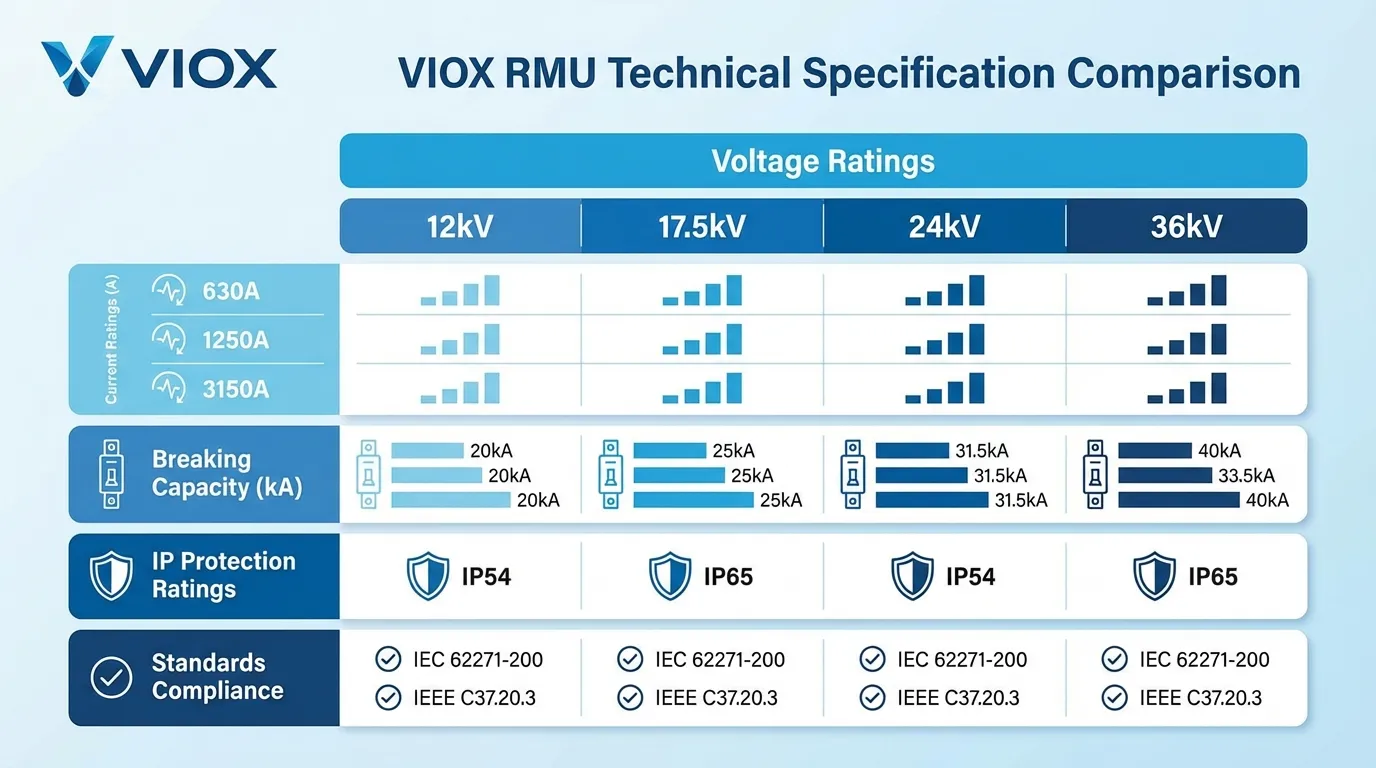
Klíčové elektrické parametry
| Parametr | Typický rozsah | Standardní reference |
|---|---|---|
| Jmenovité napětí | 7,2 kV – 36 kV | IEC 62271-1 |
| Jmenovitý proud (sběrnice) | 630 A – 3150 A | IEC 62271-200 |
| Jmenovitý proud (napáječ) | 200 A – 630 A | IEC 62271-200 |
| Zkratová vypínací schopnost | 16 kA – 25 kA | IEC 62271-100 |
| Zkratová zapínací schopnost | 40 kA – 63 kA (špičková) | IEC 62271-100 |
| Výdržné napětí při frekvenci napájení | 28 kV – 95 kV (1 min) | IEC 60060-1 |
| Odolnost proti rázovému napětí blesku | 60 kV – 170 kV (špičková) | IEC 60060-1 |
Platné normy
Mezinárodní normy:
- IEC 62271-200: AC rozváděče a řídicí přístroje s kovovým krytem (primární norma pro RMU)
- IEC 62271-100: Vysokonapěťové střídavé vypínače
- IEC 62271-103: Spínače pro jmenovitá napětí nad 1 kV
- IEC 61869: Měřicí transformátory
- IEC 60529: Klasifikace krytí IP
Regionální normy:
- IEEE C37.20.3: Rozváděče s kovovým krytem a vypínači (Severní Amerika)
- GB 3906: AC rozváděče s kovovým krytem (Čína)
- BS EN 62271-200: Britská implementace norem IEC
Pochopení těchto norem je zásadní pro nákup a shodu, podobně jako u úvah v výběr MCCB.
Aplikace kruhových rozvodných jednotek
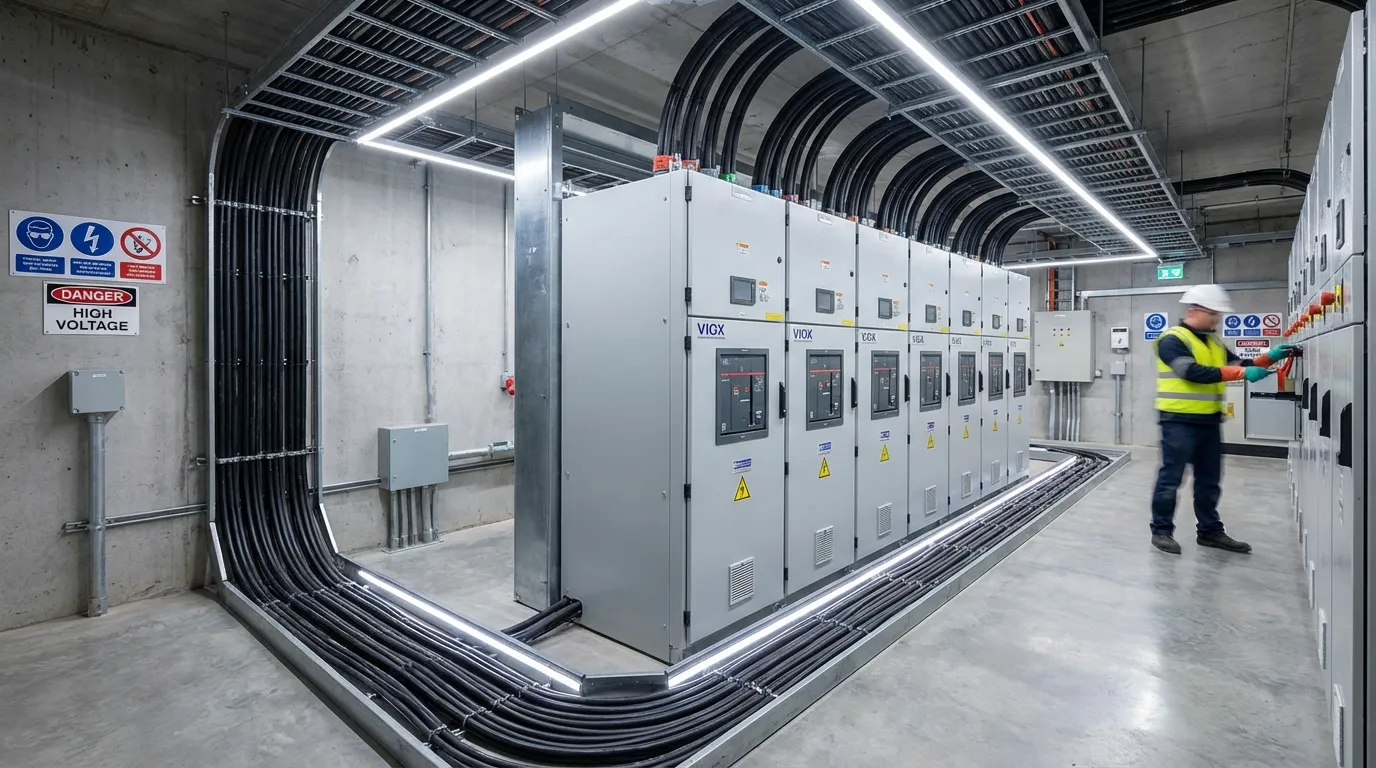
Městská distribuce energie
RMU jsou páteří moderních městských elektrických sítí:
- Podzemní rozvodny: Kompaktní design se vejde do omezeného prostoru
- Výškové budovy: Spolehlivé napájení pro kritickou infrastrukturu
- Nákupní centra: Nepřetržité napájení pro komerční provozy
- Dopravní uzly: Letiště, stanice metra, železniční terminály
Kruhová konfigurace zajišťuje, že údržba na jedné sekci nenaruší provoz v ostatních oblastech – což je kritický požadavek v hustě obydlených městských prostředích.
Průmyslová zařízení
Výrobní a zpracovatelské závody spoléhají na RMU pro:
- Kontinuita procesu: Minimalizuje prostoje ve výrobě
- Ochrana zařízení: Koordinovaná ochrana drahých strojů
- Flexibilní rozšíření: Modulární design umožňuje růst
- Dodržování bezpečnostních předpisů: Splňuje přísné průmyslové bezpečnostní normy
Průmyslové aplikace často vyžadují integraci s systémy řízení motorů a stykače.
Komerční budovy
Kancelářské komplexy, hotely a datová centra těží z:
- Vysoká spolehlivost: Podporuje kritické operace
- Kompaktní půdorys: Maximalizuje využitelný prostor budovy
- Nízká údržba: Snižuje provozní náklady
- Inteligentní integrace: Propojuje se systémy správy budov
Systémy obnovitelné energie
RMU hrají stále větší roli v infrastruktuře udržitelné energie:
- Solární farmy: Propojuje více PV slučovacích boxů do sítě
- Větrné parky: Shromažďuje energii z distribuovaných generátorů
- Systémy pro ukládání baterií: Integruje ukládání energie s distribucí
- Mikro sítě: Umožňuje ostrovní provoz a připojení k síti
Obousměrná schopnost toku energie RMU je ideální pro aplikace obnovitelné energie, kde může energie proudit v obou směrech.
Infrastrukturní projekty
Nasazení kritické infrastruktury zahrnují:
- Čistírny odpadních vod: Zajišťuje nepřetržitý provoz základních služeb
- Nemocnice: Poskytuje spolehlivé napájení pro systémy zajišťující bezpečnost života
- Telekomunikace: Podporuje síťovou infrastrukturu
- Vládní zařízení: Splňuje požadavky na bezpečnost a spolehlivost
Výhody prstencových rozvoden (RMU)
1. Zvýšená spolehlivost
Topologie kruhové sítě poskytuje inherentní redundanci. Statistická analýza ukazuje, že sítě založené na RMU dosahují dostupnosti 99,95 %, ve srovnání s 99,5 % u radiálních sítí – což znamená přibližně o 4 hodiny méně prostojů ročně.
2. Prostorová efektivita
RMU zabírají o 40-60 % méně prostoru než ekvivalentní tradiční rozvodná zařízení. Typická 3sekční RMU měří přibližně 1200 mm (Š) × 1400 mm (H) × 2100 mm (V), ve srovnání s 3000 mm × 2000 mm × 2500 mm u konvenčních rozvoden.
3. Zkrácená doba instalace
Tovární montáž a testování znamenají:
- 50-70% rychlejší instalace ve srovnání s rozvodnými zařízeními montovanými na místě
- Snížené požadavky na práci na místě
- Minimalizované chyby instalace
- Kratší časové osy projektu
4. Nižší požadavky na údržbu
Konstrukce „sealed-for-life“, zejména jednotky izolované plynem SF6, vyžadují minimální údržbu:
- Žádná rutinní manipulace s plynem
- Prodloužené servisní intervaly (typicky 5-10 let)
- Snížení nákladů na údržbu (o 30-40 % nižší než u tradičních rozvoden)
- Vyšší dostupnost zařízení
5. Zvýšená bezpečnost
Více bezpečnostních prvků chrání personál a zařízení:
- Kovové provedení: Zabraňuje náhodnému kontaktu s živými částmi
- Blokovací mechanismy: Zabraňuje nebezpečným operacím
- Konstrukce odolné proti oblouku: K dispozici pro vysoce rizikové aplikace
- Jasná indikace stavu: Vizuální potvrzení polohy spínače
Flexibilita a škálovatelnost
Modulární design umožňuje:
- Snadné rozšíření sítě: Přidávejte sekce bez zásadní rekonfigurace
- Přizpůsobitelné konfigurace: Přizpůsobte pro konkrétní aplikace
- Design připravený na budoucnost: Přizpůsobte se měnícím se požadavkům na zatížení
- Standardizovaná rozhraní: Zjednodušte integraci se stávající infrastrukturou
RMU vs. Tradiční rozvaděče: Srovnání
| Funkce | Bloková rozvodna (RMU) | Tradiční rozvaděče |
|---|---|---|
| Konfigurace | Kompaktní, integrovaná jednotka | Samostatné komponenty, smontované na místě |
| Velikost | Malé rozměry (1-2 m²) | Velké rozměry (4-8 m²) |
| Instalace | Továrně smontováno, rychlá instalace | Vyžaduje montáž na místě, delší instalace |
| Typical Application | Kruhové sítě, městská distribuce | Radiální sítě, velké rozvodny |
| Rozsah napětí | 7,2 kV – 36 kV (střední napětí) | 1 kV – 800 kV (nízké až extra vysoké napětí) |
| Údržba | Nízká (uzavřené jednotky) | Střední až vysoká |
| Flexibilita | Omezené možnosti rozšíření | Vysoce flexibilní, snadno rozšiřitelné |
| Náklady | Střední počáteční náklady | Vyšší počáteční náklady, nižší náklady na jednotku pro velké instalace |
| Spolehlivost | Velmi vysoká (kruhová redundance) | Vysoká (závisí na konfiguraci) |
| Ochrana životního prostředí | Standard IP54 až IP65 | Různé (IP3X až IP54) |
Toto srovnání pomáhá při informovaném rozhodování, podobně jako při výběru mezi RCBO vs RCCB+MCB konfiguracemi.
Kritéria výběru pro kruhové rozvodné skříně
Při specifikaci RMU pro váš projekt zvažte:
1. Elektrické požadavky
- Úroveň napětí: Odpovídá jmenovitému napětí systému
- Aktuální hodnocení: Zvažte současné a budoucí zatížení
- Úroveň zkratu: Zajistěte dostatečnou vypínací schopnost
- Požadavky na ochranu: Nadproud, zemní spojení, směrová ochrana
2. Podmínky prostředí
- Místo instalace: Vnitřní vs. venkovní
- Okolní teplota: Provozní rozsah typicky -25 °C až +40 °C
- Nadmořská výška: Snížení výkonu nutné nad 1000 m
- Úroveň znečištění: Ovlivňuje požadavky na izolaci
- Seismické požadavky: Pro oblasti náchylné k zemětřesení
3. Konfigurace sítě
- Kruhová nebo radiální: Určuje uspořádání spínání
- Počet napáječů: Požadavky na vstup a výstup
- Budoucí rozšíření: Zajištění dalších sekcí
- Potřeby integrace: SCADA, automatizační systémy
4. Normy a shoda
- Regionální normy: IEC, IEEE, GB, atd.
- Požadavky provozovatele sítě: Specifické specifikace provozovatele sítě
- Bezpečnostní certifikace: CE, CCC, UL dle potřeby
- Environmentální předpisy: Omezení SF6 v některých regionech
5. Provozní požadavky
- Spínací frekvence: Ovlivňuje výběr spínacího zařízení
- Dálkové ovládání: Manuální vs. motorizovaný provoz
- Potřeby monitoringu: Základní indikace vs. komplexní monitoring
- Údržba přístup: Prostorové a bezpečnostní aspekty
Instalace a Údržba Osvědčených Postupů
Pokyny pro instalaci
- Příprava staveniště: Zajistěte adekvátní základy a přístup ke kabelům
- Regulace prostředí: Udržujte specifikovanou teplotu a vlhkost během instalace
- Kabelové zakončení: Dodržujte specifikace výrobce pro přípravu kabelů
- Uzemnění: Vytvořte nízko-odporové uzemnění
- Testování: Proveďte uváděcí testy dle IEC 62271-200
Doporučení pro údržbu
Roční kontroly:
- Vizuální kontrola krytu a těsnění
- Ověření indikace a blokování
- Čištění izolátorů a svorek
- Kontrola utažení spojů
Periodické testování (3-5 let):
- Měření izolačního odporu
- Testování odporu kontaktů
- Ověření ochranných relé
- Zkoušky mechanického provozu
Dlouhodobá údržba (10+ let):
- Komplexní elektrické testování
- Analýza plynu SF6 (pokud je použit)
- Výměna komponent dle potřeby
- Upgrade ochranných a řídicích systémů
Správná údržba prodlužuje životnost zařízení a zajišťuje spolehlivý provoz, podobně jako postupy uvedené v naší příručce údržby průmyslových stykačů.
Budoucí trendy v technologii RMU
1. Integrace do Smart Grid
Moderní RMU stále více zahrnují:
- Komunikaci IEC 61850: Standardizovaná automatizace rozvoden
- IoT senzory: Monitorování stavu v reálném čase
- Prediktivní analýza: Predikce poruch založená na AI
- Samoopravné sítě: Automatická izolace a obnova poruch
2. Environmentální udržitelnost
Průmysl přechází k:
- Konstrukcím bez SF6: Pevná izolace a alternativní plyny
- Snížená uhlíková stopa: Energeticky efektivní výroba
- Recyklovatelné materiály: Aspekty konce životnosti
- Prodloužená životnost: Zlepšení trvanlivosti a spolehlivosti
3. Digitalizace
Digitální dvojčata a pokročilý monitoring umožňují:
- Virtuální uvedení do provozu: Zkrácení doby instalace
- Vzdálená diagnostika: Rychlejší odstraňování problémů
- Optimalizace výkonu: Rozhodování na základě dat
- Řízení životního cyklu: Komplexní sledování majetku
4. Evoluce kompaktního designu
Probíhající snahy o miniaturizaci se zaměřují na:
- Vyšší jmenovité proudy: 3150A+ v menších rozměrech
- Integrovaná ochrana: All-in-one řešení
- Modulární architektury: Plug-and-play komponenty
- Standardizovaná rozhraní: Zjednodušená integrace
Často kladené otázky (FAQ)
Q1: Jaký je rozdíl mezi RMU a rozváděčem?
RMU je specifický typ kompaktního, výrobně sestaveného rozváděče určeného pro aplikace kruhových sítí v distribuci středního napětí (7,2 kV–36 kV). Tradiční rozváděč je širší pojem zahrnující různé konfigurace pro různé úrovně napětí a aplikace. RMU jsou obvykle menší, zapouzdřené jednotky optimalizované pro městskou distribuci, zatímco rozváděče lze přizpůsobit pro různé aplikace od nízkého napětí po extra vysoké napětí.
Q2: Jaká je typická životnost RMU?
Při správné údržbě mají moderní RMU životnost 25-30 let. Jednotky izolované plynem SF6 a jednotky s pevnou izolací mají často delší životnost díky své utěsněné konstrukci, která chrání vnitřní komponenty před degradací vlivem prostředí. Skutečná životnost závisí na provozních podmínkách, kvalitě údržby a frekvenci spínání.
Q3: Lze RMU použít ve venkovních instalacích?
Ano, venkovní bloky RMU jsou speciálně navrženy pro venkovní instalaci s krytím IP54 až IP65. Tyto jednotky jsou vybaveny kryty odolnými proti povětrnostním vlivům, UV stabilizovanými materiály a antikorozními povlaky. Měly by však být instalovány se správným utěsněním kabelových vstupů a dostatečným větráním, jak specifikuje výrobce.
Q4: Jaký je typický rozdíl v nákladech mezi RMU a tradičním rozváděčem?
Pro aplikace v distribuci středního napětí stojí RMU obvykle o 15-25 % více na jednotku než ekvivalentní tradiční rozváděč. Nicméně, při zohlednění celkových instalovaných nákladů včetně zkrácení doby instalace, menších stavebních prací a nižších nákladů na údržbu, RMU často poskytují lepší hodnotu životního cyklu, zejména v městských prostředích s omezeným prostorem.
Q5: Jsou RMU izolované plynem SF6 postupně vyřazovány?
Evropská unie nařídila postupné vyřazování SF6 z nových rozváděčů středního napětí do 24 kV s účinností od 1. ledna 2026 na základě nařízení (EU) 2024/573. Mnoho výrobců nyní nabízí alternativy bez SF6 s použitím pevné izolace nebo alternativních plynů s nižším potenciálem globálního oteplování. Nicméně, jednotky SF6 zůstávají dostupné v mnoha regionech a jsou nadále instalovány tam, kde to předpisy umožňují.
Q6: Lze RMU integrovat se systémy obnovitelné energie?
Absolutně. RMU se stále častěji používají v solárních farmách, větrných parcích a systémech pro ukládání energie. Jejich schopnost obousměrného toku energie a flexibilní konfigurace je činí ideálními pro aplikace obnovitelné energie. Moderní RMU mohou být vybaveny specializovanými ochrannými relé pro režimy provozu připojené k síti i ostrovnímu provozu.
Q7: Jaká údržba je vyžadována pro RMU s doživotním utěsněním?
I “bezúdržbové” utěsněné RMU těží z pravidelných vizuálních kontrol, ověřování indikací a blokování a testování ochranných relé. Typické intervaly údržby jsou 5-10 let pro komplexní elektrické testování. Utěsněná konstrukce eliminuje rutinní úkoly, jako je manipulace s plynem, čištění kontaktů a mazání, které jsou vyžadovány u tradičních rozváděčů.
Závěr
Kruhové rozvodny (RMU) představují sofistikovaný vývoj v technologii distribuce energie středního napětí, kombinující kompaktní design, vysokou spolehlivost a provozní flexibilitu v jednom továrně sestaveném balíčku. Jejich schopnost udržovat nepřetržitou dodávku energie prostřednictvím topologie kruhové sítě, spolu s pokročilými funkcemi ochrany a monitorování, je činí nepostradatelnými v moderní elektrické infrastruktuře.
S rostoucí městskou populací a zvyšujícími se očekáváními spolehlivosti napájení budou RMU i nadále hrát ústřední roli v distribučních sítích po celém světě. Probíhající přechod na technologie bez SF6 a integrace se systémy inteligentních sítí staví RMU do popředí udržitelné a inteligentní distribuce energie.
Pro elektroinženýry, správce budov a projektové plánovače je porozumění technologii RMU zásadní pro navrhování odolných a efektivních energetických systémů, které splňují dnešní náročné požadavky a zároveň zůstávají přizpůsobitelné budoucím potřebám.
VIOX Electric nabízí komplexní řadu kruhových rozvoden (RMU) navržených podle mezinárodních standardů, které poskytují spolehlivá řešení pro různé aplikace od městské distribuce po průmyslové provozy. Naše RMU kombinují osvědčenou technologii s inovativními funkcemi, aby poskytovaly výjimečný výkon a hodnotu.
Pro technické specifikace, projektové konzultace nebo pro projednání vašich specifických požadavků kontaktujte inženýrský tým VIOX Electric a prozkoumejte, jak mohou naše řešení RMU vylepšit vaši infrastrukturu distribuce energie.
Související články:
- Co je to lisovaný jistič (MCCB)?
- Kompletní průvodce vzduchovými jističi (ACB)
- Jistič vs. odpojovač
- Co je to automatický přepínač s dvojitým napájením?
- Typy nízkonapěťových rozváděčů: Průvodce GGD, GCK, GCS, MNS, XL21
- Rozvaděč vs. Rozváděč
- Porozumění jmenovitým hodnotám jističů: ICU, ICS, ICW, ICM
- Co je SCCR?