এই পৃষ্ঠায়
ক ১০kA MCB হলো একটি মিনিএচার সার্কিট ব্রেকার যা নির্দিষ্ট পরীক্ষার শর্তে ১০ কিলোঅ্যাম্পিয়ার পর্যন্ত সম্ভাব্য শর্ট-সার্কিট কারেন্ট বিচ্ছিন্ন করার জন্য রেট করা হয়েছে। পণ্যের লেবেলে, ১০ কেএ এটি একটি সাধারণ সংখ্যা মনে হতে পারে। কিন্তু উৎপাদনের ক্ষেত্রে, এটি মোটেও সহজ নয়।.
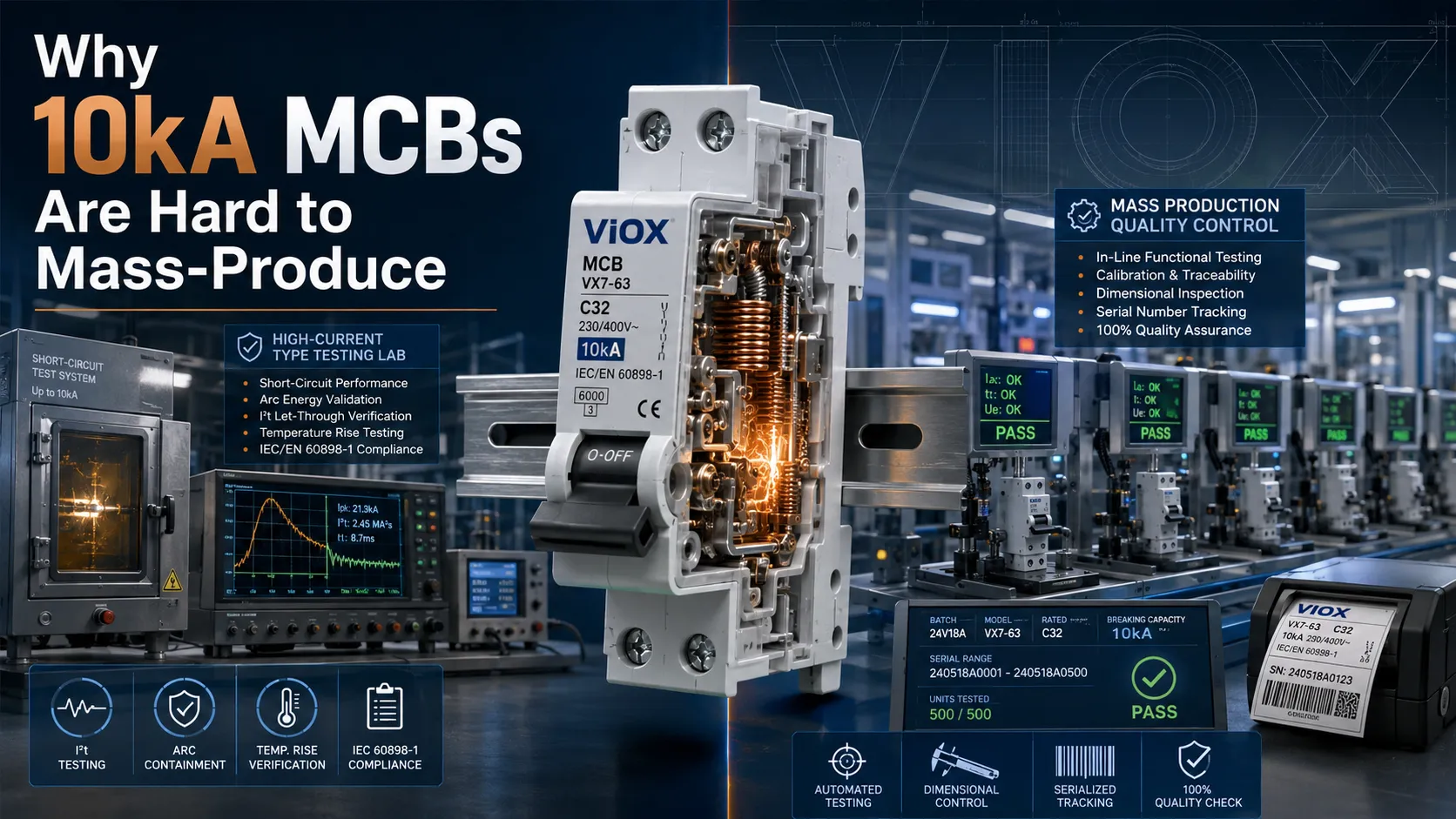
৬কেএ (6kA) এমসিবি-এর তুলনায়, একটি ১০কেএ (10kA) এমসিবি-কে বিচ্ছিন্নকরণের সময় উচ্চতর আর্ক শক্তি, শক্তিশালী ইলেক্ট্রো-ডাইনামিক বল, অধিক কন্টাক্ট স্ট্রেস, আর্ক চেম্বারের ভেতরে উচ্চ গ্যাস চাপ এবং হাউজিং ও ইনসুলেশনের ওপর আরও তীব্র চাপ সামলাতে হয়। সতর্কতার সাথে প্রস্তুতকৃত নমুনার মাধ্যমে টাইপ টেস্ট পাস করা একটি চ্যালেঞ্জ। হাজার হাজার বা লক্ষ লক্ষ ইউনিট একই ইন্টারাপশন মার্জিন বজায় রেখে উৎপাদন করা সম্পূর্ণ ভিন্ন একটি চ্যালেঞ্জ।.
এই নিবন্ধটি ব্যাখ্যা করে কেন প্রকৃত ১০কেএ (10kA) এমসিবি ব্যাপকভাবে উৎপাদন করা কঠিন, কেন টাইপ-টেস্ট করা নমুনা সাধারণ উৎপাদনের থেকে আলাদা হতে পারে এবং ক্রেতারা কীভাবে যাচাই করতে পারেন যে ১০কেএ (10kA) রেটিংটি বিশ্বাসযোগ্য কি না।.
সরাসরি রেটিং তুলনার জন্য, ভিআইওএক্স (VIOX)-এর নির্দেশিকা দেখুন এমসিবি ব্রেকিং ক্যাপাসিটি: ৬কেএ (6kA) বনাম ১০কেএ (10kA). । এই নিবন্ধটি উৎপাদন, টাইপ টেস্টিং এবং রেটিং যাচাইকরণের ওপর আলোকপাত করে।.
দ্রুত উত্তর
একটি ১০কেএ (10kA) এমসিবি (MCB) একটি ৬কেএ (6kA) এমসিবির তুলনায় গণহারে উৎপাদন করা কঠিন, কারণ শর্ট-সার্কিট ইন্টারাপশন বা বিদ্যুৎ বিচ্ছিন্ন হওয়ার ঘটনাটি অনেক বেশি তীব্র। একই ইন্টারাপশন সময় এবং সার্কিটের অবস্থার জন্য, তাপীয় চাপ (thermal stress) সম্পর্কিত হয় I²t, তাই ১০কেএ (10kA) প্রায় (১০/৬)² ≈ ২.৮ গুণ বেশি কারেন্ট-স্কয়ারড স্ট্রেস তৈরি করতে পারে ৬কেএ (6kA)-এর তুলনায়। ইলেকট্রোডাইনামিক বলও কারেন্টের বর্গের সাথে বৃদ্ধি পায়।.
এই উচ্চতর চাপ নিম্নলিখিত বিষয়গুলোকে প্রভাবিত করে:
- কন্টাক্ট ওয়েল্ডিং রেজিস্ট্যান্স বা সংযোগস্থলের ঝালাই প্রতিরোধ ক্ষমতা
- আর্ক শ্যুট ডিজাইন
- স্প্লিটার প্লেটের সামঞ্জস্যতা
- ম্যাগনেটিক ট্রিপ আচরণ
- মেকানিজম খোলার গতি
- হাউজিংয়ের চাপ এবং গ্যাস নির্গমন
- ইন্টারাপশনের পর ইনসুলেশন পুনরুদ্ধার
- ব্যাচ-টু-ব্যাচ উৎপাদনের সহনশীলতা (টলারেন্স)
একটি টাইপ-টেস্টেড নমুনা উত্তীর্ণ হতে পারে কারণ এতে বাছাইকৃত যন্ত্রাংশ, সতর্ক অ্যাসেম্বলি এবং ব্যক্তিগত অ্যাডজাস্টমেন্ট ব্যবহার করা হয়। কিন্তু ব্যাপক উৎপাদনের ক্ষেত্রে সাধারণ কম্পোনেন্ট টলারেন্স, প্রোডাকশন-লাইন অ্যাসেম্বলি, খরচের সীমাবদ্ধতা এবং ব্যাচ পরিবর্তনের মধ্যেও একই ফলাফল বজায় রাখা প্রয়োজন।.
এমসিবি (MCB)-তে ১০কেএ (10kA) বলতে কী বোঝায়?
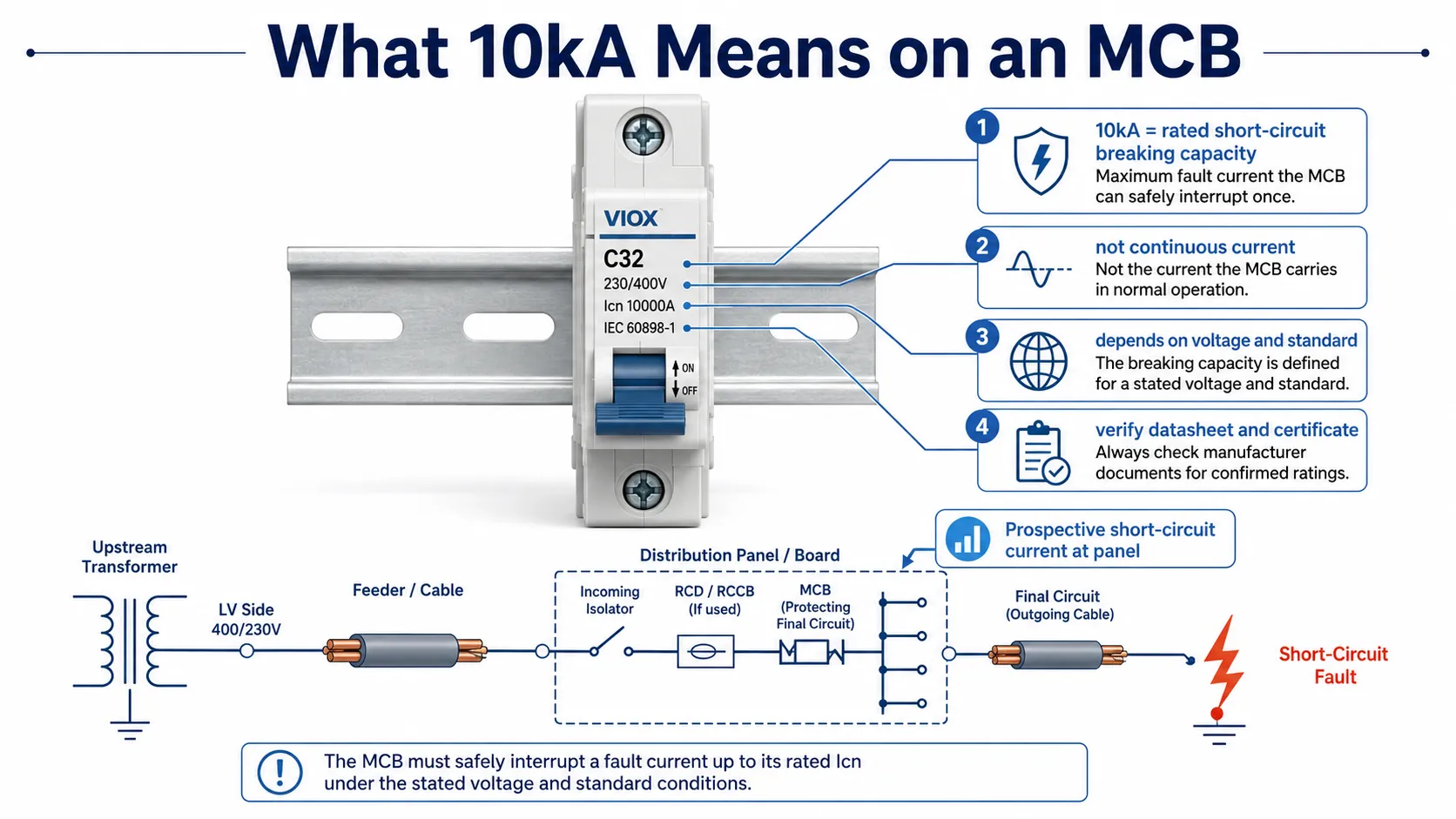
দ্য ১০ কেএ মার্কিং বলতে বোঝায় শর্ট-সার্কিট ব্রেকিং ক্যাপাসিটি, যাকে ইন্টারাপ্টিং ক্যাপাসিটিও বলা হয়। এটি প্রাসঙ্গিক মান এবং নির্দিষ্ট পরীক্ষার শর্তাবলীর অধীনে এমসিবি (MCB) যে সর্বোচ্চ সম্ভাব্য শর্ট-সার্কিট কারেন্ট বিচ্ছিন্ন করতে সক্ষম, তা নির্দেশ করে।.
এর মানে এই নয় যে:
- ব্রেকারটি একটানা ১০ কিলোঅ্যাম্পিয়ার (10kA) কারেন্ট বহন করে
- ব্রেকারটি শুধুমাত্র ১০ কিলোঅ্যাম্পিয়ারে (10kA) ট্রিপ করে
- প্রতিটি ১০ কিলোঅ্যাম্পিয়ার (10kA) ব্রেকার প্রতিটি প্যানেলের জন্য উপযুক্ত
- প্রতিটি স্ট্যান্ডার্ড বা মানের অধীনে ব্রেকারটির একই অর্থ থাকে
- শুধুমাত্র একটি সিই (CE) মার্ক ১০কেএ (10kA) ইন্টারাপশন পারফরম্যান্স প্রমাণ করে
পরিভাষাটি স্ট্যান্ডার্ডের উপর নির্ভর করে:
| Standard context | সাধারণ শর্ট-সার্কিট পরিভাষা | ক্রেতাদের সাধারণ প্রশ্ন |
|---|---|---|
| IEC 60898-1 গৃহস্থালি এবং অনুরূপ এমসিবি (MCB) | Icn, rated short-circuit capacity | এই এমসিবি (MCB) কি আইইসি (IEC) স্টাইলের ইনস্টলেশনের অধীনে ফাইনাল সার্কিট এবং ডিস্ট্রিবিউশন বোর্ডের জন্য উপযুক্ত? |
| আইইসি 60947-2 লো-ভোল্টেজ সার্কিট ব্রেকার | Icu এবং Ics | শিল্প বা সুইচগিয়ার অ্যাপ্লিকেশনের জন্য আল্টিমেট এবং সার্ভিস ব্রেকিং ক্যাপাসিটি কত? |
| ইউএল ৪৮৯ উত্তর আমেরিকান ব্রাঞ্চ-সার্কিট ব্রেকার | বাধা দেওয়ার রেটিং | ব্রেকারটি কি তালিকাভুক্ত এবং উত্তর আমেরিকার উদ্দিষ্ট অ্যাপ্লিকেশনের জন্য উপযুক্ত? |
মানদণ্ডের গভীরতর পার্থক্যের জন্য দেখুন এমসিবি (MCB)-এর জন্য আইইসি ৬০৮৯৮-১ বনাম আইইসি ৬০৯৪৭-২.
কেন ১০কেএ (10kA) এসি এমসিবি, ৬কেএ (6kA) মডেলের চেয়ে বেশি জটিল
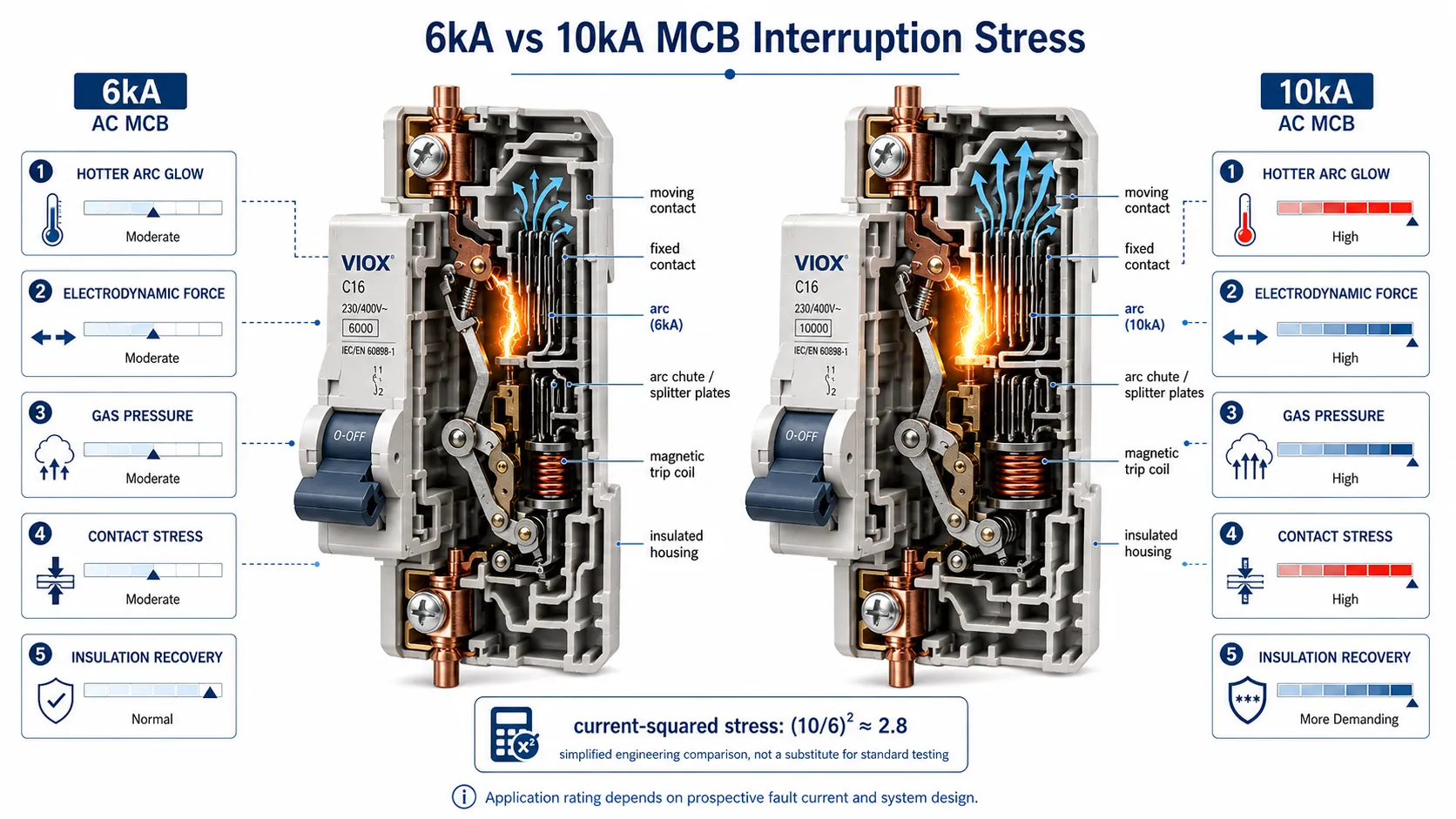
১০কেএ রেটিং মানে কেবল ৬কেএ থেকে লেবেলের উন্নয়ন নয়। ব্রেকারটিকে অবশ্যই আরও শক্তিশালী শর্ট-সার্কিট ঘটনা সহ্য করতে এবং তা বিচ্ছিন্ন করতে সক্ষম হতে হবে।.
উচ্চতর আর্ক এনার্জি
যখন একটি এমসিবি (MCB) শর্ট-সার্কিট কারেন্টের কারণে ট্রিপ করে, তখন কন্টাক্টগুলো আলাদা হয়ে যায় এবং একটি আর্ক তৈরি হয়। ব্রেকারের ক্ষতি হওয়া বা পুনরায় আর্ক তৈরি হওয়া রোধ করতে এই আর্কটিকে অবশ্যই আর্ক শুটের ভেতরে পাঠিয়ে স্প্লিটার প্লেটের মাধ্যমে বিভক্ত করে ঠান্ডা করে নিভিয়ে ফেলতে হয়।.
উচ্চ ফল্ট কারেন্টের ক্ষেত্রে, আর্কটি অনেক বেশি উত্তপ্ত এবং শক্তিশালী হয়। আর্ক শুটকে অবশ্যই ইনসুলেশন ক্ষমতা না হারিয়ে এই অতিরিক্ত তাপ এবং গ্যাস সহ্য করার সক্ষমতা রাখতে হয়।.
শক্তিশালী ইলেকট্রোডাইনামিক ফোর্স
শর্ট-সার্কিট কারেন্ট ব্রেকারের ভেতরে যান্ত্রিক বল তৈরি করে। সহজ কথায়, এই বল কারেন্টের বর্গের সমানুপাতিক হারে বৃদ্ধি পায়।.
এর মানে হলো, একটি ১০ কেএ (10kA) ইভেন্ট ৬ কেএ (6kA) ইভেন্টের তুলনায় অনেক বেশি চাপ সৃষ্টি করতে পারে:
(10 kA / 6 kA)² ≈ 2.78এই সরলীকৃত অনুপাতটি স্ট্যান্ডার্ড টেস্টিংয়ের বিকল্প নয়, তবে এটি ব্যাখ্যা করে কেন ৬ কেএ থেকে ১০ কেএ-তে উন্নীত হওয়া ডিজাইনের ক্ষেত্রে একটি বড় পরিবর্তন।.
কন্টাক্ট ওয়েল্ডিংয়ের ঝুঁকি
কন্টাক্টগুলোকে অবশ্যই কম রোধের সাথে স্বাভাবিক লোড কারেন্ট বহন করতে হবে, তবে ত্রুটির সময় নির্ভরযোগ্যভাবে বিচ্ছিন্নও হতে হবে। উচ্চ শর্ট-সার্কিট কারেন্টের অধীনে, কন্টাক্ট ইন্টারফেস দ্রুত উত্তপ্ত হতে পারে এবং ঝালাই (welding) হওয়ার প্রবণতা দেখাতে পারে।.
একটি ১০কেএ (10kA) এমসিবি-র জন্য এমন কন্টাক্ট জ্যামিতি, কন্টাক্ট প্রেশার, উপাদানের নির্বাচন এবং খোলার গতিবিদ্যা প্রয়োজন যা ঝালাই হওয়ার ঝুঁকি কমায় এবং একই সাথে স্বাভাবিক তাপমাত্রা বৃদ্ধিকে নিয়ন্ত্রণে রাখে।.
আর্ক শ্যুটের জন্য কঠোর প্রয়োজনীয়তা
আর্ক শ্যুট কেবল ধাতব প্লেটের একটি সেট নয়। এর জ্যামিতি নির্ধারণ করে যে আর্ক কীভাবে চলাচল করবে, বিভক্ত হবে, ঠান্ডা হবে এবং নিভে যাবে।.
১০কেএ (10kA) পারফরম্যান্সের জন্য, প্রস্তুতকারককে অবশ্যই নিয়ন্ত্রণ করতে হবে:
- স্প্লিটার প্লেটের উপাদান
- প্লেটের পুরুত্ব
- প্লেটের বিন্যাস
- আর্ক রানারের অবস্থান
- চেম্বারের গভীরতা
- গ্যাস নির্গমনের পথ
- ইনসুলেশন ব্যারিয়ার
- অ্যাসেম্বলি টলারেন্স
আর্ক শুটের জ্যামিতিতে সামান্য পরিবর্তন ইন্টারাপশন বা বিদ্যুৎ বিচ্ছিন্ন করার আচরণ পরিবর্তন করতে পারে।.
হাউজিং এবং এক্সহস্ট ডিজাইন
ইন্টারাপশনের সময়, আর্ক উত্তপ্ত আয়নিত গ্যাস তৈরি করে। ব্রেকার হাউজিংকে অবশ্যই ফাটল, কার্বনাইজেশন বা ফেজ-টু-ফেজ ফ্ল্যাশওভার ছাড়াই চাপ, তাপ এবং দূষণ সহ্য করতে হবে।.
এর জন্য নিম্নলিখিত বিষয়গুলোতে মনোযোগ দেওয়া প্রয়োজন:
- ফ্লেম-রিটার্ড্যান্ট বা অগ্নি-প্রতিরোধী উপাদান
- ইন্টারনাল রিবস বা অভ্যন্তরীণ খাঁজ
- গ্যাস এক্সহস্ট স্লট বা গ্যাস নির্গমনের পথ
- পোল-টু-পোল ইনসুলেশন বা মেরু থেকে মেরুর অন্তরণ
- টার্মিনাল শিল্ডিং বা টার্মিনাল সুরক্ষা আবরণ
- ট্র্যাকিং রেজিস্ট্যান্স বা ট্র্যাকিং প্রতিরোধ ক্ষমতা
- পোস্ট-আর্ক ডাই-ইলেকট্রিক রিকভারি
দ্রুত এবং আরও সামঞ্জস্যপূর্ণ মেকানিজম
ব্রেকার মেকানিজমকে অবশ্যই আর্ক বা বৈদ্যুতিক স্ফুলিঙ্গ নির্বাপনের জন্য যথেষ্ট দ্রুত এবং সামঞ্জস্যপূর্ণভাবে খুলতে হবে। যদি ল্যাচ, স্প্রিং, মুভিং কন্টাক্ট, রিভেট বা থার্মাল-ম্যাগনেটিক অংশগুলোর মধ্যে খুব বেশি তারতম্য থাকে, তবে একটি প্রোডাকশন ব্যাচ নির্ভরযোগ্যভাবে কাজ করলেও অন্য ব্যাচটি ব্যর্থতার ঝুঁকির কাছাকাছি থাকতে পারে।.
টাইপ-টেস্টেড নমুনা বনাম গণ উৎপাদন
টাইপ টেস্টিং প্রমাণ করে যে নির্বাচিত নমুনাগুলো নির্দিষ্ট শর্তের অধীনে পরীক্ষার প্রয়োজনীয়তা পূরণ করতে পারে। এটি স্বয়ংক্রিয়ভাবে প্রমাণ করে না যে প্রতিটি উৎপাদন ইউনিটের একই মার্জিন থাকবে, যদি না কারখানার উৎপাদন নিয়ন্ত্রণ শক্তিশালী হয়।.
| ফ্যাক্টর | টাইপ-টেস্টেড নমুনা | গণ উৎপাদন |
|---|---|---|
| উপাদান | সাবধানে নির্বাচিত যন্ত্রাংশ ব্যবহার করা হতে পারে | নিয়মিত সরবরাহকারীদের কাছ থেকে সাধারণ সহনশীলতা সীমা (tolerance range) ব্যবহার করে |
| সমাবেশ | প্রায়শই অতিরিক্ত মনোযোগ দিয়ে সংযোজন করা হয় | সময় এবং খরচের সীমাবদ্ধতার মধ্যে প্রোডাকশন লাইনে তৈরি করা হয় |
| ক্রমাঙ্কন | ব্যক্তিগত সমন্বয় গ্রহণ করতে পারে | স্থিতিশীল প্রসেস কন্ট্রোল এবং স্যাম্পলিংয়ের উপর নির্ভর করতে হবে |
| আর্ক শ্যুট ফিট | নিবিড়ভাবে পরীক্ষা করা যেতে পারে | মোল্ড, স্ট্যাম্পিং এবং অ্যাসেম্বলি জুড়ে সামঞ্জস্যপূর্ণ থাকতে হবে |
| কন্টাক্টের গুণমান | সম্ভাব্য সর্বোত্তম কন্টাক্ট অ্যালাইনমেন্ট | ব্যাচগুলোতে কন্টাক্ট প্রেশার এবং অ্যালাইনমেন্ট স্থিতিশীল থাকতে হবে |
| খরচের লক্ষ্যমাত্রা | ভ্যালিডেশনের সময় কম চাপ | স্বাভাবিক উৎপাদনে প্রবল চাপ |
| ব্যর্থতা সহনশীলতা | পরীক্ষার ব্যর্থতার পর পুনরাবৃত্তি করা সম্ভব | ব্যাচ ব্যর্থতা স্ক্র্যাপ, ডেলিভারিতে বিলম্ব এবং সুনাম নষ্ট করে |
এই কারণেই একজন সচেতন ক্রেতার শুধু এটিই জিজ্ঞাসা করা উচিত নয় যে, “আপনার কি সার্টিফিকেট আছে?” বরং আরও ভালো প্রশ্ন হলো:
সার্টিফাইড মডেলটি কি কেনা মডেলের সাথে মেলে এবং কারখানাটি কি পরীক্ষিত ডিজাইনের সাথে সামঞ্জস্য রেখে উৎপাদন বজায় রাখতে পারে?
কেন কিছু ১০কেএ (10kA) এমসিবি (MCB) সার্টিফিকেশন পাস করলেও ব্যাচ টেস্টিংয়ে ব্যর্থ হয়
টাইপ-টেস্টেড ডিজাইন ভর উৎপাদনে (mass production) খারাপ পারফর্ম করার বেশ কিছু কারণ রয়েছে।.
উপাদানের পরিবর্তন (Material Substitution)
একটি টাইপ-টেস্টেড নমুনায় হয়তো এক গ্রেডের প্লাস্টিক, কন্টাক্ট ম্যাটেরিয়াল, স্প্রিং স্টিল বা আর্ক প্লেট ব্যবহার করা হয়। পরবর্তীতে যদি যথাযথ পুনঃমূল্যায়ন ছাড়াই সরবরাহকারী বা উপাদানের গ্রেড পরিবর্তন করা হয়, তবে ব্রেকারটি দেখতে একই রকম মনে হলেও এর ইন্টারাপশন বা বিদ্যুৎ বিচ্ছিন্ন করার ক্ষমতা ভিন্ন হতে পারে।.
টুলিংয়ের ক্ষয় (Tooling Wear)
ইনজেকশন মোল্ড, স্ট্যাম্পিং টুল এবং অ্যাসেম্বলি ফিক্সচার সময়ের সাথে সাথে ক্ষয়ে যায়। প্লাস্টিকের রিব, আর্ক শ্যুট স্লট, কন্টাক্টের আকৃতি বা টার্মিনাল অ্যালাইনমেন্টে সামান্য পরিবর্তন শর্ট-সার্কিট আচরণের ওপর প্রভাব ফেলতে পারে।.
কন্টাক্ট প্রেসারের তারতম্য (Contact Pressure Variation)
কন্টাক্ট ফোর্স বা সংযোগের চাপ অত্যন্ত গুরুত্বপূর্ণ। চাপ খুব কম হলে রোধ (resistance) এবং তাপ বৃদ্ধি পায়। আবার চাপ খুব বেশি হলে বা সঠিকভাবে নিয়ন্ত্রিত না হলে তা ব্রেকার খোলার আচরণ এবং মেকানিজমের টাইমিংয়ের ওপর প্রভাব ফেলতে পারে।.
আর্ক চ্যুট অ্যাসেম্বলির তারতম্য
আর্ক স্প্লিটার প্লেটগুলো সঠিকভাবে স্থাপন করতে হবে। ভুল বিন্যাস, প্লেট অনুপস্থিত থাকা, বার (burr) বা অসামঞ্জস্যপূর্ণ ব্যবধানের কারণে আর্ক চ্যুটে প্রবেশ এবং সঠিকভাবে বিভক্ত হওয়ার প্রক্রিয়া ব্যাহত হতে পারে।.
ম্যাগনেটিক ট্রিপ ক্যালিব্রেশনের বিচ্যুতি
শর্ট-সার্কিট কারেন্টের ক্ষেত্রে ম্যাগনেটিক ট্রিপকে দ্রুত সাড়া দিতে হবে। কয়েলের সহনশীলতা, আর্মেচার গ্যাপ, স্প্রিং ফোর্স এবং অ্যাসেম্বলির অবস্থান—সবই গুরুত্বপূর্ণ। ক্যালিব্রেশন অস্থিতিশীল হলে বিদ্যুৎ বিচ্ছিন্ন হতে দেরি হতে পারে।.
পরীক্ষার পরবর্তী খরচ কমানোর পরিবর্তনসমূহ
সবচেয়ে বিপজ্জনক পরিবর্তন হলো নীরবে খরচ কমানো: সার্টিফিকেশনের পর কন্টাক্টের পুরুত্ব কমানো, সস্তা প্লাস্টিক ব্যবহার, দুর্বল স্প্রিং, আর্ক প্লেট সরলীকরণ বা ভিন্ন রিভেটের ব্যবহার। যদি এই পরিবর্তনগুলো পুনরায় পরীক্ষা না করা হয়, তবে রেটিং প্রশ্নবিদ্ধ হয়ে পড়ে।.
একটি প্রকৃত ১০কেএ (10kA) এমসিবি (MCB)-এর পেছনের মূল উৎপাদন নিয়ন্ত্রণ ব্যবস্থা
নির্ভরযোগ্য ১০কেএ (10kA) উৎপাদনের জন্য কেবল একটি সফল পরীক্ষা যথেষ্ট নয়। এর জন্য প্রয়োজন কঠোর উৎপাদন প্রক্রিয়া।.
| ম্যানুফ্যাকচারিং কন্ট্রোল | কেন এটা গুরুত্বপূর্ণ |
|---|---|
| আর্ক শ্যুটের সামঞ্জস্য | আর্ক স্প্লিটিং এবং কুলিং প্লেটের জ্যামিতি ও অবস্থানের উপর নির্ভর করে |
| কন্টাক্ট ম্যাটেরিয়াল এবং পুরুত্ব | ওয়েল্ডিং রেজিস্ট্যান্স, ইরোশন এবং তাপমাত্রা বৃদ্ধিকে প্রভাবিত করে |
| স্প্রিং ফোর্স কন্ট্রোল | ওপেনিং স্পিড এবং কন্টাক্ট প্রেশারকে প্রভাবিত করে |
| ম্যাগনেটিক ট্রিপ ক্যালিব্রেশন | শর্ট-সার্কিট রেসপন্স টাইমিং নির্ধারণ করে |
| হাউজিং উপাদানের নিয়ন্ত্রণ | শিখা প্রতিরোধ ক্ষমতা, ট্র্যাকিং প্রতিরোধ ক্ষমতা এবং চাপ সহনশীলতাকে প্রভাবিত করে |
| রিভেট এবং অ্যাসেম্বলির নির্ভুলতা | মেকানিজমের ঘর্ষণ এবং পোল অ্যালাইনমেন্টকে প্রভাবিত করে |
| টার্মিনাল তাপমাত্রা বৃদ্ধি পরীক্ষা | ডিজাইন পরিবর্তনের পর অবিচ্ছিন্ন-কারেন্ট কর্মক্ষমতা নিশ্চিত করে |
| শর্ট-সার্কিট স্যাম্পলিং বা নজরদারি পরীক্ষা | নিশ্চিত করে যে উৎপাদন পরীক্ষিত ডিজাইনের কাছাকাছি রয়েছে |
| সার্টিফিকেট-মডেল নিয়ন্ত্রণ | এক মডেলের সার্টিফিকেট অন্য পণ্যের সাথে মিশে যাওয়া প্রতিরোধ করে |
এখানেই প্রতিষ্ঠিত ফ্যাক্টরি সিস্টেমের গুরুত্ব বোঝা যায়। একটি ১০কেএ (10kA) এমসিবি (MCB) শুধুমাত্র একটি ডিজাইনের সমস্যা নয়। এটি উৎপাদন ধারাবাহিকতার একটি সমস্যা।.
আর্ক এক্সটিংকশন (Arc Extinction): এমসিবি-র ভেতরে আসলে কী ঘটে
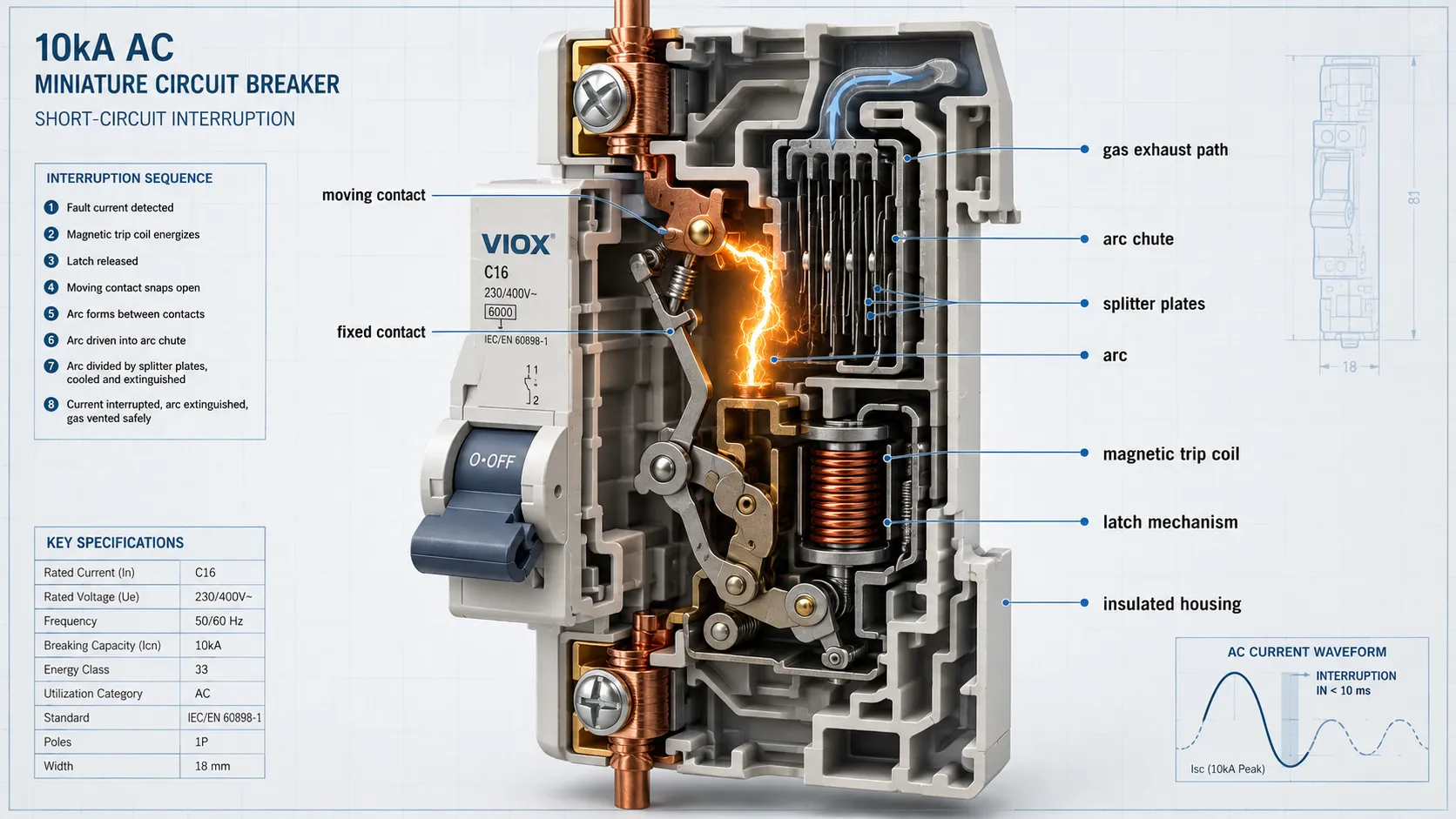
শর্ট সার্কিটের সময়, এমসিবি-কে খুব অল্প সময়ের মধ্যে ওপেন হতে হয় এবং আর্ক নিভিয়ে ফেলতে হয়। একটি সরলীকৃত ক্রম নিচে দেওয়া হলো:
- শর্ট-সার্কিট কারেন্ট বৃদ্ধি পায়।.
- ম্যাগনেটিক ট্রিপ মেকানিজম ল্যাচটিকে মুক্ত করে।.
- মুভিং কন্টাক্ট ফিক্সড কন্টাক্ট থেকে আলাদা হয়ে যায়।.
- কন্টাক্টগুলোর মধ্যে আর্ক তৈরি হয়।.
- আর্ক রানার এবং ম্যাগনেটিক ফোর্স আর্কটিকে আর্ক শুটের দিকে ঠেলে দেয়।.
- স্প্লিটার প্লেটগুলো আর্কটিকে ছোট ছোট অংশে বিভক্ত করে।.
- আর্কটি ঠান্ডা হয় এবং ডি-আয়োনাইজড হয়।.
- কন্টাক্ট গ্যাপটি ইনসুলেশন শক্তি পুনরুদ্ধার করে।.
- ইন্টারাপশনের পর ব্রেকারটি যান্ত্রিক এবং বৈদ্যুতিকভাবে নিরাপদ থাকে।.
যদি এই ক্রমের কোনো অংশ ব্যর্থ হয়, তবে এমসিবি (MCB) বিস্ফোরিত হতে পারে, ঝালাই হয়ে যেতে পারে, পুনরায় আর্ক তৈরি করতে পারে, অভ্যন্তরীণভাবে কার্বনাইজড হতে পারে অথবা ইন্টারাপশনের পর ডাই-ইলেকট্রিক রিকভারিতে ব্যর্থ হতে পারে।.
ব্রেকিং ক্যাপাসিটি যত বেশি হয়, দুর্বল আর্ক চেম্বার ডিজাইনের জন্য মার্জিন তত সংকীর্ণ হয়ে যায়।.
১০কেএ (10kA) বনাম ৬কেএ (6kA): কখন ১০কেএ (10kA) সত্যিই প্রয়োজনীয়?
প্রতিটি ইনস্টলেশনে ১০কেএ (10kA) এমসিবি (MCB)-এর প্রয়োজন নেই। সঠিক রেটিং নির্ভর করে ইনস্টলেশন পয়েন্টে সম্ভাব্য শর্ট-সার্কিট কারেন্ট এবং প্রযোজ্য স্ট্যান্ডার্ডের ওপর।.
| ইনস্টলেশন প্রেক্ষাপট | ৬কেএ (6kA) যথেষ্ট হতে পারে যখন | ১০কেএ (10kA) প্রয়োজন হতে পারে যখন |
|---|---|---|
| আবাসিক ফাইনাল সার্কিট | বোর্ডে ফল্ট লেভেল কম থাকে এবং স্থানীয় কোড ৬কেএ (6kA) ব্যবহারের অনুমতি দেয় | সার্ভিসটি ট্রান্সফরমারের কাছাকাছি অথবা ফল্ট লেভেল বেশি |
| Commercial panels | ক্যালকুলেটেড শর্ট-সার্কিট কারেন্ট ৬কেএ (6kA) রেটিংয়ের মধ্যে রয়েছে | ট্রান্সফরমারের ক্ষমতা বেশি হলে বা ক্যাবলের ইম্পিডেন্স কম হলে ফল্ট কারেন্ট বৃদ্ধি পায় |
| শিল্প নিয়ন্ত্রণ প্যানেল | আপস্ট্রিম প্রোটেকশন বিদ্যমান ফল্ট কারেন্টকে সীমাবদ্ধ করে | প্যানেল এসসিসিআর (SCCR) বা প্রজেক্ট স্পেসিফিকেশনের জন্য উচ্চতর ইন্টারাপ্টিং ক্যাপাসিটি প্রয়োজন |
| বিতরণ বোর্ড | ফিডার ইম্পিডেন্স সম্ভাব্য কারেন্টকে হ্রাস করে | মেইন বোর্ডটি সাপ্লাই ট্রান্সফরমারের কাছাকাছি অবস্থিত |
| OEM equipment | টেস্ট করা অ্যাসেম্বলি রেটিং আপস্ট্রিম প্রোটেকশনের সাথে সমন্বয় করা হয়েছে | রপ্তানি বাজার বা প্রকল্পের স্পেসিফিকেশনের জন্য 10kA ডিভাইসের প্রয়োজন হয় |
সঠিক পদ্ধতি হলো অনুমান না করা। এর পরিবর্তে সম্ভাব্য শর্ট-সার্কিট কারেন্ট গণনা বা যাচাই করা এবং উপযুক্ত ব্রেকিং ক্যাপাসিটি সম্পন্ন ব্রেকার নির্বাচন করা।.
নির্বাচনের লজিক বা যুক্তির জন্য দেখুন সঠিক মিনিয়াচার সার্কিট ব্রেকার কিভাবে নির্বাচন করবেন.
ক্রেতারা কীভাবে একটি আসল 10kA MCB যাচাই করতে পারেন
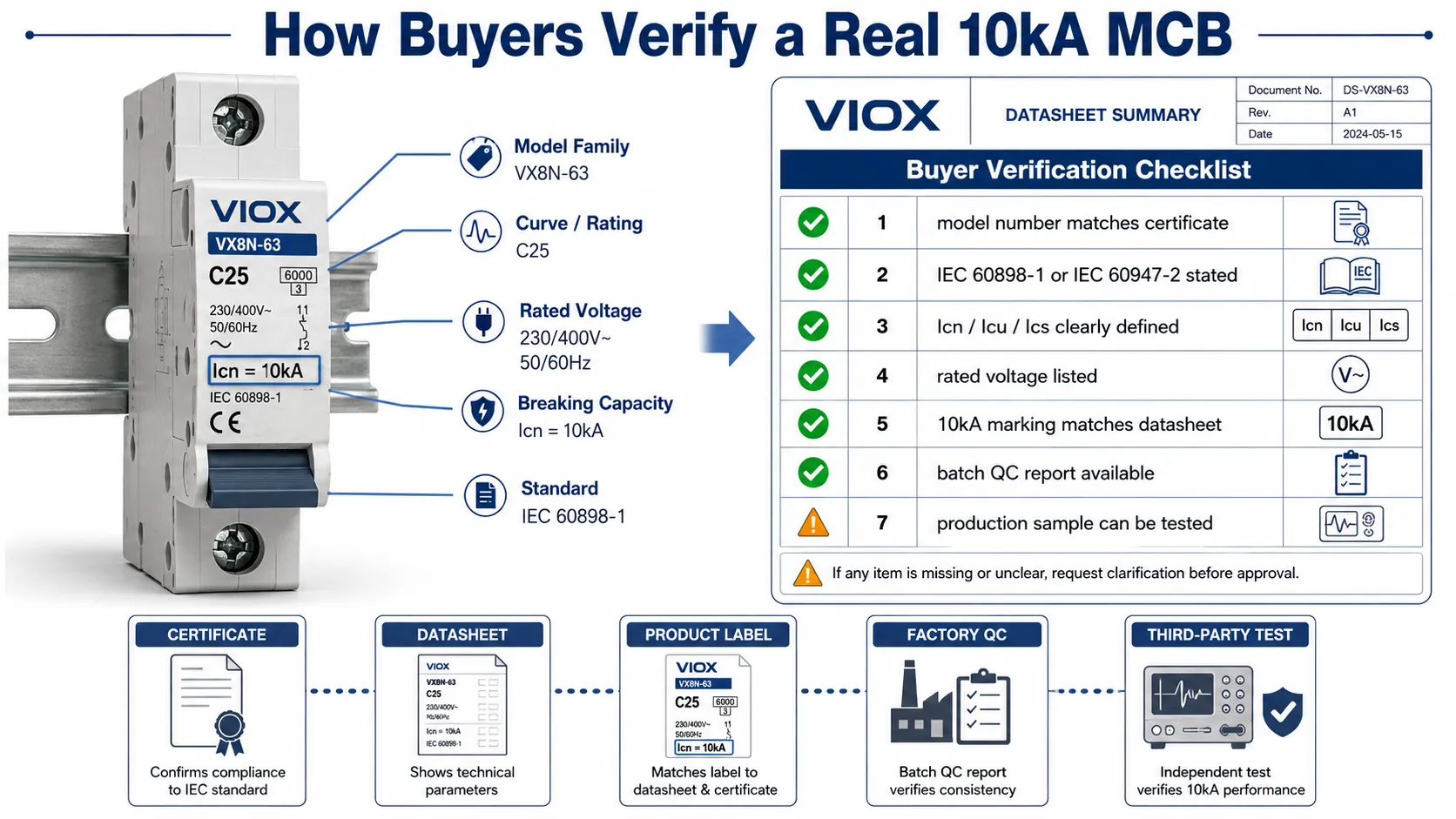
10kA দাবির ওপর আস্থা রাখার আগে এই চেকলিস্টটি ব্যবহার করুন।.
| যাচাইকরণের বিষয় | কি পরীক্ষা করতে হবে | কেন এটা গুরুত্বপূর্ণ |
|---|---|---|
| সার্টিফিকেটের মডেল নম্বর | সার্টিফিকেটটি ক্রয়কৃত সঠিক মডেলের সাথে মিলে যায় | সার্টিফিকেটের অপব্যবহার রোধ করে |
| স্ট্যান্ডার্ড তালিকাভুক্ত | IEC 60898-1, IEC 60947-2, UL 489, অথবা অন্যান্য সঠিক স্ট্যান্ডার্ড | রেটিং কনটেক্সট নিশ্চিত করে |
| Breaking capacity term | Icn, Icu, Ics, অথবা ইন্টারাপ্টিং রেটিং স্পষ্ট | স্ট্যান্ডার্ডের ভাষা মিশ্রণ এড়িয়ে চলে |
| হারের ভোল্টেজ | 230/400V, 240/415V, 120/240V, অথবা প্রযোজ্য সিস্টেম ভোল্টেজ | ব্রেকিং ক্যাপাসিটি ভোল্টেজের উপর নির্ভর করে |
| পণ্যের মার্কিং | ডিভাইসে ১০কেএ (10kA) মার্কিং দৃশ্যমান এবং তা ডেটাশিটের সাথে সামঞ্জস্যপূর্ণ | লেবেলের সামঞ্জস্যতা নিশ্চিত করা হয়েছে |
| অভ্যন্তরীণ গঠন | ব্যাখ্যা ছাড়া নিম্ন-রেটেড মডেলের সাথে হুবহু একই নয় | ১০কেএ (10kA) রেটিংয়ের জন্য সাধারণত শক্তিশালী আর্ক কন্ট্রোল এবং উন্নত উপাদানের প্রয়োজন হয় |
| ফ্যাক্টরি কিউসি (QC) প্রক্রিয়া | সরবরাহকারী রুটিন টেস্টিং এবং ব্যাচ কন্ট্রোল সম্পর্কে ব্যাখ্যা দিতে সক্ষম | উৎপাদনের ধারাবাহিকতা প্রদর্শন করে |
| নমুনার উৎস | নমুনাগুলো শুধুমাত্র হাতে বাছাই করা ইউনিট থেকে নয়, বরং সাধারণ উৎপাদন থেকে নেওয়া হয় | শুধুমাত্র টাইপ-টেস্টের ওপর নির্ভরতার ঝুঁকি হ্রাস করে |
| তৃতীয় পক্ষের যাচাইকরণ | প্রয়োজনে উৎপাদনের নমুনাগুলো স্বাধীনভাবে পরীক্ষা করা যেতে পারে | উচ্চ-ঝুঁকিপূর্ণ সংগ্রহের জন্য উপযোগী |
| সরবরাহকারীর ব্যাখ্যা | সরবরাহকারী আর্ক চেম্বার, কন্টাক্ট এবং হাউজিংয়ের পার্থক্য ব্যাখ্যা করতে পারেন | এটি প্রকৃত প্রকৌশলগত জ্ঞানের ইঙ্গিত দেয় |
পণ্য এবং সরবরাহকারী যোগ্যতার জন্য, VIOX-এর MCB প্রস্তুতকারক পেজ এবং শীর্ষ ১০টি এমসিবি প্রস্তুতকারক আর্টিকেল সোর্সিং সংক্রান্ত সিদ্ধান্তের ক্ষেত্রে সহায়তা করে।.
১০কেএ (10kA) রেটিং অতিরঞ্জিত হওয়ার সাধারণ সতর্ক সংকেত
যখন আপনি নিচের বিষয়গুলো দেখবেন তখন সতর্ক থাকুন:
- ৬কেএ (6kA) মডেলের মতো একই অভ্যন্তরীণ গঠন কিন্তু ভিন্ন লেবেল
- সঠিক মডেল নম্বরের সাথে মিল নেই এমন কোনো সার্টিফিকেট
- টেস্ট স্ট্যান্ডার্ড উল্লেখ না করে অস্পষ্ট “CE 10kA” দাবি
- Icn, Icu, Ics বা ইন্টারাপ্টিং রেটিং সংক্রান্ত কোনো তথ্যের অভাব
- 10kA দাবির সাথে কোনো রেটেড ভোল্টেজের উল্লেখ নেই
- পণ্যটি IEC 60898-1 নাকি IEC 60947-2 অনুসরণ করে, তা সরবরাহকারী ব্যাখ্যা করতে অক্ষম
- ব্যাচ কনসিস্টেন্সি ডেটা বা ফ্যাক্টরি কোয়ালিটি-কন্ট্রোল সংক্রান্ত কোনো ব্যাখ্যা নেই
- কোনো প্রযুক্তিগত কারণ ছাড়াই সাধারণ 6kA মডেলের সাথে মূল্যের প্রায় মিল থাকা
- অন্য কোনো কোম্পানি, ভিন্ন সিরিজ বা ভিন্ন হাউজিংয়ের নামে ইস্যু করা সার্টিফিকেট
- প্রোডাকশন স্যাম্পলগুলো পরীক্ষিত স্যাম্পলের সাথে মিলে যায় এমন কোনো প্রমাণ নেই।
কম দাম মানেই যে রেটিং ভুল তা নয়। তবে প্রযুক্তিগত প্রমাণের অভাব থাকলে কেনাকাটার ক্ষেত্রে সতর্ক হওয়া উচিত।.
একটি শক্তিশালী ১০কেএ (10kA) এমসিবি (MCB) সরবরাহকারীর যা ব্যাখ্যা করতে সক্ষম হওয়া উচিত
একজন নির্ভরযোগ্য সরবরাহকারীর প্রতিটি প্রযুক্তিগত প্রশ্নের উত্তরে কেবল “সার্টিফিকেট আছে” বলা উচিত নয়। তাদের যা ব্যাখ্যা করতে পারা উচিত:
- প্রযোজ্য স্ট্যান্ডার্ড বা মানদণ্ড
- ৬কেএ (6kA) এবং ১০কেএ (10kA) কনস্ট্রাকশনের মধ্যে পার্থক্য
- ট্রিপ কার্ভ অপশন এবং কারেন্ট রেঞ্জ
- ডেটাশিটে ব্যবহৃত ব্রেকিং ক্যাপাসিটি টার্ম বা পরিভাষা
- ব্রেকিং ক্যাপাসিটি যে ভোল্টেজে রেট করা হয়েছে
- একই সার্টিফিকেট উদ্ধৃত মডেলটিকে কভার করে কিনা
- টাইপ টেস্টিংয়ের পরে উৎপাদনের গুণমান কীভাবে নিয়ন্ত্রণ করা হয়
- প্রোডাকশন লাইনে কী কী রুটিন টেস্ট করা হয়
- বড় অর্ডারের ক্ষেত্রে থার্ড-পার্টি স্যাম্পল টেস্টিং সম্ভব কিনা
এর মানে এই নয় যে সরবরাহকারীকে প্রতিটি অভ্যন্তরীণ ডিজাইনের গোপন তথ্য প্রকাশ করতে হবে। এর মানে হলো, তারা যে পণ্যটি বিক্রি করছে তা তাদের বোঝা উচিত।.
উপসংহার
একটি ১০কেএ (10kA) এমসিবি (MCB) কঠিন নয় কারণ লেবেল প্রিন্ট করা কঠিন। এটি কঠিন কারণ সেই স্তরে শর্ট-সার্কিট ইন্টারাপশন পুরো ব্রেকারকে চাপের মুখে ফেলে: কন্টাক্টস, আর্ক শুট, ট্রিপ মেকানিজম, হাউজিং, ইনসুলেশন, টার্মিনাল এবং উৎপাদনের ধারাবাহিকতা।.
টাইপ টেস্টিং অপরিহার্য, তবে এটি ক্রেতার আস্থার একটি অংশ মাত্র। বিটুবি (B2B) সংগ্রহের ক্ষেত্রে আসল প্রশ্ন হলো, গণহারে উৎপাদিত ব্রেকারটি স্থিতিশীল উপকরণ, টুলিং, অ্যাসেম্বলি, ক্যালিব্রেশন এবং গুণমান নিয়ন্ত্রণের মাধ্যমে টাইপ-টেস্টেড ডিজাইনের সাথে সামঞ্জস্যপূর্ণ কিনা।.
ক্রেতাদের জন্য সবচেয়ে নিরাপদ পদ্ধতিটি সহজ: ১০কেএ (10kA) মার্কিংকে প্রকৃত প্রকৌশল সক্ষমতা হিসেবে গণ্য করার আগে স্ট্যান্ডার্ড, মডেল নম্বর, ভোল্টেজ, ব্রেকিং-ক্যাপাসিটি পরিভাষা, সার্টিফিকেটের মিল এবং উৎপাদন-নিয়ন্ত্রণ প্রমাণ যাচাই করুন।.
প্রায়শই জিজ্ঞাসিত প্রশ্নাবলী
এমসিবি (MCB)-তে ১০কেএ (10kA) বলতে কী বোঝায়?
১০কেএ (10kA) মানে হলো মিনিএচার সার্কিট ব্রেকারটি নির্দিষ্ট পরীক্ষার শর্তে ১০ কিলোঅ্যাম্পিয়ার পর্যন্ত সম্ভাব্য শর্ট-সার্কিট কারেন্ট বিচ্ছিন্ন করতে সক্ষম। এর অর্থ অবশ্যই স্ট্যান্ডার্ড, ভোল্টেজ এবং পণ্যের ডেটাশিটের সাথে মিলিয়ে বুঝতে হবে।.
একটি ১০কেএ (10kA) এমসিবি কি ৬কেএ (6kA) এমসিবি-র চেয়ে ভালো?
সব ক্ষেত্রে নয়। একটি ১০কেএ (10kA) এমসিবি-র ব্রেকিং ক্যাপাসিটি বেশি, তবে সঠিক নির্বাচন নির্ভর করে ইনস্টলেশন পয়েন্টে সম্ভাব্য শর্ট-সার্কিট কারেন্ট এবং প্রযোজ্য স্ট্যান্ডার্ডের ওপর। যেখানে ৬কেএ (6kA) যথেষ্ট, সেখানে ১০কেএ (10kA) ব্যবহার করলে কোনো বাড়তি সুবিধা ছাড়াই খরচ বৃদ্ধি পেতে পারে।.
১০কেএ (10kA) এমসিবি তৈরি করা কেন কঠিন?
এটি কম ব্রেকিং-ক্যাপাসিটি মডেলের তুলনায় উচ্চতর আর্ক এনার্জি, শক্তিশালী যান্ত্রিক বল, অধিক কন্টাক্ট স্ট্রেস, বেশি গ্যাস চাপ এবং কঠোর ইনসুলেশন রিকভারি ব্যবস্থাপনা করতে সক্ষম হতে হয়। এর জন্য উৎপাদনের ক্ষেত্রে আরও নিখুঁত ধারাবাহিকতা প্রয়োজন।.
একটি টাইপ-টেস্টেড এমসিবি কি গণ-উৎপাদিত এমসিবি থেকে আলাদা হতে পারে?
হ্যাঁ। টাইপ-টেস্টেড নমুনাগুলো সতর্কতার সাথে নির্বাচন এবং সংযোজন করা যেতে পারে। সাধারণ সহনশীলতা, যন্ত্রপাতির ক্ষয়, উপাদানের ব্যাচ এবং সংযোজনের ভিন্নতা সত্ত্বেও ব্যাপক উৎপাদনের ক্ষেত্রে একই কর্মক্ষমতা বজায় রাখতে হবে।.
Icn, Icu এবং Ics-এর মধ্যে পার্থক্য কী?
Icn সাধারণত IEC 60898-1 রেটেড শর্ট-সার্কিট ক্ষমতার সাথে সম্পর্কিত। Icu এবং Ics হলো IEC 60947-2 স্ট্যান্ডার্ডে আল্টিমেট এবং সার্ভিস ব্রেকিং ক্ষমতার জন্য ব্যবহৃত হয়। সঠিক পরিভাষাটি পণ্যের স্ট্যান্ডার্ডের ওপর নির্ভর করে।.
আমি কীভাবে একটি 10kA MCB রেটিং যাচাই করতে পারি?
সার্টিফিকেটের মডেল নম্বর, স্ট্যান্ডার্ড, রেটেড ভোল্টেজ, ব্রেকিং-ক্যাপাসিটি টার্ম, ডেটাশিট, পণ্যের গায়ে থাকা মার্কিং, ফ্যাক্টরি কিউসি (QC) প্রক্রিয়া এবং উৎপাদনের নমুনাগুলো তৃতীয় পক্ষের পরীক্ষার মাধ্যমে যাচাই করা যায় কি না তা পরীক্ষা করুন।.
10kA ব্রেকিং ক্ষমতা প্রমাণ করার জন্য কি সিই (CE) মার্কিং যথেষ্ট?
না। শুধুমাত্র সিই (CE) মার্কিং প্রাসঙ্গিক স্ট্যান্ডার্ডের অধীনে শর্ট-সার্কিট ব্রেকিং ক্ষমতা প্রদর্শনকারী মডেল-নির্দিষ্ট টেস্ট রিপোর্ট বা সার্টিফিকেটের বিকল্প নয়।.
ডিস্ট্রিবিউটরদের কি ব্যাচ টেস্টিংয়ের জন্য অনুরোধ করা উচিত?
বড় আকারের ক্রয় বা প্রাইভেট-লেবেল প্রোগ্রামের ক্ষেত্রে, ক্রেতাদের রুটিন টেস্টিং, ফ্যাক্টরি প্রোডাকশন কন্ট্রোল এবং প্রোডাকশন ব্যাচ থেকে নমুনা যাচাই করা সম্ভব কিনা সে সম্পর্কে জিজ্ঞাসা করা উচিত। যখন পণ্যের ব্রেকিং-ক্যাপাসিটি রেটিং বেশি থাকে, তখন এটি বিশেষভাবে গুরুত্বপূর্ণ।.
সম্পর্কিত VIOX রিসোর্স
- এমসিবি ব্রেকিং ক্যাপাসিটি: ৬কেএ (6kA) বনাম ১০কেএ (10kA)
- What Is a Miniature Circuit Breaker?
- সঠিক MCB কিভাবে নির্বাচন করবেন
- IEC 60898-1 বনাম IEC 60947-2
- MCB প্রস্তুতকারকের
- শীর্ষ ১০টি এমসিবি প্রস্তুতকারক
উৎস এবং স্ট্যান্ডার্ড উদ্ধৃত
- IEC 60947-2:2016 – Low-voltage switchgear and controlgear circuit-breakers
- IEC 60898-1 স্ট্যান্ডার্ড ফ্যামিলি – গৃহস্থালি এবং অনুরূপ ইনস্টলেশনের জন্য সার্কিট-ব্রেকার
- UL 489 স্ট্যান্ডার্ড ফ্যামিলি – মোল্ডেড-কেস সার্কিট ব্রেকার এবং সার্কিট-ব্রেকার এনক্লোজার
- সার্কিট ব্রেকার আর্ক শুট এবং ইন্টারাপশন ওভারভিউ