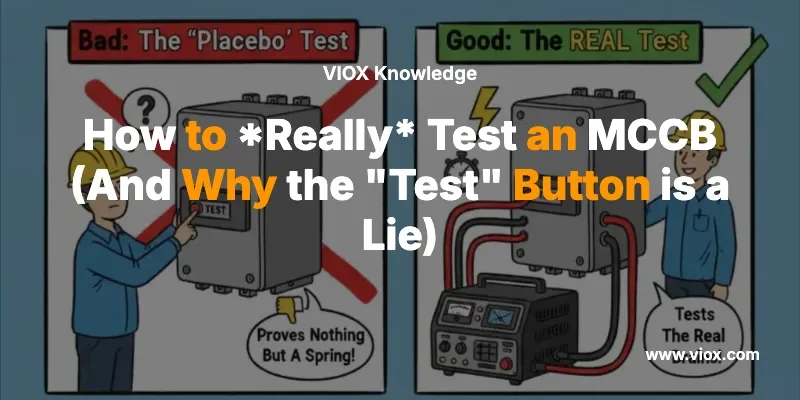

أنت في الموقع، أمام قاطع تيار مصبوب (MCCB) ضخم بقدرة 400 أمبير يعمل بمثابة “البوابة الرئيسية” لخط إنتاج حيوي في المصنع.
أنت بحاجة إلى “اختباره”. ترى زر “اضغط للإطلاق” (PTT) الصغير. تضغط عليه.
طَق.
القاطع يفصل.
مهمتك انتهت، أليس كذلك؟ لقد “اختبرت” القاطع؟
لا. لقد فعلت لا شيء ولكن اختبر نابضًا. لقد وقعت للتو في فخ “زر ‘بلاسيبو’ (الوهم).” إليك الحقيقة حول هذا “الاختبار” وكيفية حقًا معرفة ما إذا كان القاطع الخاص بك هو “وصي” أم مجرد “قنبلة”.”
تشبيه “جهاز إنذار الدخان”: ماذا يفعل هذا الزر في الواقع يفعل

أكبر لحظة “يا هلا!” في السلامة الكهربائية هي هذه: الضغط على زر “الاختبار” هو بالضبط مثل الضغط على زر “الاختبار” في جهاز إنذار الدخان في منزلك.
فكر في الأمر.
- ما يثبته: البوق يصدر صوت تنبيه. البطارية لديها طاقة. الداخلي بوق يعمل.
- ما لا يثبته: أن “مستشعر الدخان” (ال الحقيقي العقول) يمكنه بالفعل اكتشاف الدخان.
أن زر “الاختبار” الخاص بـ MCCB هو نفسه. إنه ميكانيكي اختبار، وليس الكهربائية واحد.
زر PTT هو مجرد قضيب بلاستيكي صغير يتجاوز “العقول” الحقيقية و “يدفع” ميكانيكيًا مزلاج الإطلاق النهائي. لقد أكدت أن “إبرة الإطلاق” تعمل، وليس أن “الزناد” يمكن أن يسحب بالفعل بواسطة المستشعرات.
“العقلان” اللذان يتجاهلهما زر “بلاسيبو”
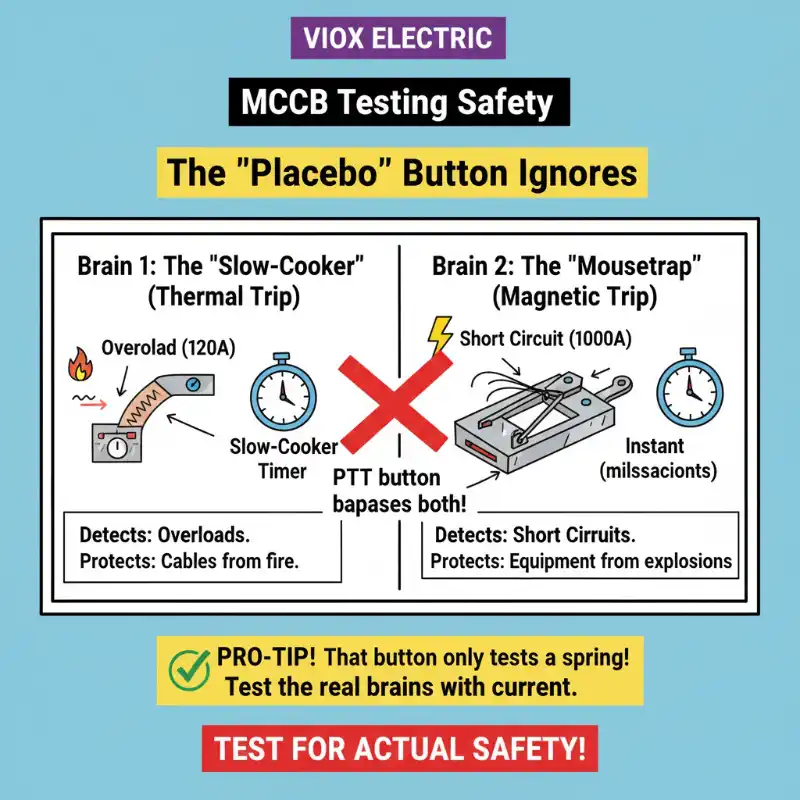
القاطع لديه اثنان الحقيقي “عقول” (وحدات إطلاق) مصممة لحماية معداتك وحياتك. زر “بلاسيبو” هذا يختبر لا واحد منهم.
العقل 1: “الطبّاخ البطيء” (الإطلاق الحراري)
- وظيفته: للكشف عن الأحمال الزائدة (على سبيل المثال، قاطع 100 أمبير يعمل عند 120 أمبير لمدة 10 دقائق).
- كيف يعمل: شريط ثنائي المعدن (معدنين) ببطء يسخن مع التيار الزائد. عندما يسخن، ينحني، وفي النهاية - مثل مؤقت “الطبّاخ البطيء” - فإنه ينحني بما يكفي “لدفع” مزلاج الإطلاق.
- لماذا هو مهم: هذا يحمي الكابلات الخاصة بك من السخونة الزائدة في الجدار، والذوبان، وبدء حريق.
العقل 2: “مصيدة الفئران” (الإطلاق المغناطيسي)
- وظيفته: للكشف عن دوائر قصيرة (على سبيل المثال، خطأ 1000 أمبير من ماس كهربائي).
- كيف يعمل: مغناطيس كهربائي فورا (في أجزاء من الألف من الثانية) يولد مجالًا مغناطيسيًا قويًا من التدفق الهائل للتيار. هذا المجال يطبق رافعة - مثل “مصيدة فئران” - “لدفع” مزلاج الإطلاق.
- لماذا هو مهم: هذا ينقذك من وميض القوس الكهربائي انفجار، وأعطال مدمرة للمعدات، ويوم سيء للغاية.
زر PTT يتجاوز تمامًا كلا من هذين “العقلين” المنقذين للحياة.”
“فشل 800 أمبير”: عندما يصبح “القاطع” “مفتاحًا”
“وماذا في ذلك؟” أنت تقول. “إذا كان النابض يعمل، فربما تكون العقول بخير.”
هذا هو التفكير الدقيق الذي يؤدي إلى الكارثة. هذا هو “فشل 800 أمبير.”
“قصة حرب” من مهندس أنظمة طاقة كبير:
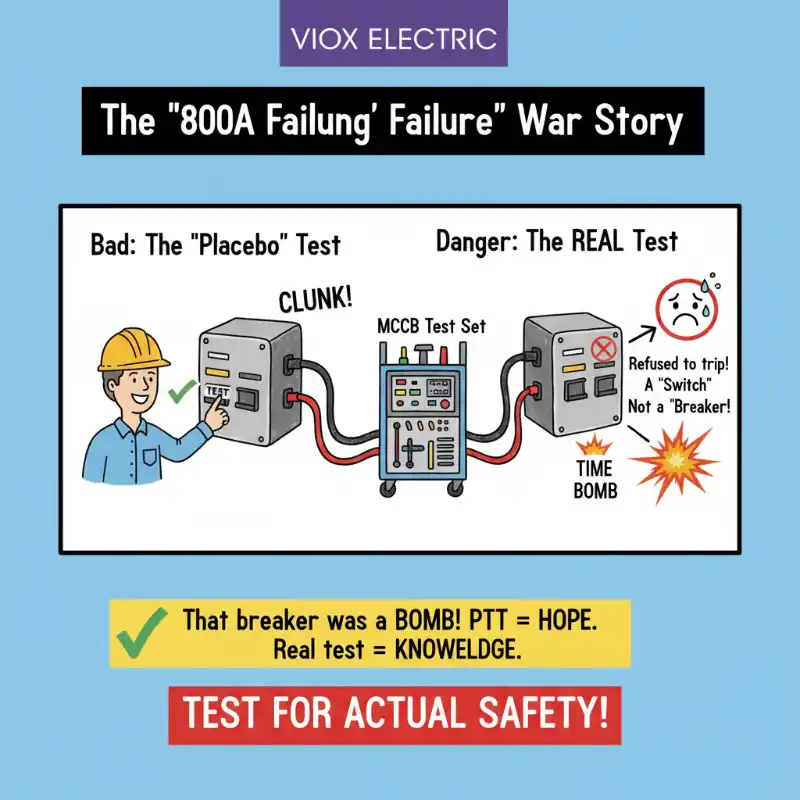
“تم تعييننا للقيام بالصيانة الوقائية السنوية في أحد المصانع. كان لديهم قاطع تيار مصبوب (MCCB) بقدرة 400 أمبير على وحدة تغذية رئيسية. كان عمره 20 عامًا.
أول شيء فعلناه؟ ضغطنا على زر PTT. طَق. تعثر بشكل مثالي. ابتسم مدير المصنع.
ثم، قمنا بسحب “الوحش”.”
قمنا بتوصيل جهاز اختبار ‘حقن التيار الأولي’ الخاص بنا. هذه الآلة لا تضغط على الزر؛ بل “تغذي” القاطع الحقيقي بالتيار.
بدأنا في ‘تغذيته’. 500 أمبير... 600 أمبير... 800 أمبير...
لا شيء.
القاطع رفض التعثر. دفعناه حتى 1200 أمبير قبل أن يفتح أخيرًا، على مضض.
ذلك الـ 400 أمبير “قاطع” قد مات منذ سنوات. كان مجرد 400 أمبير “مفتاح”.”
لمدة 20 عامًا، كان خط المصنع بأكمله صفر حماية من الحمل الزائد. تجمد الشحم داخل القاطع. كانت النوابض ضعيفة. كانت “العقول” (الوحدة الحرارية) ميتة.
كانت “قنبلة موقوتة” اجتازت “اختبار الدواء الوهمي” الخاص بها كل عام.
إن حقيقي الاختبار: “تغذية الوحش” (حقن التيار الأولي)

إذن، كيف يمكنك حقًا اختبار قاطع MCCB؟ كيف تختبر “مستشعر الدخان”، وليس فقط “البوق”؟
يجب “أطعم الوحش”.”
هذه ليست وظيفة لفني كهربائي عادي؛ إنها وظيفة لمهندس أنظمة طاقة متخصص في NETA (الرابطة الدولية لاختبار الكهرباء).
- الأداة: “جهاز اختبار MCCB” متخصص وعالي التيار. غالبًا ما يكون حجم هذه الآلة بحجم حقيبة كبيرة، ويزن 50 كجم، ويمكن أن يكلف 20000 دولار أمريكي أو أكثر.
- العملية: يقوم المهندس بعزل القاطع وتوصيل هذا “الوحش” به. ثم تقوم الآلة في الواقع بحقن 500 أمبير أو 1000 أمبير أو 3000 أمبير من التيار الحقيقي القابل للتتبع من خلال “عقول” القاطع.”
- النتيجة: يستخدمون ساعة توقيت (أو مؤقت مدمج) “لتسابق” القاطع ضد المعروف منحنى التعثر الخاص به (TCC، أو منحنى التيار الزمني).
- “هل تعثر عند 800 أمبير في غضون 5-10 ثوانٍ المحددة؟” (الدماغ الحراري: اجتياز)
- “هل تعثر عند 3000 أمبير في 0.04 ثانية؟” (الدماغ المغناطيسي: اجتياز)
نصيحة احترافية: كهربائي يركب القاطع ويقوم باختبار PTT (الميكانيكي). مهندس اختبار NETA يصادق على القاطع باختبار حقن التيار الأولي (الكهربائي). اعرف دورك. لا توقع أبدًا على اختبار PTT باعتباره “اختبار سلامة وظيفية”. أنت توقع على “الأمل” وليس “المعرفة”.”
الخلاصة: “راحة البال” مقابل “السلامة الفعلية”
هذا الزر الصغير “اختبار” ليس كذلك اختبار. إنه “إعادة ضبط ميكانيكية”. إنه “زر ‘بلاسيبو’ (الوهم).”
إنه مصمم لمنح مدير المبنى أو غير المحترفين “راحة البال”.”
إن الحقيقي اختبار، “حقن التيار الأولي”، هو ما يوفره “السلامة الفعلية”.”
عندما تقوم ببناء نظام حرج، فإنك تبنيه على اليقين. تم تصميم قواطع VIOX MCCB وفقًا لأعلى المعايير، مع منحنيات تعثر واضحة، جاهزة لـ التصديق عليها بواسطة مجموعة اختبار احترافية. لا تفعل فقط أمل أن تعمل “عقولك”—أعرف أنهم يفعلون ذلك.
تصفح موقعنا فيوكس إم سي بي بي خط وابني بيقين.
التقنية دقة ملاحظة
**المعايير والمصادر المرجعية** IEC 60947-2 و NEMA AB 1.