คุณกำลังดำเนินการตามข้อกำหนดของแผงควบคุมไปได้ครึ่งทาง จู่ๆ ก็มีอีเมลจากซัพพลายเออร์ส่งมาว่า “ขอความกระจ่างหน่อยครับ คุณต้องการการป้องกัน GFCI ตาม NEC หรือการป้องกัน RCD ตาม IEC 61009 กันแน่ครับ?”
คุณจ้องมองหน้าจอ พวกมันไม่เหมือนกันเหรอ?
พวกมันเหมือนกัน ในแง่หนึ่ง อุปกรณ์ทำหน้าที่เดียวกัน แต่ศัพท์เฉพาะ หมายเลขมาตรฐาน ชื่อเรียกพิกัด และแม้แต่พารามิเตอร์การทดสอบก็แตกต่างกัน สมองที่ได้รับการฝึกฝนในสหรัฐอเมริกาของคุณบอกว่า “GFCI” เอกสารข้อมูลของซัพพลายเออร์ต่างประเทศบอกว่า “RCBO” ผู้สร้างแผงควบคุมในเม็กซิโกต้องการทั้งสองคำ เพราะพวกเขาให้บริการลูกค้าในเท็กซัสและลูกค้าในยุโรป อุปกรณ์ชิ้นเดียว สองภาษา และถ้าคุณใช้คำศัพท์ผิดในเอกสารข้อกำหนด คุณอาจจะได้อุปกรณ์ที่ไม่ถูกต้อง ใบเสนอราคาที่สับสน หรือความล่าช้าสามสัปดาห์ในขณะที่ทุกคนต้องมาอธิบายว่าคุณต้องการอะไรกันแน่.
คู่มือนี้คือเครื่องมือถอดรหัสของคุณ เราจะจับคู่ความสอดคล้องที่สำคัญระหว่าง NEC (National Electrical Code ซึ่งเป็นมาตรฐานหลักในสหรัฐอเมริกา) และ IEC (International Electrotechnical Commission ซึ่งใช้กันเกือบทุกที่) เพื่อให้คุณสามารถระบุแหล่งที่มา และติดตั้งอุปกรณ์ในตลาดต่างๆ ได้โดยไม่มีข้อผิดพลาดในการแปล.
ทำไมความสอดคล้องของคำศัพท์นี้จึงสำคัญ
นี่ไม่ใช่เรื่องเล็กน้อย เมื่อคุณทำงานข้ามพรมแดน ไม่ว่าจะเป็นการจัดหาอุปกรณ์จากผู้ผลิตต่างประเทศ การออกแบบแผงควบคุมสำหรับโรงงานข้ามชาติ หรือการให้คำปรึกษาในโครงการที่ครอบคลุมการติดตั้งทั้งในและนอกสหรัฐอเมริกา ความไม่ตรงกันของคำศัพท์จะสร้างต้นทุนที่แท้จริง.
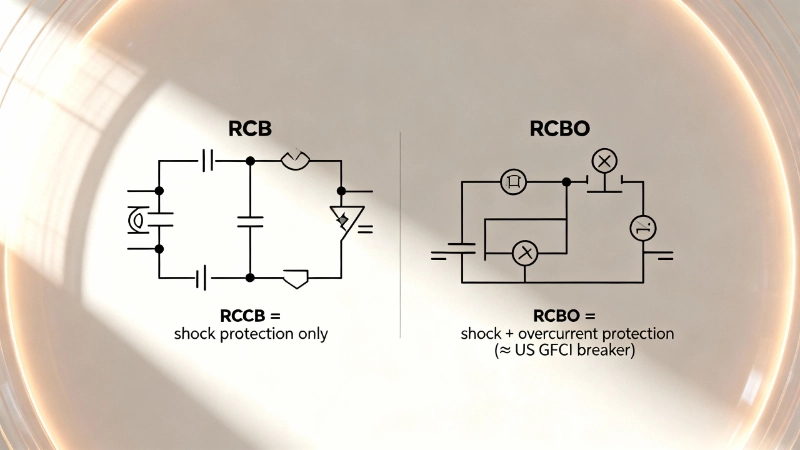
ข้อผิดพลาดในข้อกำหนด: คุณเขียนคำว่า “GFCI” ในเอกสารข้อกำหนดที่ส่งไปยังซัพพลายเออร์ในยุโรป พวกเขาเสนอราคา RCCB (ตัวตัดกระแสไฟตกค้างโดยไม่มีการป้องกันกระแสเกิน) เพราะนั่นคือสิ่งที่ใกล้เคียงที่สุดในแค็ตตาล็อกของพวกเขา คุณต้องการ RCBO (มีการป้องกันกระแสเกินในตัว) แผงควบคุมมาถึง และรูปแบบการป้องกันไม่สมบูรณ์ สั่งซื้อใหม่ จัดส่งใหม่ ล่าช้า.
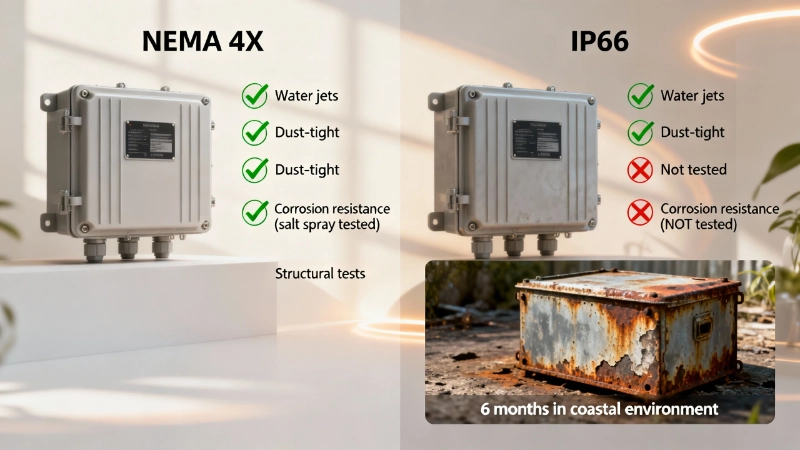
ความสับสนในการจัดหา: ทีมจัดซื้อของคุณพบราคาที่ดีสำหรับ “ตู้ IP65” จากซัพพลายเออร์ในเอเชีย ข้อกำหนดโครงการตาม NEC ของคุณเรียกร้องให้ใช้ NEMA 4X (ทนต่อการกัดกร่อน ป้องกันการฉีดน้ำ) พวกมันเทียบเท่ากันหรือไม่? ไม่เชิง NEMA 4X มีการทดสอบความต้านทานการกัดกร่อนเพิ่มเติมและข้อกำหนดในการฉีดน้ำที่ IP65 ไม่มี คุณติดตั้งมัน และหกเดือนต่อมา ละอองเกลือชายฝั่งได้กัดกร่อนปะเก็นของตู้ ระบบการให้คะแนนหนึ่งไม่ได้แปลโดยตรงเป็นอีกระบบหนึ่ง.
ช่องว่างในการปฏิบัติตามมาตรฐาน: ผู้รับเหมาติดตั้ง IEC 60947-2 MCCB รถมอเตอร์ไซค์ ในโรงงานในสหรัฐอเมริกา โดยถือว่า “เซอร์กิตเบรกเกอร์” หมายถึงสิ่งเดียวกันทุกที่ AHJ (หน่วยงานที่มีอำนาจตามกฎหมาย) ขอเบรกเกอร์ที่ระบุไว้ใน UL 489 ตามข้อกำหนด NEC เบรกเกอร์ IEC 60947-2 ไม่ได้ระบุไว้ใน UL การตรวจสอบล้มเหลว ทำงานใหม่ เปลี่ยนใหม่ โต้เถียงกันว่าใครเป็นคนจ่าย.
ปัญหาเครื่องมือถอดรหัส—วิศวกรที่เชี่ยวชาญในระบบหนึ่ง แต่ไม่รู้เรื่องในอีกระบบหนึ่ง ซึ่งนำไปสู่การระบุข้อผิดพลาด ความล่าช้าในการจัดซื้อ และความล้มเหลวในภาคสนามที่สามารถหลีกเลี่ยงได้ด้วยการแปลคำศัพท์ง่ายๆ นั่นคือสิ่งที่คู่มือนี้แก้ไข.
หมวดหมู่คำศัพท์หลักห้าประเภท
ความแตกต่างระหว่าง NEC-IEC ปรากฏในห้าด้านใหญ่ แต่ละด้านมีกฎความสอดคล้องและข้อผิดพลาดทั่วไปของตัวเอง:
- อุปกรณ์ป้องกันวงจรไฟฟ้า (GFCI เทียบกับ RCD, AFCI เทียบกับ AFDD, ตระกูลเบรกเกอร์)
- พิกัดทางไฟฟ้า (แรงดันไฟฟ้า กระแส ชื่อเรียกความสามารถในการตัดกระแส)
- พิกัดการป้องกันตู้ (เนม่า ประเภทเทียบกับรหัส IP)
- ภาษากราวด์เทียบกับเอิร์ธ (ตัวนำ EGC เทียบกับ PE)
- ระบบการกำหนดหมายเลขมาตรฐาน (บทความ NEC เทียบกับชุดมาตรฐาน IEC)
เราจะจัดการกับแต่ละเรื่องด้วยตารางความสอดคล้องและกฎการถอดรหัสที่เป็นประโยชน์.
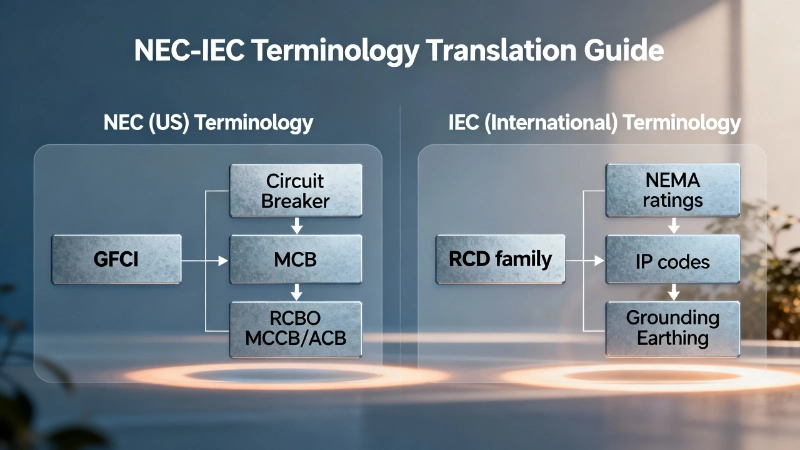
หมวดหมู่ที่ 1: อุปกรณ์ป้องกันวงจร
นี่คือจุดที่เกิดความสับสนมากที่สุด สหรัฐอเมริกาใช้คำศัพท์ครอบคลุม เช่น “GFCI” และ “เซอร์กิตเบรกเกอร์” ที่จับคู่กับตระกูลอุปกรณ์ IEC ที่แตกต่างกันหลายตระกูล ซึ่งแต่ละตระกูลมีมาตรฐานและขอบเขตของตัวเอง.
| คำศัพท์ NEC/US | คำศัพท์เทียบเท่า IEC | มาตรฐาน IEC | ความแตกต่างและหมายเหตุที่สำคัญ |
|---|---|---|---|
| GFCI (Ground Fault Circuit Interrupter) | RCD ตระกูล | IEC 61008 (RCCB), IEC 61009 (RCBO) | RCCB = ตัวตัดกระแสไฟตกค้าง โดยไม่มี การป้องกันกระแสเกินในตัว (ป้องกันไฟดูดเท่านั้น). RCBO = ตัวตัดกระแสไฟตกค้าง กับ การป้องกันกระแสเกินในตัว “GFCI breaker” ของสหรัฐอเมริกา ≈ RCBO ของ IEC. |
| AFCI (Arc Fault Circuit Interrupter) | AFDD (Arc Fault Detection Device) | IEC 62606 | ทั้งสองตรวจจับความผิดพลาดจากอาร์คที่เป็นอันตรายในสายไฟ IEC ใช้ภาษา “อุปกรณ์ตรวจจับ” ฟังก์ชันเทียบเท่ากัน จำเป็นในห้องนอน/พื้นที่นั่งเล่น (US NEC) และพื้นที่ที่คล้ายกัน (IEC สำหรับการติดตั้งในครัวเรือน). |
| เบรกเกอร์ (ทั่วไป) | MCB หรือ MCCB/ACB | IEC 60898-1 (MCB), IEC 60947-2 (อุตสาหกรรม) | MCB (Miniature Circuit Breaker) ตาม IEC 60898-1 สำหรับวงจรในครัวเรือน/วงจรสุดท้าย สูงสุด 125A ติดตั้งโดยบุคคลทั่วไป. MCCB/ACB ตาม IEC 60947-2 สำหรับอุตสาหกรรม/การจ่ายไฟ พิกัดสูงกว่า ติดตั้งโดยผู้ชำนาญการเท่านั้น. |
| เบรกเกอร์วงจรแบบกล่องแม่พิมพ์ (MCCB) | MCCB | มอก. 60947-2 | คำเดียวกัน แต่ขอบเขตของ IEC 60947-2 กว้างกว่า (รวมถึง ACB) MCCB ของสหรัฐอเมริกาตาม UL 489 ตรวจสอบรายการ UL เสมอสำหรับการติดตั้ง NEC การปฏิบัติตาม IEC เพียงอย่างเดียวไม่เพียงพอ. |
| เบรกเกอร์หลัก | Origin of Installation CB | IEC 60364 (การติดตั้ง), IEC 60947-2 | IEC เรียกมันว่าเบรกเกอร์ที่ “จุดเริ่มต้นของการติดตั้ง” ฟังก์ชันเหมือนกัน—การตัดการเชื่อมต่อหลักและการป้องกันกระแสเกินสำหรับแผงควบคุมทั้งหมดหรือแผงควบคุมย่อย. |
| Branch Circuit Breaker | Final Circuit Breaker | IEC 60898-1, IEC 60364 | “วงจรสาขา” ของสหรัฐอเมริกา = “วงจรสุดท้าย” ของ IEC เบรกเกอร์ที่ป้องกันโหลดแต่ละรายการหรือวงจรเต้ารับ การสลับคำศัพท์ ฟังก์ชันเดียวกัน. |
มืออาชีพ-บ#1: เมื่อจัดหาอุปกรณ์ป้องกันในระดับสากล ให้ระบุทั้งฟังก์ชัน (“การป้องกันกระแสไฟตกค้างพร้อมกระแสเกิน”) และคำศัพท์ IEC (“RCBO ตาม IEC 61009”) อย่าพึ่งพา “GFCI” เพียงอย่างเดียว ซัพพลายเออร์จะขอความกระจ่าง และคุณจะเสียเวลาไปหนึ่งสัปดาห์ในการส่งอีเมลไปมา.
หมวดหมู่ที่ 2: ชื่อเรียกพิกัดทางไฟฟ้า
ป้ายระบุพิกัดดูคล้ายกันจนกว่าคุณจะลองเปรียบเทียบ ผู้ที่มีความรู้ตามมาตรฐาน NEC คาดหวังหน่วยและรูปแบบที่แน่นอน ในขณะที่เอกสารข้อมูล IEC ใช้ข้อกำหนดที่แตกต่างกัน หากพลาดความแตกต่างปลีกย่อย คุณจะระบุเกิน (สิ้นเปลืองเงิน) หรือระบุต่ำกว่า (ความล้มเหลวในภาคสนาม).
| พารามิเตอร์พิกัด | ข้อกำหนด NEC/US | ข้อกำหนด IEC | ความแตกต่างที่สำคัญและหมายเหตุการแปล |
|---|---|---|---|
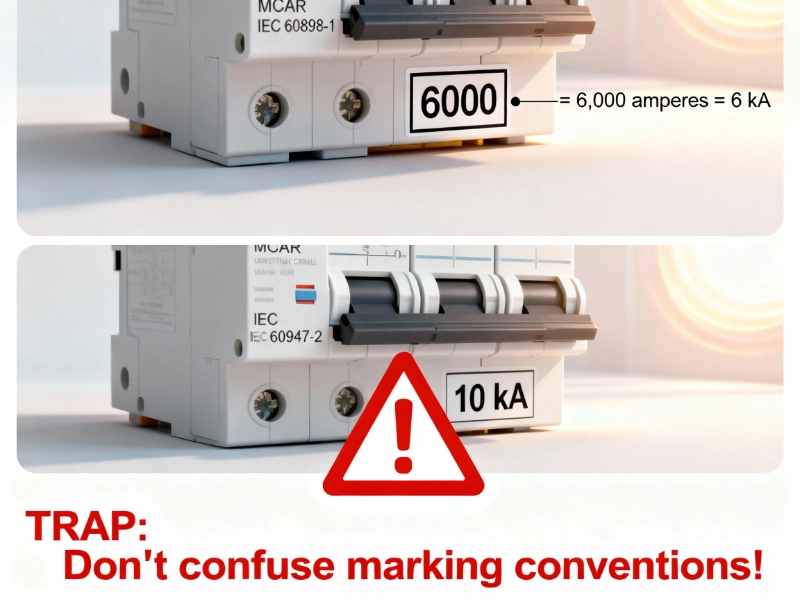
| ทำลายคืน | AIC (Amperes Interrupting Capacity) ใน kA | Icn (rated short-circuit breaking capacity) ใน kA หรือ Icu (ultimate breaking capacity) | เอกสารข้อมูลของสหรัฐอเมริกา: “10,000 AIC” หรือ “10 kA AIC” เอกสารข้อมูล IEC: Icn หรือ Icu ใน kA สำหรับ MCB (IEC 60898-1) ความสามารถในการตัดกระแสแสดงใน แอมแปร์ภายในสี่เหลี่ยมผืนผ้า (เช่น 6000 หมายถึง 6,000A = 6 kA) สำหรับ CB อุตสาหกรรม (IEC 60947-2) จะระบุเป็น kA โดยตรง. |
| Voltage ระดับความชื่นชอบ | 120V, 240V, 480V (ระดับทั่วไปในสหรัฐอเมริกา) | 230V, 400V (ระดับทั่วไปในสหภาพยุโรป); พิกัดสูงสุด 1000V AC ตามมาตรฐาน IEC 60947-2 | สหรัฐอเมริกาใช้ไฟเฟสแยก 120/240V สำหรับที่อยู่อาศัย และ 480V สำหรับอุตสาหกรรม IEC ใช้ไฟสามเฟส 230/400V พิกัดแรงดันไฟฟ้าของอุปกรณ์ต้องสูงกว่าแรงดันไฟฟ้าระบบ ตรวจสอบทั้งค่าปกติและค่าสูงสุด (Ue เทียบกับ Uimp). |
| ปัจจุบันระดับความชื่นชอบ | แอมแปร์ (A) ระบุบนมือจับหรือฉลากของเบรกเกอร์ | แอมแปร์ (A) ระบุบนเบรกเกอร์ RCBO/RCCB มีพิกัด ≤125A ตามมาตรฐานล่าสุด | หน่วยเดียวกัน แต่ระวัง การตัดวงจรด้วยความร้อนเทียบกับการตัดวงจรทันที การตั้งค่าบนเบรกเกอร์แบบปรับได้ เบรกเกอร์ของสหรัฐอเมริกา: พิกัดต่อเนื่อง IEC MCCB: In (กระแสไฟฟ้าที่กำหนด) และการตัดวงจรด้วยความร้อนแบบปรับได้ หากมี. |
| ความถี่ที่กำหนด | 60 Hz (มาตรฐานสหรัฐอเมริกา) | 50 Hz หรือ 50/60 Hz (อุปกรณ์ IEC มักมีพิกัดคู่) | อุปกรณ์ IEC สมัยใหม่ส่วนใหญ่มีพิกัด 50/60 Hz ดังนั้นความเข้ากันได้ข้ามกันจึงเป็นเรื่องปกติ อุปกรณ์รุ่นเก่าอาจเป็น 50 Hz เท่านั้น ตรวจสอบก่อนระบุสำหรับระบบ 60 Hz ของสหรัฐอเมริกา. |
| กระแสไฟรั่ว (RCD) | กระแสไฟตัดวงจร ในหน่วย mA (เช่น 5 mA, 30 mA) | IΔn (rated residual operating current) ในหน่วย mA | พารามิเตอร์เดียวกัน สัญลักษณ์ต่างกัน 30 mA เป็นเกณฑ์ทั่วไปสำหรับการป้องกันไฟฟ้าช็อตในทั้งสองระบบ IEC ใช้ IΔn เอกสารข้อมูลของสหรัฐอเมริกาบอกว่า “trip current” หรือ “sensitivity” |
มืออาชีพ-บ#2: เมื่อเปรียบเทียบความสามารถในการตัดกระแส ให้ระวังกับดักการทำเครื่องหมาย IEC MCB: “6000” ในสี่เหลี่ยมผืนผ้าหมายถึง 6,000 แอมแปร์ (6 kA) ไม่ใช่ 6 A เบรกเกอร์อุตสาหกรรม (IEC 60947-2) จะระบุเป็น kA โดยตรง การสับสนทั้งสองนำไปสู่การระบุต่ำกว่าความเป็นจริงอย่างมากและความล้มเหลวจากการลัดวงจรที่ร้ายแรง.
หมวดหมู่ 3: พิกัดการป้องกันตู้ (NEMA เทียบกับ IP)
นี่คือความสอดคล้องที่ทุกคนต้องการและไม่ควรไว้วางใจอย่างสุ่มสี่สุ่มห้า ประเภทตู้ NEMA 250 และรหัส IP IEC 60529 อธิบายถึงการป้องกันสิ่งแวดล้อม แต่มีการทดสอบสิ่งที่แตกต่างกัน ใช้วิธีการที่แตกต่างกัน และครอบคลุมอันตรายที่แตกต่างกัน คำแนะนำอย่างเป็นทางการของ NEMA (BI 50014–2024) กล่าวอย่างตรงไปตรงมาว่า: ไม่เทียบเท่ากันโดยตรง.
| ประเภท NEMA | รหัส IP ที่ใกล้เคียงที่สุด (โดยประมาณ) | ประเภท NEMA ครอบคลุมอะไร | รหัส IP ครอบคลุมอะไร | ความแตกต่างที่สำคัญ |
|---|---|---|---|---|
| NEMA 1 | IP10 (หยาบมาก) | ในร่ม อเนกประสงค์ ป้องกันการสัมผัสโดยไม่ได้ตั้งใจ | การป้องกันที่จำกัด (IP1X = วัตถุ ≥50 มม.) | NEMA 1 มีการทดสอบโครงสร้าง (ความแข็งแกร่ง ความแข็งแรงของสลักประตู) ที่ IP10 ไม่มี ไม่ใช่คู่ที่แท้จริง. |
| NEMA 3 | IP54 | กลางแจ้ง ฝน/ลูกเห็บ/ฝุ่นที่พัดจากลม ไม่ใช่การฉีดน้ำหรือการจมน้ำ | ป้องกันฝุ่น น้ำกระเซ็น | NEMA 3 เพิ่มข้อกำหนดเกี่ยวกับน้ำแข็ง/ลูกเห็บและการทดสอบการกัดกร่อน IP54 ทดสอบเฉพาะฝุ่นและน้ำกระเซ็น ใกล้เคียง แต่ NEMA 3 ครอบคลุมมากกว่า. |
| NEMA 3R | IP24 ต้อง IP34 | กลางแจ้ง ฝน/ลูกเห็บ แต่ยอมให้ฝุ่นและน้ำเข้าได้บ้าง | แตกต่างกัน IP24 น้อยที่สุด (กระเซ็น) IP34 ดีกว่าเล็กน้อย | NEMA 3R เป็นตัวเลือกกลางแจ้งที่ถูกกว่า (ไม่มีข้อกำหนดกันฝุ่น) รหัส IP เพียงอย่างเดียวไม่รับประกันประสิทธิภาพ UV/ลูกเห็บกลางแจ้ง. |
| NEMA 4 | IP66 | ฉีดน้ำ/น้ำกระเซ็น กันฝุ่น ในร่มหรือกลางแจ้ง | กันฝุ่น ละอองน้ำแรงดันสูง | ตรงกันใกล้เคียงสำหรับฝุ่นและน้ำเข้า NEMA 4 เพิ่มความต้านทานการกัดกร่อนและการทดสอบโครงสร้าง (ความทนทานของบานพับ/สลัก) IP66 กล่าวถึงเฉพาะการเข้าเท่านั้น. |
| เนม่า 4X | IP66 (บางส่วน) | เหมือนกับ NEMA 4 บวกกับความต้านทานการกัดกร่อน (สแตนเลส เคลือบ) | กันฝุ่น ละอองน้ำแรงดันสูง | ความต้านทานการกัดกร่อนของ NEMA 4X เป็นการทดสอบแยกต่างหากที่ไม่ได้ครอบคลุมโดย IP66. ตู้เหล็กอ่อนที่ได้รับการจัดอันดับ IP66 จะเป็นสนิมในสภาพแวดล้อมชายฝั่ง NEMA 4X กำหนดให้มีการป้องกันการกัดกร่อนอย่างชัดเจน. |
| NEMA 12 | IP54 หรือ IP55 | ในร่ม ฝุ่น/สิ่งสกปรก/ขุยผ้า ของเหลวที่ไม่กัดกร่อนหยด/กระเซ็น | ป้องกันฝุ่น ละอองน้ำหรือละอองแรงดันต่ำ | ตรงกันใกล้เคียง แต่ NEMA 12 มีการทดสอบความต้านทานต่อน้ำมัน (ปะเก็นต้องต้านทานน้ำมันอุตสาหกรรม) รหัส IP ไม่ได้ทดสอบความต้านทานต่อสารเคมี. |
| NEMA 13 | IP54 (หยาบ) | ในร่ม ฝุ่น/ขุยผ้า ละอองน้ำ น้ำมัน/น้ำหล่อเย็นซึม | ป้องกันฝุ่น น้ำกระเซ็น | NEMA 13 เพิ่มการทดสอบความต้านทานต่อน้ำมัน/น้ำหล่อเย็น (ละออง/ซึม) IP54 ทดสอบเฉพาะน้ำ ไม่ใช่น้ำมัน ไม่เทียบเท่าสำหรับการใช้งานเครื่องมือกล. |
ทำไมคุณถึงไม่สามารถสลับเปลี่ยนได้
เอกสารสรุป NEMA 2024 ทำให้เรื่องนี้ชัดเจน: ประเภท NEMA ประกอบด้วย การทดสอบการกัดกร่อน, การทดสอบความสมบูรณ์ของโครงสร้าง (รอบการทำงานของบานพับ, ความแข็งแรงของสลัก), และอันตรายจากสภาพแวดล้อมที่เฉพาะเจาะจง (น้ำแข็ง, น้ำมัน, สารหล่อเย็น) ที่รหัส IP ไม่ได้กล่าวถึง รหัส IP มุ่งเน้นไปที่ การป้องกันของแข็งและของเหลวเข้าไปภายใน—ไม่ได้กล่าวถึงว่าตู้จะผุกร่อนหรือไม่, สลักประตูจะอยู่รอดได้ 10,000 รอบหรือไม่, หรือปะเก็นจะทนทานต่อน้ำมันไฮดรอลิกหรือไม่.
หากข้อกำหนดของคุณระบุ NEMA 4X และซัพพลายเออร์เสนอราคา IP66 ให้ถามว่า: “วัสดุของตู้ทนทานต่อการกัดกร่อนตามการทดสอบ NEMA 250 หรือไม่” หากพวกเขาตอบว่า “IP66 ครอบคลุมสิ่งนั้น” พวกเขาคิดผิด คุณกำลังจะติดตั้งกล่อง IP66 ที่ทำจากเหล็กอ่อนซึ่งจะผุกร่อนในหกเดือน.
มืออาชีพ-บ#3: อย่าแทนที่รหัส IP สำหรับประเภท NEMA (หรือในทางกลับกัน) โดยไม่ได้ตรวจสอบข้อกำหนดการทดสอบเพิ่มเติม สำหรับสภาพแวดล้อมที่มีแนวโน้มที่จะเกิดการกัดกร่อน (ชายฝั่ง, โรงงานเคมี, การแปรรูปอาหารด้วยน้ำยาฆ่าเชื้อ), NEMA 4X กำหนดให้มีการทดสอบการกัดกร่อนอย่างชัดเจนซึ่ง IP66 ไม่ได้รวมไว้ ระบุทั้งสองอย่างหากจำเป็นต้องปฏิบัติตามทั้งสองระบบ หรือเลือกระบบที่ตรงกับเขตอำนาจศาลของคุณและตรวจสอบพารามิเตอร์การทดสอบทั้งหมด.
หมวดที่ 4: คำศัพท์เกี่ยวกับการต่อลงดินเทียบกับสายดิน
สหรัฐอเมริกาใช้คำว่า “grounding” ส่วนที่เหลือของโลกใช้คำว่า “earthing” แนวคิดเดียวกัน คำศัพท์ต่างกัน แต่การกำหนดตัวนำและรหัสสีก็แตกต่างกันด้วย และนั่นคือจุดที่ข้อผิดพลาดในการเดินสายไฟเกิดขึ้น.
| คำศัพท์ NEC/US | คำศัพท์ IEC | รหัสสี (US/NEC) | รหัสสี (IEC) | บันทึกย่อ |
|---|---|---|---|---|
| กับบริเวณ | Earthing (การต่อลงดิน) | — | — | คำศัพท์เชิงแนวคิด NEC ใช้คำว่า “grounding” สำหรับทุกสิ่ง IEC ใช้คำว่า “earthing” สำหรับการเชื่อมต่อกับดิน และ “bonding” สำหรับการเชื่อมต่อกับระบบ PE. |
| Equipment Grounding Conductor (EGC) (ตัวนำต่อลงดินของอุปกรณ์) | Protective Conductor (PE) (ตัวนำป้องกัน) | สีเขียวหรือเขียว/เหลือง | สีเขียว/เหลือง | ทั้งสองคำอธิบายถึงตัวนำที่เชื่อมต่อโครง/ตู้ของอุปกรณ์กับดินเพื่อป้องกันไฟฟ้าช็อต IEC ใช้ “PE” เกือบทั้งหมด. |
| Grounding Electrode Conductor (GEC) (ตัวนำต่อลงดินของอิเล็กโทรด) | Earthing Conductor (ตัวนำสายดิน) | สีเขียวหรือเปลือย | สีเขียว/เหลือง หรือเปลือย | ตัวนำที่เชื่อมต่อจุดนิวทรัล/กราวด์ของระบบไฟฟ้ากับอิเล็กโทรดกราวด์ (แท่ง, แผ่น ฯลฯ). |
| Grounded Conductor (ตัวนำต่อลงดิน) | Neutral Conductor (N) (ตัวนำนิวทรัล) | สีขาวหรือสีเทา | สีน้ำเงิน (เฟสเดียว), แตกต่างกัน (3 เฟส) | ในระบบแยกเฟสของสหรัฐอเมริกา ตัวนำต่อลงดินคือนิวทรัล IEC ใช้สีน้ำเงินสำหรับนิวทรัลในเฟสเดียว และรหัสเฉพาะสำหรับ 3 เฟส. |
| ความผูกพันธ์ | Protective Bonding / Equipotential Bonding (การต่อร่วมป้องกัน / การต่อร่วมศักย์ไฟฟ้า) | — | — | การเชื่อมต่อชิ้นส่วนนำไฟฟ้าเข้าด้วยกันเพื่อป้องกันความแตกต่างของแรงดันไฟฟ้า ทั้งสหรัฐอเมริกาและ IEC ใช้คำว่า “bonding” แต่ IEC มีความชัดเจนในคำศัพท์มากกว่า. |
ความแตกต่างในการใช้งานมีน้อย—คุณยังคงเชื่อมต่อตู้โลหะกับดินเพื่อความปลอดภัย แต่ในโครงการข้ามชาติ เอกสารจะต้องชัดเจน: หากคุณเขียนว่า “connect EGC” ช่างไฟฟ้าที่ได้รับการฝึกอบรมจาก IEC อาจไม่รู้จักทันที เขียนว่า “connect protective conductor (PE)” หรือ “EGC/PE” เพื่อความชัดเจน.
กับดักรหัสสี: นิวทรัลของสหรัฐอเมริกาเป็นสีขาว นิวทรัลเฟสเดียวของ IEC เป็นสีน้ำเงิน ช่างไฟฟ้าที่ได้รับการฝึกอบรมจาก IEC ที่เห็นตัวนำสีขาวในแผงของสหรัฐอเมริกาอาจคิดว่าเป็นตัวนำเฟส (สีขาวไม่ได้ใช้สำหรับเฟสใน IEC แต่ก็ไม่ใช่นิวทรัลด้วย) ติดป้ายทุกอย่าง โดยเฉพาะอย่างยิ่งในการติดตั้งแบบผสมมาตรฐานหรือโครงการระหว่างประเทศ.
หมวดที่ 5: ระบบการกำหนดหมายเลขมาตรฐาน
NEC ใช้บทและความ (เช่น NEC Article 430 สำหรับมอเตอร์, Article 250 สำหรับการต่อลงดิน) IEC ใช้ชุดมาตรฐานตัวเลขที่มีเครื่องหมายขีดคั่นเพื่อระบุส่วนและส่วนย่อย ไม่ได้จับคู่แบบหนึ่งต่อหนึ่ง แต่ต่อไปนี้คือการปฐมนิเทศ:
| NEC Article/Section | มาตรฐาน IEC ที่เทียบเท่าโดยประมาณ | ขอบเขต |
|---|---|---|
| NEC Article 100 (คำจำกัดความ) | IEC Electropedia (IEV) | คำจำกัดความ พจนานุกรมศัพท์เทคนิคไฟฟ้าระหว่างประเทศของ IEC เป็นข้อมูลอ้างอิงระดับโลก. |
| NEC Article 250 (การต่อลงดิน) | IEC 60364-4-41, IEC 60364-5-54 | ข้อกำหนดเกี่ยวกับสายดินและตัวนำป้องกันสำหรับการติดตั้ง. |
| NEC Article 430 (มอเตอร์) | IEC 60034 (เครื่องจักรหมุน), IEC 60947-4-1 (คอนแทคเตอร์/สตาร์ทเตอร์) | ข้อกำหนดของมอเตอร์และอุปกรณ์ควบคุมมอเตอร์. |
| NEC Article 440 (HVAC) | IEC 60335-2-40 (ปั๊มความร้อน, เครื่องปรับอากาศ) | กฎความปลอดภัยและการติดตั้งเฉพาะสำหรับ HVAC. |
| UL 489 (เซอร์กิตเบรกเกอร์) | IEC 60947-2 (CB อุตสาหกรรม), IEC 60898-1 (MCB ในครัวเรือน) | เซอร์กิตเบรกเกอร์แบบ Molded-case และแรงดันต่ำของสหรัฐอเมริกา เทียบกับตระกูล IEC. |
| UL 943 (GFCI) | IEC 61008 (RCCB), IEC 61009 (RCBO) | อุปกรณ์ป้องกันกระแสไฟฟ้ารั่วลงดิน / กระแสไฟตกค้าง. |
| NEMA 250 (ตู้) | IEC 60529 (IP Code) | การป้องกันสิ่งแปลกปลอมเข้าภายในตู้ (Enclosure ingress protection) ไม่เทียบเท่ากัน ดังที่กล่าวไว้ข้างต้น. |
ตรรกะการเรียงลำดับหมายเลข IEC: 60947 คือกลุ่มอุปกรณ์สวิตช์เกียร์แรงดันต่ำ, 60947-2 คือเซอร์กิตเบรกเกอร์ภายในกลุ่มนั้น, 60947-4-1 คือคอนแทกเตอร์และสตาร์ทเตอร์มอเตอร์ ขีดคั่นแบ่งหัวข้อ (60947 = สวิตช์เกียร์), ส่วน (2 = เบรกเกอร์) และส่วนย่อย (4-1 = คอนแทกเตอร์) NEC ใช้หมายเลขบทความตามลำดับโดยไม่มีระบบขีดคั่นตามลำดับชั้น.
เมื่อเขียนสเปค ให้อ้างอิงทั้งสองอย่างหากโครงการของคุณครอบคลุมเขตอำนาจศาล: “เซอร์กิตเบรกเกอร์ต้องเป็นไปตาม UL 489 (สำหรับการติดตั้งในสหรัฐอเมริกา) หรือ IEC 60947-2 (สำหรับการติดตั้งระหว่างประเทศ) ตามความเหมาะสม”
สามข้อผิดพลาดที่พบบ่อย (และวิธีหลีกเลี่ยง)
แม้แต่วิศวกรที่มีประสบการณ์ก็ยังติดกับดักเหล่านี้เมื่อย้ายระหว่างโลก NEC และ IEC นี่คือวิธีหลีกเลี่ยง:
กับดักที่ 1: การสันนิษฐานว่า “เซอร์กิตเบรกเกอร์” หมายถึงสิ่งเดียวกัน
ปัญหา: ในสหรัฐอเมริกา “เซอร์กิตเบรกเกอร์” เป็นคำที่ใช้เรียกโดยรวม ใน IEC คุณต้องแยกแยะระหว่าง MCB (IEC 60898-1) สำหรับวงจรในครัวเรือน/วงจรสุดท้าย และ MCCB/ACB (IEC 60947-2) สำหรับการใช้งานในอุตสาหกรรม/การจ่ายไฟ มีลักษณะคล้ายกัน แต่ควบคุมโดยมาตรฐานที่แตกต่างกัน มีพิกัดแรงดันอิมพัลส์ (Uimp) ที่แตกต่างกัน และมีไว้สำหรับผู้ใช้ที่แตกต่างกัน.
MCB IEC 60898-1 ได้รับการออกแบบมาสำหรับบุคคลทั่วไปที่ติดตั้งวงจรสุดท้ายในบ้านและอาคารพาณิชย์ขนาดเล็ก—สูงสุด 125A โดยทั่วไปมีความสามารถในการตัดกระแสไฟที่ต่ำกว่า (สูงสุด 25 kA Icn) และข้อกำหนดในการประสานงานที่ง่ายกว่า เบรกเกอร์อุตสาหกรรม IEC 60947-2 มีไว้สำหรับช่างไฟฟ้าที่มีทักษะ ครอบคลุมกระแสและแรงดันไฟฟ้าที่สูงกว่า (สูงสุด 1000V AC / 1500V DC ตามฉบับปี 2024) และมีการทดสอบที่เข้มงวดมากขึ้นสำหรับความเหมาะสมในการแยกและการรบกวนทางแม่เหล็กไฟฟ้า (EMC).
กรณีความล้มเหลวที่เกิดขึ้นจริง: ผู้รับเหมาได้ระบุ MCB IEC 60898-1 สำหรับแผงจ่ายไฟหลักในโรงงานผลิตเนื่องจาก “มีราคาถูกกว่าและพิกัดกระแสไฟเหมาะสม” หกเดือนต่อมา ความผิดพลาดแบบสามเฟสบนพื้นโรงงานผลิตทำให้เกิดกระแสไฟฟ้าลัดวงจร 35 kA MCB (พิกัด Icn = 10 kA) ล้มเหลวอย่างร้ายแรง—หน้าสัมผัสเชื่อมติดกัน ตู้หุ้มแตก สาเหตุหลัก: กลุ่มเบรกเกอร์ผิด สเปคควรอ้างถึง MCCB IEC 60947-2 ที่มี Icu ≥50 kA.
วิธีหลีกเลี่ยง: ถามตัวเองว่า: นี่คือวงจรสุดท้าย (แสงสว่าง ปลั๊กไฟ โหลดขนาดเล็ก) หรือวงจรจ่ายไฟ/วงจรป้อน (แผงหลัก แผงย่อย ตัวป้อนมอเตอร์ขนาดใหญ่)? วงจรสุดท้าย → MCB IEC 60898-1 การจ่ายไฟ/อุตสาหกรรม → MCCB หรือ ACB IEC 60947-2 หากมีข้อสงสัย ให้ตรวจสอบกระแสไฟฟ้าผิดพร่องที่มีอยู่และเปรียบเทียบกับความสามารถในการตัดกระแสไฟที่กำหนดของเบรกเกอร์ (Icn หรือ Icu) หากกระแสไฟฟ้าผิดพร่องเกินความสามารถของเบรกเกอร์ แสดงว่าคุณได้ระบุอุปกรณ์ผิด.
กับดักที่ 2: การอ่านค่าความสามารถในการตัดกระแสไฟ IEC ผิด
ปัญหา: MCB IEC 60898-1 จะระบุความสามารถในการตัดกระแสไฟฟ้าลัดวงจรใน แอมแปร์ภายในสี่เหลี่ยมผืนผ้า—ตัวอย่างเช่น “6000” หมายถึง 6,000 แอมแปร์ หรือ 6 kA เบรกเกอร์อุตสาหกรรม IEC 60947-2 จะระบุความสามารถโดยตรงใน kA. หากคุณไม่ใส่ใจ คุณจะเห็น “6000” บน MCB และคิดว่า “6 kA” ซึ่งถูกต้อง—แต่แล้วคุณเห็น “10” บนเบรกเกอร์อุตสาหกรรมและคิดว่า “10 แอมแปร์” ซึ่งผิดพลาดอย่างร้ายแรง มันคือ 10 kA (10,000 แอมแปร์).
วิธีหลีกเลี่ยง: ตรวจสอบเสมอว่าเบรกเกอร์ได้รับการรับรองตามมาตรฐานใด (มองหา “IEC 60898-1” หรือ “IEC 60947-2” บนฉลาก) หากเป็น 60898-1 ตัวเลขในสี่เหลี่ยมคือแอมแปร์ (หารด้วย 1000 สำหรับ kA) หากเป็น 60947-2 การระบุเป็น kA อยู่แล้ว หากมีข้อสงสัย ให้ปรึกษาแถว Icn หรือ Icu ในเอกสารข้อมูล—จะชี้แจงหน่วย.
กับดักที่ 3: การถือว่า NEMA 4X และ IP66 เทียบเท่ากัน
เราได้กล่าวถึงเรื่องนี้ข้างต้นแล้ว แต่ควรกล่าวซ้ำเพราะเป็นข้อผิดพลาดในการระบุตู้หุ้มที่พบบ่อย.
ปัญหา: NEMA 4X รวมถึงการทดสอบความต้านทานการกัดกร่อน (การพ่นละอองเกลือ วัสดุเฉพาะ เช่น สแตนเลส หรือสารเคลือบที่ทนต่อการกัดกร่อน) IP66 ทดสอบเฉพาะการป้องกันฝุ่นและน้ำเข้า ตู้หุ้มเหล็กอ่อนสามารถได้รับการจัดอันดับ IP66 และยังคงเป็นสนิมในสภาพแวดล้อมชายฝั่งหรือสารเคมี เนื่องจาก IP66 ไม่ได้ทดสอบการกัดกร่อน.
กรณีความล้มเหลวที่เกิดขึ้นจริง: โรงงานแปรรูปอาหารได้ระบุตู้หุ้ม NEMA 4X สำหรับแผงควบคุมในพื้นที่ล้างด้วยน้ำยาฆ่าเชื้อที่รุนแรง (มีส่วนผสมของคลอรีน) ฝ่ายจัดซื้อจัดหาตู้หุ้ม IP66 “เทียบเท่า” จากซัพพลายเออร์ในต่างประเทศ—เหล็กอ่อนทาสี ภายในแปดเดือน สเปรย์น้ำยาฆ่าเชื้อกัดกร่อนทะลุสี ทำให้ตู้หุ้มเป็นสนิม และทำให้ซีลปะเก็นประตูเสียหาย น้ำเข้าทำให้ PLC เสียหาย ทำให้เสียค่าใช้จ่าย 15,000 ดอลลาร์สหรัฐฯ ในการหยุดทำงานและการเปลี่ยน NEMA 4X จะต้องใช้สแตนเลสหรือสารเคลือบที่ทนต่อการกัดกร่อนซึ่งสามารถทนต่อน้ำยาฆ่าเชื้อได้.
วิธีหลีกเลี่ยง: หากสเปคของคุณระบุ NEMA 4X ให้ตรวจสอบว่าวัสดุและสารเคลือบของตู้หุ้มเป็นไปตามข้อกำหนดความต้านทานการกัดกร่อนของ NEMA 250 โดยไม่คำนึงถึงระดับ IP หากคุณใช้ IP66 แทน NEMA 4X ให้ขอการยืนยันเป็นลายลักษณ์อักษรจากซัพพลายเออร์ว่าตู้หุ้มได้รับการทดสอบการกัดกร่อนตาม ASTM B117 หรือการทดสอบการพ่นละอองเกลือที่เทียบเท่ากัน จะดีกว่าถ้าคุณระบุทั้งสองระดับหากโครงการของคุณต้องการทั้งการปฏิบัติตาม NEC และ IEC ’ตู้หุ้มต้องเป็นไปตาม NEMA 4X ตาม NEMA 250 แล้ว IP66 ตาม IEC 60529 โดยมีโครงสร้างสแตนเลสหรือสารเคลือบที่ทนต่อการกัดกร่อนซึ่งได้รับการตรวจสอบโดยการทดสอบการพ่นละอองเกลือตาม ASTM B117”
มืออาชีพ-บ#4: กับดักทั้งสามข้างต้นคิดเป็นประมาณ 70% ของข้อผิดพลาดในการระบุข้ามระบบ จดจำไว้ หรือพิมพ์ส่วนนี้และติดไว้ที่จอภาพของคุณ ทุกครั้งที่คุณเขียน “เซอร์กิตเบรกเกอร์” “ความสามารถในการตัดกระแสไฟ” หรือ “ระดับตู้หุ้ม” ในสเปคที่อาจข้ามขอบเขต NEC-IEC ให้ตรวจสอบอีกครั้งว่าคุณอยู่ในระบบใด และคำศัพท์นั้นเทียบเท่ากันจริงหรือไม่.
รายการตรวจสอบข้อกำหนดข้ามระบบของคุณ
คุณจะไม่จดจำทุกความสอดคล้องในคู่มือนี้ นั่นไม่เป็นไร สิ่งที่คุณต้องการคือรายการตรวจสอบเพื่อตรวจจับข้อผิดพลาดในการแปลก่อนที่จะกลายเป็นใบสั่งซื้อ.
ก่อนที่คุณจะสรุปสเปค RFQ หรือรายการอุปกรณ์ใดๆ ที่อาจครอบคลุมระบบ NEC และ IEC ให้ตรวจสอบสิ่งนี้:
- ☐ อุปกรณ์ป้องกัน: ฉันได้ระบุ ฟังก์ชัน (“การป้องกันกระแสไฟตกค้างพร้อมกระแสไฟเกิน”) นอกเหนือจากคำศัพท์ (“GFCI” หรือ “RCBO”) หรือไม่? หากฉันเขียนว่า “GFCI” ฉันได้ชี้แจงหรือไม่ว่าฉันต้องการ RCCB (ไม่มีกระแสไฟเกิน) หรือ RCBO (มีกระแสไฟเกิน)?
- ☐ เบรกเกอร์: ฉันได้แยกแยะระหว่างเบรกเกอร์วงจรสุดท้าย (MCB IEC 60898-1) และเบรกเกอร์อุตสาหกรรม/การจ่ายไฟ (MCCB/ACB IEC 60947-2) หรือไม่? ฉันได้ตรวจสอบความสามารถในการตัดกระแสไฟในหน่วยที่ถูกต้อง (kA เทียบกับแอมแปร์ในสี่เหลี่ยม) หรือไม่?
- ☐ ตู้หุ้ม: ฉันได้ระบุการป้องกันสิ่งแวดล้อมโดยใช้ ทั้งคู่ NEMA Type และ IP Code หากโครงการครอบคลุมเขตอำนาจศาลหรือไม่? หากฉันใช้สิ่งหนึ่งแทนอีกสิ่งหนึ่ง ฉันได้ตรวจสอบความต้านทานการกัดกร่อน การทดสอบโครงสร้าง และอันตรายต่อสิ่งแวดล้อม (น้ำแข็ง น้ำมัน สารหล่อเย็น) ที่ระบบหนึ่งครอบคลุมและอีกระบบหนึ่งไม่ครอบคลุมหรือไม่?
- ☐ การต่อลงดิน/การต่อสายดิน: ฉันได้ใช้ทั้งสองคำ (“EGC/PE” หรือ “การต่อลงดิน/การต่อสายดิน”) ในเอกสารสำหรับทีมงานข้ามชาติหรือไม่? ฉันได้ระบุรหัสสีของตัวนำอย่างชัดเจนเพื่อหลีกเลี่ยงข้อผิดพลาดในการเดินสายข้ามระบบหรือไม่?
- ☐ การอ้างอิงมาตรฐาน: ฉันได้อ้างอิงทั้งบทความ NEC และมาตรฐาน IEC ที่เกี่ยวข้อง (“ตาม NEC Article 430 และ IEC 60947-4-1 ตามที่ใช้บังคับกับเขตอำนาจศาล”) หรือไม่? ฉันได้ตรวจสอบว่าอุปกรณ์ที่สอดคล้องกับ IEC มีรายการ UL/CSA ที่จำเป็นสำหรับการติดตั้งในสหรัฐอเมริกาหรือไม่?
- ☐ แรงดันไฟฟ้าและความถี่: ฉันได้ยืนยันว่าอุปกรณ์ IEC ที่ได้รับการจัดอันดับสำหรับ 50 Hz จะทำงานบนระบบ 60 Hz หรือไม่ (อุปกรณ์ที่ทันสมัยส่วนใหญ่ได้รับการจัดอันดับคู่ 50/60 Hz แต่อุปกรณ์รุ่นเก่าอาจไม่เป็นเช่นนั้น)? ฉันได้ตรวจสอบความเข้ากันได้ของแรงดันไฟฟ้า (120V เทียบกับ 230V, 240V เทียบกับ 400V) หรือไม่?
ตรวจสอบรายการตรวจสอบนั้นก่อนที่คุณจะกด “ส่ง” ใน RFQ หรือ “อนุมัติ” ในใบสั่งซื้อ ตรวจจับข้อผิดพลาด NEMA 4X เทียบกับ IP66 เพียงครั้งเดียว และคุณเพิ่งประหยัดเงินได้ 15,000 ดอลลาร์สหรัฐฯ และความล่าช้าสามสัปดาห์ ตรวจจับการอ่านค่าความสามารถในการตัดกระแสไฟผิด และคุณได้ป้องกันความผิดพลาดร้ายแรงที่อาจทำให้ใครบางคนได้รับบาดเจ็บ.
มาตรฐา&แหล่งข่าวของลองโยง
- IEC 60947-2:2024 (สวิตช์เกียร์และอุปกรณ์ควบคุมแรงดันต่ำ – ส่วนที่ 2: เซอร์กิตเบรกเกอร์, ฉบับที่ 6.0, เผยแพร่เมื่อ 2024-09-18)
- IEC 61009-1:2024 (เซอร์กิตเบรกเกอร์กระแสไฟตกค้างพร้อมการป้องกันกระแสไฟเกินในตัว – RCBO, ฉบับที่ 4.0, เผยแพร่เมื่อ 2024-11-21)
- IEC 61008-2-1:2024 (เซอร์กิตเบรกเกอร์กระแสไฟตกค้างที่ไม่มีการป้องกันกระแสไฟเกินในตัว – RCCB, ฉบับที่ 2.0, เผยแพร่เมื่อ 2024-11-21)
- IEC 62606 (ข้อกำหนดทั่วไปสำหรับอุปกรณ์ตรวจจับความผิดพลาดจากอาร์ค, ฉบับรวมถึงปี 2022)
- IEC 60898-1 (เซอร์กิตเบรกเกอร์สำหรับการป้องกันกระแสไฟเกินของการติดตั้งในครัวเรือนและที่คล้ายกัน – MCB)
- IEC 60529 (ระดับการป้องกันที่ตู้หุ้มให้ – IP Code)
- NEMA 250-2020(电气设备外壳,最大电压1000伏)
- NEMA BI 50014–2024 (การเปรียบเทียบโดยย่อของ NEMA 250 และ IEC 60529)
- NEC 2023 (NFPA 70, National Electrical Code)
- UL 489 (Molded-Case Circuit Breakers, Molded-Case Switches, and Circuit-Breaker Enclosures)
- UL 943 (Ground-Fault Circuit Interrupters)
- IEC Electropedia (IEV 826-13-22, Protective Conductor definition)
时效性声明
มาตรฐานทุกรุ่น ข้อกำหนดทางเทคนิค และคำแนะนำในการติดต่อสื่อสารถูกต้อง ณ เดือนพฤศจิกายน 2025.