โจ

สวัสดีครับผมโจเป็นอุทิศตนเป็นมืออาชีพกับ 12 ปีประสบการณ์ในกระแสไฟฟ้าอุตสาหกรรม ตอน VIOX ไฟฟ้าของฉันสนใจคือส่งสูงคุณภาพเพราะไฟฟ้าลัดวงจนน้ำแห่ง tailored ที่ได้พบความต้องการของลูกค้าของเรา ความชำนาญของผม spans อรองอุตสาหกรรมปลั๊กอินอัตโนมัติ,เขตที่อยู่อาศัย\n ทางตันอีกทางหนึ่งเท่านั้นเองและโฆษณาเพราะไฟฟ้าลัดวงจระบบป้องติดต่อฉัน [email protected] ถ้านายมีคำถาม

Preventing Fuse Nuisance Tripping: Solar Combiner Box Temperature Derating Guide

แนวทางการลดทอนค่าพิกัดกระแสตามอุณหภูมิของกล่องรวมสายไฟโซลาร์เซลล์เพื่อป้องกันฟิวส์ขาดโดยไม่จำเป็น

Understanding the $2,000 Problem: When Fuses Blow Without Faults Your 100kW solar array just went offline. A technician drives 90 miles to the site, opens the combiner box, and finds a blown 15A fuse protecting a string that should only draw 12A. The fuse was sized correctly at 15A per NEC requirements (9.5A × 1.56 […]
แนวทางการลดทอนค่าพิกัดกระแสตามอุณหภูมิของกล่องรวมสายไฟโซลาร์เซลล์เพื่อป้องกันฟิวส์ขาดโดยไม่จำเป็น อ่านเพิ่มเติม »

Pre-wired Combiner Box vs. DIY Assembly: The Hidden Labor Costs Installers Ignore

กล่องรวมสายไฟแบบประกอบสำเร็จรูปเทียบกับประกอบเอง: ต้นทุนค่าแรงแฝงที่ผู้ติดตั้งมองข้าม

Introduction: The Margin Killer You Don’t See on the Invoice For solar EPCs and installers, the bill of materials (BOM) is often the primary focus when bidding on commercial and utility-scale projects. On paper, buying empty enclosures, DIN rails, fuse holders, and circuit breakers separately seems like a cost-saving strategy. The raw component cost for

กล่องรวมสายไฟแบบประกอบสำเร็จรูปเทียบกับประกอบเอง: ต้นทุนค่าแรงแฝงที่ผู้ติดตั้งมองข้าม อ่านเพิ่มเติม »

Load Center vs. Distribution Board

โหลดเซ็นเตอร์ (Load Center) กับ ตู้ไฟฟ้า (Distribution Board): ทำความเข้าใจความแตกต่างระหว่างมาตรฐาน NEMA และ IEC

When a European contractor recently submitted specifications for a 400V distribution board on a North American manufacturing facility project, the procurement team faced an unexpected challenge: the local electrical inspector rejected the equipment citing non-compliance with UL 67 standards. The root cause? A fundamental misunderstanding between “load centers” and “distribution boards”—two terms describing functionally similar

โหลดเซ็นเตอร์ (Load Center) กับ ตู้ไฟฟ้า (Distribution Board): ทำความเข้าใจความแตกต่างระหว่างมาตรฐาน NEMA และ IEC อ่านเพิ่มเติม »

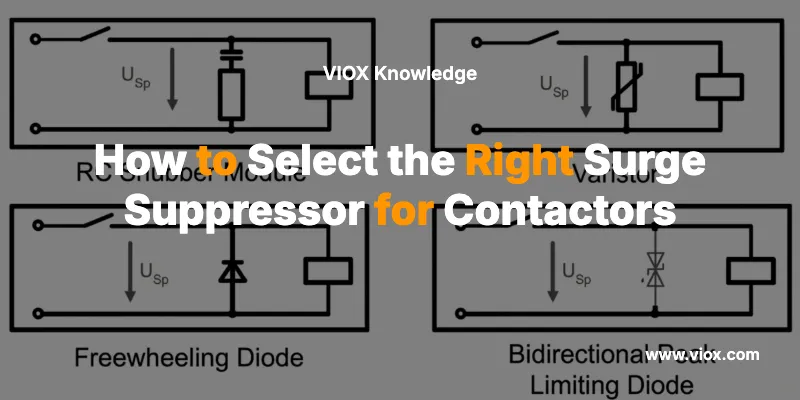
Coil Suppression Techniques Explained: Why a Standard Diode Might Be Killing Your Contactor (Diode vs. Zener vs. RC)

คำอธิบายเทคนิคการลดทอนสัญญาณรบกวนของคอยล์: เหตุใดไดโอดมาตรฐานจึงอาจทำให้คอนแทคเตอร์ของคุณเสียหาย (ไดโอดเทียบกับซีเนอร์เทียบกับ RC)

The Silent Killer: Back EMF and Its Consequences Every time you de-energize an industrial contactor, you’re triggering a phenomenon that can destroy your equipment in seconds. The culprit? Back electromotive force (EMF) – a voltage spike that occurs when current through an inductive load (like a relay or contactor coil) is suddenly interrupted. Here’s the

คำอธิบายเทคนิคการลดทอนสัญญาณรบกวนของคอยล์: เหตุใดไดโอดมาตรฐานจึงอาจทำให้คอนแทคเตอร์ของคุณเสียหาย (ไดโอดเทียบกับซีเนอร์เทียบกับ RC) อ่านเพิ่มเติม »

Preventing Pump Short Cycling: How to Integrate Time Relays with Pressure Switches

การป้องกันปั๊มน้ำทำงานและหยุดทำงานถี่เกินไป: วิธีการผสานรวมไทม์รีเลย์กับสวิตช์แรงดัน

Introduction At 2:47 AM, a maintenance engineer responds to an alarm at a municipal water treatment facility. Upon opening the control panel, he discovers a disaster: the main pump contactor’s contacts have welded themselves shut, the coil insulation shows burn marks, and the acrid smell of overheated components fills the enclosure. The root cause? Pump

การป้องกันปั๊มน้ำทำงานและหยุดทำงานถี่เกินไป: วิธีการผสานรวมไทม์รีเลย์กับสวิตช์แรงดัน อ่านเพิ่มเติม »

How to Test EV Charger Earth Leakage Protection: Verifying 6mA DC Trip Levels

วิธีการทดสอบระบบป้องกันกระแสไฟรั่วลงดินของเครื่องชาร์จ EV: การตรวจสอบระดับการตัดวงจร DC 6mA

Electrician using Fluke 1664 FC to test EV charger 6mA DC leakage protection. If you’ve installed a commercial EV charging station, simply powering it up and checking if it charges a car isn’t enough. The invisible risk in modern EV infrastructure is DC leakage current—a phenomenon that can silently “blind” your upstream Type A RCDs,

วิธีการทดสอบระบบป้องกันกระแสไฟรั่วลงดินของเครื่องชาร์จ EV: การตรวจสอบระดับการตัดวงจร DC 6mA อ่านเพิ่มเติม »

EV Charger RCD Selection: Type B vs. Type F vs. Type EV (IEC 62955 & IEC 62423)

การเลือก RCD สำหรับเครื่องชาร์จ EV: Type B เทียบกับ Type F เทียบกับ Type EV (IEC 62955 & IEC 62423)

For electrical engineers and installers, the rapid expansion of Electric Vehicle (EV) infrastructure presents a specific protection challenge: DC fault currents. Unlike standard household loads, the rectification circuits within EV On-Board Chargers (OBC) can generate smooth DC leakage currents in the event of a fault. If not properly isolated, these DC currents can blind upstream

การเลือก RCD สำหรับเครื่องชาร์จ EV: Type B เทียบกับ Type F เทียบกับ Type EV (IEC 62955 & IEC 62423) อ่านเพิ่มเติม »

RCBO vs. RCCB + MCB: Analyzing Space, Cost, and Selectivity in Distribution Boards

RCBO เทียบกับ RCCB + MCB: การวิเคราะห์พื้นที่, ต้นทุน และ Selectivity ในแผงจ่ายไฟฟ้า

In the modern electrical landscape, the “spare space” in a distribution board has become a luxury. With the rapid integration of EV chargers, solar inverters, smart home automation modules, and surge protection devices (SPDs), panel builders are facing a critical density challenge. For decades, the standard configuration for residual current protection involved a “Split Load”

RCBO เทียบกับ RCCB + MCB: การวิเคราะห์พื้นที่, ต้นทุน และ Selectivity ในแผงจ่ายไฟฟ้า อ่านเพิ่มเติม »

Circuit Protection Selection Framework: A 5-Step Guide for Panel Builders (IEC 60947)

กรอบการคัดเลือกอุปกรณ์ป้องกันวงจร: คู่มือ 5 ขั้นตอนสำหรับผู้ประกอบตู้ไฟฟ้า (IEC 60947)

Introduction: Beyond the Nameplate Rating In the world of industrial panel building, a dangerous misconception persists: that selecting a circuit breaker begins and ends with the rated current (In). This oversimplification is the leading cause of “nuisance tripping” during commissioning and, more catastrophically, switchgear failure during actual fault conditions. A 100A breaker is not always

กรอบการคัดเลือกอุปกรณ์ป้องกันวงจร: คู่มือ 5 ขั้นตอนสำหรับผู้ประกอบตู้ไฟฟ้า (IEC 60947) อ่านเพิ่มเติม »

Contactor Contact Material Guide: AgSnO2 vs. AgNi vs. AgCdO Selection

คู่มือวัสดุหน้าสัมผัสคอนแทคเตอร์: การเลือกระหว่าง AgSnO2, AgNi และ AgCdO

Why Contact Material Selection Determines Contactor Performance The contact material in an electrical contactor isn’t just a technical specification—it’s the critical factor determining whether your equipment delivers 5 years or 15 years of reliable service. A single wrong material choice can result in premature welding, excessive arc erosion, or catastrophic failure under load conditions that

คู่มือวัสดุหน้าสัมผัสคอนแทคเตอร์: การเลือกระหว่าง AgSnO2, AgNi และ AgCdO อ่านเพิ่มเติม »

ขอใบเสนอราคาทันที