


На этой странице
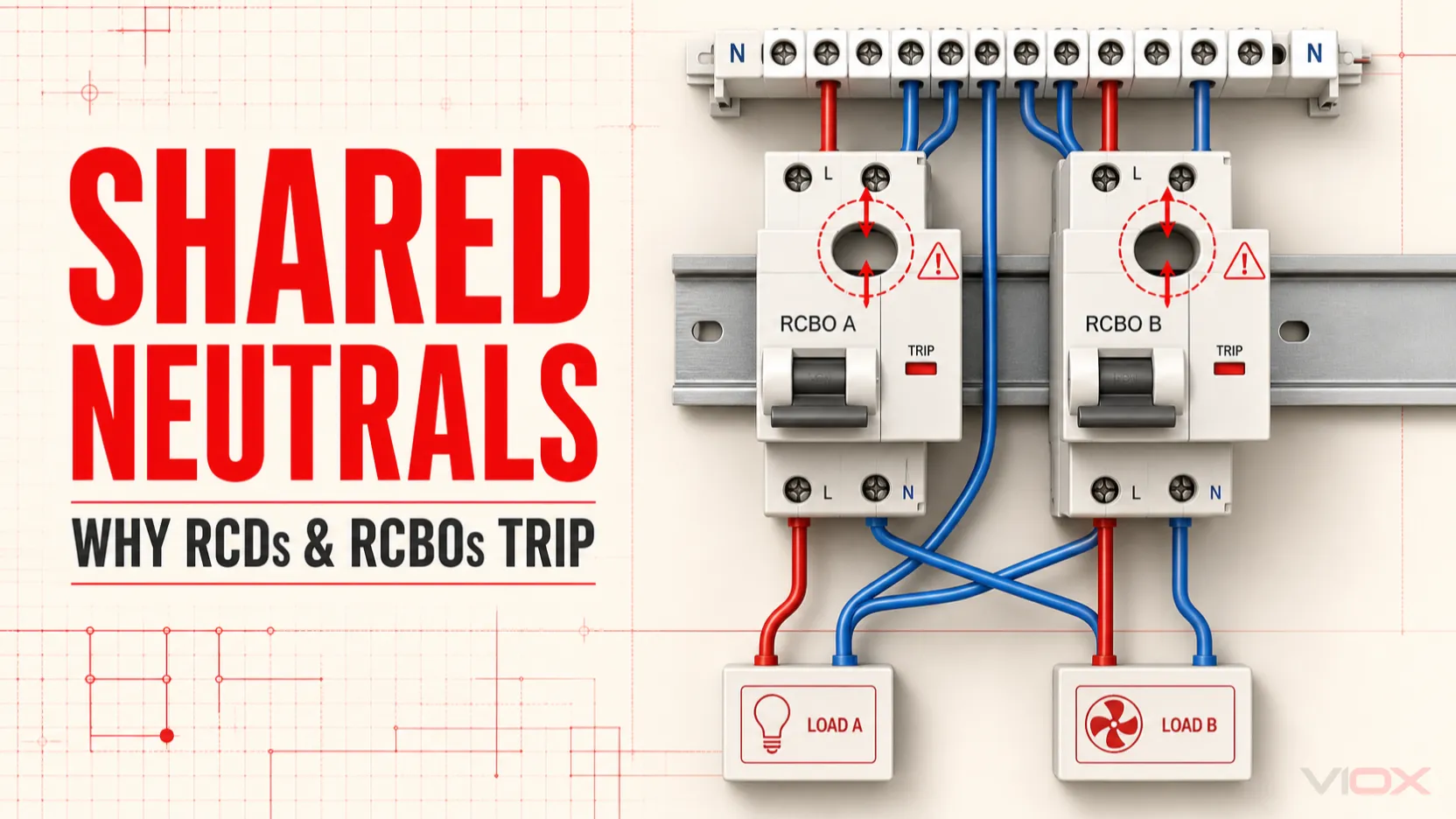
Общий нейтральный проводник вызывает срабатывание RCD или RCBO, когда ток нагрузки уходит через фазный проводник, контролируемый одним устройством, но возвращается через нейтральный путь, находящийся вне измерительного сердечника этого устройства. Защитное устройство воспринимает отсутствующий возвратный ток как дифференциальный ток и размыкает цепь.
Проблема заключается не в самом слове “общий”. Правильно спроектированная многопроводная цепь может использовать общую нейтраль, когда все соответствующие фазные проводники проходят через одно и то же подходящее многополюсное устройство дифференциального тока. Распространенной неисправностью на объекте является общая, заимствованная, перекрещенная или неправильно подключенная нейтраль, соединяющая цепи, защищенные разными RCD или RCBO.
Основные выводы
- Каждый фазный ток, проходящий через RCD или RCBO, должен возвращаться через нейтральный путь, контролируемый тем же устройством.
- Заимствованная нейтраль может сделать одну цепь зависимой от нейтрали другой цепи и привести к тому, что она останется под напряжением во время технического обслуживания.
- Перекрещенные нейтральные шины обычно вызывают немедленное срабатывание после модификации потребительского щитка или распределительного щита.
- Замыкание между нейтралью и землей может вызывать схожие симптомы, но является другим дефектом: ток распределяется между нейтралью и PE вместо того, чтобы полностью возвращаться через контролируемую нейтраль.
- Не заменяйте RCD, не увеличивайте его номинальный дифференциальный ток и не отключайте нейтраль произвольно. Определите путь протекания тока и исправьте схему подключения.
Почему RCD срабатывает, когда ток возвращается через «неправильную» нейтраль
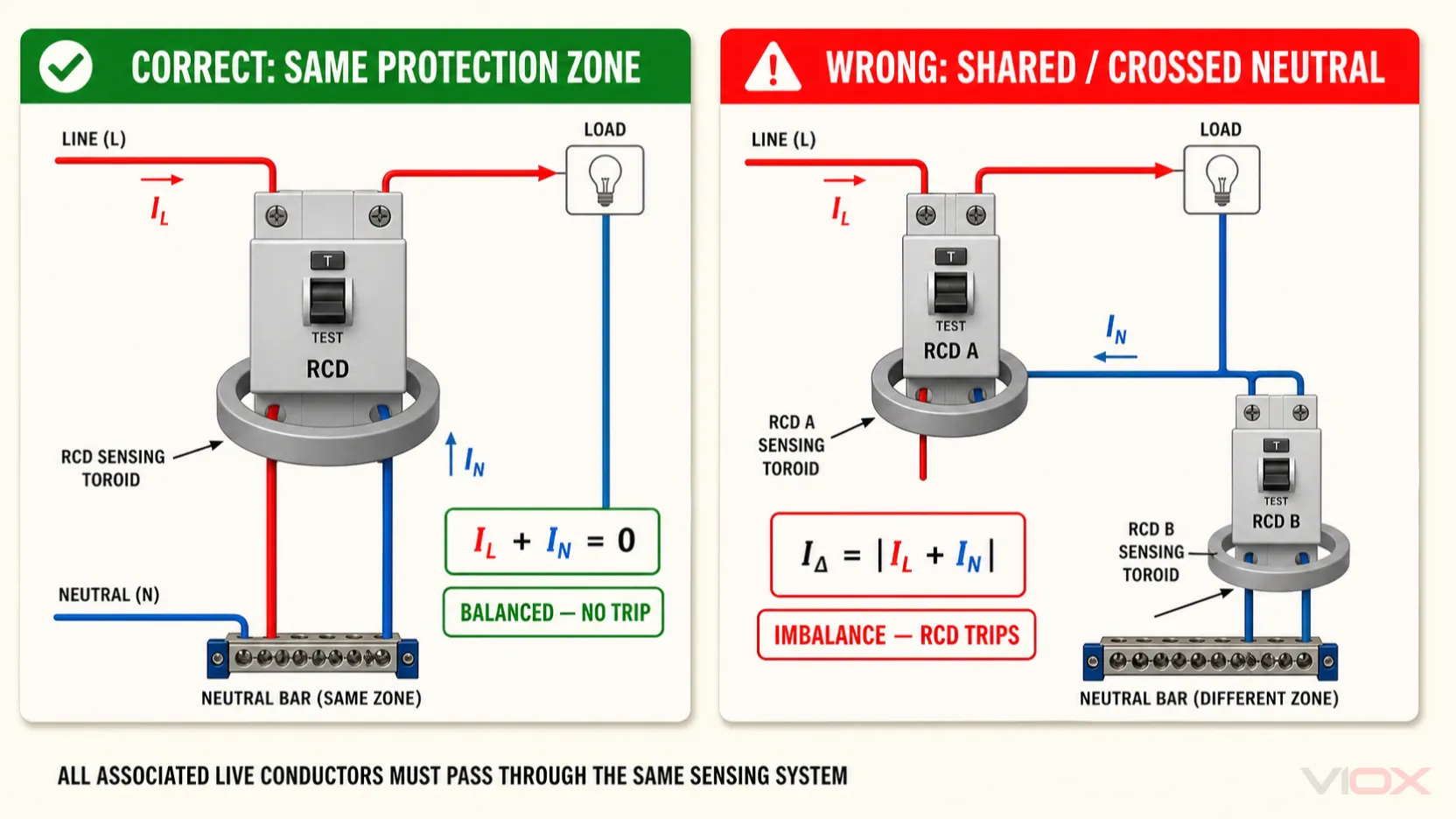
RCD, также называемый RCCB во многих системах продукции IEC, контролирует векторную сумму токов во всех фазных проводниках, проходящих через его трансформатор тока. В нормальной однофазной цепи:
IL + IN = 0
Если 5 A уходит через фазный провод и те же 5 A возвращаются через соответствующую нейтраль, их магнитные эффекты взаимно компенсируются. Устройство не обнаруживает значимого дифференциального тока.
Если часть этих 5 A возвращается через нейтраль другой цепи, вышестоящую нейтральную шину или защитный проводник, токи внутри измерительного сердечника больше не компенсируют друг друга:
IΔ = |IL + IN|
Как только обнаруженный дифференциальный ток достигает диапазона срабатывания устройства, RCD отключается. RCBO использует тот же принцип дифференциального тока, одновременно обеспечивая защиту от сверхтока. Его тепловые и магнитные функции не препятствуют срабатыванию механизма дифференциального тока при ошибке прокладки нейтрали.
Общие, заимствованные, перекрестные и заземленные нейтрали — это разные виды неисправностей
Эти термины часто используются на объектах как взаимозаменяемые, но их разделение ускоряет диагностику.
| Состояние | Что происходит? | Типичное поведение RCD/RCBO | Основной риск |
|---|---|---|---|
| Общая нейтраль для двух RCBO | Две конечные цепи возвращаются через одну нейтраль, в то время как их фазные проводники проходят через отдельные устройства | Одно или оба устройства отключаются при работе любой из нагрузок | Некорректное измерение дифференциального тока и небезопасная изоляция |
| Заимствованный нейтральный провод | Нагрузка получает фазу от одной цепи, а нейтраль — от другой | Срабатывание происходит при включении определенного выключателя или нагрузки | Нейтраль может оставаться под напряжением после отключения одной цепи |
| Перепутанная или объединенная нейтраль | Нейтраль цепи подключена к неверной отходящей нейтральной шине или клемме нейтрали RCBO | Мгновенное или зависящее от нагрузки срабатывание после проведения работ в щите | Множество цепей становится трудно изолировать и тестировать |
| Замыкание нейтрали на землю | Нейтраль касается PE или заземленной части после RCD | Часть тока нейтрали ответвляется через PE, вызывая срабатывание | Риск поражения электрическим током, пожара и потери селективности |
| Правильная цепь с общей нейтралью | Все соответствующие фазные проводники и нейтраль проходят через одно подходящее многополюсное устройство | Сбалансированный рабочий ток не должен приводить к срабатыванию устройства | Необходимо по-прежнему соблюдать инструкции к изделию и местные правила электромонтажа |
Общий нейтральный проводник для нескольких RCBO
Рассмотрим два однополюсных RCBO, защищающих две конечные цепи. Цепь A питает нагрузку 2 A, но ее обратный ток протекает через нейтраль, подключенную к RCBO B. RCBO A фиксирует фазный ток при отсутствии или незначительном значении соответствующего обратного тока в нейтрали. RCBO B фиксирует ток в нейтрали, который не соответствует его собственному фазному току. Обе системы контроля способны обнаружить дисбаланс.
Эта неисправность часто возникает при модернизации распределительного щита, когда ранее общие нейтральные проводники подключаются к отдельным RCBO без разделения конечных цепей. Старая установка могла работать без защиты от дифференциального тока, но новая конфигурация с RCBO немедленно выявляет некорректный путь протекания тока.
Заимствованная нейтраль в цепях освещения
Заимствованная нейтраль часто связана с изменением схемы освещения, проходными выключателями, расширениями или цепями, объединенными во время предыдущих работ. Светильник или устройство управления получает фазу от одного защитного устройства, а нейтраль — от другой цепи.
RCD может оставаться во включенном состоянии, пока свет выключен, и срабатывать сразу после замыкания выключателя. Что еще важнее, отключение питания предполагаемой цепи освещения может не сделать все проводники безопасными, поскольку заимствованная нейтраль подключена к другой цепи, находящейся под напряжением. Именно поэтому проверка отсутствия напряжения, идентификация проводников и безопасное отключение всех связанных источников питания имеют решающее значение.
Перекрестное подключение нейтральных шин в щитах с разделенной нагрузкой
В распределительном щите с разделенной нагрузкой каждая секция RCD, расположенная ниже по цепи, должна использовать свою соответствующую шину нейтрали. Если фазный проводник запитан через RCD 1, а нейтраль цепи подключена к шине после RCD 2, то пути протекания тока не будут сбалансированы ни в одном из устройств.
Та же проблема возникает, когда нейтраль нагрузки RCBO подключается напрямую к общей вышестоящей шине нейтрали, а не к указанной клемме RCBO или соответствующему выводу нейтрали. Всегда следуйте точной схеме подключения, поскольку способы подключения нейтрали различаются для изделий с неразрывной нейтралью, коммутируемой нейтралью, гибким выводом нейтрали и вставным подключением нейтрали.
Замыкание нейтрали на землю после RCD
Соединение N-PE после устройства не является общей нейтралью, хотя симптомы срабатывания могут выглядеть схожими. Ток нейтрали разделяется: часть возвращается через нейтраль, а часть — через PE или соединенные металлические конструкции. RCD воспринимает часть тока, протекающую вне контролируемых им проводников, как дифференциальный ток.
Возможные причины включают повреждение изоляции кабеля, касание нейтралью заземленной монтажной коробки, неправильную перемычку в оборудовании, влагу или ошибку монтажа в электроустановочном изделии. Защитный проводник никогда не должен использоваться в качестве альтернативного пути возврата нейтрального тока.
Когда общая нейтраль может быть допустима
Некоторые электрические системы намеренно используют общую нейтраль. Примеры включают правильно спроектированную трехфазную четырехпроводную цепь, защищенную подходящим четырехполюсным RCD, или многопроводную ответвленную цепь, защищенную сертифицированным многополюсным устройством защиты от замыканий на землю, если это допускается местными нормами.
Основным требованием для измерения дифференциального тока является прохождение каждого соответствующего токоведущего проводника, включая нейтраль, через одну и ту же систему измерения. Устройство должно быть рассчитано на соответствующее количество полюсов, систему напряжения, схему подключения нейтрали и требования к отключению.
Не следует полагать, что два независимых однополюсных RCBO становятся пригодными для использования только из-за того, что их рукоятки соединены вместе. Механическое одновременное срабатывание не объединяет их отдельные трансформаторы дифференциального тока. Используйте изделие и схему подключения, специально предназначенные для данного применения.
Признаки, указывающие на неисправность в цепи нейтрали
Общие или неправильно подключенные нейтрали часто создают характерные закономерности:
- RCD сбрасывается при отключенной нагрузке, но срабатывает при включении одной конкретной нагрузки;
- два RCBO срабатывают одновременно или одна цепь влияет на другую, не связанную с ней цепь;
- срабатывание начинается сразу после замены распределительного щита, расширения цепи или изменения системы освещения;
- отключение фазного проводника одной цепи не устраняет нежелательный ток в нейтрали;
- RCD срабатывает, даже если сопротивление изоляции между фазой и землей находится в норме.;
- перенос цепи между шинами нейтрали меняет то, какой RCD срабатывает;
- кнопка «Тест» работает нормально, но установка отключается во время обычной работы под нагрузкой.
Эти симптомы являются лишь признаками, а не доказательством. Накопленный ток утечки оборудования, поврежденная изоляция, неправильное подключение линии/нагрузки, неподходящий тип RCD, переходные помехи и неисправные приборы также могут вызывать срабатывание.
Безопасная процедура диагностики для электриков
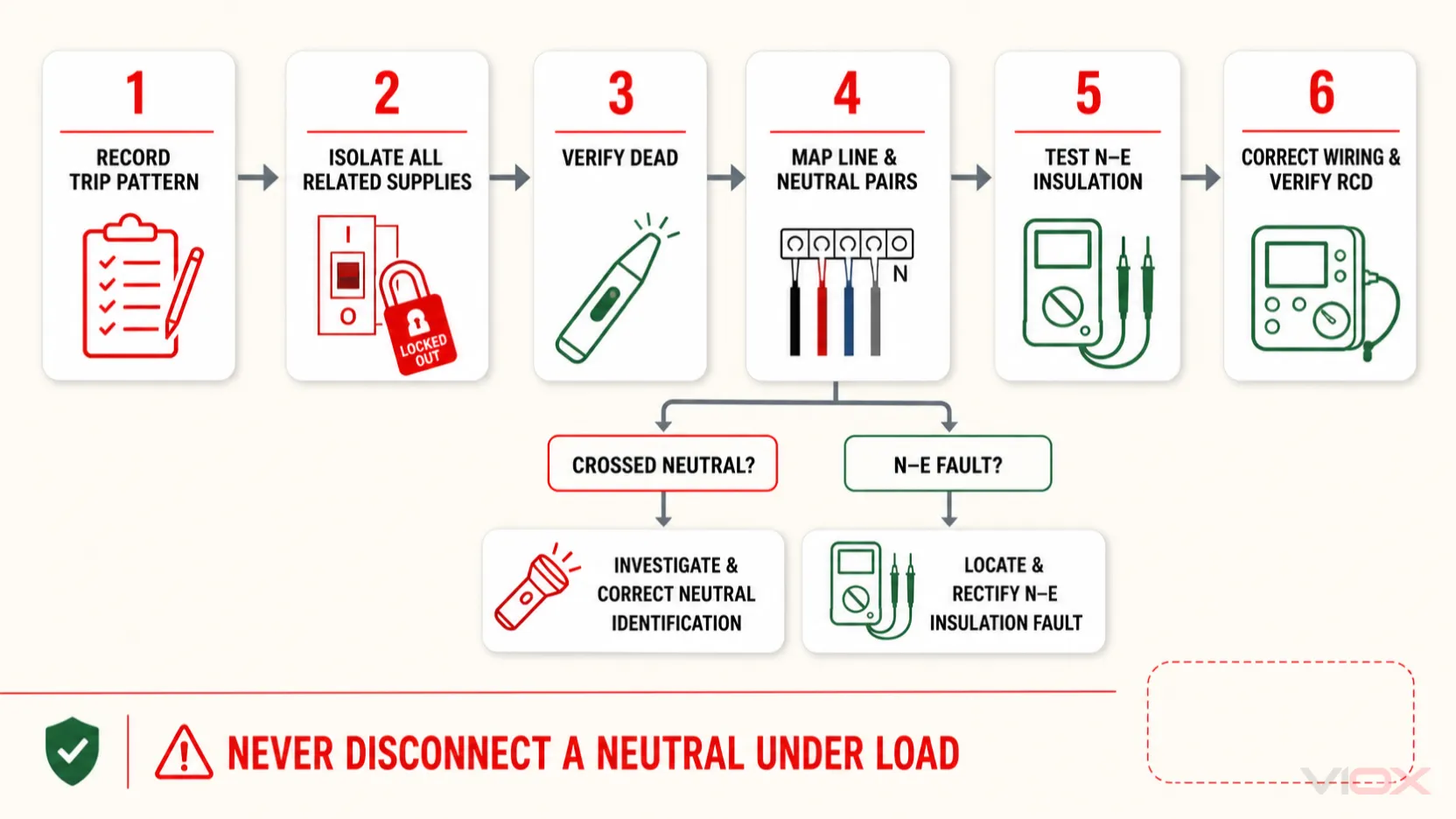
Неисправности нейтрали могут соединять номинально изолированные цепи. Поэтому тестирование должно выполняться компетентным лицом с использованием утвержденной процедуры безопасного отключения. Никогда не отсоединяйте и не перемещайте нейтральный проводник, пока по нему может протекать ток нагрузки.
1. Зафиксируйте характер срабатывания
Определите, какое защитное устройство срабатывает и какое событие это вызывает. Отметьте, происходит ли отключение:
- немедленно при подаче питания;
- только при замыкании конкретного выключателя;
- при нагрузке второй цепи;
- периодически по мере циклической работы нагрузок;
- после недавних электромонтажных работ.
Это позволяет установить, является ли вероятной проблемой трассировка цепи, суммарный ток утечки или неисправность конкретной нагрузки.
2. Определите все связанные источники питания и обеспечьте безопасную изоляцию
Рассматривайте предполагаемый «заимствованный» нейтральный провод как подключенный к нескольким цепям. Изолируйте все потенциально связанные источники, при необходимости заблокируйте их, проверьте индикатор напряжения, убедитесь в отсутствии напряжения и повторно проверьте индикатор. При необходимости включите альтернативные источники питания, такие как генераторы, системы ИБП, фотоэлектрические инверторы и управляющие трансформаторы.
3. Осмотрите схему подключения нейтрали в распределительном щите
После безопасного отключения электроустановки сравните каждый отходящий фазный проводник с соответствующей ему клеммой нейтрали. Убедитесь, что:
- каждая цепь RCBO использует клемму или вывод нейтрали, предназначенные для данного устройства;
- каждая группа RCD подключена к соответствующей отходящей шине нейтрали;
- ни одна отходящая нейтраль не подключена к шине нейтрали до RCD;
- перемычки шин нейтрали не соединяют раздельно защищаемые группы;
- маркировка цепей соответствует фактическим проводникам.
Сайт Руководство по распределительному щиту VIOX объясняет, как шины нейтрали и заземления размещаются в общей компоновке панели.
4. Разделение и идентификация проводников конечных цепей
Там, где это допускается процедурой испытаний, отсоединяйте изолированные нейтрали конечных цепей по отдельности и определяйте, какие фазный и нейтральный проводники относятся друг к другу. Проверка целостности цепи может выявить объединенные или перекрестно подключенные нейтрали. Не полагайтесь только на расположение кабелей или старую маркировку.
5. Проверка сопротивления изоляции между нейтралью и землей
Выполните проверку сопротивления изоляции, используя напряжение и методы подготовки, требуемые применимым стандартом на электромонтаж и подключенным оборудованием. Чувствительную электронику, SPD, индикаторы и фильтры, возможно, потребуется отключить в соответствии с процедурой испытаний. Низкий результат измерения между N и PE может указывать на замыкание нейтрали на землю в нижестоящей цепи, а не на перепутанную нейтраль.
6. Правильное измерение дифференциального тока
Когда необходимо и безопасно проведение диагностических измерений под напряжением, подходящие токоизмерительные клещи для измерения токов утечки, установленные вокруг всех токоведущих проводников цепи одновременно, измеряют нескомпенсированный ток. Охват только фазного или нейтрального проводника измеряет ток нагрузки и не дает той же информации о дифференциальном токе.
Работа под напряжением сопряжена с дополнительным риском и должна выполняться только квалифицированным персоналом с использованием соответствующих приборов, СИЗ и мер контроля рисков. Сравнивайте результаты с проектной документацией и техническими данными устройств, а не с универсальными значениями «годен/не годен», оторванными от применимого стандарта.
7. Исправьте схему подключения и проверьте защиту
После устранения неисправностей в схеме нейтрали:
- подтвердите правильность маркировки проводников и надежность затяжки клемм;
- при необходимости повторите испытания на целостность цепи и сопротивление изоляции;
- убедитесь, что каждая нагрузка работает, не влияя на несвязанные цепи;
- нажмите кнопку «Тест» на RCD/RCBO;
- выполните требуемые инструментальные проверки тока или времени срабатывания;
- обновите графики цепей и маркировку.
Кнопка тестирования проверяет внутреннюю функцию устройства; она не подтверждает, что нейтраль каждой конечной цепи проложена правильно. Приемо-сдаточные испытания остаются обязательными.
Правильные методы выполнения электромонтажа
Один RCBO на цепь
Если каждая конечная цепь имеет свой собственный RCBO, прокладывайте ее фазный и нейтральный проводники вместе через соответствующие клеммы этого устройства. Не объединяйте нейтральные проводники после устройства только для упрощения конструкции шины нейтрали.
Раздельные шины нейтрали для отдельных групп RCD
Каждая группа RCD с разделенной нагрузкой требует четко разделенной шины нейтрали после устройства. Шины не должны соединяться перемычками после соответствующих RCD.
Подходящая многополюсная защита для правомерных цепей с общей нейтралью
Если в проекте электрической цепи правомерно используется общий нейтральный проводник, выберите многополюсное устройство, специально предназначенное для такой электрической системы, чтобы все связанные проводники контролировались совместно и отключались при необходимости. Сверьтесь со схемой подключения производителя и местными нормативными требованиями.
Общие критерии выбора RCBO, включая количество полюсов, тип дифференциального тока, чувствительность, характеристику срабатывания и отключающую способность, см. в Как правильно выбрать АВДТ. Требования к продукции для бытового и аналогичного применения RCBO подробно описаны в IEC 61009-1: пояснения.
Отсутствие соединения нейтрали с защитным заземлением после точки разделения
Нейтральный проводник и защитное заземление выполняют различные функции после установленной точки разделения в электрической системе. Не соединяйте их вместе в конечной цепи и не используйте шину заземления в качестве нейтральной шины. См. Нулевая шина против шины заземления относительно границ установки.
Распространенные ошибочные решения
Немедленная замена RCD. Новое устройство, как правило, будет реагировать на тот же дисбаланс в проводке. Сначала проверьте схему цепи.
Установка менее чувствительного RCD. Это может уменьшить проявление симптомов, не устраняя при этом опасный путь протекания тока, и может привести к отсутствию требуемой дополнительной защиты.
Соединение шин нейтрали вместе. Это создает дополнительные параллельные пути возврата тока и может ухудшить селективность и изоляцию.
Отключение нейтралей до тех пор, пока срабатывание не прекратится. Произвольное отключение фазных проводников опасно и может привести к воздействию на оборудование аномальных напряжений. Используйте систематическое тестирование при обесточенной цепи.
Предположение, что выключенный автоматический выключатель означает безопасный нейтральный провод. Заимствованный нейтральный провод может по-прежнему находиться под током, подаваемым от другой цепи.
Обвинение электроприбора в утечке тока без проверки стационарной электропроводки. Если срабатывание защиты началось после работ на распределительном щите или в цепи, проверьте трассировку нейтрального провода перед заменой оборудования.
Итоговый ответ
Общие, заимствованные и перекрещенные нейтральные провода вызывают срабатывание RCD и RCBO, поскольку исходящие и возвращающиеся токи не проходят через одну и ту же систему измерения дифференциального тока. Устройство интерпретирует эту разницу как утечку и срабатывает корректно.
Решение заключается не в обходе или снижении чувствительности защиты. Определите каждую связанную цепь, изолируйте все возможные источники питания, сохраняйте каждую фазу и нейтраль в пределах одной зоны защиты, устраните непредусмотренные пути N-PE и проверьте выполненный монтаж с помощью испытаний, требуемых применимыми правилами устройства электроустановок.
VIOX поставляет РЦКБ и АВДТ для низковольтных систем распределения электроэнергии. Выбор устройства должен быть согласован с топологией цепи, схемой нейтрали, системой электроснабжения и региональными требованиями к монтажу.
ЧАСТО ЗАДАВАЕМЫЕ ВОПРОСЫ
Почему RCBO срабатывает сразу после включения нагрузки?
Если RCBO сбрасывается при отключенной нагрузке, но немедленно срабатывает при ее включении, возможно, ток фазы возвращается через другой нейтральный путь. Другие вероятные причины включают реальное замыкание на землю, соединение N-PE ниже по цепи или чрезмерный ток утечки оборудования.
Могут ли два RCBO использовать одну нейтраль?
Два независимых однополюсных RCBO обычно не могут использовать одну общую нейтраль ниже по цепи, поскольку каждое устройство измеряет свой собственный баланс фазного и нейтрального токов. Для использования общей нейтрали требуется соответствующая многополюсная защитная конфигурация, спроектированная и одобренная для данной системы электропроводки.
Всегда ли общая нейтраль приводит к срабатыванию RCD?
Нет. Если все соответствующие фазные проводники и общая нейтраль проходят через один и тот же подходящий измерительный сердечник RCD, токи нормальной нагрузки могут быть сбалансированы. Срабатывание происходит, когда часть возвратного тока обходит или пересекает контролируемый устройством путь.
Что такое «заимствованная нейтраль»?
Заимствованная нейтраль возникает, когда нагрузка получает питание от одной цепи, но использует нейтраль другой. Это может привести к срабатыванию RCD и оставить нейтраль под напряжением даже после отключения соответствующей цепи.
Может ли замыкание нейтрали на землю вызвать срабатывание RCD при отсутствии неисправности в электроприборе?
Да. Соединение N-PE ниже по цепи позволяет части нейтрального тока возвращаться через PE или соединенные металлические конструкции. RCD обнаруживает этот нескомпенсированный ток и может сработать при включении другой нагрузки в электроустановке.
Обнаруживает ли кнопка «Тест» на RCD перепутанные нейтрали?
Ненадежно. Кнопка проверяет внутреннюю функцию тестирования устройства. Она не выполняет трассировку проводников конечных цепей и не подтверждает, что каждая нейтраль возвращается через соответствующую зону защиты.