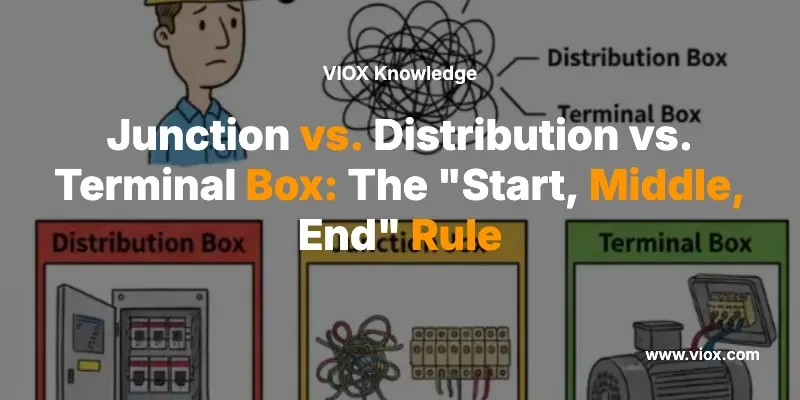
Imagine isto: Entra numa loja de material elétrico. Percorre o corredor e pega em três invólucros metálicos cinzentos idênticos, de 4×4 polegadas.
Coloca-os no balcão. Parecem exatamente iguais. Têm o mesmo aspeto. Custam o mesmo.
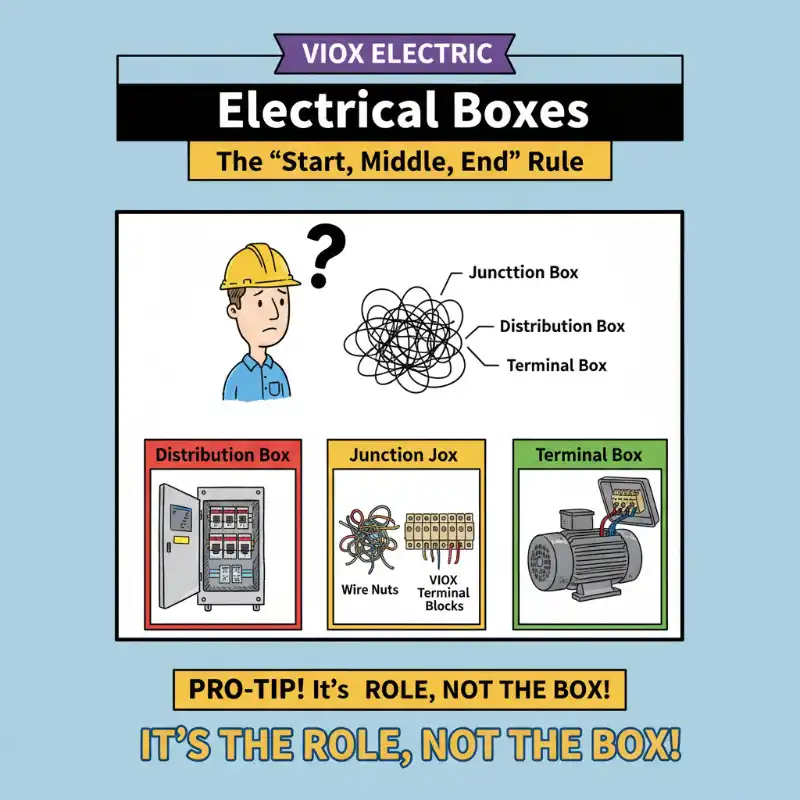
Mas dependendo de onde os instalar amanhã, um tornar-se-á um Caixa de distribuição, um tornar-se-á um Caixa De Junção, e um tornar-se-á um Caixa de terminais.
Esta é uma das fontes de confusão mais comuns para aprendizes e até engenheiros juniores. Se o hardware é idêntico, porque temos três nomes diferentes?
A resposta é simples, mas profunda: Uma caixa elétrica é definida pela sua missão, não pelo seu material.
Uma discussão recente entre eletricistas profissionais cristalizou perfeitamente esta definição. Eliminou o jargão e deu-nos uma “Regra de Ouro” para identificar estas caixas instantaneamente.
Chama-se a “Regra do ”Início, Meio, Fim".
Vamos analisar a identidade destas três caixas “camaleão”.
1. O “Início” = A Caixa de Distribuição (O QG)

Vamos começar na fonte.
- A Regra: Distribuição = INÍCIO
- O Alias: Quadro de Distribuição, Painel de Disjuntores, Centro de Carga, Caixa de Fusíveis.
- A Missão: Para Proteger e Alocar.
Se pegar nessa caixa metálica de 4×4, montá-la na parede onde a linha de serviço principal entra no edifício e enchê-la de disjuntores ou fusíveis, ela acaba de se tornar uma Caixa de distribuição.
É o “Quartel-General” do seu sistema elétrico.
O que a torna uma Caixa de Distribuição?
- Entrada: Normalmente, recebe um cabo alimentador grande e resistente (a alimentação principal).
- Ação: Divide (distribui) essa potência massiva em fluxos menores e gerenciáveis (circuitos de derivação).
- Proteção: Crucialmente, é aqui que os Dispositivos de Proteção contra Sobrecarga (OCPDs) vivem. Cada circuito de derivação que sai desta caixa é protegido por um disjuntor ou fusível.
Pro-Tip: Se a caixa contiver dispositivos que disparam ou queimam para salvar a sua casa de um incêndio, é uma Caixa de Distribuição. É o início do circuito.
2. O “Meio” = A Caixa de Junção (A Encruzilhada)
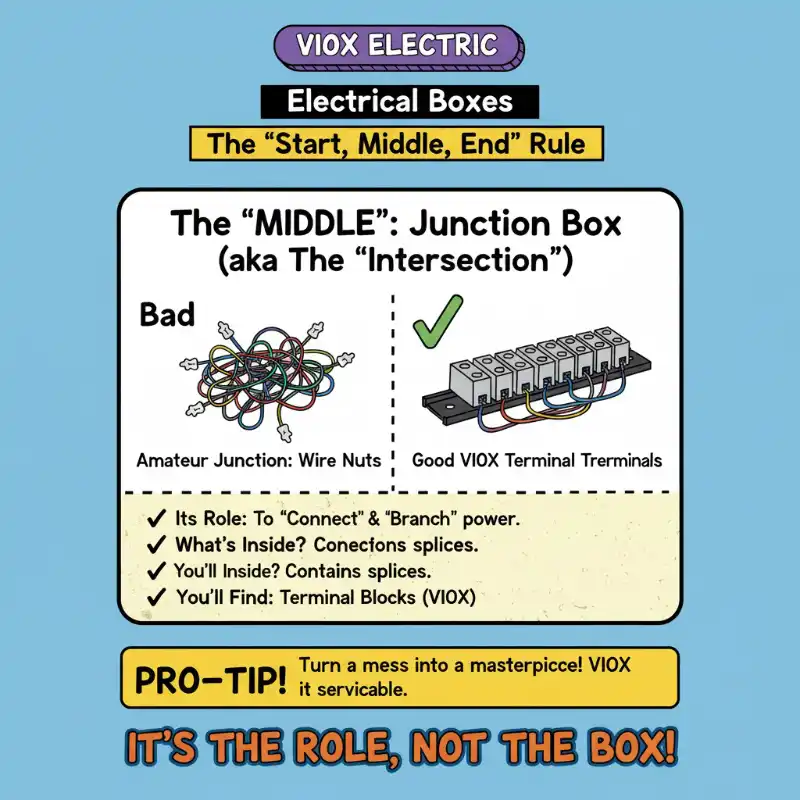
Agora, siga o fio que sai da Caixa de Distribuição. Ele passa pelo teto, desce um corredor e precisa se dividir para alimentar três luzes de escritório diferentes.
Corta o conduíte. Monta essa segunda caixa metálica de 4×4 no teto. Puxa os fios, descasca-os, torce-os com conectores de fio e coloca uma tampa cega.
Parabéns. Acaba de criar uma Caixa De Junção.
- A Regra: Junção = MEIO
- O Alias: Caixa J, Caixa de Emenda, Caixa de Puxar.
- A Missão: Para Conectar e Ramificar.
Uma Caixa de Junção é a “Encruzilhada” da autoestrada elétrica. É onde os fios se encontram, se misturam e seguem caminhos separados.
O que a torna uma Caixa De Junção?
- Conteúdo: Contém emendas (conectores de fio, conectores WAGO ou blocos de terminais). Raramente contém dispositivos ativos como interruptores ou disjuntores.
- Localização: Está localizada entre a fonte (Caixa de Distribuição) e a carga (a máquina ou a luz).
- Objetivo: Existe porque não se pode passar um único fio contínuo para sempre. Eventualmente, precisa de juntar dois fios, dividir um fio em dois ou apenas mudar de direção.
Pro-Tip: Se abrir uma caixa e vir uma “tigela de esparguete” de fios torcidos, mas nenhum dispositivo a fazer qualquer “trabalho”, está a olhar para uma Caixa de Junção. É o meio do circuito.
3. O “Fim” = A Caixa de Terminais (O Aperto de Mão)
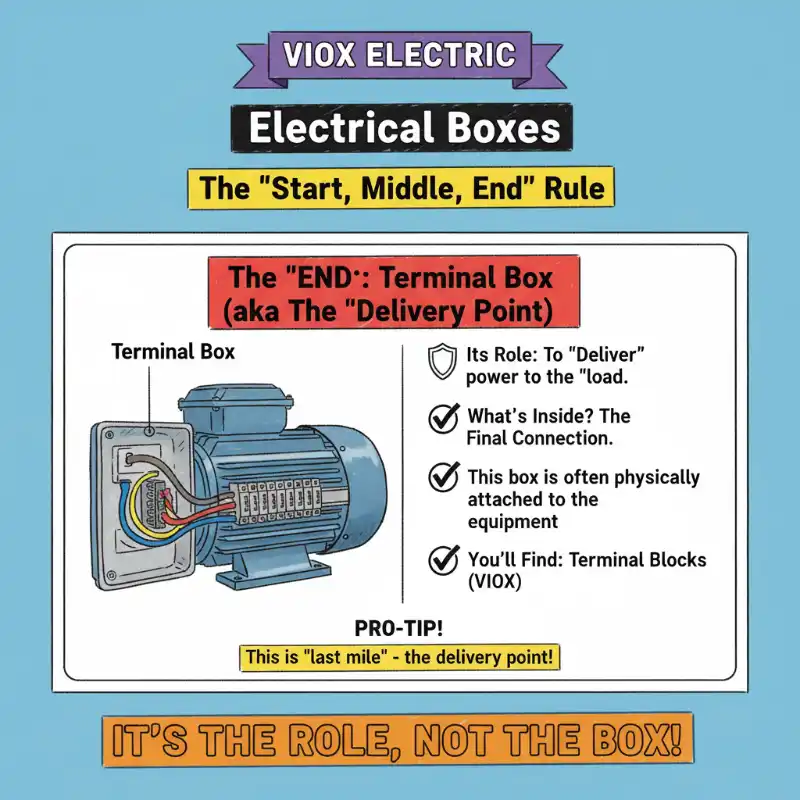
Finalmente, o fio sai da Caixa de Junção e chega à máquina - digamos, um grande motor industrial ou um aquecedor.
Aparafusa a terceira caixa metálica de 4×4 diretamente na lateral do motor. Puxa os fios de alimentação. Lá dentro, vê uma fila organizada de parafusos ou um bloco. Aparafusa os terminais de anel do fio de alimentação nos terminais do motor.
This is the Caixa de terminais.
- A Regra: Terminal = FIM
- O Alias: Cabeça de Motor (gíria da indústria), Caixa T, Caixa de Conexão.
- A Missão: Para Entregar.
A Caixa de Terminais é o “Aperto de Mão”. É o ponto específico onde a cablagem do edifício termina e a cablagem interna da máquina começa.
O que o torna uma caixa de terminais?
- Localização: Quase sempre é montada em ou dentro o equipamento de carga (motor, transformador, aquecedor, instrumento).
- Conteúdo: Geralmente contém uma Bloco Terminal—uma faixa fixa e rígida para aparafusar os fios—em vez de conectores de fio flutuantes.
- Objetivo: Facilita a transferência final de energia para o dispositivo que realiza o trabalho.
Pro-Tip: Se a caixa estiver vibrando porque está aparafusada a um motor em funcionamento, é uma caixa de terminais. É o fim do circuito.
Resumo: O guia rápido “Início, Meio, Fim”
Para recapitular, não olhe para o metal. Olhe para o missão. Aqui está o seu guia rápido:
| Recurso | Caixa de distribuição | Caixa De Junção | Caixa de terminais |
|---|---|---|---|
| A Regra | INÍCIO | MEIO | FIM |
| Função Primária | Proteger e Dividir a Energia | Unir e Ramificar Fios | Entregar Energia à Carga |
| Componente Chave | Disjuntores / Fusíveis | Conectores de Fio / Emendas | Blocos de terminais |
| Localização | Entrada de Serviço / Sala de Utilidades | Teto / Parede / Tubulação | Montado NO Equipamento |
| Analogia | A Sede | A Intersecção | A Doca de Carregamento |
Por que Isso Importa para Engenheiros
Você pode pensar: “É apenas semântica.” Mas usar o termo errado fica caro rapidamente.
- Se você pedir uma “Caixa de Distribuição” quando precisar de uma “Caixa de Junção”, poderá receber um invólucro grande com trilhos DIN e barramentos que você não precisa (e pagou a mais por eles).
- Se você especificar uma “Caixa de Terminais” para uma emenda de parede, seu instalador ficará confuso procurando os parafusos de montagem para um motor.
A linguagem é a primeira ferramenta no kit de um engenheiro. Use a “regra ”Início, Meio, Fim" e você nunca mais pegará a caixa errada.
O Rigor Técnico Nota
Normas E Fontes Referenciadas: As definições estão alinhadas com NEC (Código Elétrico Nacional) o Artigo 100 (Definições) e o Artigo 314 (Caixas e Corpos de Conduit).
Contexto: “Caixa de Junção” e “Caixa de Puxada” são frequentemente usadas de forma intercambiável na fala casual, mas, estritamente falando, uma Caixa de puxar é principalmente para auxiliar na puxada de fios, enquanto uma Caixa De Junção é para envolver emendas.
Pontualidade: A terminologia é atual e padrão em todo o setor elétrico a partir de novembro de 2025.