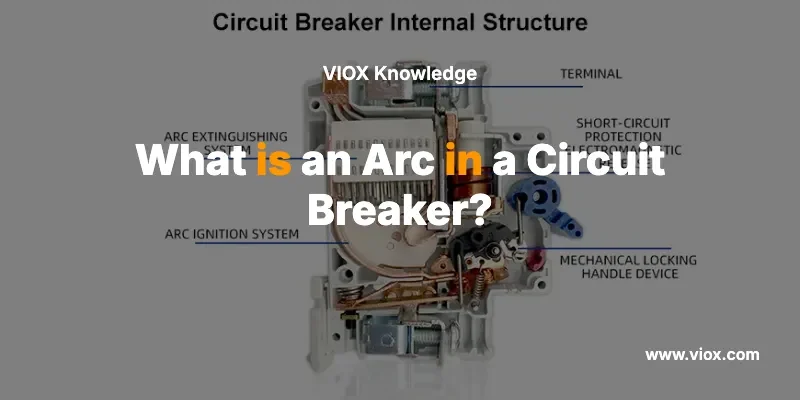
An łuk w automatyczny wyłącznik to łukowe wyładowanie elektryczne – kanał plazmowy osiągający temperaturę 20 000°C (36 000°F) – powstający między rozwierającymi się stykami, gdy wyłącznik przerywa prąd pod obciążeniem. Ten łuk stanowi jedno z najbardziej gwałtownych i energochłonnych zjawisk w inżynierii elektrycznej, zdolne do niszczenia styków, wywoływania pożarów i powodowania katastrofalnych uszkodzeń urządzeń, jeśli nie jest właściwie kontrolowane za pomocą specjalistycznych styków łukowych oraz układów gaszenia łuku.
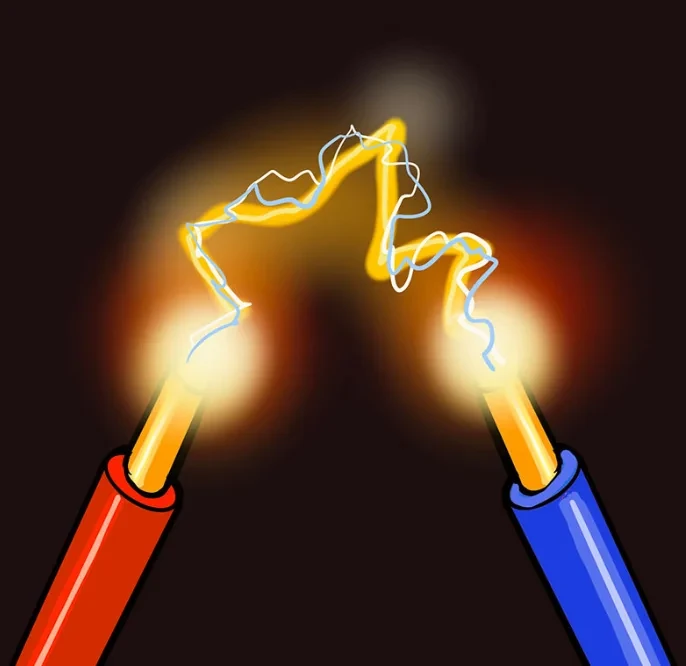
W VIOX Electric nasz zespół inżynieryjny codziennie projektuje i testuje wyłączniki, obserwując bezpośrednio zachowanie łuku w różnych typach wyłączników – od domowych wyłączników instalacyjnych (MCB) po przemysłowe wyłączniki w obudowie izolacyjnej (MCCB) oraz oraz wysokoprądowe wyłączniki powietrzne (ACB). Zrozumienie powstawania łuku, kluczowej roli styków łukowych w ochronie styków głównych oraz fizyki rządzącej gaszeniem łuku jest niezbędne dla inżynierów elektryków, kierowników zakładów i każdego, kto odpowiada za dobór lub konserwację urządzeń zabezpieczających.
Niniejszy kompleksowy przewodnik wyjaśnia zjawisko łuku z perspektywy produkcyjnej VIOX, obejmując fizykę łuku (plamy katodowe, zjawiska anodowe, dynamikę plazmy), sposób, w jaki styki łukowe poświęcają się, by chronić styki główne, charakterystyki napięcia łukowego, metody gaszenia w różnych typach wyłączników oraz praktyczne kryteria doboru zabezpieczeń przed łukiem.
Czym jest łuk elektryczny w wyłączniku?
Techniczna definicja łuku elektrycznego
Łuk elektryczny w wyłączniku to podtrzymywane wyładowanie elektryczne w zjonizowanym powietrzu (plazmie), występujące przy rozwieraniu się styków pod obciążeniem. W przeciwieństwie do krótkiej iskry, łuk jest ciągłym, samopodtrzymującym się kanałem plazmowym, który przenosi pełny prąd obwodu przez teoretycznie izolacyjną przerwę powietrzną.
Łuk powstaje, ponieważ prąd dąży do utrzymania swojej ścieżki. even as mechanical forces pull contacts apart. When contact separation creates an air gap, the intense electric field (often exceeding 3 million volts per meter at initial separation) ionizes the air molecules, breaking them into free electrons and positive ions. This ionized gas—plasma—becomes electrically conductive, allowing current to continue flowing through the gap as a brilliant white-blue arc.
According to VIOX testing data, a typical arc in a 600V MCCB interrupting 10,000 amperes reaches:
- Core temperature: 15,000-20,000°C (hotter than the sun’s surface at 5,500°C)
- Arc voltage: 20-60 volts (varies with arc length and current magnitude)
- Gęstość prądu: Up to 10^6 A/cm² at cathode spots
- Plasma velocity: 100-1,000 meters per second when magnetically driven
- Energy dissipation: 200-600 joules per millisecond for high-current faults
This extreme energy concentration makes arc control the defining challenge in circuit breaker engineering.
Why Arcs Form: The Physics Behind Contact Separation
Arcs are inevitable consequences of opening a current-carrying circuit. The arc formation process follows these fundamental physics principles:
1. Current Continuity Principle: Electrical current flowing through an inductive circuit (which includes virtually all real-world electrical systems) cannot instantaneously drop to zero. When contacts begin to separate, the current must find a path—the arc provides that path.
2. Contact Constriction and Localized Heating: Even when contacts appear to touch across their full face area, actual current conduction occurs through microscopic contact points (asperities) where surface irregularities make contact. Current density at these points is extremely high, causing localized heating and micro-welding.
3. Field Emission and Initial Ionization: As contacts separate (typically at 0.5-2 meters per second in circuit breakers), the reducing contact area causes current density to spike. This heats the remaining contact points to 2,000-4,000°C, vaporizing contact material. Simultaneously, the widening gap creates intense electric fields that ionize the metal vapor and surrounding air.
4. Plasma Channel Formation: Once a conductive plasma channel forms, it becomes self-sustaining through thermal ionization. Current flowing through the plasma heats it further (Joule heating: I²R), which increases ionization, which increases conductivity, which sustains the current. This positive feedback loop maintains the arc until external cooling and lengthening extinguish it.
In VIOX’s high-speed camera studies of arcing in molded-case circuit breakers, we observe arc establishment occurring within 0.1-0.5 milliseconds of contact separation, with the arc immediately beginning to move under electromagnetic forces toward arc chutes and extinction chambers.
Arc vs Spark: Understanding the Distinction
Electrical professionals sometimes confuse arcs and sparks, but they are fundamentally different phenomena:
| Charakterystyczny | Spark | Arc |
| Czas trwania | Transient (microseconds to milliseconds) | Sustained (milliseconds to seconds or longer) |
| Energy | Low energy discharge | High continuous energy |
| Bieżący przepływ | Brief pulse, typically <1 ampere | Continuous, carries full circuit current (hundreds to thousands of amperes) |
| Temperatura | Hot but brief | Extremely hot (15,000-20,000°C) |
| Self-Sustaining | No—collapses immediately | Yes—continues until external interruption |
| Potencjalne uszkodzenia | Minimal surface erosion | Severe contact erosion, equipment damage, fire risk |
| Przykład | Static electricity discharge, switch opening light load | Circuit breaker interrupting fault current |
The distinction matters because spark suppression (such as RC snubbers across relay contacts) and wygaszenie łuku (as in circuit breakers) require entirely different engineering approaches.
Arcing Contacts vs Main Contacts: The Protection Mechanism
One of the most important but least understood components in modern circuit breakers is the arcing contact—a specialized contact designed to protect the breaker’s primary (main) current-carrying contacts from arc damage.
What Are Arcing Contacts?
Arcing contacts (also called arc horns or arc runners in larger breakers) are secondary electrical contacts specifically engineered to:
- Bear the arc first when contacts open under load
- Draw the arc away from main contacts through mechanical and electromagnetic means
- Withstand erosion from repeated arcing through specialized refractory materials
- Guide the arc toward extinction chambers and arc chutes
In a circuit breaker contact system, you have two distinct contact pairs:
Main Contacts (Primary Contacts):
- Large contact surface area optimized for low resistance during normal current carrying
- Materials selected for electrical conductivity and mechanical durability (typically silver-cadmium oxide, silver-tungsten, or silver-nickel alloys)
- Designed to carry rated current continuously without overheating
- Close first when breaker closes; open last when breaker opens under no-load or low-current conditions
- Expensive and difficult to replace if damaged
Arcing Contacts (Secondary Contacts):
- Smaller contact area sufficient for brief arc-carrying duty
- Materials selected for high-temperature resistance and arc erosion resistance (copper-tungsten, tungsten-carbide, or specialized arc-resistant alloys)
- Designed to withstand intense, short-duration arcing
- Open first when breaker trips under load, initiating the arc away from main contacts
- Often integrated with arc runners that physically move the arc toward extinction zones
- Considered sacrificial—designed to erode gradually and be replaced during major maintenance
How Arcing Contacts Protect the Breaker
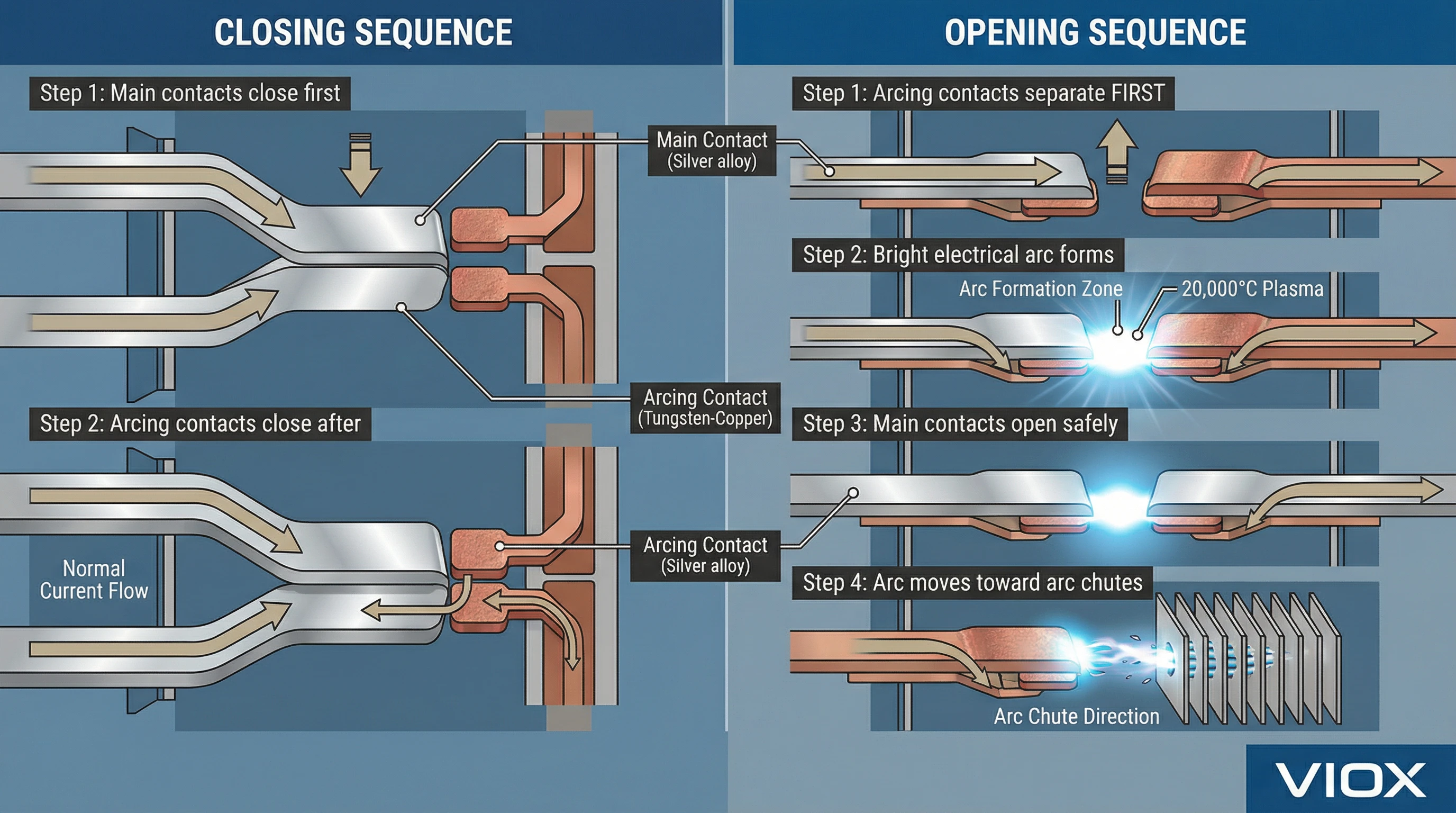
The protection mechanism works through carefully timed sequential operation. In VIOX MCCB designs, the contact sequence follows this pattern:
Closing Sequence (Energizing the Circuit):
- Main contacts close first, establishing the current path
- Arcing contacts close afterward (they make-last)
- During normal operation, both contact sets carry current, but main contacts carry the majority due to their lower resistance
Opening Sequence Under Load (Interrupting Current):
- Trip mechanism activates
- Arcing contacts begin to separate first (they break-first), while main contacts remain closed
- As arcing contact gap widens, an arc forms between them—but the main contacts are still closed, carrying current through the metallic path
- Main contacts open immediately after, but by this time, the arc is already established on the arcing contacts, not the main contacts
- Arcing contacts continue separating, lengthening the arc
- Electromagnetic forces (Lorentz force from arc’s own magnetic field) push the arc onto arc runners
- Arc moves into arc chutes or extinction chambers where it is cooled, lengthened, and extinguished
- Main contacts remain undamaged because they never experienced arcing
This break-first/make-last operation means main contacts only handle normal load current and open under arc-free conditions, while arcing contacts absorb all the destructive energy of arc formation and interruption.
Real-World Impact: VIOX Field Experience
In VIOX’s analysis of returned breakers that failed to interrupt faults properly, we find that roughly 60% of catastrophic failures involve either:
- Missing or severely eroded arcing contacts allowing arcs to strike main contacts directly
- Misaligned arcing contact mechanisms causing main contacts to separate before arcing contacts
- Wrong material specifications where arcing contacts used standard silver alloys instead of arc-resistant tungsten compositions
Proper arcing contact design and maintenance extends circuit breaker operational life by 3-5x in high-duty applications. In critical facilities like data centers and hospitals where our breakers protect life-safety circuits, we specify enhanced arcing contact systems with thicker tungsten layers and more frequent inspection cycles (annually instead of every 3-5 years).
The Physics of Arc Formation: Cathode Spots, Anode Phenomena, and Plasma Dynamics
To truly understand how circuit breakers control arcs, we must examine the fundamental physics governing arc behavior. This section explores arc physics at a level beyond what competitors typically cover—giving electrical engineers the deep technical knowledge to specify and troubleshoot arc-related issues.
Cathode Phenomena: The Arc’s Power Source
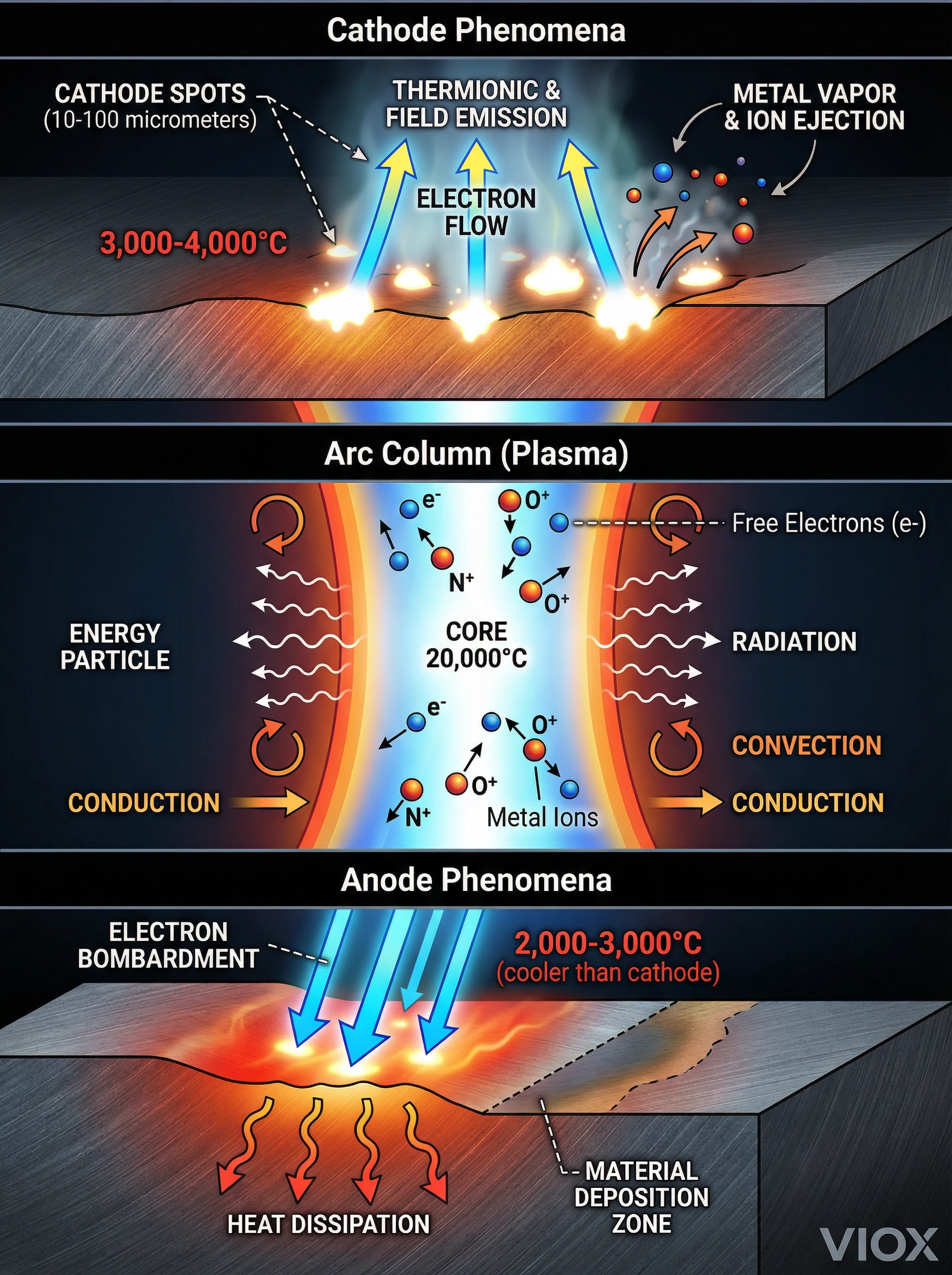
The cathode (negative electrode) is where electrons originate in an electrical arc. Unlike steady-state conduction where current flows uniformly, arc cathodes concentrate enormous current density into tiny active regions called cathode spots.
Cathode Spot Characteristics (from VIOX laboratory measurements):
- Rozmiar: 10-100 micrometers diameter
- Gęstość prądu: 10^6 to 10^9 A/cm² (million to billion amperes per square centimeter)
- Temperatura: 3,000-4,000°C at the cathode surface
- Lifetime: Microseconds—spots extinguish and re-form rapidly, giving arcs their characteristic flickering appearance
- Material emission: Cathode spots vaporize electrode material, ejecting metal vapor, ions, and microdroplets into the arc column
The cathode spot operates through thermionic emission oraz field emission:
- Thermionic emission: Intense heating at microscopic contact points provides thermal energy to free electrons from the metal’s surface, overcoming the work function (binding energy). For copper contacts, work function ≈ 4.5 eV, requiring temperatures >2,000 K for significant emission.
- Field emission: The intense electric field at the cathode surface (10^8 to 10^9 V/m) literally pulls electrons from the metal through quantum tunneling, even at lower temperatures. Field emission dominates in vacuum and SF6 breakers where high field strength can be maintained.
Material Selection Impact: Cathode erosion is the primary wear mechanism for arcing contacts. VIOX specifies tungsten-copper composites (typically 75% tungsten, 25% copper) for arcing contacts because:
- Tungsten’s high melting point (3,422°C) reduces vaporization rate
- Tungsten’s high work function (4.5 eV) reduces thermionic emission, stabilizing the cathode spot
- Copper provides electrical conductivity and thermal conductivity to dissipate heat
- The composite resists erosion 3-5x better than pure copper or silver contacts
Anode Phenomena: Heat Dissipation and Material Transfer
The anode (positive electrode) receives the electron flow from the cathode. Anode behavior differs fundamentally from cathode behavior:
Anode Characteristics:
- Heating mechanism: Bombardment by high-velocity electrons from the cathode, which convert kinetic energy to heat upon impact
- Temperatura: Anode spots typically 500-1,000°C cooler than cathode spots
- Gęstość prądu: More diffuse than cathode—spreads over larger area
- Material transfer: In DC arcs, material erodes from cathode and deposits on anode, creating the characteristic “transferred metal” observed in arc-damaged contacts
W AC circuits (the vast majority of circuit breaker applications), polarity reverses 50-60 times per second, so each contact alternates between cathode and anode. This alternating polarity explains why AC circuit breaker contacts show more uniform erosion patterns compared to DC breakers where cathode erosion dominates.
Arc Column: Plasma Physics in Action
The arc column is the luminous plasma channel connecting cathode and anode. This is where the bulk of arc energy dissipates.
Plasma Properties:
- Composition: Ionized metal vapor from electrode erosion + ionized air (nitrogen, oxygen become N+, O+ ions plus free electrons)
- Temperature profile: 15,000-20,000°C at core, decreasing radially toward edges
- Przewodność elektryczna: 10^3 to 10^4 siemens/meter—highly conductive, comparable to poor metals
- Thermal conductivity: High—plasma efficiently transfers heat to surrounding air
- Optical emission: Intense white-blue light from electronic excitation and recombination (electrons returning to ground states emit photons)
Energy Balance in the Arc Column:
The arc column must maintain thermal equilibrium between energy input (Joule heating: V_arc × I) and energy loss (radiation, convection, conduction):
- Energy Input: P_in = V_arc × I (typically 20-60V × 1,000-50,000A = 20 kW to 3 MW)
- Radiation losses: High-temperature plasma radiates UV and visible light (Stefan-Boltzmann: P ∝ T^4)
- Convection losses: Plasma rises due to buoyancy (hot gas) and is blown by magnetic forces
- Conduction losses: Heat conducted to electrodes, arc chamber walls, and surrounding gas
When energy loss exceeds energy input (such as when the arc is rapidly lengthened or cooled), plasma temperature drops, ionization decreases, resistance increases, and the arc extinguishes.
Arc Voltage Characteristics: The Key to Current Limitation
One of the most important arc parameters for circuit breaker performance is arc voltage—the voltage drop across the arc from cathode to anode.
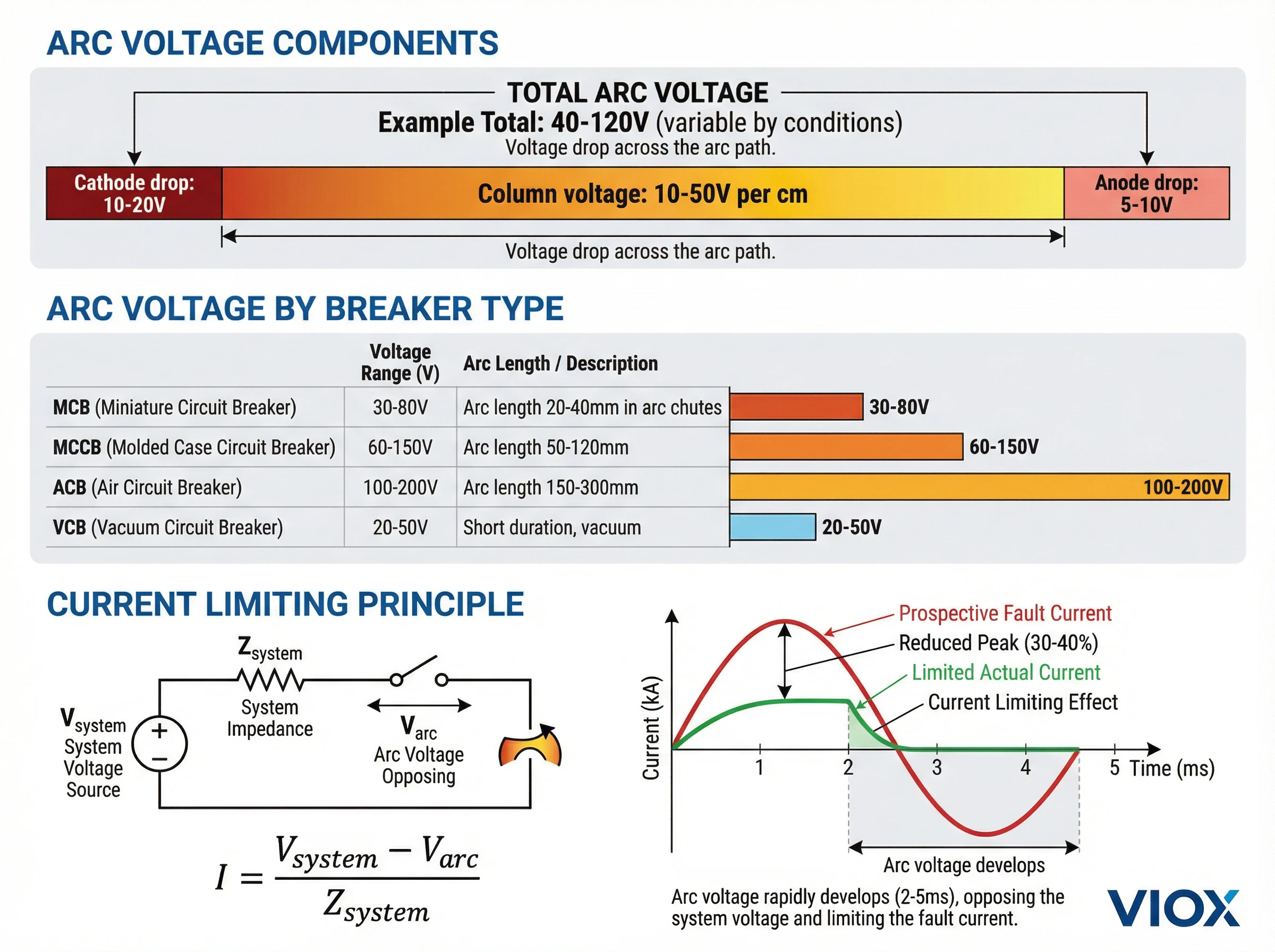
Arc Voltage Components:
V_arc = V_cathode + V_column + V_anode
Gdzie:
- V_cathode: Cathode voltage drop (typically 10-20V)—energy required to extract electrons from cathode
- V_column: Column voltage drop (varies with arc length: ~10-50V per cm of arc length)
- V_anode: Anode voltage drop (typically 5-10V)—energy dissipated as electrons impact anode
Total arc voltage in VIOX circuit breakers during fault interruption:
| Typ wyłącznika | Initial Arc Gap | Arc Length After Blowout | Typical Arc Voltage |
| MCB (miniature) | 2-4 mm | 20-40 mm (in arc chutes) | 30-80V |
| MCCB (molded case) | 5-10 mm | 50-120 mm (in arc chutes) | 60-150V |
| ACB (air circuit breaker) | 10-20 mm | 150-300 mm (extended arc horns) | 100-200V |
| VCB (vacuum) | 5-15 mm | No lengthening (vacuum) | 20-50V (low due to short duration) |
Arc Voltage and Current Limitation:
Arc voltage is the mechanism by which current-limiting circuit breakers reduce fault current below prospective levels. The system can be modeled as:
V_system = I × Z_system + V_arc
Rearranging:
I = (V_system – V_arc) / Z_system
By rapidly developing high arc voltage (through arc lengthening, cooling, and splitter plate interaction), the breaker reduces the net driving voltage, thereby limiting current. VIOX’s current-limiting MCCBs develop arc voltages of 120-180V within 2-3 milliseconds, reducing peak fault current to 30-40% of prospective values.
Arc Voltage Measurement: During short-circuit testing in VIOX’s 65 kA laboratory, we measure arc voltage using high-voltage differential probes and high-speed data acquisition (1 MHz sampling rate). Arc voltage waveforms show rapid rise as contacts separate, then characteristic fluctuations as the arc moves through arc chutes, then sudden collapse to zero at current zero when the arc extinguishes.
Arc Extinction Methods Across Circuit Breaker Types
Different circuit breaker technologies employ distinct arc extinction strategies, each optimized for specific voltage classes, current ratings, and application requirements.
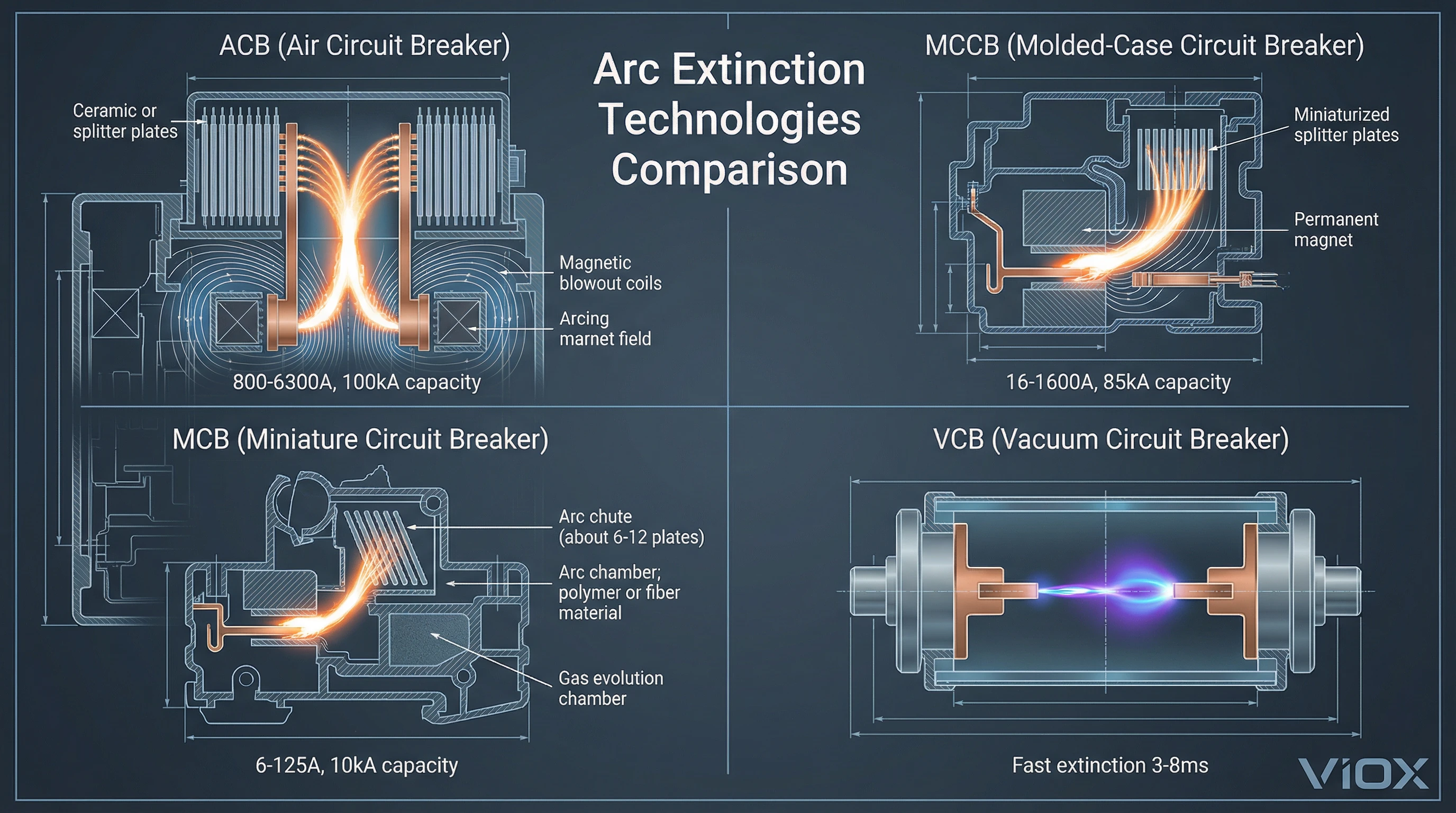
Air Circuit Breakers (ACBs): Magnetic Blowout and Arc Chutes
Wyłączniki powietrzne are the traditional workhorse for large industrial applications (800-6300A frame sizes, up to 100 kA interrupting capacity). They extinguish arcs in open air using mechanical and electromagnetic force.
Arc Extinction Mechanism:
- Wybuch magnetyczny: Permanent magnets or electromagnetic coils create a magnetic field perpendicular to the arc path. The arc current interacts with this field, producing a Lorentz force: F = I × L × B
- Force direction: Perpendicular to both current and magnetic field (right-hand rule)
- Magnitude: Proportional to arc current—higher fault currents are blown faster
- Effect: Drives arc upward and away from contacts at velocities of 50-200 m/s
- Arc Runners: The arc is pushed onto extended copper or steel runners that lengthen the arc path, increasing arc voltage and resistance.
- Arc Chutes (Arc Splitters): The arc enters a chamber containing multiple parallel metal plates (typically 10-30 plates spaced 2-8mm apart). The arc is:
- Split into multiple series arcs (one between each pair of plates)
- Cooled by thermal contact with the metal plates
- Lengthened as it spreads across plate surfaces
- Each gap adds ~20-40V to arc voltage, so 20 plates = 400-800V total arc voltage
- Deionization: The combination of cooling and current zero crossing (in AC systems) allows the air to deionize, preventing arc re-strike.
VIOX ACB Design: Our VAB-series ACBs use optimized arc chute geometry with tightly spaced splitter plates (3-5mm) and high-strength permanent magnets generating 0.3-0.8 Tesla field strength. This design reliably extinguishes arcs up to 100 kA within 12-18 milliseconds.
Molded-Case Circuit Breakers (MCCBs): Compact Arc Chutes
MCCB are the most common industrial circuit breaker (16-1600A), requiring compact arc extinction systems suitable for enclosed molded cases.
Arc Extinction Strategy:
MCCBs use similar principles to ACBs but in miniaturized, optimized arc chambers:
- Arc chamber design: Integral molded arc-resistant housing (often glass-polyester composite) that contains the arc and directs gases
- Wybuch magnetyczny: Small permanent magnets or current-carrying blowout coils
- Compact arc chutes: 8-20 splitter plates in a confined volume
- Gas pressure venting: Controlled venting allows pressure relief while preventing external flaming
Current-Limiting MCCB: VIOX’s CLM series employs an enhanced arc chamber design:
- Tight spacing: Splitter plates spaced 2-3mm (vs. 4-6mm in standard MCCBs)
- Extended path: Arc forced to travel 80-120mm through serpentine arc chute
- Rapid voltage development: Arc voltage reaches 120-180V within 2ms
- Przepuszczalna energia: Reduced to 20-30% of prospective I²t
These current-limiting designs protect sensitive electronic equipment, reduce arc flash hazard, and minimize mechanical stress on bus bars and switchgear.
Miniature Circuit Breakers (MCBs): Thermal and Magnetic Arc Control
MCB (6-125A residential/commercial breakers) use simplified arc extinction suitable for lower fault currents and compact single-pole construction.
Arc Extinction Features:
- Rynna łukowa: 6-12 splitter plates in a compact molded chamber
- Wybuch magnetyczny: Small permanent magnet or ferromagnetic arc runner
- Gas evolution: Arc heat vaporizes fiber or polymer arc chute components, generating deionizing gases (hydrogen from polymer decomposition) that help cool and extinguish the arc
VIOX MCB Design (VOB4/VOB5 series):
- Arc chutes tested to 10,000 interrupting operations per IEC 60898-1
- Arc extinguished within 8-15 ms for rated fault currents (6 kA or 10 kA)
- Internal arc containment validated to prevent external flaming
Vacuum Circuit Breakers (VCBs): Rapid Arc Extinction in Vacuum
Vacuum circuit breakers employ a radical different approach: eliminate the medium entirely. Contacts operate in a sealed vacuum bottle (10^-6 to 10^-7 Torr pressure).
Arc Extinction Mechanism:
In vacuum, there is no gas to ionize. When contacts separate:
- Metal vapor arc: Initial arc consists purely of ionized metal vapor from contact surfaces
- Rapid expansion: Metal vapor expands into vacuum and condenses on cold surfaces (shields and contacts)
- Fast deionization: At current zero, remaining ions and electrons recombine or deposit within microseconds
- High dielectric recovery: Vacuum gap regains full dielectric strength almost instantly
- Wygaszenie łuku: Typically within 3-8 milliseconds (1/2 to 1 cycle at 50/60 Hz)
Advantages of VCB:
- Minimal contact erosion (only metal vapor, no gas reactions)
- Very fast interruption (3-8 ms)
- Long contact life (100,000+ operations)
- No maintenance (sealed for life)
- Kompaktowy rozmiar
Ograniczenia:
- More expensive than air breakers
- Voltage limited (typically 1-38 kV; not suitable for low-voltage applications)
- Potential for overvoltages (chopping currents) in some applications
VIOX manufactures VCBs (VVB-series vacuum contactors) for medium-voltage motor control and capacitor switching applications where their long life and minimal maintenance justify the cost premium.
SF6 Circuit Breakers: High-Pressure Arc Quenching
SF6 breakers use sulfur hexafluoride gas, which has exceptional arc-quenching properties:
- Wytrzymałość dielektryczna: 2-3x air at same pressure
- Electronegativity: SF6 captures free electrons, rapidly deionizing the arc
- Thermal conductivity: Efficiently cools arc plasma
Wymieranie łuku:
Arc forms in pressurized SF6 (2-6 bar). At current zero, SF6 rapidly removes heat and captures electrons, allowing dielectric recovery within microseconds. Used primarily in high-voltage applications (>72 kV) and some medium-voltage breakers.
Względy środowiskowe: SF6 is a potent greenhouse gas (23,500× CO2 over 100 years), leading to industry transition toward vacuum and air-insulated alternatives. VIOX does not manufacture SF6 breakers, focusing instead on environmentally friendly air and vacuum technologies.
Circuit Breaker Arc Ratings and Standards
Selecting circuit breakers requires understanding standardized arc-related ratings that define the breaker’s ability to safely interrupt fault currents. These ratings vary between regions and standards organizations, but all address the same fundamental question: can this breaker safely extinguish the arc when interrupting the maximum available fault current?
Interrupting Capacity (Breaking Capacity)
Zdolność przerywania is the maximum fault current a circuit breaker can safely interrupt without damage or failure. This rating represents the worst-case scenario: a dead short circuit (zero impedance fault) occurring at the breaker terminals.
IEC Standards (IEC 60947-2 for MCCBs):
- Icu (Ultimate Short-Circuit Breaking Capacity): The maximum fault current the breaker can interrupt once. After an Icu interruption, the breaker may require inspection or replacement. Expressed in kA (kiloamperes).
- Ics (Service Short-Circuit Breaking Capacity): The fault current the breaker can interrupt multiple times (typically 3 operations) and continue functioning normally. Usually 25%, 50%, 75%, or 100% of Icu.
UL/ANSI Standards (UL 489 for MCCBs):
- Interrupting Rating (IR or AIC): Single rating expressed in amperes (e.g., 65,000 A or “65kA”). The breaker must interrupt this current level and pass subsequent tests without failure. Generally comparable to IEC Icu.
VIOX Product Ranges:
| Typ wyłącznika | Typical Frame Sizes | VIOX Interrupting Capacity Range | Standardowa zgodność |
| MCB | 6-63A | 6 kA, 10 kA | IEC 60898-1, EN 60898-1 |
| MCCB | 16-1600A | 35 kA, 50 kA, 65 kA, 85 kA | IEC 60947-2, UL 489 |
| ACB | 800-6300A | 50 kA, 65 kA, 80 kA, 100 kA | IEC 60947-2, UL 857 |
Selection Guidance: The breaker’s interrupting capacity must exceed the available fault current (also called prospective short-circuit current) at the installation point. This fault current is calculated based on utility transformer capacity, cable impedances, and source impedance. Installing a breaker with insufficient interrupting capacity results in catastrophic failure during faults—arc cannot be extinguished, breaker explodes, and fire/injury follow.
VIOX recommends safety margin: specify breakers rated at least 125% of calculated available fault current to account for utility system changes and calculation uncertainties.
Short-Time Withstand Current Ratings
Dla selective coordination in cascaded protection systems, some breakers (especially ACBs and electronic-trip MCCBs) include short-time delay settings that intentionally withstand fault currents for brief periods (0.1-1.0 seconds) to allow downstream breakers to trip first.
Icw (IEC 60947-2): Short-time withstand current rating. The breaker can carry this fault current for a specified duration (e.g., 1 second) without tripping or damage, allowing coordination with downstream devices.
VIOX ACB models with LSI (Long-time, Short-time, Instantaneous) trip units offer adjustable short-time settings (0.1-0.4s) and Icw ratings of 30-85 kA, enabling selective coordination in industrial distribution systems.
Arc Flash Incident Energy and Labels
Beyond the breaker’s own ratings, arc flash hazard labeling requirements (per NEC 110.16, NFPA 70E, and IEEE 1584) mandate that electrical equipment display the available fault current oraz clearing time to enable arc flash boundary and incident energy calculations.
VIOX ships all breakers with documentation to support arc flash labeling:
- Maximum available fault current rating
- Typical clearing times at various fault current levels (from time-current curves)
- Let-through I²t values for current-limiting breakers
Electrical contractors and engineers use this data with arc flash calculation software to determine incident energy (cal/cm²) and establish safe working distances and PPE requirements.
Testowanie i certyfikacja
All VIOX circuit breakers undergo third-party testing and certification to verify arc interruption performance:
Type Testing (per IEC 60947-2 and UL 489):
- Short-circuit test sequence: Breakers interrupt rated fault current multiple times (“O-t-CO” sequence: Open, time delay, Close-Open) to verify arcing contact and arc chamber durability
- Temperature rise test: Confirms arcing contacts and arc chambers don’t overheat during normal operation
- Endurance test: 4,000-10,000 mechanical operations plus rated electrical operations verify contact life
- Dielectric test: High-voltage testing confirms arc-damaged insulation maintains clearance
Routine Testing (every production unit):
- Trip current verification
- Pomiar rezystancji styków
- Visual inspection of arcing contacts and arc chutes
- Hi-pot dielectric testing
VIOX’s quality management system (ISO 9001:2015 certified) requires batch sampling and testing per IEC 60947-2 Annex B, with full traceability from arc chamber components through final assembly.
Selecting Circuit Breakers for Arc Performance and Application
Proper circuit breaker selection considering arc behavior ensures safe, reliable interruption throughout the installation’s lifetime. Follow this systematic approach:
Step 1: Determine Available Fault Current
Calculate or measure the prospective short-circuit current at the breaker installation point. Methods:
Calculation Method:
- Obtain utility transformer kVA rating and impedance (typically 4-8%)
- Calculate transformer secondary fault current: I_fault = kVA / (√3 × V × Z%)
- Add cable impedance from transformer to breaker location
- Account for parallel sources (generators, other feeders)
Measurement Method:
Use a fault current analyzer or prospective short-circuit current tester at the installation point (requires de-energized testing or specialized live equipment).
Utility Data Method:
Request available fault current data from the electric utility for the service entrance.
For typical VIOX customer applications:
- Mieszkalnych: 10-22 kA typical
- Budynki komercyjne: 25-42 kA typical
- Obiekty przemysłowe: 35-100 kA (up to 200 kA near large transformers)
Step 2: Select Interrupting Capacity with Safety Margin
Choose breaker Icu/AIC rating ≥ 1.25 × available fault current.
Example: Available fault current = 38 kA → specify breaker rated ≥ 48 kA → VIOX VPM1 series MCCB rated 50 kA is appropriate.
Step 3: Evaluate Arc Energy and Current Limitation
For sensitive equipment protection (electronics, variable frequency drives, control systems), consider current-limiting breakers that reduce let-through energy:
Current-Limiting Performance: VIOX CLM series MCCBs with current-limiting arc chutes achieve:
- Peak let-through current: 30-45% of prospective fault current
- I²t let-through: 15-25% of prospective I²t energy
- Limiting occurs within first 2-5 ms (less than 1/4 cycle at 60 Hz)
This dramatic energy reduction protects downstream cables, bus bars, and equipment from thermal and mechanical stress.
Step 4: Consider Arc Flash Safety and Accessibility
In locations where workers must access energized equipment:
- Specify breakers with arc-resistant enclosures or remote racking mechanisms
- Use electronic trip units with zone-selective interlocking (ZSI) for faster fault clearing
- Consider arc flash relays with optical detection for ultra-fast tripping (2-5 ms)
- Install arc flash warning labels and establish safety procedures per NFPA 70E
VIOX ACB models with draw-out mechanisms allow breaker removal while maintaining arc chamber alignment and safety—critical for maintenance in high-energy systems.
Step 5: Specify Arcing Contact Material and Maintenance Intervals
For high-duty applications (frequent switching, high fault current environments):
Enhanced arcing contacts: Specify tungsten-copper composition with increased mass
Inspection intervals: VIOX recommendations based on application:
| Duty Cycle | Inspections per Year | Arcing Contact Expected Life |
| Light (residential, commercial offices) | 0 (visual only) | 20-30 years |
| Medium (retail, light industrial) | Co 3-5 lat | 10-20 years |
| Heavy (manufacturing, repetitive starting) | Rocznie | 5-10 lat |
| Severe (primary switchgear, high fault exposure) | Every 6 months | 2-5 years or after major fault |
Step 6: Verify Coordination and Selectivity
Plot time-current curves to ensure proper arc-fault coordination:
- Upstream breaker should not trip before downstream breaker during faults
- Adequate time margin (typically 0.2-0.4 seconds) between curves
- Account for breaker arc time and current-limiting effects
VIOX provides TCC (time-current curve) data and coordination software to facilitate selectivity analysis.
Arc-Related Maintenance, Inspection, and Troubleshooting
Proper maintenance extends arcing contact life, maintains interrupting capability, and prevents arc-related failures.
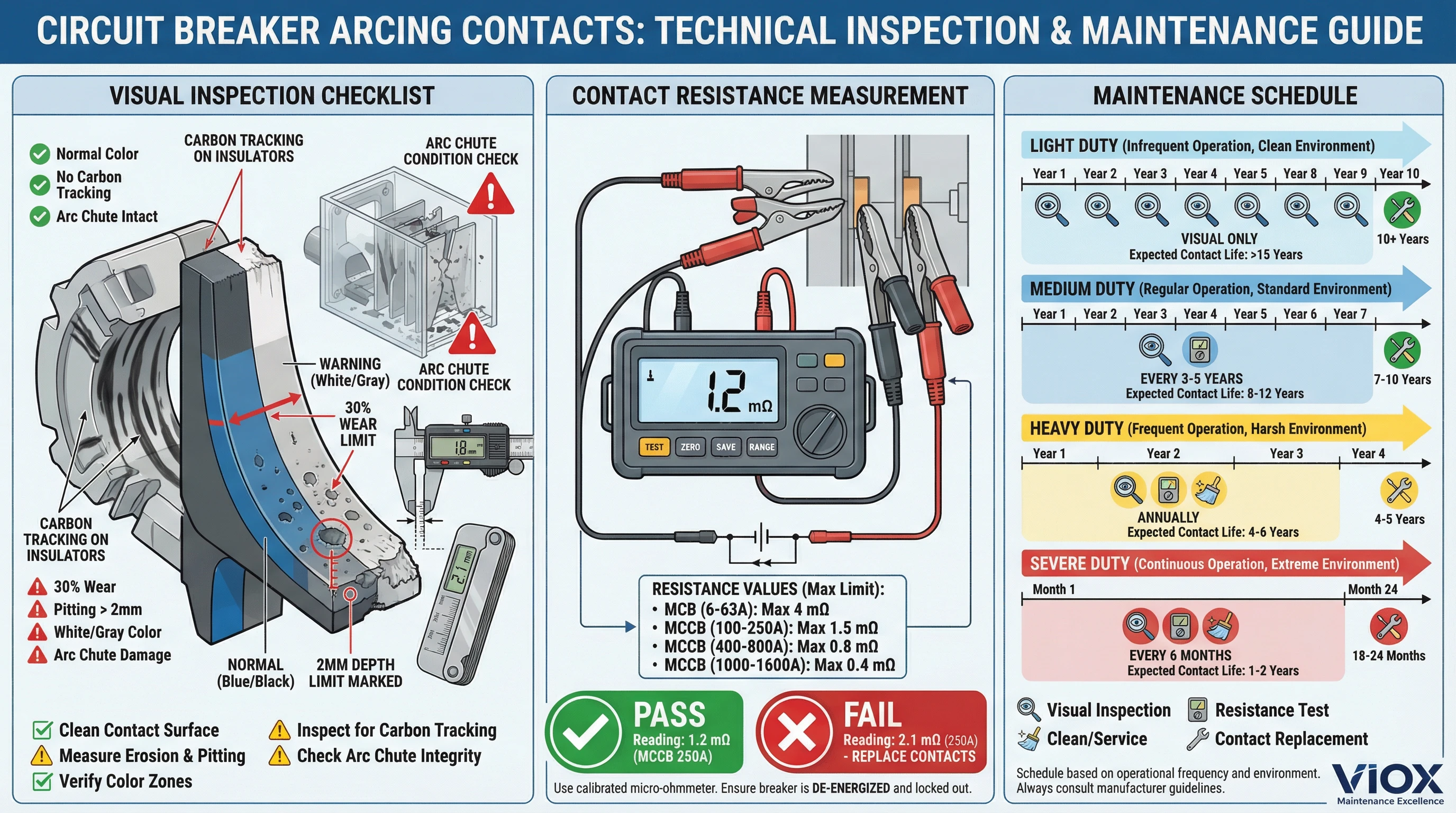
Visual Inspection of Arcing Contacts
Perform visual inspection during scheduled maintenance (breaker de-energized and withdrawn):
What to look for:
- Contact erosion: Material loss from arcing contact tips—acceptable if <30% original material remains
- Pitting and cratering: Deep craters indicate severe arcing; replace if crater depth >2mm
- Przebarwienia: Blue/black oxidation is normal; white/gray deposits suggest overheating
- Carbon tracking: Conductive carbon paths on insulators from arc plasma—clean or replace affected parts
- Warping or melting: Indicates excessive arc energy or failed arc extinction—replace breaker
- Arc chute damage: Broken splitter plates, melted barriers, or soot accumulation—clean or replace arc chamber
VIOX inspection tools: Contact thickness gauges and wear limit templates available for all MCCB/ACB models to quantify erosion.
Contact Resistance Measurement
Measure resistance across each pole using micro-ohmmeter (digital low-resistance ohm meter):
Acceptable values (VIOX breakers, per IEC 60947-2):
| Breaker Frame Size | New Contact Resistance | Maximum Allowable |
| MCB (6-63A) | 0.5-2 mΩ | 4 mΩ |
| MCCB (100-250A) | 0.1-0.5 mΩ | 1.5 mΩ |
| MCCB (400-800A) | 0.05-0.2 mΩ | 0.8 mΩ |
| MCCB (1000-1600A) | 0.02-0.1 mΩ | 0.4 mΩ |
| ACB (1600-3200A) | 0.01-0.05 mΩ | 0.2 mΩ |
Rising contact resistance indicates:
- Arcing contact erosion
- Main contact contamination or oxidation
- Reduced contact pressure (worn springs)
- Misalignment
If resistance exceeds maximum allowable, replace arcing contacts or entire breaker depending on model and repairability.
Troubleshooting Arc-Related Problems
Problem: Breaker trips immediately when closing onto load
- Możliwe przyczyny: Downstream short circuit (verify with megohmmeter testing), Instantaneous trip setting too low, Worn arcing contacts causing high initial resistance and inrush current
- Rozwiązanie: Isolate downstream load, test circuit continuity, inspect arcing contacts
Problem: Visible arcing during normal operation
- Możliwe przyczyny: Main contacts not closing properly (arcing contacts carrying continuous current), Loose connections at breaker terminals, Contact contamination reducing conductivity, Mechanical misalignment
- Rozwiązanie: Immediately de-energize and inspect. Arcing during normal operation indicates imminent failure—replace breaker.
Problem: Breaker fails to interrupt fault
- Możliwe przyczyny: Fault current exceeds interrupting rating (arc cannot be extinguished), Severe arcing contact erosion, Arc chamber damage or blockage, Contamination in arc chute (metal particles shorting splitter plates)
- Rozwiązanie: Replace breaker immediately. Failure to interrupt indicates critical safety hazard.
Problem: Burning smell or smoke from breaker during fault interruption
- Możliwe przyczyny: Normal arc by-products (ozone, NOx) if occurs once during fault clearing, Organic insulation pyrolysis if arc energy excessive, Internal component overheating
- Rozwiązanie: If single event during fault clearing, perform post-interruption inspection per IEC 60947-2 (visual, resistance, dielectric). If repeated or during normal operation, replace breaker.
When to Replace Breakers After Arc Exposure
VIOX recommends breaker replacement under these conditions:
- Interruption of ≥80% of rated Icu: Single interruption near capacity causes severe arcing contact erosion
- Multiple interruptions ≥50% Icu: Cumulative damage exceeds design life
- Visible contact erosion >30%: Insufficient material remaining for reliable future interruption
- Contact resistance exceeds maximum: Indicates degraded current path
- Arc chamber damage: Broken splitter plates, melted components
- Age >20 years in service: Even without faults, material aging affects arc extinction
Most VIOX commercial/industrial customers implement 25-year replacement cycles for critical MCCBs regardless of visible condition, ensuring reliable arc interruption when needed.
Frequently Asked Questions: Arcs in Circuit Breakers
Co sprawia, że łuki elektryczne w wyłącznikach są tak niebezpieczne?
Arcs in circuit breakers are dangerous because they reach temperatures of 20,000°C—hotter than the sun’s surface—creating extreme fire, explosion, and electrocution hazards. The arc plasma can instantly ignite nearby combustible materials, vaporize metal components, and generate pressure waves exceeding 10 bar (145 psi) that rupture enclosures. Arc flash incidents cause severe burns, permanent blindness from intense UV light, and hearing damage from explosive sound (140+ dB). Additionally, arcs produce toxic gases including ozone, nitrogen oxides, and carbon monoxide. Without proper arcing contacts and arc extinction systems, uncontrolled arcs can propagate through electrical systems, causing cascading failures and facility-wide damage.
Jak długo trwa łuk w wyłączniku podczas przerwania zwarcia?
Modern circuit breakers extinguish arcs within 8-20 milliseconds in AC systems (typically by the first or second current zero crossing). VIOX MCCBs with optimized arc chutes achieve interruption in 10-16 ms at rated fault current. Vacuum circuit breakers are faster (3-8 ms) due to rapid arc extinction in vacuum. However, if the breaker’s interrupting capacity is exceeded or arc chambers are damaged, arcs can persist for hundreds of milliseconds or longer, releasing massive energy and causing catastrophic failure. The arc duration directly correlates with energy release: E = V × I × t, so faster extinction significantly reduces damage and hazard.
Jaka jest różnica między stykami łukowymi a stykami głównymi w wyłączniku?
Arcing contacts and main contacts serve distinct roles in circuit breakers. Main contacts are large-area, low-resistance contacts optimized to carry rated current continuously with minimal heating. They use expensive materials (silver alloys) for conductivity and durability. Arcing contacts are smaller, secondary contacts made from arc-resistant materials (tungsten-copper) designed to handle the destructive arc during interruption. The critical difference is timing: arcing contacts open first (break-first) when the breaker trips, drawing the arc away from main contacts. This break-first/make-last operation protects main contacts from arc damage, extending breaker life by 3-5× compared to single-contact designs. VIOX testing shows that 60% of premature breaker failures result from missing or eroded arcing contacts allowing arcs to damage main contacts.
Czy widzisz łuk elektryczny formujący się wewnątrz wyłącznika?
You should never intentionally observe arc formation as the intense UV and visible light (comparable to welding arc brightness) can cause permanent retinal damage within milliseconds—a condition called “arc eye” or photokeratitis. During normal operation, circuit breakers are enclosed and arcs occur inside arc chambers, invisible to operators. VIOX uses high-speed cameras with proper filtering in our 65 kA test laboratory to study arc behavior safely. In the field, if you see arcs or flashing light from a breaker during normal operation (not during fault clearing), immediately de-energize the equipment—visible arcing indicates imminent catastrophic failure. During fault clearing, brief internal flashing visible through indicator windows is normal for high-current interruptions.
W jaki sposób napięcie łuku wpływa na ograniczanie prądu przez wyłącznik?
Arc voltage is the key mechanism enabling current-limiting circuit breakers to reduce fault current below prospective levels. As the arc lengthens through magnetic blowout and travels through arc chutes, arc voltage rises rapidly (typically 80-200V in VIOX MCCB arc chambers). This voltage opposes the system voltage, reducing net voltage available to drive fault current: I_actual = (V_system – V_arc) / Z_system. By rapidly developing high arc voltage within 2-5 milliseconds, current-limiting breakers achieve peak let-through currents only 30-40% of prospective fault levels. VIOX CLM series MCCBs use tight-spaced splitter plates (2mm) and extended arc chute paths (80-120mm) to maximize arc voltage, protecting downstream equipment from thermal (I²t) and mechanical (I_peak²) stress during faults.
Co powoduje, że łuki elektryczne wyłączników są poważniejsze?
Arc severity increases with multiple factors: higher fault current (more energy input), longer arc duration (delayed extinction), inadequate interrupting capacity (breaker undersized for available fault current), contaminated or eroded arcing contacts (irregular arc formation), worn components (reduced contact pressure, damaged arc chutes), improper installation (loose terminals causing external arcing), and environmental conditions (high humidity reduces dielectric strength, altitude reduces air density affecting arc cooling). In VIOX’s analysis of severe arc incidents, the most common cause is installing breakers with insufficient interrupting capacity for the available fault current—when prospective fault exceeds the breaker’s Icu rating, the arc cannot be extinguished and catastrophic failure follows. Always verify available fault current and specify breakers rated ≥125% above that value.
W jaki sposób wyłączniki AFCI różnią się od standardowych wyłączników nadprądowych w wykrywaniu łuków?
Wyłączniki różnicowoprądowe łukowe (AFCIs) wykrywają niebezpieczne łuki równoległe (łuki między przewodem fazowym a neutralnym lub między przewodem fazowym a ziemią, powstające z uszkodzonego okablowania, luźnych połączeń lub przetartych przewodów), których standardowe wyłączniki nie są w stanie wykryć, ponieważ te łuki pobierają niewystarczający prąd do zadziałania zabezpieczenia nadprądowego. AFCIs wykorzystują zaawansowaną elektronikę do analizy przebiegów prądu pod kątem charakterystycznych sygnatur wysokiej częstotliwości (zwykle 20-100 kHz) generowanych przez łuk – nieregularnych, chaotycznych wzorów odróżniających się od normalnych prądów obciążenia. Gdy AFCI wykryje sygnatury łuku przekraczające poziomy progowe i czas trwania, wyłącza się, aby zapobiec pożarom elektrycznym. Standardowe wyłączniki instalacyjne wykrywają jedynie łuki szeregowe (łuki w zamierzonym torze prądowym podczas przerwania) w momencie zadziałania w celu wyeliminowania zwarć; nie są w stanie wykryć łuków równoległych w okablowaniu odgałęźnym. Wyłączniki przemysłowe/komercyjne VIOX koncentrują się na przerwaniu łuków szeregowych o wysokiej energii, podczas gdy wyłączniki AFCI do zastosowań mieszkaniowych (spoza naszego zakresu produktowego) specjalizują się w wykrywaniu łuków równoległych o niskiej energii, które powodują pożary.
Co się dzieje, gdy wyłącznik nie może zgasić łuku elektrycznego?
If a circuit breaker fails to extinguish an arc, catastrophic failure follows within seconds. The sustained arc continues drawing fault current (potentially tens of thousands of amperes), releasing massive energy (megajoules per second) that: 1) Vaporizes and melts breaker internal components, creating conductive metal vapor that propagates the arc throughout the enclosure; 2) Generates extreme pressure (20+ bar) that ruptures the breaker case, projecting molten metal and plasma externally; 3) Ignites surrounding materials—cables, enclosures, building structures—causing electrical fire; 4) Creates phase-to-phase or phase-to-ground arcs in upstream equipment, cascading the failure; and 5) Poses extreme arc flash hazard to nearby personnel with incident energies exceeding 100 cal/cm². This is why specifying proper interrupting capacity is critical. VIOX’s rigorous testing per IEC 60947-2 verifies every breaker model reliably extinguishes arcs up to rated Icu under worst-case conditions.
Wnioski
Arcs are a destructive force, but with precision-engineered arcing contacts and arc extinction systems, they can be controlled. Understanding the physics of arcing—from cathode spots to plasma dynamics—allows engineers to select the right protection equipment and maintain it for safety and reliability. VIOX Electric continues to advance arc control technology, ensuring our breakers deliver superior protection for your critical electrical infrastructure.