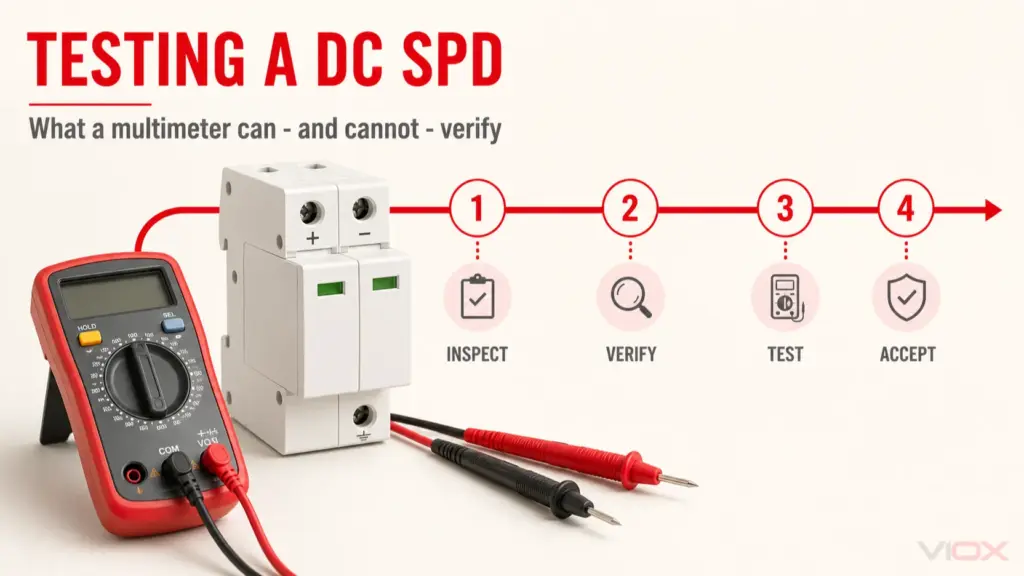


ဤစာမျက်နှာတွင်
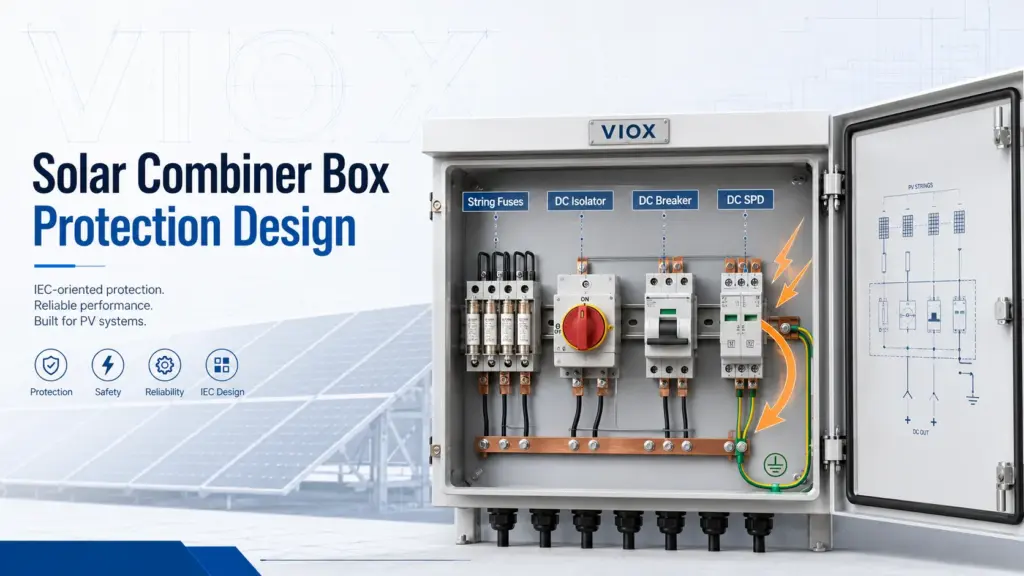
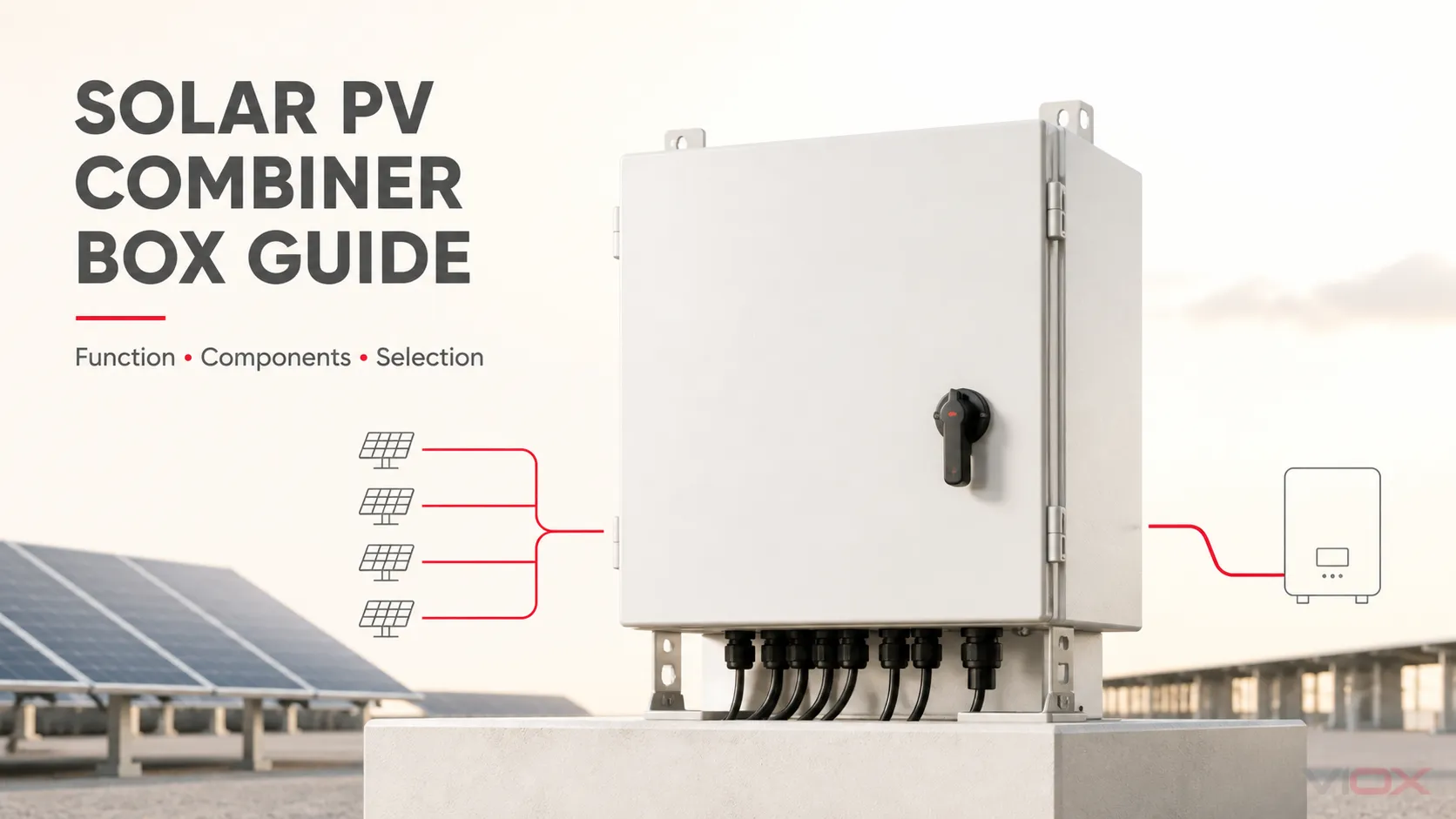
တဲ့ ဆိုလာ PV ကွန်ဘိုင်နာဘောက်စ် သည် ဆိုလာပြားများမှ လာသော လျှပ်စီးကြောင်း (DC) ဘက်ခြမ်းရှိ အကာအရံဖြစ်ပြီး၊ ၎င်းသည် ဆိုလာစထရင် ဆားကစ်များစွာကို စုစည်းပေးကာ အင်ဗာတာ၊ ချာ့ဂျ်ကွန်ထရိုးလား သို့မဟုတ် အခြားခွင့်ပြုထားသော DC ကိရိယာများသို့ မရောက်ရှိမီ တစ်ခု သို့မဟုတ် တစ်ခုထက်ပိုသော ထွက်ပေါက်ဆားကစ်များအဖြစ် ပို့ဆောင်ပေးသည်။ ၎င်းကို အလွတ်သဘောအားဖြင့် အတိုကောက်အားဖြင့် PV ဘောက်စ်, ဟု ခေါ်ဆိုလေ့ရှိသော်လည်း၊ ထိုကျယ်ပြန့်သော ဝေါဟာရကို အခြားသော ဆိုလာပြားဆိုင်ရာ အကာအရံများအတွက်လည်း အသုံးပြုနိုင်သည်။ ပရောဂျက်ဒီဇိုင်းပေါ်မူတည်၍ ကွန်ဘိုင်နာဘောက်စ်တွင် စထရင်ဖျူးများ၊ DC ဆားကစ်ဘရိတ်ကာများ၊ လျှပ်စီးမြင့်တက်မှု ကာကွယ်ရေးကိရိယာများ (SPDs)၊ DC အိုင်ဆိုလေတာ၊ ဘတ်စ်ဘာများ၊ မြေချိတ်တာမီနယ်များနှင့် စထရင်စောင့်ကြည့်ရေးကိရိယာများ ပါဝင်နိုင်သည်။.
ဆိုလာတပ်ဆင်မှုတိုင်းတွင် သီးခြားပြင်ပ ကွန်ဘိုင်နာဘောက်စ်တစ်ခု လိုအပ်သည်မဟုတ်ပါ။ အင်ဗာတာတွင် လွတ်လပ်သော အဝင်ပေါက်များ လုံလောက်စွာပါရှိပြီး လိုအပ်သော ကာကွယ်ရေးနှင့် အိုင်ဆိုလေးရှင်း လုပ်ဆောင်ချက်များ ပါဝင်နေပါက တိုက်ရိုက်ချိတ်ဆက်ခြင်းသည် သင့်လျော်နိုင်သည်။ စထရင်များစွာကို အပြိုင်ချိတ်ဆက်ရန်၊ ကာကွယ်ရန်၊ စောင့်ကြည့်ရန် သို့မဟုတ် ဘုံနယ်ပယ် ဝန်ဆောင်မှုနေရာတစ်ခုသို့ ပို့ဆောင်ရန် လိုအပ်သည့်အခါတွင် သီးသန့်ဘောက်စ်တစ်ခုသည် ပိုမိုအရေးပါလာသည်။.
ထို့ကြောင့် မှန်ကန်သော ဆုံးဖြတ်ချက်ကို အကာအရံအရွယ်အစားတစ်ခုတည်းဖြင့် မဟုတ်ဘဲ PV အာရေးနှင့် အင်ဗာတာ ဗိသုကာပုံစံတို့မှ ဆုံးဖြတ်ရမည်ဖြစ်သည်။ အဓိက ထည့်သွင်းစဉ်းစားရမည့်အချက်များမှာ စထရင်အရေအတွက်နှင့် ပုံစံ၊ အအေးဒဏ်ကြောင့် ပြင်ဆင်ထားသော အမြင့်ဆုံး စထရင်ဗို့အား၊ စထရင်နှင့် အထွက်လျှပ်စီး၊ ကာကွယ်ရေး လုပ်ဆောင်ချက်များ၊ ကေဘယ်ကြိုးသွယ်တန်းမှု၊ တပ်ဆင်မည့် ပတ်ဝန်းကျင်နှင့် စောင့်ကြည့်စစ်ဆေးမှု လိုအပ်ချက်များ ဖြစ်သည်။.
သင့်တွင် ဆိုလာ PV ကွန်ဘိုင်နာဘောက်စ် လိုအပ်ပါသလား?
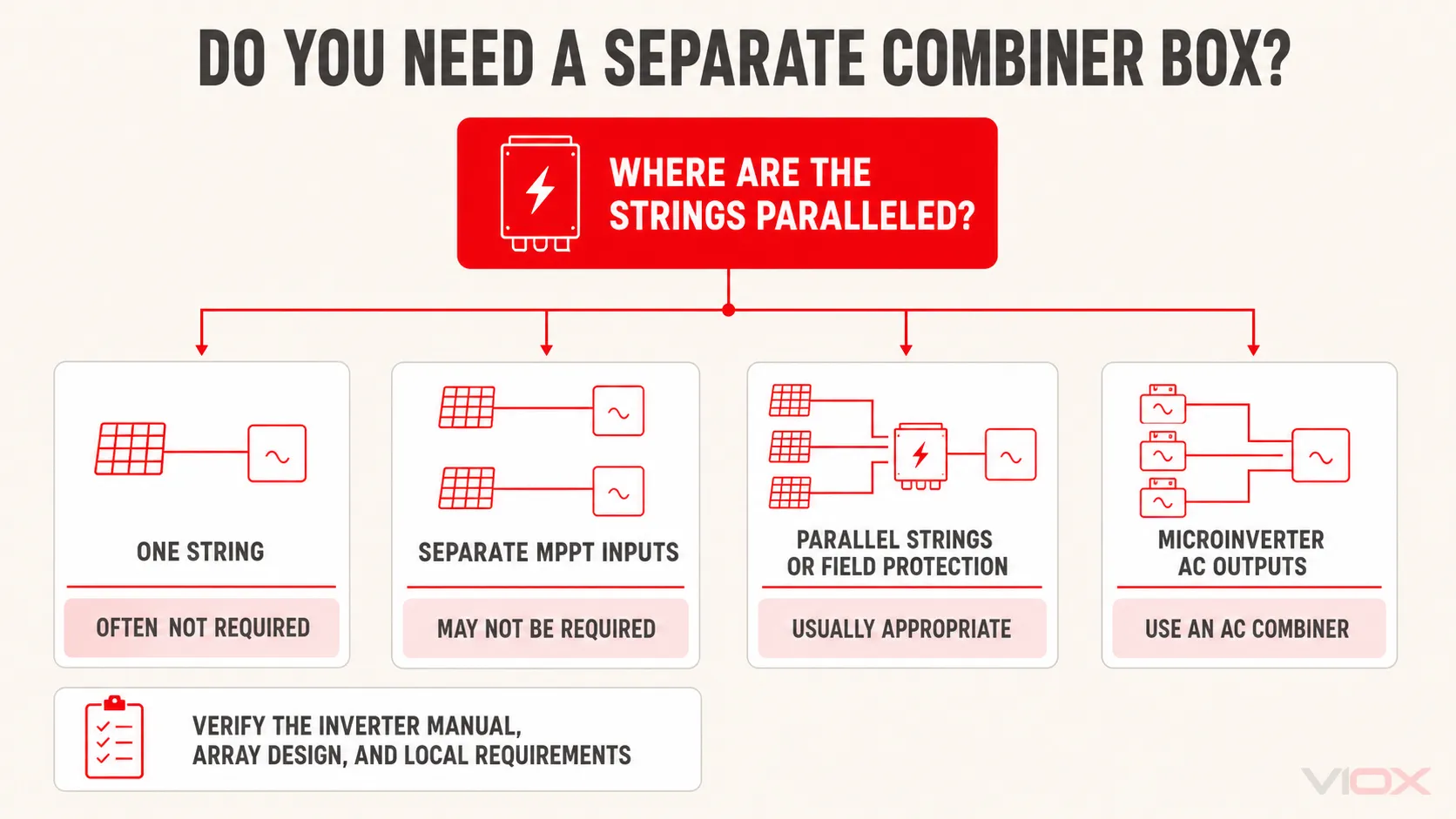
ဆိုလာမော်ဂျူး စုစုပေါင်းအရေအတွက်ကို အခြေခံမပြုဘဲ စနစ်ဒီဇိုင်းကိုသာ အခြေခံအဖြစ် အသုံးပြုပါ။.
| စနစ်၏ အခြေအနေ | သီးခြား ကွန်ဘိုင်နာဘောက်စ် လိုအပ်ပါသလား။ | What to verify |
|---|---|---|
| သင့်လျော်သော အင်ဗာတာ သို့မဟုတ် အားသွင်းထိန်းချုပ်ကိရိယာ (charge-controller) ထည့်သွင်းပေါက်တစ်ခုသို့ ချိတ်ဆက်ထားသော စထရင် (string) တစ်ခု | မကြာခဏဆိုသလို မလိုအပ်ပါ | ထည့်သွင်းဗို့အား/လျှပ်စီးကန့်သတ်ချက်များ၊ DC လျှပ်စစ်ပိုင်းခြားမှု၊ လျှပ်စီးမြင့်တက်မှုမှ ကာကွယ်ခြင်း၊ လျှပ်ကူးပစ္စည်း ကာကွယ်ခြင်းနှင့် ဒေသဆိုင်ရာ လိုအပ်ချက်များ |
| သီးခြား အင်ဗာတာ ထည့်သွင်းပေါက်များ သို့မဟုတ် သီးခြား Maximum Power Point Trackers (MPPTs) များသို့ ချိတ်ဆက်ထားသော စထရင် (string) နှစ်ခု | မလိုအပ်ဘဲလည်း ဖြစ်နိုင်သည် | ထည့်သွင်းပေါက်များသည် အမှန်တကယ် သီးခြားလွတ်လပ်မှု ရှိမရှိ၊ အပြိုင်ချိတ်ဆက်မှုကို ခွင့်ပြုထားခြင်း ရှိမရှိနှင့် မည်သည့်ကာကွယ်မှုမျိုးကို ကြိုတင်ထည့်သွင်းထားပြီးဖြစ်သည်ဆိုသည့် အချက်များ |
| ကြိုးသွယ်တန်းမှုများစွာကို အောက်ဘက်ရှိ ထည့်သွင်းမှုတစ်ခုတည်းသို့ အပြိုင်ချိတ်ဆက်ရမည် | ပုံမှန်အားဖြင့် သင့်လျော်သည် | ပြန်လှန်လျှပ်စီးကြောင်းထိတွေ့မှု၊ ကြိုးသွယ်တန်းမှုကာကွယ်ရေး၊ ဘတ်စ်ဘား/အထွက်စွမ်းရည်နှင့် အောက်ဘက်ရှိ ထည့်သွင်းမှုကန့်သတ်ချက်များ |
| ရှည်လျားသော ကြိုးသွယ်တန်းမှုများအတွက် ဘုံနယ်ပယ်စုစည်းရာနေရာတစ်ခု လိုအပ်သည် | မကြာခဏ အသုံးဝင်သည် | ကေဘယ်ကြိုးသွယ်တန်းခြင်း၊ ဗို့အားကျဆင်းမှု၊ အကာအရံနေရာချထားမှု၊ ဝန်ဆောင်မှုရယူနိုင်မှုနှင့် အထွက်လျှပ်ကူးပစ္စည်း ဒီဇိုင်း |
| ဤပရောဂျက်တွင် ကြိုးသွယ်တန်းမှုအဆင့် ဖျူးစ်များ၊ SPD များ၊ ဒေသတွင်း လျှပ်စစ်ဖြတ်တောက်မှု သို့မဟုတ် စောင့်ကြည့်စစ်ဆေးမှုများ လိုအပ်သည် | ပုံမှန်အားဖြင့် သင့်လျော်သည် | တိကျသော လုပ်ဆောင်ချက်များ၊ အဆင့်သတ်မှတ်ချက်များ၊ ဆက်သွယ်ရေးလိုအပ်ချက်များနှင့် အင်ဗာတာကိရိယာများနှင့် ထပ်တူပြုခြင်း |
| Microinverters သို့မဟုတ် AC module အထွက်များကို ပေါင်းစပ်နေခြင်းဖြစ်သည်။ | DC PV ကွန်ဘိုင်နာသည် ပုံမှန်အားဖြင့် မှန်ကန်သော ကိရိယာမဟုတ်ပါ | AC ဗိသုကာအတွက် AC ပေါင်းစပ်ကိရိယာ သို့မဟုတ် ဖြန့်ဖြူးရေး တပ်ဆင်မှုအား အကဲဖြတ်ပါ |
အဆုံးအဖြတ်ပေးမည့် မေးခွန်းမှာ “ပြားအရေအတွက် ဘယ်လောက်တပ်ဆင်ထားသလဲ” ဆိုသည်မဟုတ်ဘဲ “ကြိုးသွယ်တန်းမှုများကို မည်သည့်နေရာတွင် အပြိုင်ချိတ်ဆက်ခြင်း၊ ကာကွယ်ခြင်း၊ လျှပ်စစ်အဆက်ဖြတ်ခြင်းနှင့် စောင့်ကြည့်စစ်ဆေးခြင်း ပြုလုပ်သနည်း” ဆိုသည်ပင်ဖြစ်သည်။ ဘောက်စ်တစ်ခုကို ဖယ်ရှားခြင်း သို့မဟုတ် ထပ်ဖြည့်ခြင်းမပြုမီ အင်ဗာတာလက်စွဲစာအုပ်၊ မော်ဂျူးဒေတာ၊ အာရေးဒီဇိုင်းနှင့် သက်ဆိုင်ရာ ပရောဂျက်လိုအပ်ချက်များကို စစ်ဆေးပါ။.
ထုတ်ကုန်အပေါ် အခြေခံသည့် နှိုင်းယှဉ်ချက်အတွက်၊ အောက်ပါတို့ကို ကြည့်ရှုပါ VIOX ဆိုလာ PV ပေါင်းစပ်သေတ္တာ အမျိုးအစားများ. ဒီဇိုင်း၏ အစိတ်အပိုင်းတစ်ခုခုနှင့်ပတ်သက်၍ ပိုမိုနက်ရှိုင်းသော အဖြေလိုအပ်ပါက အောက်ပါလမ်းကြောင်းများကို အသုံးပြုပါ။.
PV ပေါင်းစပ်သေတ္တာ (PV Combiner Box) ရွေးချယ်မှုလမ်းကြောင်း
| အကယ်၍ သင်လိုအပ်ပါက… | ဤအရင်းအမြစ်ကို အသုံးပြုပါ | အဓိကဆုံးဖြတ်ချက် |
|---|---|---|
| စက်ပစ္စည်းနှင့် ၎င်း၏အခန်းကဏ္ဍကို နားလည်ပါ | ဤလမ်းညွှန်ချက် | မှန်ကန်သော စုစည်းမှုနှင့် ကာကွယ်ရေးနယ်နိမိတ်ကို ခွဲခြားသတ်မှတ်ပါ |
| string, fuse, SPD, isolator နှင့် inverter ချိတ်ဆက်မှုများကို ခြေရာခံပါ | ဆိုလာပေါင်းစပ်သေတ္တာ (Solar combiner box) ဝိုင်ယာသွယ်တန်းမှု ပုံစံပြဇယား | လုပ်ဆောင်ချက်ဆိုင်ရာ DC လမ်းကြောင်းကို အတည်ပြုပါ |
| 600V၊ 1000V သို့မဟုတ် 1500V ရှိသော စက်ပစ္စည်းများကို ရွေးချယ်ပါ | PV combiner box ဗို့အားသတ်မှတ်ချက်လမ်းညွှန် | စက်ပစ္စည်းတိုင်းကို အများဆုံး PV ဗို့အားနှင့် ကိုက်ညီအောင် ပြုလုပ်ပါ |
| ဖျူးစ်များ၊ ဆားကစ်ဘရိတ်ကာများ၊ အိုင်ဆိုလေတာများနှင့် SPD များကို ညှိနှိုင်းဆောင်ရွက်ပါ | PV combiner box ကာကွယ်ရေးဒီဇိုင်းလမ်းညွှန် | ကာကွယ်ရေးလုပ်ဆောင်ချက်တစ်ခုချင်းစီကို သတ်မှတ်ပါ |
| အနာဂတ်တွင် စထရင် (string) တိုးချဲ့ရန် စီစဉ်ပါ | ဆိုလာပေါင်းစပ်သေတ္တာ (Solar combiner box) အရွယ်အစားသတ်မှတ်ခြင်းဆိုင်ရာ လမ်းညွှန် | အဝင်နှင့် အထွက် ဗိသုကာပုံစံအတွက် လိုအပ်ချက်များကို ကြိုတင်ပြင်ဆင်ထားပါ |
| တပ်ဆင်ထားသော တပ်ဆင်မှုတစ်ခုကို စစ်ဆေးပါ | ဆိုလာပေါင်းစပ်သေတ္တာ စစ်ဆေးခြင်းဆိုင်ရာ စာရင်း | တံဆိပ်ကပ်ခြင်း၊ တာမီနယ်များ၊ ကာကွယ်ရေးကိရိယာများနှင့် အကာအိမ်၏ အခြေအနေတို့ကို စစ်ဆေးအတည်ပြုပါ |
| ထုတ်ဝေထားသော ထုတ်ကုန်ပုံစံများကို နှိုင်းယှဉ်ပါ | VIOX PV ပေါင်းစပ်သေတ္တာ ထုတ်ကုန်များ | ဗို့အားအဆင့်နှင့် အဝင်/အထွက် ဖွဲ့စည်းပုံတို့ကို ကိုက်ညီအောင် ပြုလုပ်ပါ |
Solar PV Combiner Box ဆိုသည်မှာ အဘယ်နည်း။
Solar PV combiner box ဆိုသည်မှာ အပြိုင်ချိတ်ဆက်ထားသော PV string များအတွက် စနစ်တကျစုစည်းပေးသည့် နေရာတစ်ခုဖြစ်သည်။ String တစ်ခုတွင် စီးရီးချိတ်ဆက်ထားသော ဆိုလာမော်ဂျူးများစွာ ပါဝင်သည်။ ထို့နောက် string အများအပြားကို အပြိုင်ချိတ်ဆက်ခြင်းဖြင့် ၎င်းတို့၏ လျှပ်စီးကြောင်းကို အထွက်ဆားကစ်အရေအတွက် နည်းပါးစွာဖြင့် အင်ဗာတာ သို့မဟုတ် အားသွင်းထိန်းချုပ်ကိရိယာ (charge controller) ထံသို့ ပို့ဆောင်ပေးနိုင်သည်။.
Combiner box သည် PV array နှင့် အောက်ဘက်ရှိ DC ပစ္စည်းကိရိယာများကြားတွင် တည်ရှိသည်။ ၎င်းသည် ရိုးရိုး junction box အကြီးစားတစ်ခုမျှသာ မဟုတ်ပါ။ Multi-string စနစ်တစ်ခုတွင် ၎င်းသည် အောက်ပါတို့ကို စုစည်းပေးခြင်းဖြင့် လက်တွေ့ကျသော ကာကွယ်ရေးနှင့် ပြုပြင်ထိန်းသိမ်းရေး နယ်နိမိတ်ကို ဖန်တီးပေးနိုင်သည် -
- PV string ထည့်သွင်းသည့် တာမီနယ်များ
- လိုအပ်သည့်နေရာတွင် string အဆင့် ဝန်ပိုလျှပ်စီး ကာကွယ်မှု
- positive and negative busbars or distribution blocks
- PV-rated DC SPD တစ်ခု
- မြေချိတ်ခြင်း သို့မဟုတ် ကာကွယ်ရေး မြေချိတ်ဆက်မှု
- အထွက် တာမီနယ် စီစဉ်မှု
- သတ်မှတ်ထားသည့်နေရာတွင် DC isolator သို့မဟုတ် switch-disconnector
- ရွေးချယ်နိုင်သော string စောင့်ကြည့်ခြင်းနှင့် ဆက်သွယ်ရေးကိရိယာများ
- တပ်ဆင်မည့်ပတ်ဝန်းကျင်နှင့် ကိုက်ညီသော အကာအရံနှင့် ကေဘယ်ကြိုးဝင်ပေါက်စနစ်
string တစ်ခု သို့မဟုတ် နှစ်ခုသာပါဝင်သော စနစ်ငယ်တစ်ခုတွင်၊ အင်ဗာတာ၌ သင့်လျော်သော input ချန်နယ်များနှင့် ကာကွယ်မှုစနစ်များ ပါဝင်ပြီးဖြစ်ပါက သီးခြားပြင်ပ combiner box ထည့်သွင်းရန် မလိုအပ်ပေ။ string အရေအတွက် များပြားလာသည်နှင့်အမျှ သီးသန့် box တစ်ခုကို အသုံးပြုခြင်းဖြင့် စုစည်းခြင်း၊ ကာကွယ်ခြင်း၊ စမ်းသပ်ခြင်း၊ လျှပ်စစ်ဖြတ်တောက်ခြင်းနှင့် ပြုပြင်ထိန်းသိမ်းခြင်းတို့ကို ပိုမိုစနစ်တကျ လုပ်ဆောင်နိုင်မည်ဖြစ်သည်။.
PV Combiner Box တစ်ခုသည် အဘယ်အရာလုပ်ဆောင်ပေးသနည်း။
PV combiner box ၏ အဓိကရည်ရွယ်ချက်မှာ PV string အများအပြားမှ နောက်ဆက်တွဲ DC ဆားကစ်အနည်းငယ်သို့ ပြောင်းလဲချိတ်ဆက်မှုကို စနစ်တကျဖြစ်စေရန်ဖြစ်သည်။.
| လုပ်ဆောင်ချက် | အဆိုပါ box ၏ လုပ်ဆောင်ချက်များ | အင်ဂျင်နီယာပိုင်းဆိုင်ရာ စိစစ်အတည်ပြုချက် လိုအပ်နေသေးသည့်အချက်များ |
|---|---|---|
| String စုစည်းမှု | အပြိုင်ချိတ်ဆက်ထားသော string အထွက်များကို သတ်မှတ်ထားသည့် စုစည်းမှုနေရာတစ်ခုသို့ ပို့ဆောင်ပေးသည် | Input/output ပုံစံ၊ လျှပ်ကူးပစ္စည်းအရွယ်အစား၊ တာမီနယ်သတ်မှတ်ချက်နှင့် ဘတ်စ်ဘားပမာဏ |
| ကြိုးကာကွယ်မှု | Array ဒီဇိုင်းတွင် ဝန်ပိုလျှပ်စီးကြောင်းမှ ကာကွယ်ရန် လိုအပ်သည့်နေရာများတွင် PV ဖျူးစ်များ သို့မဟုတ် DC ဘရိတ်ကာများကို အသုံးပြုသည် | Module ၏ အများဆုံးစီးရီးဖျူးစ်သတ်မှတ်ချက်၊ ပြောင်းပြန်လျှပ်စီးကြောင်းထိတွေ့မှု၊ လျှပ်ကူးပစ္စည်း၏ လျှပ်စီးဖြတ်သန်းနိုင်မှုနှင့် သက်ဆိုင်ရာ စည်းမျဉ်းများ |
| ရေလှိုင်းကာကွယ်ရေး | PV/DC SPD ကို DC လျှပ်ကူးပစ္စည်းများနှင့် ကာကွယ်ရေး မြေချိတ်လမ်းကြောင်းသို့ ချိတ်ဆက်ပေးသည် | ဗို့အားအဆင့်၊ ကာကွယ်မှုအဆင့်၊ ထုတ်လွှတ်လျှပ်စီး၊ အရန်ကာကွယ်မှု၊ မြေချိတ်ခြင်းနှင့် လျှပ်ကူးကြိုးသွယ်တန်းခြင်း |
| ပြုပြင်ထိန်းသိမ်းမှု အထီးကျန် | DC isolator သို့မဟုတ် သင့်လျော်သော switch-disconnector မှတစ်ဆင့် ဒေသဆိုင်ရာ လျှပ်စစ်ဖြတ်တောက်နိုင်သည့်နေရာကို ပံ့ပိုးပေးသည် | DC ဗို့အား၊ လည်ပတ်မှု လျှပ်စီး၊ ပိုလ်အစီအစဉ်၊ ဝန်ဖြတ်တောက်မှု တာဝန်နှင့် လျှပ်စစ်အဆက်ဖြတ်ခြင်း လုပ်ဆောင်ချက် |
| စောင့်ကြည့်ရေး | ပရောဂျက်တွင် စောင့်ကြည့်စစ်ဆေးခြင်း ပါဝင်သည့်အခါ စထရင် လျှပ်စီး သို့မဟုတ် စက်ပစ္စည်း၏ အခြေအနေကို တိုင်းတာသည် | တိုင်းတာမှုနည်းလမ်း၊ တိကျမှု၊ ဆက်သွယ်ရေး၊ အချက်ပေးစနစ်များ၊ ပါဝါထောက်ပံ့မှုနှင့် မော်ဒယ်အလိုက် ရရှိနိုင်မှု |
| နယ်ပယ်အလိုက် စီစဉ်ဖွဲ့စည်းမှု | တံဆိပ်များ၊ တာမီနယ်များ၊ ကာကွယ်ရေးကိရိယာများနှင့် စစ်ဆေးရေးအချက်များကို စုစည်းပေးသည် | အကာအရံအတွင်း ဝင်ရောက်နိုင်မှု၊ ကေဘယ်ကြိုးဝင်ပေါက်များ၊ အပူ၊ အလုံပိတ်ခြင်းနှင့် ဝန်ဆောင်မှုအတွက် နေရာလွတ် |
ဤလုပ်ဆောင်ချက်များသည် ဆက်စပ်မှုရှိသော်လည်း အစားထိုး၍ မရပါ။ ဖျူးစ် (fuse) သည် လက်ဖြင့် အဆက်ဖြတ်ပေးသည့် ကိရိယာမဟုတ်ပါ၊ အဆက်ဖြတ်ကိရိယာ (isolator) သည် ဝန်ပိုလျှပ်စီးကို အလိုအလျောက် ကာကွယ်ပေးသည့် ကိရိယာမဟုတ်ပါ၊ ထို့ပြင် SPD သည် ဆက်တိုက်ဖြစ်ပေါ်နေသော ဝါယာရှော့ လျှပ်စီးကို ဖြတ်တောက်ပေးနိုင်ခြင်း မရှိပါ။ ပြီးပြည့်စုံသော ကာကွယ်ရေးနယ်နိမိတ်ကို လျှပ်စစ်စနစ်တစ်ခုအနေဖြင့် ပြန်လည်သုံးသပ်ရမည်ဖြစ်သည်။.
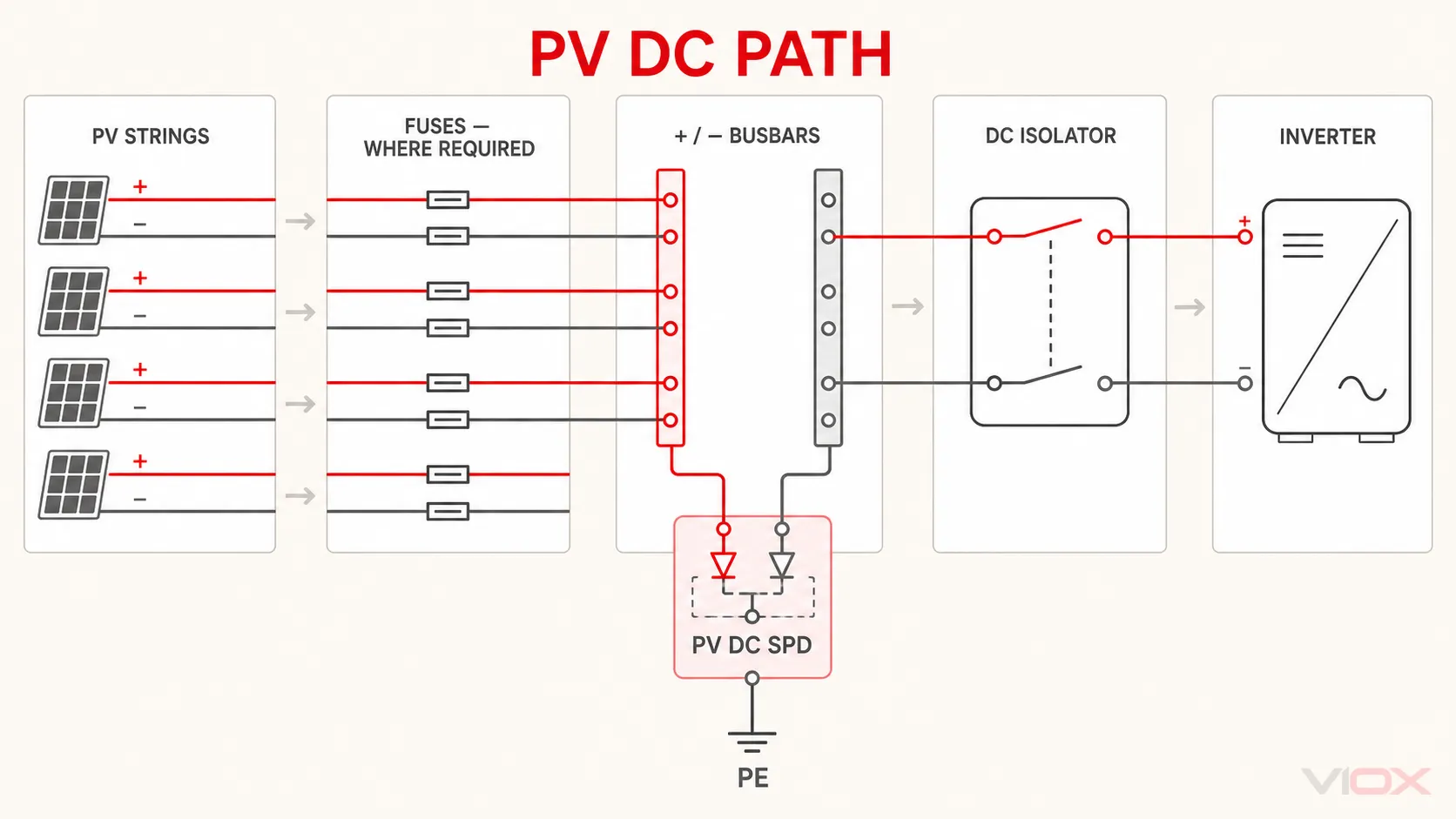
Main Components Inside a PV Combiner Box
အစိတ်အပိုင်းများ ပေါင်းစပ်မှုသည် အင်ဗာတာ၏ ဗိသုကာပုံစံ၊ အာရေး (array) ဒီဇိုင်း၊ ပစ်မှတ်ထားသည့် ဈေးကွက်နှင့် ပရောဂျက်၏ သတ်မှတ်ချက်များအပေါ် မူတည်သည်။ ပုံမှန် တပ်ဆင်မှုတစ်ခုတွင် အောက်ပါတို့ ပါဝင်နိုင်သည်:
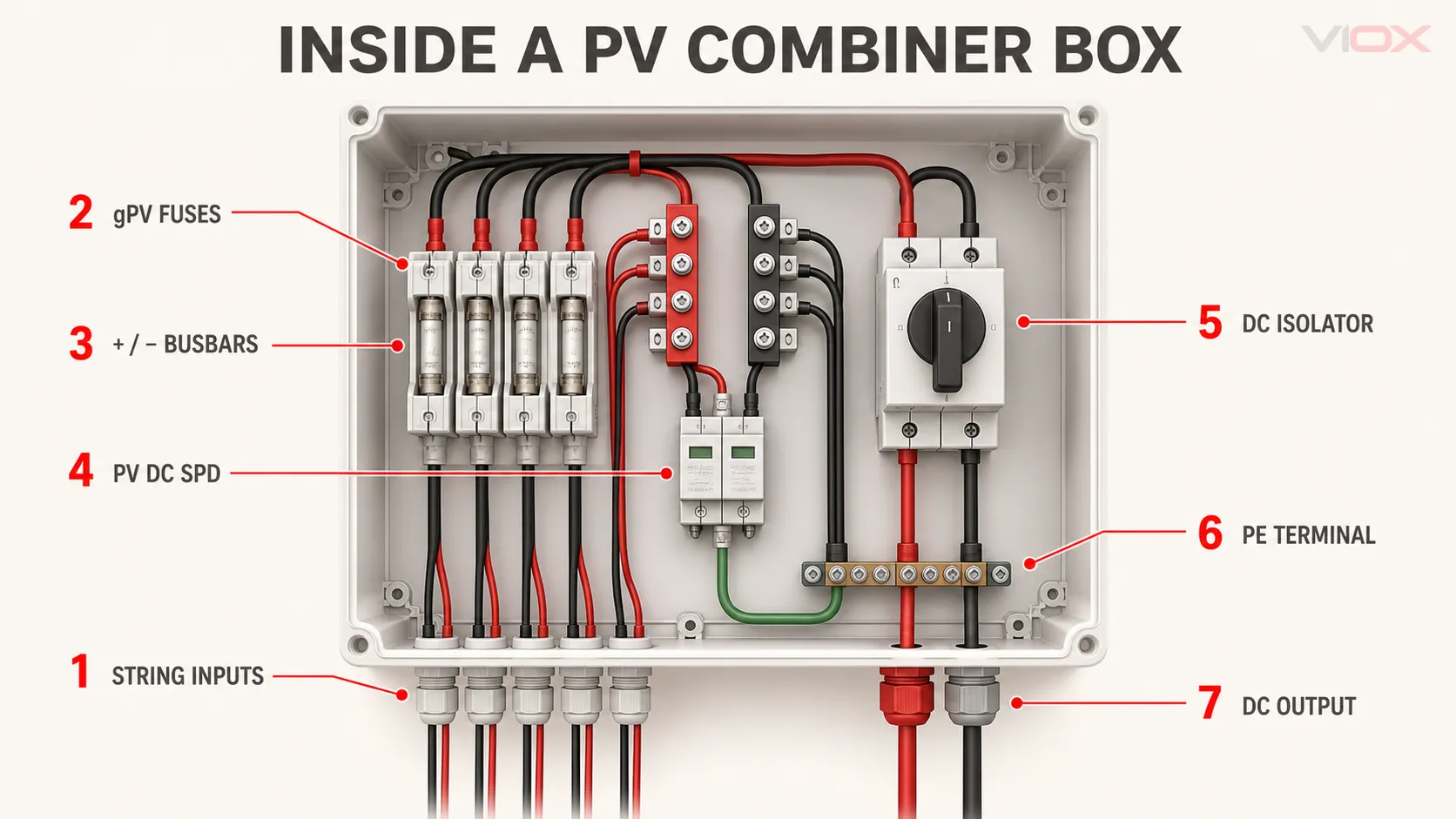
| အစိတ်အပိုင်း | အဓိကအခန်းကဏ္ဍ | ရွေးချယ်မှု သို့မဟုတ် စစ်ဆေးအတည်ပြုသည့်နေရာ |
|---|---|---|
| String input တာမီနယ်များ သို့မဟုတ် ချိတ်ဆက်ကိရိယာများ | Receive positive and negative conductors from each PV string | လျှပ်ကူးပစ္စည်း အရွယ်အစား၊ လျှပ်ကာစနစ်၊ တာမီနယ်ချိတ်ဆက်မှုနည်းလမ်း၊ ဝင်ရိုးစွန်း (polarity) နှင့် torque ညွှန်ကြားချက်များကို ကိုက်ညီအောင်ဆောင်ရွက်ပါ |
| PV ဖျူးကိုင်ဆောင်သည့်ကိရိယာများနှင့် gPV ဖျူးလင့်ခ်များ | လိုအပ်သည့်နေရာများတွင် string-level အဆင့်ရှိ ချို့ယွင်းချက် သို့မဟုတ် ပြောင်းပြန်လျှပ်စီးကြောင်း ထိတွေ့မှုကို ကန့်သတ်ပါ | PV/DC ဗို့အား၊ လျှပ်စီးကြောင်း၊ ဖျူးအမျိုးအစား၊ မော်ဂျူးကန့်သတ်ချက်၊ ကိုင်ဆောင်သည့်ကိရိယာ၏ အဆင့်သတ်မှတ်ချက်နှင့် အပူချိန်အခြေအနေများကို စစ်ဆေးအတည်ပြုပါ |
| DC circuit breakers | ဒီဇိုင်းတွင် လိုအပ်ပါက ပြန်လည်သတ်မှတ်နိုင်သော ကာကွယ်မှု သို့မဟုတ် switching စနစ်ကို ထည့်သွင်းပေးပါ | DC ဗို့အား၊ လျှပ်စီးကြောင်း၊ ဖြတ်တောက်နိုင်စွမ်း (breaking capacity)၊ ဝင်ရိုးစွန်း (polarity)၊ ပိုလ် (pole) စီစဉ်မှုနှင့် အသုံးပြုမှုအတွက် သင့်လျော်မှုရှိမရှိ စစ်ဆေးအတည်ပြုပါ |
| အပေါင်းနှင့် အနှုတ် ဘတ်စ်ဘားများ (Positive and negative busbars)။ | ကာကွယ်ထားသော string ဆားကစ်များကို ပေါင်းစပ်ပါ | စဉ်ဆက်မပြတ် လျှပ်စီး၊ အပူချိန်တက်လာမှု၊ နေရာလွတ်၊ လျှပ်ကာနှင့် ချိတ်ဆက်မှုနည်းလမ်းတို့ကို စစ်ဆေးပါ |
| PV DC SPD (နေရောင်ခြည်စွမ်းအင်သုံး ဒီစီ လျှပ်စီးကြောင်းကာကွယ်ရေးကိရိယာ) | PV DC ဘက်ခြမ်းရှိ ယာယီဗို့အားလွန်ကဲမှုကို ကန့်သတ်ပါ | Uc သို့မဟုတ် Ucpv၊ Up၊ discharge-current အဆင့်သတ်မှတ်ချက်များ၊ ချိတ်ဆက်မှုပုံစံ၊ အရန်ကာကွယ်မှုနှင့် မြေချိတ်ခြင်းတို့ကို ကိုက်ညီအောင်လုပ်ဆောင်ပါ |
| DC အိုင်ဆိုလေတာ သို့မဟုတ် ခလုတ်-ဖြတ်စက် (switch-disconnector) | ရည်ရွယ်ချက်ရှိရှိဖြင့် လက်ဖြင့်ဖြုတ်နိုင်သော စနစ်ကို ထောက်ပံ့ပေးပါ | DC switching နှင့် isolation အဆင့်သတ်မှတ်ချက်များ၊ လက်ကိုင်အစီအစဉ်၊ lockout နှင့် တပ်ဆင်မှုတာဝန်တို့ကို အတည်ပြုပါ |
| ကာကွယ်ရေး မြေချိတ် တာမီနယ် သို့မဟုတ် မြေချိတ်ဘား | အကာအကွယ်ဘူးခွံနှင့် SPD မြေချိတ်လမ်းကြောင်းကို မြေချိတ်စနစ်သို့ ချိတ်ဆက်ပါ | လျှပ်ကူးပစ္စည်း အရွယ်အစား၊ ချိတ်ဆက်သည့်နည်းလမ်း၊ သံချေးတက်မှုကို ခံနိုင်ရည်ရှိမှုနှင့် ပရောဂျက်၏ မြေချိတ်စနစ်တို့ကို အတည်ပြုပါ |
| အထွက်ဂိတ်များ | ပေါင်းစပ်ထားသော ဆားကစ်ကို အင်ဗာတာ သို့မဟုတ် အားသွင်းထိန်းချုပ်ကိရိယာဆီသို့ ပေးပို့ပါ | အထွက်လျှပ်စီးကြောင်း၊ ကေဘယ်ကြိုး အရွယ်အစား၊ တာမီနယ်ချိတ်ဆက်သည့်နည်းလမ်းနှင့် အောက်ပိုင်းရှိ စက်ပစ္စည်းများနှင့် ကိုက်ညီမှုရှိစေရန် စစ်ဆေးပါ |
| String-monitoring module | သတ်မှတ်ထားသည့်အခါ လျှပ်စီးကြောင်း မညီမျှမှု၊ လျှပ်စီးကြောင်းနည်းသော စထရင်များ၊ ဖျူးစ်လည်ပတ်မှု သို့မဟုတ် စက်ပစ္စည်း၏ အခြေအနေကို ထောက်လှမ်းပါ | ချန်နယ်အရေအတွက်၊ တိုင်းတာနိုင်သည့် အတိုင်းအတာ၊ ဆက်သွယ်ရေး ပရိုတိုကော၊ အချက်ပေးစနစ်များနှင့် မော်ဒယ်အလိုက် ပံ့ပိုးမှုတို့ကို အတည်ပြုပါ |
| အကာအကွယ်ဘူးခွံ၊ ဂလန်းများနှင့် ပလပ်များ | တပ်ဆင်ထားသော အစိတ်အပိုင်းများကို ကာကွယ်ပြီး ကေဘယ်ကြိုးဝင်ပေါက်များကို အလုံပိတ်ပါ | တပ်ဆင်ထားသော ပတ်ဝန်းကျင်ဆိုင်ရာ ကာကွယ်မှု၊ ခရမ်းလွန်ရောင်ခြည် (UV) ထိတွေ့မှု၊ သံချေးတက်မှု၊ ငွေ့ရည်ဖွဲ့မှုနှင့် ဝန်ဆောင်မှုရယူနိုင်မှုတို့ကို အပြည့်အဝ စစ်ဆေးပါ။ |
ထုတ်ကုန်ခေါင်းစဉ်တစ်ခုတည်းဖြင့် အစိတ်အပိုင်းအားလုံး ပါဝင်သည်ဟု မယူဆပါနှင့်။ သတ်မှတ်ချက်များ မသတ်မှတ်မီ ဝိုင်ယာကြိုးသွယ်တန်းမှု ပုံစံ (wiring diagram)၊ ပစ္စည်းစာရင်း (bill of materials)၊ အစိတ်အပိုင်းများ၏ ဒေတာစာရွက်များ၊ အဆင့်သတ်မှတ်ချက်များ၊ တံဆိပ်များ၊ နှင့် တိကျသောဖွဲ့စည်းပုံအတွက် စမ်းသပ်မှုဆိုင်ရာ စာရွက်စာတမ်းများကို တောင်းဆိုပါ။.
Solar PV Combiner Box တစ်ခုကို မည်သို့ရွေးချယ်မည်နည်း
၁။ String အရေအတွက်နှင့် input/output ပုံစံ
Combiner box များကို ၎င်းတို့၏ input နှင့် output စီစဉ်မှုများဖြစ်သည့် 2-in/1-out၊ 4-in/1-out၊ 6-in/1-out သို့မဟုတ် 8-in/1-out စသည်တို့ဖြင့် ဖော်ပြလေ့ရှိသည်။ အချို့သော တပ်ဆင်မှုများတွင် string အားလုံးကို output တစ်ခုတည်းသို့ ပေါင်းစပ်မည့်အစား output အများအပြားကို သီးခြားစီထားရှိသည်၊ ဥပမာအားဖြင့် 2-in/2-out သို့မဟုတ် 3-in/3-out ဖြစ်သည်။.
မှန်ကန်သော ပုံစံသည် အောက်ပါတို့အပေါ် မူတည်သည် -
- array အပိုင်းရှိ PV string အရေအတွက်
- inverter ၏ maximum power point tracking (MPPT) input တည်ဆောက်ပုံ
- ကေဘယ်ကြိုးသွယ်တန်းခြင်းနှင့် အင်ဗာတာသို့ အကွာအဝေး
- ကာကွယ်ရေး သို့မဟုတ် ပြုပြင်ထိန်းသိမ်းရေးအတွက် အထွက်များကို သီးခြားစီထားရှိရန် လိုအပ်ခြင်း ရှိမရှိ
- စီစဉ်ထားသော တိုးချဲ့မှုနှင့် အပိုထည့်သွင်းနိုင်သည့် နေရာများ
အသုံးမပြုသော ထည့်သွင်းပေါက်တစ်ခုကို အကာအရံနှင့် တပ်ဆင်မှုဆိုင်ရာ လိုအပ်ချက်များနှင့်အညီ အလုံပိတ်ပြီး စီစဉ်ထားရမည်။ အရေအတွက်ကို ရင်းနှီးနေရုံသက်သက်ဖြင့် ပိုကြီးသော ဘောက်စ်ကို မသတ်မှတ်ပါနှင့်။ အပိုတာမီနယ်များနှင့် အထွက်လမ်းကြောင်းများသည် မည်သည့်ရည်ရွယ်ချက်အတွက်ဖြစ်သည်ကို အတည်ပြုပါ။.
၂။ အအေးဒဏ်အတွက် ပြင်ဆင်ထားသော အမြင့်ဆုံး စထရင်ဗို့အား
အပူချိန်ကျဆင်းလာသည်နှင့်အမျှ PV open-circuit voltage (Voc) သည် တိုးလာသည်။ ထို့ကြောင့် ဗို့အားစစ်ဆေးရာတွင် အမည်ခံစနစ်တံဆိပ်တစ်ခုတည်းကိုသာမက အနိမ့်ဆုံး ဒီဇိုင်းအပူချိန်တွင် မျှော်မှန်းထားသည့် အမြင့်ဆုံး စထရင် open-circuit voltage ကို အသုံးပြုရမည်။.
ရိုးရှင်းသော ဒီဇိုင်းဆက်စပ်မှုမှာ-
အမြင့်ဆုံး စထရင် Voc = Standard Test Conditions (STC) ရှိ မော်ဂျူး Voc × စီးရီးလိုက်ချိတ်ဆက်ထားသော မော်ဂျူးအရေအတွက် × အအေးချိန် ပြင်ဆင်မှုကိန်းရွေးချယ်ထားသော ဗို့အားအဆင့်သည် ပြင်ဆင်ထားသည့် တန်ဖိုးအတွက် သင့်လျော်ရမည်။ အဆိုပါစစ်ဆေးမှုကို ဖျူးစ်ကိုင်ဆောင်သူများ (fuse holders)၊ ဆားကစ်ဘရိတ်ကာများ၊ SPD များ၊ အိုင်ဆိုလေတာများ၊ တာမီနယ်များ၊ ဘတ်စ်ဘားများ၊ ကေဘယ်ကြိုးများနှင့် အင်ဗာတာထည့်သွင်းမှုတို့အပါအဝင် လမ်းကြောင်းတစ်ခုလုံးအတွက် အကျုံးဝင်သည်။ 600V/1000V/1500V နှိုင်းယှဉ်ချက်ကို ပိုမိုနက်ရှိုင်းစွာလေ့လာရန်အတွက် အောက်ပါတို့ကို အသုံးပြုပါ - PV combiner box ဗို့အားသတ်မှတ်ချက်လမ်းညွှန်.
3. စထရင်လျှပ်စီးကြောင်းနှင့် ပေါင်းစပ်ထားသော အထွက်လျှပ်စီးကြောင်း
ထည့်သွင်းမှုအနေအထားတစ်ခုစီသည် သက်ဆိုင်ရာ စထရင်လျှပ်စီးကြောင်းကို လက်ခံနိုင်ရမည်။ ပေါင်းစပ်ထားသော အထွက်ဆားကစ်သည် လိုအပ်သော ဒီဇိုင်းအခြေအနေများနှင့် အနားသတ်များ (margins) နှင့်အတူ အဆိုပါအထွက်ကို မျှဝေသုံးစွဲသည့် အပြိုင်စထရင်အားလုံး၏ ပံ့ပိုးမှုကို ကိုင်တွယ်နိုင်ရမည်။.
အနည်းဆုံး အောက်ပါတို့ကို ပြန်လည်စစ်ဆေးပါ -
- မော်ဂျူး ဝါယာရှော့လျှပ်စီးကြောင်း (Isc)
- လည်ပတ်မှု လျှပ်စီးကြောင်းနှင့် အပူချိန်အခြေအနေများ
- စထရင် (String) လျှပ်ကူးပစ္စည်း၏ လျှပ်စီးကြောင်းသယ်ဆောင်နိုင်မှု (Ampacity)
- fuse or breaker rating
- ဘတ်စ်ဘားနှင့် တာမီနယ် အဆင့်သတ်မှတ်ချက်
- အထွက် အိုင်ဆိုလေတာ သို့မဟုတ် ဆားကစ်ဘရိတ်ကာ အဆင့်သတ်မှတ်ချက်
- ထွက်ခွာသွားသော ကေဘယ်ကြိုးနှင့် အင်ဗာတာ ထည့်သွင်းမှု ကန့်သတ်ချက်များ
သေတ္တာတစ်ခုတွင် စနစ်တကျ ရွေးချယ်ထားသော စထရင်ဖျူးများ ရှိနေသော်လည်း အထွက်ဘတ်စ်ဘား သို့မဟုတ် တာမီနယ် အစီအစဉ်မှာ အရွယ်အစား သေးငယ်နေနိုင်သည်။ ထည့်သွင်းမှု ကာကွယ်ရေးနှင့် အထွက်စွမ်းဆောင်ရည်တို့ကို သီးခြားစီ ပြန်လည်သုံးသပ်ရမည်။.
၄။ ကာကွယ်ရေး ဗိသုကာ
ကွန်ဘိုင်နာသေတ္တာတွင် ဖျူးများ၊ DC ဘရိတ်ကာများ၊ SPD၊ DC အိုင်ဆိုလေတာ သို့မဟုတ် ၎င်းတို့၏ ပေါင်းစပ်မှုတစ်ခုခုကို အသုံးပြုနိုင်သည်။ မှန်ကန်သော အစီအစဉ်သည် ပြောင်းပြန်လျှပ်စီးကြောင်း ထိတွေ့မှု၊ မြေချိတ်စနစ်၊ အင်ဗာတာ ဒီဇိုင်း၊ ဒေသဆိုင်ရာ စည်းမျဉ်း၊ ပရောဂျက်စံနှုန်းနှင့် အထက်ပိုင်း သို့မဟုတ် အောက်ပိုင်းရှိ စက်ပစ္စည်းများတွင် ကြိုတင်ပါဝင်ပြီးသော ကာကွယ်မှုတို့အပေါ် မူတည်သည်။.
ဖျူးများ၊ ဘရိတ်ကာများ၊ အိုင်ဆိုလေတာများနှင့် SPD များ၏ အသေးစိတ် ညှိနှိုင်းဆောင်ရွက်မှုအတွက် အောက်ပါတို့ကို အသုံးပြုပါ PV combiner box ကာကွယ်ရေးဒီဇိုင်းလမ်းညွှန်. ။ အနှစ်ချုပ် စည်းမျဉ်းမှာ ရိုးရှင်းပါသည်- စက်ပစ္စည်းတစ်ခုစီကို ၎င်းလုပ်ဆောင်ရမည့် လုပ်ငန်းဆောင်တာနှင့် လက်တွေ့ PV DC တာဝန်အတွက် သတ်မှတ်ပေးပါ။.
၅။ အကာအရံနှင့် တပ်ဆင်မှု ပတ်ဝန်းကျင်
အကာအရံသည် လျှပ်စစ်ဒီဇိုင်း၏ အစိတ်အပိုင်းတစ်ခု ဖြစ်သည်။ အမိုးပေါ်၊ မြေပြင်တွင် တပ်ဆင်ခြင်း၊ ကမ်းရိုးတန်း၊ သဲကန္တာရ၊ စိုက်ပျိုးရေးနှင့် စက်မှုလုပ်ငန်းခွင်များသည် UV ထိတွေ့မှု၊ အစိုဓာတ်၊ ဆားငန်ဓာတ်၊ ဖုန်မှုန့်၊ သံချေးတက်ခြင်း၊ အပူချိန်၊ ကေဘယ်ကြိုးဝင်ပေါက်၊ ရေငွေ့ပျံခြင်းနှင့် ပြုပြင်ထိန်းသိမ်းမှုအတွက် ဝင်ရောက်နိုင်ခြင်းတို့အပေါ် မတူညီသော တောင်းဆိုချက်များကို ဖြစ်ပေါ်စေသည်။.
တပ်ဆင်မှုကို အတည်မပြုမီ အောက်ပါတို့ကို စစ်ဆေးပါ -
- အကာအရံပစ္စည်းနှင့် ပတ်ဝန်းကျင်ဆိုင်ရာ ကာကွယ်မှု
- ကေဘယ်ဂလန်း (cable-gland) နှင့် အသုံးမပြုသော အပေါက်များကို ပိတ်ဆို့ထားခြင်း
- နေရောင်ခြည် တိုက်ရိုက်ထိတွေ့မှုနှင့် အတွင်းပိုင်း အပူချိန်အခြေအနေများ
- သံချေးတက်ခြင်းနှင့် ဆားငန်ဓာတ်ထိတွေ့မှု
- တပ်ဆင်သည့်အနေအထားနှင့် လုပ်ငန်းဆောင်ရွက်ရာတွင် အသုံးပြုနိုင်သည့် လမ်းကြောင်း
- ရှင်းလင်းသော တံဆိပ်များ၊ ဖျူးစ်များ၊ အိုင်ဆိုလေတာများ၊ SPD များနှင့် တာမီနယ်များသို့ ဘေးကင်းစွာ ချဉ်းကပ်နိုင်ခြင်း
အကာအရံ၏ အဆင့်သတ်မှတ်ချက် (enclosure rating) ကို တပ်ဆင်ပြီးသား စနစ်တစ်ခု၏ လိုအပ်ချက်အဖြစ် သတ်မှတ်ရမည်။ မှားယွင်းသော ဂလန်းအသုံးပြုခြင်း၊ အပေါက်ကို ကောင်းစွာမပိတ်ခြင်း၊ တပ်ဆင်မှုညံ့ဖျင်းခြင်း သို့မဟုတ် တံဆိပ်များ ပျက်စီးခြင်းတို့ကြောင့် အဆိုပါ အဆင့်သတ်မှတ်ချက်မှာ ထိခိုက်နိုင်ပါသည်။.
၆။ String monitoring ပါဝင်သော PV Combiner Box ကို မည်သည့်အချိန်တွင် သတ်မှတ်အသုံးပြုသင့်သနည်း
ပရောဂျက်တစ်ခုတွင် ချို့ယွင်းချက်ကို ပိုမိုမြန်ဆန်စွာ ရှာဖွေဖော်ထုတ်ရန်၊ စွမ်းဆောင်ရည်ကို နှိုင်းယှဉ်ရန်၊ အဝေးမှ အချက်ပေးစနစ်များ လိုအပ်ရန် သို့မဟုတ် string အဆင့်ရှိ လုပ်ဆောင်ချက်များကို ရှင်းလင်းစွာ မှတ်တမ်းတင်ရန် လိုအပ်သည့်အခါ String monitoring သည် အသုံးဝင်ပါသည်။ ဒီဇိုင်းပေါ်မူတည်၍ ၎င်းသည် လျှပ်စီး၊ ဗို့အား၊ အပူချိန်၊ ဖျူးစ်အခြေအနေ သို့မဟုတ် စက်ပစ္စည်း၏ အခြေအနေတို့ကို တိုင်းတာပေးနိုင်ပါသည်။.
ပရောဂျက်တွင် သတ်မှတ်ထားသော လုပ်ငန်းဆောင်တာ ရည်ရွယ်ချက်ရှိမှသာ monitoring ကို သတ်မှတ်အသုံးပြုပါ။ အောက်ပါတို့ကို အတည်ပြုပါ -
- စောင့်ကြည့်စစ်ဆေးမည့် string အရေအတွက်
- တိုင်းတာမည့် ပမာဏများနှင့် မျှော်မှန်းထားသည့် အတိုင်းအတာများ
- ဒေသတွင်း ပြသမှု သို့မဟုတ် အဝေးမှ ဆက်သွယ်မှု
- အချက်ပေးစနစ်နှင့် ဒေတာမှတ်တမ်းတင်ခြင်းဆိုင်ရာ လိုအပ်ချက်များ
- အရန်လျှပ်စစ်ဓာတ်အား လိုအပ်ချက်များ
- inverter သို့မဟုတ် စက်ရုံစောင့်ကြည့်ရေးစနစ်နှင့် လိုက်ဖက်ညီမှု
- combiner box မော်ဒယ်အတိအကျတွင် စောင့်ကြည့်စစ်ဆေးမှု ရရှိနိုင်ခြင်း ရှိမရှိ
String စောင့်ကြည့်စစ်ဆေးခြင်းသည် combiner-box ပုံစံအားလုံးတွင် ပါဝင်သည့် အင်္ဂါရပ်တစ်ခု မဟုတ်ပါ။ ၎င်းကို ဒေတာစာရွက်တွင် အတည်ပြုရမည့် မော်ဒယ်အလိုက် ရွေးချယ်နိုင်သော အချက်တစ်ခုအဖြစ် သတ်မှတ်ပါ။.
600V, 1000V သို့မဟုတ် 1500V PV Combiner Box လိုအပ်ပါသလား။
ဗို့အားအမျိုးအစားသည် အစိတ်အပိုင်းရွေးချယ်မှု၊ လျှပ်ကာညှိနှိုင်းမှု၊ switching တာဝန်၊ ကေဘယ်ဒီဇိုင်းနှင့် DC arc ဖြစ်ပေါ်ခြင်း၏ နောက်ဆက်တွဲဆိုးကျိုးများအပေါ် သက်ရောက်မှုရှိသည်။ ၎င်းကို တွက်ချက်ထားသော အမြင့်ဆုံး PV ဗို့အားနှင့် ပရောဂျက်၏ စက်ကိရိယာတည်ဆောက်ပုံတို့မှ ရွေးချယ်သင့်သည်။.
| ဗို့အားအဆင့် (Voltage class) | ပုံမှန်ပရောဂျက်အခြေအနေ | အဓိကရွေးချယ်ရမည့်အချက် |
|---|---|---|
| 600V DC | ယခင်ပုံစံဟောင်း၊ ပိုမိုသေးငယ်သော သို့မဟုတ် ဗို့အားနိမ့် PV တည်ဆောက်ပုံများ | အဆိုပါကိရိယာသည် လက်ရှိအသုံးပြုမည့် array နှင့် အင်ဗာတာ၏ input voltage အတွက် သင့်လျော်မှုရှိမရှိ အတည်ပြုပါ။ |
| ၁၀၀၀V ရွက် | စီးပွားရေးလုပ်ငန်းသုံး၊ စက်မှုလုပ်ငန်းသုံးနှင့် အလတ်စား PV စနစ်များစွာ | အအေးချိန်အတွက် ပြင်ဆင်ထားသော Voc ကို စစ်ဆေးပြီး အတွင်းပိုင်းအစိတ်အပိုင်းတိုင်း၏ rating ကို အတည်ပြုပါ။ |
| 1500V DC | Utility-scale နှင့် မြေပြင်တွင် တပ်ဆင်သည့် အကြီးစားစနစ်များ | ပြီးပြည့်စုံသော မြင့်မားသောဗို့အားရှိ DC ကာကွယ်ရေး၊ switching၊ လျှပ်ကာနှင့် ဝန်ဆောင်မှုဒီဇိုင်းတို့ကို အတည်ပြုပါ။ |
ဤသည်တို့မှာ စနစ်အမျိုးအစားများဖြစ်ပြီး အလိုအလျောက်ထုတ်ကုန်အကြံပြုချက်များ မဟုတ်ပါ။ “1000V စနစ်” တစ်ခုအတွက်ပင် အအေးချိန်ဗို့အား တွက်ချက်မှု လိုအပ်ပြီး 1500V စီမံကိန်းတစ်ခုအတွက် အဖုံးပေါ်တွင် 1500V တံဆိပ်ကပ်ထားရုံထက် ပိုမိုလိုအပ်ပါသည်။ ဖျူးစ်များ၊ ဖျူးစ်ကိုင်ဆောင်သူများ၊ SPD၊ အိုင်ဆိုလေတာ၊ တာမီနယ်များ၊ ဘတ်စ်ဘားများ၊ ဝိုင်ယာကြိုးများနှင့် အောက်ဘက်ရှိ ကိရိယာများအားလုံးသည် လက်တွေ့ဒီဇိုင်းအခြေအနေများနှင့် ကိုက်ညီမှုရှိရမည်။.
PV Combiner Box နှင့် Junction Box နှင့် AC Combiner Box
ဤဝေါဟာရများသည် မတူညီသော လျှပ်စစ်ဆိုင်ရာ အခန်းကဏ္ဍများကို ဖော်ပြခြင်းဖြစ်သည်:
| ကိရိယာ | အသုံးပြုသည့်နေရာ | Main role | ကာကွယ်ရေးနယ်နိမိတ် |
|---|---|---|---|
| PV DC ပေါင်းစပ်ပုံး (PV DC combiner box) ဖြစ်ပြီး | PV string များနှင့် အင်ဗာတာ သို့မဟုတ် အားသွင်းထိန်းချုပ်ကိရိယာအကြား | အပြိုင်ချိတ်ဆက်ထားသော PV string များကို စုစည်းပေးပြီး DC ကာကွယ်ရေး၊ လျှပ်စီးကြောင်းမြင့်တက်မှုမှ ကာကွယ်ရေး၊ လျှပ်စစ်အဆက်ဖြတ်ခြင်းနှင့် စောင့်ကြည့်စစ်ဆေးခြင်းတို့ကို ပေါင်းစပ်ဆောင်ရွက်ပေးနိုင်သည် | PV DC ဗို့အား၊ string ပြောင်းပြန်လျှပ်စီး၊ ရုတ်တရက်ဗို့အားမြင့်တက်မှု၊ ဝင်ရိုးစွန်းနှင့် DC လျှပ်စစ်မီးပွားဖြစ်ပေါ်မှု |
| 接线盒 | ဆားကစ်တစ်ခု၏ ချိတ်ဆက်မှု သို့မဟုတ် အကူးအပြောင်းနေရာတွင် | လျှပ်ကူးပစ္စည်းများကို ဆက်သွယ်ခြင်း၊ လမ်းကြောင်းပေးခြင်း သို့မဟုတ် တာမီနယ်ချိတ်ဆက်ခြင်းအတွက် ကာကွယ်ထားသော အကာအရံကို ပံ့ပိုးပေးသည် | အကာအရံ၊ လျှပ်ကူးပစ္စည်းနှင့် ချိတ်ဆက်မှုဆိုင်ရာ လိုအပ်ချက်များ၊ ၎င်းသည် string-protection တပ်ဆင်မှုတစ်ခုအဖြစ် အလိုအလျောက် သတ်မှတ်ခြင်းမဟုတ်ပါ |
| Alternating-current (AC) combiner box | အင်ဗာတာများ သို့မဟုတ် မိုက်ခရိုအင်ဗာတာများ၏ နောက်ပိုင်းနှင့် AC ဖြန့်ဖြူးမှုစနစ်၏ ရှေ့ပိုင်းတွင် | AC အထွက်များကို ပေါင်းစပ်ပေးသည် | AC ဝါယာရှော့ လျှပ်စီး၊ အဆင့်/ကြားခံ (phase/neutral) စီစဉ်မှု၊ မြေချိတ်ခြင်းနှင့် လျှပ်စစ်ဓာတ်အားလိုင်း ချိတ်ဆက်မှုဆိုင်ရာ လိုအပ်ချက်များ |
AC-rated ကိရိယာတစ်ခုသည် PV DC ဆားကစ်အတွက် သင့်လျော်သည်ဟု ယူဆ၍မရပါ။ ကွန်ဘိုင်နာနှင့် ဂျန်ရှင်ဘောက်စ်အကြား ရုပ်ပိုင်းဆိုင်ရာနှင့် လုပ်ဆောင်ချက်ဆိုင်ရာ နယ်နိမိတ်အတွက် ကြည့်ရှုပါ Combiner Box နှင့် Junction Box အကြား ကွာခြားချက်. ။ DC/AC ကွဲပြားမှုအတွက် ကြည့်ရှုပါ AC Combiner Box နှင့် DC Combiner Box နှိုင်းယှဉ်ချက်.
လက်ရှိ VIOX Solar PV Combiner Box ထုတ်ကုန်အမျိုးအစားများ
လက်ရှိ VIOX ထုတ်ကုန်စာမျက်နှာတွင် ဖော်ပြထားသော 600V DC နှင့် 1000V DC အတန်းအစားများ၊ နှင့် 1 မှ 8 string အနေအထားအထိရှိသော input/output ပုံစံများကို စာရင်းပြုစုထားသည်။ အောက်ပါဇယားသည် လက်ရှိထုတ်ကုန်အနှစ်ချုပ်တွင် ပြသထားသည့် ပုံစံများကို ရောင်ပြန်ဟပ်ခြင်းဖြစ်ပြီး၊ ဗို့အားအချက်အလက် မပါရှိပါက သတ်မှတ်ချက်မသတ်မှတ်မီ မော်ဒယ်၏ ဒေတာစာရွက်မှ အတည်ပြုရမည်ဖြစ်သည်။.
| VIOX စီးရီး သို့မဟုတ် မော်ဒယ် | ထုတ်ပြန်ထားသော လျှပ်စစ်စနစ် ဗို့အား | ထုတ်ပြန်ထားသော string ပုံစံ |
|---|---|---|
| VOPV600-1/1 | 600V DC | 1 in / 1 out |
| VOPV600-2/2 | 600V DC | 2 in / 2 out |
| VOPV1000-1/1 | ၁၀၀၀V ရွက် | 1 in / 1 out |
| VOPV1000-2/2 | ၁၀၀၀V ရွက် | 2 in / 2 out |
| VOPV1000-3/1 | ၁၀၀၀V ရွက် | 3 in / 1 out |
| VOPV1000-3/3 | ၁၀၀၀V ရွက် | 3 in / 3 out |
| VCB F4/1 | ဒေတာစာရွက်မှ အတည်ပြုပါ | 4 in / 1 out |
| VCB F6/1 | ဒေတာစာရွက်မှ အတည်ပြုပါ | 6 in / 1 out |
| VCB F8/1 | ဒေတာစာရွက်မှ အတည်ပြုပါ | 8 in / 1 out |
ထုတ်ကုန်ပုံစံသည် အစပြုရုံသာဖြစ်သည်။ နောက်ဆုံးရွေးချယ်မှုတွင် အာရေး၏ အမြင့်ဆုံးဗို့အား၊ လျှပ်စီး၊ ကာကွယ်ရေးအစီအစဉ်၊ ကေဘယ်ကြိုးဝင်ပေါက်များ၊ စောင့်ကြည့်စစ်ဆေးမှု လိုအပ်ချက်၊ တပ်ဆင်မည့်ပတ်ဝန်းကျင်၊ ပစ်မှတ်ထားသည့်ဈေးကွက်နှင့် စာရွက်စာတမ်းလိုအပ်ချက်တို့နှင့် ကိုက်ညီရန် လိုအပ်သေးသည်။ ထုတ်ပြန်ထားသော မော်ဒယ်များကို နှိုင်းယှဉ်ပါ VIOX Solar PV Combiner Boxes စာမျက်နှာ နှင့် ပရောဂျက်အတွက် အထူးဒီဇိုင်းပုံစံ လိုအပ်သည့်အခါ မော်ဒယ်အထောက်အပံ့ကို တောင်းဆိုပါ။.
စံနှုန်းများနှင့် စာရွက်စာတမ်းများ စစ်ဆေးရန်
စံနှုန်းများသည် ဒီဇိုင်း သို့မဟုတ် အသိအမှတ်ပြုလက်မှတ်၏ အခြေအနေကို သတ်မှတ်ပေးသည်၊ ၎င်းတို့သည် ပရောဂျက်အတွက် သီးသန့်ပြုလုပ်သော စက်ပစ္စည်းစစ်ဆေးခြင်းကို အစားထိုးခြင်းမဟုတ်ပါ။.
| ဒီဇိုင်းဧရိယာ | ကိုးကားချက် သို့မဟုတ် စစ်ဆေးအတည်ပြုခြင်း လမ်းကြောင်း | အတည်ပြုရမည့်အချက်များ |
|---|---|---|
| PV array ဒီဇိုင်း | IEC 62548-1:2023၊ AMD1:2025 နှင့် ပေါင်းစပ်ထားသည် | ပရောဂျက်နယ်ပယ်အတွင်းရှိ DC array ဝိုင်ယာသွယ်တန်းခြင်း၊ လျှပ်စစ်ကာကွယ်ရေး၊ ဆားကစ်ဖြတ်တောက်ခြင်း၊ မြေချိတ်ခြင်းနှင့် အခြား PV-array ဒီဇိုင်းလိုအပ်ချက်များ |
| PV DC လျှပ်စီးကြောင်း လွန်ကဲမှုမှ ကာကွယ်ခြင်း | IEC 61643-31:2018 | ရွေးချယ်ထားသော PV SPD နှင့် ၎င်း၏ သတ်မှတ်ချက်များသည် DC PV တပ်ဆင်မှုအတွက် သင့်လျော်မှု ရှိမရှိ |
| မြောက်အမေရိက အသိအမှတ်ပြုလက်မှတ် ရယူရေးလမ်းကြောင်း | UL Solutions နေရောင်ခြည်စွမ်းအင်သုံး စနစ်တစ်ခုလုံးဆိုင်ရာ အသိအမှတ်ပြုလက်မှတ် | အတိအကျဖော်ပြထားသော combiner-box ဖွဲ့စည်းပုံအတွက် သက်ဆိုင်သည့် စာရင်းသွင်းခြင်း၊ အကဲဖြတ်ခြင်း သို့မဟုတ် အသိအမှတ်ပြုလက်မှတ် အထောက်အထား |
| စီမံကိန်း ထုတ်ပြန်မှု ပက်ကေ့ချ် | ထုတ်လုပ်သူနှင့် စီမံကိန်းဆိုင်ရာ စာရွက်စာတမ်းများ | ဝိုင်ယာသွယ်တန်းမှု ပုံစံ၊ ပစ္စည်းစာရင်း၊ အစိတ်အပိုင်း သတ်မှတ်ချက်များ၊ တံဆိပ်များ၊ တပ်ဆင်မှုဆိုင်ရာ ညွှန်ကြားချက်များ၊ စမ်းသပ်မှု မှတ်တမ်းများနှင့် ပြင်ဆင်မှု ထိန်းချုပ်ခြင်း |
တိကျသော မော်ဒယ်စာရွက်စာတမ်းတွင် အတည်ပြုချက်မရှိပါက VIOX combiner box တစ်ခုခုသည် UL-listed ဖြစ်ကြောင်း၊ IEC-certified ဖြစ်ကြောင်း သို့မဟုတ် သီးခြား ingress-protection (IP) rating သတ်မှတ်ထားကြောင်း မဖော်ပြပါနှင့်။ အသိအမှတ်ပြုလက်မှတ်များသည် မော်ဒယ်နှင့် ဈေးကွက်အပေါ် မူတည်ပါသည်။.
PV Combiner Box အတွက် ဈေးနှုန်းတောင်းခံလွှာ (RFQ) နှင့် သတ်မှတ်ချက်များ စစ်ဆေးရန်စာရင်း
ဈေးနှုန်း သို့မဟုတ် ဖွဲ့စည်းပုံဆိုင်ရာ အဆိုပြုချက်ကို မတောင်းခံမီ အောက်ပါအချက်အလက်များကို ပြင်ဆင်ထားပါ -
- အနိမ့်ဆုံး ဒီဇိုင်းအပူချိန်တွင် ရှိသော အမြင့်ဆုံး string open-circuit voltage
- nominal နှင့် အမြင့်ဆုံး လျှပ်စစ်စနစ် ဗို့အားအဆင့်
- string short-circuit current နှင့် operating current
- input string အရေအတွက်
- လိုအပ်သော input/output ပုံစံ၊ ဥပမာ 4-in/1-out သို့မဟုတ် 3-in/3-out
- inverter သို့မဟုတ် charge-controller မော်ဒယ်နှင့် DC input ဗိသုကာ
- string-fuse သို့မဟုတ် DC-breaker လိုအပ်ချက်
- output isolator သို့မဟုတ် switch-disconnector လိုအပ်ချက်
- SPD ဗို့အားအဆင့်၊ ချိတ်ဆက်မှုပုံစံ၊ အရန်ကာကွယ်မှုနှင့် စောင့်ကြည့်စစ်ဆေးမှု လိုအပ်ချက်များ
- အကာအရံပစ္စည်း၊ တပ်ဆင်မည့်ပတ်ဝန်းကျင်၊ ကေဘယ်ကြိုးဝင်ရောက်မှုပုံစံနှင့် တပ်ဆင်သည့်နည်းလမ်း
- ပစ်မှတ်ဈေးကွက်နှင့် လိုအပ်သော အသိအမှတ်ပြုလက်မှတ် သို့မဟုတ် စာရွက်စာတမ်းလမ်းကြောင်း
- အရေအတွက်၊ ပို့ဆောင်မှုလိုအပ်ချက်များ၊ တံဆိပ်ကပ်ခြင်းနှင့် မည်သည့် original-equipment-manufacturer/original-design-manufacturer (OEM/ODM) လိုအပ်ချက်မဆို
ဤအချက်အလက်သည် “solar combiner box” ဟုသာ ယေဘုယျမေးမြန်းခြင်းထက် ပိုမိုအသုံးဝင်ပါသည်။ ၎င်းသည် ပေးသွင်းသူအား string အရေအတွက်ဖြင့်သာ ဘောက်စ်ကိုရွေးချယ်မည့်အစား array ဗိသုကာကို အပြည့်အစုံတပ်ဆင်မှုတစ်ခုအဖြစ် ပုံဖော်နိုင်စေပါသည်။.
သင်မရွေးချယ်မီ အမြန်အဖြေများ
ဆိုလာ PV စနစ်တိုင်းတွင် combiner box လိုအပ်ပါသလား။
မလိုအပ်ပါ။ အင်ဗာတာတွင် လုံလောက်သော သင့်လျော်သည့် ထည့်သွင်းမှုများနှင့် ကာကွယ်မှုများ ပါရှိပါက စနစ်ငယ်တစ်ခုသည် အင်ဗာတာသို့ တိုက်ရိုက်ချိတ်ဆက်နိုင်သည်။ အပြိုင်ချိတ်ဆက်ထားသော string အရေအတွက်၊ ကေဘယ်ကြိုးသွယ်တန်းမှု၊ ကာကွယ်ရေးလုပ်ဆောင်ချက်များနှင့် ပြုပြင်ထိန်းသိမ်းမှု လိုအပ်ချက်များ တိုးပွားလာသည်နှင့်အမျှ သီးသန့် box တစ်ခုသည် ပိုမိုအသုံးဝင်လာသည်။.
PV combiner box တွင် AC ဆားကစ်ဘရိတ်ကာ သို့မဟုတ် ဖျူးစ်ကို အသုံးပြုနိုင်ပါသလား။
အဆိုပါကိရိယာသည် လက်ရှိ DC ဗို့အား၊ လျှပ်စီးကြောင်းနှင့် ဖြတ်တောက်မှုတာဝန်အတွက် အတိအလင်း သတ်မှတ်ချက်မရှိပါက မသုံးသင့်ပါ။ AC နှင့် PV DC တို့၏ switching လုပ်ဆောင်ပုံမှာ ကွဲပြားခြားနားပါသည်။.
combiner box တွင် string စောင့်ကြည့်စစ်ဆေးခြင်း အမြဲပါဝင်ပါသလား။
မပါဝင်ပါ။ စောင့်ကြည့်စစ်ဆေးခြင်းသည် ရွေးချယ်နိုင်သော သို့မဟုတ် မော်ဒယ်အလိုက် သီးသန့်လုပ်ဆောင်ချက်တစ်ခု ဖြစ်သည်။ ချန်နယ်အရေအတွက်၊ တိုင်းတာမှုဆိုင်ရာ ကိန်းရှင်များ၊ ဆက်သွယ်ရေးနည်းလမ်းနှင့် တိကျသော ထုတ်ကုန်စာရွက်စာတမ်းများကို အတည်ပြုပါ။.
combiner box သည် junction box နှင့် တူညီပါသလား။
မဟုတ်ပါ။ ဂျန်ရှင်ဘောက်စ် (junction box) သည် ချိတ်ဆက်မှုများ သို့မဟုတ် အသွင်ကူးပြောင်းမှုများအတွက် အကာအရံတစ်ခုကို ပံ့ပိုးပေးသည်။ PV combiner box ဆိုသည်မှာ DC စုစည်းမှု တပ်ဆင်ပုံဖြစ်ပြီး ၎င်းသည် string ကာကွယ်ရေး၊ လျှပ်စီးကြောင်းမြင့်တက်မှုမှ ကာကွယ်ရေး (surge protection)၊ လျှပ်စစ်အဆက်ဖြတ်ခြင်းနှင့် စောင့်ကြည့်စစ်ဆေးခြင်းတို့ကိုလည်း ပေါင်းစပ်ဆောင်ရွက်ပေးနိုင်သည်။.
PV Combiner Box ဖွဲ့စည်းပုံကို တောင်းဆိုရန်
အကယ်၍ သင့်တွင် အမြင့်ဆုံး DC ဗို့အား၊ string လျှပ်စီးကြောင်း၊ string အရေအတွက်၊ input/output ပုံစံ၊ ကာကွယ်ရေး လိုအပ်ချက်များ၊ အကာအရံ ပတ်ဝန်းကျင်၊ ပစ်မှတ်ဈေးကွက်နှင့် အရေအတွက်တို့ ရှိပါက၊ အောက်ပါတို့ကို အသုံးပြုပါ VIOX PV combiner box ထုတ်ကုန်စာမျက်နှာ ထုတ်ပြန်ထားသော ပုံစံများကို နှိုင်းယှဉ်ရန် သို့မဟုတ် ဖွဲ့စည်းပုံဆိုင်ရာ အကူအညီကို တောင်းဆိုရန်အတွက် ဖြစ်သည်။.
မှန်ကန်သော ရွေးချယ်မှုမှာ ကေဘယ်ကြိုးဝင်ပေါက် အရေအတွက် မှန်ကန်ရုံမျှသာမကဘဲ ပြီးပြည့်စုံသော DC ကာကွယ်ရေး တပ်ဆင်မှုတစ်ခု ဖြစ်ရပါမည်။.