

এই পৃষ্ঠায়
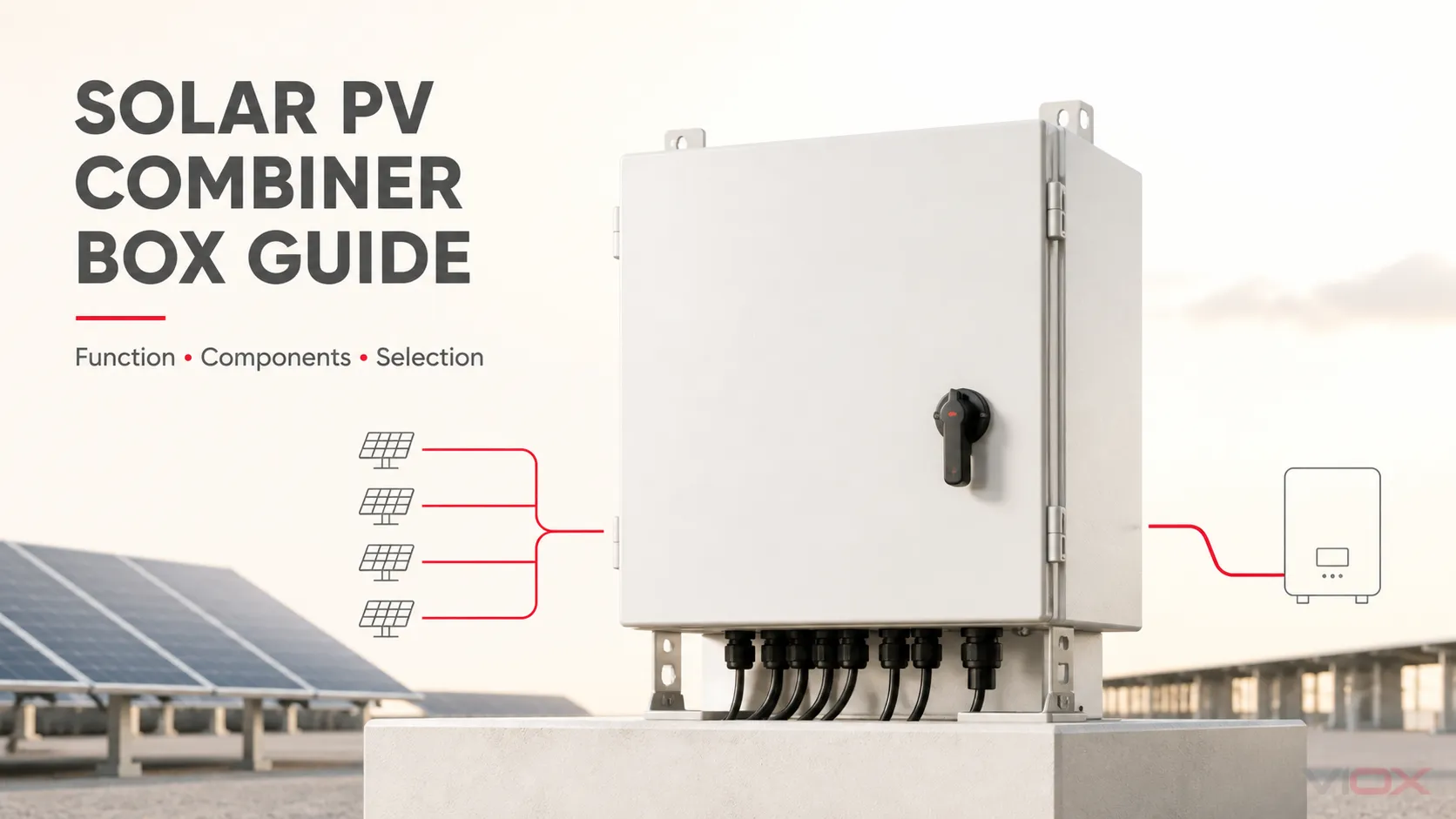
ক সোলার পিভি কম্বাইনার বক্স হলো একটি ডাইরেক্ট-কারেন্ট (DC) সাইড এনক্লোজার যা একাধিক ফটোভোলটাইক স্ট্রিং সার্কিটকে একত্রিত করে এবং ইনভার্টার, চার্জ কন্ট্রোলার বা অন্যান্য অনুমোদিত DC সরঞ্জামের আগে সেগুলোকে এক বা একাধিক আউটগোয়িং সার্কিটে প্রেরণ করে। এটিকে কখনও কখনও অনানুষ্ঠানিকভাবে সংক্ষেপে বলা হয় পিভি বক্স, যদিও এই বিস্তৃত শব্দটি অন্যান্য ফটোভোলটাইক এনক্লোজারের ক্ষেত্রেও ব্যবহৃত হতে পারে। প্রকল্পের নকশার উপর নির্ভর করে, একটি কম্বাইনার বক্সে স্ট্রিং ফিউজ, DC সার্কিট ব্রেকার, সার্জ প্রোটেক্টিভ ডিভাইস (SPDs), একটি DC আইসোলেটর, বাসবার, গ্রাউন্ডিং টার্মিনাল এবং স্ট্রিং-মনিটরিং সরঞ্জাম থাকতে পারে।.
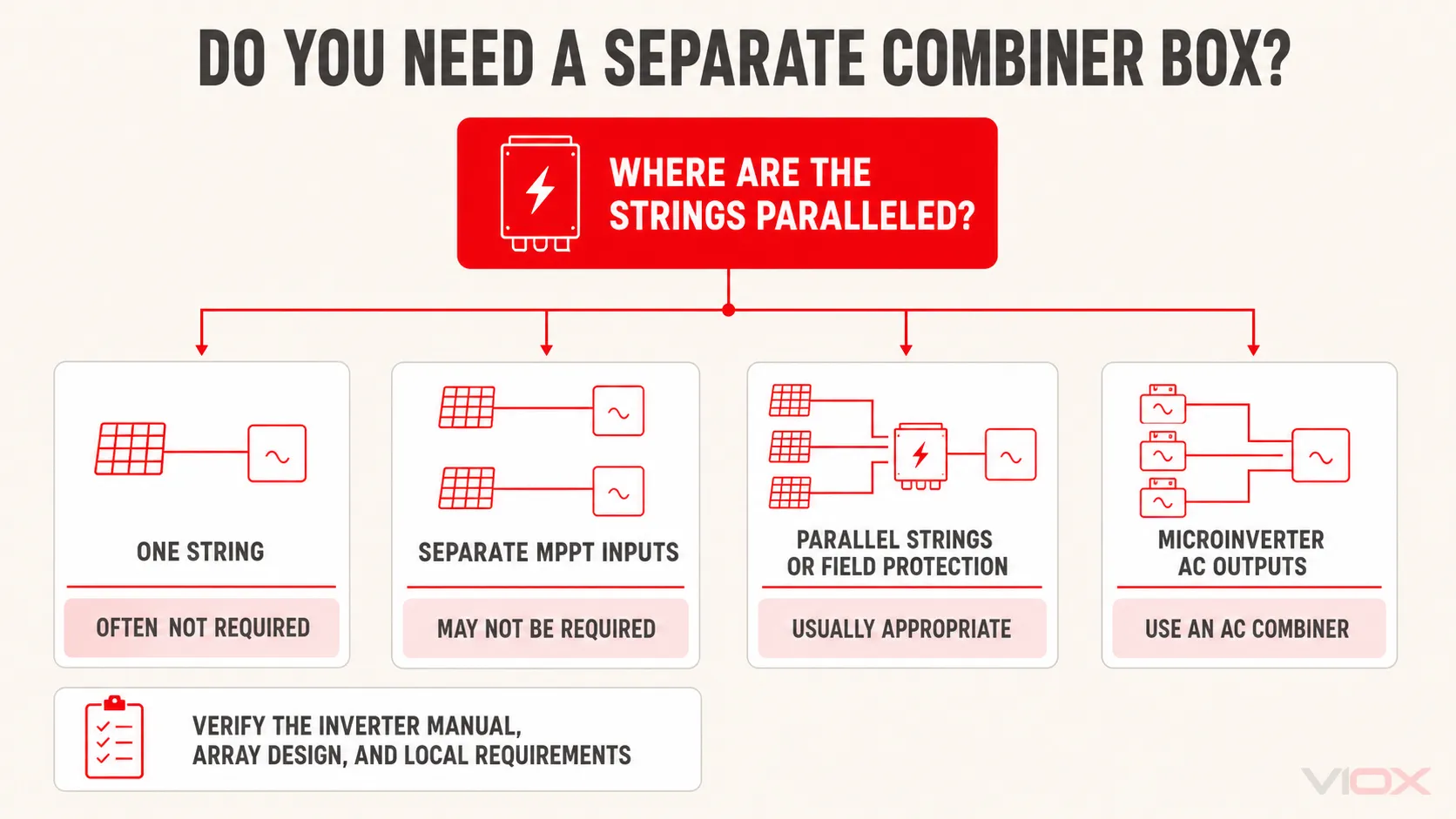
প্রতিটি সোলার ইনস্টলেশনে আলাদা এক্সটার্নাল কম্বাইনার বক্সের প্রয়োজন হয় না। যখন ইনভার্টার ইতিমধ্যে পর্যাপ্ত স্বতন্ত্র ইনপুট এবং প্রয়োজনীয় সুরক্ষা ও আইসোলেশন ফাংশন প্রদান করে, তখন সরাসরি সংযোগ উপযুক্ত হতে পারে। যখন একাধিক স্ট্রিংকে সমান্তরাল করতে হয়, সুরক্ষা প্রদান করতে হয়, মনিটর করতে হয় বা একটি সাধারণ ফিল্ড সার্ভিস পয়েন্টে নিয়ে আসতে হয়, তখন একটি ডেডিকেটেড বক্সের প্রয়োজনীয়তা বেশি দেখা দেয়।.
তাই সঠিক সিদ্ধান্তটি পিভি অ্যারে এবং ইনভার্টার আর্কিটেকচার থেকে নেওয়া হয়—শুধুমাত্র এনক্লোজারের আকার থেকে নয়। মূল ইনপুটগুলো হলো স্ট্রিংয়ের সংখ্যা ও বিন্যাস, সর্বোচ্চ কোল্ড-কারেক্টেড স্ট্রিং ভোল্টেজ, স্ট্রিং ও আউটপুট কারেন্ট, সুরক্ষা ফাংশন, ক্যাবল রাউটিং, ইনস্টলেশন পরিবেশ এবং মনিটরিংয়ের প্রয়োজনীয়তা।.
আপনার কি একটি সোলার পিভি কম্বাইনার বক্সের প্রয়োজন?
সোলার মডিউলের মোট সংখ্যার পরিবর্তে সিস্টেম ডিজাইনকে শুরুর বিন্দু হিসেবে ব্যবহার করুন।.
| সিস্টেমের অবস্থা | আলাদা কম্বাইনার বক্স? | কী যাচাই করতে হবে |
|---|---|---|
| একটি উপযুক্ত ইনভার্টার বা চার্জ-কন্ট্রোলার ইনপুটের সাথে সংযুক্ত একটি স্ট্রিং | প্রায়শই প্রয়োজন হয় না | ইনপুট ভোল্টেজ/কারেন্ট সীমা, DC আইসোলেশন, সার্জ প্রোটেকশন, কন্ডাক্টর প্রোটেকশন এবং স্থানীয় প্রয়োজনীয়তা |
| আলাদা ইনভার্টার ইনপুট বা আলাদা ম্যাক্সিমাম পাওয়ার পয়েন্ট ট্র্যাকার (MPPTs)-এর সাথে সংযুক্ত দুটি স্ট্রিং | প্রয়োজন নাও হতে পারে | ইনপুটগুলো প্রকৃতপক্ষে স্বাধীন কিনা, সমান্তরাল সংযোগ অনুমোদিত কিনা এবং কী কী সুরক্ষা ইতিমধ্যে সমন্বিত রয়েছে |
| একাধিক স্ট্রিংকে সমান্তরালভাবে একটি ডাউনস্ট্রিম ইনপুটে যুক্ত করতে হবে | সাধারণত উপযুক্ত | রিভার্স-কারেন্ট এক্সপোজার, স্ট্রিং সুরক্ষা, বাসবার/আউটপুট ক্ষমতা এবং ডাউনস্ট্রিম ইনপুট সীমা |
| দীর্ঘ স্ট্রিং হোম রানগুলোর জন্য একটি সাধারণ ফিল্ড কালেকশন পয়েন্ট প্রয়োজন | প্রায়শই দরকারী | ক্যাবল রাউটিং, ভোল্টেজ ড্রপ, এনক্লোজার লোকেশন, সার্ভিস অ্যাক্সেস এবং আউটপুট কন্ডাক্টর ডিজাইন |
| প্রকল্পটির জন্য স্ট্রিং-লেভেল ফিউজ, SPD, লোকাল আইসোলেশন বা মনিটরিং প্রয়োজন | সাধারণত উপযুক্ত | সঠিক ফাংশন, রেটিং, কমিউনিকেশন প্রয়োজনীয়তা এবং ইনভার্টার সরঞ্জামের সাথে ডুপ্লিকেশন |
| মাইক্রোইনভার্টার বা AC মডিউল আউটপুটগুলো একত্রিত করা হচ্ছে | একটি DC PV কম্বাইনার সাধারণত সঠিক ডিভাইস নয় | AC আর্কিটেকচারের জন্য একটি AC কম্বাইনার বা ডিস্ট্রিবিউশন অ্যাসেম্বলি মূল্যায়ন করুন |
নির্ধারণকারী প্রশ্নটি এটি নয় যে “কতগুলো প্যানেল ইনস্টল করা হয়েছে?” বরং এটি হলো “স্ট্রিংগুলো কোথায় প্যারালাল করা, সুরক্ষিত, বিচ্ছিন্ন এবং মনিটর করা হয়েছে?” কোনো বক্স বাদ দেওয়ার বা যোগ করার আগে ইনভার্টার ম্যানুয়াল, মডিউল ডেটা, অ্যারে ডিজাইন এবং প্রযোজ্য প্রজেক্টের প্রয়োজনীয়তাগুলো যাচাই করুন।.
পণ্য-কেন্দ্রিক তুলনার জন্য, দেখুন VIOX সোলার PV কম্বাইনার বক্স রেঞ্জ. । ডিজাইনের কোনো একটি অংশ সম্পর্কে আরও বিস্তারিত উত্তরের প্রয়োজন হলে নিচের পথগুলো অনুসরণ করুন।.
PV কম্বাইনার বক্স নির্বাচনের পথ
| যদি আপনার প্রয়োজন হয়… | এই রিসোর্সটি ব্যবহার করুন | প্রধান সিদ্ধান্ত |
|---|---|---|
| ডিভাইস এবং এর ভূমিকা বুঝুন | এই নির্দেশিকা | সঠিক কালেকশন এবং প্রোটেকশন বাউন্ডারি শনাক্ত করুন |
| স্ট্রিং, ফিউজ, SPD, আইসোলেটর এবং ইনভার্টার সংযোগগুলি ট্রেস করুন | সোলার কম্বাইনার বক্সের ওয়্যারিং ডায়াগ্রাম | কার্যকরী DC পাথ নিশ্চিত করুন |
| 600V, 1000V, অথবা 1500V সরঞ্জাম নির্বাচন করুন | PV কম্বাইনার বক্স ভোল্টেজ রেটিং নির্দেশিকা | প্রতিটি ডিভাইসকে সর্বোচ্চ PV ভোল্টেজের সাথে সামঞ্জস্যপূর্ণ করুন |
| ফিউজ, ব্রেকার, আইসোলেটর এবং SPD-এর মধ্যে সমন্বয় করুন | PV কম্বাইনার বক্স সুরক্ষা ডিজাইন নির্দেশিকা | প্রতিটি সুরক্ষা ফাংশন নির্ধারণ করুন |
| ভবিষ্যতে স্ট্রিং সম্প্রসারণের পরিকল্পনা করুন | সোলার কম্বাইনার বক্স সাইজিং গাইড | ইনপুট এবং আউটপুট আর্কিটেকচার সংরক্ষিত রাখুন |
| একটি ইনস্টল করা অ্যাসেম্বলি পরিদর্শন করুন | সোলার কম্বাইনার বক্স পরিদর্শন চেকলিস্ট | লেবেলিং, টার্মিনাল, সুরক্ষা ডিভাইস এবং এনক্লোজারের অবস্থা যাচাই করুন |
| প্রকাশিত পণ্যের লেআউটগুলোর সাথে তুলনা করুন | VIOX PV কম্বাইনার বক্স পণ্যসমূহ | ভোল্টেজ ক্লাস এবং ইনপুট/আউটপুট কনফিগারেশন মিলিয়ে দেখুন |
সোলার পিভি কম্বাইনার বক্স কী?
একটি সোলার পিভি কম্বাইনার বক্স হলো সমান্তরাল পিভি স্ট্রিংগুলোর জন্য একটি সুসংগঠিত সংগ্রহস্থল। একটি স্ট্রিংয়ে সিরিজে সংযুক্ত একাধিক সোলার মডিউল থাকে। এরপর বেশ কয়েকটি স্ট্রিং সমান্তরালে সংযুক্ত করা যেতে পারে, যাতে সেগুলোর কারেন্ট কম সংখ্যক আউটগোয়িং সার্কিটের মাধ্যমে ইনভার্টার বা চার্জ কন্ট্রোলারে পাঠানো যায়।.
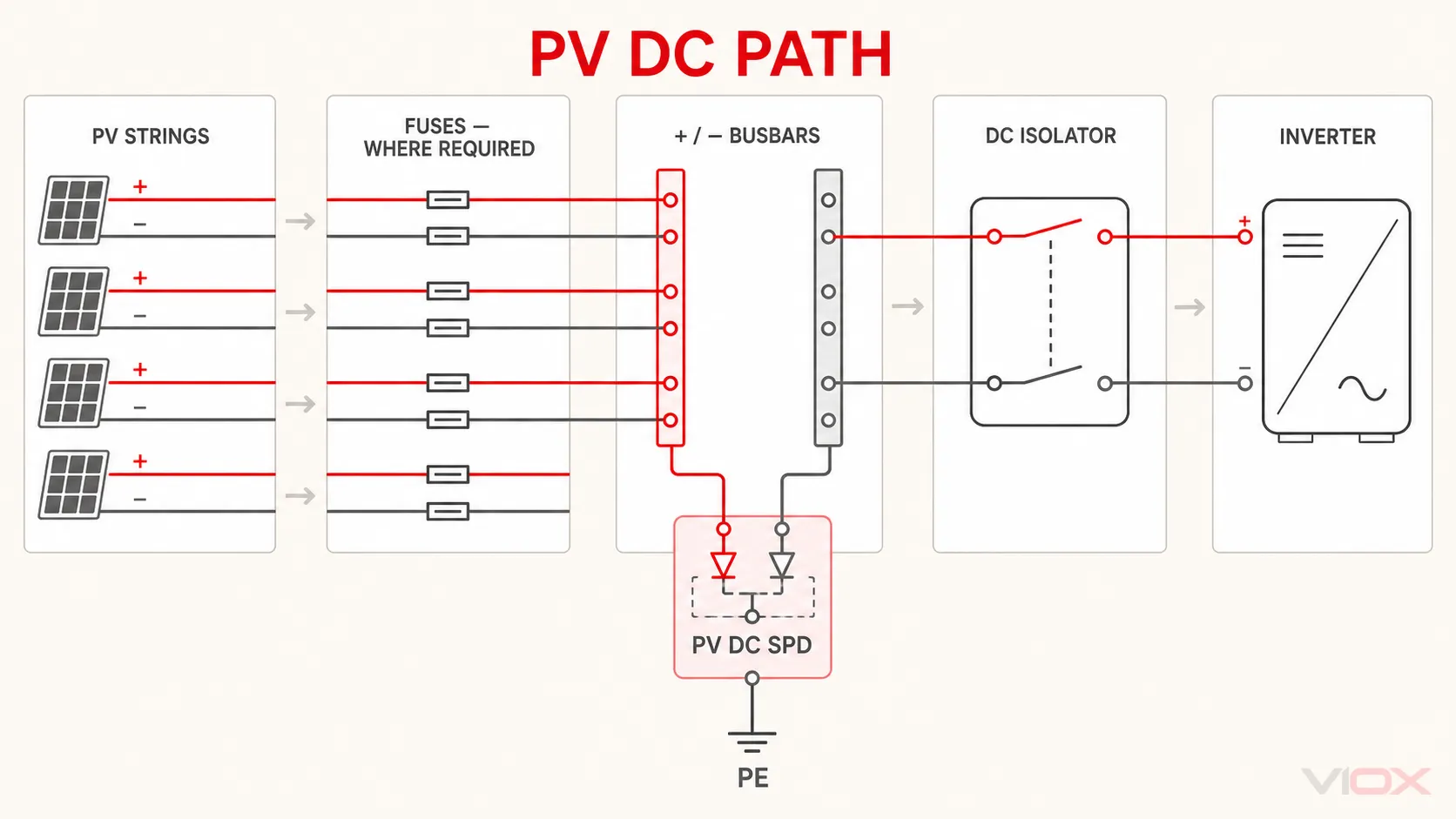
কম্বাইনার বক্সটি PV অ্যারে এবং পরবর্তী DC সরঞ্জামের মাঝে অবস্থান করে। এটি কেবল একটি বড় জংশন বক্স নয়। একটি মাল্টি-স্ট্রিং বৈদ্যুতিক ব্যবস্থায়, এটি নিম্নলিখিত বিষয়গুলোকে একত্রিত করে একটি কার্যকর সুরক্ষা এবং রক্ষণাবেক্ষণের সীমানা তৈরি করতে পারে:
- পিভি স্ট্রিং ইনপুট টার্মিনাল
- প্রয়োজনীয় ক্ষেত্রে স্ট্রিং-লেভেল ওভারকারেন্ট সুরক্ষা
- positive and negative busbars or distribution blocks
- একটি PV-রেটেড DC SPD
- একটি গ্রাউন্ডিং বা সুরক্ষামূলক আর্থ সংযোগ
- একটি আউটপুট টার্মিনাল বিন্যাস
- একটি DC আইসোলেটর বা সুইচ-ডিসকানেক্টর যেখানে নির্দিষ্ট করা আছে
- ঐচ্ছিক স্ট্রিং মনিটরিং এবং যোগাযোগ সরঞ্জাম
- ইনস্টলেশন পরিবেশের জন্য উপযুক্ত একটি এনক্লোজার এবং ক্যাবল-এন্ট্রি সিস্টেম
একটি ছোট সিস্টেমে যেখানে মাত্র এক বা দুটি স্ট্রিং থাকে, সেখানে একটি আলাদা এক্সটার্নাল কম্বাইনার বক্সের প্রয়োজন নাও হতে পারে যদি ইনভার্টারটি ইতিমধ্যে উপযুক্ত ইনপুট চ্যানেল এবং সুরক্ষা প্রদান করে। স্ট্রিংয়ের সংখ্যা বাড়ার সাথে সাথে, একটি ডেডিকেটেড বক্স সংগ্রহ, সুরক্ষা, টেস্টিং, আইসোলেশন এবং রক্ষণাবেক্ষণকে আরও সুসংগঠিত করতে পারে।.
একটি PV কম্বাইনার বক্স কী কাজ করে?
একটি PV কম্বাইনার বক্সের প্রধান উদ্দেশ্য হলো একাধিক PV স্ট্রিং থেকে কম সংখ্যক ডাউনস্ট্রিম DC সার্কিটে রূপান্তরকে সুসংগঠিত করা।.
| ফাংশন | বক্সটি যা করে | যা এখনও ইঞ্জিনিয়ারিং যাচাইকরণের প্রয়োজন |
|---|---|---|
| স্ট্রিং কালেকশন | সমান্তরাল স্ট্রিং আউটপুটগুলোকে একটি নির্দিষ্ট কালেকশন পয়েন্টে নিয়ে আসে | ইনপুট/আউটপুট বিন্যাস, কন্ডাক্টরের আকার, টার্মিনাল রেটিং এবং বাসবারের সক্ষমতা |
| স্ট্রিং সুরক্ষা | অ্যারে ডিজাইনে ওভারকারেন্ট সুরক্ষার প্রয়োজন হলে PV ফিউজ বা DC ব্রেকার ব্যবহার করে | মডিউলের সর্বোচ্চ সিরিজ ফিউজ রেটিং, রিভার্স-কারেন্ট এক্সপোজার, কন্ডাক্টরের অ্যাম্পাসিটি এবং প্রযোজ্য কোড |
| ঢেউ সুরক্ষা | একটি PV/DC SPD-কে DC কন্ডাক্টর এবং সুরক্ষামূলক আর্থ (PE) পথের সাথে সংযুক্ত করে | ভোল্টেজ ক্লাস, সুরক্ষার স্তর, ডিসচার্জ কারেন্ট, ব্যাকআপ সুরক্ষা, আর্থিং এবং লিড রাউটিং |
| রক্ষণাবেক্ষণ বিচ্ছিন্নতা | একটি DC আইসোলেটর বা উপযুক্ত সুইচ-ডিসকানেক্টরের মাধ্যমে একটি স্থানীয় ডিসকানেকশন পয়েন্ট প্রদান করে | DC ভোল্টেজ, অপারেটিং কারেন্ট, পোল বিন্যাস, লোড-ব্রেক ডিউটি এবং আইসোলেশন ফাংশন |
| পর্যবেক্ষণ | প্রকল্পে মনিটরিং অন্তর্ভুক্ত থাকলে স্ট্রিং কারেন্ট বা ডিভাইসের অবস্থা পরিমাপ করে | পরিমাপ পদ্ধতি, নির্ভুলতা, যোগাযোগ, অ্যালার্ম, পাওয়ার সাপ্লাই এবং মডেল-নির্দিষ্ট প্রাপ্যতা |
| ফিল্ড অর্গানাইজেশন | লেবেল, টার্মিনাল, সুরক্ষা ডিভাইস এবং পরিদর্শন পয়েন্টগুলোকে একত্রিত করে | এনক্লোজার অ্যাক্সেস, ক্যাবল এন্ট্রি, তাপ, সিলিং এবং সার্ভিস স্পেস |
এই ফাংশনগুলো সম্পর্কিত হলেও একে অপরের পরিপূরক নয়। একটি ফিউজ ম্যানুয়াল আইসোলেটর নয়, একটি আইসোলেটর স্বয়ংক্রিয়ভাবে কোনো ওভারকারেন্ট প্রোটেক্টিভ ডিভাইস নয় এবং একটি SPD দীর্ঘস্থায়ী শর্ট সার্কিট কারেন্ট দূর করতে পারে না। সম্পূর্ণ সুরক্ষা সীমানা একটি বৈদ্যুতিক ব্যবস্থা হিসেবে পর্যালোচনা করা আবশ্যক।.
Main Components Inside a PV Combiner Box
কম্পোনেন্টের মিশ্রণ ইনভার্টার আর্কিটেকচার, অ্যারে ডিজাইন, টার্গেট মার্কেট এবং প্রজেক্ট স্পেসিফিকেশনের ওপর নির্ভর করে। একটি সাধারণ অ্যাসেম্বলিতে নিম্নলিখিত বিষয়গুলো অন্তর্ভুক্ত থাকতে পারে:
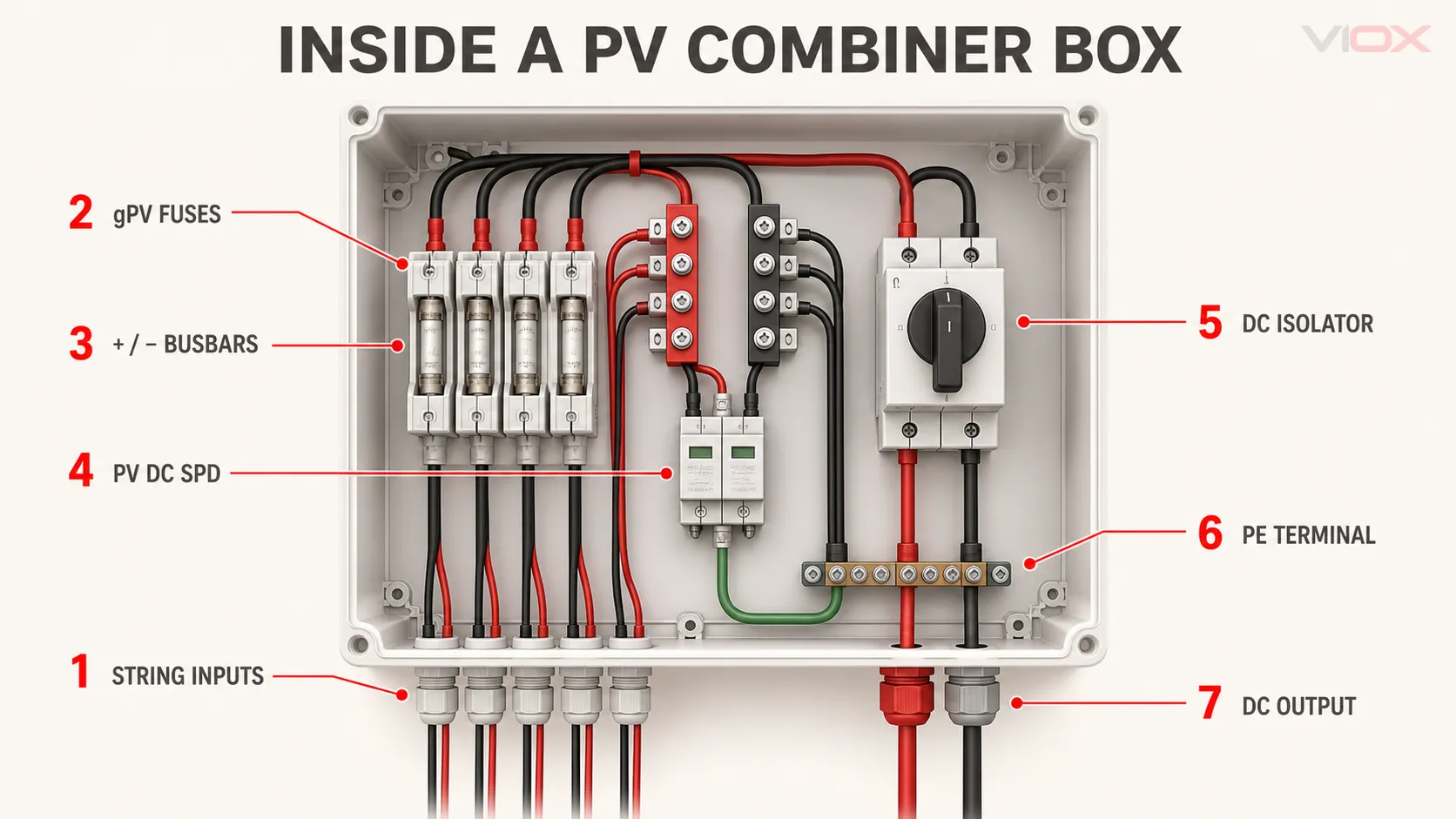
| উপাদান | Primary role | নির্বাচন বা যাচাইকরণের পয়েন্ট |
|---|---|---|
| স্ট্রিং ইনপুট টার্মিনাল বা কানেক্টর | Receive positive and negative conductors from each PV string | কন্ডাক্টরের আকার, ইনসুলেশন সিস্টেম, টার্মিনেশন পদ্ধতি, পোলারিটি এবং টর্ক নির্দেশাবলীর সাথে মিল রাখুন |
| PV ফিউজ হোল্ডার এবং gPV ফিউজ-লিঙ্ক | প্রয়োজন অনুযায়ী স্ট্রিং-লেভেল ফল্ট বা রিভার্স-কারেন্ট এক্সপোজার সীমিত করুন | PV/DC ভোল্টেজ, কারেন্ট, ফিউজ ক্লাস, মডিউল লিমিট, হোল্ডার রেটিং এবং তাপমাত্রার শর্তাবলী নিশ্চিত করুন |
| ডিসি সার্কিট ব্রেকার | ডিজাইনের প্রয়োজন অনুযায়ী রিসেটযোগ্য সুরক্ষা বা সুইচিং প্রদান করুন | DC ভোল্টেজ, কারেন্ট, ব্রেকিং ক্যাপাসিটি, পোলারিটি, পোল বিন্যাস এবং অ্যাপ্লিকেশনের উপযুক্ততা যাচাই করুন |
| Positive and negative busbars | সুরক্ষিত স্ট্রিং সার্কিটগুলো একত্রিত করুন | কন্টিনিউয়াস কারেন্ট, তাপমাত্রা বৃদ্ধি, স্পেসিং, ইনসুলেশন এবং সংযোগ পদ্ধতি পরীক্ষা করুন |
| PV DC SPD | PV DC সাইডে ট্রানজিয়েন্ট ওভারভোল্টেজ সীমিত করুন | Uc বা Ucpv, Up, ডিসচার্জ-কারেন্ট রেটিং, সংযোগ মোড, ব্যাকআপ সুরক্ষা এবং আর্থিংয়ের সাথে মিল রাখুন |
| DC isolator or switch-disconnector | ইচ্ছাকৃত ম্যানুয়াল ডিসকানেকশনের ব্যবস্থা রাখুন | DC সুইচিং এবং আইসোলেশন রেটিং, হ্যান্ডেল বিন্যাস, লকআউট এবং ইনস্টলেশন ডিউটি যাচাই করুন |
| সুরক্ষামূলক আর্থ টার্মিনাল বা গ্রাউন্ডিং বার | এনক্লোজার এবং SPD আর্থ পাথকে গ্রাউন্ডিং সিস্টেমের সাথে সংযুক্ত করুন | কন্ডাক্টরের আকার, বন্ডিং পদ্ধতি, ক্ষয় প্রতিরোধ ক্ষমতা এবং প্রকল্পের আর্থিং ব্যবস্থা নিশ্চিত করুন |
| আউটপুট টার্মিনাল | সম্মিলিত সার্কিটটি ইনভার্টার বা চার্জ কন্ট্রোলারের দিকে পাঠান | আউটপুট কারেন্ট, ক্যাবলের আকার, টার্মিনেশন পদ্ধতি এবং ডাউনস্ট্রিম সরঞ্জামের সাথে সামঞ্জস্য করুন |
| স্ট্রিং-মনিটরিং মডিউল | কারেন্টের ভারসাম্যহীনতা, লো-কারেন্ট স্ট্রিং, ফিউজের কার্যকারিতা বা নির্দিষ্ট করা থাকলে ডিভাইসের অবস্থা শনাক্ত করুন | চ্যানেল সংখ্যা, পরিমাপের পরিসীমা, কমিউনিকেশন প্রোটোকল, অ্যালার্ম এবং মডেল-নির্দিষ্ট সাপোর্ট নিশ্চিত করুন |
| এনক্লোজার, গ্ল্যান্ড এবং প্লাগ | অ্যাসেম্বলিকে সুরক্ষিত করুন এবং ক্যাবল এন্ট্রিগুলো সিল করুন | সম্পূর্ণ ইনস্টল করা পরিবেশগত সুরক্ষা, UV এক্সপোজার, ক্ষয়, ঘনীভবন এবং সার্ভিস অ্যাক্সেস যাচাই করুন। |
শুধুমাত্র পণ্যের শিরোনাম দেখে ধরে নেবেন না যে এতে প্রতিটি উপাদান উপস্থিত আছে। স্পেসিফিকেশনের আগে, সঠিক কনফিগারেশনের জন্য ওয়্যারিং ডায়াগ্রাম, বিল অফ মেটেরিয়ালস, কম্পোনেন্ট ডেটাশিট, রেটিং, লেবেল এবং টেস্ট ডকুমেন্টেশনের অনুরোধ করুন।.
কিভাবে একটি সোলার PV কম্বাইনার বক্স নির্বাচন করবেন
১. স্ট্রিং সংখ্যা এবং ইনপুট/আউটপুট লেআউট
কম্বাইনার বক্সগুলো তাদের ইনপুট এবং আউটপুট বিন্যাস দ্বারা বর্ণিত হয়, যেমন ২-ইন/১-আউট, ৪-ইন/১-আউট, ৬-ইন/১-আউট, বা ৮-ইন/১-আউট। কিছু অ্যাসেম্বলিতে একাধিক আউটপুট আলাদা রাখা হয়, উদাহরণস্বরূপ ২-ইন/২-আউট বা ৩-ইন/৩-আউট, সব স্ট্রিংকে একটি আউটপুটে একত্রিত করার পরিবর্তে।.
সঠিক লেআউট নির্ভর করে:
- অ্যারে সেকশনে PV স্ট্রিংয়ের সংখ্যার উপর
- ইনভার্টারের ম্যাক্সিমাম পাওয়ার পয়েন্ট ট্র্যাকিং (MPPT) ইনপুট আর্কিটেকচারের উপর
- ক্যাবল রাউটিং এবং ইনভার্টার থেকে দূরত্ব
- সুরক্ষা বা রক্ষণাবেক্ষণের জন্য আউটপুটগুলো আলাদা রাখা প্রয়োজন কিনা
- পরিকল্পিত সম্প্রসারণ এবং অতিরিক্ত ইনপুট পজিশন
একটি অব্যবহৃত ইনপুট অবশ্যই এনক্লোজার এবং ইনস্টলেশনের প্রয়োজনীয়তা অনুযায়ী সিল করা এবং সাজানো থাকতে হবে। শুধুমাত্র সংখ্যাটি পরিচিত মনে হচ্ছে বলে একটি বড় বক্স নির্দিষ্ট করবেন না; অতিরিক্ত টার্মিনাল এবং আউটপুট পাথগুলোর উদ্দেশ্য কী তা নিশ্চিত করুন।.
২. সর্বোচ্চ কোল্ড-কারেক্টেড স্ট্রিং ভোল্টেজ
তাপমাত্রা কমলে PV ওপেন-সার্কিট ভোল্টেজ (Voc) বৃদ্ধি পায়। তাই ভোল্টেজ চেক করার সময় শুধুমাত্র নামমাত্র সিস্টেম লেবেল নয়, বরং সর্বনিম্ন ডিজাইন তাপমাত্রায় প্রত্যাশিত সর্বোচ্চ স্ট্রিং ওপেন-সার্কিট ভোল্টেজ ব্যবহার করতে হবে।.
একটি সরলীকৃত ডিজাইনের সম্পর্ক হলো:
সর্বোচ্চ স্ট্রিং Voc = স্ট্যান্ডার্ড টেস্ট কন্ডিশন (STC)-এ মডিউল Voc × সিরিজে থাকা মডিউলের সংখ্যা × কোল্ড-টেম্পারেচার কারেকশন ফ্যাক্টরনির্বাচিত ভোল্টেজ ক্লাসটি অবশ্যই সংশোধিত মানের জন্য উপযুক্ত হতে হবে। এই পরীক্ষাটি ফিউজ হোল্ডার, ব্রেকার, SPD, আইসোলেটর, টার্মিনাল, বাসবার, কেবল এবং ইনভার্টার ইনপুট সহ সম্পূর্ণ পথের ক্ষেত্রে প্রযোজ্য। 600V/1000V/1500V এর গভীরতর তুলনার জন্য, ব্যবহার করুন PV কম্বাইনার বক্স ভোল্টেজ রেটিং নির্দেশিকা.
3. স্ট্রিং কারেন্ট এবং সম্মিলিত আউটপুট কারেন্ট
প্রতিটি ইনপুট পজিশনে অবশ্যই প্রাসঙ্গিক স্ট্রিং কারেন্ট ধারণ করার সক্ষমতা থাকতে হবে। সম্মিলিত আউটপুট সার্কিটকে অবশ্যই সেই আউটপুট শেয়ার করা সমস্ত সমান্তরাল স্ট্রিংয়ের অবদান, সেইসাথে প্রয়োজনীয় ডিজাইনের শর্তাবলী এবং মার্জিনগুলো সামলাতে হবে।.
অন্তত পর্যালোচনা করুন:
- মডিউল শর্ট সার্কিট কারেন্ট (Isc)
- অপারেটিং কারেন্ট এবং তাপমাত্রার শর্তাবলী
- স্ট্রিং কন্ডাক্টরের অ্যাম্পাসিটি
- fuse or breaker rating
- বাসবার এবং টার্মিনাল রেটিং
- আউটপুট আইসোলেটর বা ব্রেকার রেটিং
- আউটগোয়িং কেবল এবং ইনভার্টার ইনপুট সীমা
একটি বক্সে সঠিকভাবে নির্বাচিত স্ট্রিং ফিউজ থাকা সত্ত্বেও সেটির আউটপুট বাসবার বা টার্মিনাল বিন্যাস ছোট আকারের হতে পারে। ইনপুট সুরক্ষা এবং আউটপুট ক্ষমতা আলাদাভাবে পর্যালোচনা করতে হবে।.
৪. সুরক্ষা আর্কিটেকচার
কম্বাইনার বক্সে ফিউজ, DC ব্রেকার, একটি SPD, একটি DC আইসোলেটর অথবা এগুলোর সমন্বয় ব্যবহার করা যেতে পারে। সঠিক বিন্যাসটি রিভার্স-কারেন্ট এক্সপোজার, গ্রাউন্ডিং বিন্যাস, ইনভার্টার ডিজাইন, স্থানীয় কোড, প্রজেক্ট স্ট্যান্ডার্ড এবং আপস্ট্রিম বা ডাউনস্ট্রিম সরঞ্জামে ইতিমধ্যে বিদ্যমান সুরক্ষার উপর নির্ভর করে।.
ফিউজ, ব্রেকার, আইসোলেটর এবং SPD-এর বিস্তারিত সমন্বয়ের জন্য ব্যবহার করুন PV কম্বাইনার বক্স সুরক্ষা ডিজাইন নির্দেশিকা. । সামগ্রিক নিয়মটি সহজ: প্রতিটি ডিভাইসকে তার প্রয়োজনীয় কার্যকারিতা এবং প্রকৃত PV DC ডিউটির জন্য নির্দিষ্ট করুন।.
৫. এনক্লোজার এবং ইনস্টলেশন পরিবেশ
এনক্লোজার হলো বৈদ্যুতিক ডিজাইনের একটি অংশ। ছাদ, গ্রাউন্ড-মাউন্ট, উপকূলীয়, মরুভূমি, কৃষি এবং শিল্প এলাকাগুলোতে UV এক্সপোজার, আর্দ্রতা, লবণ, ধূলিকণা, ক্ষয়, তাপ, কেবল এন্ট্রি, ঘনীভবন এবং সার্ভিস অ্যাক্সেসের ক্ষেত্রে ভিন্ন ভিন্ন চাহিদা থাকে।.
অ্যাসেম্বলি অনুমোদন করার আগে, যাচাই করুন:
- এনক্লোজারের উপাদান এবং পরিবেশগত সুরক্ষা
- ক্যাবল-গ্ল্যান্ড এবং অব্যবহৃত খোলার সিলিং
- সরাসরি সূর্যালোক এবং অভ্যন্তরীণ তাপের অবস্থা
- ক্ষয় এবং লবণের সংস্পর্শ
- মাউন্টিং পজিশন এবং কাজের অ্যাক্সেস
- স্পষ্ট লেবেল এবং ফিউজ, আইসোলেটর, SPD এবং টার্মিনালগুলিতে নিরাপদ অ্যাক্সেস
একটি এনক্লোজার রেটিংকে ইনস্টল করা অ্যাসেম্বলির প্রয়োজনীয়তা হিসেবে বিবেচনা করা উচিত। ভুল গ্ল্যান্ড, সিল না করা খোলা অংশ, দুর্বল মাউন্টিং বা ক্ষতিগ্রস্ত সিলের কারণে রেটিংটি ক্ষতিগ্রস্ত হতে পারে।.
৬. কখন স্ট্রিং মনিটরিং সহ একটি PV কম্বাইনার বক্স নির্দিষ্ট করতে হবে
যখন প্রজেক্টে দ্রুত ফল্ট লোকালাইজেশন, পারফরম্যান্স তুলনা, রিমোট অ্যালার্ম বা স্ট্রিং-লেভেল আচরণের স্পষ্ট রেকর্ডের প্রয়োজন হয়, তখন স্ট্রিং মনিটরিং কার্যকর হতে পারে। ডিজাইনের উপর নির্ভর করে এটি কারেন্ট, ভোল্টেজ, তাপমাত্রা, ফিউজের অবস্থা বা ডিভাইসের অবস্থা পরিমাপ করতে পারে।.
শুধুমাত্র তখনই মনিটরিং নির্দিষ্ট করুন যখন প্রজেক্টের একটি সুনির্দিষ্ট অপারেশনাল উদ্দেশ্য থাকে। নিশ্চিত করুন:
- মনিটর করা স্ট্রিংয়ের সংখ্যা
- পরিমাপকৃত পরিমাণ এবং প্রত্যাশিত পরিসীমা
- লোকাল ডিসপ্লে বা রিমোট কমিউনিকেশন
- অ্যালার্ম এবং ডেটা-লগিংয়ের প্রয়োজনীয়তা
- অক্সিলিয়ারি পাওয়ারের প্রয়োজনীয়তা
- ইনভার্টার বা প্ল্যান্ট মনিটরিং সিস্টেমের সাথে সামঞ্জস্যতা
- নির্দিষ্ট কম্বাইনার বক্স মডেলে মনিটরিং সুবিধা আছে কিনা
স্ট্রিং মনিটরিং সমস্ত কম্বাইনার-বক্স লেআউটের জন্য একটি সর্বজনীন বৈশিষ্ট্য নয়। এটিকে একটি মডেল-নির্দিষ্ট বিকল্প হিসেবে বিবেচনা করুন যা ডেটাশিটে নিশ্চিত করা আবশ্যক।.
600V, 1000V, নাকি 1500V পিভি (PV) কম্বাইনার বক্স?
ভোল্টেজ ক্লাস কম্পোনেন্ট নির্বাচন, ইনসুলেশন কোঅর্ডিনেশন, সুইচিং ডিউটি, ক্যাবল ডিজাইন এবং DC আর্কের ফলাফলকে প্রভাবিত করে। এটি সর্বোচ্চ ক্যালকুলেটেড পিভি (PV) ভোল্টেজ এবং প্রকল্পের সরঞ্জামের আর্কিটেকচার থেকে নির্বাচন করা উচিত।.
| Voltage class | সাধারণ প্রকল্পের প্রেক্ষাপট | প্রধান নির্বাচনের পয়েন্ট |
|---|---|---|
| ৬০০ ভোল্ট ডিসি | পুরানো, ছোট বা নিম্ন-ভোল্টেজের পিভি (PV) আর্কিটেকচার | সরঞ্জামটি প্রকৃত অ্যারে এবং ইনভার্টার ইনপুট ভোল্টেজের জন্য উপযুক্ত কিনা তা নিশ্চিত করুন |
| 1000V DC | অনেক বাণিজ্যিক, শিল্প এবং মাঝারি আকারের PV সিস্টেম | কোল্ড-কারেক্টেড Voc পরীক্ষা করুন এবং প্রতিটি অভ্যন্তরীণ উপাদানের রেটিং যাচাই করুন |
| 1500V DC | ইউটিলিটি-স্কেল এবং বড় গ্রাউন্ড-মাউন্ট সিস্টেম | সম্পূর্ণ উচ্চ-ভোল্টেজ DC সুরক্ষা, সুইচিং, ইনসুলেশন এবং সার্ভিস ডিজাইন নিশ্চিত করুন |
এগুলো হলো সিস্টেমের শ্রেণি, স্বয়ংক্রিয় পণ্যের সুপারিশ নয়। একটি “1000V সিস্টেম”-এর ক্ষেত্রেও কোল্ড-টেম্পারেচার ভোল্টেজ ক্যালকুলেশন প্রয়োজন এবং একটি 1500V প্রজেক্টের জন্য এনক্লোজারের ওপর কেবল 1500V লেবেল থাকাই যথেষ্ট নয়। ফিউজ, হোল্ডার, SPD, আইসোলেটর, টার্মিনাল, বাসবার, ওয়্যারিং এবং ডাউনস্ট্রিম সরঞ্জামগুলোকে অবশ্যই প্রকৃত ডিজাইনের শর্তাবলির জন্য উপযুক্ত হতে হবে।.
PV কম্বাইনার বক্স বনাম জংশন বক্স বনাম AC কম্বাইনার বক্স
এই শব্দগুলো বিভিন্ন বৈদ্যুতিক ভূমিকা বর্ণনা করে:
| যন্ত্র | যেখানে এটি ব্যবহৃত হয় | প্রধান ভূমিকা | সুরক্ষা সীমানা |
|---|---|---|---|
| পিভি ডিসি কম্বাইনার বক্স | PV স্ট্রিং এবং একটি ইনভার্টার বা চার্জ কন্ট্রোলারের মধ্যে | সমান্তরাল PV স্ট্রিংগুলোকে একত্রিত করে এবং DC সুরক্ষা, সার্জ সুরক্ষা, আইসোলেশন এবং মনিটরিংয়ের সমন্বয় করতে পারে | PV DC ভোল্টেজ, স্ট্রিং রিভার্স কারেন্ট, ট্রানজিয়েন্ট ওভারভোল্টেজ, পোলারিটি এবং DC আর্ক আচরণ |
| 接线盒 | একটি সার্কিটের সংযোগ বা ট্রানজিশন পয়েন্টে | কন্ডাক্টর স্প্লাইসিং, রাউটিং বা টার্মিনেট করার জন্য একটি সুরক্ষিত এনক্লোজার প্রদান করে | এনক্লোজার, কন্ডাক্টর এবং সংযোগের প্রয়োজনীয়তা; এটি স্বয়ংক্রিয়ভাবে কোনো স্ট্রিং-সুরক্ষা অ্যাসেম্বলি নয় |
| অল্টারনেটিং-কারেন্ট (AC) কম্বাইনার বক্স | ইনভার্টার বা মাইক্রোইনভার্টারের পরে এবং AC ডিস্ট্রিবিউশনের আগে | AC আউটপুটগুলোকে একত্রিত করে | AC শর্ট সার্কিট কারেন্ট, ফেজ/নিউট্রাল বিন্যাস, আর্থিং এবং গ্রিড-সংযোগের প্রয়োজনীয়তা |
একটি AC-রেটেড ডিভাইসকে PV DC সার্কিটের জন্য উপযুক্ত বলে ধরে নেওয়া যায় না। কম্বাইনার এবং জংশন বক্সের মধ্যে ভৌত ও কার্যকরী সীমানার জন্য দেখুন একটি কম্বিনার বক্স এবং একটি জংশন বক্সের মধ্যে পার্থক্য. । DC/AC পার্থক্যের জন্য দেখুন AC কম্বাইনার বক্স বনাম DC কম্বাইনার বক্স.
বর্তমান VIOX সোলার PV কম্বাইনার বক্স পণ্যের পরিসর
বর্তমান VIOX প্রোডাক্ট পেজে প্রকাশিত 600V DC এবং 1000V DC ক্লাস এবং 1 থেকে 8 স্ট্রিং পজিশন পর্যন্ত ইনপুট/আউটপুট লেআউট তালিকাভুক্ত করা হয়েছে। নিচের টেবিলটি বর্তমান প্রোডাক্ট সামারিতে দেখানো লেআউটগুলোকে প্রতিফলিত করে; স্পেসিফিকেশনের আগে মডেলের ডেটাশিট থেকে ফাঁকা ভোল্টেজের তথ্য নিশ্চিত করা উচিত।.
| VIOX সিরিজ বা মডেল | প্রকাশিত সিস্টেম ভোল্টেজ | প্রকাশিত স্ট্রিং লেআউট |
|---|---|---|
| VOPV600-1/1 | ৬০০ ভোল্ট ডিসি | 1 in / 1 out |
| VOPV600-2/2 | ৬০০ ভোল্ট ডিসি | 2 in / 2 out |
| VOPV1000-1/1 | 1000V DC | 1 in / 1 out |
| VOPV1000-2/2 | 1000V DC | 2 in / 2 out |
| VOPV1000-3/1 | 1000V DC | 3 in / 1 out |
| VOPV1000-3/3 | 1000V DC | 3 in / 3 out |
| VCB F4/1 | ডেটাশিট থেকে নিশ্চিত করুন | 4 in / 1 out |
| VCB F6/1 | ডেটাশিট থেকে নিশ্চিত করুন | 6 in / 1 out |
| VCB F8/1 | ডেটাশিট থেকে নিশ্চিত করুন | 8 in / 1 out |
পণ্যের বিন্যাসটি কেবল শুরুর ধাপ। চূড়ান্ত নির্বাচনের ক্ষেত্রে অ্যারের সর্বোচ্চ ভোল্টেজ, কারেন্ট, সুরক্ষা ব্যবস্থা, ক্যাবল এন্ট্রি, মনিটরিংয়ের প্রয়োজনীয়তা, ইনস্টলেশনের পরিবেশ, লক্ষ্য বাজার এবং নথিপত্রের প্রয়োজনীয়তার সাথে মিল থাকা আবশ্যক। প্রকাশিত মডেলগুলোর সাথে তুলনা করুন VIOX সোলার PV কম্বাইনার বক্স পৃষ্ঠা এবং যখন প্রকল্পের জন্য কাস্টম বিন্যাসের প্রয়োজন হয় তখন মডেল সাপোর্টের জন্য অনুরোধ করুন।.
যাচাই করার জন্য স্ট্যান্ডার্ড এবং ডকুমেন্টেশন
স্ট্যান্ডার্ডগুলো ডিজাইন বা সার্টিফিকেশনের প্রেক্ষাপট নির্ধারণ করে; এগুলো প্রকল্প-নির্দিষ্ট সরঞ্জামের পর্যালোচনার বিকল্প নয়।.
| ডিজাইন এলাকা | রেফারেন্স বা যাচাইকরণের পথ | যা নিশ্চিত করতে হবে |
|---|---|---|
| পিভি অ্যারে ডিজাইন | IEC 62548-1:2023, AMD1:2025 এর সাথে সমন্বিত | প্রকল্পের আওতাভুক্ত DC অ্যারে ওয়্যারিং, বৈদ্যুতিক সুরক্ষা, সুইচিং, আর্থিং এবং অন্যান্য PV-অ্যারে ডিজাইনের প্রয়োজনীয়তা |
| PV DC সার্জ প্রোটেকশন | IEC 61643-31:2018 | নির্বাচিত PV SPD এবং এর রেটিংগুলো DC PV ইনস্টলেশনের জন্য উপযুক্ত কিনা |
| উত্তর আমেরিকান সার্টিফিকেশন পাথ | UL সলিউশনস সোলার ব্যালেন্স অফ সিস্টেম সার্টিফিকেশন | সঠিক কম্বাইনার-বক্স কনফিগারেশনের জন্য প্রযোজ্য লিস্টিং, মূল্যায়ন বা সার্টিফিকেশনের প্রমাণ |
| প্রজেক্ট রিলিজ প্যাকেজ | প্রস্তুতকারক এবং প্রজেক্টের নথিপত্র | ওয়্যারিং ডায়াগ্রাম, বিল অফ মেটেরিয়ালস, কম্পোনেন্ট রেটিং, লেবেল, ইনস্টলেশন নির্দেশাবলী, টেস্ট রেকর্ড এবং রিভিশন কন্ট্রোল |
কোনো নির্দিষ্ট VIOX কম্বাইনার বক্স UL-লিস্টেড, IEC-সার্টিফাইড বা নির্দিষ্ট ইনগ্রেস-প্রোটেকশন (IP) রেটিং প্রাপ্ত বলে উল্লেখ করবেন না, যদি না সঠিক মডেলের ডকুমেন্টেশনে তা নিশ্চিত করা থাকে। সার্টিফিকেশন মডেল এবং বাজারভেদে ভিন্ন হয়।.
PV কম্বাইনার বক্সের জন্য কোটেশন অনুরোধ (RFQ) এবং স্পেসিফিকেশন চেকলিস্ট
কোটেশন বা কনফিগারেশন প্রস্তাব অনুরোধ করার আগে, নিম্নলিখিত তথ্য প্রস্তুত রাখুন:
- সর্বনিম্ন ডিজাইন তাপমাত্রায় সর্বোচ্চ স্ট্রিং ওপেন-সার্কিট ভোল্টেজ
- নামমাত্র এবং সর্বোচ্চ সিস্টেম ভোল্টেজ ক্লাস
- স্ট্রিং শর্ট সার্কিট কারেন্ট এবং অপারেটিং কারেন্ট
- ইনপুট স্ট্রিংয়ের সংখ্যা
- প্রয়োজনীয় ইনপুট/আউটপুট লেআউট, যেমন 4-in/1-out বা 3-in/3-out
- ইনভার্টার বা চার্জ-কন্ট্রোলার মডেল এবং DC ইনপুট আর্কিটেকচার
- স্ট্রিং-ফিউজ বা DC-ব্রেকার প্রয়োজনীয়তা
- আউটপুট আইসোলেটর বা সুইচ-ডিসকানেক্টর প্রয়োজনীয়তা
- SPD ভোল্টেজ ক্লাস, সংযোগ মোড, ব্যাকআপ সুরক্ষা এবং মনিটরিংয়ের প্রয়োজনীয়তা
- এনক্লোজার উপাদান, ইনস্টলেশন পরিবেশ, ক্যাবল-এন্ট্রি বিন্যাস এবং মাউন্টিং পদ্ধতি
- টার্গেট মার্কেট এবং প্রয়োজনীয় সার্টিফিকেশন বা ডকুমেন্টেশন পাথওয়ে
- পরিমাণ, ডেলিভারির প্রয়োজনীয়তা, লেবেলিং এবং যেকোনো অরিজিনাল-ইকুইপমেন্ট-ম্যানুফ্যাকচারার/অরিজিনাল-ডিজাইন-ম্যানুফ্যাকচারার (OEM/ODM) চাহিদা
এই তথ্যটি সাধারণ “সোলার কম্বাইনার বক্স” চাওয়ার চেয়ে বেশি কার্যকর। এটি সরবরাহকারীকে শুধুমাত্র স্ট্রিং সংখ্যার ভিত্তিতে একটি বক্স নির্বাচন না করে, অ্যারে আর্কিটেকচারকে একটি সম্পূর্ণ অ্যাসেম্বলির সাথে ম্যাপ করতে সাহায্য করে।.
নির্বাচনের আগে দ্রুত উত্তরসমূহ
প্রতিটি সোলার PV ব্যবস্থায় কি একটি কম্বাইনার বক্সের প্রয়োজন হয়?
না। একটি ছোট ব্যবস্থা সরাসরি ইনভার্টারের সাথে সংযুক্ত হতে পারে যদি ইনভার্টারটি পর্যাপ্ত উপযুক্ত ইনপুট এবং সুরক্ষা প্রদান করে। সমান্তরাল স্ট্রিং, ক্যাবল রান, সুরক্ষা ফাংশন এবং রক্ষণাবেক্ষণের প্রয়োজনীয়তা বৃদ্ধির সাথে সাথে একটি ডেডিকেটেড বক্স আরও বেশি কার্যকর হয়ে ওঠে।.
একটি PV কম্বাইনার বক্সে কি AC ব্রেকার বা ফিউজ ব্যবহার করা যেতে পারে?
না, যতক্ষণ না ডিভাইসটি প্রকৃত DC ভোল্টেজ, কারেন্ট এবং ইন্টারাপশন ডিউটির জন্য স্পষ্টভাবে রেট করা থাকে। AC এবং PV DC সুইচিং আচরণ ভিন্ন হয়।.
একটি কম্বাইনার বক্সে কি সবসময় স্ট্রিং মনিটরিং অন্তর্ভুক্ত থাকে?
না। মনিটরিং একটি ঐচ্ছিক বা মডেল-নির্দিষ্ট ফাংশন। চ্যানেলের সংখ্যা, পরিমাপের ভেরিয়েবল, যোগাযোগের পদ্ধতি এবং সঠিক পণ্যের ডকুমেন্টেশন নিশ্চিত করুন।.
কম্বাইনার বক্স কি জংশন বক্সের মতোই?
না। একটি জংশন বক্স সংযোগ বা ট্রানজিশনের জন্য একটি এনক্লোজার প্রদান করে। একটি PV কম্বাইনার বক্স হলো একটি নির্দিষ্ট DC সংগ্রহকারী অ্যাসেম্বলি, যা স্ট্রিং সুরক্ষা, সার্জ সুরক্ষা, আইসোলেশন এবং মনিটরিংয়ের সমন্বয় করতে পারে।.
একটি PV কম্বাইনার বক্স কনফিগারেশনের অনুরোধ করুন
আপনার কাছে যদি সর্বোচ্চ DC ভোল্টেজ, স্ট্রিং কারেন্ট, স্ট্রিং সংখ্যা, ইনপুট/আউটপুট লেআউট, সুরক্ষার প্রয়োজনীয়তা, এনক্লোজার পরিবেশ, টার্গেট মার্কেট এবং পরিমাণ থাকে, তবে ব্যবহার করুন VIOX PV কম্বাইনার বক্স প্রোডাক্ট পেজ প্রকাশিত লেআউটগুলো তুলনা করতে অথবা কনফিগারেশন সহায়তার অনুরোধ করতে।.
সঠিক নির্বাচন হলো সম্পূর্ণ DC সুরক্ষা অ্যাসেম্বলি—শুধুমাত্র সঠিক সংখ্যক ক্যাবল এন্ট্রিযুক্ত একটি বক্স নয়।.