检查员打开您的 လမ်းဆုံသေတ္တာ. 她清点导线数量。检查接线盒标识。再次清点。然后挂上了红色标签。“违反 NEC 314.16 规定——接线盒填充过量。这需要全部返工,我才能签字通过。”
这次检验失败直接导致您工期延误一周,并产生数千美元的返工费用——而这一切仅仅是因为一个 $4 接线盒的内部容积小了 2 立方英寸。这就是电工们所说的 “容积陷阱”。”
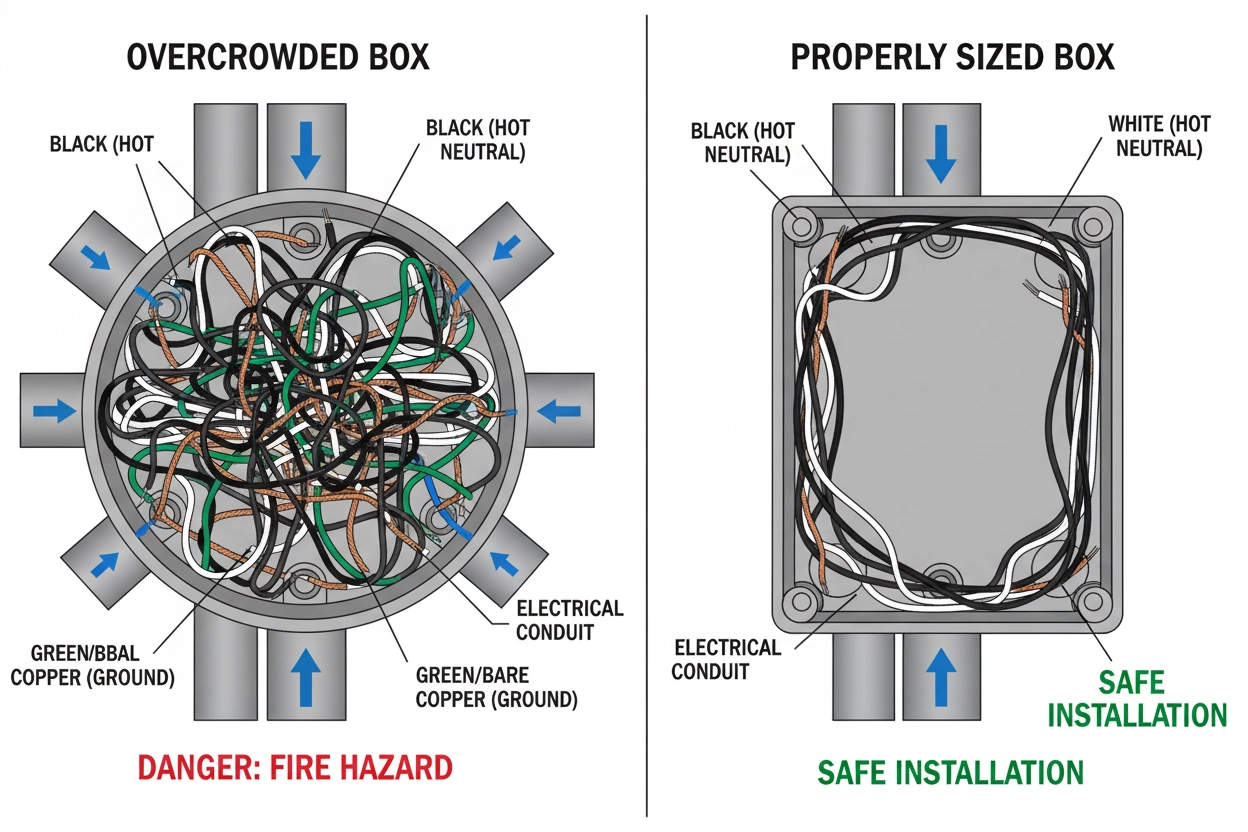
接线盒容纳电线连接,保护其免受损坏并限制火花以防火灾。但正确选择其尺寸不仅是行业最佳实践,更是美国国家电气规范(NEC)强制要求的关键安全规定。尺寸过小的接线盒会导致电线过度拥挤,造成绝缘损坏、过热,并引发严重的火灾隐患。 .
NEC 根据导线尺寸,提供了两种不同的接线盒尺寸确定方法:
- NEC 314.16(接线盒填充): 对于较小规格的导线(6 AWG 及以下),尺寸确定基于所需的总容积。可以将其理解为 “填充系数”——盒内的每个组件都占有一份“空间”,您需要将它们全部计算在内。.
- NEC 314.28(拉线盒): 对于较大规格的导线(4 AWG 及以上),尺寸确定基于安全拉拽和弯曲粗电缆所需的物理尺寸。这里就需要用到 “8倍规则”。” .
本指南将引导您了解这两种计算方法,以确保您的安装工作安全且符合规范。.
Part 1: Sizing for Small Conductors (6 AWG and Smaller) – NEC 314.16 Box Fill Calculation
When working with common household wiring sizes like 14 AWG, 12 AWG, or 10 AWG, you must use the “box fill” calculation. This method determines the minimum required cubic inch (cu in) volume of the box. Miss this calculation, and you’ll meet The Volume Trap firsthand—usually during an inspection you thought was routine.
How to Calculate Box Fill
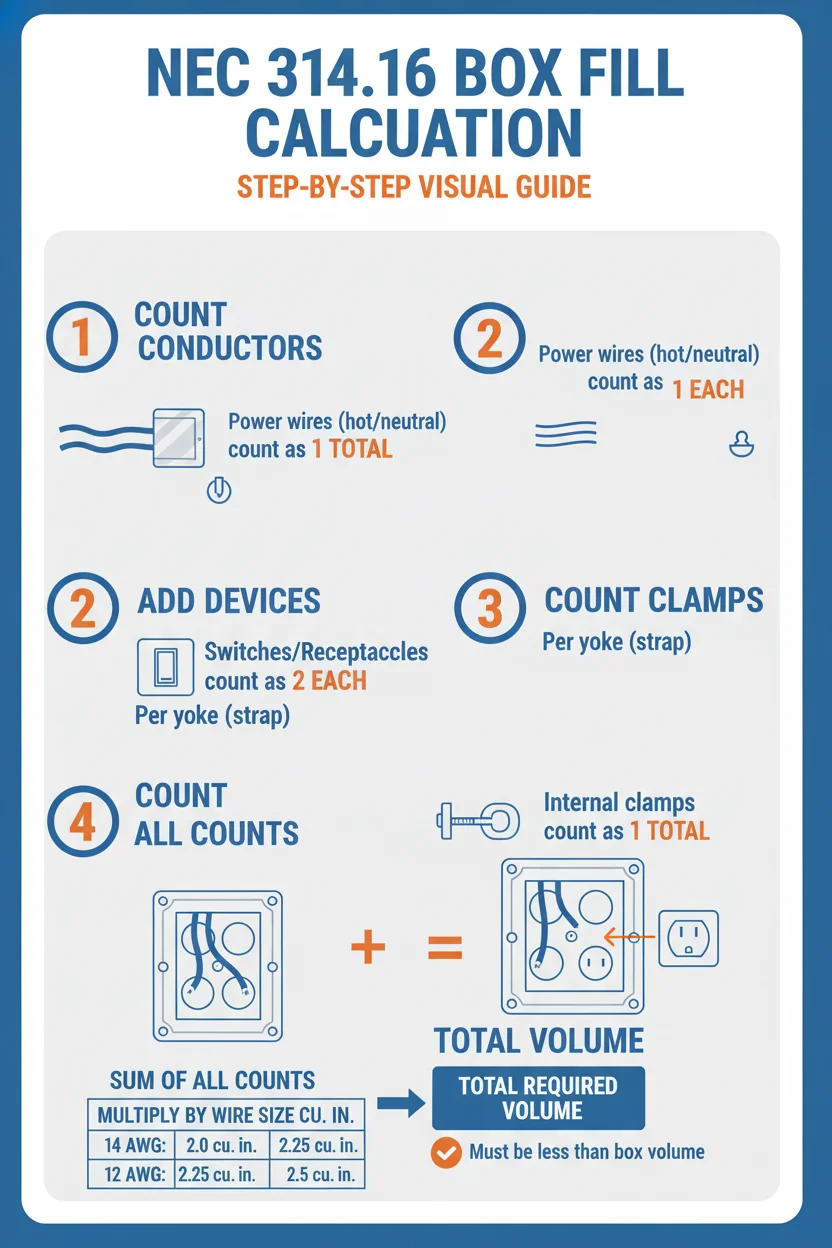
Follow these steps to determine total volume needed. Each component in the box is assigned a “conductor equivalent” value based on the largest wire size connected to it. Think of it as democracy for wires—every element gets a vote, but some count for more than others.
- စပယ်ယာများ- Count each wire that originates outside the box and terminates or is spliced inside it as one conductor.
- Devices: Count each device (e.g., a switch or receptacle) as နှစ် conductors. Devices are double-voters in this election.
- Clamps: Count all internal cable clamps together as one conductor—they vote as a bloc.
- Ground Wires: Count all bare copper or green ground wires together as one conductor. Ground wires travel in packs; they all count as one.
- Fixture Studs/Hickeys: Count each fixture stud or hickey as one conductor .
Once you have the total conductor equivalent, multiply that number by the volume allowance for that wire size, found in the table below.
Table 1: Wire Volume Allowance (per NEC 314.16(B))
| ကြိုးအရွယ်အစား | Volume per Conductor (cu in) |
|---|---|
| 14 AWG | 2.00 cu in |
| 12 AWG | 2.25 cu in |
| 10 AWG | 2.50 cu in |
| 8 AWG | 3.00 cu in |
| 6 AWG | 5.00 cu in |
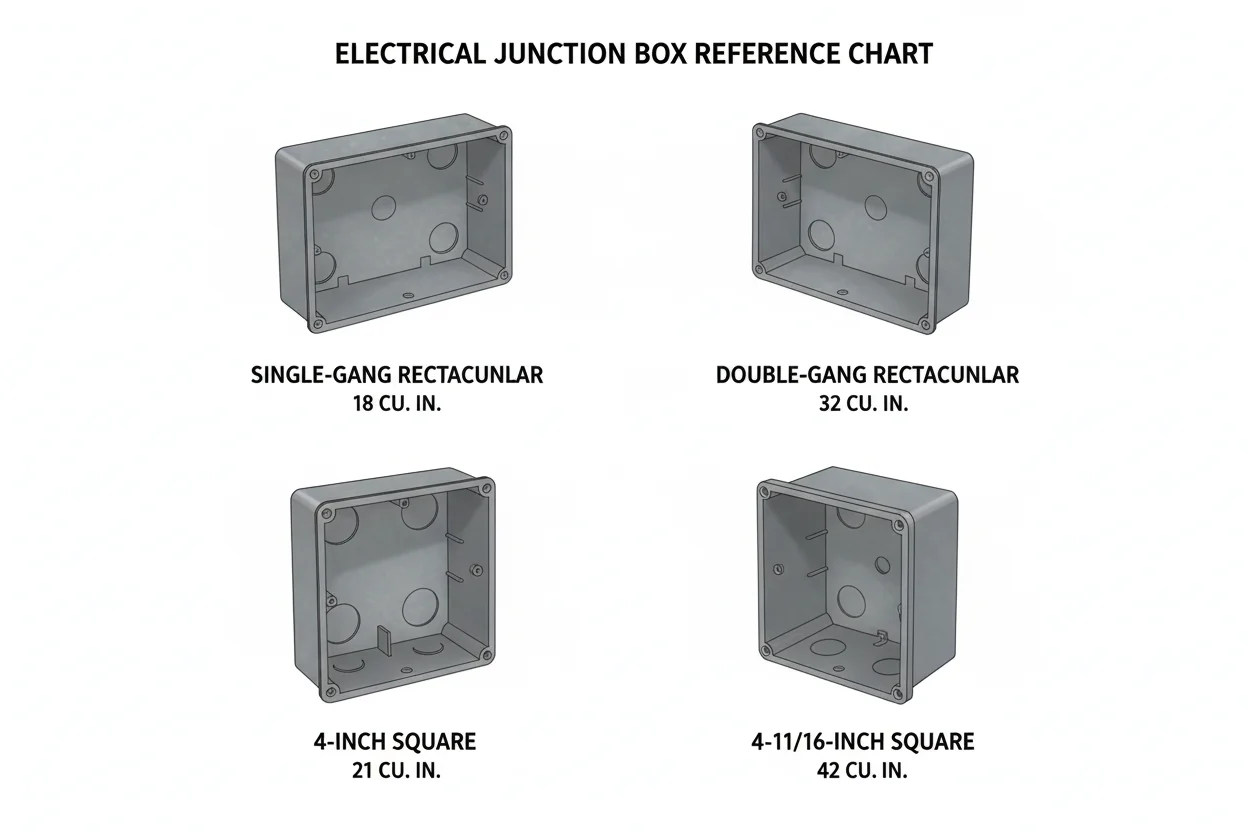
Table 2: Standard Box Volumes (per NEC 314.16(A))
| Box Type | Minimum Volume |
|---|---|
| Single-gang | 18 cu in |
| 2-gang | 36 cu in |
| 4″ Square | 30.3 cu in |
| 4-11/16″ Square | 42 cu in |
Box Fill Example
ဇာတ်လမ်း- You’re installing a single receptacle in a box. Two 12/2 non-metallic sheathed cables (each with hot, neutral, and ground) enter the box, which has internal clamps. Here’s how the votes stack up:
- စပယ်ယာများ- 2 hot + 2 neutral = 4
- Ground Wires: The two ground wires count as 1 (traveling as a pack)
- Clamps: The internal clamps count as 1 (voting as a bloc)
- Device: The receptacle counts as 2 (double-voter)
Total Conductor Equivalents: 4 + 1 + 1 + 2 = 8
Volume Calculation: The wire size is 12 AWG, which requires 2.25 cu in per conductor.
8 conductors × 2.25 cu in/conductor = 18.0 cu in
You must select a box with at least 18.0 cu in of volume. A standard single-gang box (18 cu in) meets this minimum requirement exactly—which means you’re at 100% capacity. In electrical work, “exactly at capacity” is another way of saying “go up one size if you value your inspection approval.”
Part 2: Sizing for Large Conductors (4 AWG and Larger) – NEC 314.28 Pull Box Calculation
For large conductors (4 AWG and larger), the focus shifts from volume to physical dimensions. The wires are thicker. The rules are simpler. The box must be large enough to allow conductors to be pulled through and bent without damaging their insulation. The rules depend on pull type.
Straight Pulls
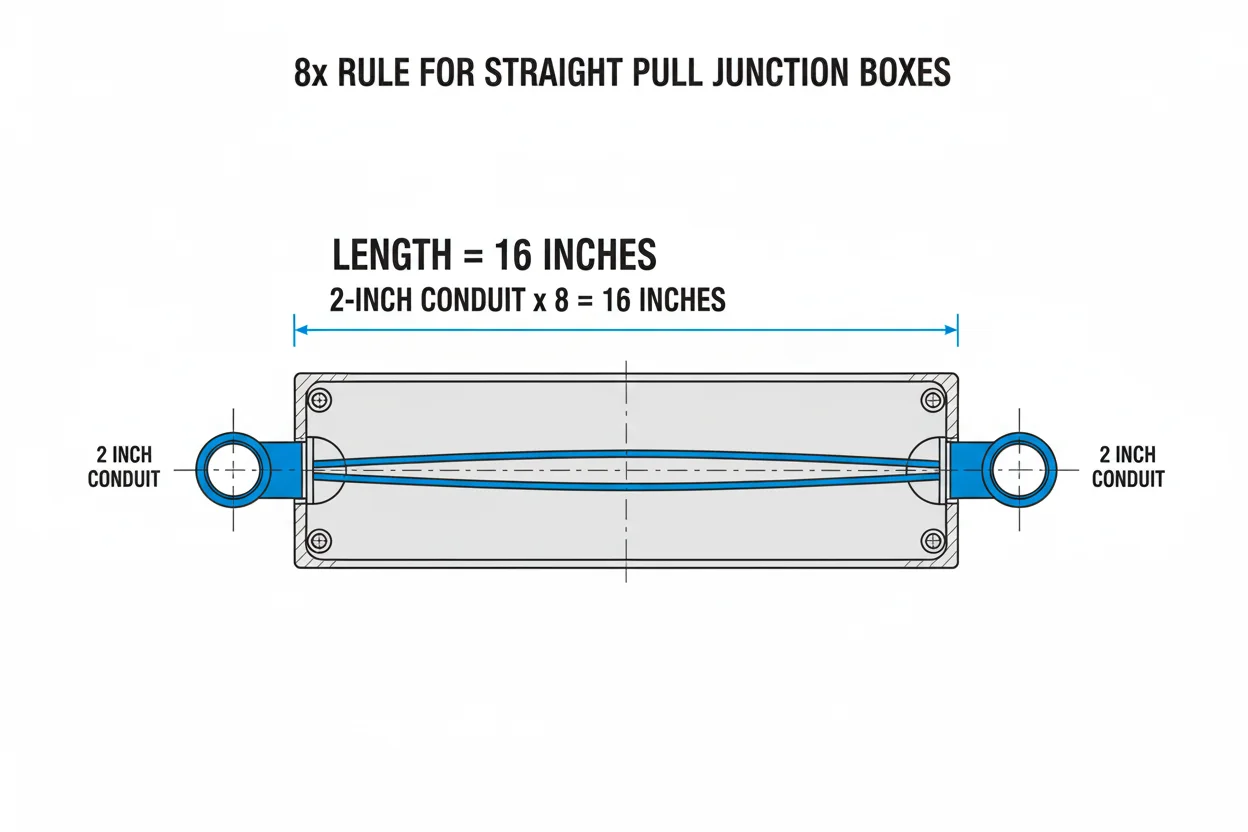
In a straight pull, conductors enter one side of a box and exit through the opposite wall. This is where The 8x Rule earns its reputation for elegant simplicity.
- Rule: The length of the box must be at least eight times (8x) the trade size of the largest raceway (conduit) .
A 2-inch conduit entering and exiting opposite walls? Your box needs to be at least 16 inches long (2″ × 8 = 16″). That’s it.
Angle Pulls, U-Pulls, or Splices
This applies when conductors enter one wall and exit through an adjacent wall (angle pull), the same wall (U-pull), or are spliced in the box.
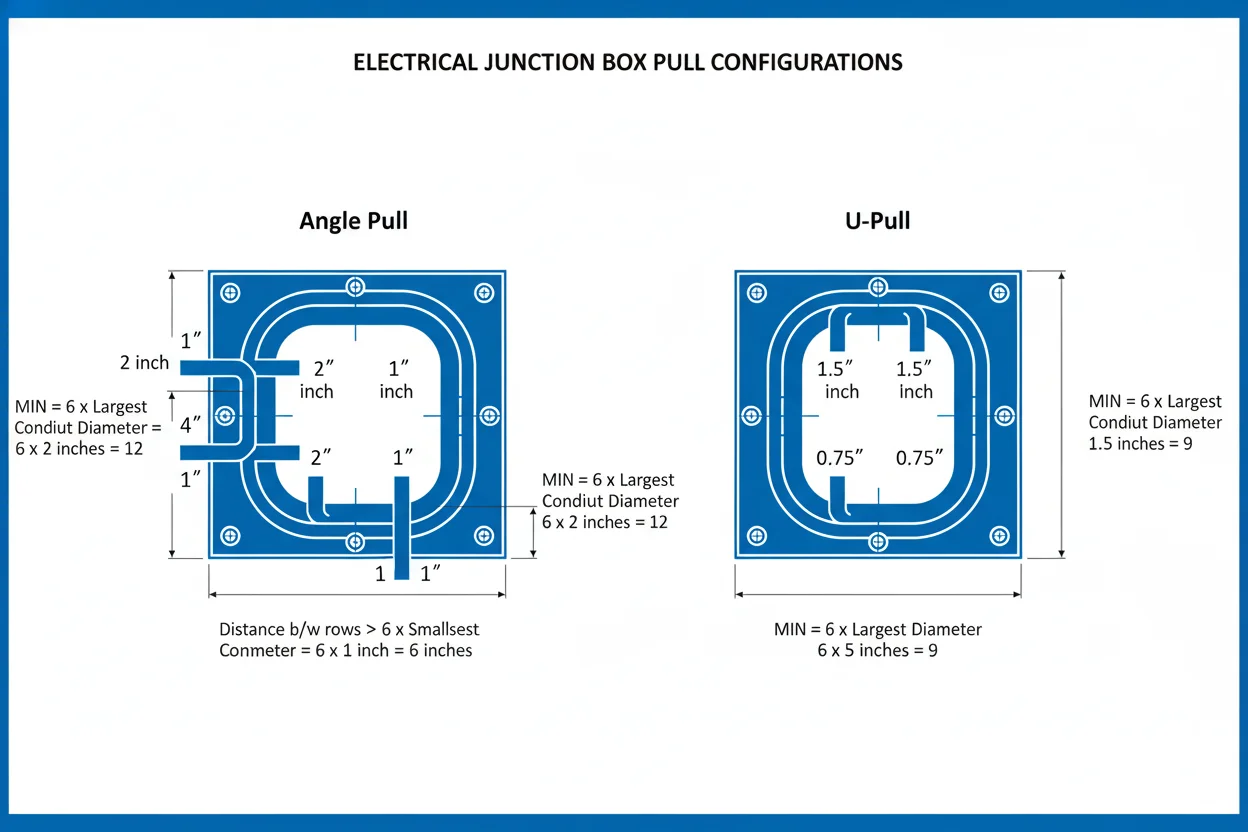
- Rule: The distance from the raceway entry to the opposite wall must be at least six times (6x) the trade size of the largest raceway, plus the sum of the diameters of all other raceways on the same wall and in the same row . Call this “The Six-Times Safety Net.”
Distance Between Raceways
- Rule: The distance between raceways enclosing the same conductor run must be at least six times (6x) the trade size of the largest raceway.
Pull Box Example (Combination Pulls)
When a box contains both straight and angle pulls, you must calculate for both and use the largest resulting dimension for each direction (horizontal and vertical).
ဇာတ်လမ်း- A pull box has the following raceways:
- Left Wall: One 3″ and one 2″ raceway.
- Right Wall: One 2″ raceway.
- Top Wall: One 3″ raceway.
- The 2″ raceways are for a straight pull (left to right).
- The 3″ raceways are for an angle pull (left to top).
1. Calculate Horizontal Dimension (Length):
- Straight Pull (Left to Right): The largest raceway in this pull is 2″.
- 8 × 2″ = 16″
- Angle Pull (Originating on Left Wall): The largest raceway is 3″. The other raceway on that wall is 2″.
- (6 × 3″) + 2″ = 18″ + 2″ = 20″
- Result: Choose the largest dimension: 20 inches.
2. Calculate Vertical Dimension (Height):
- Angle Pull (Originating on Top Wall): The largest (and only) raceway is 3″.
- 6 × 3″ = 18″
- Result: The vertical dimension is 18 inches.
Final Box Size: The box must be at least 20″ long by 18″ high.
ဘေးကင်းရေး ထည့်သွင်းစဉ်းစားမှုများ

Before starting any electrical work, always prioritize safety.
- Turn Off Power: De-energize the circuit at the main breaker panel.
- ပါဝါပိတ်ထားကြောင်း အတည်ပြုပါ- Use a voltmeter or non-contact circuit tester to confirm there is no voltage in the wires you will be handling .
- Use Insulated Tools: Work with tools designed for electrical work.
- Wear PPE: Safety glasses and insulated gloves are recommended.
- Work in a Clear, Lit Area: Ensure your workspace is well-lit and free of obstacles.
ဘုံအမှားတွေကိုရှောင်ကြဉ်ရန်
- Overcrowding the Box: Never exceed the calculated box fill. This is the most common cause of overheating and electrical fires—and the #1 reason for failed inspections. The Volume Trap claims another victim.
- Choosing the Wrong Box Type: Use weatherproof boxes for outdoor or damp locations and metal boxes for metal-clad (MC) cable or conduit.
- Incorrect Placement: Install boxes in accessible locations. Do not bury them inside a finished wall where they cannot be serviced. Inspectors have long memories for boxes they can’t find.
- Poor Grounding: Ensure all ground wires are securely connected to each other and to metal boxes to prevent shock hazards.
- Ignoring Local Codes: The NEC is a national standard, but your local jurisdiction may have additional requirements. Always check local regulations . What passes in Phoenix might fail in Chicago.
နိဂုံး
Properly sizing a junction box is a fundamental skill for safe and reliable electrical work. By understanding and correctly applying The Fill Factor (NEC 314.16 for small conductors) and The 8x Rule (NEC 314.28 for large conductors), you can ensure your installations are compliant, functional, and—most importantly—safe.
And when that inspector opens your junction box? You’ll get the green tag, not the red one.
ခွင: This guide is for informational purposes only. Electrical work can be dangerous. Always consult the latest version of the National Electrical Code, check local amendments, and consider hiring a qualified electrician for any work you are not comfortable performing yourself.