လျှပ်စစ်စနစ်များအတွက် ကွန်တက်တာများကို သတ်မှတ်ရာတွင်၊ IEC 61095 နှင့် IEC 60947-4-1 စံနှုန်းများအကြား ကွာခြားချက်ကို နားလည်ခြင်းသည် ဘေးကင်းမှု၊ စွမ်းဆောင်ရည်နှင့် လိုက်နာမှုသေချာစေရန်အတွက် အရေးကြီးပါသည်။ ဤအပြည်ပြည်ဆိုင်ရာ လျှပ်စစ်နည်းပညာကော်မရှင် (IEC) စံနှုန်းနှစ်ခုသည် ကွန်တက်တာဒီဇိုင်းနှင့် အသုံးချမှုကို အုပ်ချုပ်သော်လည်း ၎င်းတို့သည် မတူညီသော ဈေးကွက်များကို ဝန်ဆောင်မှုပေးပါသည်။ IEC 61095 သည် အိမ်သုံးနှင့် အလားတူအသုံးချမှုများကို ရည်ညွှန်းပြီး IEC 60947-4-1 သည် စက်မှုမော်တာထိန်းချုပ်မှုနှင့် အလွန်အကျွံဝန်အားပြောင်းခြင်းကို လွှမ်းခြုံထားသည်။ မှားယွင်းသောစံနှုန်းကို ရွေးချယ်ခြင်းသည် အချိန်မတိုင်မီ ပျက်ကွက်ခြင်း၊ ဘေးကင်းရေးအန္တရာယ်များနှင့် စနစ်ရပ်ဆိုင်းချိန်များ ကုန်ကျစေနိုင်သည်။.
ဤပြည့်စုံသောလမ်းညွှန်သည် လျှပ်စစ်အင်ဂျင်နီယာများ၊ panel တည်ဆောက်သူများနှင့် ဝယ်ယူရေးပညာရှင်များအား အသိဉာဏ်ရှိသော ဆုံးဖြတ်ချက်များချနိုင်ရန် ကူညီပေးခြင်းဖြင့် စံနှုန်းနှစ်ခုလုံးအတွက် နည်းပညာဆိုင်ရာကွာခြားချက်များ၊ အသုံးချမှုလိုအပ်ချက်များနှင့် ရွေးချယ်မှုစံနှုန်းများကို စစ်ဆေးသည်။.
အခြေခံအချက်များကို နားလည်ခြင်း
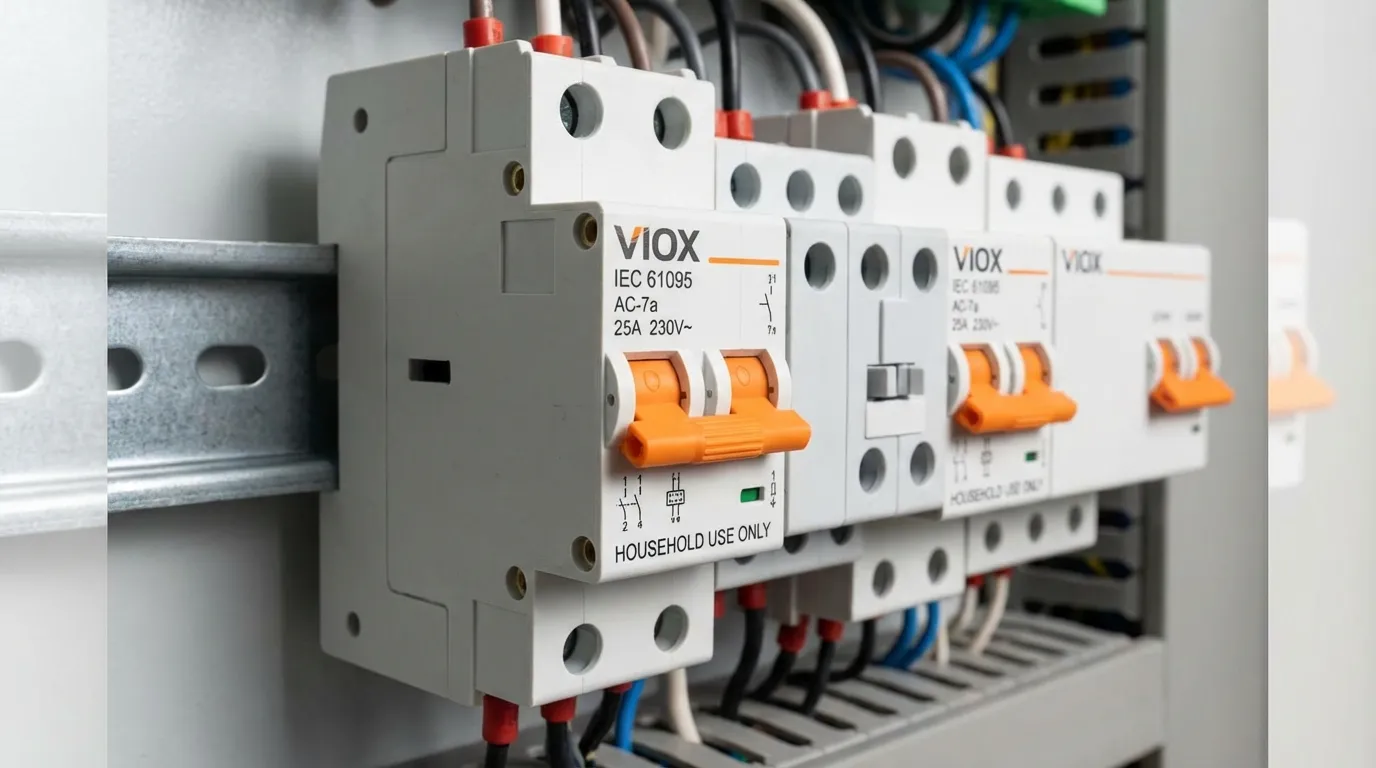
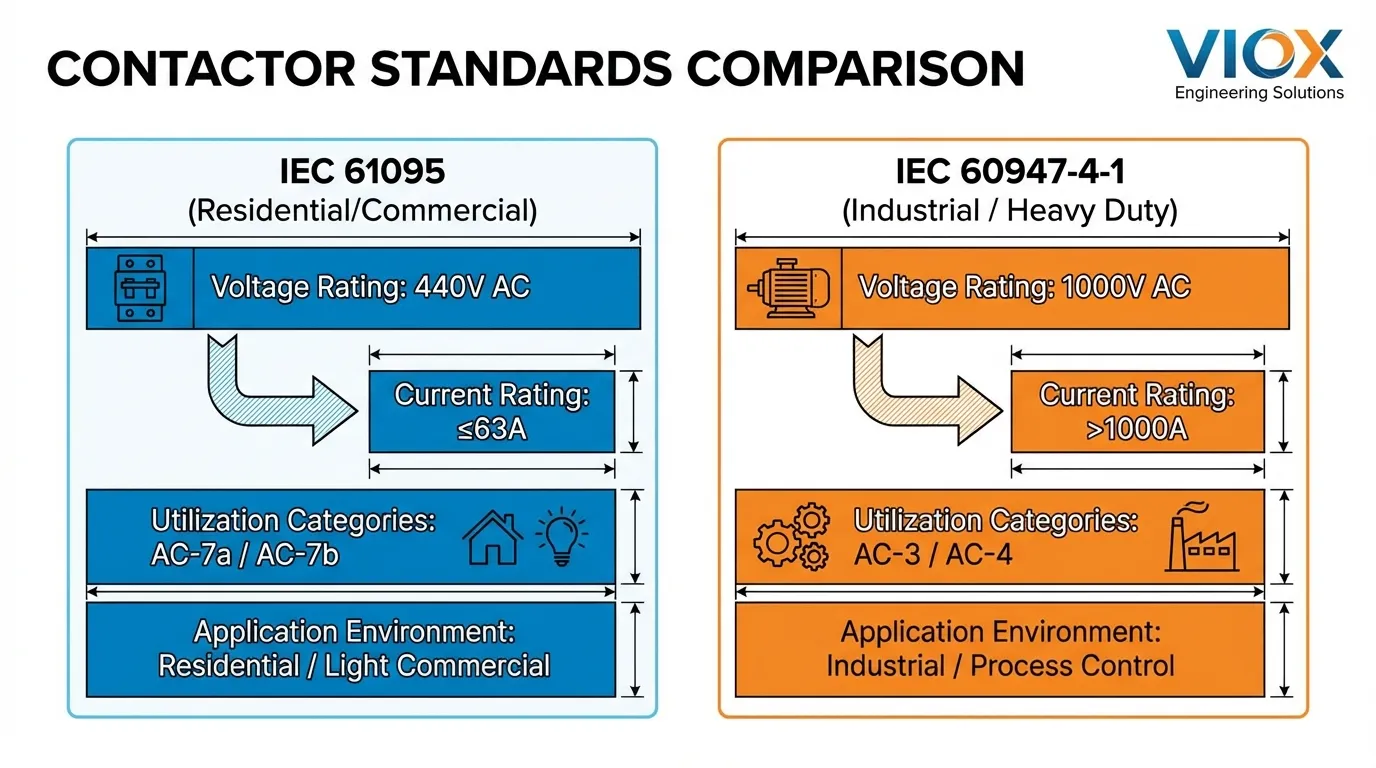
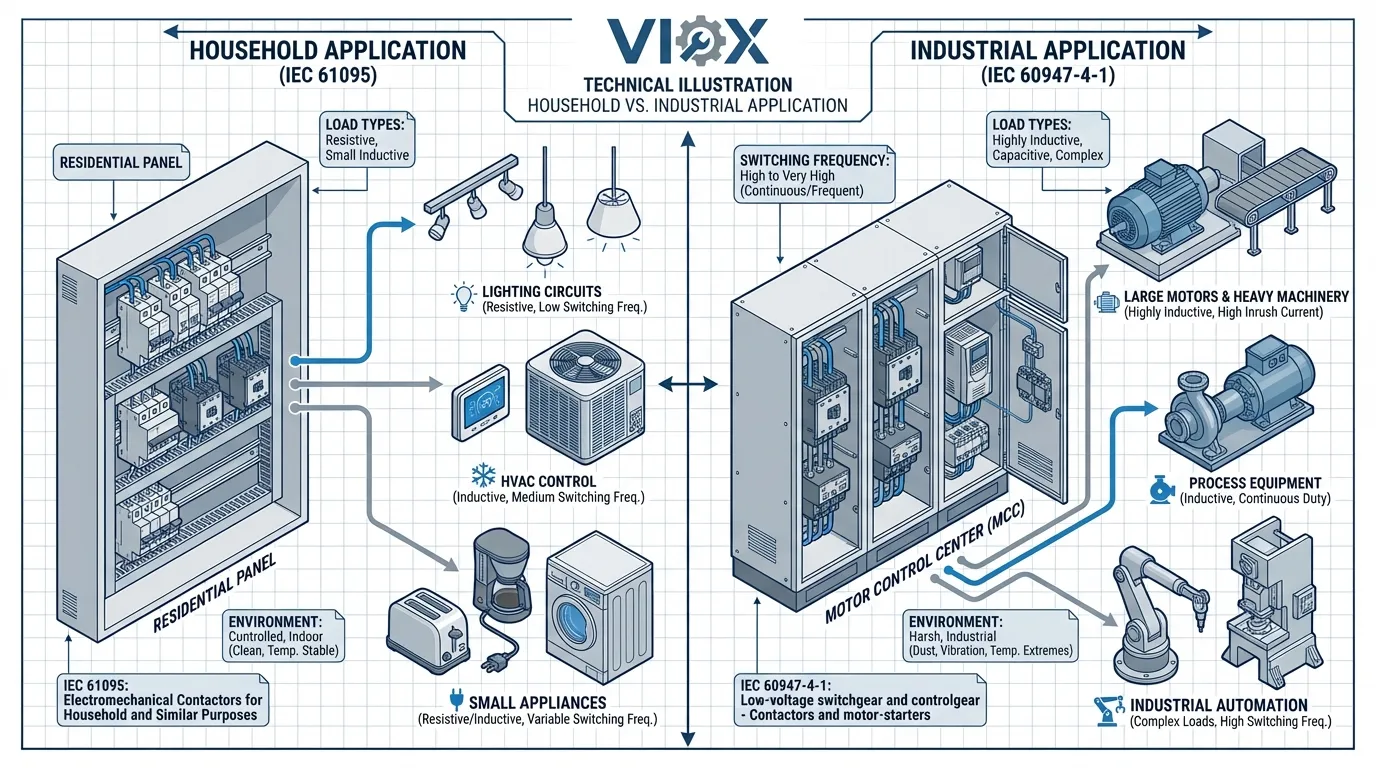
IEC 61095 အိမ်သုံးနှင့် အလားတူရည်ရွယ်ချက်များအတွက် ဒီဇိုင်းထုတ်ထားသော လျှပ်စစ်စက်မှုလေဖြတ်ကွန်တက်တာများနှင့် သက်ဆိုင်ပါသည်။ ဤကွန်တက်တာများကို အထိရှိသော ဆားကစ်များအတွက် အဆင့်သတ်မှတ်ထားသည်။ 440V AC လည်ပတ်နေသော လျှပ်စီးကြောင်းများသည် ပုံမှန်အားဖြင့် မကျော်လွန်ပါ။ 63A AC-7a အသုံးပြုမှုအမျိုးအစားအတွက် နှင့် 32A AC-7b, AC-7c နှင့် AC-7d အမျိုးအစားများအတွက်။ စံနှုန်းသည် အလယ်အလတ်ပြောင်းလဲမှုကြိမ်နှုန်းနှင့် ဝန်များသည် ခန့်မှန်းနိုင်သောနေရာများ—ဥပမာ လူနေအိမ်အလင်းရောင်ထိန်းချုပ်မှု၊ HVAC စနစ်များနှင့် မော်တာအသေးစားအသုံးချမှုများအတွက် အထူးရည်ညွှန်းပါသည်။.
IEC 60947-4-1 အထိ အဆင့်သတ်မှတ်ထားသော ဗို့အားရှိသော စက်ပစ္စည်းများကို လွှမ်းခြုံထားသော စက်မှုလုပ်ငန်းသုံးပစ္စည်းများအတွက် ကွန်တက်တာများနှင့် မော်တာစတင်စက်များကို အုပ်ချုပ်သည်။ 1000V AC သို့မဟုတ် 1500V DC. ။ ဤစံနှုန်းသည် ကွန်တက်တာများသည် လေးလံသော လှုံ့ဆော်မှုဝန်များ၊ မကြာခဏပြောင်းလဲမှုစက်ဝန်းများ (လုပ်ဆောင်မှုသန်းပေါင်းများစွာ) နှင့် အပူချိန်အလွန်အမင်းမြင့်မားခြင်း၊ တုန်ခါမှုနှင့် ညစ်ညမ်းမှုအပါအဝင် ကြမ်းတမ်းသောလည်ပတ်မှုအခြေအနေများကို ကိုင်တွယ်ရမည့် စက်မှုပတ်ဝန်းကျင်၏ တောင်းဆိုမှုလိုအပ်ချက်များကို ရည်ညွှန်းပါသည်။.
အခြေခံခြားနားချက်မှာ ၎င်းတို့၏ဒီဇိုင်းအတွေးအခေါ်တွင် တည်ရှိသည်- IEC 61095 သည် လူနေအိမ်အသုံးချမှုများအတွက် ကုန်ကျစရိတ်သက်သာပြီး ရိုးရှင်းမှုကို ဦးစားပေးပြီး IEC 60947-4-1 သည် စက်မှုလုပ်ငန်းအတွက် ခိုင်မာမှု၊ ခံနိုင်ရည်နှင့် အဆင့်မြင့်ကာကွယ်မှုအင်္ဂါရပ်များကို အလေးပေးပါသည်။.
ပြည့်စုံသော နည်းပညာပိုင်းဆိုင်ရာ နှိုင်းယှဉ်မှု
| ဇာတိ | IEC 61095 (အိမ်သုံး) | IEC 60947-4-1 (စက်မှု) |
|---|---|---|
| အဆင့်သတ်မှတ်ထားသော ဗို့အား | ≤ 440V AC (အဆင့်များအကြား) | ≤ 1000V AC, ≤ 1500V DC |
| လက်ရှိအဆင့်သတ်မှတ် | ≤ 63A (AC-7a), ≤ 32A (AC-7b/c/d) | အမ်ပီယာထောင်ပေါင်းများစွာအထိ |
| မူလတန်းလျှောက်လွှာ | လူနေ၊ ပေါ့ပါးသောစီးပွားရေး | စက်မှုမော်တာထိန်းချုပ်မှု၊ လေးလံသောစက်ယန္တရား |
| အသုံးချမှု အမျိုးအစားများ | AC-1, AC-7a, AC-7b, AC-7c, AC-7d | AC-1, AC-2, AC-3, AC-4, DC-1, DC-3, DC-5 |
| Short-Circuit အဆင့်သတ်မှတ်ချက် | ≤ 6 kA အခြေအနေအရ | 100 kA+ အထိ (အမျိုးအစားပေါ်မူတည်၍) |
| ကြိမ်နှုန်းပြောင်းခြင်း။ | အလယ်အလတ် (တစ်ခါတစ်ရံလည်ပတ်ခြင်း) | မြင့်မားသော (မကြာခဏစက်ဝန်း၊ လုပ်ဆောင်မှုသန်းပေါင်းများစွာ) |
| Endurance Testing | အခြေခံလျှပ်စစ်/စက်မှုသက်တမ်း | အဆင့်သတ်မှတ်ထားသောအခြေအနေများအောက်တွင် ပြည့်စုံသောခံနိုင်ရည် |
| တိုတောင်းသောဆားကစ်ညှိနှိုင်းမှု | အမျိုးအစား ၁ ညှိနှိုင်းမှု လိုအပ်သည်။ | အမျိုးအစား ၁ နှင့် အမျိုးအစား ၂ ညှိနှိုင်းမှု ရွေးချယ်စရာများ |
| သဘာဝပတ်ဝန်းကျင် ကာကွယ်ရေး | ညစ်ညမ်းမှုဒီဂရီ ၂ (ပုံမှန်) | စက်မှုပတ်ဝန်းကျင်အတွက် အဆင့်မြှင့်တင်ထားသော ကာကွယ်မှု |
| Arc Quenching | အခြေခံလေဖြတ်ဒီဇိုင်း | အဆင့်မြင့် arc quenching စနစ်များ |
| တပ်ဆင်ခြင်း။ | DIN ရထား (modular ဒီဇိုင်း) | Panel တပ်ဆင်ခြင်း၊ DIN ရထား သို့မဟုတ် ပလပ်ထိုးခြင်း |
| အရန်အဆက်အသွယ်များ | အကူအညီပေးသော အဆက်အသွယ်များ ကန့်သတ်ထားသည်။ | အကူအညီပေးသော အဆက်အသွယ်များစွာ ရွေးချယ်စရာများ |
| ကွိုင်ထိန်းချုပ်မှု | စံ သို့မဟုတ် အီလက်ထရွန်နစ်ထိန်းချုပ်မှု | စံ၊ အီလက်ထရွန်နစ် သို့မဟုတ် DC-လည်ပတ် |
| စမ်းသပ်မှုလိုအပ်ချက်များ | ရိုးရှင်းသော စမ်းသပ်မှုလုပ်ထုံးလုပ်နည်းများ | အသုံးပြုမှုအမျိုးအစားအလိုက် ပြည့်စုံသောစမ်းသပ်မှု |
| ပုံမှန် တပ်ဆင်ခြင်း | စားသုံးသူယူနစ်များ၊ ဖြန့်ဖြူးရေးဘုတ်များ | မော်တာထိန်းချုပ်ရေးစင်တာများ (MCCs)၊ စက်မှု panel များ |
ရှင်းပြထားသော အဓိက နည်းပညာဆိုင်ရာ ကွာခြားချက်များ
၁။ ဗို့အားနှင့် လျှပ်စီးကြောင်း အဆင့်သတ်မှတ်ချက်များ
အခြေခံအကျဆုံးကွာခြားချက်မှာ လျှပ်စစ်အဆင့်သတ်မှတ်ချက်များတွင် တည်ရှိသည်။ IEC 61095 ကွန်တက်တာများကို 440V AC အထိ ဗို့အားနည်းသော လူနေအိမ်အသုံးချမှုများအတွက် ဒီဇိုင်းထုတ်ထားပြီး လျှပ်စီးကြောင်းအဆင့်သတ်မှတ်ချက်များကို ပုံမှန်အားဖြင့် 63A တွင် ကန့်သတ်ထားသည်။ ၎င်းသည် ၎င်းတို့ကို အိမ်သုံးအလင်းရောင်ဆားကစ်များ၊ HVAC ပစ္စည်းအသေးစားများနှင့် လူနေအိမ်သုံးပစ္စည်းများကို ထိန်းချုပ်ရန်အတွက် အကောင်းဆုံးဖြစ်စေသည်။.
ဆန့်ကျင်ဘက်အနေနှင့် IEC 60947-4-1 ကွန်တက်တာများသည် ဗို့အားများစွာမြင့်မားသည် (1000V AC သို့မဟုတ် 1500V DC အထိ) နှင့် အမ်ပီယာအနည်းငယ်မှ အမ်ပီယာထောင်ပေါင်းများစွာအထိ လျှပ်စီးကြောင်းများကို ကိုင်တွယ်သည်။ ဤအဆင့်သတ်မှတ်ချက်များသည် ကြီးမားသောစက်မှုမော်တာများ၊ လေးလံသောစက်ယန္တရားများနှင့် စွမ်းအားမြင့်စက်မှုဝန်များကို ထိန်းချုပ်ရန်အတွက် လိုအပ်ပါသည်။ ဥပမာအားဖြင့်၊ ပုံမှန်စက်မှုမော်တာစတင်စက်သည် 480V တွင် 250A ဆွဲယူသော 200 HP မော်တာကို ထိန်းချုပ်နိုင်သည်—အိမ်သုံးကွန်တက်တာစွမ်းရည်ထက် များစွာကျော်လွန်ပါသည်။.
၂။ အသုံးပြုမှုအမျိုးအစားများ- အိမ်သုံးနှင့် စက်မှု
IEC 61095 အသုံးပြုမှုအမျိုးအစားများ-
- သတ္မွတ္အ-၁: လှုံ့ဆော်မှုမရှိသော သို့မဟုတ် အနည်းငယ်လှုံ့ဆော်မှုရှိသော ဝန်များ (ခုခံအပူပေးခြင်း၊ မီးချောင်းအလင်းရောင်)
- AC-7a: အိမ်သုံးပစ္စည်းများအတွက် မော်တာဝန်များ (အဝတ်လျှော်စက်များ၊ ပန်းကန်ဆေးစက်များ)
- AC-7b: လေအေးပေးစက်နှင့် ရေခဲသေတ္တာပစ္စည်းများအတွက် မော်တာဝန်များ
- AC-7c: လျော်ကြေးပေးထားသော လျှပ်စစ်ဓာတ်အားထုတ်လွှတ်သည့် မီးအိမ်ထိန်းချုပ်မှုကို ပြောင်းခြင်း
- AC-7d: LED မီးအိမ်များနှင့် LED ထိန်းချုပ်ဂီယာကို ပြောင်းခြင်း (၂၀၂၃ ထုတ်ဝေမှုတွင် ထည့်သွင်းထားသည်)
IEC 60947-4-1 အသုံးပြုမှုအမျိုးအစားများ-
- သတ္မွတ္အ-၁: လှုံ့ဆော်မှုမရှိသော သို့မဟုတ် အနည်းငယ်လှုံ့ဆော်မှုရှိသော ဝန်များ
- AC-2: လျှောကွင်းမော်တာစတင်ခြင်းနှင့် လည်ပတ်နေစဉ်အတွင်း ပိတ်ခြင်း
- သတ္မွတ္အ-၃: ရှဉ့်လှောင်အိမ်မော်တာစတင်ခြင်း၊ လည်ပတ်နေစဉ်အတွင်း ပိတ်ခြင်း (အသုံးအများဆုံး စက်မှုအမျိုးအစား)
- AC-4: Squirrel-cage motor starting, plugging, jogging, and inching operations
- DC-1, DC-3, DC-5: Various DC motor control applications
The AC-3 category is the most widely used in industrial settings, designed for contactors that start squirrel-cage motors and switch them off while running. These contactors must handle inrush currents 5-8 times the rated motor current during starting. Learn more about contactor utilization categories.
3. Endurance and Reliability Requirements
Industrial applications demand significantly higher endurance. IEC 60947-4-1 contactors undergo rigorous endurance testing involving millions of operating cycles under rated conditions. A typical AC-3 rated contactor might be tested for 1-8 million operations depending on current rating and application.
IEC 61095 contactors, while still reliable, are designed for moderate duty cycles typical of residential applications—perhaps a few thousand to tens of thousands of operations over their service life. This difference in endurance requirements directly impacts contact material selection, spring design, and arc quenching mechanisms.
4. Short-Circuit Coordination
Both standards require coordination with short-circuit protective devices (SCPDs), but IEC 60947-4-1 offers two distinct coordination types:
- Type 1 Coordination: Under short-circuit conditions, the contactor or starter may sustain damage but must not present a danger to persons or installation. The contactor must be replaced or repaired before returning to service. This is similar to the coordination required by IEC 61095.
- Type 2 Coordination: Under short-circuit conditions, no dangerous effects are permitted, and the contactor must be suitable for further use after fault clearance. Only minor contact welding is acceptable, and the equipment should not require significant maintenance. This higher level of coordination is critical for industrial applications where downtime is costly.
Understanding short-circuit coordination is essential when selecting MCCBs for panel applications.
5. Arc Quenching and Contact Design
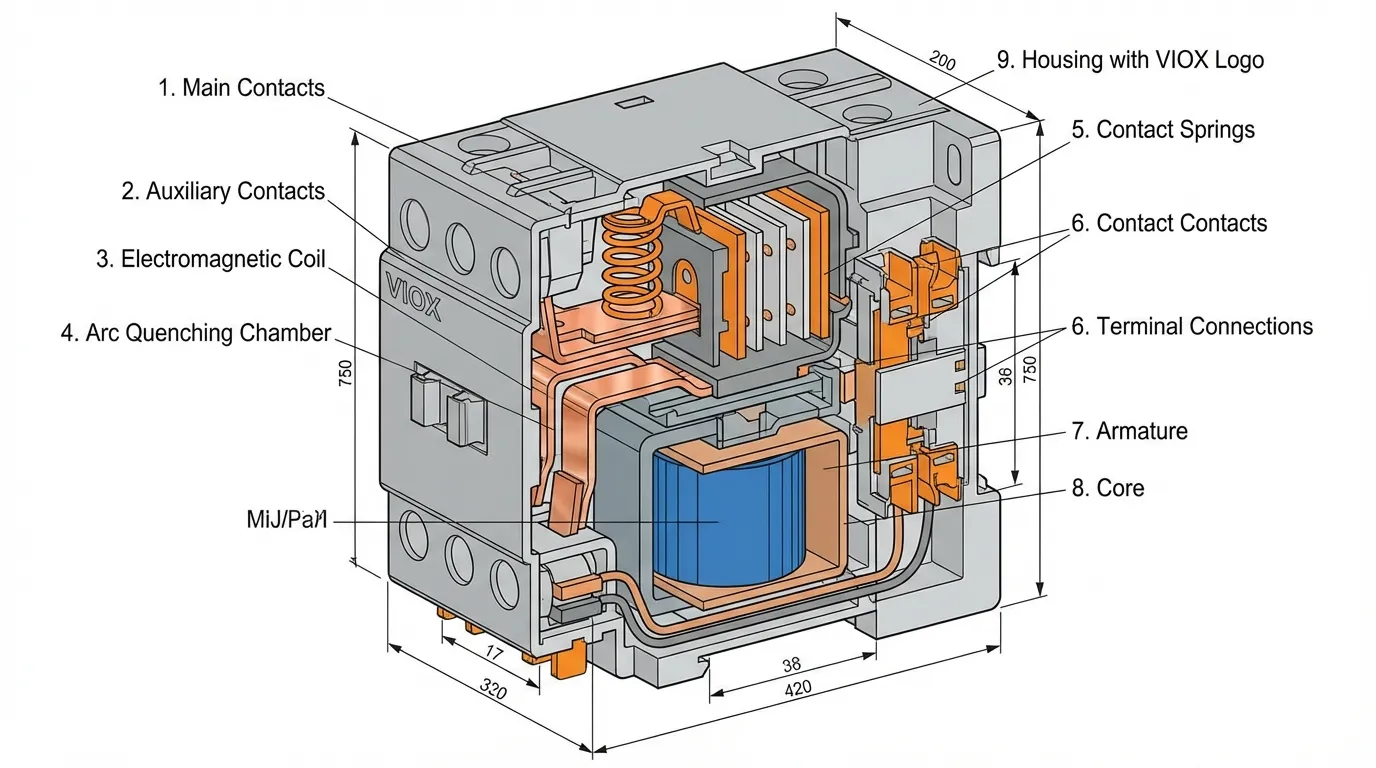
Industrial contactors employ sophisticated arc quenching systems to safely interrupt high currents, especially under inductive loads. These may include:
- Magnetic blow-out coils to drive arcs into arc chutes
- Multiple arc splitter plates to divide and cool arcs
- Enhanced contact materials (silver alloys, silver-tungsten)
- Larger contact gaps and higher contact pressure
Household contactors use simpler air-break designs adequate for their lower current ratings and less demanding duty cycles. Understanding contactor internal components helps explain these design differences.
Application Guidelines
When to Specify IEC 61095 Contactors
- လူနေအိမ်လျှပ်စစ်ပြားများ and consumer units
- အလိုအလျောက်စနစ်များတည်ဆောက်ခြင်း။ (lighting control, HVAC scheduling)
- Light commercial applications (retail lighting, small office HVAC)
- Modular contactor applications requiring DIN rail mounting
- စမတ်အိမ်ပေါင်းစပ်မှု with electronic control circuits
- LED lighting control (utilization category AC-7d)
- Applications with current ≤ 63A and voltage ≤ 440V AC
IEC 61095 contactors excel in applications where cost-effectiveness, compact size, and DIN rail mounting are priorities. Modular contactors are particularly popular in modern building management systems.
When to Specify IEC 60947-4-1 Contactors
- စက်မှုမော်တာထိန်းချုပ်ရေးစင်တာများ (MCCs)
- Heavy machinery and production equipment
- ရေစုပ်စက်နှင့် ဖိအားပေးစက်ရုံများ
- HVAC systems in large commercial buildings
- Mining, petrochemical, and manufacturing facilities
- Applications requiring Type 2 coordination
- High-frequency switching operations (jogging, plugging)
- Large motor starters (>10 HP / 7.5 kW)
- ကြမ်းတမ်းသောစက်မှုပတ်ဝန်းကျင် (temperature extremes, vibration, contamination)
For critical industrial applications, safety contactors with force-guided contacts may be required to meet machinery safety standards.
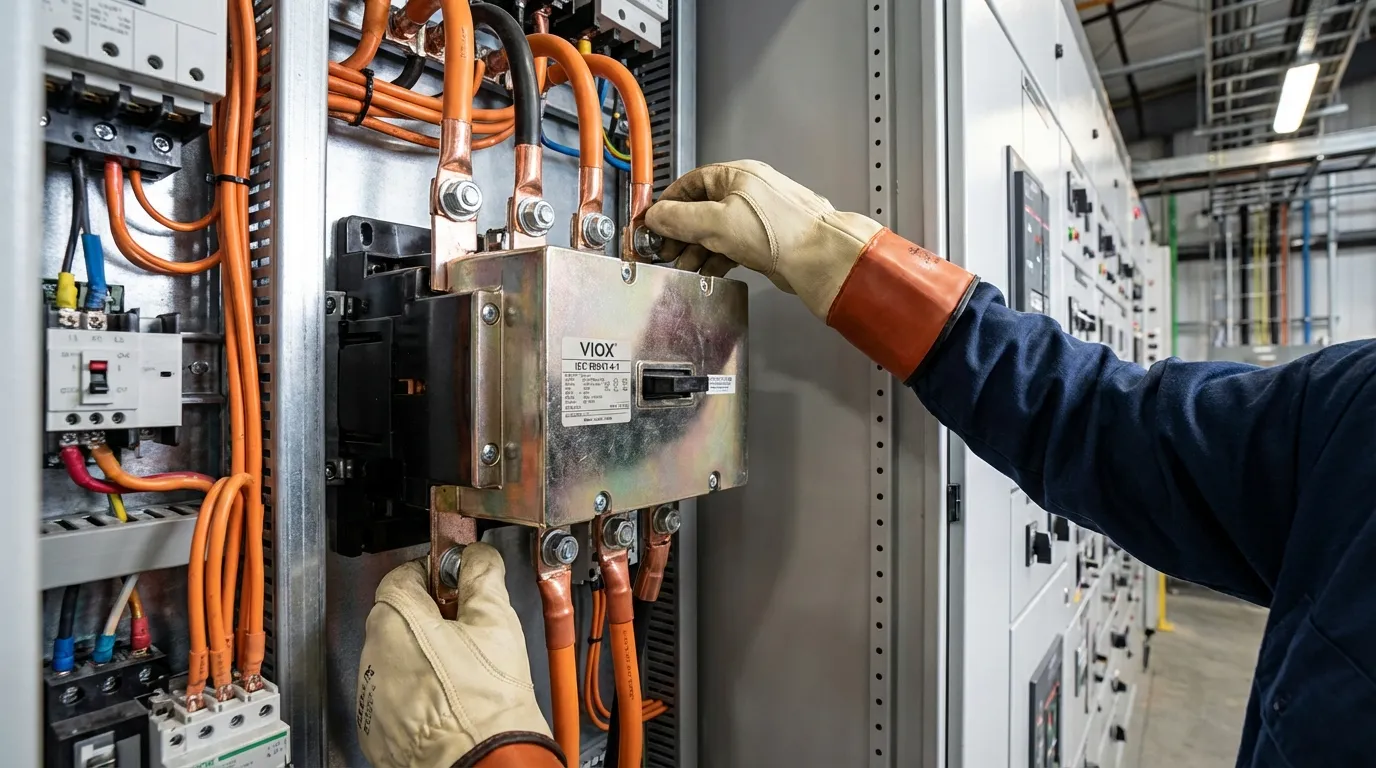 Figure 1: Industrial electrician installing IEC 60947-4-1 compliant VIOX contactor in motor control center for heavy-duty applications.
ရွေးချယ်မှုစံနှုန်းများနှင့် အကောင်းဆုံးအလေ့အကျင့်များ
Load Analysis
Before selecting a contactor, conduct thorough load analysis:
- Steady-state current: Continuous current the contactor must carry
- စီးဝင်နှုန်း: Peak current during motor starting or lamp switching
- Duty cycle: Frequency and duration of switching operations
- Load power factor: လျှပ်စစ်မီးပွားစွမ်းအင်နှင့် ထိတွေ့မှု ပျက်စီးခြင်းအပေါ် သက်ရောက်မှုရှိသည်။
- ပတ်ဝန်းကျင်အခြေအနေ: အပူချိန်၊ စိုထိုင်းဆ၊ အမြင့်၊ ညစ်ညမ်းမှုဒီဂရီ
ဗို့အားထည့်သွင်းစဉ်းစားမှုများ
ကွန်တက်တာ၏ သတ်မှတ်ထားသော လည်ပတ်ဗို့အား (Ue) သည် ဆားကစ်ဗို့အားနှင့် ကိုက်ညီမှုရှိစေရန် သို့မဟုတ် ကျော်လွန်ကြောင်း သေချာပါစေ။ သုံးဆင့်စနစ်များအတွက် ဗို့အားကို အဆင့်များအကြား တိုင်းတာသည်။ ထို့အပြင် အောက်ပါတို့ကို စစ်ဆေးပါ-
- အဆင့်သတ်မှတ်ထားသော လျှပ်ကာဗို့အား (Ui): ဆားကစ်ဗို့အားထက် ကျော်လွန်ရမည်။
- အဆင့်သတ်မှတ်ထားသော တွန်းအားကိုခံနိုင်သော ဗို့အား (Uimp): IEC 61095 အတွက် ပုံမှန်အားဖြင့် 4 kV ဖြစ်ပြီး စက်မှုလုပ်ငန်းသုံးများအတွက် ပိုမိုမြင့်မားသည်။
- ထိန်းချုပ်ဆားကစ်ဗို့အား: ရရှိနိုင်သော ထိန်းချုပ်ပါဝါထောက်ပံ့မှုနှင့် ကိုက်ညီရမည်။
လက်ရှိ အဆင့်သတ်မှတ်ရွေးချယ်မှု
IEC 61095 ကွန်တက်တာများအတွက် သင့်လျော်သောအသုံးပြုမှုအမျိုးအစားအပေါ် မူတည်၍ ရွေးချယ်ပါ-
- မော်တာဝန်များအတွက် AC-7a အဆင့်သတ်မှတ်ချက်
- ခံနိုင်ရည်ရှိသောဝန်များအတွက် AC-1 အဆင့်သတ်မှတ်ချက် (ပုံမှန်အားဖြင့် AC-7a ထက်မြင့်သည်)
IEC 60947-4-1 ကွန်တက်တာများအတွက် AC-3 အဆင့်သတ်မှတ်ချက်သည် မော်တာအသုံးချမှုများအတွက် အသုံးအများဆုံးဖြစ်သည်။ အောက်ပါတို့အတွက် သင့်လျော်သော လျှော့ချမှုအချက်များကို အမြဲအသုံးပြုပါ-
- 40°C အထက် ပတ်ဝန်းကျင်အပူချိန်
- 2000m အထက် အမြင့်
- အကာအရံများတွင် ကွန်တက်တာအများအပြားကို စုစည်းခြင်း
လျှပ်စစ်လျှော့ချမှုအချက်များကို နားလည်ခြင်း သင့်လျော်သော အရွယ်အစားအတွက် မရှိမဖြစ်လိုအပ်ပါသည်။.
တိုတောင်းသောဆားကစ်ကာကွယ်ရေး ညှိနှိုင်းမှု
ကွန်တက်တာအား ရွေးချယ်ထားသော SCPD (ဆားကစ်ဘရိတ်ကာ သို့မဟုတ် ဖျူး) နှင့် စနစ်တကျ ညှိနှိုင်းထားကြောင်း စစ်ဆေးပါ။ ထုတ်လုပ်သူများသည် အောက်ပါတို့ကို သတ်မှတ်ပေးသည့် ညှိနှိုင်းမှုဇယားများကို ပေးသည်-
- အများဆုံး တိုတောင်းသောဆားကစ်လျှပ်စီးကြောင်း အဆင့်သတ်မှတ်ချက်
- အကြံပြုထားသော SCPD အမျိုးအစားနှင့် အဆင့်သတ်မှတ်ချက်
- ရရှိသော ညှိနှိုင်းမှုအမျိုးအစား (Type 1 သို့မဟုတ် Type 2)
စက်မှုလုပ်ငန်းသုံးများအတွက် ချို့ယွင်းချက်အခြေအနေများပြီးနောက် ရပ်ဆိုင်းချိန်ကို လျှော့ချရန် Type 2 ညှိနှိုင်းမှုကို ပိုမိုနှစ်သက်သည်။.
တပ်ဆင်ခြင်းနှင့် ပြုပြင်ထိန်းသိမ်းခြင်း ကွာခြားချက်များ
IEC 61095 တပ်ဆင်ခြင်း
- စံ 35mm DIN ရထားလမ်း တပ်ဆင်ခြင်း (IEC 60715 အရ)
- ပုံမှန်အားဖြင့် မော်ဂျူလာအကျယ် 2-4 မော်ဂျူးများ (1 မော်ဂျူး = 18mm)
- ဝါယာကြိုးချိတ်ဆက်မှုအတွက် ဝက်အူ သို့မဟုတ် နွေဦး-လှောင်အိမ်ဂိတ်များ
- အနည်းဆုံး ပတ်ဝန်းကျင်ကာကွယ်မှု လိုအပ်သည်။
- စံစားသုံးသူယူနစ်များ သို့မဟုတ် ဖြန့်ဖြူးရေးဘုတ်များတွင် တပ်ဆင်ခြင်း
IEC 60947-4-1 တပ်ဆင်ခြင်း
- အကန့်တပ်ဆင်ခြင်း ဘော့ဖြင့်ချိတ်ဆက်ခြင်း ကြီးမားသော ကွန်တက်တာများအတွက်
- သေးငယ်သော စက်မှုကွန်တက်တာများအတွက် DIN ရထားလမ်း တပ်ဆင်ခြင်း
- ကျွမ်းကျင်သော ကေဘယ်လ်အဆုံးသတ်ခြင်း ကေဘယ်ကြိုးများ
- လိုအပ်သလို ပတ်ဝန်းကျင်ကို တံဆိပ်ခတ်ခြင်း (IP အဆင့်သတ်မှတ်ချက်များ)
- သင့်လျော်သော ရှင်းလင်းမှုများဖြင့် မော်တာထိန်းချုပ်ရေးစင်တာများတွင် တပ်ဆင်ခြင်း
- အပူလွန်ကဲမှုနှင့် လေဝင်လေထွက်အတွက် ထည့်သွင်းစဉ်းစားခြင်း
ပြုပြင်ထိန်းသိမ်းမှုလိုအပ်ချက်များ
IEC 61095 ကွန်တက်တာများ: ပုံမှန်လူနေအိမ်အသုံးချမှုများတွင် အနည်းဆုံး ပြုပြင်ထိန်းသိမ်းမှု လိုအပ်သည်။ အောက်ပါတို့အတွက် အခါအားလျော်စွာ စစ်ဆေးခြင်း-
- ထိတွေ့မှုအခြေအနေ (မျက်စိဖြင့်စစ်ဆေးခြင်း)
- Terminal တင်းကျပ်မှု
- စက်ပိုင်းဆိုင်ရာ လုပ်ဆောင်ချက်
IEC 60947-4-1 ကွန်တက်တာများ: လည်ပတ်မှုစက်ဝန်းများအပေါ် အခြေခံ၍ ပုံမှန်ပြုပြင်ထိန်းသိမ်းမှုအချိန်ဇယားများ-
- ထိတွေ့မှုစစ်ဆေးခြင်းနှင့် အစားထိုးခြင်း
- လျှပ်စစ်မီးပွားလမ်းကြောင်း သန့်ရှင်းရေး
- စက်ပိုင်းဆိုင်ရာ အစိတ်အပိုင်း ချောဆီထည့်ခြင်း
- အရန်ထိတွေ့မှု အတည်ပြုခြင်း
- လျှပ်ကာခံနိုင်ရည်စမ်းသပ်ခြင်း။
စက်မှုကွန်တက်တာ ပြုပြင်ထိန်းသိမ်းမှု စစ်ဆေးစာရင်းများ ကြိုတင်ကာကွယ်ရေး ပြုပြင်ထိန်းသိမ်းမှု အစီအစဉ်များအတွက် အသေးစိတ် လမ်းညွှန်ချက်ကို ပေးပါသည်။.
အဖြစ်များသော အထင်အမြင်လွဲမှားမှုများ
ဒဏ္ဍာရီ ၁- “အိမ်သုံးကွန်တက်တာများသည် အရွယ်အစားကြီးပါက စက်မှုဝန်များကို ကိုင်တွယ်နိုင်သည်”
လက်တွေ့ဘဝ: အရွယ်အစားကြီးသော IEC 61095 ကွန်တက်တာများပင် စက်မှုလုပ်ငန်းသုံးများအတွက် လိုအပ်သော လျှပ်စစ်မီးပွားငြှိမ်းသတ်နိုင်စွမ်း၊ ခံနိုင်ရည်နှင့် တိုတောင်းသောဆားကစ် ညှိနှိုင်းမှုတို့ မရှိပါ။ စက်မှုလုပ်ငန်း ဆက်တင်များတွင် အိမ်သုံးကွန်တက်တာများကို အသုံးပြုခြင်းသည် ဘေးကင်းရေးစံနှုန်းများကို ချိုးဖောက်ပြီး တာဝန်ယူမှုအန္တရာယ်များကို ဖန်တီးပေးသည်။.
ဒဏ္ဍာရီ ၂- “စက်မှုကွန်တက်တာများသည် အမြဲတမ်း အရည်အသွေးပိုကောင်းသည်”
လက်တွေ့ဘဝ: IEC 60947-4-1 ကွန်တက်တာများကို မတူညီသောလိုအပ်ချက်များအတွက် အင်ဂျင်နီယာလုပ်ထားသည်—မလိုအပ်ဘဲ “ပိုကောင်းသော” အရည်အသွေးမဟုတ်ပါ။ လူနေအိမ်အသုံးချမှုများအတွက် IEC 61095 ကွန်တက်တာများသည် သင့်လျော်သော ဘေးကင်းရေးအင်္ဂါရပ်များနှင့်အတူ အကောင်းဆုံးကုန်ကျစရိတ်စွမ်းဆောင်ရည်ကို ပေးဆောင်သည်။.
ဒဏ္ဍာရီ ၃- “တူညီသော လျှပ်စီးကြောင်း အဆင့်သတ်မှတ်ချက်ရှိသော ကွန်တက်တာအားလုံးကို အပြန်အလှန် အသုံးပြုနိုင်သည်”
လက်တွေ့ဘဝ: လျှပ်စီးကြောင်း အဆင့်သတ်မှတ်ချက်များသည် အသုံးပြုမှုအမျိုးအစားအလိုက် သီးခြားဖြစ်သည်။ 32A (AC-7b) အဆင့်သတ်မှတ်ထားသော IEC 61095 ကွန်တက်တာသည် 32A (AC-3) အဆင့်သတ်မှတ်ထားသော IEC 60947-4-1 ကွန်တက်တာကို အစားထိုး၍မရပါ၊ အဘယ်ကြောင့်ဆိုသော် ဝန်လက္ခဏာများနှင့် တာဝန်စက်ဝန်းများသည် သိသိသာသာ ကွာခြားသောကြောင့်ဖြစ်သည်။.
ဒဏ္ဍာရီ ၄- “ဆားကစ်ဘရိတ်ကာရှိလျှင် တိုတောင်းသောဆားကစ် အဆင့်သတ်မှတ်ချက်သည် အရေးမကြီးပါ”
လက်တွေ့ဘဝ: ကွန်တက်တာအား SCPD နှင့် စနစ်တကျ ညှိနှိုင်းထားရမည်။ လုံလောက်စွာ အဆင့်သတ်မှတ်မထားသော ကွန်တက်တာသည် သင့်လျော်သော လျှပ်စီးကြောင်းပိုလျှံမှု ကာကွယ်ရေးဖြင့်ပင် ပေါက်ကွဲနိုင်သည် သို့မဟုတ် လျှပ်စစ်မီးပွားကို ဖြစ်စေနိုင်သည်။.
မကြာသေးမီက စံနှုန်း အပ်ဒိတ်များ
IEC 61095:2023 ထုတ်ဝေမှု
နောက်ဆုံးထုတ်ဝေမှုတွင် သိသာထင်ရှားသော အပ်ဒိတ်များ ပါဝင်သည်-
- AC-7d အမျိုးအစား: New utilization category for LED lamps and LED control gear, addressing the growing LED lighting market
- Electronic control circuits: Requirements for contactors with electronically controlled electromagnets
- Enhanced marking requirements: Improved labeling for safer installation and maintenance
- ပတ်ဝန်းကျင်စမ်းသပ်မှု: Updated humidity and temperature testing procedures
IEC 60947-4-1:2023 Edition
Recent changes include:
- Adoption of AC-7d: Incorporated from IEC 61095 for industrial LED applications
- Instantaneous motor protective switching devices (IMPSD): New requirements for fast-acting motor protection
- Environmental aspects: Reference to IEC TS 63058 for sustainability considerations
- Downstream drive module compatibility: Requirements for contactors used with variable frequency drives
ကုန်ကျစရိတ် ထည့်သွင်းစဉ်းစားမှုများ
ကနဦးကုန်ကျစရိတ်
IEC 61095 contactors typically cost $15-$150 depending on current rating and features. IEC 60947-4-1 contactors range from $50-$5,000+ for large industrial units.
စုစုပေါင်းပိုင်ဆိုင်မှုကုန်ကျစရိတ်
Consider lifecycle costs:
- Maintenance costs: Industrial contactors require more frequent maintenance but offer longer service life
- စက်ရပ်စရိတ်: Type 2 coordination reduces downtime in industrial settings
- စွမ်းအင်ထိရောက်မှု: Modern contactors with low coil power consumption reduce operating costs
- Replacement costs: Using the correct standard prevents premature failure and expensive replacements
For cost-effective residential applications, modular contactors vs. traditional contactors comparison helps optimize selection.
နာေျဘုံဆိုင်ရာကိစ္စရပ်များ
IEC 61095 Contactor Problems
- Buzzing noise: Often caused by low coil voltage or contamination
- ပိတ်ရန် ပျက်ကွက်ခြင်း: Check coil voltage and mechanical obstructions
- အဆက်များ ကပ်ခြင်း: May indicate overload or short-circuit conditions
Contactor troubleshooting guide provides detailed diagnostic procedures.
IEC 60947-4-1 Contactor Problems
- Excessive contact wear: Verify proper utilization category selection
- လျှပ်စစ်မီးပွား လမ်းကြောင်း ပျက်စီးခြင်း: Indicates short-circuit events or improper coordination
- Coil overheating: Check for overvoltage or excessive ambient temperature
FAQ Section
Q1: Can I use an IEC 61095 contactor to control a 10 HP industrial motor?
A: No. IEC 61095 contactors are designed for household applications with current ratings up to 63A and lack the endurance, arc quenching capability, and short-circuit coordination required for industrial motor control. Always use IEC 60947-4-1 contactors for industrial motors.
Q2: What’s the main advantage of IEC 60947-4-1 Type 2 coordination?
A: Type 2 coordination ensures that after a short-circuit fault, the contactor remains suitable for further use without replacement. This minimizes downtime and maintenance costs in industrial applications where equipment availability is critical.
Q3: Can IEC 60947-4-1 contactors be used in residential applications?
A: Yes, technically they can function in residential applications, but they’re unnecessarily expensive and oversized. IEC 61095 contactors are specifically optimized for residential use, offering better cost-performance for household applications.
Q4: How do I identify which standard a contactor follows?
A: Check the product nameplate or documentation. The standard reference (IEC 61095 or IEC 60947-4-1) should be clearly marked along with utilization categories, rated voltage, and current ratings.
Q5: What’s the significance of the AC-7d utilization category?
A: AC-7d is a new category (added in 2023) specifically for switching LED lamps and LED control gear. LED loads have unique inrush characteristics that differ from traditional incandescent or discharge lamps, requiring specific contactor design considerations.
Q6: Do both standards require the same environmental testing?
A: No. While both standards include environmental testing, IEC 60947-4-1 typically requires more comprehensive testing for industrial environments including enhanced temperature ranges, vibration resistance, and pollution degree considerations.
Q7: Can I replace a failed IEC 61095 contactor with an IEC 60947-4-1 unit?
A: While electrically possible if ratings match, it’s not recommended due to mounting differences, size constraints, and cost. Replace with the same standard unless upgrading the entire installation.
Q8: What’s the typical lifespan difference between household and industrial contactors?
A: IEC 61095 contactors typically achieve 10,000-100,000 operations in residential duty. IEC 60947-4-1 contactors are designed for 1-8 million operations depending on current rating and utilization category.
သော့ထုတ်ယူမှုများ
- Application-Specific Standards: IEC 61095 and IEC 60947-4-1 serve fundamentally different markets—household/light commercial versus industrial applications—with tailored performance characteristics for each environment.
- Voltage and Current Hierarchy: Industrial contactors (IEC 60947-4-1) offer significantly higher voltage ratings (up to 1000V AC vs. 440V AC) and current capacities (up to thousands of amperes vs. 63A maximum), reflecting their heavy-duty applications.
- Utilization Categories Matter: Always select contactors based on the appropriate utilization category (AC-7a/b for household, AC-3/AC-4 for industrial motors) rather than just current ratings, as load characteristics differ significantly.
- Endurance and Reliability: IEC 60947-4-1 contactors are engineered for millions of operations in demanding industrial environments, while IEC 61095 contactors are optimized for moderate duty cycles in residential settings.
- တိုတောင်းသောဆားကစ်ညှိနှိုင်းမှု: Industrial applications benefit from Type 2 coordination (contactor remains serviceable after faults), while household applications typically use Type 1 coordination (contactor may require replacement after faults).
- Cost-Performance Balance: Using the correct standard ensures optimal cost-effectiveness—IEC 61095 for affordable residential solutions, IEC 60947-4-1 for robust industrial performance where downtime costs justify higher initial investment.
- ဘေးကင်းရေး လိုက်နာမှု: Both standards prioritize safety, but IEC 60947-4-1 includes enhanced safety features (advanced arc quenching, force-guided contacts, hermetic sealing) critical for industrial environments where equipment failure could have severe consequences.
- Recent Updates: The 2023 editions of both standards introduced the AC-7d category for LED lighting control, reflecting the industry shift toward LED technology in both residential and industrial applications.
- Professional Selection: When specifying contactors, conduct thorough load analysis including steady-state current, inrush characteristics, duty cycle, and environmental conditions. Consult with electrical engineers or contactor specialists for critical applications.
- Lifecycle ထည့်သွင်းစဉ်းစားမှုများ: Total cost of ownership includes not just initial purchase price but also maintenance requirements, expected lifespan, energy efficiency, and potential downtime costs—factors that vary significantly between household and industrial contactors.
VIOX Electric အကြောင်း
VIOX Electric is a leading B2B manufacturer of electrical equipment, specializing in high-quality contactors, circuit breakers, and electrical distribution components. Our products comply with international standards including IEC 61095 and IEC 60947-4-1, ensuring safety, reliability, and performance for both residential and industrial applications. ယနေ့ VIOX သို့ ဆက်သွယ်ပါ- for expert guidance on contactor selection for your specific application.
Selected Internal Links for SEO
- Modular Contactor AC DC ကို ဘယ်လိုရွေးချယ်မလဲ
- Inside AC Contactor Components Design Logic
- Safety Contactor vs Standard Contactor Guide
- Contactor Troubleshooting Guide
- Contactor vs Motor Starter
- Electrical Standards for Contactors – Utilization Categories
- Industrial Contactor Maintenance Inspection Checklist
- Modular Contactor နှင့် Traditional Contactor
- Contactors vs Relays – Understanding Key Differences
- Electrical Derating Factors Guide