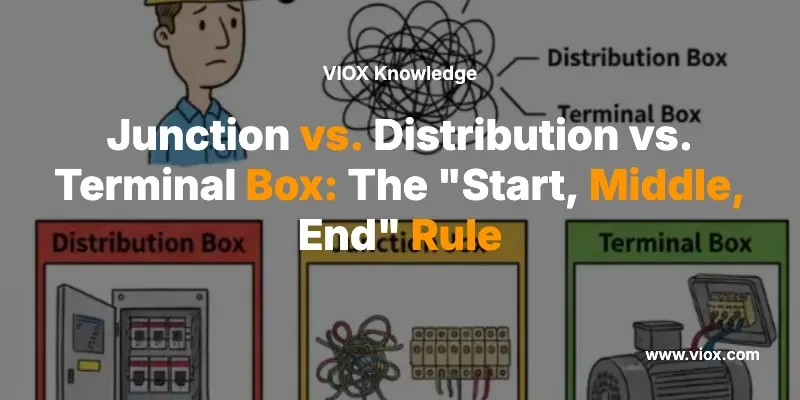
Bayangkan ini: Anda masuk ke kedai bekalan elektrik. Anda berjalan di lorong dan mengambil tiga penutup logam kelabu yang serupa, berukuran 4×4 inci.
Anda meletakkannya di kaunter. Ia kelihatan sama. Ia terasa sama. Harganya pun sama.
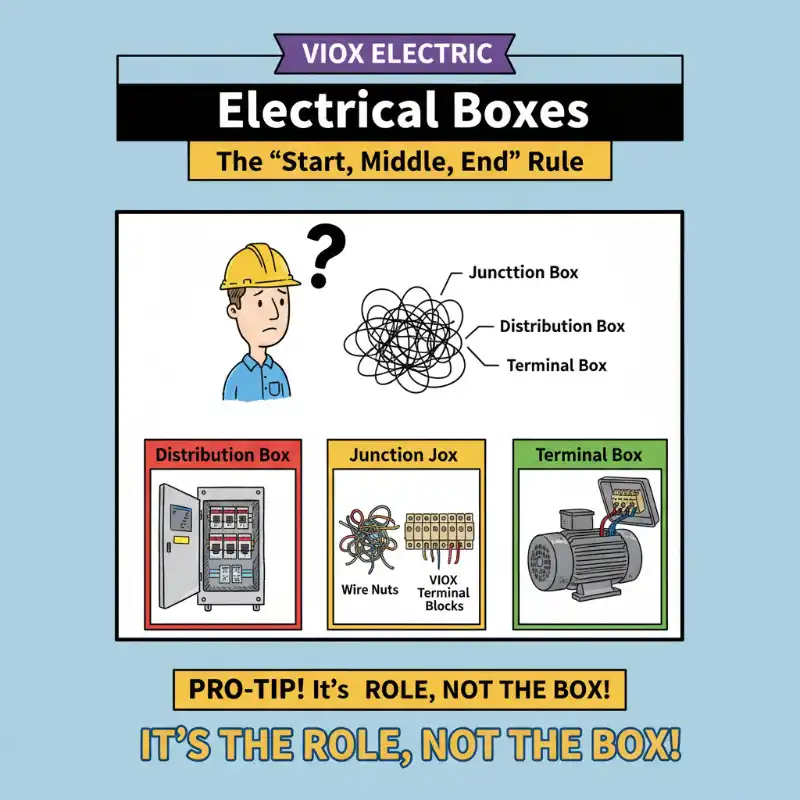
Tetapi bergantung pada tempat anda memasangnya esok, satu akan menjadi Kotak Agihan, satu akan menjadi Kotak Simpang, dan satu lagi akan menjadi Kotak Terminal.
Ini adalah salah satu sumber kekeliruan yang paling biasa bagi pelatih dan juga jurutera junior. Jika perkakasan adalah sama, mengapa kita mempunyai tiga nama yang berbeza?
Jawapannya mudah, tetapi mendalam: Kotak elektrik ditakrifkan oleh misinya, bukan materialnya.
Perbincangan baru-baru ini di kalangan juruelektrik profesional dengan sempurna menghablurkan definisi ini. Ia menghapuskan jargon dan memberi kita “Peraturan Emas” untuk mengenal pasti kotak-kotak ini serta-merta.
Ia dipanggil “Peraturan ”Mula, Tengah, Akhir"..
Mari kita huraikan identiti ketiga-tiga kotak “bunglon” ini.
1. “Mula” = Kotak Agihan (Ibu Pejabat)

Mari kita mulakan dari sumbernya.
- Peraturan: Agihan = MULA
- Alias: Papan Panel, Panel Pemutus Litar, Pusat Beban, Kotak Fius.
- Misi: Untuk Melindungi dan Mengagihkan.
Jika anda mengambil kotak logam 4×4 itu, memasangnya di dinding tempat talian utiliti utama memasuki bangunan, dan memenuhinya dengan pemutus litar atau fius, ia baru sahaja menjadi Kotak Agihan.
Ia adalah “Ibu Pejabat” sistem elektrik anda.
Apa yang menjadikannya Kotak Agihan?
- Input: Ia biasanya mengambil satu kabel suapan tugas berat yang besar (kuasa utama).
- Tindakan: Ia membelah (mengagihkan) kuasa besar itu kepada aliran yang lebih kecil dan mudah diurus (litar cawangan).
- Perlindungan: Pentingnya, di sinilah Peranti Perlindungan Arus Lebih (OCPD) berada. Setiap litar cawangan yang meninggalkan kotak ini dilindungi oleh pemutus litar atau fius.
专业提示: Jika kotak itu mengandungi peranti yang tersandung atau meletup untuk menyelamatkan rumah anda daripada kebakaran, ia adalah Kotak Agihan. Ia adalah mula litar.
2. “Tengah” = Kotak Penyambung (Persimpangan)
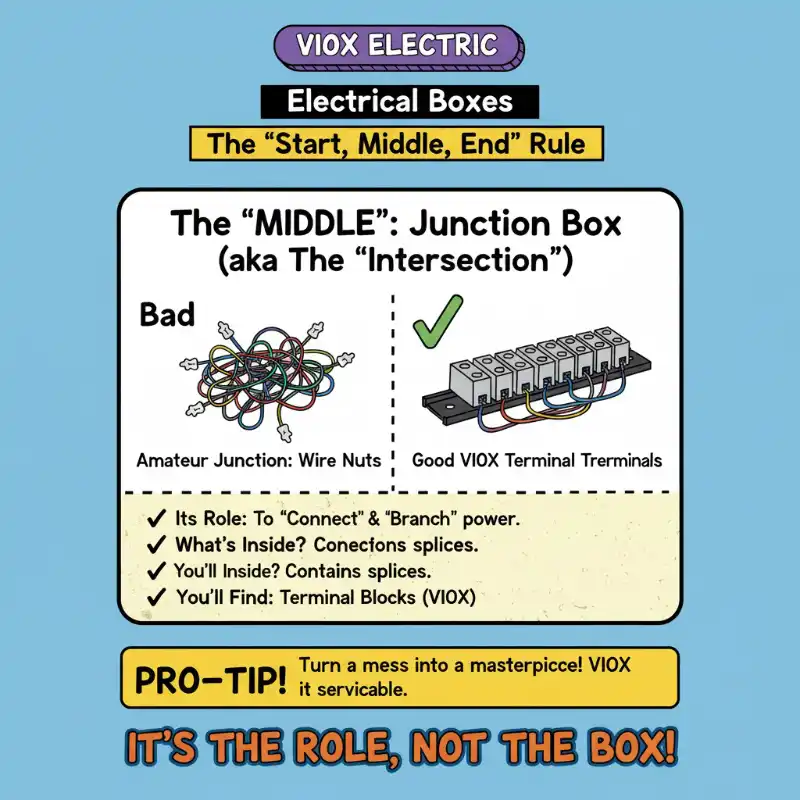
Sekarang, ikuti wayar yang meninggalkan Kotak Agihan. Ia berjalan melalui siling, menyusuri lorong, dan perlu berpecah untuk memberi bekalan kepada tiga lampu pejabat yang berbeza.
Anda memotong konduit. Anda memasang kotak logam 4×4 kedua itu di siling. Anda menarik wayar masuk, melucutkannya, memulasnya bersama-sama dengan nat wayar, dan menampar penutup kosong padanya.
Tahniah. Anda baru sahaja mencipta Kotak Simpang.
- Peraturan: Penyambung = TENGAH
- Alias: Kotak-J, Kotak Sambatan, Kotak Tarik.
- Misi: Untuk Menyambung dan Mencabang.
Kotak Penyambung ialah “Persimpangan” lebuh raya elektrik. Di sinilah wayar bertemu, bergaul, dan pergi ke jalan masing-masing.
Apa yang menjadikannya Kotak Simpang?
- Kandungan: Ia mengandungi sambatan (nat wayar, penyambung WAGO, atau blok terminal). Ia jarang mengandungi peranti aktif seperti suis atau pemutus litar.
- lokasi: Ia terletak antara sumber (Kotak Agihan) dan beban (mesin atau lampu).
- Tujuan: Ia wujud kerana anda tidak boleh menjalankan satu wayar berterusan selama-lamanya. Akhirnya, anda perlu menyambung dua wayar, membelah satu wayar kepada dua, atau hanya menukar arah.
专业提示: Jika anda membuka kotak dan melihat “mangkuk spageti” wayar yang dipintal bersama, tetapi tiada peranti yang melakukan sebarang “kerja,” anda sedang melihat Kotak Penyambung. Ia adalah tengah litar.
3. “Akhir” = Kotak Terminal (Jabat Tangan)
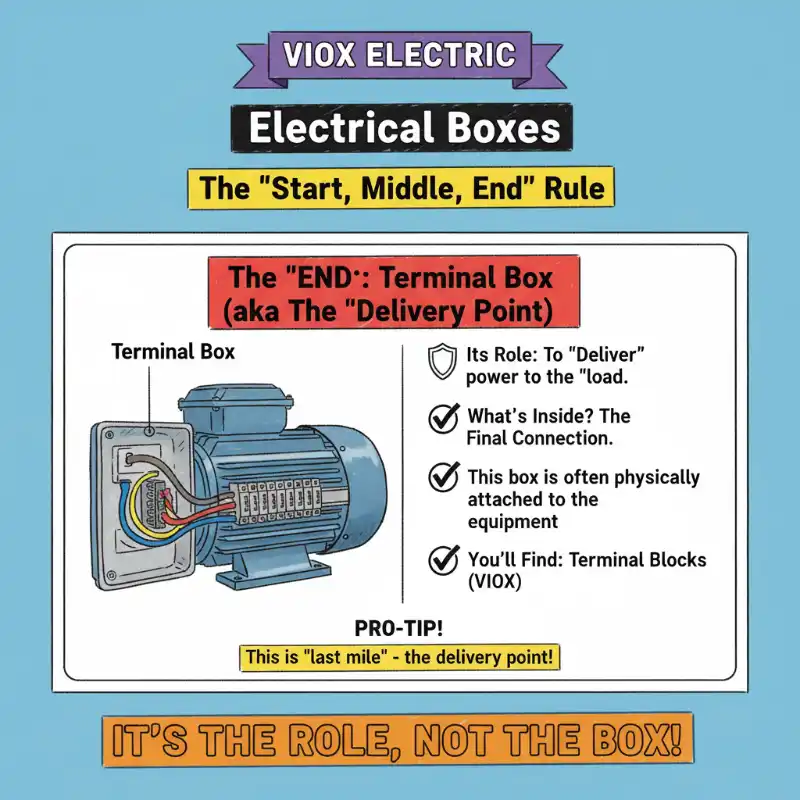
Akhir sekali, wayar meninggalkan Kotak Penyambung dan tiba di mesin—katakan, motor industri besar atau pemanas.
Anda memasang kotak logam 4×4 ketiga terus ke sisi motor. Anda menarik wayar bekalan masuk. Di dalam, anda melihat barisan bolt yang kemas atau blok. Anda memasang terminal gelang wayar bekalan anda ke bawah pada plumbum motor.
Ini adalah Kotak Terminal.
- Peraturan: Terminal = AKHIR
- Alias: Kepala Ayam Motor (slanga industri), Kotak-T, Kotak Sambungan.
- Misi: Untuk Menghantar.
Kotak Terminal ialah “Jabat Tangan.” Ia adalah titik khusus di mana pendawaian bangunan berakhir dan pendawaian dalaman mesin bermula.
Apa yang menjadikannya Kotak Terminal?
- lokasi: Ia hampir selalu dipasang pada atau 内部 peralatan beban (motor, transformer, pemanas, instrumen).
- Kandungan: Ia biasanya mengandungi Terminal Blok—jalur tetap dan tegar untuk memasang wayar—bukannya nat wayar terapung.
- Tujuan: Ia memudahkan pemindahan kuasa terakhir ke peranti yang melakukan kerja.
专业提示: Jika kotak bergetar kerana ia dipasang pada motor yang sedang berjalan, ia adalah Kotak Terminal. Ia adalah hujung litar.
Ringkasan: Panduan Ringkas “Mula, Tengah, Akhir”
Sebagai imbasan, jangan lihat pada logam. Lihat pada misinya. Berikut ialah panduan ringkas anda:
| Ciri | Kotak Agihan | Kotak Simpang | Kotak Terminal |
|---|---|---|---|
| Peraturan | MULA | TENGAH | AKHIR |
| Tugas Utama | Lindungi & Pisahkan Kuasa | Sambung & Cabangkan Wayar | Hantar Kuasa ke Beban |
| Komponen Utama | Pemutus Litar / Fius | Nat Wayar / Sambatan | Blok Terminal |
| Lokasi | Pintu Masuk Perkhidmatan / Bilik Utiliti | Siling / Dinding / Laluan Konduit | Dipasang PADA Peralatan |
| Analogi | Ibu Pejabat | Persimpangan | Dok Pemuatan |
Mengapa Ini Penting untuk Jurutera
Anda mungkin berfikir, “Ia hanya semantik.” Tetapi menggunakan istilah yang salah menjadi mahal dengan cepat.
- Jika anda memesan “Kotak Agihan” apabila anda memerlukan “Kotak Penyambung,” anda mungkin menerima penutup besar dengan rel DIN dan bar bas yang anda tidak perlukan (dan bayar lebih untuknya).
- Jika anda menentukan “Kotak Terminal” untuk sambatan dinding, pemasang anda akan keliru mencari bolt pemasangan untuk motor.
Bahasa ialah alat pertama dalam kit jurutera. Gunakan “Mula, Tengah, Akhir” peraturan, dan anda tidak akan mengambil kotak yang salah lagi.
Ketepatan Teknikal Nota
Standard & Sumber Yang Dirujuk: Definisi sejajar dengan NEC (Kod Elektrik Kebangsaan) Artikel 100 (Definisi) dan Artikel 314 (Kotak dan Badan Konduit).
Konteks: “Kotak Penyambung” dan “Kotak Tarik” sering digunakan secara bergantian dalam pertuturan kasual, tetapi secara tegasnya, Kotak Tarik adalah terutamanya untuk membantu dalam menarik wayar, manakala Kotak Simpang adalah untuk menutup sambatan.
及时性: Terminologi adalah terkini dan standard di seluruh industri elektrik mulai November 2025.