តើអ្វីដែលធ្វើឱ្យប្រអប់បញ្ចូលគ្នានៅតាមលំនៅដ្ឋាន និងខ្នាតឧបករណ៍ប្រើប្រាស់ខុសគ្នា?
ប្រអប់បញ្ចូលគ្នា PV តាមលំនៅដ្ឋានជាធម្មតាគ្រប់គ្រងប្រព័ន្ធ 600V DC ជាមួយនឹងការបញ្ចូលខ្សែ 2-6 ហើយដំណើរការនៅក្នុងការដំឡើងគ្រួសារតែមួយ ខណៈដែលប្រអប់បញ្ចូលគ្នានៅខ្នាតឧបករណ៍ប្រើប្រាស់គ្រប់គ្រងប្រព័ន្ធ 1500V DC ជាមួយនឹងការបញ្ចូលខ្សែ 12-24+ នៅទូទាំងកសិដ្ឋានថាមពលពន្លឺព្រះអាទិត្យពហុមេហ្គាវ៉ាត់។ ភាពខុសគ្នាជាមូលដ្ឋានស្ថិតនៅក្នុងកម្រិតវ៉ុល សមត្ថភាពចរន្ត តម្រូវការប្រើប្រាស់បានយូរនៃបរិស្ថាន និងយុទ្ធសាស្ត្របង្កើនប្រសិទ្ធភាពតម្លៃក្នុងមួយវ៉ាត់—ប្រព័ន្ធលំនៅដ្ឋានផ្តល់អាទិភាពដល់ភាពសាមញ្ញ និងការអនុលោមតាមកូដ ខណៈដែលការរចនានៅខ្នាតឧបករណ៍ប្រើប្រាស់ផ្តោតលើការកាត់បន្ថយ LCOE និងសមត្ថភាពត្រួតពិនិត្យកម្រិតខ្ពស់។.
គន្លឹះយក
- ស្ថាបត្យកម្មវ៉ុល៖ ប្រព័ន្ធលំនៅដ្ឋានប្រើ 600V DC (ស្តង់ដារ NEC) ការដំឡើងពាណិជ្ជកម្មដំណើរការនៅ 1000V DC ហើយកសិដ្ឋានខ្នាតឧបករណ៍ប្រើប្រាស់ត្រូវការប្រអប់បញ្ចូលគ្នា 1500V DC សម្រាប់សេដ្ឋកិច្ចល្អបំផុត
- សមត្ថភាពខ្សែ៖ ប្រអប់បញ្ចូលគ្នានៅលំនៅដ្ឋានគ្រប់គ្រងខ្សែ 2-6 (ជាញឹកញាប់ជាជម្រើសសម្រាប់ខ្សែ ≤3) ខណៈដែលអង្គភាពខ្នាតឧបករណ៍ប្រើប្រាស់គ្រប់គ្រងខ្សែ 12-24+ ក្នុងមួយប្រអប់ជាមួយនឹងយុទ្ធសាស្ត្រដាក់ទីតាំងចែកចាយ
- រចនាសម្ព័ន្ធតម្លៃ៖ ប្រអប់បញ្ចូលគ្នានៅលំនៅដ្ឋានមានតម្លៃ 300$-800$ ក្នុងមួយឯកតា; ប្រព័ន្ធខ្នាតឧបករណ៍ប្រើប្រាស់សម្រេចបានការសន្សំ 8-12 លានដុល្លារ BOS ក្នុងមួយ 100MW តាមរយៈស្ថាបត្យកម្ម 1500V
- ស្តង់ដារការពារ៖ ទាំងខ្នាតតម្រូវឱ្យមានការអនុលោមតាម NEC 690 ប៉ុន្តែខ្នាតឧបករណ៍ប្រើប្រាស់បន្ថែមការរកឃើញកំហុសធ្នូ ការត្រួតពិនិត្យពីចម្ងាយ និងការរួមបញ្ចូលការបិទភ្លើងរហ័ស
- កាលវិភាគ ROI៖ ប្រព័ន្ធលំនៅដ្ឋានបំបែកសូម្បីតែក្នុងរយៈពេល 6-8 ឆ្នាំ; ការរចនា 1500V ខ្នាតឧបករណ៍ប្រើប្រាស់ធ្វើឱ្យប្រសើរឡើងនូវ LCOE ដោយ 15-20% បើប្រៀបធៀបទៅនឹងសមមូល 1000V
ការយល់ដឹងអំពីមូលដ្ឋានគ្រឹះនៃប្រអប់បញ្ចូលគ្នា PV
ប្រអប់បញ្ចូលគ្នា photovoltaic បង្រួបបង្រួមខ្សែ DC ច្រើនពីអារេបន្ទះសូឡាទៅក្នុងសៀគ្វីទិន្នផលតែមួយដែលចិញ្ចឹមឧបករណ៍បំលែង។ ចំណុចប្រសព្វនេះផ្តល់នូវមុខងារសំខាន់ៗចំនួនបី៖ ការការពារលើសចរន្តសម្រាប់ខ្សែនីមួយៗតាមរយៈហ្វុយស៊ីប ឬ breakers សៀគ្វី, ការការពារការកើនឡើង ប្រឆាំងនឹងការកើនឡើងវ៉ុលបណ្តោះអាសន្ន និងចំណុចផ្តាច់កណ្តាលសម្រាប់ការថែទាំ និងការបិទភ្លើងសង្គ្រោះបន្ទាន់។ ប្រអប់បញ្ចូលគ្នាជាមូលដ្ឋានផ្លាស់ប្តូរបណ្តាញស្មុគស្មាញនៃសៀគ្វី DC ស្របគ្នាទៅជាប្រព័ន្ធចែកចាយថាមពលដែលអាចគ្រប់គ្រងបាន និងអនុលោមតាមកូដ។.
តម្រូវការនៃប្រអប់បញ្ចូលគ្នាអាស្រ័យទាំងស្រុងលើស្ថាបត្យកម្មប្រព័ន្ធ។ សម្រាប់ការដំឡើងលំនៅដ្ឋានតូចៗដែលមានខ្សែបី ឬតិចជាងនេះ ការតភ្ជាប់ដោយផ្ទាល់ទៅឧបករណ៍បំលែងនៅតែអាចអនុញ្ញាតបានក្រោមមាត្រា 690 នៃ NEC ដោយលុបបំបាត់ការចំណាយលើឧបករណ៍ 400$-800$ និងចំណុចបរាជ័យបន្ថែម។ ទោះជាយ៉ាងណាក៏ដោយ នៅពេលដែលប្រព័ន្ធកើនឡើងលើសពីបីខ្សែ—ជារឿងធម្មតានៅលើដំបូលលំនៅដ្ឋានធំៗ គម្រោងពាណិជ្ជកម្មទាំងអស់ និងជាសកលនៅក្នុងកសិដ្ឋានខ្នាតឧបករណ៍ប្រើប្រាស់—ប្រអប់បញ្ចូលគ្នាផ្លាស់ប្តូរពីគ្រឿងបន្លាស់ស្រេចចិត្តទៅជាហេដ្ឋារចនាសម្ព័ន្ធចាំបាច់។. សម្រង់
លក្ខណៈបច្ចេកទេសនៃការរចនាប្រអប់បញ្ចូលគ្នា PV តាមលំនៅដ្ឋាន
តម្រូវការវ៉ុល និងចរន្ត
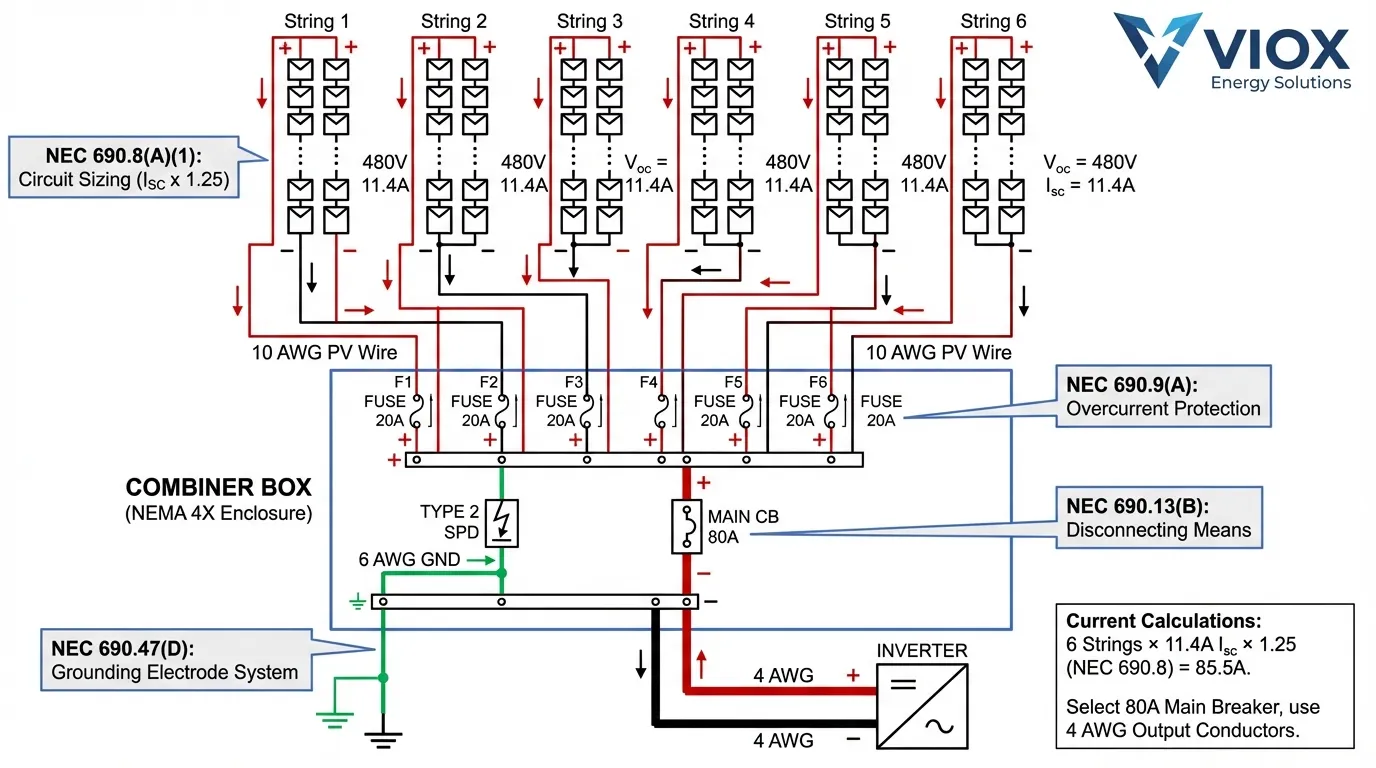
ការដំឡើងថាមពលពន្លឺព្រះអាទិត្យតាមលំនៅដ្ឋាននៅអាមេរិកខាងជើងដំណើរការជាចម្បងនៅវ៉ុលប្រព័ន្ធអតិបរមា 600V DC ដែលស្របតាមលក្ខណៈបច្ចេកទេសនៃឧបករណ៍បំលែងតាមលំនៅដ្ឋានស្តង់ដារ និងតម្រូវការ NEC 690.7 ។ ការគណនាចរន្តខ្សែធ្វើតាមរូបមន្តជាមូលដ្ឋាន៖ គុណចរន្តសៀគ្វីខ្លីរបស់ម៉ូឌុល (Isc) នឹង 1.56 ដើម្បីគណនាសម្រាប់កត្តាកាតព្វកិច្ចបន្តរបស់ NEC (1.25) និងតម្រូវការទំហំការពារលើសចរន្ត (1.25) ដែលផ្តល់នូវកម្រិតហ្វុយស៊ីបអប្បបរមាសម្រាប់ខ្សែនីមួយៗ។ សម្រាប់ខ្សែលំនៅដ្ឋានធម្មតាដែលប្រើបន្ទះ 400W ជាមួយនឹង 11.4A Isc ការគណនាផ្តល់ 17.78A ដែលតម្រូវឱ្យមានហ្វុយស៊ីបស្តង់ដារ 20A ក្នុងមួយការបញ្ចូលខ្សែ។.
ឧបករណ៍បំបែកទិន្នផលមេរបស់ប្រអប់បញ្ចូលគ្នាត្រូវតែផ្ទុកចរន្តសរុបនៃខ្សែទាំងអស់។ ប្រព័ន្ធលំនៅដ្ឋានបួនខ្សែដែលមាន 11.4A Isc ក្នុងមួយខ្សែបង្កើតបានសរុប 45.6A ដែលបន្ទាប់ពីអនុវត្តមេគុណកាតព្វកិច្ចបន្ត 1.25 តម្រូវឱ្យមានកម្រិតអប្បបរមា 57A—ជាធម្មតាពេញចិត្តជាមួយនឹងឧបករណ៍បំបែកមេ 60A ឬ 80A ស្តង់ដារ អាស្រ័យលើទំហំខ្សែ និងការពិចារណាលើការពង្រីកនាពេលអនាគត។. សម្រង់
លក្ខណៈបច្ចេកទេសរាងកាយ និងបរិស្ថាន
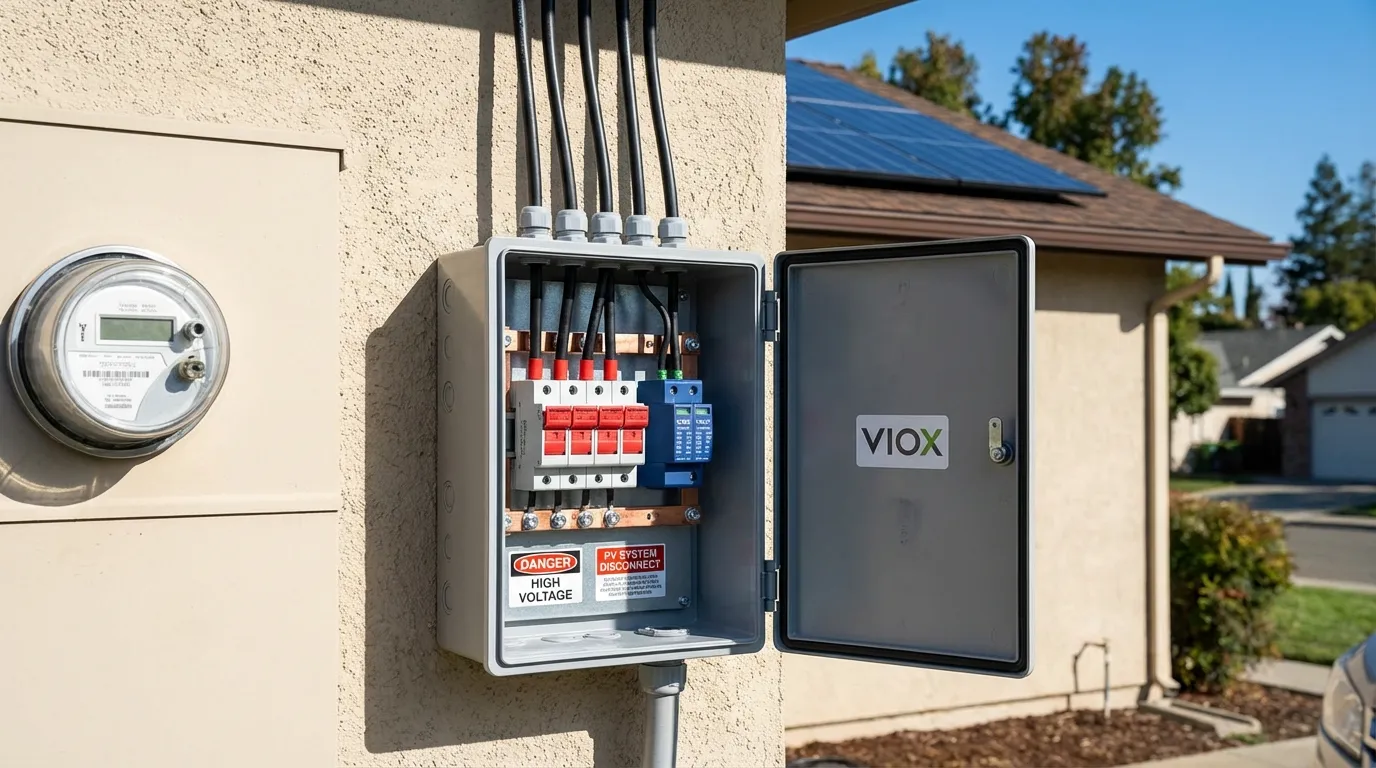
ប្រអប់បញ្ចូលគ្នានៅលំនៅដ្ឋានជាធម្មតារង្វាស់ 12″ × 16″ × 6″ សម្រាប់ការកំណត់រចនាសម្ព័ន្ធ 4-6 ខ្សែ សាងសង់ពីប៉ូលីកាបូណាតដែលមានស្ថេរភាពកាំរស្មី UV ឬស្រោមដែកដែលស្រោបដោយម្សៅ។ កម្រិត IP65 តំណាងឱ្យការការពារការជ្រាបចូលដែលអាចទទួលយកបានអប្បបរមាសម្រាប់ការដំឡើងនៅខាងក្រៅ ដោយផ្តល់នូវការផ្សាភ្ជាប់ធន់នឹងធូលី និងការការពារប្រឆាំងនឹងយន្តហោះទឹកពីគ្រប់ទិសទី។ ការដំឡើងនៅឆ្នេរសមុទ្រ ឬតំបន់ដែលមានការប៉ះពាល់នឹងអាកាសធាតុខ្លាំង គួរតែបញ្ជាក់កម្រិត IP66 ឬ NEMA 4X ដែលផ្តល់នូវភាពធន់នឹងការ corrosion កាន់តែខ្លាំងតាមរយៈផ្នែករឹងដែកអ៊ីណុក និងសម្ភារៈ gasket ដែលធន់នឹងការបាញ់ថ្នាំអំបិល និងការជិះកង់សីតុណ្ហភាព។. សម្រង់
ការកាត់បន្ថយសីតុណ្ហភាពក្លាយជាសារៈសំខាន់សម្រាប់ប្រអប់បញ្ចូលគ្នាដែលបានម៉ោននៅក្នុងពន្លឺព្រះអាទិត្យដោយផ្ទាល់ ឬនៅលើផ្ទៃដំបូលងងឹត។ សីតុណ្ហភាពព័ទ្ធជុំវិញនៅខាងក្នុងស្រោមទាំងនេះអាចឡើងដល់ 60-70°C (140-158°F) ដែលតម្រូវឱ្យមានការអនុវត្តកត្តាកែតម្រូវតារាង 310.15(B)(2)(a) របស់ NEC ទៅនឹងការគណនា ampacity របស់ conductor ។ ស្ត្រេសកម្ដៅនេះក៏ប៉ះពាល់ដល់លក្ខណៈនៃការធ្វើដំណើររបស់ហ្វុយស៊ីប និងឧបករណ៍បំបែកផងដែរ ដែលធ្វើឱ្យស្រោមធំៗដែលមានខ្យល់ចេញចូលគ្រប់គ្រាន់ជាការវិនិយោគដ៏មានតម្លៃសម្រាប់ភាពជឿជាក់រយៈពេលវែង។.
ការជ្រើសរើសសមាសធាតុសម្រាប់ការអនុវត្តតាមលំនៅដ្ឋាន
| សមាសភាគ | លក្ខណៈបច្ចេកទេសលំនៅដ្ឋាន | លក្ខណៈវិនិច្ឆ័យជ្រើសរើសគន្លឹះ |
|---|---|---|
| ហ្វុយស៊ីបខ្សែ | 15-20A, កម្រិត 1000V DC | ហ្វុយស៊ីប gPV ជាក់លាក់ PV ក្នុងមួយ IEC 60269-6; ជៀសវាងហ្វុយស៊ីប AC |
| អ្នកបំបែកមេ | 60-100A, កម្រិត 2-pole DC | បញ្ជី UL 489, កម្រិតរំខានអប្បបរមា 10kA |
| SPD (ការការពារការកើនឡើង) | ប្រភេទ 2, 600V DC, 20-40kA | Uc ≥ 1.2× Voc(អតិបរមា), ការចង្អុលបង្ហាញស្ថានភាពពីចម្ងាយ |
| Busbar | ទង់ដែងស្រោបសំណប៉ាហាំង, 10-15mm² | ការកើនឡើងសីតុណ្ហភាព < 50K នៅចរន្តដែលបានវាយតម្លៃ |
| ឯករភជប់ | ប៉ូលីកាបូណាត ឬដែក, IP65 | ស្ថេរភាពកាំរស្មី UV, -40°C ដល់ +70°C ជួរប្រតិបត្តិការ |
| ការត្រួតពិនិត្យ (ស្រេចចិត្ត) | វ៉ុល/ចរន្តកម្រិតខ្សែ | RS485 ឬការតភ្ជាប់ឥតខ្សែសម្រាប់ប្រព័ន្ធ 6+ ខ្សែ |
ជម្រើសរវាងប្រអប់បញ្ចូលគ្នាដែលបានផ្គុំទុកជាមុន និងតាមតម្រូវការប៉ះពាល់យ៉ាងខ្លាំងដល់សេដ្ឋកិច្ចគម្រោងលំនៅដ្ឋាន។ ឯកតាដែលត្រៀមរួចជាស្រេចពីក្រុមហ៊ុនផលិតដូចជា VIOX អគ្គិសនី ផ្តល់នូវដំណោះស្រាយដោត និងលេងដែលបានចុះបញ្ជី UL ជាមួយនឹងការកំណត់រចនាសម្ព័ន្ធ 4, 6 ឬ 8 ខ្សែស្តង់ដារ កាត់បន្ថយពេលវេលាដំឡើងក្រោមពីរម៉ោង និងលុបបំបាត់កំហុសខ្សែភ្លើងនៅនឹងកន្លែង។ ការរចនាតាមតម្រូវការមានន័យតែសម្រាប់ប្លង់ដំបូលមិនធម្មតា ឬនៅពេលរួមបញ្ចូលមុខងារបិទភ្លើងរហ័សដែលមិនមាននៅក្នុងផលិតផលស្តង់ដារ។.
វិស្វកម្មប្រអប់បញ្ចូលគ្នា PV ខ្នាតឧបករណ៍ប្រើប្រាស់
ភាពចាំបាច់នៃស្ថាបត្យកម្ម 1500V DC
កសិដ្ឋានថាមពលពន្លឺព្រះអាទិត្យខ្នាតឧបករណ៍ប្រើប្រាស់ខាងលើ 5MW បានអនុម័តជាសកលនូវស្ថាបត្យកម្មប្រព័ន្ធ 1500V DC ដែលជំរុញដោយការកែលម្អកម្រិតថ្លៃដើមថាមពល (LCOE) ដ៏គួរឱ្យទាក់ទាញ។ វ៉ុលខ្ពស់អនុញ្ញាតឱ្យប្រវែងខ្សែវែងជាង 50% បើប្រៀបធៀបទៅនឹងប្រព័ន្ធ 1000V កាត់បន្ថយចំនួនខ្សែសរុបប្រហែល 37% និងកាត់បន្ថយចំនួនប្រអប់បញ្ចូលគ្នា ខ្សែប្រមូល DC និងម៉ោងការងារដំឡើងតាមសមាមាត្រ។ កសិដ្ឋានថាមពលពន្លឺព្រះអាទិត្យ 100MW ដែលត្រូវបានរចនានៅ 1500V DC សន្សំបាន 8-12 លានដុល្លារក្នុងការចំណាយលើសមតុល្យប្រព័ន្ធ បើប្រៀបធៀបទៅនឹងការរចនា 1000V ដែលសមមូល ខណៈពេលដែលកាត់បន្ថយចរន្ត DC ក្នុងពេលដំណាលគ្នាដោយ 33% សម្រាប់ទិន្នផលថាមពលសមមូល ដែលបកប្រែទៅជាការបាត់បង់ I²R ទាបជាង និងទិន្នផលថាមពលប្រចាំឆ្នាំខ្ពស់ជាងប្រហែល 0.3% ។. សម្រង់
ការផ្លាស់ប្តូរវ៉ុលនេះណែនាំបញ្ហាប្រឈមផ្នែកវិស្វកម្មយ៉ាងសំខាន់។ ការសម្របសម្រួលអ៊ីសូឡង់សមាសធាតុត្រូវតែគិតគូរពីការកើនឡើងវ៉ុលបណ្តោះអាសន្នដែលឈានដល់ 2000V កំឡុងពេលមានរន្ទះបាញ់ ឬប្រតិបត្តិការប្តូរឧបករណ៍បំលែង។ ចម្ងាយ Creepage និង clearance រវាងផ្នែកផ្ទាល់ និងដីត្រូវតែកើនឡើង ដើម្បីការពារការតាមដាន និង flashover ដែលបណ្តាលឱ្យមានស្រោមធំជាងមុន ទោះបីជាគ្រប់គ្រងខ្សែតិចក៏ដោយ។ ពិធីការសុវត្ថិភាពបុគ្គលិកកាន់តែតឹងរ៉ឹង—ប្រព័ន្ធ 1500V DC អាចទ្រទ្រង់ធ្នូបានយ៉ាងងាយស្រួលជាងសមមូលវ៉ុលទាប ដែលតម្រូវឱ្យមានឧបករណ៍រំខានសៀគ្វីកំហុសធ្នូ (AFCI) នៅក្នុងយុត្តាធិការជាច្រើន។.
សមត្ថភាពខ្សែ និងយុទ្ធសាស្ត្រដាក់ទីតាំងចែកចាយ
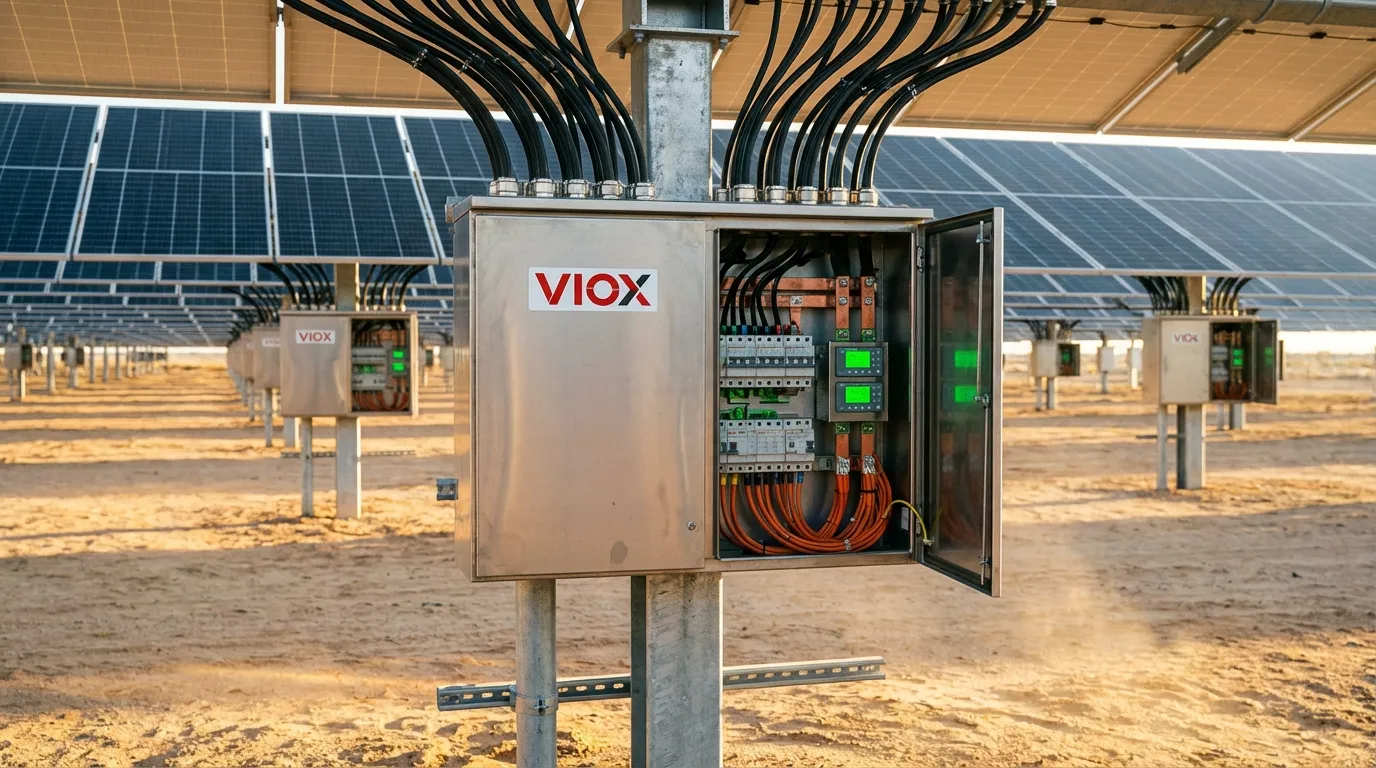
ប្រអប់បញ្ចូលគ្នាខ្នាតឧបករណ៍ប្រើប្រាស់ជាធម្មតាផ្ទុកការបញ្ចូលខ្សែ 12-24 ជាមួយនឹងការកំណត់រចនាសម្ព័ន្ធដ៏ល្អប្រសើរដែលកំណត់ដោយចំនួនឆានែល MPPT របស់ឧបករណ៍បំលែង ការគណនាការធ្លាក់ចុះវ៉ុលខ្សែ DC និង topology នៃទីតាំង។ កសិដ្ឋានថាមពលពន្លឺព្រះអាទិត្យដែលបានម៉ោនលើដី 5MW អាចដាក់ពង្រាយប្រអប់បញ្ចូលគ្នា 30-40 ដែលចែកចាយពាសពេញអារេ ដោយប្រអប់នីមួយៗបង្រួបបង្រួមខ្សែ 16-20 មុនពេលបញ្ចូលទៅក្នុងឧបករណ៍បំលែងកណ្តាល ឬឧបករណ៍បំលែងខ្សែដែលបានចែកចាយតាមរយៈខ្សែប្រមូល DC ។ យុទ្ធសាស្ត្រដាក់ទីតាំងចែកចាយនេះកាត់បន្ថយការរត់ខ្សែ DC កាត់បន្ថយការបាត់បង់ការធ្លាក់ចុះវ៉ុល និងអនុញ្ញាតឱ្យមានលំដាប់សាងសង់ម៉ូឌុលក្នុងអំឡុងពេលដំណាក់កាល EPC ។.
ការគណនាសមាមាត្រខ្សែទៅបញ្ចូលគ្នាមានតុល្យភាពកត្តាច្រើន៖ ចំនួនខ្សែខ្ពស់ក្នុងមួយប្រអប់កាត់បន្ថយឧបករណ៍ និងការចំណាយលើការដំឡើង ប៉ុន្តែបង្កើនតម្រូវការរង្វាស់ខ្សែ DC និងធ្វើឱ្យស្មុគស្មាញដល់ការចូលប្រើការថែទាំ។ ការរចនាខ្នាតឧបករណ៍ប្រើប្រាស់ទំនើបជាធម្មតាកំណត់គោលដៅ 15-18 ខ្សែក្នុងមួយប្រអប់បញ្ចូលគ្នាជាប្រសិទ្ធភាពសេដ្ឋកិច្ច ដោយផ្តល់នូវការបង្រួបបង្រួមគ្រប់គ្រាន់ ខណៈពេលដែលរក្សាទំហំស្រោមដែលអាចគ្រប់គ្រងបាន និងលទ្ធភាពចូលប្រើការបញ្ចប់ខ្សែ។. សម្រង់
ប្រព័ន្ធការពារ និងត្រួតពិនិត្យកម្រិតខ្ពស់
| លក្ខណៈ | ការអនុវត្តខ្នាតឧបករណ៍ប្រើប្រាស់ | ភាពត្រឹមត្រូវនៃអាជីវកម្ម |
|---|---|---|
| ការរកឃើញកំហុសធ្នូ | ការរកឃើញធ្នូស៊េរី និងស្របគ្នា ក្នុងមួយ UL 1699B | ការពារ 80% នៃហានិភ័យអគ្គីភ័យនៅផ្នែក DC; តម្រូវការធានារ៉ាប់រងនៅក្នុងទីផ្សារជាច្រើន |
| ការត្រួតពិនិត្យកម្រិតខ្សែ | វ៉ុល ចរន្ត សីតុណ្ហភាពក្នុងមួយខ្សែ | កំណត់ខ្សែដែលដំណើរការខ្សោយ; ធ្វើអោយប្រសើរឡើងនូវប្រសិទ្ធភាព O&M ដោយ 40% |
| ផ្តាច់ពីចម្ងាយ | កុងតាក់ម៉ូទ័រជាមួយនឹងការរួមបញ្ចូល SCADA | អាចបិទភ្លើងសង្គ្រោះបន្ទាន់ដោយមិនចាំបាច់ចូលទៅកាន់ទីតាំង; សុវត្ថិភាពអ្នកពន្លត់អគ្គីភ័យ |
| ឧបករណ៍ចាប់សញ្ញាបរិស្ថាន | សីតុណ្ហភាពព័ទ្ធជុំវិញ សំណើម សីតុណ្ហភាពស្រោម | ការថែទាំតាមការព្យាករណ៍; ការពារការបរាជ័យទាក់ទងនឹងកម្ដៅ |
| ពិធីការទំនាក់ទំនង | Modbus RTU/TCP, DNP3, ឬ IEC 61850 | ការរួមបញ្ចូលជាមួយ SCADA របស់រោងចក្រ; ការត្រួតពិនិត្យដំណើរការក្នុងពេលជាក់ស្តែង |
| ការបិទយ៉ាងរហ័ស | កម្រិតម៉ូឌុល ឬកម្រិតឧបករណ៍បញ្ចូលគ្នាតាម NEC 690.12 | ការអនុលោមតាមកូដ; កាត់បន្ថយគ្រោះថ្នាក់ធ្នូអគ្គិសនីកំឡុងពេលថែទាំ |
ការត្រួតពិនិត្យកម្រិតខ្សែនៅក្នុងប្រអប់បញ្ចូលគ្នាកម្រិតឧបករណ៍ប្រើប្រាស់ ផ្តល់ទិន្នន័យដំណើរការលម្អិតដែលប៉ះពាល់ដោយផ្ទាល់ដល់លទ្ធភាពទទួលបានប្រាក់កម្ចីរបស់គម្រោង។ វិនិយោគិន និងអ្នកផ្តល់ប្រាក់កម្ចីកាន់តែត្រូវការភាពមើលឃើញក្នុងពេលជាក់ស្តែងទៅលើដំណើរការអារេ ដើម្បីផ្ទៀងផ្ទាត់ការព្យាករណ៍ផលិតកម្ម និងកំណត់អត្តសញ្ញាណកំហុសដែលប៉ះពាល់ដល់ប្រាក់ចំណូល។ ខ្សែដែលដំណើរការខ្សោយតែមួយនៅក្នុងកសិដ្ឋាន 100MW អាចចំណាយអស់ 3,000 ដុល្លារ - 5,000 ដុល្លារជារៀងរាល់ឆ្នាំក្នុងការបាត់បង់ការផលិត—ប្រព័ន្ធត្រួតពិនិត្យដែលរកឃើញបញ្ហាទាំងនេះក្នុងរយៈពេលប៉ុន្មានថ្ងៃជាជាងប៉ុន្មានខែ ផ្តល់ ROI ដែលអាចវាស់វែងបានតាមរយៈកត្តាសមត្ថភាពប្រសើរឡើង។. សម្រង់
លក្ខណៈបច្ចេកទេសនៃសមាសធាតុសម្រាប់កម្រិតឧបករណ៍ប្រើប្រាស់
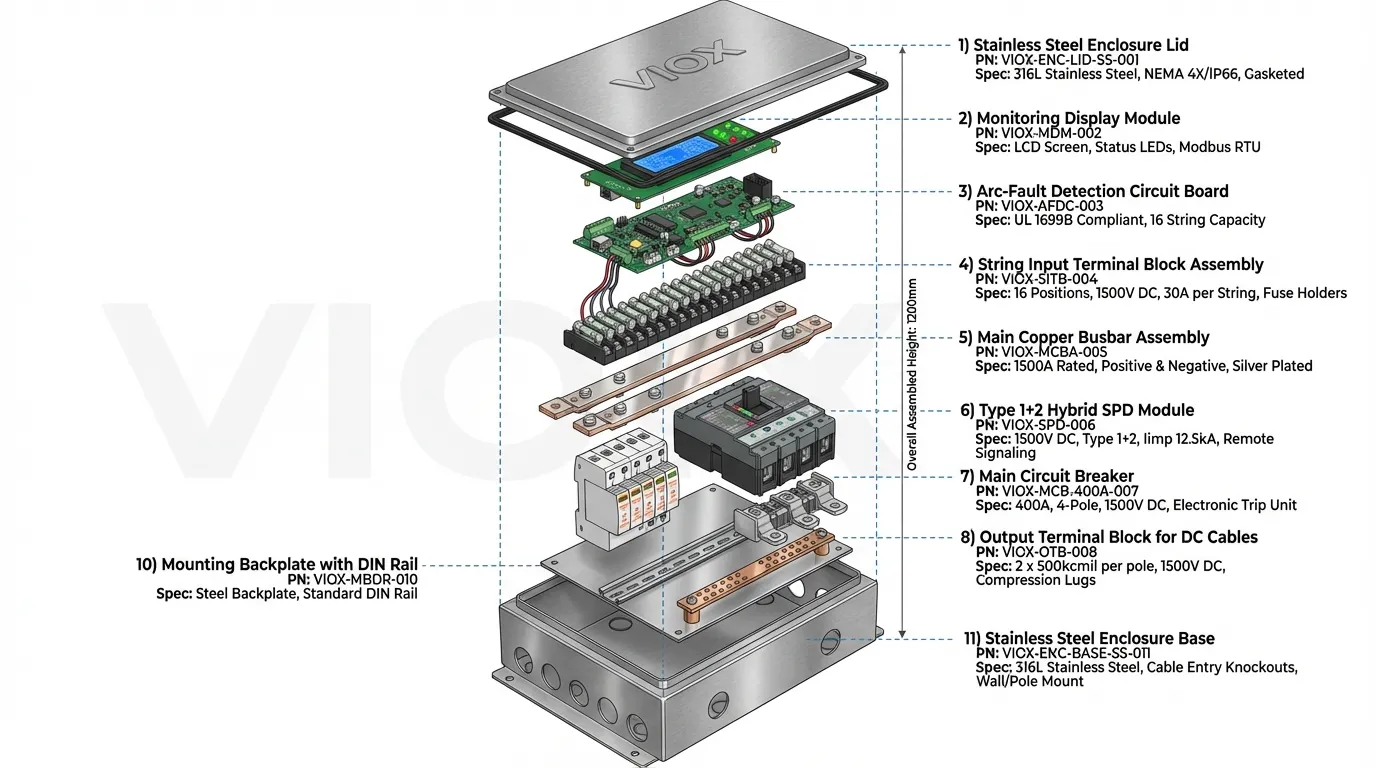
| សមាសភាគ | លក្ខណៈបច្ចេកទេសសម្រាប់កម្រិតឧបករណ៍ប្រើប្រាស់ | ភាពខុសគ្នាដ៏សំខាន់ពីលំនៅដ្ឋាន |
|---|---|---|
| ហ្វុយស៊ីបខ្សែ | 20-30A, 1500V DC ដែលបានវាយតម្លៃ | ភាពធន់ទ្រាំវ៉ុលខ្ពស់; ជារឿយៗប្រើឧបករណ៍ផ្តាច់កុងតាក់ហ្វុយស៊ីប |
| អ្នកបំបែកមេ | 400-630A, 4-pole DC ដែលបានវាយតម្លៃ | 65kA interrupt rating; គ្រឿងអេឡិចត្រូនិចដែលមានទំនាក់ទំនង |
| SPD | Type 1+2 hybrid, 1500V DC, 100kA | ការគ្រប់គ្រងថាមពលខ្ពស់; សម្របសម្រួលជាមួយ SPDs កម្រិតអារេ |
| Busbar | ស្ពាន់ស្រោបប្រាក់, 50-120mm² | ភាពធន់ទ្រាំទំនាក់ទំនងទាប; រចនាឡើងសម្រាប់អាយុកាល 30+ ឆ្នាំ |
| ឯករភជប់ | ដែកអ៊ីណុក 316L, IP66/NEMA 4X | ធន់នឹងច្រេះ; ត្រជាក់អកម្មជាមួយឧបករណ៍ស្រូបកំដៅ |
| ក្រពេញខ្សែកាប | EMC-rated, IP68 | ភាពឆបគ្នានៃអេឡិចត្រូម៉ាញ៉េទិច; ការវាយតម្លៃដែលអាចជ្រមុជបានសម្រាប់តំបន់ទឹកជំនន់ |
លក្ខណៈបច្ចេកទេសនៃសម្ភារៈសម្រាប់ប្រអប់បញ្ចូលគ្នាកម្រិតឧបករណ៍ប្រើប្រាស់ឆ្លុះបញ្ចាំងពីបរិយាកាសប្រតិបត្តិការដ៏អាក្រក់ និងអាយុកាលរចនា 30+ ឆ្នាំដែលរំពឹងទុក។ ស្រោមដែកអ៊ីណុក 316L ជាមួយនឹងថ្នាំកូតម្សៅធន់នឹងការ corrosion នៅក្នុងវាលខ្សាច់ តំបន់ឆ្នេរ និងកសិកម្ម ដែលប៉ូលីកាបូណាតកម្រិតលំនៅដ្ឋាននឹងខូចគុណភាពក្នុងរយៈពេល 10-15 ឆ្នាំ។ សមាសធាតុខាងក្នុងប្រើប្រាស់ busbars ស្ពាន់ស្រោបប្រាក់ ជាជាងជម្រើសស្រោបសំណប៉ាហាំង ដើម្បីកាត់បន្ថយភាពធន់ទ្រាំទំនាក់ទំនង និងធានាបាននូវដំណើរការប្រកបដោយស្ថេរភាពនៅទូទាំងវដ្តសីតុណ្ហភាពពី -40°C ដល់ +85°C។. សម្រង់
ភាពខុសគ្នានៃការរចនាដ៏សំខាន់៖ ការប្រៀបធៀបពីចំហៀងទៅចំហៀង
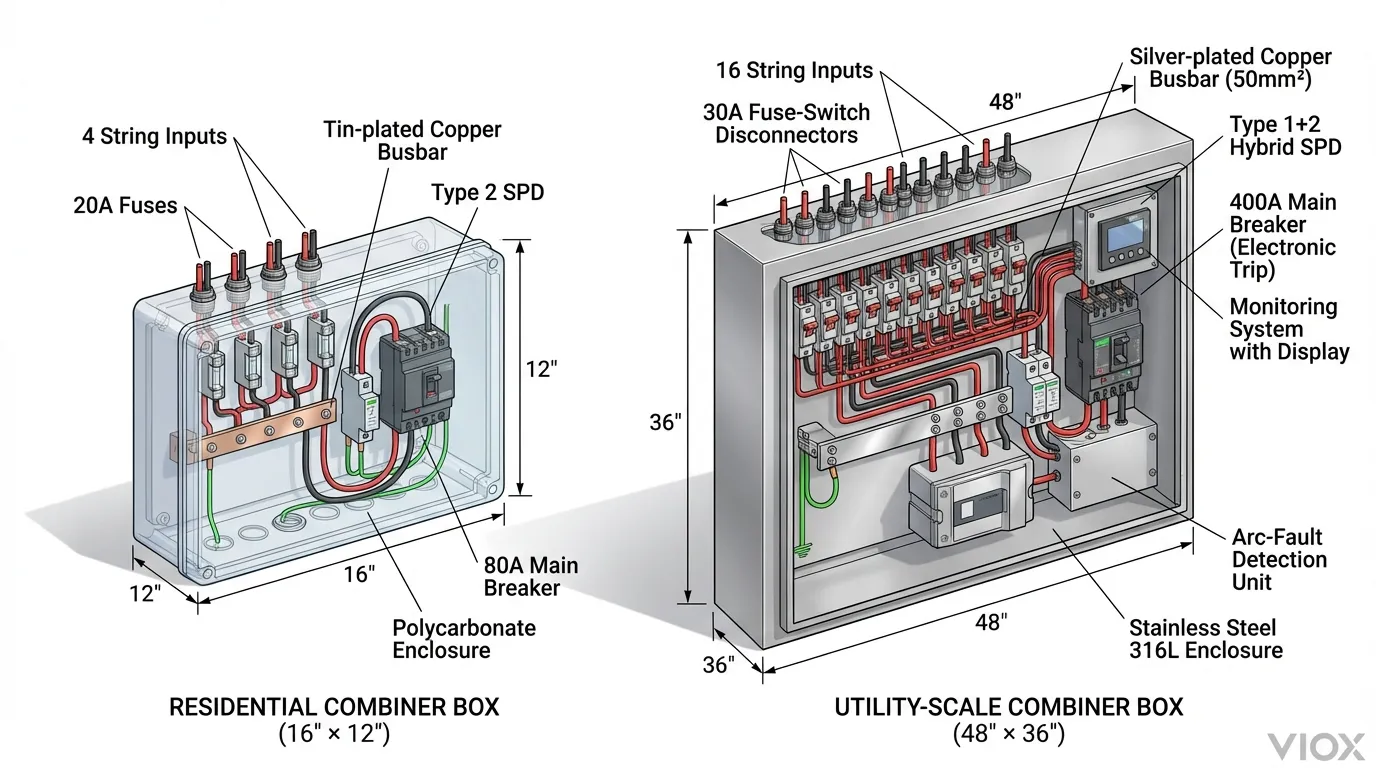
ការប្រៀបធៀបស្ថាបត្យកម្មប្រព័ន្ធ
| ប៉ារ៉ាម៉ែត្រ | ប្រព័ន្ធលំនៅដ្ឋាន | ប្រព័ន្ធកម្រិតឧបករណ៍ប្រើប្រាស់ |
|---|---|---|
| វ៉ុលប្រព័ន្ធ | 600V DC (ស្តង់ដារ NEC) | 1500V DC (ស្តង់ដារឧស្សាហកម្មក្រោយឆ្នាំ 2020) |
| ចំនួនខ្សែ | 2-6 ខ្សែ (ជាញឹកញាប់ ≤3 = មិនត្រូវការឧបករណ៍បញ្ចូលគ្នា) | 12-24+ ខ្សែក្នុងមួយប្រអប់បញ្ចូលគ្នា |
| ទំហំប្រព័ន្ធសរុប | 5-15 kW ធម្មតា | 5-500+ MW |
| បរិមាណប្រអប់បញ្ចូលគ្នា | 0-1 ក្នុងមួយការដំឡើង | 30-200+ ក្នុងមួយកសិដ្ឋាន |
| ប្រវែងខ្សែ | 8-12 បន្ទះក្នុងមួយខ្សែ | 24-32 បន្ទះក្នុងមួយខ្សែ |
| ប្រភេទ Inverter | String inverter (ឯកតាទោល) | Central or string inverters (ឯកតាជាច្រើន) |
ការវិភាគតម្លៃ និងសេដ្ឋកិច្ច
| កត្តាចំណាយ | លំនៅដ្ឋាន | ខ្នាតឧបករណ៍ប្រើប្រាស់ |
|---|---|---|
| តម្លៃឯកតាប្រអប់បញ្ចូលគ្នា | $300-$800 | $2,500-$8,000 |
| តម្លៃក្នុងមួយវ៉ាត់ | 0.05 ដុល្លារ - 0.08 ដុល្លារ / W | 0.01 ដុល្លារ - 0.02 ដុល្លារ / W |
| ការងារដំឡើង | 2-4 ម៉ោង។ | 4-8 ម៉ោងក្នុងមួយប្រអប់ (ប៉ុន្តែបានបន្ធូរបន្ថយលើ MW) |
| ផលប៉ះពាល់នៃតម្លៃ BOS | 3-5% នៃតម្លៃប្រព័ន្ធសរុប | 8-12% នៃតម្លៃប្រព័ន្ធសរុប |
| តម្លៃត្រួតពិនិត្យ | 0 ដុល្លារ - 200 ដុល្លារ (ជារឿយៗត្រូវបានលុបចោល) | 500 ដុល្លារ - 1,500 ដុល្លារក្នុងមួយប្រអប់ (ជាកាតព្វកិច្ច) |
| ចន្លោះពេលថែទាំ | ៥-១០ ឆ្នាំ។ | 2-3 ឆ្នាំ (បង្ការ) |
ភាពខុសគ្នានៃតម្លៃក្នុងមួយវ៉ាត់បង្ហាញពីភាពខុសគ្នាសេដ្ឋកិច្ចជាមូលដ្ឋានរវាងថាមពលពន្លឺព្រះអាទិត្យកម្រិតលំនៅដ្ឋាន និងកម្រិតឧបករណ៍ប្រើប្រាស់។ ខណៈពេលដែលប្រអប់បញ្ចូលគ្នាកម្រិតលំនៅដ្ឋានតំណាងឱ្យភាគរយធំជាងនៃតម្លៃប្រព័ន្ធសរុប ចំនួនដុល្លារដាច់ខាតនៅតែមានកម្រិតមធ្យម (300 ដុល្លារ - 800 ដុល្លារ) ។ គម្រោងកម្រិតឧបករណ៍ប្រើប្រាស់សម្រេចបាននូវតម្លៃក្នុងមួយវ៉ាត់ទាបជាងយ៉ាងខ្លាំង តាមរយៈការលទ្ធកម្មបរិមាណ ការរចនាតាមស្តង់ដារ និងសមត្ថភាពក្នុងការបន្ធូរបន្ថយតម្លៃវិស្វកម្មនៅទូទាំងរាប់រយមេហ្គាវ៉ាត់។ ទោះជាយ៉ាងណាក៏ដោយ ការចំណាយដើមទុនសរុបលើប្រអប់បញ្ចូលគ្នាសម្រាប់កសិដ្ឋាន 100MW អាចលើសពី 500,000 ដុល្លារ - 800,000 ដុល្លារ ដែលធ្វើឱ្យការជ្រើសរើសសមាសធាតុ និងគុណវុឌ្ឍិរបស់អ្នកផ្គត់ផ្គង់ក្លាយជាសកម្មភាពលទ្ធកម្មដ៏សំខាន់។. សម្រង់
ការអនុលោមតាមច្បាប់ និងស្តង់ដារ
| តម្រូវការ | កម្មវិធីលំនៅដ្ឋាន | កម្មវិធីកម្រិតឧបករណ៍ប្រើប្រាស់ |
|---|---|---|
| កូដចម្បង | NEC មាត្រា 690 | NEC Article 690 + ស្តង់ដារតភ្ជាប់ឧបករណ៍ប្រើប្រាស់ |
| ការការពារចរន្តលើស | NEC 690.9 (1.56× Isc អប្បបរមា) | NEC 690.9 + តម្រូវឱ្យមានការសិក្សាសម្របសម្រួល |
| ដី | NEC 690.41-690.47 | បណ្តាញដីកែលម្អ; ការធ្វើតេស្តភាពធន់ទ្រាំនឹងដី |
| ការដាក់ស្លាក | NEC 690.31 (ស្លាកសញ្ញាព្រមានជាមូលដ្ឋាន) | ស្លាកសញ្ញា Arc-flash យោងតាម NFPA 70E; គំនូសដ្យាក្រាមលម្អិតតែមួយខ្សែ |
| ការបិទយ៉ាងរហ័ស | NEC 690.12 (កម្រិតម៉ូឌុល ឬកម្រិតអារេ) | NEC 690.12 + តម្រូវការជាក់លាក់របស់ក្រុមហ៊ុនផ្គត់ផ្គង់ |
| ការធ្វើតេស្ត/ការដាក់ឱ្យដំណើរការ | ការត្រួតពិនិត្យមើលឃើញ + ការផ្ទៀងផ្ទាត់វ៉ុល | ការធ្វើតេស្តទទួលយកពេញលេញ យោងតាម IEC 62446; IR thermography |
ទាំងការដំឡើងលំនៅដ្ឋាន និងទំហំឧបករណ៍ប្រើប្រាស់ត្រូវតែអនុលោមតាម NEC Article 690 ប៉ុន្តែគម្រោងទំហំឧបករណ៍ប្រើប្រាស់ប្រឈមមុខនឹងស្រទាប់បន្ថែមនៃការត្រួតពិនិត្យបទប្បញ្ញត្តិ។ កិច្ចព្រមព្រៀងតភ្ជាប់ឧបករណ៍ប្រើប្រាស់ជាញឹកញាប់ដាក់តម្រូវការលើសពីអប្បបរមា NEC រួមទាំងបច្ចេកវិទ្យារាវរកកំហុស arc ជាក់លាក់ សមត្ថភាពផ្តាច់ពីចម្ងាយ និងការត្រួតពិនិត្យពេលវេលាជាក់ស្តែងជាមួយនឹងការរួមបញ្ចូល SCADA ឧបករណ៍ប្រើប្រាស់។ តម្រូវការបន្ថែមទាំងនេះអាចបន្ថែម 15-25% ទៅលើថ្លៃដើមប្រអប់បញ្ចូលគ្នា ប៉ុន្តែមិនអាចចរចាបានសម្រាប់ការអនុម័តគម្រោង និងកាលបរិច្ឆេទប្រតិបត្តិការពាណិជ្ជកម្ម (COD) ទេ។. សម្រង់
លក្ខណៈវិនិច្ឆ័យជ្រើសរើស៖ ការជ្រើសរើសប្រអប់បញ្ចូលគ្នាត្រឹមត្រូវ
សម្រាប់ការដំឡើងលំនៅដ្ឋាន (5-15 kW)
ជំហានទី 1៖ កំណត់ថាតើប្រអប់បញ្ចូលគ្នាគឺចាំបាច់ឬអត់។. គណនាចំនួនខ្សែសរុបរបស់អ្នកដោយផ្អែកលើប្លង់ដំបូល និងការវិភាគស្រមោល។ ប្រសិនបើប្រព័ន្ធរបស់អ្នកមានខ្សែបី ឬតិចជាងនេះ សូមភ្ជាប់ដោយផ្ទាល់ទៅ Inverter ហើយសន្សំបាន 400$-800$ បូកនឹងកម្លាំងពលកម្មដំឡើង។ វិធីសាស្រ្តតភ្ជាប់ដោយផ្ទាល់នេះត្រូវបានអនុញ្ញាតយ៉ាងច្បាស់ដោយ NEC 690.9 ហើយតំណាងឱ្យដំណោះស្រាយសន្សំសំចៃបំផុតសម្រាប់អារេលំនៅដ្ឋានតូចៗ។.
ជំហានទី 2៖ គណនាលក្ខណៈបច្ចេកទេសអគ្គិសនី។. គុណ Isc របស់បន្ទះរបស់អ្នកដោយ 1.56 ដើម្បីកំណត់ការវាយតម្លៃហ្វុយស៊ីបអប្បបរមាក្នុងមួយខ្សែ។ បូកបញ្ចូលចរន្តសរុបពីខ្សែទាំងអស់ ហើយគុណនឹង 1.25 ដើម្បីកំណត់ការវាយតម្លៃឧបករណ៍បំបែកមេ។ ផ្ទៀងផ្ទាត់ថាការវាយតម្លៃវ៉ុលប្រអប់បញ្ចូលគ្នាដែលអ្នកបានជ្រើសរើសលើសពីវ៉ុលសៀគ្វីបើកអតិបរមារបស់ខ្សែ (Voc) យ៉ាងហោចណាស់ 20% នៃរឹមសុវត្ថិភាព។.
ជំហានទី 3៖ វាយតម្លៃតម្រូវការបរិស្ថាន។. ប្រអប់បញ្ចូលគ្នាដែលបានម៉ោនលើដំបូលក្រោមពន្លឺថ្ងៃដោយផ្ទាល់តម្រូវឱ្យមាន IP65 អប្បបរមា ដោយ IP66 ត្រូវបានគេពេញចិត្តសម្រាប់អាយុកាលប្រើប្រាស់បានយូរ។ ការដំឡើងនៅឆ្នេរសមុទ្រក្នុងចម្ងាយ 10 ម៉ាយពីទឹកប្រៃ គួរតែបញ្ជាក់ស្រោមដែកអ៊ីណុក NEMA 4X ជាមួយនឹង gaskets និង hardware កម្រិតសមុទ្រ។ ពិចារណាលើការកាត់បន្ថយកំដៅ ប្រសិនបើសីតុណ្ហភាពព័ទ្ធជុំវិញលើសពី 40°C (104°F) ជាប្រចាំ។.
ជំហានទី 4៖ វាយតម្លៃតម្រូវការត្រួតពិនិត្យ។. សម្រាប់ប្រព័ន្ធដែលមានខ្សែចំនួនប្រាំមួយ ឬច្រើនជាងនេះ ការត្រួតពិនិត្យកម្រិតខ្សែផ្តល់នូវសមត្ថភាពវិនិច្ឆ័យដ៏មានតម្លៃដែលអាចកំណត់អត្តសញ្ញាណបន្ទះដែលដំណើរការខ្សោយ ឬបញ្ហាខ្សែភ្លើង។ ការចំណាយបន្ថែម 200$-400$ សម្រាប់ប្រអប់បញ្ចូលគ្នាដែលបើកដំណើរការត្រួតពិនិត្យជាធម្មតាទូទាត់សងដោយខ្លួនឯងក្នុងរយៈពេល 2-3 ឆ្នាំ តាមរយៈភាពអាចរកបាននៃប្រព័ន្ធដែលប្រសើរឡើង និងដំណោះស្រាយកំហុសលឿនជាងមុន។. សម្រង់
សម្រាប់គម្រោងទំហំឧបករណ៍ប្រើប្រាស់ (5+ MW)
ជំហានទី 1៖ បញ្ជាក់ស្ថាបត្យកម្មវ៉ុលប្រព័ន្ធ។. សម្រាប់គម្រោងខាងលើ 5MW ស្ថាបត្យកម្ម 1500V DC គួរតែជាមូលដ្ឋានរចនាលំនាំដើម លុះត្រាតែកត្តាកំណត់ជាក់លាក់នៃទីតាំងកំណត់ផ្សេង។ ការកែលម្អ LCOE 15-20% បើប្រៀបធៀបទៅនឹងប្រព័ន្ធ 1000V ធ្វើឱ្យការសម្រេចចិត្តនេះត្រង់ពីទស្សនៈគំរូហិរញ្ញវត្ថុ។.
ជំហានទី 2៖ បង្កើនប្រសិទ្ធភាពសមាមាត្រខ្សែទៅប្រអប់បញ្ចូលគ្នា។. អនុវត្តការវិភាគសេដ្ឋកិច្ចលម្អិតដោយមានតុល្យភាពបរិមាណប្រអប់បញ្ចូលគ្នាធៀបនឹងថ្លៃដើមខ្សែ DC និងការបាត់បង់ការធ្លាក់ចុះវ៉ុល។ សមាមាត្រដ៏ល្អប្រសើរបំផុតជាធម្មតាធ្លាក់នៅចន្លោះ 15-18 ខ្សែក្នុងមួយប្រអប់បញ្ចូលគ្នា ប៉ុន្តែ topology ទីតាំង និងលក្ខណៈបច្ចេកទេស Inverter អាចផ្លាស់ប្តូរគោលដៅនេះ។ ប្រើការគណនាការធ្លាក់ចុះវ៉ុលខ្សែ DC ដើម្បីផ្ទៀងផ្ទាត់ថាចរន្តខ្សែរួមបញ្ចូលគ្នា មិនលើសពីការបាត់បង់វ៉ុល 3% នៅចំណុចថាមពលអតិបរមា។.
ជំហានទី 3៖ បញ្ជាក់ប្រព័ន្ធការពារ និងត្រួតពិនិត្យ។. ការរកឃើញកំហុស Arc គឺចាំបាច់សម្រាប់ការធានា និងការធានារ៉ាប់រងនៅក្នុងទីផ្សារភាគច្រើន។ ការត្រួតពិនិត្យវ៉ុល និងចរន្តកម្រិតខ្សែ គួរតែជាលក្ខណៈបច្ចេកទេសស្តង់ដារ—ការចំណាយបន្ថែម 50$-80$ ក្នុងមួយខ្សែគឺមិនសំខាន់ទេ បើប្រៀបធៀបទៅនឹងតម្លៃការពារប្រាក់ចំណូល។ រួមបញ្ចូលការត្រួតពិនិត្យប្រអប់បញ្ចូលគ្នាជាមួយនឹងរោងចក្រ SCADA ដោយប្រើពិធីការ Modbus TCP ឬ DNP3 សម្រាប់ភាពមើលឃើញកណ្តាល។.
ជំហានទី 4៖ វាយតម្លៃគុណវុឌ្ឍិរបស់អ្នកផ្គត់ផ្គង់។. ប្រអប់បញ្ចូលគ្នាទំហំឧបករណ៍ប្រើប្រាស់តំណាងឱ្យហេដ្ឋារចនាសម្ព័ន្ធសំខាន់ជាមួយនឹងការរំពឹងទុកនៃអាយុកាលរចនា 30 ឆ្នាំ។ ការជ្រើសរើសអ្នកផ្គត់ផ្គង់គួរតែផ្តល់អាទិភាពដល់ក្រុមហ៊ុនផលិតដែលមានវិញ្ញាបនបត្រ IEC 61439-2 កំណត់ត្រាដែលបានបង្ហាញនៅក្នុងគម្រោងពហុមេហ្គាវ៉ាត់ និងការធានារ៉ាប់រងដ៏ទូលំទូលាយ (អប្បបរមា 10 ឆ្នាំសម្រាប់ស្រោម 5 ឆ្នាំសម្រាប់គ្រឿងអេឡិចត្រូនិច)។ ស្នើសុំរបាយការណ៍ធ្វើតេស្តភាគីទីបីសម្រាប់ការទប់ទល់នឹងសៀគ្វីខ្លី ការកើនឡើងសីតុណ្ហភាព និងការផ្ទៀងផ្ទាត់កម្រិត IP ។. សម្រង់
កំហុសរចនាទូទៅ និងវិធីជៀសវាងពួកវា
កំហុសប្រព័ន្ធលំនៅដ្ឋាន
កំហុសទី 1៖ ការប្រើប្រាស់ហ្វុយស៊ីបដែលបានវាយតម្លៃ AC នៅក្នុងកម្មវិធី DC ។. ហ្វុយស៊ីប AC ស្តង់ដារខ្វះសមត្ថភាពពន្លត់ arc ដែលត្រូវការសម្រាប់សៀគ្វី DC ដែលកន្លែងដែលគ្មានការឆ្លងកាត់សូន្យធ្វើឱ្យការផុតពូជ arc កាន់តែមានបញ្ហា។ តែងតែបញ្ជាក់ហ្វុយស៊ីប gPV ជាក់លាក់ PV ដែលបានវាយតម្លៃយោងតាម IEC 60269-6 ដែលរួមបញ្ចូលបន្ទប់ពន្លត់ arc ដែលបានកែលម្អដែលត្រូវបានរចនាឡើងសម្រាប់ការរំខាន DC ។ ភាពខុសគ្នានៃតម្លៃគឺមិនសំខាន់ទេ (3$-5$ ក្នុងមួយហ្វុយស៊ីប) ប៉ុន្តែផលប៉ះពាល់សុវត្ថិភាពគឺជ្រាលជ្រៅ។. សម្រង់
កំហុសទី 2៖ ទំហំខ្សែមិនគ្រប់គ្រាន់សម្រាប់ការកាត់បន្ថយសីតុណ្ហភាព។. ប្រអប់បញ្ចូលគ្នាដែលបានម៉ោននៅលើដំបូលងងឹត ឬក្រោមពន្លឺថ្ងៃដោយផ្ទាល់ជួបប្រទះសីតុណ្ហភាពព័ទ្ធជុំវិញ 60-70°C ដែលតម្រូវឱ្យមានការអនុវត្តកត្តាកែតម្រូវ NEC Table 310.15(B)(2)(a) ។ ឧបករណ៍ចម្លង 10 AWG ដែលបានវាយតម្លៃសម្រាប់ 40A នៅសីតុណ្ហភាពព័ទ្ធជុំវិញ 30°C ដែលបានកាត់បន្ថយទៅសីតុណ្ហភាពព័ទ្ធជុំវិញ 70°C អាចផ្ទុកបានតែ 24A ដោយសុវត្ថិភាពប៉ុណ្ណោះ។ ការខកខានមិនបានអនុវត្តកត្តាកែតម្រូវទាំងនេះបង្កើតឱ្យមានគ្រោះថ្នាក់ភ្លើង និងការរំលោភលើកូដ។.
កំហុសទី 3៖ ការលុបចោលការការពាររលក។. ខណៈពេលដែលមិនត្រូវបានទាមទារជាសកលដោយកូដនោះ Type 2 SPDs នៅក្នុងប្រអប់បញ្ចូលគ្នានៃលំនៅដ្ឋានផ្តល់នូវការការពារដ៏សំខាន់ប្រឆាំងនឹងការរន្ទះបាញ់ដោយប្រយោល និងការផ្លាស់ប្តូរឧបករណ៍ប្រើប្រាស់។ ការចំណាយបន្ថែម 80$-150$ គឺមិនសំខាន់ទេ បើប្រៀបធៀបទៅនឹងការចំណាយ 3,000$-8,000$ នៃការជំនួស Inverter បន្ទាប់ពីព្រឹត្តិការណ៍រលក។ បញ្ជាក់ SPDs ជាមួយនឹងការចង្អុលបង្ហាញស្ថានភាពពីចម្ងាយ ដើម្បីបើកការជំនួសជាមុនមុនពេលបរាជ័យ។.
កំហុសប្រព័ន្ធទំហំឧបករណ៍ប្រើប្រាស់
កំហុសទី 1៖ ការកាត់បន្ថយទំហំសម្រាប់ការធ្វើឱ្យប្រសើរឡើងនាពេលអនាគត។. គម្រោងទំហំឧបករណ៍ប្រើប្រាស់ជាញឹកញាប់សាងសង់ជាដំណាក់កាលក្នុងរយៈពេល 12-24 ខែ ជាមួយនឹងការដំឡើងប្រអប់បញ្ចូលគ្នាដំបូងកើតឡើង មុនពេលប្លង់អារេចុងក្រោយត្រូវបានបញ្ជាក់។ ការបញ្ជាក់ប្រអប់បញ្ចូលគ្នាជាមួយនឹងសមត្ថភាពទំនេរ 20-30% (ការបញ្ចូលខ្សែដែលមិនបានប្រើ) ចំណាយ 200$-400$ ក្នុងមួយប្រអប់ ប៉ុន្តែលុបបំបាត់តម្រូវការសម្រាប់ការកែប្រែវាល ឬការបន្ថែមប្រអប់បញ្ចូលគ្នាបន្ថែមក្នុងដំណាក់កាលសាងសង់នៅពេលក្រោយ។.
កំហុសទី 2៖ ការដាក់ដី និងការភ្ជាប់មិនគ្រប់គ្រាន់។. កសិដ្ឋានពន្លឺព្រះអាទិត្យធំៗដែលមានប្រអប់បញ្ចូលគ្នាជាច្រើនតម្រូវឱ្យមានការរចនាបណ្តាញដីដ៏ទូលំទូលាយជាមួយនឹងការធ្វើតេស្តភាពធន់ទ្រាំនឹងដី និងការសិក្សាអំពីការសម្របសម្រួលកំហុសដី។ ការភ្ជាប់ប្រអប់បញ្ចូលគ្នានីមួយៗទៅនឹងដំបងដីក្នុងតំបន់បង្កើតរង្វិលជុំដី និងអាចបណ្តាលឱ្យមានចរន្តរំខានដែលបណ្តាលឱ្យមានការដាច់ចរន្ត ឬការខូចខាតឧបករណ៍។ ចូលរួមជាមួយវិស្វករអគ្គិសនីដែលមានលក្ខណៈសម្បត្តិគ្រប់គ្រាន់ ដើម្បីរចនាប្រព័ន្ធដីយោងតាម IEEE 80 និង NEC 690.41-690.47 ។.
កំហុសទី 3៖ ការធ្វេសប្រហែសការគ្រប់គ្រងកំដៅ។. ប្រអប់បញ្ចូលគ្នាទំហំឧបករណ៍ប្រើប្រាស់ដែលគ្រប់គ្រងចរន្តរួមបញ្ចូលគ្នា 400-600A បង្កើតកំដៅខាងក្នុងយ៉ាងសំខាន់ ជាពិសេសនៅក្នុងអាកាសធាតុវាលខ្សាច់ដែលសីតុណ្ហភាពព័ទ្ធជុំវិញលើសពី 45°C (113°F) ។ ភាពត្រជាក់អកម្មតាមរយៈស្រោមដែលមានទំហំធំ ឧបករណ៍ស្រូបកំដៅនៅលើ busbars និងការដាក់ខ្យល់ចេញចូលជាយុទ្ធសាស្ត្រ គួរតែជាការអនុវត្តការរចនាស្តង់ដារ។ ភាពត្រជាក់សកម្ម (កង្ហារ) ណែនាំតម្រូវការថែទាំ និងចំណុចបរាជ័យដែលធ្វើឱ្យខូចភាពជឿជាក់រយៈពេលវែង។. សម្រង់
未来趋势与技术演进
ទីផ្សារប្រអប់បញ្ចូលថាមពលពន្លឺព្រះអាទិត្យកំពុងជួបប្រទះនូវការច្នៃប្រឌិតយ៉ាងឆាប់រហ័សដែលជំរុញដោយឌីជីថលនីយកម្ម សម្ពាធកាត់បន្ថយការចំណាយ និងស្តង់ដារសុវត្ថិភាពដែលកំពុងវិវត្ត។ ប្រអប់បញ្ចូលគ្នាឆ្លាតវៃជាមួយនឹងការត្រួតពិនិត្យកម្រិតខ្សែរួមបញ្ចូលគ្នា ក្បួនដោះស្រាយការថែទាំតាមការព្យាករណ៍ និងការតភ្ជាប់ពពកកំពុងផ្លាស់ប្តូរពីជម្រើសពិសេសទៅជាលក្ខណៈបច្ចេកទេសស្តង់ដារនៅក្នុងគម្រោងទំហំឧបករណ៍ប្រើប្រាស់។ ប្រព័ន្ធឆ្លាតវៃទាំងនេះប្រើប្រាស់ការរៀនម៉ាស៊ីនដើម្បីកំណត់អត្តសញ្ញាណគំរូនៃការខ្សោះជីវជាតិ ទស្សន៍ទាយការបរាជ័យនៃសមាសធាតុ មុនពេលវាកើតឡើង និងបង្កើនប្រសិទ្ធភាពកាលវិភាគថែទាំ ដើម្បីកាត់បន្ថយពេលវេលារងចាំ។.
ទីផ្សារលំនៅដ្ឋានកំពុងមើលឃើញការបញ្ចូលគ្នារវាងមុខងារប្រអប់បញ្ចូលគ្នា និងតម្រូវការបិទភ្លើងយ៉ាងឆាប់រហ័ស ជាមួយនឹងដំណោះស្រាយរួមបញ្ចូលគ្នាដែលរួមបញ្ចូលគ្នានូវការបង្រួបបង្រួមខ្សែ ការការពារលើសចរន្ត និងការបិទកម្រិតម៉ូឌុលនៅក្នុងស្រោមតែមួយ។ ការរួមបញ្ចូលគ្នានេះកាត់បន្ថយភាពស្មុគស្មាញនៃការដំឡើង កែលម្អសោភ័ណភាព និងធានាការអនុលោមតាមកូដ ព្រោះតម្រូវការ NEC 690.12 កាន់តែតឹងរ៉ឹងនៅក្នុងវដ្តកូដជាបន្តបន្ទាប់។.
ការផ្លាស់ប្តូររបស់ឧស្សាហកម្មឆ្ពោះទៅរកប្រព័ន្ធ 1500V DC នៅក្នុងកម្មវិធីទំហំឧបករណ៍ប្រើប្រាស់នឹងបន្តបង្កើនល្បឿន ដោយការព្យាករណ៍បង្ហាញពីការជ្រៀតចូលទីផ្សារ 85% ត្រឹមឆ្នាំ 2028 សម្រាប់គម្រោងខាងលើ 1MW ។ អ្នកផ្គត់ផ្គង់សមាសធាតុផ្តោតលើការវិនិយោគ R&D លើផលិតផលដែលបានវាយតម្លៃ 1500V ដែលអនុញ្ញាតឱ្យខ្សែផលិតផល 1000V កាន់តែចាស់ទុំដោយមិនមានការបង្កើនប្រសិទ្ធភាពបន្ថែមទៀត។ ការផ្លាស់ប្តូរនេះបង្កើតបញ្ហាការលទ្ធកម្មសម្រាប់គម្រោងនៅក្នុងដំណាក់កាលរចនាថ្ងៃនេះ—ការបញ្ជាក់ឧបករណ៍ 1000V អាចបណ្តាលឱ្យមានជម្រើសអ្នកផ្គត់ផ្គង់មានកម្រិត និងការចំណាយខ្ពស់ជាងមុន នៅពេលដែលខ្សែសង្វាក់ផ្គត់ផ្គង់ឧស្សាហកម្មបង្វិលទៅ 1500V ជាស្តង់ដារថ្មី។. សម្រង់
ធនធាន VIOX ដែលទាក់ទង
សម្រាប់ការណែនាំបច្ចេកទេសស៊ីជម្រៅបន្ថែមទៀតលើទិដ្ឋភាពជាក់លាក់នៃការរចនា និងការជ្រើសរើសប្រអប់បញ្ចូល PV សូមស្វែងរកធនធានដ៏ទូលំទូលាយទាំងនេះ៖
- តើប្រអប់បញ្ចូលថាមពលព្រះអាទិត្យធ្វើអ្វី? – ទិដ្ឋភាពទូទៅជាមូលដ្ឋាននៃមុខងារ និងតម្រូវការប្រអប់បញ្ចូលគ្នា
- Solar Combiner Box Voltage Ratings: 600V vs 1000V vs 1500V Guide – ការប្រៀបធៀបស្ថាបត្យកម្មវ៉ុលលម្អិតជាមួយនឹងការវិភាគ ROI
- តើចំនួនខ្សែប៉ុន្មានក្នុងប្រអប់បញ្ចូលគ្នា គឺល្អបំផុតសម្រាប់ប្រព័ន្ធថាមពលពន្លឺព្រះអាទិត្យក្នុងផ្ទះ? – ការគណនាទំហំលំនៅដ្ឋានជាមួយនឹងការណែនាំអំពីការអនុលោមតាម NEC
- មគ្គុទ្ទេសក៍ទំហំប្រអប់បញ្ចូលថាមពលពន្លឺព្រះអាទិត្យ៖ ការធ្វើផែនការធ្វើឱ្យប្រសើរឡើង – យុទ្ធសាស្ត្រការពារសម្រាប់អនាគតសម្រាប់ការដំឡើងដែលកំពុងកើនឡើង
- ការរចនាប្រអប់បញ្ចូលថាមពលពន្លឺព្រះអាទិត្យ 1000V និងមគ្គុទ្ទេសក៍អនុលោមភាព – លក្ខណៈបច្ចេកទេសរចនាខ្នាតពាណិជ្ជកម្ម
- ការជ្រើសរើសស្រោមប្រអប់បញ្ចូល PV៖ ការប្រៀបធៀបកំដៅ និងកាំរស្មី UV – ការជ្រើសរើសសម្ភារៈសម្រាប់ភាពធន់នឹងបរិស្ថាន
- បញ្ជីត្រួតពិនិត្យប្រអប់បញ្ចូលថាមពលពន្លឺព្រះអាទិត្យ៖ មគ្គុទ្ទេសក៍ UL/IEC – នីតិវិធីដាក់ឱ្យដំណើរការ និងថែទាំ
- ការដោះស្រាយបញ្ហាប្រអប់បញ្ចូលថាមពលពន្លឺព្រះអាទិត្យ និងការជួសជុល – របៀបបរាជ័យទូទៅ និងបច្ចេកទេសវិនិច្ឆ័យ
- ប្រអប់បញ្ចូលថាមពលពន្លឺព្រះអាទិត្យឡើងកំដៅខ្លាំង៖ មូលហេតុ និងដំណោះស្រាយ – ការអនុវត្តល្អបំផុតក្នុងការគ្រប់គ្រងកំដៅ
- ទំហំឧបករណ៍បំបែកសៀគ្វី DC៖ NEC 690 vs IEC 60947-2 Guide – ការជ្រើសរើសឧបករណ៍ការពារលើសចរន្ត
- តើឧបករណ៍ការពាររលក (SPD) គឺជាអ្វី? – មូលដ្ឋានគ្រឹះនៃការការពាររលកសម្រាប់ប្រព័ន្ធ PV
- DC Circuit Breaker ទល់នឹង Fuse: មួយណាល្អជាង? – ការប្រៀបធៀបឧបករណ៍ការពារសម្រាប់កម្មវិធីថាមពលពន្លឺព្រះអាទិត្យ
- មគ្គុទ្ទេសក៍ជ្រើសរើសសម្ភារៈស្រោមអគ្គិសនី – លក្ខណៈសម្បត្តិនៃសម្ភារៈស្រោម និងការណែនាំអំពីការអនុវត្ត
- មគ្គុទ្ទេសក៍ទំហំប្រអប់ប្រសព្វ – ការគណនាការបំពេញប្រអប់ NEC និងវិធីសាស្រ្តកំណត់ទំហំ
- មគ្គុទ្ទេសក៍ចំណាត់ថ្នាក់វ៉ុលទាប ទល់នឹង មធ្យម ទល់នឹង ខ្ពស់ – ស្តង់ដារចំណាត់ថ្នាក់វ៉ុល និងផលប៉ះពាល់សុវត្ថិភាព
ជាញឹកញាប់បានសួរសំណួរ
សំណួរ៖ តើខ្ញុំអាចប្រើប្រអប់បញ្ចូលគ្នានៅផ្ទះសម្រាប់ដំឡើងពាណិជ្ជកម្មខ្នាតតូចបានទេ?
ចម្លើយ៖ ប្រអប់បញ្ចូលគ្នាកម្រិតលំនៅដ្ឋានអាចបម្រើប្រព័ន្ធពាណិជ្ជកម្មខ្នាតតូចរហូតដល់ប្រហែល 25kW ប្រសិនបើចំនួនខ្សែ និងកម្រិតចរន្តស្របតាមលក្ខណៈបច្ចេកទេស។ ទោះជាយ៉ាងណាក៏ដោយ ការដំឡើងពាណិជ្ជកម្មជាធម្មតាត្រូវការសមត្ថភាពត្រួតពិនិត្យកម្រិតខ្ពស់ រយៈពេលធានាយូរជាងមុន និងសម្ភារៈស្រោមរឹងមាំជាងមុន ដើម្បីបំពេញតាមតម្រូវការធានារ៉ាប់រង និងក្រមអគារ។ ការចំណាយបន្ថែមនៃឧបករណ៍កម្រិតពាណិជ្ជកម្ម ($200-400) ជាធម្មតាត្រូវបានបង្ហាញអំពីភាពត្រឹមត្រូវដោយភាពជឿជាក់ដែលបានកែលម្អ និងការធានាការអនុលោមតាម។.
សំណួរ៖ តើខ្ញុំគណនាទំហំ fuse ត្រឹមត្រូវសម្រាប់ខ្សែរបស់ខ្ញុំដោយរបៀបណា?
ចម្លើយ៖ គុណចរន្តសៀគ្វីខ្លីនៃបន្ទះសូឡារបស់អ្នក (Isc ដែលបានរកឃើញនៅលើសន្លឹកទិន្នន័យ) គុណនឹង 1.56 ដើម្បីកំណត់កម្រិត fuse អប្បបរមា។ កត្តានេះគិតគូរពីតម្រូវការកាតព្វកិច្ចបន្តបន្ទាប់ 125% របស់ NEC (1.25) និងច្បាប់កំណត់ទំហំឧបករណ៍ការពារលើសចរន្ត 125% (1.25) ដែលផ្តល់ទិន្នផលសរុប 1.56 ។ បង្គត់ឡើងទៅទំហំ fuse ស្តង់ដារបន្ទាប់។ ឧទាហរណ៍ បន្ទះដែលមាន 11.4A Isc តម្រូវឱ្យមាន 11.4 × 1.56 = 17.78A អប្បបរមា ដូច្នេះបញ្ជាក់ fuse 20A ។.
សំណួរ៖ តើការត្រួតពិនិត្យចាំបាច់នៅក្នុងប្រអប់បញ្ចូលគ្នានៅផ្ទះដែរឬទេ?
ចម្លើយ៖ ការត្រួតពិនិត្យគឺជាជម្រើសសម្រាប់ប្រព័ន្ធលំនៅដ្ឋាន ប៉ុន្តែត្រូវបានណែនាំយ៉ាងខ្លាំងសម្រាប់ការដំឡើងដែលមានខ្សែចំនួនប្រាំមួយ ឬច្រើនជាងនេះ។ ការត្រួតពិនិត្យកម្រិតខ្សែអនុញ្ញាតឱ្យមានការកំណត់អត្តសញ្ញាណរហ័សនៃបន្ទះដែលដំណើរការខ្សោយ បញ្ហាខ្សែ ឬការបរាជ័យនៃ fuse ដែលបើមិនដូច្នេះទេនឹងមិនត្រូវបានរកឃើញរហូតដល់ការវិភាគផលិតកម្មប្រចាំឆ្នាំ។ ការចំណាយបន្ថែម $200-400 ជាធម្មតាទូទាត់ដោយខ្លួនឯងក្នុងរយៈពេល 2-3 ឆ្នាំ តាមរយៈភាពអាចរកបាននៃប្រព័ន្ធដែលបានកែលម្អ និងកាត់បន្ថយពេលវេលាដោះស្រាយបញ្ហា។.
សំណួរ៖ តើអាយុកាលធម្មតានៃប្រអប់បញ្ចូលគ្នាគឺជាអ្វី?
ចម្លើយ៖ ប្រអប់បញ្ចូលគ្នានៅផ្ទះដែលមានសមាសធាតុដែលមានគុណភាពជាធម្មតាហុចបាន 15-20 ឆ្នាំ ដែលកំណត់ជាចម្បងដោយការខូចគុណភាព UV នៃស្រោម និងការកត់សុីឧបករណ៍ភ្ជាប់។ ប្រអប់បញ្ចូលគ្នាកម្រិតឧបករណ៍ប្រើប្រាស់ត្រូវបានរចនាឡើងសម្រាប់អាយុកាលប្រតិបត្តិការ 30+ ឆ្នាំ ដោយប្រើស្រោមដែកអ៊ីណុក និង busbar ស្ពាន់ស្រោបប្រាក់ ដែលទប់ទល់នឹងការខូចគុណភាពបរិស្ថាន។ សមាសធាតុខាងក្នុងដូចជា fuses និង SPDs តម្រូវឱ្យមានការជំនួសរៀងរាល់ 5-10 ឆ្នាំម្តង អាស្រ័យលើសកម្មភាពរលក និងលក្ខខណ្ឌប្រតិបត្តិការ។.
សំណួរ៖ តើខ្ញុំអាចបន្ថែមខ្សែច្រើនទៀតទៅប្រអប់បញ្ចូលគ្នាដែលមានស្រាប់នៅពេលក្រោយបានទេ?
ចម្លើយ៖ លុះត្រាតែប្រអប់បញ្ចូលគ្នាមានស្ថានីយបញ្ចូលខ្សែដែលមិនបានប្រើ ហើយឧបករណ៍បំបែកទិន្នផលមេមានសមត្ថភាពគ្រប់គ្រាន់សម្រាប់ចរន្តបន្ថែម។ គណនាចរន្តសរុបថ្មី (ផលបូកនៃតម្លៃ Isc ខ្សែទាំងអស់ × 1.25) ហើយផ្ទៀងផ្ទាត់ថាវាមិនលើសពីកម្រិតឧបករណ៍បំបែកមេទេ។ ដូចគ្នានេះផងដែរ សូមបញ្ជាក់ថា conductors ទិន្នផលមាន ampacity គ្រប់គ្រាន់សម្រាប់ចរន្តដែលបានកើនឡើង។ ប្រសិនបើដែនកំណត់ណាមួយត្រូវបានលើស អ្នកនឹងត្រូវការប្រអប់បញ្ចូលគ្នាទីពីរ ឬការជំនួសពេញលេញជាមួយនឹងឧបករណ៍ដែលមានកម្រិតខ្ពស់ជាង។.
សំណួរ៖ ហេតុអ្វីបានជាប្រអប់បញ្ចូលគ្នាកម្រិតឧបករណ៍ប្រើប្រាស់មានតម្លៃថ្លៃជាង?
ចម្លើយ៖ ប្រអប់បញ្ចូលគ្នាកម្រិតឧបករណ៍ប្រើប្រាស់មានតម្លៃ $2,500-$8,000 ទល់នឹង $300-$800 សម្រាប់អង្គភាពលំនៅដ្ឋានដោយសារកត្តាជាច្រើន៖ តម្រូវការអ៊ីសូឡង់ 1500V សមត្ថភាពចរន្តខ្ពស់ជាង (400-600A ទល់នឹង 60-100A) ការសាងសង់ដែកអ៊ីណុក ប្រព័ន្ធត្រួតពិនិត្យរួមបញ្ចូលគ្នា ការរកឃើញកំហុសធ្នូ សមត្ថភាពផ្តាច់ពីចម្ងាយ និងការវាយតម្លៃបរិស្ថានដែលបានកែលម្អ (IP66 ទល់នឹង IP65)។ ទោះជាយ៉ាងណាក៏ដោយ ផ្អែកលើមូលដ្ឋានក្នុងមួយវ៉ាត់ ប្រអប់កម្រិតឧបករណ៍ប្រើប្រាស់ពិតជាថោកជាង ($0.01-$0.02/W ទល់នឹង $0.05-$0.08/W) ដោយសារទំហំប្រព័ន្ធធំជាង។.
សំណួរ៖ តើខ្ញុំត្រូវការការរកឃើញកំហុសធ្នូនៅក្នុងប្រអប់បញ្ចូលគ្នារបស់ខ្ញុំទេ?
ចម្លើយ៖ ឧបករណ៍រំខានសៀគ្វីកំហុសធ្នូ (AFCI) គឺចាំបាច់ក្នុងការដំឡើងលំនៅដ្ឋានក្នុងមួយ NEC 690.11 សម្រាប់ប្រព័ន្ធដែលបានដំឡើងបន្ទាប់ពីវដ្តកូដឆ្នាំ 2017 ទោះបីជាតម្រូវការអាចត្រូវបានបំពេញនៅកម្រិត inverter ជាជាងនៅក្នុងប្រអប់បញ្ចូលគ្នាក៏ដោយ។ គម្រោងកម្រិតឧបករណ៍ប្រើប្រាស់ជាធម្មតាអនុវត្តការរកឃើញកំហុសធ្នូនៅក្នុងប្រអប់បញ្ចូលគ្នាជាវិធានការកាត់បន្ថយហានិភ័យ និងតម្រូវការធានារ៉ាប់រង ទោះបីជាមិនត្រូវបានបញ្ជាដោយក្រមមូលដ្ឋានក៏ដោយ។.
សំណួរ៖ តើខ្ញុំត្រូវការការវាយតម្លៃ IP អ្វីខ្លះសម្រាប់ការដំឡើងក្រៅ?
ចម្លើយ៖ IP65 តំណាងឱ្យការវាយតម្លៃដែលអាចទទួលយកបានអប្បបរមាសម្រាប់ប្រអប់បញ្ចូលគ្នាខាងក្រៅ ផ្តល់នូវការផ្សាភ្ជាប់តឹងណែនធូលី និងការការពារប្រឆាំងនឹងយន្តហោះទឹក។ ដំឡើងកំណែទៅ IP66 សម្រាប់ការដំឡើងនៅក្នុងតំបន់ដែលមានភ្លៀងធ្លាក់ខ្លាំង ឬកន្លែងដែលការលាងសម្អាតសម្ពាធអាចកើតឡើងកំឡុងពេលថែទាំ។ ការដំឡើងតាមឆ្នេរសមុទ្រក្នុងចម្ងាយ 10 ម៉ាយពីទឹកប្រៃ គួរតែបញ្ជាក់ស្រោមដែកអ៊ីណុក NEMA 4X ជាមួយនឹងការវាយតម្លៃ IP66 ដើម្បីទប់ទល់នឹងការ corrosion ទឹកប្រៃ។.
សំណួរ៖ តើខ្ញុំអាចប្រើប្រអប់បញ្ចូលគ្នា 1000V នៅលើប្រព័ន្ធ 1500V បានទេ?
ចម្លើយ៖ មិនអាចទៅរួចទេ។ ការប្រើប្រអប់បញ្ចូលគ្នាជាមួយនឹងកម្រិតវ៉ុលមិនគ្រប់គ្រាន់បង្កើតគ្រោះថ្នាក់សុវត្ថិភាពធ្ងន់ធ្ងរ រួមទាំងការបំបែកអ៊ីសូឡង់ ការតាមដាន និងហានិភ័យនៃ arc-flash ។ កម្រិតវ៉ុលត្រូវតែលើសពីវ៉ុលសៀគ្វីបើកអតិបរមារបស់ប្រព័ន្ធ ក្រោមលក្ខខណ្ឌប្រតិបត្តិការទាំងអស់ រួមទាំងសេណារីយ៉ូសីតុណ្ហភាពត្រជាក់ ដែល Voc កើនឡើង 10-15% ។ តែងតែផ្ទៀងផ្ទាត់ថាកម្រិតវ៉ុលប្រអប់បញ្ចូលគ្នាផ្តល់នូវរឹមយ៉ាងហោចណាស់ 20% ខាងលើ Voc ប្រព័ន្ធអតិបរមា។.
សំណួរ៖ តើប្រអប់បញ្ចូលគ្នាគួរតែត្រូវបានត្រួតពិនិត្យញឹកញាប់ប៉ុណ្ណា?
ចម្លើយ៖ ប្រព័ន្ធលំនៅដ្ឋានគួរតែទទួលការត្រួតពិនិត្យមើលឃើញជារៀងរាល់ឆ្នាំ ជាមួយនឹងការធ្វើតេស្តអគ្គិសនីលម្អិត (IR thermography ការផ្ទៀងផ្ទាត់កម្លាំងបង្វិលជុំ ភាពធន់នឹងអ៊ីសូឡង់) រៀងរាល់ 5 ឆ្នាំម្តង។ ការដំឡើងកម្រិតឧបករណ៍ប្រើប្រាស់តម្រូវឱ្យមានការត្រួតពិនិត្យមើលឃើញប្រចាំត្រីមាស និងការធ្វើតេស្តទូលំទូលាយប្រចាំឆ្នាំជាផ្នែកមួយនៃកម្មវិធីថែទាំបង្ការ។ ប្រអប់បញ្ចូលគ្នាណាមួយដែលបានជួបប្រទះព្រឹត្តិការណ៍រលក ឬលក្ខខណ្ឌកំហុស គួរតែត្រូវបានត្រួតពិនិត្យ និងសាកល្បងយ៉ាងហ្មត់ចត់ មុនពេលត្រឡប់ទៅសេវាកម្មវិញ ដោយមិនគិតពីកាលវិភាគថែទាំធម្មតា។.