គន្លឹះយក
- ភាពខុសគ្នានៃមុខងារចម្បង៖ ប្រអប់ប្រសព្វផ្ទុក និងការពារការភ្ជាប់ខ្សែ និងការតភ្ជាប់ ខណៈដែលប្រអប់ទាញជួយសម្រួលដល់ការដំឡើងខ្សែតាមរយៈប្រព័ន្ធបំពង់ Conduit ដោយមិនមានការតភ្ជាប់អចិន្ត្រៃយ៍។.
- ភាពខុសគ្នានៃកូដ NEC៖ ប្រអប់ប្រសព្វអនុវត្តតាម NEC 314.16 (ការគណនាការបំពេញប្រអប់) ខណៈដែលប្រអប់ទាញត្រូវបានគ្រប់គ្រងដោយ NEC 314.28 (ការកំណត់ទំហំដោយផ្អែកលើវិមាត្រផ្លូវរត់សម្រាប់ការចម្លងទំហំ 4 AWG និងធំជាងនេះ)។.
- តម្រូវការទំហំ៖ ប្រអប់ទាញតម្រូវឱ្យមានវិមាត្រអប្បបរមា 8× នៃផ្លូវរត់ធំបំផុតសម្រាប់ការទាញត្រង់ និង 6× សម្រាប់ការទាញមុំ ខណៈដែលប្រអប់ប្រសព្វត្រូវបានកំណត់ទំហំដោយផ្អែកលើចំនួន conductor និងបរិមាណ។.
- ផលប៉ះពាល់នៃតម្លៃ: ប្រអប់ប្រសព្វជាធម្មតាមានតម្លៃ $5-$50 សម្រាប់ការប្រើប្រាស់ស្តង់ដារ ខណៈដែលប្រអប់ទាញមានចាប់ពី $50-$500+ អាស្រ័យលើទំហំ និងភាពស្មុគស្មាញ ដោយពេលវេលាដំឡើងខុសគ្នាពី 2-3 ម៉ោង។.
- កត្តាកំណត់ការជ្រើសរើសដ៏សំខាន់៖ ប្រើប្រអប់ប្រសព្វនៅពេលដែលត្រូវការការតភ្ជាប់ខ្សែ; ប្រើប្រអប់ទាញសម្រាប់ផ្លូវ Conduit វែង (>100 ហ្វីត) ការពត់ច្រើន ឬការដំឡើង conductor ធ្ងន់ ដើម្បីការពារការខូចខាតខ្សែ។.
សេចក្តីផ្តើម
នៅក្នុងការដំឡើងអគ្គិសនី ការយល់ដឹងពីភាពខុសគ្នារវាង ប្រអប់ទាញធៀបនឹងប្រអប់ប្រសព្វ គឺមានសារៈសំខាន់ក្នុងការធានាការអនុលោមតាមកូដ សុវត្ថិភាពប្រព័ន្ធ និងប្រសិទ្ធភាពនៃការដំឡើង។ ខណៈពេលដែលស្រោមអគ្គិសនីទាំងនេះអាចមើលទៅស្រដៀងគ្នា ការយល់ច្រឡំពីគោលបំណងរបស់វាអាចនាំឱ្យមានការរំលោភលើ NEC ការបរាជ័យក្នុងការដំឡើង និងគ្រោះថ្នាក់សុវត្ថិភាពដែលអាចកើតមាន។.
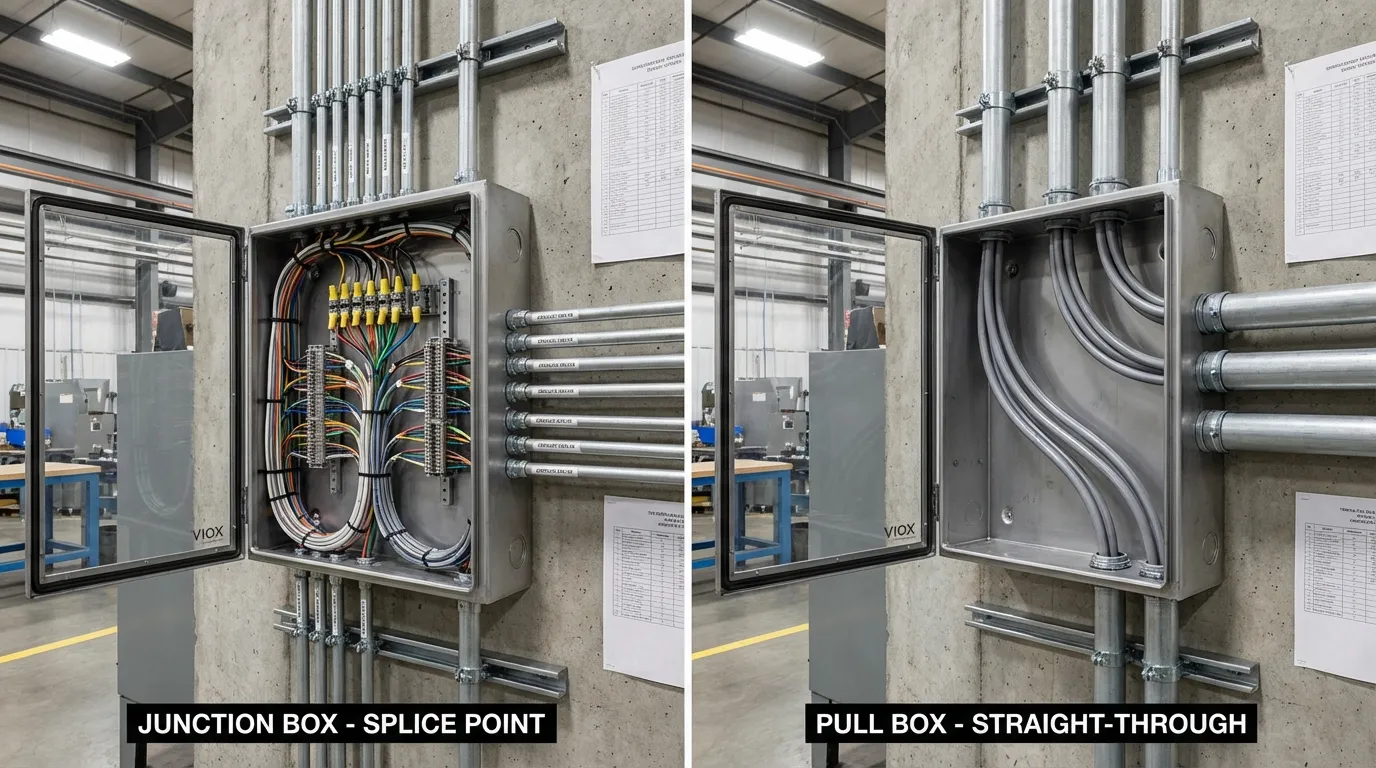
ប្រអប់ប្រសព្វបម្រើជាស្រោមការពារសម្រាប់ការភ្ជាប់ខ្សែ និងការបញ្ចប់—ចំណុចតភ្ជាប់ដែលសៀគ្វីបែកទៅព្រីភ្លើង កុងតាក់ និងឧបករណ៍។ ផ្ទុយទៅវិញ ប្រអប់ទាញដំណើរការជាចំណុចចូលប្រើក្នុងប្រព័ន្ធ Conduit ដែលជួយសម្រួលដល់ការដំឡើងខ្សែដោយមិនមានការតភ្ជាប់អចិន្ត្រៃយ៍។ ភាពខុសគ្នានេះប៉ះពាល់ដល់អ្វីៗគ្រប់យ៉ាង ពីការគណនាទំហំប្រអប់ រហូតដល់ការជ្រើសរើសសម្ភារៈ និងវិធីសាស្ត្រដំឡើង។.
សម្រាប់អ្នកម៉ៅការអគ្គិសនី អ្នកសាងសង់បន្ទះ និងអ្នកគ្រប់គ្រងគ្រឿងបរិក្ខារ ការជ្រើសរើសប្រភេទប្រអប់ខុសអាចបណ្តាលឱ្យមានការត្រួតពិនិត្យបរាជ័យ ការកែច្នៃឡើងវិញដែលមានតម្លៃថ្លៃ និងការសម្របសម្រួលសុចរិតភាពនៃប្រព័ន្ធ។ មគ្គុទ្ទេសក៍ដ៏ទូលំទូលាយនេះបញ្ជាក់អំពី ប្រអប់ទាញធៀបនឹងប្រអប់ប្រសព្វ ការជជែកវែកញែក ដោយគ្របដណ្តប់លើតម្រូវការ NEC ការគណនាទំហំ លក្ខណៈវិនិច្ឆ័យនៃការជ្រើសរើស និងការអនុវត្តល្អបំផុតនៃការដំឡើង ដើម្បីធានាថប្រព័ន្ធអគ្គិសនីរបស់អ្នកបំពេញតាមកូដ និងដំណើរការដោយភាពជឿជាក់។.
តើប្រអប់ប្រសព្វជាអ្វី?
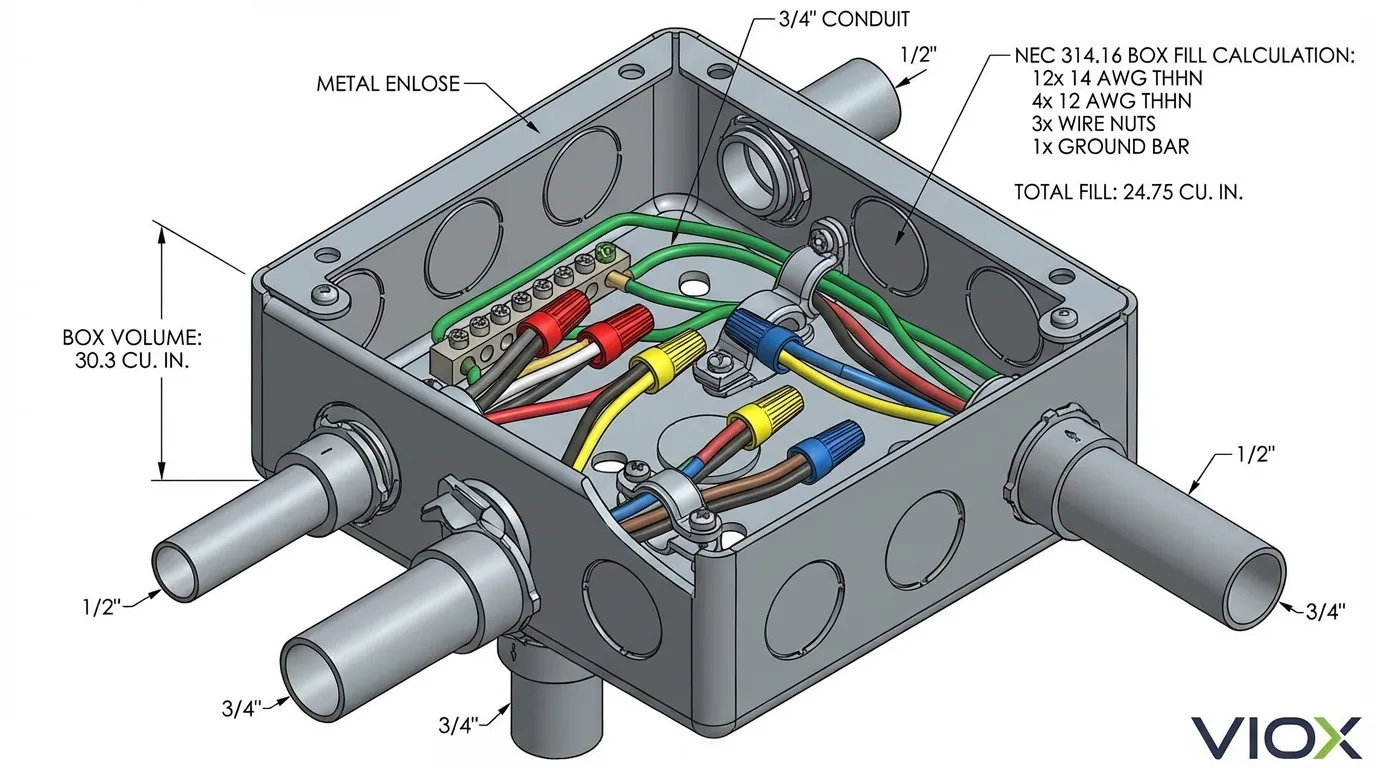
មួយ ប្រអប់ប្រសព្វ គឺជាស្រោមអគ្គិសនីដែលត្រូវបានរចនាឡើងដើម្បីផ្ទុក និងការពារការភ្ជាប់ខ្សែ ការបញ្ចប់ និងការតភ្ជាប់ដែលសៀគ្វីច្រើនជួបគ្នា។ គ្រប់គ្រងជាចម្បងដោយ NEC Article 314.16 ប្រអប់ប្រសព្វបម្រើជាមជ្ឈមណ្ឌលកណ្តាលសម្រាប់ការចែកចាយថាមពលអគ្គិសនីទៅកាន់បន្ទុកផ្សេងៗនៅទូទាំងអាគារ ឬកន្លែង។.
មុខងារបឋម
ប្រអប់ប្រសព្វអនុវត្តតួនាទីសំខាន់ៗជាច្រើននៅក្នុងប្រព័ន្ធអគ្គិសនី៖
- ការការពារការតភ្ជាប់៖ ភ្ជាប់ខ្សែដោយប្រើគ្រាប់ខ្សែ ប្លុកស្ថានីយ ឬឧបករណ៍ភ្ជាប់ដែលបានអនុម័តផ្សេងទៀត ការពារការប៉ះពាល់នឹងកត្តាបរិស្ថាន (សំណើម ធូលី ការខូចខាតរាងកាយ)។.
- ការចែកចាយសៀគ្វី៖ ផ្តល់នូវចំណុចកណ្តាលដែលសៀគ្វីចូលបែកទៅព្រីភ្លើង កុងតាក់ ឬឧបករណ៍ជាច្រើន។.
- ការចូលប្រើការថែទាំ៖ ផ្តល់នូវចំណុចដែលអាចចូលដំណើរការបានសម្រាប់ការដោះស្រាយបញ្ហា ការជួសជុល និងការកែប្រែប្រព័ន្ធដោយមិនចាំបាច់រុះរើជញ្ជាំង ឬពិដាន។.
- ការអនុលោមតាមច្បាប់៖ បំពេញតាមតម្រូវការ NEC 314.29 ដែលការភ្ជាប់ទាំងអស់ត្រូវតែព័ទ្ធជុំវិញក្នុងប្រអប់ដែលបានអនុម័តជាមួយនឹងគម្របដែលអាចដកចេញបាន។.
- ការការពារភ្លើង៖ មានសក្តានុពលនៃការឆាបឆេះ ឬកំដៅខ្លាំងនៅក្នុងស្រោមដែលមិនងាយឆេះ ការពារការរីករាលដាលនៃភ្លើង។.
លក្ខណៈបច្ចេកទេស
ប្រអប់ប្រសព្វត្រូវតែបំពេញតាមតម្រូវការ NEC ជាក់លាក់៖
- ការគណនាការបំពេញប្រអប់ (NEC 314.16)៖ បរិមាណត្រូវតែផ្ទុក conductors ឧបករណ៍ ឧបករណ៍ចាប់ និងឧបករណ៍ភ្ជាប់ទាំងអស់ដោយផ្អែកលើតម្រូវការអ៊ីញគូបក្នុងមួយទំហំ conductor ។.
- ភាពងាយស្រួល (NEC 314.29)៖ ត្រូវតែនៅតែអាចចូលដំណើរការបានដោយមិនចាំបាច់ដកចេញរចនាសម្ព័ន្ធអាគារ ឬការបញ្ចប់។.
- ការដាក់ដី (NEC 314.4)៖ ប្រអប់ដែកតម្រូវឱ្យមានការដាក់ដីត្រឹមត្រូវ; ប្រអប់ប្លាស្ទិកត្រូវតែមានបទប្បញ្ញត្តិដាក់ដីសម្រាប់ Conduits ដែក។.
- ការវាយតម្លៃបរិស្ថាន៖ ប្រអប់ក្នុងផ្ទះ (NEMA 1) ទីតាំងខាងក្រៅ/សើម (NEMA 3R, 4, 4X) ទីតាំងគ្រោះថ្នាក់ (NEMA 7, 9)។.
សម្រាប់ការណែនាំលម្អិតអំពីការជ្រើសរើសប្រអប់ប្រសព្វដែលសមស្រប សូមមើលទូលំទូលាយរបស់យើង មគ្គុទ្ទេសក៍ទំហំប្រអប់ប្រសព្វ និង ការយល់ដឹងអំពីប្រភេទប្រអប់ប្រសព្វអគ្គិសនី.
តើប្រអប់ទាញជាអ្វី?
មួយ ប្រអប់ទាញ គឺជាស្រោមអគ្គិសនីដែលដាក់ជាយុទ្ធសាស្ត្រនៅក្នុងប្រព័ន្ធ Conduit ដើម្បីជួយសម្រួលដល់ការដំឡើងខ្សែ កាត់បន្ថយភាពតានតឹងខ្សែ និងផ្តល់នូវចំណុចចូលប្រើសម្រាប់ការកែប្រែនាពេលអនាគត។ មិនដូចប្រអប់ប្រសព្វទេ ប្រអប់ទាញជាធម្មតាមិនមានការភ្ជាប់ខ្សែ ឬការតភ្ជាប់អចិន្ត្រៃយ៍ទេ—វាបម្រើទាំងស្រុងជា “កន្លែងឈប់សម្រាក” សម្រាប់ conductors ដែលធ្វើដំណើរឆ្លងកាត់ផ្លូវ Conduit ស្មុគស្មាញ ឬវែង។.
មុខងារបឋម
ប្រអប់ទាញដោះស្រាយបញ្ហាដំឡើងជាក់លាក់៖
- ជំនួយការដំឡើងខ្សែ៖ ផ្តល់នូវចំណុចចូលប្រើកម្រិតមធ្យមដែលអ្នកជំនាញខាងអគ្គិសនីអាចទាញខ្សែជាដំណាក់កាល ការពារភាពតានតឹងខ្លាំងដែលអាចធ្វើឱ្យខូចអ៊ីសូឡង់។.
- ការគ្រប់គ្រងកាំពត់៖ អនុញ្ញាតឱ្យពត់ខ្សែត្រឹមត្រូវនៅពេលផ្លាស់ប្តូរទិសដៅ Conduit ដោយរក្សាតម្រូវការកាំពត់អប្បបរមាដែលបានបញ្ជាក់របស់អ្នកផលិត។.
- ការចូលប្រើប្រព័ន្ធ Conduit៖ ជួយសម្រួលដល់ការបន្ថែមខ្សែ ការជំនួស ឬការធ្វើឱ្យប្រសើរឡើងប្រព័ន្ធនាពេលអនាគត ដោយមិនចាំបាច់ជំនួស Conduit ទេ។.
- ការកាត់បន្ថយភាពតានតឹង៖ បំបែកផ្លូវ Conduit វែងទៅជាផ្នែកដែលអាចគ្រប់គ្រងបាន ជាពិសេសសំខាន់សម្រាប់ conductors ធំ (4 AWG និងធំជាងនេះ) ឬការដំឡើងចំនួន conductor ខ្ពស់។.
- ការអនុលោមតាមច្បាប់៖ តម្រូវឱ្យមានកន្លែងដែលពត់ Conduit លើសពីដែនកំណត់ NEC (ពត់សរុបអតិបរមា 360° រវាងចំណុចទាញ)។.
លក្ខណៈបច្ចេកទេស
ប្រអប់ទាញត្រូវបានគ្រប់គ្រងដោយ NEC Article 314.28 ជាមួយនឹងតម្រូវការទំហំជាក់លាក់៖
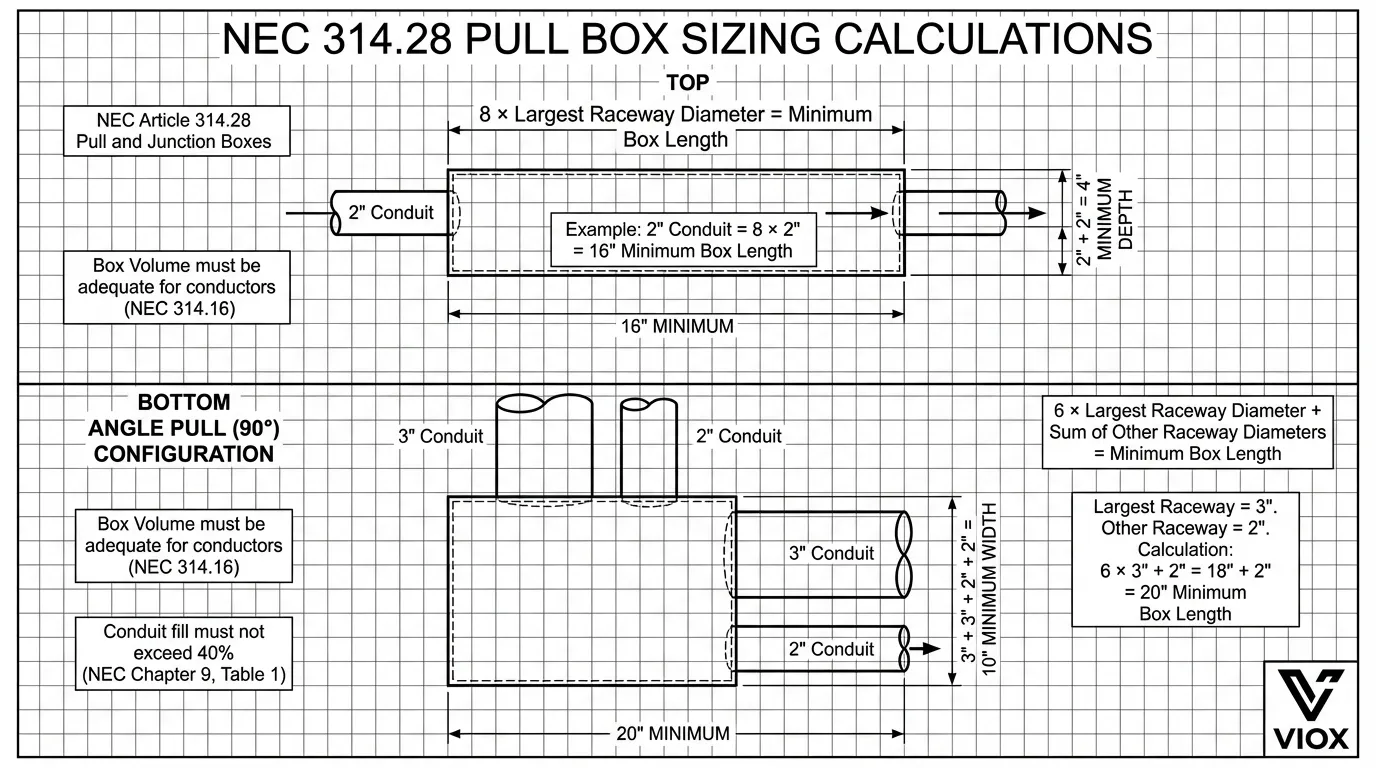
- ទំហំទាញត្រង់ (NEC 314.28(A)(1))៖ ប្រវែងអប្បបរមា = 8× ទំហំពាណិជ្ជកម្មនៃផ្លូវរត់ធំបំផុតដែលចូលក្នុងប្រអប់។.
- ទំហំទាញមុំ/U (NEC 314.28(A)(2))៖ ចម្ងាយពីច្រកចូលផ្លូវរត់ទៅជញ្ជាំងទល់មុខ = 6× ផ្លូវរត់ធំបំផុត + ផលបូកនៃផ្លូវរត់ផ្សេងទៀតនៅលើជញ្ជាំងតែមួយ។.
- គម្លាត Conductor៖ ចម្ងាយរវាងផ្លូវរត់ដែលមាន conductors ដូចគ្នា ≥ 6× ទំហំពាណិជ្ជកម្មនៃផ្លូវរត់ធំជាង។.
- គ្មានការគណនាការបំពេញប្រអប់៖ មិនដូចប្រអប់ប្រសព្វទេ ប្រអប់ទាញមិនតម្រូវឱ្យមានការគណនាអ៊ីញគូបទេ ព្រោះវាមិនមានការភ្ជាប់។.
សម្រាប់កម្មវិធីដែលត្រូវការមុខងារទាំងពីរ សូមពិគ្រោះជាមួយការណែនាំរបស់យើងអំពី ប្រអប់ប្រសព្វធៀបនឹងប្រអប់ទាញ ដើម្បីយល់ពីពេលដែលដំណោះស្រាយកូនកាត់គឺសមស្រប។.
ប្រអប់ទាញធៀបនឹងប្រអប់ប្រសព្វ៖ ភាពខុសគ្នាដ៏សំខាន់
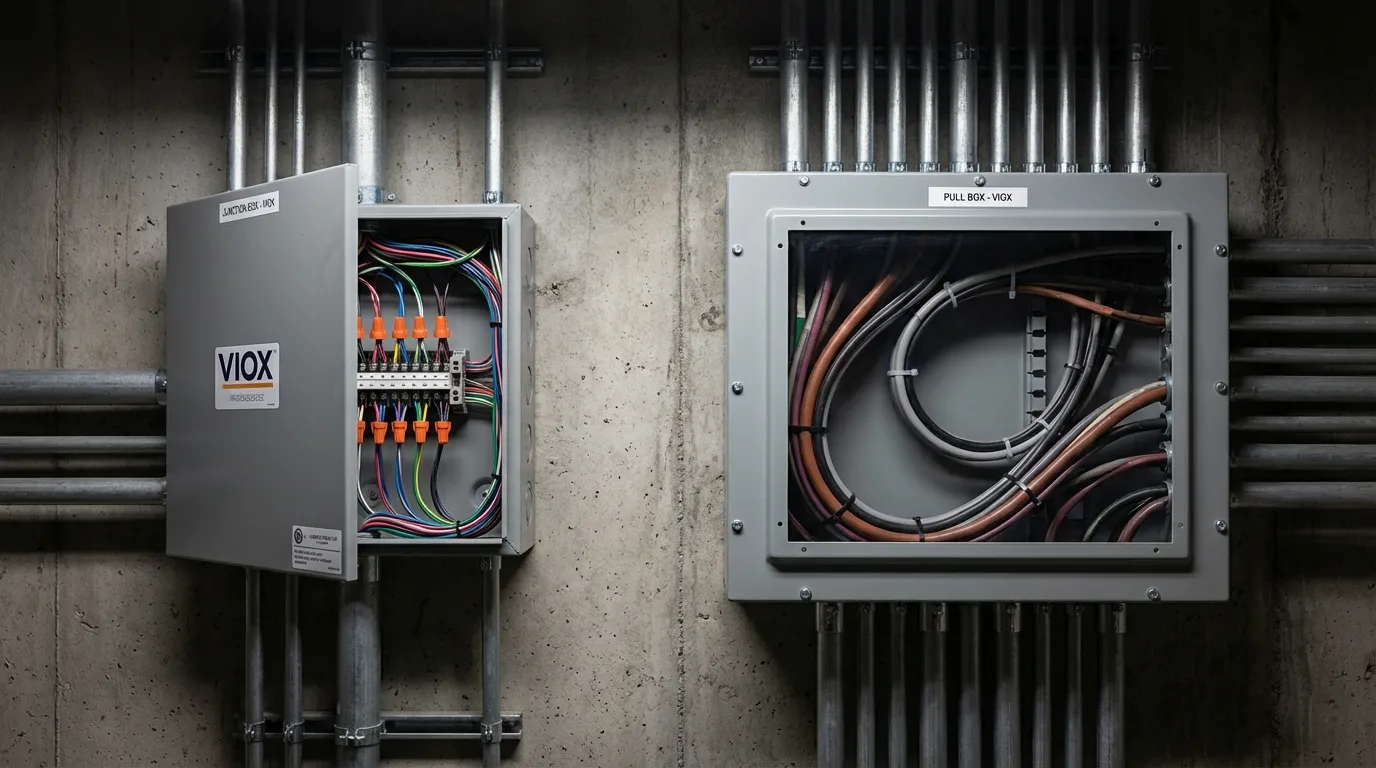
ការយល់ដឹងអំពី ប្រអប់ទាញធៀបនឹងប្រអប់ប្រសព្វ ភាពខុសគ្នាគឺមានសារៈសំខាន់សម្រាប់ការដំឡើងដែលអនុលោមតាមកូដ។ ខណៈពេលដែលទាំងពីរគឺជាស្រោមអគ្គិសនី មុខងារ វិធីសាស្ត្រកំណត់ទំហំ និងកម្មវិធីរបស់វាខុសគ្នាគួរឱ្យកត់សម្គាល់។.
| លក្ខណៈ | សព្វប្រអប់ | Pull Box |
|---|---|---|
| មុខងារបឋម | ផ្ទះភ្ជាប់ខ្សែ និងការតភ្ជាប់ | Facilitates wire pulling through conduits |
| មានការភ្ជាប់/ការតភ្ជាប់ | បាទ—ត្រូវការការភ្ជាប់អចិន្ត្រៃយ៍ | ទេ—ជាធម្មតាមិនមានការតភ្ជាប់ទេ (ទាញតាមតែប៉ុណ្ណោះ) |
| លក្ខខណ្ឌតម្រូវនៃក្រមសីលធម៌របស់ គ.ជ.ប | NEC 314.16 (ការគណនាបំពេញប្រអប់) | NEC 314.28 (ការកំណត់ទំហំដោយផ្អែកលើផ្លូវរត់) |
| វិធីសាស្ត្រកំណត់ទំហំ | ផ្អែកលើចំនួន conductor និងបរិមាណ (អ៊ីញគូប) | ផ្អែកលើទំហំផ្លូវរត់ (មេគុណ 8× ឬ 6×) |
| ជួរទំហំធម្មតា | 4″×4″ ទៅ 12″×12″ (លំនៅដ្ឋាន/ពាណិជ្ជកម្មស្រាល) | 12″×12″ ទៅ 36″×36″+ (ឧស្សាហកម្ម/conductor ធ្ងន់) |
| ទីតាំងដំឡើង | នៅចំណុចតភ្ជាប់ (ព្រីភ្លើង, ឧបករណ៍ប្តូរ, ឧបករណ៍) | តាមបណ្តោយផ្លូវ conduit (រៀងរាល់ 100 ហ្វីត ឬនៅកោង) |
| តម្រូវការចូលដំណើរការ | ត្រូវតែនៅតែអាចចូលដំណើរការបាន (NEC 314.29) | ត្រូវតែនៅតែអាចចូលដំណើរការបានសម្រាប់ការទាញខ្សែ |
| ជម្រើសសម្ភារៈ | ផ្លាស្ទិច ដែក អាលុយមីញ៉ូម ហ្វាយបឺក្លាស ដែកវណ្ណះ | ជាធម្មតាដែក ឬហ្វាយបឺក្លាសសម្រាប់ភាពធន់ |
| ចំណាយជួរ | $5-$50 (កម្មវិធីស្តង់ដារ) | $50-$500+ (អាស្រ័យលើទំហំ) |
| ពេលវេលាដំឡើង | 30-60 នាទី។ | 2-4 ម៉ោង (ទំហំធំ ការដំឡើងស្មុគស្មាញជាង) |
| តម្រូវការថែទាំ | ការត្រួតពិនិត្យតាមកាលកំណត់នៃការតភ្ជាប់ | អប្បបរមា—ជាចម្បងការផ្ទៀងផ្ទាត់ការចូលប្រើ |
| កម្មវិធីធម្មតា។ | ខ្សែភ្លើងលំនៅដ្ឋាន សៀគ្វីភ្លើង ការតភ្ជាប់ឧបករណ៍ | ប្រព័ន្ធ conduit ឧស្សាហកម្ម ការរត់ខ្សែវែង conductor ធ្ងន់ |
| តម្រូវការមូលដ្ឋាន | ប្រអប់ដែកត្រូវតែមាន grounding (NEC 314.4) | ប្រអប់ដែកត្រូវតែមាន grounding ប្រសិនបើប្រើជាផ្លូវ grounding ឧបករណ៍ |
| តម្រូវការគម្រប | ត្រូវតែមានគម្របដែលអាចដកចេញបាន (NEC 314.28(C)) | ត្រូវតែមានគម្របដែលអាចដកចេញបានសម្រាប់ការចូលប្រើ |
| ការការពារបរិស្ថាន | NEMA 1 (ក្នុងផ្ទះ) ទៅ NEMA 4X (ក្រៅផ្ទះ/ច្រេះ) | NEMA 3R ទៅ NEMA 4X (ជាញឹកញាប់ការដំឡើងក្រៅផ្ទះ) |
ភាពខុសគ្នាដ៏សំខាន់សម្រាប់អ្នកជំនាញ
ភាពខុសគ្នាជាមូលដ្ឋាន៖ ប្រអប់ប្រសព្វគឺសម្រាប់ការតភ្ជាប់; ប្រអប់ទាញគឺសម្រាប់ការចូលប្រើ។. ប្រសិនបើអ្នកកំពុងភ្ជាប់ខ្សែ អ្នកត្រូវការប្រអប់ប្រសព្វដែលមានទំហំតាម NEC 314.16។ ប្រសិនបើអ្នកកំពុងបញ្ជូន conductors តាមរយៈប្រព័ន្ធ conduit ដ៏ស្មុគស្មាញ អ្នកត្រូវការប្រអប់ទាញដែលមានទំហំតាម NEC 314.28។.
សម្រាប់ការណែនាំលម្អិតអំពីការជ្រើសរើសសម្ភារៈ សូមមើលរបស់យើង metal vs plastic junction boxes ការប្រៀបធៀប និង ប្រអប់ប្រសព្វដែលធន់នឹងអាកាសធាតុ ការណែនាំសម្រាប់កម្មវិធីក្រៅផ្ទះ។.
លក្ខខណ្ឌតម្រូវនៃក្រមសីលធម៌របស់ គ.ជ.ប
ត្រឹមត្រូវ។ ប្រអប់ទាញធៀបនឹងប្រអប់ប្រសព្វ ការជ្រើសរើសតម្រូវឱ្យមានការយល់ដឹងអំពីតម្រូវការ NEC ផ្សេងគ្នាសម្រាប់ប្រភេទស្រោមនីមួយៗ។ ការមិនអនុលោមតាមលទ្ធផលក្នុងការត្រួតពិនិត្យបរាជ័យ គ្រោះថ្នាក់សុវត្ថិភាព និងការកែឡើងវិញដែលមានតម្លៃថ្លៃ។.
តម្រូវការប្រអប់ប្រសព្វ (NEC 314.16)
ប្រអប់ប្រសព្វដែលមាន conductors 18 AWG ដល់ 6 AWG ត្រូវតែបំពេញតាមការគណនាបំពេញប្រអប់៖
រូបមន្តបំពេញប្រអប់៖
- conductor នីមួយៗ៖ បរិមាណយោងតាមតារាង 314.16(B)
- ឧបករណ៍នីមួយៗ (រន្ធ, ឧបករណ៍ប្តូរ)៖ 2× បរិមាណ conductor
- ឧបករណ៍ចាប់ខ្សែនីមួយៗ៖ 1× បរិមាណ conductor
- conductor grounding ឧបករណ៍នីមួយៗ៖ 1× បរិមាណ conductor (រាប់ម្តងដោយមិនគិតពីចំនួន)
- សសរ/ហ៊ីកគីឧបករណ៍នីមួយៗ៖ 1× បរិមាណ conductor
ការគណនាឧទាហរណ៍៖
ប្រអប់ប្រសព្វមាន៖
- 6× #12 AWG conductors (6 × 2.25 cu.in. = 13.5 cu.in.)
- 1× ឧបករណ៍ (2 × 2.25 cu.in. = 4.5 cu.in.)
- 1× ឧបករណ៍ចាប់ខ្សែ (1 × 2.25 cu.in. = 2.25 cu.in.)
- 1× grounding ឧបករណ៍ (1 × 2.25 cu.in. = 2.25 cu.in.)
- សរុបរួមដែលត្រូវការ៖ 22.5 អ៊ីញគូប
- ប្រអប់អប្បបរមា៖ 4″×4″×2⅛” (30.3 cu.in.) ✓ អនុលោមតាម
តម្រូវការប្រអប់ទាញ (NEC 314.28)
ប្រអប់ទាញដែលមាន conductors 4 AWG និងធំជាងនេះធ្វើតាមការកំណត់ទំហំដោយផ្អែកលើផ្លូវរត់៖
ទំហំទាញត្រង់ (NEC 314.28(A)(1))៖
- ប្រវែងអប្បបរមា = 8× ទំហំពាណិជ្ជកម្មនៃផ្លូវរត់ធំបំផុត
- ឧទាហរណ៍៖ conduit 2″ តម្រូវឱ្យមានប្រវែងប្រអប់អប្បបរមា 16″ (2″ × 8 = 16″)
ទំហំទាញមុំ/U (NEC 314.28(A)(2))៖
- ចម្ងាយពីច្រកចូលផ្លូវរត់ទៅជញ្ជាំងទល់មុខ = 6× ផ្លូវរត់ធំបំផុត + ផលបូកនៃផ្លូវរត់ផ្សេងទៀតនៅលើជញ្ជាំងតែមួយ
- ឧទាហរណ៍៖ conduit មួយ 2″ + conduits ពីរ 1″ នៅលើជញ្ជាំងតែមួយ៖
(6 × 2″) + (1″ + 1″) = 12″ + 2″ = 14″ អប្បបរមា
គម្លាត Conductor៖
- ចម្ងាយរវាងផ្លូវរត់ដែលមាន conductors ដូចគ្នា ≥ 6× ទំហំពាណិជ្ជកម្មនៃផ្លូវរត់ធំជាង
- ឧទាហរណ៍៖ បំពង់ ២អ៊ីញពីរដែលមាន conductors ដូចគ្នាត្រូវការចន្លោះទំនេរអប្បបរមា ១២អ៊ីញ (២អ៊ីញ × ៦ = ១២អ៊ីញ)
តម្រូវការភាពងាយស្រួល (NEC 314.29)
ទាំងប្រអប់ប្រសព្វ និងប្រអប់ទាញត្រូវតែ៖
- នៅតែអាចចូលទៅដល់បានដោយមិនចាំបាច់ដកចេញនូវរចនាសម្ព័ន្ធ ឬការបញ្ចប់នៃអាគារ
- មានគម្របដែលអាចដកចេញបានសម្រាប់ការចូលទៅថែទាំ
- ត្រូវបានដាក់ស្លាកឱ្យបានត្រឹមត្រូវសម្រាប់ការកំណត់អត្តសញ្ញាណ
- មិនត្រូវលាក់ដោយសម្ភារៈសំណង់ (ជញ្ជាំងស្ងួត ក្បឿងពិដាន។ល។)
សម្រាប់គោលការណ៍ណែនាំអំពីការអនុលោមតាម NEC ដ៏ទូលំទូលាយ សូមមើល លេខកូដ NEC សម្រាប់ប្រអប់ប្រសព្វរបស់យើង អត្ថបទ។.
ពេលណាត្រូវប្រើប្រអប់ប្រសព្វ
ជ្រើសរើស ប្រអប់ប្រសព្វ នៅពេលការដំឡើងរបស់អ្នកត្រូវការការភ្ជាប់ខ្សែ ការបញ្ចប់ ឬការចែកចាយសៀគ្វី៖
កម្មវិធីលំនៅដ្ឋាន
- ការចែកចាយសៀគ្វីសាខា៖ កន្លែងដែលសៀគ្វីមេបំបែកទៅព្រីភ្លើង ឬកុងតាក់ច្រើន
- សៀគ្វីបំភ្លឺ៖ ការភ្ជាប់ឧបករណ៍បំភ្លឺច្រើនទៅសៀគ្វីតែមួយ
- ការតភ្ជាប់ឧបករណ៍ប្រើប្រាស់៖ ការបញ្ចប់ឧបករណ៍ប្រើប្រាស់ដែលបានតភ្ជាប់ខ្សែរឹង (ម៉ាស៊ីនលាងចាន ឧបករណ៍កិនសំរាម HVAC)
- ផ្នែកបន្ថែមបន្ទះសេវាកម្ម៖ ការបន្ថែមសៀគ្វីនៅក្នុងចន្លោះដែលបានបញ្ចប់ដោយគ្មានការចូលប្រើបន្ទះ
កម្មវិធីពាណិជ្ជកម្ម/ឧស្សាហកម្ម
- ការបញ្ចប់ឧបករណ៍៖ សៀគ្វីគ្រប់គ្រងម៉ូទ័រ ការតភ្ជាប់ VFD ចំណុចប្រទាក់បន្ទះគ្រប់គ្រង
- ខ្សែឧបករណ៍វាស់ស្ទង់៖ ការតភ្ជាប់ឧបករណ៍ចាប់សញ្ញា ចំណុចរួមបញ្ចូលប្រព័ន្ធគ្រប់គ្រង
- ប្រព័ន្ធសង្គ្រោះបន្ទាន់: សញ្ញាអាសន្នអគ្គិភ័យ ភ្លើងសញ្ញាគ្រោះអាសន្ន សៀគ្វីសញ្ញាចេញ
- ទិន្នន័យ/ទំនាក់ទំនង៖ ការរួមបញ្ចូលប្រព័ន្ធវ៉ុលទាបជាមួយសៀគ្វីថាមពល
សេណារីយ៉ូដែលបានកំណត់ដោយលេខកូដ
- ការភ្ជាប់ខ្សែទាំងអស់ (NEC 300.15)៖ រាល់ការភ្ជាប់ទាំងអស់ត្រូវតែព័ទ្ធជុំវិញក្នុងប្រអប់ដែលបានអនុម័ត
- ការដំឡើងឧបករណ៍៖ រន្ធ កុងតាក់ និងឧបករណ៍ត្រូវការប្រអប់ត្រឹមត្រូវ
- ការតភ្ជាប់ឧបករណ៍ចាប់សញ្ញា៖ ឧបករណ៍ចាប់សញ្ញាដែលបានម៉ោនលើពិដាន/ជញ្ជាំងត្រូវការការគាំទ្រប្រអប់ប្រសព្វ
- ការតភ្ជាប់ដែលអាចចូលដំណើរការបាន៖ កន្លែងដែលការកែប្រែនាពេលអនាគតត្រូវបានរំពឹងទុក
សម្រាប់លក្ខណៈវិនិច្ឆ័យជ្រើសរើសប្រអប់ប្រសព្វជាក់លាក់ សូមពិគ្រោះជាមួយ មគ្គុទ្ទេសក៍ជ្រើសរើសប្រអប់ប្រសព្វ និង ប្រអប់ស្ថានីយទល់នឹងប្រអប់ប្រសព្វ ការប្រៀបធៀប។.
ពេលណាត្រូវប្រើប្រអប់ទាញ
ជ្រើសរើស ប្រអប់ទាញ នៅពេលដែលប្រព័ន្ធបំពង់របស់អ្នកត្រូវការការចូលប្រើការដំឡើងខ្សែដោយគ្មានការតភ្ជាប់អចិន្ត្រៃយ៍៖
ការរត់បំពង់វែង
- កម្រិតចម្ងាយ៖ ការរត់លើសពី ១០០ ហ្វីតត្រូវការចំណុចទាញកម្រិតមធ្យម
- Conductors ធ្ងន់៖ ខ្សែ 4 AWG និងខ្សែធំជាងនេះត្រូវការការធូរស្រាលភាពតានតឹងរៀងរាល់ 75-100 ហ្វីត
- ចំនួន Conductors ខ្ពស់៖ ខ្សែច្រើនក្នុងបំពង់តែមួយបង្កើនភាពតានតឹងនៃការទាញ
ពត់បំពង់ច្រើន
- ច្បាប់ NEC 360°៖ ពត់សរុបអតិបរមា 360° រវាងចំណុចទាញ (ជាធម្មតា 4× 90° ពត់)
- ការការពារកាំពត់៖ ធានាថាខ្សែរក្សាកាំពត់អប្បបរមារបស់ក្រុមហ៊ុនផលិត
- ការបញ្ជូនស្មុគស្មាញ៖ កន្លែងដែលផ្លូវបំពង់ផ្លាស់ប្តូរទិសដៅច្រើនដង
កម្មវិធីឧស្សាហកម្ម/ធ្ងន់
- សៀគ្វី Feeder៖ ការដំឡើង conductor ធំ (250 MCM, 500 MCM, 750 MCM)
- ប្រព័ន្ធបំពង់ក្រោមដី៖ ការផ្លាស់ប្តូររវាងការដំឡើងក្រោមដី និងលើដី
- ការផ្លាស់ប្តូរថាសខ្សែកាប៖ កន្លែងដែលខ្សែផ្ទេរពីថាសទៅប្រព័ន្ធបំពង់
- ការពង្រីកអនាគត៖ រំពឹងថាសៀគ្វីបន្ថែមនៅក្នុងហេដ្ឋារចនាសម្ព័ន្ធបំពង់ដែលមានស្រាប់
សេណារីយ៉ូដំឡើងជាក់លាក់
- បំពង់បញ្ឈរឡើងលើ: អគារពហុជាន់ដែលត្រូវការចំណុចចូលកណ្តាល
- បំពង់ខ្សែកាបនៅខាងក្រៅ: ការដំឡើងដែលប៉ះពាល់នឹងអាកាសធាតុដែលត្រូវការការចូលប្រើតាមកាលកំណត់
- ទីតាំងគ្រោះថ្នាក់៖ កន្លែងដែលការផ្សាភ្ជាប់បំពង់ខ្សែកាបតម្រូវឱ្យមានចំណុចប្រសព្វដែលអាចចូលដំណើរការបាន
- ប្រព័ន្ធវ៉ុលខ្ពស់៖ ការដំឡើងលើសពី 600V ដែលត្រូវការការចូលប្រើឯកទេស (NEC 314.71)
សម្រាប់ការប្រើប្រាស់ខាងក្រៅ សូមពិនិត្យមើលរបស់យើង ប្រអប់ប្រសព្វដែលធន់នឹងអាកាសធាតុ និង ប្រអប់ប្រសព្វការពារការផ្ទុះ ធៀបនឹង ប្រអប់ប្រសព្វស្តង់ដារ មគ្គុទ្ទេសក៍។.
តម្រូវការទំហំ និងការគណនា
ទំហំត្រឹមត្រូវគឺមានសារៈសំខាន់សម្រាប់ ប្រអប់ទាញធៀបនឹងប្រអប់ប្រសព្វ ការដំឡើង។ ទំហំមិនត្រឹមត្រូវនាំឱ្យមានការរំលោភលើ NEC ការខូចខាត conductor និងការបរាជ័យក្នុងការដំឡើង។.
ឧទាហរណ៍ទំហំប្រអប់ប្រសព្វ
សេណារីយ៉ូ៖ ការដំឡើងប្រអប់ប្រសព្វសម្រាប់សៀគ្វីភ្លើងដែលមានដូចខាងក្រោម:
- 4× #14 AWG conductors ក្តៅ
- 4× #14 AWG conductors អព្យាក្រឹត
- 2× #14 AWG ខ្សែដីឧបករណ៍
- 2× ឃ្លីបខ្សែ
- 1× ស្ទូដសម្រាប់តោងឧបករណ៍
ការគណនា៖
- Conductors: 8× #14 AWG = 8 × 2.0 cu.in. = 16.0 cu.in.
- ខ្សែដីឧបករណ៍: 1× 2.0 cu.in. = 2.0 cu.in. (រាប់ម្តង)
- ឃ្លីបខ្សែ: 2× 2.0 cu.in. = 4.0 cu.in.
- ស្ទូដសម្រាប់តោងឧបករណ៍: 1× 2.0 cu.in. = 2.0 cu.in.
- សរុប: 24.0 អ៊ីញគូប
ការជ្រើសរើសប្រអប់: ប្រអប់រាងប្រាំបីជ្រុង 4″×4″×2⅛” (30.3 cu.in.) ✓ ស្របតាមស្តង់ដារ
ឧទាហរណ៍ទំហំប្រអប់ទាញ (ទាញត្រង់)
សេណារីយ៉ូ៖ ការដំឡើងប្រអប់ទាញសម្រាប់ការរត់បំពង់ត្រង់ជាមួយ:
- បំពង់ដែករឹង 3″ មួយ
- Conductors: 500 MCM THHN (សមមូល 4 AWG)
ការគណនា៖
- ប្រវែងអប្បបរមា = 8× រន្ធខ្សែធំបំផុត
- 8 × 3″ = 24″
- វិមាត្រប្រអប់អប្បបរមា: ប្រវែង 24″
ការជ្រើសរើសប្រអប់: ប្រអប់ទាញ 24″×12″×8″ ✓ ស្របតាមស្តង់ដារ
ឧទាហរណ៍ទំហំប្រអប់ទាញ (ទាញមុំ)
សេណារីយ៉ូ៖ ការដំឡើងប្រអប់ទាញជាមួយនឹងការទាញមុំ 90°:
- បំពង់ 2″ មួយចូលផ្នែកខាងឆ្វេង
- បំពង់ 1″ ពីរចូលផ្នែកខាងឆ្វេង
- បំពង់ 2″ មួយចេញពីបាត
ការគណនា (ជញ្ជាំងខាងឆ្វេងទៅជញ្ជាំងខាងស្តាំ):
- 6× រន្ធខ្សែធំបំផុត = 6 × 2″ = 12″
- ផលបូកនៃរន្ធខ្សែផ្សេងទៀត = 1″ + 1″ = 2″
- វិមាត្រអប្បបរមា: 12″ + 2″ = 14″
ការគណនា (ជញ្ជាំងខាងលើទៅជញ្ជាំងខាងក្រោម):
- 6× រន្ធខ្សែធំបំផុត = 6 × 2″ = 12″
- វិមាត្រអប្បបរមា: 12″
ការជ្រើសរើសប្រអប់: ប្រអប់ទាញ 16″×14″×8″ ✓ ស្របតាមស្តង់ដារ (បង្គត់ឡើងលើទំហំស្តង់ដារ)
សម្រាប់ការដំឡើងស្មុគស្មាញ សូមប្រើរបស់យើង ម៉ាស៊ីនគិតទំហំប្រអប់ប្រសព្វ សម្រាប់ការគណនាដោយស្វ័យប្រវត្តិ។.
ការដំឡើង ការអនុវត្តល្អបំផុត
ការដំឡើងប្រអប់ប្រសព្វ
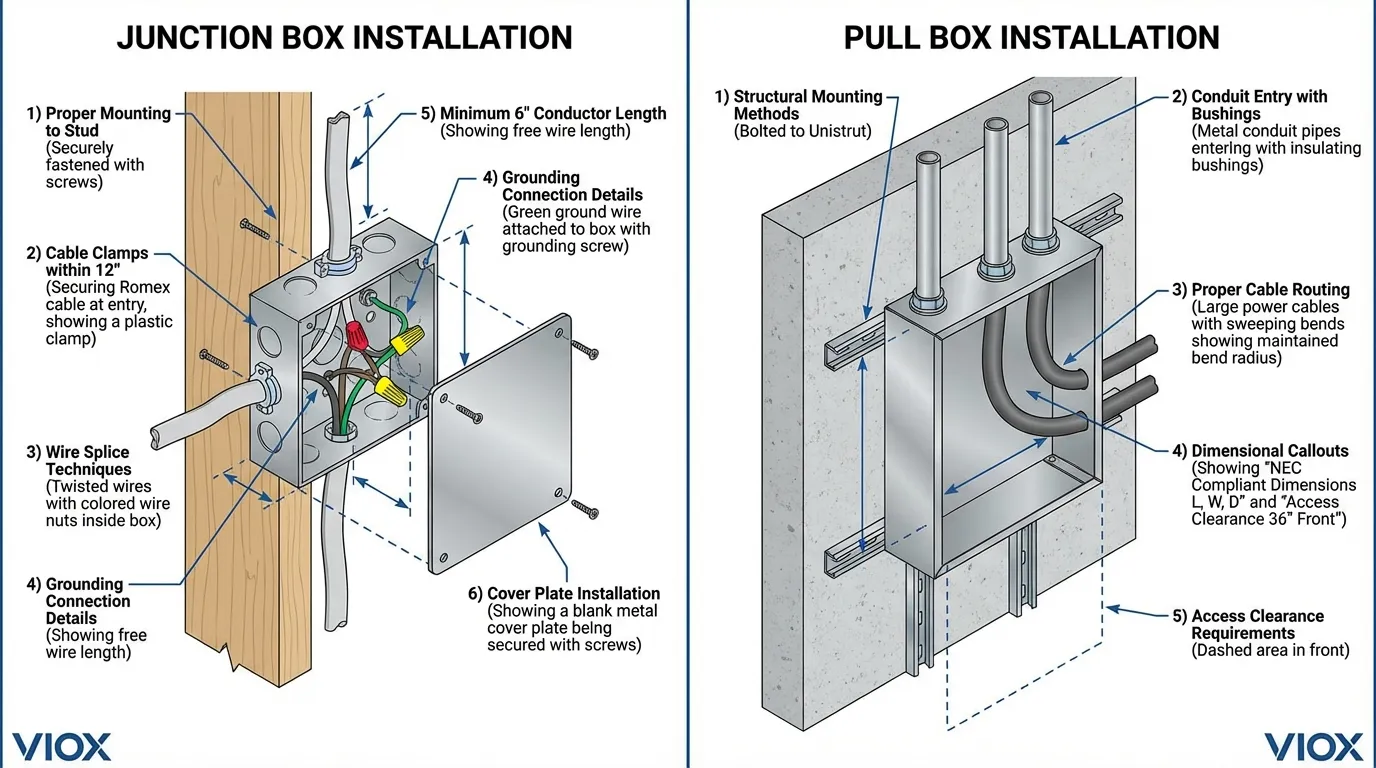
តម្រូវការដំឡើង៖
- ធានាសុវត្ថិភាពទៅនឹងសមាជិករចនាសម្ព័ន្ធ (ស្ទូដ ជើងទ្រ គ្រឿងទ្រទ្រង់ពិដាន)
- ប្រើឧបករណ៍ភ្ជាប់ដែលសមស្របសម្រាប់ទម្ងន់ប្រអប់ និងបន្ទុក conductor
- រក្សាជម្រៅឱ្យបានត្រឹមត្រូវ: ផ្ទៃប្រអប់ស្មើជាមួយនឹងផ្ទៃជញ្ជាំងដែលបានបញ្ចប់
- ទ្រទ្រង់ដោយឯករាជ្យ—កុំពឹងផ្អែកលើបំពង់ខ្សែកាបសម្រាប់ការទ្រទ្រង់
ការអនុវត្តខ្សែភ្លើង៖
- បក conductors ទៅប្រវែងអប្បបរមា (⅝” សម្រាប់មួកខ្សែ)
- ប្រើឧបករណ៍ភ្ជាប់ខ្សែដែលមានទំហំសមស្រប (ធ្វើតាមការវាយតម្លៃរបស់អ្នកផលិត)
- រក្សាការដាក់កូដពណ៌: ខ្មៅ/ក្រហម (ក្តៅ), ស (អព្យាក្រឹត), បៃតង/ទទេ (ដី)
- ធានាសុវត្ថិភាពខ្សែក្នុងរង្វង់ 12″ នៃការចូលប្រអប់ (NEC 314.17(C))
- ទុកប្រវែង conductor អប្បបរមា 6″ នៅក្នុងប្រអប់សម្រាប់ការតភ្ជាប់
ការដាក់ដី៖
- ចងប្រអប់ដែកទៅនឹងប្រព័ន្ធខ្សែដីឧបករណ៍
- ប្រើវីសដី (ខ្សែស្រឡាយ 10-32) ឬឃ្លីបដី
- ធានាផ្លូវខ្សែដីបន្តតាមរយៈការតភ្ជាប់ទាំងអស់
ការដំឡើងប្រអប់ទាញ
ការរៀបចំផែនការទីតាំង:
- ដំឡើងមុនពេលបំពង់កោងលើសពី 360° សរុប
- ដាក់ទីតាំងនៅកន្លែងដែលអាចចូលទៅដល់បាន (មិននៅពីលើពិដាន ក្រោយជញ្ជាំង)
- ពិចារណាលើតម្រូវការចូលទៅកាន់នាពេលអនាគត
- ដំឡើងនៅកម្ពស់ធ្វើការប្រកបដោយផាសុកភាព (កណ្តាល 48″-60″ សម្រាប់ប្រអប់ដែលបានម៉ោនលើជញ្ជាំង)
តម្រូវការដំឡើង៖
- ប្រើប្រាស់ទ្រនាប់ធ្ងន់សម្រាប់ប្រអប់ធំៗ (ទំហំ 24″+)
- ភ្ជាប់ទៅនឹងសមាជិករចនាសម្ព័ន្ធដែលអាចទ្រទ្រង់ទម្ងន់ប្រអប់ + បន្ទុក conductor
- ផ្តល់ការបោសសំអាតគ្រប់គ្រាន់សម្រាប់ការដកគម្របចេញ និងការទាញខ្សែ
- ធានាការដំឡើងកម្រិតសម្រាប់ការតម្រឹមបំពង់ត្រឹមត្រូវ
ច្រកចូលបំពង់៖
- ប្រើប្រាស់ឧបករណ៍ភ្ជាប់បំពង់ត្រឹមត្រូវ (locknuts, bushings, hubs)
- រក្សាការតម្រឹមបំពង់ដើម្បីការពារការចង conductor
- ដំឡើង bushings នៅលើច្រកចូលបំពង់ទាំងអស់ដើម្បីការពារអ៊ីសូឡង់ conductor
- បិទប្រអប់ខាងក្រៅជាមួយ gaskets ដែលសមស្រប (NEMA 3R, 4, 4X)
សម្រាប់នីតិវិធីដំឡើងលម្អិត សូមមើលរបស់យើង របៀបដំឡើងប្រអប់ប្រសព្វ មគ្គុទ្ទេសក៍ និង ប្រអប់ប្រសព្វ vs ប្រអប់រួម ការប្រៀបធៀប។.
កំហុសទូទៅដើម្បីជៀស
កំហុសប្រអប់ប្រសព្វ
ប្រអប់ទំហំតូច៖
- បញ្ហា៖ សមត្ថភាពគូបអ៊ីញមិនគ្រប់គ្រាន់សម្រាប់ចំនួន conductor
- ផលវិបាក៖ កំដៅខ្លាំង ការខូចខាត conductor ការរំលោភលើ NEC
- ដំណោះស្រាយ៖ តែងតែគណនាការបំពេញប្រអប់ យោងតាម NEC 314.16 មុនពេលដំឡើង
ការដាក់ដីមិនត្រឹមត្រូវ៖
- បញ្ហា៖ ប្រអប់ដែកមិនត្រូវបានភ្ជាប់ទៅប្រព័ន្ធដាក់ដីឧបករណ៍
- ផលវិបាក៖ គ្រោះថ្នាក់ឆក់ ការរំលោភលើកូដ
- ដំណោះស្រាយ៖ ប្រើវីស ឬឃ្លីបដាក់ដីនៅលើប្រអប់ដែកទាំងអស់
ប្រអប់លាក់៖
- បញ្ហា៖ ប្រអប់លាក់នៅពីក្រោយជញ្ជាំងស្ងួត ក្បឿងពិដាន ឬការបញ្ចប់
- ផលវិបាក៖ ការរំលោភលើ NEC 314.29 បញ្ហាចូលប្រើប្រាស់ថែទាំ
- ដំណោះស្រាយ៖ ធានាថាប្រអប់ទាំងអស់នៅតែអាចចូលទៅដល់បានជាមួយនឹងគម្របដែលអាចដកចេញបាន
ការគាំទ្រមិនគ្រប់គ្រាន់៖
- បញ្ហា៖ ប្រអប់ត្រូវបានគាំទ្រដោយបំពង់ ឬខ្សែតែប៉ុណ្ណោះ
- ផលវិបាក៖ ការខូចខាតរាងកាយ ការបរាជ័យនៃការតភ្ជាប់
- ដំណោះស្រាយ៖ ដំឡើងប្រអប់ដោយឯករាជ្យទៅនឹងសមាជិករចនាសម្ព័ន្ធ
កំហុសប្រអប់ទាញ
ការគណនាទំហំមិនត្រឹមត្រូវ៖
- បញ្ហា៖ ការប្រើប្រាស់ការគណនាប្រអប់ប្រសព្វ (314.16) សម្រាប់ប្រអប់ទាញ
- ផលវិបាក៖ ប្រអប់ទំហំតូច ការខូចខាត conductor កំឡុងពេលទាញ
- ដំណោះស្រាយ៖ អនុវត្តទំហំដែលផ្អែកលើ raceway NEC 314.28 (មេគុណ 8× ឬ 6×)
ការបោសសំអាតការចូលប្រើមិនគ្រប់គ្រាន់៖
- បញ្ហា៖ ប្រអប់ដែលបានដំឡើងនៅក្នុងចន្លោះតូចចង្អៀតដោយគ្មានបន្ទប់ទាញ
- ផលវិបាក៖ ការដំឡើងពិបាក ការខូចខាត conductor
- ដំណោះស្រាយ៖ ផ្តល់ការបោសសំអាតអប្បបរមា 36″ នៅពីមុខប្រអប់សម្រាប់ការប្រតិបត្តិការទាញខ្សែ
គម្លាត conductor បាត់៖
- បញ្ហា៖ Raceways ជាមួយ conductors ដូចគ្នាជិតពេក
- ផលវិបាក៖ ការរំលោភលើ NEC 314.28(A)(2) ការបញ្ជូនខ្សែពិបាក
- ដំណោះស្រាយ៖ រក្សាគម្លាត raceway 6× រវាងច្រកចូលជាមួយ conductors ដូចគ្នា
ការផ្សាភ្ជាប់មិនត្រឹមត្រូវ៖
- បញ្ហា៖ ប្រអប់ខាងក្រៅដោយគ្មាន gaskets ឬការផ្សាភ្ជាប់ត្រឹមត្រូវ
- ផលវិបាក៖ ការជ្រៀតចូលទឹក ការ corrosion ការបរាជ័យប្រព័ន្ធ
- ដំណោះស្រាយ៖ ប្រើប្រអប់ដែលបានវាយតម្លៃ NEMA ជាមួយ gaskets ដែលសមស្របសម្រាប់បរិស្ថាន
មគ្គុទ្ទេសក៍ជ្រើសរើសសម្ភារៈ
ការជ្រើសរើសសម្ភារៈដែលសមស្របសម្រាប់ ប្រអប់ទាញធៀបនឹងប្រអប់ប្រសព្វ កម្មវិធីអាស្រ័យលើលក្ខខណ្ឌបរិស្ថាន ប្រភេទ conductor និងតម្រូវការដំឡើង។.
| សម្ភារៈ | គុណសម្បត្តិ | គុណវិបត្តិ | កម្មវិធីល្អបំផុត | ចំណាយជួរ |
|---|---|---|---|---|
| PVC/ផ្លាស្ទិច | ទំងន់ស្រាល ធន់នឹង corrosion មិន conductive តម្លៃទាប | ភាពធន់នឹងផលប៉ះពាល់ទាប កម្រិតសីតុណ្ហភាព (អតិបរមា 60°C) ការរិចរិល UV | លំនៅដ្ឋានក្នុងផ្ទះ ពាណិជ្ជកម្មស្រាល ប្រព័ន្ធបំពង់មិនមែនលោហធាតុ | $5-$25 |
| ដែក (លាបពណ៌) | កម្លាំងខ្ពស់ ធន់នឹងផលប៉ះពាល់ សន្សំសំចៃ អាចរកបានយ៉ាងងាយស្រួល | Corrosion នៅក្នុងបរិស្ថានសើម តម្រូវឱ្យមានការដាក់ដី | ពាណិជ្ជកម្ម/ឧស្សាហកម្មក្នុងផ្ទះ ទីតាំងស្ងួត កម្មវិធីស្តង់ដារ | $15-$75 |
| ដែក Galvanized | ធន់នឹង corrosion កម្លាំងខ្ពស់ ប្រើប្រាស់បានយូរ | ទំងន់ធ្ងន់ជាង តម្លៃខ្ពស់ជាងដែកលាបពណ៌ | ការដំឡើងនៅខាងក្រៅទីតាំងសើមបរិស្ថានដែលច្រេះ | $25-$150 |
| ដែកអ៊ីណុក (304/316) | ធន់នឹងការច្រេះខ្ពស់ធន់នឹងសារធាតុគីមីអាយុកាលប្រើប្រាស់បានយូរ | តម្លៃខ្ពស់ការផលិតឯកទេស | បរិស្ថានសមុទ្ររោងចក្រគីមីកែច្នៃអាហារការដំឡើងនៅតាមឆ្នេរសមុទ្រ | $100-$500+ |
| អាលុយមីញ៉ូម | ទំងន់ស្រាលធន់នឹងការច្រេះមិនមានមេដែកងាយស្រួលក្នុងការផលិត | កម្លាំងទាបជាងដែកការច្រេះ galvanic ជាមួយលោហៈផ្សេងគ្នា | កម្មវិធីដែលងាយនឹងទម្ងន់តម្រូវការមិនមែនជាមេដែកការប្រើប្រាស់ក្រៅ | $50-$200 |
| សរសៃកញ្ចក់ (FRP) | ធន់នឹងការច្រេះល្អឥតខ្ចោះទំងន់ស្រាលមិនដំណើរការកាំរស្មីយូវី | តម្លៃខ្ពស់ភាពធន់នឹងផលប៉ះពាល់មានកំណត់ការតំឡើងឯកទេស | រោងចក្រគីមីការព្យាបាលទឹកសំណល់បរិស្ថានច្រេះខ្លាំង | $75-$300 |
| ដែកខាស | ភាពធន់ខ្លាំងធន់នឹងផលប៉ះពាល់ធន់នឹងភ្លើងអាយុកាលប្រើប្រាស់បានយូរ | ធ្ងន់ណាស់ការតំឡើងពិបាកតម្លៃខ្ពស់ | ទីតាំងគ្រោះថ្នាក់តម្រូវការការពារការផ្ទុះឧស្សាហកម្មធុនធ្ងន់ | $150-$600+ |
ការជ្រើសរើសចំណាត់ថ្នាក់បរិស្ថាន (NEMA)
- NEMA 1៖ ទីតាំងស្ងួតក្នុងផ្ទះ (ប្រអប់ប្រសព្វស្តង់ដារ)
- NEMA 3R៖ ខាងក្រៅធន់នឹងភ្លៀង (ប្រអប់ទាញភាគច្រើននៅខាងក្រៅ)
- NEMA 4 / 4X: ខាងក្រៅជ្រាបទឹកធន់នឹងការច្រេះ (សមុទ្រគីមី)
- NEMA 12: ក្នុងផ្ទះធន់នឹងធូលីធន់នឹងដំណក់ទឹក (បរិស្ថានឧស្សាហកម្ម)
- NEMA 7/9: ទីតាំងគ្រោះថ្នាក់ការពារការផ្ទុះ (ថ្នាក់ទី I, II, III)
សម្រាប់ការប្រៀបធៀបសម្ភារៈលម្អិតសូមមើលរបស់យើង ដែកអ៊ីណុកទល់នឹងប្រអប់ប្រសព្វអាលុយមីញ៉ូម មគ្គុទ្ទេសក៍ និង ការជ្រើសរើសសម្ភារៈស្រោមអគ្គិសនី.
ការប្រៀបធៀបថ្លៃដើមនិងការវិភាគ ROI
ស្វែងយល់ពីថ្លៃដើមសរុបនៃភាពជាម្ចាស់សម្រាប់ ប្រអប់ទាញធៀបនឹងប្រអប់ប្រសព្វ ការដំឡើងជួយបង្កើនប្រសិទ្ធភាពថវិកាគម្រោងខណៈពេលដែលរក្សាបាននូវការអនុលោមតាមកូដ។.
ការបែងចែកថ្លៃដើមដំបូង
ប្រអប់ប្រសព្វ៖
- ប្លាស្ទិចស្តង់ដារ (4″×4″): $5-$10
- លោហៈ Octagon (4″×4″): $8-$15
- លោហៈធំ (12″×12″): $25-$50
- ធន់នឹងអាកាសធាតុ (NEMA 3R): $15-$40
- ការពារការផ្ទុះ (NEMA 7): $150-$400
ទាញប្រអប់៖
- តូច (12″×12″×6″): $50-$100
- មធ្យម (18″×18″×8″): $100-$200
- ធំ (24″×24″×10″): $200-$400
- ធំពិសេស (36″×36″×12″): $400-$800
- ទំហំផ្ទាល់ខ្លួន: $500-$2,000+
ការចំណាយលើកម្លាំងពលកម្មតំឡើង
ការដំឡើងប្រអប់ប្រសព្វ៖
- លំនៅដ្ឋាន: 0.5-1.0 ម៉ោង ($50-$100 ពលកម្ម)
- ពាណិជ្ជកម្ម: 1.0-2.0 ម៉ោង ($100-$200 ពលកម្ម)
- ឧស្សាហកម្ម: 2.0-3.0 ម៉ោង ($200-$300 ពលកម្ម)
ការដំឡើងប្រអប់ទាញ៖
- ស្តង់ដារ: 2-4 ម៉ោង ($200-$400 ពលកម្ម)
- ធំ / ស្មុគស្មាញ: 4-8 ម៉ោង ($400-$800 ពលកម្ម)
- ការម៉ោនធ្ងន់: 6-10 ម៉ោង ($600-$1,000 ពលកម្ម)
ការពិចារណា ROI រយៈពេលវែង
អត្ថប្រយោជន៍នៃការកំណត់ទំហំត្រឹមត្រូវ៖
- ជៀសវាងការចំណាយលើការកែច្នៃឡើងវិញ (ជាធម្មតា 3-5 × ថ្លៃដើមដំឡើងដំបូង)
- ការពារការជំនួសចំហាយ (50-200 ដុល្លារក្នុងមួយចំហាយ)
- លុបបំបាត់ការពន្យាពេលនៃការត្រួតពិនិត្យដែលបរាជ័យ (ការពន្យាពេលគម្រោង 1-2 សប្តាហ៍)
- កាត់បន្ថយថ្លៃដើមថែទាំ (ការចូលប្រើកាន់តែងាយស្រួល = ការជួសជុលលឿនជាងមុន)
ផលប៉ះពាល់នៃការជ្រើសរើសសម្ភារៈ៖
- ដែកអ៊ីណុក: អាយុកាល 20-30 ឆ្នាំ (បរិស្ថានសមុទ្រ / ច្រេះ)
- ដែក Galvanized: អាយុកាល 15-20 ឆ្នាំ (ការដំឡើងនៅខាងក្រៅ)
- ប្លាស្ទិច: អាយុកាល 10-15 ឆ្នាំ (ក្នុងផ្ទះទីតាំងស្ងួត)
- ថ្លៃដើមជំនួស: 2-3 × ការដំឡើងដំបូង (កម្លាំងពលកម្ម + សម្ភារៈ + ពេលវេលារងចាំ)
តម្លៃអនុលោមតាមកូដ៖
- ជៀសវាងការផាកពិន័យ ($500-$5,000 ក្នុងមួយការរំលោភ)
- ការពារការបដិសេធការទាមទារធានារ៉ាប់រង (ការដំឡើងដែលមិនអនុលោមតាម)
- រក្សាសុពលភាពវិញ្ញាបនបត្រសុវត្ថិភាពទីតាំង (OSHA, តម្រូវការធានារ៉ាប់រង)
- ការពារប្រឆាំងនឹងការទទួលខុសត្រូវក្នុងឧប្បត្តិហេតុអគ្គិសនី
សម្រាប់ការរៀបចំគម្រោង សូមមើល ប្រអប់ចែកចាយធៀបនឹងប្រអប់ប្រសព្វ ការប្រៀបធៀបតម្លៃ។.
សំណួរគេសួរញឹកញាប់
តើអ្វីជាភាពខុសគ្នាដ៏សំខាន់រវាងប្រអប់ទាញខ្សែ និងប្រអប់តខ្សែ?
ភាពខុសគ្នាជាចម្បងគឺមុខងារ៖ ប្រអប់ប្រសព្វផ្ទុកការភ្ជាប់ខ្សែនិងការតភ្ជាប់, ខណៈពេលដែល ប្រអប់ទាញជួយសម្រួលដល់ការដំឡើងខ្សែតាមរយៈប្រព័ន្ធបំពង់ខ្យល់ដោយមិនមានការតភ្ជាប់អចិន្រ្តៃយ៍. ។ ប្រអប់ប្រសព្វត្រូវបានកំណត់ទំហំដោយប្រើការគណនាការបំពេញប្រអប់ NEC 314.16 ដោយផ្អែកលើចំនួន conductor ខណៈពេលដែលប្រអប់ទាញធ្វើតាមការកំណត់ទំហំដោយផ្អែកលើ raceway NEC 314.28 (8 × raceway ធំបំផុតសម្រាប់ការទាញត្រង់, 6 × សម្រាប់ការទាញមុំ) ។ ភាពខុសគ្នាជាមូលដ្ឋាននេះកំណត់ប្រភេទប្រអប់ណាដែលអនុលោមតាមកូដសម្រាប់កម្មវិធីជាក់លាក់។.
តើប្រអប់ទាញខ្សែអាចប្រើជាប្រអប់តំណបានដែរឬទេ?
Yes, a pull box can function as a junction box if it meets NEC 314.16 box fill requirements for the conductors and connections it will contain. However, this is typically inefficient as pull boxes are sized much larger than necessary for junction box applications, resulting in higher material and installation costs. The reverse is not true—a junction box cannot serve as a pull box for large conductors (4 AWG+) unless it meets NEC 314.28 sizing requirements, which standard junction boxes rarely do.
តើខ្ញុំគណនាទំហំអប្បបរមាសម្រាប់ប្រអប់ទាញខ្សែដោយរបៀបណា?
សម្រាប់ ការទាញត្រង់ (NEC 314.28(A)(1)): ប្រវែងប្រអប់អប្បបរមា = 8 × ទំហំពាណិជ្ជកម្មនៃ raceway ធំបំផុតដែលចូលក្នុងប្រអប់។ ឧទាហរណ៍: បំពង់ខ្យល់ 2″ តម្រូវឱ្យមានប្រវែងអប្បបរមា 16″ (2″ × 8 = 16″) ។ សម្រាប់ ការទាញមុំឬ U (NEC 314.28(A)(2)): ចម្ងាយពីច្រកចូល raceway ទៅជញ្ជាំងទល់មុខ = 6 × raceway ធំបំផុត + ផលបូកនៃ raceway ផ្សេងទៀតនៅលើជញ្ជាំងតែមួយ។ ឧទាហរណ៍: បំពង់ខ្យល់មួយ 2″ + បំពង់ខ្យល់ពីរ 1″ = (6 × 2″) + (1″ + 1″) = 14″ អប្បបរមា។ តែងតែបង្គត់ទៅទំហំប្រអប់ស្តង់ដារដែលនៅជិតបំផុត។.
តើប្រអប់ទាញចាំបាច់ត្រូវមានខ្សែដីដែរឬទេ?
បាទ ប្រអប់ទាញដែកត្រូវតែមានមូលដ្ឋាន យោងតាម NEC 314.4 ប្រសិនបើវាជាផ្នែកមួយនៃផ្លូវ grounding ឧបករណ៍ ឬមាន raceway ដែក។ នេះតម្រូវឱ្យមានការភ្ជាប់ប្រអប់ទៅប្រព័ន្ធ conductor grounding ឧបករណ៍ដោយប្រើវីស grounding, jumpers bonding ឬឧបករណ៍ grounding ដែលបានចុះបញ្ជី។ ប្រអប់ទាញដែលមិនមែនជាលោហធាតុ (PVC, fiberglass) មិនតម្រូវឱ្យមាន grounding ទេ ប៉ុន្តែត្រូវតែផ្តល់នូវភាពបន្ត grounding សម្រាប់បំពង់ដែកដែលចូលក្នុងប្រអប់។ grounding ត្រឹមត្រូវការពារគ្រោះថ្នាក់ឆក់ និងធានាផ្លូវចរន្តកំហុសសម្រាប់ការដំណើរការឧបករណ៍ overcurrent ។.
តើប្រអប់ប្រសព្វអាចត្រូវបានដំឡើងនៅក្នុងជញ្ជាំង ឬពិដានបានទេ?
បាទ/ចាស ប្រអប់ប្រសព្វអាចត្រូវបានដំឡើងនៅក្នុងជញ្ជាំង និងពិដាន ប៉ុន្តែពួកវា ត្រូវតែនៅតែអាចចូលដំណើរការបានយោងតាម NEC 314.29 ដោយមិនចាំបាច់ដកចេញរចនាសម្ព័ន្ធអាគារ ឬការបញ្ចប់ឡើយ។ នេះមានន័យថាប្រអប់មិនអាចកប់នៅពីក្រោយ drywall, plaster ឬក្រឡាក្បឿងពិដានដោយគ្មានបន្ទះចូលដំណើរការបានទេ។ ការដំឡើងដែលអាចទទួលយកបានរួមមាន: ប្រអប់នៅពីក្រោយចានគម្របដែលអាចដកចេញបាន ប្រអប់នៅក្នុង attics/crawl spaces ដែលអាចចូលដំណើរការបាន និងប្រអប់ខាងលើពិដានព្យួរជាមួយនឹងក្រឡាក្បឿងដែលអាចដកចេញបាន។ ប្រអប់ប្រសព្វដែលលាក់ទុកគឺជាការរំលោភលើ NEC និងបង្កើតគ្រោះថ្នាក់សុវត្ថិភាពដោយរារាំងការត្រួតពិនិត្យ និងការថែទាំ។.
តើខ្ញុំត្រូវការកម្រិត NEMA ប៉ុន្មានសម្រាប់ប្រអប់ទាញនៅខាងក្រៅ?
សម្រាប់ការដំឡើងក្រៅផ្ទះ សូមបញ្ជាក់ NEMA 3R អប្បបរមា (ធន់នឹងភ្លៀង ធន់នឹងទឹកកក) សម្រាប់ការការពារអាកាសធាតុទូទៅ។ ធ្វើឱ្យប្រសើរឡើងទៅ NEMA 4 ឬ 4X (មិនជ្រាបទឹក ធន់នឹងច្រេះ) សម្រាប់ការប៉ះពាល់ទឹកដោយផ្ទាល់ តំបន់លាងសម្អាត ឬបរិស្ថានដែលច្រេះ (ឆ្នេរសមុទ្រ គីមី)។ NEMA 4X ផ្តល់នូវភាពធន់នឹងការ corrosion កាន់តែប្រសើរដោយប្រើដែកអ៊ីណុក ឬសំណង់ fiberglass ។ សម្រាប់ទីតាំងគ្រោះថ្នាក់ សូមបញ្ជាក់ NEMA 7 ឬ 9 (ការពារការផ្ទុះ) យោងតាមមាត្រា NEC 500 ។ តែងតែផ្ទៀងផ្ទាត់តម្រូវការកូដក្នុងស្រុក និងលក្ខខណ្ឌបរិស្ថាន មុនពេលការជ្រើសរើសចុងក្រោយ។.
តើប្រអប់ទាញគួរត្រូវបានដំឡើងញឹកញាប់ប៉ុណ្ណានៅក្នុងការរត់បំពង់ conduit វែងៗ?
ដំឡើងប្រអប់ទាញនៅចន្លោះពេលមិនលើសពី 100 ហ្វីតសម្រាប់ការរត់ត្រង់ ឬនៅពេលដែលបំពង់ខ្យល់កោងសរុប 360° (ជាធម្មតាកោង 90° បួន) យោងតាមតម្រូវការ NEC ។ សម្រាប់ conductors ធ្ងន់ (250 MCM+) ឬការដំឡើងចំនួន conductor ខ្ពស់ កាត់បន្ថយចន្លោះពេលទៅ 75 ហ្វីត ដើម្បីកាត់បន្ថយភាពតានតឹងក្នុងការទាញ។ ប្រអប់ទាញបន្ថែមត្រូវបានទាមទារនៅ: ការផ្លាស់ប្តូរទិសដៅសំខាន់ៗ ការផ្លាស់ប្តូររវាងប្រភេទបំពង់ខ្យល់ (រឹងទៅ EMT) ការផ្លាស់ប្តូរបញ្ឈរទៅផ្ដេក និងទីតាំងដែលការបន្ថែមសៀគ្វីនាពេលអនាគតត្រូវបានរំពឹងទុក។ គម្លាតប្រអប់ទាញត្រឹមត្រូវការពារការខូចខាតអ៊ីសូឡង់ conductor កំឡុងពេលដំឡើង។.
តើនឹងមានអ្វីកើតឡើងប្រសិនបើខ្ញុំប្រើប្រអប់ប្រសព្វដែលមានទំហំតូចពេក?
ការប្រើប្រអប់ប្រសព្វដែលមានទំហំតូចជាងការរំលោភបំពាន NEC 314.16 និងបង្កើតគ្រោះថ្នាក់ជាច្រើន: 1) ការខូចខាត conductor ពីការបត់បែនតឹង និងការបង្ហាប់ ដែលនាំឱ្យមានការបរាជ័យនៃអ៊ីសូឡង់ និងសៀគ្វីខ្លី; 2) ការឡើងកំដៅខ្លាំង ពីការសាយភាយកំដៅមិនគ្រប់គ្រាន់នៅក្នុងប្រអប់ដែលមានមនុស្សច្រើន ដែលអាចបណ្តាលឱ្យមានភ្លើងឆេះ; 3) ការថែទាំពិបាក ធ្វើឱ្យការជួសជុលនាពេលអនាគតមានគ្រោះថ្នាក់ និងចំណាយពេលច្រើន; 4) ការត្រួតពិនិត្យបរាជ័យ តម្រូវឱ្យមានការដំឡើងឡើងវិញពេញលេញ (3-5 × តម្លៃដំបូង); 5) ការប៉ះពាល់ការទទួលខុសត្រូវ នៅក្នុងឧប្បត្តិហេតុអគ្គិសនីដោយសារតែការដំឡើងដែលមិនអនុលោមតាម។ តែងតែគណនាការបំពេញប្រអប់មុនពេលដំឡើង និងបង្គត់ទៅទំហំស្តង់ដារបន្ទាប់សម្រាប់រឹមសុវត្ថិភាព។.
សេចក្តីសន្និ
ការយល់ដឹងអំពី ប្រអប់ទាញធៀបនឹងប្រអប់ប្រសព្វ ភាពខុសគ្នាគឺមានសារៈសំខាន់ចំពោះការដំឡើងអគ្គិសនីដែលអនុលោមតាមកូដ និងសុវត្ថិភាព។ ប្រអប់ប្រសព្វបម្រើជាចំណុចតភ្ជាប់ដែលសៀគ្វីសាខា និងបញ្ចប់ ដែលតម្រូវឱ្យមានការគណនាការបំពេញប្រអប់ច្បាស់លាស់យោងតាម NEC 314.16 ។ ប្រអប់ទាញដំណើរការជាចំណុចចូលដំណើរការនៅក្នុងប្រព័ន្ធបំពង់ខ្យល់ ជួយសម្រួលដល់ការដំឡើងខ្សែដោយគ្មានការតភ្ជាប់អចិន្រ្តៃយ៍ ហើយត្រូវបានកំណត់ទំហំដោយប្រើការគណនាដោយផ្អែកលើ raceway NEC 314.28 ។.
លក្ខណៈវិនិច្ឆ័យនៃការជ្រើសរើសសំខាន់ៗរួមមាន: ប្រើប្រអប់ប្រសព្វ កន្លែងដែលការភ្ជាប់ខ្សែ ឬការបញ្ចប់ត្រូវបានទាមទារ — នៅព្រីភ្លើង កុងតាក់ ការតភ្ជាប់ឧបករណ៍ និងចំណុចចែកចាយសៀគ្វី។. ប្រើប្រអប់ទាញ សម្រាប់ការរត់បំពង់ខ្យល់វែង (>100 ហ្វីត) ការកោងច្រើន (>360° សរុប) conductors ធំ (4 AWG+) ឬការបញ្ជូនស្មុគស្មាញដែលតម្រូវឱ្យមានការចូលប្រើការដំឡើងដោយគ្មានការតភ្ជាប់អចិន្រ្តៃយ៍។.
ការកំណត់ទំហំត្រឹមត្រូវគឺមានសារៈសំខាន់: ប្រអប់ដែលមានទំហំតូចជាងនាំឱ្យមានការរំលោភលើ NEC ការខូចខាត conductor និងគ្រោះថ្នាក់សុវត្ថិភាព។ ប្រអប់ប្រសព្វតម្រូវឱ្យមានការគណនាអ៊ីញគូបដោយផ្អែកលើចំនួន conductor ខណៈពេលដែលប្រអប់ទាញត្រូវការការគណនាដោយផ្អែកលើ raceway (8 × សម្រាប់ការទាញត្រង់ 6 × សម្រាប់ការទាញមុំ) ។ ការជ្រើសរើសសម្ភារៈអាស្រ័យលើលក្ខខណ្ឌបរិស្ថាន — ប្លាស្ទិកសម្រាប់ទីតាំងក្នុងផ្ទះ/ស្ងួត ដែក galvanized សម្រាប់ប្រើប្រាស់ក្រៅផ្ទះ ដែកអ៊ីណុក ឬ fiberglass សម្រាប់បរិស្ថានដែលច្រេះ។.
សម្រាប់អ្នកម៉ៅការអគ្គិសនីអាជីព អ្នកសាងសង់បន្ទះ និងអ្នកគ្រប់គ្រងទីតាំង ការវិនិយោគពេលវេលាក្នុងការត្រឹមត្រូវ ប្រអប់ទាញធៀបនឹងប្រអប់ប្រសព្វ ការជ្រើសរើសការពារការកែច្នៃឡើងវិញដែលមានតម្លៃថ្លៃ ធានាការអនុលោមតាមកូដ និងរក្សាសុវត្ថិភាពប្រព័ន្ធ។ នៅពេលមានការសង្ស័យ សូមពិគ្រោះជាមួយមាត្រា NEC 314 កូដអគ្គិសនីក្នុងស្រុក និងវិស្វករអគ្គិសនីដែលមានបទពិសោធន៍ ដើម្បីផ្ទៀងផ្ទាត់ថាការដំឡើងរបស់អ្នកបំពេញតាមតម្រូវការទាំងអស់។.
សម្រាប់គោលការណ៍ណែនាំបន្ថែម សូមស្វែងរកធនធានដ៏ទូលំទូលាយរបស់យើង៖ មគ្គុទ្ទេសក៍ទំហំប្រអប់ប្រសព្វ, លេខកូដ NEC សម្រាប់ប្រអប់ប្រសព្វរបស់យើង, មគ្គុទ្ទេសក៍ស្រោមអគ្គិសនី, និង ប្រភេទប្រអប់ប្រសព្វ.
VIOX អគ្គិសនី ផលិតជួរពេញលេញនៃប្រអប់ប្រសព្វ និងប្រអប់ទាញដែលបំពេញតាមស្តង់ដារ NEC, UL និង IEC សម្រាប់កម្មវិធីលំនៅដ្ឋាន ពាណិជ្ជកម្ម និងឧស្សាហកម្ម។ ទាក់ទងក្រុមបច្ចេកទេសរបស់យើងសម្រាប់អនុសាសន៍ជាក់លាក់នៃកម្មវិធី និងដំណោះស្រាយស្រោមផ្ទាល់ខ្លួន។.