Di halaman ini
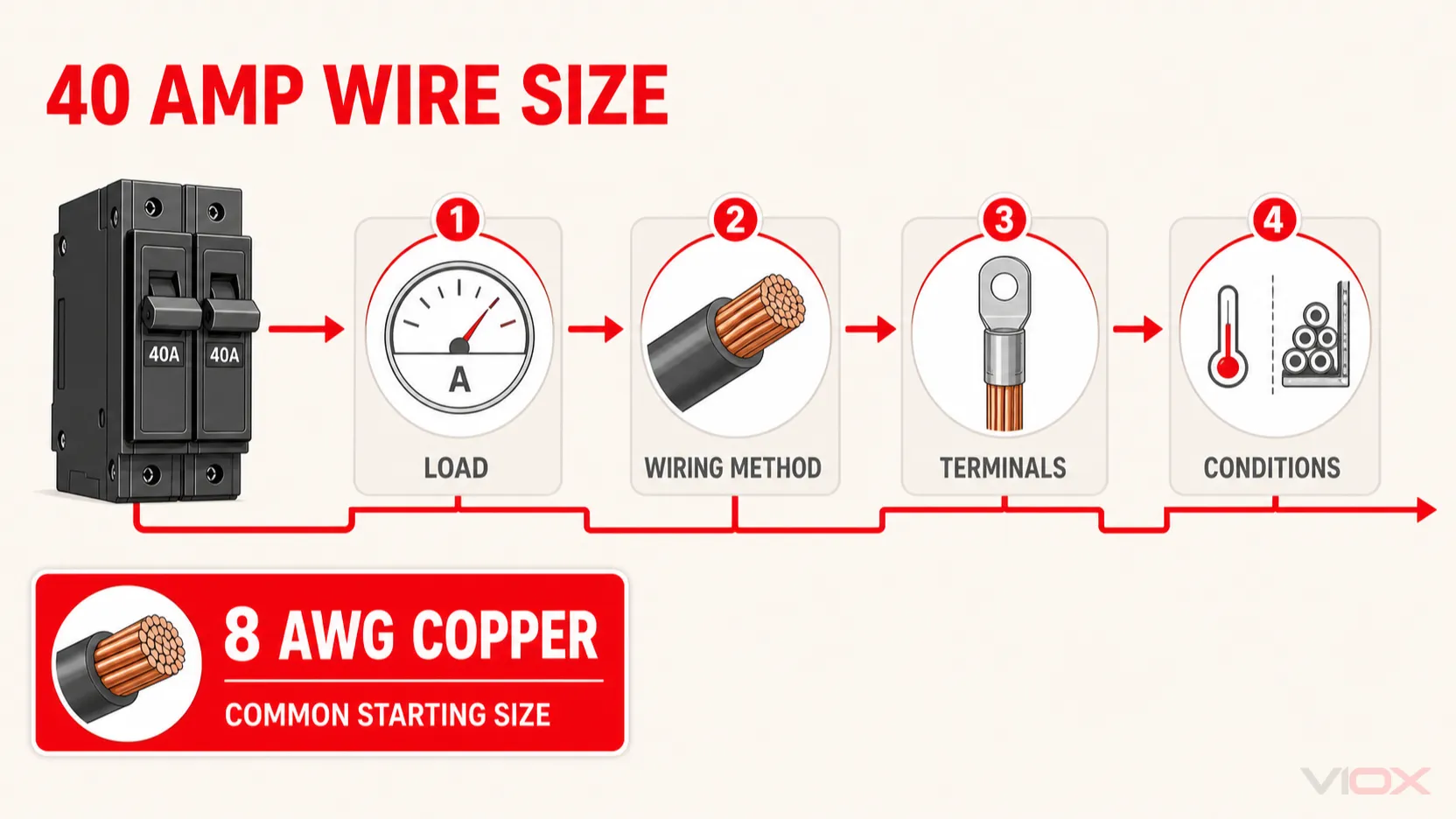
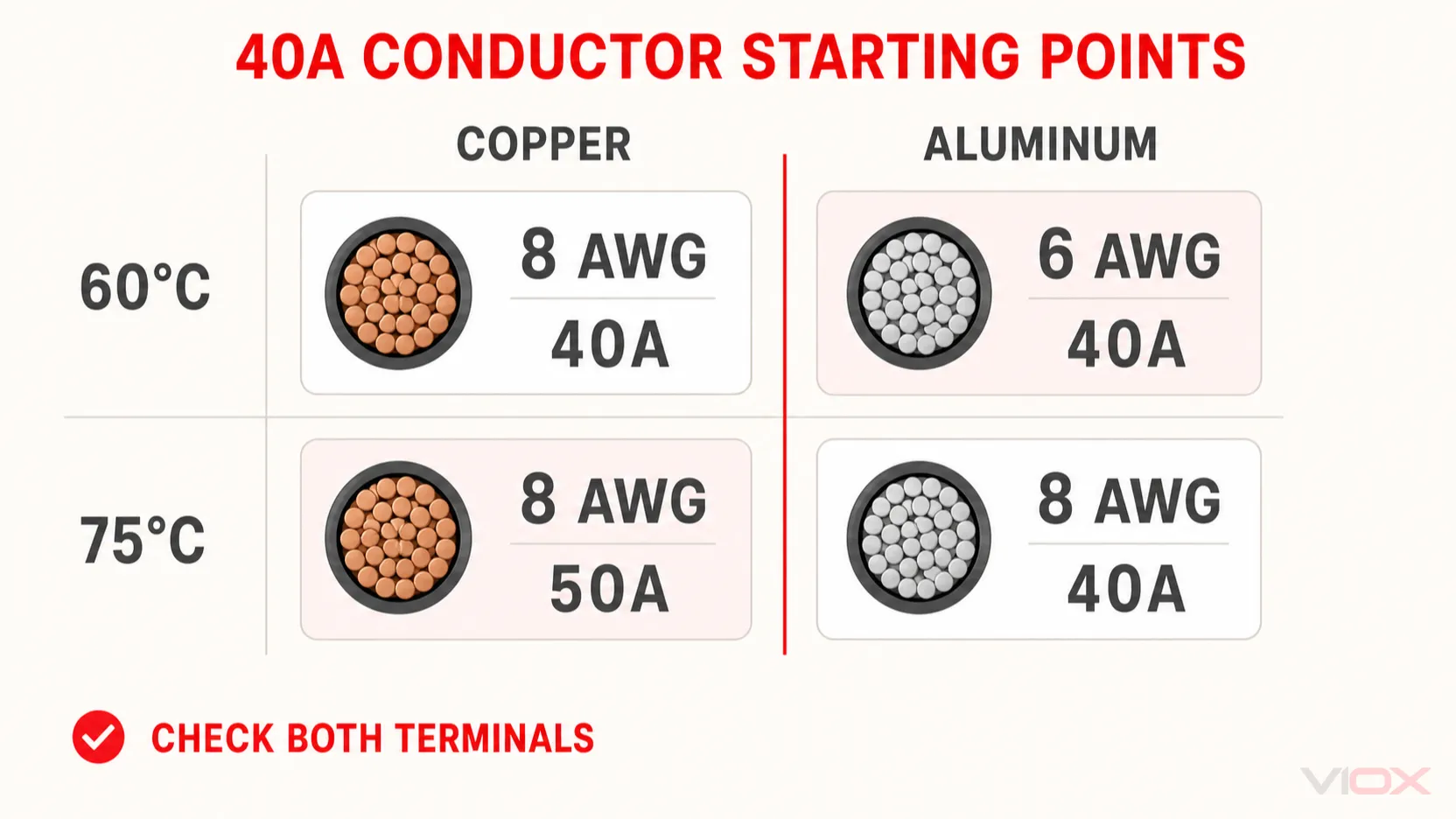
Untuk sebagian besar sirkuit 40 amp biasa, mulailah dengan kabel tembaga 8 AWG. Tembaga 8 AWG memiliki nilai 40A pada kolom ampacity 60°C dan 50A pada kolom 75°C, sehingga kabel ini dapat digunakan baik dengan batasan kabel NM-B yang umum maupun instalasi raceway 75°C yang memenuhi syarat.
Aluminium memerlukan jawaban yang lebih kondisional. Aluminium 8 AWG XHHW-2 dapat membawa 40A jika kolom ampacity 75°C diizinkan dan kedua terminal diidentifikasi untuk konduktor aluminium. Jika instalasi dibatasi pada kolom 60°C, mulailah dengan aluminium 6 AWG.
Ini adalah ukuran awal, bukan ketentuan universal. Ukuran kabel 40 amp akhir bergantung pada beban yang dihitung, operasi berkelanjutan, metode pengabelan, peringkat suhu terminal, suhu sekitar, jumlah konduktor pembawa arus, penurunan tegangan, dan instruksi khusus peralatan.
Catatan keselamatan: Penentuan ukuran konduktor dan pekerjaan panel bergantung pada kode dan dapat memaparkan pekerja pada tegangan mematikan serta bahaya busur api. Gunakan kode yang diadopsi secara lokal saat ini, instruksi peralatan, serta teknisi listrik atau insinyur listrik yang berkualifikasi untuk desain dan instalasi akhir.
Catatan edisi kode: NFPA mencantumkan 2026 National Electrical Code (NEC), NFPA 70 sebagai edisi publikasi saat ini. Adopsi bervariasi menurut negara bagian dan wilayah, dan edisi 2026 mengatur ulang beberapa penomoran. Jika artikel ini menyebutkan bagian atau tabel tahun 2023, perlakukan nomor tersebut sebagai nomor khusus edisi dan verifikasi persyaratan yang setara dalam kode yang diberlakukan untuk proyek tersebut.
Sekilas Ukuran Kabel 40 Amp
| Konduktor dan kondisi | Ampasitas yang relevan | Keputusan awal 40A |
|---|---|---|
| Tembaga 8 AWG, kolom 60°C | 40A | Ya, sebelum faktor koreksi dan penyesuaian |
| Tembaga 8 AWG THHN/THWN-2, terminal 75°C | 50A | Ya; isolasi 90°C dapat mendukung perhitungan penurunan daya (derating) namun tidak meningkatkan spesifikasi terminal |
| Tembaga 8 AWG NM-B | Dibatasi pada nilai ampacity 60°C | Biasanya ya pada 40A, dengan ketentuan penurunan daya dan perhitungan beban tetap memenuhi syarat |
| Aluminium 8 AWG XHHW-2, terminal 75°C | 40A | Kondisional: kedua ujung harus mengizinkan kolom 75°C dan konduktor aluminium |
| 8 AWG aluminium, kondisi 60°C | 30A | Tidak ada |
| 6 AWG aluminium XHHW-2, kondisi 60°C | 40A | Ya, sebelum faktor koreksi dan penyesuaian |
Tabel ini hanya membahas ampacity konduktor. Tabel ini tidak mengonfirmasi bahwa rakitan kabel, raceway, konektor, stopkontak, terminal pemutus sirkuit, atau peralatan tertentu dapat menerima konduktor tersebut.
Hal-hal Penting yang Dapat Dipetik
- 8 AWG tembaga adalah jawaban normal untuk sirkuit cabang 40A umum.
- Jangan secara otomatis menentukan 6 AWG aluminium. 8 AWG aluminium XHHW-2 dapat memenuhi syarat pada 75°C, tetapi 6 AWG adalah ukuran awal 60°C.
- Sirkuit 40A normal mendukung hingga 32A beban kontinu karena
32A × 125% = 40A. - Beban yang menarik 40A secara kontinu tidak boleh dipasang pada sirkuit 40A biasa; beban tersebut memerlukan kapasitas konduktor dan perangkat arus lebih setidaknya 50A sebelum faktor-faktor lain diterapkan.
- Peralatan HVAC dapat mengikuti aturan konduktor dan pemutus sirkuit yang berbeda. Baca pada pelat nama Ampacity Sirkuit Minimum (MCA) dan Proteksi Arus Lebih Maksimum (MOCP) alih-alih menerapkan tabel umum secara membabi buta.
- Jarak jauh tidak memiliki satu ambang batas peningkatan ukuran otomatis. Hitung penurunan tegangan menggunakan tegangan aktual, beban, panjang rute, konduktor, dan suhu operasi.
Metode Empat Gerbang untuk Memilih Kabel 40 A
Nomor pemutus sirkuit saja tidak cukup untuk menentukan konduktor. Lewatkan sirkuit yang diusulkan melalui empat gerbang:
| Gerbang | Input untuk verifikasi | Kondisi lulus |
|---|---|---|
| 1. Beban | Beban tidak kontinu, beban kontinu, dan perhitungan khusus peralatan | Ampasitas konduktor yang diperlukan tidak melebihi ampasitas konduktor yang dapat digunakan |
| 2. Metode pengabelan | NM-B, THHN/THWN-2 dalam raceway, XHHW-2, atau metode pengabelan terdaftar lainnya | Produk yang dipilih diizinkan untuk lokasi dan metode pemasangan tersebut |
| 3. Terminasi | Peringkat 60°C atau 75°C, rentang konduktor, dan penandaan CU/AL | Kolom ampacity dan material konduktor diterima di kedua ujungnya |
| 4. Kondisi lapangan | Suhu lingkungan, jumlah konduktor, isolasi, dan panjang rute | Ampacity yang disesuaikan masih memenuhi syarat dan penurunan tegangan dapat diterima untuk beban tersebut |
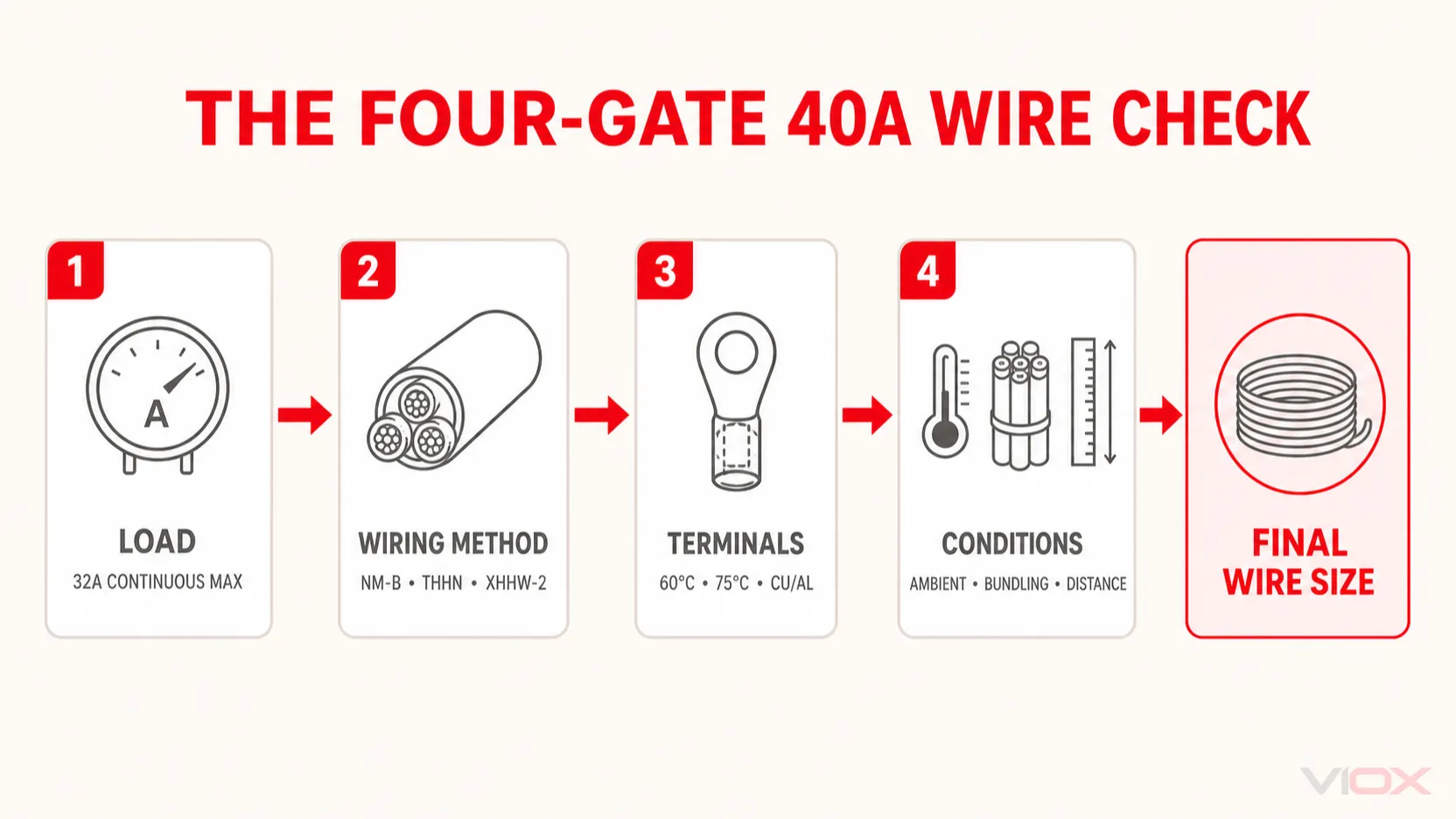
VIOX yang lebih luas tabel ukuran kabel dan kapasitas pemutus arus menyediakan tabel amperase di sekitarnya. Metode di bawah ini sengaja dibuat lebih sempit: metode ini menentukan kapan jawaban 8 AWG yang tampak valid untuk sirkuit 40A.
Tahap 1: Hitung Ampasitas Konduktor yang Diperlukan
Mulailah dengan beban, bukan label pemutus sirkuit. Untuk sirkuit cabang tipikal yang berisi beban non-kontinu dan kontinu, perhitungan umumnya adalah:
Ampacity yang diperlukan = beban non-kontinu + 125% dari beban kontinuBeban kontinu adalah beban yang diperkirakan beroperasi pada arus maksimum selama tiga jam atau lebih. Hubungan praktis untuk sirkuit 40A standar adalah:
40A ÷ 1,25 = 32A beban kontinu maksimumHal tersebut menjadikan sirkuit 40A sangat cocok untuk peralatan yang dirancang untuk menarik 32A secara kontinu. ChargePoint, sebagai contoh, mengidentifikasi peringkat sirkuit 40A untuk pengaturan pengisian daya Home Flex 32A dan memperingatkan bahwa peralatan pengisian daya EV merupakan beban kontinu. Ini adalah konfirmasi spesifik produk terhadap perhitungan tersebut, bukan spesifikasi instalasi universal untuk setiap model peralatan suplai kendaraan listrik (EVSE).
Jika peralatan itu sendiri menarik 40A secara kontinu:
40A × 1,25 = 50A kapasitas yang diperlukanDalam kasus tersebut, menyebutnya sebagai “sirkuit 40 amp” adalah asumsi awal yang salah. Hitung ulang pemutus sirkuit, konduktor, terminal, dan konfigurasi peralatan sebagai desain 50A atau lebih besar, sesuai dengan aturan peralatan yang berlaku. Panduan VIOX untuk perhitungan beban pemutus sirkuit menjelaskan langkah penentuan ukuran hulu tersebut.
Jangan Terapkan Aturan 125% Dua Kali
Beberapa pelat nama peralatan atau instruksi pemasangan sudah menyediakan ampacity sirkuit minimum atau peringkat sirkuit cabang yang diperlukan. Ikuti aturan peralatan dan metode kode yang berlaku; jangan menambahkan 125% ekstra hanya karena angka yang dihasilkan terlihat seperti perhitungan beban kontinu. Motor, peralatan pengondisi udara, mesin las, dan beban khusus lainnya dapat menggunakan aturan spesifik pasal.
Gerbang 2: Identifikasi Metode Pengabelan
Dua konduktor dengan nomor AWG yang sama dapat memiliki ampacity yang dapat digunakan berbeda karena konstruksi kabel dan aturan pemasangannya berbeda.
Tembaga 8 AWG NM-B
Kabel tipe NM-B umumnya digunakan di lokasi hunian yang kering. Konduktor internalnya mungkin memiliki isolasi 90°C, tetapi 2023 NEC 334.80 membatasi ampasitas akhir yang diizinkan hingga nilai konduktor 60°C. Materi pengembangan kode yang diterbitkan NFPA menyatakan batas 60°C ini sembari mengizinkan nilai 90°C untuk digunakan sebagai titik awal perhitungan koreksi atau penyesuaian, dengan ketentuan hasil akhir tidak melebihi batas 60°C.
Untuk tembaga 8 AWG, nilai 60°C adalah 40A. Oleh karena itu, tembaga 8 AWG NM-B biasanya merupakan padanan ampasitas 40A secara langsung, namun tidak memiliki cadangan ampasitas setelah batas 60°C. Jika pengelompokan atau suhu lingkungan yang tinggi mengurangi ampasitas yang diizinkan di bawah 40A, konduktor yang lebih besar atau metode pemasangan yang diubah mungkin diperlukan.
NM-B bukanlah metode pengabelan untuk lokasi basah. Raceway yang dipasang di luar ruangan atau di bawah tanah biasanya diperlakukan sebagai lokasi basah di bagian dalamnya, meskipun saluran tampak tertutup rapat. Pilih konduktor yang terdaftar untuk lingkungan yang sebenarnya.
Tembaga 8 AWG THHN/THWN-2 dalam Raceway
Konduktor tembaga THHN/THWN-2 individual di dalam raceway yang diizinkan memberikan ruang perhitungan yang lebih luas. Southwire mencantumkan tembaga 8 AWG THHN/THWN-2 miliknya pada 50A di kolom 75°C dan 55A di kolom 90°C.
Penandaan 90°C berguna saat menerapkan faktor suhu dan jumlah konduktor. Hal ini tidak berarti pemutus sirkuit atau terminal peralatan 90°C dapat diasumsikan. Ampasitas yang diizinkan akhir tidak boleh melebihi batas yang ditetapkan oleh terminasi dan aturan lain yang berlaku.
Aluminium XHHW-2
Southwire mencantumkan aluminium 8 AWG XHHW-2 pada 40A di kolom 75°C, sementara nilai 60°C hanya 30A. Keluarga produk yang sama mencantumkan aluminium 6 AWG pada 40A di kolom 60°C dan 50A pada 75°C.
Ini menciptakan aturan keputusan yang jelas:
- Menggunakan 8 AWG aluminium hanya jika kapasitas hantar arus 40A 75°C diizinkan dan setiap terminasi ditandai untuk aluminium serta ukuran konduktornya.
- Menggunakan 6 AWG aluminium sebagai titik awal ketika kondisi pengontrolnya adalah 60°C.
- Tingkatkan ukuran lagi jika penyesuaian, koreksi, penurunan tegangan, atau instruksi peralatan mengharuskannya.
Jangan berasumsi bahwa stopkontak atau lug peralatan menerima aluminium hanya karena pemutus sirkuitnya menerimanya. Verifikasi material konduktor, peringkat suhu, dan rentang kabel pada kedua ujungnya.
Gerbang 3: Periksa Suhu Terminal Pengontrol
Peringkat isolasi konduktor, peringkat terminal pemutus sirkuit, dan peringkat terminal peralatan beban adalah tiga fakta yang berbeda. Ampasitas yang dapat digunakan dikendalikan oleh kondisi yang paling membatasi yang berlaku.
Sebelum memilih kolom 60°C atau 75°C, periksa penandaan dan dokumentasi untuk:
- peringkat suhu terminal pemutus sirkuit;
- peringkat suhu terminal beban atau stopkontak;
- material konduktor yang diizinkan: CU, AL, atau CU/AL;
- rentang ukuran konduktor yang diizinkan;
- spesifikasi konduktor pada instruksi pemasangan apa pun.
Pemeriksaan ini sangat penting untuk aluminium. Aluminium 8 AWG bukanlah jawaban universal untuk 40A: ia mencapai 40A hanya pada kolom 75°C. Jika salah satu ujung memaksa penggunaan kolom 60°C, aluminium 8 AWG tidak memenuhi syarat ampasitas dan 6 AWG menjadi ukuran awal yang normal.
Kabel yang lebih besar tidak dapat dipasang secara otomatis. Konduktor yang ukurannya ditingkatkan harus tetap muat pada terminal pemutus sirkuit dan peralatan atau menggunakan metode transisi terdaftar yang dirancang untuk konduktor yang bersangkutan.
Gerbang 4: Terapkan Kondisi Lapangan dan Periksa Penurunan Tegangan
Tabel ampacity mengasumsikan kondisi referensi yang dinyatakan. Suhu lingkungan yang tinggi dan beberapa konduktor pembawa arus yang dikelompokkan dalam raceway atau kabel dapat mengurangi ampacity yang diizinkan. Terapkan faktor koreksi dan penyesuaian yang diperlukan menggunakan peringkat isolasi yang diizinkan untuk perhitungan tersebut, kemudian pastikan bahwa hasil akhir tidak melebihi batas terminal atau metode pengabelan.
Sebagai contoh, sirkuit NM-B tembaga 8 AWG dimulai pada batas akhir 40A. Kondisi lapangan yang mengurangi ampacity yang diizinkan di bawah 40A berarti pemasangan tersebut tidak lagi lolos hanya karena “8 AWG adalah standar untuk 40 amp.”
Contoh Penurunan Tegangan 240V yang Transparan
Penurunan tegangan adalah pemeriksaan kinerja, bukan pengganti ampacity. Pertimbangkan beban kontinu 240V, 32A yang terletak 100 kaki dari panel, menggunakan konduktor tembaga 8 AWG. Southwire memublikasikan resistansi AC sekitar 0,786 ohm per 1.000 kaki pada 75°C untuk tembaga 8 AWG THHN/THWN-2 miliknya.
Menggunakan perhitungan resistansi satu fase yang disederhanakan:
Penurunan tegangan = 2 × panjang satu arah × arus × resistansi per kakiVD = 2 × 100 ft × 32A × 0.786 Ω/1.000 ft = 5.03V5.03V ÷ 240V = 2,11%Pada jarak 150 ft satu arah, asumsi yang sama menghasilkan sekitar 7.55V, or 3.15%. Mengubah ke resistansi tembaga 6 AWG yang dipublikasikan Southwire sebesar kurang lebih 0,495 ohm per 1.000 ft mengurangi contoh 150 ft menjadi sekitar 4.75V, or 1.98%.
Hasil ini adalah contoh, bukan batas jarak universal. Penurunan tegangan aktual berubah seiring dengan arus beban, tegangan, suhu konduktor, faktor daya, resistansi koneksi, dan geometri sirkuit. Hitung rute sebenarnya alih-alih secara otomatis meningkatkan ukuran pada 50 kaki, 100 kaki, atau jarak arbitrer lainnya.
Batasan Aplikasi yang Mengubah Jawaban
Pengisi daya EV 32A pada sirkuit 40A
EVSE 32A adalah contoh beban kontinu yang bersih karena 32A × 125% = 40A. Manual pengisi daya tetap mengontrol konfigurasi pengabelan yang diizinkan, material konduktor, rentang terminal, pengaturan pemutus sirkuit, dan pengaturan komisioning. Jangan berasumsi bahwa instalasi berbasis stopkontak dan instalasi kabel permanen (hardwired) memiliki persyaratan yang identik.
Kompor atau Oven Listrik
Gunakan pelat nama peralatan dan instruksi instalasi untuk menentukan peringkat sirkuit cabang dan jumlah konduktor yang diperlukan. Peralatan 120/240V mungkin memerlukan dua konduktor tanpa pembumian, satu netral, dan satu konduktor pembumian peralatan; beban 240V murni mungkin tidak memerlukan netral. Faktor permintaan dan ketentuan sirkuit cabang bersifat spesifik untuk aplikasi, sehingga tabel kabel 40A generik tidak dapat menggantikan perhitungan kompor.
Peralatan HVAC dengan MCA dan MOCP
Peralatan pendingin udara dan refrigerasi dapat secara sah menunjukkan MCA yang mengizinkan konduktor yang lebih kecil daripada yang disarankan oleh tabel pemutus sirkuit-ke-kabel umum, sementara MOCP mengizinkan pemutus sirkuit 40A. Pemutus sirkuit mengakomodasi arus start; proteksi peralatan terpisah dan aturan peralatan mengendalikan perhitungan konduktor. Untuk HVAC, tentukan ukuran konduktor berdasarkan MCA pada pelat nama dan aturan yang berlaku, dan jangan menyimpulkan pemasangan yang tidak aman hanya dari pemutus sirkuit 40A tersebut.
Ground, Netral, dan Jumlah Konduktor
Untuk perangkat arus lebih 40A, titik awal Tabel 250.122 NEC 2023 untuk konduktor pembumian peralatan tipe kabel adalah 10 AWG tembaga atau 8 AWG aluminium/aluminium berlapis tembaga. Aturan lain dapat mengubah desain pembumian akhir, dan penomoran tabel berbeda pada edisi 2026 yang telah disusun ulang, jadi verifikasi kode yang diadopsi dan pemasangannya.
Netral ditentukan oleh beban, bukan oleh amperase pemutus sirkuit:
- Beban 240V langsung dapat menggunakan dua konduktor tanpa pembumian ditambah pembumian peralatan.
- Beban 120/240V mungkin juga memerlukan netral.
- Netral dapat dihitung sebagai konduktor pembawa arus untuk tujuan penyesuaian tergantung pada bagaimana netral tersebut membawa arus beban.
Jangan memesan kabel hanya berdasarkan tabel ampere. Konfirmasikan tegangan, fase, kebutuhan netral, metode pembumian, dan jumlah konduktor pembawa arus terlebih dahulu.
Lembar Kerja Pemilihan Konduktor 40 Amp
Selesaikan pemeriksaan ini sebelum memfinalisasi spesifikasi:
| Masukan (Input) | Nilai proyek | Keputusan dibuat |
|---|---|---|
| Tegangan dan fase peralatan | ___ | Jumlah kutub dan pengaturan konduktor |
| Beban tidak berkelanjutan | ___ A | Beban konduktor dasar |
| Beban kontinyu | ___ A | Tambahkan pada 125% jika berlaku |
| MCA/MOCP peralatan atau persyaratan manual | ___ | Mengonfirmasi apakah aturan peralatan khusus berlaku |
| Tembaga atau aluminium | ___ | Memilih kolom ampacity dan material terminal yang benar |
| NM-B, THHN/THWN-2, XHHW-2, atau metode lainnya | ___ | Menetapkan batasan lingkungan dan ampacity |
| Peringkat terminal pada pemutus sirkuit | ___ °C; CU/AL; ___ AWG | Mengatur kolom dan kesesuaian yang dapat digunakan pada satu ujung |
| Peringkat terminal pada beban | ___ °C; CU/AL; ___ AWG | Mengatur kolom dan kesesuaian yang dapat digunakan pada ujung lainnya |
| Suhu lingkungan | ___ | Pemeriksaan faktor koreksi |
| Penghantar pembawa arus | ___ | Pemeriksaan faktor penyesuaian |
| Panjang satu arah | ___ kaki | Perhitungan jatuh tegangan |
| Persyaratan pembumian dan netral | ___ | Jumlah dan ukuran konduktor akhir |
Jika ada input yang tidak diketahui, desain belum siap untuk disederhanakan menjadi satu angka AWG.
Jawaban Akhir
Menggunakan 8 AWG tembaga as the normal starting wire size for a 40 amp breaker. It provides 40A at the 60°C value and therefore covers ordinary 8 AWG copper NM-B as well as qualifying raceway conductors, subject to load and field-condition checks.
Untuk aluminium XHHW-2, 8 AWG dapat melayani sirkuit 40A pada suhu 75°C, namun hanya jika konduktor, kedua terminal, dan instalasi lengkap mengizinkan peringkat tersebut. Di bawah batasan 60°C, mulailah dengan 6 AWG aluminium.
Kemudian verifikasi empat gerbang: ampacity yang diperlukan, metode pengabelan, batasan terminal, dan kondisi lapangan. Untuk peringkat yang berdekatan, gunakan panduan VIOX untuk persyaratan kabel pemutus sirkuit 30 A, ukuran kabel 50 ampdan ukuran kabel pemutus sirkuit 60 A.
PERTANYAAN YANG SERING DIAJUKAN
Bisakah kabel tembaga 10 AWG digunakan dengan pemutus sirkuit 40 A?
Bukan untuk sirkuit cabang 40A tujuan umum biasa. Aturan proteksi arus lebih untuk konduktor kecil biasanya membatasi tembaga 10 AWG hingga 30A. Aturan peralatan khusus, seperti peralatan HVAC yang ditandai dengan benar dengan nilai MCA dan MOCP, dapat menghasilkan hubungan konduktor-ke-pemutus sirkuit yang berbeda; gunakan aturan peralatan tersebut alih-alih menganggapnya sebagai pengecualian umum.
Apakah kabel 8/2 atau 8/3 diperlukan untuk sirkuit 40 amp?
Peringkat amp tidak menjawab hal ini. Beban 240V langsung mungkin memerlukan dua konduktor tanpa pembumian dan pembumian protektif peralatan, sementara beban 120/240V mungkin juga memerlukan netral. Periksa diagram pengabelan peralatan dan ingat bahwa nama kabel seperti 8/2 dan 8/3 umumnya tidak menyertakan konduktor pembumian protektif peralatan dalam hitungan konduktor berisolasi.
Apakah tembaga 8 AWG cukup untuk sirkuit pengisi daya EV 40 amp?
Ini adalah ukuran awal yang umum untuk sirkuit 40A yang menyuplai EVSE kontinu 32A. Petunjuk pemasangan pengisi daya, peringkat terminal, material konduktor yang diizinkan, kondisi jalur, dan perhitungan penurunan tegangan tetap menjadi penentu spesifikasi akhir.
Berapa ukuran kabel aluminium yang digunakan untuk pemutus sirkuit 40 amp?
Gunakan aluminium 8 AWG XHHW-2 hanya jika kolom ampacity 75°C diizinkan dan kedua ujungnya menerima aluminium. Jika kondisi pengontrolnya adalah 60°C, gunakan aluminium 6 AWG sebagai ukuran awal. Terapkan faktor koreksi dan penyesuaian yang diperlukan setelahnya.
Haruskah jalur 40 amp yang panjang menggunakan tembaga 6 AWG?
Mungkin saja, tetapi jarak saja tidak menentukannya. Hitung jatuh tegangan dari tegangan aktual, arus beban, panjang satu arah, resistansi konduktor, dan kondisi operasi. Dalam contoh 240V/32A yang dikerjakan di atas, mengubah dari tembaga 8 AWG ke 6 AWG secara material mengurangi jatuh tegangan pada 150 kaki.
Berapa ukuran kabel pembumian yang digunakan untuk pemutus sirkuit 40 amp?
Titik awal yang umum adalah tembaga 10 AWG atau aluminium/aluminium berlapis tembaga 8 AWG untuk konduktor pembumian peralatan tipe kabel yang terkait dengan perangkat arus lebih 40A. Verifikasi kode yang diadopsi dan kondisi apa pun yang mengubah ukuran konduktor pembumian.