Di halaman ini
Jawaban Singkat
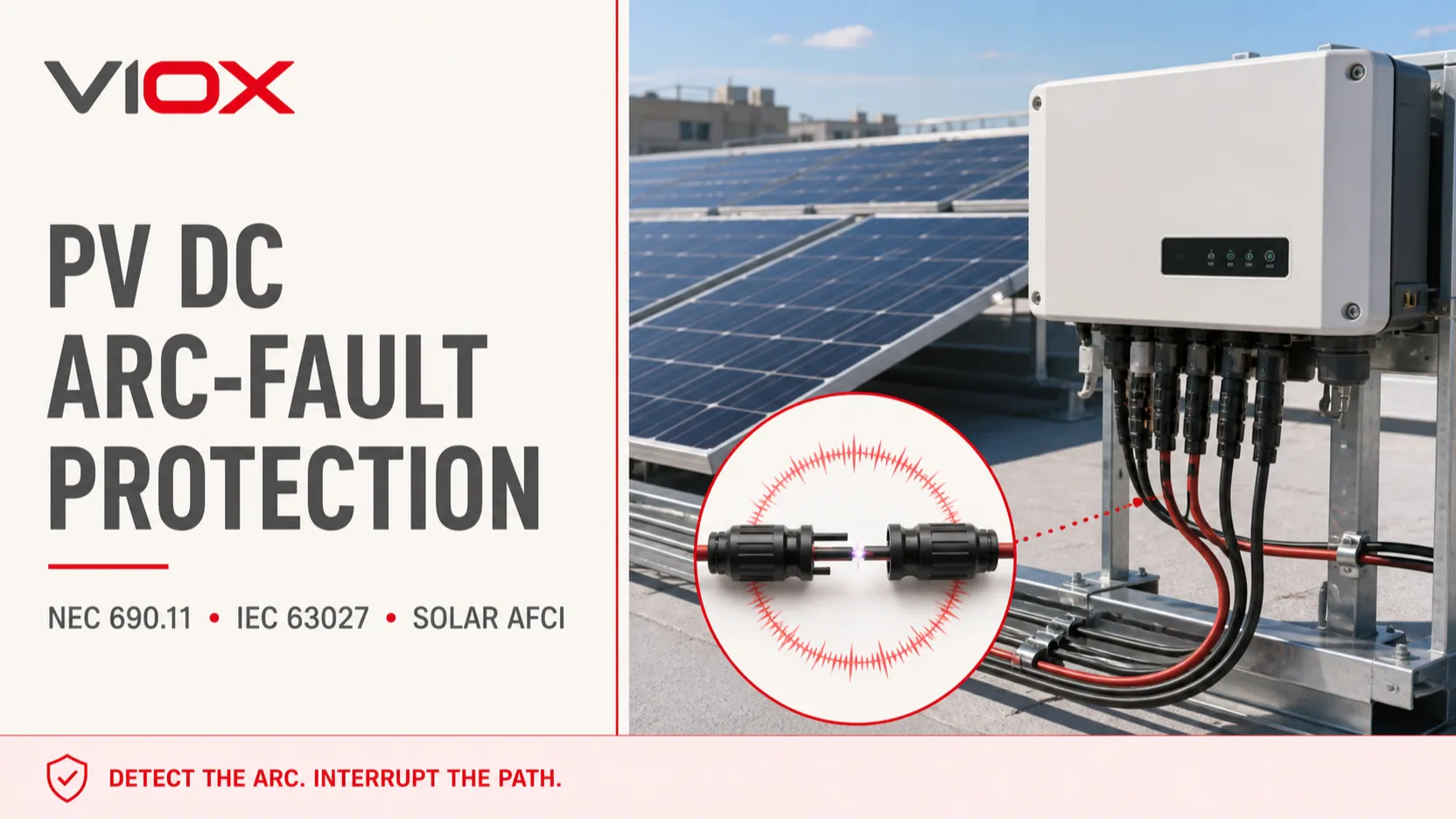
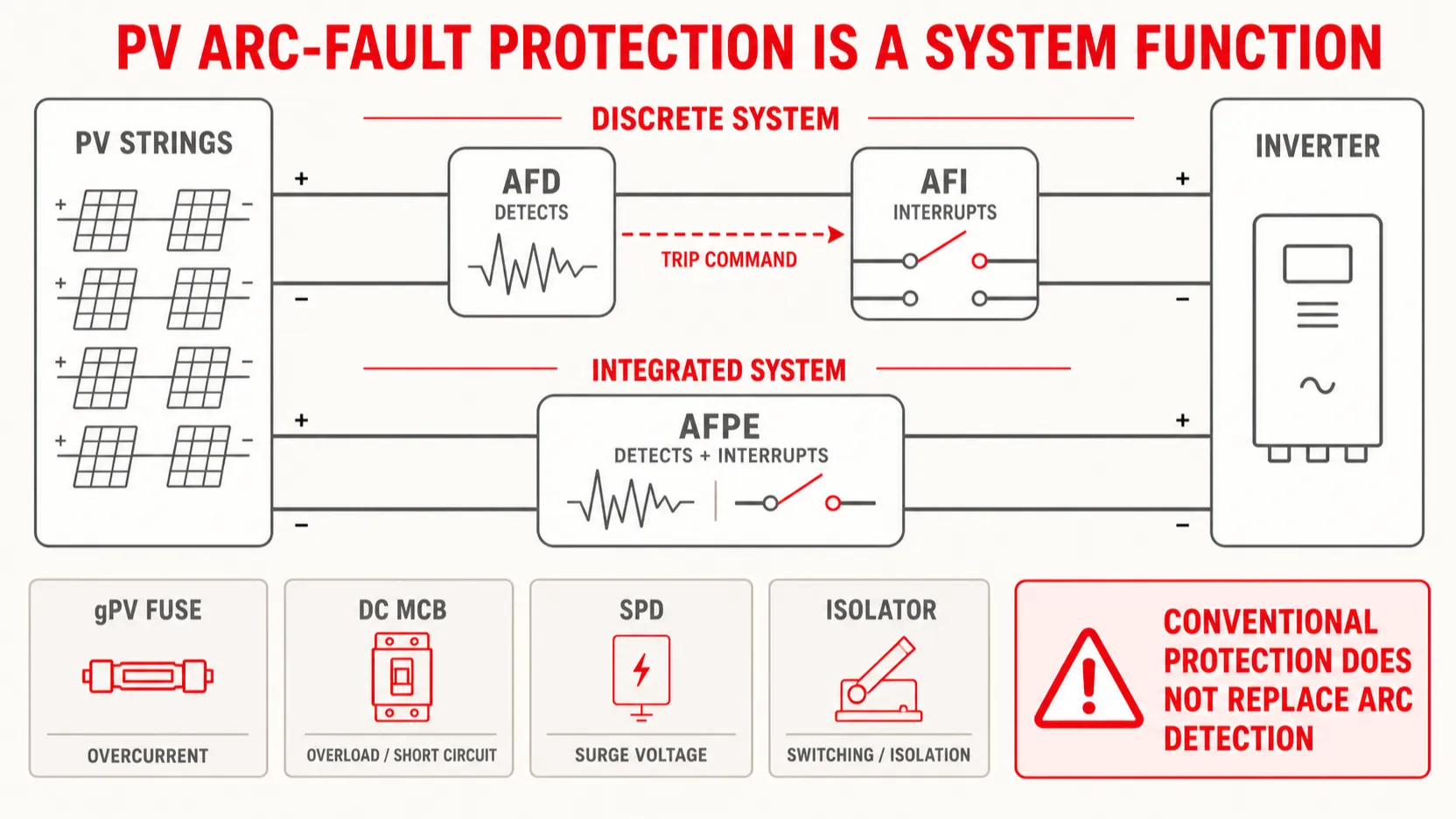
Perlindungan busur api DC PV adalah fungsi keselamatan khusus untuk mendeteksi busur api berbahaya pada sirkuit fotovoltaik. Fungsi ini tidak disediakan secara otomatis oleh sekring, miniature circuit breaker (MCB) DC, surge protective device (SPD), isolator, atau perangkat busur api AC perumahan biasa.
Dua referensi yang paling sering dibandingkan memiliki tujuan yang berbeda:
- NEC 690.11 adalah persyaratan kode instalasi Amerika Utara. Dalam edisi NEC terbaru, sistem PV dengan sirkuit DC yang beroperasi pada 80 V DC atau lebih di antara konduktor umumnya memerlukan perlindungan busur api PV yang terdaftar, tergantung pada edisi NEC yang diadopsi, pengecualiannya, amandemen lokal, dan Otoritas yang Berwenang (AHJ).
- IEC 63027:2023 adalah standar kinerja dan pengujian produk internasional untuk peralatan yang mendeteksi, dan secara opsional memutus, busur api DC pada sirkuit PV hingga 1500 V DC. Standar ini sendiri tidak mengharuskan setiap negara atau setiap proyek PV untuk memasang peralatan tersebut.
- UL 1699B adalah standar produk Amerika Utara yang digunakan untuk peralatan perlindungan sirkuit gangguan busur DC fotovoltaik.
Poin teknis utamanya adalah:
Busur seri dapat membawa arus yang lebih kecil daripada beban operasi normal. Oleh karena itu, perlindungan arus lebih standar mungkin tetap tertutup sementara busur terus menghasilkan panas terkonsentrasi.
Hal-hal Penting yang Dapat Dipetik
- NEC 690.11 memberi tahu perancang kapan suatu instalasi memerlukan perlindungan di bawah kerangka kerja NEC yang diadopsi; IEC 63027 memberi tahu produsen atau pembeli bagaimana peralatan deteksi busur PV diklasifikasikan dan diuji dalam ruang lingkupnya.
- IEC 63027 memfokuskan prosedur pengujiannya pada busur api seri. Standar ini mengakui peralatan yang hanya berfungsi untuk deteksi serta peralatan yang menggabungkan deteksi dengan pemutusan arus.
- Inverter surya yang ditandai dengan "AFCI" tidak boleh disetujui hanya berdasarkan akronimnya saja. Pastikan daftar atau standar pengujiannya, cakupan sirkuit yang dilindungi, rentang tegangan/arus, jumlah string dan saluran, metode pemutusan, firmware, serta perilaku penyambungan kembali.
- Memutus input inverter mungkin dapat memadamkan busur api seri pada jalur arus yang dipantau, namun hal tersebut tidak menjamin bahwa setiap kemungkinan busur api paralel atau yang terkait dengan ground akan teratasi. Arsitektur perlindungan harus sesuai dengan jenis gangguan.
- Pemasangan konektor, kualitas crimping, torsi terminal, penyangga kabel, pencegahan masuknya air, dan catatan komisioning tetap menjadi hal yang esensial. Elektronik pendeteksi busur api tidak dapat mengompensasi praktik instalasi PV yang buruk.
Apa Itu Gangguan Busur Api DC PV?
Busur api adalah pelepasan listrik yang berkelanjutan melalui gas terionisasi. Dalam susunan PV, sinar matahari menjaga modul tetap berenergi, dan arus DC tidak memiliki titik nol alami seperti bentuk gelombang AC. Begitu busur api menjadi stabil, ia dapat terus memanaskan area kecil pada konektor, konduktor, terminal, kotak sambungan, atau modul.
Titik awal yang umum meliputi:
- konektor yang tidak terpasang sepenuhnya;
- kontak dari kombinasi konektor yang tidak disetujui;
- crimping yang salah atau tidak lengkap;
- terminal combiner-box atau isolator yang longgar;
- konduktor yang retak akibat tekukan, getaran, atau penyangga kabel yang buruk;
- isolasi yang rusak akibat abrasi, hewan, paparan sinar UV, atau pekerjaan pemasangan;
- kelembapan, kontaminasi, atau korosi di sekitar sambungan;
- sambungan solder, kabel modul, kotak sambungan (junction box), atau koneksi dioda bypass yang gagal.
Sistem mungkin terus menghasilkan daya sementara kerusakan memburuk. Hal ini menjadikan perlindungan gangguan busur api (arc-fault) sebagai pengendalian risiko kebakaran, bukan pengganti perlindungan beban lebih (overload) biasa.
Busur Seri vs Busur Paralel vs Gangguan Tanah (Ground Fault)
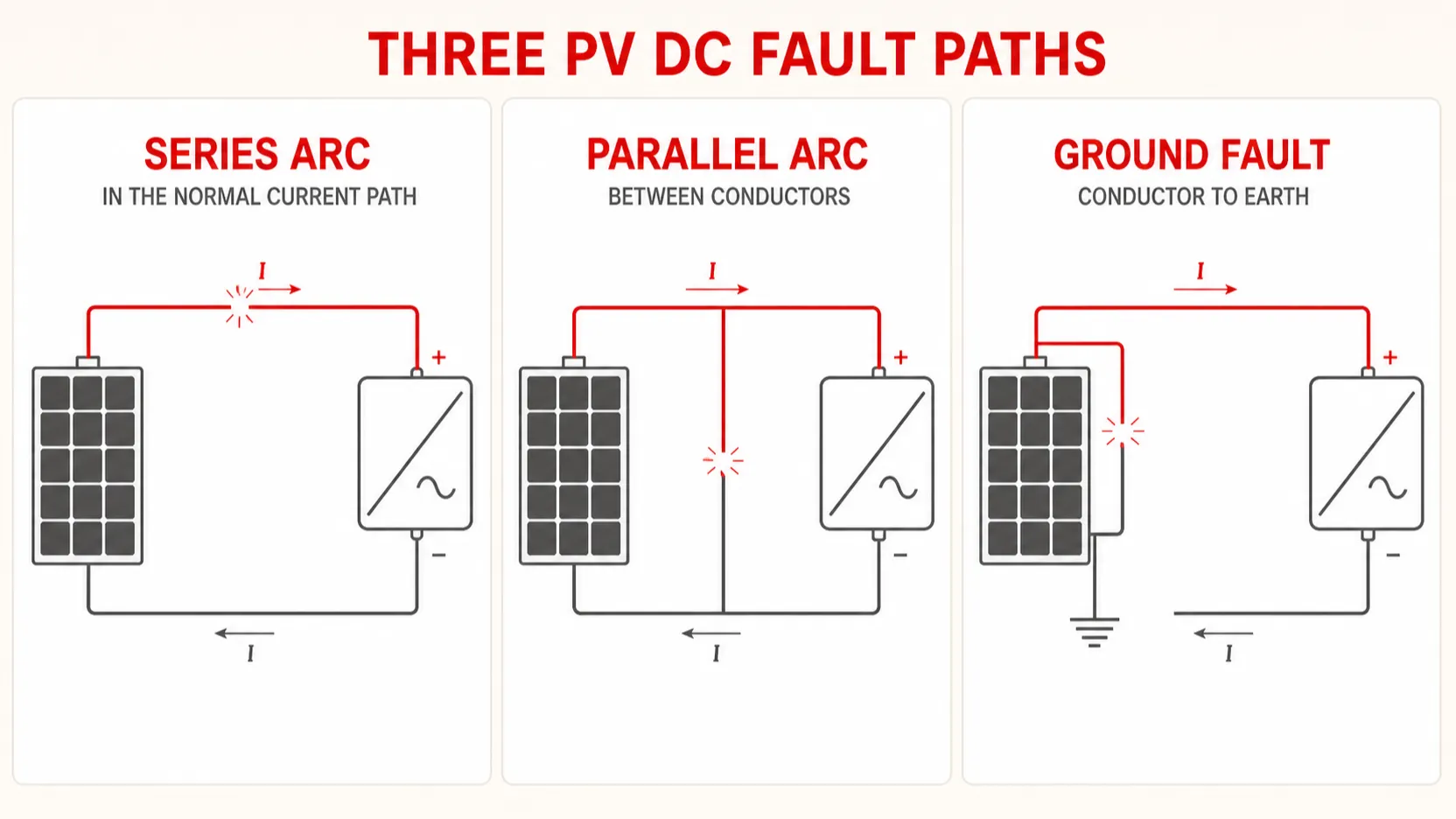
Jenis-jenis gangguan ini saling berkaitan namun tidak dapat dipertukarkan.
| Jenis gangguan | Jalur saat ini | Asal tipikal | Mengapa perlindungan konvensional mungkin atau tidak mungkin merespons | Respons desain utama |
|---|---|---|---|---|
| Busur seri | Melintasi diskontinuitas pada jalur arus yang dimaksud | Konektor longgar, serabut kabel putus, hasil crimping buruk, terminal longgar | Arus busur dibatasi oleh string dan beban; arusnya mungkin tetap berada di bawah ambang batas pemutusan sekering atau pemutus sirkuit (breaker) | Deteksi busur seri khusus dan metode pemutusan yang teruji |
| Busur paralel | Antara konduktor dengan potensial yang berbeda | Kerusakan isolasi, konduktor positif dan negatif rusak, kontaminasi | Arus mungkin tinggi, tetapi besarnya bergantung pada topologi array dan jalur sumber yang tersedia | Arus lebih, perlindungan isolasi/gangguan tanah, pemisahan, dan pemutusan spesifik gangguan |
| Gangguan tanah | Dari konduktor bertegangan ke logam yang diarde atau jalur ke tanah | Kabel rusak, masuknya air, isolasi terjepit | Arus gangguan mungkin terbatas atau terdistribusi dengan cara yang tidak mengoperasikan OCPD konvensional | Deteksi gangguan tanah, pemantauan isolasi, ikatan (bonding), dan pemutusan yang berlaku |
NEC 690.11 dan ruang lingkup pengujian utama IEC 63027 berkaitan dengan gangguan yang disebabkan oleh kegagalan kontinuitas yang dimaksudkan pada sirkuit DC PV: busur api seri.
Batasan ini penting. Penelitian dari Sandia menunjukkan bahwa busur seri dan paralel dapat menghasilkan tanda frekuensi tinggi yang serupa, namun tindakan pemutusan yang tepat bisa berbeda. Membuka jalur arus seri akan memadamkan busur seri tersebut. Busur paralel mungkin tetap dialiri listrik dari jalur susunan lain, dan respons yang tidak sesuai dapat mengalihkan arus melalui gangguan tersebut. Oleh karena itu, suatu sistem tidak boleh mengklaim perlindungan busur yang lebih luas kecuali fungsionalitas tersebut dievaluasi secara khusus.
Mengapa Sekring PV atau MCB DC Mungkin Tidak Memutus Busur Seri
Perangkat pelindung arus lebih beroperasi ketika arus melebihi ambang batas waktu-arus yang ditentukan. Busur api seri menambah impedansi pada jalur normal. Alih-alih meningkatkan arus, hal ini justru sering kali menurunkannya.
Pertimbangkan sebuah string yang membawa arus 9 A dalam operasi normal. Jika konektor yang rusak mulai menimbulkan busur api seri, arus mungkin tetap berada di dekat atau di bawah tingkat operasi alih-alih naik di atas ambang batas sekering string atau pemutus arus (breaker). Celah busur api yang kecil tetap dapat menghasilkan suhu lokal yang cukup untuk mengkarbonisasi isolasi atau menyulut material polimer di sekitarnya.
Itulah sebabnya perangkat berikut tidak secara otomatis memberikan perlindungan terhadap busur api seri:
| Perangkat | Fungsi utama | Mengapa ini bukan detektor busur api PV |
|---|---|---|
| Sekering gPV | Melindungi konduktor dan modul PV terhadap kondisi arus lebih yang ditentukan | Busur api seri mungkin tidak menciptakan arus lebih yang cukup |
| MCB atau MCCB DC | Memutus arus beban lebih dan arus hubung singkat dalam aplikasi DC terukurnya | Penginderaan arus lebih termal-magnetik atau elektronik tidak secara otomatis mengidentifikasi tanda busur api |
| SPD | Mengalihkan energi tegangan lebih transien | Tidak menganalisis derau arus string secara terus-menerus untuk busur api seri |
| Isolator DC | Menyediakan fungsi penyakelaran atau isolasi dalam peringkat yang dinyatakan | Memerlukan perintah pengoperasian dan biasanya tidak mendeteksi busur api |
| Detektor gangguan tanah | Mengidentifikasi arus yang tidak diinginkan ke tanah atau penurunan kualitas isolasi | Diskontinuitas seri konduktor-ke-konduktor mungkin tidak menghasilkan arus bocor ke tanah |
| AFDD/AFCI AC | Mendeteksi tanda tangan busur api tertentu pada sirkuit akhir AC | Algoritma dan standar produk AC residensial tidak menetapkan kinerja DC PV |
Perangkat ini tetap diperlukan jika desain mengharuskannya. Perlindungan gangguan busur api adalah lapisan terkoordinasi tambahan, bukan pengganti untuk Perlindungan sirkuit DC dengan peringkat PV, sekering, perlindungan lonjakan arus, atau isolasi yang aman.
Apa yang disyaratkan oleh NEC 690.11
NEC 690.11 berjudul Perlindungan Sirkuit Gangguan Busur (Arus Searah). Berdasarkan redaksi yang digunakan dalam siklus NEC terbaru, sistem PV dengan sirkuit DC yang beroperasi pada 80 V DC atau lebih besar di antara dua konduktor mana pun memerlukan pemutus sirkuit gangguan busur PV yang terdaftar atau komponen sistem terdaftar yang memberikan perlindungan setara.
Sistem yang dilindungi diharapkan dapat mendeteksi dan memutus busur api yang disebabkan oleh hilangnya kontinuitas yang diinginkan pada konduktor, sambungan, modul, atau komponen DC PV lainnya.
NEC 690.11 adalah aturan instalasi
Efek hukumnya bergantung pada:
- edisi NEC yang diadopsi oleh negara bagian, kota, utilitas, atau otoritas lainnya;
- amandemen lokal;
- apakah sirkuit DC berada pada, di dalam, atau terkait dengan bangunan sebagaimana dibahas dalam edisi tersebut;
- apakah pengecualian yang dinyatakan berlaku untuk rute dan fasilitas yang tepat;
- daftar peralatan dan instruksi pemasangan;
- penerimaan AHJ atas desain yang diajukan.
Bahasa kode terbaru mencakup pengecualian untuk sirkuit PV tertentu di luar atau yang terkait dengan kondisi bangunan tertentu ketika konduktor dipasang menggunakan metode pengabelan logam yang memenuhi syarat atau di bawah tanah. Redaksi telah berubah di seluruh siklus kode. Jangan menyalin pengecualian dari catatan gambar lama ke proyek baru tanpa memeriksa edisi yang diadopsi secara lokal.
Stasiun pasokan listrik PV skala besar mungkin juga diatur oleh ketentuan Pasal 691 tambahan dan persyaratan mitigasi kebakaran khusus proyek. "Ground-mounted" (dipasang di tanah) saja tidak cukup sebagai informasi untuk menentukan kepatuhan.
NEC 690.11 bukanlah aturan pemutusan cepat (rapid-shutdown)
NEC 690.11 dan NEC 690.12 menangani bahaya yang berbeda:
- Perlindungan gangguan busur (arc-fault) mendeteksi busur diskontinuitas yang berbahaya dan memulai pemutusan.
- Pemutusan cepat (rapid shutdown) mengendalikan tegangan konduktor di sekitar susunan panel pada bangunan untuk mengurangi paparan sengatan listrik bagi petugas tanggap darurat.
Satu produk mungkin menjalankan kedua fungsi tersebut, namun kepatuhan terhadap satu bagian tidak secara otomatis membuktikan kepatuhan terhadap bagian lainnya.
Apa yang Sebenarnya Dicakup oleh IEC 63027:2023
IEC 63027:2023, Sistem tenaga fotovoltaik – deteksi dan pemutusan busur api DC, berlaku untuk peralatan yang digunakan untuk mendeteksi dan secara opsional memutus busur api DC pada sirkuit sistem PV.
Ruang lingkup yang diterbitkan menetapkan tiga batasan penting:
- Ini menyediakan prosedur pengujian untuk mendeteksi busur api seri pada sirkuit PV.
- Ini membahas respons peralatan yang digunakan untuk memutus busur api tersebut.
- Ini mencakup peralatan yang terhubung ke sistem PV dengan tegangan sirkuit sumber PV maksimum tidak melebihi 1500 V DC.
Ini adalah standar produk, bukan mandat pemasangan universal. Aturan pengabelan nasional, kode bangunan, spesifikasi tender, persyaratan asuransi, atau otoritas setempat yang menentukan apakah dan di mana perlindungan gangguan busur api harus dipasang.
AFD, AFI, dan AFPE
Terminologi IEC memisahkan fungsi pendeteksian dan pemutusan:
| Istilah | Arti | Fungsi |
|---|---|---|
| AFD | Pendeteksi gangguan busur api | Mendeteksi busur api dan menghasilkan indikasi atau perintah yang relevan |
| AFI | Pemutus gangguan busur api | Menerima perintah dan memutus jalur arus busur api |
| AFPE | Peralatan proteksi gangguan busur api | Menggabungkan deteksi dan pemutusan busur api sebagai fungsi proteksi yang lengkap |
| AFS | Sensor gangguan busur api | Elemen atau saluran penginderaan yang terkait dengan arsitektur deteksi |
Perbedaan ini mencegah kesalahan pembelian yang umum terjadi: sebuah AFD dapat mendeteksi busur api tanpa memutuskannya secara mandiri. Jika produk tersebut hanya untuk deteksi, proyek harus mengidentifikasi AFI yang kompatibel, tautan komunikasi, perilaku fail-safe, dan sistem lengkap yang terverifikasi.
Klasifikasi dan cakupan sangat penting
Klasifikasi IEC 63027 ditujukan untuk mendeskripsikan karakteristik pemasangan praktis, termasuk:
- cakupan perlindungan dalam sistem PV;
- implementasi terintegrasi, berdiri sendiri (stand-alone), atau terdistribusi;
- fungsionalitas hanya deteksi versus deteksi dan pemutusan;
- jumlah string dan input maksimum yang dipantau;
- jumlah dan alokasi saluran deteksi atau sensor;
- metode penyambungan kembali setelah pengoperasian.
Dua inverter keduanya dapat mengiklankan "deteksi busur api IEC 63027" meskipun mencakup jumlah string, penampang konduktor, atau fungsi pemutusan yang berbeda. Dapatkan klasifikasi dan bukti pengujian untuk model dan firmware yang tepat, alih-alih menyetujui brosur tingkat keluarga produk.
NEC 690.11 vs IEC 63027 vs UL 1699B
| Barang | NEC 690.11 | UL 1699B | IEC 63027:2023 |
|---|---|---|---|
| Peran dokumen | Persyaratan kode instalasi listrik | Standar keselamatan produk Amerika Utara | Standar kinerja dan pengujian produk internasional |
| Penggunaan utama | Menentukan kapan perlindungan gangguan busur DC PV yang terdaftar diperlukan dalam yurisdiksi NEC yang diadopsi | Mendukung evaluasi/pencatatan peralatan perlindungan sirkuit gangguan busur DC PV | Mengklasifikasikan dan menguji deteksi busur DC PV serta peralatan pemutusan opsional |
| Efek hukum | Diberlakukan saat diadopsi, diinterpretasikan oleh AHJ | Relevan melalui pencatatan, spesifikasi, dan penerimaan kode | Menjadi relevan secara kontrak atau hukum saat diadopsi oleh pasar, aturan instalasi, atau spesifikasi proyek |
| Batas tegangan | Edisi terbaru menggunakan 80 V DC atau lebih besar di antara konduktor, tergantung pada edisi dan pengecualian | Gunakan cakupan dan peringkat yang terdaftar pada produk | Peralatan yang terhubung ke sirkuit sumber PV hingga 1500 V DC |
| Fokus gangguan utama | Busur api seri yang disebabkan oleh kegagalan kontinuitas yang dimaksudkan | Perlindungan gangguan busur api DC PV dalam cakupan standar | Prosedur pengujian untuk deteksi busur api seri dan respons pemutusan |
| Pemutusan | Diperlukan sebagai bagian dari hasil proteksi | Dievaluasi sebagai bagian dari fungsi proteksi yang terdaftar | Opsional pada lingkup peralatan: AFD mungkin hanya mendeteksi; AFPE mencakup pemutusan arus |
| Bukti proyek | Kode yang diadopsi, gambar, peralatan terdaftar, instruksi, penerimaan AHJ | Catatan daftar/sertifikasi dan penandaan model | Klasifikasi, bukti sertifikat/pengujian, peringkat, firmware, dan batasan pemasangan |
UL Solutions menetapkan UL 1699B sebagai standar untuk proteksi gangguan busur DC fotovoltaik. Oleh karena itu, klaim "memenuhi NEC 690.11" harus didukung oleh daftar yang sesuai atau komponen sistem terdaftar yang setara, bukan hanya oleh algoritma deteksi busur internal.
IEC 63027 bukanlah IEC 62606
Terminologi yang serupa dapat menyesatkan pembeli:
- IEC 62606 membahas perangkat pendeteksi gangguan busur (AFDD) untuk sirkuit AC rumah tangga dan sejenisnya dalam ruang lingkupnya.
- IEC 63027 membahas peralatan pendeteksi dan pemutusan busur DC untuk sistem fotovoltaik.
AFDD AC residensial yang diuji berdasarkan IEC 62606 tidak secara otomatis cocok untuk string PV 1000 V atau 1500 V. Bentuk gelombang, perilaku sumber, derau sakelar, sistem isolasi, kondisi lingkungan, dan masalah pemutusan arus berbeda.
Untuk kategori perangkat sirkuit akhir AC, lihat panduan terpisah VIOX mengenai Perlindungan AFDD IEC 62606.
Di mana Perlindungan Busur Api PV Dapat Ditempatkan
Lokasi yang tepat bergantung pada cakupan perlindungan yang diuji, topologi susunan, jumlah string, dan metode pemutusan.
Perlindungan yang terintegrasi pada inverter
Detektor menganalisis satu atau lebih input DC, dan inverter atau switchgear terkait memutus jalur arus setelah deteksi.
Keuntungan
- lebih sedikit komponen eksternal;
- akses ke data MPPT dan arus;
- pencatatan kejadian dan diagnostik jarak jauh mungkin tersedia;
- umum pada desain string-inverter.
Pertanyaan untuk diselesaikan
- Berapa banyak string yang dapat dihubungkan ke setiap input yang dipantau?
- Apakah setiap string dipantau secara independen atau beberapa string digabungkan sebelum satu sensor?
- Apakah membuka input inverter akan memutus aliran listrik pada seluruh bagian yang dilindungi?
- Apakah fungsi tersebut bergantung pada versi firmware atau pengaturan tertentu?
- Berapa penampang kabel antara array, combiner, dan inverter yang termasuk dalam cakupan pengujian?
Perlindungan tingkat combiner-box atau string
Deteksi yang lebih dekat ke array dapat meningkatkan lokalisasi gangguan dan mengurangi jumlah string yang diwakili oleh satu saluran sensor. AFD atau AFPE dapat diintegrasikan ke dalam Kotak penggabung PV atau dipasang sebagai peralatan string khusus.
Arsitektur ini harus memperhitungkan:
- jumlah string paralel;
- arus yang mengalir dari string yang sehat menuju gangguan;
- alokasi sensor dan independensi saluran;
- tegangan pemutusan DC dan polaritas;
- suhu lingkungan dan perlindungan selungkup;
- kegagalan komunikasi dan daya bantu;
- koordinasi dengan sekering string, pemutus arus, dan kontrol inverter.
Kotak penggabung (combiner box) standar tidak serta-merta menjadi AFPE hanya karena berisi sekering, SPD, dan sakelar DC.
Perlindungan tingkat modul atau terdistribusi
Sensor atau pemutus arus terdistribusi dapat mempersempit zona perlindungan dan meningkatkan lokalisasi. Hal ini juga meningkatkan jumlah komponen, paparan di atap, kompleksitas komunikasi, dan pertimbangan penggantian.
Proyek harus memverifikasi apa yang terjadi ketika:
- satu perangkat modul kehilangan daya atau komunikasi;
- hanya sebagian dari string yang terbuka;
- pengontrol pusat tidak tersedia;
- versi firmware berbeda di setiap perangkat;
- gangguan paralel tetap dialiri listrik dari string yang berdekatan.
Mengoordinasikan AFCI dengan Sekring, Pemutus Arus (Breaker), SPD, dan Isolator
Desain perlindungan DC PV yang lengkap menetapkan satu tugas untuk setiap lapisan pelindung.
| Lapisan proteksi | Mendeteksi atau mengendalikan | Pertanyaan koordinasi |
|---|---|---|
| Sekring string | Arus balik dan kondisi arus lebih yang ditentukan | Apakah peringkatnya terkoordinasi dengan peringkat sekring seri maksimum modul dan arus string paralel? |
| Pemutus arus searah | Perlindungan beban lebih/hubung singkat dan penyakelaran jika dinyatakan | Apakah perangkat tersebut memiliki nilai pengenal untuk tegangan DC PV, polaritas, arus gangguan, dan karakteristik waktu-arus? |
| SPD | Tegangan lebih akibat petir dan penyakelaran | Apakah SPD tersebut sesuai untuk arsitektur tegangan PV dan pengaturan pentanahan? |
| Isolator DC | Penyakelaran/isolasi manual atau yang diperintahkan | Dapatkah perangkat tersebut memutus beban DC yang dinyatakan, dan apakah perangkat tersebut termasuk dalam jalur pemutusan AFPE? |
| Pemantauan gangguan tanah/isolasi | Kebocoran atau penurunan kualitas isolasi | Kesalahan apa yang tidak terdeteksi pada susunan panel surya yang tidak diarde atau diarde secara fungsional? |
| AFD/AFPE | Karakteristik busur seri dan respons pemutusan yang telah diuji | Bagian sirkuit, jumlah string, rentang operasi, dan skenario kesalahan apa saja yang dicakup? |
AFPE dapat memerintahkan inverter, kontaktor, sakelar solid-state, atau Perangkat pemutus DC dengan rating PV untuk memutus jalur arus seri. Perangkat eksekusi harus menjadi bagian dari arsitektur yang dievaluasi. Menambahkan aksesori shunt-trip ke pemutus arus DC yang tidak terkait tidak dengan sendirinya memenuhi standar kinerja IEC 63027 atau UL 1699B.
Bagaimana Konektor dan Terminasi PV Menciptakan Busur Seri
Konektor PV sering menjadi titik perhatian karena menggabungkan antarmuka kontak yang kecil dengan siklus suhu luar ruangan, kelembapan, pergerakan kabel, dan masa pakai yang lama.
Pencampuran merek konektor (cross-mating)
Produk yang dideskripsikan sebagai "kompatibel dengan MC4" belum tentu memenuhi syarat sebagai satu pasang konektor. Geometri kontak, pelapisan, gaya pegas, kompresi segel, toleransi, dimensi kelenjar kabel (cable-gland), dan alat perakitan bisa berbeda. Gunakan kombinasi konektor yang diizinkan oleh dokumentasi modul, konektor, dan proyek.
Pengeritingan (crimping) yang salah
Penggunaan cetakan (dies) yang salah, alat yang aus, panjang pengupasan kabel yang tidak tepat, ukuran kabel yang tidak didukung, atau konduktor yang tidak dimasukkan sepenuhnya dapat menyebabkan sambungan dengan resistansi tinggi. Uji tarik saja tidak membuktikan resistansi listrik yang rendah, sementara uji listrik saja tidak membuktikan retensi mekanis. Ikuti proses perakitan dan inspeksi lengkap dari produsen konektor.
Terminal longgar dan kabel rusak
Terminal combiner, dudukan sekering, sakelar DC, dan input inverter dapat mengalami koneksi lemah jika persiapan konduktor, torsi, atau pelepas ketegangan (strain relief) tidak tepat. Abrasi kabel di bawah modul dapat menyebabkan diskontinuitas seri dan gangguan isolasi.
Oleh karena itu, pencegahan busur api (arc-fault) yang baik dimulai sebelum komponen elektronik:
- gunakan kombinasi konektor yang terdokumentasi;
- gunakan alat crimping yang terkalibrasi dan sesuai spesifikasi;
- ikuti nilai torsi terminal dari komponen yang bersangkutan;
- sangga kabel agar jauh dari tepi tajam dan genangan air;
- jaga radius tekukan dan pelepas ketegangan (strain relief);
- catat detail pemasangan string dan konektor;
- periksa perubahan dan konektor pengganti dengan kedisiplinan yang sama seperti pemasangan awal.
Komisioning Perlindungan Busur Api PV
Komisioning harus membuktikan fungsi proteksi dan konteks pemasangan tanpa menimbulkan busur api yang tidak terkendali.
Catat:
- nomor model inverter, AFD, AFI, dan AFPE;
- daftar atau klasifikasi IEC dan referensi sertifikat;
- firmware dan pengaturan proteksi yang diaktifkan;
- tegangan sirkuit terbuka string terkoreksi maksimum;
- rentang arus operasi dan jumlah string per input;
- pemetaan sensor/saluran;
- penampang konduktor pelindung;
- perangkat pemutus dan jalur kontrol;
- alarm, log kejadian, komunikasi, dan perilaku reset;
- keluarga konektor, alat crimping, catatan torsi, dan hasil inspeksi.
Gunakan hanya metode pengujian fungsional atau komisioning yang disetujui pabrikan. Jangan membuat busur api DC langsung secara improvisasi untuk membuktikan pengoperasian. Pengujian resistansi isolasi dan kontinuitas juga harus mengikuti instruksi inverter, pengoptimal, SPD, dan AFPE agar tegangan uji tidak dialirkan melalui komponen elektronik terhubung yang tidak dapat menoleransinya.
Pemecahan Masalah Trip AFCI Surya
Trip akibat busur api (arc-fault) harus diperlakukan sebagai cacat pengkabelan yang berpotensi nyata sampai investigasi menunjukkan sebaliknya. Melakukan reset berulang kali tanpa inspeksi dapat mengalirkan kembali listrik ke sambungan yang rusak.
Mulailah dengan bukti, bukan dengan menonaktifkan pengaturan
Personel yang berkualifikasi harus meninjau:
- kode kejadian dan stempel waktu yang tepat;
- input MPPT, string, saluran, atau sensor yang terdampak;
- tegangan dan arus DC sebelum pengoperasian;
- kondisi cuaca dan iradiansi;
- peristiwa penyaklaran inverter, jaringan, atau komunikasi;
- pemeliharaan, penggantian modul, atau pekerjaan kabel baru-baru ini;
- riwayat kesalahan yang sama yang berpindah antar saluran atau tetap berada di satu string.
Kemudian ikuti proses isolasi dan diagnostik dari produsen peralatan. Periksa konektor, krimp, terminal, jalur kabel, masuknya air, titik abrasi, komponen combiner, dan isolator DC. Tidak adanya bekas terbakar yang terlihat bukan berarti tidak terjadi busur api intermiten.
Sumber pengoperasian yang tidak diinginkan
Algoritma deteksi harus membedakan derau busur api dari perilaku frekuensi tinggi yang normal. Kondisi yang menantang dapat mencakup:
- spektrum pensaklaran inverter;
- transisi pengoperasian MPPT;
- jalur kabel DC yang panjang dan kopling antar string yang berdekatan;
- konverter DC/DC atau elektronika daya tingkat modul;
- interferensi elektromagnetik eksternal;
- konektor tidak stabil yang menghasilkan derau intermiten nyata sebelum terjadi kerusakan yang terlihat;
- alokasi sensor yang salah atau konfigurasi string yang tidak didukung;
- firmware yang kedaluwarsa atau tidak cocok.
Tindakan korektif bukan secara otomatis menurunkan sensitivitas atau menonaktifkan AFCI. Pertama, hilangkan cacat fisik, verifikasi konfigurasi array yang didukung, dan terapkan hanya firmware serta pengaturan yang disetujui pabrikan.
Daftar Periksa Pengadaan AFCI dan AFPE Tenaga Surya
| Pertanyaan pembeli | Bukti yang harus diminta |
|---|---|
| Persyaratan pasar mana yang sedang dipenuhi? | Mengadopsi klausul dan daftar NEC, klasifikasi/bukti pengujian IEC 63027, atau persyaratan instalasi lokal yang ditentukan |
| Apakah produk tersebut merupakan AFD atau AFPE lengkap? | Diagram blok fungsional yang mengidentifikasi detektor, pemutus, jalur komunikasi, dan daya bantu |
| Bagian sirkuit mana yang dilindungi? | Diagram cakupan dari modul melalui combiner hingga input inverter |
| Berapakah batas-batas kelistrikannya? | Tegangan PV maksimum, rentang Voc, rentang Vmpp, Isc, Impp, polaritas, dan penurunan daya (derating) lingkungan |
| Berapa banyak string dan input yang didukung? | Jumlah string maksimum per input, jumlah input per sensor, dan jumlah saluran independen |
| Bagaimana busur api diputus? | Tipe AFI, peringkat pemutusan DC, jalur perintah, dan perilaku kondisi gagal (fail-state) |
| Tipe gangguan apa yang diuji? | Cakupan uji busur seri ditambah fungsi busur paralel atau gangguan tanah yang dievaluasi secara terpisah |
| Bagaimana penyambungan kembali dikendalikan? | Aturan manual/otomatis, perilaku penguncian (lockout), persyaratan inspeksi, dan penyimpanan kejadian |
| Apakah firmware memengaruhi kepatuhan? | Versi firmware bersertifikat, kebijakan kontrol perubahan, prosedur pembaruan, dan pembatasan pengaturan |
| Bagaimana penanganan kejadian gangguan (nuisance events)? | Uji EMC, topologi yang didukung, log diagnostik, prosedur servis, dan dukungan teknis |
| Sertifikasi apa saja yang valid? | Nomor sertifikat, badan penerbit, model yang tepat, lokasi manufaktur jika relevan, dan status saat ini |
| Bagaimana sistem akan ditugaskan (commissioning)? | Prosedur pengujian yang disetujui, catatan, alarm, komunikasi, dan instruksi pemeliharaan |
Hindari spesifikasi yang hanya menyatakan "inverter harus menyertakan AFCI." Frasa tersebut tidak mengidentifikasi standar, zona terlindungi, jumlah string yang dipantau, fungsi interupsi, atau bukti penerimaan.
Kesalahan Spesifikasi Umum
Memperlakukan NEC 690.11 dan IEC 63027 sebagai dokumen yang setara
Yang satu merupakan ketentuan kode instalasi; yang lainnya adalah standar kinerja dan pengujian produk. Sebuah proyek mungkin merujuk keduanya, namun keduanya menjawab pertanyaan yang berbeda.
Mengasumsikan deteksi selalu mencakup pemutusan
IEC 63027 mengizinkan peralatan yang hanya berfungsi untuk deteksi dalam ruang lingkupnya. Pastikan apakah sistem yang disediakan adalah AFD atau AFPE lengkap.
Hanya menghitung input DC inverter
Jumlah input fisik tidak membuktikan jumlah sensor busur independen atau string yang dipantau. Dapatkan klasifikasi dan peta saluran.
Menggunakan pemutus arus DC standar sebagai “AFCI surya”
Pemutus arus DC hanya dapat menjalankan perintah trip jika sesuai untuk fungsi tersebut dan terintegrasi ke dalam sistem yang telah dievaluasi. Elemen arus lebih biasa miliknya tidak secara otomatis mendeteksi busur seri.
Menonaktifkan proteksi setelah terjadi trip berulang
Konektor yang longgar atau kerusakan kabel dapat menghasilkan sinyal seperti busur api sebelum kerusakan akibat panas terlihat jelas. Periksa sirkuit dan konfigurasi pendukung sebelum mengubah pengaturan proteksi.
Mencampuradukkan gangguan busur api (arc fault) dengan kilatan busur api (arc flash)
Proteksi arc-fault PV bertujuan untuk mendeteksi busur api yang tidak disengaja dan berkelanjutan yang dapat menyebabkan kebakaran. Analisis arc-flash menangani energi termal insiden dan paparan pekerja selama gangguan energi tinggi. Keduanya berkaitan dengan fisika busur api tetapi bukan studi atau fungsi proteksi yang sama.
PERTANYAAN YANG SERING DIAJUKAN
Apakah IEC 63027 mewajibkan AFCI pada setiap instalasi tenaga surya?
Tidak. IEC 63027 adalah standar pengujian produk dan kinerja. Persyaratan instalasi berasal dari aturan nasional, kode lokal, spesifikasi proyek, perusahaan asuransi, atau otoritas yang berwenang (AHJ).
Apakah AFDD IEC 62606 cocok untuk string DC PV?
Tidak hanya berdasarkan IEC 62606 saja. Standar tersebut membahas aplikasi AFDD AC dalam ruang lingkupnya. Peralatan DC PV memerlukan evaluasi tegangan, sirkuit sumber, deteksi, pemutusan, dan lingkungan yang sesuai, seperti bukti yang relevan dari IEC 63027.
Apakah NEC 690.11 berlaku untuk setiap sistem PV yang dipasang di tanah (ground-mounted)?
Tidak selalu. Penerapannya bergantung pada edisi NEC yang diadopsi, tegangan sirkuit, hubungan dengan bangunan, metode pengabelan, pengecualian Pasal 690 atau 691, amandemen lokal, dan interpretasi AHJ. Tinjau proyek secara spesifik alih-alih hanya mengandalkan label "ground mount"."
Bisakah AFCI yang terintegrasi pada inverter melindungi string yang terhubung melalui combiner box?
Hanya dalam konfigurasi yang telah dievaluasi. Pastikan jumlah string paralel maksimum, alokasi sensor, panjang dan zona konduktor yang dilindungi, pengaturan combiner, dan jalur pemutusan. Menggabungkan lebih banyak string daripada batas yang diuji dapat mengubah kekuatan sinyal busur api dan jalur arus gangguan.
Apakah sekering PV atau MCB DC dapat menggantikan AFCI surya?
Tidak. Perangkat tersebut melindungi terhadap kondisi arus lebih tertentu. Busur api seri mungkin tetap berada di bawah ambang batas operasinya, sehingga deteksi busur api khusus mungkin tetap diperlukan.
Apa perbedaan antara AFCI surya dan AFPE?
AFCI surya adalah terminologi umum di Amerika Utara untuk pemutusan sirkuit gangguan busur api PV. AFPE adalah terminologi IEC untuk peralatan yang menggabungkan deteksi dan pemutusan gangguan busur api. Selalu verifikasi standar dan fungsi yang berlaku alih-alih menganggap akronim tersebut dapat dipertukarkan secara universal.
Apakah sistem mikroinverter memerlukan perlindungan NEC 690.11?
Banyak arsitektur mikroinverter menjaga sirkuit DC modul individu tetap di bawah ambang batas tegangan NEC, namun jawabannya bergantung pada tegangan sirkuit aktual dan kode yang diadopsi. Konfirmasikan arsitektur peralatan dan persyaratan AHJ.
Bisakah trip AFCI diatur ulang dari jarak jauh?
Hanya jika produk, standar/daftar yang berlaku, aturan pemasangan, dan prosedur pengoperasian mengizinkannya. Pengaturan ulang jarak jauh tidak boleh mengabaikan inspeksi yang diperlukan atau menyalakan kembali koneksi yang dicurigai rusak secara berulang. Periksa metode penyambungan kembali yang dinyatakan dan riwayat kejadian.
Aturan Rekayasa Akhir
Perlindungan gangguan busur DC PV harus ditentukan sebagai fungsi sistem, bukan fitur tiga huruf pada brosur inverter.
Untuk proyek NEC, konfirmasikan versi NEC 690.11 yang diadopsi, batas sirkuit 80 V, pengecualian yang berlaku, daftar peralatan, rute konduktor, dan penerimaan AHJ. Untuk proyek IEC, konfirmasikan apakah peralatan tersebut adalah AFD atau AFPE, klasifikasi IEC 63027-nya, rentang tegangan/arus, string dan saluran yang dipantau, zona perlindungan, metode interupsi, firmware, dan perilaku penyambungan kembali.
Kemudian koordinasikan fungsi tersebut dengan sekering PV, pemutus arus DC (DC breaker), SPD, isolator, perlindungan gangguan tanah (ground-fault protection), konektor, perutean kabel, dan catatan komisioning. Sekering, MCB DC, SPD, atau isolator tetap berharga, namun tidak satu pun boleh disajikan sebagai perlindungan busur seri PV khusus kecuali sistem lengkap telah dievaluasi untuk fungsi tersebut.
Referensi Teknis
- IEC 63027:2023 – Sistem tenaga fotovoltaik: Deteksi dan interupsi busur DC
- UL Solutions – Sertifikasi inverter dan konverter PV, termasuk UL 1699B
- ICC Digital Codes – Ketentuan tenaga surya NEC termasuk Bagian 690.11
- NREL – Materi lokakarya keandalan modul fotovoltaik tentang busur seri dan paralel PV
- Sandia National Laboratories – Membedakan gangguan busur PV seri dan paralel