ဤစာမျက်နှာတွင်
အမြန်အဖြေ
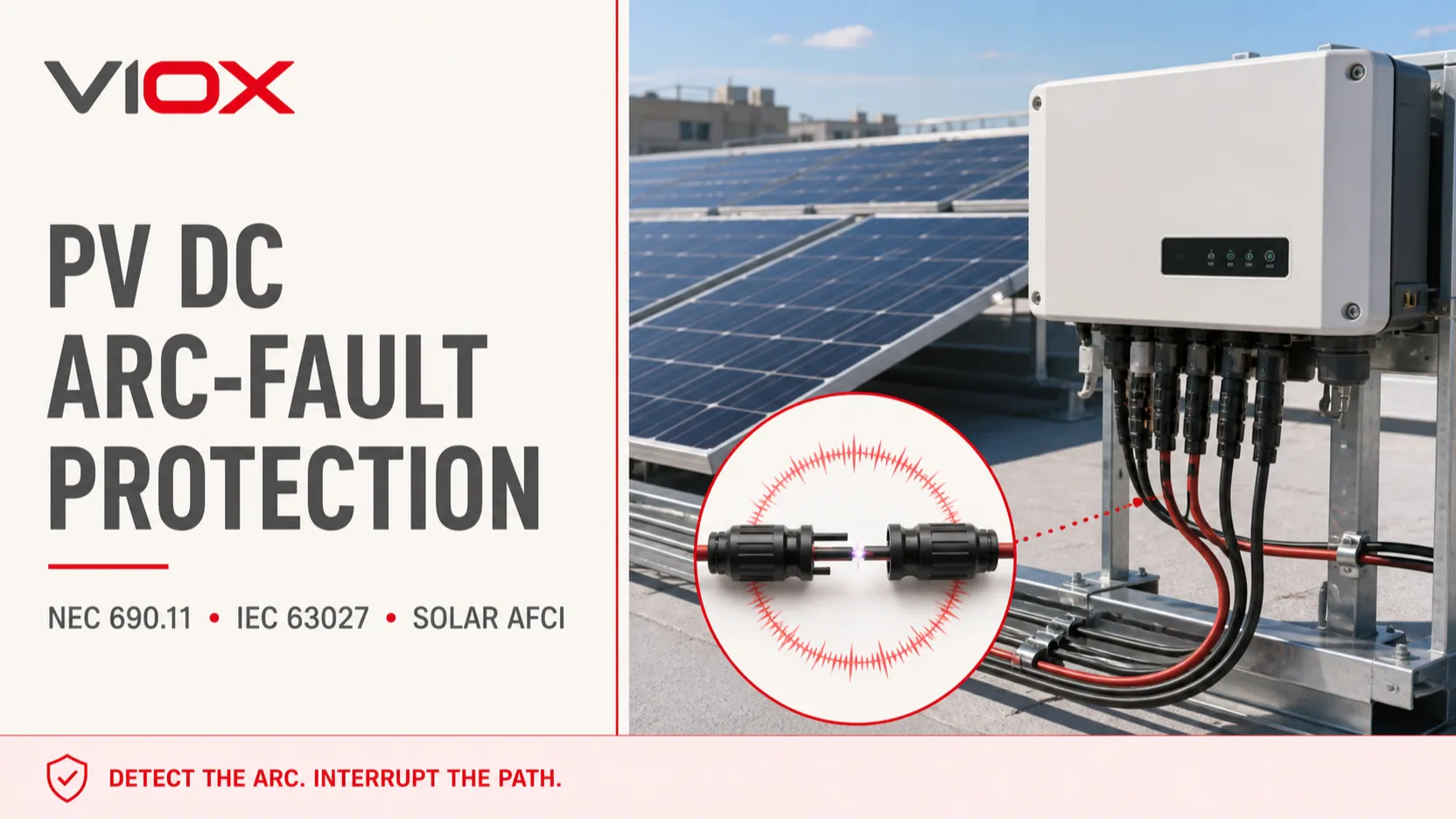
PV DC arc-fault protection ဆိုသည်မှာ photovoltaic ဆားကစ်များတွင် အန္တရာယ်ရှိသော လျှပ်စစ်မီးပွား (arcing) ဖြစ်ပေါ်မှုကို ရှာဖွေဖော်ထုတ်ပေးသည့် အထူးပြုလုံခြုံရေးလုပ်ဆောင်ချက်တစ်ခုဖြစ်သည်။ ၎င်းကို ဖျူးစ် (fuse)၊ DC miniature circuit breaker (MCB)၊ surge protective device (SPD)၊ isolator သို့မဟုတ် သာမန်အိမ်သုံး AC arc-fault device များက အလိုအလျောက် လုပ်ဆောင်ပေးနိုင်ခြင်းမရှိပါ။.
အများဆုံးနှိုင်းယှဉ်လေ့ရှိသော ရည်ညွှန်းချက်နှစ်ခုမှာ မတူညီသော ရည်ရွယ်ချက်များအတွက် ဖြစ်သည်-
- NEC 690.11 သည် မြောက်အမေရိက၏ တပ်ဆင်မှုဆိုင်ရာ စည်းမျဉ်းလိုအပ်ချက်တစ်ခုဖြစ်သည်။ မကြာသေးမီက ထုတ်ဝေခဲ့သော NEC ဗားရှင်းများတွင်၊ လျှပ်ကူးပစ္စည်းများကြား 80 V DC သို့မဟုတ် ထို့ထက်ပို၍ လည်ပတ်နေသော DC ဆားကစ်များပါဝင်သည့် PV စနစ်များအတွက်၊ ကျင့်သုံးနေသော NEC ဗားရှင်း၊ ၎င်း၏ ချွင်းချက်များ၊ ဒေသဆိုင်ရာ ပြင်ဆင်ချက်များနှင့် သက်ဆိုင်ရာ အာဏာပိုင်အဖွဲ့အစည်း (AHJ) တို့၏ သတ်မှတ်ချက်များအရ PV arc-fault protection တပ်ဆင်ရန် ယေဘုယျအားဖြင့် လိုအပ်ပါသည်။.
- IEC 63027:2023 သည် 1500 V DC အထိရှိသော PV ဆားကစ်များတွင် DC arc များကို ရှာဖွေဖော်ထုတ်ပြီး လိုအပ်ပါက ဖြတ်တောက်ပေးသည့် ကိရိယာများအတွက် နိုင်ငံတကာ ထုတ်ကုန်စွမ်းဆောင်ရည်နှင့် စမ်းသပ်မှုဆိုင်ရာ စံနှုန်းတစ်ခုဖြစ်သည်။ ၎င်းသည် နိုင်ငံတိုင်း သို့မဟုတ် PV စီမံကိန်းတိုင်းတွင် ထိုကဲ့သို့သော ကိရိယာများ တပ်ဆင်ရမည်ဟု ကိုယ်တိုင်သတ်မှတ်ထားခြင်း မရှိပါ။.
- UL 1699B သည် နေရောင်ခြည်စွမ်းအင်သုံး (photovoltaic) DC arc-fault circuit ကာကွယ်ရေးကိရိယာများအတွက် အသုံးပြုသည့် မြောက်အမေရိက ထုတ်ကုန်စံနှုန်းတစ်ခု ဖြစ်သည်။.
အဓိက အင်ဂျင်နီယာဆိုင်ရာ အချက်မှာ-
Series arc တစ်ခုသည် ပုံမှန်လည်ပတ်နေသော ဝန်အား (load) ထက် လျှပ်စီးကြောင်း ပိုနည်းနိုင်သည်။ ထို့ကြောင့် စံသတ်မှတ်ချက်အရ လျှပ်စီးကြောင်းလွန် ကာကွယ်ရေးစနစ် (overcurrent protection) သည် arc ကြောင့် အပူများ စုပုံနေသော်လည်း ဆက်လက်ပိတ်ထားနိုင် (closed) သည်။.
သော့ထုတ်ယူမှုများ
- NEC 690.11 သည် ဒီဇိုင်နာတစ်ဦးအား အောက်ပါတို့ကို အသိပေးသည် တပ်ဆင်မှုတစ်ခုတွင် မည်သည့်အချိန်၌ ကာကွယ်မှု လိုအပ်သည်ကို အတည်ပြုထားသော NEC မူဘောင်အောက်တွင် ဖြစ်ပြီး၊ IEC 63027 သည် ထုတ်လုပ်သူ သို့မဟုတ် ဝယ်ယူသူအား အောက်ပါတို့ကို အသိပေးသည် PV arc-detection ကိရိယာများကို မည်သို့ အမျိုးအစားခွဲခြားပြီး စမ်းသပ်ရမည်ကို ၎င်း၏ နယ်ပယ်အတွင်းတွင် ဖြစ်သည်။.
- IEC 63027 သည် ၎င်း၏ စမ်းသပ်မှုလုပ်ငန်းစဉ်များကို အောက်ပါတို့အပေါ် အဓိကထားဆောင်ရွက်သည် series arcs (စီးရီးလျှပ်စစ်မီးပွားများ). ၎င်းသည် ထောက်လှမ်းခြင်းသာပြုလုပ်သော ကိရိယာများနှင့် ထောက်လှမ်းခြင်းနှင့် ဖြတ်တောက်ခြင်းတို့ကို ပေါင်းစပ်လုပ်ဆောင်သော ကိရိယာနှစ်မျိုးလုံးကို အသိအမှတ်ပြုသည်။.
- "AFCI" ဟု အမှတ်အသားပြုထားသော ဆိုလာအင်ဗာတာတစ်ခုကို အတိုကောက်အမည်တစ်ခုတည်းဖြင့် အတည်ပြု၍မရပါ။ ၎င်း၏ စာရင်းဝင်မှု သို့မဟုတ် စမ်းသပ်မှုစံနှုန်း၊ ကာကွယ်ပေးထားသော ဆားကစ်ဧရိယာ၊ ဗို့အား/လျှပ်စီးကြောင်း အတိုင်းအတာ၊ စထရင် (strings) နှင့် ချန်နယ်အရေအတွက်၊ ဖြတ်တောက်သည့်နည်းလမ်း၊ ဖာမ်ဝဲ (firmware) နှင့် ပြန်လည်ချိတ်ဆက်သည့် လုပ်ဆောင်ချက်တို့ကို အတည်ပြုပါ။.
- အင်ဗာတာ၏ အဝင်လမ်းကြောင်းကို ဖွင့်လိုက်ခြင်းဖြင့် စောင့်ကြည့်နေသော လျှပ်စီးကြောင်းလမ်းကြောင်းရှိ စီးရီးလျှပ်စစ်မီးပွားကို ငြိမ်းသတ်နိုင်သော်လည်း ဖြစ်နိုင်ခြေရှိသော အပြိုင် (parallel) သို့မဟုတ် မြေကြီးနှင့်သက်ဆိုင်သော လျှပ်စစ်မီးပွားတိုင်းကို ဖယ်ရှားပေးနိုင်မည်ဟု အာမမခံနိုင်ပါ။ ကာကွယ်ရေးတည်ဆောက်ပုံသည် ချို့ယွင်းချက်အမျိုးအစားနှင့် ကိုက်ညီရမည်။.
- ကွန်နက်တာချိတ်ဆက်မှု၊ crimp အရည်အသွေး၊ တာမီနယ် တင်းအား (torque)၊ ကေဘယ်လ်ထောက်ကူမှု၊ ရေဝင်ရောက်မှုနှင့် စတင်အသုံးပြုခြင်းဆိုင်ရာ မှတ်တမ်းများသည် မရှိမဖြစ်လိုအပ်နေဆဲဖြစ်သည်။ လျှပ်စစ်မီးပွားထောက်လှမ်းသည့် အီလက်ထရောနစ်စနစ်များသည် PV တပ်ဆင်မှု အားနည်းချက်များကို အစားထိုးပေးနိုင်မည်မဟုတ်ပါ။.
PV DC Arc Fault ဆိုသည်မှာ အဘယ်နည်း။
လျှပ်စစ်မီးပွား (Arc) ဆိုသည်မှာ အိုင်ယွန်ဓာတ်ပြုထားသော ဓာတ်ငွေ့များမှတစ်ဆင့် အလိုအလျောက် ဆက်လက်ဖြစ်ပေါ်နေသော လျှပ်စစ်ဓာတ်လွှတ်ခြင်းဖြစ်သည်။ PV အာရေး (array) တစ်ခုတွင် နေရောင်ခြည်သည် မော်ဂျူးများကို စွမ်းအင်ပေးထားပြီး DC လျှပ်စီးကြောင်းတွင် AC လှိုင်းပုံစံကဲ့သို့ သဘာဝအလျောက် လျှပ်စီးကြောင်း သုညသို့ရောက်ရှိသည့် အချက်မရှိပါ။ လျှပ်စစ်မီးပွားတစ်ခု တည်ငြိမ်သွားသည်နှင့် ၎င်းသည် ကွန်နက်တာ၊ လျှပ်ကူးပစ္စည်း၊ တာမီနယ်၊ ဂျန်ရှင်ဘောက်စ် သို့မဟုတ် မော်ဂျူး၏ နေရာအနည်းငယ်ကို ဆက်လက်ပူပြင်းလာစေနိုင်သည်။.
အဖြစ်များသော စတင်ဖြစ်ပွားသည့်အချက်များမှာ အောက်ပါအတိုင်းဖြစ်သည် -
- အပြည့်အဝမဝင်သော ချိတ်ဆက်ကိရိယာ (connector)၊;
- ခွင့်ပြုချက်မရှိသော ချိတ်ဆက်ကိရိယာ အမျိုးအစားများကို ပေါင်းစပ်အသုံးပြုခြင်း၊;
- မှားယွင်းသော သို့မဟုတ် မပြည့်စုံသော ကြိုးညှပ်ခြင်း (crimp)၊;
- လျော့ရဲနေသော ပေါင်းစပ်သေတ္တာ (combiner-box) သို့မဟုတ် လျှပ်စစ်ဖြတ်စက် (isolator) တာမီနယ်၊;
- ကွေးညွှတ်ခြင်း၊ တုန်ခါခြင်း သို့မဟုတ် ကြိုးကို ကောင်းစွာမထိန်းသိမ်းခြင်းကြောင့် ပြတ်တောက်သွားသော လျှပ်ကူးကြိုး၊;
- ပွတ်တိုက်မှု၊ တိရစ္ဆာန်များ၊ ခရမ်းလွန်ရောင်ခြည် (UV) ထိတွေ့မှု သို့မဟုတ် တပ်ဆင်မှုလုပ်ငန်းစဉ်ကြောင့် ပျက်စီးသွားသော လျှပ်ကာ (insulation)၊;
- ချိတ်ဆက်မှုနေရာတစ်ဝိုက်တွင် စိုထိုင်းဆ၊ အညစ်အကြေး သို့မဟုတ် သံချေးတက်ခြင်း၊;
- ဂဟေဆက်ထားသောနေရာ၊ မော်ဂျူး၏လျှပ်ကူးကြိုး၊ လျှပ်စစ်ဆက်သွယ်ရေးသေတ္တာ သို့မဟုတ် ဘိုင်ပတ်ဒိုင်အုတ်ချိတ်ဆက်မှု ပျက်စီးခြင်း။.
ချို့ယွင်းချက်များ ပိုမိုဆိုးရွားလာနေသော်လည်း စနစ်က လျှပ်စစ်ဓာတ်အား ဆက်လက်ထုတ်လုပ်နေနိုင်သည်။ ထို့ကြောင့် Arc-fault ကာကွယ်မှုသည် သာမန် overload ကာကွယ်မှုအတွက် အစားထိုးစနစ်မဟုတ်ဘဲ မီးဘေးအန္တရာယ်ကို ထိန်းချုပ်သည့်စနစ်တစ်ခု ဖြစ်သည်။.
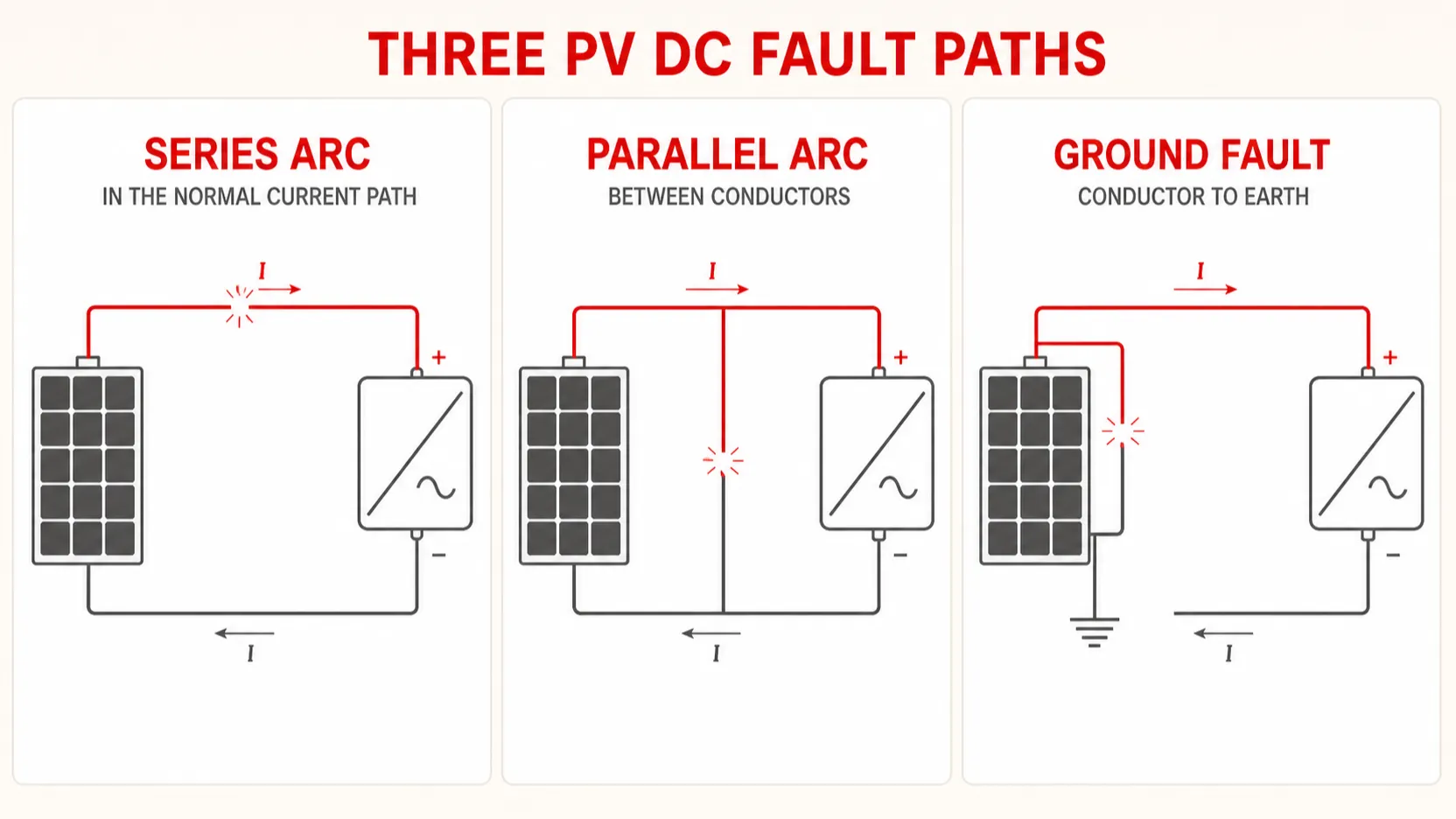
Series Arc နှင့် Parallel Arc နှင့် Ground Fault တို့၏ ကွာခြားချက်များ
ဤချို့ယွင်းချက်အမျိုးအစားများသည် ဆက်စပ်မှုရှိသော်လည်း တစ်ခုနှင့်တစ်ခု အစားထိုး၍မရပါ။.
| ချို့ယွင်းချက်အမျိုးအစား | လက်ရှိလမ်းကြောင်း | Typical origin | သာမန်ကာကွယ်ရေးစနစ်များက အဘယ်ကြောင့် တုံ့ပြန်နိုင်ခြင်း သို့မဟုတ် မတုံ့ပြန်နိုင်ခြင်း | အဓိကဒီဇိုင်းပိုင်းဆိုင်ရာ တုံ့ပြန်မှု |
|---|---|---|---|---|
| Series arc | ရည်ရွယ်ထားသော လျှပ်စီးကြောင်းလမ်းကြောင်းတွင် ပြတ်တောက်မှုတစ်ခု ဖြစ်ပေါ်ခြင်း | ချိတ်ဆက်မှု လျော့ရဲခြင်း၊ ဝါယာကြိုးမျှင် ပြတ်တောက်ခြင်း၊ ဖိညှပ်မှု အားနည်းခြင်း၊ တာမီနယ် လျော့ရဲခြင်း | လျှပ်စစ်မီးပွား (Arc) လျှပ်စီးကြောင်းကို string နှင့် load တို့က ကန့်သတ်ထားသဖြင့် ၎င်းသည် ဖျူးစ် (fuse) သို့မဟုတ် ဘရိတ်ကာ (breaker) ၏ pickup တန်ဖိုးအောက်တွင်သာ ရှိနေနိုင်သည် | သီးသန့်စီးရီး-အာ့ခ် (series-arc) ထောက်လှမ်းစနစ်နှင့် စမ်းသပ်ပြီးဖြစ်သော ဖြတ်တောက်မှုနည်းလမ်း |
| အပြိုင်အာ့ခ် (Parallel arc) | ဗို့အားကွာခြားချက်ရှိသော လျှပ်ကူးပစ္စည်းများအကြားတွင် ဖြစ်ပေါ်ခြင်း | လျှပ်ကာပစ္စည်း ပျက်စီးခြင်း၊ အပေါင်းနှင့် အနှုတ် လျှပ်ကူးပစ္စည်းများ ပျက်စီးခြင်း၊ အညစ်အကြေးများ ကပ်ငြိခြင်း | လျှပ်စီးကြောင်း မြင့်မားနိုင်သော်လည်း ၎င်း၏ ပမာဏသည် array topology နှင့် ရရှိနိုင်သော ရင်းမြစ်လမ်းကြောင်းများအပေါ် မူတည်သည် | လျှပ်စီးကြောင်းလွန်ကဲခြင်း၊ လျှပ်ကာ/မြေပြင်ချို့ယွင်းချက် ကာကွယ်ခြင်း၊ လျှပ်စစ်ပတ်လမ်းခွဲခြားခြင်းနှင့် ချို့ယွင်းချက်အလိုက် ဖြတ်တောက်ခြင်း |
| မြေပြင်ပြတ်ရွေ့ | လျှပ်စီးကြောင်းရှိသော ဝိုင်ယာကြိုးမှ မြေပြင်ချိတ်ဆက်ထားသော သတ္တု သို့မဟုတ် မြေပြင်လမ်းကြောင်းသို့ စီးဆင်းခြင်း | ကြိုးပျက်စီးခြင်း၊ ရေဝင်ခြင်း၊ လျှပ်ကာပစ္စည်းညပ်မိခြင်း | ချို့ယွင်းချက်ကြောင့်ဖြစ်ပေါ်သော လျှပ်စီးကြောင်းသည် သာမန် OCPD ကို အလုပ်မလုပ်စေနိုင်သည့် ပုံစံမျိုးဖြင့် ကန့်သတ်ခံထားရခြင်း သို့မဟုတ် ပြန့်ကျဲနေခြင်း | မြေပြင်ချို့ယွင်းချက်ကို ရှာဖွေခြင်း၊ လျှပ်ကာပစ္စည်းကို စောင့်ကြည့်ခြင်း၊ ချိတ်ဆက်ခြင်းနှင့် သင့်လျော်သော လျှပ်စစ်ဖြတ်တောက်ခြင်း |
NEC 690.11 နှင့် IEC 63027 စံနှုန်း၏ အဓိကစမ်းသပ်မှုနယ်ပယ်တို့သည် PV DC ပတ်လမ်း၏ လျှပ်စစ်စီးဆင်းမှု ပျက်ယွင်းခြင်းကြောင့် ဖြစ်ပေါ်သော ချို့ယွင်းချက်များကို အဓိကထားသည်- series arcs (စီးရီးလျှပ်စစ်မီးပွားများ).
ဤနယ်နိမိတ်သည် အရေးကြီးသည်။ Sandia ၏ သုတေသနပြုချက်အရ စီးရီးနှင့် ပါရာလက် (parallel) လျှပ်စစ်မီးပွားများသည် အလားတူ ကြိမ်နှုန်းမြင့် အချက်ပြမှုများကို ထုတ်ပေးနိုင်သော်လည်း မှန်ကန်သော ဖြတ်တောက်မှုလုပ်ဆောင်ချက်မှာ ကွဲပြားနိုင်ကြောင်း ပြသထားသည်။ စီးရီးလျှပ်စီးကြောင်းလမ်းကြောင်းကို ဖွင့်လိုက်ခြင်းဖြင့် ထိုစီးရီးမီးပွားကို ငြိမ်းသတ်နိုင်သည်။ ပါရာလက်မီးပွားသည် အခြားသော array လမ်းကြောင်းများမှ လျှပ်စစ်ဓာတ်အား ဆက်လက်ရရှိနေနိုင်ပြီး မသင့်လျော်သော တုံ့ပြန်မှုသည် လျှပ်စီးကြောင်းကို ချို့ယွင်းချက်ရှိသည့်နေရာသို့ ပြန်လည်ရောက်ရှိစေနိုင်သည်။ ထို့ကြောင့် စနစ်တစ်ခုသည် ထိုလုပ်ဆောင်ချက်ကို အထူးအကဲဖြတ်ထားခြင်းမရှိပါက ပိုမိုကျယ်ပြန့်သော မီးပွားကာကွယ်မှုစနစ်ရှိသည်ဟု မဆိုသင့်ပါ။.
PV ဖျူးစ် (Fuse) သို့မဟုတ် DC MCB သည် စီးရီးမီးပွားကို အဘယ်ကြောင့် မဖြတ်တောက်နိုင်ခြင်း ဖြစ်နိုင်သနည်း
လျှပ်စီးကြောင်းသည် သတ်မှတ်ထားသော အချိန်နှင့် လျှပ်စီးကြောင်း ပမာဏ (time-current threshold) ထက် ကျော်လွန်သည့်အခါ လျှပ်စီးကြောင်းလွန် ကာကွယ်ရေးကိရိယာများ (Overcurrent protective devices) သည် အလုပ်လုပ်သည်။ Series arc ဖြစ်ပေါ်ခြင်းသည် ပုံမှန်လျှပ်စီးကြောင်းလမ်းကြောင်းတွင် impedance ကို တိုးပွားစေသည်။ ၎င်းသည် လျှပ်စီးကြောင်းကို တိုးစေမည့်အစား လျှော့ချပေးလေ့ရှိသည်။.
ပုံမှန်လည်ပတ်မှုတွင် 9 A ရှိသော string တစ်ခုကို စဉ်းစားကြည့်ပါ။ အကယ်၍ ပျက်စီးနေသော connector တစ်ခုတွင် series arc စတင်ဖြစ်ပေါ်ပါက၊ လျှပ်စီးကြောင်းသည် string-fuse သို့မဟုတ် breaker ၏ သတ်မှတ်ချက်ထက် ကျော်လွန်မည့်အစား လည်ပတ်မှုအဆင့် သို့မဟုတ် ထိုအဆင့်အောက်တွင်သာ ရှိနေနိုင်သည်။ သို့သော်လည်း ထိုသေးငယ်သော arc gap သည် လျှပ်ကာပစ္စည်းများကို မီးသွေးဖြစ်စေရန် သို့မဟုတ် အနီးနားရှိ ပိုလီမာပစ္စည်းများကို မီးလောင်ကျွမ်းစေရန် လုံလောက်သော အပူချိန်ကို ထုတ်ပေးနိုင်သည်။.
ထို့ကြောင့် အောက်ပါကိရိယာများသည် series-arc ကာကွယ်မှုကို အလိုအလျောက် မပေးနိုင်ခြင်းဖြစ်သည်-
| ကိရိယာ | အဓိကလုပ်ဆောင်ချက် | ၎င်းသည် အဘယ်ကြောင့် PV arc detector မဟုတ်သနည်း |
|---|---|---|
| gPV fuse | PV လျှပ်ကူးပစ္စည်းများနှင့် module များကို သတ်မှတ်ထားသော လျှပ်စီးကြောင်းလွန် အခြေအနေများမှ ကာကွယ်ပေးသည် | Series arc တစ်ခုသည် လုံလောက်သော လျှပ်စီးကြောင်းလွန်မှုကို မဖြစ်ပေါ်စေနိုင်ပါ |
| DC MCB သို့မဟုတ် MCCB | ၎င်း၏ သတ်မှတ်ထားသော DC အသုံးပြုမှုအတွင်း ဝန်ပိုခြင်း (overload) နှင့် ဝါယာရှော့ (short-circuit) ဖြစ်ပေါ်သော လျှပ်စီးကြောင်းများကို ဖြတ်တောက်ပေးသည်။ | အပူ-သံလိုက် (Thermal-magnetic) သို့မဟုတ် အီလက်ထရောနစ် လျှပ်စီးကြောင်းပိုကို သိရှိနိုင်သောစနစ်သည် လျှပ်စစ်မီးပွား (arc) ၏ ပုံစံကို အလိုအလျောက် ခွဲခြားသတ်မှတ်ပေးနိုင်ခြင်း မရှိပါ။ |
| SPD | ရုတ်တရက်ဖြစ်ပေါ်လာသော ဗို့အားမြင့်တက်မှု (transient overvoltage) စွမ်းအင်ကို လမ်းကြောင်းလွှဲပေးသည်။ | ၎င်းသည် စီးရီးအမျိုးအစား လျှပ်စစ်မီးပွားများ (series arcs) အတွက် string-current ဆူညံသံများကို စဉ်ဆက်မပြတ် ခွဲခြမ်းစိတ်ဖြာခြင်း မပြုလုပ်ပါ။ |
| DC isolator | ၎င်း၏ သတ်မှတ်ထားသော အဆင့်သတ်မှတ်ချက်အတွင်း ခလုတ်ဖွင့်/ပိတ်ခြင်း သို့မဟုတ် လျှပ်စစ်ပိုင်းခြားခြင်း (isolation) ကို ဆောင်ရွက်ပေးသည်။ | ၎င်းသည် လည်ပတ်ရန် အမိန့်ပေးချက် လိုအပ်ပြီး ပုံမှန်အားဖြင့် လျှပ်စစ်မီးပွား (arc) ကို ထောက်လှမ်းနိုင်ခြင်း မရှိပါ။ |
| မြေကြီးသို့ လျှပ်စီးယိုစိမ့်မှု ထောက်လှမ်းကိရိယာ (Ground-fault detector)။ | မြေကြီးသို့ မရည်ရွယ်ဘဲ လျှပ်စီးယိုစိမ့်ခြင်း သို့မဟုတ် လျှပ်ကာပစ္စည်း ပျက်စီးယိုယွင်းခြင်းကို ခွဲခြားသတ်မှတ်ပေးသည်။ | လျှပ်ကူးပစ္စည်းအချင်းချင်းကြားရှိ စီးဆင်းမှုပြတ်တောက်ခြင်းသည် မြေကြီးသို့စီးဆင်းသော လျှပ်စီးကြောင်း (ground current) ကို ဖြစ်ပေါ်စေမည်မဟုတ်ပါ။ |
| AC AFDD/AFCI | AC နောက်ဆုံးအဆင့် လျှပ်စစ်ပတ်လမ်းများအတွင်း သတ်မှတ်ထားသော လျှပ်စစ်မီးပွား (arc) ပုံစံများကို ထောက်လှမ်းပေးသည်။ | လူနေအိမ်သုံး AC အယ်လဂိုရီသမ်များနှင့် ထုတ်ကုန်စံနှုန်းများသည် PV DC ၏ စွမ်းဆောင်ရည်ကို သတ်မှတ်ပေးခြင်းမရှိပါ။ |
ဒီဇိုင်းအရ လိုအပ်သည့်နေရာများတွင် ဤကိရိယာများသည် ဆက်လက်လိုအပ်နေဆဲဖြစ်သည်။ Arc-fault ကာကွယ်မှုသည် အပိုဆောင်းညှိနှိုင်းထားသော အလွှာတစ်ခုသာဖြစ်ပြီး အခြားကာကွယ်မှုများကို အစားထိုးခြင်းမဟုတ်ပါ။ PV အတွက် သတ်မှတ်ထားသော DC ပတ်လမ်းကာကွယ်မှု, ၊ ဖျူးစ်များ၊ လျှပ်စီးကြောင်းမြင့်တက်မှုမှ ကာကွယ်ပေးသည့်ကိရိယာများ (surge protection) သို့မဟုတ် ဘေးကင်းလုံခြုံစွာ လျှပ်စစ်ဖြတ်တောက်ခြင်း။.
NEC 690.11 တွင် လိုအပ်ချက်များ
NEC 690.11 ၏ ခေါင်းစဉ်မှာ Arc-Fault Circuit Protection (Direct Current) ဖြစ်သည်။. မကြာသေးမီက ထုတ်ပြန်ခဲ့သော NEC စည်းမျဉ်းများအရ၊ DC ဆားကစ်များဖြင့် လည်ပတ်နေသော PV စနစ်များသည် မည်သည့်လျှပ်ကူးပစ္စည်းနှစ်ခုကြားတွင်မဆို 80 V DC သို့မဟုတ် ထို့ထက်ပိုသော ဗို့အားရှိပါက စာရင်းဝင် PV arc-fault circuit interrupter သို့မဟုတ် အလားတူကာကွယ်မှုပေးနိုင်သော စာရင်းဝင်စနစ်အစိတ်အပိုင်းများ လိုအပ်သည်။.
ကာကွယ်ထားသောစနစ်သည် လျှပ်ကူးပစ္စည်း၊ ချိတ်ဆက်မှု၊ မော်ဂျူး သို့မဟုတ် အခြား PV DC အစိတ်အပိုင်းများတွင် လျှပ်စီးကြောင်းပြတ်တောက်မှုကြောင့် ဖြစ်ပေါ်လာသော လျှပ်စစ်မီးပွား (arcing) ကို ရှာဖွေပြီး ဖြတ်တောက်ပေးရန် လိုအပ်သည်။.
NEC 690.11 သည် တပ်ဆင်မှုဆိုင်ရာ စည်းမျဉ်းတစ်ခုဖြစ်သည်။
၎င်း၏ တရားဝင်သက်ရောက်မှုသည် အောက်ပါတို့အပေါ် မူတည်သည် -
- ပြည်နယ်၊ မြို့၊ လျှပ်စစ်ဓာတ်အားပေးလုပ်ငန်း သို့မဟုတ် အခြားသော အာဏာပိုင်အဖွဲ့အစည်းတစ်ခုခုမှ အတည်ပြုကျင့်သုံးထားသည့် NEC ဗားရှင်း၊;
- ဒေသဆိုင်ရာ ပြင်ဆင်ချက်များ၊;
- အဆိုပါဗားရှင်းတွင် ဖော်ပြထားသည့်အတိုင်း DC ဆားကစ်သည် အဆောက်အအုံတစ်ခုပေါ်တွင် ရှိနေခြင်း၊ အတွင်းတွင် ရှိနေခြင်း သို့မဟုတ် အဆောက်အအုံနှင့် ဆက်စပ်နေခြင်း ရှိ၊ မရှိ၊;
- ဖော်ပြပါ ချွင်းချက်တစ်ခုသည် တိကျသော လမ်းကြောင်းနှင့် အဆောက်အအုံအတွက် အကျုံးဝင်ခြင်း ရှိ၊ မရှိ၊;
- စက်ပစ္စည်းများ၏ စာရင်းသွင်းချက်နှင့် တပ်ဆင်မှုဆိုင်ရာ လမ်းညွှန်ချက်များ၊;
- တင်ပြထားသော ဒီဇိုင်းကို AHJ (သက်ဆိုင်ရာ အာဏာပိုင်အဖွဲ့အစည်း) မှ လက်ခံခြင်း ရှိ၊ မရှိ။.
မကြာသေးမီက ပြင်ဆင်ထားသော ကုဒ်ဘာသာစကားတွင် သတ်မှတ်ထားသော သတ္တုဝိုင်ယာကြိုးသွယ်တန်းသည့် နည်းလမ်းများ သို့မဟုတ် မြေအောက်တွင် လျှပ်ကူးပစ္စည်းများကို တပ်ဆင်သည့်အခါ အဆောက်အအုံဆိုင်ရာ အခြေအနေများနှင့် သက်ဆိုင်သည့် သို့မဟုတ် အပြင်ဘက်တွင်ရှိသော သီးခြား PV ဆားကစ်များအတွက် ချွင်းချက်များ ပါဝင်သည်။ ကုဒ်စက်ဝန်းများတစ်လျှောက်တွင် အသုံးအနှုန်းများ ပြောင်းလဲသွားပါသည်။ ဒေသအလိုက် အတည်ပြုထားသော ဗားရှင်းကို စစ်ဆေးခြင်းမပြုဘဲ ပုံစံဟောင်းမှတ်စုတစ်ခုမှ ချွင်းချက်တစ်ခုကို ပရောဂျက်အသစ်တစ်ခုသို့ ကူးယူခြင်း မပြုပါနှင့်။.
အကြီးစား PV လျှပ်စစ်ဓာတ်အားပေးစခန်းများသည် အပိုဒ် ၆၉၁ (Article 691) ၏ ပြဋ္ဌာန်းချက်များနှင့် ပရောဂျက်အလိုက် မီးဘေးကာကွယ်ရေး လိုအပ်ချက်များဖြင့်လည်း အကျုံးဝင်နိုင်ပါသည်။ "မြေပြင်တွင် တပ်ဆင်ထားခြင်း" (Ground-mounted) ဟူသော အချက်အလက်တစ်ခုတည်းဖြင့် လိုက်နာမှုရှိ၊ မရှိ ဆုံးဖြတ်ရန် မလုံလောက်ပါ။.
NEC 690.11 သည် rapid-shutdown စည်းမျဉ်းမဟုတ်ပါ။
NEC 690.11 နှင့် NEC 690.12 တို့သည် မတူညီသော အန္တရာယ်များကို ကိုင်တွယ်ဖြေရှင်းပေးသည်-
- Arc-fault protection (လျှပ်စစ်မီးပွားကြောင့်ဖြစ်သော အန္တရာယ်ကာကွယ်မှု) သည် အန္တရာယ်ရှိသော လျှပ်စစ်ပြတ်တောက်မှု မီးပွားများကို ထောက်လှမ်းပြီး လျှပ်စစ်စီးဆင်းမှုကို ရပ်တန့်စေသည်။.
- Rapid shutdown (အရေးပေါ် လျှပ်စစ်ဖြတ်တောက်မှု) သည် အဆောက်အအုံများပေါ်ရှိ ဆိုလာပြားများပတ်လည်ရှိ လျှပ်ကူးပစ္စည်းများ၏ ဗို့အားကို ထိန်းချုပ်ပေးခြင်းဖြင့် ကယ်ဆယ်ရေးသမားများ လျှပ်စစ်ရှော့ခ်ဖြစ်နိုင်ခြေကို လျှော့ချပေးသည်။.
ထုတ်ကုန်တစ်ခုတည်းသည် လုပ်ဆောင်ချက်နှစ်ခုလုံးတွင် ပါဝင်နိုင်သော်လည်း၊ အပိုင်းတစ်ခုနှင့် ကိုက်ညီရုံဖြင့် အခြားအပိုင်းနှင့် ကိုက်ညီသည်ဟု အလိုအလျောက် သတ်မှတ်၍မရပါ။.
IEC 63027:2023 သည် အမှန်တကယ်တွင် မည်သည့်အရာများကို အကျုံးဝင်သနည်း
IEC 63027:2023, နေရောင်ခြည်စွမ်းအင်သုံး လျှပ်စစ်စနစ်များ – DC လျှပ်စစ်မီးပွား (Arc) ရှာဖွေခြင်းနှင့် ဖြတ်တောက်ခြင်း, ၊ နေရောင်ခြည်စွမ်းအင်သုံး (PV) စနစ် ဆားကစ်များအတွင်းရှိ DC လျှပ်စစ်မီးပွားများကို ရှာဖွေရန်နှင့် လိုအပ်ပါက ဖြတ်တောက်ရန် အသုံးပြုသည့် ကိရိယာများနှင့် သက်ဆိုင်သည်။.
၎င်း၏ ထုတ်ပြန်ထားသော နယ်ပယ်တွင် အရေးကြီးသော ကန့်သတ်ချက် သုံးခုကို သတ်မှတ်ထားသည် -
- ၎င်းသည် ရှာဖွေခြင်းအတွက် စမ်းသပ်မှု လုပ်ထုံးလုပ်နည်းများကို ပံ့ပိုးပေးသည် series arcs (စီးရီးလျှပ်စစ်မီးပွားများ) PV ဆားကစ်များအတွင်း၌ ဖြစ်သည်။.
- ၎င်းသည် ထိုလျှပ်စစ်မီးပွားများကို ဖြတ်တောက်ရန် အသုံးပြုသည့် ကိရိယာများ၏ တုံ့ပြန်မှုကို ကိုင်တွယ်ဖြေရှင်းသည်။.
- ၎င်းသည် အများဆုံး PV ရင်းမြစ်-ဆားကစ် ဗို့အား မကျော်လွန်သော PV စနစ်များနှင့် ချိတ်ဆက်ထားသည့် ကိရိယာများကို အကျုံးဝင်သည်။ 1500 V DC.
၎င်းသည် ထုတ်ကုန်စံနှုန်းတစ်ခုသာဖြစ်ပြီး တစ်ကမ္ဘာလုံးဆိုင်ရာ တပ်ဆင်ရမည့် မဖြစ်မနေစည်းမျဉ်းမဟုတ်ပါ။ လျှပ်စစ်ဝါယာသွယ်တန်းခြင်းဆိုင်ရာ အမျိုးသားစည်းမျဉ်းများ၊ အဆောက်အအုံဆိုင်ရာဥပဒေများ၊ တင်ဒါသတ်မှတ်ချက်များ၊ အာမခံကုမ္ပဏီများ၏ လိုအပ်ချက်များ သို့မဟုတ် ဒေသဆိုင်ရာ အာဏာပိုင်များကသာ Arc-fault ကာကွယ်ရေးစနစ်ကို မည်သည့်နေရာတွင် တပ်ဆင်ရမည်ကို ဆုံးဖြတ်ပေးပါသည်။.
AFD, AFI နှင့် AFPE
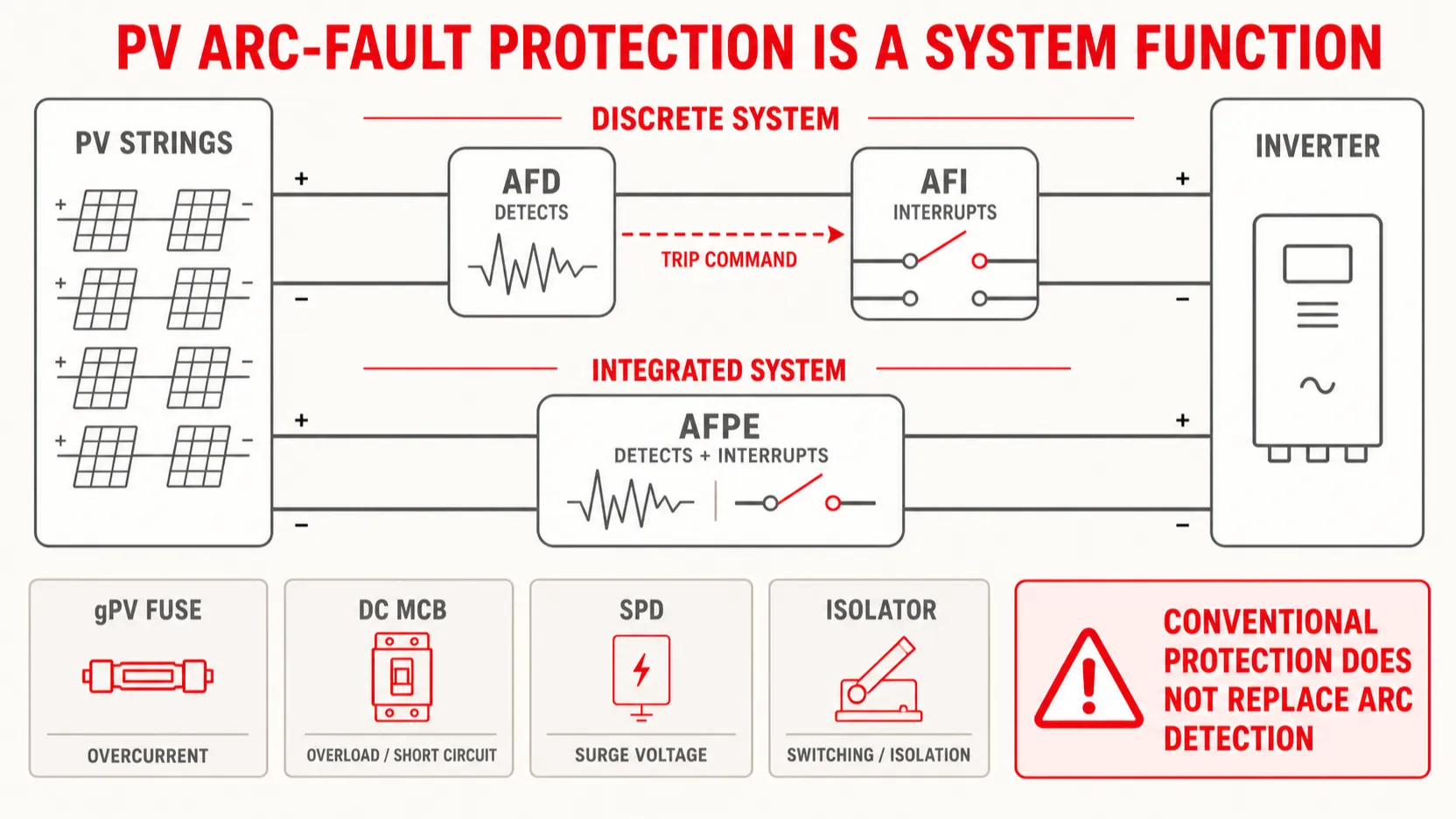
IEC ဝေါဟာရဗေဒအရ အာရုံခံခြင်း (sensing) နှင့် လျှပ်စစ်ဖြတ်တောက်ခြင်း (interruption) လုပ်ဆောင်ချက်များကို ခွဲခြားသတ်မှတ်ထားသည်-
| Term | အဓိပ္ပာယ် | လုပ်ဆောင်ချက် |
|---|---|---|
| AFD | Arc-fault detector (Arc-fault ရှာဖွေကိရိယာ) | Arc ဖြစ်ပေါ်မှုကို ရှာဖွေပေးပြီး သက်ဆိုင်ရာ အချက်ပြမှု သို့မဟုတ် အမိန့်ပေးချက်ကို ထုတ်ပေးသည် |
| AFI | Arc-fault interrupter (Arc-fault ဖြတ်တောက်ကိရိယာ) | အမိန့်ပေးချက်ကို လက်ခံရရှိပြီး လျှပ်စစ်မီးပွား (arc) လမ်းကြောင်းကို ဖြတ်တောက်ပေးသည် |
| AFPE | လျှပ်စစ်မီးပွားကြောင့်ဖြစ်သော အမှားအယွင်းများကို ကာကွယ်ပေးသည့်ကိရိယာ | လျှပ်စစ်မီးပွားကို ရှာဖွေခြင်းနှင့် ဖြတ်တောက်ခြင်းတို့ကို ပေါင်းစပ်ထားသည့် ပြည့်စုံသော ကာကွယ်ရေးလုပ်ဆောင်ချက်ဖြစ်သည် |
| AFS | လျှပ်စစ်မီးပွား ရှာဖွေရေးအာရုံခံကိရိယာ | ရှာဖွေရေးဖွဲ့စည်းပုံနှင့် ဆက်စပ်နေသော အာရုံခံအစိတ်အပိုင်း သို့မဟုတ် လမ်းကြောင်း |
ဤကွဲပြားခြားနားချက်သည် ဝယ်ယူရာတွင် အဖြစ်များသော အမှားတစ်ခုကို ကာကွယ်ပေးသည်၊ ၎င်းမှာ- AFD သည် လျှပ်စစ်မီးပွား (arc) ကို ၎င်းကိုယ်တိုင် ဖြတ်တောက်ခြင်းမပြုဘဲ ရှာဖွေဖော်ထုတ်နိုင်သည်။. အကယ်၍ ထုတ်ကုန်သည် ရှာဖွေဖော်ထုတ်ခြင်းသက်သက်သာဖြစ်ပါက၊ ပရောဂျက်တွင် လိုက်ဖက်ညီသော AFI၊ ဆက်သွယ်ရေးလင့်ခ်၊ အမှားအယွင်းဖြစ်ပေါ်ပါက ဘေးကင်းစေမည့်စနစ် (fail-safe behavior) နှင့် အတည်ပြုထားသော စနစ်တစ်ခုလုံးကို ဖော်ပြရမည်။.
အမျိုးအစားခွဲခြားခြင်းနှင့် လွှမ်းခြုံမှုသည် အရေးကြီးသည်။
IEC 63027 အမျိုးအစားခွဲခြားခြင်းသည် လက်တွေ့တပ်ဆင်မှုဆိုင်ရာ လက္ခဏာရပ်များကို ဖော်ပြရန် ရည်ရွယ်ပြီး ၎င်းတို့တွင် အောက်ပါတို့ပါဝင်သည် -
- PV စနစ်အတွင်း ကာကွယ်မှုလွှမ်းခြုံနိုင်မှု၊;
- ပေါင်းစပ်ထားသော၊ သီးခြားဖြစ်သော သို့မဟုတ် ဖြန့်ကျက်ထားသော အကောင်အထည်ဖော်မှု၊;
- ရှာဖွေဖော်ထုတ်ခြင်းသက်သက်နှင့် ရှာဖွေဖော်ထုတ်ပြီး ဖြတ်တောက်ခြင်းလုပ်ဆောင်ချက်တို့အကြား ကွာခြားမှု၊;
- စောင့်ကြည့်နိုင်သည့် အများဆုံး string အရေအတွက်နှင့် input များ၊;
- ထောက်လှမ်းသည့် ချန်နယ်များ သို့မဟုတ် အာရုံခံကိရိယာများ၏ အရေအတွက်နှင့် ခွဲဝေချထားမှု။;
- လုပ်ဆောင်ချက်ပြီးနောက် ပြန်လည်ချိတ်ဆက်သည့်နည်းလမ်း။.
အင်ဗာတာနှစ်ခုစလုံးသည် မတူညီသော ကြိုးအရေအတွက်၊ မတူညီသော လျှပ်ကူးပစ္စည်းအပိုင်းများ သို့မဟုတ် မတူညီသော ဖြတ်တောက်ခြင်းလုပ်ဆောင်ချက်များကို အကျုံးဝင်နေသော်လည်း "IEC 63027 arc detection" ကို ကြော်ငြာနိုင်ပါသည်။ ထုတ်ကုန်အမျိုးအစားအလိုက် လက်ကမ်းစာစောင်ကို အတည်ပြုမည့်အစား တိကျသော မော်ဒယ်နှင့် ဖာမ်ဝဲအတွက် အမျိုးအစားခွဲခြားမှုနှင့် စမ်းသပ်မှုအထောက်အထားများကို ရယူပါ။.
NEC 690.11 နှင့် IEC 63027 နှင့် UL 1699B တို့၏ နှိုင်းယှဉ်ချက်
| ကုသိုလ်ကံ | NEC 690.11 | UL 1699B | IEC 63027:2023 |
|---|---|---|---|
| စာရွက်စာတမ်း၏ အခန်းကဏ္ဍ | လျှပ်စစ်တပ်ဆင်မှုဆိုင်ရာ စည်းမျဉ်းလိုအပ်ချက် | မြောက်အမေရိက ထုတ်ကုန်ဘေးကင်းလုံခြုံရေးစံနှုန်း | နိုင်ငံတကာ ထုတ်ကုန်စွမ်းဆောင်ရည်နှင့် စမ်းသပ်မှုစံနှုန်း |
| အဓိကအသုံးပြုပုံ | NEC စည်းမျဉ်းကို ကျင့်သုံးသည့် နယ်ပယ်များတွင် PV DC arc-fault ကာကွယ်မှု လိုအပ်သည့်အချိန်ကို သတ်မှတ်ပေးသည်။ | PV DC arc-fault circuit ကာကွယ်ရေးကိရိယာများ၏ အကဲဖြတ်မှု/စာရင်းသွင်းမှုကို ပံ့ပိုးပေးသည်။ | PV DC arc ရှာဖွေရေးနှင့် ရွေးချယ်နိုင်သော ဖြတ်တောက်ရေးကိရိယာများကို အမျိုးအစားခွဲခြားပြီး စမ်းသပ်သည်။ |
| ဥပဒေဆိုင်ရာ သက်ရောက်မှု | အတည်ပြုပြဋ္ဌာန်းပြီးသည့်အခါတွင် အသက်ဝင်ပြီး AHJ (သက်ဆိုင်ရာ အာဏာပိုင်အဖွဲ့အစည်း) မှ အဓိပ္ပာယ်ဖွင့်ဆိုသည်။ | စာရင်းသွင်းခြင်း၊ သတ်မှတ်ချက်များနှင့် ကုဒ်လက်ခံမှုတို့မှတစ်ဆင့် သက်ဆိုင်မှုရှိသည်။ | စျေးကွက်၊ တပ်ဆင်မှုစည်းမျဉ်း သို့မဟုတ် ပရောဂျက်သတ်မှတ်ချက်များတွင် အတည်ပြုလိုက်သည့်အခါ စာချုပ်အရ သို့မဟုတ် ဥပဒေအရ သက်ဆိုင်မှုရှိလာသည်။ |
| ဗို့အားနယ်နိမိတ် | နောက်ဆုံးထုတ်ဝေမှုများတွင် ထုတ်ဝေသည့်ဗားရှင်းနှင့် ချွင်းချက်များအပေါ် မူတည်၍ လျှပ်ကူးပစ္စည်းများကြားတွင် 80 V DC သို့မဟုတ် ထို့ထက်ပိုသော ဗို့အားကို အသုံးပြုသည် | ထုတ်ကုန်၏ သတ်မှတ်ထားသော နယ်ပယ်နှင့် အဆင့်သတ်မှတ်ချက်များကို အသုံးပြုပါ | 1500 V DC အထိရှိသော PV ရင်းမြစ် ဆားကစ်များနှင့် ချိတ်ဆက်ထားသည့် စက်ပစ္စည်းများ |
| အဓိက ချို့ယွင်းချက်အပေါ် အာရုံစိုက်ခြင်း | ရည်ရွယ်ထားသော လျှပ်ကူးမှု ပျက်ကွက်ခြင်းကြောင့် ဖြစ်ပေါ်လာသော Series arcing (စီးရီး လျှပ်စစ်မီးပွား) | စံသတ်မှတ်ချက်၏ နယ်ပယ်အတွင်းရှိ PV DC arc-fault (လျှပ်စစ်မီးပွား ချို့ယွင်းမှု) ကာကွယ်ရေး | Series-arc (စီးရီး လျှပ်စစ်မီးပွား) ကို ရှာဖွေခြင်းနှင့် ဖြတ်တောက်ခြင်း တုံ့ပြန်မှုအတွက် စမ်းသပ်မှု လုပ်ထုံးလုပ်နည်းများ |
| ဖြတ်တောက်ခြင်း (Interruption) | ကာကွယ်မှုရလဒ်၏ အစိတ်အပိုင်းတစ်ခုအဖြစ် လိုအပ်သည် | စာရင်းသွင်းထားသော ကာကွယ်မှုလုပ်ဆောင်ချက်၏ အစိတ်အပိုင်းတစ်ခုအဖြစ် အကဲဖြတ်ထားသည် | စက်ပစ္စည်းနယ်ပယ်တွင် ရွေးချယ်နိုင်သည်- AFD သည် ထောက်လှမ်းခြင်းသာ ပြုလုပ်နိုင်ပြီး AFPE တွင် လျှပ်စစ်ပြတ်တောက်ခြင်း ပါဝင်သည် |
| စီမံကိန်းဆိုင်ရာ အထောက်အထား | ကျင့်သုံးသည့် စည်းမျဉ်းများ၊ ပုံစံများ၊ စာရင်းသွင်းထားသော စက်ပစ္စည်းများ၊ ညွှန်ကြားချက်များနှင့် တာဝန်ရှိအာဏာပိုင် (AHJ) ၏ လက်ခံမှု | စာရင်းသွင်းခြင်း/အသိအမှတ်ပြုခြင်း မှတ်တမ်းနှင့် မော်ဒယ်အမှတ်အသားများ | အမျိုးအစားခွဲခြားခြင်း၊ အသိအမှတ်ပြုလက်မှတ်/စမ်းသပ်မှု အထောက်အထား၊ သတ်မှတ်ချက်များ၊ ဖာမ်ဝဲနှင့် တပ်ဆင်မှုဆိုင်ရာ ကန့်သတ်ချက်များ |
UL Solutions သည် UL 1699B ကို photovoltaic DC arc-fault circuit ကာကွယ်မှုအတွက် စံနှုန်းအဖြစ် သတ်မှတ်သည်။ ထို့ကြောင့် "NEC 690.11 နှင့် ကိုက်ညီသည်" ဟူသော တောင်းဆိုချက်သည် အတွင်းပိုင်း arc-detection algorithm တစ်ခုတည်းအပေါ်တွင်သာ မူတည်နေရုံမကဘဲ သင့်လျော်သော စာရင်းသွင်းမှု သို့မဟုတ် စာရင်းသွင်းထားသော ညီမျှသည့် စနစ်အစိတ်အပိုင်းများဖြင့် ထောက်ခံထားရမည်ဖြစ်သည်။.
IEC 63027 သည် IEC 62606 မဟုတ်ပါ
ဆင်တူသော ဝေါဟာရများသည် ဝယ်ယူသူများကို အထင်မှားစေနိုင်သည်-
- IEC 62606 သည် အိမ်သုံးနှင့် အလားတူ AC ဆားကစ်များအတွက် arc-fault detection devices (AFDDs) များကို ၎င်း၏ နယ်ပယ်အတွင်းတွင် ကိုင်တွယ်ဖြေရှင်းပေးသည်။.
- IEC 63027 သည် photovoltaic စနစ်များအတွက် DC arc ရှာဖွေခြင်းနှင့် ဖြတ်တောက်ခြင်းဆိုင်ရာ ကိရိယာများကို ကိုင်တွယ်ဖြေရှင်းပေးသည်။.
IEC 62606 အရ စမ်းသပ်ထားသော အိမ်သုံး AC AFDD တစ်ခုသည် 1000 V သို့မဟုတ် 1500 V PV string အတွက် အလိုအလျောက် သင့်လျော်မှုမရှိပါ။ လှိုင်းပုံစံ (waveform)၊ ရင်းမြစ်၏ အပြုအမူ၊ switching noise၊ လျှပ်ကာစနစ်၊ ပတ်ဝန်းကျင်အခြေအနေများနှင့် ဖြတ်တောက်ခြင်းဆိုင်ရာ ပြဿနာများမှာ ကွဲပြားခြားနားပါသည်။.
AC နောက်ဆုံးဆားကစ် ကိရိယာအမျိုးအစားအတွက်၊ VIOX ၏ သီးခြားလမ်းညွှန်ချက်ကို ကြည့်ရှုပါ IEC 62606 AFDD ကာကွယ်မှု.
PV Arc-Fault Protection ကို မည်သည့်နေရာတွင် ထားရှိနိုင်သနည်း
မှန်ကန်သော တည်နေရာသည် စမ်းသပ်ထားသည့် ကာကွယ်မှုနယ်ပယ်၊ Array topology၊ String အရေအတွက်နှင့် ဖြတ်တောက်သည့်နည်းလမ်းတို့အပေါ် မူတည်ပါသည်။.
Inverter တွင် ပေါင်းစပ်ထားသော ကာကွယ်မှုစနစ်
Detector သည် DC input တစ်ခု သို့မဟုတ် တစ်ခုထက်ပိုသော အချက်အလက်များကို ခွဲခြမ်းစိတ်ဖြာပြီး၊ တွေ့ရှိပြီးနောက် Inverter သို့မဟုတ် ဆက်စပ်နေသော Switchgear က လျှပ်စီးကြောင်းလမ်းကြောင်းကို ဖြတ်တောက်ပေးပါသည်။.
အားသာချက်များ
- ပြင်ပအစိတ်အပိုင်း အနည်းငယ်သာ လိုအပ်ခြင်း၊;
- MPPT နှင့် လျှပ်စီးကြောင်းဆိုင်ရာ အချက်အလက်များကို ရယူနိုင်ခြင်း၊;
- ဖြစ်ရပ်မှတ်တမ်းတင်ခြင်းနှင့် အဝေးမှ စစ်ဆေးခြင်းများ ပြုလုပ်နိုင်ခြင်း၊;
- String-inverter ဒီဇိုင်းများတွင် အသုံးများခြင်း။.
ဖြေရှင်းရန် လိုအပ်သော မေးခွန်းများ
- စောင့်ကြည့်စစ်ဆေးသည့် input တစ်ခုစီတွင် string အရေအတွက်မည်မျှ ချိတ်ဆက်နိုင်သနည်း။
- string တစ်ခုစီကို သီးခြားစီ စောင့်ကြည့်စစ်ဆေးပါသလား သို့မဟုတ် sensor တစ်ခုမတိုင်မီ string အများအပြားကို ပေါင်းစပ်ထားပါသလား။
- inverter input ကို ဖွင့်လိုက်ခြင်းဖြင့် ကာကွယ်ထားသော အပိုင်းတစ်ခုလုံး၏ လျှပ်စစ်ဓာတ်အား ပြတ်တောက်သွားပါသလား။
- ဤလုပ်ဆောင်ချက်သည် သီးခြား firmware ဗားရှင်း သို့မဟုတ် setting တစ်ခုခုအပေါ် မူတည်ပါသလား။
- array၊ combiner နှင့် inverter အကြားရှိ ကေဘယ်ကြိုးအပိုင်းသည် စမ်းသပ်ထားသော အကျုံးဝင်မှုအတွင်း ပါဝင်ပါသလား။
Combiner-box သို့မဟုတ် string-level ကာကွယ်မှု
array နှင့် ပိုမိုနီးကပ်စွာ ထောက်လှမ်းခြင်းဖြင့် ချို့ယွင်းချက်နေရာကို ပိုမိုကောင်းမွန်စွာ ရှာဖွေနိုင်ပြီး sensing channel တစ်ခုတည်းဖြင့် ကိုယ်စားပြုသည့် string အရေအတွက်ကို လျှော့ချနိုင်သည်။ AFD သို့မဟုတ် AFPE ကို အောက်ပါတို့တွင် ပေါင်းစပ်ထည့်သွင်းနိုင်သည် - PV combiner box သို့မဟုတ် သီးသန့် string ကိရိယာအဖြစ် တပ်ဆင်ထားခြင်း။.
ဤဖွဲ့စည်းပုံသည် အောက်ပါတို့ကို ထည့်သွင်းစဉ်းစားရမည် -
- အပြိုင်ချိတ်ဆက်ထားသော string အရေအတွက်၊;
- ပုံမှန်အလုပ်လုပ်နေသော string များမှ ချို့ယွင်းချက်ရှိသည့်နေရာသို့ စီးဆင်းလာသော လျှပ်စီးကြောင်း၊;
- အာရုံခံကိရိယာ ခွဲဝေချထားမှုနှင့် ချန်နယ်များ၏ လွတ်လပ်စွာလည်ပတ်နိုင်မှု၊;
- DC လျှပ်စီးကြောင်း ဖြတ်တောက်နိုင်စွမ်းရှိသော ဗို့အားနှင့် ဝင်ရိုးစွန်း (polarity)၊;
- ပတ်ဝန်းကျင်အပူချိန်နှင့် အကာအကွယ်ဘူးခွံ၏ ကြံ့ခိုင်မှု၊;
- ဆက်သွယ်ရေးစနစ်နှင့် အရန်ပါဝါ ပျက်စီးမှုများ။;
- string fuses၊ disconnects နှင့် inverter controls တို့နှင့် ညှိနှိုင်းဆောင်ရွက်ခြင်း။.
စံ combiner box တစ်ခုသည် fuses၊ SPD နှင့် DC switch များ ပါဝင်ရုံမျှဖြင့် AFPE ဖြစ်မလာပါ။.
Module-level သို့မဟုတ် ဖြန့်ကျက်ထားသော ကာကွယ်မှုစနစ် (Distributed protection)။
ဖြန့်ကျက်ထားသော အာရုံခံကိရိယာများ (sensors) သို့မဟုတ် ဖြတ်တောက်ကိရိယာများ (interrupters) သည် ကာကွယ်ထားသော ဧရိယာကို ကျဉ်းမြောင်းစေပြီး တည်နေရာရှာဖွေမှုကို ပိုမိုကောင်းမွန်စေသည်။ ၎င်းတို့သည် အစိတ်အပိုင်းအရေအတွက်၊ ခေါင်မိုးပေါ်တွင် တပ်ဆင်ရမှု၊ ဆက်သွယ်ရေးဆိုင်ရာ ရှုပ်ထွေးမှုနှင့် အစားထိုးလဲလှယ်မှုဆိုင်ရာ ထည့်သွင်းစဉ်းစားရမည့်အချက်များကို တိုးပွားစေသည်။.
စီမံကိန်းအနေဖြင့် အောက်ပါအခြေအနေများတွင် မည်သို့ဖြစ်ပျက်မည်ကို စစ်ဆေးအတည်ပြုသင့်သည် -
- module ကိရိယာတစ်ခုသည် ပါဝါ သို့မဟုတ် ဆက်သွယ်ရေး ပြတ်တောက်သွားသည့်အခါ၊;
- string တစ်ခု၏ အစိတ်အပိုင်းတစ်ခုသာ ပွင့်သွားသည့်အခါ၊;
- ဗဟိုထိန်းချုပ်ကိရိယာ (central controller) အသုံးပြု၍မရသည့်အခါ။;
- စက်ပစ္စည်းများအလိုက် firmware ဗားရှင်းများ ကွဲပြားနေခြင်း၊;
- အပြိုင်ချိတ်ဆက်ထားသော string များမှတစ်ဆင့် ချို့ယွင်းချက်တစ်ခုသည် လျှပ်စစ်ဓာတ်အား ဆက်လက်ရှိနေခြင်း။.
AFCI ကို ဖျူးစ်များ၊ ဘရိတ်ကာများ၊ SPD များနှင့် Isolator များဖြင့် ညှိနှိုင်းအသုံးပြုခြင်း
ပြီးပြည့်စုံသော PV DC ကာကွယ်ရေးဒီဇိုင်းတစ်ခုတွင် ကာကွယ်ရေးအလွှာတစ်ခုစီအတွက် တာဝန်တစ်ခုစီ သတ်မှတ်ပေးထားသည်။.
| ကာကွယ်ရေးအလွှာ | ထောက်လှမ်းခြင်း သို့မဟုတ် ထိန်းချုပ်ခြင်း | ညှိနှိုင်းမှုဆိုင်ရာ မေးခွန်း |
|---|---|---|
| စထရင်ဖျူး (String fuse) | ပြောင်းပြန်လျှပ်စီးကြောင်းနှင့် သတ်မှတ်ထားသော လျှပ်စီးကြောင်းလွန် အခြေအနေများ | ၎င်း၏ rating သည် မော်ဂျူး၏ အများဆုံးစီးရီးဖျူးစ် rating နှင့် အပြိုင် string လျှပ်စီးကြောင်းတို့နှင့် ကိုက်ညီမှုရှိပါသလား။ |
| DC breaker | ဝန်ပိုခြင်း/ဝါယာရှော့ဖြစ်ခြင်းမှ ကာကွယ်ပေးခြင်းနှင့် သတ်မှတ်ထားသည့်အတိုင်း လျှပ်စစ်ပတ်လမ်းခွဲခြားပေးခြင်း | ၎င်းသည် PV DC ဗို့အား၊ ဝင်ရိုးစွန်း (polarity)၊ ချို့ယွင်းချက်ဖြစ်ပေါ်သည့် လျှပ်စီးကြောင်း (fault current) နှင့် အချိန်-လျှပ်စီးကြောင်းဆိုင်ရာ တာဝန်ယူနိုင်မှုတို့အတွက် သတ်မှတ်ချက်နှင့် ကိုက်ညီပါသလား? |
| SPD | လျှပ်စီးကြောင်းကြောင့် ဖြစ်ပေါ်လာသော မိုးကြိုးနှင့် ဗို့အားမြင့်တက်မှုများ | SPD သည် PV ဗို့အားတည်ဆောက်ပုံနှင့် မြေချစနစ် (grounding arrangement) အတွက် သင့်လျော်ပါသလား? |
| DC isolator | လက်ဖြင့် သို့မဟုတ် အမိန့်ပေးစနစ်ဖြင့် လျှပ်စစ်ပတ်လမ်းကို ဖြတ်တောက်ခြင်း/ခွဲခြားခြင်း | ၎င်းသည် သတ်မှတ်ထားသော DC ဝန်အားကို ဖြတ်တောက်နိုင်ပါသလား၊ နှင့် ၎င်းသည် AFPE ဖြတ်တောက်သည့် လမ်းကြောင်းတွင် ပါဝင်ပါသလား? |
| မြေချို့ယွင်းချက်/လျှပ်ကာစွမ်းဆောင်ရည်ကို စောင့်ကြည့်ခြင်း | လျှပ်စီးယိုစိမ့်မှု သို့မဟုတ် လျှပ်ကာပစ္စည်း ယိုယွင်းပျက်စီးမှု | မြေစိုက်မထားသော သို့မဟုတ် လုပ်ငန်းစဉ်အရ မြေစိုက်ထားသော Array တစ်ခုတွင် မည်သည့်ချို့ယွင်းချက်များအား ရှာဖွေမတွေ့ရှိဘဲ ကျန်ရှိနေသနည်း။ |
| AFD/AFPE | Series-arc signature နှင့် စမ်းသပ်ထားသော ပြတ်တောက်မှု တုံ့ပြန်ချက် | မည်သည့် ဆားကစ်အပိုင်း၊ string အရေအတွက်၊ လည်ပတ်မှုအပိုင်းအခြားနှင့် ချို့ယွင်းမှုအခြေအနေများကို အကျုံးဝင်သနည်း။ |
AFPE တစ်ခုသည် inverter၊ contactor၊ solid-state switch သို့မဟုတ် PV-rated DC isolating device ကို အမိန့်ပေးနိုင်သည် စီးရီးလျှပ်စီးကြောင်းလမ်းကြောင်းကို ဖြတ်တောက်ရန်အတွက်ဖြစ်သည်။ လုပ်ဆောင်ပေးသည့် ကိရိယာသည် အကဲဖြတ်ထားသော ဗိသုကာပုံစံ၏ အစိတ်အပိုင်းတစ်ခု ဖြစ်ရမည်။ ဆက်စပ်မှုမရှိသော DC breaker တစ်ခုတွင် shunt-trip အပိုပစ္စည်းကို ထည့်သွင်းခြင်းဖြင့် IEC 63027 သို့မဟုတ် UL 1699B စွမ်းဆောင်ရည်ကို သီးခြားတည်ဆောက်၍မရပါ။.
PV Connectors နှင့် Terminations များသည် Series Arcs များကို မည်သို့ဖြစ်ပေါ်စေသနည်း
PV connectors များသည် အဆက်အသွယ်မျက်နှာပြင် သေးငယ်ခြင်း၊ ပြင်ပအပူချိန် အတက်အကျရှိခြင်း၊ စိုထိုင်းဆ၊ ကေဘယ်ကြိုး လှုပ်ရှားမှုနှင့် သက်တမ်းရှည်ကြာစွာ အသုံးပြုရခြင်းတို့ကြောင့် မကြာခဏ စိုးရိမ်ရသည့် အချက်များ ဖြစ်သည်။.
မတူညီသော အမှတ်တံဆိပ်ရှိသည့် connector များကို တွဲဖက်အသုံးပြုခြင်း
"MC4 compatible" ဟု ဖော်ပြထားသော ထုတ်ကုန်များသည် connector တစ်စုံအဖြစ် အရည်အသွေး ပြည့်မီသည်ဟု အာမခံချက် မရှိပါ။ အဆက်အသွယ်ပုံစံ (geometry)၊ အပေါ်ယံလွှာ (plating)၊ စပရိန်အား၊ တံဆိပ်ခတ်ခြင်း (seal compression)၊ သည်းခံနိုင်မှုပမာဏ (tolerances)၊ cable-gland အရွယ်အစားနှင့် တပ်ဆင်သည့် ကိရိယာများ ကွဲပြားနိုင်ပါသည်။ module၊ connector နှင့် ပရောဂျက်စာရွက်စာတမ်းများတွင် ခွင့်ပြုထားသော connector ပေါင်းစပ်မှုများကိုသာ အသုံးပြုပါ။.
မှားယွင်းစွာ crimping လုပ်ခြင်း
မှားယွင်းသော dies များ၊ ဟောင်းနွမ်းနေသော ကိရိယာများ၊ အရှည်မမှန်သော အခွံခွာခြင်း၊ သတ်မှတ်ချက်နှင့် မကိုက်ညီသော ကေဘယ်အရွယ်အစား သို့မဟုတ် လျှပ်ကူးပစ္စည်းကို အပြည့်အဝ မထည့်သွင်းခြင်းတို့သည် လျှပ်စစ်ခုခံအား မြင့်မားသော အဆက်အသွယ်ကို ဖြစ်ပေါ်စေနိုင်သည်။ ဆွဲအားစမ်းသပ်မှု (pull test) တစ်ခုတည်းဖြင့် လျှပ်စစ်ခုခံအား နည်းသည်ဟု မဆိုနိုင်သကဲ့သို့ လျှပ်စစ်စမ်းသပ်မှု တစ်ခုတည်းဖြင့်လည်း စက်မှုပိုင်းဆိုင်ရာ ခိုင်ခံ့မှုကို မသက်သေပြနိုင်ပါ။ connector ထုတ်လုပ်သူ၏ တပ်ဆင်ခြင်းနှင့် စစ်ဆေးခြင်း လုပ်ငန်းစဉ် အပြည့်အစုံကို လိုက်နာပါ။.
လျော့ရဲနေသော terminals များနှင့် ပျက်စီးနေသော ကေဘယ်ကြိုးများ
Combiner terminals များ၊ fuse holders များ၊ DC switches များနှင့် inverter inputs များတွင် လျှပ်ကူးပစ္စည်း ပြင်ဆင်မှု၊ torque သို့မဟုတ် strain relief မှားယွင်းပါက အဆက်အသွယ် အားနည်းသွားနိုင်သည်။ module များအောက်တွင် ကေဘယ်ကြိုး ပွတ်တိုက်မိခြင်းသည် ဆက်တိုက်ပြတ်တောက်မှုများနှင့် လျှပ်ကာချို့ယွင်းမှုများကို ဖြစ်ပေါ်စေနိုင်သည်။.
ထို့ကြောင့် လျှပ်စစ်မီးပွား (arc-fault) မဖြစ်ပေါ်စေရန် ကြိုတင်ကာကွယ်ခြင်းသည် အီလက်ထရွန်နစ်ပစ္စည်းများ မတိုင်မီကပင် စတင်ရမည်ဖြစ်သည်။
- မှတ်တမ်းတင်ထားသော ချိတ်ဆက်ကိရိယာ ပေါင်းစပ်မှုများကိုသာ အသုံးပြုပါ။;
- ချိန်ညှိထားပြီး သတ်မှတ်ချက်နှင့် ကိုက်ညီသော crimp ကိရိယာများကို အသုံးပြုပါ။;
- သက်ဆိုင်ရာ အစိတ်အပိုင်းတွင် ဖော်ပြထားသော terminal torque တန်ဖိုးများကို လိုက်နာပါ။;
- ကေဘယ်ကြိုးများကို ချွန်ထက်သော အစွန်းများနှင့် ရေဝပ်နိုင်သော နေရာများမှ ဝေးဝေးတွင် ထိန်းသိမ်းထားပါ။;
- ကေဘယ်ကြိုး၏ ကွေးညွှတ်နိုင်မှု အတိုင်းအတာ (bend radius) နှင့် ဆွဲအားသက်သာစေမည့် အနေအထား (strain relief) ကို ထိန်းသိမ်းပါ။;
- string နှင့် ချိတ်ဆက်ကိရိယာ တပ်ဆင်မှုဆိုင်ရာ အသေးစိတ်အချက်အလက်များကို မှတ်တမ်းတင်ပါ။;
- ပြုပြင်ပြောင်းလဲမှုများနှင့် အစားထိုး ချိတ်ဆက်ကိရိယာများကို မူလတပ်ဆင်စဉ်ကဲ့သို့ပင် စည်းကမ်းတကျ စစ်ဆေးပါ။.
PV Arc-Fault ကာကွယ်ရေးစနစ်ကို စတင်လည်ပတ်ခြင်း (Commissioning)
စတင်လည်ပတ်ခြင်း (Commissioning) သည် ထိန်းချုပ်မရသော လျှပ်စစ်မီးပွား (arc) မဖြစ်ပေါ်စေဘဲ အကာအကွယ်ပေးသည့် လုပ်ဆောင်ချက်နှင့် တပ်ဆင်မှုအခြေအနေ နှစ်ခုစလုံးကို သက်သေပြရမည်။.
မှတ်တမ်းတင်ရန်-
- အင်ဗာတာ (inverter)၊ AFD၊ AFI နှင့် AFPE မော်ဒယ်နံပါတ်များ၊;
- စာရင်းဝင်မှု သို့မဟုတ် IEC အမျိုးအစားခွဲခြားမှုနှင့် လက်မှတ်ရည်ညွှန်းချက်၊;
- ဖာမ်ဝဲ (firmware) နှင့် ဖွင့်ထားသော အကာအကွယ်ပေးသည့် ဆက်တင်များ၊;
- အများဆုံး ပြင်ဆင်ထားသော string open-circuit ဗို့အား၊;
- လည်ပတ်နေသော လျှပ်စီးကြောင်း (operating-current) အတိုင်းအတာနှင့် input တစ်ခုချင်းစီအတွက် string အရေအတွက်၊;
- ဆင်ဆာ/ချန်နယ် ချိတ်ဆက်မှုမြေပုံ (sensor/channel mapping)၊;
- ကာကွယ်ရေးလျှပ်ကူးပစ္စည်း၏ အပိုင်းများ၊;
- လျှပ်စစ်ပြတ်တောက်မှုကိရိယာနှင့် ထိန်းချုပ်မှုလမ်းကြောင်း၊;
- အချက်ပေးစနစ်၊ ဖြစ်ရပ်မှတ်တမ်း၊ ဆက်သွယ်ရေးနှင့် ပြန်လည်သတ်မှတ်ခြင်းဆိုင်ရာ လုပ်ဆောင်ချက်များ၊;
- ချိတ်ဆက်ကိရိယာအမျိုးအစားများ၊ ဖိညှပ်ကိရိယာများ၊ တော်ခ့် (torque) မှတ်တမ်းများနှင့် စစ်ဆေးမှုရလဒ်များ။.
ထုတ်လုပ်သူမှ ခွင့်ပြုထားသော လုပ်ငန်းဆောင်တာစစ်ဆေးခြင်း သို့မဟုတ် စက်ပစ္စည်းစတင်လည်ပတ်စေခြင်းနည်းလမ်းကိုသာ အသုံးပြုပါ။ လုပ်ဆောင်ချက်ကို စမ်းသပ်ရန်အတွက် တီထွင်ဖန်တီးထားသော DC လျှပ်စစ်မီးပွားကို မဖန်တီးပါနှင့်။ လျှပ်ကာခံနိုင်ရည်နှင့် လျှပ်ကူးမှုစမ်းသပ်ခြင်းများတွင်လည်း အင်ဗာတာ၊ အော့ပ်တီမိုင်ဇာ၊ SPD နှင့် AFPE တို့၏ ညွှန်ကြားချက်များကို လိုက်နာရမည်ဖြစ်ပြီး၊ သို့မှသာ လျှပ်စစ်ဗို့အားကို ခံနိုင်ရည်မရှိသော ချိတ်ဆက်ထားသည့် အီလက်ထရွန်နစ်ပစ္စည်းများမှတစ်ဆင့် ဖြတ်သန်းမသွားစေရန် ကာကွယ်နိုင်မည်ဖြစ်သည်။.
ဆိုလာ AFCI ပြတ်တောက်မှုများအား ပြဿနာရှာဖွေဖြေရှင်းခြင်း
လျှပ်စစ်မီးပွားကြောင့် ပြတ်တောက်မှုဖြစ်ပေါ်ပါက စစ်ဆေးမှုမပြုလုပ်မီအထိ ၎င်းကို ဝါယာကြိုးချို့ယွင်းချက်အဖြစ် သတ်မှတ်ရမည်။ စစ်ဆေးမှုမပြုလုပ်ဘဲ အကြိမ်ကြိမ် ပြန်လည်သတ်မှတ်ခြင်းသည် ပျက်စီးနေသော ချိတ်ဆက်မှုကို လျှပ်စစ်ဓာတ်အား ပြန်လည်ရောက်ရှိစေနိုင်သည်။.
ဆက်တင်ကို ပိတ်ထားခြင်းဖြင့် မစတင်ပါနှင့်၊ အထောက်အထားများဖြင့် စတင်ပါ။
အရည်အချင်းပြည့်မီသော ဝန်ထမ်းများအနေဖြင့် အောက်ပါတို့ကို ပြန်လည်စစ်ဆေးသင့်သည် -
- တိကျသော ဖြစ်စဉ်ကုဒ် (event code) နှင့် အချိန်မှတ်တမ်း၊;
- ထိခိုက်မှုရှိသော MPPT ထည့်သွင်းမှု (input)၊ စထရင် (string)၊ ချန်နယ် (channel) သို့မဟုတ် ဆင်ဆာ (sensor)၊;
- လုပ်ဆောင်ချက်မစတင်မီရှိသော DC ဗို့အားနှင့် လျှပ်စီးကြောင်း၊;
- ရာသီဥတုနှင့် နေရောင်ခြည်ပြင်းအား အခြေအနေများ၊;
- အင်ဗာတာ၏ အဖွင့်အပိတ်လုပ်ဆောင်မှု၊ လျှပ်စစ်ဓာတ်အားလိုင်း သို့မဟုတ် ဆက်သွယ်ရေးဆိုင်ရာ ဖြစ်စဉ်များ၊;
- မကြာသေးမီက ပြုလုပ်ခဲ့သော ပြုပြင်ထိန်းသိမ်းမှု၊ မော်ဂျူးလဲလှယ်မှု သို့မဟုတ် ကေဘယ်ကြိုးဆိုင်ရာ လုပ်ငန်းများ၊;
- ချန်နယ်များကြား ရွေ့လျားနေသော သို့မဟုတ် စထရင်တစ်ခုတည်းတွင် ဆက်လက်ဖြစ်ပွားနေသော အဆိုပါ အမှားမျိုး၏ မှတ်တမ်း။.
ထို့နောက် စက်ပစ္စည်းထုတ်လုပ်သူ၏ လျှပ်စစ်ဖြတ်တောက်ခြင်းနှင့် ရောဂါရှာဖွေခြင်း လုပ်ငန်းစဉ်အတိုင်း လိုက်နာဆောင်ရွက်ပါ။ ချိတ်ဆက်ကိရိယာများ (connectors)၊ ကြိုးညှပ်များ (crimps)၊ တာမီနယ်များ၊ ကြိုးသွယ်တန်းထားမှု၊ ရေဝင်ရောက်မှု၊ ပွတ်တိုက်မှုဖြစ်နိုင်သည့်နေရာများ၊ ပေါင်းစပ်ကိရိယာများ (combiner components) နှင့် DC isolator များကို စစ်ဆေးပါ။ မီးလောင်ကျွမ်းသည့် လက္ခဏာမတွေ့ရရုံဖြင့် ကြားဖြတ်လျှပ်စစ်မီးပွား (intermittent arc) မဖြစ်ပေါ်ခဲ့ဟု အတည်မပြုနိုင်ပါ။.
မလိုလားအပ်သော လုပ်ဆောင်ချက်များ ဖြစ်ပေါ်စေသည့် အရင်းအမြစ်များ
လျှပ်စစ်မီးပွားကို ရှာဖွေဖော်ထုတ်သည့် အယ်လဂိုရီသမ်များသည် မီးပွားကြောင့်ဖြစ်သော ဆူညံသံနှင့် ပုံမှန်ဖြစ်လေ့ရှိသည့် ကြိမ်နှုန်းမြင့် အပြုအမူတို့ကို ခွဲခြားနိုင်ရမည်။ စိန်ခေါ်မှုဖြစ်စေနိုင်သော အခြေအနေများတွင် အောက်ပါတို့ ပါဝင်သည် -
- အင်ဗာတာ၏ switching spectra များ၊;
- MPPT လုပ်ဆောင်ချက် ပြောင်းလဲမှုများ၊;
- ရှည်လျားသော DC ကြိုးသွယ်တန်းမှုများနှင့် ဘေးချင်းကပ်လျက်ရှိသော string များကြားမှ coupling ဖြစ်မှု၊;
- DC/DC converters များ သို့မဟုတ် module အဆင့်ရှိ ပါဝါအီလက်ထရောနစ်ပစ္စည်းများ၊;
- ပြင်ပမှ လျှပ်စစ်သံလိုက်စက်ကွင်း နှောင့်ယှက်မှုများ၊;
- သိသာထင်ရှားသော ပျက်စီးမှုမဖြစ်ပေါ်မီ အမှန်တကယ် အဆက်မပြတ် ဆူညံသံများ ထွက်ပေါ်စေသည့် မခိုင်မြဲသော ချိတ်ဆက်ကိရိယာများ။;
- မှားယွင်းသော အာရုံခံကိရိယာ ခွဲဝေချထားမှု သို့မဟုတ် ပံ့ပိုးမထားသော String ဖွဲ့စည်းမှုပုံစံ။;
- ခေတ်နောက်ကျနေသော သို့မဟုတ် ကိုက်ညီမှုမရှိသော Firmware။.
ပြုပြင်ဆောင်ရွက်ချက်မှာ AFCI ၏ အာရုံခံနိုင်စွမ်းကို လျှော့ချခြင်း သို့မဟုတ် ပိတ်လိုက်ခြင်းမျိုး အလိုအလျောက် လုပ်ဆောင်ရန် မဟုတ်ပါ။ ဦးစွာ ရုပ်ပိုင်းဆိုင်ရာ ချို့ယွင်းချက်များကို ဖယ်ရှားပါ၊ ပံ့ပိုးထားသော Array ဖွဲ့စည်းမှုပုံစံကို စစ်ဆေးပါ၊ ထုတ်လုပ်သူမှ ခွင့်ပြုထားသော Firmware နှင့် ဆက်တင်များကိုသာ အသုံးပြုပါ။.
ဆိုလာ AFCI နှင့် AFPE ဝယ်ယူမှုဆိုင်ရာ စစ်ဆေးရန်စာရင်း
| ဝယ်သူ၏ မေးခွန်း | တောင်းဆိုရန် လိုအပ်သော အထောက်အထား |
|---|---|
| မည်သည့်ဈေးကွက် လိုအပ်ချက်ကို ဖြည့်ဆည်းပေးနေသနည်း။ | NEC အပိုဒ်နှင့် စာရင်းသွင်းချက်များ၊ IEC 63027 အမျိုးအစားခွဲခြားမှု/စမ်းသပ်မှု အထောက်အထား သို့မဟုတ် သတ်မှတ်ထားသော ဒေသတွင်း တပ်ဆင်မှုဆိုင်ရာ လိုအပ်ချက်များကို လိုက်နာဆောင်ရွက်ခြင်း |
| အဆိုပါထုတ်ကုန်သည် AFD ဖြစ်ပါသလား သို့မဟုတ် AFPE အပြည့်အစုံ ဖြစ်ပါသလား။ | Detector (အာရုံခံကိရိယာ)၊ Interrupter (ဖြတ်တောက်ကိရိယာ)၊ ဆက်သွယ်ရေးလမ်းကြောင်းနှင့် အရန်ပါဝါတို့ကို ဖော်ပြထားသည့် လုပ်ငန်းဆောင်တာဆိုင်ရာ ပုံစံပြဇယား (Functional block diagram) |
| မည်သည့်လျှပ်စစ်ပတ်လမ်းအပိုင်းကို ကာကွယ်ပေးထားသနည်း။ | မော်ဂျူးများမှသည် Combiner နှင့် Inverter အဝင်များအထိ လွှမ်းခြုံမှုဆိုင်ရာ ပုံစံပြဇယား |
| လျှပ်စစ်ဆိုင်ရာ ကန့်သတ်ချက်များမှာ အဘယ်နည်း။ | အမြင့်ဆုံး PV ဗို့အား၊ Voc အတိုင်းအတာ၊ Vmpp အတိုင်းအတာ၊ Isc၊ Impp၊ ဝင်ရိုးစွန်း (polarity) နှင့် ပတ်ဝန်းကျင်အခြေအနေကြောင့် လျှော့ချသတ်မှတ်ချက်များ (environmental derating) |
| String အရေအတွက်နှင့် အဝင် (input) အရေအတွက် မည်မျှကို ပံ့ပိုးပေးသနည်း။ | အဝင်တစ်ခုချင်းစီအတွက် အများဆုံး string အရေအတွက်၊ အာရုံခံကိရိယာတစ်ခုချင်းစီအတွက် အဝင်အရေအတွက်နှင့် သီးခြားချန်နယ်အရေအတွက် |
| လျှပ်စစ်မီးပွား (arc) ကို မည်သို့ဖြတ်တောက်သနည်း။ | AFI အမျိုးအစား၊ DC ဖြတ်တောက်မှုနှုန်း၊ command path နှင့် ချို့ယွင်းမှုဖြစ်ပေါ်ချိန်တွင် လုပ်ဆောင်ပုံ (fail-state behavior) |
| မည်သည့်ချို့ယွင်းမှုအမျိုးအစားကို စမ်းသပ်သနည်း။ | Series-arc စမ်းသပ်မှုနယ်ပယ်နှင့် သီးခြားစီအကဲဖြတ်ထားသော parallel-arc သို့မဟုတ် ground-fault လုပ်ဆောင်ချက်များ |
| ပြန်လည်ချိတ်ဆက်မှုကို မည်သို့ထိန်းချုပ်သနည်း။ | လက်ဖြင့်/အလိုအလျောက် စည်းမျဉ်းများ၊ lockout လုပ်ဆောင်ပုံ၊ စစ်ဆေးရန်လိုအပ်ချက်နှင့် ဖြစ်ရပ်မှတ်တမ်းသိမ်းဆည်းမှု |
| Firmware သည် လိုက်နာမှုအပေါ် သက်ရောက်မှုရှိပါသလား။ | အသိအမှတ်ပြုထားသော ဖာမ်ဝဲဗားရှင်း၊ ပြောင်းလဲမှုထိန်းချုပ်ရေးမူဝါဒ၊ အပ်ဒိတ်လုပ်ထုံးလုပ်နည်းနှင့် ဆက်တင်ကန့်သတ်ချက်များ |
| မလိုအပ်ဘဲ ဖြစ်ပေါ်လာသော အချက်ပေးသတိပေးချက်များ (nuisance events) ကို မည်သို့ကိုင်တွယ်ဖြေရှင်းသနည်း။ | EMC စမ်းသပ်မှုများ၊ ပံ့ပိုးပေးထားသော တိုပိုလိုဂျီ (topology)၊ ရောဂါရှာဖွေရေးမှတ်တမ်းများ၊ ဝန်ဆောင်မှုလုပ်ထုံးလုပ်နည်းနှင့် နည်းပညာဆိုင်ရာ ပံ့ပိုးကူညီမှုများ |
| မည်သည့်လက်မှတ်များမှာ တရားဝင်ဖြစ်သနည်း။ | လက်မှတ်နံပါတ်၊ ထုတ်ပေးသည့်အဖွဲ့အစည်း၊ တိကျသောမော်ဒယ်၊ သက်ဆိုင်ပါက ထုတ်လုပ်သည့်နေရာနှင့် လက်ရှိအခြေအနေ |
| စနစ်အား မည်သို့ စတင်လည်ပတ်စေမည်နည်း (commissioning)။ | အတည်ပြုထားသော စမ်းသပ်မှုလုပ်ထုံးလုပ်နည်း၊ မှတ်တမ်းများ၊ အချက်ပေးစနစ်များ၊ ဆက်သွယ်ရေးနှင့် ပြုပြင်ထိန်းသိမ်းမှုဆိုင်ရာ ညွှန်ကြားချက်များ |
"inverter တွင် AFCI ပါဝင်ရမည်" ဟုသာ ဖော်ပြထားသော သတ်မှတ်ချက်များကို ရှောင်ကြဉ်ပါ။ ထိုစာသားသည် စံနှုန်း၊ ကာကွယ်ထားသောဇုန်၊ စောင့်ကြည့်စစ်ဆေးသည့် string အရေအတွက်၊ ဖြတ်တောက်ခြင်းလုပ်ဆောင်ချက် သို့မဟုတ် လက်ခံနိုင်မှုဆိုင်ရာ အထောက်အထားများကို ဖော်ပြခြင်းမရှိပါ။.
အသုံးများသော သတ်မှတ်ချက် အမှားများ
NEC 690.11 နှင့် IEC 63027 တို့ကို တူညီသော စာရွက်စာတမ်းများအဖြစ် သတ်မှတ်ခြင်း
တစ်ခုမှာ တပ်ဆင်မှုဆိုင်ရာ စည်းမျဉ်းပြဋ္ဌာန်းချက်ဖြစ်ပြီး၊ အခြားတစ်ခုမှာ ထုတ်ကုန်၏ စွမ်းဆောင်ရည်နှင့် စမ်းသပ်မှုဆိုင်ရာ စံနှုန်းဖြစ်သည်။ စီမံကိန်းတစ်ခုတွင် နှစ်ခုစလုံးကို ကိုးကားနိုင်သော်လည်း ၎င်းတို့သည် မတူညီသော မေးခွန်းများကို ဖြေရှင်းပေးသည်။.
ထောက်လှမ်းခြင်း (Detection) တွင် အမြဲတမ်း ပြတ်တောက်ခြင်း (Interruption) ပါဝင်သည်ဟု ယူဆခြင်း
IEC 63027 သည် ၎င်း၏ နယ်ပယ်အတွင်း ထောက်လှမ်းရုံသာ လုပ်ဆောင်နိုင်သော ကိရိယာများကို ခွင့်ပြုထားသည်။ ပံ့ပိုးပေးထားသော စနစ်သည် AFD ဖြစ်သလား သို့မဟုတ် အပြည့်အစုံပါဝင်သော AFPE ဖြစ်သလားဆိုသည်ကို အတည်ပြုပါ။.
အင်ဗာတာ၏ DC ထည့်သွင်းမှုများကိုသာ ရေတွက်ခြင်း
ရုပ်ပိုင်းဆိုင်ရာ ထည့်သွင်းမှု အရေအတွက်သည် လွတ်လပ်သော Arc အာရုံခံကိရိယာများ သို့မဟုတ် စောင့်ကြည့်ထားသော ကြိုးသွယ်တန်းများ၏ အရေအတွက်ကို သက်သေမပြနိုင်ပါ။ အမျိုးအစားခွဲခြားမှုနှင့် ချန်နယ်မြေပုံကို ရယူပါ။.
စံ DC Breaker ကို “Solar AFCI” အဖြစ် အသုံးပြုခြင်း”
DC Breaker တစ်ခုသည် ထိုလုပ်ဆောင်ချက်အတွက် သင့်လျော်ပြီး အကဲဖြတ်ထားသော စနစ်တစ်ခုတွင် ပေါင်းစပ်ထားမှသာလျှင် Trip အမိန့်ကို လုပ်ဆောင်နိုင်သည်။ ၎င်း၏ သာမန် Overcurrent အစိတ်အပိုင်းသည် Series Arc ကို အလိုအလျောက် ထောက်လှမ်းနိုင်ခြင်း မရှိပါ။.
အကြိမ်ကြိမ် Trip ထွက်ပြီးနောက် ကာကွယ်မှုစနစ်ကို ပိတ်ထားခြင်း
ချိတ်ဆက်မှု အဆက်အသွယ်မကောင်းခြင်း သို့မဟုတ် ကေဘယ်ကြိုး ချို့ယွင်းချက်များသည် အပူကြောင့် ပျက်စီးမှု သိသာထင်ရှားမလာမီ အာ့ခ် (Arc) နှင့်တူသော အချက်ပြမှုများကို ဖြစ်ပေါ်စေနိုင်သည်။ ကာကွယ်မှု ဆက်တင်များကို မပြောင်းလဲမီ ဆားကစ်နှင့် ၎င်းနှင့်ချိတ်ဆက်ထားသော ဖွဲ့စည်းပုံကို စစ်ဆေးပါ။.
Arc fault နှင့် Arc flash ကို ရောထွေးခြင်း
PV arc-fault ကာကွယ်မှုသည် မီးလောင်ကျွမ်းမှုကို ဖြစ်စေနိုင်သည့် ကြာရှည်စွာဖြစ်ပေါ်နေသော မလိုလားအပ်သည့် အာ့ခ်များကို ရှာဖွေရန် ရည်ရွယ်သည်။ Arc-flash ခွဲခြမ်းစိတ်ဖြာမှုသည် စွမ်းအင်မြင့်မားသော ချို့ယွင်းချက်များ ဖြစ်ပေါ်ချိန်တွင် ဖြစ်ပွားသည့် အပူစွမ်းအင်နှင့် ဝန်ထမ်းများ ထိတွေ့နိုင်ခြေကို ကိုင်တွယ်ဖြေရှင်းသည်။ ၎င်းတို့သည် အာ့ခ်ဖြစ်ပေါ်ခြင်းဆိုင်ရာ ရူပဗေဒနှင့် ဆက်စပ်နေသော်လည်း တူညီသော လေ့လာမှု သို့မဟုတ် ကာကွယ်မှု လုပ်ဆောင်ချက်များ မဟုတ်ပါ။.
အမြဲမေးလေ့ရှိသောမေးခွန်းများ
IEC 63027 သည် ဆိုလာတပ်ဆင်မှုတိုင်းတွင် AFCI ရှိရန် လိုအပ်ပါသလား။
မလိုအပ်ပါ။ IEC 63027 သည် ထုတ်ကုန်စမ်းသပ်မှုနှင့် စွမ်းဆောင်ရည်ဆိုင်ရာ စံနှုန်းတစ်ခုသာ ဖြစ်သည်။ တပ်ဆင်မှုဆိုင်ရာ လိုအပ်ချက်များသည် နိုင်ငံအလိုက် စည်းမျဉ်းများ၊ ဒေသဆိုင်ရာ ကုဒ်များ၊ ပရောဂျက်သတ်မှတ်ချက်များ၊ အာမခံကုမ္ပဏီများ သို့မဟုတ် သက်ဆိုင်ရာ အာဏာပိုင်အဖွဲ့အစည်းများ (AHJs) အပေါ်တွင် မူတည်သည်။.
IEC 62606 AFDD သည် PV DC string အတွက် သင့်လျော်ပါသလား။
IEC 62606 တစ်ခုတည်းကို အခြေခံ၍ မသင့်လျော်ပါ။ အဆိုပါစံနှုန်းသည် ၎င်း၏ နယ်ပယ်အတွင်းရှိ AC AFDD အသုံးချမှုများကိုသာ ကိုင်တွယ်ဖြေရှင်းသည်။ PV DC စက်ပစ္စည်းများသည် သက်ဆိုင်ရာ IEC 63027 အထောက်အထားများကဲ့သို့သော သင့်လျော်သည့် ဗို့အား၊ ရင်းမြစ်ဆားကစ်၊ ရှာဖွေခြင်း၊ ဖြတ်တောက်ခြင်းနှင့် ပတ်ဝန်းကျင်ဆိုင်ရာ အကဲဖြတ်မှုများ လိုအပ်ပါသည်။.
NEC 690.11 သည် မြေပြင်တွင်တပ်ဆင်ထားသော PV စနစ်တိုင်းအတွက် အကျုံးဝင်ပါသလား။
မဟုတ်ပါ။ အကျုံးဝင်မှုသည် အသုံးပြုထားသော NEC ဗားရှင်း၊ ဆားကစ်ဗို့အား၊ အဆောက်အအုံများနှင့် ဆက်စပ်မှု၊ ဝါယာသွယ်တန်းသည့်နည်းလမ်း၊ အပိုဒ် 690 သို့မဟုတ် 691 ၏ ချွင်းချက်များ၊ ဒေသဆိုင်ရာ ပြင်ဆင်ချက်များနှင့် AHJ ၏ အဓိပ္ပာယ်ဖွင့်ဆိုချက်များအပေါ် မူတည်ပါသည်။ "မြေပြင်တွင်တပ်ဆင်ခြင်း" ဟူသော အမည်နာမတစ်ခုတည်းကိုသာ အားမကိုးဘဲ စီမံကိန်းတစ်ခုချင်းစီ၏ အသေးစိတ်အချက်အလက်များကို ပြန်လည်စစ်ဆေးပါ။"
Inverter တွင်ပါဝင်သော AFCI သည် Combiner box မှတစ်ဆင့် ချိတ်ဆက်ထားသော string များကို ကာကွယ်ပေးနိုင်ပါသလား။
၎င်း၏ သတ်မှတ်ထားသော ဖွဲ့စည်းပုံအတွင်းတွင်သာ ကာကွယ်ပေးနိုင်ပါသည်။ အများဆုံးအပြိုင်ချိတ်ဆက်နိုင်သော string အရေအတွက်၊ အာရုံခံကိရိယာခွဲဝေမှု၊ ကာကွယ်ထားသော လျှပ်ကူးပစ္စည်း၏ အရှည်နှင့် ဧရိယာ၊ Combiner ၏ စီစဉ်ပုံနှင့် ပြတ်တောက်မှုလမ်းကြောင်းတို့ကို အတည်ပြုပါ။ စမ်းသပ်ထားသော ကန့်သတ်ချက်ထက် ပိုမိုသော string များကို ပေါင်းစပ်ခြင်းသည် arc အချက်ပြမှု အားကောင်းခြင်းနှင့် fault current လမ်းကြောင်းနှစ်ခုစလုံးကို ပြောင်းလဲစေနိုင်သည်။.
PV fuse သို့မဟုတ် DC MCB သည် solar AFCI နေရာတွင် အစားထိုးနိုင်ပါသလား။
မရပါ။ ထိုကိရိယာများသည် သတ်မှတ်ထားသော overcurrent အခြေအနေများကိုသာ ကာကွယ်ပေးခြင်းဖြစ်သည်။ Series arc သည် ၎င်းတို့၏ လုပ်ဆောင်မှုအဆင့် (operating threshold) အောက်တွင် ရှိနေနိုင်သောကြောင့် သီးသန့် arc ရှာဖွေသည့်စနစ် လိုအပ်နိုင်ပါသည်။.
Solar AFCI နှင့် AFPE အကြား ကွာခြားချက်မှာ အဘယ်နည်း။
Solar AFCI သည် မြောက်အမေရိကတွင် PV arc-fault circuit interruption အတွက် အသုံးများသော ဝေါဟာရဖြစ်သည်။ AFPE သည် arc-fault ရှာဖွေခြင်းနှင့် ပြတ်တောက်ခြင်းတို့ကို ပေါင်းစပ်ထားသော ကိရိယာများအတွက် IEC ဝေါဟာရဖြစ်သည်။ အတိုကောက်စကားလုံးများကို နေရာတိုင်းတွင် အစားထိုးအသုံးပြုနိုင်သည်ဟု မယူဆဘဲ သက်ဆိုင်ရာ စံနှုန်းနှင့် လုပ်ဆောင်ချက်ကို အမြဲစစ်ဆေးပါ။.
မိုက်ခရိုအင်ဗာတာ စနစ်များတွင် NEC 690.11 ကာကွယ်မှု လိုအပ်ပါသလား။
မိုက်ခရိုအင်ဗာတာ တည်ဆောက်ပုံအများစုသည် တစ်ခုချင်းစီရှိ DC ဆားကစ်များကို NEC ဗို့အားကန့်သတ်ချက်အောက်တွင် ထားရှိသော်လည်း အဖြေမှာ လက်တွေ့ဆားကစ်ဗို့အားနှင့် ကျင့်သုံးသည့် စည်းမျဉ်းအပေါ် မူတည်ပါသည်။ စက်ပစ္စည်း တည်ဆောက်ပုံနှင့် AHJ လိုအပ်ချက်များကို အတည်ပြုပါ။.
AFCI ပြတ်တောက်မှုကို အဝေးမှ ပြန်လည်စတင် (reset) လုပ်နိုင်ပါသလား။
ထုတ်ကုန်၊ သက်ဆိုင်ရာ စံနှုန်း/စာရင်း၊ တပ်ဆင်မှု စည်းမျဉ်းများနှင့် လုပ်ငန်းစဉ်များက ခွင့်ပြုမှသာလျှင် ပြုလုပ်နိုင်ပါသည်။ အဝေးမှ ပြန်လည်စတင်ခြင်းသည် လိုအပ်သော စစ်ဆေးမှုကို ကျော်လွန်ခြင်း သို့မဟုတ် ပျက်စီးနေသည်ဟု သံသယရှိသော ချိတ်ဆက်မှုကို ထပ်ခါတလဲလဲ လျှပ်စစ်ပေးခြင်းမျိုး မဖြစ်စေရပါ။ ကြေညာထားသော ပြန်လည်ချိတ်ဆက်သည့် နည်းလမ်းနှင့် ဖြစ်ရပ်မှတ်တမ်းကို စစ်ဆေးပါ။.
နောက်ဆုံး အင်ဂျင်နီယာဆိုင်ရာ စည်းမျဉ်း
PV DC arc-fault ကာကွယ်မှုကို အောက်ပါအတိုင်း သတ်မှတ်ရမည် စနစ်လုပ်ဆောင်ချက်တစ်ခုအဖြစ်, အင်ဗာတာ ဘရိုရှာတွင် ဖော်ပြထားသော စာလုံးသုံးလုံးပါ အင်္ဂါရပ်တစ်ခုအဖြစ် မဟုတ်ပါ။.
NEC စီမံကိန်းများအတွက် NEC 690.11 ၏ အသုံးပြုထားသော ဗားရှင်း၊ 80 V ဆားကစ်နယ်နိမိတ်၊ ခွင့်ပြုချက်ရှိသော ချွင်းချက်များ၊ စက်ပစ္စည်းစာရင်း၊ လျှပ်ကူးပစ္စည်းလမ်းကြောင်းနှင့် AHJ ၏ လက်ခံမှုတို့ကို အတည်ပြုပါ။ IEC စီမံကိန်းများအတွက် စက်ပစ္စည်းသည် AFD သို့မဟုတ် AFPE ဖြစ်မဖြစ်၊ ၎င်း၏ IEC 63027 အမျိုးအစားခွဲခြားမှု၊ ဗို့အား/လျှပ်စီးကြောင်း အတိုင်းအတာ၊ စောင့်ကြည့်စစ်ဆေးသည့် ကြိုးသွယ်တန်းမှုများနှင့် ချန်နယ်များ၊ ကာကွယ်ထားသည့်ဇုန်၊ ပြတ်တောက်စေသည့်နည်းလမ်း၊ ဖန်းဝဲ (firmware) နှင့် ပြန်လည်ချိတ်ဆက်သည့် လုပ်ဆောင်ချက်တို့ကို အတည်ပြုပါ။.
ထို့နောက် ထိုလုပ်ဆောင်ချက်ကို PV ဖျူးစ်များ၊ DC ဘရိတ်ကာများ၊ SPD များ၊ အိုင်ဆိုလေတာများ၊ မြေပြင်ချို့ယွင်းမှုကာကွယ်ရေး (ground-fault protection)၊ ချိတ်ဆက်ကိရိယာများ၊ ကေဘယ်ကြိုးသွယ်တန်းမှုနှင့် စမ်းသပ်လည်ပတ်မှုမှတ်တမ်းများနှင့် ညှိနှိုင်းဆောင်ရွက်ပါ။ ဖျူးစ်၊ DC MCB၊ SPD သို့မဟုတ် အိုင်ဆိုလေတာများသည် တန်ဖိုးရှိနေဆဲဖြစ်သော်လည်း၊ စနစ်တစ်ခုလုံးကို ထိုလုပ်ဆောင်ချက်အတွက် အကဲဖြတ်ထားခြင်းမရှိပါက မည်သည့်ပစ္စည်းကိုမျှ PV စီးရီးအာ့ခ် (series-arc) ကာကွယ်ရေးအတွက် သီးသန့်အဖြစ် မသတ်မှတ်သင့်ပါ။.
နည်းပညာဆိုင်ရာ ကိုးကားချက်များ
- IEC 63027:2023 – နေရောင်ခြည်စွမ်းအင်သုံး လျှပ်စစ်စနစ်များ- DC အာ့ခ်ကို ရှာဖွေခြင်းနှင့် ပြတ်တောက်စေခြင်း
- UL Solutions – UL 1699B အပါအဝင် PV အင်ဗာတာနှင့် ကွန်ဗာတာ အသိအမှတ်ပြုလက်မှတ်
- ICC Digital Codes – အပိုင်း 690.11 အပါအဝင် NEC ဆိုလာဆိုင်ရာ ပြဋ္ဌာန်းချက်များ
- NREL – PV စီးရီးနှင့် ပါရာလက် အာ့ခ်ချို့ယွင်းချက်များဆိုင်ရာ PV မော်ဂျူး ယုံကြည်စိတ်ချရမှုဆိုင်ရာ အလုပ်ရုံဆွေးနွေးပွဲ အကြောင်းအရာများ
- Sandia National Laboratories – စီးရီးနှင့် ပါရာလက် PV အာ့ခ်ချို့ယွင်းချက်များကို ခွဲခြားသတ်မှတ်ခြင်း