

Ezen az oldalon
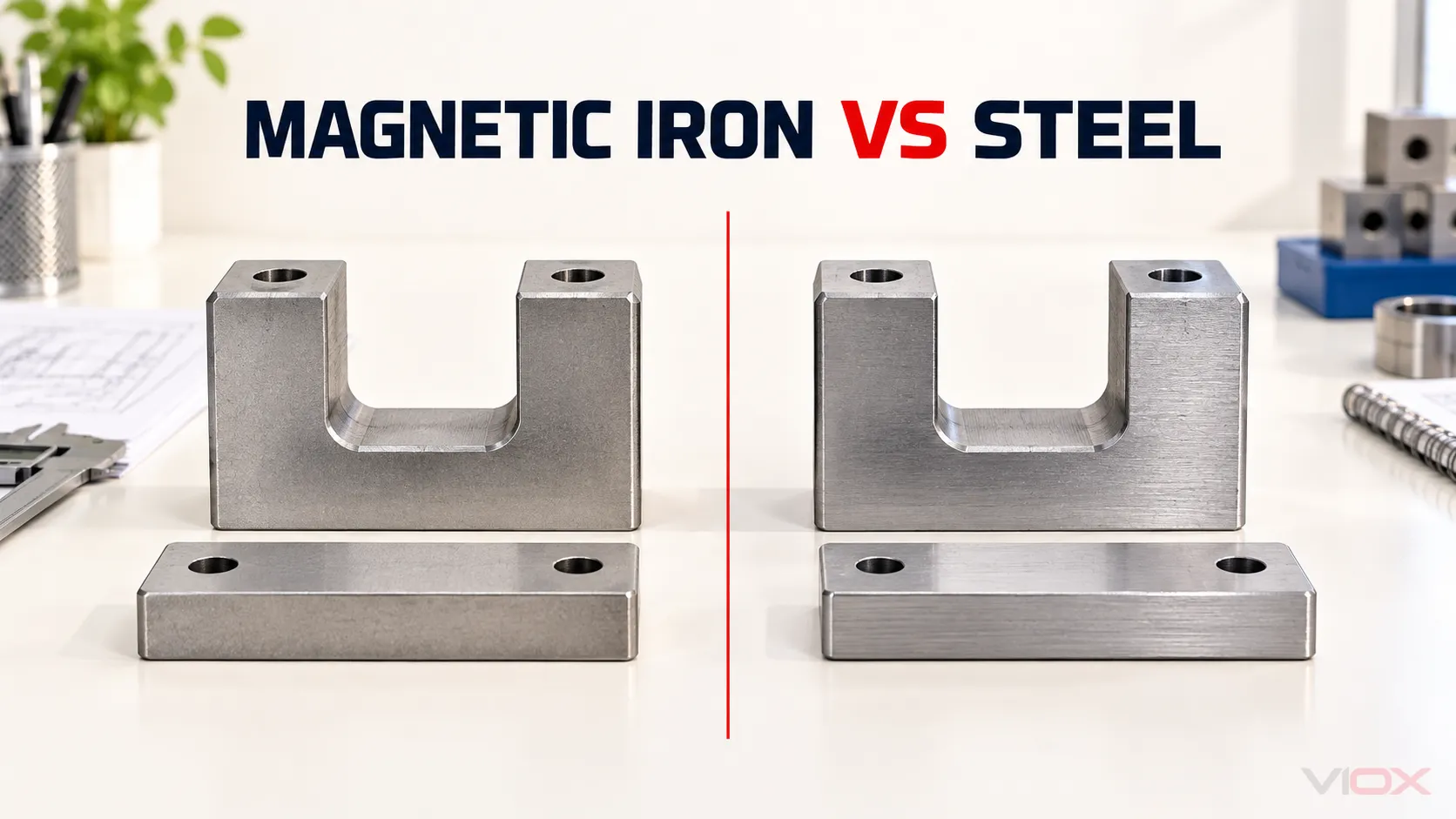
Az elektromágneses tiszta vas és a közönséges alacsony széntartalmú acél is képes mágneses fluxust vezetni. A különbség az, hogy mit szabályoz az anyagspecifikáció. A mágneses vas minőséget akkor választják, amikor az alacsony koercitivitás és az ismételhető lágy mágneses viselkedés számít; a szerkezeti alacsony széntartalmú acél minőség önmagában nem garantálja ezeket a mágneses tulajdonságokat. Egyik választás sem határozza meg önmagában, hogy mikor old le egy megszakító, vagy hogy egy armatúra kiold-e. A kész alkatrészt, a légrést, a tekercset, a rugót és a vizsgálati körülményeket is figyelembe kell venni.
Ez a megkülönböztetés számít a megszakító kioldójának mágneses jármékszerkezetében, magjában és armatúrájában, valamint a relékben és mágneskapcsolókban. Az MCB teljes működési sorrendjét lásd: hogyan működik az MCB. Itt a kérdés szűkebb: mit ad egy mágneses anyag, és mikor elegendő a közönséges acél?
| Kérdés | Elektromágneses tiszta vas | Hagyományos alacsony szén-dioxid tartalmú szerkezeti acél |
|---|---|---|
| Mit határoz meg elsősorban az osztály? | Lágy mágneses viselkedés a megadott vizsgálati és feldolgozási feltételek mellett. | Kémiai és szerkezeti anyagjellemzők; a mágneses viselkedést külön kell meghatározni. |
| Miért használhatja egy tervező? | A mágneses válasz szabályozására és a maradék mágneses tartóhatások csökkentésére egy érzékeny, megismételhető mechanizmusban. | Mágneses visszavezető út kombinálása szerkezeti és gyártási követelményekkel, amikor az eszközszintű teljesítmény megengedi. |
| A minősítés önmagában megjósolhatja a behúzást vagy a kioldást? | Nem. | Nem. |
“A ”tiszta vas” mágneses anyag megnevezés, nem pedig nulla szennyeződés ígérete
A elektromágneses tiszta vas egy kereskedelmi forgalomban kapható, alacsony maradékú vasat ír le, amelyet lágy mágneses alkalmazásokhoz használnak. Nem kémiailag tiszta elemi vas. Kínában, GB/T 6983-2022, Mágneses vas, a DT4-sorozatú lágyvasra vonatkozó releváns szabvány. Ezzel szemben, GB/T 699-2015, minőségű szénacélok, olyan minőségeket foglal magában, mint a 08, 10 és 20 acél. Ezek eltérő specifikációs útvonalak, nem pedig ugyanazon vezérelt mágneses viselkedés felcserélhető elnevezései.
A hasznos mérnöki megkülönböztetés nem az, hogy az alacsony széntartalmú acél “nem tudja vezetni a mágnesezést”. Tudja. A megkülönböztetés az, hogy egy pusztán szerkezeti minőséget megjelölő megrendelés nem határoz meg koercitivitási határt, B–H görbét vagy egy kész alkatrész behúzási és kioldási eredményt. Ezeket a követelményeket hozzá kell adni és igazolni kell, ha az alkatrész mágneses válasza kritikus. A kínai 10-es acélminőséget sem szabad csendben az AISI 1010 pontos megfelelőjének tekinteni: hasonlítsa össze a tényleges anyag szabványokat és a rendelési feltételeket, mielőtt helyettesítést végezne.
Mit javítanak valójában a DT4, DT4A, DT4E és DT4C?
A DT4-sorozatú minőségek egyre szigorúbbá teszik a lágy mágneses specifikációt. Az alábbi értékek a GB/T 6983-2022-ből származó minőségi összehasonlítások; ezek szabványos vizsgált mintákat és meghatározott feltételeket írnak le, nem egy összeépített megszakító vagy egy VIOX termék mért viselkedését.
| Minőség | Maximális koercitív térerősség, Hc | Minimális feltüntetett maximális permeabilitás, μmax |
|---|---|---|
| DT4 | 80 A/m | 0,0088 H/m |
| DT4A | 60 A/m | 0,0100 H/m |
| DT4E | 48 A/m | 0,0113 H/m |
| DT4C | 32 A/m | 0,0151 H/m |
Vásárlási megjegyzés: Ellenőrizze a pontos kiadást, a termék formáját, a vizsgálati feltételt és a megállapodott rendelési követelményeket. A 2022-es szabvány szerint nem minden táblázatban szereplő mágneses érték feltételezhető, hogy minden szállításra vonatkozó rutinszerű elfogadási vizsgálat; kérje ki a vonatkozó vizsgálati eredményt kifejezetten ott, ahol az a tervezés elfogadását befolyásolja. A rendelést a hivatalos szabvány szövege, nem pedig ez az összefoglaló táblázat szabályozza.
Koercitiv erő, Hc, az az ellenkező mágneses tér, amelyre szükség van a mágneses indukció nullára csökkentéséhez egy meghatározott mágnesezési történet után. Alacsonyabb érték hasznos, ha a maradék mágnesezettség hozzájárulhat a beragadáshoz, de önmagában nem garantálja a vasalapzat kioldását. A maradék indukció, a póluslap geometriája, a maradék légrés, a visszatérítő rugó ereje, a súrlódás, a bevonat és a gyártási tűrések szintén befolyásolják az eredményt. IEC 60404-7 meghatároz egy módszert a koercitiv erő mérésére meghatározott feltételek mellett; egy eszközkioldási teszt más kérdésre válaszol.
Maximális permeabilitás, μmax, a mért mágnesezési görbén elért csúcs permeabilitás. Ez nem feltétlenül a permeabilitás az eszköz tényleges működési pontján. A táblázatban a DT4C feltüntetett minimumja körülbelül 721%-kal magasabb, mint a DT4-é, míg a koercitiv erő felső határa 601%-kal alacsonyabb. Egyik százalék sem jósolható meg a kioldási érzékenység vagy a kioldási idő javulásaként.
Végül, egy meghatározott mágneses indukciós érték egy adott térerősségnél – például B egy adott H-nál – a mágnesezési görbe egy pontja. Nem szabad átcímkézni telítési indukcióként hacsak a releváns mérés nem állapítja meg a telítettséget. Ez akkor fontos, ha valaki azzal érvel, hogy két acél ekvivalens, mert mindkettő “magas B”-t mutat erős gerjesztett mezőben: az alacsony mezőre adott válaszuk és a mágneses hiszterézisük mégis eltérhet.
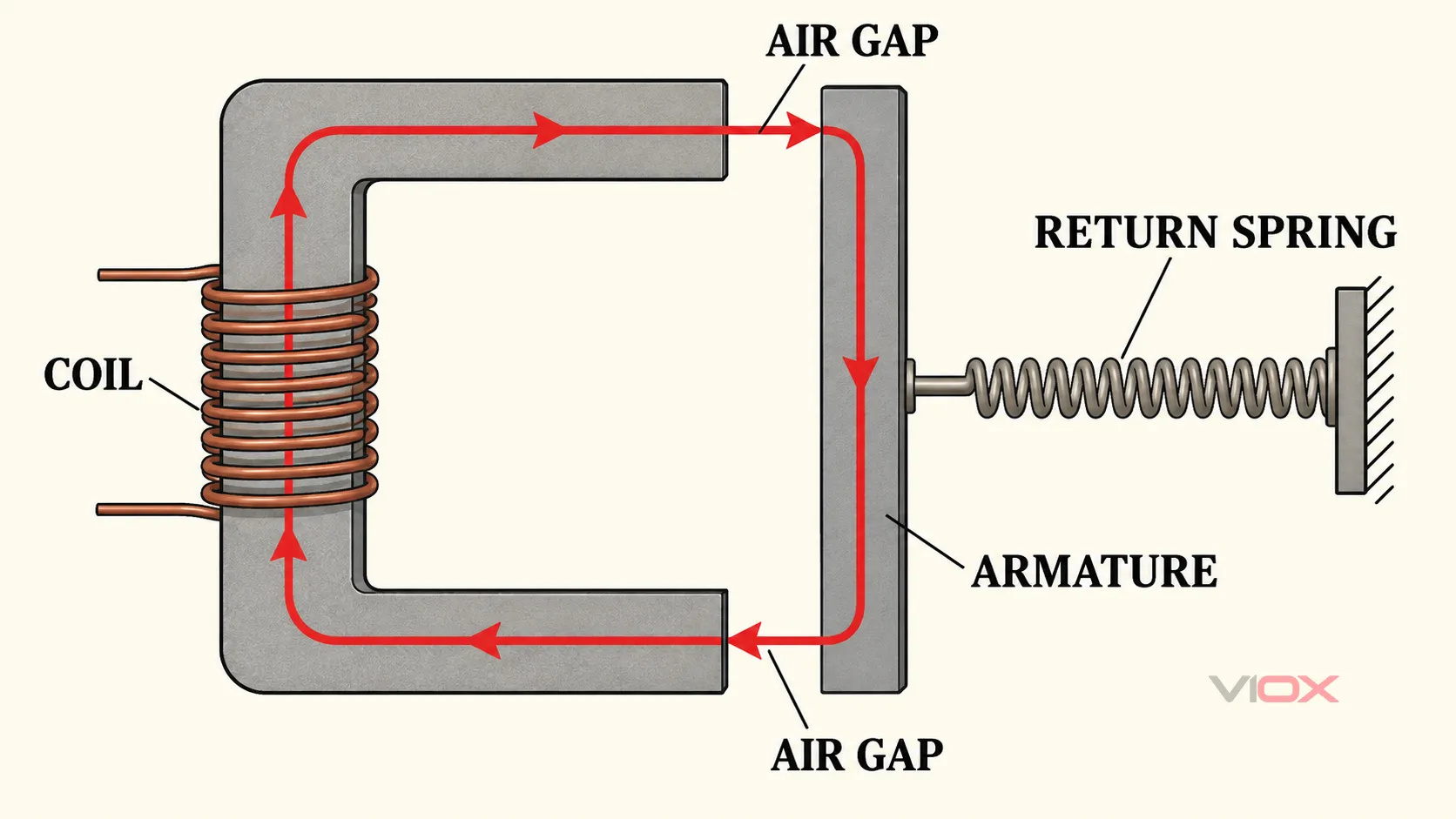
Koncepcionális mágneses út; nem egy konkrét VIOX megszakító vagy vezetékezési csatlakozás rajza.
Miért nem feltétlenül hoz arányosan jobb megszakítót egy jobb anyag
Egy egyszerűsített mágneses kör tartalmaz egy tekercset, amely az áramlökőerőt szolgáltatja, egy ferromágneses utat, és általában egy légrést egy mozgó armatúrához. A fluxus a total mágneses reluktanciától függ, nem csak a mag anyagától:
Mágneses fluxus ≈ tekercs menetszáma ÷ (vasútvonal reluktancia + légrés reluktancia)Mivel a levegő sokkal alacsonyabb permeabilitású, mint a lágy mágneses vas, még egy kis rés is dominálhatja a teljes egészet. MIT mágneses kör oktatási jegyzetei modellezzük a vasutat és a légrést különálló reluktanciákként. Ezért az anyag laboratóriumi maximális permeabilitásának javítása sokkal kisebb hatással lehet az összesített fluxusra vagy erőre, mint amit a főszámítás sugall, a geometriától és a működési ponttól függően.
A mechanikai oldal is ugyanolyan fontos. A mágneses kioldónak elegendő erőt kell kifejtenie a releváns úton és áramtartományban ahhoz, hogy elmozdítsa a vasmagot és kioldja a reteszt. Visszatéréskor a maradék mágneses erőnek a rugó és a mechanizmus által leküzdhető érték alá kell esnie. A DT4C helyettesítése DT4-re – vagy a mágneses vas helyettesítése alacsony széntartalmú acéllal – anélkül, hogy ellenőriznénk a póluslapokat, a légrést, a tekercset, a rugót és a teljes szerelvényt, keveset változtathat, vagy rossz jellemzőt változtathat meg. Ez egy tervezési következtetés, nem pedig termékspecifikus tesztállítás.
Egy kisméretű megszakító esetében a mágneses kioldó gyorsan reagál, amikor a túláram eléri az azonnali kioldási tartományát, tipikusan rövidzárlat esetén, de esetleg nagy bekapcsolási áramlökés esetén is. Ez egy rövid idejű működtetési probléma, nem ugyanaz a feladat, mint egy folyamatosan feszültség alatt álló AC elektromágnesé. Lásd a VIOX MCB gyártási minőségéről szóló megbeszélését a szélesebb szerelvény- és ellenőrzési kontextushoz.
Az egyenáramú (DC), ismételt kapcsolás és váltakozóáramú (AC) gerjesztés nem egyetlen anyagválasztás
A mágneses igénybevétel megváltoztatja, hogy mely tulajdonságok érdemlik a legnagyobb figyelmet:
| Működés a készülékben | Anyagra és alkatrészszintre vonatkozó kérdés, amelyre válaszolni kell |
|---|---|
| Rövid idejű megszakító mágneses kioldója | Elég erős-e a mágneses erő a szükséges kioldási tartományban, és a mechanizmus megbízhatóan visszaáll-e működés és öregedés után? |
| Ismételt vonzás és oldás jellemzi relét vagy mágneskapcsolót | Elfogadható-e a behúzó, tartó, ejtő, melegedési és maradék tartóerő a megadott feszültség- és hőmérsékleti körülmények között? |
| Folyamatosan váltakozó mágneses tér | Mik a veszteségek, melegedés, zaj, valamint az anyag- vagy lemeztekercselési követelmények a tényleges frekvencián és fluxus hullámformán? |
A rétegelt villamos acélt gyakran használják ott, ahol a váltakozó fluxus miatt az örvényáramú veszteség jelentős, de az “50/60 Hz szilíciumacél” nem általános szabály minden kis működtetőelem esetében. Ezzel szemben a DC lágy mágneses táblázatból kiválasztott DT4 minősítés nem állítja automatikusan az AC veszteségteljesítményt. IEC 60404-6 a szórt mágneses anyagokra vonatkozó váltakozó mezős vizsgálati módszereket tartalmaz a hatályán belül (amely kizárja az elektromos acélokat és a lágy ferriteket); az AC teljesítményt nem szabad következtetni a DC koercitivitási számából. A végső kiválasztás eszköz- és terhelésfüggő.
Adja meg az anyagot, a kész alkatrészt és a teljes mechanizmust
Tervezésváltoztatás vagy beszállító összehasonlítása esetén három bizonyítékszintet használjon egyetlen minősítési címke helyett:
- Anyagbizonyíték: pontos szabvány és kiadás, minőségi osztály, termékforma, szállítási állapot, szükség esetén kémiai jelentés, és kifejezetten előírt mágneses vizsgálatok. Adja meg, hogy az eredmények laboratóriumi mintára, beérkező készletre vagy kész alkatrészre vonatkoznak-e.
- Kész alkatrészre vonatkozó bizonyíték: a fluxusút és a pólusfelületek rajza és tűrései; megmunkálási, sajtolási vagy alakítási előzmények; felületkezelés; és a hőkezelési állapot, amelyben a mágneses tulajdonságokat ellenőrizni kell. Egy szabvány ajánlott mintájú izzítása nem mutatható be minden alkatrész kötelező gyártási ciklusaként.
- Eszközbizonyíték: tekercs és rugó specifikáció, működési és maradék rés, felvételi és kioldási viselkedés, ismételhetőség, hőmérsékleti és öregedési feltételek, valamint az alkalmazandó termékszabvány szerinti vizsgálatok. A vasanyag tanúsítványa nem tanúsítja az összeépített megszakítót.
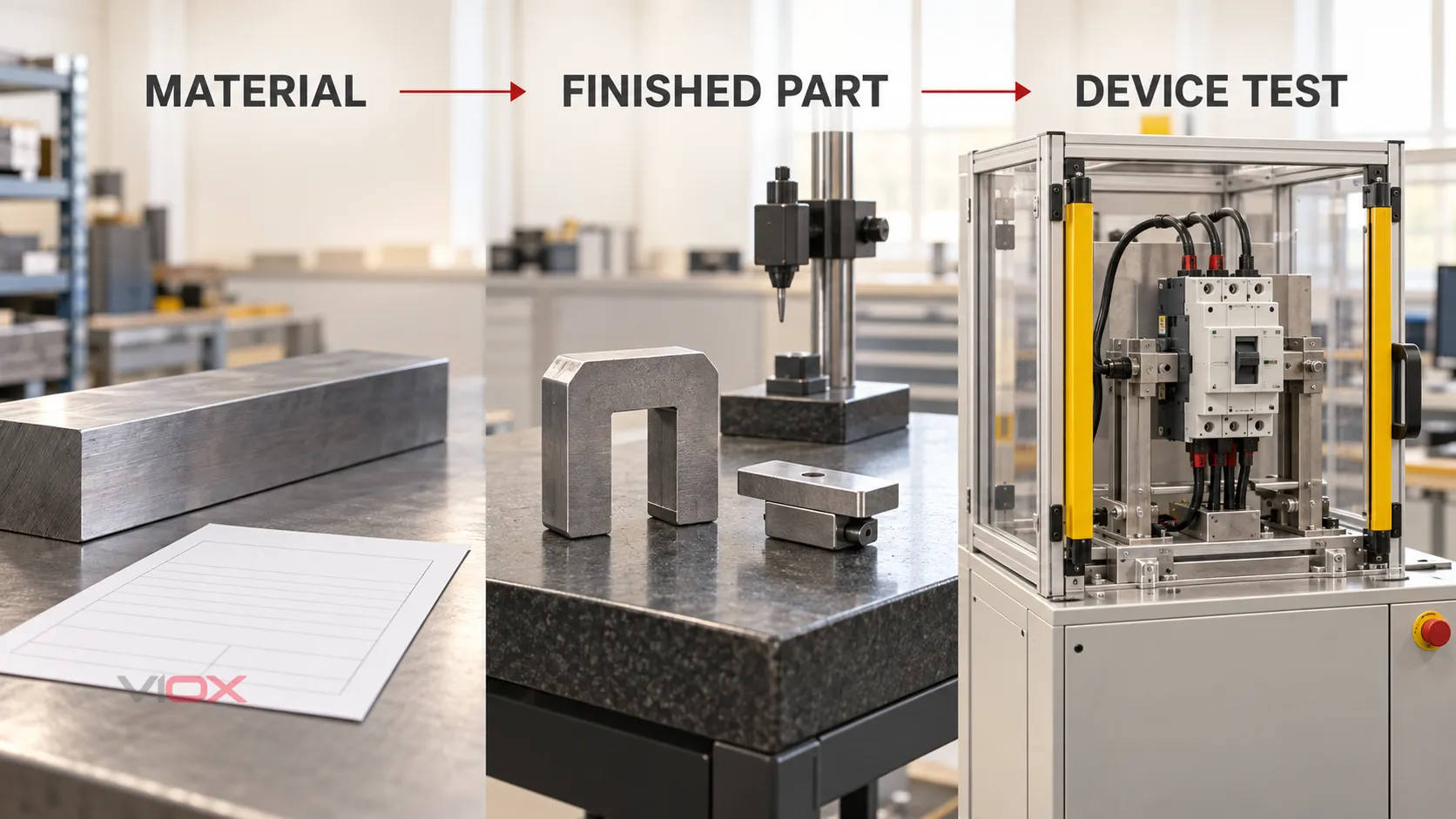
Illusztratív ellenőrzési sorozat, nem a VIOX gyártásáról készült fénykép vagy dokumentált vizsgálati eredmény.
Tegyük fel, hogy egy beszállító javasolja egy előírt vasmag armatúra cseréjét 10 acélra. A helyes válasz nem az automatikus elutasítás vagy jóváhagyás. Kérdezze meg, hogy milyen mágneses tulajdonságok szükségesek a kész alkatrész állapotában, megváltoztatja-e a változás a póluslap geometriáját vagy a maradék rést, és megfelel-e a teljes eszköz továbbra is a felvételi, kioldási és ismételhetőségi kritériumainak. Ha a meglévő rajz csak annyit mond, hogy “10 acél”, akkor fordítva is igaz: egy jobban kinéző DT minőség nem bizonyítja, hogy egy teszteletlen csere egyenértékű.
Egy tényleges MCB értékeléséhez, nem pedig egy anyagpróbához, kezdje a VIOX MCB termékcsaládot és kérje el a pontos modell műszaki dokumentációját és a vonatkozó vizsgálati bizonyítékokat. Ne vonjon le következtetéseket egy adott VIOX modell maganyagáról ebből az oktatási összehasonlításból.
Lényeg
Az elektromágneses tiszta vas lehetővé teszi a lágy mágneses tulajdonságok specifikálását és ellenőrzését amelyeket egy közönséges alacsony széntartalmú szerkezeti acél megnevezés nem garantál. Ez számíthat az érzékeny, ismételhető működtetés és kioldás szempontjából. De az alacsonyabb koercitivitás vagy a magasabb maximális permeabilitás anyagszintű előny, nem pedig megszakítószintű teljesítményígéret. Válasszon a tervezett mágneses igény figyelembevételével, majd validálja a kész alkatrészt és az összeépített mechanizmust.
Források és műszaki alapok
- GB/T 6983-2022, Mágneses vas — hivatalos nemzeti szabvány szerinti feljegyzés
- GB/T 699-2015, minőségű szénacélok — hivatalos nemzeti szabvány szerinti feljegyzés
- IEC 60404-7, a koercitivitás mérésének módszere
- IEC 60404-6, mérés váltakozó mező feltételek mellett
- MIT OpenCourseWare, mágneses áramkör alapjai és légrés reluktancia