Staré dilema s výkresy
Představte si tento scénář: Jste vedoucí inženýr nákupu pro projekt modernizace zařízení. Elektrické výkresy z roku 1995 výslovně specifikují Pojistky HRC pro hlavní rozvodnou desku. Otevřete si nejnovější katalog svého dodavatele – možná dokonce aktuální produktovou řadu VIOX Electric – a najednou nemůžete nikde najít “HRC”. Každý technický list ukazuje Pojistky HBC místo toho.
Zrychlí se vám tep. Změnily se průmyslové normy? Je “vypínací schopnost” nějak horší než “přerušovací schopnost”? Chystáte se ohrozit elektrickou bezpečnost celého vašeho zařízení objednáním nesprávného ochranného zařízení?
Zhluboka se nadechněte. Podle průmyslových standardizačních orgánů a konsenzu elektroinženýrů zažíváte jazykovou evoluci, nikoli technické zhoršení.
Přímá odpověď: Mezi pojistkami HRC a HBC není žádný technický rozdíl. Představují identickou technologii s odlišnou terminologií – jako když se stejné zařízení nazývá “výtah” versus “elevator”.”
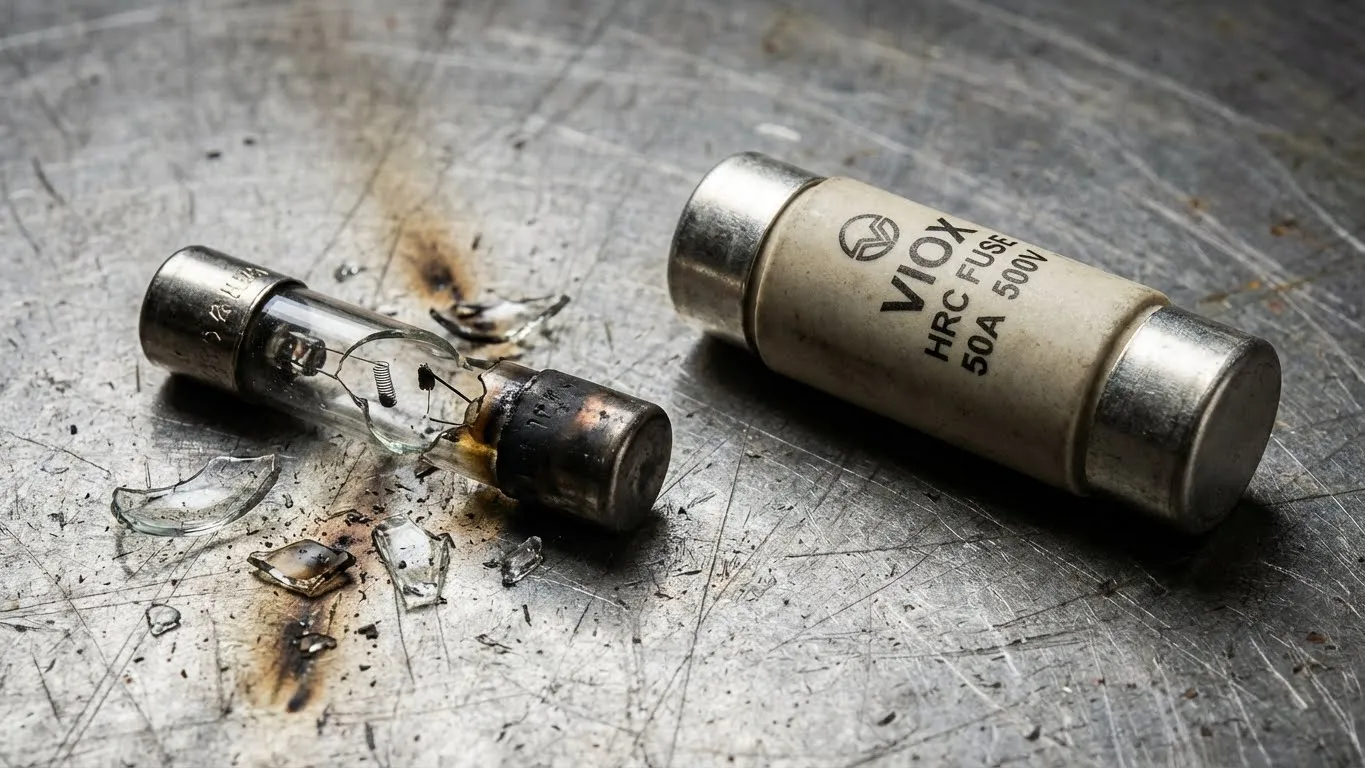 Selhání vs. Funkce. Vlevo: Skleněná pojistka, která se během poruchy prudce rozbila. Vpravo: Keramická pojistka VIOX HRC, která bezpečně zadržela oblouk bez vnějšího poškození.
Pochopení terminologické evoluce: HRC vs. HBC
Rozdíl mezi těmito zkratkami odráží spíše vyvíjející se standardizační jazyk elektrotechnického průmyslu než jakoukoli inženýrskou inovaci. Prozkoumejme, proč oba termíny koexistují v dnešních specifikacích.
HRC: Vysoká přerušovací schopnost
Původ a kontext:
- Období převahy: 50. léta až 90. léta 20. století
- Geografické bašty: Spojené království, Indie, Austrálie, země Commonwealthu
- Technická filozofie: Termín “přerušení” zdůrazňuje násilné, fyzické zničení pojistkového prvku během poruchových podmínek
Jazykové charakteristiky:
Slovo “přerušení” nese niterné konotace – naznačuje silné zlomení, podobné lékařské terminologii popisující poškození tkáně nebo selhání tlakové nádoby. I když je to technicky přesné (pojistkový prvek se skutečně přeruší), tato terminologie se stala méně oblíbenou, protože se komunikace o bezpečnosti vyvinula směrem ke kontrolovanějšímu a profesionálnějšímu jazyku.
Aktuální použití:
Terminologie HRC přetrvává v zastaralé dokumentaci, starších specifikacích britských norem a regionech, které si udržují tradiční elektrické postupy Commonwealthu.
HBC: Vysoká vypínací schopnost
Původ a kontext:
- Období přijetí: 2000 až současnost
- Standardizační sladění: Mezinárodní normy IEC 60269
- Technická filozofie: “Vypínání” zdůrazňuje řízené přerušení obvodu – v souladu s jistič terminologií
Jazykové výhody:
Moderní elektrotechnické předpisy upřednostňují přesný jazyk zaměřený na bezpečnost. “Vypínání” naznačuje spíše řízené přerušení než násilné zničení, což představuje profesionálnější image pro správce zařízení a bezpečnostní regulátory. Terminologie je v souladu s mezinárodními standardními dokumenty, které používají “vypínací schopnost” jako univerzální metriku.
Průmyslové přijetí:
Hlavní výrobci, včetně VIOX Electric, přešli v technické dokumentaci na terminologii HBC, přičemž si zachovali uznání HRC pro zpětnou kompatibilitu a optimalizaci vyhledávání.
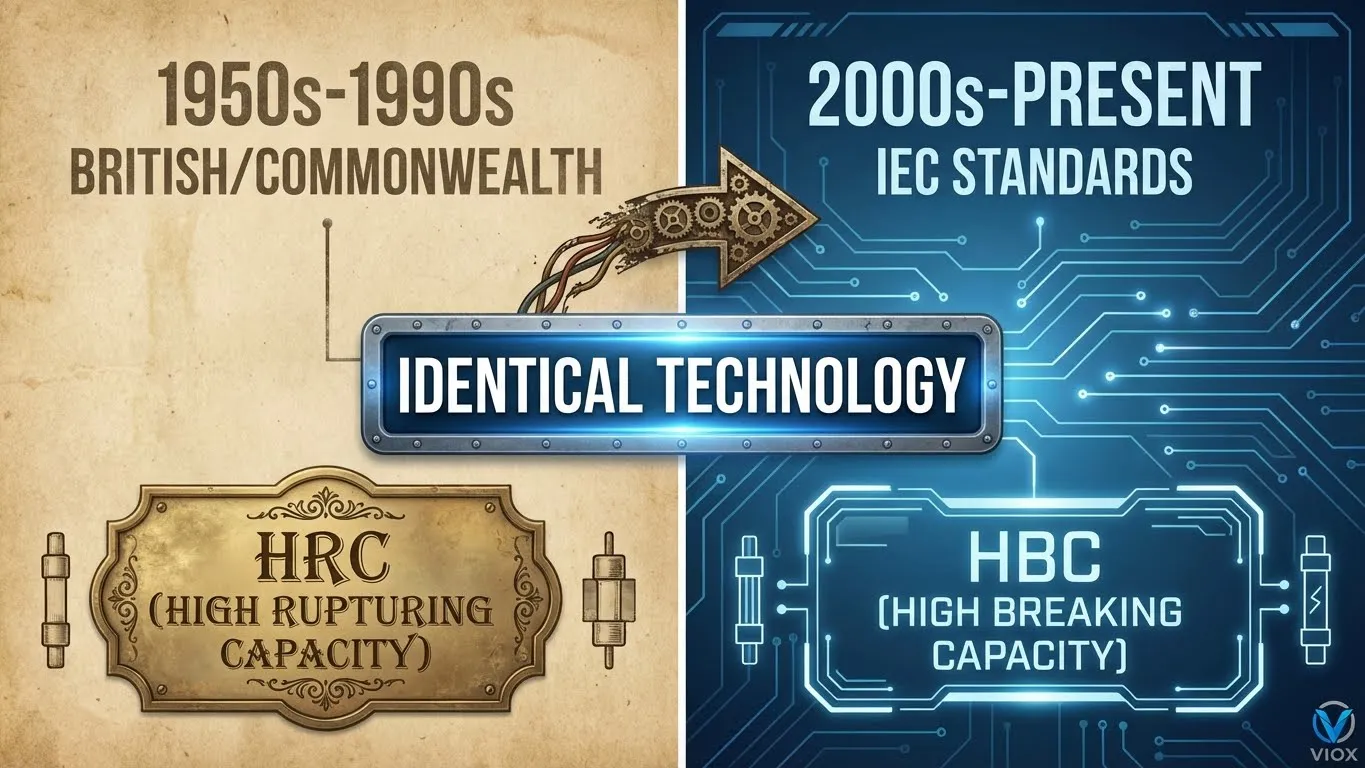
Srovnávací analýza: Terminologie HRC vs. HBC
| Aspekt | HRC (vysoká přerušovací schopnost) | HBC (vysoká vypínací schopnost) |
|---|---|---|
| Dominantní éra | 50. léta – 90. léta 20. století | 2000 – současnost |
| Geografická preference | Spojené království, Indie, Austrálie, Commonwealth | Globální (členské země IEC) |
| Asociace norem | BS 88, starší národní normy | IEC 60269, EN 60269 |
| Technická definice | Maximální poruchový proud bezpečně přerušen | Maximální poruchový proud bezpečně vypnut |
| Jazykový tón | Niterný, zdůrazňuje fyzické zničení | Profesionální, zdůrazňuje řízenou akci |
| Aktuální průmyslové použití | Zastaralé specifikace, klíčová slova SEO, neformální použití | Oficiální datové listy, specifikace nákupu |
| Technická ekvivalence | Identické s HBC | Identické s HRC |
Kritický bod pro nákup: Při porovnávání pojistek napříč dodavateli ignorujte zkratku úplně. Zaměřte se výhradně na jmenovitou vypínací schopnost v kiloampérech (kA) jak je specifikováno v souladu s normami IEC 60269 nebo BS 88.
Inženýrská realita: Čím jsou pojistky HRC/HBC speciální?
Bez ohledu na terminologii, to, co odlišuje tyto pojistky od standardních zařízení s nízkou vypínací schopností (LBC), je sofistikované inženýrství zhášení oblouku navržené tak, aby bezpečně přerušilo masivní poruchové proudy, které by zničily konvenční pojistky.
Výhoda keramické konstrukce
Na rozdíl od skleněných pojistek pro domácnost s viditelnými prvky, průmyslové pojistky HRC/HBC využívají robustní keramické válce navržené tak, aby odolávaly extrémním vnitřním podmínkám během přerušení poruchy.
Vlastnosti materiálu:
- Materiál těla: Vysoce pevná keramika (oxid hlinitý nebo steatit) schopná odolat vnitřním tlakům přesahujícím 100 barů
- Tepelná odolnost: Keramika si zachovává strukturální integritu při teplotách přesahujících 1000 °C
- Dielektrická pevnost: Poskytuje vynikající elektrickou izolaci ve srovnání se sklem, čímž zabraňuje vnějšímu přeskoku
Srovnání se skleněnými pojistkami:
Standardní skleněné pojistky efektivně slouží spotřební elektronice a nízkonapěťovým aplikacím, ale při průmyslových poruchových podmínkách dochází k jejich katastrofickému selhání. Typická skleněná pojistka M205 má přerušovací schopnost pouze 10× jmenovitý proud – což znamená, že skleněná pojistka 16 A může bezpečně přerušit maximálně 160 A. Naproti tomu keramické pojistky HRC/HBC identické fyzické velikosti mohou přerušit 1500 A nebo více, bez ohledu na jejich jmenovitý proud.
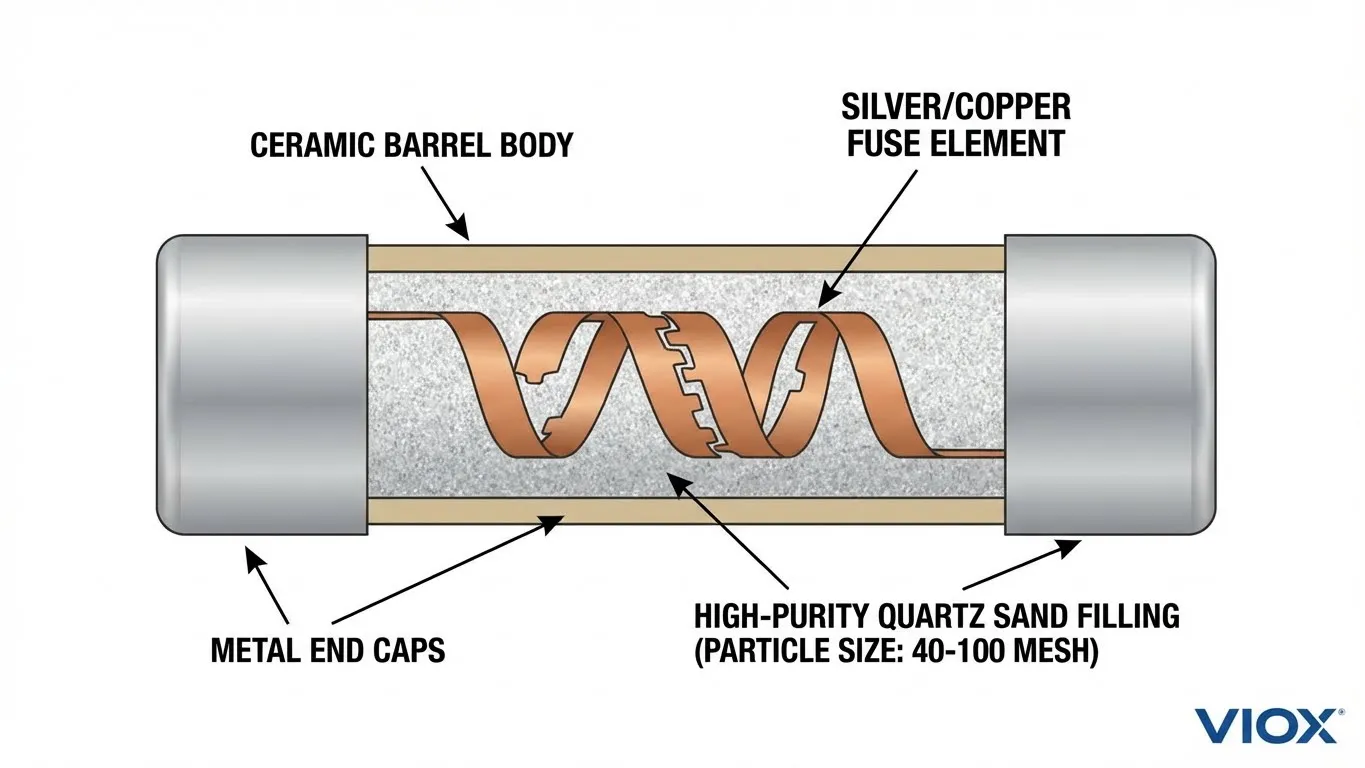
“Písečná magie”: Věda o zhášení oblouku
Transformující technologií uvnitř každé pojistky HRC/HBC je médium pro zhášení oblouku – vysoce čistý krystalický křemenný písek, který během přerušení poruchy provádí sofistikovanou fyziku.
Specifikace křemenného písku (požadavky IEC 60269):
- Chemická čistota: Minimálně 99,5 % SiO₂ (oxid křemičitý)
- Velikost částic: 40-100 mesh (150-400 mikrometrů)
- Mineralogická forma: Krystalický křemen, zcela bezvodý (bez vlhkosti díky sušení ohněm)
- Objemová hmotnost: Optimalizované rozložení velikosti zrn zajišťující dostatečný volný prostor pro expanzi oblouku a zároveň maximalizující povrch pro absorpci tepla
Proč záleží na čistotě písku:
Nečistoty nebo vlhkost v křemenném písku mohou během oblouku generovat nežádoucí plyny, čímž se zvyšuje vnitřní tlak na nebezpečné úrovně. Vysoce čistý krystalický křemen zajišťuje předvídatelné a řízené zhášení oblouku.
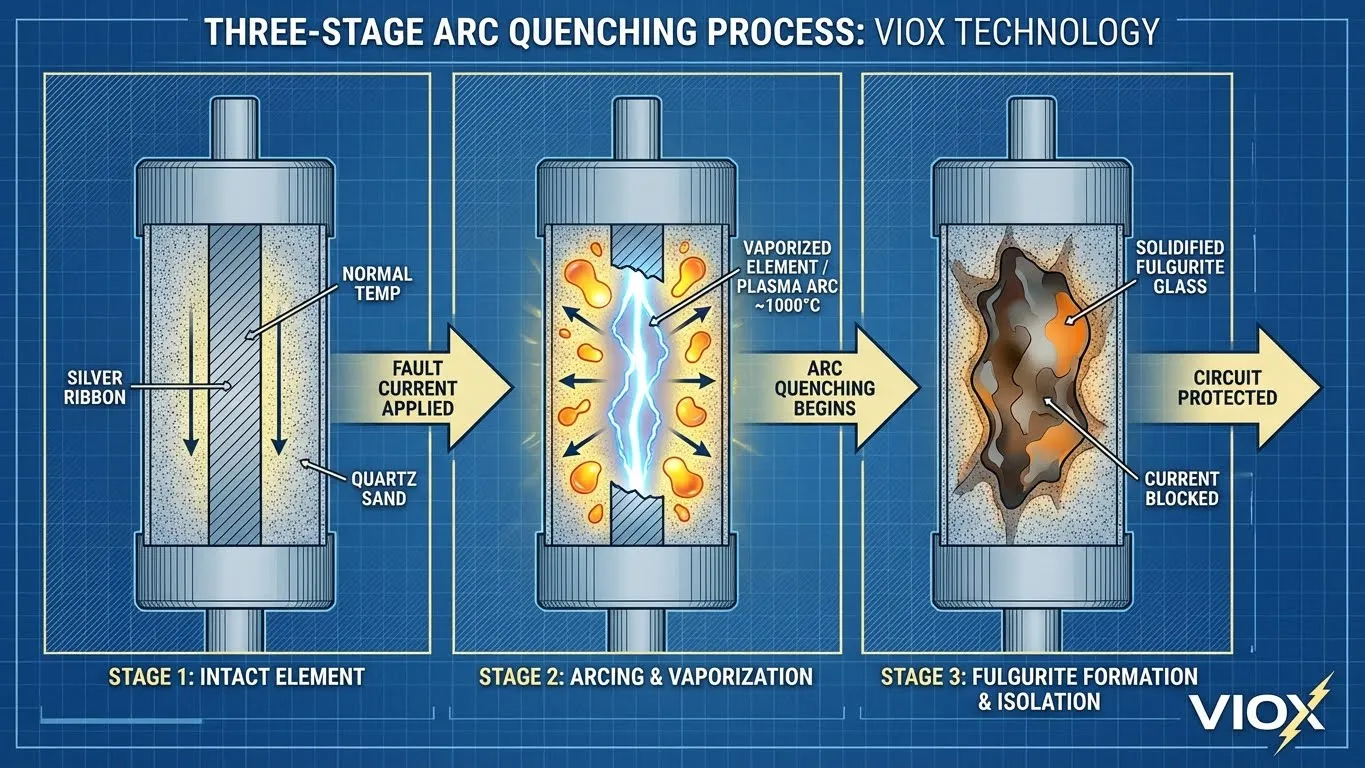
Proces přerušení třífázové poruchy
Když zkrat pošle desítky tisíc ampérů přes pojistku HRC/HBC, v milisekundách se rozvine přesně navržená sekvence:
Fáze 1: Před-oblouk (tavení prvku)
- Stříbrný nebo měděný pojistkový prvek se rychle zahřívá v důsledku ztrát I²R
- Ve strategicky navržených zúžených bodech (zářezích) dosahuje prvek bodu tání (961 °C pro stříbro)
- Roztavený kov se tvoří současně ve více bodech po délce prvku
- Trvání: Liší se od milisekund (vysoká porucha) po sekundy (mírné přetížení)
Fáze 2: Oblouk (tvorba plazmatu)
- Roztavený prvek se odpařuje do kovového plazmatu
- V každém zúženém bodě se sériově tvoří více elektrických oblouků
- Teplota oblouku lokálně dosahuje 3000-5000 °C
- Intenzivní teplo okamžitě roztaví okolní zrna křemenného písku
- Napětí oblouku se dramaticky zvyšuje, jak se prvek prodlužuje a písek absorbuje energii
- Trvání: 1-5 milisekund pro vysoké poruchové proudy
Fáze 3: Zhasnutí (tvorba fulguritu)
- Roztavený oxid křemičitý (SiO₂) z písku se mísí s odpařeným kovem
- Tato směs rychle tuhne do sklovité struktury zvané fulgurit
- Fulgurit tvoří nevodivý tunel pískem, který fyzicky obklopuje dráhu oblouku
- Jak směs chladne a tuhne, odpor oblouku exponenciálně roste
- Při dalším průchodu proudu nulou (v systémech AC) se oblouk nemůže znovu zapálit kvůli vysokému odporu
- Obvod je trvale přerušen, dokud není pojistka vyměněna
Fenomén fulguritu:
Pojmenován po latinském fulgur (blesk), fulgurity jsou přirozeně se vyskytující skleněné trubice, které vznikají, když blesk zasáhne písčitou půdu. V pojistkách je řízená tvorba fulguritu klíčem k bezpečnému přerušení proudu – skleněná struktura funguje jako trvalá izolační bariéra zabraňující opětovnému zapálení oblouku.
Technické specifikace: Jmenovité hodnoty vypínací schopnosti
Charakteristickým rysem, který odlišuje průmyslové pojistky od spotřebitelských zařízení, je vypínací schopnost – maximální potenciální poruchový proud, který může pojistka bezpečně přerušit bez prasknutí krytu nebo způsobení vnějšího oblouku.
Standardní rozsahy vypínací schopnosti
Nízkonapěťové pojistky HRC/HBC (IEC 60269):
- Typické hodnoty: 80 kA až 120 kA při 400-690 VAC
- Použití: Obecná průmyslová distribuce, ochrana motorů, primární transformátory
- Testovací podmínky: Zkratový proud včetně DC složky a asymetrických proudových špiček
Aplikace s vysokým výkonem:
- Ochrana polovodičů: Až 200 kA pro specializované pojistky s označením aR
- Ultra-vysoká vypínací schopnost: Specializované konstrukce testované na 300 kA pro extrémní poruchová prostředí
Středně napěťové pojistky HRC:
- Rozsah napětí: 1 kV až 36 kV
- Přerušovací kapacita: Jmenovitý výkon v MVA (megavoltampérech) spíše než v kA
- Aplikace: Rozvodny, průmyslové VN rozvody, ochrana transformátorů
Standardní jmenovité proudy (IEC 60269)
| Jmenovitý proud (A) | Typické aplikace | Běžné typy pojistek |
|---|---|---|
| 2, 4, 6, 10, 16 | Řídicí obvody, přístrojové vybavení | Válcová patrona (10×38mm) |
| 25, 30, 50, 63 | Ochrana malých motorů, napájecí vedení | NH00, patronové pojistky |
| 80, 100, 125, 160 | Obvody středních motorů, rozvaděče | NH1, NH2 |
| 200, 250, 320, 400 | Velké motory, distribuční transformátory | NH2, NH3 |
| 500, 630, 800 | Průmyslové napáječe, hlavní rozvod | NH3, NH4 |
| 1000, 1250 | Náročné průmyslové aplikace | NH4, šroubované typy BS88 |
Poznámka: Jmenovité hodnoty odpovídají preferovaným hodnotám IEC 60269. Pro specifické aplikace jsou k dispozici vlastní jmenovité hodnoty.
Keramické vs. skleněné pojistky: Kritické srovnání
Pochopení zásadních rozdílů mezi keramickými pojistkami HRC/HBC a skleněnými pojistkami LBC (Low Breaking Capacity) je zásadní pro správnou specifikaci ochrany obvodů.
| Funkce | Keramické pojistky HRC/HBC | Skleněné pojistky LBC |
|---|---|---|
| Materiál těla | Vysoce pevná keramika (oxid hlinitý/steatit) | Borosilikátové sklo |
| Médium pro zhášení oblouku | Vysoce čistý křemenný písek (SiO₂ >99,5 %) | Vzduch nebo minimální výplň |
| Přerušovací kapacita | 1500A až 300 000A (typicky 80-300 kA) | 10× jmenovitý proud (max. ~160A pro 16A pojistku) |
| Mechanismus přerušení | Tvorba fulguritu, řízené zhášení oblouku | Jednoduché tavení prvku, omezené řízení oblouku |
| Napětí | 240V až 690V (NN), až 36kV (VN) | Typicky 32V až 250V maximum |
| Tolerance vnitřního tlaku | >100 bar, hermeticky uzavřeno | Omezená; praskne při vysoké poruše |
| Režim selhání při extrémní poruše | Uvnitř keramického těla, žádný vnější oblouk | Prudké prasknutí, skleněné střepiny, vnější oblouk |
| Vizuální kontrola | Neprůhledné; vyžaduje elektrické testování | Průhledné; prvek je viditelný |
| Typické aplikace | Průmyslové rozvody, ochrana motorů, transformátory | Spotřební elektronika, automobilový průmysl, obvody s nízkým výkonem |
| Dodržování norem | IEC 60269, BS 88, UL třída J/L/T | IEC 60127, UL 248-14 |
| Nákladový faktor | Vyšší počáteční náklady, vynikající hodnota ochrany | Nižší náklady, vhodné pro aplikace s nízkou energií |
Bezpečnostní dopad: Specifikace skleněné pojistky v obvodu, kde potenciální zkratový proud překračuje její vypínací schopnost, vytváří vážné nebezpečí požáru a ohrožení osob. Vždy vypočítejte maximální dostupný poruchový proud a zajistěte, aby vypínací schopnost pojistky poskytovala dostatečnou bezpečnostní rezervu (typicky 125-150 % vypočteného poruchového proudu).
Praktické pokyny pro nákup a specifikaci
Co hledat v datovém listu
Při hodnocení pojistek HRC nebo HBC pro vaše zařízení se zaměřte spíše na tyto kritické specifikace než na použitou zkratku:
- Vypínací schopnost (jmenovitý přerušovací proud): Vyjádřeno v kA při jmenovitém napětí (např. “100 kA při 415 V AC”)
- Aktuální hodnocení: Jmenovitý proud v ampérech (např. 250A)
- Jmenovité napětí: Maximální systémové napětí (např. 690 V AC)
- Kategorie využití: Označení IEC 60269 (gG, gL, aM, aR) označující typ aplikace
- Dodržování norem: Označení IEC 60269, BS 88, UL podle potřeby
- Fyzické rozměry: Zajistěte kompatibilitu se stávajícími pojistkovými držáky (velikost NH, rozměry patrony)
Rozhodování o specifikaci
Pro nové instalace:
Specifikujte pojistky pomocí moderní terminologie HBC s explicitním odkazem na normy IEC 60269. To zajišťuje mezinárodní kompatibilitu a je v souladu se současnou průmyslovou praxí.
Pro výměnu/modernizaci:
Při výměně stávajících pojistek je přijatelná terminologie HRC nebo HBC za předpokladu, že technické specifikace odpovídají:
- Identický jmenovitý proud
- Stejná nebo vyšší vypínací schopnost
- Stejné jmenovité napětí
- Kompatibilní fyzický tvarový faktor
- Ekvivalentní časově-proudová charakteristika (kategorie využití)
Inženýrská realita: Pojistka HRC 250 A s jmenovitou vypínací schopností 100 kA podle norem BS 88 je funkčně identická s pojistkou HBC 250 A s jmenovitou vypínací schopností 100 kA podle norem IEC 60269, pokud se shodují fyzické rozměry. Terminologický rozdíl je čistě názvoslovný.
Přístup společnosti VIOX Electric
Ve společnosti VIOX Electric naše produktové katalogy odkazují na terminologii HRC i HBC, abychom zajistili, že zákazníci najdou vhodné produkty bez ohledu na názvosloví v jejich dokumentaci. Naše technické listy upřednostňují standardizované specifikace:
- Vypínací schopnost jasně uvedena v kA
- Ověření shody s IEC 60269
- Podrobné časově-proudové křivky
- Výkresy fyzických rozměrů
- Aplikační pokyny
Tento přístup s dvojím názvoslovím eliminuje zmatek při nákupu a zároveň zachovává přísnou technickou přesnost.
Často Kladené Otázky
Jsou pojistky HRC a HBC elektricky odlišné?
Ne. HRC (High Rupturing Capacity) a HBC (High Breaking Capacity) označují identickou technologii pojistek. Jediný rozdíl je v terminologii – HRC představuje tradiční britské/Commonwealth použití, zatímco HBC odpovídá moderním mezinárodním normám IEC. Oba termíny popisují pojistky s vysokou schopností přerušení poruchového proudu, které je dosaženo keramickou konstrukcí a zhášením oblouku křemenným pískem.
Proč některé katalogy stále používají “HRC” místo “HBC”?
Tři hlavní důvody: (1) Kompatibilita se staršími systémy– inženýři hledající náhradní pojistky používají terminologii z původní dokumentace zařízení; (2) Zeměpisná konvence– země Commonwealthu si v běžném používání ponechávají terminologii HRC; (3) SEO strategie– výrobci udržují oba termíny, aby zajistili dohledatelnost produktů online. Technicky důslední výrobci, jako je VIOX Electric, používají oba termíny s jasnou specifikací, že představují identickou technologii.
Jaký je rozsah vypínací schopnosti pro pojistky HRC/HBC?
Nízkonapěťové průmyslové pojistky HRC/HBC obvykle nabízejí vypínací schopnosti 80 kA až 120 kA při 400-690 VAC. Specializované pojistky pro ochranu polovodičů mohou dosáhnout 200 kA, zatímco ultra-výkonné konstrukce jsou testovány na 300 kA. Středněnapěťové pojistky (1-36 kV) jsou hodnoceny v MVA spíše než v kA. Naproti tomu standardní skleněné pojistky LBC obvykle přeruší pouze 10× svůj jmenovitý proud – skleněná pojistka 16A zvládne maximálně pouze 160A.
Mohu nahradit pojistku HRC pojistkou HBC?
Ano, naprosto—jedná se o stejné zařízení. Při výměně jakékoli pojistky ověřte, zda se náhrada shoduje s: (1) jmenovitým proudem, (2) jmenovitým napětím, (3) vypínací schopností (stejnou nebo vyšší), (4) kategorií použití (gG, aM atd.) a (5) fyzickými rozměry. Bez ohledu na to, zda štítek uvádí HRC nebo HBC, je to irelevantní, pokud se specifikace shodují.
Proč je ten “písek” uvnitř tak důležitý?
Křemenný písek uvnitř pojistek HRC/HBC plní kritickou funkci zhášení oblouku. Když poruchový proud odpaří tavný prvek pojistky, intenzivní oblouk (3000-5000 °C) roztaví okolní zrnka písku. Tento roztavený oxid křemičitý (SiO₂) se smísí s kovovými parami a rychle ztuhne do sklovité struktury zvané fulgurit. Tento fulgurit působí jako trvalý izolant, absorbuje energii oblouku a zabraňuje opětovnému zapálení proudu. Bez písku by oblouk pokračoval ve vedení, což by mohlo způsobit výbuch pojistky. Písek musí splňovat přísné specifikace: >99,5% čistota SiO₂, velikost částic 40-100 mesh, zcela bezvodý.
Jak zjistím, zda je pojistka typu HRC/HBC?
Hledejte tyto indikátory: (1) Materiál karoserie– keramika nebo steatit (nikdy sklo); (2) Označení– ”HRC”, “HBC” nebo vypínací schopnost vytištěná v kA (např. “80kA”); (3) Označení norem– IEC 60269, BS 88 nebo ekvivalent; (4) Fyzická konstrukce– robustní kovové koncové krytky s hermetickým těsněním; (5) Neprůhlednost– keramické pojistky jsou neprůhledné (nelze vidět vnitřní prvek). Pokud jsou označení nejasná, nahlédněte do datových listů výrobce nebo do testovací dokumentace.
Proč skleněné pojistky nezvládají vysoké poruchové proudy?
Skleněné pojistky obsahují vzduch namísto písku pro zhášení oblouku. Při vysokých poruchových stavech se pojistkový prvek odpaří a vytvoří plazmový oblouk. Bez písku, který by absorboval energii a vytvořil izolační fulgurit, oblouk pokračuje ve vedení uvnitř skleněné trubice. Rozpínající se tlak oblouku a teplo rozbijí skleněné tělo, vymrští roztavený materiál a vytvoří vnější oblouk – což představuje vážné nebezpečí požáru a ohrožení osob. Skleněné pojistky jsou navrženy pro nízkoenergetické aplikace (spotřební elektronika, automobilový průmysl), kde potenciální poruchové proudy zůstávají v rámci jejich 10násobné jmenovité vypínací schopnosti.
Závěr: Zaměřte se na výkon, ne na zkratky
Diskuse o terminologii HRC versus HBC představuje jazykový vývoj v rámci norem elektrotechniky, nikoli technické odlišení. Ať už vaše specifikace odkazují na High Rupturing Capacity nebo High Breaking Capacity, základní fyzika – keramická konstrukce, stříbrné pojistkové prvky a křemenný písek pro zhášení oblouku – zůstává identická.
Pro odborníky v oblasti nákupu a provozní inženýry je klíčové sdělení přímočaré: Hodnoťte pojistky na základě jejich vypínací schopnosti v kiloampérech, jmenovitého proudu, jmenovitého napětí a shody s normami, spíše než podle zkratky na štítku.
Při specifikaci ochrany pro průmyslové elektrické systémy poskytuje sofistikované inženýrství uvnitř pojistek HRC/HBC – zejména mechanismus zhášení oblouku tvořící fulgurity – ochranu života a zachování majetku, které standardní skleněné pojistky nemohou poskytnout. Terminologie se může lišit, ale standardy ochranného výkonu zůstávají u kvalitních výrobců konzistentní.
Proč si vybrat pojistky HRC/HBC od společnosti VIOX Electric?
Společnost VIOX Electric vyrábí pojistky průmyslové kvality, které splňují jak starší názvosloví HRC, tak moderní HBC s plnou shodou s IEC 60269 a BS 88. Naše produktové řady zahrnují:
- Ověřená vypínací schopnost: Testování doloženo na 120 kA při jmenovitém napětí
- Materiály vysoké čistoty: Obsah SiO₂ >99,5 % v médiu pro zhášení oblouku
- Komplexní rozsah: Jmenovité proudy od 2A do 1250A v provedení NH, BS88 a cartridge
- Technická podpora: Inženýrská pomoc pro správný výběr a aplikaci pojistek
- Zajištění kvality: Výroba s certifikací ISO 9001 se sledovatelností šarží
Ať už vaše dokumentace specifikuje HRC nebo HBC, společnost VIOX Electric dodává elektrickou ochranu, kterou vaše zařízení vyžaduje. Kontaktujte náš tým technického prodeje pro doporučení specifická pro danou aplikaci a podrobné specifikace produktu.
V případě technických dotazů týkajících se výběru pojistek HRC/HBC pro vaši konkrétní aplikaci se obraťte na tým technické podpory společnosti VIOX Electric nebo si prostudujte náš komplexní katalog produktů.