Pokud jde o ochranu elektrických rozvaděčů a ovládacích panelů před požáry, aerosolové hasicí přístroje na DIN lištu představují zásadní posun od tradičních přístupů k hašení požárů. Tato kompaktní zařízení montovaná na lištu se integrují přímo do elektrické infrastruktury a nabízejí automatickou protipožární ochranu přesně tam, kde elektrické požáry nejčastěji vznikají – uvnitř uzavřených skříní zařízení.
Na rozdíl od objemných hasicích přístrojů montovaných na stěnu nebo složitých systémů hašení plyny se aerosolové hasicí přístroje na DIN lištu zacvakávají na standardní 35mm montážní lišty vedle jističů, relé a dalších elektrických komponent. Toto umístění jim umožňuje detekovat a potlačit požáry u zdroje, často dříve, než se plameny rozšíří mimo skříň. Pro správce zařízení, elektroinženýry a výrobce OEM je pochopení toho, čím se tato zařízení liší, zásadní pro specifikaci správné protipožární ochrany pro kriticky důležité elektrické zařízení.
Co jsou aerosolové hasicí přístroje na DIN lištu?
Základ DIN lišty
DIN lišta označuje standardizovanou kovovou montážní lištu definovanou normou IEC 60715, která se běžně používá v elektrických rozvaděčích k upevnění jističů a komponent. Nejrozšířenější profil je “klobouková” lišta TH 35 (šířka 35 mm). Zařízení určené pro montáž na DIN lištu jsou vybavena pružinovými sponami, které se bezpečně zacvaknou na lištu a umožňují rychlou instalaci a přemístění bez vrtání.
Jak funguje aerosolové hašení
Technologie hašení kondenzovaným aerosolem využívá pevnou chemickou sloučeninu uloženou v kompaktním generátoru. Po aktivaci tato sloučenina podléhá řízené reakci, která produkuje ultrajemné aerosolové částice (typicky menší než 10 mikronů) suspendované v plynném dusíku. Tyto částice zaplaví chráněný prostor a přeruší řetězovou reakci spalování na molekulární úrovni – konkrétně narušují volné radikály, které udržují plameny.
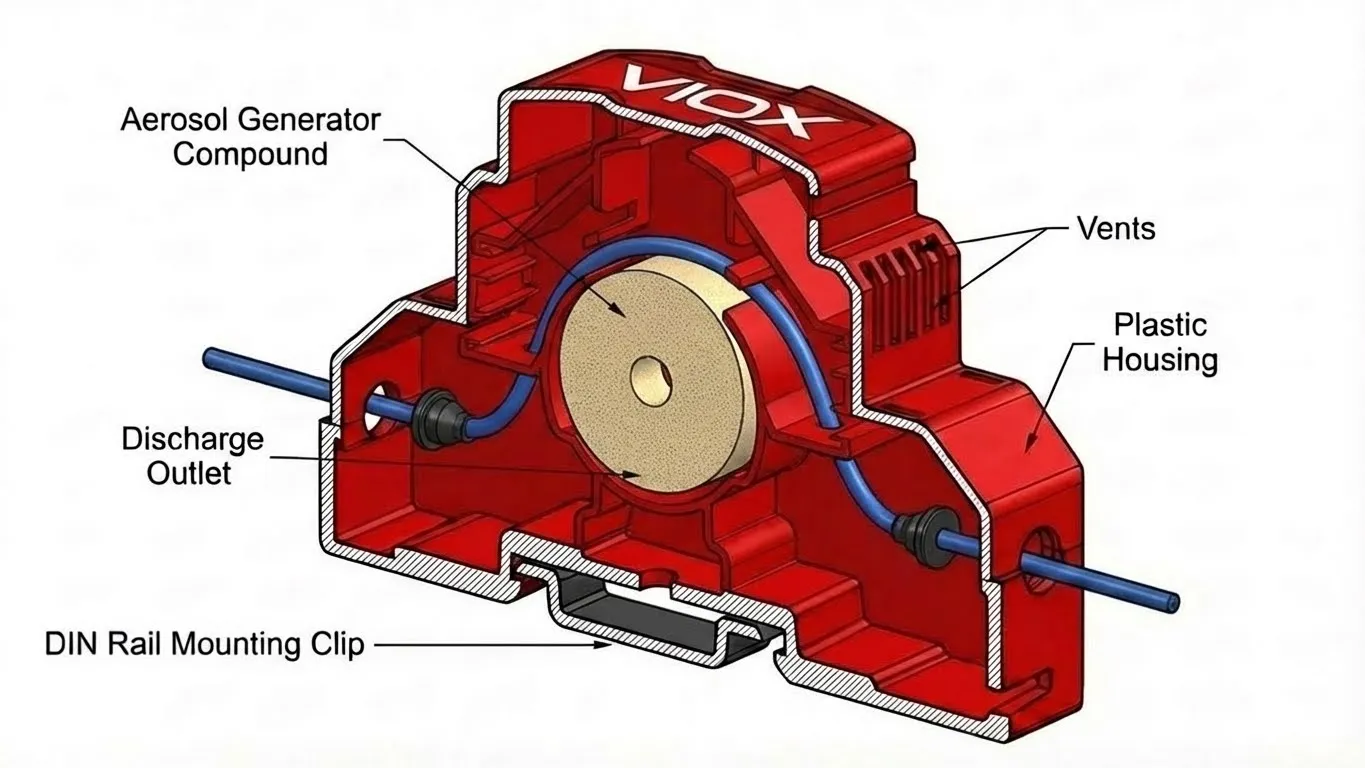
Tento hasicí mechanismus se zásadně liší od tradičních metod:
- Voda a pěna ochlazují oheň a odstraňují kyslík
- CO₂ a inertní plyny vytlačují kyslík, aby udusily plameny
- Suché chemické prášky obalují a oddělují palivo od kyslíku
- Kondenzované aerosoly přerušují samotnou chemickou řetězovou reakci
Protože aerosolové hašení cílí na chemii ohně, spíše než aby se spoléhalo na vytěsnění kyslíku, vyžaduje k dosažení účinného hašení v uzavřených prostorech výrazně méně hasiva podle hmotnosti.
Spojení dohromady: Koncept aerosolu na DIN lištu
Aerosolový hasicí přístroj na DIN lištu kombinuje tyto dva prvky do jediného, samostatného modulu, který se montuje přímo uvnitř elektrických rozvaděčů. Typické jednotky měří na šířku 50-100 mm a na výšku 60-80 mm, takže se vejdou do přeplněných panelů vedle stávajícího spínacího zařízení.
Čím se aerosolové hasicí přístroje na DIN lištu liší?
1. Umístění a integrace instalace
Tradiční hasicí přístroje: Montují se na stěny mimo zařízení a vyžadují lidský zásah k otevření skříní, zamíření a vypuštění. Chrání místnosti, ale ne vnitřek uzavřených skříní.
Systémy hašení plyny: Vyžadují samostatné tlakové láhve s hasivem (často uložené ve vyhrazených místnostech), potrubní sítě, trysky a složitou instalaci. Systémy jsou navrženy pro úplné zaplavení místnosti, nikoli pro bodovou ochranu.
Aerosolové hasicí přístroje na DIN lištu: Instalují se přímo uvnitř nebezpečné zóny na standardní montážní lišty. Není potřeba žádné externí potrubí, místnosti pro tlakové láhve ani strukturální úpravy. Generátor hasiva sedí pouhé centimetry od potenciálních zdrojů vznícení, jako jsou přípojnice, svorky a SPD.
2. Metody aktivace
Aerosolové jednotky na DIN lištu nabízejí tři přístupy k aktivaci, často kombinované v jednom systému:
Tepelná aktivace: Tavná pojistka nebo tepelná šňůra (typicky dimenzovaná na 175 °C ±5 °C) automaticky spustí jednotku, když teplota překročí prahovou hodnotu. To poskytuje autonomní ochranu, i když jsou detekční systémy offline nebo v bezobslužných zařízeních.
Elektrická aktivace: Integrace s panely požární detekce, detektory kouře nebo tepelnými senzory umožňuje koordinovanou odezvu v celém systému. Tato metoda umožňuje vzdálené monitorování, upozornění na poplach a integraci se systémy správy budov.
Manuální aktivace: Tahové stanice nebo ruční ovladače (podle dodatků UL 2775) umožňují personálu spustit hašení v nouzových situacích.
Tato flexibilita s více metodami je u tradičních hasicích přístrojů neobvyklá (pouze ruční) a u plynových systémů často omezená (typicky pouze elektrická).
3. Prostorová efektivita a půdorys
Uvažujme standardní elektrickou skříň o rozměrech 800 mm (V) × 600 mm (Š) × 300 mm (H):
- Tradiční 2kg hasicí přístroj CO₂ namontovaný vně skříně zabírá prostor na stěně a neposkytuje žádnou ochranu, když jsou dveře skříně zavřené
- Plynový systém FM-200 nebo Novec pro tento objem by vyžadoval externí tlakové láhve, potrubí a více trysek
- Aerosolová jednotka na DIN lištu zabírá přibližně 80 mm prostoru na liště (zhruba šířka dvou jističů) a chrání celý vnitřní objem
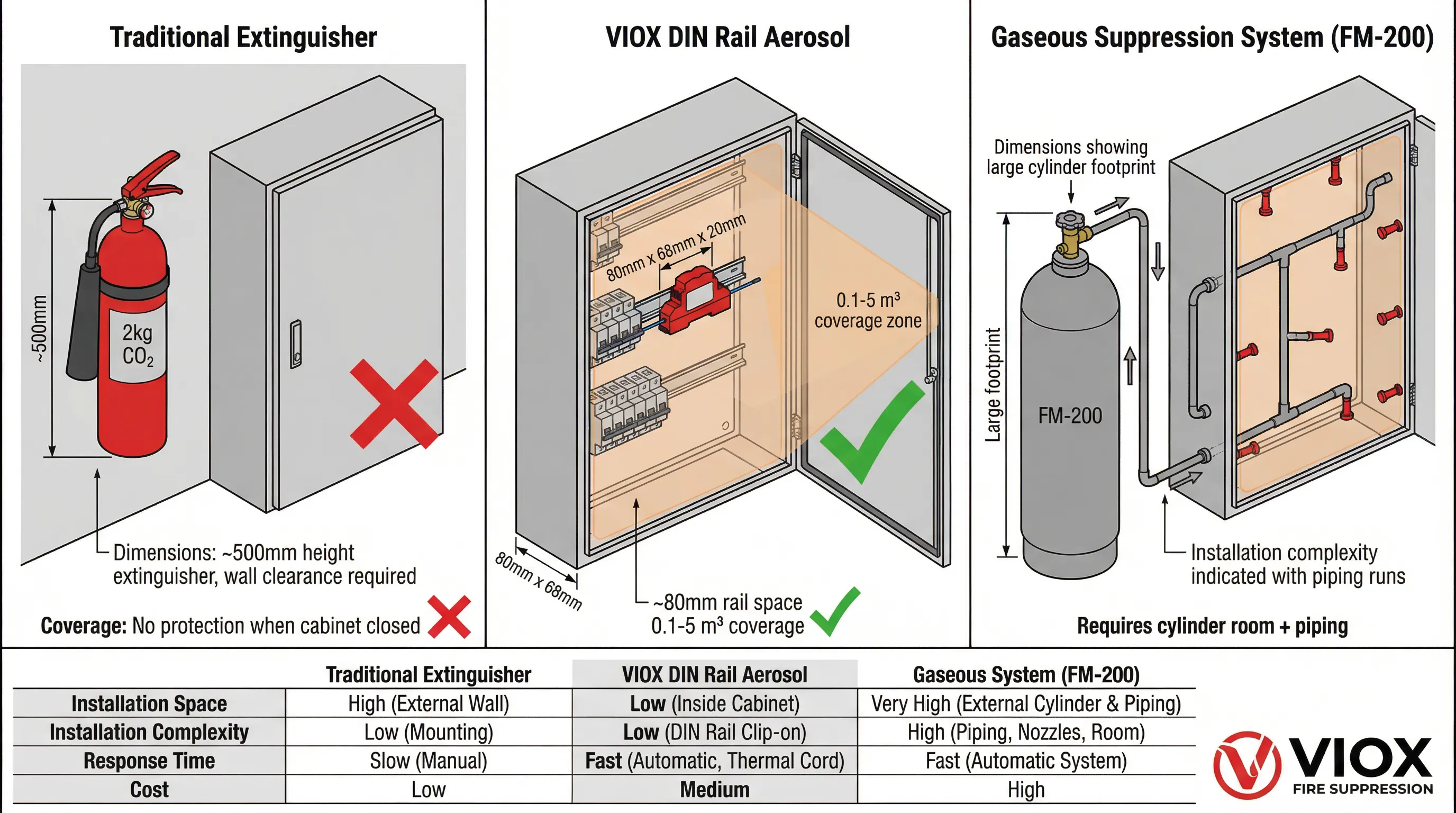
Pro výrobce panelů a OEM se tato prostorová efektivita promítá do kompaktnějších návrhů.
4. Charakteristiky hasiva
Zbytky a čištění: Vypouštění kondenzovaného aerosolu se skládá z ultrajemných částic, které se po hašení usadí. I když zanechává více zbytků ve srovnání s plynnými hasivy, částice jsou nekorozivní a elektricky nevodivé, pokud jsou správně formulovány. Čištění zahrnuje vysávání nebo otírání, nikoli výměnu zařízení.
Dopad na životní prostředí: Moderní aerosolové formulace mají nulový potenciál poškozování ozonové vrstvy (ODP) a minimální potenciál globálního oteplování (GWP). Nevyžadují schválení EPA SNAP jako mnoho halokarbonových hasiv a jsou vhodné pro instalace citlivé na životní prostředí.
Elektrická nevodivost: Správně navržené aerosolové sloučeniny jsou testovány na dielektrickou pevnost, díky čemuž jsou bezpečné pro použití na elektrických zařízeních pod napětím bez rizika zkratu během vypouštění.
5. Složitost systému a údržba
Aerosolové systémy na DIN lištu dramaticky zjednodušují jak počáteční instalaci, tak i průběžnou údržbu:
Instalace: Zacvakněte jednotku na DIN lištu, připojte volitelné vodiče elektrického ovladače (pokud používáte integraci detekce) a ověřte správné umístění. Není potřeba žádné tlakové nádoby, svary potrubí ani hydrostatické testování.
Údržba: Vizuální kontrola integrity jednotky, ověření aktivačních mechanismů a kontrola, zda výstupní cesty zůstávají neblokované. Jednotky mají definovanou životnost (typicky 5-10 let), po které se vyměňují jako kompletní moduly. Žádné monitorování manometru ani cykly doplňování tlakové láhve.
6. Náklady
Pro malé až střední skříně (0,1 až 5 m³) nabízejí aerosolové jednotky na DIN lištu významné nákladové výhody:
- Nižší počáteční investice: Žádné samostatné tlakové láhve, potrubí nebo instalační práce pro složité sítě
- Zkrácení doby návrhu: Standardní montáž na lištu eliminuje výrobu zakázkových držáků
- Škálovatelnost: Další skříně získají nezávislou ochranu bez propojených systémů
- Ekonomika výměny: Vadné nebo vybité jednotky se vymění během několika minut
Díky těmto faktorům jsou aerosolové systémy na DIN lištu obzvláště atraktivní pro distribuovanou elektrickou infrastrukturu.
Technické srovnání: Metody hašení požáru
| Funkce | Aerosol na DIN lištu | Tradiční hasicí přístroj | Plynový systém (FM-200/Novec) | CO₂ systém |
|---|---|---|---|---|
| Místo instalace | Uvnitř rozvaděče na DIN liště | Montáž na stěnu mimo zařízení | Samostatná místnost s lahvemi + potrubí | Místnost s lahvemi + potrubí |
| Aktivace | Automatické (tepelné/elektrické) + manuální | Pouze manuální | Elektrické (založené na detekci) | Elektrické |
| Doba odezvy | Okamžité (tepelné) nebo <10 s (elektrické) | Závisí na reakci člověka | 10-30 sekund po detekci | 10-30 sekund |
| Objem prostoru | 0,05 – 5 m³ typicky | N/A (ochrana místnosti) | 10 – 500 m³ typicky | 10 – 1000 m³ |
| Požadavek na prostor | 50-100 mm prostoru na liště | Prostor na stěně + přístup | Místnost s lahvemi + vedení potrubí | Velký prostor pro lahve |
| Zbytky po vypuštění | Jemné částice (omyvatelné) | Liší se podle typu (prášek/pěna) | Žádné (čisté hasivo) | Žádné (plyn) |
| Elektrická bezpečnost | Nevodivé | Závisí na typu hasiva | Nevodivé | Nevodivé |
| Dopad na životní prostředí | Nulový ODP, nízký GWP | Různé | Nízký GWP | Nulový ODP, mírný GWP |
| Frekvence údržby | Vizuální kontrola 6-12 měsíců | Roční kontrola + doplnění | Čtvrtletní kontrola + roční test | Čtvrtletní + vážení |
| Výměna po použití | Vyměňte celý modul | Doplnění/dobití | Doplnění lahve | Doplnění lahve |
| Typické náklady na jednotku | $100 – $500 | $50 – $300 | 3 000 – 20 000+ Kč (systém) | $2,000 – $15,000+ |
| Složitost instalace | Nízké (zacvakávací) | Nízké (montáž na držák) | Vysoké (potrubí/uvedení do provozu) | Vysoká |
| Nejlepší aplikace | Jednotlivé elektrické rozvaděče | Obecná bezpečnost zařízení | Velké strojovny | Průmyslové prostory |
| Provoz bez obsluhy | Ano (automatické tepelné) | Ne | Ano (s detekcí) | Ano (s detekcí) |
Aplikace a případy použití
Aerosolové hasicí přístroje na DIN lištu vynikají v ochraně uzavřených elektrických zařízení, kde jsou tradiční metody hašení nepraktické nebo nemožné. Zde jsou hlavní aplikace:
Elektrická distribuce a řízení
Elektrické rozvaděče a spínací zařízení: Hlavní rozvodné desky, podružné rozvodné panely a řídicí centra motorů, které obsahují přípojnice, jističea stykače—všechny potenciální zdroje vznícení z přetížení nebo zkratů.
PLC a přístrojové panely: Programovatelné logické automaty, systémy SCADA a průmyslová automatizační zařízení, kde prostoje způsobené požárem mohou zastavit celé výrobní linky.
Kritická infrastruktura
Datová centra: Lišta DIN jednotky chrání jednotlivé serverové racky, síťové přepínače a napájecí jednotky a poskytují ochranu na úrovni zařízení ve větších zařízeních.
Telekomunikační zařízení: Skříně mobilních věží a vzdálená komunikační stanoviště, kde je standardem provoz bez obsluhy a doba odezvy na požár se měří v hodinách.
Bateriové systémy skladování energie (BESS): Skříně střídačů a skříně pro správu baterií, kde tepelný únik vyžaduje okamžité potlačení.
Doprava a integrace OEM
Skříně železničních signálů: Zařízení u tratě, kde přerušení provozu ovlivňuje bezpečnost a jízdní řády.
Námořní a pobřežní průmysl: Elektrické panely na plavidlech a platformách, kde drsné prostředí vyžaduje utěsněné kryty.
Technické specifikace a normy
Při specifikaci aerosolových hasicích přístrojů na DIN lištu by měli inženýři ověřit shodu s platnými normami a porozumět klíčovým technickým parametrům:
Regulační normy
| Standardní | Region | Pokrytí |
|---|---|---|
| NFPA 2010 | Spojené státy | Návrh, instalace, testování a údržba pevných aerosolových hasicích systémů |
| UL 2775 | Severní Amerika | Komponentní norma pro jednotky zhutněných aerosolových hasicích systémů (úplné zaplavení) |
| EN 15276-2:2019 | Evropská unie | Stabilní hasicí zařízení – Systémy s kondenzovaným aerosolem – Návrh, instalace a údržba |
| ISO 15779:2011 | Mezinárodní | Hasicí systémy s kondenzovaným aerosolem – Požadavky a zkušební metody |
| IEC 60715 | Mezinárodní | Rozměry pro montáž na DIN lištu a mechanické požadavky |
Klíčové technické parametry
Chráněný objem: Jmenovitá velikost krytu (m³). Běžné jednotky na DIN lištu se pohybují od 0,05 m³ do 5 m³ pokrytí.
Doba výboje: Typicky 2-5 sekund pro rychlé potlačení požáru.
Aktivační teplota: U termických modelů typicky 175 °C ±5 °C.
Rozsah provozních teplot: Průmyslové jednotky typicky -50 °C až +90 °C.
Klasifikace požáru: Obvykle třídy A, B, C a E.
Životnost: Typicky 5-10 let od výroby, výměna je nutná, i když nebyl nikdy použit.
Kompatibilita montáže: Ověřte kompatibilitu s lištami TH 35-7.5 nebo TH 35-15 podle IEC 60715.
Aerosolový hasicí přístroj VIOX na DIN lištu
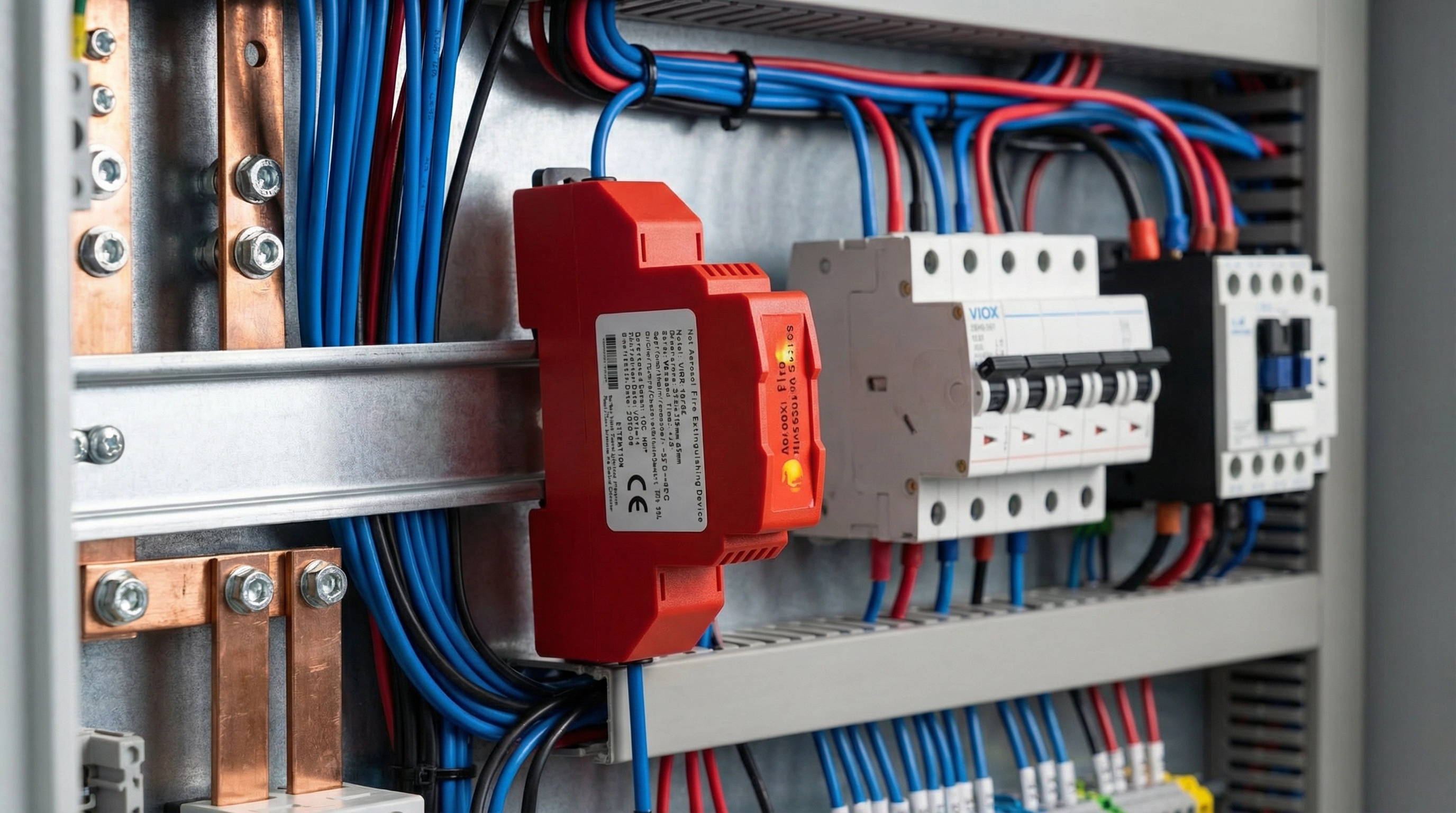
Společnost VIOX Electric vyrábí Aerosolový hasicí přístroj QRR0-01G-S na DIN lištu, navržený speciálně pro ochranu elektrických skříní. Tato kompaktní jednotka ztělesňuje odlišující vlastnosti popsané v tomto článku:
Hlavní vlastnosti produktu:
- Standardní montáž na DIN lištu: Zacvakne se na lišty TH 35 podle IEC 60715, kompatibilní se všemi standardními elektrickými kryty
- Automatická tepelná aktivace: Integrovaná tepelná šňůra se aktivuje při 175 °C ±5 °C pro autonomní reakci na požár
- Široký provozní rozsah: Spolehlivě funguje od -50 °C do +90 °C, vhodný pro drsné průmyslové a venkovní instalace
- Kompaktní rozměry: Přibližně 80 mm × 68 mm × 20 mm, zabírá minimální prostor na liště
- Certifikace CE: Splňuje evropské bezpečnostní a výkonnostní normy pro elektrická zařízení
- Víceúčelová ochrana: Účinný proti požárům třídy A, B, C a E
- Rychlé vypouštění: 3-4 sekundový cyklus potlačení minimalizuje šíření požáru
- Dlouhá životnost: Továrně utěsněná jednotka s víceletou provozní životností
VIOX QRR0-01G-S je navržen pro integraci výrobci rozvaděčů, výrobci OEM zařízení a týmy údržby zařízení, kteří hledají spolehlivou protipožární ochranu pro elektrickou infrastrukturu, která je v souladu s předpisy. Jeho aerosolová směs na bázi dusičnanu draselného/strontnatého poskytuje elektricky nevodivé potlačení bez poškození citlivé elektroniky.
Technické specifikace, pokyny k instalaci a informace o nákupu naleznete na Produktová stránka aerosolového hasicího přístroje VIOX.
Často Kladené Otázky
Mohou aerosolové hasicí přístroje na DIN lištu poškodit citlivou elektroniku?
Moderní kondenzované aerosolové formulace jsou elektricky nevodivé a nekorozivní, pokud jsou řádně certifikovány podle norem UL 2775 nebo ISO 15779. Tato zařízení procházejí testováním dielektrické pevnosti, aby se ověřilo bezpečné vypouštění na zařízeních pod napětím bez způsobení zkratů. Ultrajemné částice se po vypuštění usadí a lze je odstranit vysáváním a otíráním.
Jak spočítám, kolik modulů potřebuji pro svůj elektrický rozvaděč?
Vypočítejte vnitřní objem vaší skříně: výška × šířka × hloubka v metrech. Například 800 mm × 600 mm × 300 mm = 0,144 m³. Vyberte jednotku dimenzovanou alespoň na tento objem. Poznámka: UL 2775 varuje před pouhým přidáváním více jednotek nad rámec pokynů pro uvedení jedné jednotky. Pro větší skříně se poraďte s výrobcem nebo požárním inženýrem ohledně správného návrhu systému.
Co se stane, pokud se jednotka neúmyslně aktivuje?
Nechtěná aktivace vede k naplnění prostoru aerosolovým hasivem. Netoxické částice představují minimální zdravotní riziko, nicméně se doporučuje větrání. Před opětovným zapnutím zařízení zajistěte řádné větrání, vyčistěte usazené částice podle pokynů výrobce a okamžitě vyměňte aktivovanou jednotku. Termické jednotky se aktivují při 175 °C, což je výrazně nad běžnými provozními podmínkami, ale vyhněte se instalaci v blízkosti zdrojů tepla.
Jsou aerosolové hasicí přístroje na DIN lištu vhodné pro venkovní instalace?
Ano, pokud splňují environmentální specifikace. Průmyslové jednotky s rozsahem -50 °C až +90 °C zvládají extrémní teploty. Ověřte krytí IP (Ingress Protection) pro ochranu proti vlhkosti a prachu. Pobřežní instalace vyžadují pozornost vůči odolnosti proti korozi a skříň musí zachovávat integritu krytu podle platných norem.
Jak často vyžadují údržbu?
Typická údržba zahrnuje inspekce prováděné vlastníkem (měsíčně nebo čtvrtletně) zaměřené na fyzické poškození, bezpečné upevnění a ověření životnosti, plus odbornou údržbu (pololetně nebo ročně) s funkčním testováním a revizí dokumentace. Na rozdíl od tlakových hasicích přístrojů nejsou nutné žádné kontroly tlaku ani doplňování – jednotky se vyměňují jako uzavřené moduly.
Mohu je dodatečně namontovat do stávajících rozvaděčů?
Absolutně. Pokud má váš rozvaděč lišty TH 35 s dostupným prostorem 50-100 mm, jednoduše jednotku nacvakněte na lištu a volitelně připojte elektrické vedení. Nejsou nutné žádné strukturální úpravy, potrubí ani externí zařízení.
Závěr
Aerosolové hasicí přístroje na DIN lištu představují specializovanou kategorii protipožární ochrany, která řeší jedinečné výzvy bezpečnosti elektrických skříní. Jejich přímá integrace do krytů zařízení, schopnosti automatické aktivace, kompaktní rozměry a zjednodušená instalace je zásadně odlišují jak od tradičních hasicích přístrojů, tak od systémů potlačení na úrovni místnosti. Pro elektroinženýry specifikující ochranu pro distribuovanou infrastrukturu, správce zařízení chránící kritické vybavení a výrobce OEM, kteří zabudovávají bezpečnost do produktů, je pochopení těchto rozdílů zásadní pro nasazení účinné protipožární ochrany v souladu s předpisy tam, kde je to nejvíce potřeba – v místě vznícení.